


Is the Xiaomi Car Worth Buying? Owner's Perspective | 42Talk Vol.30 Transcript
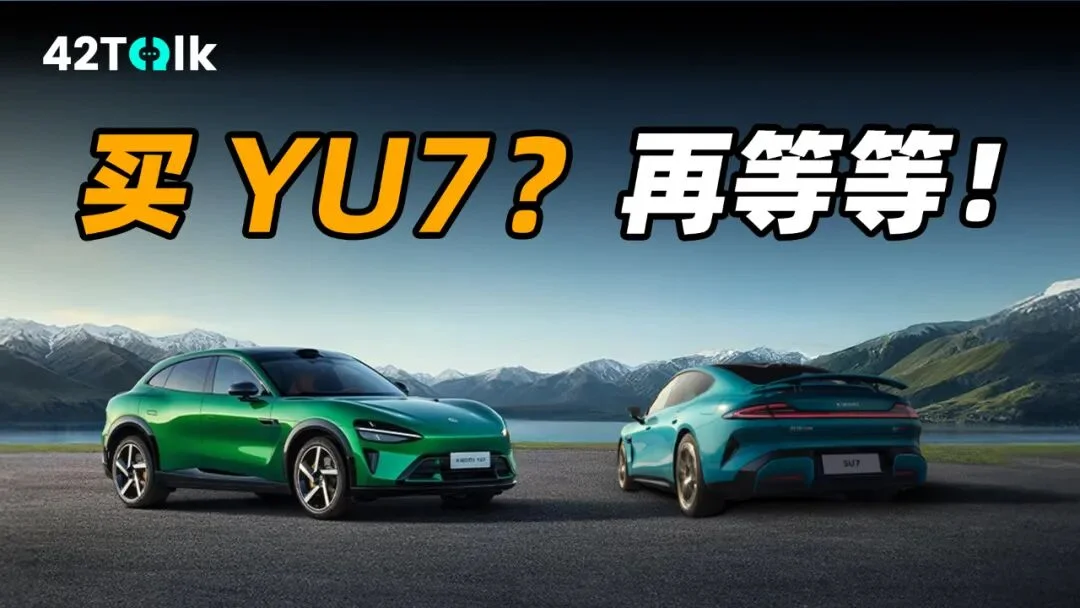
"42Talk" is an online chat show produced by 42HOW Auto for new energy vehicle owners, aiming to help you find the most suitable EV through authentic owner voices.
42Talk: Discovering the Most Authentic Owner Voices.
Guests for this episode:
WTD, Shanghai, Xiaomi SU7 Max owner
Yu, Hangzhou, Xiaomi SU7 Max owner
Yisong, Shanghai, Editor at 42HOW Auto
(For the podcast version, please click "Read Original Text" at the end of the article to access the "42Talk Channel" on the Xiaoyuzhou APP.)
01Impressions of Xiaomi Auto
First Impressions
Laven:
What was your initial reaction when Xiaomi officially announced its entry into the automotive industry?
WTD:
My first thought was that a smartphone manufacturer could actually build cars.
Yu:
I was quite surprised at the time. Since I rarely needed a car for my daily commute, hearing the news about Xiaomi’s venture into auto manufacturing motivated me to get my license immediately. I spent just one month studying and passed my driving test last May. Later on, I found that Xiaomi Auto had built a solid reputation.
Although I am not a die-hard Mi fan, I have watched Xiaomi grow over the years and supported many of its products. When I saw Xiaomi enter the car-making business, I was curious how a smartphone manufacturer and internet company could compete with traditional automakers and what unique, surprising products it might deliver.
Yisong:
My initial reaction was that Xiaomi would likely focus on what it does best: acting as a 'price butcher' to offer aggressive pricing, and leveraging its ecosystem chain to create seamless connectivity between different devices—what is known as Mijiashengtai.
These two aspects were rarely seen in the automotive industry before, let alone embodied simultaneously within a single brand. Moreover, Apple had previously stated its intention to build cars; with Xiaomi joining the fray, both tech giants—Apple and Xiaomi—were crossing over into vehicle manufacturing, making this development highly compelling.
Changes in Impression After Use
Laven:
WTD mentioned earlier that his first thought upon hearing about Xiaomi entering the auto market was, 'Can a digital electronics company really make cars?' Did you initially have low expectations for them? What changed your mind, leading you to become one of the first owners?
WTD:
I’ve engaged with many domestic new energy brands. In recent years, numerous new brands have launched, but some folded before their vehicles even reached the market. In 2023, while I was going karting, I happened to encounter Xiaomi Auto conducting a team-building promotional event. The SU7 had not yet been released, and I had no idea what the car looked like. I wondered: Would this vehicle actually make it to mass production and delivery?
I placed my reservation deposit around April 20 last year and took delivery of the car in September. The main reason was that after the SU7 launch, it perfectly matched my needs: a sporty sedan with comprehensive features, including air suspension, HUD, and good handling. I test-drove it before placing the order and considered it for a week before deciding to buy.
Laven:
After using it for a while, has your impression of it changed?
Yu:
It drives comfortably, with good handling and ride quality. I test-drove a Tesla the day after getting my license and also tried other brands, but the Xiaomi car feels solid in terms of build quality. Its appearance is particularly stunning; the design is the most distinctive I’ve seen, and the paintwork and craftsmanship are robust. The infotainment interaction and smart features are also good, with smooth voice control. Overall, the cost-performance ratio is quite high.
WTD:
Consistent with my test-drive impressions, it remains a pure sporty coupe. Overall, the experience slightly exceeded my expectations.
Yisong:
I was surprised by how high the completion level of the SU7 is; its overall experience is well-balanced, and both owners have been very satisfied after using it for so long.
But when it comes to the smart cockpit, Lixiang has already achieved a very high level, so I had higher expectations for Xiaomi. Seeing that the SU7’s cockpit features only a single central control screen, I felt somewhat disappointed, thinking it hadn’t maximized in-car entertainment. But from the product logic of a sports sedan, avoiding an excess of screens is reasonable.
Lei Jun mentioned using his experience with smartphones and tablets to develop the car’s infotainment system, which is a sensible approach. Software ecosystems are difficult to build; other brands either simply adapt existing apps or pursue heavy customization, both of which involve compromises in cost and user experience.
Xiaomi chose a path better suited to itself, but third-party software adaptation still has room for improvement. While mainstream apps work fine, niche applications like Apple Music do not—a common industry issue. My expectations may have been too high, leading to some areas falling slightly short, but the overall completion level is indeed good.
Will Long Wait Times Drive Buyers Away?
Laven:
Yu, you previously mentioned plans to purchase a second YU7. If the delivery cycle is too long, would it affect your buying decision?
Yu:
Yes, I originally planned to buy both a sedan and an SUV. Initially, I was looking at the Tesla Model Y. I placed a deposit last year but haven’t taken delivery yet. After the Model Y received a refresh and its price increased by approximately RMB 40,000 to 50,000—with discounts removed—I anticipated that prices would likely drop further, so I decided to wait. Later, I learned that the YU7 was approaching launch. After evaluating my options, I felt Xiaomi’s products better aligned with my needs, so I decided to wait for its release.
My SU7 order was placed on September 17. The original estimate for delivery was March of this year, requiring a wait of about six months. However, I took delivery on December 15 last year, three months ahead of schedule.
Based on past experience, ordering early should ensure delivery within this year. I currently have a car to use, so there is no urgent need, but earlier delivery is certainly preferable. The key factor remains pricing; if the price is unreasonable, I cannot accept it. If the pricing is sensible, I will place an order immediately.
02Xiaomi Owner Experience
Issues Encountered During Use
Laven: What problems or dissatisfactions have you encountered during your use of the vehicle?
WTD:
Mostly minor software issues.
I use an Apple phone, and when placed on the wireless charging pad, the NFC wallet is always automatically awakened. This is a minor bug, and navigation prompts are sometimes slow on certain road segments. I haven’t encountered hardware issues like cracked radars as reported online.
I’m not a very picky person. For a car, I believe comfort while driving is what matters most. Xiaomi’s handling and the HUD feature I’ve always wanted both happen to meet my needs.
Yisong:
Many automakers integrate NFC sensing with the wireless charging module to save costs, but Tesla uses a separate module, so it doesn’t have this issue. However, the problem isn’t serious; even if the NFC is triggered when the phone is placed on the pad, it will eventually switch to charging mode. Many cars behave this way.
Yu:
When I first picked up the car, I tried the smart parking feature. It occasionally stopped suddenly mid-park without fully entering the garage, so I rarely use it now. I hope it can be optimized in future updates.
Regarding voice interaction, there are occasional recognition errors. Also, after the driver wakes up Xiaoaitongxue, passengers in the front passenger seat or rear seats must wait for the driver to finish before they can initiate their own voice commands, because it currently only recognizes single-zone instructions.
On the hardware side, I find that the clarity of the HUD display is inferior to that of a screen, so I am quite looking forward to the PHUD in the YU7.
Yisong:
These are indeed pain points that owners encounter in daily use. The voice assistant has a 'lock zone' logic for wake-up: it only listens to commands from the area where it was activated. Some brands already offer 'wake-free' functionality. This appears to be a technical issue that Xiaomi will likely address in future software updates, allowing users to issue commands directly without repeating the wake word.
Laven:
What minor issues have you encountered with the SU7 that must be improved in the YU7?
WTD:
I mainly feel that the overall pacing of the driver assistance system needs adjustment. When traffic is light, it drives aggressively; when traffic is heavy, it becomes too conservative. As vehicles move from urban areas into the suburbs and traffic density increases, the car is easily cut off. Therefore, I prefer to drive myself in heavy traffic and only use the driver assistance system when traffic is light.
Yisong:
I haven't driven the SU7 for very long, with a mileage of just over 1,000 kilometers. I've noticed two improvements on the YU7 that address issues I encountered: first, the wireless charging pad was changed from one to two units, likely due to cost considerations in the SU7; second, the cup holder design has been upgraded. The SU7's rubber material tends to age, turn white, and become sticky, whereas the YU7 uses a lift-up mechanical fiber material that offers better durability and texture.
Beyond these details, as a sports coupe, the SU7's space and seating position are constrained by its body structure. The YU7's rear seat adjustability and front Lingzhonglizuoyi (zero-gravity seats) have significantly improved overall comfort.
Most Satisfying Aspects
Laven:
What aspects of using the Xiaomi SU7 have been most satisfying?
WTD:
The intelligent parking feature is quite useful. Although, as Yu mentioned, it can cause uncomfortable sudden stops when encountering obstacles like fire hydrant boxes or ground locks, which affects passenger comfort, the system remains generally reliable. I have not encountered the wall-collision incidents reported online.
Yu:
The driving feel and voice interaction are the most satisfying aspects.
Simple daily voice commands work well, and I don’t ask for overly complex requests. Also, this car turns heads frequently; whether charging or out for leisure, people often ask about its price and specifications, providing a certain level of emotional satisfaction.
Biggest Regret
Laven:
What is your biggest regret since buying the car?
WTD:
I somewhat regret not purchasing accessories when placing the order. At the time, I thought I would pick up the car first and add physical center console buttons and dual dials later. However, I later found that dual dials were out of stock, though they have recently been restocked.
Yu:
I regret not placing my order sooner. When I eventually bought the car, the initial benefits had expired, and after calculating the options, the final price was around RMB 330,000, which was significantly higher than before.
03Expectations and Concerns Regarding the YU7
What Attracts You Most About the YU7
Laven:
Based on the information released so far, what aspects of the YU7 attract you the most?
Yu:
First is the exterior design, along with the upgrades to the PHUD (Panoramic Head-Up Display) and Lingzhonglizuoyi (Zero-Gravity Seats). Since I often take naps in the car, the Lingzhonglizuoyi makes resting more comfortable.
WTD:
I’m not currently considering an SUV, given that my family is small. But if I were to choose one, comfort would be the top priority, so the Lingzhonglizuoyi in the YU7 really appeals to me. Additionally, as an SU7 owner, I hope future updates to the SU7 will include the variable sunroof and physical buttons for the front trunk (frunk) found on the YU7.
Yisong:
From a personal perspective, the YU7’s design is truly stunning. If you can get such a handsome SUV for around RMB 300,000, especially with its official green paint job, it’s sure to turn heads on the road. At this price point, whether looking at internal combustion engine vehicles or new energy vehicles, few models balance performance, sportiness, and electric attributes like the YU7 does. Moreover, its overall design has no obvious shortcomings, which is itself a significant advantage.
Laven:
Do you think the SU7 will seem outdated once the YU7’s specifications are announced?
WTD:
I don’t think so. Sedans and SUVs have inherently different positioning and functional requirements.
Yu:
I purchased the Max version, and its specifications are more than sufficient. Owners of the Pro or standard versions may have different perspectives, but given the rapid iteration cycle of new energy vehicles, it is normal for configurations to differ after a year has passed. Early adopters benefit from initial attention, while subsequent models naturally upgrade their features as technology advances and costs decline. This progression is an inevitable part of industry development, and most consumers accept it.
The Controversy Over YU7's Narrow Tire Width
Laven:
There has been recent online debate regarding the tire width of the YU7. What are your thoughts on this?
Yu:
Xiaomi is a major enterprise with a highly professional automotive team. I trust that they have conducted thorough validation processes. Whether considering styling design or range efficiency, I believe there should be no issues, so I am not overly concerned.
WTD:
The design choices certainly have their rationale. However, since I have not yet test-driven the vehicle—and currently, offline stores only allow viewing without allowing customers to get inside—I can only provide specific impressions after a test drive. For now, I believe the design is reasonable.
Yisong:
The rear tires are 275 mm wide, which is already quite broad. The vehicle’s sporty styling may make the front tires appear narrow by comparison. In daily driving, this tire width has little impact on handling feel; the issue is primarily visual. If you mind it, Xiaomi offers an optional upgrade.
YU7 Cabin Uses a Smartphone Chip
Laven:
There is another debate online: the YU7 cabin uses the Xiaolong 8Gen3 smartphone chip. Would that bother you? Is there a practical difference between it and automotive-grade chips?
Yu:
I don’t think it’s a problem. As a smartphone manufacturer, Xiaomi has accumulated expertise in chip technology. The distinction between consumer-grade and automotive-grade chips is largely about compliance. They will certainly use technical methods to adapt high-performance, low-cost chips to meet automotive standards. For users, having a chip that meets those standards while delivering stronger performance is actually a good thing.
WTD:
I don’t mind much, as long as the infotainment system runs smoothly during use and meets daily needs.
Yisong:
I have some personal inferences regarding this point of controversy.
First, the Xiaomi Xiaolong 8Gen3 and the automotive-grade 8295 chip share the same underlying architecture. Both operate within the Android-based automotive infotainment ecosystem, so there should be no significant difference in user experience. The core purpose of an automotive-grade chip is to withstand extreme conditions, such as temperature fluctuations and collision impacts. As long as adequate protective measures are implemented, a smartphone chip can function effectively—much like how astronauts require spacesuits to survive in extreme environments.
Additionally, why did Xiaomi choose the 8Gen3 over the 8295? From a technical perspective, this may be a strategic move to pave the way for its future self-developed Xuanjiexinpian chips in vehicle infotainment systems. The Xuanjiexinpian is also developed from mobile phone architectures, following a path similar to Qualcomm’s. If Xiaomi aims to accelerate the adaptation of the Xuanjiexinpian for automotive use, using smartphone chips as a preliminary testing ground offers several advantages: it reduces costs and accumulates valuable experience for integrating subsequent self-developed chips into vehicles. This approach balances performance considerations with long-term technological layout, making it quite reasonable.
Concerns Regarding the YU7
Laven:
What concerns do you have about the YU7?
Yu:
The debate over pricing has been particularly intense. I’ve been following the project closely and joined several discussion groups, so the configurations and features were already largely exposed. Now, everyone’s main concern is the final price. Many believe that waiting for delivery could involve a long queue—possibly extending into next year—so they’re willing to accept a premium. Car reviewers have also raised price expectations, and executive replies on Weibo seem to hint that prices won’t be low. I’m worried the pricing might become inflated.
I’d prefer the price to fall within the RMB 240,000–320,000 range.
WTD:
I guess the starting price will be around RMB 260,000–270,000, with the top trim at about RMB 330,000.
Another concern of mine is the delivery timeline. Some friends of mine want to buy either the SU7 or the YU7. Those interested in the SU7 haven’t placed orders yet because they saw the wait time is 50 weeks, which feels too long. I worry that once the YU7 launches, the delivery pace for the SU7 will slow down even further, and deliveries for the YU7 itself may also lag behind.
Yisong:
I expect the price to land between RMB 270,000 and RMB 340,000.
(The Xiaomi YU7 has been announced with a price range of RMB 253,500 to RMB 329,900)
Are Xiaomi Products Not Durable?
Laven:
Many people say that Xiaomi products are less durable than those of other brands and lack attention to detail. Would you be concerned about this when buying a car?
Yu:
I am not too worried. After all, these are Xiaomi’s first two cars. To establish its reputation, Xiaomi Auto will certainly adhere to high standards for quality control. Moreover, Lei Jun is personally leading the team, so I feel there should be no issues in this regard. Although I have used some Mijia products before, they were produced by contract manufacturers and were not their core products. As a core business, automobiles should make a difference.
WTD:
I did have concerns at first, which is why I visited the showroom and test-drove the car before placing my order. I think people have a bit of a stereotype; after all, you get what you pay for.
Although I currently use an Apple phone, I have also used Xiaomi smart bands, robot vacuums, and smart kettles. These products offer high cost-performance ratios. The money I spent was worth it for the experience they provided. It is not as if I spent 300,000 RMB on a car only to receive the experience of a vehicle costing over 100,000 RMB.
In terms of details, the SU7 has undergone multiple tests by C-IASI and various media outlets. I think the overall design of the SU7 pays close attention to detail.
Yisong:
I think there are no issues. Xiaomi has developed a very complete product logic. Given their experience with phones and tablets, they applied a similar approach to the in-car screen interface, adapting it to the cabin environment and human engineering principles.
Their depth of thinking regarding details runs deeper than that of many peers. For instance, in areas such as screen layout and interaction logic, while one might not say they have reached perfection, they certainly think more deeply than most other brands.
04YU7 Cabin Experience Sharing
YU7 Cabin and PHUD Experience
Laven:
Yisong, could you briefly share your impressions of the YU7 cabin experience?
Yisong:
I place great importance on interior design and material quality. On the SU7, I was dissatisfied with one aspect: the interior. The YU7 shows progress in this area, but there is still room for improvement. It features a dual-wraparound cockpit design that creates an enveloping feel for both the driver and front passenger. While the design philosophy is an advancement, the overall tactile quality could be further optimized.
What are your questions about the PHUD?
WTD:
The YU7’s PHUD is linear. Won’t it affect the driver’s field of view, particularly when checking information on the right side? In the SU7, the HUD information is centered directly in front of the driver.
Yisong:
The structure of the PHUD is actually quite simple: there is a long strip screen located below the windshield, while the black area on the glass reflects the screen’s display. This approach offers several advantages: the black background provides high contrast, ensuring visibility even under strong sunlight; the screen uses Mini LED technology with numerous zones, delivering sufficient brightness.
The structure is straightforward, akin to looking into a mirror. From a visual perspective, the screens are clear for both front-row seats, while rear passengers may not see the full display due to height constraints; however, the front-row experience is excellent.
Yu:
I’ve seen leaked images online. The PHUD’s information area appears narrow in those photos. In actual use, will the content be too small or difficult to read?
Yisong:
Indeed, the vertical width of the PHUD is narrower, but it offers stronger horizontal extension compared to the SU7’s HUD. Its width is roughly comparable to that of a traditional instrument cluster, which is sufficient for daily use. Making it thicker would cause obstruction by the steering wheel or overlap with the road view, so this dimension is reasonable.
Yu:
Will the black reflective strip embedded in the glass impair visibility under strong sunlight?
Yisong:
The black strip effectively blocks direct sunlight from above, preventing glare on the screen. Only in extremely rare, awkward angles might there be a slight impact, but it poses no issue for daily use.
Additionally, I believe PHUD brings the most significant improvement to the YU7: first, its visual effect is superior to traditional HUDs, capable of displaying instrument cluster information, lyrics, dynamic effects, and even pet-themed screensavers, making the functionality more engaging; second, the YU7 leverages the advantages of PHUD to create a cleaner dashboard by removing the HUD recess and the instrument panel in front of the steering wheel, resulting in a purer cabin design.
Owner Advice
Laven:
What advice do you have for potential YU7 buyers?
WTD:
Place your deposit early if you want to buy one; the waiting time is likely to be long.
Yu:
As a competitor, I’d like to say: since this is a new model, everyone should observe its performance after launch and consider waiting a bit longer to take delivery (please don’t compete with me for the same customers).
Yisong:
If you like the sporty look of the YU7 and need a large SUV, it’s a very sensible choice overall. From the perspective of competitors, its positioning, and its actual driving experience, it’s an excellent option.
This content is compiled from the podcast program '42Talk'.
Click 'Read Original' below to unlock more past episodes.