


Lei Jun's Three Years in Carmaking: It Took More Than Just Courage
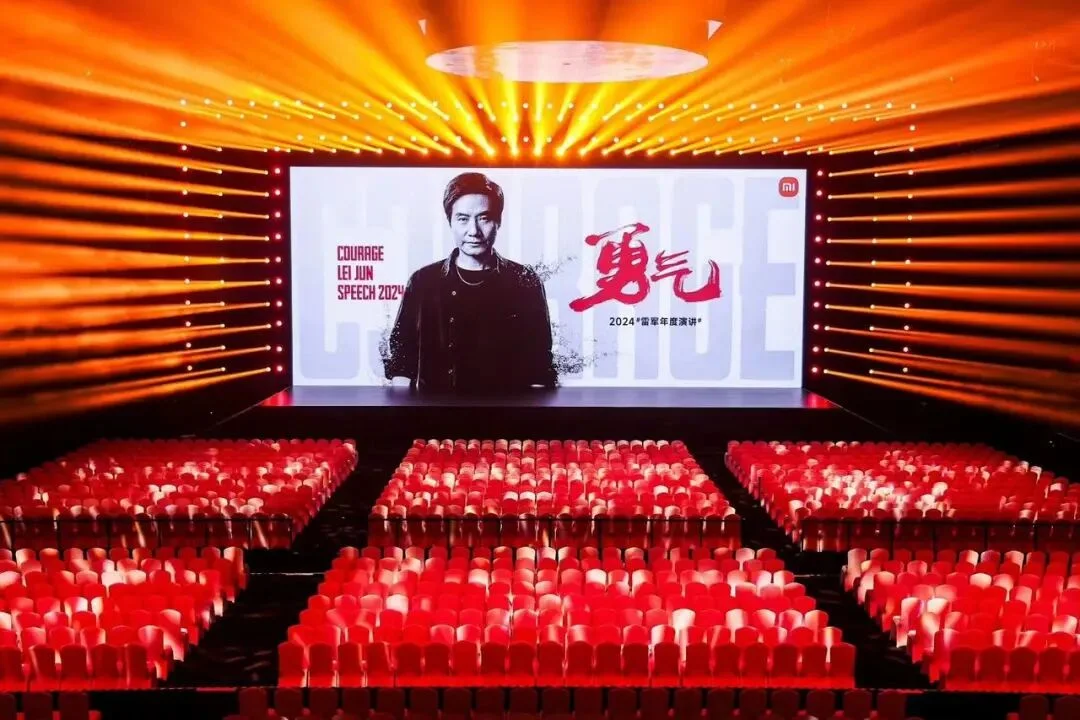
Before the Xiaomi SU7 officially launched, almost everyone believed it would not sell.
During Lei Jun's fifth annual speech tonight, he shared with emotion.
But the facts were exactly opposite to many people's views at that time. After the Xiaomi SU7 officially launched on March 28 this year, it not only sold well but also became a phenomenal hit.
According to official data disclosed, the Xiaomi SU7's confirmed orders exceeded 10,000 units within four minutes of launch and surpassed 50,000 units in 27 minutes. Moreover, just three months after launch, the Xiaomi SU7's delivery volume reached over 10,000 units.
At the same time, according to Xiaomi's latest forecast, the Xiaomi SU7's deliveries will continue to exceed 10,000 units in July; by November this year, Xiaomi will achieve its annual delivery target of 120,000 units.
Clearly, the Xiaomi SU7 has achieved significant market success, but the path to this success was not smooth. In fact, from the moment Xiaomi decided to enter the automotive industry, Lei Jun and Xiaomi faced considerable concerns and pressure, and the source of these concerns and pressures surprisingly came from the United States.
The Car-Making Path Forced Upon Them
At 7:00 a.m. on January 15, 2021, Lei Jun received a phone call. The caller said, "Mr. Lei, you have been sanctioned by the United States."
It turned out that in January 2021, during the final stage of his term, Donald Trump signed an executive order placing Xiaomi and 43 other Chinese companies on a "blacklist," specifically the "Chinese military companies" list. Any Chinese enterprise on this list would be restricted from purchasing American goods, software, technologies, and other services.
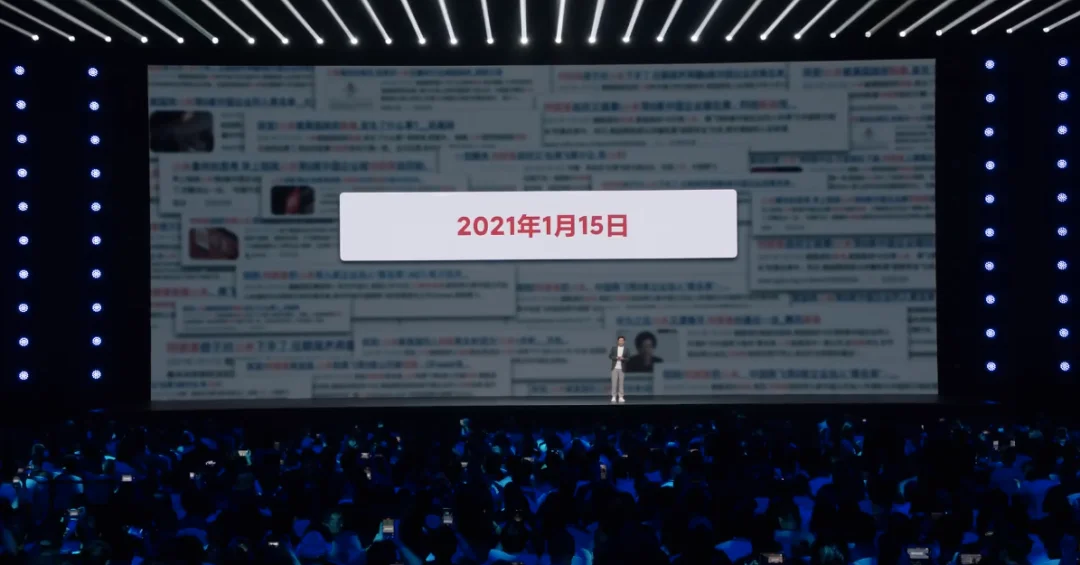
The U.S. chokehold caused Xiaomi's stock price to plummet, and operations in its core mobile phone business became fraught with uncertainty.
On that day, Xiaomi convened a board meeting to discuss how to respond to the sanctions. According to Lei Jun, a Xiaomi director asked at the time, "If Xiaomi's phones fail, what will happen to the company's thirty thousand to forty thousand employees?" This question weighed heavily on Lei Jun's mind. At that moment, another director proposed the suggestion of entering the automobile manufacturing industry.
As we know, by 2021, Tesla was thriving in China, and new automotive forces were highly sought after. With intelligence and electrification as the core, new car-making enterprises and innovative models continued to emerge. The entire new energy vehicle market was a period of fierce competition and rising stars.
For Xiaomi at that time, aside from the issue of sanctions, there was another painful problem: brand premiumization.
Due to Xiaomi's brand being overly defined by cost-effectiveness, it struggled to establish a high-end image. Lei Jun had always been anxious about this. He has mentioned that if the company cannot continuously force capability improvements through performance in the high-end market, it will inevitably trend toward mediocrity or even decline in the long run. Automobile manufacturing, however, is an efficient path to enhancing Xiaomi's brand value.
So when the director proposed entering the automotive industry, Lei Jun was indeed tempted. He immediately pushed for a survey of the new energy vehicle market.
After conducting the research, Lei Jun found that the automotive and consumer electronics industries were increasingly converging, and the trend toward smart electric vehicles was unstoppable.
At the same time, Lei Jun observed that the new energy vehicle sector was highly crowded. The market would likely undergo significant consolidation, similar to the smartphone industry, leaving only five to eight surviving companies. In Lei Jun’s view, if Xiaomi Auto failed to rank in the top five, it might not survive.
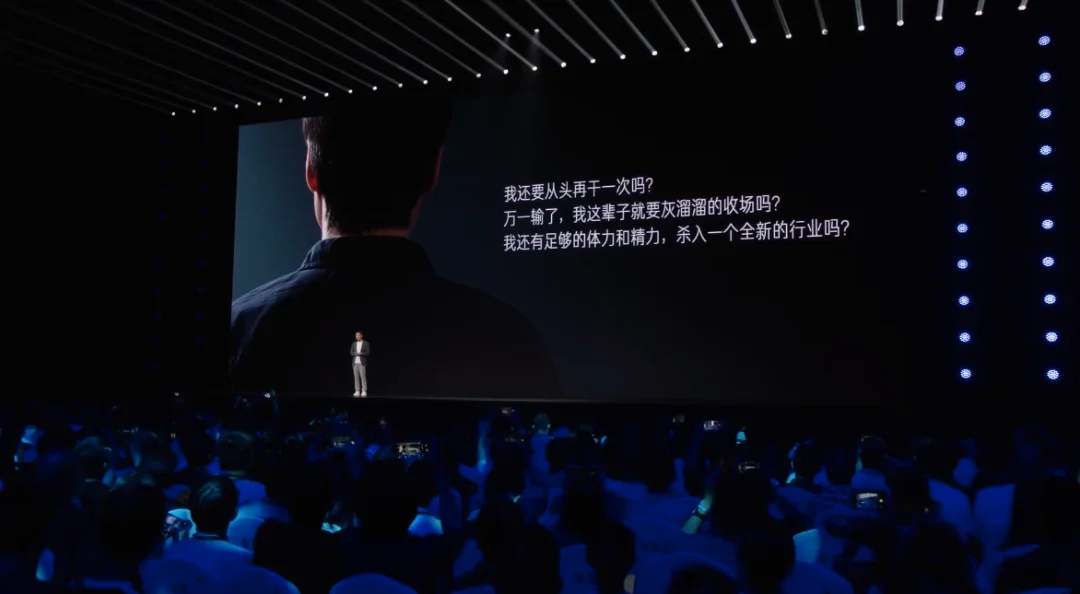
Ultimately, after 70 days of research, 85 meetings, and interviews with more than 200 people, Xiaomi decided to enter the automotive industry under Lei Jun’s leadership, committing USD 10 billion to the venture.
On March 30, 2021, Lei Jun formally replied to the Xiaomi board, stating that if this endeavor was necessary and if he was deemed the most suitable person to lead it, he was willing to step forward.
It was on March 30 that Lei Jun held the famous press conference announcing Xiaomi’s entry into car manufacturing. At the event, he declared his “last entrepreneurial journey,” vowing to fight for Xiaomi Auto—a slogan filled with romanticism.
Xiaomi’s decision to enter the automotive sector was driven by a sense of inevitability. Once committed, the company moved forward with boldness and courage, never looking back. By holding the March 30 press conference, Lei Jun had effectively cut off any retreat.
Staying True to the Craft, With No Plans for Disruption
If we were to list Xiaomi’s advantages in entering the automotive industry, Lei Jun’s personal influence would undoubtedly be at the top.
At 5:00 a.m. on March 31, 2021, Lei Jun received a message from Liu Anyu, Xiaomi’s 37th employee. Liu Anyu told Lei Jun that he was willing to do anything to participate in the car-making project.
The reasons behind Liu Anyu’s resolute decision to join Xiaomi’s automotive venture are straightforward: he is an avid car enthusiast, and he had watched Lei Jun’s press conference the previous night, which was filled with a spirit of romanticism.
In fact, it wasn’t just Liu Anyu who was moved by that presentation; Lei Jun also inspired BMW designer Li Tianyuan to return from Europe to China with his family to join Xiaomi. He also attracted Hu Zhengnan, a partner at Shunweiziben and former president of Geely’s Research Institute, to join Xiaomi for vehicle development work.
According to Lei Jun, the press conference attracted many individuals to join Xiaomi Automotive. He further noted that over the three years of Xiaomi’s car-making journey, the company has received more than 380,000 resumes.
Interestingly, those seeking to join Xiaomi’s automotive team were not the only ones knocking on the door; capital was also eager to invest. Lei Jun stated that if Xiaomi Automotive were to operate independently of the Xiaomi ecosystem, its market valuation could reach USD 10 billion.
However, Lei Jun was not swayed by this influx of money. In his view, building cars is a long-cycle endeavor. Accepting outside funding would make it difficult to maintain independent thinking and stay true to one’s original vision.
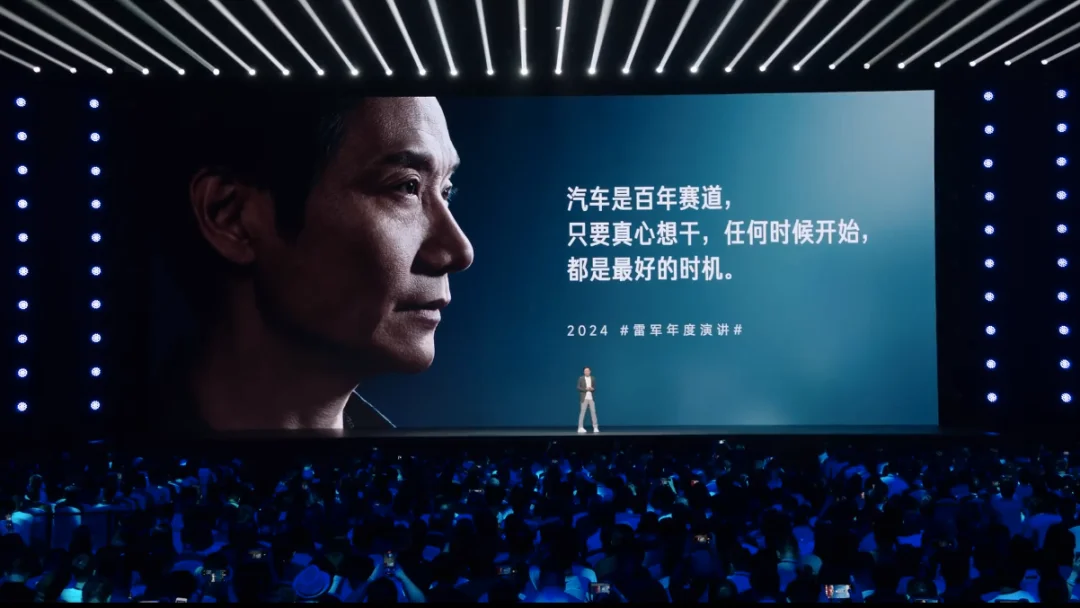
Therefore, Lei Jun ultimately decided to forge his own path by leveraging Xiaomi’s entire ecosystem to build cars, rejecting the asset-light contract-manufacturing model. The company would start with core technologies and gradually establish its automotive capabilities step by step.
During the early R&D phase, although China’s automotive supply chain was already relatively mature, Xiaomi Auto was building its first vehicle and thus had to navigate uncharted territory. In just over ten months, the team developed more than a dozen battery pack prototypes, incurring costs of tens of millions of yuan.
At Xiaomi Auto’s first review meeting before the 2022 Spring Festival, fierce debates erupted within the team. On some issues, arguments lasted from 9 a.m. to 9 p.m.
Faced with such a stalemate, Lei Jun decided that meetings would continue until clarity was reached, regardless of how long it took.
The review ultimately lasted 21 days, resulting in all proposals being scrapped and redone. Images released by Lei Jun during his presentation show that the Xiaomi SU7 at that time bore little resemblance to the current model.
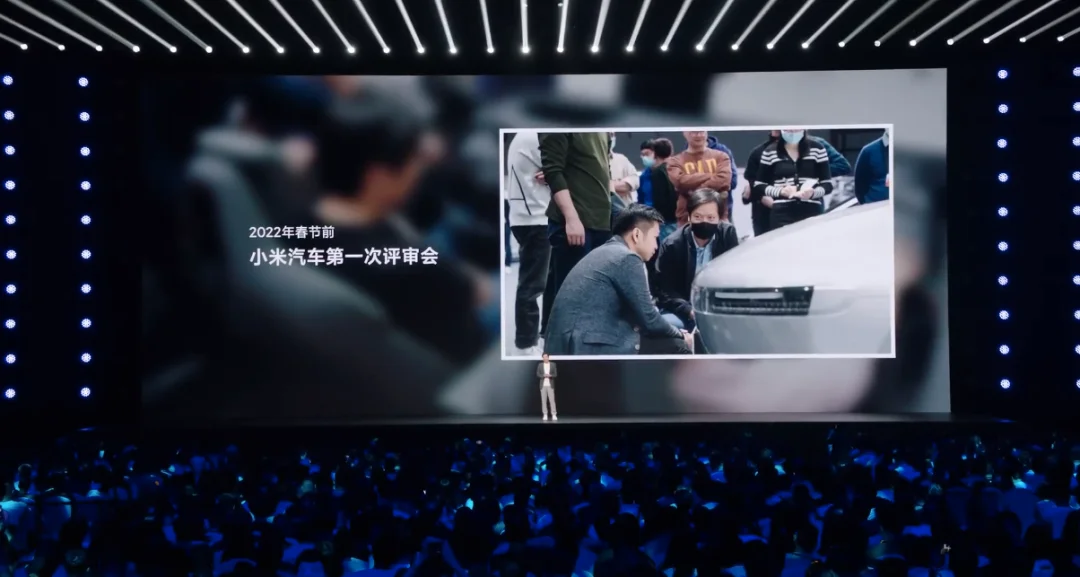
Furthermore, after 21 days of debate, the Xiaomi Auto team reached an important consensus at the review: simply securing a place at the table was the greatest victory.
Therefore, regarding the venture into automobile manufacturing, Xiaomi Auto established the principle of "upholding integrity while seeking innovation." The company adopted a methodical approach to vehicle development, avoiding any intention to disrupt or overturn the status quo from the outset.
Lei Jun Driving for Drivers
After deciding to enter the car business, Lei Jun set himself a modest goal: to become one of the best drivers among Chinese automakers' CEOs.
To achieve this, Lei Jun's first step was to drive himself. He stated that prior to entering the automotive industry, he always had a dedicated chauffeur, which caused him to lose his driving proficiency. Consequently, after deciding to build cars, he instructed his chauffeur to sit in the passenger seat and drove personally on a regular basis.
Meanwhile, to drive more and learn more about cars, Lei Jun borrowed vehicles from friends and colleagues and visited various brand 4S stores for test drives.
Additionally, when free, Lei Jun would visit Xiaomi's underground parking garage to identify vehicles he had not yet driven; if he hadn't tried them, he would borrow them for a drive. He also proactively asked owners about their experiences with their cars, such as what they liked, what they disliked, and how they would choose their next vehicle.
In summary, Lei Jun utilized every available channel to learn about and study automobiles. According to Lei Jun, he has test-driven more than 170 vehicles and accumulated over 200,000 words of notes and materials.
After extensive study, Lei Jun has achieved considerable proficiency in driving. During his annual speech, he even shared a video of himself performing drifts.
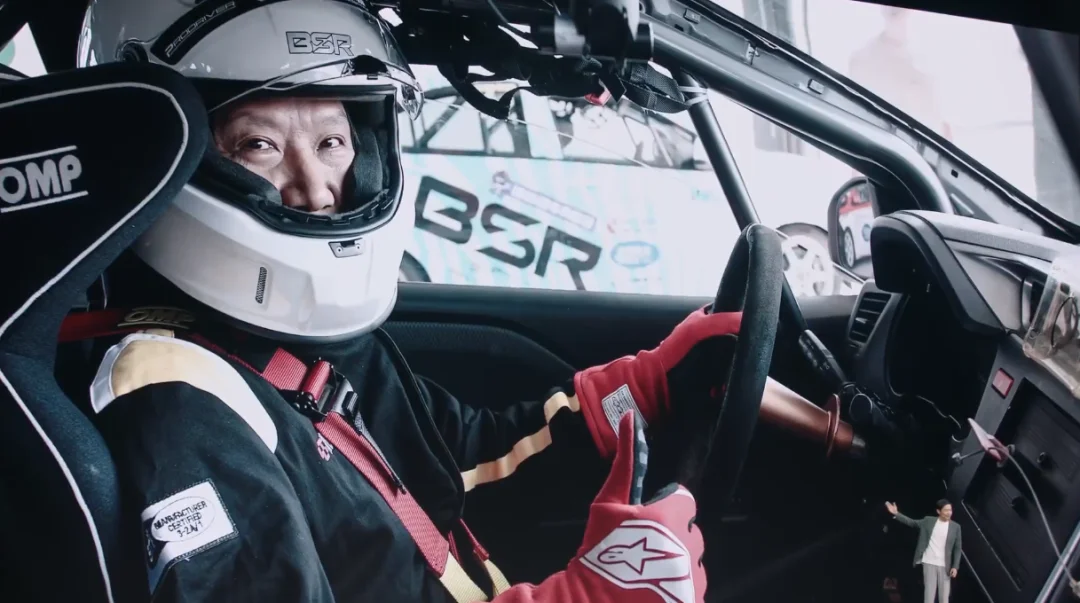
More importantly, Lei Jun applied his automotive learning to the actual manufacturing process. He personally participated in the winter and summer testing of the Xiaomi SU7, drove the vehicle for 5,000 kilometers himself, and led Xiaomi executives to collectively test the car for a total of 100,000 kilometers.
Under Lei Jun’s leadership, Xiaomi spent three years developing the Xiaomi SU7. However, just before its official launch, Lei Jun fell into a state of deep frustration.
Lei Jun stated that prior to the official launch of the Xiaomi SU7, the company consulted with many industry insiders. As mentioned at the beginning of this article, almost everyone believed the car would not sell well.
Lei Jun said that many people he spoke with at the time indicated that Tesla has a strong fan effect, and owners of 34C cars will pay close attention to brand when changing vehicles. Additionally, Xiaomi internally produced a report spanning dozens of pages. This report showed that female car owners generally do not like performance cars.
At the same time, Lei Jun engaged with various media outlets. The prevailing view among journalists was that selling 3,000 units per month for a pure electric sedan would be considered a significant success.
All these signals conveyed the same message to Lei Jun: the Xiaomi SU7 might struggle in sales. Nevertheless, Lei Jun remained convinced that the Xiaomi SU7 would achieve massive sales.
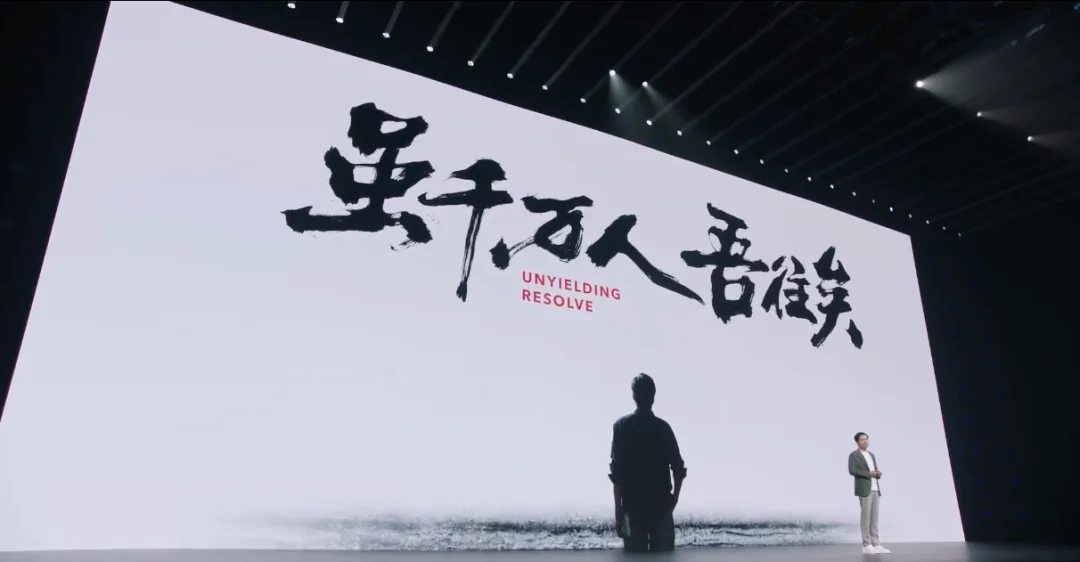
Therefore, when Xiaomi placed orders with suppliers in February this year to determine its annual production capacity, many believed that a target of 30,000 units would suffice. Lei Jun, however, chose to set the figure at 76,000. This meant that to utilize the full 76,000-unit annual capacity, the Xiaomi SU7 would need to achieve average monthly deliveries exceeding 10,000 units.
Beyond production capacity, pricing posed another thorny challenge. As is well known, there was intense public discussion regarding the pricing of the Xiaomi SU7 at the time, with rumors ranging from RMB 99,000 to RMB 149,000 and RMB 199,000.
Lei Jun, however, believed that reasonable pricing ensures long-term viability, whereas low prices are merely drinking poison to quench thirst. It was not until a meeting the day before the launch event that he finalized the price at RMB 215,900. According to Lei Jun, an executive at the meeting stated that Xiaomi would accept whatever sales volume resulted.
Subsequent events proved Lei Jun’s confidence well-founded. The Xiaomi SU7 became a phenomenon-level bestseller, and Xiaomi Auto successfully secured its place on the automotive stage.
Regarding the success of the Xiaomi SU7, Lei Jun remarked during his annual speech:
Behind the success of the Xiaomi SU7 lies immense courage. This is not the courage of a single individual, but rather the collective courage of more than 40,000 people across the Xiaomi Group.
Final Thoughts
At the conclusion of his annual speech, Lei Jun once again reiterated that Xiaomi aims to become one of the top five automakers globally within 15 to 20 years. To achieve this status as a top-five global brand, Xiaomi Auto must have the courage to engage in direct confrontation with the world's leading automakers on the pinnacle track.
Therefore, Xiaomi has decided to officially compete at the Nürburgring in October this year, with its weapon being the Xiaomi SU7 Ultra prototype car that made its grand finale appearance during the annual keynote address.
The Xiaomi SU7 Ultra prototype is equipped with two self-developed Xiaomi V8s motors spinning at 27,200 rpm, along with one V6s motor. Powered by this three-motor setup, the vehicle delivers 1,548 horsepower, achieves a 0–100 km/h acceleration time of 1.97 seconds, and reaches a top speed exceeding 350 km/h.
Additionally, the Xiaomi SU7 Ultra prototype features an all-carbon design, with 100% of its body panels constructed from carbon fiber material, resulting in a total vehicle weight of just 1,900 kg.
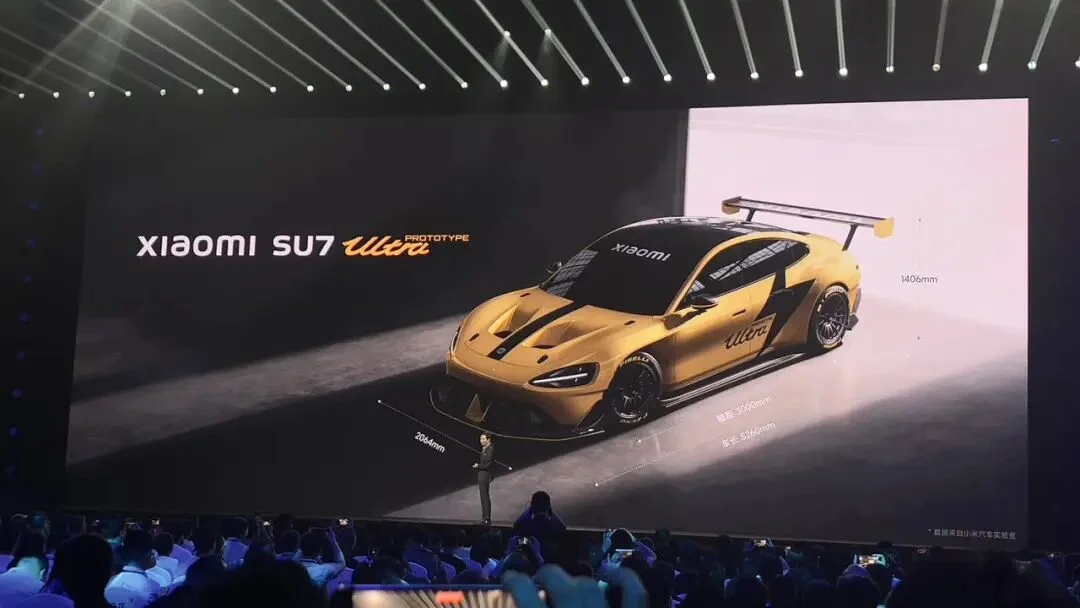
Interestingly, Lei Jun noted during his presentation of the Xiaomi SU7 Ultra prototype that the car is extremely expensive—so much so that he cannot afford to buy it himself.
In a sense, the Xiaomi SU7 Ultra prototype reflects Xiaomi’s current automotive development trajectory: powerful performance, effortless execution, and continuous challenges to the pinnacle of engineering.
However, the new energy vehicle market remains fiercely competitive and crowded, with elimination rounds still ongoing and numerous hurdles awaiting Xiaomi’s resolution. Xiaomi must continue to take every step grounded in reality, just as Lei Jun stated in his speech: Xiaomi’s long march has only just begun.
Written by: Isaiah Edited by: James