Li Auto CTO Xie Yan Details MACH M100 Chip Development, Aims for Apple-Style Vertical Integration

In 2019, Tesla HW 3.0 was integrated into vehicles, marking the beginning of automakers' self-developed intelligent driving chips. Across the Pacific in China, after NIO, XPeng, and Li Auto had all survived their critical early years, they launched their own chip development projects around 2021.
Subsequently, driver assistance became the core battleground for automakers. Features such as highway pilot, urban pilot, and parking-to-parking capabilities were gradually rolled out. After years of research and development, the self-developed chips from various automakers have finally reached the table.
In 2026, the Li Auto L9 Livis made its debut, accompanied by the release of Li Auto's self-developed MACH M100 chip.
The MACH M100 delivers an effective computing power of 1,280 TOPS per chip. Due to its dataflow architecture, which provides greater optimization space for algorithm software, a single MACH M100 achieves three times the effective computing power of NVIDIA's Thor U. The dual-MACH M100 configuration in the new L9 offers effective computing power five to six times that of the Thor U.
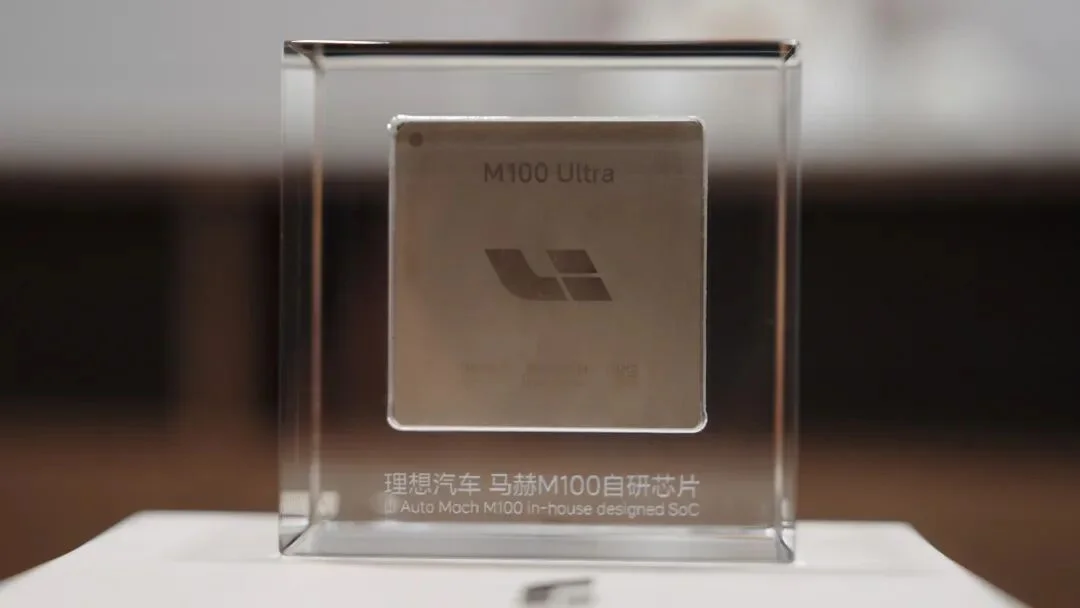
According to Li Auto CTO Xie Yan, the cost of a single MACH M100 is also lower than that of purchased chips.
However, there are many potential pitfalls in self-developed chips:
On one hand, there is the balance between chip computing power and cost. If a self-developed chip costs more than supplier solutions while delivering weaker performance, it will clearly not be accepted by the market.
On the other hand, the key question is whether it brings tangible differentiated value to users. If running autonomous driving algorithms results in higher latency or instability, offering an experience inferior to supplier solutions, it too will fail to gain market acceptance.
Furthermore, developing chips in-house requires substantial investment. A company without sufficient revenue scale and R&D spending cannot complete such a project.
In other words, the goal for automakers developing their own smart driving chips is essentially to surpass NVIDIA, and only top-tier companies can achieve this.
Many might view automakers’ ambition to overtake NVIDIA as a pipe dream. In reality, similar 'surpasses' have occurred multiple times. In the smartphone industry, manufacturers like Apple and Huawei have developed self-branded chips that outperform supplier solutions, providing users with differentiated experiences in performance, photography, and more. In the automotive sector, Tesla’s AI4+FSD delivers human-like, smooth assisted driving capabilities. Some argue that Tesla FSD has achieved a 'generational lead.'
Li Auto’s objective in self-developing chips is to become a company like Apple: it does not sell processors separately but integrates its chips with its operating system to deliver capabilities far beyond competitors. In the long run, this constitutes Li Auto’s core competitiveness and creates a technical barrier that many other automakers cannot reach.
Recently, 42HOW Auto conducted an in-depth interview with Li Auto CTO Xie Yan alongside several industry media outlets. During the conversation, Xie Yan revealed the development history of MACH M100, provided a deep analysis of the chip design philosophy and team structure, and shared his views on industry competition and future technological trends.
01Only Top-Tier Enterprises Will Develop Chips In-House
Reflecting on the development history of the MACH M100, Xie Yan recalled that in 2021, most domestic companies were emulating Tesla’s approach to chip design. However, he noted that many only observed Tesla’s surface-level actions without grasping the underlying essence.
Li Auto’s decision to develop its own chip stemmed from several key considerations:
While high computing power is essential for a superior driver-assistance experience, relying on external suppliers to increase computing power tends to be slow.
Unlike traditional CPUs and GPUs, this chip required a native AI computing architecture, presenting an opportunity for innovation.
Cost was another factor; chips based on supplier solutions were more expensive, making it difficult to balance computing power with cost.
The supplier model struggled to provide differentiated value and lacked sufficient iteration speed.
In the long term, self-developed chips are critical for Li Auto to maintain its core competitiveness and competitive barriers.
Xie Yan emphasized the fourth point as particularly important. He cited Alan Kay: “People who are really serious about software should make their own hardware.” This statement was made in the 1970s. In 2007, Steve Jobs quoted these words when launching the first iPhone.
Xie Yan noted that Apple's operating system team instructs the chip team on design requirements and problem-solving; conversely, Apple's chips provide differentiated capabilities to its OS that cannot be matched by off-the-shelf components. This vertical integration creates a value proposition that supplier-based models cannot replicate.
Li Auto's goal is to be like Apple: not only owning its own products but also having a powerful system layer (including the operating system, inference, and runtime), its own hardware, and ultimately its own chips, with vertical integration advantages being built up step by step.
If self-developed chips are so advantageous, why aren't all automakers pursuing them?
Xie Yan offered a clear assessment: Only a few top-tier companies can afford to develop their own chips, similar to Apple and Huawei today. Other manufacturers, unable to bear the R&D costs, rely more heavily on purchasing generic solutions. While adopting generic solutions yields lower profit margins, it also reduces the demands for innovation and investment.
"Li Auto intends to be among the first group," Xie Yan said. "We are not developing every type of chip, but AI chips. For companies committed to an AI-centric strategy, developing AI chips is essential. If you aspire to become a top-tier player, you must do this."
In November 2022, Li Auto launched its self-developed chip project, beginning the chip design process.
Xie Yan pointed out that the most critical aspect of chip design lies not in the "design" itself, but in the understanding and analysis of requirements.
Consequently, Li Auto's chip team collaborated with its model and autonomous driving teams during the design phase. After thoroughly understanding the specific needs of the models and autonomous driving systems, the chip team determined how to integrate these elements more tightly, achieving higher efficiency and lower costs.
Xie Yan shared, "I have a friend on Apple's chip team. He told me their internal design involves close collaboration with the iOS team. Many of the ideas they propose are unique to the industry; these concepts do not come from external sources but stem directly from the immediate needs of their internal teams."
Li Auto chose a different path from traditional CPUs and GPUs: a dataflow architecture. In this approach, data itself drives computation, rather than relying on instructions to trigger it as in conventional CPU and GPU designs. This means that for the same computational tasks, a dataflow architecture can achieve higher efficiency, lower latency, and better energy efficiency, making it highly suitable for driver-assistance scenarios.
In Xie Yan's view, traditional GPUs are essentially architectures designed for "general-purpose computing."
The greatest advantage of traditional GPUs is their versatility. However, the problem lies in the fact that most tasks in autonomous driving and large-model inference are fundamentally tensor computations with clear rules and fixed data flows. To accommodate various scenarios, GPUs contain extensive caches, schedulers, and general-purpose computing units—designs that may not be ideal for AI inference.
MACH M100 employs a dataflow architecture where computation occurs simultaneously as data moves to the next stage. Unlike traditional GPUs, which rely on instruction scheduling and cache hits to drive computation, the dataflow architecture significantly reduces unnecessary data movement and waiting times.
In a paper titled M100: An Orchestrated Dataflow Architecture Powering General AI Computing, with Xie Yan as the first author, the design philosophy of MACH M100 is outlined: instead of relying on the complex multi-level cache systems found in traditional GPUs, it uses compilers and DMA (Direct Memory Access) to explicitly manage data flow, allowing computation and data transmission to occur in high parallelism. The goal of this design is to achieve higher hardware utilization in scenarios like autonomous driving, where real-time performance, low latency, and energy efficiency are critical.
Furthermore, the software and operating system teams collaborated closely with the chip team, enabling Li Auto's MACH M100 chip to successfully complete its tape-out just two years after project initiation (in 2024).
02The New L9 Will Reduce One Core Controller
According to Xie Yan, Li Auto’s chip team currently consists of approximately 200 people focused on designing the core AI computing architecture. The company also engages suppliers to handle integration, peripheral components, and backend processes.
The MACH M100 framework diagram shows that the chip includes core components such as the CPU, NPU, ISP, and VPU, along with a security island and I/O interface design. The NPU occupies the largest area within the chip. A paper detailing the MACH M100 provides an in-depth explanation of the NPU’s internal architecture, its internal communication methods, and how it communicates with other cores.
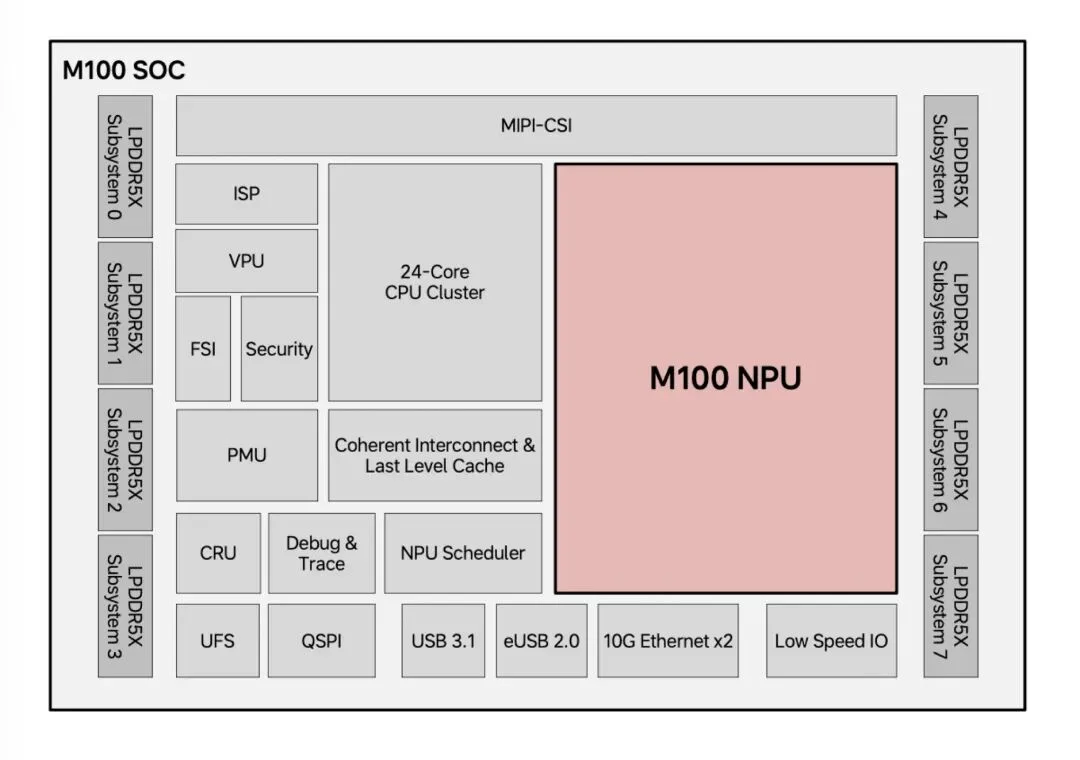
The MACH M100 NPU communicates with other cores in the chip primarily through three methods:
Two high-bandwidth AXI master interfaces (each providing 128 GB/s), which allow the NPU direct access to DDR and SoC resources, eliminating the need for the CPU to feed data as is typical in traditional chips.
After completing calculations, the NPU can notify the CPU.
The CPU communicates with the NPU via low-bandwidth AXI, primarily to dispatch tasks, query status, and manage resources.
Inside the NPU, there is a Central Control Block (CCB) and 14 Tensor Processing Block (TPB) clusters. Each cluster contains four TPBs, resulting in a total of 56 TPBs across the entire NPU.
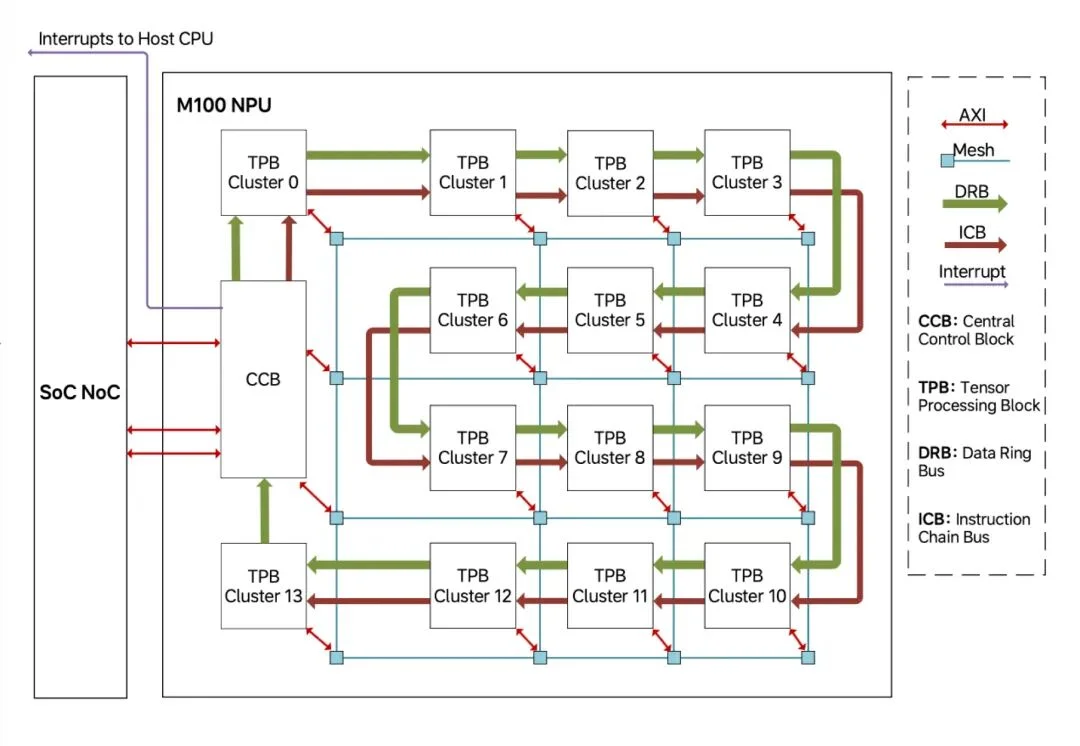
To meet data transmission demands for AI inference, the CCB and TPB are connected via two structures: a 2D Mesh Bus and a Data Ring Bus (DRB).
The 2D Mesh Bus provides scalable, high-bandwidth point-to-point communication among the TPB cluster, CCB, CPU, DMA, and SRAM. Under low-congestion conditions, it delivers up to 256 GB/s of bandwidth between any nodes while maintaining strong scalability. Meanwhile, the DRB offers a deterministic and efficient broadcast path with a total aggregate bandwidth of up to 256 GB/s, making it ideal for broadcasting data across multiple TPBs. The choice between using the Mesh or DRB is determined by software.
Additionally, an Instruction Chain Bus (ICB) connects the CCB to the TPB cluster in a daisy-chain configuration. RISC-V cores within the CCB use the ICB to issue instructions to single or multiple TPBs.
Beyond the primary NPU core, the MACH M100 chip includes several other key modules:
Eight LPDDR5X memory channels with a total capacity of 64GB, achieving a maximum bandwidth of 273 GB/s.
CPU: 24-core ARM Cortex-A78AE.
Imaging and Perception: MIPI-CSI is a camera serial interface supporting 11 video inputs; the ISP handles raw image processing.
Functional Safety: The Functional Safety Island (FSI) and Security Engine ensure the system meets functional safety standards.
Rich Interfaces: It integrates UFS, USB 3.1 interfaces, two 10Gb Ethernet interfaces, and various low-speed interfaces.
From 2025 to 2026, Li Auto conducted extensive testing and validation for the MACH M100 chip. According to the plan, the MACH M100 will debut in the all-new L9 model, with two chips installed per vehicle.
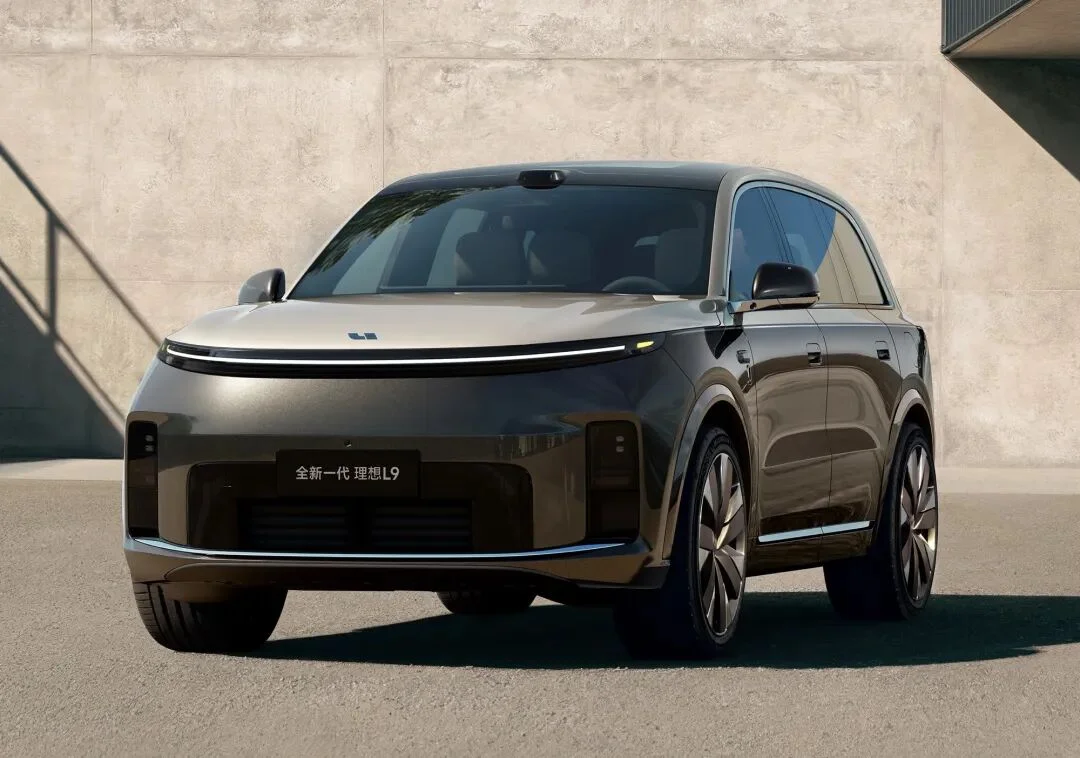
According to Xie Yan, thanks to the MACH M100, the core domain controller count in the all-new L9 has been reduced by one. Previously, Li Auto vehicles had three controllers: the cockpit controller, the central domain controller (XCU), and the driver assistance controller. In the all-new L9, the XCU and the driver assistance controller have been merged into a single unit.
More importantly, comparing the cost of a single chip alone, Li Auto's MACH M100 is cheaper than supplier solutions, even while achieving effective computing power three times that of the Thor-U.
In reality, the cost of a single chip does not include the massive hidden R&D investment. Xie Yan did not disclose exactly how much Li Auto spent on chip development, but stated that Li Auto's efficiency is very high. He also broke down in detail with us how the MACH M100 manages to save costs.
On one hand, the true cost of a chip is determined by shipment volume multiplied by the area of each chip. Often, the sheer number of units shipped masks differences in chip area.
Some may argue that automotive production volumes are far lower than those of smartphones. While smartphone shipments often reach hundreds of millions, a new-energy vehicle manufacturer selling only several hundred thousand units annually cannot amortize R&D costs effectively. However, automotive chips offer significantly higher computing power and occupy a much larger silicon area than mobile chips. Once a certain scale is reached, the AI computing silicon area required by the automotive industry will surpass that of smartphones.
Beyond cost considerations, supplier chip prices include R&D expenses and profit margins, making them expensive. By developing its own chips, Li Auto can achieve substantial cost savings.
Furthermore, Xie Yan introduced the concept of 'effective computing power.' Standard-compute chips yield vastly different results when combined with software and models. Self-developed chips deliver higher effective computing power at a lower cost.
Of course, all low-cost advantages rely on sufficient sales volume. Xie Yan stated, 'With only 50,000 to 100,000 units, it is difficult to amortize high costs; but when sales reach several hundred thousand units or more, self-developed chips become highly cost-effective.'
Although Xie Yan did not formally confirm this, the statement implies that the MACH M100 will not be exclusive to the new L9. Future Li Auto models will also utilize self-developed chips. It is confirmed that the MACH M100 has only one version, with no distinction between high and low compute variants.
Regarding the impact of chips on automotive business, Xie Yan aims for an effect similar to Apple's approach: 'Apple does not sell processors separately, but combining chips with the operating system provides capabilities far exceeding competitors. Our starting point is to possess superior capabilities—differentiation. We can provide higher computing power integrated with our own models to achieve better performance and user experience. We hope that after launching these chips, we can establish this competitive advantage and ultimately bring a better experience to users.'
What exactly is this differentiated experience? In summary, it is about making the car drive more like a human. Specific metrics include seeing further and more accurately, smoother vehicle control, faster response times, and higher processing frequencies.
03The Automotive Industry Is the First to Implement AI Agents
In Xie Yan's view, the impact of AI on the automotive industry is not limited to enhancing driver assistance capabilities; it is driving cars toward a completely new product form: embodied intelligence.
Xie Yan cited Jensen Huang, who stated that in the digital world, AI is mobile electronics, while in the physical world, the next step for AI is to become mobile atoms.
An Agent that exists only in smartphones and computers essentially remains at the level of information processing. However, once it enters the physical world, it must possess the ability to act and complete tasks in three-dimensional space. Cars, precisely, are currently the most mature and large-scale carriers of embodied intelligence.
A vehicle naturally possesses sensors, computing power, actuators, and mobility—cameras handle perception, chips handle decision-making, and the chassis and powertrain handle execution. Compared to building a robot from scratch, a car already has almost all the foundational conditions required to become a robot; what is missing is simply connecting these capabilities effectively.
For this reason, Li Auto does not understand AI merely as an application.
Over the past two or three decades, software existed in the form of apps, with each application solving a specific problem. But in the AI era, this model is changing. Li Auto prefers to define future products through roles—not as individual tools, but as agents capable of continuous growth and expanding capabilities.
Onboard, the driver role can handle driving tasks, the secretary role can manage schedules, and similarly, the car can have a butler role to execute more complex tasks.
The reason cars will become a key entry point for this round of AI is fundamentally their scale.
Xie Yan noted that the automotive industry boasts a market scale in the hundreds of billions, enabling sustained investment and rapid iteration to continuously mature sensors, computing power, and control systems. Once these foundational capabilities are refined to an extreme level, they can be transferred to other forms such as robots, resulting in lower costs and clearer pathways.
This is somewhat analogous to the relationship between PCs and smartphones—not starting from scratch, but achieving a leap forward based on mature technologies from the previous generation.
From this perspective, automobiles are not only scenarios for AI implementation but also the infrastructure for the next-generation embodied intelligence industry.
04Appendix: Dialogue Transcript
1. In-house Chip Development Started in 2021
Q: When did Li Auto begin considering the development of in-house chips? Under what conditions and environment did you determine that current computing platforms and algorithm combinations were unsuitable for today's development? How did you approach this thinking at the time?
A: I joined Li Auto in 2022, but the idea to develop chips actually originated earlier, in 2021. At that time, most domestic companies were mimicking Tesla’s chip strategy, yet many only observed its superficial actions without touching upon the underlying essence. For instance, Tesla initially used NVIDIA chips before choosing to develop its own; the reasons behind this shift have rarely been discussed in depth.
We chose to develop in-house chips primarily based on the following considerations:
First, we believed that greater computing power provides algorithms with a larger design space. In 2022, the concept of Scaling Law had not yet been widely recognized by the public, even though OpenAI had already acknowledged it. However, we had a vague sense that higher computing power would lead to better performance, which in turn would deliver a superior user experience—a path we considered viable. Looking back at the earlier history of computer development, there was never a day when the demand for computing power and memory was fully satisfied. In the seventies and eighties, computers with only a few kilobytes of memory and frequencies in the hundreds of kilohertz were common; having tens or hundreds of kilobytes of memory was considered high-end, and a frequency of one megahertz defined a high-performance computer. If AI capabilities continue to grow, the road to fully autonomous L4 driving replacing human drivers remains long and requires significantly higher computing power. Given that technology is advancing rapidly and the demand for computing power is increasing, we believed that relying on external vendors would be too slow.
Second, by 2020, AI had reached a point where the Von Neumann architecture, which had dominated computer models for the previous six or seven decades, became a limiting factor in AI applications. From a technical perspective, CPUs and GPUs are optimizations built upon the Von Neumann architecture. We believed that moving forward, there was an opportunity for innovation in designing a complete computer architecture native to AI, spanning both software and hardware. Reviewing the history of human and computer development, leaps in computer architecture are often driven by new demands that previous-generation technologies could not satisfy. Next-generation architectures provide more native support for these new application scenarios, resulting in higher efficiency. Take the CPU as an example: Intel dominated CPU development. In the late 1980s and early 1990s, graphical computing began to emerge, dividing people into two camps. One group, including Jensen Huang of NVIDIA and AMD, believed that image computing would see explosive growth in the future and required specialized architectures—GPUs designed specifically for graphics processing. The other group, represented by Intel for a long time, held the view that dedicated architectures for graphics were unnecessary because CPUs were sufficient. This divergence persisted for a long time; although Intel eventually developed GPUs, they did not pursue them seriously. At its peak in 2009, Intel’s market capitalization was 20 times that of NVIDIA; today, the situation has reversed, with NVIDIA’s market cap being 20 times that of Intel.
At the time, Intel’s approach was that CPUs could handle graphics computing, albeit with lower efficiency. I believe that while GPUs and GPGPUs (General-Purpose computing on Graphics Processing Units) can certainly perform AI calculations, there is potential for even better architectures specifically designed around AI computation. Such an architecture could serve most future computing needs, provided that AI computing continues to grow rapidly. Today, the fastest-growing form of computing in the world is AI computing. In terms of volume, the annual global growth of traditional GPU and graphics computing is not expected to be very high. This presents an opportunity for innovation from a technological standpoint. Of course, cost is another consideration; supplier chips are quite expensive, so designing our own would be cheaper. I consider this the third factor. The preceding factors highlight the need for independent capability during periods of rapid development.
I have worked on compilers and, earlier in my career, on computer architecture. I started from the bottom up: I studied electronic engineering for my undergraduate degree, computer architecture for my graduate studies, then moved on to compilers, and further up to operating systems. After years of work, looking back, I realized that when one gains control over hardware and low-level joint design through software work, it enables transcendent design rather than dependence on suppliers. Alan Kay once said, 'Those who take software seriously should make their own hardware.' I strongly agree with this statement, which dates back to the 1970s. If Li Auto is to invest, it should emulate Apple: possessing not only its own products but also a powerful system layer—including operating systems, inference engines, and runtimes—and further down, its own hardware, with the ultimate goal of creating its own chips. Along this technological chain, such vertical integration creates distinct advantages.
The difference between Apple and Android lies in the fact that Apple’s operating system dictates how chips should be designed and what problems they should solve. Conversely, Apple’s chips provide differentiated capabilities to its operating system—capabilities that cannot be achieved solely through Android or off-the-shelf Qualcomm chips. This ability to achieve vertical integration offers differentiated value that a supplier model cannot provide. Future competition in the automotive sector will increasingly reflect this trend: leading companies will resemble Apple and Huawei, while other companies, unable to bear R&D costs, will rely more on purchasing generic solutions (shelf solutions), combining them, and optimizing them on top. This approach yields lower profits and requires less innovation and investment. Both models will coexist, but Li Auto aims to pursue the first model. For us, this does not mean making every type of chip, but rather focusing on AI chips. For any company committed to being AI-centric, developing AI chips is a necessary step. To become a leading company, one must undertake this task.
Q: From the decision to self-develop chips in 2021 to the MACH M100 chip being equipped in the all-new Li Auto L9, does the development pace meet expectations?
A: It basically meets expectations, as this is a long-term endeavor. We planned very meticulously from the start. We decided to begin chip development in 2021, officially launched the project in November 2022, began large-scale implementation in 2023, taped out in 2024, received wafers and conducted verification testing in 2025, and installed the chip in vehicles in 2026. The actual development of this chip took three and a half years, as there was preparatory work beforehand, such as building the team. If the planning is clear, the process moves forward like flowing water.
2. Innovations in Data Flow Architecture
Q: What specific problems did you encounter in real-world scenarios that led to the decision to develop your own chips, and how were they resolved?
A: First, you need significantly more computing power—thousands or even tens of thousands of TOPS—but the cost of such compute is high. You need to balance higher performance with affordability. If a supplier could offer half the price for three times the performance, we wouldn’t need to build our own. Because suppliers must serve all their customers, they cannot cater exclusively to one client, making it difficult to meet highly specialized customization needs. This is why Apple develops its own hardware while other companies buy from Qualcomm. Apple has extreme demands that suppliers struggle to fulfill. Qualcomm might say, 'I have other clients with similar needs; I can’t customize this just for you.' It’s akin to bespoke tailoring: if you create a chip tailored for a single company, it becomes hard to sell to others.
There is a deeper reason behind this. At the time, the industry hadn’t focused on differentiating through AI, but we saw the long-term potential. In the early days of the smartphone market, competition was diverse, with many players using Android and supplier chips, particularly in Shenzhen. I recall seeing a small phone company with only 20 employees in Shenzhen shipping tens of millions of units. During the initial phase of explosive demand growth, anyone who could produce a product found buyers. However, as the industry matured, products became increasingly homogenized, and market concentration rose. To stand out, differentiation at the upper layers became limited, as most easy opportunities had been exhausted. To achieve greater differentiation, you must move down to the foundation: your systems, chips, and models.
In the short term, cost and adaptation speed are key factors. When collaborating with suppliers, adaptation tends to be slower. Having an internal R&D team allows for much faster iteration cycles.
In the long term, it comes down to core competitiveness and barriers to entry. Consider the PC era: when everyone used Windows, Intel, and AMD, Apple computers stood out as unique, commanding a premium. Today, PC laptops are largely indistinguishable, leaving little room for differentiation. The current intense competition in the automotive industry stems partly from this same issue. Where does differentiation come from? Upper-layer features are easily copied. The more you integrate vertically and move toward the bottom layer, the higher the barrier to entry. This was part of our strategic layout from early on: to go deeper, tackling harder, more core technologies.
Of course, we don’t pursue every underlying technology. There is a misconception that self-developing chips means developing everything in-house. We only self-develop technologies that impact long-term competition and have room for continued development. If a technology has plateaued, self-development won’t yield a differentiated advantage. Only when a technology is evolving rapidly, changing daily, does the investment hold value. If executed well, our iteration and progress speeds can exceed the industry average by 1 order of magnitude, granting us further competitive advantages. These were the short- and long-term factors we considered.
Q: Your self-developed chip achieved successful tape-out in just two years, which is relatively fast in the industry. What did you do right to achieve this, and what challenges did you face during this period, and how were they resolved?
A: Compared with other companies of similar scale, we were indeed faster. We started last but finished not much later.
First, I believe the most critical factor is joint design. The key to chip design lies not in the design itself, but in understanding and analyzing requirements. Analyzing requirements, thoroughly comprehending them, and then translating them into design specifications is the most important process. The subsequent steps are mainly about how to implement those clear requirements. Therefore, we invested significant effort upfront—sharpening the axe does not delay the woodcutting. Our internal team collaborated on analysis from the very beginning. I told the chip team that everyone strongly agreed with this view: this chip was not designed by the chip team alone, but jointly with the model and autonomous driving teams. Without their input and insights, and without sitting down together for analysis, the direction would have been off, leading to wasted time.
Second, choosing the right architecture is also crucial. Selecting the correct architecture may not necessarily speed up the process, but it allows for a better balance between software and hardware, making design complexity clearer and more visible.
Third, throughout the process, everyone worked in coordination; it was not just the chip team working. Software and operating system teams collaborated highly with the chip team. I have never seen such a high degree of collaboration at other companies, nor in any company where I previously worked. This level of dense, cross-departmental synergy is unique.
Q: If self-developed chips offer so many advantages, some companies share our approach. What kind of companies have the capability to do this? What are the barriers you mentioned? Can any automaker undertake this?
A: That’s a good question. Everyone dreams of becoming number one in the world, but reality is harsh—not everyone can achieve it. I believe the following conditions are necessary:
First, scale. A certain size is required; if the scale is too small, self-development is not feasible. Looking at the industry, automotive is a major GDP-driving sector, and every company invests heavily in R&D. Developing chips requires a certain industrial scale. For example, in the toy industry, developing chips for toys lacks the R&D scale to support high capital investment or sustain long-term commitment. Thus, few toy companies invest in chip development, even with high profit margins, because the industry scale is insufficient.
Second, capability. Not every company in the industry has the ability to do this. Capability depends on two parts, one of which is scale—there is a ranking within the industry. Only when revenue reaches a certain level is there enough money to invest.
Third, cognition. Some choose to act; others choose not to. Some choose heavy investment; others choose light investment. If the first two conditions are identical, the decision then depends on cognition. For instance, if you believe that in-house chip development does not yield long-term value, you may choose not to do it or invest lightly. Other companies might choose to develop a single chip as a trial—a way of testing the waters. However, if you are firmly convinced that AI is a technology capable of creating differentiation, this work must be done. Of course, 'must be done' implies a step-by-step process, so cognition is critical because it determines whether you proceed at all.
Fourth, the team. I consider the previous conditions to be rigid. Once cognition is aligned, the scale is sufficient, and funding is available, a team can be built and suitable personnel matched, even if one starts from scratch. While the team is important, it is less critical than the first three conditions; data flow is an even less significant factor.
I personally believe there is a new Native for AI architecture that offers higher efficiency for AI tasks than GPUs. It is true that GPUs already achieve high efficiency in graphics computing. But that is not a new architecture—if we discuss architecture, two MIT professors proposed related theories in the 1970s, and my doctoral advisor also discussed them. This architecture did not advance over the past few decades because neither computational scale nor data scale were large enough. When both reach a certain magnitude, you realize that the Von Neumann architecture is control-flow-based and centralized. It is not unscalable, but the additional cost of scaling is higher and efficiency lower. Therefore, one can design entirely new computing architectures tailored to specific forms. We have persisted in following this path.
Q: For an inference chip, memory bandwidth is crucial. Is the current memory solution for the MACH M100 chip external, or integrated onto the die?
A: For DDR, it is external. On-die, we use SRAM, which will be larger. This means we do not need to move large amounts of data to/from DDR, because once data traverses DDR, performance drops.
Let me briefly explain matters related to processor architecture. Because we employ a dataflow architecture, we have an advantage: we do not need to route data through DDR. Instead, we can keep data within on-chip memory, which is faster. This is an advantage brought by the dataflow architecture.
Q: So its SRAM size is quite large, in a significant order of magnitude?
A: It is substantial. Moreover, we use distributed SRAM, which differs from other architectures where SRAM is often a single monolithic block. Ours is distributed.
Q: Is this SRAM dedicated to the NPU, or is it shared with the SoC?
A: It’s a bit different. We haven’t actually presented this structure in full detail yet. Within the chip, the processor is primarily divided into two parts. One part consists of CPU cores; large CPU cores are used to run control commands, such as Linux-based control logic, which essentially resides on the CPU. The other part, occupying more than half of the chip’s area, is entirely dedicated to AI computation. This AI computation section utilizes a dataflow architecture. The SRAM I mentioned earlier is mostly located within this NPU area, where it is distributed and relatively large.
Q: We just saw the application efficiency of the model. Does building chips with higher compute power aim to raise the upper limit of models?
A: Yes. There is a positive correlation between the model’s potential and the provided compute power and scale, and this relationship will remain proportional over the long term. Although some argue that smaller scales can achieve the same efficiency, generally speaking, efficiency and scale are not contradictory. You can always pursue larger scales while continuously improving efficiency at any given scale. These two factors complement each other rather than opposing one another. Moreover, this vehicle is not limited to autonomous driving; we hope it will perform many other tasks, so compute power is the foundation.
Beyond automotive applications, with the rise of Agents, we can already observe that cloud inference compute costs are rising. As application scales grow and become more proactive, the cost of compute increases. In response, leading companies want to know how to better manage their costs and efficiency while aiming for larger scales.
3. Close Collaboration Between Chip and Algorithm Teams
Q: During the earnings call, Xiang Ge mentioned adjustments to the R&D organization, shifting from a function-based development structure to a concept centered on creating a digital human. Why is this organizational form necessary, and what benefits does it bring?
A: The basic logic is that the organizational structure must align with the business architecture. As the business direction evolves, the organizational structure must match accordingly. First, how do we view our business and products? We believe they are increasingly resembling robots. A car equipped with seven to eleven cameras and high-resolution LiDAR has many ‘eyes’ like a human, along with a ‘brain’ and powerful computing capabilities. Even without the MACH M100 chip, vehicles currently equipped with the Thor-U chip possess the strongest personal compute power. When combined with your computer, smartphone, and other devices, their AI compute power still cannot match that of the vehicle.
Then the car has autonomous action capabilities and can move in a three-dimensional world, so its development direction is toward greater autonomy. Recently, we added 'be proactive.' This proactivity includes our products being proactive. Previously, they were passive—just tools. In the future, cars will become more proactive, capable of doing many things on their own. It’s like OpenClaw and Claude Code: you don’t need to tell it step by step what to do; instead, you describe the task clearly, and it thinks through how to complete it. I believe autonomous driving is the first task in a 3D world that can be completed proactively. It is proactive because you haven’t told it to turn left or right. You simply set a navigation route, and the entire process in between is handled by the system. From this perspective, our product becomes similar to embodied intelligence, so our organization must adapt accordingly. That is the basic logic.
Q: How many people are currently in Li Auto’s chip development team, and how does it collaborate with the algorithm team?
A: We have about 200 people. We keep the team size lean to focus on the most core tasks. So, how do we define 'core'? It means focusing on the design of the most critical AI computing architecture. Of course, there are some suppliers involved, but mainly for integration, peripheral components, and backend work. The core technologies remain under our control.
The collaboration with the algorithm team is another advantage of our internal design approach. When designing chips internally, the chip team can collaborate very closely with the algorithm team. Moreover, this isn’t a case where cooperation begins only after the chip is designed; from the very beginning of the chip design phase, the algorithm team sits together with the chip design team to co-develop. This is crucial. I consider this one of the key competitive advantages of a product company compared to an independent chip company. Because we fully understand our product requirements and the long-term strategic thinking behind them, we can sit down together for joint design, making the design itself tighter, more efficient, and lower in cost with the product. Apple does exactly this. I have friends on Apple’s chip team who explained that their internal design collaborates closely with iOS. Many ideas they propose are unique in the industry, not coming from external parties but directly from internal teams’ immediate needs. Conversely, if these needs were taken outside to suppliers, they’ve tried it before, but suppliers said they couldn’t do it. As a supplier serving all clients, they wouldn’t want to customize a solution for just one customer unless you’re willing to pay a significant premium. There’s also the time cost factor. Therefore, the advantage of internal synergy allows us to execute well enough that, over the long term, integrating software, hardware, operating systems, chips, and models can build a very strong organizational competitiveness.
Q: Can you give an example of a requirement proposed by the algorithm team that suppliers couldn’t meet but which was highly beneficial internally?
A: For instance, when we reached 2023, large language models emerged, and we realized Transformer architectures were more important. At the beginning of 2024, we needed to temporarily or additionally optimize and consider Transformers. Our internal team moved quickly, completing it within a month. If it were an external supplier team or outsourcing company, they wouldn’t take on such a request unless you paid a huge sum, and even then, it might require a year-long iteration cycle—they operate on annual timelines. Even if it weren’t an outsourcing company but a dedicated chip firm, they still wouldn’t accept such a request. They won’t change their own technology roadmap for a single client. Therefore, only internal teams can respond rapidly to such needs.
4. MACH M100 Chip Deployment Plan
Q: The MACH M100 chip is a general-purpose model. In this new generation of Li Auto L9, intelligent driving, cockpit, and vehicle control are all deployed on a single chip. Does this correspond to what the industry previously referred to as 'cockpit-driving integration'?
A: No. As mentioned during the previous earnings call, the cockpit and driving domains have not been merged into a single unit. Previously, vehicles were equipped with three major controllers: one for the cockpit, one central domain controller (XCU), and one for autonomous driving (AD). Now that we have developed our own chip and the Star Ring OS, we have integrated the latter two functions, eliminating the need for a separate XCU controller. A single chip now handles the tasks previously managed by two controllers, supporting both AD and XCU capabilities. We utilize virtualization technology for the XCU function; while it appears to run two separate systems, the underlying computing power is provided by a single chip due to the high performance of the MACH M100.
Q: The MACH M100 chip will be featured in the all-new Li Auto L9. Will there be different versions or varying levels of computing power for the L8 and L7 models, similar to NVIDIA’s Orin and Thor chips?
A: We offer only one version and do not plan to produce multiple variants.
Q: What is the reason for this? Is it because this chip is exclusive to high-end models, or are there considerations regarding consumer psychology?
A: First, AI capability is a key differentiator for us, so we must provide the strongest computing power. Therefore, we will deploy this chip across all our vehicles. For high-end models, we can provide more computing power by using two chips; for example, the all-new Li Auto L9 Livis edition will use two units.
Q: Will the base model Li Auto L6 also feature the MACH M100 chip in the future?
A: Since the next-generation products have not yet been released, please stay tuned. However, in the long term, if a self-developed automotive chip offers higher computing power and lower BOM costs compared to purchased alternatives—proving to be both cheaper and better—automakers would certainly prefer to equip every vehicle with it.
Some may argue that using different tiers of chips for vehicles in different price ranges is necessary because equipping certain models with high-end chips might be meaningless or lack cost-effectiveness. However, when the cost-effectiveness is sufficiently high, all models should be considered highly cost-effective.
Q: Previous Li Auto models used NVIDIA chips based on CUDA. Since self-developed chips will need to use different methods, once a large number of these self-developed chips are installed in vehicles, will older models receive subsequent support for new algorithms?
A: We will continue to iterate on models for previous vehicle generations by using distillation methods to transfer models onto chips with lower computing power. As mentioned earlier, greater computing power is beneficial, but more power does not necessarily mean stronger performance; we are still continuing to upgrade. For example, the 2022 Li Auto L9 is still receiving updates, as this has been our tradition. Even the first-generation L9 from 2022 can run the latest VLA driver large model.
5. How much can user experience improve with the new chip?
Q: This is a concern for car owners: after using the intelligent driving chip, what upgrades will my experience see? For instance, Tesla’s FSD is effective due to low latency and faster decision-making speeds. What improvements does Li Auto offer in terms of intelligent driving experience?
A: The combination of larger chips and more efficient inference makes the vehicle drive more like a human, which manifests in several aspects.
First, it sees further and more accurately. Current autonomous driving systems sometimes cannot detect objects that are farther away or lack the detail needed to understand them. The new system improves range, accuracy, and comprehension.
Second, it drives more smoothly. This begins with human-like judgment, avoiding sudden braking or jerky movements, which relates to having better models. Better models require greater computing power, which serves as the foundation for the model's evolution toward smoother operation.
Third, response times must be faster. The duration from visual sensor input to control output for each individual decision needs to be shortened. This reduction is achieved through comprehensive optimization: not only must inference be fast, but also the response speed of the steer-by-wire system and the extra time consumed by the operating system. We aim to minimize these intervals to achieve quicker responses.
Additionally, the frequency must be high. After miniaturization, it can still process sensor signals at 15 frames per second, 20 frames per second, or even higher speeds, enabling smoother and safer performance.
You evaluate whether it is good. In the long term, there is another aspect: a sense of security. This sense of security means its behavior aligns with your expectations. The industry has not yet reached this stage; currently, discussions focus on whether maneuvers are smooth or decisive. However, if it is too decisive, you may feel uneasy. This fear stems from significant differences between its decision-making logic and human habits and cognition. It is akin to having a race car driver as your chauffeur; you would feel uncomfortable because their cognitive framework differs greatly from yours, even though they drive without accidents. Therefore, we will evolve in this direction, ensuring this 'driver' matches the driving habits and cognition of most people, which is also a development direction.
Q: Can general-purpose chips also be deployed in large-scale computing centers?
A: By general-purpose chip, I mean one that can run any model; it is not designed for training. You can use it for inference to add models, run robot models, or even deploy a small language model. That is what I mean by general-purpose. It is often compared to ASICs (Application-Specific Integrated Circuits). Originally, ASICs were defined for signal processing. Some extreme versions could only handle specific algorithms within signal processing and became unusable outside those parameters. Such chips can run language models, autonomous driving systems, and robot models in vehicles; the difference lies only in model capacity. If the model is too large, it cannot run on the vehicle.
Q: Besides providing intelligent driving capabilities, what other functions will be handled by the MACH M100 chip in the all-new Li Auto L9?
A: Since the product has not been released, please wait for the product launch event to announce specific capabilities. Moreover, the MACH M100 chip is not fixed to only these functions; it supports software upgrades. When you purchase a Livis system equipped with two computing chips, it means that beyond autonomous driving, other capabilities can be continuously upgraded, although autonomous driving capabilities are also evolving. Like smartphones, the applications available today do not represent all future possibilities; you can add more applications later.
Q: Most of the computing power in vehicles remains idle. Will you develop software to utilize it? If it is a computing platform, can it extend to robots?
A: Our logic aligns with Tesla's. The MACH M100 chip is not limited to autonomous driving; it can fully support robotics, as robots also rely on AI inference algorithms.
Q: Will you consider deploying an assistant in the car?
A: It can be deployed. However, it has not been released yet. Please stay tuned for details on how it will be deployed, what features will be included at launch, and what will be added in the future.
6. Outlook on Future Technologies
Q: The MACH M100 chip was launched earlier this year. What is the subsequent pace? Will collaboration with the algorithm team accelerate your iteration speed? As L4 autonomous driving inevitably requires hardware iterations, what will that iteration speed look like, and roughly when will it support the development of L4?
A: There is no consensus timeline for when L4 will arrive. For example, there is no guarantee that it will definitely happen by 2028 or 2030. Regarding the synergy you mentioned, we already collaborated during the chip design phase. After the chip’s release, the collaboration will become even tighter. This synergy comes from two aspects.
First, collaborative optimization. Our models are designed to better leverage the chip’s performance. There is significant room for improvement in software. Without optimizing the model, the performance difference can be substantial, even if the hardware remains unchanged.
Second, continued collaboration on how to develop the next-generation chip.
Q: What will be the rhythm for the next-generation chip? One year, two years, or three years?
A: That is not something I can disclose yet. It is also a strategic consideration; developing a chip is not a speculative move that solves all problems. If you believe AI technology will continue to advance, your path must keep moving forward. You cannot simply develop one chip to see if it works, decide this generation meets the needs, and then stop. NVIDIA and Intel follow a similar rhythm of releasing a new product every two years. While I cannot specify our current pace, as long as we believe AI is still growing, iteration is essential.
I believe AI growth is still in its very early stages. Regarding this question, I am curious about others' views. I think humanity is still in the early stages of AI applications; even ChatGPT does not constitute a major application. Agents like OpenClaw have only just begun to serve humans, and the scale of this service remains very small. Many tasks are still unachievable, and many people have not used these tools. When everyone integrates AI into every aspect of their lives, the computational scale will increase not by multiples or tens of times, but by thousands or ten-thousands of times. Therefore, development must continue indefinitely.
7. Model Architecture
Q: Your previous paper mentioned the Mixture of Experts (MoE) model. This term is frequently discussed in cloud contexts. In recent years, with theoretical cloud computing power capable of infinite expansion, why has attention shifted toward MoE models when considering edge devices?
A: Fundamentally, there is little difference between edge and cloud computing; the distinction lies merely in the fact that current edge computing capacity cannot match cloud-side capacity. Cloud systems utilize MoE because its essence is to achieve higher efficiency. Although models may appear to have hundreds of billions or trillions of parameters, only a fraction are activated. The number of activated parameters determines memory bandwidth requirements, which do not need to be as high. Particularly during the decoding phase, only a fraction of the bandwidth is required. Thus, this is an optimization technique that remains valid when applied to edge devices. Because I require larger models, even with high computing power, I must consider how to utilize it more efficiently.
Q: A characteristic of MoE is that all expert models must be included during deployment. In this context, did this factor influence your design of large chips?
A: I consider this a deployment consideration. When we designed the chip in 2022 and 2023, this was not our starting point because MoE had not yet emerged. Therefore, it is not directly related.
Q: However, I sense a mutual reinforcement between the two.
A: This involves strategic considerations, which are long-term and unchanging. Today, AI models are evolving; since 2022, the paradigm of AI models has shifted several times. The emergence of ChatGPT was one shift, followed by reinforcement learning (RL), and other seemingly minor but significant changes. Strategy focuses on what remains constant: the need for more computing power. Additionally, when application scenarios begin to explode, inference costs become a critical issue. Integrating systems for optimization can yield excess value, superior to separate supply designs. Separate supply design represents better division of labor when technology enters a plateau phase, allowing companies to avoid bearing R&D costs. However, in terms of efficiency during a technological rise, centralized design is best because it enables the fastest iteration. Therefore, our strategy for self-developed chips focuses more on these unchanging factors, as the changing elements are difficult to capture.
Q: Your paper divides inference into understanding and generation, two parts that seem to have conflicting requirements for the model. How do you view this issue?
A: I believe understanding and generation are essentially the same thing. Generation represents understanding. The fundamental principle of today’s language models stems from their ability to generate, which signifies comprehension. For instance, if you see a monkey speaking words that appear logical, you would likely conclude it possesses thinking capabilities; your judgment relies on this. Its ability to speak indicates an underlying logical chain that allows for correct reasoning. Thus, understanding, generation, and thinking are largely the same thing.
8. Lower Costs Than Suppliers
Q: You mentioned that making chips yourself is cheaper than using suppliers. Under what volume of shipments does this hold true?
A: There must be a certain level of shipment volume.
First, the industry often talks about 'how many units,' but 'units' do not tell the whole story. For example, 5 square millimeters counts as one unit, while 400 square millimeters, which is 80 times larger, also counts as one unit. 'Units' mask the difference in 'area.' The correct cost calculation should be shipment volume multiplied by the area of a single chip, which reflects the true cost. When foundries tape out, they charge based on area. Under the same area, small chips like those at 5 square millimeters can produce thousands of units, whereas large chips at 400 square millimeters might only yield dozens, yet the total price remains consistent. We operate under the premise that future automotive demand for AI computing power will be extremely high. Computing power can be converted into area; the area required per vehicle determines the AI computing cost, and when multiplied by production volume, this figure is substantial. Many assume automotive production volumes are far lower than those of smartphones, but our calculations show that once a certain scale is reached, the silicon area required for AI computing in the automotive industry will exceed that of the smartphone sector. Therefore, the automotive industry can support the demand for AI chips, with leading automakers having even greater capacity to sustain it.
Second, beyond cost factors, supplier chip prices include R&D costs and profit margins, making them not cheap. If we develop chips in-house, the potential cost savings are considerable. The figures we see today do not represent future sales volumes.
Third, effective computing power. When a company controls both its software and hardware, a chip with standard compute specifications can deliver vastly different results when integrated with its own software and models. Conversely, for the same level of performance, we can achieve it at a lower cost. Therefore, in-house developed chips offer significant advantages. However, this is contingent on possessing the necessary capabilities and having a sufficient sales volume base. If annual sales are only 50,000 or 100,000 units, it is difficult to amortize the high development costs; but when sales reach several hundred thousand units or more, self-developed chips become highly cost-effective.
Q: What financial metrics reflect the impact of self-developed chips? What is the target for profit per vehicle? Once our chips are installed in vehicles, how much do you expect them to boost auto sales?
A: Regarding how chips support the automotive business, we aim to replicate the effect seen with Apple smartphones. Apple does not sell processors separately, but by integrating its chips with its operating system, it delivers capabilities far surpassing competitors. Our starting point is that we must possess superior capabilities—specifically, differentiation. We can provide higher computing power combined with our proprietary models to achieve better performance and user experience. We hope that once these chips are launched, they will help us establish this competitive advantage, ultimately delivering a better experience for customers.
We believe autonomous driving will become a key factor in users' vehicle selection; without it, investments in AI would lose their meaning. AI itself influences user choice, primarily through autonomous driving. We have designed a relatively general-purpose AI processor rather than an ASIC (Application-Specific Integrated Circuit). It is not limited to autonomous driving but can also support other AI models. We refer to the Li Auto L9 Livis as 'embodied intelligence' because its AI capabilities extend beyond autonomous driving, resembling a robot that can assist with various tasks. The success of a chip is measured by two factors: whether it creates differentiation and its actual financial performance.
Furthermore, because we provide higher computing power, achieving equivalent effective computing power with purchased chips would require a greater quantity. It is not a one-to-one comparison; in reality, one of our chips corresponds to multiple purchased chips, resulting in a larger cost difference. Even on a per-chip basis, our chip's cost is inherently lower.
There are also implicit R&D benefits. In-house chips allow for faster iteration cycles and lower time costs, enabling quicker evolution. With our own chips, the iteration speed of our software and models accelerates, and the pace of chip releases increases. This is akin to the bottom wheel driving the wheels above it: the higher up you go, the faster the rotation.
Q: How much has Li Auto invested in chip development?
A: It is difficult to specify exact figures, but I can say that our efficiency is very high.
Many people judge capability by investment, but that is not the case. If we measured ability solely by investment, large companies would always dominate, and small ones would never grow. By that metric, NVIDIA’s market capitalization would not be 20 times that of Intel, even though Intel’s market cap was once 20 times larger than NVIDIA’s.
Q: What is the current chip production capacity like?
A: Fab capacity is currently tight, as are substrate and packaging/testing capacities. However, our supply is secure. AI chip capacity is extremely scarce and constrained today, but our supply remains guaranteed.
Q: More and more manufacturers are designing their own chips. Will this lead to a capacity squeeze in the future?
A: This involves personal judgment. I believe computing power and energy are indeed bottlenecks. The better the AI boom and the more AI applications, including agent-based uses, are adopted, the demand for computing power may grow super-linearly rather than linearly. The better autonomous driving performs, the higher the demand for computing power. Ultimately, on the manufacturing side, foundry growth will accelerate and become scarcer, which is indeed the case.
There is a misconception here. So many chip companies and startups are all seeking capacity. But the chip industry is one where if you are worse than your competitors, you simply cannot sell your products. Its evaluation metrics are singular; unlike clothing, bags, or vegetables where preferences vary, chip evaluation is straightforward: cost and performance. This creates a situation where the gap between good and bad is stark. Good is good, and bad is bad. This means that although there are many chip manufacturers, each claiming they need significant capacity, the actual volume that can be successfully sold is limited, making competition fierce.
Our advantage is that we serve our own products. Therefore, our demand for capacity is direct and lacks the high uncertainty faced by others. This is why foundries prioritize our supply needs.
9. Industry Competitive Landscape
Q: You mentioned that to become a leading automaker, one must develop chips in-house like Apple. If all carmakers were to develop their own chips in the future, would the competitive landscape resemble that of the smartphone industry? Would suppliers continue to provide chips to non-leading automakers?
A: It is difficult to evaluate this directly, but we can draw an analogy from the mobile phone industry. In-house development requires the financial and technical scale that only leading automakers can support. Conversely, self-developed chips help these leaders consolidate their competitive advantages, much like the relationship between Apple and Huawei. Not every company will follow this path; there will be mid-tier and smaller players, representing a significant market segment. This segment will rely on third-party chip suppliers, who themselves will be categorized into high-end, mid-range, and low-end tiers, catering to different product requirements and price points.
Q: In March, Huawei launched a 896-line LiDAR. From Li Auto's perspective, regarding sensor hardware integration, should we adopt higher-line LiDARs, or increase the computing power of our self-developed chips to rely primarily on cameras, thereby eliminating the need for sensor upgrades and iterations?
A: That is an excellent question. Huawei's LiDAR approach essentially approaches the resolution of a 4K camera. The so-called 896 lines are designed to approximate that level of detail.
We will pursue a fusion strategy combining LiDAR and visual data. First, we believe LiDAR is necessary because cameras alone lack depth information, which is crucial for intelligent driving. Humans estimate distance by calculating depth through brain processing. Therefore, we believe that combining LiDAR with vision provides superior, high-density depth data. LiDAR offers precise depth and distance information. By using our 3D ViT (Vision Transformer) model, we reconstruct point clouds, semantics, and pixels to build a more complete three-dimensional world model. This serves as our enhanced perception system.
10. Embodied AI and AI Development Trends
Q: Based on your understanding of AI, following the viral success of 'Lobster' (referring to AI agent demos), people are full of expectations for the arrival of Agents. Will the automotive intelligent agent be the first to emerge, and why?
A: I believe the automobile represents the physical world, whereas the term 'Agent' is quite broad. Current online discussions about agents, such as those involving 'lobsters,' primarily exist within the digital realm. When applied to the physical world, however, they involve tangible actions. A physical-world agent can at least assist in completing tasks in a three-dimensional space. Elon Musk described it even more abstractly as a 'mobile atom.' Unlike digital agents that move electrons, physical-world agents must move atoms. I believe the capability to move atoms will accelerate soon, as moving electrons has become increasingly scaled and mature. The next logical step is leveraging this maturity to manipulate the physical world.
Cars are an excellent embodied intelligence product. First, they possess computing power and sensors, giving them innate mobility. There is no need to build a robot from scratch; instead, when you buy such a car, it already has wheels, an engine, computing power, and cameras. What is missing is simply connecting these components together to form an embodied robot. This is easier than directly building a robot today, where you first have to assemble the body. Although we previously announced plans to build robots directly, this does not contradict the current view. I believe cars are very important embodied products. Moreover, the scale of the automotive industry is huge, so after research and development, many technologies will become mature. If you have sales revenue of hundreds of billions, you can continuously iterate on sensors, computing power, steer-by-wire, and powertrain systems to optimize them further. Once these elements are optimized to a high degree, migrating them to another body becomes easier.
This is somewhat analogous to how smartphones emerged after the PC industry had reached a high level of maturity. The earliest smartphones were essentially miniaturized PCs, combining miniaturized PC chips with compact laptop designs. The emergence of a new industry typically requires the preceding industry to mature and scale its technologies, which then enables the development of a new form factor.
In a sense, automobiles serve as a prerequisite for the further development of embodied intelligence. By scaling up and enhancing their intelligence, they create numerous favorable conditions for expanding into other forms of embodied intelligence.
Q: The automotive industry has been impacted. Can we say it has also benefited from the dividends of AI, achieving a leap in scale or capability?
A: We believe the next wave of automotive development will require new drivers of growth. A product exists to meet human needs, and its continuous evolution stems from its ability to satisfy emerging demands. The basic need for driving—transporting people to and from work—is largely satisfied. Internal combustion engine vehicles can fulfill this requirement, while electric vehicles further enhance it by offering a superior energy form.
After electrification, this demand stems from automation and intelligence. Therefore, the next step in automotive development must also be driven by further advancements in automation, intelligence, and proactive capabilities, which represents a key development direction. We are focusing on the needs of the majority of people. With electrification largely complete, we are now looking ahead to the next phase. I believe that next phase is one where I no longer need to drive; the car can do more for me, including tasks I hadn't previously considered. For example, it could pick up friends for me or take itself to get washed. In short, it will further satisfy needs that were previously unmet, marking the future development of automobiles.
Q: Is Li Auto also planning to develop AI applications? While hardware agents can solve many problems, people's lives also have a strong need for software solutions. Wouldn't it be better if we could address both?
A: My personal view is that in the coming era, the form of "apps" will no longer adequately describe development. You can imagine it as a role: you are not looking for an app to help solve one problem after another. We prefer to describe it as having a driver, a secretary, or a butler.
"Applications" is a term that has emerged only in the last two or three decades. Before that, we simply called them "software." When we develop embodied intelligence, our products are individual roles. You can understand this as us not just providing a car, but also a driver. In the future, if we build robots, we will provide you with a home manager or a housekeeper to help with cleaning. So, if you were to call it an application, it is not just one specific application; it is a role.
The difference between a role and an application is that an application has predefined steps—12345—whereas a role allows you to communicate with it, and its capabilities grow. As its abilities expand, it can perform more and more tasks.
Q: Your previously launched glasses, Livis, have a name very similar to Jarvis. Many people want an all-powerful assistant like Jarvis. Is this role something solved by general artificial intelligence (AGI), or is it currently limited to vertical domains, such as being defined solely as a driver?
A: I feel you need not just one, but a set—a more comprehensive concept. Silicon Valley has largely stopped talking about AGI because AGI is difficult to define. The so-called "omnipotence" is also hard to define. Not only is it difficult to define, but it is also hard to measure. Furthermore, you will find that its capabilities continue to grow, enabling it to do more things. We are providing increasing capabilities in the three-dimensional world: today it helps you drive, tomorrow it picks up your children. Does this resemble AGI? Perhaps from the day it could drive, it already possessed general understanding capabilities and so on.
Q: Does OpenClaw benefit the chip team or the R&D team? Are there practical application scenarios?
A: Because OpenClaw became popular earlier this year, and we started working on this project in 2022, I cannot say what impact it had on this generation of chips. By the time OpenClaw went viral, our chips were already close to being installed in vehicles.
However, AI technology affects all industries, including having a profound impact on chip design and operating system design. We are actively keeping pace with these developments.
11. Can AI assist in chip development?
Q: How does AI impact chip design?
A: Chip design is extremely complex, encompassing architecture design, RTL design, verification, software development, and operating system design. Broadly speaking, chip design includes all these components. AI can assist in each part. Human energy is limited; for highly detailed and rule-based tasks, if used appropriately, AI can be more focused and meticulous than humans, less prone to losing focus or missing key points. As I mentioned, AI can provide assistance throughout the entire chip design chain.
For example, consider testing. Chips are most vulnerable to bugs introduced during design because they cannot be corrected once tape-out occurs. Therefore, extensive testing is required, and AI can generate much of this test data. In the front-end phase, synthesis converts hardware description languages into logic or transistor-level representations. This process involves many rules that were previously handled by algorithmic methods but can now be optimized using AI. We have already implemented this; some of our tool providers currently offer AI-driven optimization tools that identify optimization opportunities humans might miss, thereby saving more chip area. Since PPA (Power, Performance, Area) is a major consideration in chip design, AI helps improve PPA metrics. Later, in compiler design, AI can potentially generate hardware languages or software logic supported by hardware directly from operators in frameworks like PyTorch or ONNX, effectively automating compiler functions.
Traditionally, compilers use a layered design, transforming high-level languages into quoted 'assembly' or other low-level languages supported by hardware. Now, AI can perform this task. Recently, Elon Musk stated on X that in the future, compilers will be built directly using AI.
Q: You mentioned AI’s role concentrated in chip R&D. Does AI bring significant changes to all R&D and manufacturing? Is there a measurable metric?
A: I just gave a few examples. In all our company's businesses, AI has been applied, and I believe it has achieved very good results, and it is still developing and enhancing. I think this aligns with the perspective on AGI. Many people ask, when will we reach AGI? Now, people in Silicon Valley say, don't talk about which day, because it changes every day. When one day you realize that you have become accustomed to it and cannot live without it, that is the point. So this is not something that can be measured by a simple numerical value or a specific day. You simply cannot say which day it will arrive, nor can you specify what proportion it represents. You only feel that efficiency improves every day compared to before, speed increases every day, and things get done better; all of this happens subtly. It is somewhat like physical fitness training. For example, in the high school entrance exam sports test, running requires a score of 100 points. One approach is to strengthen your physique daily. But you cannot say that eating an egg today improved my score by so many meters; this cannot be isolated for single-point measurement. You can only say that after your overall quality improves subtly, one day you will find the effect to be very significant.
Q: So, for enterprises, is the only option to fully embrace AI?
A: Yes. We believe in AI and have experienced its benefits firsthand. This is a comprehensive experience rather than a matter of high or low numerical values. AI makes efficiency higher.
By James Edited by Daji