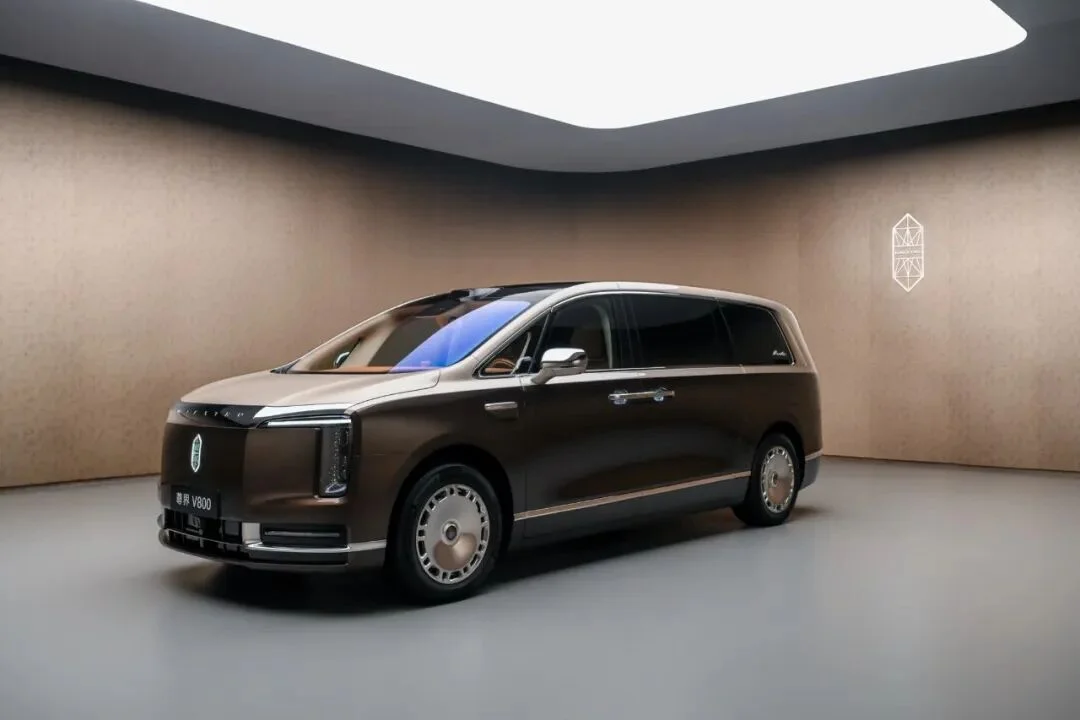
Maextro V680 and V800 Launch: First Owners Define New Standards for Ultra-Luxury MPVs
Key Findings:
The crossover appeal is significant; the Maextro MPV has expanded beyond the original Harmony Intelligent Mobility Alliance user base. Among the six in-depth interviewees, four were first-time Harmony Intelligent Mobility Alliance buyers, and three had never purchased a new energy vehicle before. The influence of the Maextro S800 within luxury circles has effectively reached more potential users.
High-end consumers are not seeking the "most expensive" option, but the "most suitable." Luxury buyers need a vehicle that can take over the primary role in their garage. As family, business, commuting, and long-distance travel needs increasingly overlap, luxury tailored to a single scenario is no longer sufficient; users require a new type of premium flagship capable of covering multiple identities.
Purchase decisions are faster, with buyers rarely comparing competitors before purchasing a Maextro MPV. Approximately 80% of users fell in love with the car at first sight or placed orders after only brief hesitation.
High-net-worth individuals pay for core capabilities. Before the Maextro V800, there were ultra-premium MPVs, but no super-luxury MPVs. Advanced driver assistance, mechanical performance, seat comfort, and privacy features are now mandatory requirements for users.
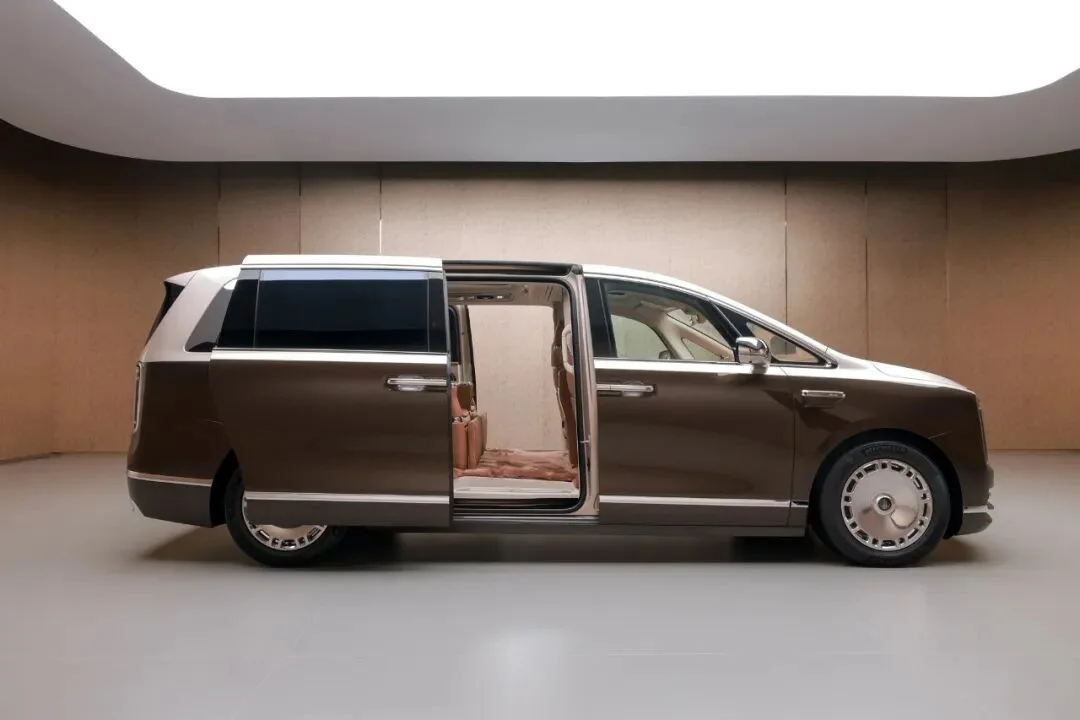
On the afternoon of August 5, 2026, the Maextro V680 and V800 officially launched. The V680 Zunxiang Edition starts at RMB 648,000. The larger Maextro V800 was offered in Zunxiang, Administrative, and Pilot editions, starting at RMB 766,000, RMB 866,000, and RMB 1,016,000, respectively.
The market responded quickly. Within one hour of launch, non-refundable deposit orders reached 2,115 units; within 24 hours, they exceeded 3,500 units. On August 31, the Maextro V800 began delivering its first batch of vehicles.
This launch velocity occurred in a market that is not short of products.
In recent years, Chinese luxury brands have risen rapidly, capturing a significant share of high-purchasing-power consumers. Yet the luxury MPV segment remains a particularly tough nut to crack. The million-yuan MPV market has long been dominated by the Toyota Alphard and Lexus LM, which once even became the king of price markups in China's automotive market. Can Chinese luxury brands not produce million-yuan MPVs? In 2026, Maextro finally provided its own answer.
This makes the initial batch of confirmed buyers of the Maextro V680 and V800 a group worth observing: Who exactly is buying these two vehicles? What did they drive previously? Are they purchasing Huawei technology, a luxury experience, or a new type of primary vehicle capable of accommodating both family life and business needs?
To this end, 42HOW Auto collected valid questionnaires from 20 confirmed buyers and conducted one-on-one in-depth interviews with six of them.
The final results are highly noteworthy: Among the 20 users, 16 made quick purchases upon first seeing the vehicle, and 14 had previously owned overseas luxury brand models. Of the six interviewees, four were first-time Harmony Intelligent Mobility Alliance brand buyers, and three were even first-time new energy vehicle (NEV) owners.
These results indicate that Maextro is beginning to persuade a cohort of overseas luxury car enthusiasts, as well as individuals who have never purchased NEVs, to choose its vehicles—even when selecting an NEV for the first time, they are doing so in the million-yuan premium segment.
Through these real-world choices, we observe that the value coordinates for million-yuan MPVs are shifting: Brand heritage and a boss's seat are no longer sufficient to define luxury. Only vehicles that can simultaneously meet family, business, long-distance travel, and intelligent driving needs qualify for the primary vehicle position among high-purchasing-power users. Maextro is crossing the threshold between traditional luxury and intelligent luxury.
At the same time, these users are discerning and knowledgeable buyers in the automotive market. When choosing a vehicle, they compare luxury brand MPVs with large luxury SUVs, but their decision-making process converges quickly: some vehicles excel in business use, others in family use, and some emphasize smart features, yet few can adequately serve multiple scenarios. The key reason this group ultimately chose the Maextro V680 and V800 is to reduce the number of compromises high-net-worth buyers have to make.
01Luxury car veterans are becoming new Maextro users
The first batch of confirmed buyers for the Maextro V680 and V800 exhibit distinct characteristics. They are primarily aged 31–40, with over half being parents. Most hold at least a bachelor’s degree and work in technology, finance, or cultural media. In terms of assets, nearly all initial confirmed owners own two or more real estate properties.
More importantly, they are the most loyal users of luxury brands. Their daily transportation choices generally fall into several categories:
Overseas luxury brand models: Mercedes-Maybach GLS 600, S480, Land Rover Defender 90, Audi A8L, Lexus LX570.
Domestic new energy vehicles: Yangwang U8, Maextro S800, Li Auto L9.
MPV models: Lexus LM 350h, Toyota Alphard, Toyota Vellfire, Zeekr 009, XPENG X9.
Yet this is not a monolithic group of older businessmen. It includes company executives as well as professionals from the finance, automotive, and tech industries; it comprises both multi-car owners and young families who upgraded from five-seat sedans like the BMW 5 Series or Mercedes-Benz E-Class to their first MPV.
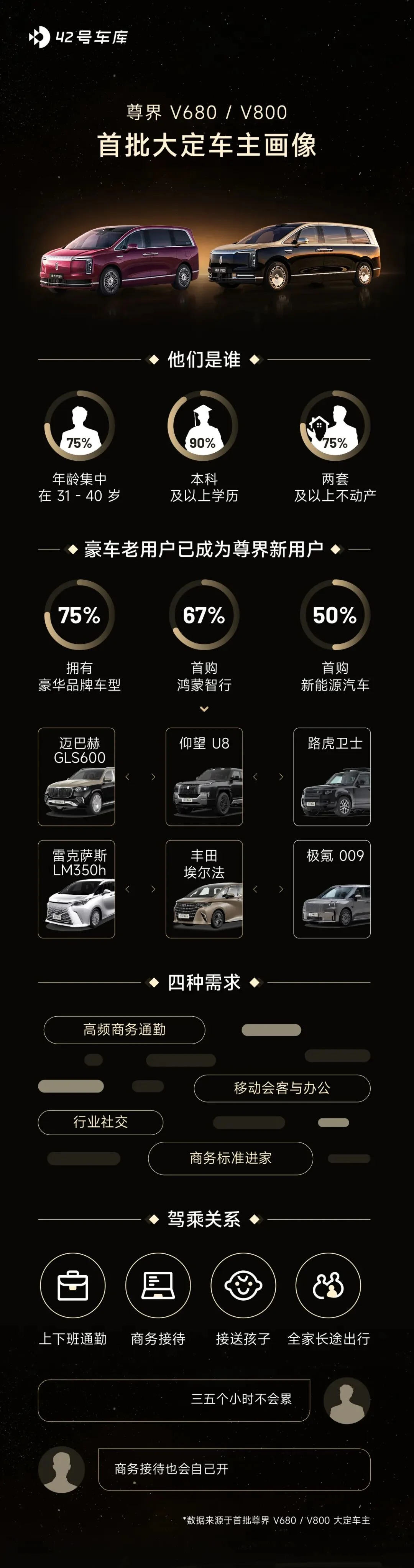
Based on our summary, in-depth interviews with users fall into four categories: high-frequency business commuters, mobile meeting and office users, tech showcase and industry socializers, and business-standard family users.
These categories are not mutually exclusive; a single user often simultaneously assumes multiple roles, such as operator, driver, and family member. What they seek is an MPV that can seamlessly switch between business, commuting, and family contexts, ultimately becoming the primary vehicle in their garage. Tasks previously requiring two separate cars are now consolidated into a single demand list.
Traditional luxury MPVs typically assume a designated driver with the owner seated in the second row, but these users' roles are not fixed. Mr. Lin and his wife both drive, leading them to choose the V680 for its more city-friendly dimensions; Mr. Liu switches between self-driving and having a driver; Ms. Zhu plans to work or rest in the rear seat during intercity trips.
They need the front row to reduce driving burden and the rear row to provide comfort, privacy, and mobile office space. The same vehicle may be used for self-commuting and client reception on weekdays, and for family outings on weekends. High-end buyers are no longer purchasing a fixed 'boss seat,' but rather a holistic experience that adapts to changing driving and riding roles.
02Irreplaceable in Users' Minds
First Impressions: Exceeding Expectations in Space and Luxury
The six users had different paths to encountering Maextro, but what prompted them to place deposits was the sense of completeness the product presented once it entered real life.
Ms. Zhu’s car-buying experience is very typical. During the Spring Festival this year, she experienced her friend’s Maextro S800, and the impression that stayed with her most was its comfort.
A few months later, when she started looking for a car, she reviewed the most expensive MPVs on the market but couldn’t find the feeling she had when riding in the Maextro S800. At that point, Ms. Zhu decided to look at Maextro MPVs and went directly to a store for an experience.
Ms. Zhu shared an amusing story from her car-viewing process. While sitting in the Maextro V800, she opened images of the Toyota Alphard on her phone. She said, 'I just scrolled through the pictures, and that night I placed the deposit. It was the Maextro.'
In short, the Maextro S800 brought Maextro into the luxury circle, while the V680 and V800 converted that circle reputation into new orders.
Mr. Wang, who works in Zhengzhou, had a more intuitive first reaction to the actual vehicle. He felt the second row was like a living room; switching from a BMW 5 Series to here was like 'moving into a flat-floor apartment with premium decoration.' This difference didn’t need a specification sheet to explain; it could be perceived upon first experience.
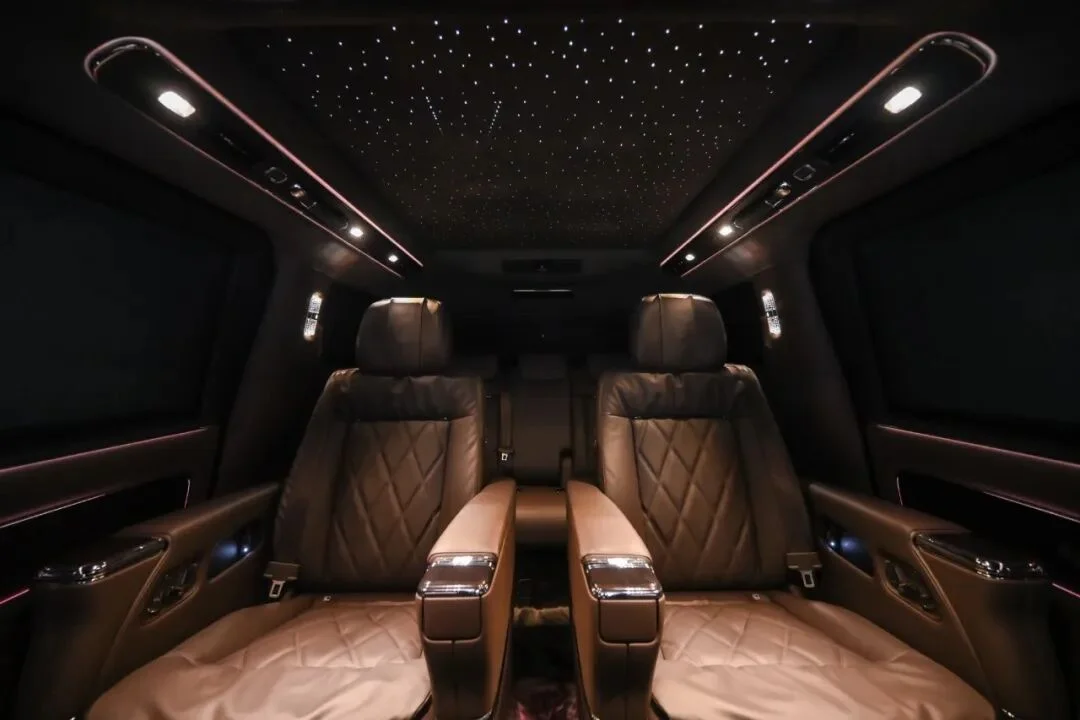
Mr. Lin did not need to build trust in the actual vehicle from scratch. He already owned an S800, AITO M9, Alphard, and Zeekr 009. Long-term experience made him clear about what the next MPV needed to fill. When the V680 went on pre-sale, he paid a reservation deposit, and immediately after the launch event, he placed a firm order: 'Basically, there are no cars that can compare with Maextro. Once it came out, you had to buy it.'
For existing Harmony Intelligent Mobility Alliance users, the physical vehicle is not about building trust from scratch, but rather enhancing an already established luxury experience.
High-end consumers are not inherently impulsive. On the contrary, their extensive exposure and driving experience allow them to quickly discern which features are merely additional lines on a specification sheet and which capabilities genuinely transform daily life.
Interviewees have examined the Lexus LM, Alphard, and Toyota Vellfire, while also comparing new energy MPVs such as the Zeekr 009, Li Auto MEGA, and XPENG X9. Traditional luxury MPVs carry mature business perceptions, whereas new energy MPVs each possess distinct strengths in intelligence or family-oriented experiences; users do not dismiss these values, they simply seek to minimize compromises.
Thus, when users state there are "no competitors," they do not mean that same-priced or same-sized models are absent from the market. Rather, it is difficult to find a single vehicle that simultaneously covers true third-row usability, full-passenger loading, long-distance comfort, Huawei Qiankun Intelligent Driving, private space, and business presence. Maextro is competing for tasks that a household previously divided among two or three vehicles.
Decision Chain: Almost No Hesitation
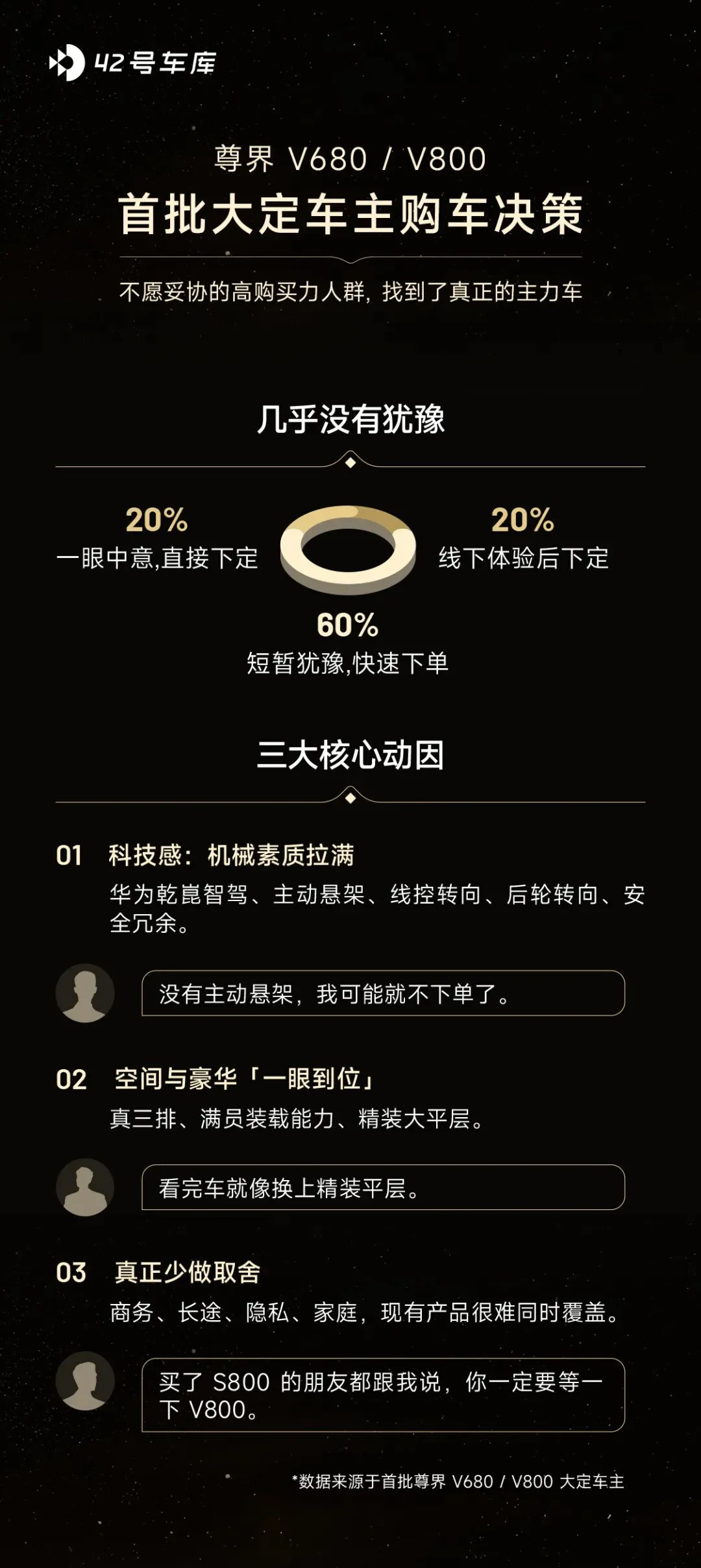
Among the questionnaires collected, 60% of users placed orders after brief hesitation, 20% decided immediately upon first seeing the car, and only four waited for an offline test drive. Why were users able to make rapid decisions with almost no hesitation?
Mr. Liu represents the latter group. As an automotive industry professional and frequent buyer of new energy vehicles, he has purchased models such as the Yangwang U8, Zeekr 009, and XPENG X9. For him, new cars serve both as technical samples and as business reception vehicles.
After the teaser for the Maextro MPV was released, he began paying attention and placed a reservation deposit as soon as pre-orders opened. After viewing the vehicle in advance to confirm the seats, interior, and business-oriented ambiance, he found the price range of RMB 800,000 to RMB 1,200,000 to be within expectations. His concern was not buying the wrong model, but missing out on the first batch of locked orders: "I'm anxious; I'm afraid I won't be among the first batch to lock in my order."
For Mr. Liu and other owners who have placed a firm deposit, the decision-making process can be summarized as follows: emergence of vehicle usage needs → rapid convergence of comparison scope → verification through real-vehicle experience or technical trust → final discussion with family members for confirmation → placement of the firm deposit.
Family members also influence the choice of model and trim, but rarely alter a brand that has already been decided upon.
Before the launch of the Maextro V800, Mr. Wang had been closely following the model and shared press conference footage and test drive videos with his wife. After watching them, she concluded that the Maextro V800 was well-suited for the travel needs of a two-child family and transferred the reservation deposit to him the next day. Her standard was simple: "It just needs to be comfortable to sit in." As for driving dynamics and the performance of driver assistance systems, she left those judgments to Mr. Wang, who drives more frequently.
Mr. Lin's wife handles the daily school runs and previously found the Mercedes-Benz V260 L difficult to park due to its size, prompting her desire for a smaller next vehicle. Ultimately, Mr. Lin directly reserved two Maextro V680 units. He emphasized that this decision "has nothing to do with budget"; the key factors are whether the size, safety, and driver assistance features suit high-frequency users.
Configuration Decisions: What They Buy Is Not More Features, But Fewer Regrets
Configuration choices follow two paths: one uses high-spec trims to reduce decision fatigue, while the other evaluates each feature against real-life utility.
Mr. Wang, who works in Shanghai, opted for the top-spec V800 Pilot Edition. The privacy glass with electrochromic film on the second and third rows met his frequent business negotiation needs. He also added the Cloud Water Azure package and the private beverage bar, bringing the total cost close to RMB 1.2 million. "If you go for the top spec, just take it," he said. "Comparing other options feels like a waste of time."
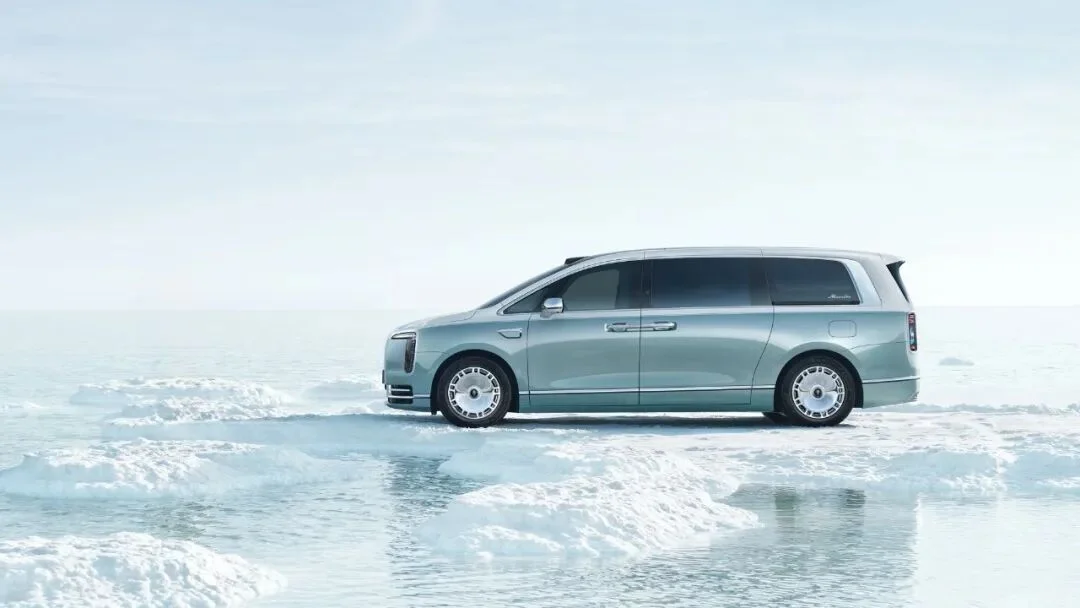
Mr. Lin selected the active suspension, steer-by-wire, and seat comfort packages, skipping the private beverage bar which he deemed low-utility. He didn't even check the price before placing his order: "Without the active suspension, I wouldn't have ordered it."
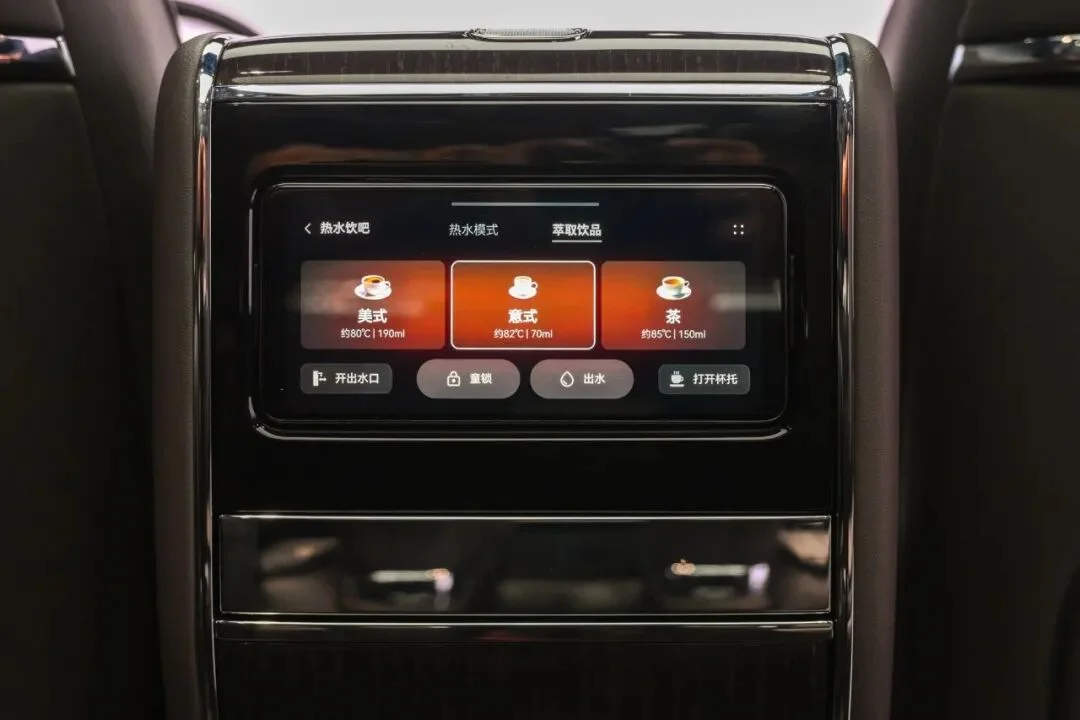
Mr. Liu's approach was similar. Not a coffee drinker, he skipped the private beverage bar and starry ceiling but kept the more practical privacy safe box, along with core packages like active suspension, steer-by-wire, and Huawei Qiankun Intelligent Driving.
These choices indicate that premium users are willing to pay for core capabilities such as driver assistance, mechanical architecture, seating comfort, and privacy, rather than measuring luxury by the sheer number of features. 'Getting it right in one step' isn't about filling every option; it's about ensuring no gaps in high-frequency experiences.
03It Feels Expensive the Moment You Sit Inside
In the traditional luxury car market, brand and price often establish value before the experience even begins. But for a new brand with a relatively short history, every detail inside the cabin must bear a more direct burden of proof.
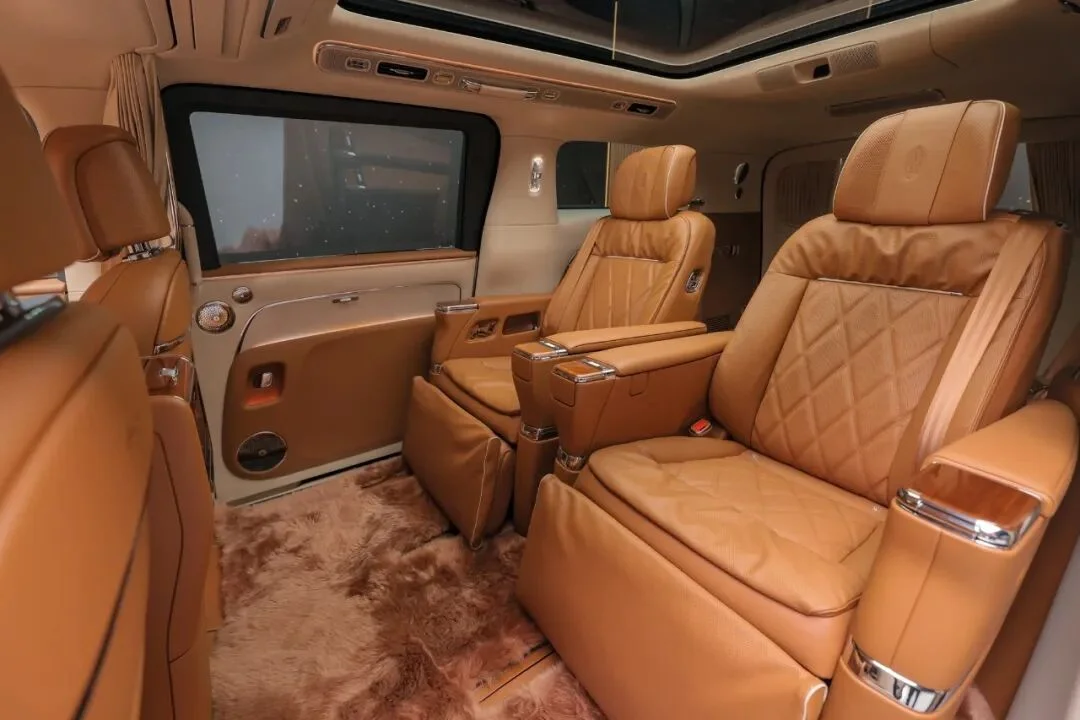
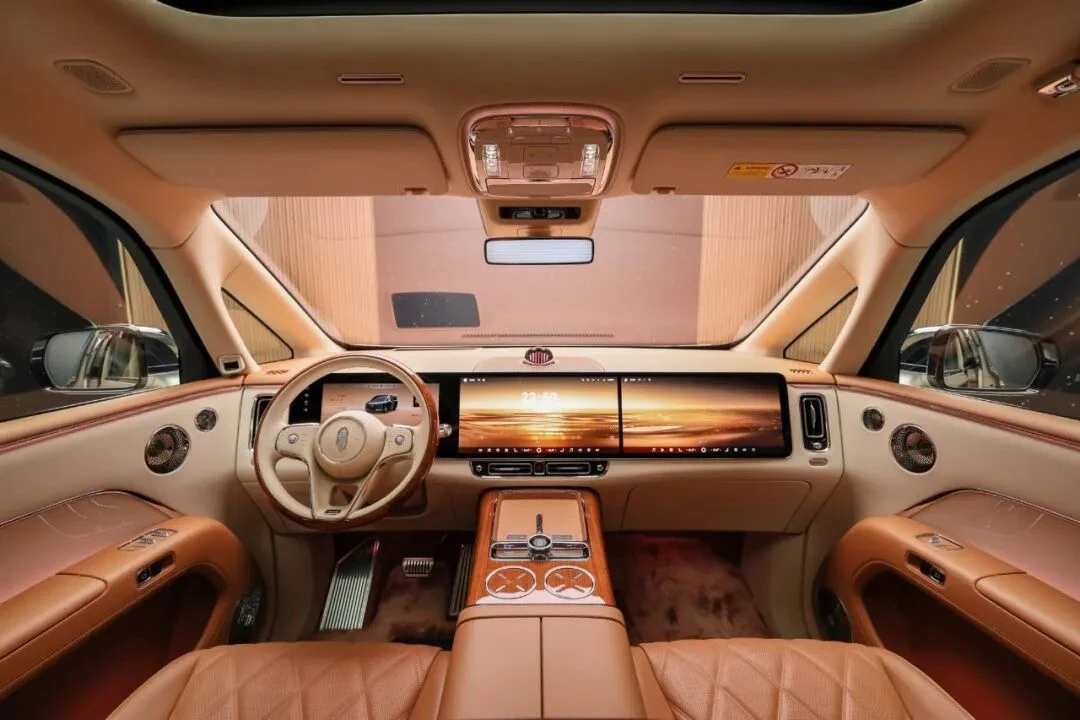
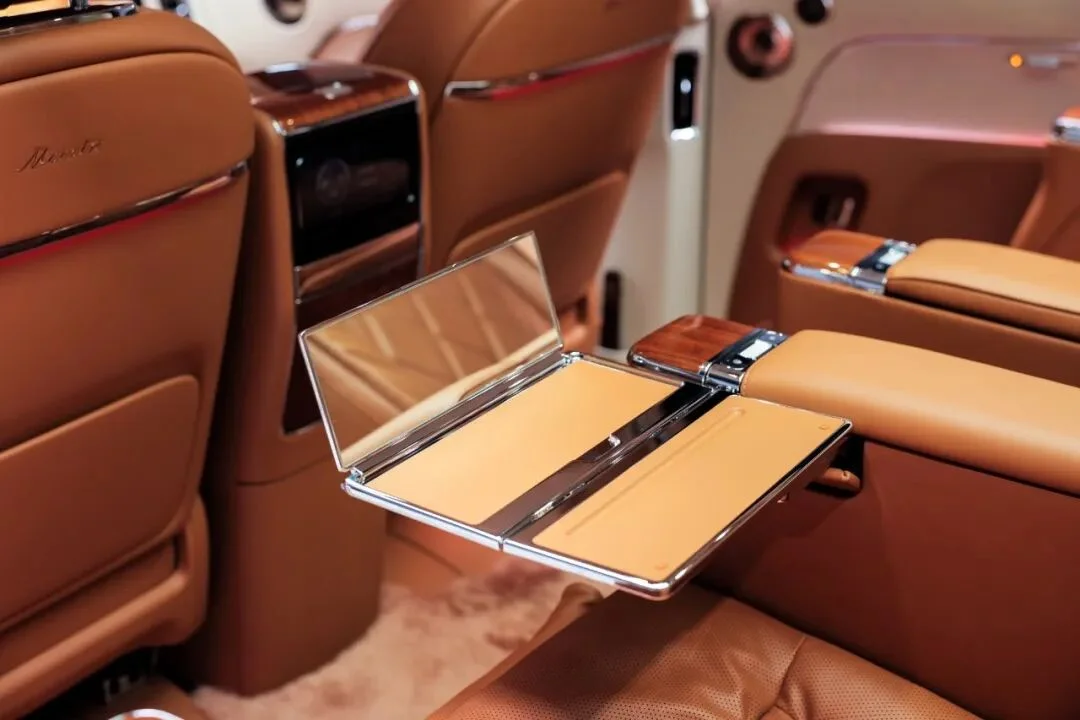
Mr. Mao’s perception of luxury in the V800 stems from a series of very specific details: wool carpets, leather handles with rivets, stainless steel guide rails, and crystal chandeliers. 'The materials used in these details immediately set it apart from other cars.' These elements are not about winning on the number of features, but rather jointly creating a sense of completeness through visual, tactile, and atmospheric cues.
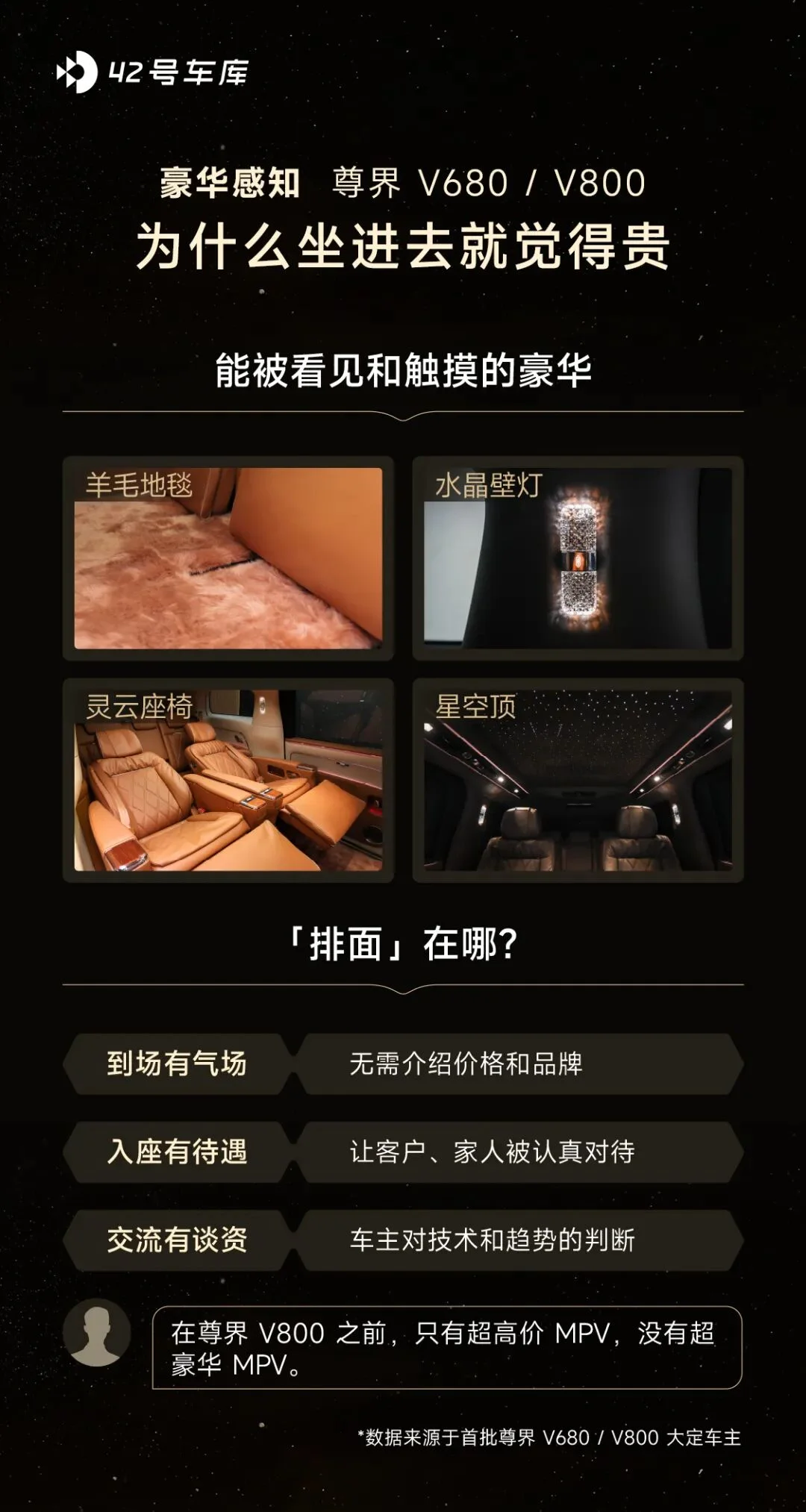
Mr. Wang, who works in Zhengzhou, compares the rear cabin to a 'finely decorated flat,' while Mr. Lin feels the V680 'looks expensive' from the start, noting that its seat wrapping and leather touch represent an upgrade from the MPVs he previously owned. The value of premium materials lies in the fact that passengers don’t need to memorize material names; they simply feel why the car is expensive once the doors are closed.
Mechanical capabilities are also entering users’ judgments of luxury. Mr. Lin considers active suspension a bottom-line requirement for placing an order, and other respondents expressed willingness to pay extra for core capabilities such as active suspension, steer-by-wire, and safety redundancy.
In the past, the core of a luxury MPV was defined by genuine leather, wood trim, quietness, and a sufficiently spacious second-row seat. Now, whether driving is effortless, cornering is composed, body stability is maintained in complex road conditions, and whether there is redundancy in active safety, all begin to determine whether users are willing to pay a million-yuan price tag.
Thus, luxury extends from static to dynamic: you should feel the premium quality when sitting inside, and the vehicle must continuously justify that price when driving.
Furthermore, face value has not disappeared from high-end consumption; only its method of verification is changing.
Mr. Wang, who works in Zhengzhou, expects that seven out of ten scenarios for the Maextro V800 after taking delivery will be work-related. He hopes partners will have an excellent experience when viewing the vehicle’s exterior, feeling the interior materials, and assessing its privacy and smart features. Mr. Liu works in the automotive industry, and his clients are already focused on cutting-edge technology; for him, the Maextro V800 serves as a business conversation starter because it is the industry’s first MPV equipped with an 800-volt fully active suspension and steer-by-wire, along with an enhanced architecture oriented toward L3 autonomous driving. He said, 'When clients see you’ve bought this, they’ll say, “I’ll go experience it another day.”'
In the past, social value came from whether others recognized the car badge; new status symbols now require passengers to personally feel the differences in materials, technology, privacy, and space. For business users, this also means providing quiet, dignified reception during trips and facilitating natural conversations around new technologies. It demonstrates not only purchasing power but also the owner’s judgment regarding new technologies and industry trends.
04Million-yuan luxury: The real journey begins after delivery
Our interviews took place before formal deliveries, but the six users had many specific visions for future usage scenarios. The most frequently mentioned topics were assisted driving, active safety, and long-distance comfort.
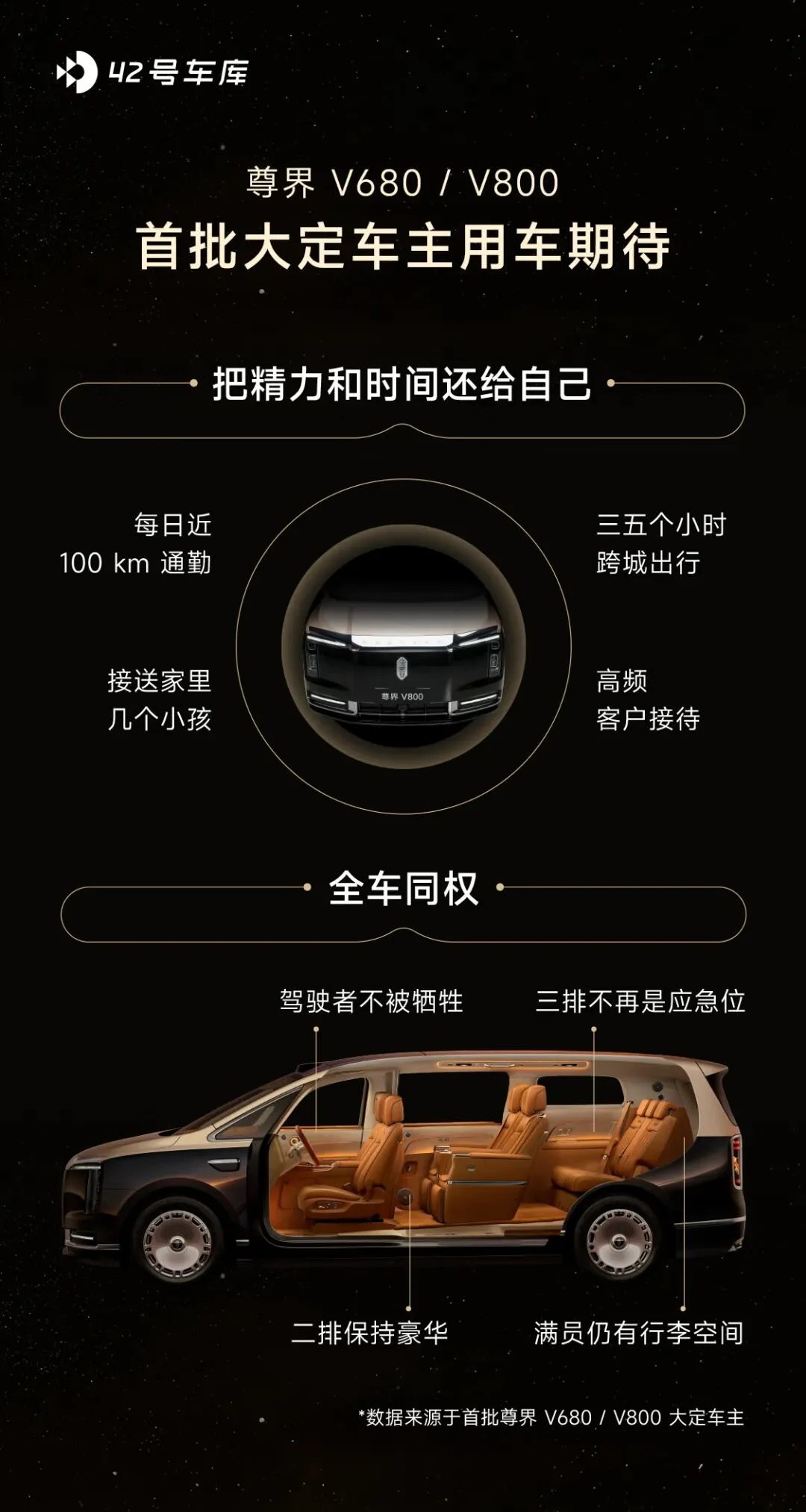
Previously, discomfort on long journeys seemed inevitable for every major deposit-paying owner. Mr. Wang, working in Zhengzhou, commutes 100 kilometers daily and suffers from cervical spine issues; Ms. Zhu frequently travels 300 kilometers across cities; and Mr. Mao has long-distance needs lasting five or six hours. All hope the vehicle reduces fatigue while driving or riding. As discussions around L3 autonomous driving heated up, they began paying attention to the underlying architecture; public information shows that the V800 adopts dual-redundancy designs in key areas such as the computing platform, steering, braking, and power distribution.
Regarding space, past luxury MPVs often defined value around the second row: if the boss’s seat was comfortable enough, the vehicle had largely fulfilled its mission. But for this group of users, the second row is just one part of the equation. They do not accept the third row being treated like an 'emergency bench'; instead, they demand equal rights for every seat in the vehicle, requiring sufficient luggage space even when fully loaded.
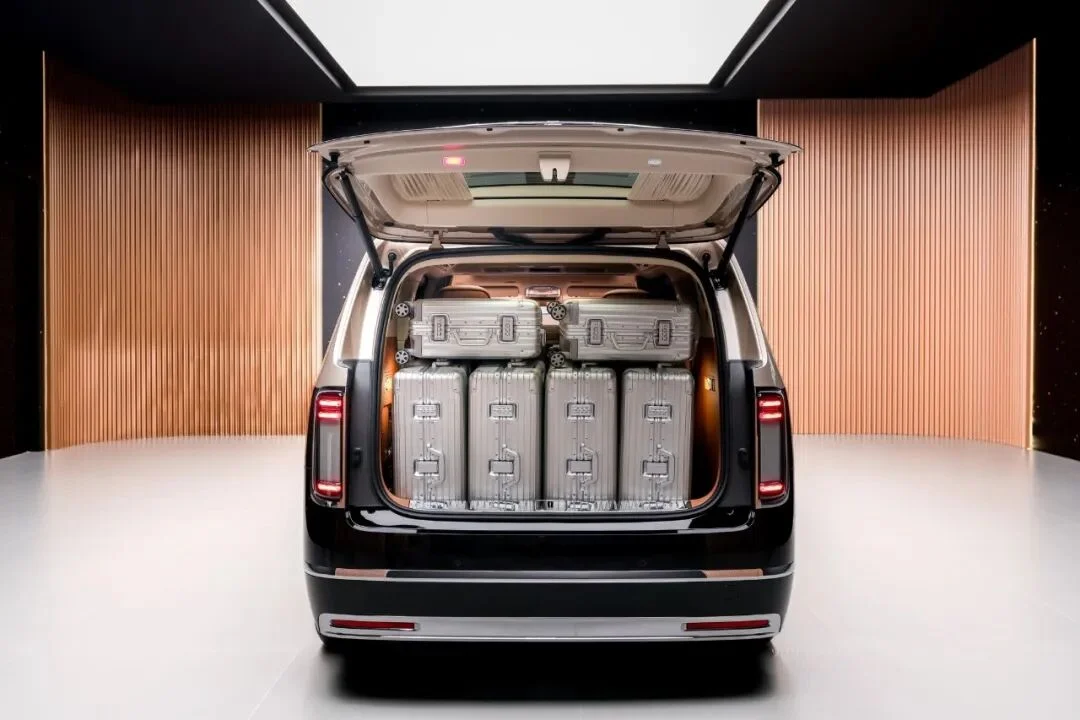
Drivers are no longer overlooked in the luxury narrative. Users care not only about rear-seat comfort but also about driver-position NVH, long-distance fatigue, turning radius, and parking needs; additionally, they consider diverse usage scenarios such as whether children can lie down to rest and whether it is convenient for elderly passengers to get in and out.
Clearly, the value proposition of MPVs has shifted from 'boss seats' to 'whole-vehicle experience.'
Beyond the "hardware luxury" conveyed by exterior and interior design, the "service luxury" provided by showrooms, after-sales support, and issue resolution is equally important. The vehicle creates the first impression, but service determines whether that experience can be sustained.
Mr. Mao expects valet pickup and delivery, accident representation, and on-site service; Mr. Lin hopes to complete vehicle pickup, handling, and return with a single phone call. Both point to the same need: less time consumption and less coordination required from users.
For ultra-luxury brands, hardware luxury determines whether users place an order, while service luxury determines whether the brand can retain these customers.
05Final Thoughts
Maextro V680 and V800 early confirmed buyers have extensive experience with luxury vehicles and are at a stage where their careers, families, and vehicles are all upgrading simultaneously. They placed orders quickly because Maextro left them with almost no compromises across intelligent features, multi-passenger travel, business image, and long-distance comfort. Four of the six in-depth interviewees had no prior experience using Harmony Intelligent Mobility Alliance vehicles, indicating that Maextro is expanding beyond its existing owner base.
At the same time, we can summarize four clearer industry judgments.
First, ultra-luxury MPVs are shifting from scarcity premiums to experience premiums. In the past, imported status, brand heritage, and supply scarcity were enough to justify high prices; today, while these elements still hold value, they no longer suffice to support million-yuan pricing. High prices must be converted into comprehensive space, dynamic capability, intelligent safety, private experience, and sustainable service for users to feel their money is truly well spent in the vehicle.
Second, ultra-luxury MPVs are evolving from chauffeur-driven executive cars into the new primary vehicles for high-net-worth families. Business and family life are no longer strictly separate. A vehicle needs to accommodate client meetings on weekdays, weekend trips with children, long-distance comfort for parents, and allow owners to freely switch between driving themselves and handing over to a driver. This versatility represents the core value of next-generation ultra-luxury MPVs.
Third, intelligence is the entry ticket for million-yuan luxury. Advanced driver assistance, active safety, steer-by-wire, and active suspension are now listed alongside premium leather and wood trim as standard configuration items.
Fourth, the anchor for social prestige is shifting from brand recognition to verifiable experience. High-end users have not abandoned social value, but they no longer settle for others merely recognizing a logo from a distance. They want passengers to perceive the owner’s taste and choices through space, materials, privacy, technology, and the vehicle’s overall presence once seated inside.
For this group of users who already own multiple luxury cars and have abundant choices, buying an even more expensive car is not difficult; what is difficult is finding one that truly suits them. It must handle business reception duties while caring for family travel, allowing the owner to drive with ease while ensuring every passenger rides comfortably. The so-called 'most right' choice means no longer sacrificing other important experiences for the sake of a single type of luxury.
Clearly, the Maextro V680 and V800 are addressing the high-net-worth demand for luxury. As usage scenarios for business and family continue to merge, the Maextro V680 and V800 will become the new benchmark for premium primary vehicles in consumers’ minds.
Written by: James Edited by: Daji