


DENZA N7 Launches From RMB 301,800; Chinese EV Brands Top Thailand June Sales
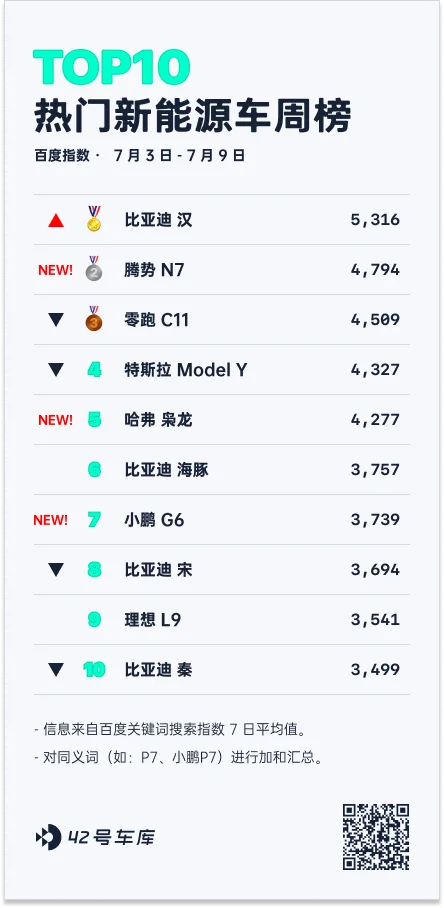
01Weekly Index
02Weekly Highlights
DENZA N7 Launches with Starting Price of RMB 301,800
On July 3, DENZA held the global launch event for the N7 in Beijing. During the event, the pricing for the DENZA N7 was fully revealed: the starting price is RMB 301,800, and the highest price is RMB 379,800.
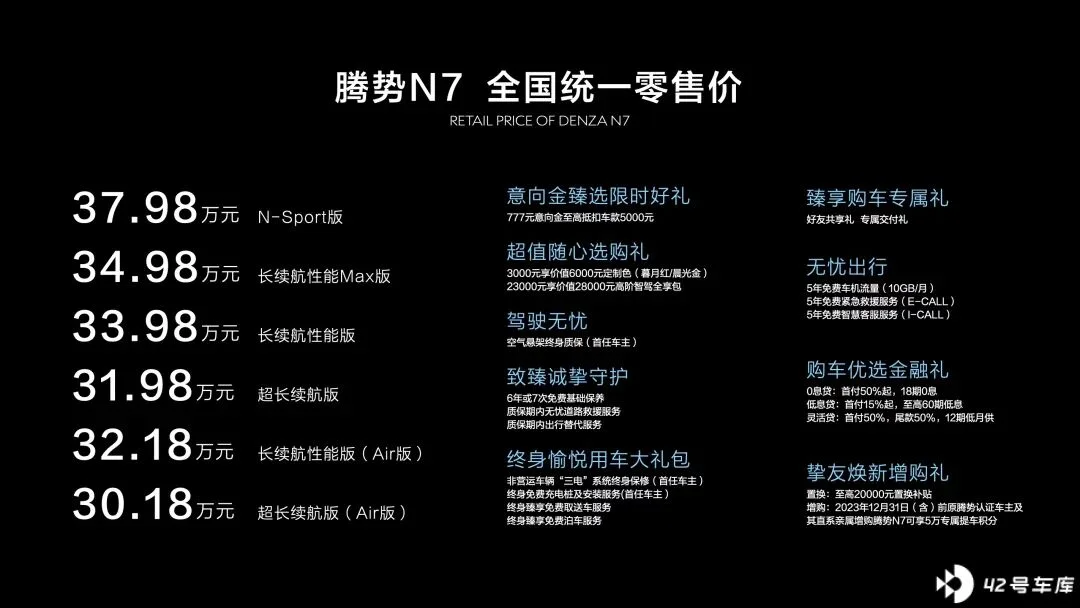
The prices for DENZA N7 versions equipped with the Yunjian-A system are as follows:
N-Sport version, priced at RMB 379,800;
Long-Range Performance MAX version, priced at RMB 349,800;
Long-Range Performance version, priced at RMB 339,800;
Super Long-Range version, priced at RMB 319,800.
The Air version, which does not feature the Yunjian-A system, is priced at RMB 18,000 less than the Standard version:
Long-Range Performance version (Air), priced at RMB 321,800;
Super Long-Range version (Air), priced at RMB 301,800.
In terms of hardware, the DENZA N7 is generously equipped.
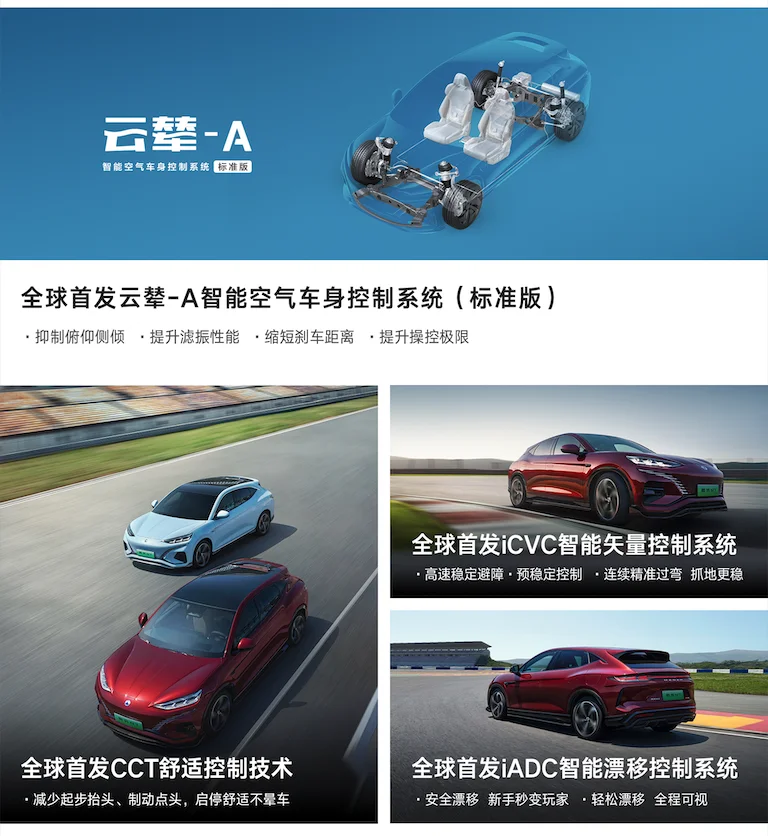
At the body control level, the DENZA N7 is built on the upgraded e-Platform 3.0 for DENZA. The standard version features the first-ever installation of the Cloud-A intelligent air body control system, offering CCT comfort control technology, the iCVC intelligent vector control system for advanced chassis dynamics, and the iADC intelligent drift control system.
Among these, the upgraded e-Platform 3.0 for DENZA adopts a highly integrated vehicle platform architecture, incorporating CTB battery-to-body integration technology, iTAC intelligent torque control, an SUV-exclusive four-wheel-drive high-performance architecture, and an intelligent domain control architecture. It evolves from the original 'battery sandwich' structure to a 'whole-vehicle sandwich' structure, providing greater interior space while significantly enhancing the vehicle's off-road capability and safety.
On the interior configuration level, the DENZA N7 comes standard across all trims with over 200 luxury features, including French Devialet audio systems, a six-screen setup, premium NAPPA leather throughout the vehicle, and electric sunshades. It is also equipped with DENZA’s pioneering 5D cloud-feel ergonomic seats, with seat adjustment, massage, ventilation, and heating functions included as standard equipment.
In terms of the intelligent cockpit, the DENZA N7 provides customized functions based on different seating positions. It features a six-screen configuration comprising the central control screen, passenger screen, instrument cluster display, AR-HUD, and dual-side intelligent air vent displays, supporting multi-screen information sharing and interaction.
Charging: Dual-gun charging delivers a maximum power of 230 kW, while single-gun charging reaches up to 150 kW. The system is compatible with mainstream public DC charging stations across China. It can replenish 350 km of range in as little as 15 minutes and also supports supplying up to 60 kW of power to external devices.
Driver assistance: DENZA Pilot’s advanced intelligent driving assistance system features an NVIDIA Orin-X chip providing 254 TOPS of computing power. Sensor hardware includes 33 sensors and one domain controller: two LiDARs, five millimeter-wave radars, two front-facing cameras, four side-view HD cameras, four surround-view cameras, one rear-view camera, 12 ultrasonic radars, one OMS camera, one DVR camera, and one DMS camera.
Quick Review:
During the pre-sale period, the DENZA N7 secured 25,000 orders. Replacement buyers account for 68% of this volume, with more than 55% being former BMW, Mercedes-Benz, or Audi owners. By 2025, DENZA plans to launch seven new models, including one MPV, three SUVs, and three sedans, covering a price range from RMB 300,000 to RMB 800,000. The N7 is the first of these three SUVs to arrive, followed by the N8 and N9, which are positioned higher. The N8 will be a six-seat mid-to-large SUV and will offer a plug-in hybrid variant, indicating significant growth potential for the brand.
XPENG pushes new OTA update to comprehensively optimize intelligent driving experience
On July 6, XPENG officially rolled out the latest OTA update, Xmart OS 4.3.0, for all XPENG G9 and P7i models.
This update brings a comprehensive upgrade to the full-scenario intelligent driver assistance system, including Highway NGP and City NGP. The goal is to deliver a driving experience approaching L4-level autonomy.
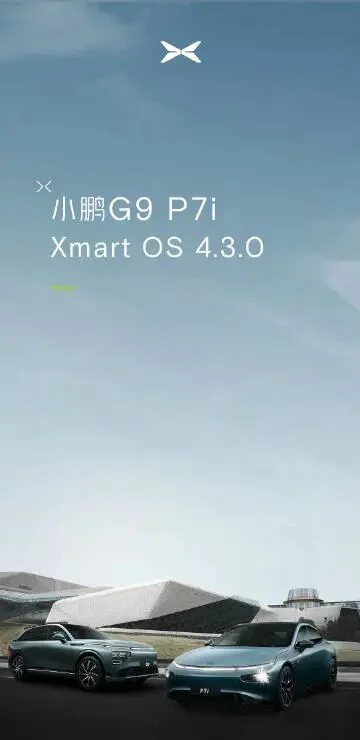
The defining feature of this update is the comprehensively upgraded XNGP full-scenario intelligent driver assistance system, which unifies the technical architecture and capabilities of both Highway NGP and Urban NGP.
In other words, this version of Highway NGP is empowered by the technology from Urban NGP—thereby enabling an experience with no performance downgrade, no need for manual takeover, no intrusive alerts, and no unnecessary delays. At the same time, the Urban NGP function continues to be optimized, expanding its available coverage to Foshan and Beijing.
The available road segments for Urban NGP in Shanghai have also increased significantly, and the interaction experience has been enhanced considerably.
In addition, this OTA update introduces and optimizes multiple features in infotainment interaction, comfort, and convenience, including practical additions such as commute route display and traffic light countdown timers.
Quick Review:
With this update from XPENG, the Urban NGP feature has been optimized, and its scope of application is continuously expanding. The optimized Urban NGP is expected to better handle complex urban driving environments, providing improved driving comfort.
Dear Pengyou, what do you think of the actual experience brought by this functional upgrade from XPENG?
Zhongguoqichegongyexiehui Issues Statement: Statements Involving "Prices" Violate the Spirit of the Anti-Monopoly Law
On July 6, 2023, Zhongguoqichegongyexiehui organized 16 automakers to jointly issue a commitment letter. The aim was to fulfill the association's obligation to maintain fair market competition in accordance with Article 14 of the Anti-Monopoly Law, which states: 'Industry associations shall strengthen industry self-discipline, guide operators within their industries to compete lawfully, operate in compliance with regulations, and maintain market competition order.'
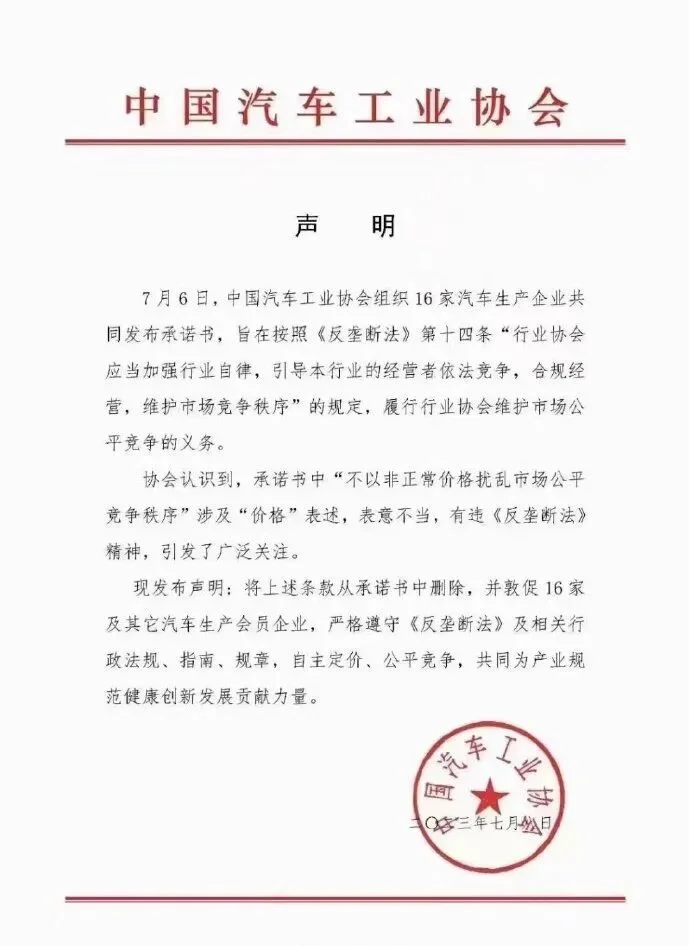
The association acknowledged that the phrasing in the commitment letter—'not to disrupt fair market competition order with abnormal prices'—involved the term 'prices,' which was imprecise and inconsistent with the spirit of the Anti-Monopoly Law. This sparked widespread attention.
A statement is now issued: The aforementioned clause has been removed from the commitment letter. The association urges the 16 automotive manufacturing member enterprises, as well as others, to strictly abide by the Anti-Monopoly Law and related administrative regulations, guidelines, and rules. They are called upon to set prices independently, compete fairly, and jointly contribute to the standardized, healthy, and innovative development of the industry.
On July 6, at the China Automotive Forum, 16 automakers signed the 'Commitment Letter on Maintaining Fair Market Order in the Automotive Industry.' These automakers include: Yiqi, Dongfeng, Shangqi, Changan, Beiqi, Guangqi, Zhongguozhongqi, Chery, Jianghuai, Geely, Changcheng, BYD, NIO, Lixiang, XPENG, and Tesla.
Quick Review:
Following the release of this statement, two new energy vehicle models have already announced price reductions. On July 7, Shangqi Volkswagen ID.3 saw a maximum price cut of 37,000 yuan, with a starting price of 125,900 yuan. On July 10, Kaidilakeruige's price reduction reached up to 78,000 yuan. The latest guided price for Kaidilakeruige ranges from 379,700 to 419,700 yuan, down from the original guided price of 439,700 to 479,700 yuan. Additionally, placing an order before August 31 grants a deposit expansion benefit where 2,000 yuan can be used as 20,000 yuan.
Do you think future new energy vehicles will continue to see price cuts?
Thailand's Pure Electric Vehicle Market Sales Rankings Revealed: Top Three All Chinese Brands
The top three best-selling pure electric vehicles in Thailand's June market were all from Chinese brands.
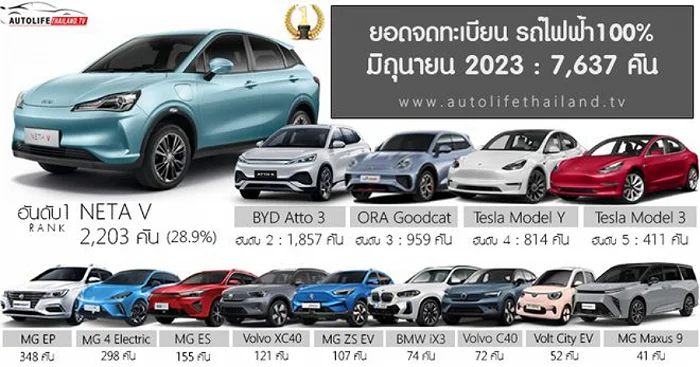
According to Autolife's statistics, the number of pure electric vehicle registrations in Thailand in June was 7,637. The specific rankings are as follows:
First place: Nezha V, with 2,203 units.
Second place: BYD Atto 3, with 1,857 units.
Third place: Oulahaomao, with 959 units.
Fourth place: Tesla Model Y, with 814 units.
Fifth, the Tesla Model 3, with 411 units.
Quick Review:
Currently, the total volume of the Thailand electric vehicle market is not large, and the top three models from Chinese brands are all lower-end vehicles. We speculate that there is still considerable room for growth for Chinese brand models in the Thai market in the future. As domestic electric vehicles gradually internationalize, we believe that Chinese EVs will soon be seen on more overseas sales rankings as well.
Xiaomi’s First Model Pricing Complete
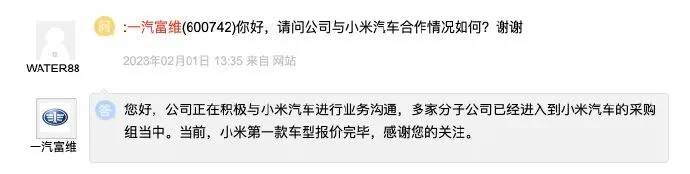
Recently, on the SSE e-Interactive platform, Yiqifuwei responded to a netizen’s question regarding “cooperation status with Xiaomi Auto” by stating: The company is actively communicating business matters with Xiaomi Auto, and multiple subsidiaries have already entered Xiaomi Auto’s procurement group.
At present, pricing for Xiaomi’s first model has been completed. Previously, during Xiaomi Group’s earnings conference call, Xiaomi President Lu Weibing stated that Xiaomi Auto’s progress this year will meet or slightly exceed expectations. Subsequently, summer and winter testing will proceed as planned, and the vehicle will be unveiled to the public in the first half of next year.
Quick Review:
Xiaomi’s first car is getting closer to reality, with an increasing amount of information circulating online. We are eager to see what surprises a smartphone manufacturer can bring to the automotive world.
Lixiang Delivers Its 400,000th Vehicle; the Model Is Li L7
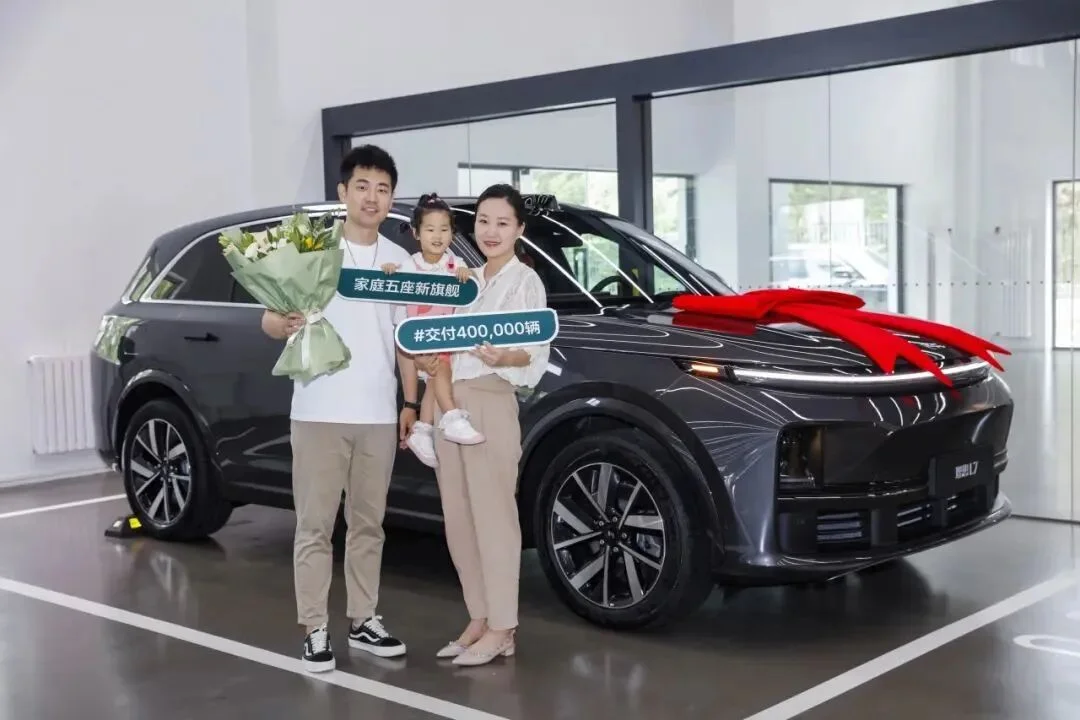
On July 5, Li Auto completed its 400,000th vehicle delivery, with the model being the Li L7. Since officially beginning deliveries in December 2019, Li Auto reached this milestone in just 42 months, becoming the fastest new-energy automaker in China to deliver 400,000 units. Notably, it took less than four months for Li Auto to go from the 300,000th to the 400,000th delivery.
Quick Review:
As the Lixiang model lineup gradually improves and production capacity ramps up, it is expected that Lixiang's subsequent delivery speed will become faster. When do you think Lixiang will deliver its 500,000th vehicle, and how long will it take?
Written by: Jiaming Edited by: Jiaming