


Lynk & Co's Lin Jie: Zeekr and Lynk & Co Strategic Integration Is Inevitable
On November 14, Geely Holding announced an optimization of the equity structure for Zeekr and Lynk & Co to drive comprehensive strategic synergy between the two brands. The announcement coincided with Zeekr’s release of its third-quarter 2024 financial report and came on the eve of the Guangzhou Auto Show.
Given these events, whether at Zeekr’s Q3 earnings call or at the auto show where automakers showcase their strength, key questions emerged: Are Zeekr and Lynk & Co merging or separating? How will their product lines be arranged? And are they facing financial challenges?
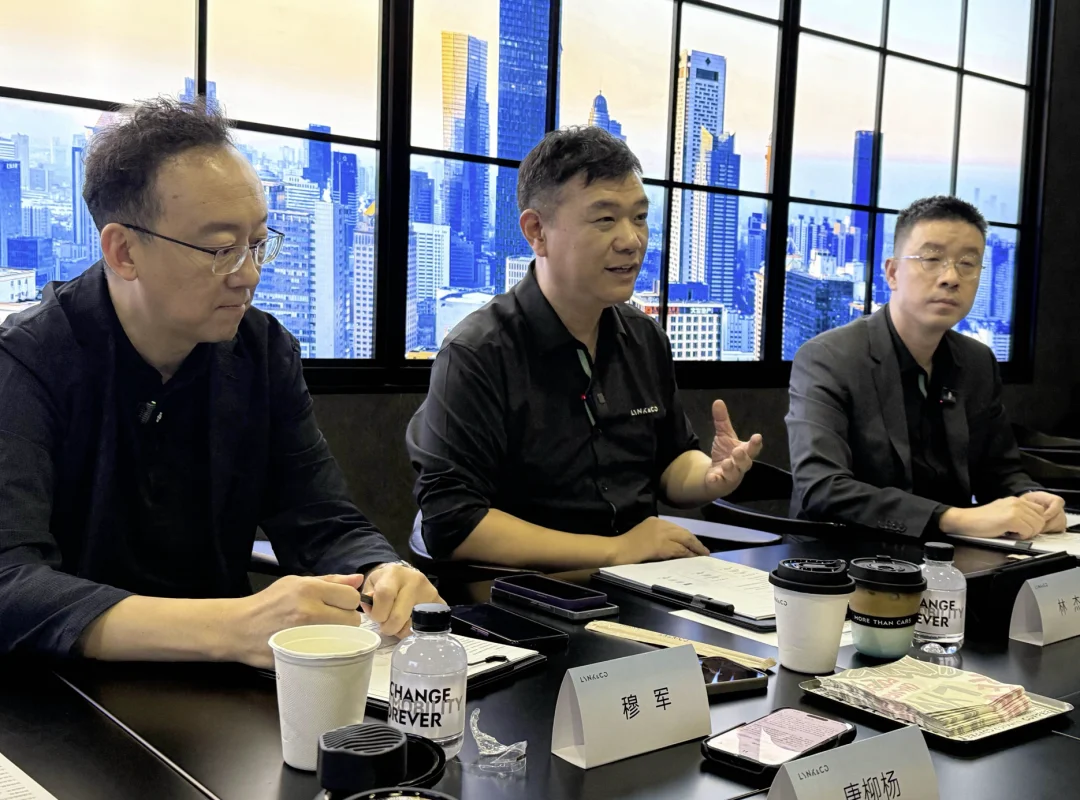
To address these questions, we interviewed Lin Jie, Senior Vice President of Geely Automobile Holdings and General Manager of Lynk & Co Auto Sales Co., Ltd.; Mu Jun, Deputy General Manager of Lynk & Co Auto Sales Co., Ltd.; and Chen Xiaofei, another Deputy General Manager of Lynk & Co Auto Sales Co., Ltd. They provided answers regarding brand positioning, product strategy, and financial matters.
In summary, Zeekr and Lynk & Co will integrate operations in technology, manufacturing, services, and market expansion, while maintaining distinct brand positioning and product roadmaps.
In terms of specific product definitions and technology, the strategy for Lynk & Co to focus on compact pure-electric vehicles and mid-size hybrids, while Zeekr targets mid-size pure-electric vehicles and large hybrids, represents a new direction in product development. This approach aims to reduce internal friction between the brands and ensure each brand assumes responsibility within its own market segment.
Consequently, Zeekr will no longer develop A-segment pure-electric products in the future, and its hybrid offerings will be limited to D- and E-segments. For pure-electric vehicles, Lynk & Co will concentrate more on the A-segment market, while expanding its hybrid lineup across A-, B-, and C-segment niches.
However, the strategic synergy between the two brands does not involve the smart cockpits and autonomous driving systems of current models; their respective intelligent solutions will not be integrated at this time. Meanwhile, the upgrade and iteration of each brand's own systems remain unaffected.
The news of integrating the two brands may seem sudden, but it has actually been in the making for a long time.
Lin Jie stated that plans for the integration of Zeekr and Lynk & Co were already in place before the launch of the Lynk & Co Z10.
In the early days of Zeekr, an overly optimistic internal forecast of the pure electric market led to some overlap in product lines between Zeekr and Lynk & Co today. With the rapid rise of plug-in hybrid vehicles (PHEVs), the structure of the new energy vehicle market has changed. For both Zeekr and Lynk & Co, "it is time to make decisive moves," rather than following industry speculation that "infers capital situations from phenomena."
After completing the integration, the goal for both brands is to strive to become a high-end luxury automotive group with an annual production and sales volume of one million units by 2026.
Below is the main content of the interview, edited without changing the original meaning:
Q: When did Zeekr and Lynk & Co decide on strategic synergy? Why pursue it, and is it related to financial pressure?
A: Because we need to coordinate and implement the merger plan with three listed companies, the planning has been underway for quite some time—at least since before the launch of the Lynk & Co Z10.
Lynk & Co was established in 2016. In the context of China's market environment at that time, Geely established this brand to compete head-on with foreign high-end brands and enter developed countries. With the unique advantage of its parent company, Geely Holding Group (stock code 0175), owning Woerwo, Lynk & Co was initially formed through a tripartite joint venture among 0175, Woerwo, and the parent company.
Zeekr was spun off from 0175, considering the capital market environment at the time, to ensure Zeekr could develop rapidly without increasing the burden on 0175's minority shareholders, serving as a vanguard to drive 0175's comprehensive transition to new energy and intelligence.
Speculation about financial pressure is a reverse-engineered view of the capital situation based on current phenomena, but that is not the case. During the period when Zeekr was separating from Lynk & Co, the entire capital market was full of opportunities, and everyone was looking for ways out. After Zeekr's separation, Lynk & Co also needed to move upmarket. Therefore, the Z10 we see today is actually a plan made three years ago. Three years ago, people were not optimistic about plug-in vehicles; the general consensus was that the way forward lay in pure electric vehicles, so this plan was made.
At the time, although we sensed potential overlap with Zeekr, the market sentiment was overwhelmingly positive for pure electric vehicles (BEVs), full of hope and seemingly able to accommodate another player. Two years later, we found the landscape had changed completely: there were too many BEV products on offer, yet very few companies could actually profit from them. At that point, it became far more important to base our future strategy on today's realities.
Given the current status of the two brands, it is evident that although they have different positioning, their price ranges overlap. Without integration, this will inevitably lead to intra-industry competition. Furthermore, internal conflicts will continuously arise during operations, drawing criticism from external observers. These developments are detrimental to Geely's overall growth and its investors.
Without integrating the two brands, many areas that could otherwise be shared—such as R&D, architecture, and sales—would face duplicated investment and overlapping costs. This is especially critical given the fiercely competitive landscape of China's current automotive market, where efficient resource sharing and leveraging scale to drive down costs are essential for enhancing competitiveness. In today's market environment, this is vital for every company. Without integration, neither Lynk & Co nor Zeekr would see an improvement in their overall competitiveness.
We believe it is time to make a decisive move; the strategic integration of Lynk & Co and Zeekr is imperative.
Q: How do Zeekr and Lynk & Co differentiate their brand positioning?
A: In terms of branding, the merged entity will maintain a dual-brand strategy, with both brands operating relatively independently in the market. Zeekr is positioned as a luxury technology brand, covering the high-end luxury segment; Lynk & Co is positioned as a global new energy mid-to-high-end brand, covering the mid-to-high-end market.
These two brands have very clear and distinct positioning in terms of price and brand values, with their brand identities separated to maximize market coverage. For example, the Lynk & Co brand will continue to maintain its trendy, individualistic, and sporty tone, along with its unique user ecosystem.
For brands to exist independently, they should operate under a single group company. The brand tone and user experience perceived by consumers should become increasingly differentiated, not more similar. However, behind the products, technologies should converge and be platformized to improve efficiency, enhance competitiveness, and benefit users.
Q: How do Zeekr and Lynk & Co differentiate their product roadmaps?
A: The styling design of the two brands is completely different. Future products will be developed according to the division of labor between the brands. For instance, Zeekr will no longer develop new Class A pure electric vehicles, while Lynk & Co’s Class A, B, C, D, and E class products that have been launched or are already in engineering development will continue to be produced. However, future new product development will focus more on Class A, B, and C hybrid models.
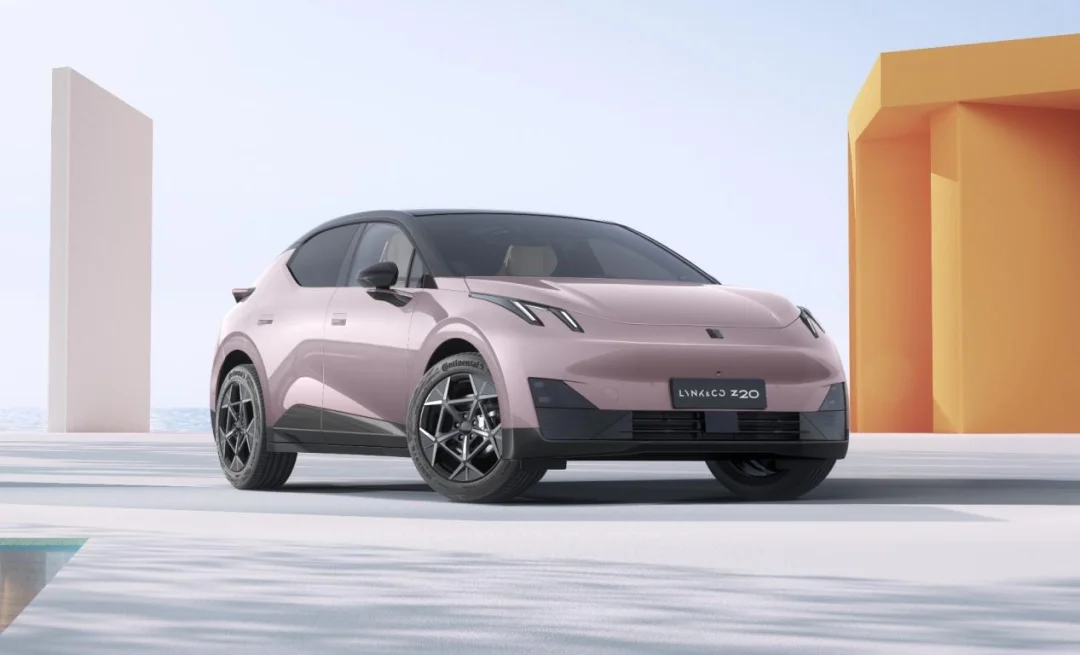
Additionally, for the Class A market, which focuses on pure electric vehicles, Lynk & Co will take the lead. Therefore, the Z20 is an important layout for the Lynk & Co brand in the pure electric market, and it is a model we should cultivate deeply. The Z20 must establish Lynk & Co’s home-field advantage in the pure electric market and compete assertively.
Typically, we develop one generation while reserving the next. Product plans for the next two years are already complete, so specific changes to the product line will likely take at least two years to materialize. Existing products, or those already completed in engineering development, will not be affected.
The competitiveness of new products will definitely be stronger. As costs are amortized, the prices of current models will become relatively more affordable. Overall, while there is still some overlap in the price ranges of the two brands, the overlapping categories are now different, thereby avoiding direct competition.
Q: Will the cockpits and intelligent driving systems of the two brands be integrated?
A: Regarding the cockpit, Lynk & Co and Zeekr will maintain consistency in hardware and underlying software middleware. However, at the application layer, Lynk & Co will continue to use Flyme, while Zeekr will retain Zeekr OS.
Currently, Lynk & Co has no plans to replace its infotainment system and will continue using its proprietary system. Given the significant investment required for top-level development and Zeekr’s own investments, the two teams will strengthen communication to ensure a high-quality user experience.
For intelligent driving, current Lynk & Co products cannot adopt Zeekr’s autonomous driving technology due to differences in hardware and layout. Integration may only be considered during product generations. Existing Lynk & Co and Zeekr products are still in the development phase, so there will be no short-term system switches. We will continue to provide maintenance and software updates for current models without interruption.
Considering the difference in brand positioning, Zeekr will focus its resources on advanced intelligent driving, while Lynk & Co can share these resources. For high-end configurations, such as chips with higher computing power, Lynk & Co may consider adopting Zeekr’s intelligent driving system in the future. For products priced below RMB 100,000 to RMB 150,000, different solutions will be implemented to better align resources with product positioning.
Q: How will the two brands plan their channel construction in the domestic market in the future?
A: Many investors in Zeekr are also investors in Lynk & Co, so there are few obstacles to cooperation between their channels. The future focus will be on penetrating lower-tier markets. In fourth- and fifth-tier cities, electric vehicles priced under RMB 100,000 may see larger sales volumes. Building service centers like those of Zeekr in these areas would likely be unprofitable; therefore, Lynk & Co’s channel advantages can be leveraged to empower Zeekr’s expansion into these markets.
After-sales services in first-, second-, and third-tier cities will remain independent, with Lynk & Co and Zeekr operating separately. In fourth- and fifth-tier cities, Lynk & Co centers will take the lead. Additionally, we have launched a joint service brand called 'Lingjilianfu' specifically for fourth- and fifth-tier cities to guarantee after-sales services for both brands. Other brands, such as Polestar, will also be included in this network in the future.
Q: How will the two brands coordinate their layout in the European market?
A: The cost of building a brand and maintaining product line operations overseas is extremely high. In some countries, there is no need for two brands; it is sufficient to use different products from a single brand to enter the market. Therefore, all model launches in international markets will be conducted with caution, focusing on maximizing volume with limited numbers.
The stores of the two brands in Europe will be integrated in the future, but the specific plan has not yet been released.
Q: After this equity structure adjustment, Woerwo is no longer a shareholder of Lynk & Co. What impact does this have on Lynk & Co?
A: After Zeekr acquired the 30% stake in Lynk & Co held by Woerwo, Woerwo is no longer listed as a shareholder of the company. However, this is merely a change in investment relationship. Since both are within the same controlling group, it does not affect Lynk & Co's use of Woerwo's technology.
For example, the SPA architecture was obtained through compliant commercialization, granting Lynk & Co authorization to use Woerwo's technology. This technology remains usable by Lynk & Co and is unrelated to changes in shareholding. Additionally, the CMA architecture is led by Geely with participation from Woerwo, and its intellectual property rights belong to Geely.
Lynk & Co's development overseas will continue to receive strong support and assistance from Woerwo. Woerwo will provide Lynk & Co with sales channels and services in Europe.
Q: What changes will occur in Lynk & Co's battery, electric motor, and electronic control systems in the future?
A: The battery cell solution for the Z20 is identical to that of the Z10’s 800 V system, allowing the Z20 to achieve a 4.5 C charging rate despite its 400 V architecture. In terms of hybrid technology, Lynk & Co continues to pursue the EM-P route to develop high-end electric hybrids. Currently, Geely’s Leishen EM-i super hybrid system (Leishen EM-i Chaojidianhunxitong) is not planned for inclusion in Lynk & Co’s product lineup.
Q: Will Lynk & Co continue to offer internal combustion engine vehicles? What is the future plan for these models?
A: Fuel vehicles remain part of Lynk & Co. There is still a significant market for fuel cars, and Lynk & Co’s performance-oriented sporty lineage will continue. Current models will undergo iterative upgrades, but no new products will be introduced. We announced this last year: we are not investing in brand-new products. However, existing architectures will not be abandoned. As many Lynk & Co 01 owners have said, after driving the 01, they do not know how to choose a car under RMB 300,000 for their next purchase. This reflects the experience we provide to consumers, so we will not stop it.
Q: Will Lynk & Co develop more pure electric models in the future?
A: Lynk & Co will definitely continue developing electric vehicles, but the focus will primarily be on Class A segments, along with some personalized electrified products. We will not develop conventional electric vehicles beyond this scope. However, existing models like the Z10 will certainly undergo iterative upgrades.
Q: Potential Lynk & Co buyers often seek both the most advanced configurations and practical cost-effectiveness. How does the brand handle this conflict?
A: First, we must create appeal. Without competitive specifications, we cannot attract users; lagging in parameters and technology means losing hope.
The Class A pure electric SUV segment still has clear user demand. In the current market, low-priced products may compromise on quality, while high-priced ones may feel too expensive for consumers. Therefore, we position ourselves in the RMB 150,000 tier, offering powerful performance, comprehensive features, and stylish design. Although the space is not the largest, the wheelbase of 2,755 mm ensures excellent rear legroom and headroom. We aim to price our products according to market and consumer needs, providing attractive options to buyers.
Q: How do you view the incremental growth of refined compact cars in the domestic market? For brands like MINI and smart, despite price cuts, can their goals and expectations be realized? Are the audiences for these brands relatively narrow?
A: The size of the target audience for refined compact cars depends on the comparison. Compared to SUVs, which hold a larger market share, the compact car market is indeed smaller; however, within the A-segment car market, consumer choices are limited. Aside from a few foreign brands such as MINI and smart, there are not many domestic brands that have truly excelled in producing refined compact cars. We believe the Z20's product strength surpasses that of these brands. Meanwhile, we do not pursue brand premium but focus more on actual product strength and market demand. Today, Chinese young consumers are becoming increasingly confident and willing to choose domestic brands, provided the pricing is reasonable and the product strength is sufficient.
Q: How will Lynk & Co further deepen its motorsport operations to empower its brand image?
A: The racing series has a very positive impact on Lynk & Co in establishing its performance brand. Beyond the races, Lynk & Co also has a complete customer experience system; many young people have been attracted to Lynk & Co and want to obtain racing licenses and enjoy driving. Additionally, Lynk & Co is already using feedback and data from teams on the track to inform its R&D.
Written by: Da Yong | Edited by: Daji James