


GWM Reports BYD on Evaporative Emissions; NIO Launches ES6 Starting at RMB 368,000
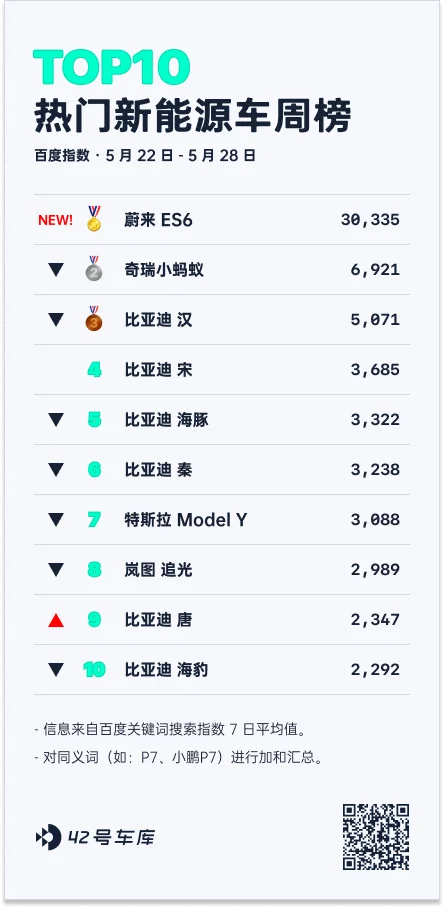
01Weekly Index
02Weekly Highlights
GWM Reports BYD Two Models for Non-Compliant Whole-Vehicle Evaporative Emissions
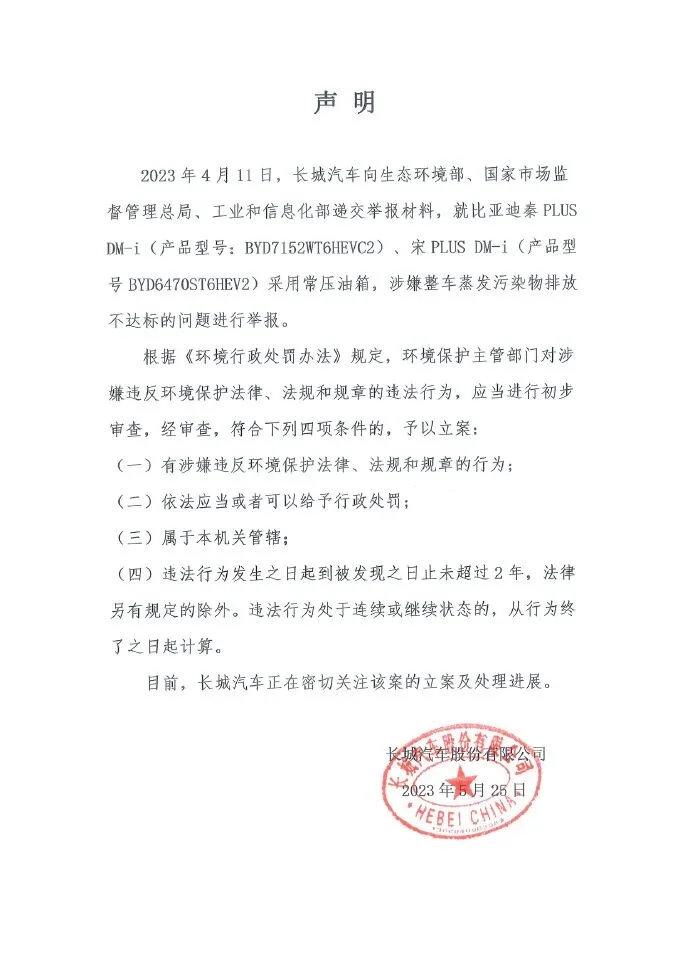
On May 25, GWM issued a statement saying that on April 11 of this year, it submitted complaint materials to the Ministry of Ecology and Environment of the People's Republic of China, Guojiashichangjianduguanlizongju, and Gongyehexinxihuabu regarding BYD Qin PLUS DM-i and Song PLUS DM-i models. The complaint alleged that the use of atmospheric-pressure fuel tanks in these vehicles resulted in non-compliance with vehicle evaporative emission standards.
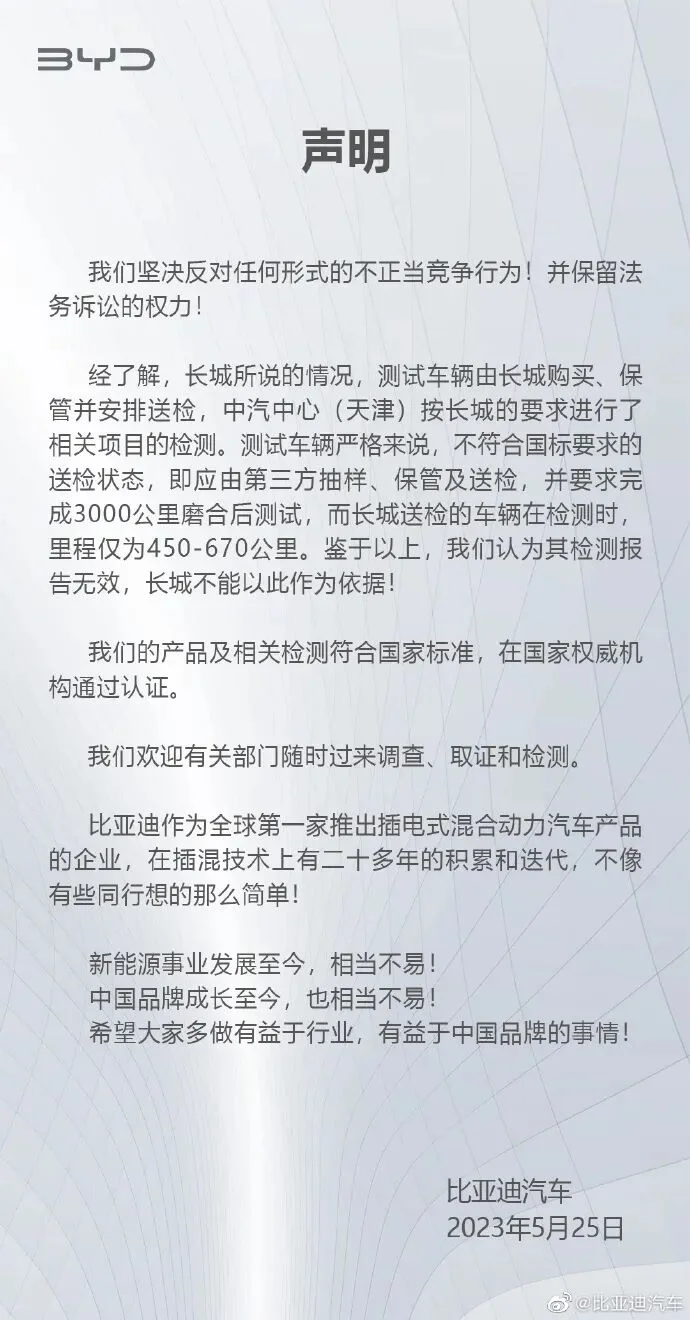
In a statement released on the same day, BYD stated, "Our products and related testing comply with national standards and have been certified by national authoritative institutions."
On the afternoon of May 25, the 2023 BYD Song Pro DM-i Champion Edition was launched.
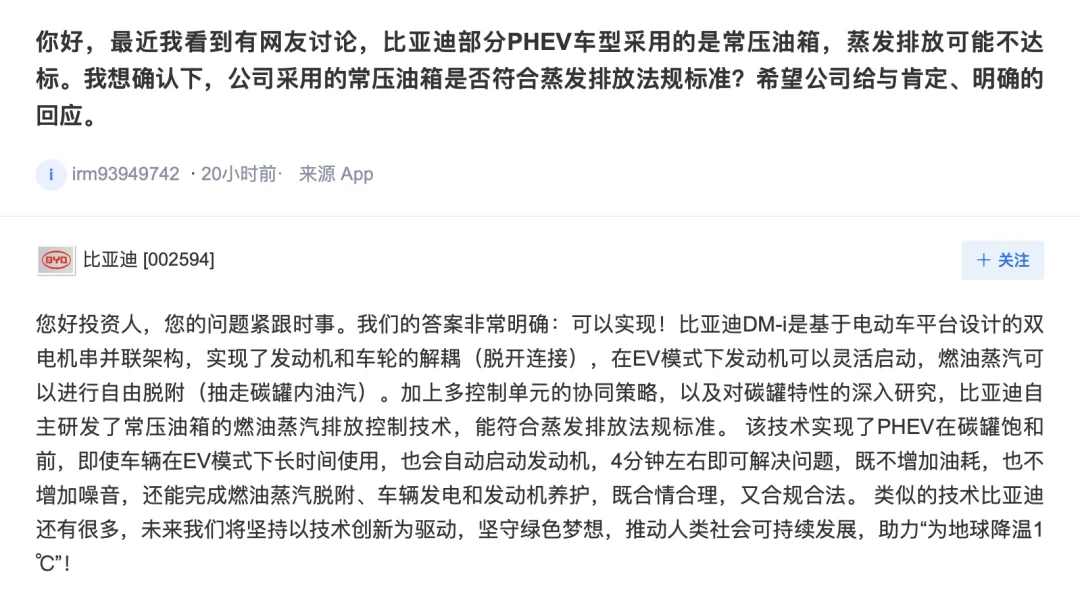
On the morning of May 29, BYD responded on Shenjiaosuohudongyipingtai: its independently developed fuel vapor emission control technology using atmospheric-pressure tanks can meet evaporative emission regulatory standards.
Commentary:
Let the bullets fly a little longer and wait for the investigation results from national authoritative departments. From a technical perspective, PHEV models have a relatively low engine usage rate, and high-pressure fuel tanks, which are more costly, offer greater advantages in suppressing pollutant emissions. Brands such as Lixiang and Geely have successively announced that their PHEV models utilize high-pressure fuel tanks.
NIO ES6 Launches, Starting at RMB 368,000
The ES6 with a 75 kWh battery is priced at RMB 368,000, with a Battery-as-a-Service (BAAS) price of RMB 298,000; the ES6 with a 100 kWh battery is priced at RMB 426,000, with a BAAS price of RMB 298,000. With launch-time test drives and deliveries, users can begin test driving and picking up their vehicles starting May 25.
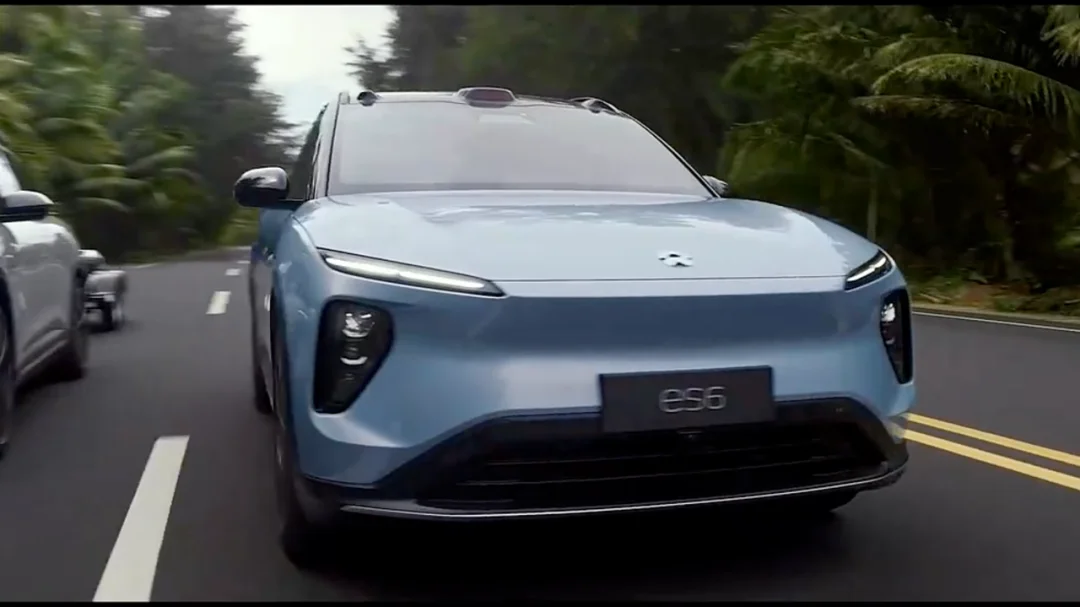
The ES6 offers 10 exterior colors and 4 interior colors. Pearl Shell is an exclusive interior color for the ES6, while Galaxy Purple is an exclusive exterior color.
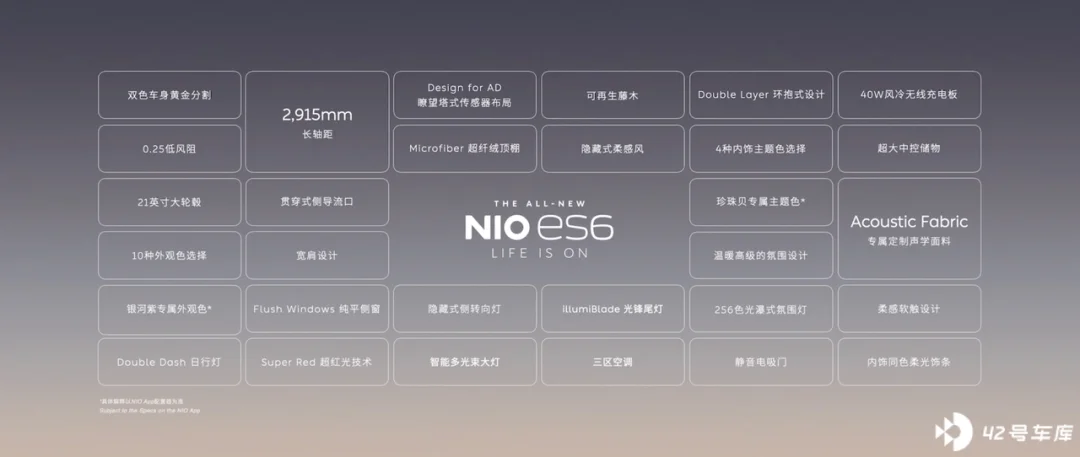
Additionally, the following features are standard:
Microfiber suede headliner
Zone 3 air conditioning
Intelligent multi-beam headlights
Silent soft-close doors
NIO put significant effort into the materials used for this ES6. The motor, tires, glass, and interior noise-reduction design all contribute to achieving a very good NVH level for the ES6. Additionally, the front of the vehicle features a dual anti-collision beam design, while the rear floor pan and C/D pillars utilize the latest integrated die-casting technology. These design choices result in excellent cabin noise insulation for the ES6.
Additionally, the all-new ES6 continues to feature NIO's newly developed self-designed seats. Overall, the seats in this generation of the ES6 have several key characteristics:
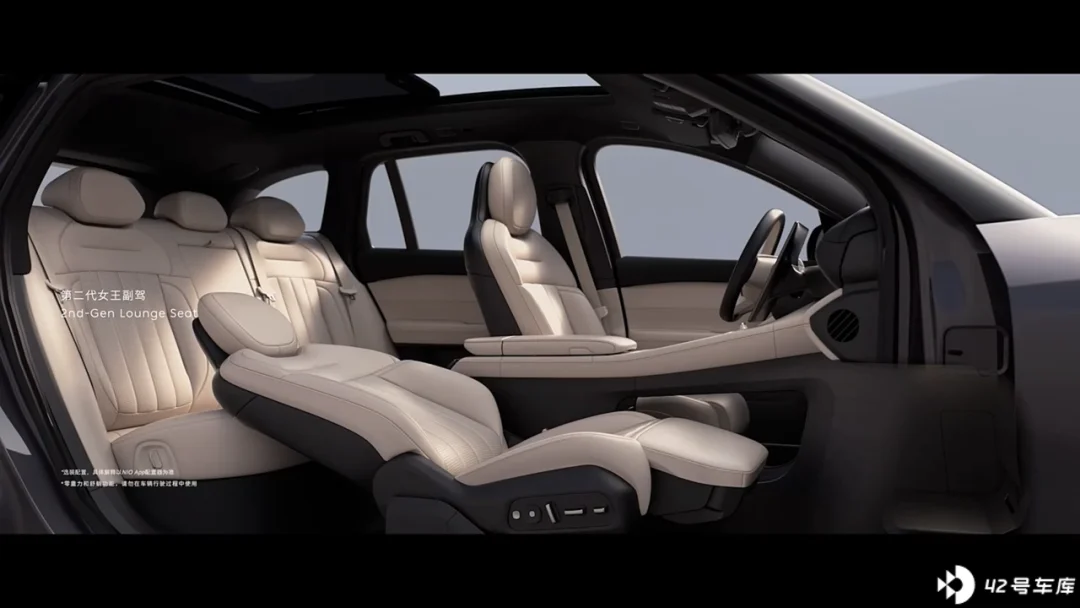
Fully equipped: The front seats, built on a newly developed seat platform, accommodate nearly every available feature. In addition to heating, ventilation, and massage functions, the passenger-side "Queen" seat adds heating to its leg rest. The seat cushion also features a tail-lift mechanism that adjusts in coordination with zero-gravity and recline modes, ensuring both the cushion and backrest simultaneously conform to the body's natural curves.
The headrests are suspended and adjustable. On the ES6, the front-row headrests appear integrated with the seatback, but they can actually be adjusted manually in fore-and-aft (36 mm) and up-and-down (45 mm) directions. Compared to the previous-generation ES6, this should help many owners save money on purchasing separate headrests.
Rear seat upgrades: The all-new ES6 sees significant improvements in the rear, including backrest adjustment ranging from 23 to 31 degrees, along with zoned heating, ventilation, and eight-point massage. The seat cushion length reaches 510 mm, which is exceptionally long for a five-seat vehicle. These features align with those found in the higher-positioned ES8 and EC7.
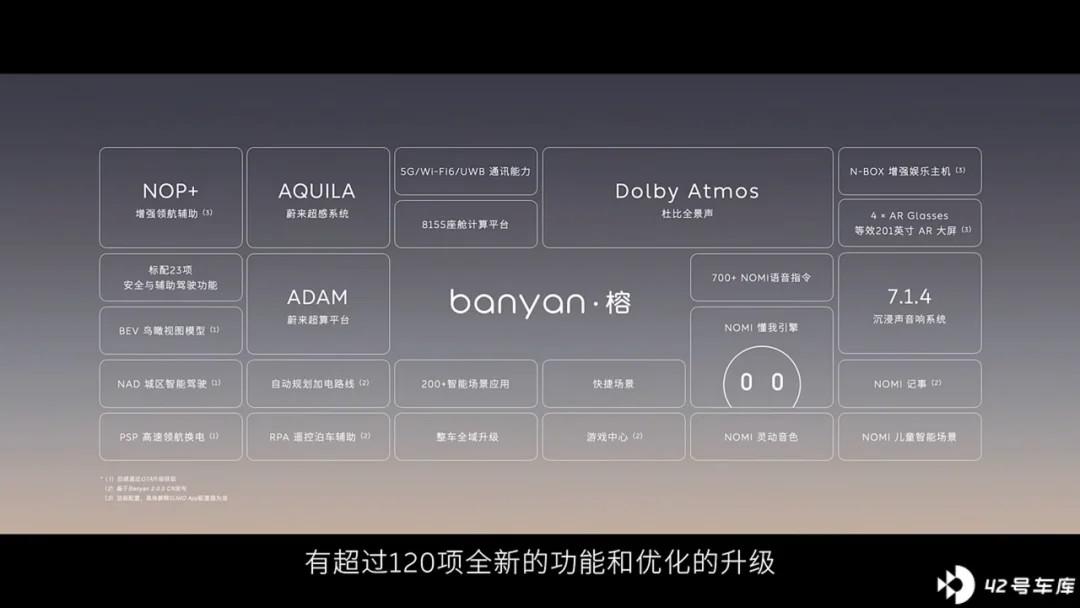
Also released alongside it was the Banyan 2.0 system. Banyan 2.0 adds a large number of new features and a new UI design, debuting on the ES6, while other NT2 models will complete their rollout in June this year.
Overall, this major version update introduces more than 120 new features and experience optimizations, connecting NIO's products, services, and community.
The "Exclusive Service" app allows users to send service requests directly from the vehicle's infotainment system to their dedicated service group, with support for one-click sharing of vehicle information such as location and system screen recordings.
The "Calendar" app syncs with users' mobile calendar schedules after authorization and delivers unique smart voice-based event reminders via NOMI.
The "Automatic Route Planning for Charging" feature, available on the all-new ES6 via NIO Energy Cloud, offers the industry's best one-stop navigation and charging path planning capability. Users no longer need to worry about planning charging stops during long-distance trips; simply initiate navigation from the map interface, and the system will provide multiple route options for selection.
In addition to intelligent updates for the vehicle's infotainment system, William Li also announced that the full release of BEV-based NOP+ will go live in July; highway navigation with battery swapping will partially launch in the third quarter; and urban NAD experience sessions are starting soon in Shanghai.
Quick Review:
Overall, the ES6 achieves a level of product quality that is difficult to fault on its own merits, making it a very well-balanced vehicle within its price segment.
This balance is partly reflected in comfort. Beyond the optional comfort features that require extra payment, the vehicle's overall build quality, seat comfort, and NVH performance are all at a very good level.
The other aspect is reflected in the equipment. With a starting price of RMB 368,000, it comes standard with a HUD, multi-beam intelligent headlights, high-end driver assistance hardware, 4.5-second acceleration, four-piston brakes, and a 7.1.4 surround sound system. Thinking about it carefully, there are really not many models at this price point that offer all these features as standard.
Revenue of RMB 4.03 billion, gross margin of 1.7%, XPENG releases Q1 2023 financial report
On May 24, XPENG released its Q1 2023 financial report, presenting the key financial data for the first quarter of 2023:
Total revenue was RMB 4.03 billion, a year-over-year decrease of 46 percent and a quarter-over-quarter decrease of 22 percent;
Automotive business revenue was RMB 3.51 billion, a year-on-year decrease of 50% and a quarter-on-quarter decrease of 25%;
Total gross profit: RMB 67 million, down 93% year-over-year and 85% quarter-over-quarter;
Overall gross margin: 1.7%, compared to 12% in the same period last year and 9% in the previous quarter;
Gross margin per vehicle: -2.5%, a decline from 6% in the previous quarter;
Cost of sales: RMB 3.97 billion, down 39% year-over-year and 16% quarter-over-quarter;
Net loss: RMB 2.34 billion, compared to a net loss of RMB 2.36 billion in the previous quarter;
Cash reserves (comprising cash and cash equivalents, restricted cash, time deposits, and short-term investments): RMB 34.12 billion, down from RMB 38.25 billion in the previous quarter;
XPENG’s first-quarter R&D expenses: RMB 1.3 billion, up 6% quarter-over-quarter, accounting for 32% of total quarterly revenue;
Selling, general and administrative expenses: RMB 1.39 billion, down 15% year-over-year and 21% quarter-over-quarter.
The report also disclosed business expectations for Q2 2023:
Vehicle deliveries are expected to range from 21,000 to 22,000 units, a decrease of approximately 36% to 39% compared to Q2 2022;
Total revenue is projected between RMB 4.5 billion and RMB 4.7 billion, representing a decline of approximately 37% to 39% from Q2 2022.
Quick Commentary:
Overall, XPENG’s financial results for the quarter appear bleak, though they were largely anticipated. During the earnings call in March, He Xiaopeng had already laid some groundwork. XPENG is currently undergoing continuous self-adjustment. He Xiaopeng stated in this earnings report that the company made decisive adjustments to its strategy, organization, and management team in Q1, expressing confidence in establishing a positive cycle of product sales, team morale, customer satisfaction, and brand reputation in the coming quarters. From a product perspective, aside from the already available P7i, the upcoming G6 has become the top priority for boosting XPENG’s sales volume. He Xiaopeng expressed confidence in making the G6 a hit new energy SUV in the RMB 200,000 to 300,000 price segment.
Gaotong Hosts Automotive Technology and Cooperation Summit
On May 25–26, the 2023 Gaotong Automotive Technology and Cooperation Summit was held in Suzhou. The summit provided a panoramic presentation of the latest technological achievements from Xiaolongshuzidipan.
The event attracted more than 120 upstream and downstream supply chain manufacturers, along with over 1,300 ecosystem partners and professional attendees. The Gaotong automotive business team shared the latest developments of Xiaolongshuzidipan. Keynote speakers included representatives from NIO, Gaohe, Mercedes-Benz, Haomozhixing, Baidu, Zhongkechuangda, Desaixiwei, Botaichelianwang, Yiyuantongxin, and Meigezhineng. Additionally, executives from Zhiji, Leapmotor, Hezhongxinnengyuan, and Meijiakeji participated in a roundtable discussion on advancing automotive industry transformation and upgrading user experience. Furthermore, the Xiaolongshuzidipan concept car made its domestic debut, with more than 60 innovative solutions and applications displayed to outline the future path of automotive innovation from multiple dimensions.
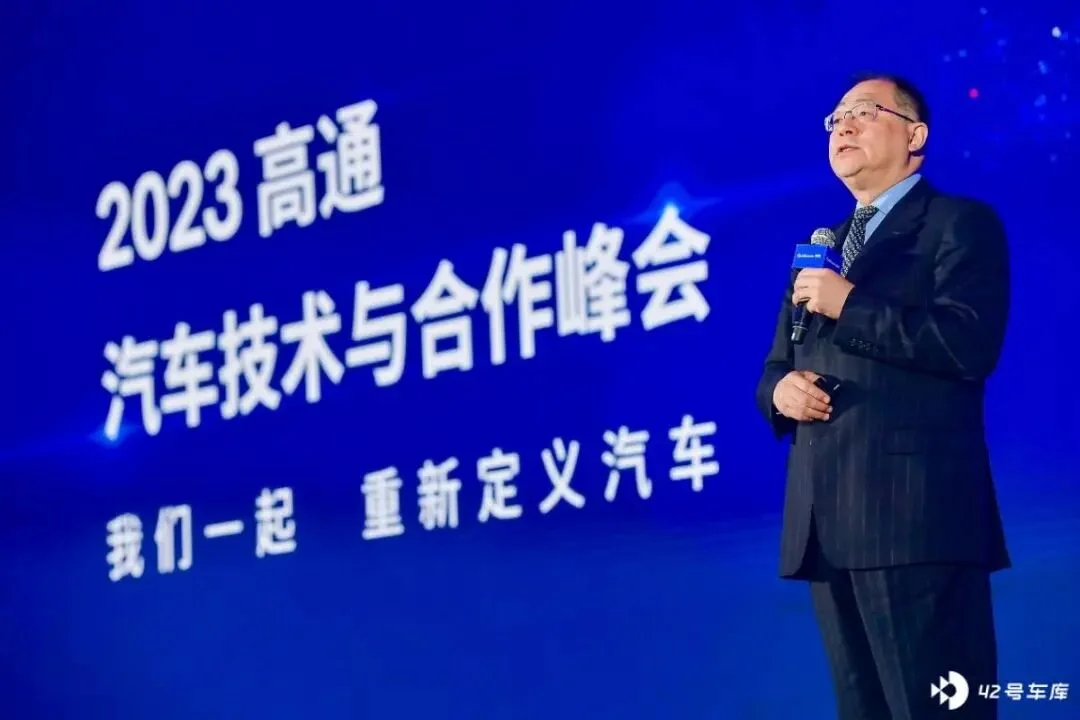
Meng Pu, Chairman of Gaotong's China region, stated in his welcome address: "Automobiles have become one of the important segments of Gaotong's diversified business development strategy. For a long time, our technological advantages in mobile connectivity and computing have better assisted the automotive industry in navigating transformation, jointly ushering in a new era of intelligent, safe, and efficient future mobility."
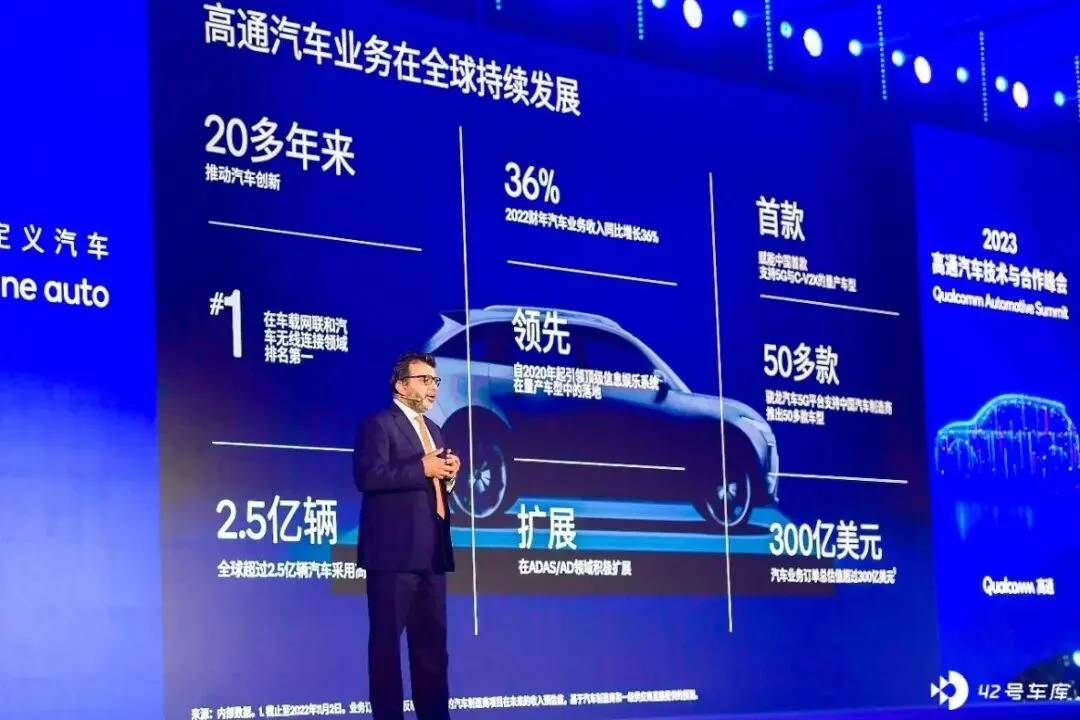
Nakul Duggal, Senior Vice President and General Manager of the Automotive Business at Gaotong, stated: "Gaotong's innovative DNA is helping us accelerate rapidly in the automotive industry. We have developed the Xiaolongshuzidipan based on a unified technology roadmap. Through sustained investment across numerous technical fields, we support the automotive ecosystem, including Chinese partners, in building next-generation vehicles."
Xiaolongshuzidipan is a complete, open, scalable, and upgradable solution covering four major areas: connectivity, cockpit, intelligent driving, and vehicle-to-cloud. Currently, Xiaolongshuzidipan has empowered more than 250 million vehicles globally.
Since 2021, Xiaolongshuzidipan has supported more than forty Chinese automotive brands in launching over one hundred vehicle models. In supporting ecosystem development, Gaotong has also continued to focus on and assist the growth of Chinese automotive startups. On the eve of the summit, the Intelligent Connected Vehicle Joint Innovation Center, jointly established by Suzhougaotiexincheng, Gaotong China, and Zhongkechuangda, was officially unveiled and put into use in Xiangcheng District, Suzhou. This is the first joint innovation center focused on intelligent connected vehicles co-built by Gaotong with partners within China.
Quick Review:
Today, cars have become computing centers on four wheels. Whether it is driver assistance, smart cockpits, or mobile connectivity, all require chip support. As one of the largest chip suppliers in the smartphone sector, Gaotong's network of partnerships in the era of intelligent vehicles is also expanding.
Baojunyueye Launches, Priced at 79,800 to 89,800 Yuan
On May 25, the Baojunyueye was officially launched in two versions with the following specific prices:
Flagship version: RMB 79,800;
Smart Premium version: RMB 89,800.
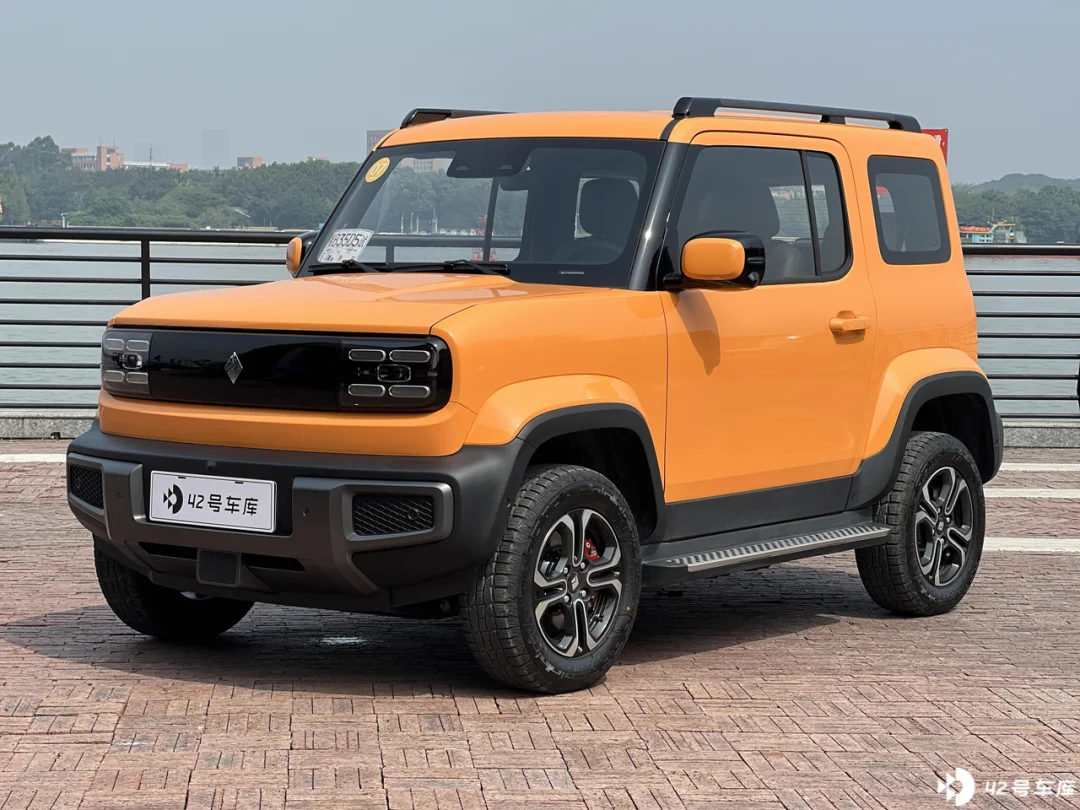
Key specifications include:
Equipped with a 28.1 kWh lithium iron phosphate (LFP) battery, offering a CLTC range of 303 km;
Supports fast charging, completing a 30% to 80% charge in 35 minutes.
Rear-mounted permanent magnet synchronous motor with a maximum power output of 50 kW, peak torque of 140 N·m, and a top speed of 100 km/h.
Equipped with a front MacPherson strut and rear three-link suspension configuration.
The Baojunyueye measures 3,381 x 1,685 x 1,721 mm in dimensions with a wheelbase of 2,110 mm. These compact proportions clearly position it as a boutique small car. Unlike the Wulinghongguang MINIEV and Baojun KiWi, which feature cute styling, the Yueye adopts a 'Square Box' design language. From a distance, it resembles a toy vehicle, while up close it presents the distinct character of a rugged off-roader. The name 'Yueye' cleverly plays on a homophone pun.
The rear follows typical off-road design cues, featuring a side-hinged tailgate that opens to a maximum angle of 90 degrees. With the rear seats folded down, the cargo capacity expands to 715 liters.
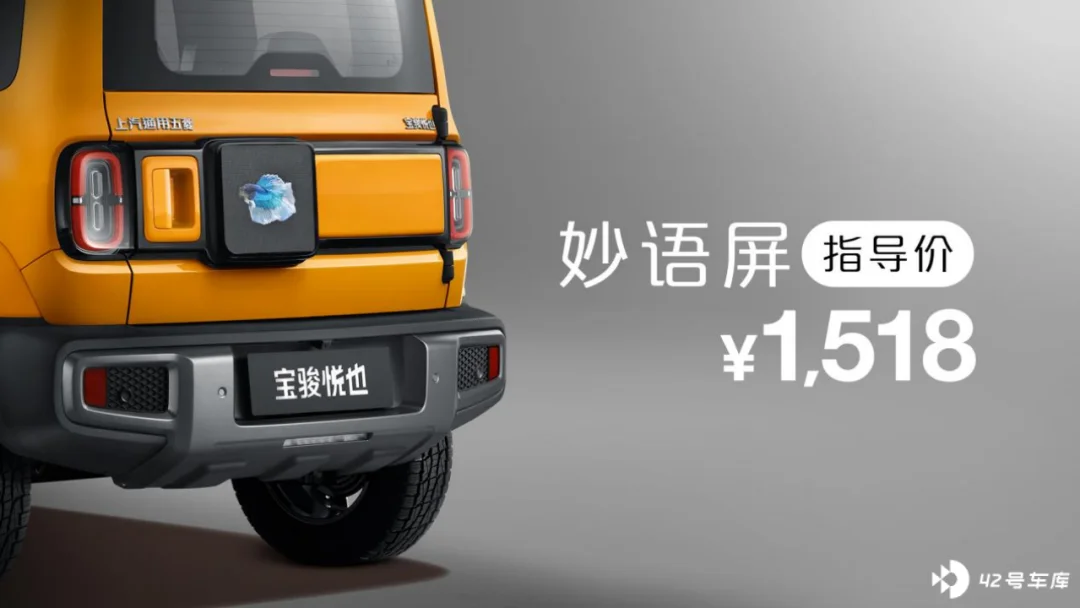
The most distinctive element is the square black panel on the rear, which functions as a screen officially termed 'Car-watch.' This display allows owners to customize static or dynamic content, offering high interactivity. However, this feature requires an optional extra cost of RMB 1,518.
Interior trim options include two color themes: 'Self-Deprecation' and 'Monologue'.
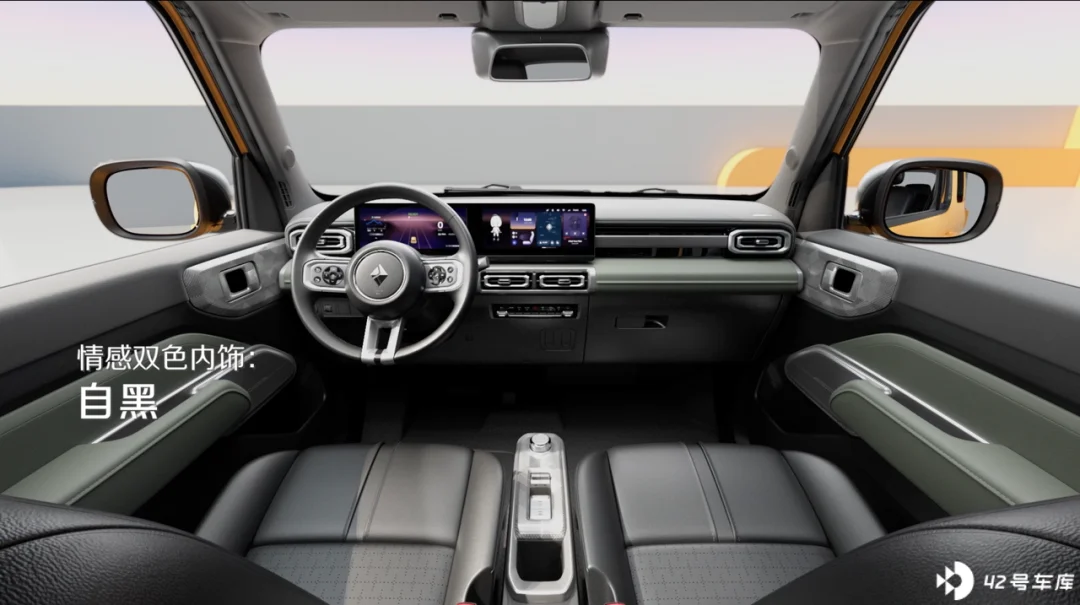
The front cabin features a dual 10.25-inch screen design. Do you think the buttons on the steering wheel resemble those on a game controller?
Finally, let’s look at the main differences between the two versions:
The Zhi Zun (Top Trim) comes standard with high-performance sport calipers.
The Zhi Zun trim supports four-way electric adjustment and one-touch electric entry/exit, while the Flagship trim offers manual adjustment only.
The Zhi Zun trim includes a 360-degree camera system, whereas the Flagship trim is equipped only with a standard rearview camera.
The Zhi Zun trim is powered by the DJI Lingxi autonomous driving solution, supporting intelligent cruise assist, intelligent parking assist, and a suite of active safety features.
Quick Review:
Undoubtedly, the launch of the Baojunyueye has once again ignited the micro EV market. Offering young buyers the thrill of off-roading for under RMB 100,000 makes its product appeal undeniable.
Perhaps many people are unaware that in China's Xinjiang and Tibet regions, a considerable number of Wulinghongguang MINIEV vehicles are driven across various complex terrains. Their affordable price and rugged durability, which make them resistant to bumps and collisions, have led many locals to readily use them as daily commuting vehicles. In these areas, micro off-road vehicles like Baojunyueye may well prove even more popular than the MINIEV.
It seems Wuling has truly mastered the niche of micro electric vehicles.
Written by: James Edited by: James