


Elon Musk’s Cautious Rollout of Tesla FSD Beta
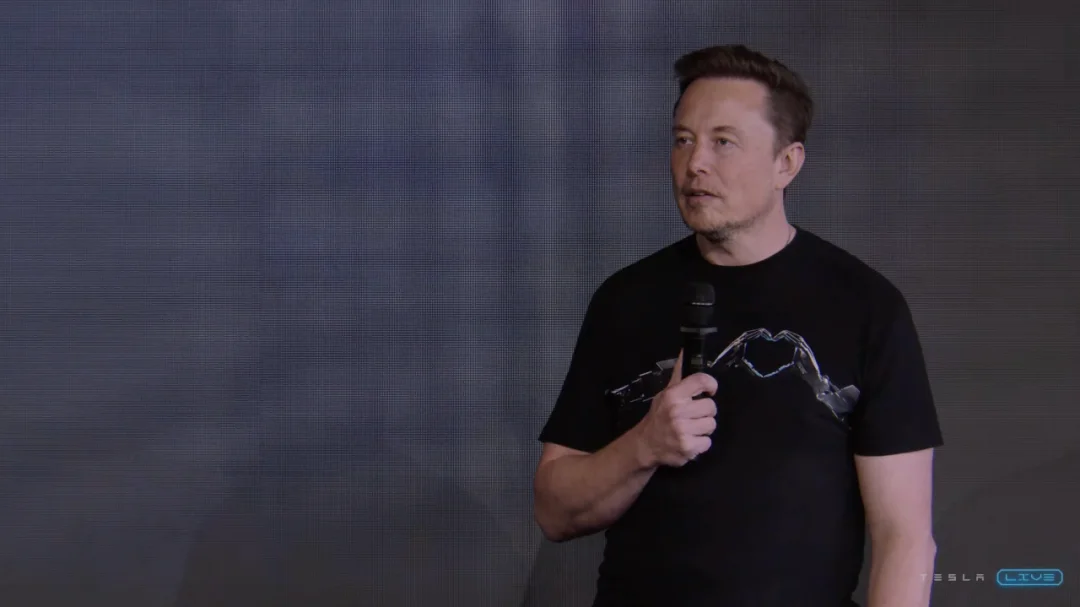
For Tesla, figuring out how to bring FSD to market is a highly thorny issue.
After all, in Tesla’s vision, FSD (Full Self-Driving) means the car can drive in most cities without human intervention, with the goal of achieving safety that surpasses human drivers.
This vision is grand, and it raises expectations—yet it also invites criticism during the implementation process.
Fortunately, unlike the autonomous driving classification standards defined by SAE, Tesla FSD follows its own set of rules:
The FSD Beta system is designed to operate autonomously but requires driver monitoring. Since liability rests with the driver rather than Tesla’s system, despite the name, FSD is currently regarded as an L2-level driver assistance system; the driver must be ready to take over manually at any time.
This means that although Elon Musk’s bold promises have built a long-term future for FSD, he is well aware that reaching that destination requires extreme caution, learning to "cross the river by feeling the stones," and avoiding haste.
In fact, since the release of the FSD beta version, FSD’s progress has always been very cautious.
01The arduous journey of testing and rollout
When Elon Musk first announced FSD in 2015, he likely did not anticipate that the software package would take five years of difficult development to go from announcement to actual release.
The reality was exactly that.
It was not until October 21, 2020, that Elon Musk announced the start of pushing a beta test version of FSD to a very small number of users in the U.S. on Tuesday evenings—marking the first time a test version had been released publicly since his initial FSD announcement.
Musk’s announcement immediately sparked intense discussion. Tesla owners who received the software update quickly began sharing real-world results of FSD Beta on social media, where it seemed to receive widespread praise from enthusiastic followers. In contrast, Musk remained far more measured in his attitude toward FSD Beta, specifically stating:
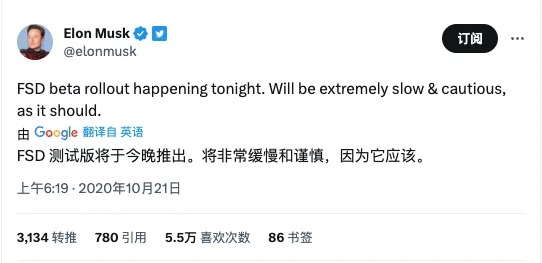
“FSD will progress very slowly and cautiously, because it should.”
Correspondingly, Musk described the participating U.S. drivers as “experts and cautious drivers,” noting that only those who actively applied for Tesla’s Early Access program and passed Tesla’s “safety score” assessment were eligible to participate in the FSD Beta test.
Early Access serves as the testing platform for FSD, primarily aimed at helping eliminate bugs in the software.
According to screenshots of update notifications shared by owners who received the push, the beta version emphasizes that drivers must exercise "extra attention" when using FSD Beta, because real-world driving scenarios are far more complex. In blind spots, intersections, and narrow roads, "it may do the wrong thing at the worst time."
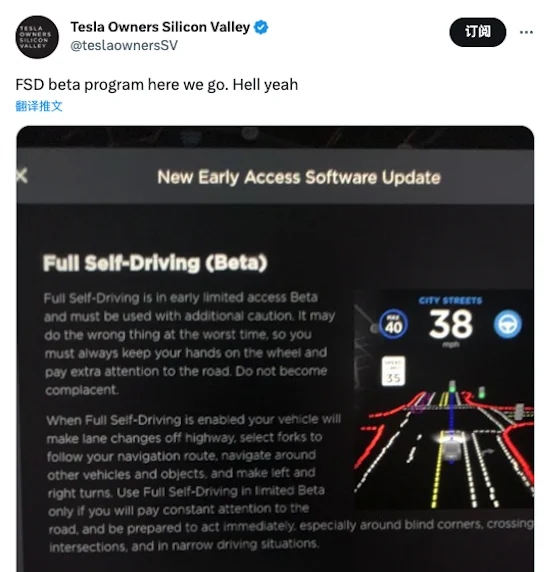
This precisely validates why Elon Musk remains so cautious.
Additionally, as the regulatory body, the National Highway Traffic Safety Administration (NHTSA) stated that the initial rollout of the FSD test demonstrates Tesla's progress in driver assistance systems. However, regulators will closely monitor this new technology and will not hesitate to take action to protect the public from unreasonable safety risks.
Yet these issues and obstacles will not diminish Elon Musk's determination to promote the FSD test. During the earnings call the following day, Elon Musk noted that over time, more Tesla owners would receive FSD updates, with the goal of a "wide release" by year-end.
This means the journey of rolling out the FSD test has officially begun.
02Spiral Ascent and Wave-Like Progress
2020 was a pivotal year for Tesla, marking both the first public rollout of its Full Self-Driving (FSD) beta software and the company’s first full-year profit, setting a strong tone for 2021.
Against this backdrop, FSD made further progress.
During an early-2021 earnings call, Elon Musk stated that nearly 1,000 owners were testing FSD on public roads by January. He also noted that he had grown accustomed to not intervening while testing the system himself, predicting that FSD driving would be more reliable than human driving later that year.
Despite Musk’s repeated emphasis, the maturity of FSD technology remained debatable, but the scale of testing continued to expand.
In March of that year, Musk publicly announced that the number of FSD testers had doubled from 1,000 to 2,000, while revoking trial access for some participants. He again stressed the importance of maintaining focus during real-world driving.
Elon Musk also revealed that FSD would release its next major version in April, eliminating the use of radar and adopting a pure vision approach, describing it as "the way to real-world AI." As a result, the new version planned for release in April—FSD Beta V9.0—is highly anticipated.
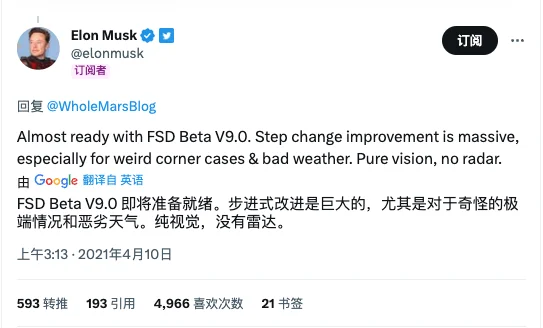
Specifically, it adopted an aggressive pure-vision perception scheme, removing millimeter-wave radars from new Model 3 and Model Y vehicles in the United States and relying instead on camera-based Tesla Vision technology. Based on this "major architectural change" in both scheme and technology, Musk believed the new FSD Beta version offered substantial stepwise improvements, capable of handling corner cases and adverse weather conditions.
In response to questions about radar, Elon Musk explicitly stated his stance on Twitter: "remove." This signals Tesla's shift toward relying on neural networks rather than programmed logic for driving decisions, a move that sparked the ongoing debate between pure vision and sensor-based perception approaches.
However, the actual situation seemed almost predictable: after three months of dragging its feet amid widespread anticipation, FSD Beta V9.0 finally launched in July, officially rolling out to approximately 2,000 users in the United States.
Subsequently, the testing rules also changed—in October, a full 12 months after FSD Beta began testing, Tesla started further promoting the FSD Beta test version in the United States.
Notably, the method for joining the test program shifted significantly. Instead of purchasing the FSD package and clicking a "Download" button to get the latest software, users now must click a "Request" button. Eligibility is determined by an assessment of the driver's behavior based on specific parameters; only those added to the queue can access the newest software version.
To qualify for the V10.2 test, drivers must complete more than 100 miles of driving and achieve a perfect score of 100 in Tesla’s safety rating system. This underscores Tesla’s strategy of cautiously expanding its tester pool while maintaining rigorous safety standards. Drivers are required to remain fully attentive and prepared to take over control at any moment.
This cautious approach has proven valid. Innovation rarely follows a straight line; it typically advances through spiral ascents and wave-like progress.
On October 24, 2022, Elon Musk announced on Twitter that he had withdrawn the release of V10.3, temporarily reverting to V10.2. After troubleshooting issues, the V10.3.1 version was released shortly afterward.
The reason for this reversal was that testers identified potential risks in the new version, such as false forward collision warnings or unexpected activation of emergency braking. Although Elon Musk described these outcomes as "expected results for beta software," the incident highlighted the necessity for drivers to maintain full attention to ensure safety and provide timely feedback.
In November 2021, the number of FSD Beta testers reached 11,700.
03Reaching Milestones Through Extreme Caution
In January 2022, according to documents from Tesla’s Q4 2021 shareholder meeting, the FSD Beta program had accumulated more than 60,000 testing users. During the fourth-quarter earnings call, Elon Musk stated, “There will be several profound improvements in FSD over the next few months, and I would be shocked if we do not achieve fully autonomous driving that is safer than humans this year.”
As FSD Beta improved, its tester base continued to grow steadily.
In a TED interview in April, Elon Musk told host Chris Anderson that FSD Beta had reached 100,000 testers, an increase of nearly 67% compared to the 60,000 users in January.
Notably, on March 26, the FSD Beta testing program expanded to Canada. Tesla began evaluating owners’ daily driving habits through a “request” process; only those who achieved a perfect safety score of 100 were eligible to receive push notifications for the latest FSD Beta software. These developments indicate that while FSD Beta’s safety and technical capabilities are growing, Tesla remains cautious.
Regarding the goal of full autonomy, Elon Musk clarified that he means Tesla electric vehicles can drive safely in most cities without human intervention, outperforming human drivers.
On the issue of repeated delays, he explained that FSD has experienced “many false dawns.” Progress follows a logarithmic curve: “Sometimes it goes up, sometimes it starts going down, and you start getting diminishing returns.” This implies that overcoming unexpected difficulties is far harder than anticipated: when progress seems to stall at a ceiling, work must often begin anew.
As FSD rolls out, it has encountered numerous setbacks.
In September 2022, when Tesla pushed FSD Beta V10.69.2.2, Elon Musk announced that more than 160,000 users in North America were participating in the FSD Beta test. At that time, drivers in North America qualified for the latest FSD Beta version if they had driven more than 100 miles and achieved a safety score above 80.
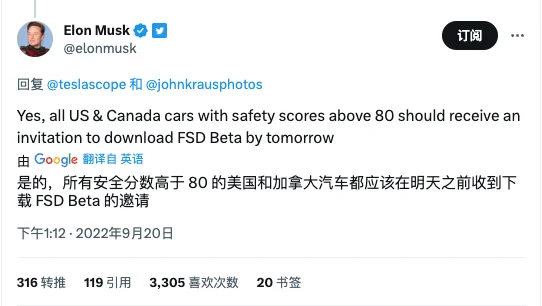
On November 24, a special day for owners awaiting the FSD Beta test—Tesla officially rolled out the FSD Beta test feature to all users in North America who had purchased FSD. This marked a progression from a very small Early Access group, to high-scoring driver-only testing, and finally to all users who bought the option package. Elon Musk described this as an "important milestone" for Tesla's Autopilot and AI teams.
By then, two full years had passed since FSD Beta first began testing.
04Conclusion
Since the official launch of testing, FSD Beta has essentially been "feeling its way across the river by feeling the stones."
After all, this is an extremely complex deployment project requiring massive efforts in technical iteration, experience enhancement, and user feedback—more importantly, it is directly related to human life safety.
Given this premise, it is only fitting that Tesla, as an automaker, proceeds with caution.
Of particular interest is the latest FSD Beta mileage figure announced by Elon Musk at the May shareholder meeting: 190 million miles. While impressive, it must be emphasized that before reaching this milestone, Tesla had already endured a long and arduous journey in its efforts to bring FSD to market.
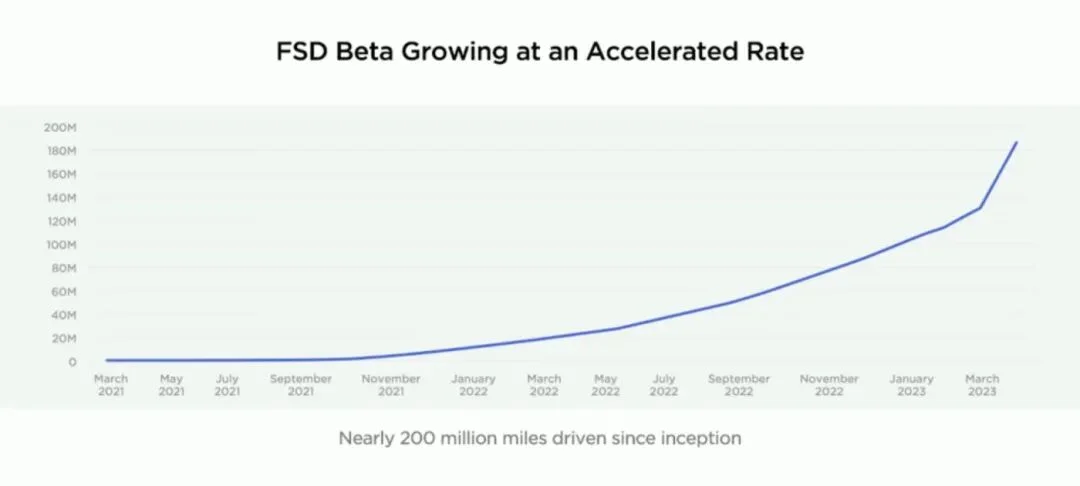
More critically, despite continuous advancement and iteration, FSD Beta remains far from the goal of "full self-driving" that Elon Musk has described.
Furthermore, unlike other products, FSD's path to market requires not only technological progress but also approval from regulatory bodies in various countries, including the United States. Elon Musk has stated in interviews that local traffic regulators' review and approval are inevitable for testing FSD Beta locally in Europe and other regions.
This is precisely the challenge facing FSD's implementation in China.
Notably, more than two and a half years have passed since FSD was first introduced. In China's fiercely competitive landscape, many domestic automakers, including NIO, XPeng, and Li Auto, have eagerly announced their urban NOA deployment plans, with some aiming to achieve specific targets within six months. Consequently, 2023 has been dubbed the "first year of urban NOA deployment."
Their pace appears somewhat aggressive. Compared to them, Tesla's path toward FSD implementation seems considerably more cautious.
After more than two years on the path to deployment, FSD—the pioneer in this space—has yet to achieve its stated goals. Its actual performance remains far from where it aims to be, and it continues to make progress while serving as a reminder to the entire industry:
The rollout of urban navigation-assisted driving, represented by FSD, should never be viewed as something that can be achieved overnight. On the road to autonomous driving, automakers need to stay grounded, take steady steps, and commit to continuous testing, iteration, and advancement.
Written by Willa Edited by 308