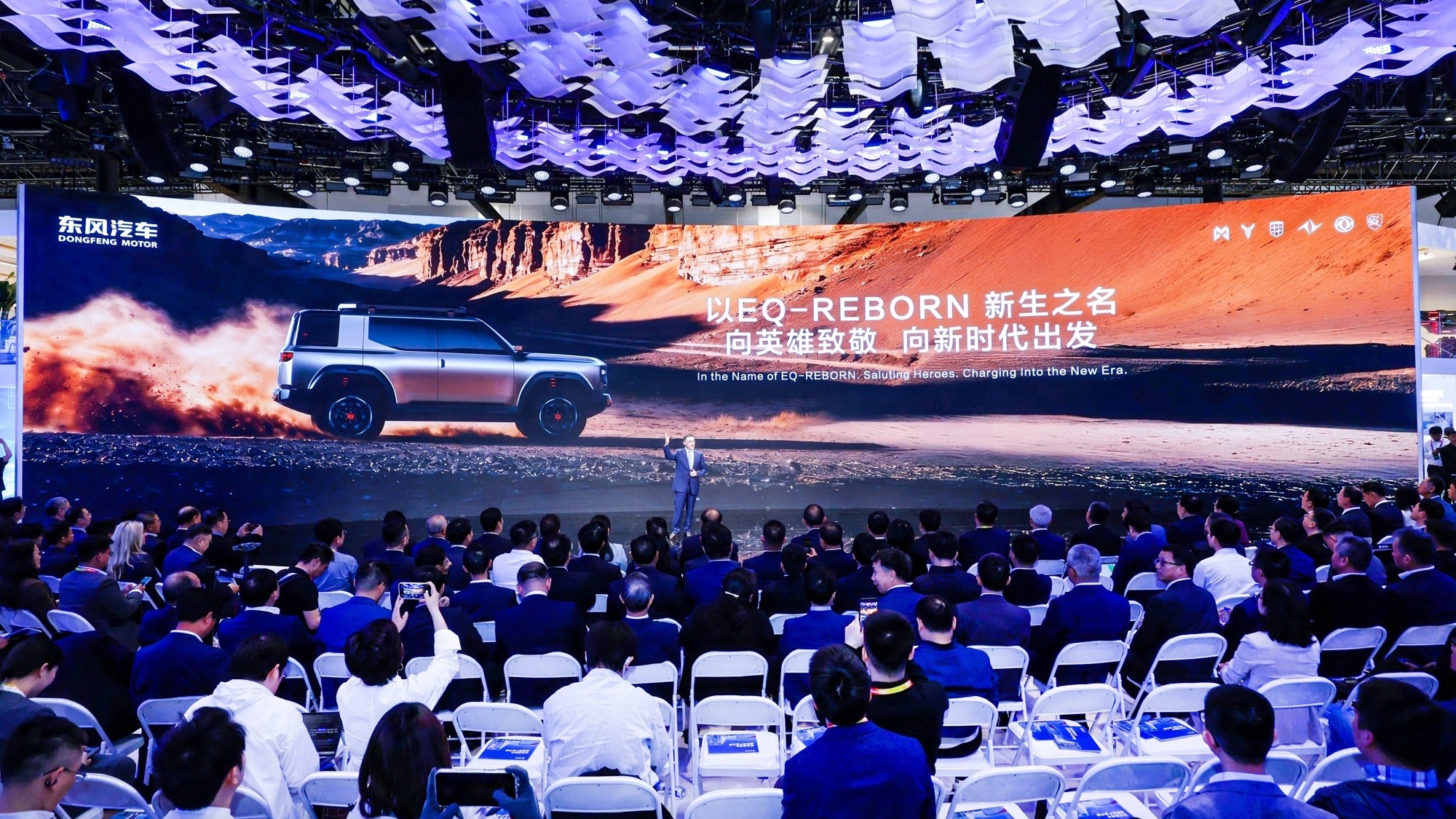
At the 2026 Beijing Auto Show, Dongfeng Motor publicly unveiled the “Dongfang Rising 2030” plan. This is not just a routine corporate strategy update; it resembles a phased report card and a roadmap for the next steps following its deep dive into smart electric transformation.
As a result, Dongfeng completed its foundational transformation during the “14th Five-Year Plan” period: by 2025, new energy vehicle sales reached 1.053 million units, with self-owned brands accounting for over 60%. On this basis, the “Dongfang Rising 2030” plan further clarifies the growth goals for the next phase—achieving global sales of 5 million units by 2030, with new energy vehicles accounting for more than 70%, overseas markets accounting for 40%, and maintaining R&D investment intensity at over 7%.
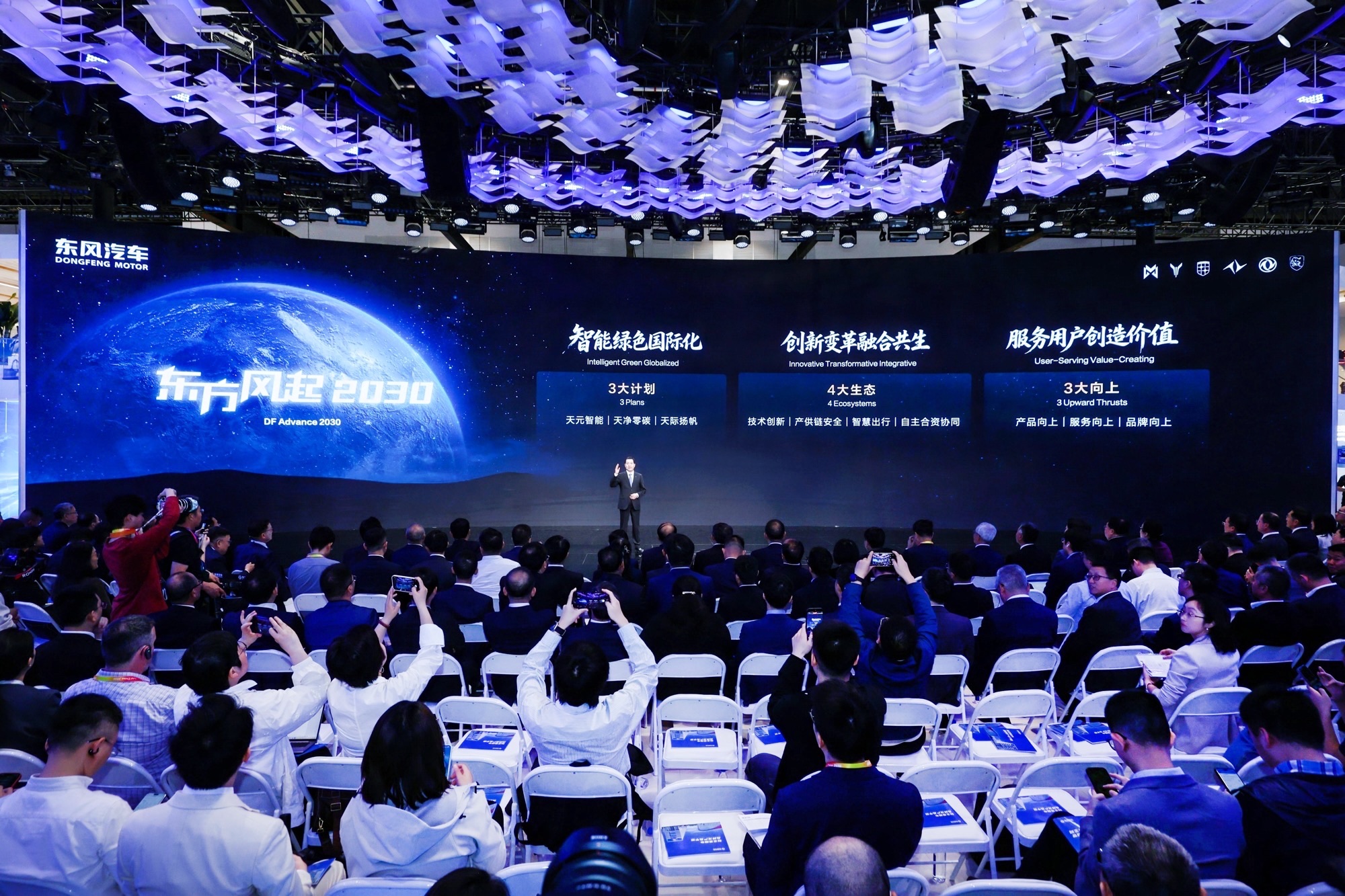
To achieve this goal, Dongfeng breaks down its overall strategy into the “13343” framework. Its core logic can be understood in three progressive layers:
The first layer is redefining the form of the enterprise—three “Dongfengs”: intelligent, green, and internationalized; innovation, change, integration, and coexistence; and serving users to create value.
The second layer involves the path and methods, including three major plans: “Tianyuan Intelligence,” “Tianjing Zero-Carbon,” and “ENOVATE Yangfan,” as well as four ecosystem systems of technological innovation, supply chain security, smart mobility, and self-brand joint venture coordination.
The third layer returns to the user side, completing the value loop through the upward development of products, services, and brands.
If “13343” is the methodology, then the products and technology showcased at this auto show are the specific realization of this methodology.
On the technical front, Dongfeng emphasizes the boundaries of its “full-stack self-research” capability. In the field of intelligence, the released “Tianyuan Intelligent Driving” system attempts to integrate “vehicle-road-cloud-star” into one system and single-vehicle intelligence, covering the complete chain from perception, decision-making to execution. In terms of energy route, besides continuing to advance electrification, hydrogen energy is placed in a more prominent position. In the “Dongfeng Hydrogen Vessel” exhibition area, the 400kW fuel cell single-stack and 300kW system have entered the demonstration operation stage, with the total operation mileage of whole vehicles exceeding 650,000 kilometers, demonstrating its long-term investment in parallel multiple technology routes.
On the product side, Dongfeng introduced 26 models and multi-brand matrices, covering from high-end new energy to mainstream household markets. Among them, the new concept car EQ-REBORN has become the focus. This car is built on a new architecture, integrating integrated die-cast body, Mach power, solid-state batteries, and intelligent driving and cabin systems, characterized by “transformable form” and open ecology, trying to explore a new form of lightweight off-road and intelligence combination. To some extent, such concept products also provide direction for Dongfeng’s subsequent product definitions.
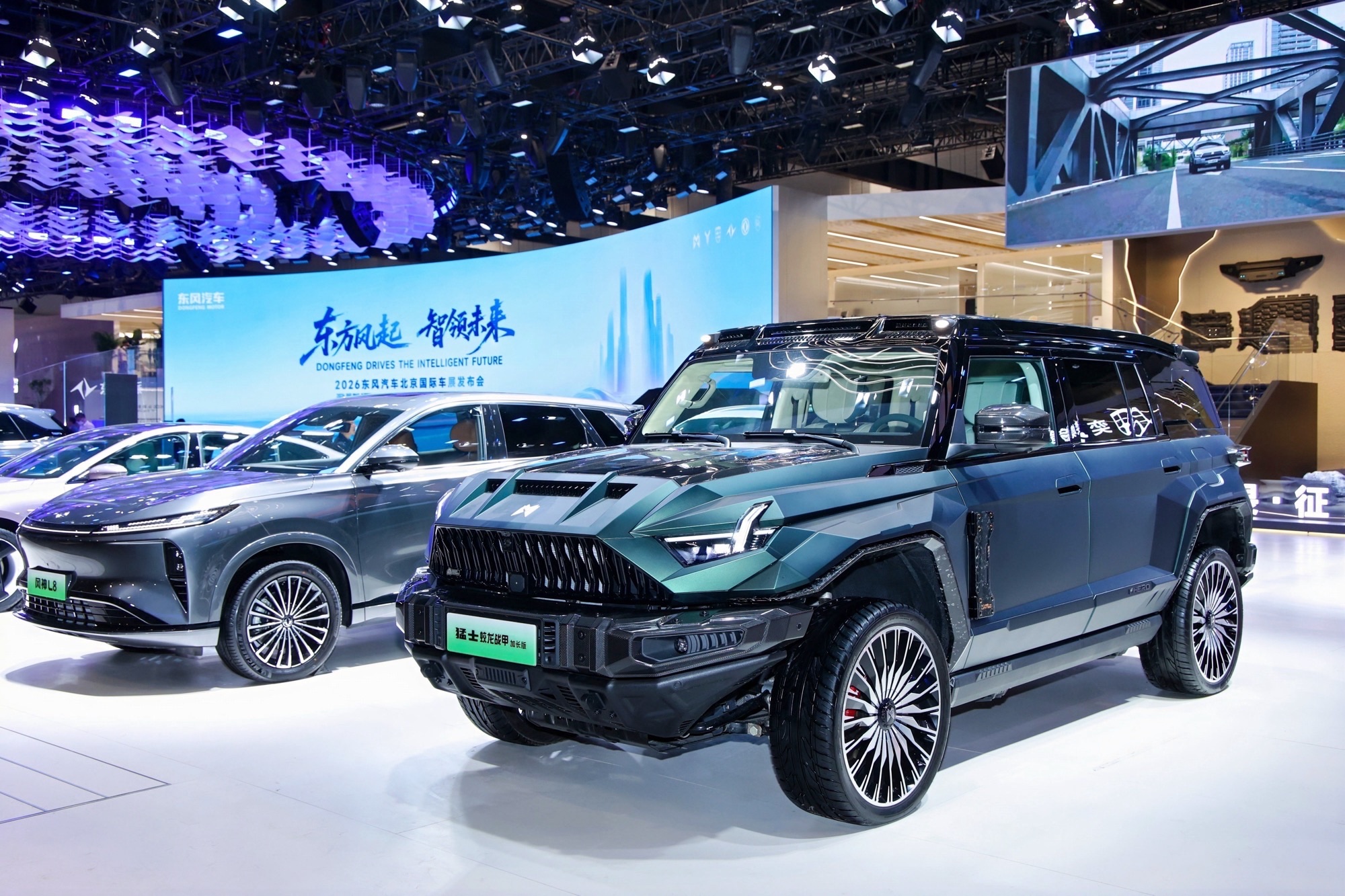
Meanwhile, the concentrated release of new models such as YiXing X9, Lingxing Star V6, and Warrior M817 further supplements its product layout in the premium and niche markets.Overall, “Dongfeng Rising 2030” exhibits several clear characteristics: firstly, a continued emphasis on transitioning to new energy solutions, advancing both pure electric and hydrogen technologies without limiting to a single approach; secondly, enhancing in-house research depth, with a focus on mastering intelligent driving and core technological capabilities internally; thirdly, raising the priority of globalization, with explicit targets for the proportion of overseas sales.
For DFAC, the key to this strategic round is no longer about “whether to transition,” but rather “to what extent to transition.” The information released from the current auto show indicates that DFAC is attempting a shift from a traditional large-scale car manufacturer to an intelligent mobility company with technological leadership capabilities and a global competitive perspective.
Going forward, the real test will remain at the execution level—including the pace of core technology implementation, product competitiveness, and actual breakthroughs in the overseas markets. These factors will determine how far “Dongfeng Rising 2030” can ultimately go.
This article is a translation by AI of a Chinese report from 42HOW. If you have any questions about it, please email bd@42how.com.