
Xiaomi Automobile unveiled the “Xiaomi HAD Enhanced Edition” at the Guangzhou Auto Show on November 21, 2025, with upgrades to its “Safety Assistance Features.” The updates will be gradually rolled out to users via OTA Xiaomi HyperOS 1.11 series after the auto show.
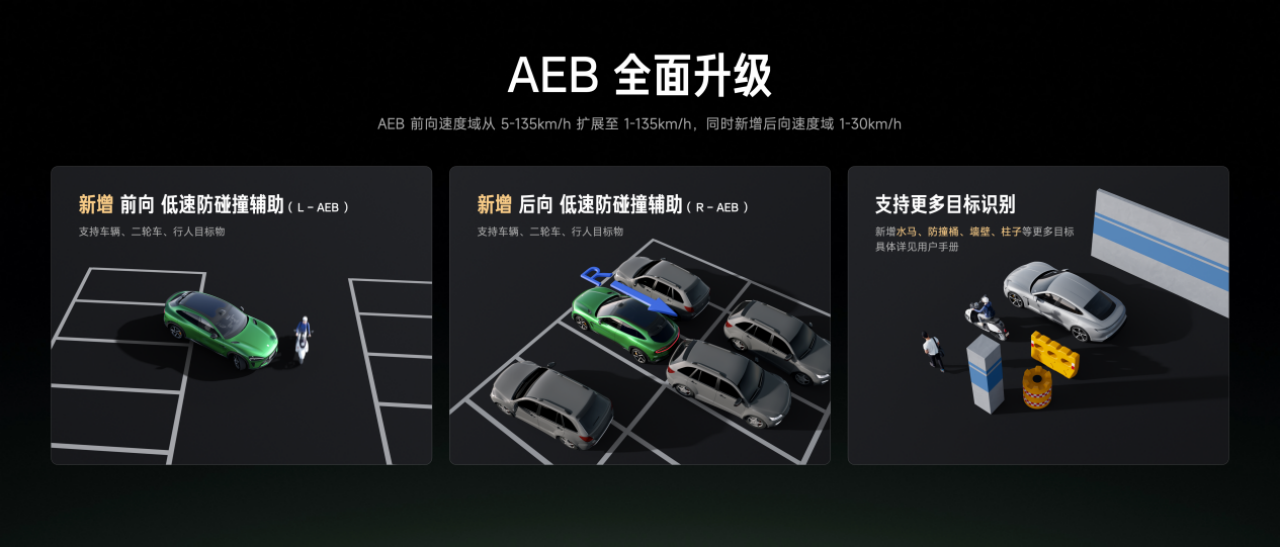
Xiaomi Automobile has introduced forward and rear low-speed collision avoidance assist functions (LAEB and RAEB), capable of detecting pedestrians, vehicles, and two-wheelers in the vehicle’s path during low-speed driving or reversing. When the system evaluates a collision risk and the driver does not intervene timely, it will proactively alert and apply braking to prevent or mitigate the collision risk. Additionally, the operating speed range of the collision avoidance assist (AEB) has been expanded from 5-135km/h to 1-135km/h forward and 1-30km/h rearward, with enhanced capability to recognize static obstacles such as walls and poles.
In practical applications, the system can automatically detect the vehicle ahead in traffic jams, reduce rear-end collision risks through active warnings and braking; detect rear obstacles and apply brakes when reversing; identify obstacles in the driving path during low-speed cornering; and promptly brake at intersections when encountering crossing or oblique two-wheelers. Post the Xiaomi HyperOS 1.11 series OTA, Xiaomi vehicles fully support the integration of MAI Misacceleration Suppression Assist with AEB Collision Avoidance Assist.
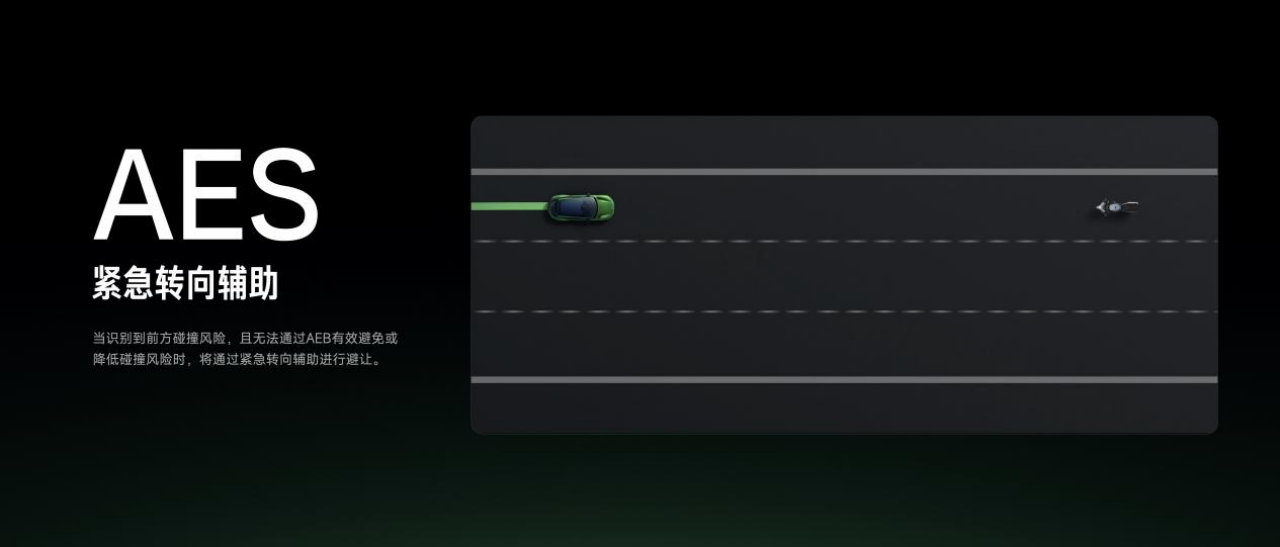
Xiaomi Automobile has also introduced the Emergency Steering Assist (AES), enhancing response capabilities in complex scenarios. When encountering sudden obstacles ahead at speeds between 80-135km/h, the system prioritizes AEB Collision Avoidance Assist for emergency braking. If full braking could still lead to severe collision and there is room to evade, the system activates AES for lateral evasion. AES can autonomously evade in numerous high-risk situations, including oncoming vehicles, lateral intrusions, and fallen two-wheelers.
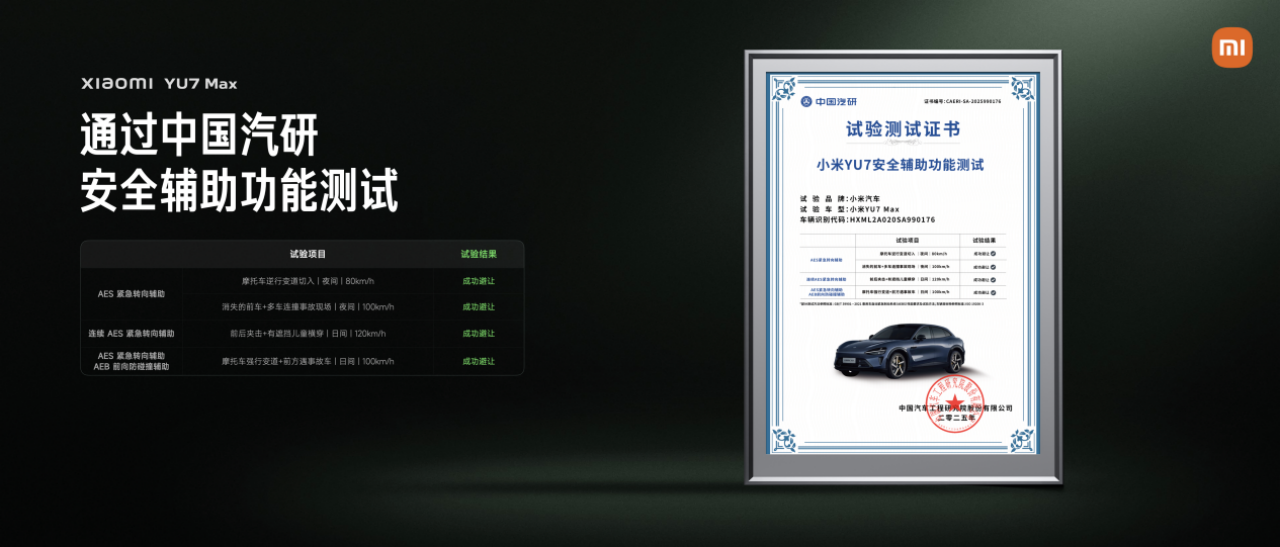
Xiaomi Automobile’s AES system formulates evasion strategies based on different scenarios. Integrating laser radar, millimeter-wave radar, and cameras in a multimodal sensory fusion, the system can identify low-reflectivity objects in dark environments. Upon detecting risk, the system determines whether to use forward collision avoidance assist (AEB) or emergency steering assist (AES), selecting the more suitable side for evasion when urgent evasive action is required. Additionally, Xiaomi Automobile’s chassis has been specially tuned for AES.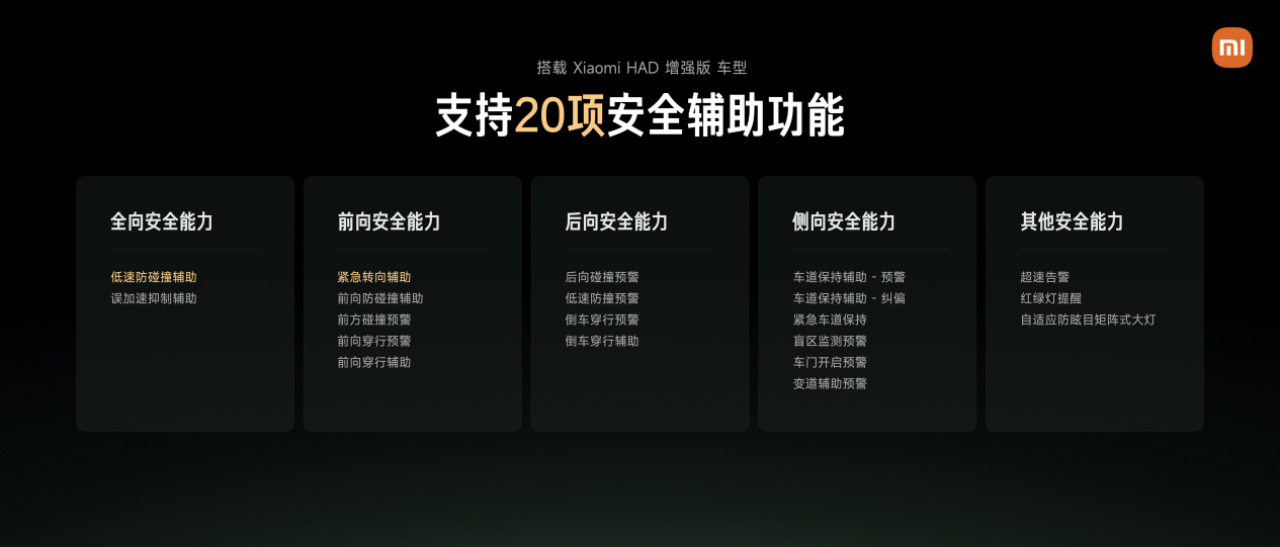
XiaoMi’s vehicle AES supports multiple avoidance maneuvers and flexible risk aversion combinations, allowing for up to two consecutive AES operations to prevent additional obstacles after the initial evasion. AES can be coordinated with AEB for cohesive decision-making. In the four major test scenarios for safety assistance functions at “China Automotive Engineering Research Institute,” XiaoMi’s AES Emergency Steering Assist successfully passed all tests. However, XiaoMi automobiles remind users that AES is an advanced safety assist feature for extreme scenarios, and drivers must remain attentive.
This article is a translation by AI of a Chinese report from 42HOW. If you have any questions about it, please email bd@42how.com.