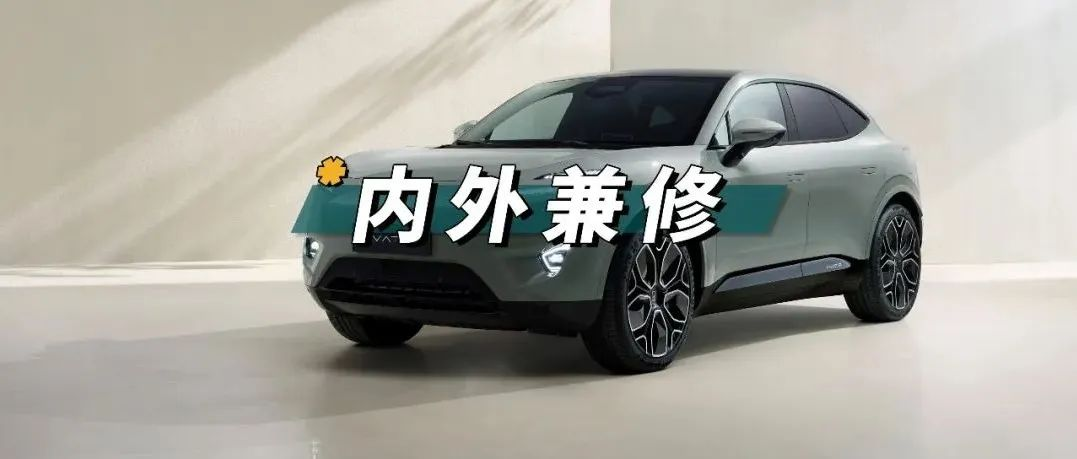
Avita 11: The New Favorite in the Electric Vehicle Market
By Xiaodong and edited by Chris
Blessed by three heavyweights – Changan, Ningde, and Huawei, the Avita 11 has been highly anticipated from its birth with apparent advantages in traffic. After a 266-day wait since the release of the Avita brand, the Avita 11 officially went on sale on August 8th, 2022.
The Avita 11 is available in three versions, priced as follows:
- Long-range dual-motor version, 90 kWh, priced at CNY 3,499,000;
- Long-range dual-motor luxury version, 90 kWh, priced at CNY 3,699,000;
- Super long-range dual-motor luxury version, 116 kWh, priced at CNY 4,099,000.

In terms of power, intelligent driving hardware, high-speed navigation assistance, suspension, safety, and external configuration, all three versions of the Avita 11 are identical. The luxury version features Nappa leather for the steering wheel and seats, a 64-color ambient light effect, front-seat ventilation massage, intelligent induction electric doors, and RNC active noise reduction, differing from the regular version.

In addition, the 116-degree version will come with 22-inch wheels, and the 90-degree version can be equipped with optional 21-inch wheels. Urban intelligent driving assistance and AVP valet parking are available as add-on services for all versions.
What sets the Avita 11 apart is its outstanding 5-year or 120,000-kilometer vehicle warranty, 8-year or 160,000-kilometer electric powertrain warranty, and immunity to second-hand transaction negativities. This means that a second-hand Avita 11 will also have the same warranty as a brand new one, boosting its resale value.
More importantly, what abilities will Changan, Ningde, and Huawei bring in to make the Avita 11 even more appealing?
An All-Around Striking Design
In November 2021, when the Avita 11 was first revealed, the design of the vehicle’s front left a lasting impact on many people. Just as the new BMW 7 Series adopted a new split-style headlight, changing from angel eyes to smiling eyes, with a larger nostril, it was not readily accepted by everyone in the short term. Similarly, Mercedes’s more youthful design for the new S-class was met with some criticism online, yet the 2021 sales of the Mercedes S-class increased by 40% year-on-year.
 In terms of styling, especially with regards to exterior design, opinions differ greatly. Beauty and ugliness are not absolutely defined, for example, Mr. Song Song, a popular online personality, thinks the Aiwata 11 looks very stylish. In my opinion, for a relatively new brand, a unique, iconic and identifiable design is much stronger than a conformist design.
The Aiwata 11’s exterior is personally designed by Aiwata’s chief designer, Nader Faghihzadeh, who worked for BMW for 17 years and participated in the interior and exterior design of models such as the third-generation BMW 6 Series (F06/F12/F13), the sixth-generation BMW 7 Series (G11/G12), the i8, and the iNext. He joined Aiwata’s predecessor, Changan Nio, in 2019. Considering that the design philosophy of BMW’s new 7 series was likely in development before 2019, the Aiwata 11’s headlight design seems understandable.
Leaving aside the headlight design, I absolutely love the Aiwata 11’s side and rear design. Aiwata 11, with HUAWEI INSIDE’s support, does not place its LiDAR above the roof like most cars do. Instead, it places it under the license plate and harmonizes it with black processing on the front lip to make the LiDAR look more coordinated. Although it requires more resources in the styling engineering aspect, it is definitely a bonus to the visual presentation. Additionally, under the front hood, the Aiwata 11 also hides a massive front trunk space with a volume of 95 L.
Looking at the car’s dimensions, the Aiwata 11 is 4880 * 1970 * 1601 mm in length, width, and height, respectively, with a wheelbase of 2975 mm. The height of 1601 mm, combined with a sleek profile, makes the Aiwata 11 look very low. If the feeling is not obvious enough, the following image shows the body dimensions of other cars in the same class for reference. The maximum 40° inclination angle of the rear seat also ensures that the headroom is not affected by the sleek design, and the wheelbase of 2975 mm ensures the legroom of the second row. Moreover, Aiwata 11 is equipped with ventilation, heating and massage functions for each seat in the entire car, indicating that the ride comfort of Aiwata 11 is excellent.More importantly, with a 22-inch large wheel rim, the side of the Avita 11 looks dynamic. The round tail and the dovetail-shaped taillights, along with the active lifting tail wing, create a unique and distinctive look. The rear window is designed almost vertically, which limits its size, so the Avita 11 uses a streaming media rearview mirror. This unique tail design outlines a clear sense of layering, making it a highlight of the Avita 11’s appearance.
Entering the car, the surprising interior of the Avita 11 is even more impressive than its appearance. Currently, the Avita 11 has two interior colors to choose from: “Blue-gray” and “Burgundy red”. The blue-gray interior looks full of vitality and technology, while the Burgundy red has a luxurious taste.
The overall interior consists of two 10.25-inch LCD screens and a 15.6-inch central control screen. The difference is that they are not arranged side by side like other models. There is a dumbbell-shaped design behind the central control screen, which Avita officially named “Vortex Emotional Turbulence“. I have never seen any other car model with this kind of design style. Apart from the visual impact, it can also present different themes with its lighting, along with 64 colors of ambient lights that surround the entire cabin, creating a full atmosphere. Additionally, the angle and position of the central control screen are set for easy viewing and operation, indicating that Avita’s design team has put in much effort in this aspect.
Moreover, the emotional turbulence also supports music rhythms, voice interaction, and welcoming effects to interact emotionally with users. Perhaps, in addition to Nomi from NIO, the Avita 11 will bring another new human-computer interaction experience.
It is worth mentioning that the Avita 11 adopts a three-spoke steering wheel. Although the steering wheel does not have a completely hollow design like that of NETA S, the sense of layering created through its breaks is also appealing. The steering wheel retains only two roller buttons and touch buttons responsible for voice control and intelligent driving.
According to the on-site experience of Star Channel, the scroll wheel is very comfortable (you can see the video tomorrow:), but whether the operation logic of the scroll wheel design can bring a better user experience still tests the cockpit team. At the same time, Avita 11 has placed the seat adjustment button on the door panel below the door opening button, which looks delicate and compact.

There is also a small detail, the DMS driver fatigue monitoring system and the built-in camera inside the car can be “physically” turned off, like this!

To sum up, the interior of Avita 11 creates a sense of luxury exclusive to Avita. Like the appearance, the interior style of Avita 11 did not choose to follow the trend, but has carved out a unique path of its own. I think this is the direction of development for domestic electric vehicle design, not blindly homogenized, but each brand has its own unique design, not just a few simple large screen stacks, which is what consumers want and the domestic automobile industry needs more.
“Triple Happiness”
At the Chongqing auto show on June 25 this year, Avita welcomed three heavyweight guests on its booth, Changan Automobile Chairman Zhu Huarong, Huawei Rotating Chairman Xu Zhijun, and Contemporary Amperex Technology Co. Limited Chairman Zeng Yuqun, the three giants stood up for Avita, which can be described as very impressive. The three are responsible for vehicle manufacturing, intelligence, and power battery respectively. The three leading aspects jointly created the CHN platform belonging to Avita.

Like the Alpha S from Jihoo, Avita 11 packages the powertrain, intelligent cockpit and intelligent driving to Huawei. Currently, all models of the Avita 11 adopt the same powertrain, equipped with the Huawei DriveONE three-in-one oil-cooled electric drive system, comprising a front induction motor of 195 kW and a rear permanent magnet motor of 230 kW to form a four-wheel drive dual-electric motor power combination, with a maximum operating speed of 18,000 rpm, which also means that Avita’s maximum speed is higher.
The maximum peak power of the two motors is 425 kW, maximum torque is 650 N·m, and zero-to-100 acceleration time is 3.98 seconds. Remember to choose the simulation sound you like. It is understood that the 3.98-second hundred-kilometer acceleration is still a relatively conservative calibration, and the upper limit of this powertrain set is higher. During daily driving, it is possible to increase the cruising range by driving only with the rear motor.
When it comes to cruising range, the Aiways U5 adopts two battery specifications of 90 kWh and 116 kWh, and uses NCM 523 ternary lithium batteries with better safety and stability instead of NCM 811 ternary lithium batteries for the electrode materials. The energy density of the battery cell reaches 245 Wh/kg. The overall energy density of the battery pack reaches 180 Wh/kg and 190 Wh/kg through the assist of CATL CTP 2.0 technology. Various technologies such as big data early warning, aerospace-grade thermal insulation materials, and thermal spread suppression are applied to ensure battery safety.

The large battery enables the Aiways U5 to achieve a cruising range of 555 km and 680 km (CLTC). With the support of Huawei’s TMS (Thermal Management System), the cruising range of low-temperature conditions can be increased by 10% compared to models without heat pump air conditioning. In addition, the use of a large amount of aluminum material for CHN platform models can reduce vehicle weight, which is one of the reasons for the improvement of cruising range.
Of course, as an important investment project of CATL, the Kirin battery will be launched next year, and a model with ultra-long cruising range may be introduced on the Aiways U5. According to the Aiways media communication meeting, a single motor version may be launched in the future to further meet the needs of long-distance driving users. The CHN platform supports a battery pack with a capacity of up to 135 kWh.
As a 750 V high-voltage platform, the CHN platform’s fast charging efficiency can reach a maximum of 240 kW and is compatible with current mainstream fast charging piles. On August 5th, Aiways announced a long-term strategic cooperation agreement with BP to jointly promote the construction of high-voltage fast charging networks. It plans to establish more than 100 high-voltage fast charging stations in 19 cities nationwide by the end of 2023, with a maximum power of 240 kW for a single gun. In addition to newcomers such as WmAuto, Jikr, GAC, and today’s Aiways are all laying out high-voltage charging networks, and the era of super-fast charging is not far away.
 # Final Thoughts
Huawei’s intelligent driving solution BU President Wang Jun expressed that the original plan for urban intelligent driving was to launch by the end of this year, but he personally feels that there may be some delay since the final review of high-precision maps has not been officially opened. Of course, in the early stages of this year or early next year, the number of cities that can be opened is bound to be limited. Wang Jun said that it will be balanced based on the number of users in different cities, but it is still unknown what kind of payment model will be adopted by the Avita for urban intelligent driving.
Avita 11’s intelligent driving hardware includes:
- 3 96-line Huawei LiDARs;
- 6 millimeter-wave radars;
- 12 ultrasonic radars;
- 13 high-definition cameras (forward quad, side front four, rear single + four surround);
- Huawei MDC 810 intelligent driving platform, with a maximum computing power of 400 TOPS.
Whether it is a computing platform or perception hardware, the intelligent driving hardware on the Avita 11 in 2022 is definitely in the forefront of the industry, and may even maintain its position in the top tier for the next two to three years. What excites me even more is how much progress Huawei’s urban intelligent driving capability has made after more than a year of refinement.
Talking about the intelligence of Huawei, there is no doubt that the Hongmeng OS in the car has been well validated on the M5 Inquire. In terms of hardware, the Avita 11 uses a car-grade 990A chip from HiSilicon, as well as 8GB RAM and 128GB storage memory. As a high ceiling for in-car systems in the industry, there is no need to worry about the smoothness of the system, the experience of voice assistants, and the interaction experience of the screen, and most importantly, the Hongmeng ecosystem will also be brought to the Avita 11.
In terms of intelligent driving, Huawei’s intelligent driving capabilities have shown muscle since the 2021 Shanghai Auto Show. However, compared with the slow-to-showcase ARCFOXo Alpha S Hi Edition, the Avita 11 not only comes standard with basic L2 level driving assistance and NOA highway navigation assistance capabilities, but also offers the convenience of instant use upon boarding.
Featuring unique exterior and interior design and dual support from Huawei and Ningde, as another important product under Huawei’s HI mode, the Avita 11 has found a special position with its lower price than the ARCFOXo Alpha S Hi Edition and better product performance than Inquire M5. What will be the final market performance of the Avita 11 after its official launch remains to be seen at the end of this year.
This article is a translation by ChatGPT of a Chinese report from 42HOW. If you have any questions about it, please email bd@42how.com.