
From Writing to Investing: Zhou Hongyi’s New Journey in the Automotive Industry
By Zheng Wen
Edited by Zhou Changxian
From 2012 to 2018, Zhou Hongyi cooperated with partners such as Alcatel, Haier, Amoi, and Coolpad in an attempt to carve out a share of the smartphone market and make a big impact.
However, after years of struggling, he came up empty-handed.
After seven years, Zhou Hongyi has given up trying to make mobile phones and turned his sights on the automotive industry. In 2020, he began to search for companies to invest in within the industry. The 360 investment team took stock of several new car-making forces that were already in production besides NIO, including GAC NIO, Leapmotor, NIO, and WM Motor.
After quickly visiting several companies on the list, Zhou Hongyi settled on Leapmotor and NIO after the Spring Festival in 2021. By the time of the Shanghai Auto Show in April, he had made up his mind to choose NIO.
Zhou Hongyi did not choose Leapmotor because he had already been in contact with them as early as 2018, and unfortunately, their first experimental product, the S01, was not competitive enough on the market to satisfy Zhou Hongyi. Additionally, there was another important reason: Zhou Hongyi stated, “What does Leap mean? Starting from scratch? Well, I just don’t like that name.”
In May 2021, 360 announced a strategic investment in NIO. After that, NIO received nearly RMB 10 billion in investments from companies such as CATL and Ping An, and its financial situation improved significantly. Perhaps Zhou Hongyi deserves some credit for this.
At the same time, the new energy market has undergone a major upheaval. In 2021, China’s new energy vehicle sales reached 3.521 million, an increase of 157.6% year-on-year, with a market penetration rate rising from 5.4% in 2020 to 13.4%.
Now, not only have Leapmotor and NIO survived, but they have also risen through the ranks from unknown second-tier new forces to become some of the highest selling cars, surpassing NIO.
Indeed, times have changed.
Leapfrogging Li Auto:From the Unknown to the Top
“In the next phase, our goal is to be the top new force.”
On July 31, at the NIO S launch event, NIO co-founder and CEO Zhang Yong said this slogan for the first time. The news that the company had surpassed Li Auto with a single-month sales volume of 14,000 cars quickly spread throughout the internet, and they became the top-selling new car-making force.
Following closely behind was Leapmotor, who sold 12,000 vehicles. In fact, as early as April, Leapmotor had topped the charts, surpassing XPeng by a narrow margin with 85 cars sold, taking the top spot for the first time.Even so, it must be admitted that both brands still lack recognition at the consumer level.
NETA and Leapmotor were established in 2014 and 2015, respectively, and were among the earliest players to enter the new energy vehicle market. Six or seven years later, WmAuto has gone public in the United States, while Leapmotor has just filed for an IPO. However, NETA, which started earlier, has yet to make any substantial progress.
As Zhang Yong reflected, one of NETA’s and WmAuto’s biggest shortcomings compared to each other is the ability to operate capital. In his view, WmAuto is a second start-up company which has resources and a clear understanding of what capital actions to take at different stages of a company’s development.
NETA’s self-built factory located in Tongxiang began production in 2018, with total financing of only slightly over 3 billion yuan. Prior to 2021, NETA had received less than 7 billion yuan in financing and had long been in a state of being a small, unnoticed player in the capital market.
Compared to NETA, Leapmotor’s financing amount has also remained at a similar level. According to data from Qichacha, from 2016 to 2021, Leapmotor Technology completed a total of 7 rounds of financing, with a total amount of 12 billion yuan.
Due to the relatively small amount of funds, the research and development expenditures of the two car manufacturers are smaller by an order of magnitude compared to WmAuto. According to Leapmotor’s prospectus, from 2019 to 2021, a total of 1.387 billion yuan was invested in R&D. It’s worth noting that during the same period, NIO, XPeng, and Li Auto invested 11.509 billion yuan, 7.91 billion yuan, and 5.555 billion yuan, respectively.
In addition, based on “small cars” as sales support, the performance reports of the two companies are not very ideal. In the past three years, Leapmotor Automobile has accumulated losses of 4.847 billion yuan, and the losses have been expanding year by year, reaching 0.901 billion yuan in 2019, 1.1 billion yuan in 2020, and 2.846 billion yuan in 2021.
According to another set of data, NETA Automobile had a net loss of 1.321 billion yuan in 2019, 2.908 billion yuan in 2020, and 4.229 billion yuan in the past two years.
While WmAuto has achieved positive gross profit margins, Leapmotor’s gross profit margin in 2021 was -44.3%, even after a large increase in gross profit margin. An internal source at NETA stated that the company’s gross profit margin is only 5%.
In 2019, an article titled “Li Bin of WmAuto, the Most Miserable Person in 2019” went viral online. People saw WmAuto’s difficulties, but couldn’t see the difficulties of more new forces that hadn’t grown up yet.
At a dinner party in April of the following year, Zhang Yong told Li Bin, “WmAuto has it rough, but at least it is well-known. We’ve gone through it all and no one knows us.” One sentence summed up their pain.# In discussing the current state of the company, Zero Run’s founder and chairman Zhu Jiangming was almost as frank as a baby. In an interview this year, he admitted that Zero Run is working hard to get out of the “intensive care unit”.
Zhang Yong was very clear in his heart that “Wei Xiaoli” surpassed in attracting market attention because “the founders have their own image”.
He lamented that “maybe they naturally have this ability, and we, who come from traditional car companies, used to adhere to the concept of low-key. They are different. They dare to do and say, which is also a big advantage.”
The core team of NETA all come from traditional car companies. NETA’s parent company, Hozon New Energy, was founded by former vice president of Chery New Energy, Fang Yunzhou. Zhang Yong is Fang Yunzhou’s former colleague at Chery and joined NETA Auto in 2018 from BAIC New Energy. As a representative of the executive team from traditional car companies among new forces, NETA’s characteristics are relatively conservative and low-key.
Zero Run’s executive team is another extreme, completely crossing boundaries. Among new energy vehicle startups, only He XPeng and Zhu Jiangming were originally outsiders.
There is a comment on Zhihu that “XPeng’s past seven years are a self-consistent process, allowing Internet thinking and the identity of a car person to gradually become self-consistent.” Perhaps, what Zero Run needs to reconcile is the fusion of the internal “engineer culture” that Zhu Jiangming believes in and the trend of the automotive industry.
Zhu Jiangming once admitted that the Zero Run team can be said to be “outsiders” in the automotive industry, and the early core team came from IT companies, without automotive industry experience, and later gradually introduced high-level managers from the automotive industry. It is said that Zhu Jiangming, who comes from the security giant Dahua Technology, had no knowledge of the common sense that making a car requires qualifications in the beginning.
Since 2020, Zhu Jiangming has tried to improve the brand’s visibility through controversial remarks. That year, he made a bold statement that Zero Run would enter the top 3 of domestic new forces in 2023; by 2021, his goals had changed to “surpass Tesla in three years”, “release eight new models in four years”, and “achieve a sales volume of 800,000 vehicles in 2025”. Unfortunately, the publicity effect of these controversial remarks has not been ideal.
Although Zhang Yong’s comments were good, he actually missed one point. Founder image is undoubtedly important for enterprise publicity, but enterprise positioning is equally important. In this respect, there is also some gap between NETA, Zero Run, and “Wei Xiaoli”.
At the C01 launch event, Zero Run defined its vision as “becoming a world-class intelligent electric vehicle enterprise worthy of respect” and creating maximum value for users’ travel and life. Although the vision is grand, the company still lacks a clear positioning.The slogan “Equal access to technology” and “Making cars for the people” raised by the NIO brand IM may not be a good positioning for the brand. Essentially, this positioning is still “I have what others have, but I am cheaper.” Moreover, with the arrival of the IM S, whose ceiling price has reached 330,000 yuan, in fact, IM has “betrayed” its brand positioning.
Regarding what a clear brand positioning is, Zhao Fuquan, Dean of the Institute of Automotive Industry and Technology Strategy at Tsinghua University, pointed out clearly in an interview with the CEO of Gasgoo, Zhou Xiaoying, “Enterprises should clarify which type of consumers their products should be targeted at, what core demands they should meet, and must take the ability to meet the different needs of users as their core competitiveness.”
It should be pointed out that brand positioning is different from consumer positioning of a single product. “Once an enterprise has determined a reasonable brand positioning, it must vigorously adhere to it, and must not waver.”
In fact, although NIO-IM has surpassed “Weltmeister” in terms of market performance data, from multiple dimensions such as financing, performance, and corporate positioning, they still belong to the second-tier camp.
Zhang Yong is aware that the current market performance is not worthy of self-complacency, “Temporary overtaking is meaningless, and IM’s user group is more mass-market, according to this logic, only sales 2-3 times that of NIO and Li Auto could be considered equally excellent.”
“It must be acknowledged that NIO and Weltmeister are currently ahead of the pack in new energy vehicle production, whether in enterprise management, market users, or capital markets. They are indeed doing relatively well and are ahead of us,” Zhang Yong believes that if he can score 60-70 points, Li Bin can score 80-90 points.
“We have to learn from them. We are also in a state of catching up,” Zhang Yong said.
“The road into the city,” is it stable now?
The development trajectory of NIO-IM and Weltmeister is extremely similar. They both chose to enter the market with “small cars.” After their products were launched, they both went through a long period of dormancy, and only in the second half of 2021 did they begin to show some good signs and create some ripples in the market.
From the beginning of car production, IM has been insisting on the low-end route, and the price of N01 to IM V is all within 100,000 yuan.
“Everyone wants to go from high to low, but IM does not have this condition. Time does not allow for it, and neither does funding, so I must go from low to high,” Zhang Yong admitted.
The first car launched in 2018, N01, received a lot of negative reviews and had poor sales. Interestingly, in the same period, NIO delivered 11,000 units of its new car, the ES8.The NETA V launched by Zhang Yong after NETA, although positioned similarly to N01, has received good feedback due to more accurate market insights. Based on the strategy of disproportionate competition with model size, NETA V has gained favor in the price range of 70,000 to 80,000 yuan.
Most electric cars at the same price cannot compete, such as Chery Little Ant and Chang’an Bento, which are models of “upgraded old-man cars”. NETA V is a small SUV with significantly better space, which captures the size-to-price ratio that consumers in this price range care most about.
It has been proven that the NETA team does have two tricks, which can win beautifully in the market they are good at when resources are limited.
Producing and selling new energy vehicles around 100,000 yuan used to be Chery’s strong suit. However, the core team of NETA from Chery correctly reused the experience of traditional car companies and did what they had to do, selling cars to familiar people in the familiar 100,000 yuan market range.
One NETA investor evaluated Zhang Yong like this: “In the low-end market of around 100,000 yuan for cars in China, Zhang Yong is one of the best four or five sales executives who can count. He understands the demand and knows how to link demand with products well.”
Lingzhi has almost taken the same path.
Similarly, Lingzhi’s first car S01 was given a negative evaluation by the industry. Fortunately, the second car, the micro car T03 priced at 70,000 to 90,000 yuan after subsidies, began to gain momentum. In 2021, it delivered 39,000 vehicles, contributing to nearly 90% of Lingzhi’s sales.
Data shows that T03’s C-end user ratio reached 93.3%. The formula is the same taste: high cost performance. A pure electric vehicle with a starting price of less than 60,000 yuan, its cruising range standard configuration is 403 kilometers while other models struggle around 300 kilometers in the same class; in terms of intelligence, it has L2 level auxiliary driving ability, ACC adaptive cruise control, APS automatic parking and other functions.
Although sales have gone up, success is still far away.
Low-priced cars with poor profitability are like drinking hemlock to quench thirst, the more sold, the more losses incurred. For NETA and Lingzhi, sticking to low-priced car models will further expand the cost problem into the loss aspect of performance. As battery prices have risen sharply, the structure of the model matrix must change in order to seek improvement in gross margin.
In fact, there are precedents of failure. The same-priced Eula White Cat and Black Cat announced their cessation of production this year. Although the official reason was the shortage of chips and accessories supply, analysis by many industry insiders believes that the two car models obviously cannot meet Eula’s profit requirements, only generating hype and not profit.
Although attacking the higher-priced competition zone faces relatively small market capacity and more brutal competition, these brands have no choice. More importantly, they need to move upmarket to survive.From the perspective of objective environment, it is reasonable to enter the mid-to-high-end market from the low-price market.
According to McKinsey’s research, the percentage of consumers willing to consider purchasing new energy vehicles has risen from 20% in 2017 to 63% in 2021. The high-income group with a monthly income of more than 48,000 yuan performed better, with nearly 90% of consumers expressing a willingness to purchase new energy vehicles.
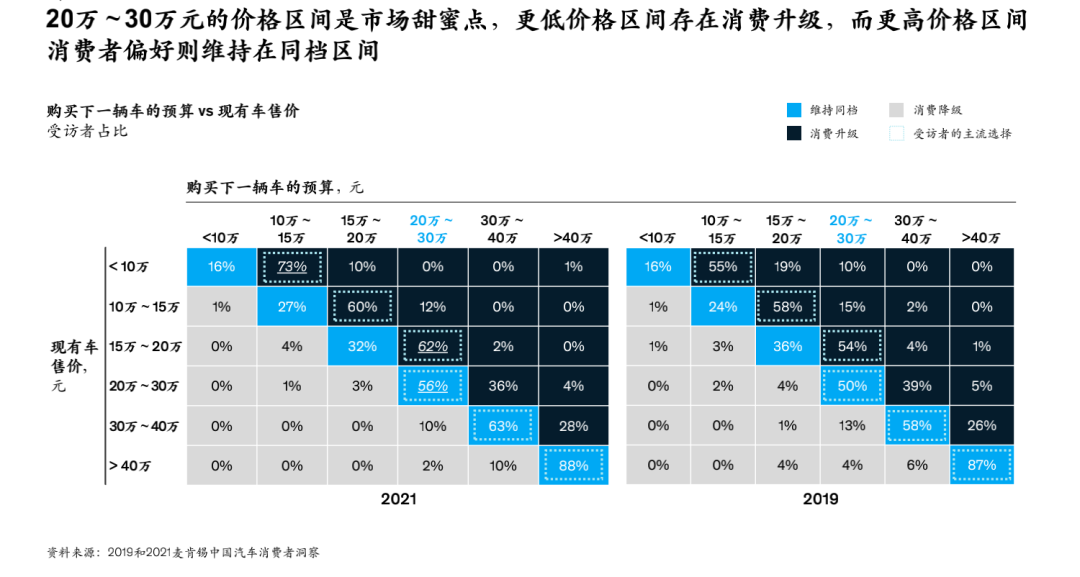
In the current stock market, consumer upgrading is still the main trend. Taking car owners with current prices below 200,000 yuan as an example, more than 60% of the respondents stated that their next car purchase budget has increased. It is most appropriate for automakers to improve their operating efficiency by laying out an incremental price range of 200,000 to 300,000 yuan.
In fact, there have been successful cases of phased strategies from low-price to high-price markets, such as Xpeng.
From G3 to P7, to G3i, and then to P5, Xpeng not only achieved a market leap, but also each “industry first” technology signifies its improvement in intelligent technology. Xpeng has firmly placed the label of “intelligent” on its products and engraved it on the minds of users.
On the other hand, NIO and Leapmotor practiced through double jumps.
Zhang Honghan, deputy general manager of the NIO brand center, stated that “there are not many sales in first- and second-tier cities, which is actually an opportunity. Consumers’ recognition of the brand has not been solidified, and we must seize the opportunity to launch high-end cars before that.”
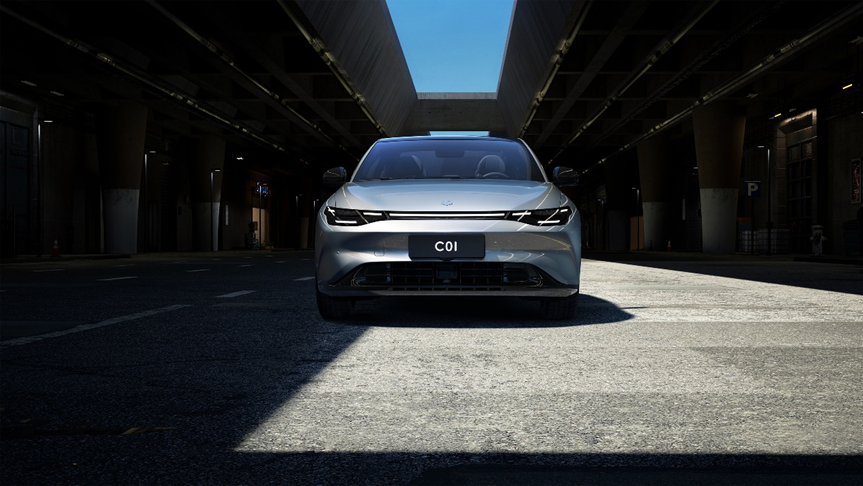
Leapmotor’s rise began with C11, priced at 159,700 yuan to 199,700 yuan, and reached the price point of 200,000 yuan. C11, which began delivery in the second half of last year, has sold more than 6,000 units per month as sales continue to rise. On May 10th, Leapmotor announced that the pre-sale price of C01 is 180,000-270,000 yuan.
Meanwhile, NIO first increased the threshold of the NIO U model to around 150,000 yuan, expanding the vehicle lineup for the sub-20,000-yuan market segment. The NIO U at this price has some market support with 4,010 units sold in July.
“Consumer upgrading is happening quickly now, and NIO has to keep up and move forward rather than waiting to be fully ready,” said Zhang Yong.
However, the release of the NIO S on July 31st, based on a new platform, has a significant price jump and a clear gap. The NIO S is available in two versions: an extended-range and a pure electric version, with official prices ranging from 199,800 yuan to 3,388,000 yuan.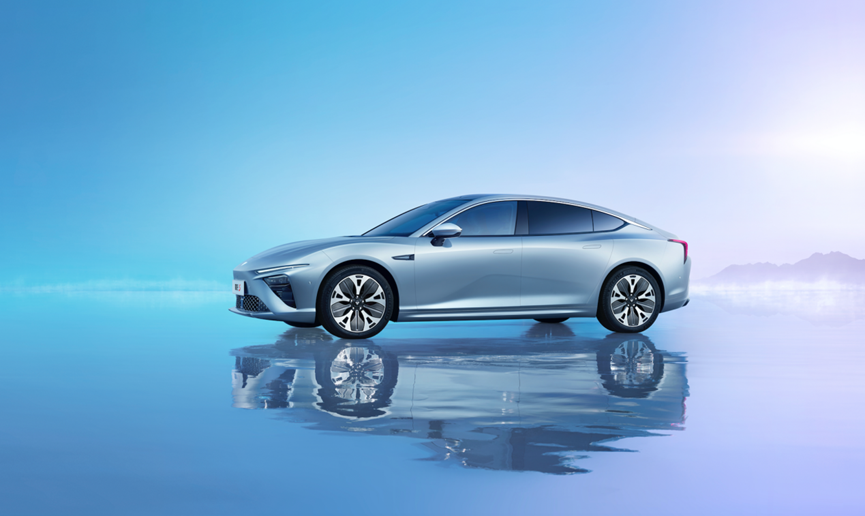
Let’s first take a look at pure electric vehicle models. With a price of 270,000 yuan, it has doubled compared to the supporting prices in the past and entered the core competition area of the Model 3.
Based on such a huge price leap, in terms of product positioning, the NIO ES8 still adopts a dislocation competition strategy of size-ladder jumping. The body reaches the C-class car standard, making it a large-sized model in this price range, and also features the slogan “entry-level is top equipped.”
In terms of intelligent configuration, it comes with a super large central control screen, an AR-HUD, and standard NETA PILOT3.0, equipped with 28 perception hardware (11 cameras, 5 millimeter wave radars, and 12 ultrasonic sensors), and supports L2+ level assisted driving on normal roads, with 19 intelligent driving assistance functions.
In order to increase sales, the entry price of the NIO ES8 extended range version has been lowered to below 200,000 yuan. The pure electric endurance of this model can reach 310 kilometers, and the pure electric endurance of extended range models on the market generally ranges from 100 to 200 kilometers.
In terms of product promotion rhythm, NIO has also made some changes. Prior to the main sales model, the NIO ES8 Bright Version was pre-sold in advance, and limited to 999 units, hoping to spark more attention and discussion from consumers about the model.
When the NIO ES8 was launched, Zhang Yong posted a Weibo, publicly stating that the NIO ES8 is the best sports car under 1 million yuan. It can be said that this is the most familiar formula for model promotion in the recent automotive industry.
To match the higher-priced products entering first- and second-tier cities, NIO has increased the proportion of direct-operated channels. As of July 2022, NIO has opened 105 direct stores in 30 cities, covering all first- and new-first-tier cities.
Although the NIO ES8 seems to have made sufficient preparations, this sub-market is not easy to navigate (it is also the market where Zero Run C01 is located), and there are strong competitors lurking, such as Tesla Model 3, Xpeng P7, BYD Han, BYD Dolphin, and Changan Blue Whale SL03…
Data shows that Xpeng P7 sold more than 35,000 vehicles in the first half of the year, and BYD Han achieved monthly sales of more than 25,000 vehicles in June. Newcomer Changan Blue Whale SL03, priced from 168,900 yuan to 699,900 yuan, exceeded 10,000 orders half an hour after the press conference; and the BYD Dolphin, priced from 209,800 yuan to 286,800 yuan, also received more than 20,000 pre-orders in six hours.
So, what are the prospects for the NIO ES8?
In conclusion:The launch of NETA S is regarded as an attempt of NETA brand to “enter the city”, and this should also be the case for C01 in the LI brand.
“If NETA S can achieve a monthly sales of 10,000 units at a price range of 200,000 to 300,000 yuan, then the goal of ‘entering the city’ will be fulfilled.” Zhang Yong believes that a monthly sales of 10,000 units for NETA S is passing, while 20,000 units is excellent.
However, if NETA S is not successful, it does not mean the termination of high-end development. As Zhang Yong said, “The cornerstone of high-end development is not S, but the mountain-sea platform on which S is based.”
According to Ping An Securities’ calculation, if the gross profit margin is maintained at around 20%, the sales, administrative and general expense ratio is 12%, and the investment scale of research and development expenses is 6.5 billion yuan, the new force needs 81.25 billion yuan in revenue to break even. Based on a single vehicle revenue of 250,000 yuan, the sales scale needs to reach 330,000 units.
Brands with lower revenue need higher sales scale to achieve break even.
“Looking at a scale of 500,000 units, this is our first goal.” Zhang Yong’s judgment is to achieve an annual sales volume of 500,000 units and profitability by 2025.
However, for LI with a worse gross profit margin, although it has not mentioned the goal of break even, its claimed “annual sales of 800,000 units in 2025” should be the threshold for qualifying for the race.
From “small transparency” to surpassing “We Xiaoli”, the advancement of NETA and LI is inspirational. The next stage will depend on who runs faster and more steadily.
This article is a translation by ChatGPT of a Chinese report from 42HOW. If you have any questions about it, please email bd@42how.com.