


How NIO's Frugal Strategy Is Accelerating Its Technological Exploration
At its NIO IN event, the automaker prioritized its AI-native organizational structure before unveiling new technologies, reflecting a shift toward strict cost-accounting under its CBU management model where every R&D expense, including AI token consumption, is tightly tracked.
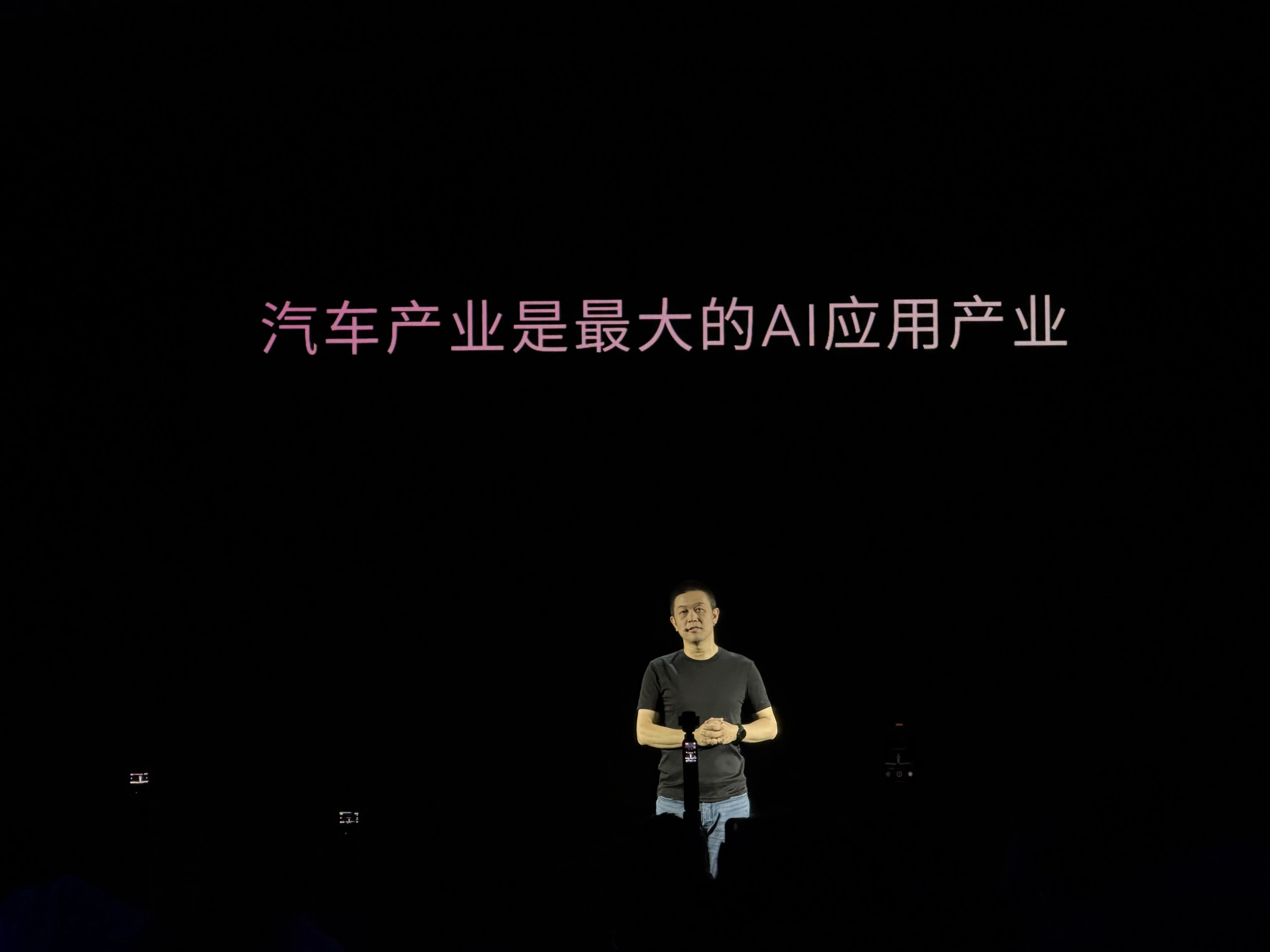
Today's NIO IN is slightly different from previous editions. At this innovation and technology day press conference hosted by the automaker, the focus was first placed on its AI-native organizational structure before moving on to the technical content.
Over the past two years, NIO has consistently emphasized CBU management, requiring every R&D investment to be strictly accounted for, down to the cost of every token consumed by the AI team being borne by its own department.
Yet, within such a frugal operating environment, NIO has instead introduced two highly innovative products: NOMI Intelligence 4.0 and the NIO World Model NWM 3.0.
During the group interview following the launch event, Ted shared a brief story. Earlier this year, a group of young engineers who had recently graduated spent 600,000 RMB to build a new NOMI technology demo, revealing to the team the possibility of completely overhauling NOMI. Following this, NIO gradually increased its investment and ultimately made the decisive move to start from scratch.
Although initial reports about NIO implementing the CBU mechanism internally once led outsiders to feel the company was facing an existential crisis, I believe it has conversely brought about a shift in NIO's R&D: when resources can no longer be squandered freely, many technical directions require more rigorous consideration and validation.
This very constraint, in turn, may help the R&D team avoid unnecessary detours.
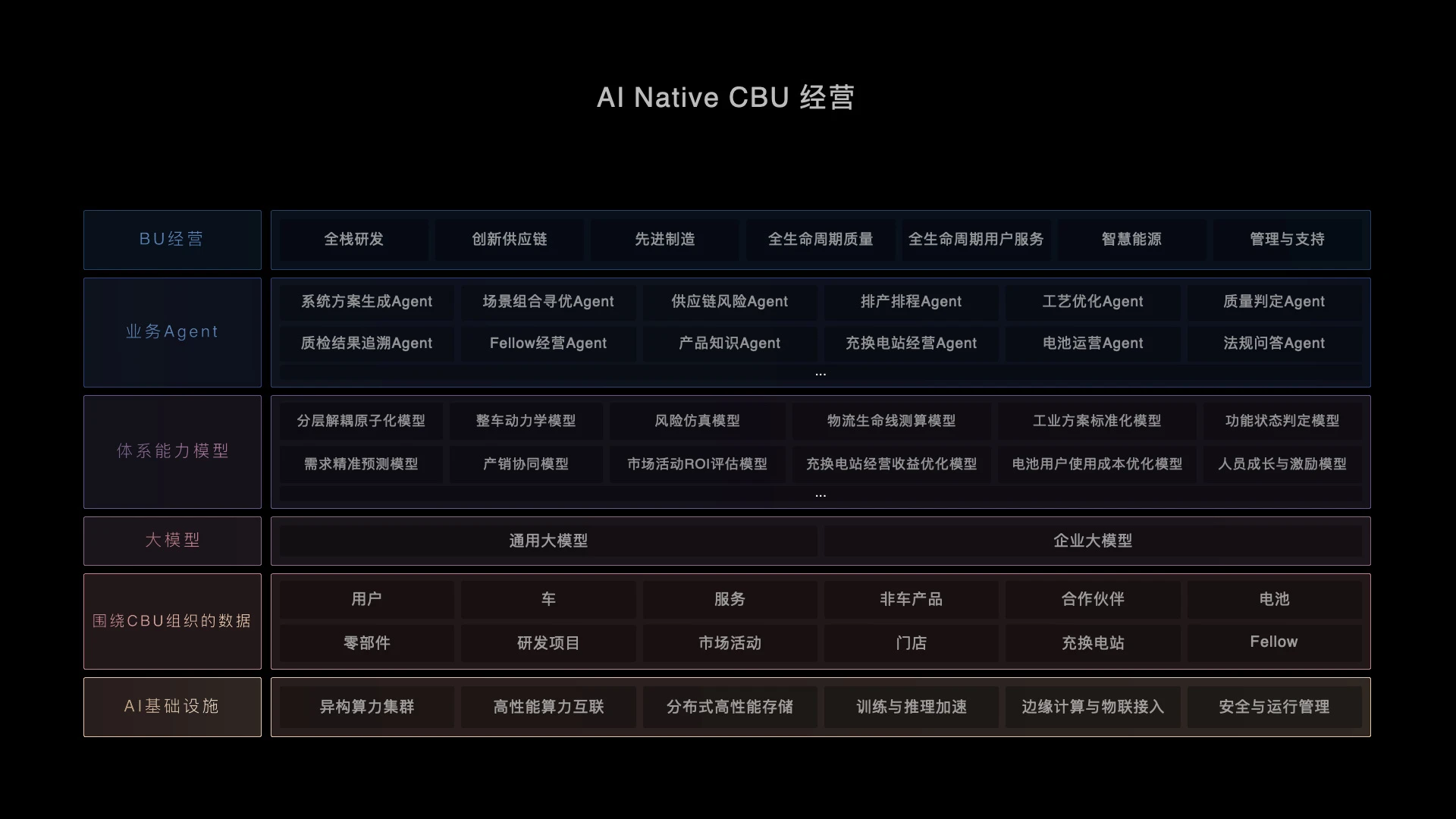
Upon closely examining the two technical architectures unveiled today, I found that NIO is pursuing remarkably similar approaches in the seemingly distinct fields of intelligent driving and the intelligent cockpit.
Both are attempting to return to the essence of the problem, working backward from the ultimate experience the product needs to deliver to rediscover the optimal technical solutions.
Intelligence in the physical world must first be fast enough
A key technical trend in the autonomous driving industry this year is a growing focus on latency.
In the past, discussions about autonomous driving models focused more on parameter counts, training data volumes, and generalization capabilities. However, for an agent that must operate continuously in the physical world, the timing of its decisions is just as important as its ability to make the right ones.
NWM 3.0 has introduced a series of architectural innovations to address this. One technical design I particularly appreciate is the Tubelet joint spatiotemporal encoding.
At today's launch event, Ren Shaoqing showed the audience two consecutive road images and asked them to spot the differences.
When the two images are displayed side by side on the screen, the changes are actually quite difficult to spot. However, if the images are toggled back and forth in the same position, the trend of the lead vehicle closing in on the ego vehicle's lane becomes immediately apparent.
The same information becomes much easier to understand when presented in a different way. NIO has applied this exact concept to image encoding.
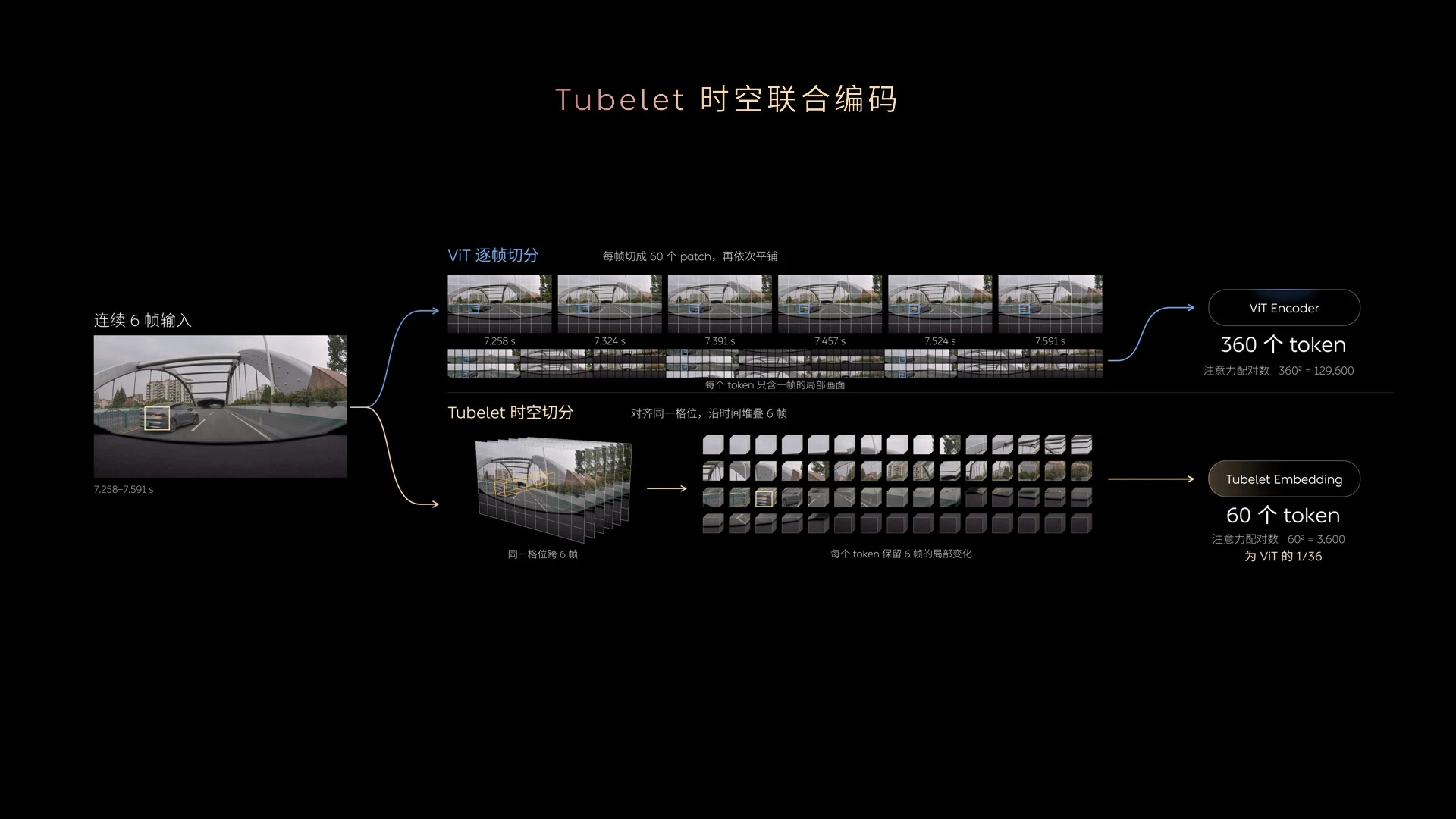
The traditional ViT encoding method typically divides each image frame into multiple patches, encodes them individually, and then passes them to subsequent networks for temporal information processing.
NWM 3.0's Tubelet encoding, conversely, combines corresponding spatial regions across multiple consecutive frames along the temporal dimension for encoding. This allows the model to capture richer spatiotemporal variation features right from the initial stage of information processing.
Assuming an image is divided into 60 tokens, processing six frames using the traditional method would generate 360 tokens. Under NIO's joint encoding approach, however, these six frames can be encoded into a single set of 60 tokens.
The sequence length is reduced to one-sixth of the original. For a standard global attention mechanism, where computational overhead scales with the square of the sequence length, the theoretical computational cost can be reduced to one-thirty-sixth of the original.
This is an architectural design that both enhances spatiotemporal information representation and reduces computational overhead.
Complementing this is another change: NWM 3.0 has removed the explicit BEV representation from the main driving decision-making pipeline.
While converting images into spatial features from a bird's-eye view facilitates spatial modeling, this process can also result in the loss of details valuable for driving decisions.
For example, if the wheels of an electric bicycle undergo a slight rotation, its position and outer contour in bird's-eye view space may not change significantly, but this detail can already indicate its subsequent movement trend.
NWM 3.0 enables the model to extract the information required for driving directly from spatiotemporal visual features, bypassing the intermediate step of explicit BEV representation.
In addition, NIO has jointly optimized its algorithms, chips, AI toolchain, and chassis control, ultimately achieving a 78% reduction in chassis control latency and an average reduction of approximately 50% in overall vehicle control latency.
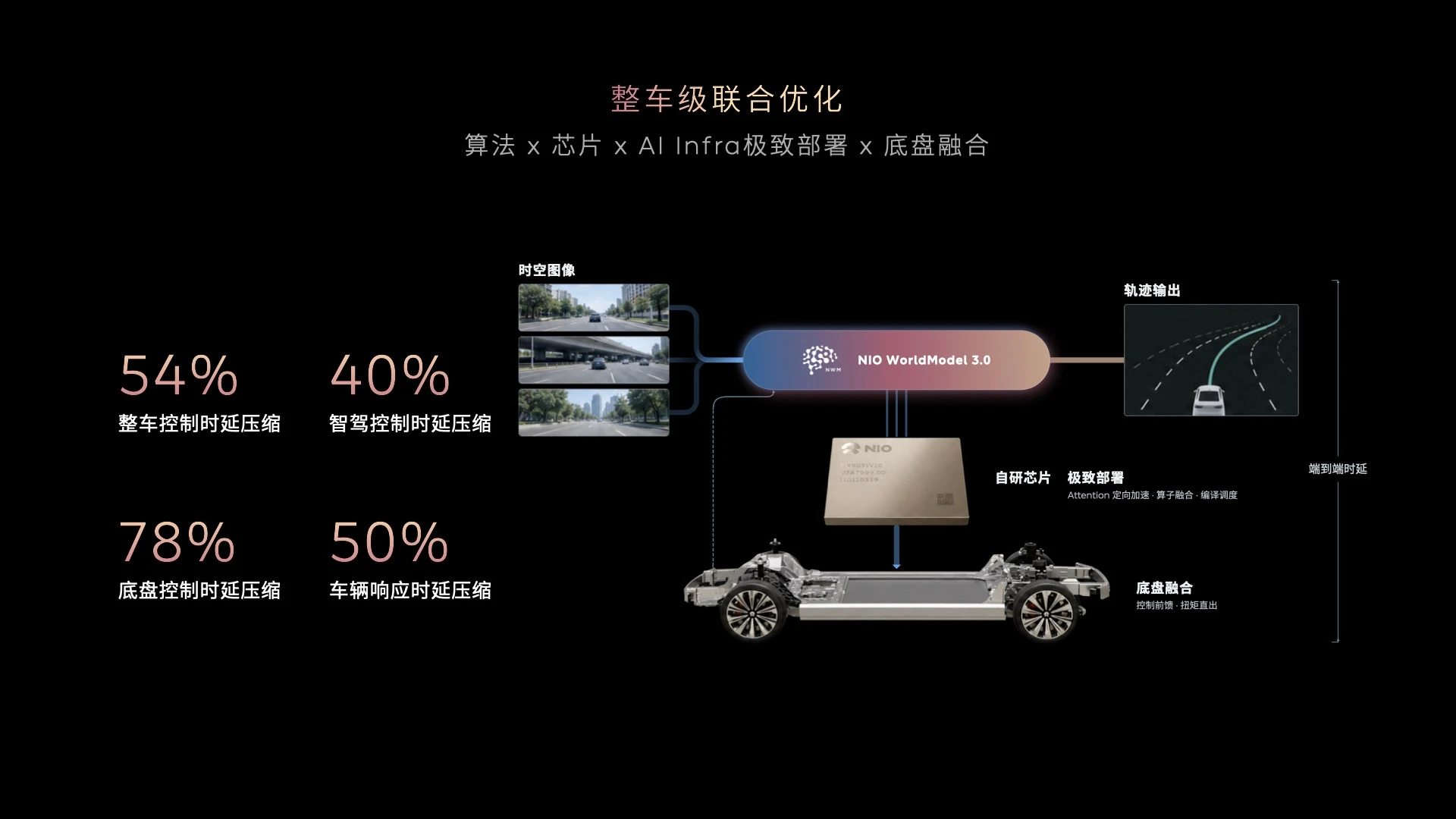
Since NWM 3.0 is being rolled out simultaneously across multiple platforms, NIO conducted its own tests. The results showed significant latency reductions on both the Banyan and Cedar platforms, but the Shenji chip delivered even better results, with latency optimization reaching up to 75% in certain scenarios.
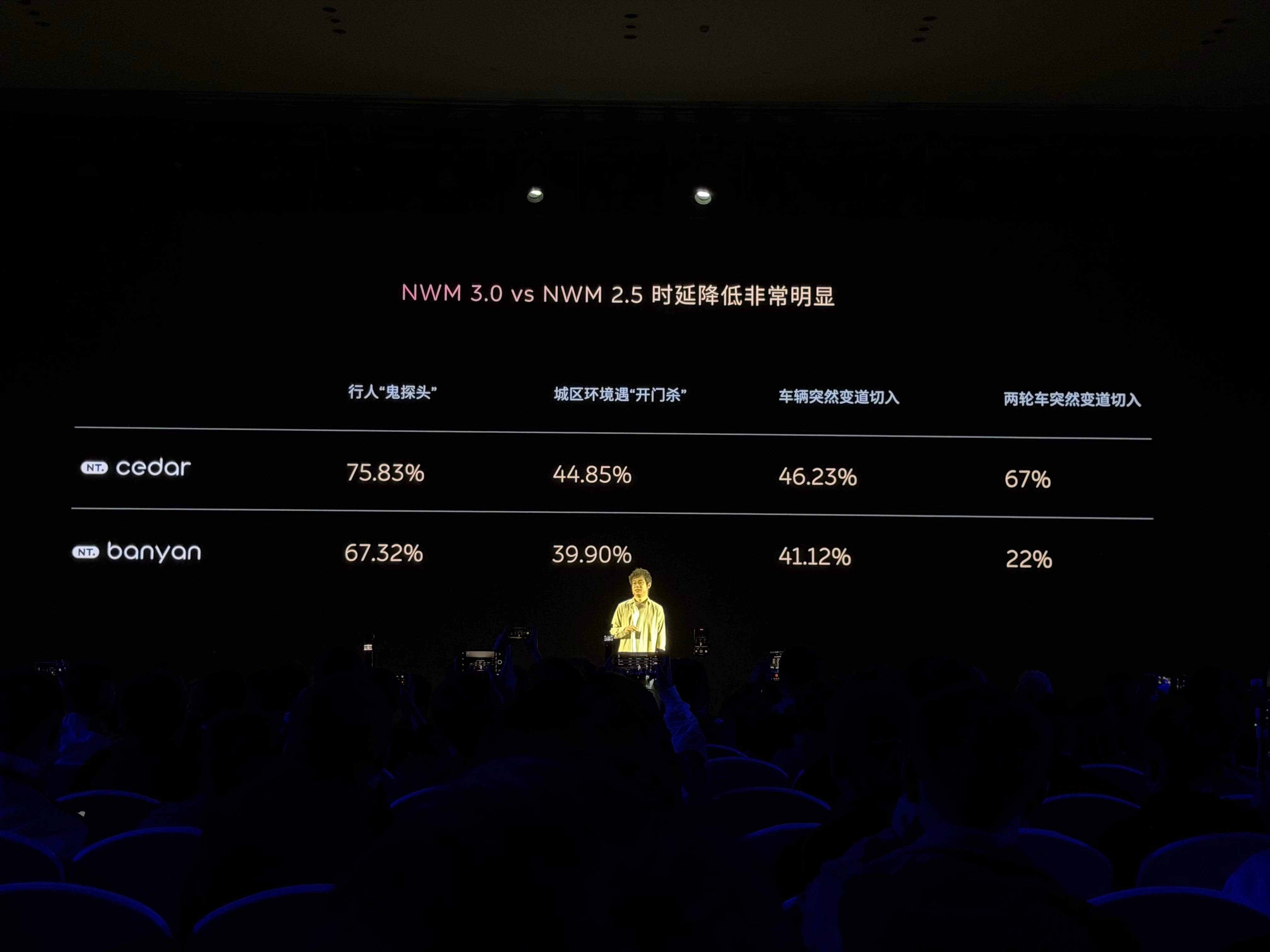
The benefits of low latency extend beyond the ability to brake earlier in emergency situations. In daily driving, lane changes, obstacle avoidance, car following, and negotiation also have the potential to become more decisive and smoother thanks to more timely perception and decision-making.
Training smarter models with less compute
Another highly valuable innovation in NWM 3.0, in my opinion, takes place in model training.
NIO currently has a fleet of millions of mass-produced vehicles on the road, generating millions of hours of data daily. However, the growth rate of this data far exceeds the growth rate of training compute.
Therefore, the problem NIO needs to solve is no longer just how to acquire more data, but how to fully unlock the value of this data with limited compute.
The combination of a world model and closed-loop reinforcement learning is a technical route NIO has been exploring since the early versions of NWM. With NWM 3.0, NIO has taken a step further by building a dual-layer closed-loop training system comprising explicit and implicit spaces.
Previously, closed-loop training using a video world model required generating video frames of the scenes the vehicle would observe at future moments and different locations, based on the decisions made by the driving model.
But think about it: when training the intelligent driving model, these videos are ultimately meant for the model to process, not for humans to view.
So why spend massive amounts of computing power to reconstruct the information the model internally needs into a human-readable image, only to re-encode it for the model?
That is why the latent space world model in NWM 3.0 bypasses this process entirely.
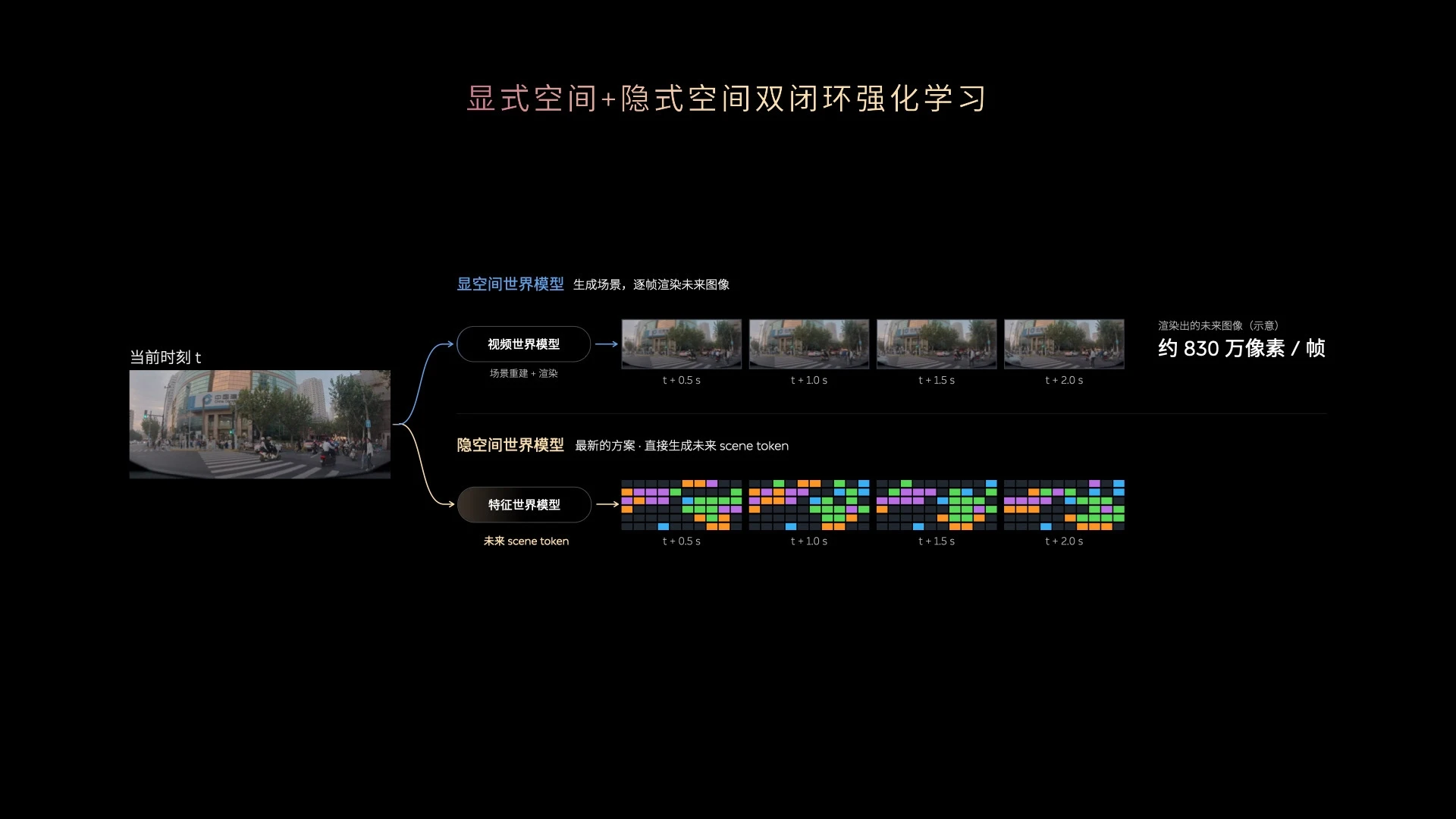
It predicts feature tokens for future moments within the neural network's latent space, and then performs closed-loop reinforcement learning based on these features.
As illustrated at the launch event, what previously required generating an image with over 8 million pixels now only requires generating feature tokens on the scale of thousands. Consequently, the single-step inference speed of the latent space world model can achieve a 100-fold increase.
More importantly, latent space modeling no longer aims to reconstruct every single pixel. Instead, its attention can be more sharply focused on driving-relevant information, such as vehicles, pedestrians, roads, and the dynamic relationships between these objects.
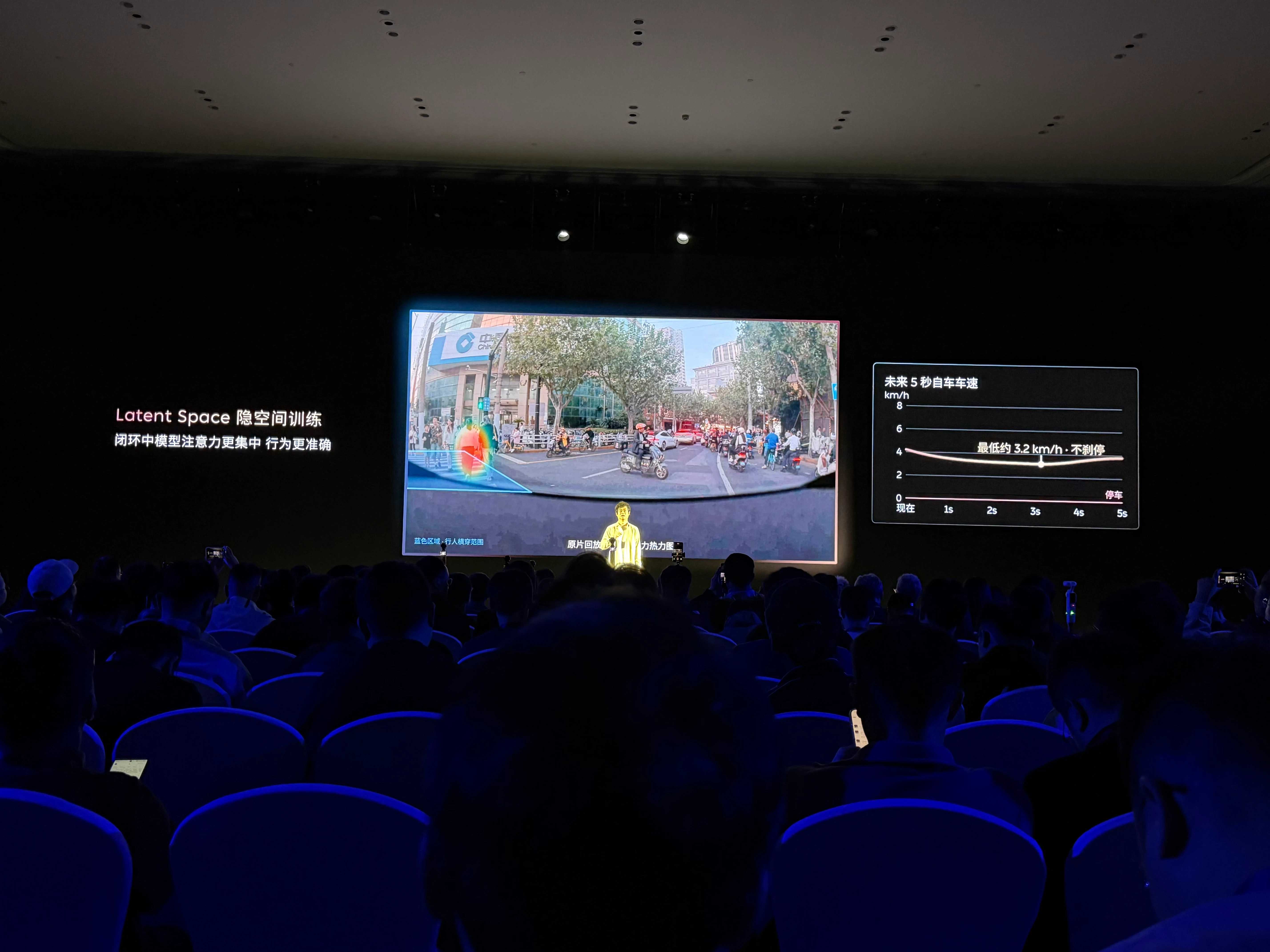
This also highlights a highly noteworthy direction in current AI world model research: learning and simulating the world directly within the feature space that the model can comprehend.
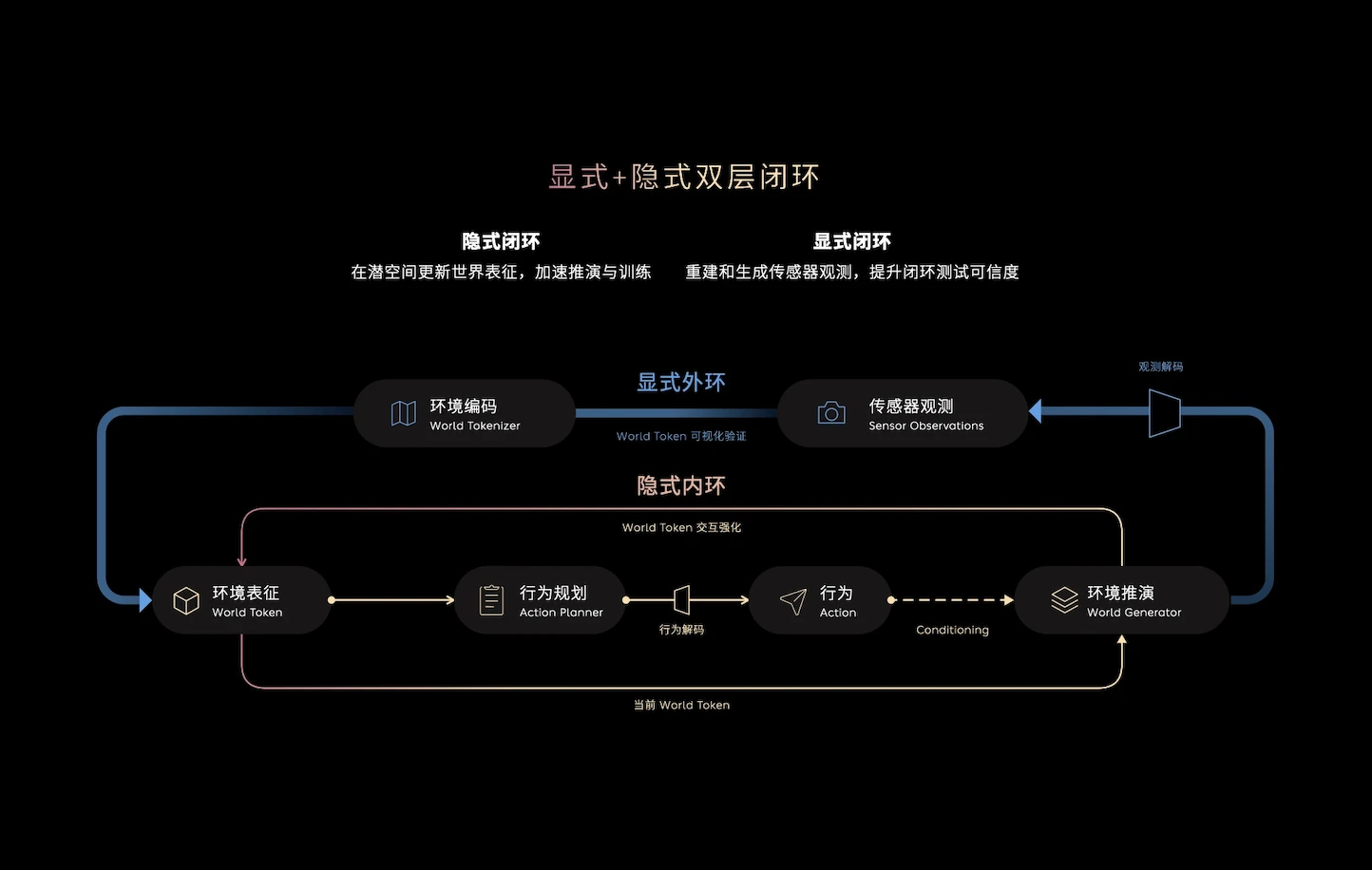
Naturally, NIO has not completely abandoned its original explicit video world model, but has further expanded its multi-view generation capabilities for richer scenario testing and validation. The implicit closed-loop focuses on efficient training, while the explicit closed-loop focuses on intuitive and comprehensive environmental validation, forming a dual closed-loop reinforcement learning pathway.
At the same time, NIO has also introduced a data self-evolution mechanism. Through AI, the system automatically identifies the model's capability shortcomings, formulates data collection strategies, mines data, adjusts training ratios, validates training returns, and then consolidates the effective strategies.
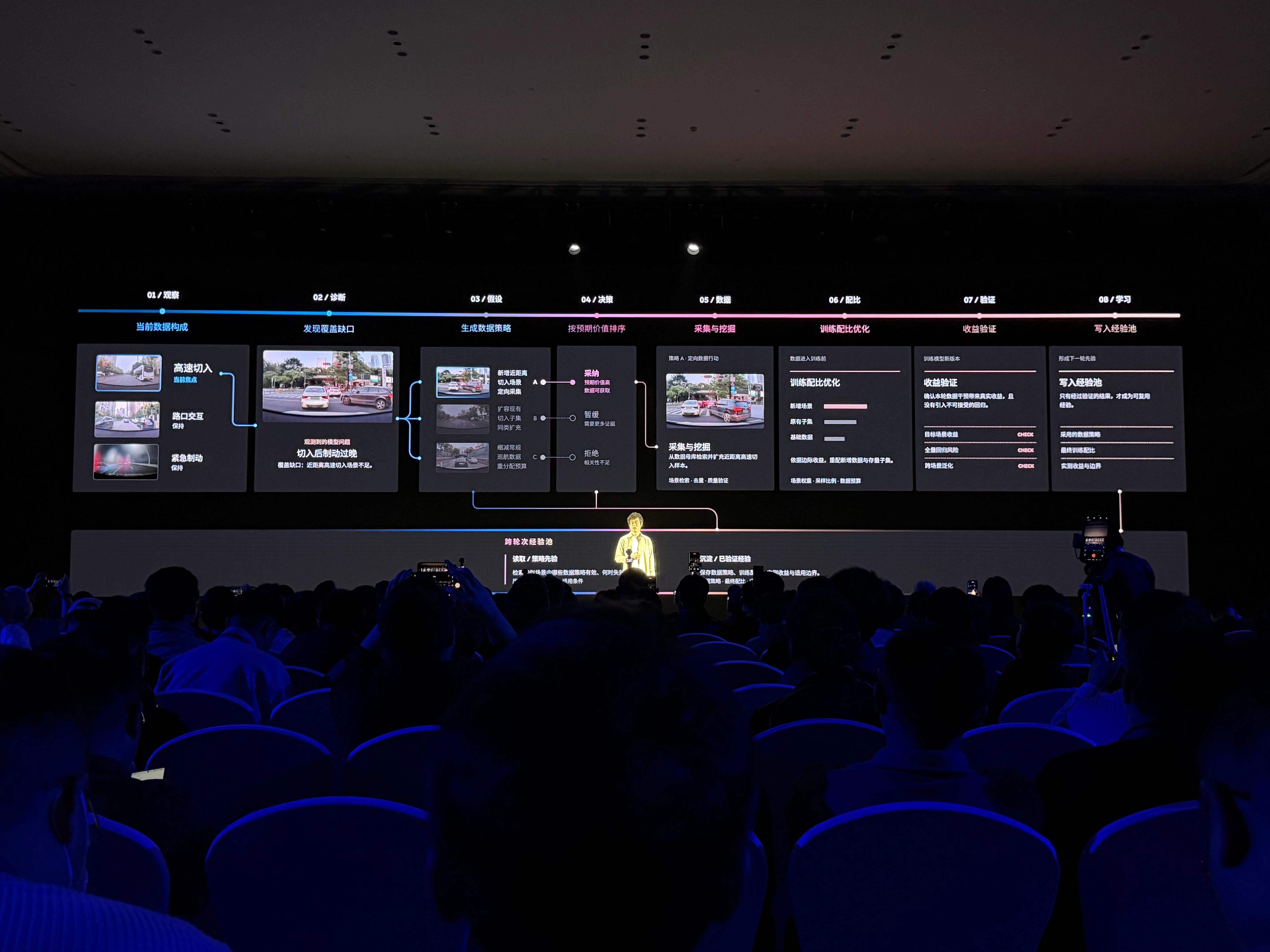
According to the data released today, compared to the previous generation, NWM 3.0 has increased its comprehensive training data volume by 4 times and its comprehensive training efficiency by 5 times.
Ren Shaoqing also noted that the computing power NIO used to train this version is only a fraction of that used by its peers, specifically just a few tenths of their computing power.
This brings us back to the CBU mechanism mentioned at the beginning of the article.
If computing resources were sufficiently abundant, the team could certainly continue with the original training paradigm, digesting more data by increasing computing power. But when every unit of computing power invested requires a consideration of returns, the R&D team has a stronger motivation to think about which computations are necessary and which can actually be eliminated through architectural innovation. And now, these technological explorations may not only save NIO computing power costs; such efficiency gains can also save less time, allowing products to iterate faster.
Additionally, NWM 3.0 features another important model-level upgrade: the Reward Model, which is the reward model in reinforcement learning.
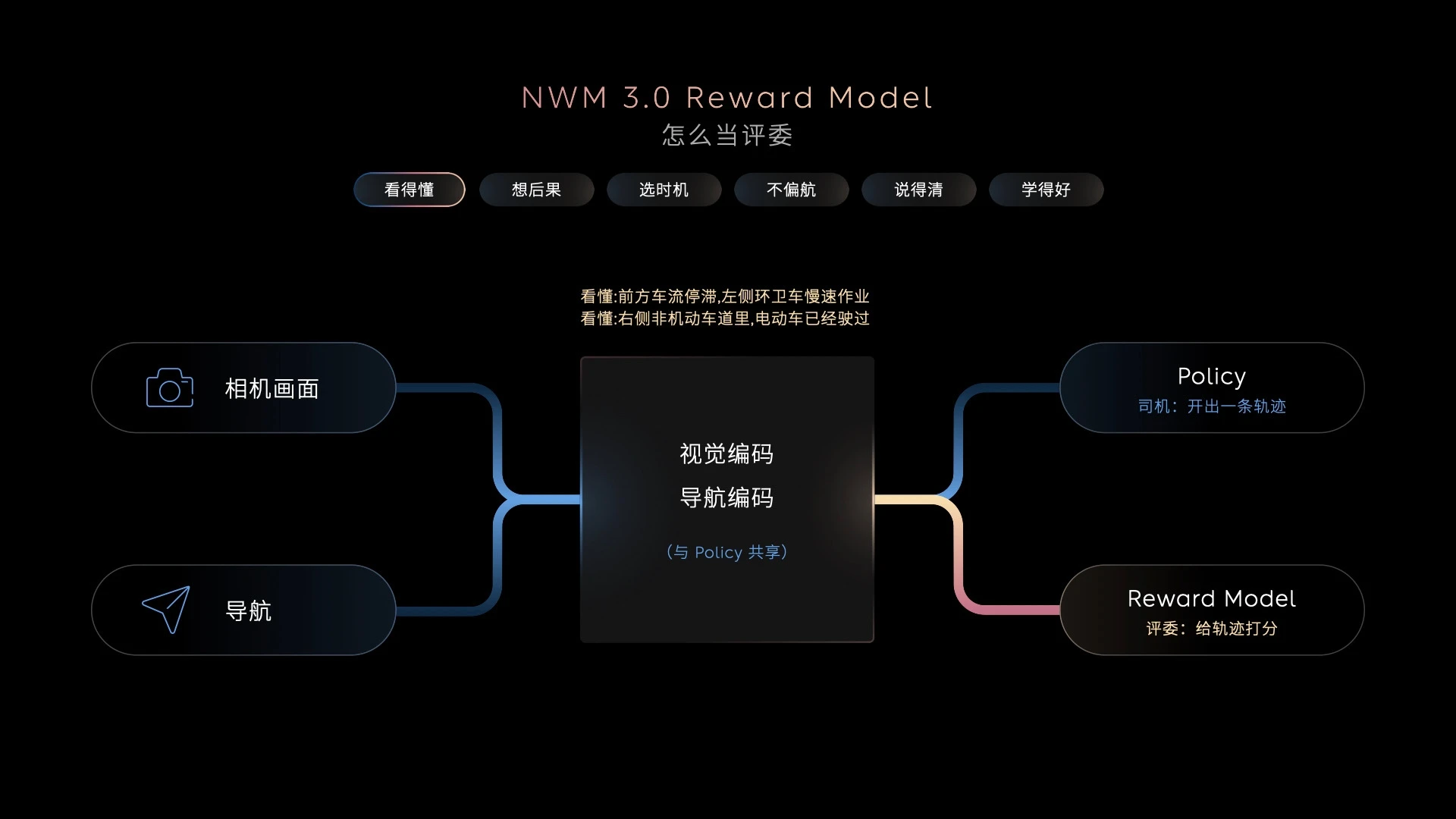
The launch event showcased a complex road scenario where the vehicle ahead was stalled. The ego vehicle could choose to continue waiting or look for an opportunity to safely bypass it on the right.
Under a traditional rule-based reward mechanism, behaviors such as crossing lane lines, changing lanes, and accelerating or decelerating might all incur varying degrees of penalty, ultimately making waiting in place the higher-scoring option.
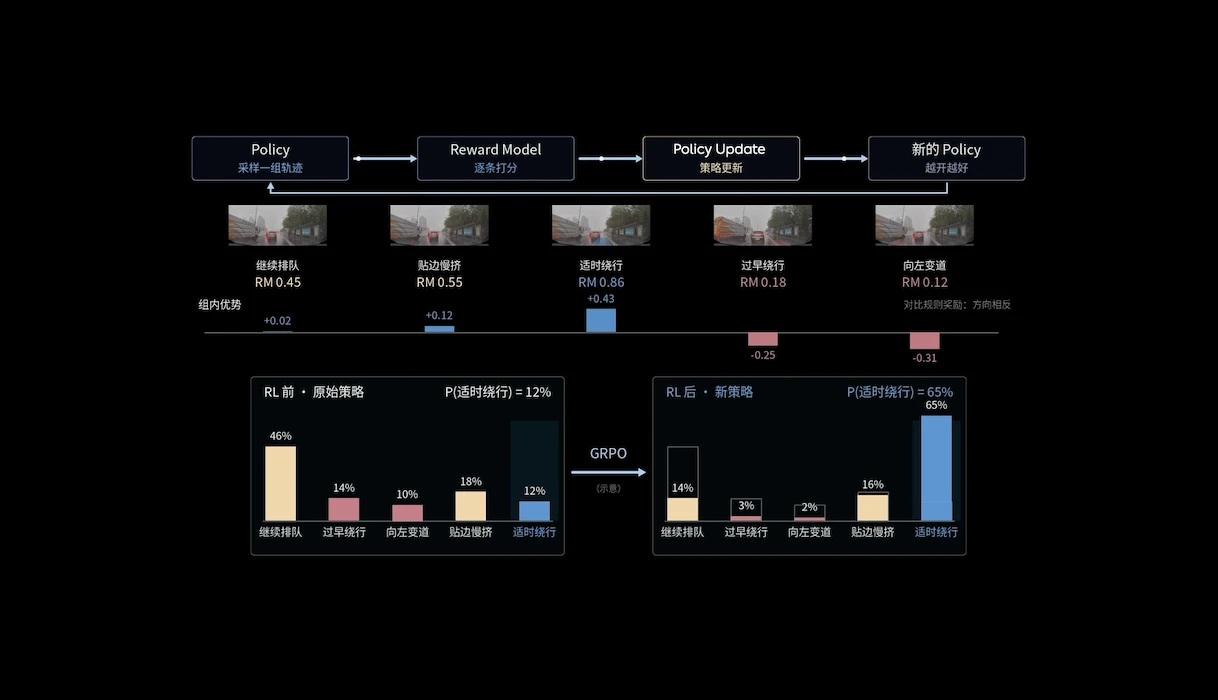
However, an experienced driver would consider the movement trends of surrounding traffic participants, the road environment, and traffic conditions to choose a more appropriate time to bypass.
To address this, NIO's Reward Model shares an encoder with the driving model, enabling the model responsible for evaluating driving behavior to also understand the road environment. It also incorporates predictions of future scenarios, timing judgments, and navigation route information, and is then trained using extensive comparative data of both good and bad driving behaviors.
As a result, the reward model can evaluate not just the action itself, but also the environment in which the action occurs and the potential outcomes of its execution, providing a more reasonable evaluation.
Today, it is not just the act of driving that is being handed over to models; even the task of evaluating how well the car is being driven is increasingly being delegated to them.
According to the evaluation data released by NIO, the takeover rate for NWM 3.0 in complex scenarios has decreased by 40.38%.
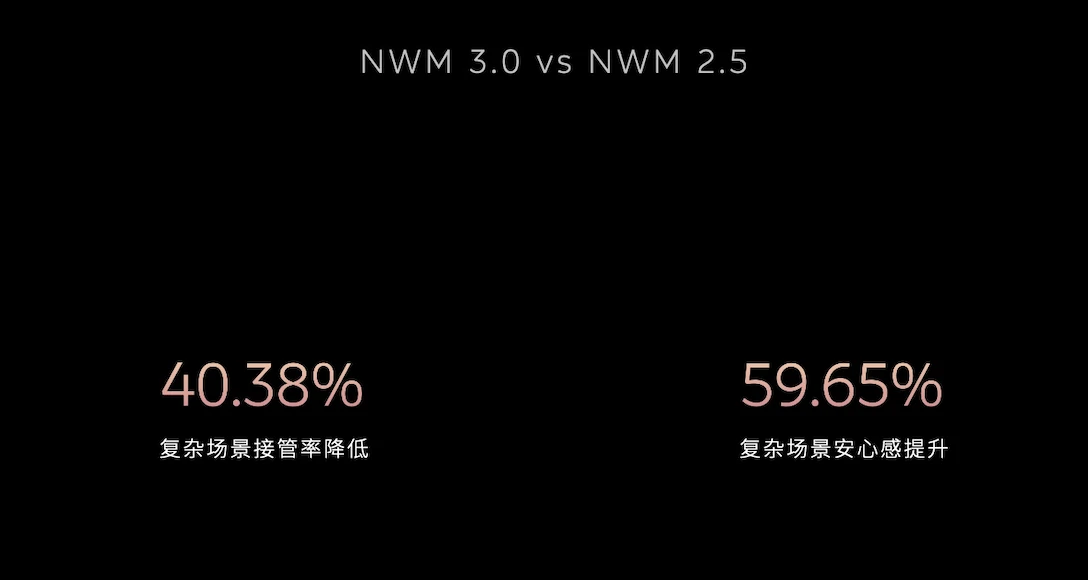
From the perspective of the R&D paradigm, NWM 3.0 is more than just an iteration in model capability; it is also paving a more sustainable technical path for the continued scaling of both the model and the data.
A Path Exploration for the Cabin Agent
Compared to NWM 3.0, I personally believe the technological exploration of NOMI Intelligence 4.0 is even more distinctive in the industry.
Over the past few years, automakers have been attempting to integrate large models with their existing voice assistant architectures. However, this process often results in a fragmented experience: sometimes smart, sometimes quite dumb; sometimes reacting quickly, sometimes taking a long time, with highly inconsistent response styles.
It is like several people living inside a single body.
Earlier this year, NIO decided to completely rebuild NOMI, redesigning a native AI architecture from the ground up. But the first question to consider was: using today's existing AI technology to build a NOMI, what should it look like?
NIO broke this question down into several dimensions: what capabilities it should possess, how fast it should respond, and how it should interact with users.
Ultimately, NIO built an architecture comprising the NIM (NOMI Intelligence Model) large model matrix and the NIH (NOMI Intelligence Harness) agent operating framework.
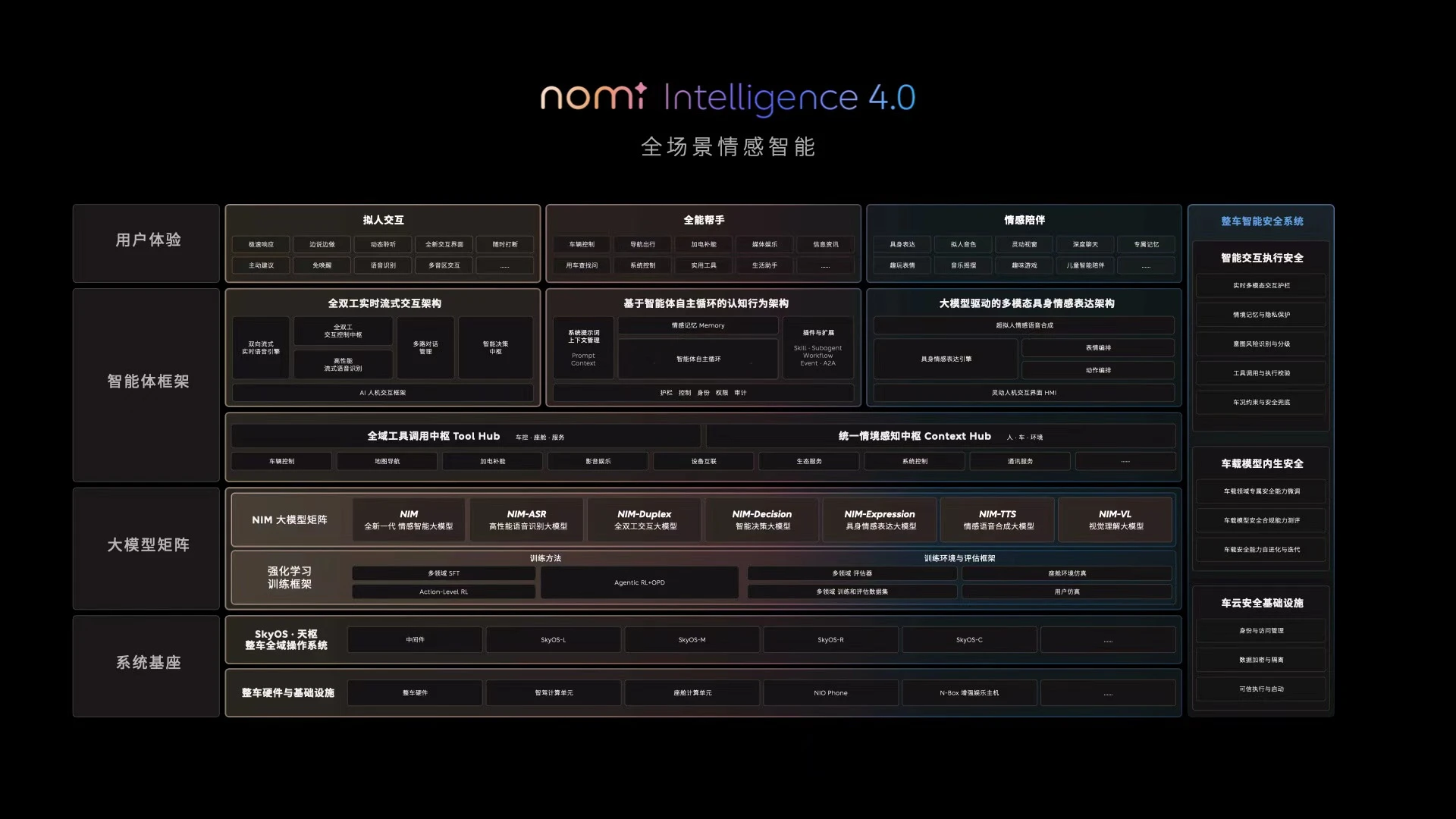
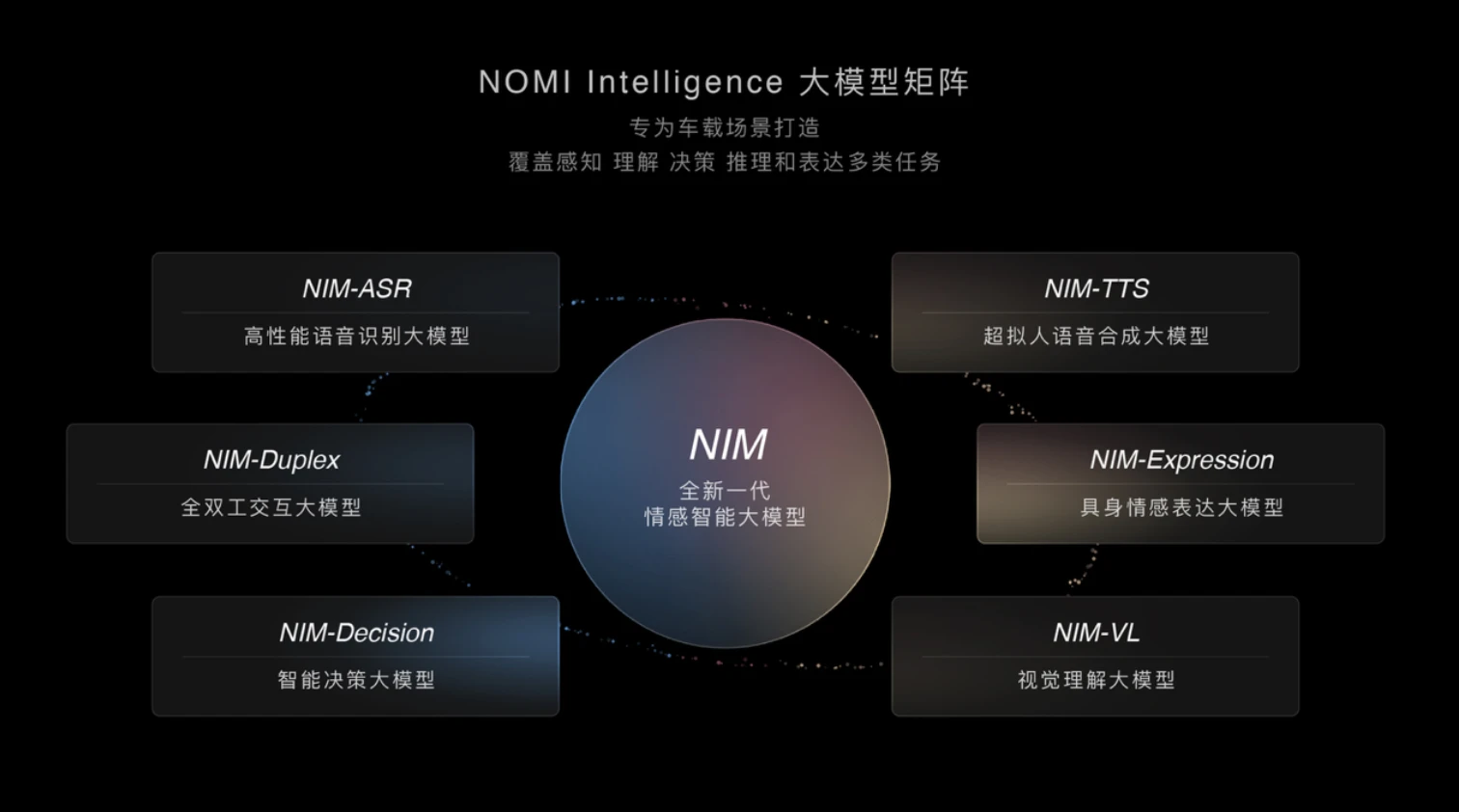
The core NIM model is a Mixture of Experts (MoE) model with over 100 billion parameters. In addition, there are multiple specialized models responsible for speech recognition, full-duplex interaction, intelligent decision-making, speech synthesis, visual understanding, and embodied emotional expression.
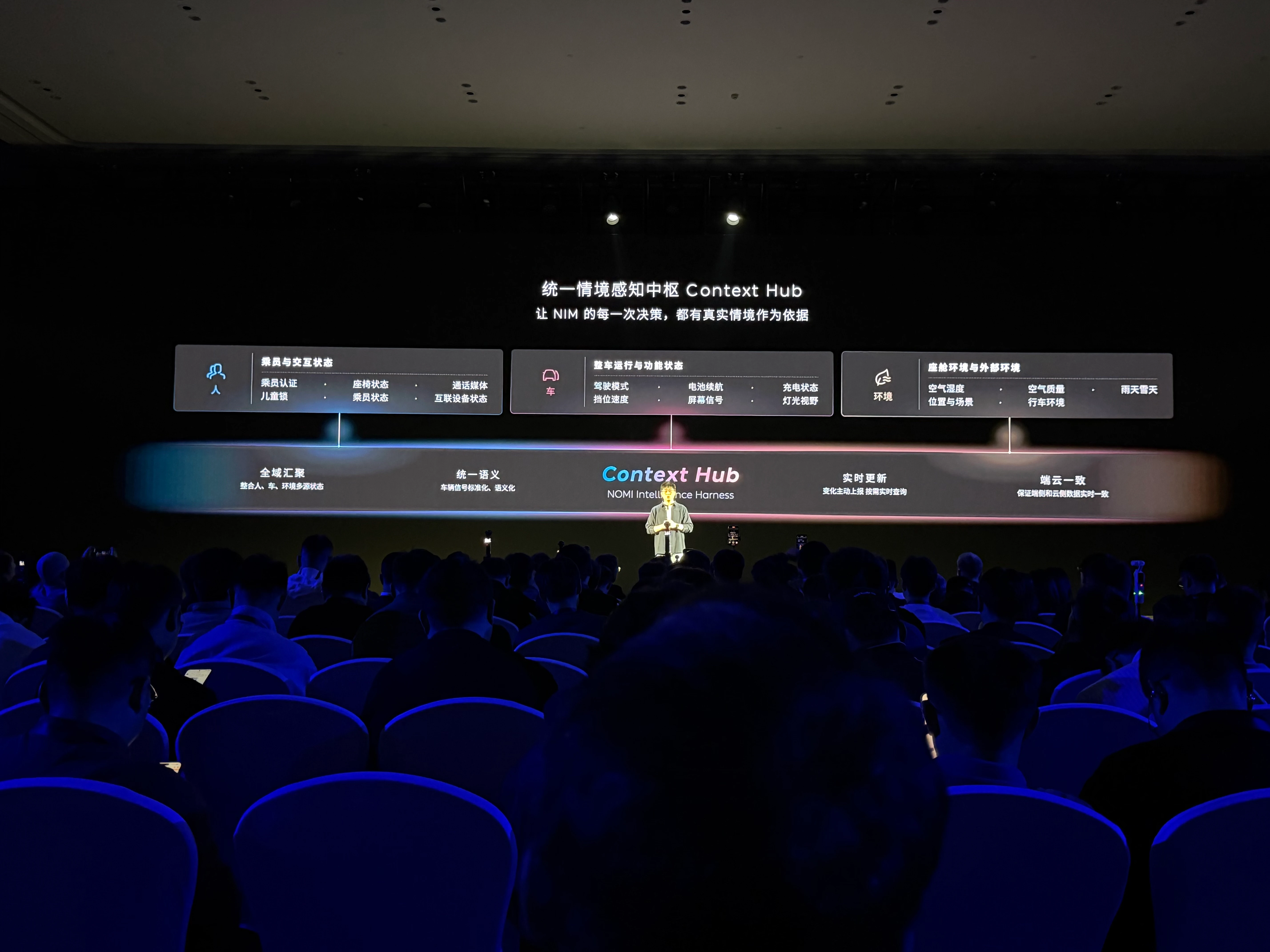
Meanwhile, the NIH is built on NIO's SkyOS to establish a Tool Hub, a Context Hub, and a vehicle-native security system. The former provides NOMI with the ability to execute tasks, while the latter enables NOMI to perceive the vehicle's real-time status.
A key focus of this architecture is the Agent Loop. There was a demonstration I found particularly impressive, in which a user stated, "I clearly turned on the air conditioning, but I can't feel any air blowing out at all."
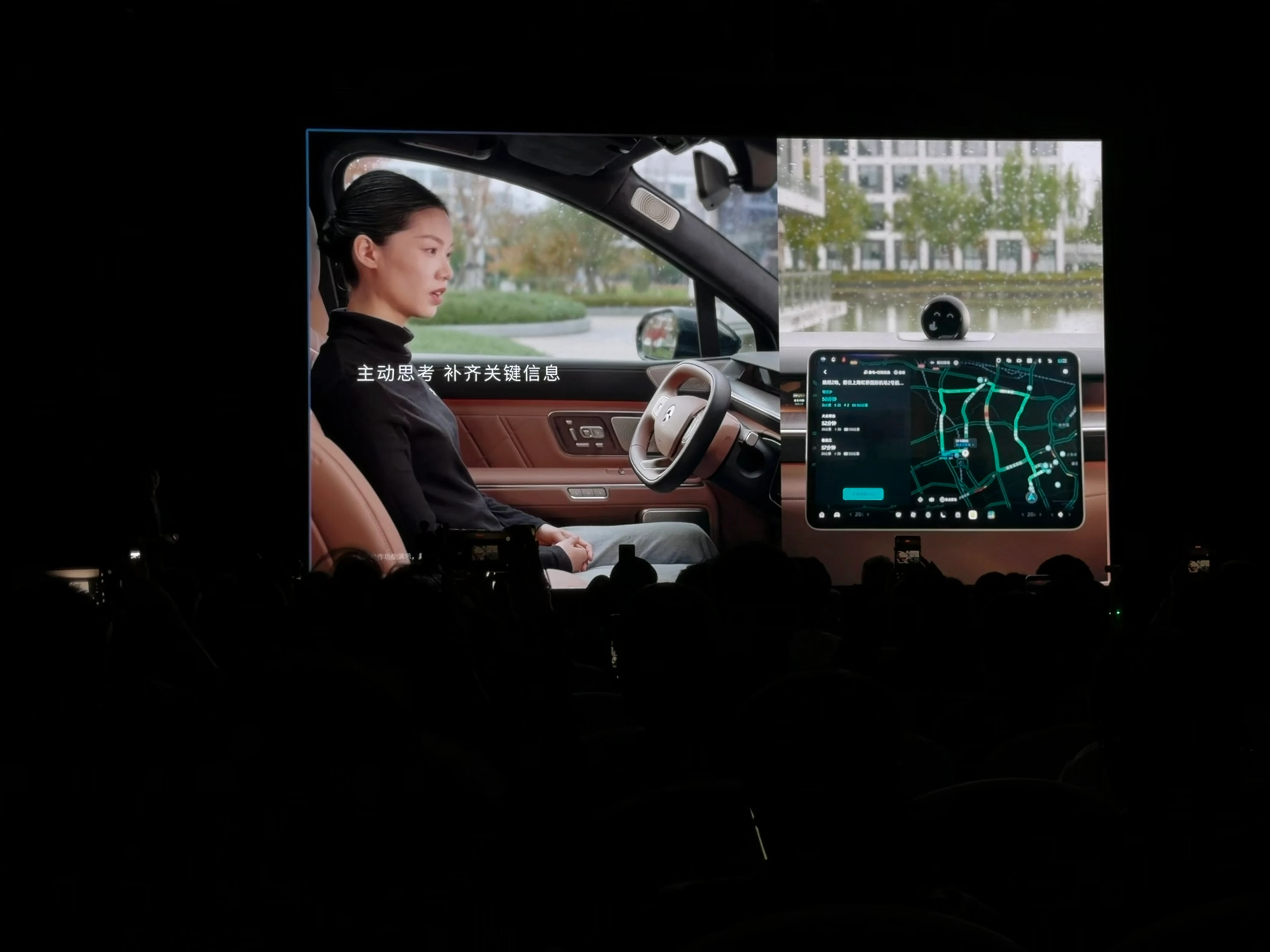
NOMI sequentially checked the air conditioning switch, fan speed, and air outlet direction. Finding that these basic settings could not explain the issue, it continued to check other configurations and ultimately identified the cause: the front windshield defogging function was still active, directing the majority of the airflow toward the window.
Upon receiving the user's consent, NOMI turned off the defogging function and activated the face-level air vents.
Another demonstration tasked NOMI with planning an itinerary to go home to pick something up, buy flowers, and pick up a friend at Hongqiao Airport. NOMI not only planned the route across multiple destinations but also proactively checked flight information. Realizing its usual flower shop was not on the way, it recommended an alternative saved flower shop.
These two cases perfectly illustrate the value of the Agent Loop: continuously understanding the environment in relation to the user's goal, invoking tools, gathering feedback, and then adjusting the next action based on that feedback. The user only needs to state their request, rather than having to figure out what NOMI should do and instruct it step-by-step.
This naturally introduces new requirements for model training.
NIO has built a dual simulation environment for both the user and the vehicle, enabling the model to undergo extensive closed-loop reinforcement learning across varying user expressions, different vehicle states, and diverse tool feedback.
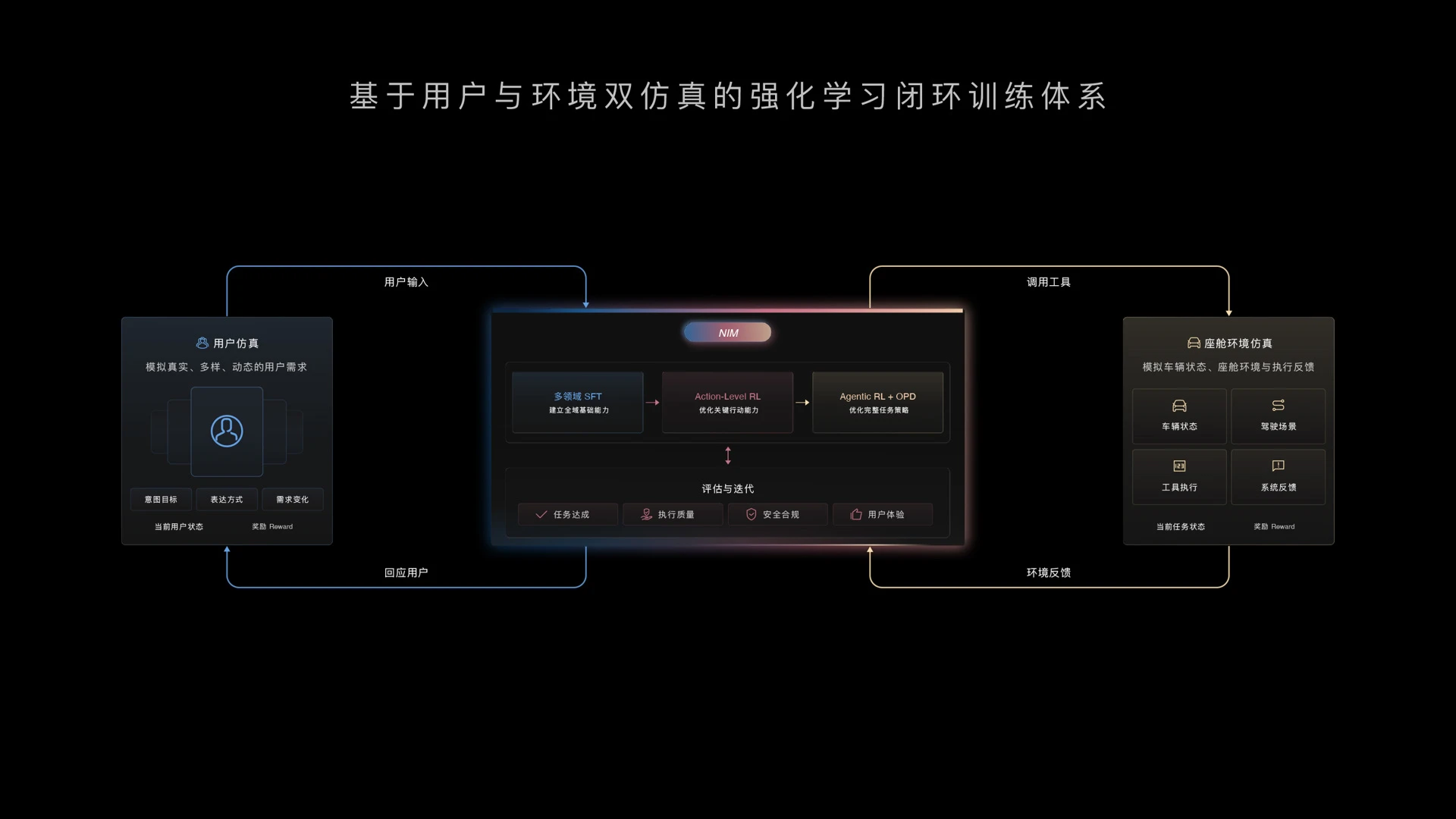
According to data released today, following specialized training, NIM's completion rate for typical vehicle control tasks has increased from over 40% to 95%.
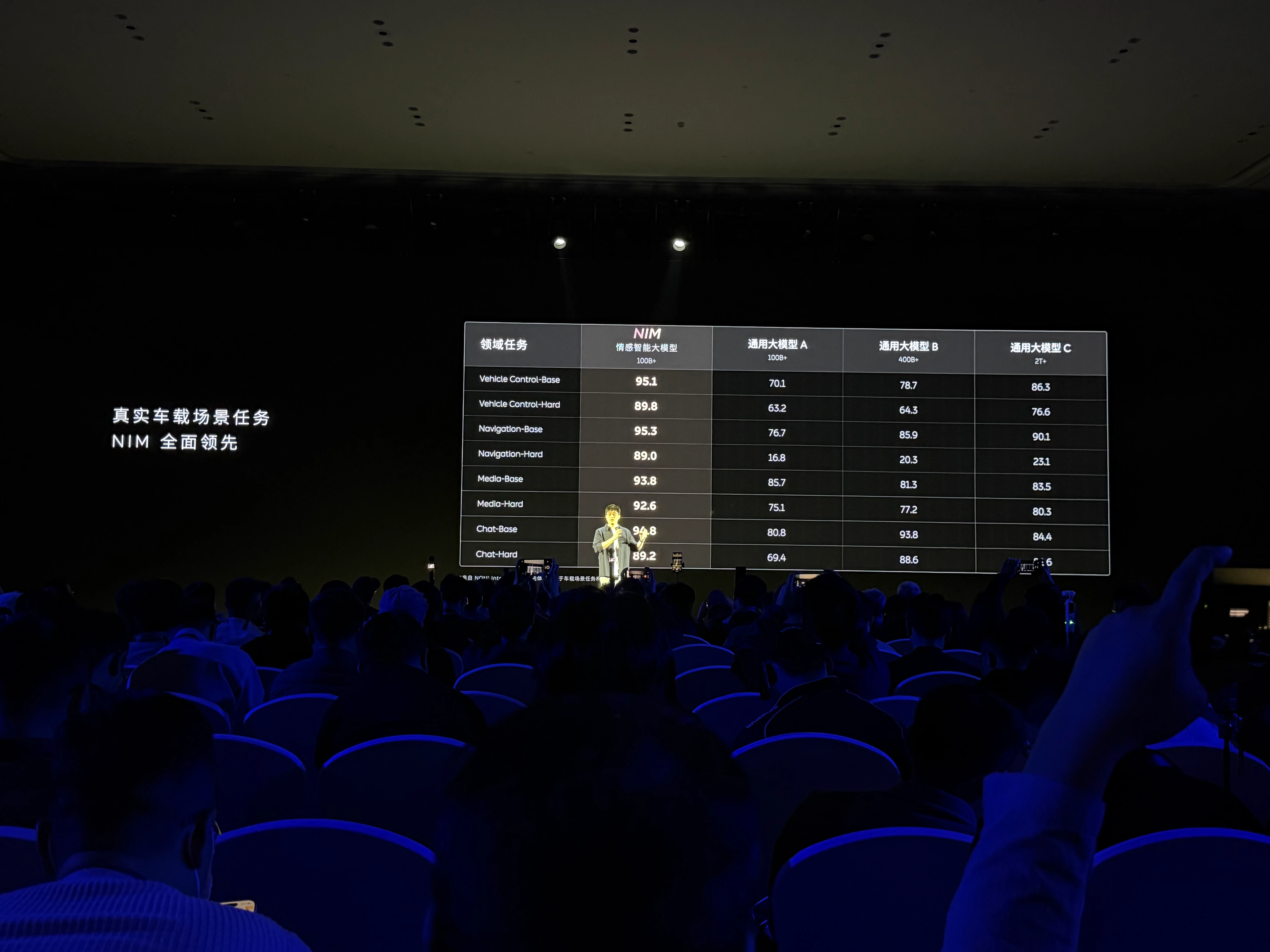
In NIO's proprietary in-car scenario evaluation system, this model with over 100 billion parameters outperforms larger general-purpose models across multiple metrics.
Regarding response speed, NIO's solution does not simply rely on increasing the inference speed of the primary model.
NOMI Intelligence 4.0 introduces a specifically designed NIM Decision model that provides rapid responses for simple tasks, selects context and tools for complex tasks, and determines the appropriate interaction method with the user. Combined with a dual-stream architecture and inference optimization across various modules, this allows NOMI to speak and act simultaneously during complex tasks, while delivering rapid feedback for simple ones.
NIO reports that the response time of the primary NIM model for basic vehicle control is now under 0.6 seconds, while the overall voice response speed of NOMI Intelligence 4.0 has more than doubled compared to the previous generation.
I believe the most commendable innovation of this architecture is that it does not blindly pursue a single-model approach to solve every problem, nor does it simply integrate a sufficiently capable general-purpose large language model. Instead, NIO is effectively exploring an AI-native architecture specifically tailored for automotive scenarios.
Automotive applications require both a sufficiently high intelligence ceiling and extremely low response latency; they demand both autonomous agent action and strict safety boundaries; and they need the ability to invoke complex tools while maintaining sufficiently simple user interactions.
There are inherent contradictions among these metrics, and such demanding requirements currently exceed the capabilities of mainstream agents. NIO is attempting to resolve these conflicts through architectural innovation and specialized model training, rather than simply making trade-offs.
From this perspective, NOMI Intelligence 4.0 may also represent a highly valuable path of exploration for the entire in-cabin AI industry.
Giving NOMI a complete soul
Beyond capabilities and speed, another highly prominent technical feature of NOMI Intelligence 4.0 is the exceptionally high degree of modeling across the entire interaction pipeline.
For instance, NIO's in-house NIM full-duplex interaction large model has replaced the previous approach, which primarily relied on voice activity detection to determine conversational timing.
During the launch event demonstration for finding a seafood restaurant, the user listened to NOMI introduce the restaurant while adding requirements such as a per-person budget of 300 RMB and locations near Hongqiao Airport, interspersed with exclamations unrelated to the task. NOMI must determine which utterances are addressed to it, which are supplementary requirements, and which are merely conversations between users. The judgment of these interaction timings is now also handled by the model in conjunction with the context.
Meanwhile, the in-house speech recognition model has undergone specialized training for scenarios such as in-car road noise, professional terminology, and mixed Chinese-English speech. The new speech synthesis model supports more than 40 refined speech styles, enabling it to adjust tone, rhythm, and emotion based on the conversational context.
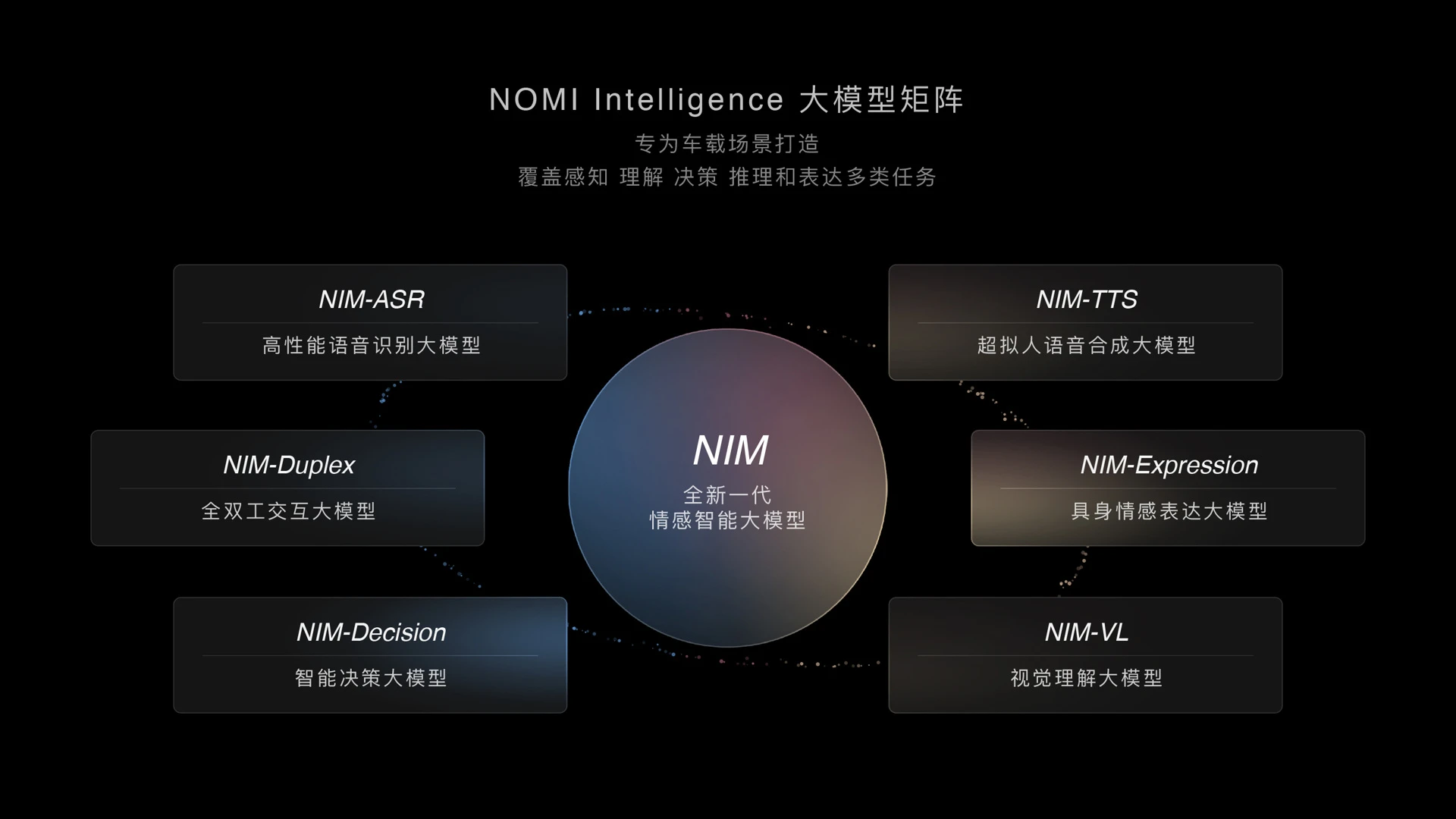
Even the moving little head on top of NOMI now has a dedicated large model to drive its physical body.
During the group interview following the launch event, Li Bin mentioned that since 2018, NIO has sold 800,000 NOMI Mate units. It is worth noting that NOMI Mate itself is an optional accessory priced at 4,900 RMB. The ratio of this option take rate to the total fleet size of NIO's main brand models is sufficient to demonstrate that users have a remarkably high willingness to pay for a physical AI companion like this.
Previously, the expressions and movements of NOMI Mate were mostly triggered by preset rules. Now, NIO has specifically collected data on micro-expressions, head movements, and facial expressions during real face-to-face interactions, and used this data to train an embodied expression model. This allows the current NOMI to autonomously utilize 2 degrees of freedom for expressions and movements based on the conversation content, emotion, and interaction rhythm.
This training method is already very close to that used for embodied intelligent robots.
What surprised me even more is that NIO has also incorporated NOMI's personality into the model's training and evaluation system, establishing eight positive behavioral guidelines and six safety red lines.
I believe this actually touches upon a discussion about the endgame of AI.
Today, everyone is competing on AI's intelligence, response speed, and capability boundaries. But suppose one day these foundational capabilities are all sufficiently advanced—what would then drive us to choose a specific AI and coexist with it over the long term?
It might be its personality, values, and the consistency it demonstrates when facing different problems.
This is especially true when AI begins to possess autonomous agency; personality is no longer just a speaking style, but becomes the basis for its judgment when handling problems and exercising its capabilities.
During today's group interview, William Li also mentioned a very minor product detail. Previously, some users suggested having the NOMI Mate display the time. After all, it is essentially a screen, and implementing this feature poses no technical difficulty, yet NIO does not plan to do so.
Because if you treat NOMI as a companion, then this screen is its face. You wouldn't put a clock on your friend's face. This seemingly stubborn product philosophy is precisely what keeps NOMI so pure.
It does not necessarily need to be an all-powerful general-purpose agent, nor should it turn every capability of a large model into a NOMI feature simply because the model possesses it.
From capabilities to speed, from voice to expressions, and on to personality and values, NOMI Intelligence 4.0 is still built on a complex architecture combining multiple models. Yet beneath this complexity, every component serves the same product positioning. Ultimately, the results it achieves across all dimensions are so impressive that they could even serve as a masterclass for Doubao.
Such a restrained product philosophy perhaps proves the adage: sometimes you have to go slow to go fast.
In conclusion
Looking back at today's NIO IN, why were NWM 3.0 and NOMI 4.0 able to achieve simultaneous progress across multiple dimensions, including intelligence, speed, efficiency, safety, and user experience?
I believe that first principles, architectural innovation, and a pure product philosophy are the shared logic behind both. This may also be closely tied to the CBU mechanism and organizational reforms NIO has implemented over the past two years.
The creation of a native agent architecture requires breaking down traditional R&D silos, while breakthroughs in training efficiency depend on meticulously managing compute investments. Changes in the technical and organizational architectures are, in fact, mutually reinforcing.
Of course, cost control does not necessarily drive innovation, but it does compel teams to choose their technical paths more prudently and allocate limited resources to genuinely valuable problems.
In the past, NIO was willing to pursue technical solutions for a compelling product vision regardless of cost. Today, however, NIO is beginning to ensure the financials make sense for both technology and operations while maintaining its product vision.
More than just a single technological breakthrough, these principles may also become a source of value for NIO's long-term operations going forward.