


Hyper GT Track Test: How Thrilling Is the 340-hp RWD Performance?
Before the Hyper GT's official price announcement, we received an early invitation to test drive the vehicle. Upon seeing the invitation, our colleague was taken aback: the venue was explicitly listed as "Zhuhaiguojisaichechang".
A racetrack amplifies a car's driving dynamics. Based on past experience, taking a sedan nearly 4.9 meters long onto a track for a test drive is rarely a wise move. We have indeed encountered instances where a manufacturer's marketing department, unclear about its own product's attributes, foolishly dragged a vehicle with mediocre handling performance onto a racetrack to embarrass itself.
So this test drive was guaranteed to be anything but boring—either it would prove the manufacturer wrong, or it would deliver a genuine 'too good to pass up' warning.
01First Meeting, A Bit Surprised
Following protocol, let's address the most immediate aspect: appearance. Here is what the Hyper GT looks like in person.
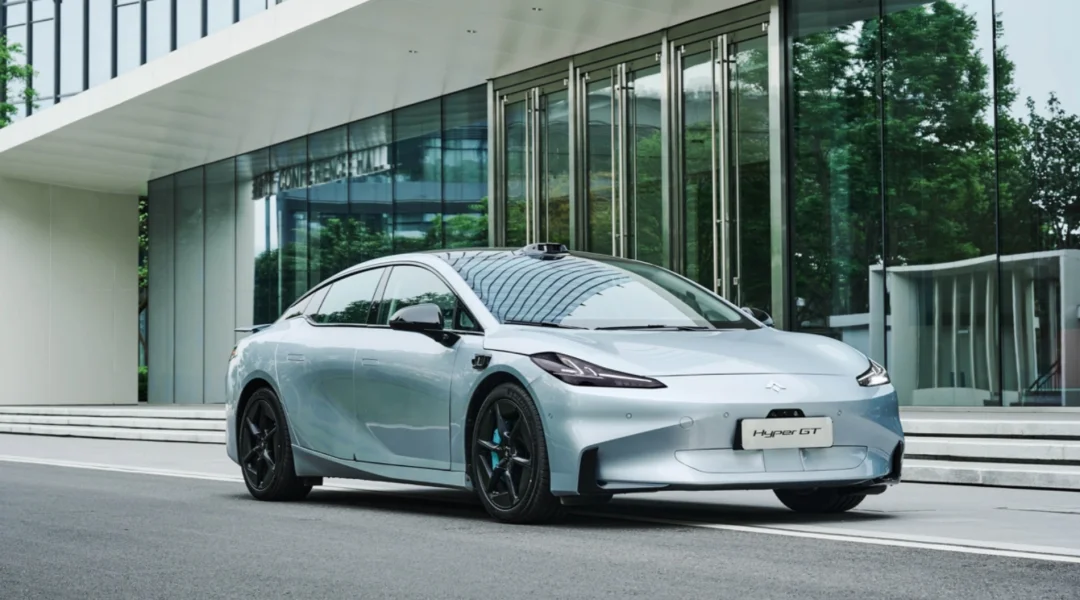
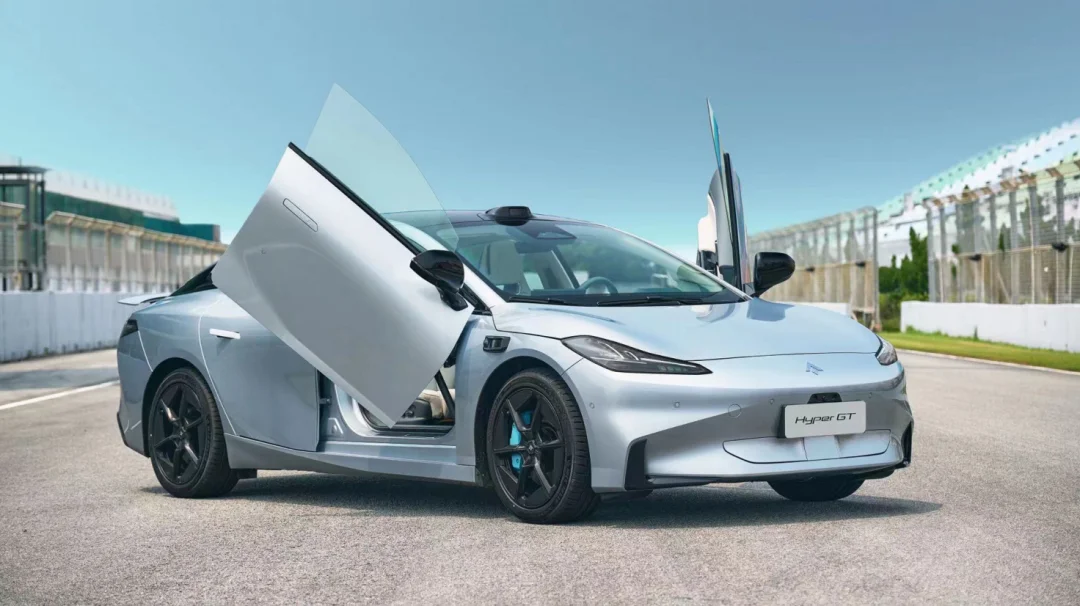
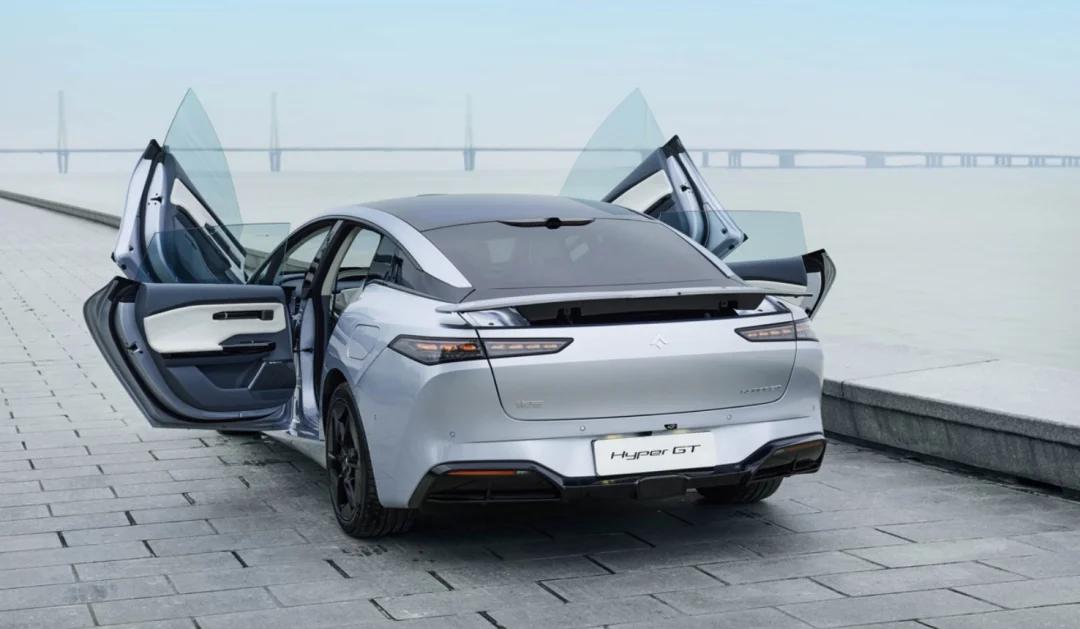
The low-slung stance and streamlined roofline already give it the look of a sporty sedan, but this car has an even more dramatic way to make a statement. Let’s take a look at some official images of the Hyper GT.
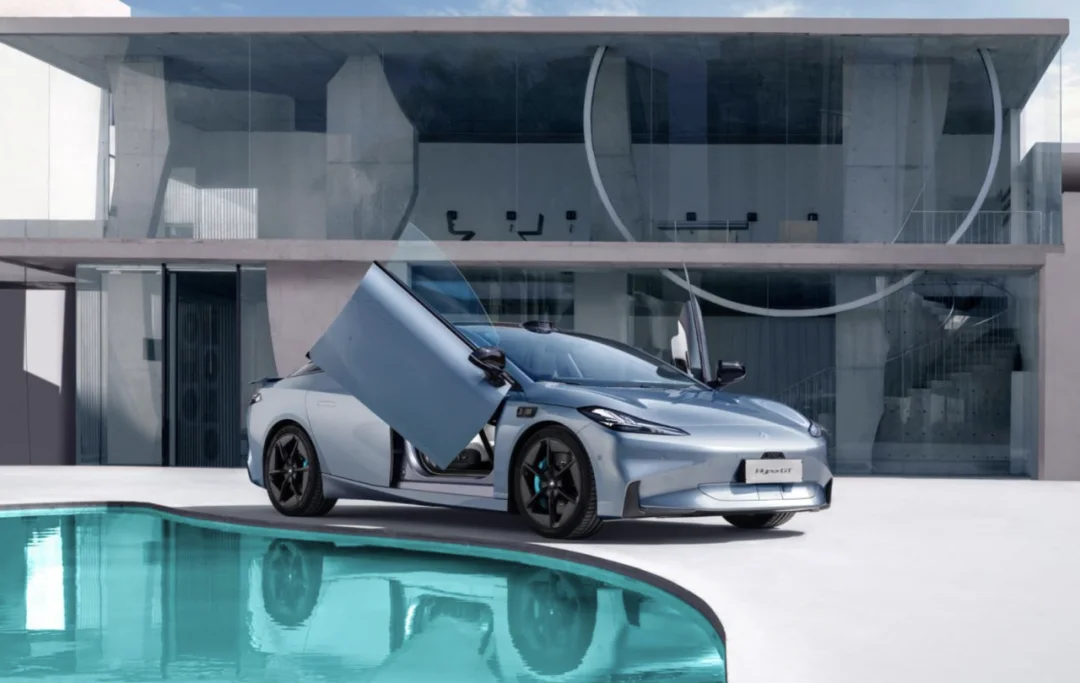
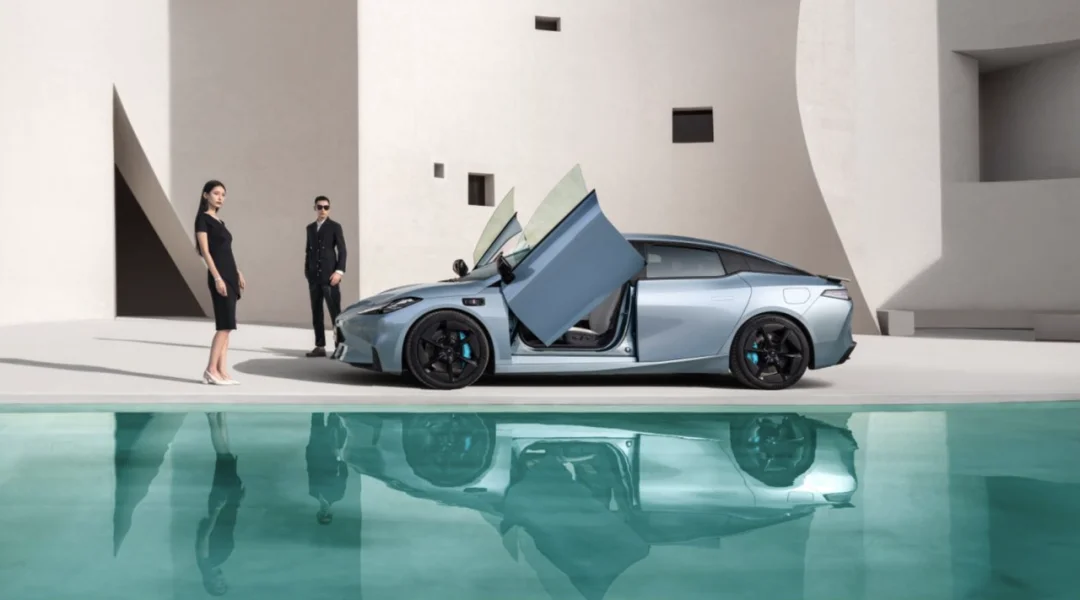
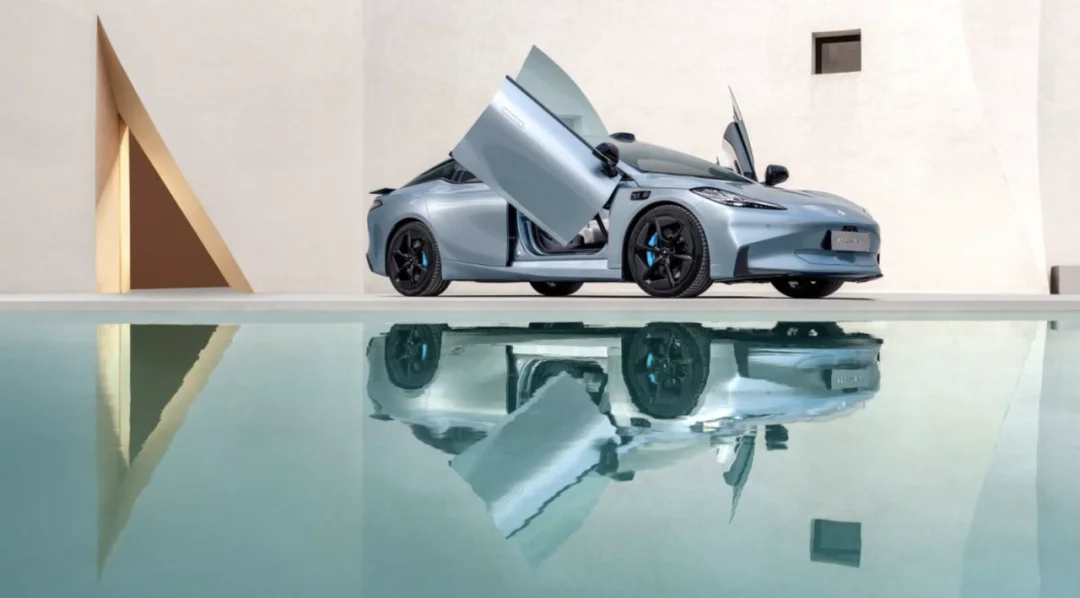
Now, if I asked you right now to name the most striking feature, what would it be? I bet you’re thinking, 'Why are those doors opening that way?'
These front doors can open upward by 43 degrees. Haobo officially calls them 'rotor wings,' but their purpose is essentially just one: to show off. When I was gathering official materials, I counted roughly 17 static shots where the vehicle’s exterior was fully visible—and in all 17, the doors were open.
Clearly, Haobo wants these two doors to become the signature visual element of the Hyper GT, making every entry and exit turn the driver into the center of attention on the street.
This kind of public attention is usually something only young people can handle, and specifically those who enjoy being the center of attention. For them, this feeling is as commonplace as receiving the gaze of the entire audience after delivering a polished presentation in a large corporate conference room.
To prevent awkward mishaps during the door-opening process, the rotary-wing doors are equipped with sensor radar to avoid collisions. For users who are not accustomed to this feature or prefer efficiency, a manual jog mode is also provided. Let's look at the following images.
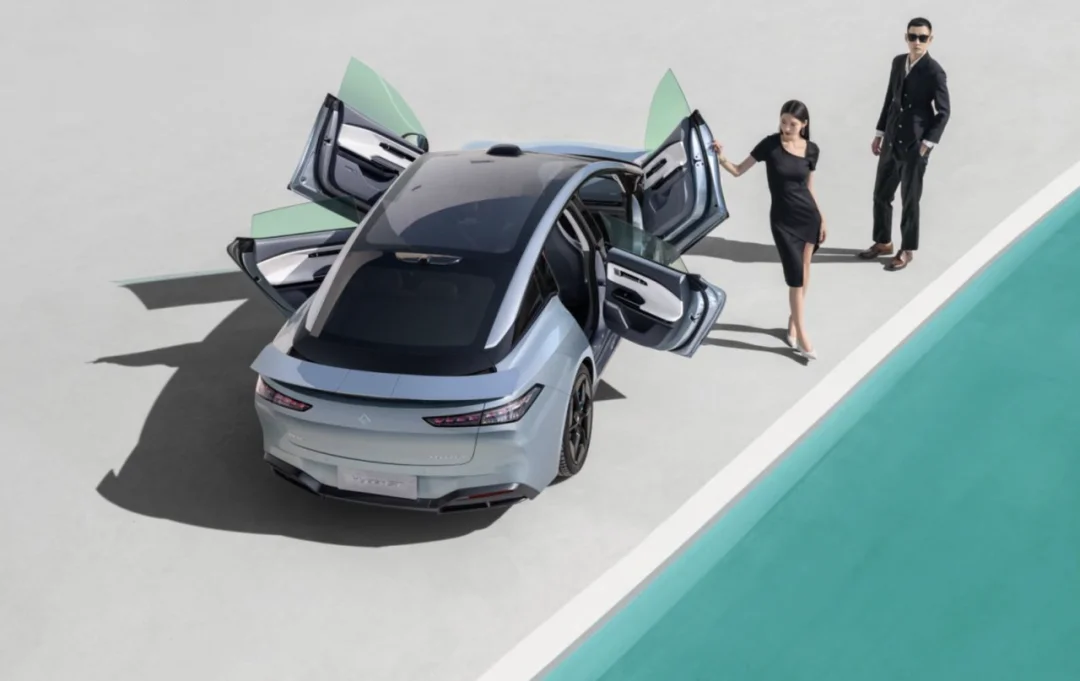
First, I have to say the model has a great figure and stylish clothes. But let's shift our attention to the car, especially that rear wing. Take a closer look and see if you can spot anything different? Have you noticed two vertical slits in the middle of the wing?
Those are not sheet metal seams; they are the result of the left and right wing sections overlapping the central wing section.
The Hyper GT's rear wing uses an electric opening mechanism combined with outward extension. If you are familiar with Porsche Panamera, this structure should not be unfamiliar to you.
Unlike the doors, this rear wing serves some aerodynamic functions beyond just showing off. However, I personally believe the former is what consumers care about most. After all, many cars with electric rear wings I see on the road are manually opened by owners at low speeds, often kept open even when parked.
Similarly, the Hyper GT's rear wing can be manually set to remain continuously open. In short, it looks cool.
Cool as it is, there are several details in the Hyper GT's exterior design worth introducing.
One is its fastback design, with a smooth, elongated curve running continuously from the windshield to the trunk lid, giving it a highly streamlined appearance. Additionally, the front end features minimal sharp angles; when closed, the active grille shutter sits nearly flush with the rest of the front fascia. The car also sits low to the ground.
These styling choices clearly prioritize low aerodynamic drag in the Hyper GT’s design philosophy. The result is a coefficient of drag (Cd) of 0.197—less than 0.2—a critical figure for electric vehicle range.
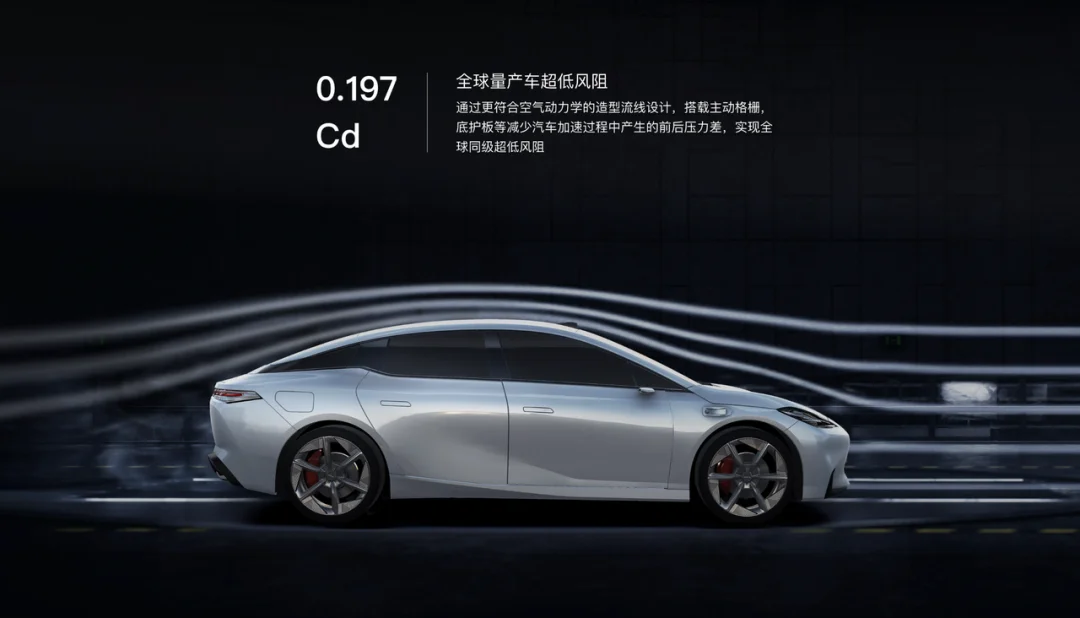
In my view, achieving low drag is difficult for two reasons. First, there is the direct challenge of fluid dynamics engineering. Second, designers must reduce drag without making the vehicle’s exterior look overly bizarre or unattractive.
The Hyper GT’s styling includes several details that reflect the design team’s consideration of these two challenges. A typical example is the 19-inch wheels featured in official promotional images.
These are not fully enclosed aero wheels. However, the small fins around the outer rim help deflect airflow away from the vehicle’s sides, maintaining a low-drag profile while avoiding the unsightly appearance often associated with fully enclosed aero wheels.
The three LiDAR sensors on higher-trim autonomous driving models include one prominent unit on the roof, while the two mounted on either side of the fenders are less conspicuous. These three RoboSense LiDARs feature variable focal length capabilities, providing a wider perception range. The decision to forgo full-width headlights and taillights also helps keep the Hyper GT’s design language from looking too commonplace. When you actually drive the Hyper GT, however, the experience feels different.
02This Car Is Long, Yet Short
I still recall the tone of a colleague’s message in our group chat when he first evaluated the Hyper GT for a track test drive: there was a hint of unexpected excitement. He stated plainly that it is an electric sedan with outstanding driving dynamics.
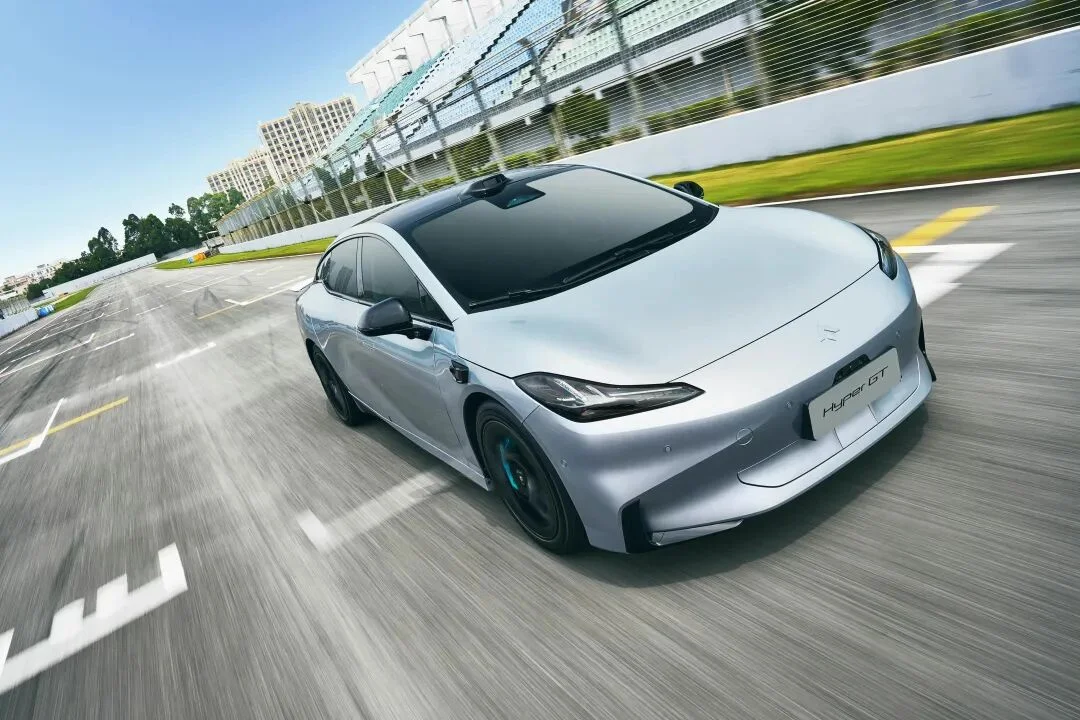
To be honest, few domestic Chinese car brands currently carry a strong handling reputation, and some models that claim superior driving feel do not deliver on that promise once you get behind the wheel. Based on my colleague’s description, the Hyper GT stands out as one such exception: its basic driver ergonomics are well executed, the steering wheel offers a comfortable grip, and it feels intuitive to pick up quickly.
Once you actually take the car onto the track and floor the accelerator, you will find its power delivery feels even stronger than the official zero-to-one-hundred km/h time of 4.9 seconds suggests. The 250 kW rear-mounted motor retains ample reserve power at speeds above 100 km/h, giving the car a driving character reminiscent of a rear-wheel-drive V6 after a full lap.
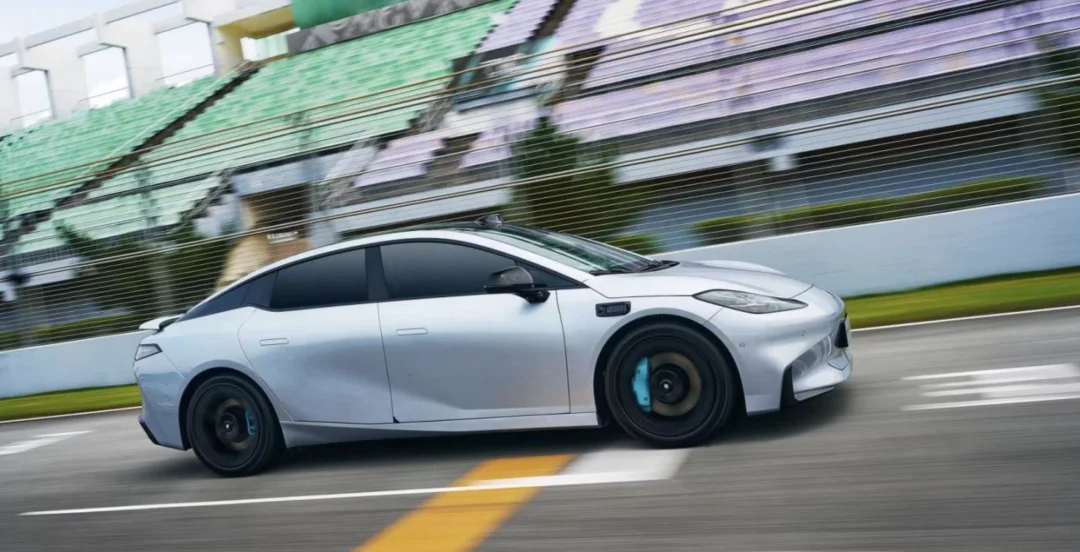
However, high-horsepower, fast-accelerating domestic EVs are now common everywhere. While the Hyper GT performs well in this regard, its single-motor rear-wheel-drive setup remains comparatively mild against the dizzying, sub-3-second acceleration of more aggressive rivals. Its braking system matches its power output: during the Zhuhai track test, top speed on the straight exceeded 180 km/h, yet each hard brake application slowed the car down smoothly and decisively, without any noticeable fade or sponginess in the pedal feel.
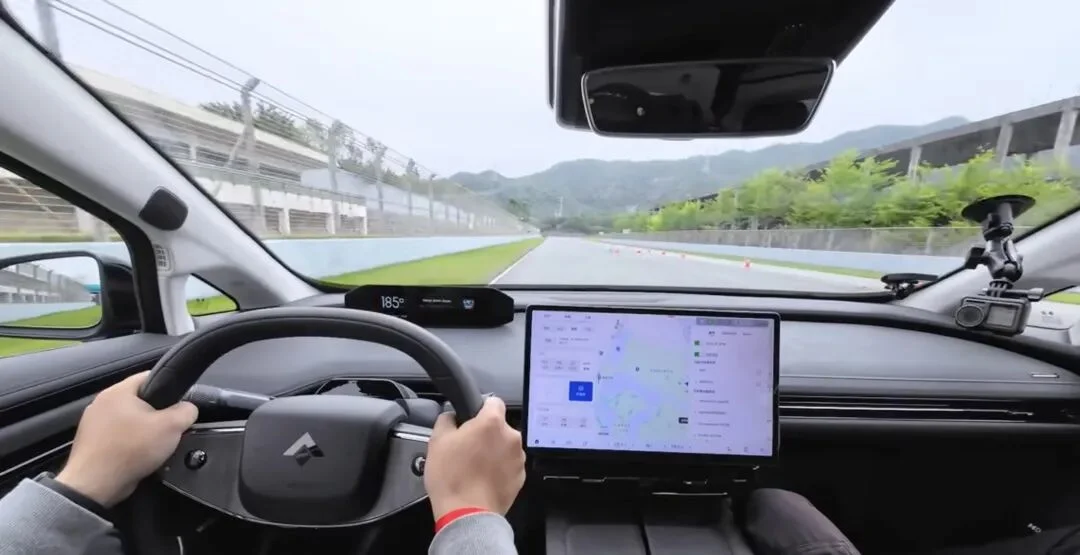
What impressed my colleague most was the car’s cornering behavior. The lateral response during steering changes feels distinctly sporty; as you dive into a turn and gradually increase steering angle, the building lateral G-force presses you firmly against the side of the seat.
You can floor the accelerator early in the exit phase of a corner. The sensation of Hyper GT accelerating forward under lateral load evokes excitement mixed with anticipation; you might wish for a slight rear-end slide. However, breaking through the tire grip limit on dry track surfaces requires significantly more deliberate and aggressive input. At this point, Hyper GT’s AICS chassis control system is quietly adjusting suspension stiffness and torque distribution to the wheels. You may feel that pushing the throttle harder causes the tail to drift outward slightly, but this tendency emerges gradually, without causing anxiety.
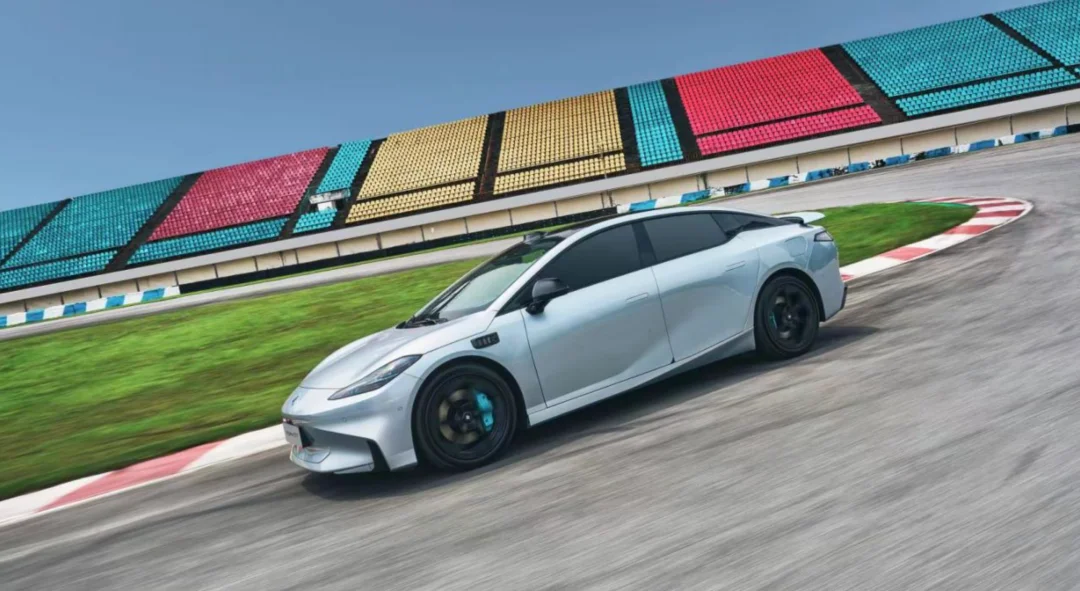
You might think you can push even harder, but the intelligent chassis control system is already providing a safety net. Without firsthand experience, it is difficult to imagine the vehicle’s handling capabilities are at this level. Ultimately, a colleague gave high praise: 'The dynamic handling performance does not lag behind the Model 3, and its limits may even be higher.' In the subsequent Gymkhana test drive segment, this nearly 4.9-meter sedan felt shorter and smaller than its actual dimensions. During each slalom maneuver, the movements felt smooth, with rapid dynamic response and no obvious disconnect between the front and rear axles.
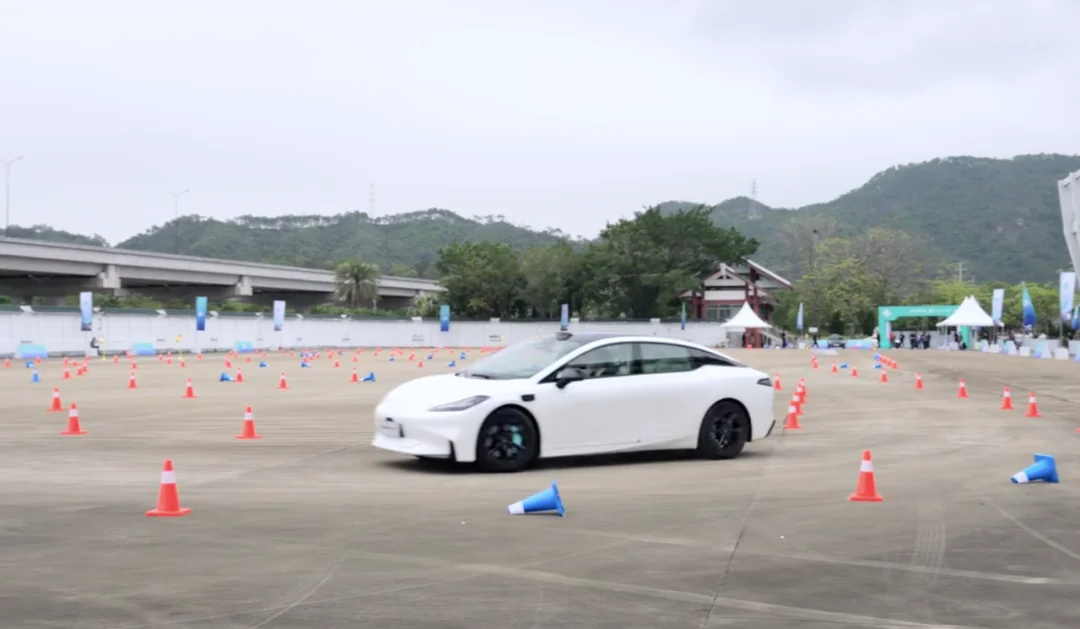
Most remarkably, Hyper GT’s turning radius is less than 5.3 meters, a figure shorter than many compact cars, despite its wheelbase being two classes longer. Achieving such an extreme turning radius, Hyper GT relies solely on large front-wheel steering angles rather than rear-wheel steering. After completing the track run and the entire Gymkhana program, the colleague exited the vehicle smiling, leaving only four words—still wanting more.
03Beyond Easy to Drive
The interior design of the Hyper GT exhibits a restraint rarely seen among domestic Chinese vehicles, along with a rare consistency in style. For the front dashboard, the Hyper GT avoids exaggerated shapes, opting instead for a relatively thin, rounded structure with symmetrical styling for both driver and passenger. The central console area also features a symmetrical design; storage compartments and smartphone slots are uniformly aligned, creating a clean and comfortable aesthetic. Furthermore, the line distribution flows cohesively from the dashboard to the doors and then to the B-pillars, with every segment coordinating and connecting seamlessly.
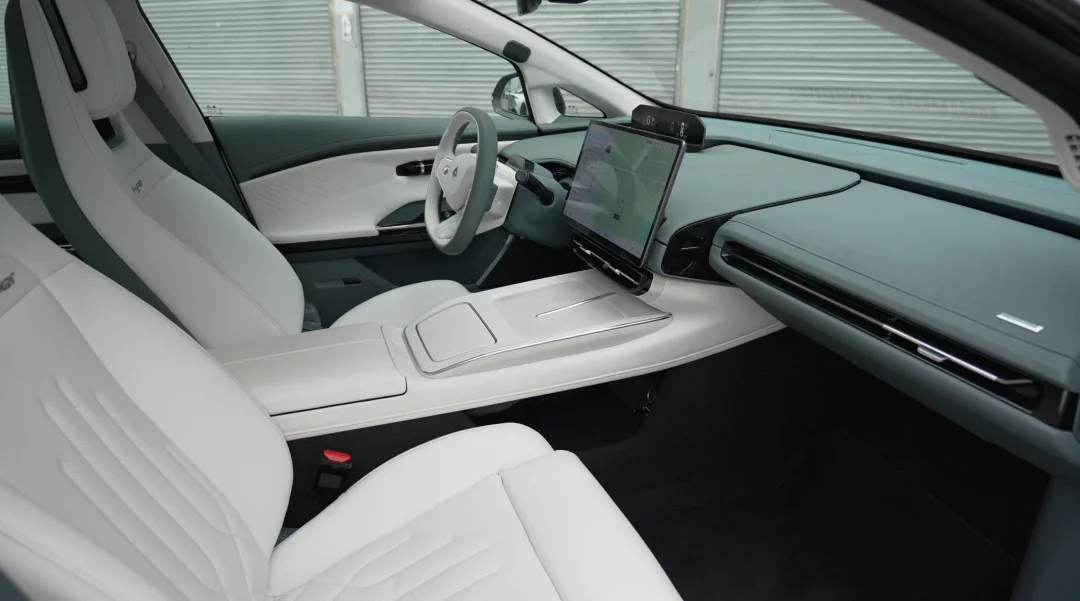
What sets the Hyper GT apart is its thoughtful combination of interior materials and color schemes, as the visual presentation of colors and textures significantly impacts the perceived premium quality of a vehicle's cabin. Take the seats, for example: they are upholstered in full-grain top-layer cowhide from young cattle, while the wood trim on the center console area is sourced from "original timber with an 80-year growth cycle," according to the official description. In short, whether by sight or touch, the material quality serves as a strong plus for the Hyper GT.
However, this car does not rely on a brute-force accumulation of features. In the interior, you will hardly see inexplicable color blocking or clashing tones; the transitions from leather to metal to wood are visually pleasing and entirely logical across both sight and touch. All areas that come into contact with the body are basically covered in comfortable materials, allowing you to feel a definite sense of quality within a cabin that does not appear overly extravagant or flashy. The central control screen, serving as the interaction hub inside the Hyper GT, measures 14.6 inches, with a resolution of 2,560 × 1,440. It is powered by the 8155 infotainment chip and runs the ADiGO 5.0 system, supporting continuous voice dialogue.
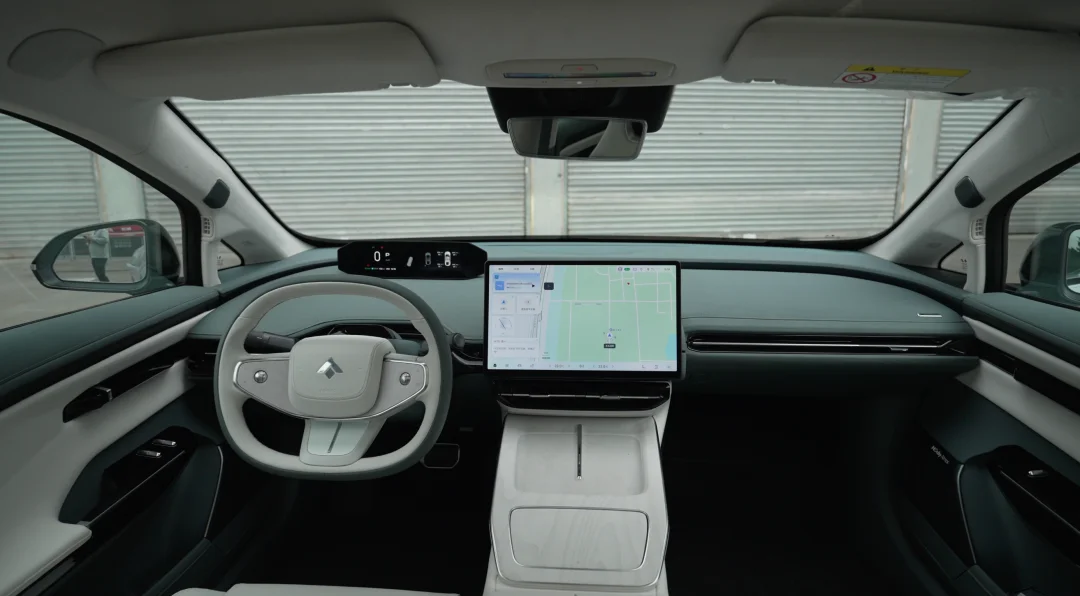
Hyper GT also didn't miss out on the audio system, a configuration that has seen intense competition in recent years. Tuned by Gina, the 23-speaker sound system with a sky channel delivers impressive performance in both surround sound and music playback. As always, such specifications are rare at Hyper GT's price point. Typically, pure electric sedans with a sporty focus do not offer particularly spacious rear seats, given the constraints of wheelbase and vertical space.
So Hyper GT's strategy is to first establish a 2,910 mm wheelbase, then round out the sloping fastback roofline into a more rounded one, and make the battery pack as thin and flat as possible underneath. This creates rear seat space. When it comes to carving out space, Hyper GT has no glove box on the passenger side; the purpose is clear: the "Queen's Seat." With a thinner center console design, the passenger can stretch out their legs to gain more legroom.
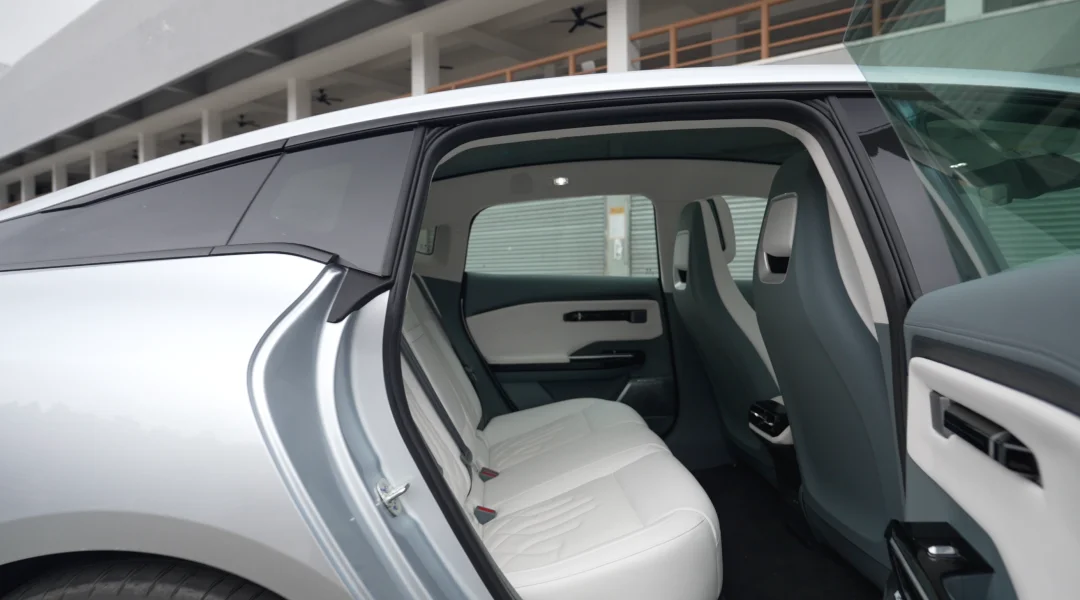
Comfortable, good-looking, easy to use, and pleasant to listen to—these four words best summarize the interior of the Hyper GT.
04Final Thoughts
The engaging nature of a car often leaves a lasting impression, prompting buyers to make a purchase.
In recent years, every time I drive my imported, rear-wheel-drive, long-range Model 3 back to the office, I marvel at how captivating an excellent sports sedan can be. However, when I take it onto the elevated highway, its poor NVH performance—so bad that I sometimes suspect the windows aren’t closed properly—quickly brings me back to reality.
Indeed, beyond being fun to drive, a car must excel in many other areas. This is likely why so many people choose the XPENG P7 and BYD Han. Yet neither the P7 nor the Han is flawless or capable of meeting everyone’s needs. Enter the Haobo Hyper GT, which enters this market with pricing that reflects what we should expect from the 2023 new energy vehicle segment:
710 Supercharge Max version: RMB 339,900
710 Supercharge version: RMB 259,900
600 Charge-and-Swap version: RMB 239,900
560 Seven-Wing version: RMB 245,900
560 Tech version: RMB 219,900
The main differences between Hyper GT variants lie in battery capacity and motor power. From a practical standpoint, the models worth buying are the Technology Edition at RMB 219,900 and the Supercharging Edition at RMB 259,900. The Technology Edition serves as an entry-level option with a low barrier to entry, while the Supercharging Edition offers upgrades in range, performance, and charging speed that justify the RMB 40,000 price difference.
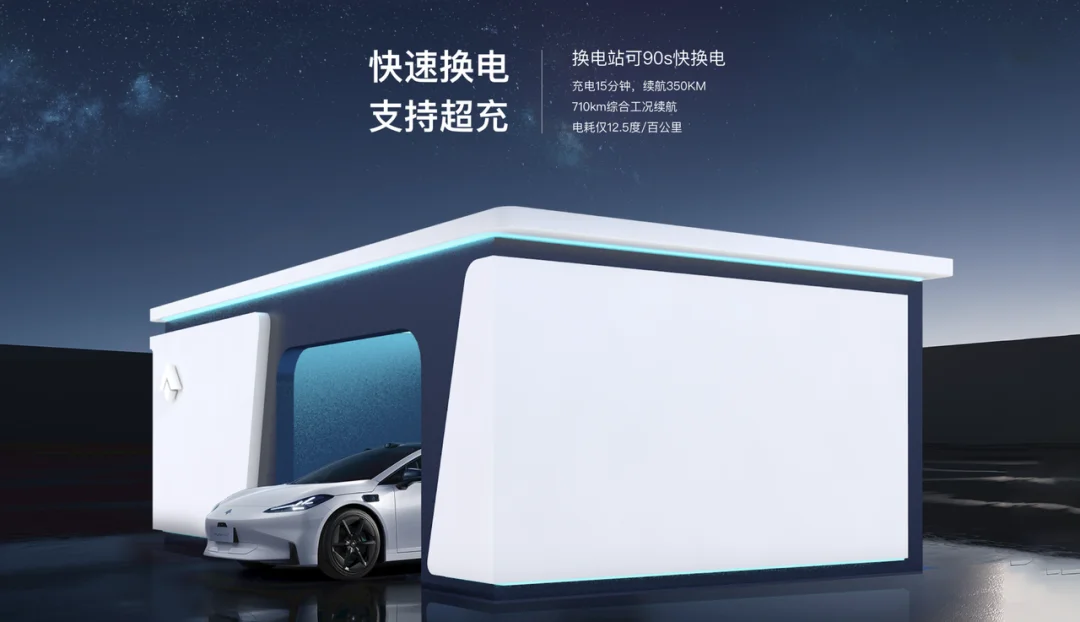
For those seeking more personalization, the Seven-Wing Edition at RMB 245,900 is worth considering. At this price point, it is difficult to find a sedan with a higher head-turning rate. The 600 Swap-and-Charge Edition lives up to its name by supporting battery swapping for refueling, catering to users who prefer this method.
Haobo’s benefit strategy is clear: few items, but all are useful:
During the pre-sale phase, paying a reservation deposit of RMB 2,000 secures lifetime warranty coverage for the entire vehicle; the first 5,000 users who place orders during the pre-sale period additionally receive lifetime free charging (1,000 kWh per year).
This pricing positions Hyper GT in the same segment as established rivals like Tesla Model 3, XPENG P7i, and BYD Han, though each brand targets different audiences.
'Young achievers' is Haobo’s official expectation for the user profile of Hyper GT. Objectively, this is a vague yet recognizable definition of the target user.
In my understanding, these users seek cars that offer youthful, tech-forward industrial design, individual expression, excellent driving dynamics, and sufficient quality and practicality.
In 2023, China’s mainstream new energy vehicle market had become a red ocean. As leading manufacturers slashed prices, many others were forced into brutal and self-destructive price wars. Consequently, many buyers’ focus shifted to whether the price was low enough, rather than asking, “What kind of car do I actually need?” This is not a healthy trend.
Hyper GT is first and foremost a competitively priced product. What makes it truly rare, however, is that its selling point is not cheapness, but its driving dynamics and handling experience, which surpass those of rivals in the same price segment, along with Haobo’s meticulous attention to detail across every aspect of the vehicle.
During the test drive briefing, Haobo expressed high expectations for the model: “Hyper GT will be the top choice for young achievers.”
Written by: Fisher Edited by: Fisher