


WEY Unveils Direct-Sales Expansion and Next-Gen Platform to Rebuild Trust
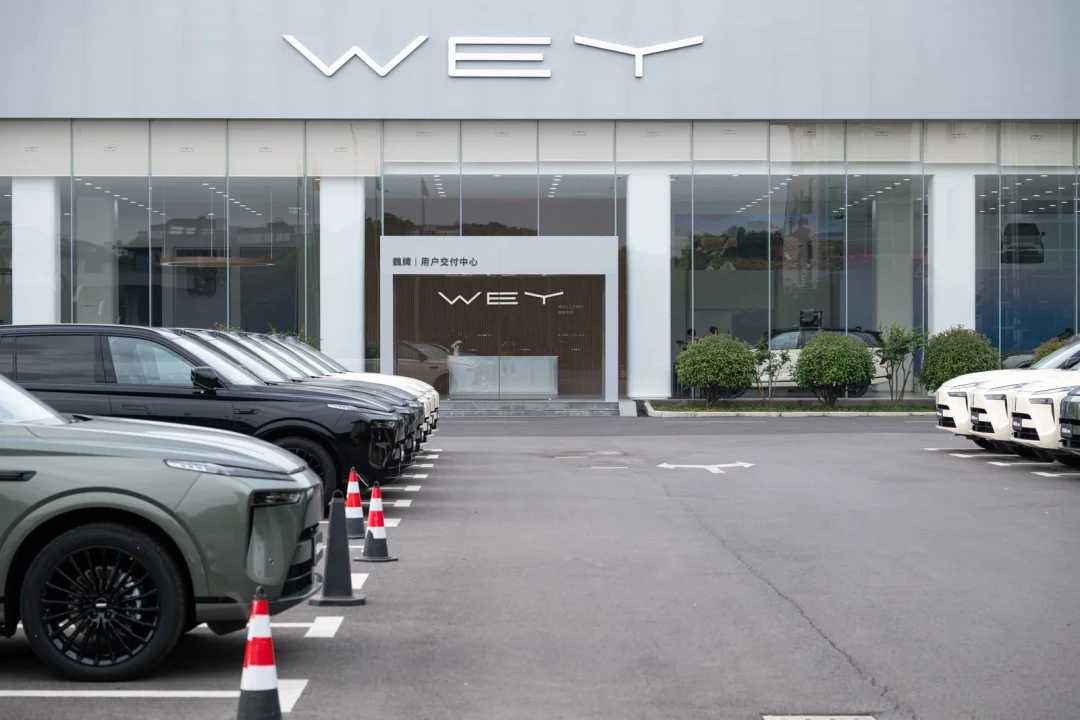
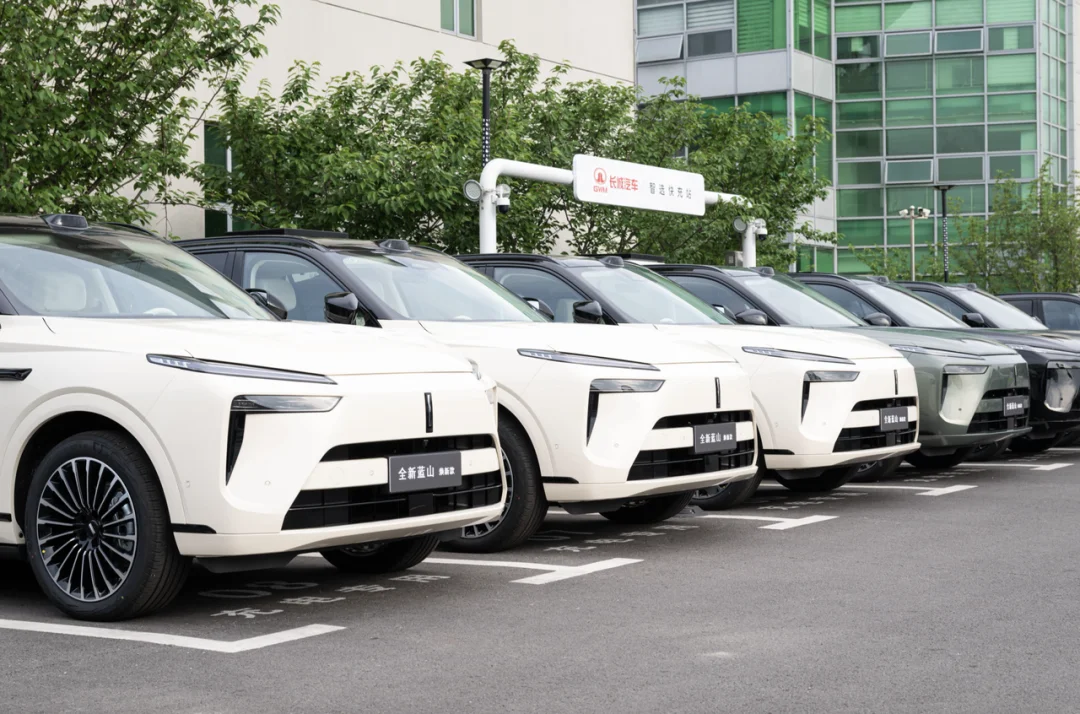
On May 20, a day filled with love, GWM Chairman Wei Jianjun visited the WEY Shanghai Delivery Center early in the morning to personally hand over the keys of the all-new Lanshanhuanxinkuan and Gaoshan to the first batch of owners.
In the afternoon, WEY announced its brand renewal. This includes rapidly establishing a direct sales system, with the number of direct stores expected to exceed 600 by the end of this year. At the same time, the next-generation full-power intelligent super platform was officially unveiled, on which several of GWM's flagship models will be built.
This may well be Wei Jianjun's declaration of love to WEY's 600,000 users: "Our goal is simple: to become a brand that truly understands users. We must genuinely address user feedback and deliver product value to them."
Eight years ago, GWM launched its premium brand, WEY, achieving sales of over 100,000 units within nine months. However, in the following years, sales fluctuated and reputation faced skepticism. Wei Jianjun stated, "In the transition to new energy and intelligence, we have fallen behind the pace and our progress has been unstable."
For this reason, GWM hopes to make changes. Today, "changing for the user" has become the bottom line of GWM's values.
As an industry veteran who has navigated the automotive sector for 35 years, how does Wei Jianjun lead WEY to "change for the user"? In his speech this afternoon, we found the answers.
01Direct Sales: The Essential Leap to Mastering User Relationships
In recent years, many consumers have noticed a clear shift: buying a new energy vehicle increasingly feels like interacting directly with the brand itself.
Starting with Tesla and extending to brands like Lixiang and NIO, direct sales models have become widespread. Direct stores not only offer a more standardized experience but also make brand promises traceable. By maintaining unified service processes, pricing structures, and brand imagery, this approach helps build user trust.
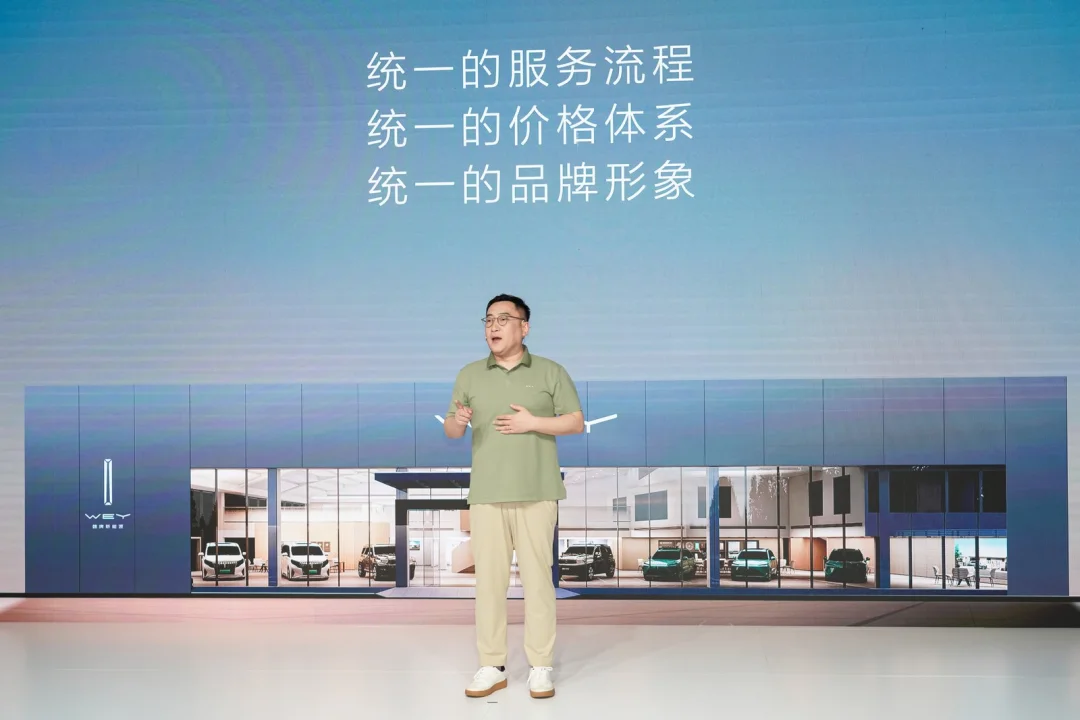
During its recent rebranding, WEY placed the construction of its direct sales system at the core of its strategy. Hosting the launch event at a user delivery center sent a clear signal of this transformation.
However, WEY’s move extends beyond just store-level operations. A more significant step involves building an internal collaboration model centered on users. Without a direct sales foundation, there is no genuine opportunity to engage with customers.
Behind this change, WEY is becoming the first brand within the GWM group to advance channel transformation based on a 'digital touchpoint' architecture. Whether engaging users, influencers, media, or advertisers, WEY responds through a unified touchpoint logic internally; physical stores are merely the front-end manifestation of this system.
WEY CEO Feng Fuzhi stated that this touchpoint approach means introducing a 'direct' model not only in WEY sales but also in digitalizing every interaction with users. This enables faster OTA updates for products, organizational structures, and the overall brand image.
The transformation began in October 2023. Feng Fuzhi recalled that Wei Jianjun firmly advocated for advancing a ToC strategy. "Mr. Wei was resolute: WEY must fully embrace ToC, and he was willing to invest heavily," Feng said.
In the nearly three months that followed, Wei Jianjun played a deep role in shaping WEY’s user service plan and brand-upgrading path. According to Feng Fuzhi, WEY expanded its nationwide store count from zero to 430 in just 10 months, covering more than 110 cities. The brand expects to reach over 600 stores across more than 200 cities this year, with a long-term goal of exceeding 1,000 locations. This rapid expansion reflects not merely store growth but organizational synergy and systemic support.
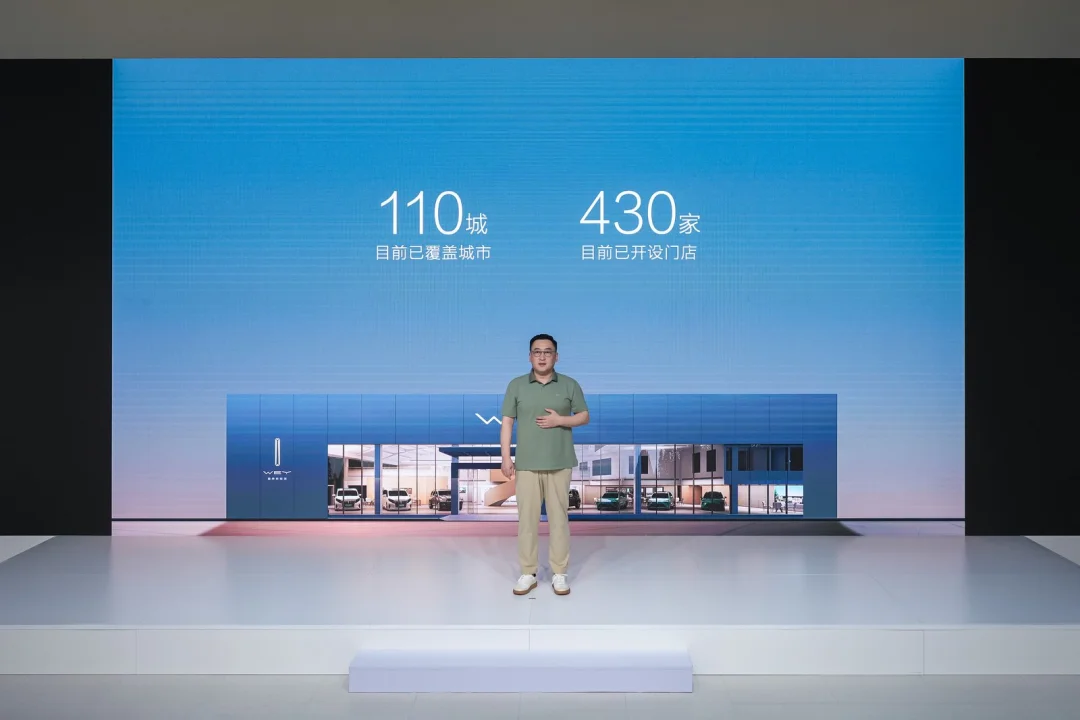
This shift marks the launch of GWM’s comprehensive ToC strategy.
More importantly, the direct-sales model extends the relationship between the brand and users beyond the moment of vehicle delivery, continuing throughout the entire ownership lifecycle.
At the same time, WEY has not moved entirely to direct sales; instead, it is adopting a "dual-channel model" combining direct operations with traditional dealerships. In Feng Fuzhi’s view, direct stores are not intended to "steal traffic from dealerships." Rather, they use digital tools to reach new customer segments that conventional networks cannot access, driving incremental growth. This collaborative approach preserves existing channel capabilities while avoiding direct conflict between the brand and its partners.
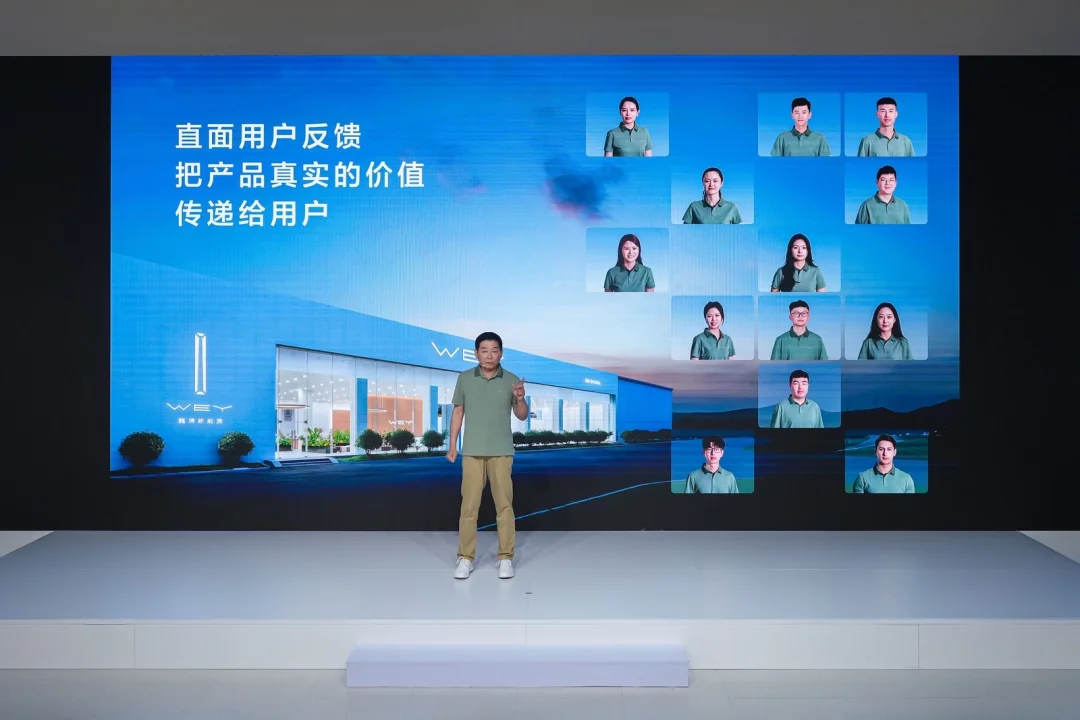
On the execution front, the efficiency advantages of the direct-sales system are becoming apparent. Data provided by WEY shows that one customer completed the entire process—from vehicle production line exit to final delivery—in just nine hours after placing an online order. This "factory-to-user" direct connection relies on integrated systems spanning vehicle manufacturing, warehousing, logistics, and delivery, representing the result of coordinated systemic capabilities.
Additionally, WEY is expanding the service radius of its direct sales system. For example, by building a "service guarantee line" that covers core routes in western China, it has established service stations and response centers along these routes to improve service accessibility in extreme scenarios. This initiative currently covers 14 popular self-driving routes, serving as an important support for the direct sales system in remote and complex scenarios.
Feng Fuzhi explained that WEY has established 30 escort stations along the Qinghai-Tibet, Sichuan-Tibet, and Qinghai-Gansu loop routes, with a rescue point every 200 kilometers and the furthest station no more than 350 kilometers away. "On main urban roads, we commit to arriving within two hours; in remote areas, within six hours. Tire changes take under 40 minutes, and battery replacements take under two hours."
Direct sales are not the end goal, but rather the starting point for brands to regain control of user relationships. Only when a brand can truly engage with users, understand their needs, and respond effectively will there be a possibility for all subsequent changes in products, services, and technology to take root.
02Products Compete on Understanding, Not Just Specs
"Changing for the user" is first reflected in WEY's product lineup on the model most directly perceptible to family users: the all-new Lanshanhuanxinkuan.
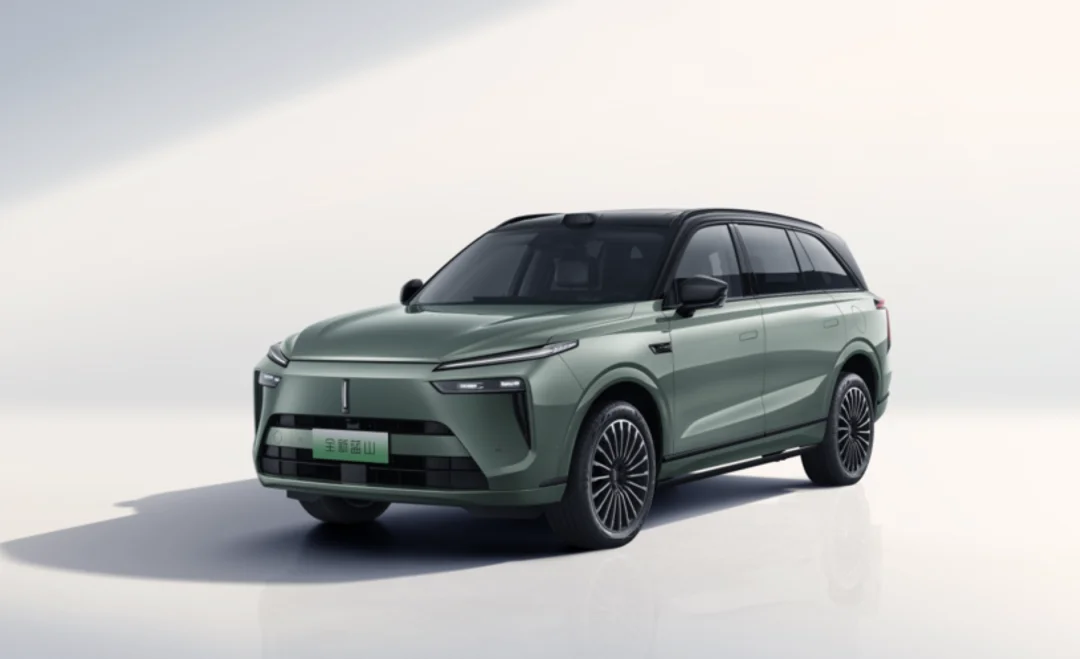
Compared to past product communications that focused more on power and specifications, the logic of this update is closer to a simple question: What exactly should family cars solve?
WEY has made systematic adjustments to its products based on specific scenarios such as mobility safety, usage costs, intelligent experiences, and ride comfort, striving to meet user needs.
A representative example is that the new Lanshan’s colors were inspired by user comments: Midnight Black, Morning Light White, and Dusk Green, corresponding to three moments of a day.
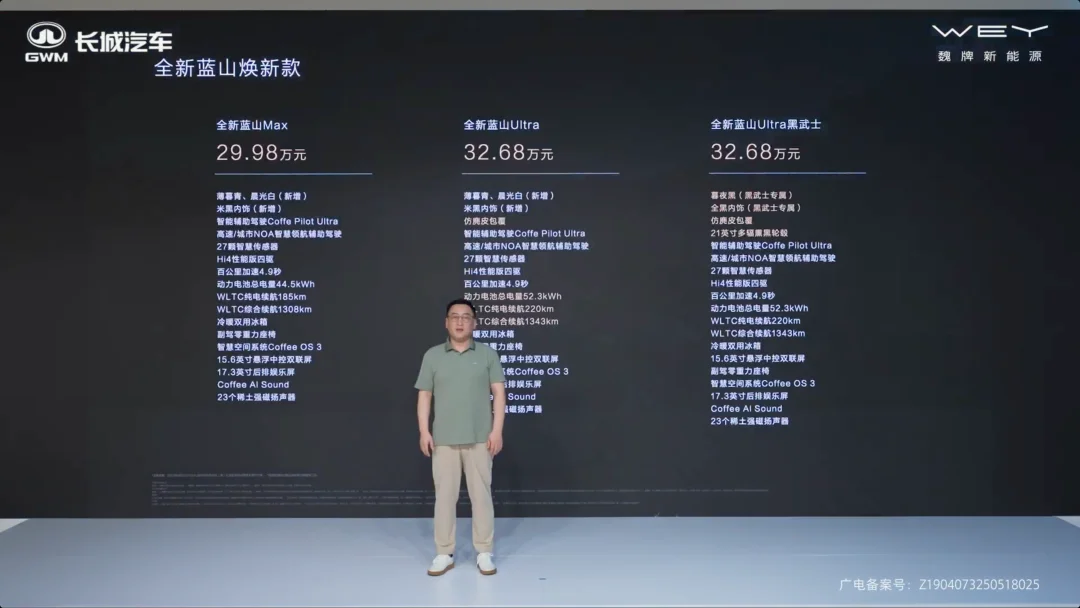
This time, the new WEY Lanshanhuanxinkuan launched three configurations, with a price range of RMB 299,800 to RMB 326,800.
The MAX trim costs RMB 299,800. It comes standard with driver assistance featuring a LiDAR sensor, with lifetime free access to urban and highway NOA features. Standard equipment includes Hi4 performance all-wheel drive, 23 cinema-grade speakers, and an intelligent refrigerator with both cooling and heating functions. Additionally, it includes a complimentary 17.3-inch rear entertainment screen and a special exterior color option.
The Ultra trim costs RMB 326,800. Building on the MAX model, it adds a 52.3 kWh long-range battery pack and interior upholstery wrapped in suede-like material. It also includes a complimentary special exterior color.
The Ultra Black Warrior edition is also priced at RMB 326,800. Based on the Ultra model, it features an exclusive Midnight Black exterior, a fully black interior, standard 21-inch multi-spoke blacked-out wheels with red brake calipers, and blacked-out body kits for certain parts.
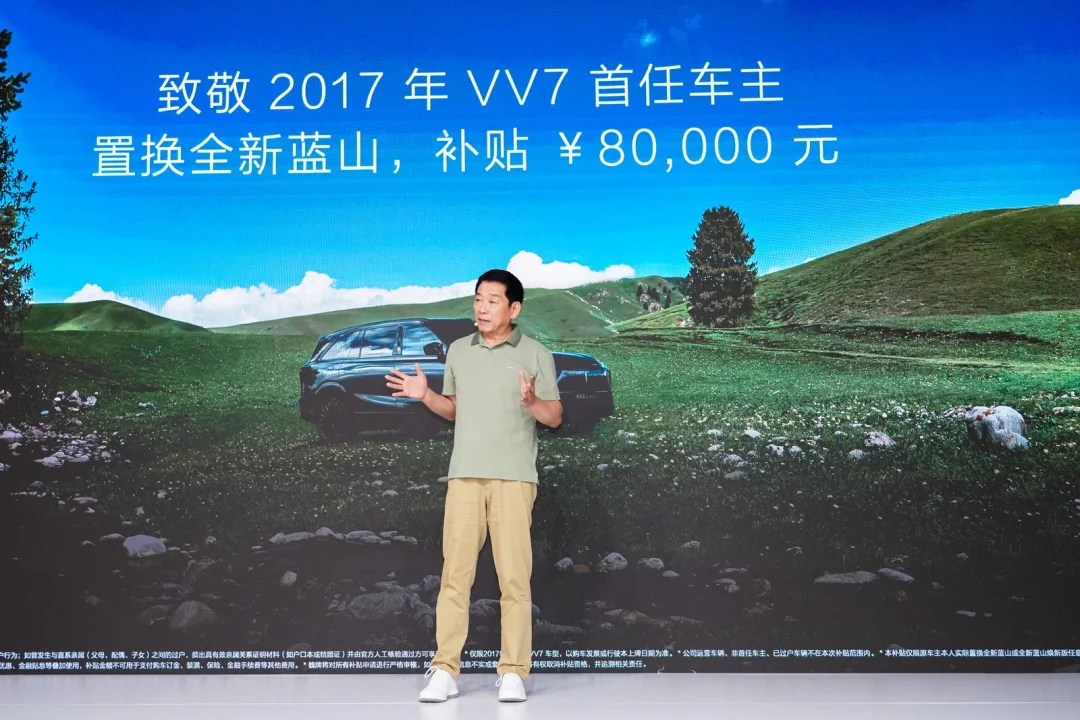
Meanwhile, to thank the earliest WEY owners who supported the brand from the start, Wei Jianjun announced on site: "Today, I am paying out of my own pocket to provide an RMB 80,000 subsidy for the first owners of WEY's first model, the VV7, who purchased it in 2017, to trade in their vehicles for the new Lanshanhuanxinkuan on the occasion of WEY's 8th anniversary."
The updates to WEY's new Lanshanhuanxinkuan focus on three areas: safety, hybrid performance, and intelligent experience.
First is safety. In WEY's view, safety extends beyond crash test scores or hardware strength; it encompasses a comprehensive design spanning material selection, battery structure, and a family-friendly cabin. Feng Fuzhi explained that the body of the new Lanshanhuanxinkuan uses 81% high-strength steel, and the roof can withstand pressure equivalent to 5.5 times the vehicle's weight—comparable to an adult elephant dancing on the roof.
Another key update is the child-priority green cabin. Material choices are more eco-friendly, with further optimizations in antibacterial properties, anti-mite capabilities, and interior air quality control. A large area of materials features an antibacterial coating with a rate of 99.9%. The vehicle's electromagnetic radiation protection is lower than that emitted by a mobile phone, reinforcing its positioning as a family-friendly option.
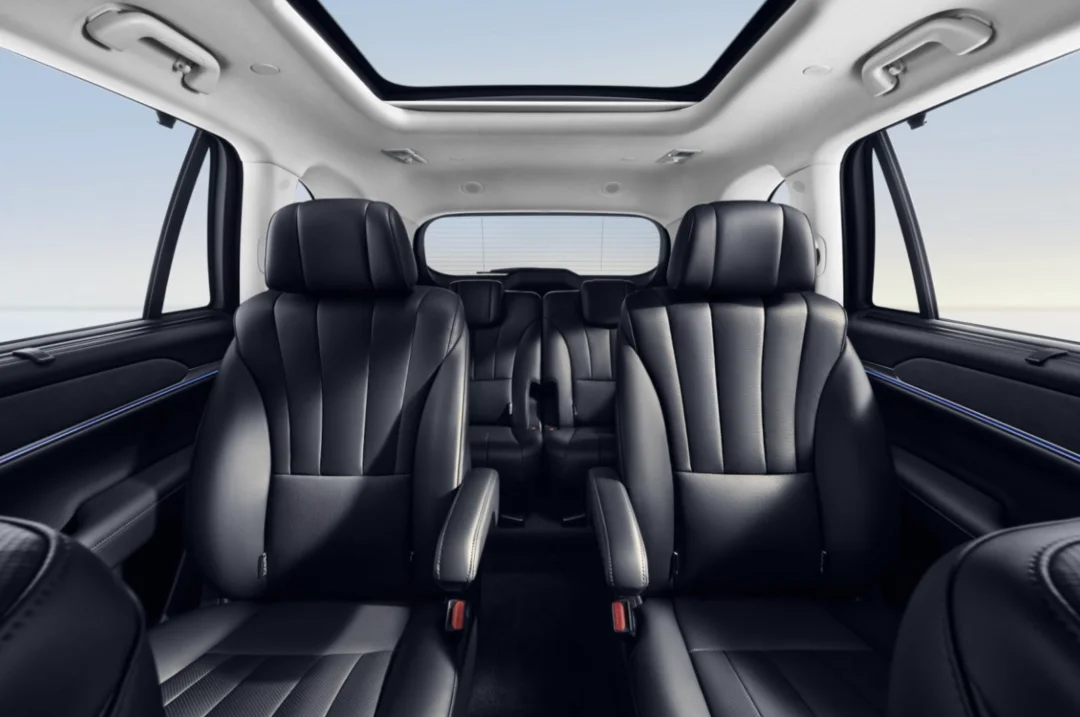
Feng Fuzhi shared a story today regarding the R&D of the child-priority green cabin: "Our engineer Old Ma's son has asthma. When he led the development of WEY's new Lanshanhuanxinkuan 'child-priority green cabin,' he secretly added a test to check whether the bacteria adsorbed by the fluff exceeded standards."
Next is the Hi4 Performance Edition intelligent hybrid all-wheel-drive system. The new WEY Lanshanhuanxinkuan comes standard across all trims with the Hi4 four-wheel-drive electric hybrid system.
Feng Fuzhi demonstrated the performance of Hi4 under different road conditions and speeds using video, highlighting its dynamic response advantages under the dual-motor all-wheel-drive architecture.
In urban traffic congestion, at speeds below 60 km/h, Hi4 relies on pure electric driving.
On urban ring roads and elevated highways, at speeds exceeding 60 km/h, the engine engages for direct drive earlier than in range-extender mode, improving efficiency by 5.85% and reducing fuel consumption by 18%.
On highway sections, when speeds exceed 88 km/h, the engine and motor work together; acceleration from 80 to 120 km/h takes just 3.6 seconds.
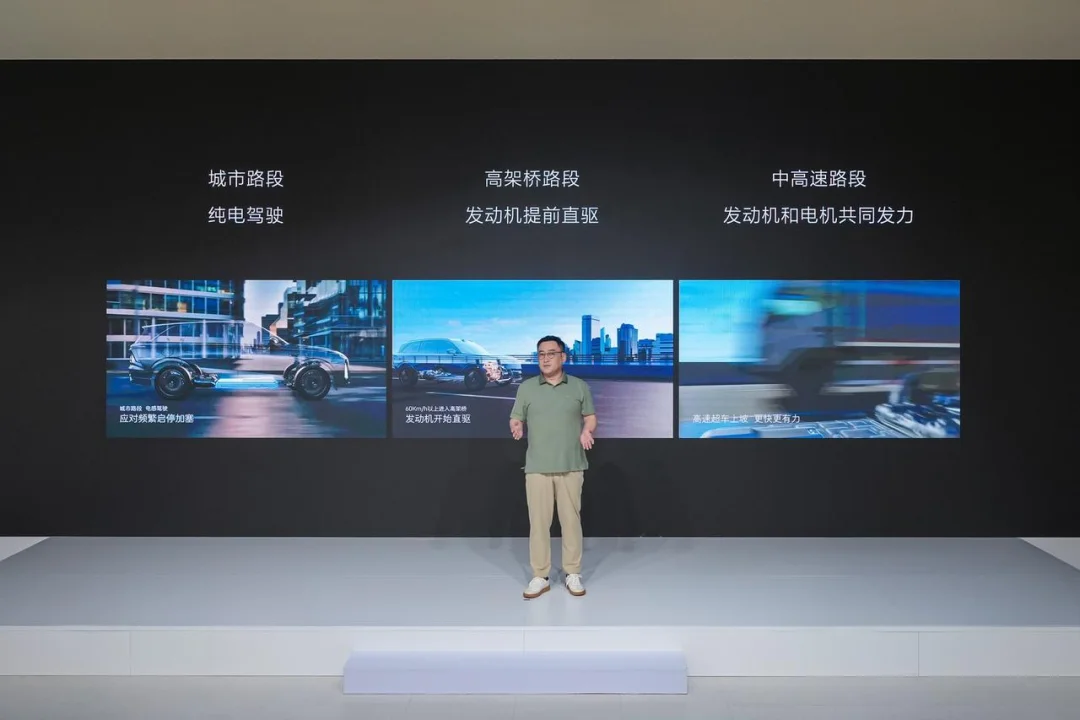
Additionally, this powertrain supports 92-octane gasoline, further lowering daily ownership costs for families.
The third area of evolution is intelligence, reflected in both driver assistance and cabin experience.
For driver assistance, the all-new WEY Lanshanhuanxinkuan comes standard with LiDAR and Orin-X chips across its entire lineup, powered by the latest-generation Coffee Pilot Ultra system.
According to Feng Fuzhi, the goal of the Coffee Pilot Ultra system is not 'fully autonomous' but 'all-around peace of mind.' Its functions cover multiple scenarios including highways, urban roads, and parking.
Feng Fuzhi stated regarding the driver assistance system: 'Our full-scenario NOA is definitely in the first tier domestically.' He also mentioned that WEY will push a new OTA system upgrade to users in June this year.
In terms of the smart cockpit, WEY is equipped with the Coffee OS 3 intelligent cockpit system. Feng Fuzhi stated that the new-generation smart cockpit can generate wallpapers with a single voice command and collaboratively handle work tasks, truly achieving seamless integration of life and office activities inside the vehicle.
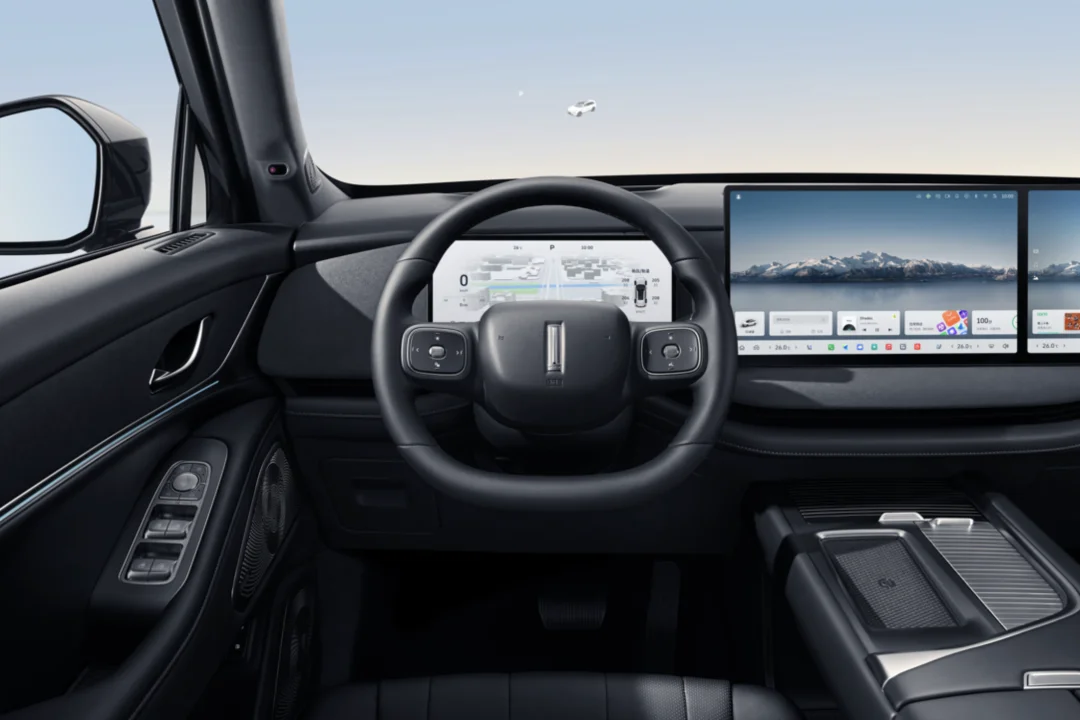
It is evident that WEY's product logic is shifting from "configuration-driven" to "scenario-oriented." The updates for the all-new Lanshanhuanxinkuan and the all-new Gaoshan focus on safety, energy consumption, intelligence, and spatial comfort, covering key aspects of daily use for family users. The starting point for these product updates is no longer to emphasize technology itself, but to optimize experiences around users in specific scenarios. This change means that WEY is moving from building a qualified new energy vehicle to creating an excellent new energy vehicle better suited for families.
03Changes in the Technical Platform: The Next-Generation Smart Architecture Serves as the Technological Foundation for a Sense of Security
"True confidence in change must be reflected in changes to underlying technologies." As the brand renewal speech drew to a close, Wei Jianjun unveiled an Easter egg from this "change for users" initiative: GWM's new "Next-Generation Full-Power Intelligent Super Platform."
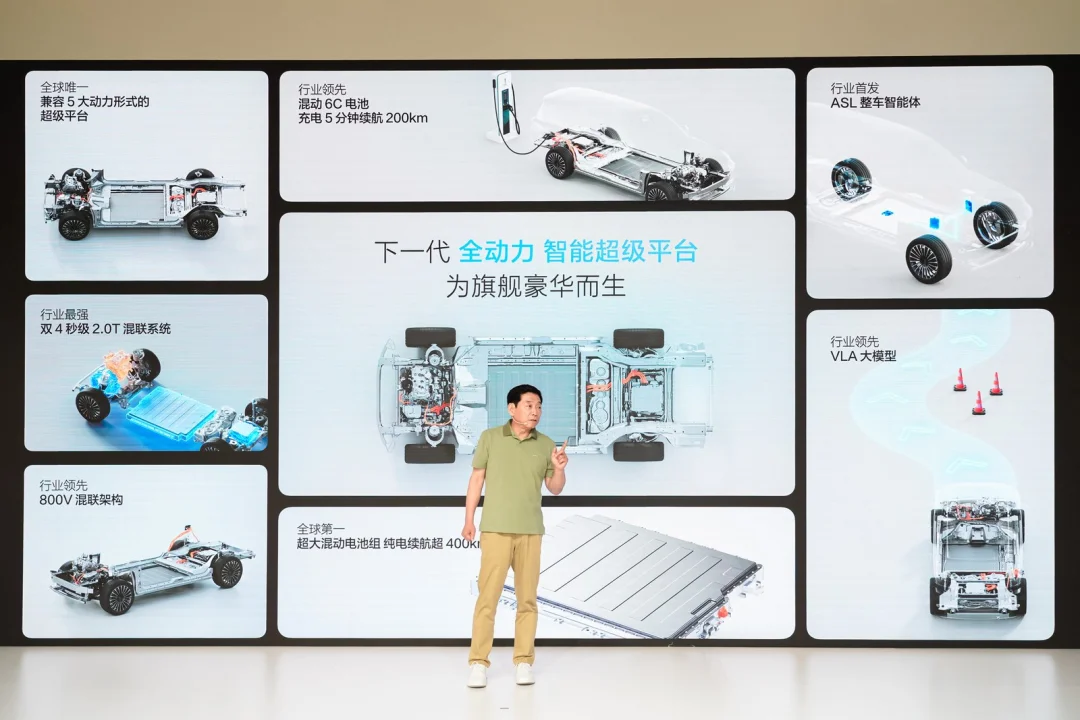
According to Wei Jianjun, this platform is designed specifically for mid-to-large and larger luxury vehicles. It features high compatibility, supporting sedans, SUVs, MPVs, and other vehicle types.
Wei Jianjun announced seven core technologies of this super platform:
A super platform compatible with five powertrain types;
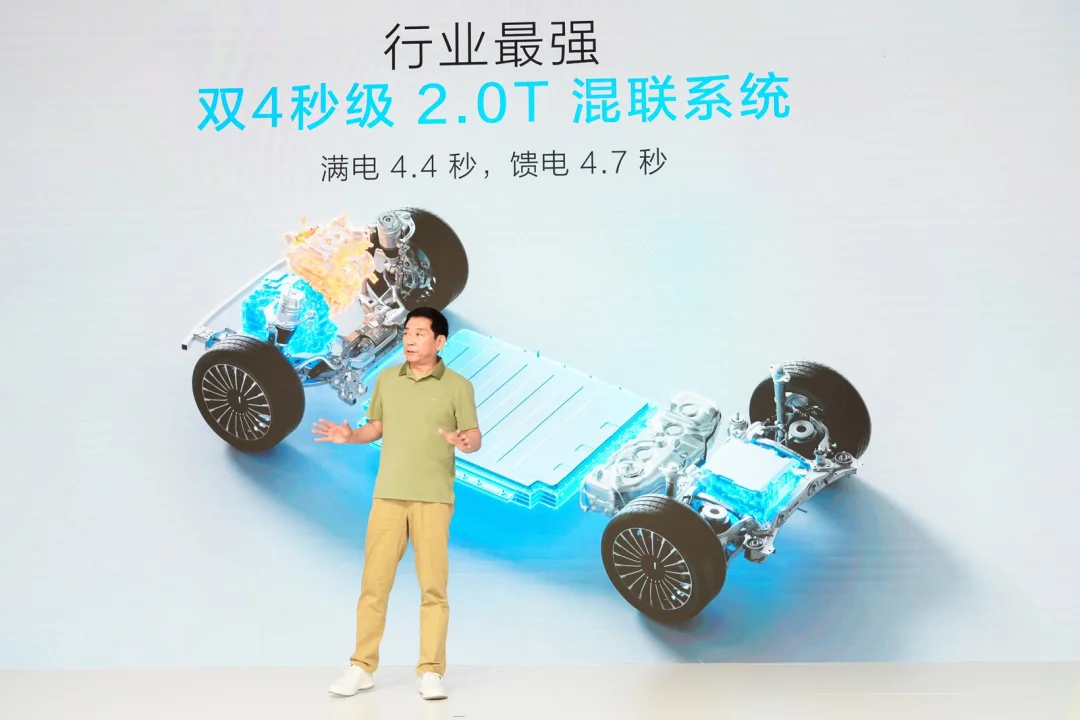
Dual 4S-class 2.0T super hybrid system;
800 V hybrid architecture;
Large-capacity battery pack (plug-in hybrid) with over 400 km of pure electric range;
6C charging rate for hybrids, adding 200 km of range in just 5 minutes of charging;
Vehicle intelligent agent;
VLA autonomous driving large model;
This is a super platform that supports five powertrain types: plug-in hybrid, pure electric, hydrogen fuel cell, internal combustion engine, and hybrid, fully compatible with all five.
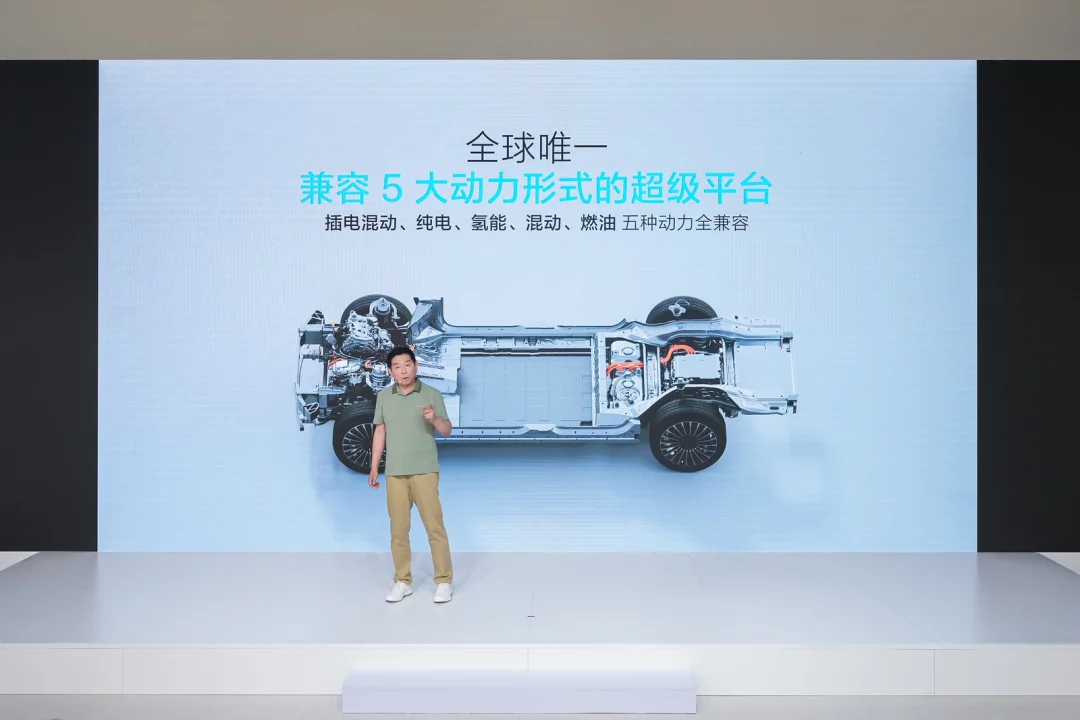
When asked why the company is developing such a comprehensive super platform for all powertrains, Wei Jianjun said: "If all powertrains were identical, it would be very boring. Looking globally, users have diverse needs for power. Even among domestic users, preferences vary significantly. Therefore, our new platform cannot support only a single powertrain type; it must accommodate the various needs of global users as much as possible."
"While the industry is still debating which powertrain represents the future, GWM has made no choice—we are doing it all."
Previously, developing vehicles with these different powertrains required three traditional platforms: one for internal combustion engines, one for hybrids, and one for electric vehicles. GWM’s approach integrates them into a single architecture covering the global market.
This technical architecture offers flexibility not just in integrating R&D resources and compatible powertrains, but also in providing a foundation for continuous future product iterations.
Wei Jianjun noted that supported by an 800 V hybrid architecture, the platform achieves an electric range of over 400 kilometers, surpassing the industry standard of more than 200 kilometers.
Additionally, the new architecture supports a maximum charging power of 470 kW, reaching a 6C rate, which doubles the speed. This makes it possible to gain more than 200 kilometers of range after just five minutes of charging. Wei Jianjun remarked, "In other words, charging for five minutes allows you to drive from this venue to Hangzhou!"
Furthermore, the new platform utilizes a 2.0 T engine, enabling WEY’s hybrid system to deliver strong acceleration even in mid-to-large vehicles. Wei Jianjun shared the platform’s acceleration data: "With battery charge, our zero-to-100 km/h acceleration takes only 4.4 seconds, and even in depleted battery conditions, it requires just 4.7 seconds."
The new super platform adopts a more open SOA architecture, enabling the comprehensive integration of intelligent driving, intelligent space, and intelligent ecosystems. Wei Jianjun explained, "It transforms our vehicles from 'mobile tools' into 'whole-vehicle intelligent agents,' marking the industry's first ASL whole-vehicle intelligent agent."
In terms of driver assistance, the new platform will fully apply the VLA large model. Wei Jianjun stated, "This model currently possesses the strongest capabilities, is closest to human intelligence, and even has the potential to surpass human ability." He also noted that under this platform architecture, WEY will successively launch various flagship models.
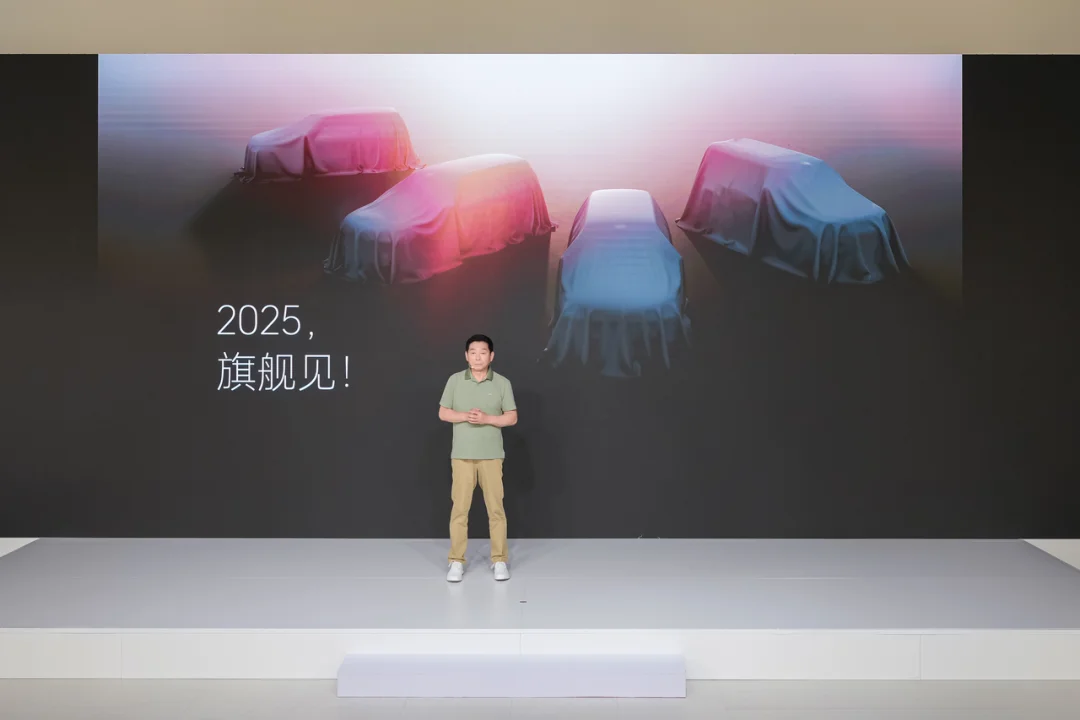
This platform is not merely an isolated technological achievement but rather the collective implementation of WEY’s integrated capabilities in vehicle engineering, electric drive systems, and intelligent driving developed over recent years. It serves as the foundation for WEY’s future push into high-end flagship products—whether for larger vehicles, more complex systems, or user demands for simultaneous improvements in range, intelligent driving, and performance—all must start from here.
From an industry perspective, such platform-level integrated technologies are often shortcomings that early new-energy automakers struggled to fill. For WEY, this represents both a validation of its manufacturing system capabilities and an attempt by the brand to move away from competition based solely on component stacking and return to systematic engineering.
For users, these underlying capability shifts may not be the primary reason for purchasing a vehicle. However, they determine whether a car can operate stably over the long term, whether intelligent features can receive continuous updates, and whether the platform can support future needs. These elements cannot be marketed effectively in the short term, yet they define the brand’s long-term credibility.
04Conclusion
To rebuild trust, WEY is putting users first.
As the new energy vehicle market enters its deep-water phase, past tactics of competing on parameters, price, and equipment stacking have gradually lost their effectiveness. Users are beginning to realize that a car’s true value lies in the sense of stability and reliability it provides during daily use.
WEY’s recent brand renewal represents a deliberate choice to take the difficult but correct path.
This transformation is not easy. Building a direct-sales system means reconstructing management chains and service processes, requiring significant resource investment and substantially increasing management complexity. Changing product logic means listening to users from the R&D source rather than merely optimizing specifications. The new intelligent platform demands that the brand not only build cars but also bear the technical burden of an architecture-level overhaul. These adjustments are not quick fixes; they involve long cycles, high costs, and benefits that are difficult to perceive in the short term.
Yet WEY still chose this slower road. As competition in the new energy sector enters its second half, more brands are realizing that feature stacking and price wars have ceilings. What truly retains users is the sense of stability during use, the certainty of service, and the continuity of feature updates.
This change is not yet complete. But it is certain that WEY is no longer trying to trade attention for hit models one by one; instead, it is striving to build a sustainable mechanism for brand trust.
True trust does not rely on rhetoric; it depends on who is willing to pay the price.
Written by: Dayong Edited by: James