


In Beijing, Li Auto Taught Me a Philosophy Lesson
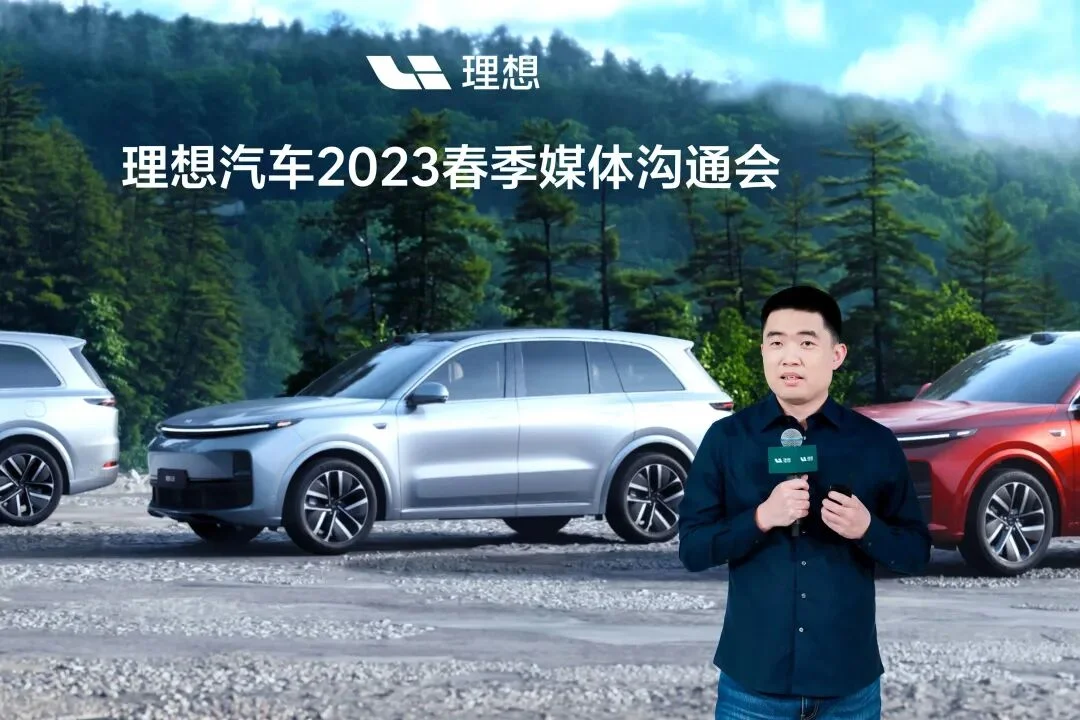
Idealism poses three soul-searching questions: Who am I? Where do I come from? Where am I going?
Although these questions were first raised in a philosophical context, they are widely present in the curiosity generated by human exploration. Their essence is not to plunge us into pessimism and nihilism, but to encourage us to calm down after posing a broad, overarching question, and then continue with deeper, more fundamental 'second-order inquiries'.
Thus, when I sat in Li Auto Inc.'s R&D center in Beijing and saw these three questions appear on the screen, I felt a pleasant surprise.
From Xiang Li choosing car manufacturing as his third entrepreneurial goal in 2015; to financing failures at the end of 2018 and early 2019, leaving the company on the brink of survival; to the production of the 100,000th Li ONE in October 2021, becoming the fastest new force to break the 100,000-unit mark; to the excellent market feedback for the L8 and L9 models; eight years have passed in a flash.
At the time when Li Auto Inc. announced its move toward 'hundreds of billions in revenue,' Xiang Li chose to review his thoughts and reflections along this journey in such a special way, which carries profound significance of connecting the past and the future.
From the initial thinking behind the company's birth to the destination it aims for, Xiang Li gave us a two-hour philosophy lesson about Li Auto Inc.
01'Who Am I': Only 1% of New Forces Understand
"Among more than 300 new automotive entrants, only about 1% of companies are qualified in terms of branding."
At the media briefing, Xiang Li remained as candid as ever.
"Today they say they want family-oriented vehicles, tomorrow they claim three-second acceleration; all their logic is confused. This will affect their subsequent products and every link in their operations."
In Xiang Li's view, "branding" is the company's head, the origin from top to bottom. Externally, it needs to let users understand who you are; internally, it needs to let the team understand who they are. For Li Auto Inc., the core positioning from the start was "the preferred luxury electric vehicle brand for families."
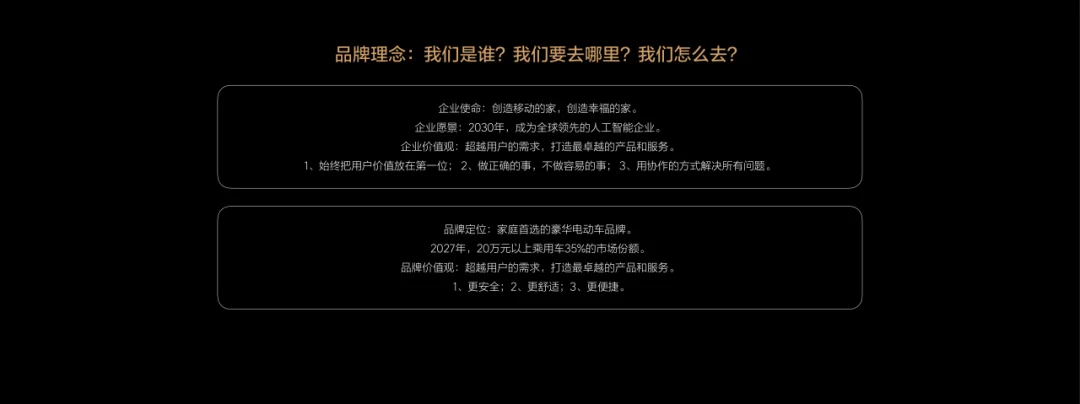
Sounds abstract, right? In fact, at the inception of the Li ONE, it received little less skepticism: "Can an extended-range vehicle be called a new energy vehicle?", "A ridiculous product that hangs green plates but goes to gas stations", "A leek-harvesting machine selling a 1.5T engine for RMB 300,000."
Xiang Li stated that most consumers do not clearly understand their explicit needs. Before actually experiencing the product, if asked whether they want extended-range capability, entertainment screens, or user-friendly driver assistance, consumers do not understand the experience improvements these new features bring, so they naturally do not feel they need them. However, when truly traveling with family, children, and elderly relatives, when actually feeling the pressure relief provided by driver assistance, and when experiencing the benefits of large battery extended-range systems, they find that the product they chose has exceeded their initial expectations.
Therefore, "do the right thing, not the easy thing" is the value system established by Li Auto Inc. Of course, to get things done correctly, the "brand" as the corporate head must be clear; otherwise, it leads to "the harder you work, the more you fail."
Regarding the original rationale behind Li ONE’s choice of extended-range technology, Li Auto Inc. also rarely referenced NIO’s battery-swap system. Xiang Li stated, "Consumers have no obligation to downgrade their experience, travel radius, or travel efficiency after purchasing an electric vehicle."
"Battery swapping is an excellent method; the user experience can be infinitely close to refueling, and the cost of vehicle ownership will be significantly lower than that of internal combustion engine vehicles. However, this approach requires substantial investment. At the time, we did not have sufficient capital. Building swap stations and maintaining larger battery inventories involves fluctuating battery prices. Therefore, we considered whether we could solve the problem directly from the product side rather than relying on service infrastructure."
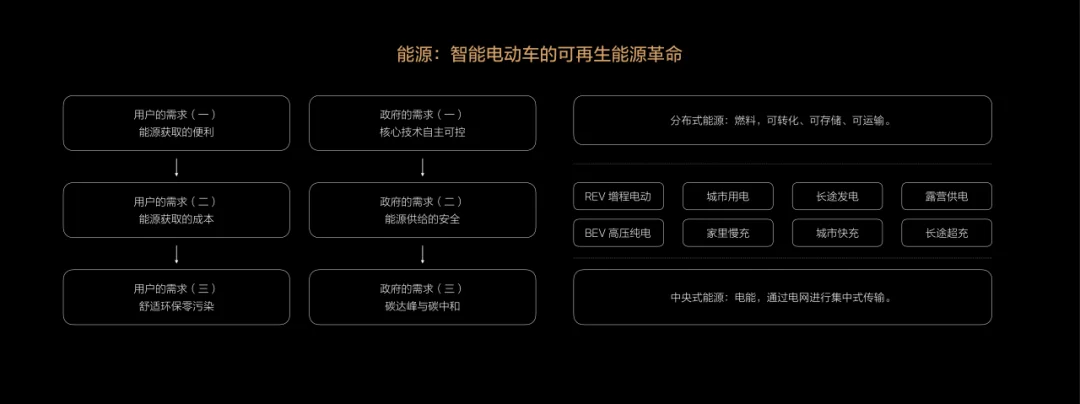
Compared with competitors who merely imitated Li Auto Inc., those with poor sales performance likely failed to answer fundamental questions from the outset: "Who are we? What consumer needs do we aim to meet? Why did we choose extended-range technology?" Returning to the most basic conditions of a matter, deconstructing it into its constituent elements for analysis, and thereby finding the optimal path to achieve goals.
In this regard, Xiang Li’s thinking mode bears a strong resemblance to the well-known "First Principles" thinking.
For a new energy vehicle manufacturer, Xiang Li believes the questions that need to be addressed today remain the same as when the Li ONE project was initiated in 2016: How to solve the difficulties of charging and the high cost of batteries.
Currently, China has 300 million internal combustion engine vehicles in use, corresponding to 2.4 million fueling guns. The number of electric vehicles in use is 10 million, corresponding to 3.6 million charging piles. Compared to a car-to-gun ratio of 125:1, the car-to-pile ratio of 3:1 still results in "charging difficulties." The core issue is not that batteries are not large enough, but that energy replenishment is not fast enough.
Therefore, as 800 V technology matures, Li Auto Inc.’s pure electric vehicle plan has been put on the agenda. Through 800 V technology, adding charge for 10 minutes yields considerable driving range, improving the turnover rate of charging piles. Additionally, Xiang Li hinted that there may soon be two types of battery cells with different charge rates: 4C batteries can provide 400 km of range in 10 minutes, while 2C batteries can provide 400 km of range in 20 minutes. High-voltage fast-charging networks and high-rate batteries must be integrated.
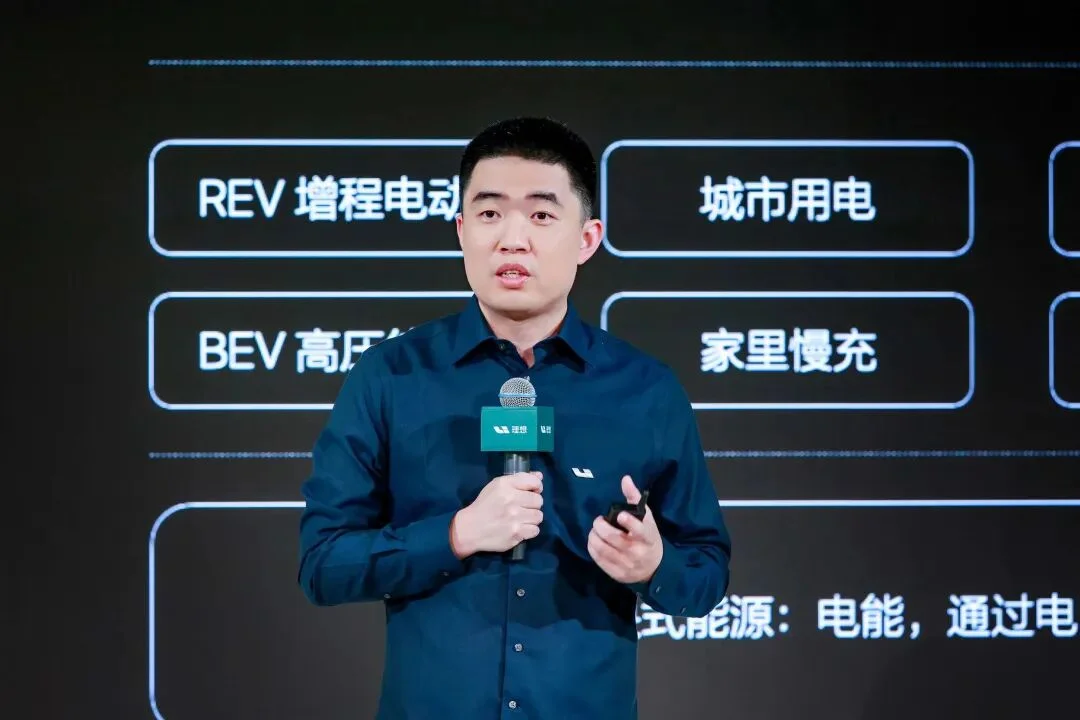
For a manufacturer like Li Auto Inc., which prioritizes cost control, the adoption of 800V technology also brings significant cost reductions: "For example, currently, a best-selling pure-electric mid-to-large SUV can achieve a range of 600 km with a 100 kWh battery pack. With 800V architecture and SiC components, combined with overall energy consumption optimization, an 80 kWh battery can achieve a range of 600 km."
Xiang Li stated that, compared to mainstream 400V architecture electric vehicles today, using an 800V system can reduce a vehicle's component costs by RMB 30,000 to RMB 40,000, assuming the same size and drive configuration.
Looking ahead, Xiang Li stated that the company will continue to pursue both routes simultaneously until 2030. On one hand, it will further improve and optimize range-extender efficiency; on the other, it will devote full R&D efforts to high-voltage pure electric vehicles.
Xiang Li, who had just delivered a solid performance at the earnings conference, also offered a touch of humblebragging:
"In the phase from zero to one, range-extended electric vehicles generated substantial revenue. Over the past few months, Li Auto's revenue ranked third, behind only BYD and Tesla. This level of revenue and scale can support our full commitment to doing pure electric vehicles well in the future."
You can see from Xiang Li's remarks that even on pure electric products with an 800 V high-voltage platform, how to reduce costs while ensuring the experience is the core issue. This also coincides with the theme of Tesla's MASTER PLAN 3.
Domestic new-energy vehicle makers all bear some resemblance to Tesla, with Li Auto Inc. arguably being the one that has learned most effectively.
02"Where Are We Going?" Starts with Asking, "Are We Healthy?"
"By 2030, we are committed to becoming a leading global artificial intelligence enterprise. Whether the top tier consists of three or five companies, we aim to be among them."
This has been Li Auto Inc.'s major goal since 2015, and it remains unchanged. However, answering 'where to go' is a grand proposition. At this time, Li Auto Inc. has the standing and confidence to proclaim this statement, but at that time, Li Auto Inc. was in the stage of going from 0 to 1 and from 1 to 10; walking with your head up looking at the sky will definitely lead to hitting a wall.
To secure external success, internal stability must come first. To answer "where we are going," one must first determine if the pathfinder is healthy enough. Without a sound operational system, a company will either encounter various problems during rapid expansion or perish before dawn breaks.
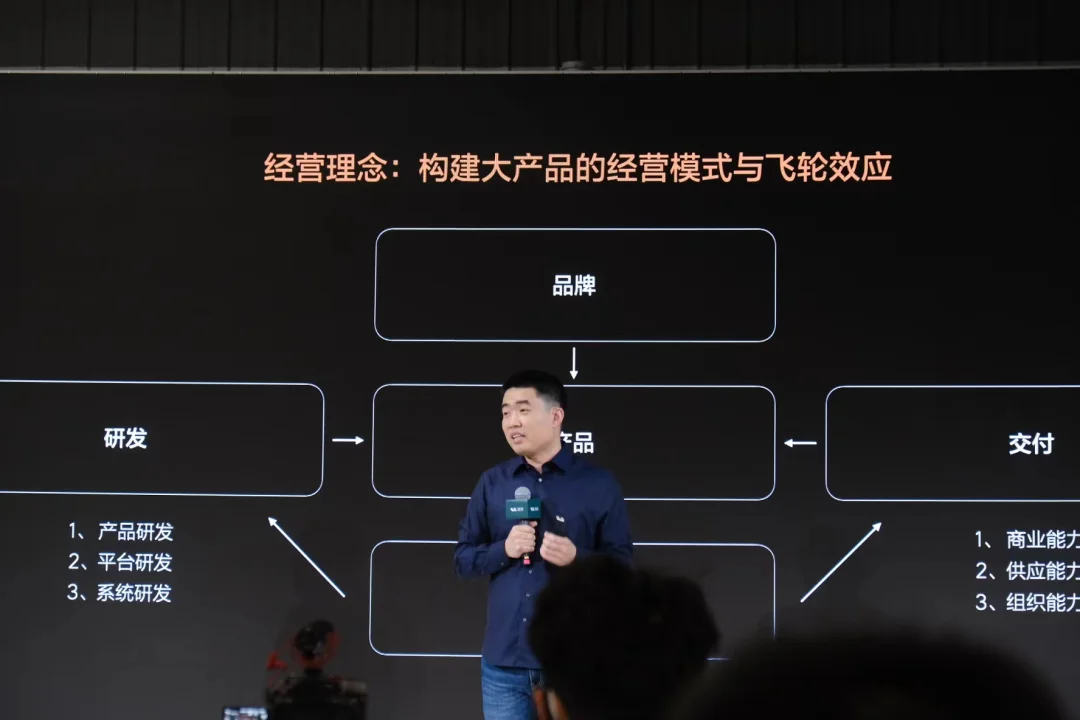
This image condenses Li Auto Inc.'s business philosophy. Brand, R&D, delivery, and gross margin revolve around Li Auto Inc.'s most competitive advantage: "product power."
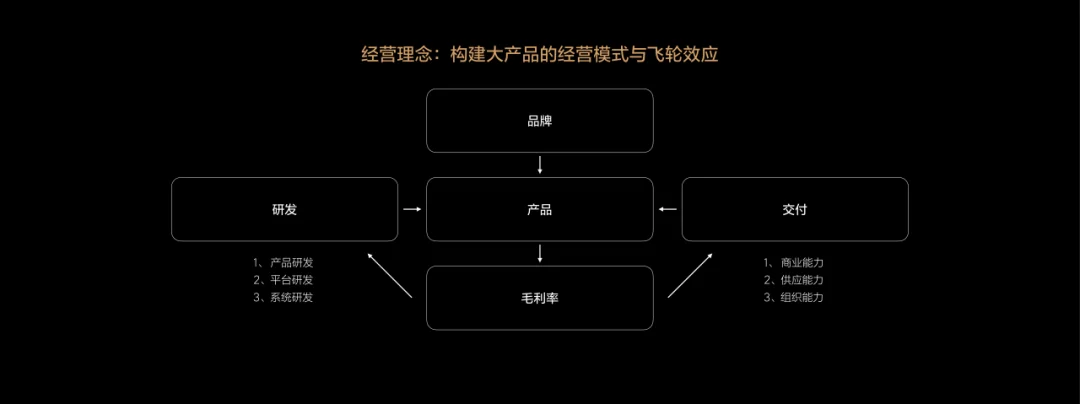
When you think of refined coffee, you think of Starbucks; when you think of Li Auto Inc., you think of a "mobile home." In building its brand, Li Auto Inc. has already left a deep impression on consumers. Regarding products, Xiang Li believes safety, value, and aspiration are the three core elements.
"Safety is the baseline. For example, using high-strength steel versus hot-formed steel in the A-pillar differs in cost by only a few hundred yuan, yet many companies insist on saving that small amount. We use the best aluminum structures for the rear anti-collision beams on the wheel arches, which adds just over 1,000 yuan in cost. Including second-row head airbags and side curtain airbags, the total additional cost is about 2,000 yuan."
In a market long shaped by joint-venture automakers, a vicious cycle of cost-cutting once prevailed: reducing airbag counts in base models and optimizing only one side for offset crash tests. For Li Auto Inc., a company built around families, the starting point remains the consumer: ensuring every seat is safe.
Product value splits into 'software' and 'hardware.' 'The core of the software part is that when we can self-develop central domain controllers and autonomous driving controllers, along with the entire software stack behind them, this isn't an issue,' Xiang Li said.
Xiang Li used his recently updated 'Task Master' feature via OTA as an example: 'Hardware and software interface suppliers won't open these up to you. It depends on your level of self-development—see which functions you can customize. Beyond software, we can even call upon hardware directly.'
Xiang Li also admitted, 'The hardest part is hardware.' He illustrated this with 52 playing cards: 'For every new feature you add, you must remove another; you can't just keep adding.' Li Auto Inc. gave two examples of such trade-offs.
The first example addresses why the L7 doesn't offer linked seat-cushion and backrest adjustment like the Mercedes-Benz S-Class or BMW 7 Series. Xiang Li explained that to ensure structural safety and unified linkage functionality, the folding mechanism for rear seats had to be sacrificed. For a vehicle serving families, the trade-off was clear.
The second example questions whether acceleration times under three seconds are necessary in the electric vehicle era. Achieving 3-second acceleration would sacrifice mid-to-low speed energy efficiency, and larger motor sizes would complicate packaging. During Li Auto Inc.'s product R&D process, five strict stages are followed: requirement analysis, requirement validation, component Statement of Requirements (SOR), component validation, and vehicle validation.
How do you make trade-offs? Have you clarified the requirements? These seemingly simple questions are the beginning and key to pinpointing a good product.
The sense of aspiration for a product is best encapsulated by the phrase "mobile home." In Xiang Li's view, if a product resembles a home, it must offer the largest and most comfortable space; just as every family member can have their own screen for entertainment at home, the vehicle interior should provide similar individual experiences. To deliver a unified intelligent driving experience, NOA must be standard across all trims.
"Do not skimp on core product configurations; you must make excessive investments and provide excessive features. Otherwise, while you may feel your product is good, others will not perceive it."
Understanding this statement explains why Li Auto Inc.'s products are easily memorable, while competitors that also pile on "large seats," "large space," and "large screens" do not receive the same level of attention.
Regarding gross margin, in Q4 2022, Li Auto reported total gross profit of RMB 3.566 billion, with an overall gross margin of 20.2% and a per-vehicle gross margin of 20%. For the full year, total gross profit was RMB 8.79 billion, with an overall gross margin of 19.4% and a per-vehicle gross margin of 19.1%. Although it did not exceed 20%, it was very close.
Although XPENG has not yet released its financial report, let us look at NIO's data: fourth-quarter total gross profit was RMB 622 million; full-year total gross profit was RMB 5.144 billion. It is clear who is in a healthier position.
Both Li Auto Inc. and NIO faced product transition challenges in 2022. However, while switching from the Li ONE to the L series, Li Auto Inc.'s gross margin quickly recovered from 12% in Q3 to 20%, whereas NIO extended its transition timeline into 2023.
Xiang Li stated that a 20% gross margin is a sign of corporate health, providing sufficient capital to drive R&D. Only when Li Auto Inc. is sufficiently healthy can it begin to address the question of "where to go."
For Li Auto Inc., the answer to this question is "Software 2.0".
Software 1.0 refers to humans setting rules for machines, defining boundaries, calibrating parameters, writing code themselves, and finally using the program themselves. Most of today's Internet, terminal devices, and apps operate in this way.
Software 2.0 is when machines learn from humans, program themselves, set their own rules, and use them for themselves. Xiang Li stated: "We are using a robot, but we do not use any specific functions of the robot; the robot is autonomous."
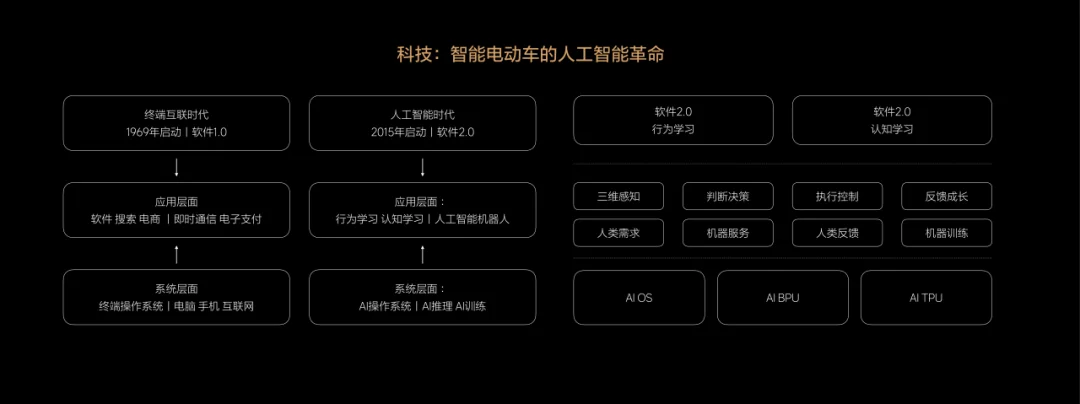
Li Auto Inc. has established four artificial intelligence algorithm teams, each addressing problems in a specific domain: the smart cockpit team, which focuses on multimodal algorithms; the smart driving team; the smart factory team; and the retail-side intelligent team.
The most imaginative work comes from the autonomous driving team. Li Auto Inc., adept at learning from Tesla, decided to follow suit after seeing Tesla’s success with the BEV (Bird's Eye View) technical path. The approach shifted from traditional cameras outputting 2D plane information—routes marked by manual annotation—to a perception mode where cameras stitch together a 360-degree surround-view (bird’s-eye) outputting 3D perception plus temporal information.
At this point, the vehicle's perception is no longer limited to two-dimensional images; it incorporates a three-dimensional perspective and temporal information, much like human vision. This leap in perception fundamentally changes how decisions are made. Through the "shadow mode," AI compares its own judgment results with the responses of human drivers to learn from them. The training results are uploaded to the cloud, where automated labeling, classification, and training take place. Once the large model is derived, it is directly deployed into vehicles for "shadow verification" rather than relying on traditional benchtop simulations. This creates a self-evolving closed loop.
As long as there are enough samples for this "end-to-end" training, the overall driving experience and safety will continue to improve. It works like humans learning from various scenarios. Xiang Li's approach is identical to Tesla's, and he does not shy away from saying:
"I personally believe that by the end of this year, most leading companies will be able to reach the level Tesla achieved at the end of 2011. By 2024, everyone will generally be able to achieve the level Tesla reached in North America at the end of 2022 and early 2023. At this point, starting with mid-to-high-end vehicles, we will completely enter the era of intelligent autonomous vehicles, the era of smart electric vehicles based on software 2.0."
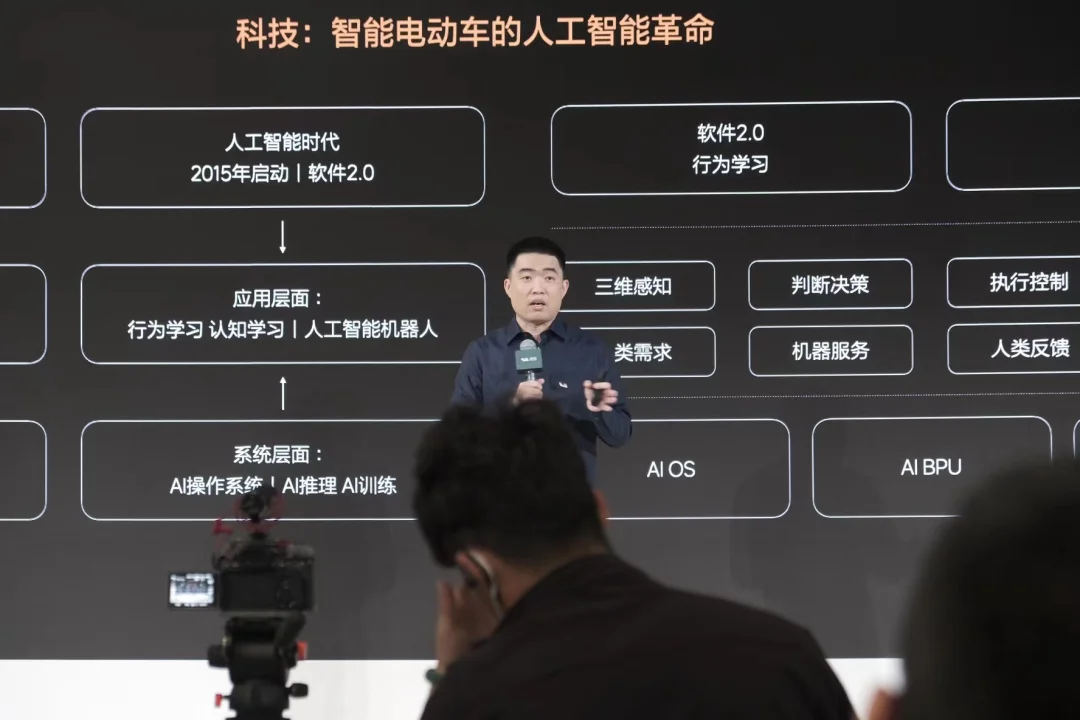
According to Li Auto Inc., domestic leading automakers are two years behind in autonomous driving R&D. For Li Auto Inc., if the answer to "where to go" is "a globally leading artificial intelligence enterprise," then its own plans for AI training chips and supercomputing centers may also be imminent, referencing Tesla.
03"How": Solving All Problems Through Collaboration
"We believe organizations face three types of problems: laziness, inertia, and ignorance."
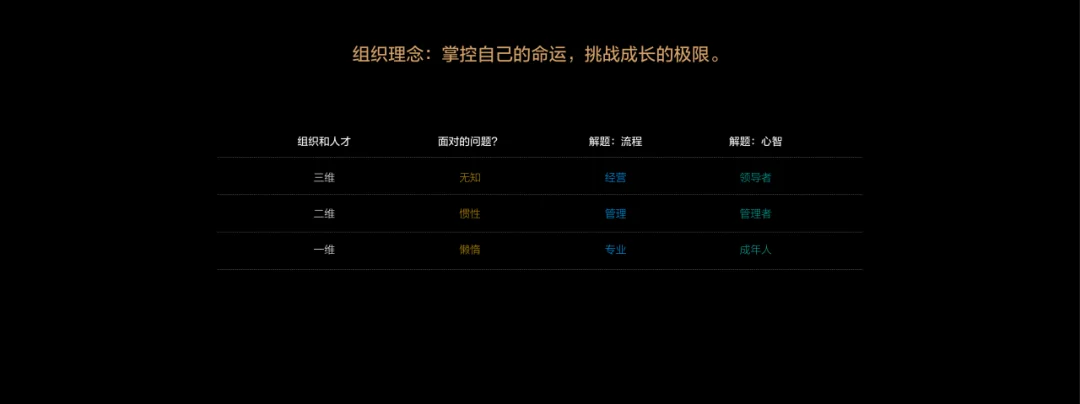
Xiang Li, who came from the internet industry with experience in management software, addressed industrial capability gaps by introducing standard automotive R&D, testing, and manufacturing processes. He resolved communication issues between different talent groups by implementing OKRs. In the era of multi-model platformization, a new architecture was needed to support corporate growth.
This is the scenario Li Auto Inc. fears: automakers’ R&D departments and research institutes operate as independent, non-integrated workflows.
Consequently, Li Auto Inc. introduced a matrix organization. In an internal letter at the end of last year, Li Auto Inc. officially launched a comprehensive upgrade to a full matrix organization designed for hundreds of billions in revenue, replacing the previously maintained vertical functional organizational model.
Under the new organizational structure, Li Auto Inc.'s senior management team is structured as follows:
CEO Xiang Li personally oversees the "Product and Business Group," responsible for strategy, product, brand, the three ends (retail, delivery, maintenance), charging network, and other departments;
Ma Donghui, former chief engineer at Li Auto Inc., has been promoted to president and appointed to the board of directors, taking charge of the "R&D and Supply Group" and overseeing both R&D and the supply chain;
CTO Xie Yan is in charge of the "Systems and Computing Group," responsible for establishing departments such as the computing power platform, operating system, system security, and intelligent cloud;
CFO Li Tie is in charge of the "Organizational Finance Group," which includes departments such as finance, administration, accounting, and processes, while Li Wenzhi serves as head of the CFO office.
Under this structure, seven functional departments are established: Strategy, Product, Commercial, Supply, Process, Organization, and Finance.
Within these seven cross-functional management departments, seven Level 1 processes are established for each, corresponding to the following:
DSTE (Strategy to Execution)
IPD (Integrated Product Development)
IPMS (Integrated Product Marketing & Sales)
ISC (Integrated Supply Chain)
BT&IT, LTD, and IFS (Integrated Finance Transformation)
Simply put, a matrix organization combines functional departments with small groups organized by product or project. A manager maintains organizational and business ties with their original functional department while also participating in the work of the project group.
The structure of a matrix organization is fixed, but the personnel are fluid. Project groups and their leaders may be temporary appointments; they dissolve upon task completion, while the task line remains constant.
'Organizational upgrading is the most critical exam for enterprises entering larger scales and more difficult stages. More than 90% of failed companies do not fail because of business issues; business problems are merely symptoms, while the root cause is the inability of organizational capabilities to adapt to scale expansion and industry changes.'
This statement is the best annotation for how Li Auto Inc. answers 'how to proceed.'
04Final Thoughts
Xiang Li stated at the communication meeting that the two most frightening things in life are: first, not knowing what you don’t know; and second, failing to seek truth from facts.
In a past interview, Xiang Li said that building cars truly changed him by forcing him to think on a philosophical level when problems emerged one after another, causing immense pain. This helped him cope with complexity and step back to view issues objectively.
Xiang Li explained that his third entrepreneurial journey involves five stages. In the first stage, he constantly felt different from others, believing they never looked outward but instead hid in a well. In the second stage, even when looking outward, he still couldn’t understand. In the third stage, he didn’t understand, so to solve problems, he hired senior consultants or firms to help him see clearly. By this stage, he gradually began to understand. In the fourth stage, after understanding, he acted immediately, only to find it impossible because they hadn’t planned the road yet but started building it anyway.
By the fifth stage, he clearly knew which consulting firms and teams had been used for road planning and construction in the company’s past. He brought them in, allowing the team to slowly learn how to plan and build roads themselves. At this point, as the team drove and transported goods above, value and efficiency increased significantly.
Letting go of the heavy “ego” and embracing collaboration to reach a scale of hundreds of billions may be the deeper meaning behind this communication meeting.
This is also an annotation from Buddhism on how to “break self-attachment.”
Written by: Mingming Edited by: Mingming