


What Gaps Remain in the Pure-Electric MPV Market?
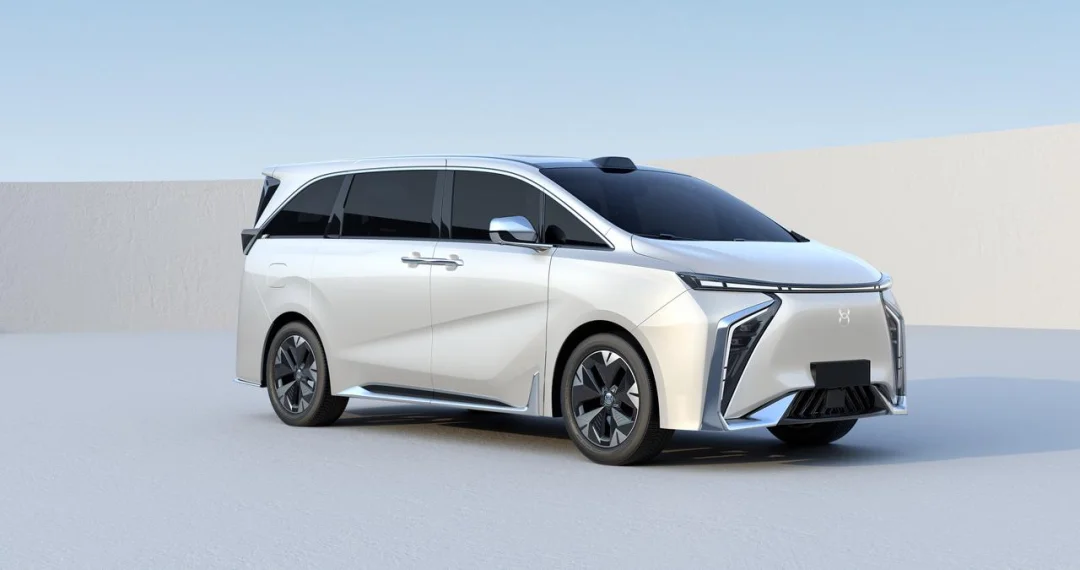
Looking back at the 2022 new energy vehicle market, it is clear that the MPV segment has experienced unprecedented growth.
From a social perspective, the number of families with three children is continuously increasing. For these consumers, the cramped third-row space in traditional 6-seat and 7-seat SUVs can no longer meet the needs for comfortable travel for the whole family.
In terms of product form, electric MPVs offer significant advantages in cost efficiency, interior packaging, NVH control, and driving refinement compared to conventional fuel-powered MPVs.
However, a closer look reveals two critical issues that urgently need resolution.
The first issue is energy replenishment. MPVs are frequently used for long-distance travel, meaning that charging speed and range directly impact the user experience.
The second issue is driver assistance. The current lineup of new energy MPVs features basic ADAS hardware, limited functionality, and subpar user experiences, failing to adequately reduce driver workload on the elevated roads and highways where MPVs are most commonly driven.
Therefore, there remains a gap in the current pure-electric MPV offerings regarding both charging capabilities and advanced driver assistance systems.
The Hechuang V09, which made its debut at the Guangzhou Auto Show last year, leverages the advantages of a latecomer: an 800 V high-voltage platform, 4C ultra-fast charging, LiDAR, and dual Qualcomm Snapdragon 8155 chips.
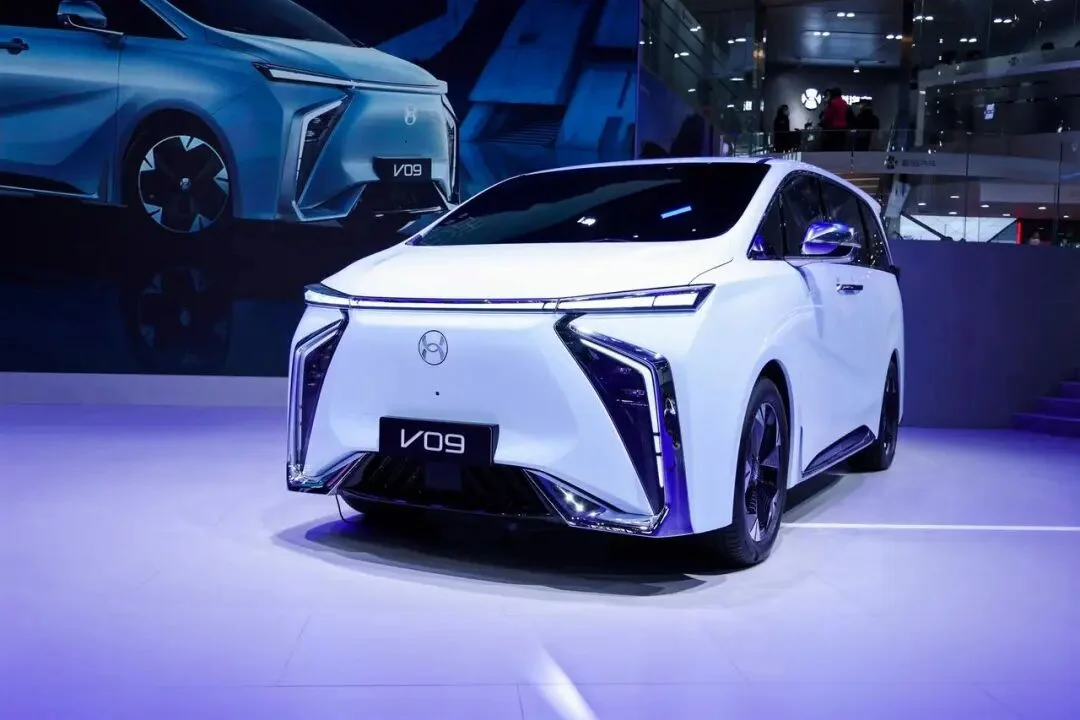
We start by discussing the 800 V platform and LiDAR to examine what this new energy MPV got right in its product definition.
01Only with an 800 V Architecture Can You Achieve 'True Fast Charging'
Currently, China has 300 million internal combustion engine vehicles supported by 2.4 million fuel nozzles, while there are 10 million electric vehicles backed by 3.6 million charging piles. Compared to the 125:1 vehicle-to-nozzle ratio, the 3:1 vehicle-to-pile ratio results in significantly lower land utilization efficiency.
Take Guangzhou as an example: the city has 700 gas stations and 3,000 charging stations, yet its new energy vehicle fleet is only one-tenth the size of its ICE vehicle fleet. Consequently, the efficiency of its EV charging infrastructure reaches merely one-fortieth that of the fueling system.
Therefore, we must avoid the misconception that charging resource shortages stem from a lack of piles. The core issue is insufficient charging speed on the vehicle side; more than 90% of new energy vehicles on the market still use 400 V platforms, whereas most fast-charging stations currently support 800 V high voltage.
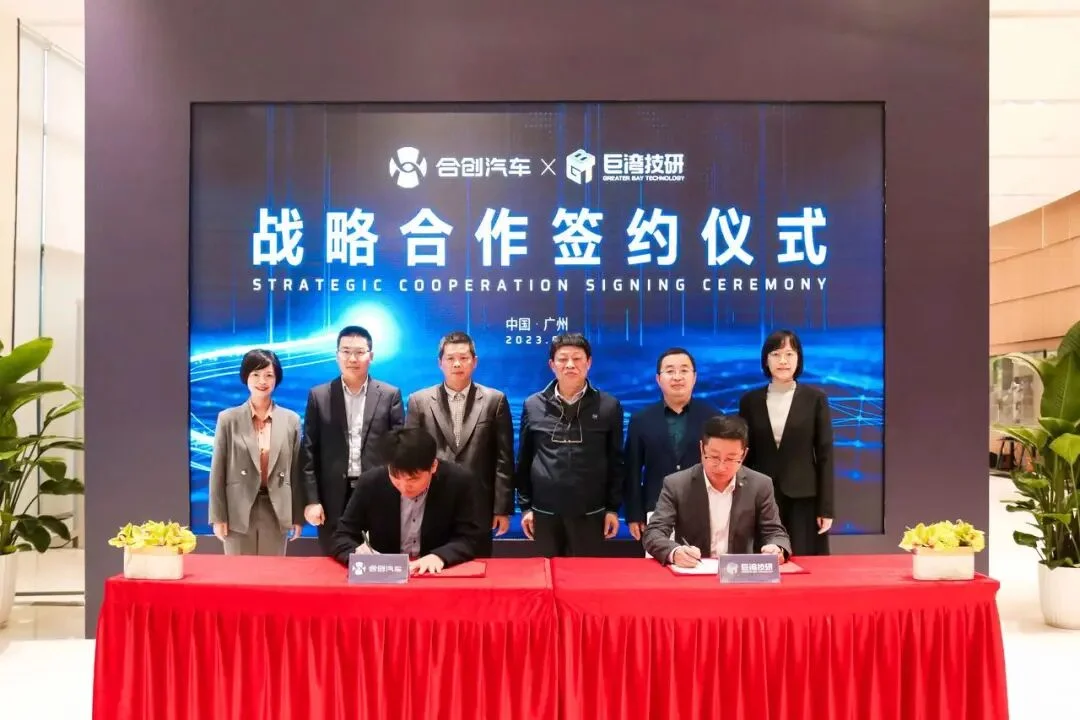
According to official information from Hechuangqiche, Hechuang partnered with Juwanjiyan to custom-develop and produce the 'XFC Extreme Fast Battery' for the V09.
The full form of XFC is eXtreme-Fast-Charging, which has become the focal point of competition among global new energy vehicle enterprises. The 'XFC Extreme-Speed Battery Pack' equipped on the V09 supports a maximum charging current of 590.4 A and a voltage of 623.28 V, achieving a 4C charge rate. Provided the charging station meets the necessary conditions, it can replenish power from 0% to 80% in 12 minutes and from 30% to 80% in just 7.5 minutes.
This battery pack also utilizes cell materials with an energy density exceeding 200 Wh/kg. Hechuangqiche states that by applying novel conductive agents and an efficient thermal management system, the battery can support over one million kilometers of total usage while enduring daily 4C ultra-fast charging at normal temperatures, enabling the V09 to achieve extreme-speed charging throughout its entire lifecycle.
Furthermore, regarding safety, this battery has passed a 24-hour no-flame test under extreme thermal runaway conditions.
In addition to being equipped with the XFC battery pack custom-developed and produced by Juwanjiyan, the Hechuang V09 will also be the world's first mass-produced MPV to feature an 800 V high-voltage system. The higher-tier version, which includes the XFC battery pack custom-developed and produced by Juwanjiyan, supports 4C ultra-fast charging.
If you are not particularly sensitive to the charging experience improvements brought by an 800 V platform, we can use the XPENG G9, which is also built on an 800 V platform, as a reference.
On the most common third-party charging piles with a power output of 120 kW, the 800 V platform allows the XPENG G9 to maintain the full 120 kW power draw throughout the charging process until the battery reaches 75%. It is estimated that the Hechuang V09, standard-equipped with an 800 V high-voltage system, will be able to utilize the maximum charging power available from most chargers on the market, whereas traditional 400 V platform electric vehicles can only achieve around 90 kW.
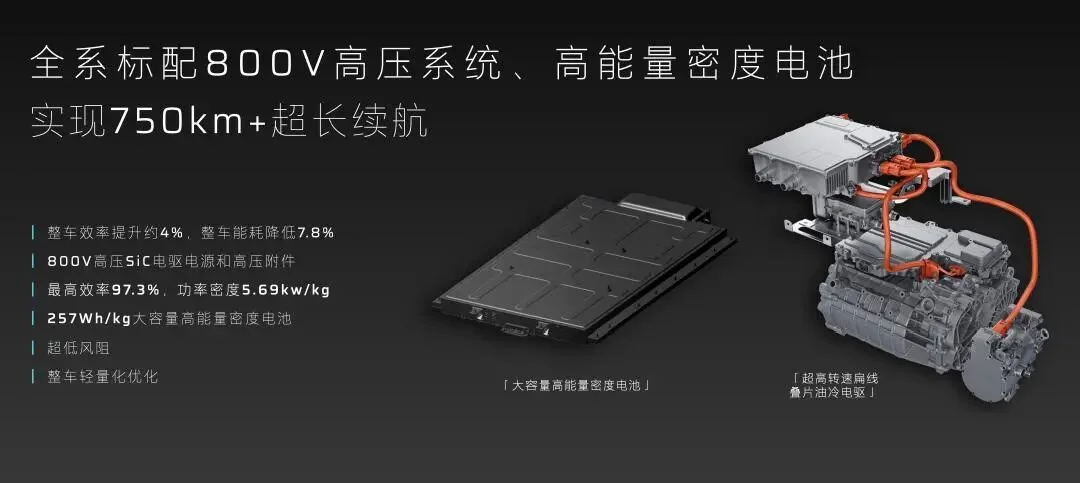
Even without specialized ultra-fast charging piles, an 800-volt architecture can deliver a qualitative leap in energy replenishment experience. The vehicle’s high-voltage system reduces thermal losses, and the Hechuang V09’s use of silicon carbide (SiC) components further lowers overall energy consumption: the V09 achieves an official range of over 750 km, which is excellent for a pure-electric MPV.
Additionally, the Hechuang V09’s Hi-EMS intelligent energy management system contributes to improved efficiency. Its “AI-Pedal” feature anticipates traffic conditions ahead and predicts future deceleration needs, adjusting regenerative braking intensity to reduce unnecessary braking and acceleration operations by 82%. The “Energy Manager” uses data analysis to estimate route energy consumption, planning optimal energy-saving routes and driving strategies.
Beyond the 800-volt platform and 4C super-fast charging solution, Hechuangqiche is gradually expanding its layout in the ultra-fast charging ecosystem. Juwanjiyan and Hechuangqiche plan to use the geographic center of the Greater Bay Area as a strategic starting point, focusing on Beijing, Shanghai, Guangzhou, and Shenzhen to build a “dumbbell” corridor that connects ecosystems and promotes the construction of XFC ultra-fast charging stations, jointly creating an “XFC Ultra-Fast Charging” ecosystem.
Meanwhile, Hechuangqiche’s first ultra-fast charging station—the Mayong Super-Charging Station on the Guangzhou-Shenzhen Coastal Expressway—officially opened on February 17. This station, the first highway service area ultra-fast charging station co-developed by Hechuangqiche, Shenzhenshichedianwangluoyouxiangongsi, and Zhonghaiyouhuananxiaoshougongsi, employs full liquid-cooling technology. Each charging gun supports a maximum current of 600 A, with a pile-end power pool capable of on-demand output up to 480 kW. It delivers constant-power output across DC 300–1000 V, covering Hechuangqiche’s existing and future models.
Hechuangqiche and Chedianwang have signed a strategic agreement to launch interoperability services in the future, including vehicle-platform integration and charging-platform connectivity. These initiatives will provide users with precise station location, reservation charging, plug-and-charge, and charging discounts.
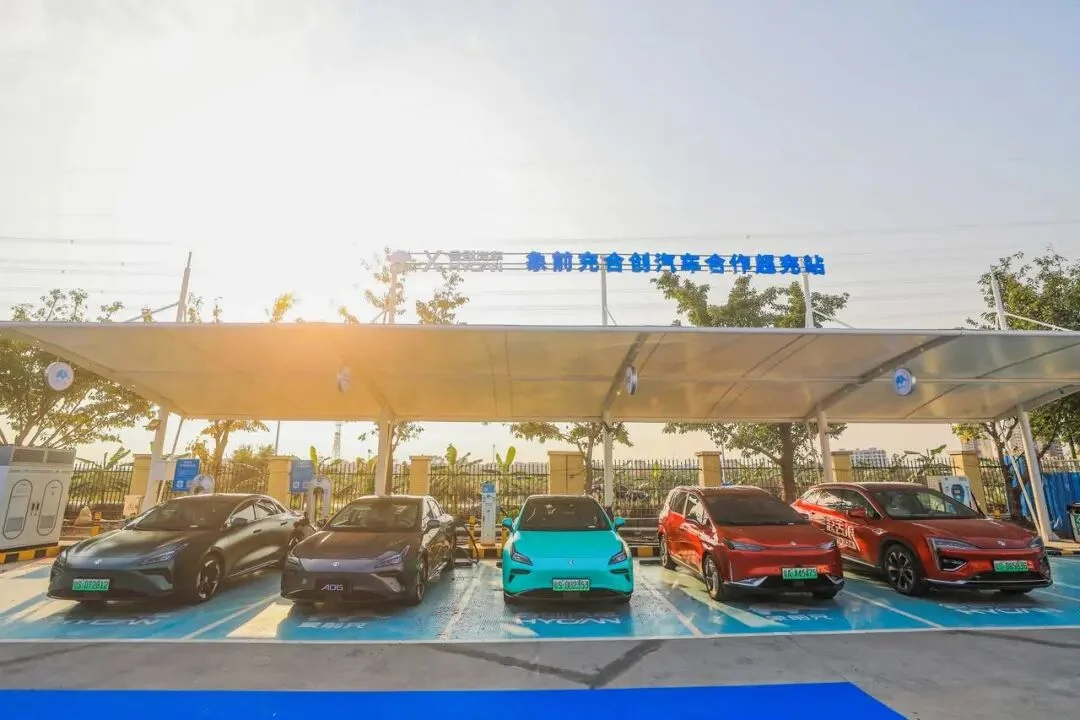
Looking ahead, Hechuangqiche plans to add 300 charging stations in tier-one and tier-two cities by the end of 2023, with a goal of deploying more than 2,000 stations within the next three years, covering both community charging and public ultra-fast charging.
In comparison, XPENG had built 816 self-operated ultra-fast charging stations as of February 8, 2023, and expects to add 500 S4 ultra-fast charging stations this year. In terms of growth rate, Hechuangqiche’s network expansion is catching up as a latecomer. Through diversified partnerships and rapid construction of its ultra-fast charging network, Hechuangqiche aims to provide users with a more efficient and higher-quality energy replenishment experience.
02First MPV with LiDAR
No mass-produced MPV equipped with a LiDAR has yet appeared: the Zeekr 009 uses Mobileye’s EyeQ5H, relying on a vision and millimeter-wave radar solution; the DENZA D9 similarly adopts a vision-centric approach.
The Hechuang V09 employs 24 sensors for its driver assistance hardware, including:
One 130-line LiDAR from Tanwei;
One 8-megapixel camera;
One 2-megapixel rearview camera;
Four 3-megapixel ultra-clear fisheye surround-view cameras;
Five millimeter-wave radars;
12 ultrasonic sensors.
Key performance specifications of this LiDAR include:
Maximum detection range: 300 meters; at 10% reflectivity: 180 meters;
Field of view: 120° (H) × 25° (V);
ROI region (intelligent focus field of view) angular resolution: 0.15° × 0.17°.
Horizontal comparison with the Hesai LiDAR on the Li L9:
Maximum detection range at 10% reflectivity: 200 meters;
Field of view: 120° (H) × 25.4° (V);
Angular resolution of the ROI (Intelligent Focus Area): 0.1° × 0.2°.
It is evident that the LiDAR unit on the Hechuang V09 delivers performance at a mainstream level. While we do not endorse a "hardware-only" approach, its inclusion certainly expands the potential for the V09's driver assistance capabilities.
First, vision-and-millimeter-wave radar systems are susceptible to weather conditions affecting perception; adding LiDAR ensures greater safety redundancy.
Second, LiDAR enables the system to identify irregular objects. Vision systems can recognize standard objects but struggle with untrained scenarios such as "construction signs" or "overturned trucks."
LiDAR operates differently. This distance-based sensing method analyzes 3D object information through point cloud data, allowing the system to determine whether such obstacles impede vehicle passage.
In nighttime scenarios, changing light from overhead gantries on highways or high beams from oncoming vehicles can blind cameras, rendering them ineffective. LiDAR remains unaffected by these lighting variations.
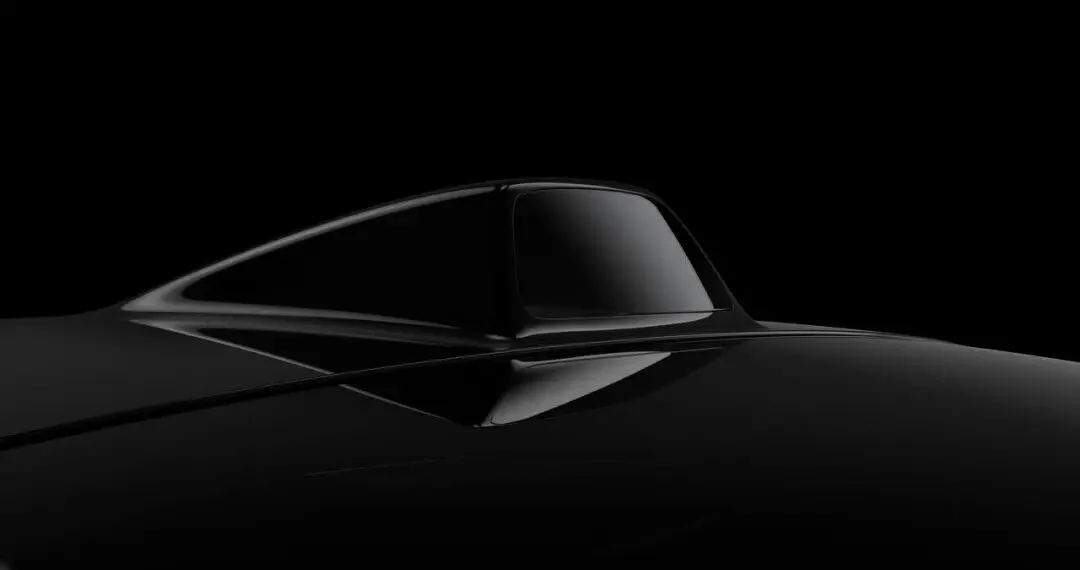
The LiDAR mounted on the roof of the Hechuang V09 offers a higher and wider detection field, capturing more information in real time. In extreme cases where lane lines are lost, the LiDAR can still identify curbs, providing the system with Freespace data to maintain normal driving.
Under a pure vision approach, we have previously seen tragic accidents in the news where overturned trucks were misidentified as sky, leading to collisions. If the perception system had LiDAR data for dual verification, could such tragedies be avoided?
For MPVs, high-frequency usage scenarios are semi-enclosed roads like elevated highways and expressways. Having a sufficiently user-friendly and safe driver assistance system can significantly reduce the driver's burden and enhance driving safety.
Therefore, Hechuang V09, currently the first MPV to debut with LiDAR, has stated that it will eventually support highway point-to-point NOA (Navigate on Autopilot). We are eager to see its actual driver assistance performance.
03Goodbye, Aierfa-style Front Fascia
In terms of exterior design, Hechuang V09 deserves praise for not blindly following the exaggerated front fascia style of the 'Aierfa,' while still creating a strong visual impact.
A square front end is key to giving an MPV a commanding presence; we have seen similar approaches on the Zeekr 009. However, the Hechuang V09 opts for large areas of negative space on this facade, using material textures and contours to create an interplay of light and shadow. The full-width light strip, which is wider at the ends and narrower in the middle, further enhances the sense of visual width.
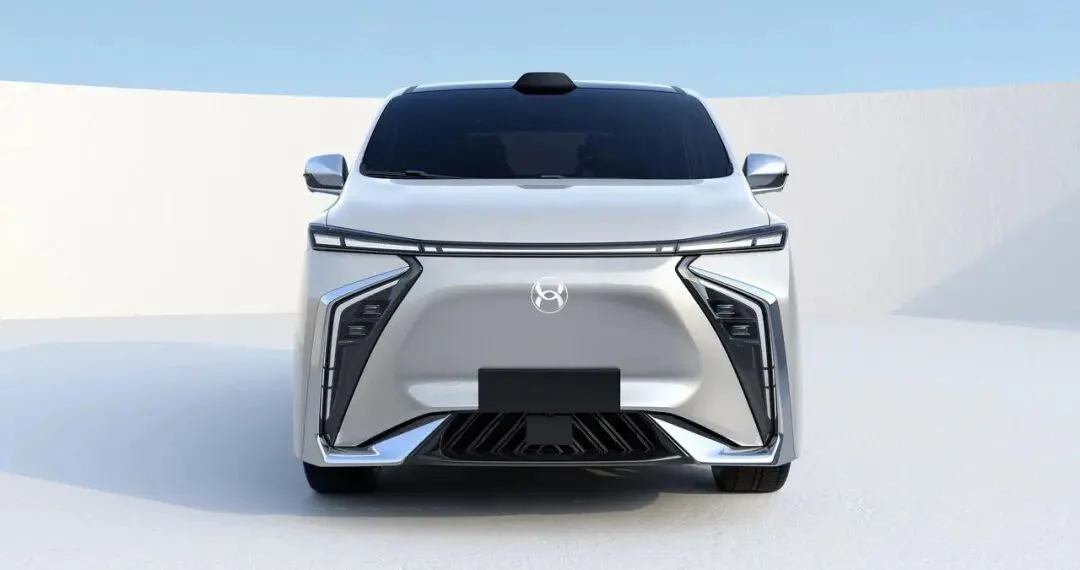
The tusk-like light strips on both sides and the headlight groups integrated into black areas serve as finishing touches. This front-end design approach makes the vehicle look sporty and youthful while maintaining visual impact, demonstrating high originality.
The roofline slopes downward from front to rear. Aerodynamic optimization allows airflow to adhere to the body surface, preventing premature entrainment into the wake vortex.
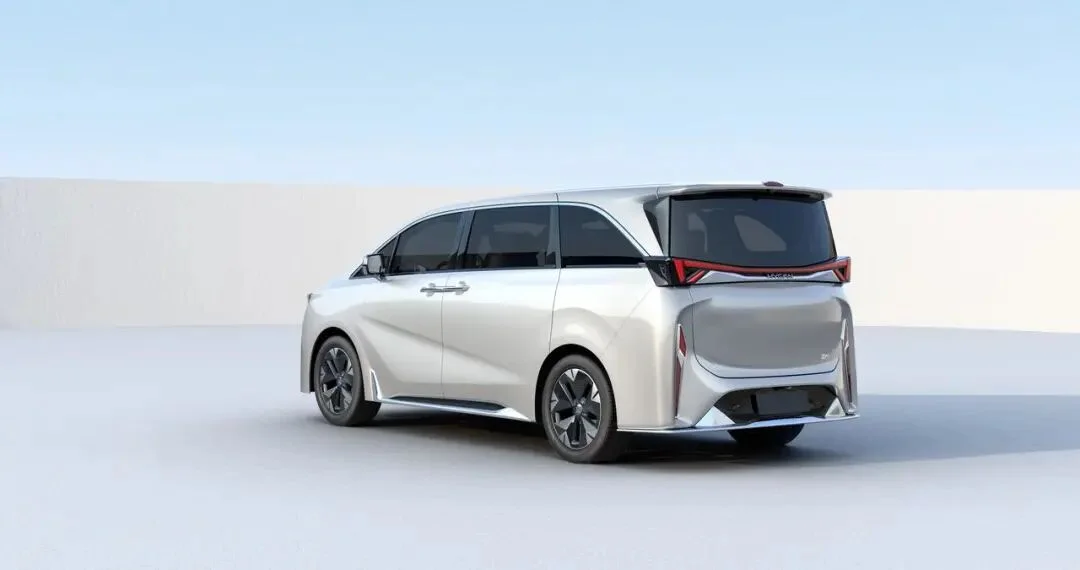
The Hechuang V09 presents a visually sleek and unbulky appearance while delivering class-leading interior space: vertical cabin height reaches 1,288 mm with a utilization rate of 68%; front-to-rear cabin length is 2,834 mm, achieving a 55% utilization rate. The third-row seats can be fully folded flat, creating a pure-flat cargo area extending 1.85 meters within the cabin.
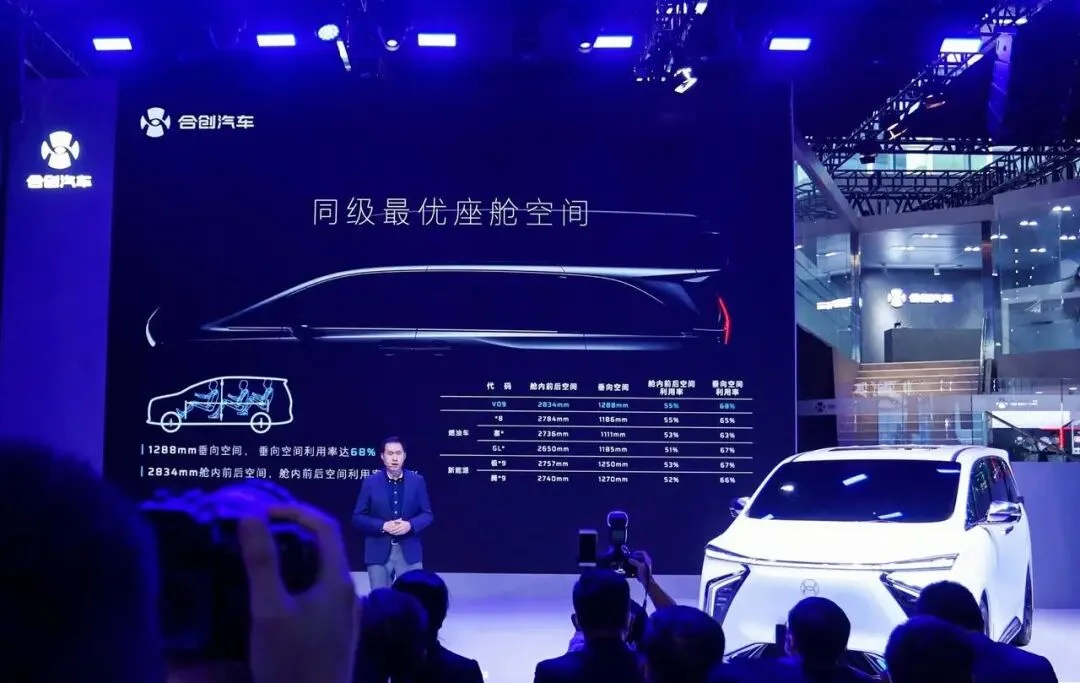
In terms of cockpit intelligence, the Hechuang V09 employs dual Qualcomm Snapdragon 8155 chips, a mainstream configuration. Chuang official claims the V09 supports "multi-screen linkage" and "cross-device interaction," suggesting large screens are equipped in both front and rear sections.
Unfortunately, the interior details of the Hechuang V09 remain confidential. However, data indicates that as an MPV, its interior layout is sufficiently excellent, providing a fundamental guarantee for ride comfort.
04Conclusion
From a market perspective, the mid-to-high-end MPV segment has long been dominated by players such as the GL8, Saina, and Aodesai. In the more premium tier, models like the Aierfa have enjoyed near-monopoly status.
These competitors, relying on brand equity built over many years, have remained complacent, failing to deliver sufficiently fresh or intelligent features and configurations in terms of product capability.
With domestic brands beginning to exert their strength, the mid-to-high-end new energy MPV segment is entering a springtime of growth.
The Hechuang V09, expected to launch in the second half of this year, possesses certain late-mover advantages. Its 800-volt high-voltage system, 4C ultra-fast charging, and LiDAR make it appear more attractive.
Whether through its atmospheric and tech-forward exterior design or through "trend modification co-creation" with brands and designers from different circles such as Hechuang V09 and Leishe, we can see that this MPV appears more "refreshing" compared to its "greasy" rivals.
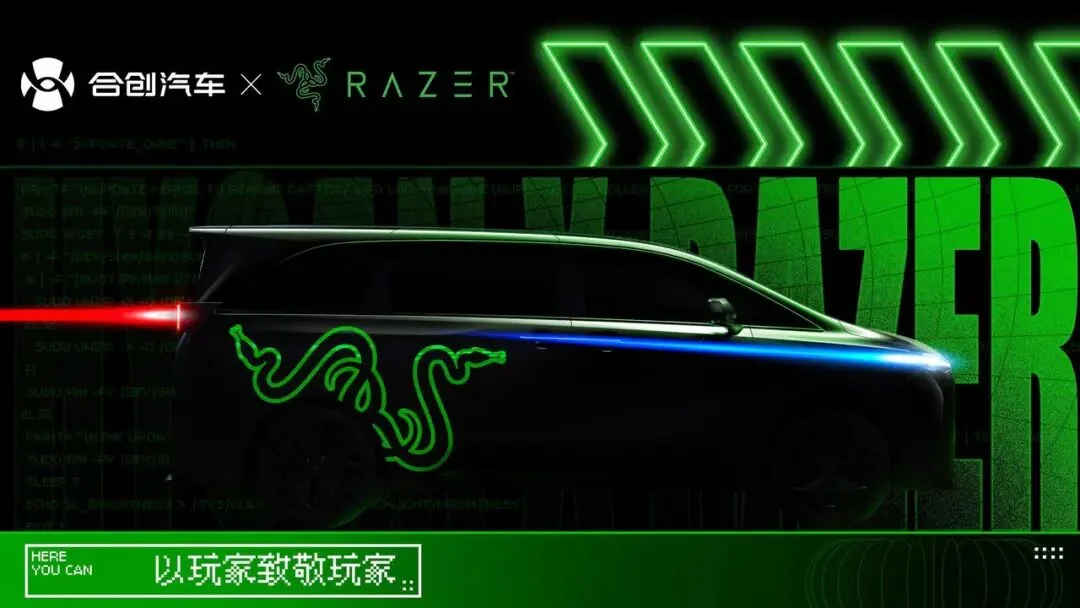
To answer the question posed by the title: The Hechuang V09 addresses part of the gap in user necessities for pure electric MPVs by incorporating considerations for charging speed and long-distance assisted driving experience, achieved through its 800-volt platform and enhanced assisted driving hardware.
It is anticipated that these two aspects will formally become the new battlegrounds for competition among pure electric MPVs. With its late-mover advantage turning into an early lead, the Hechuang V09 may well secure a place in this new niche segment of new energy MPVs.
Written by: Mingming Edited by: Bobo