


August Auto Sales: Who Leads? Yingchekeji Releases Tech Roadmap and White Paper; Will Tesla Deliver Over 100,000 Units in September? | E-Week Highlights
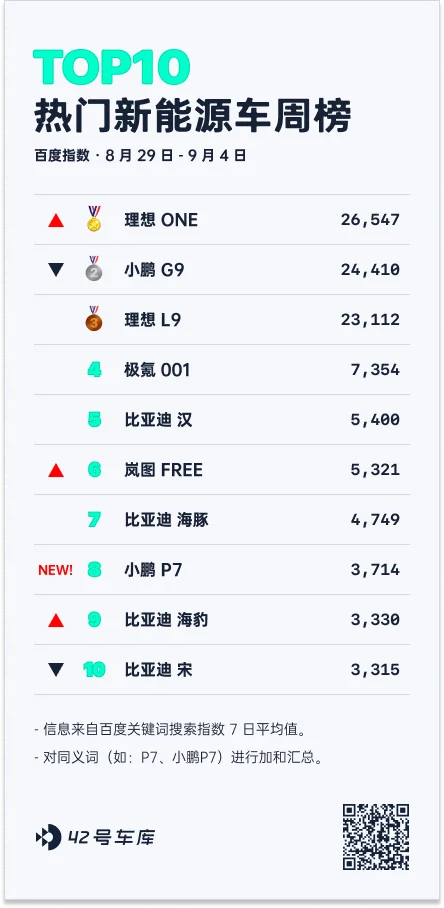
01Weekly Index
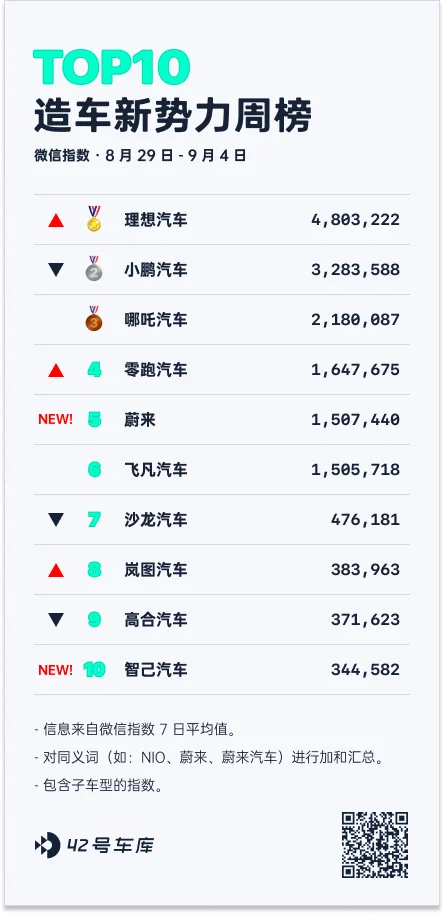
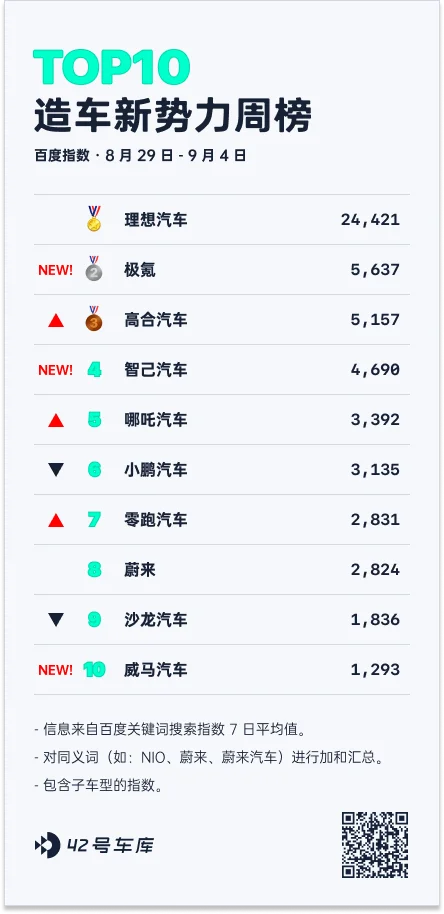
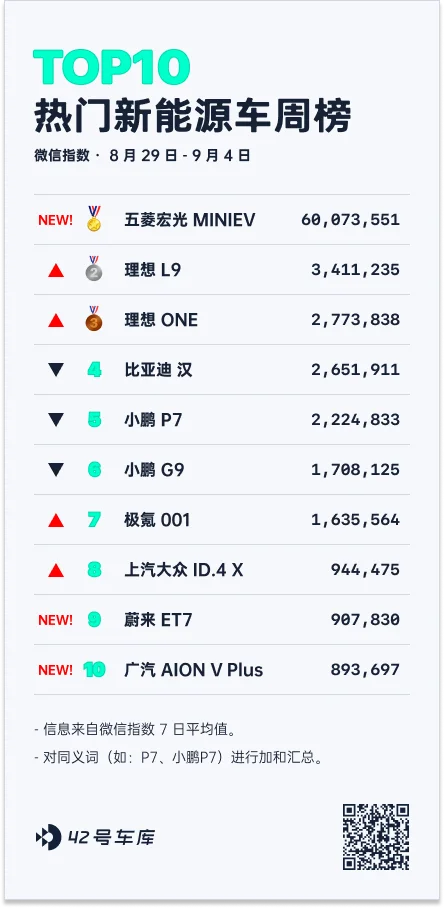
02Weekly News
August Sales Summary
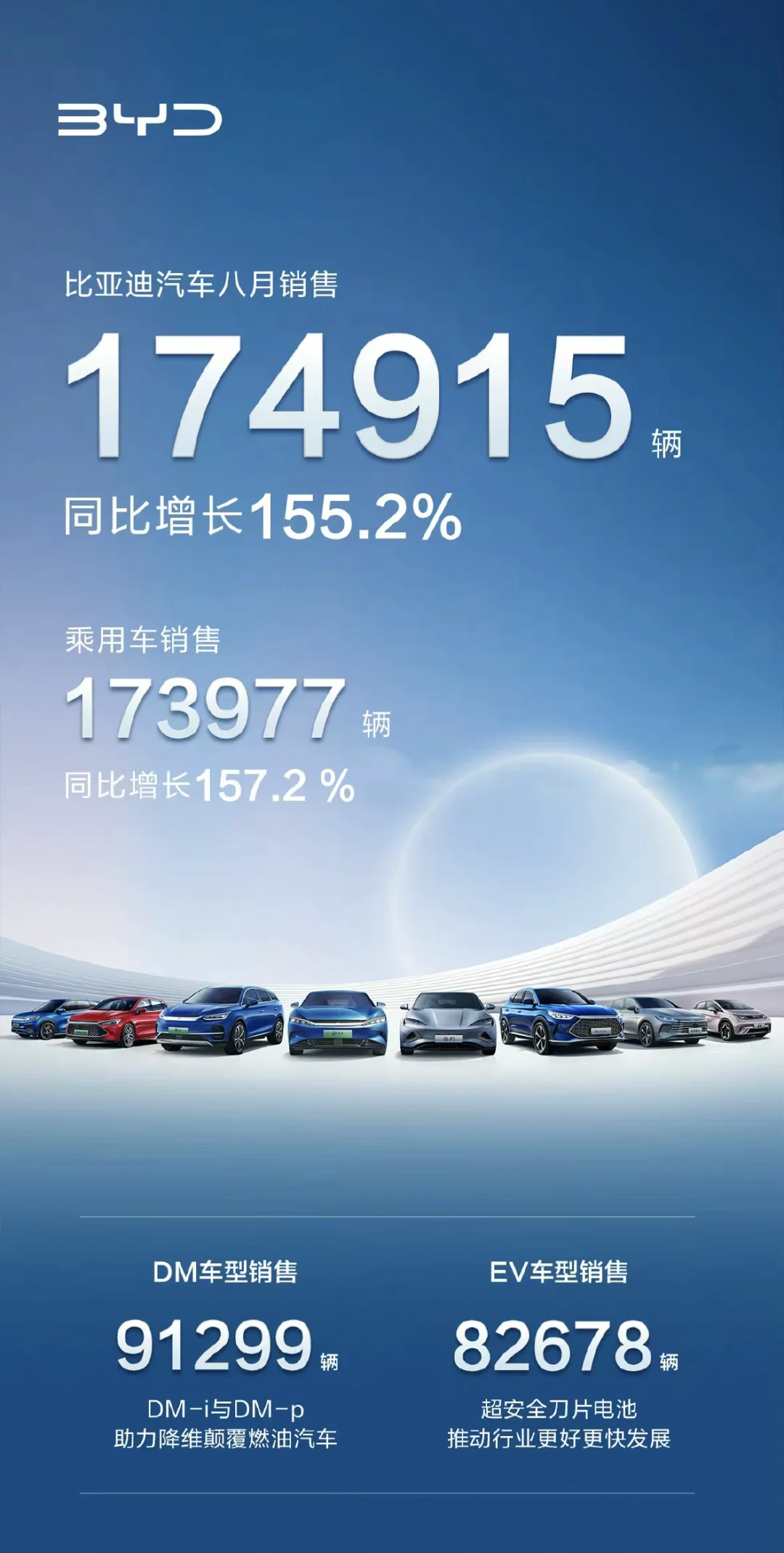
On the evening of September 2, BYD released its August sales figures and a production-and-sales update. In August, BYD’s new energy passenger vehicle output reached 174,480 units, a year-over-year increase of 270.85% compared to 61,687 units in the same period last year.
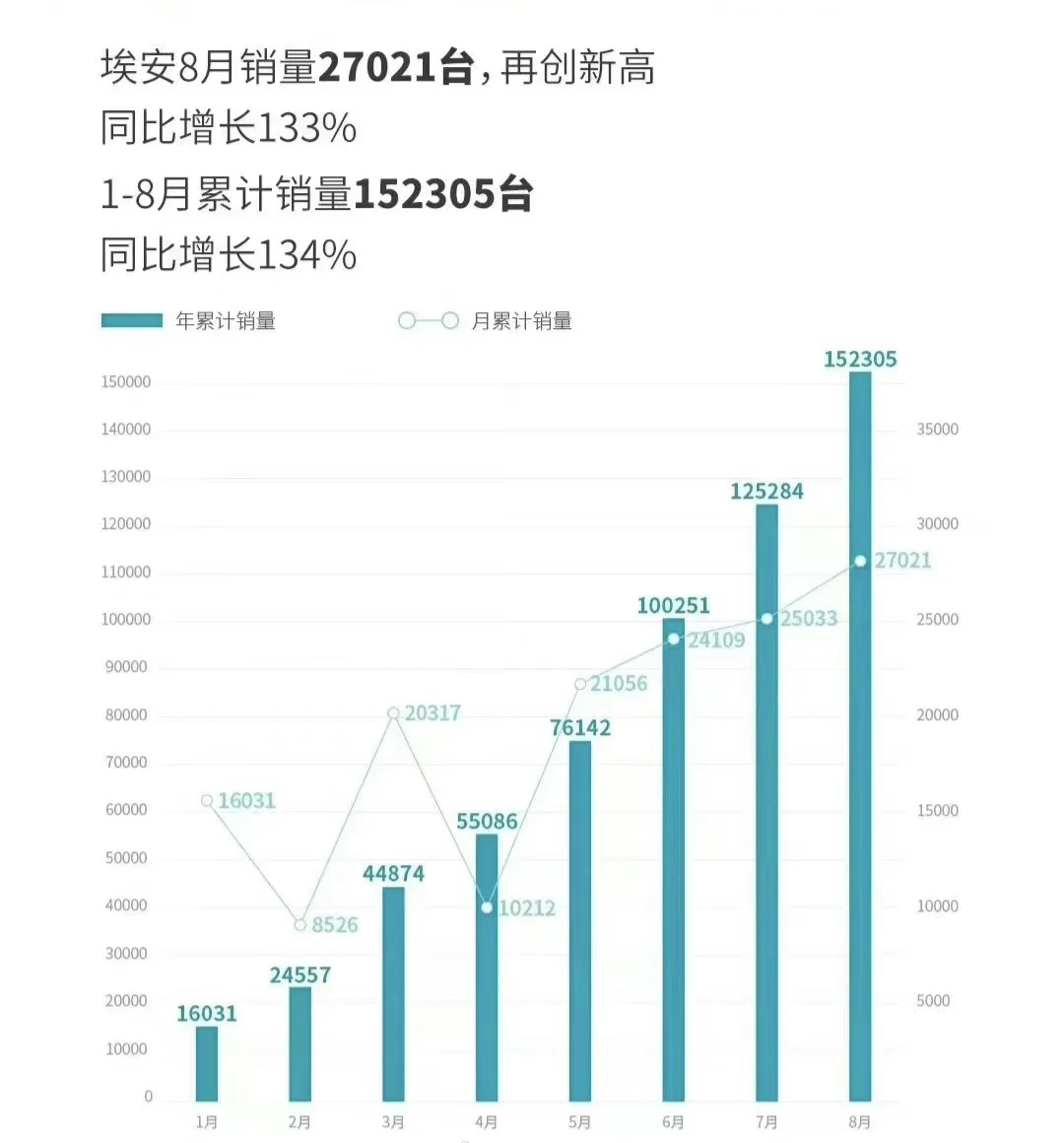
GAC AION sold 27,021 units in August, with the Aion Y contributing significantly to this result by achieving monthly sales exceeding 10,000 units per model.
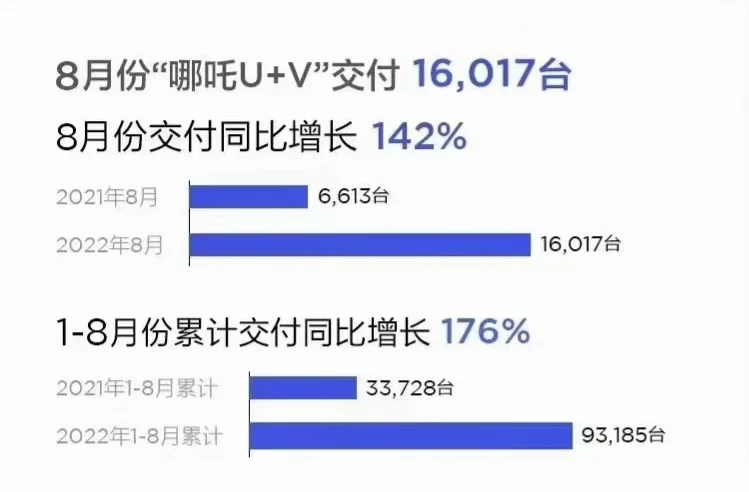
Nezha delivered 16,017 units in August, while orders for the recently launched Nezha S surpassed 10,000.
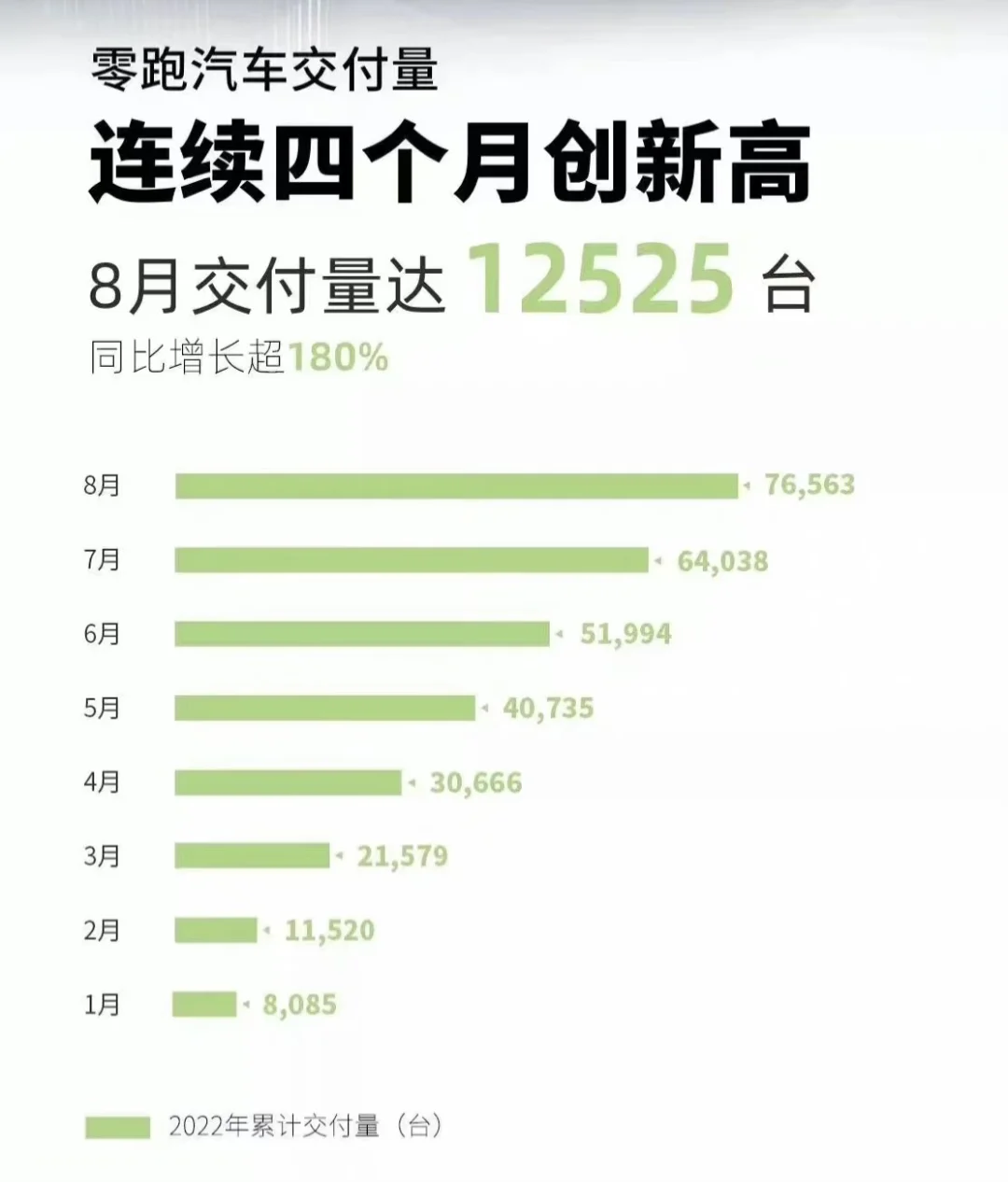
Leapmotor delivered 12,525 units in August, bringing its cumulative deliveries for the year to 76,563 units.
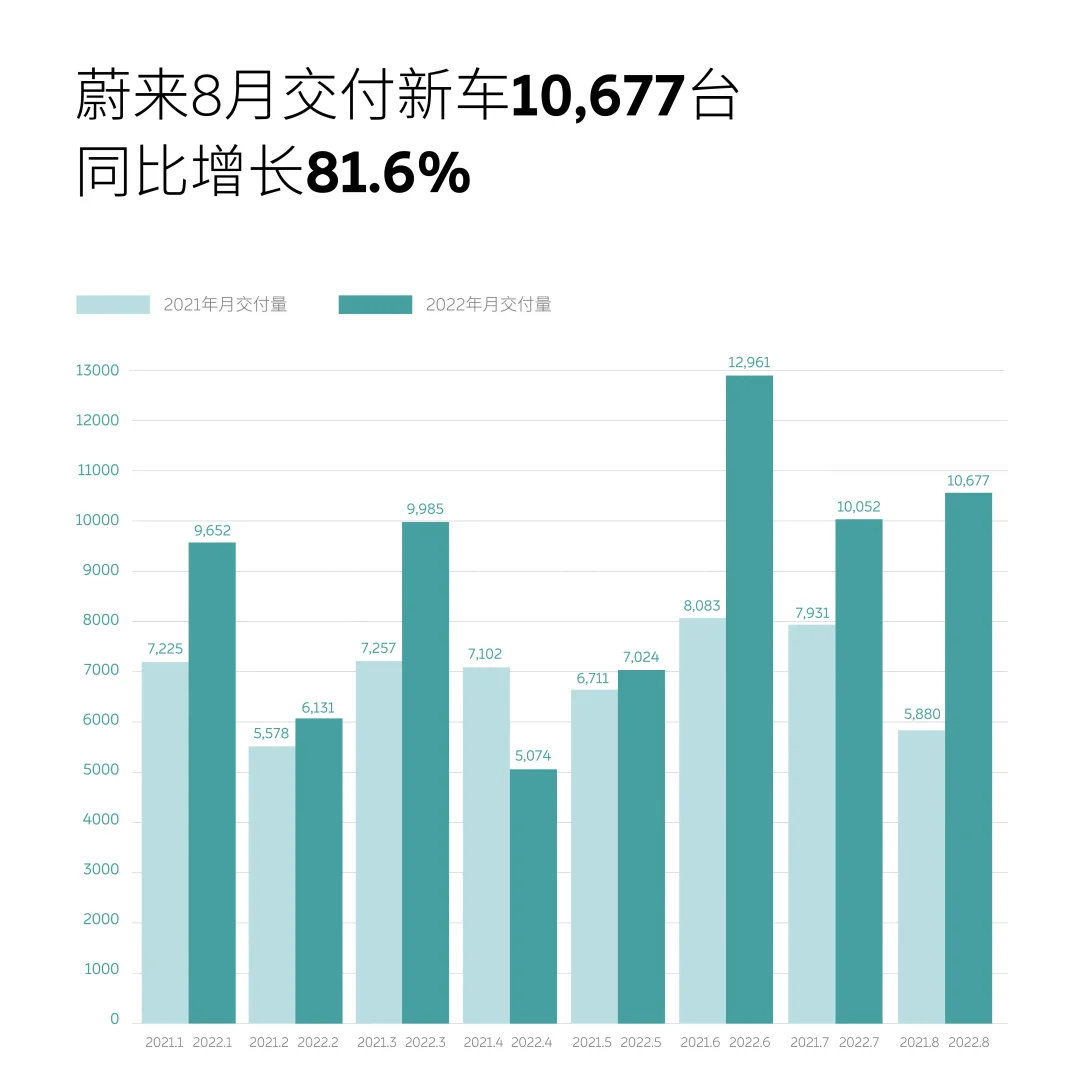
NIO delivered 10,677 new vehicles in August, including 3,126 ET7s and 7,551 ES7s, ES8s, ES6s, and EC6s. From January to August this year, NIO has cumulatively delivered 71,556 vehicles.
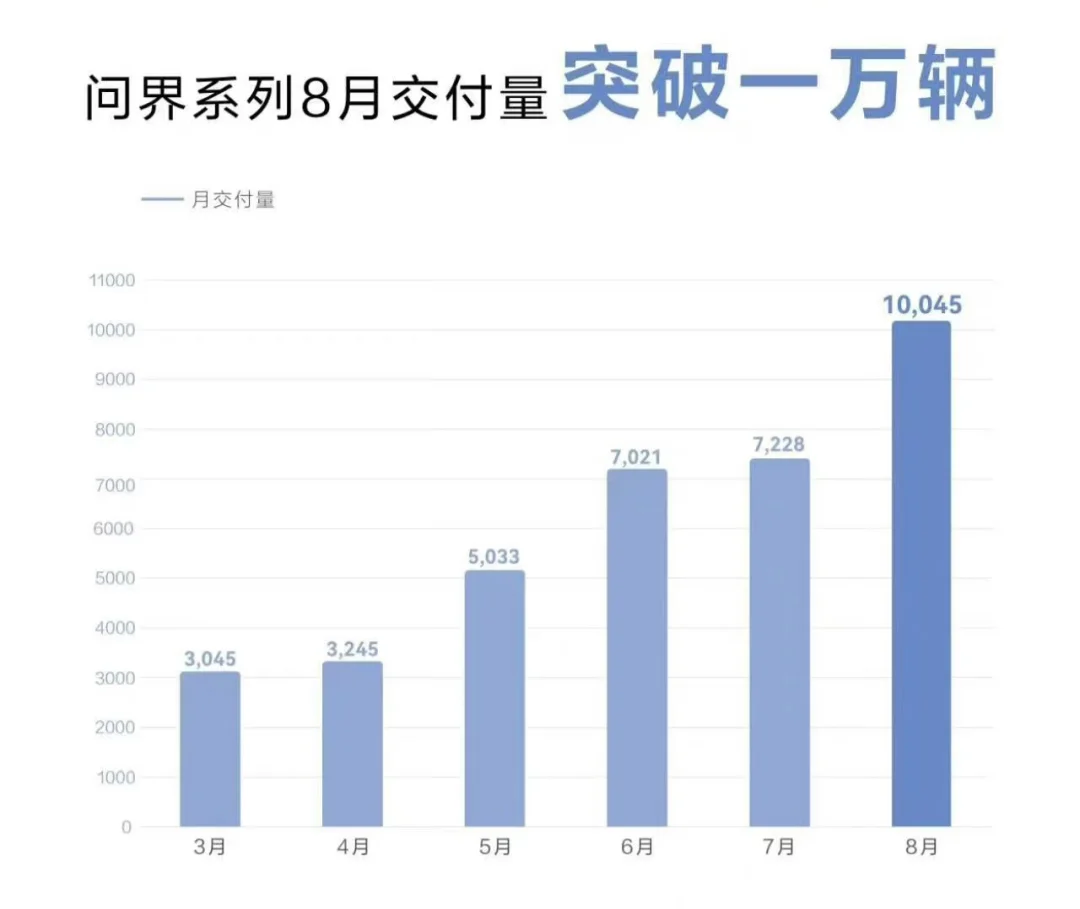
The AITO M5 and the recently launched M7 together surpassed 10,000 deliveries in August. On September 6, the EV version of the AITO M5 will be officially unveiled; readers can guess how many units AITO’s first pure-electric model might sell.
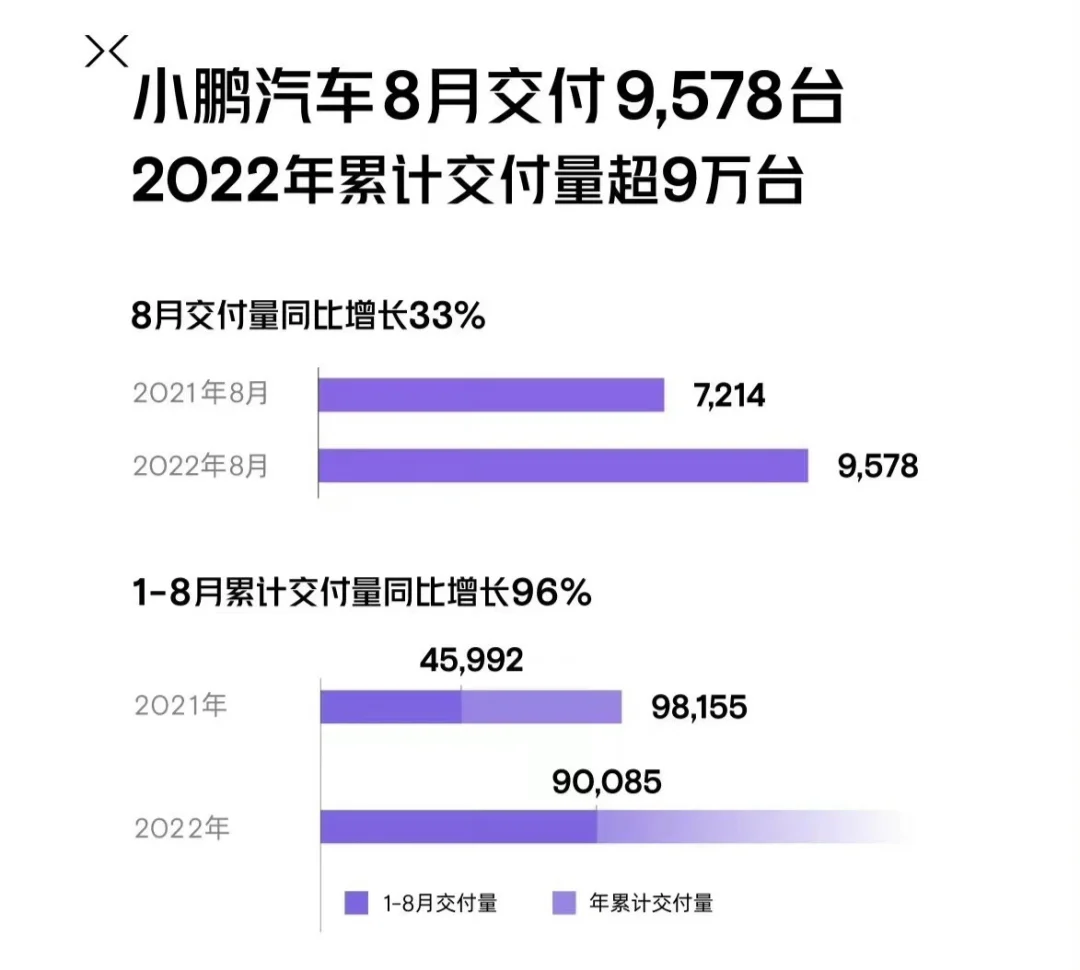
XPENG delivered 9,578 vehicles in August, comprising 5,745 P7s, 2,678 P5s, and 1,155 G3s and G3is. Year-to-date through August, XPENG has cumulatively delivered 90,085 vehicles, a year-over-year increase of 96%.
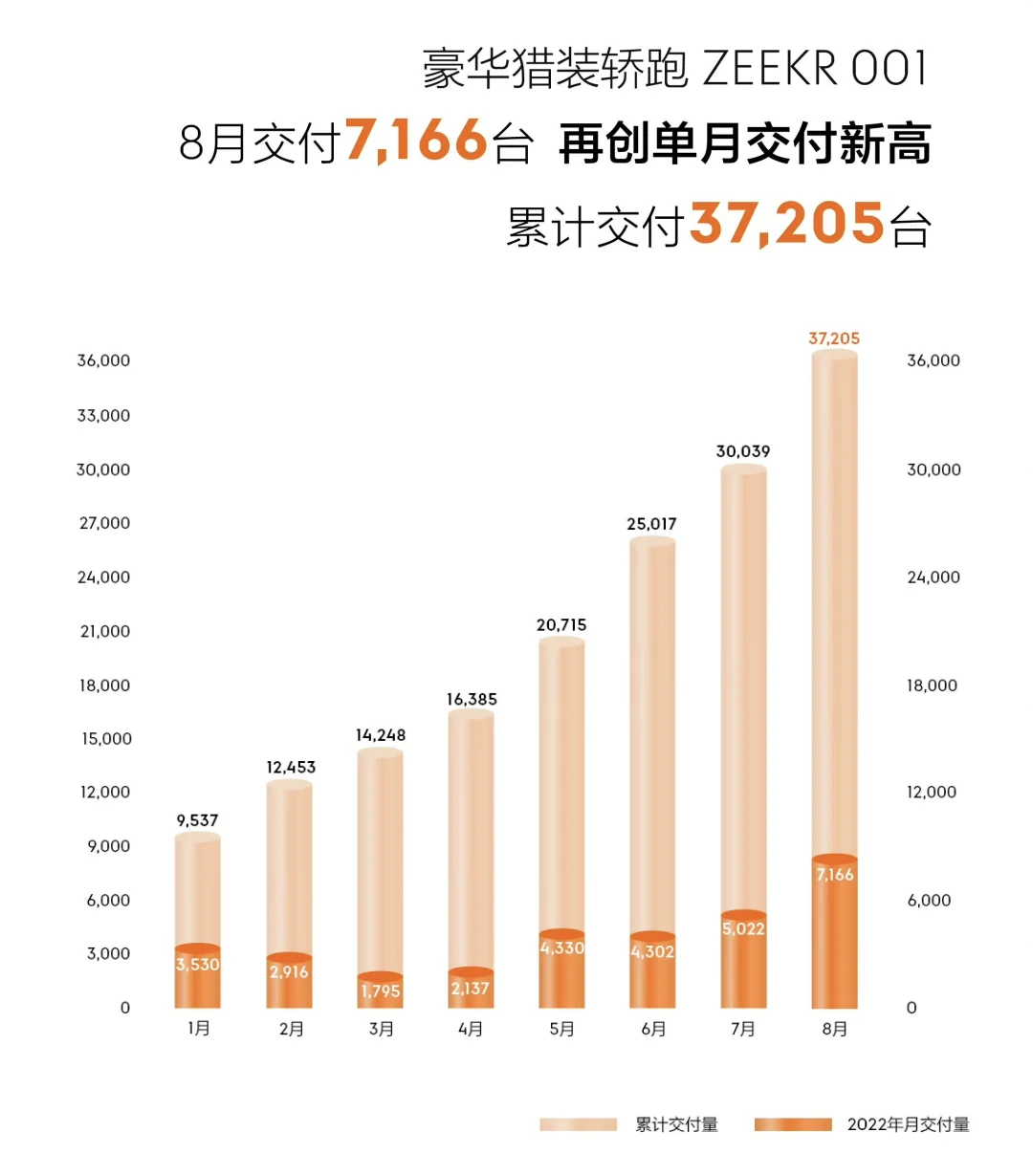
Zeekr announced its August delivery figures: the Zeekr 001 delivered 7,166 units in August, marking a significant month-over-month growth and a new single-month delivery record. Additionally, the brand secured more than 10,000 new confirmed orders in August.
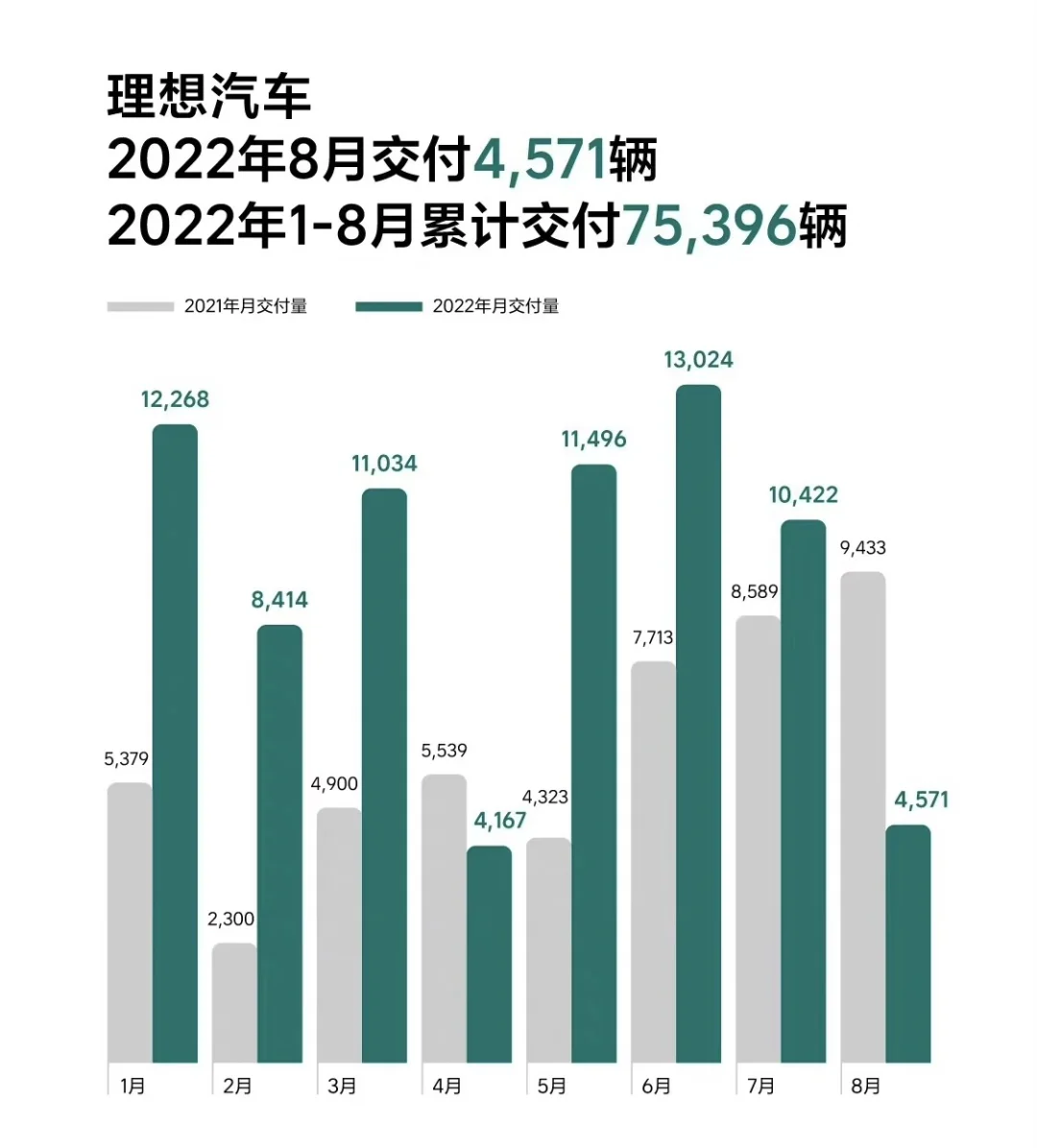
Lixiang delivered 4,571 vehicles in August, with a significant drop in delivery volume. The reason is that the facelifted Li ONE is about to be released.
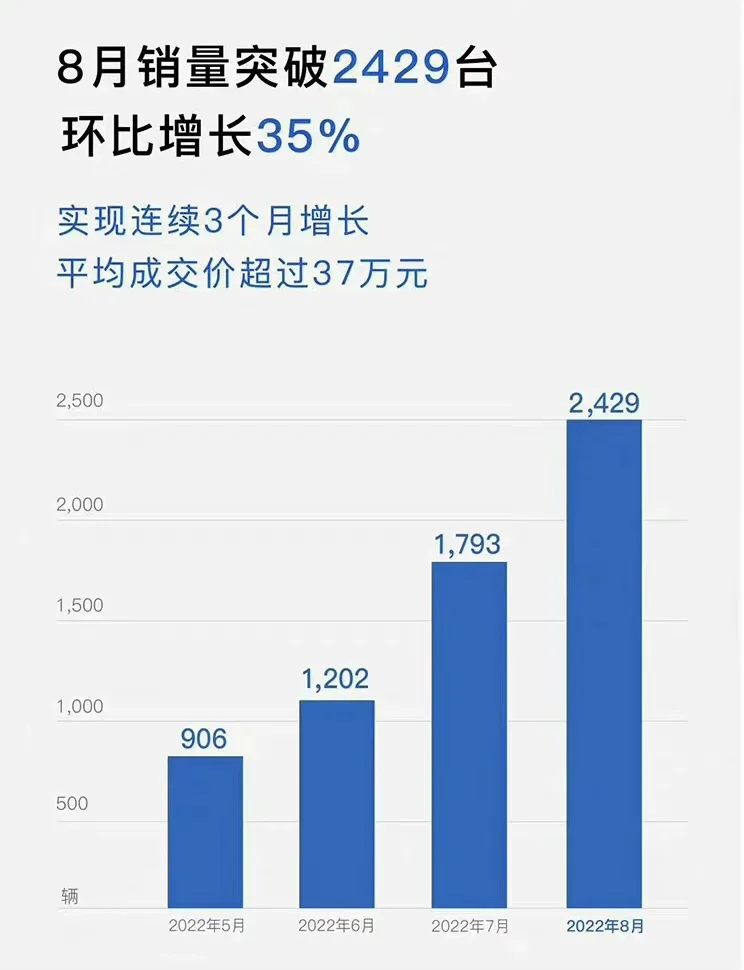
VOYAH delivered 2,429 units in August, representing a month-on-month increase of 35%.
Quick Take:
BYD maintains a stable position as the leader in domestic new energy vehicle sales, with its annual target of 1.7 million units appearing achievable. Meanwhile, Chenglianhui forecasts that Tesla’s August deliveries will reach approximately 77,000 units.
Among the emerging automakers, Nezha again topped sales, while its flagship model, Nezha S, has already secured 10,000 orders. The most severe sales decline among these brands was at Lixiang, which plummeted from over ten thousand units in July to just 4,571 units. The primary reason is that Lixiang’s current lineup is relatively limited; with its main sales driver, Li ONE, undergoing a transition, consumers are holding back purchases in anticipation of the new version.
Yingchekeji Releases Technical Roadmap and White Paper
On September 1, Yingchekeji held its first Technology Day under the theme "Practice Yields True Knowledge," fully disclosing a three-stage technical roadmap from mass production to driverless operation and officially releasing the Autonomous Truck Mass Production White Paper.
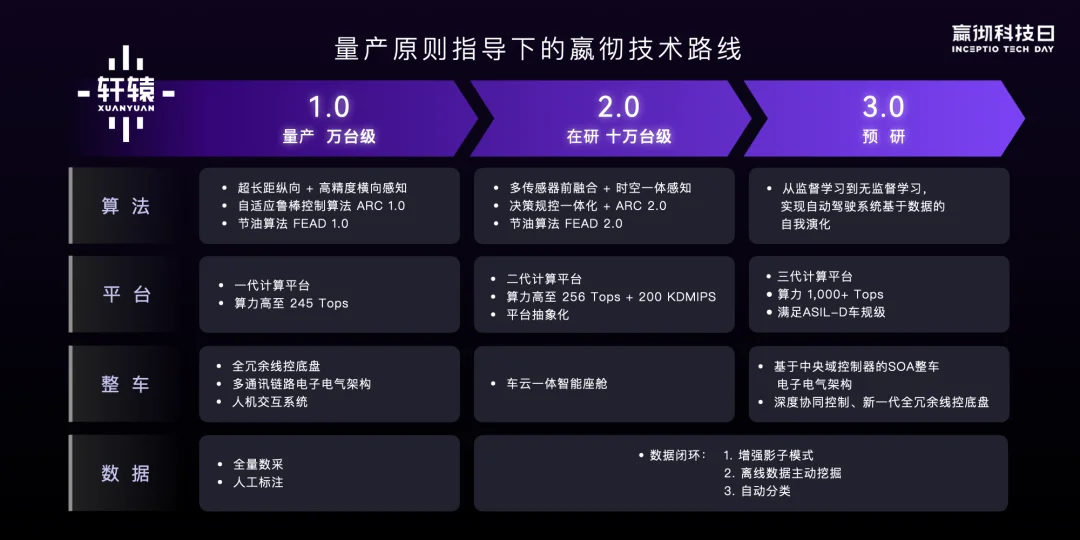
Following the mass deployment of the Yingche Xuan Yuan System 1.0, Yingchekeji announced at the event that it has entered the 2.0 stage.
In perception, Yingche employs a multi-modal, multi-view Transformer-based pre-fusion framework. It switches from perspective views to Bird's Eye View (BEV) perspectives and fully fuses feature maps from different data sources. It then uses a Long Short-Term Memory (LSTM) temporal fusion network to obtain perception results for video streams. This approach effectively addresses unique challenges in line-haul logistics trucks, such as perceiving small objects and irregularly shaped vehicles at long distances.
Simultaneously, model lightening reduces computational load by 50%. By using Neural Processing Units (NPUs) to accelerate traditional computer vision algorithms for preprocessing, processing speed is increased up to 100 times.
The difficulty in planning and control lies in simultaneously meeting five major commercial operational requirements: safety, precision, comfort, durability, and economy. This inevitably creates three contradictions: between precise modeling and vehicle-specific tuning, between precise control and durability/economy, and between hierarchical versus fused planning and control.
Yingche developed an integrated Planning and Control (PNC) architecture that achieves tight coupling among prediction, decision-making, planning, and control.
Regarding fuel-saving algorithms, Yingche comprehensively optimizes fuel consumption across sub-second, second-level, minute-level, and hour-level timeframes. A breakthrough was achieved in hour-level cloud-vehicle collaborative global speed planning algorithms. The cloud establishes a Graph Neural Network (GNN) with key waypoints as nodes, utilizing historical experience data and real-time traffic data to provide optimal speed recommendations. In actual operations, this saves 2-5% more fuel on average compared to top-tier drivers.
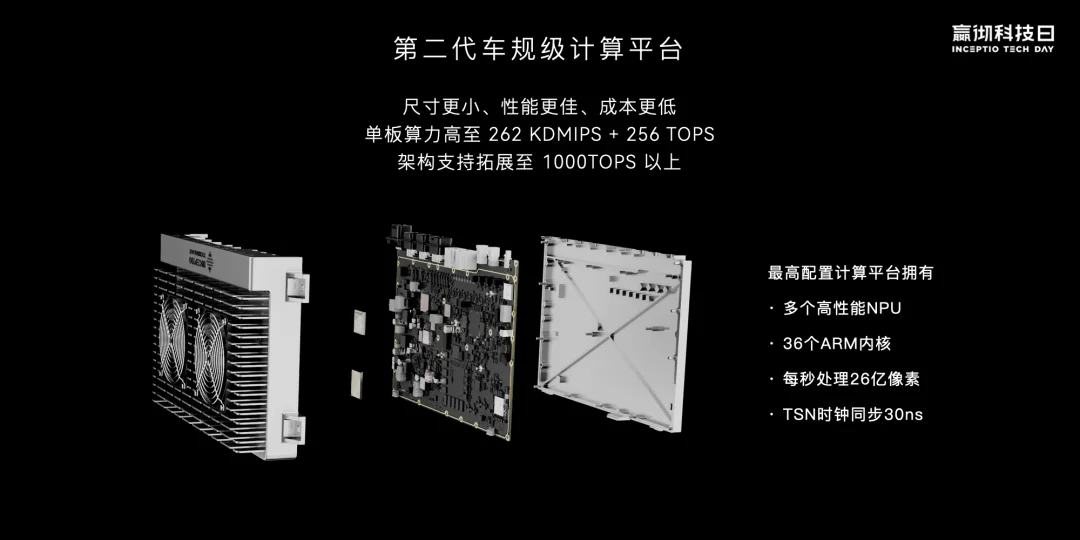
At the core hardware level, Yingchekeji’s self-developed computing platform has entered its second generation of development, featuring a smaller form factor, higher performance, and lower cost. The single-board compute power reaches up to 256 TOPS, with an architecture that supports expansion to over 1,000 TOPS. Based on the TSN protocol, the platform achieves time synchronization accuracy of 30 nanoseconds.
Quick Take:
As an autonomous driving company focused on the trucking sector, why is Yingchekeji publishing an industry white paper? Yingchekeji founder and CEO Ma Zheren answered as follows:
The autonomous driving industry has entered a new phase, with the technical focus shifting from algorithmic software exploration to pre-installation mass production. Technology, systems, and experience for forward-designed, pre-installation mass-produced autonomous vehicles have become scarce resources in the industry. Since its inception, Yingchekeji has adhered to a technical strategy of full-stack self-research, mass-production orientation, and industrial integration. Through hosting this technology day, we share our mass-production practices with the entire industry to jointly build systems, break through technological barriers, and promote common development.
Is Tesla China Expected to Deliver Over 100,000 Units at Its Shanghai Factory in September?
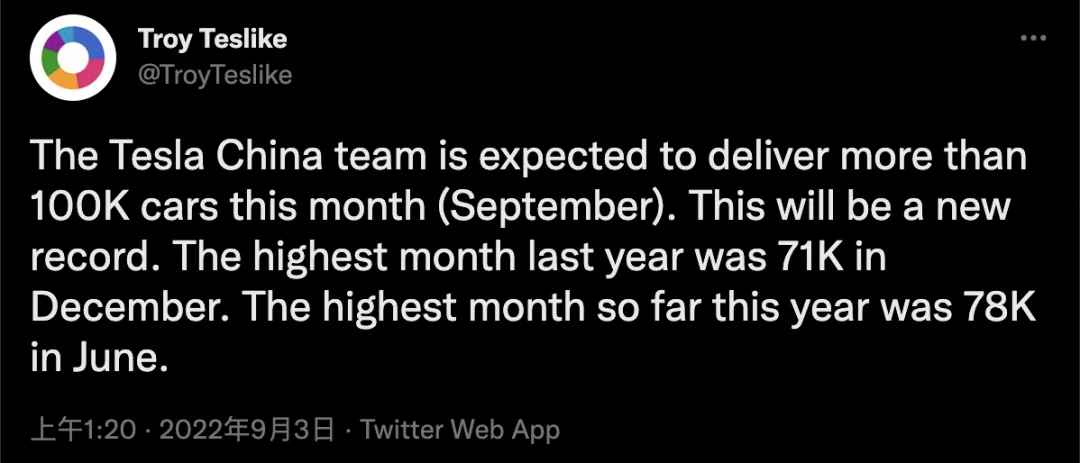
In the early hours of September 3, Tesla delivery analyst TroyTeslike posted on Twitter that the Tesla China team expects to deliver more than 100,000 Tesla electric vehicles in September. If ultimately realized, this would set a brand-new record. Last year, the highest single-month delivery volume at the Shanghai factory was 71,000 units in December, while this year’s highest single-month delivery volume was 78,000 units in June.
Tesla delivered 78,906 vehicles in China in June, setting a new monthly sales record and marking a 142% increase from the previous month.
Elon Musk stated at the 2020 annual shareholders meeting that without the tremendous efforts of Tesla’s China team, the company would not have achieved its current success. He expressed deep gratitude to the Shanghai Gigafactory and expressed hope to continue expanding its scale to make it a facility with an annual production capacity exceeding one million vehicles.
Other tweets from TroyTeslike also indicate that the Tesla China team is continuing to work hard toward this goal for the coming years. If Tesla avoids issues such as supply chain disruptions caused by the pandemic over the next ten months and delivers more than 100,000 vehicles per month, the Shanghai factory will achieve an annual delivery volume of over one million by June 2023.
Quick Take:
The Shanghai epidemic in the first half of the year dealt an extremely heavy blow to the production capacity of Tesla’s Shanghai factory. However, starting in June when full resumption of work and production began, the Shanghai factory still produced 78,000 vehicles. In this light, the predictions made by Tesla’s China team are not without basis.
Tesla’s order backlog remains significant, with delivery wait times exceeding one month for many variants. If the Shanghai factory can truly achieve a monthly output of over 100,000 vehicles, it would clearly reduce customers’ delivery wait times.
However, in 2022, domestic traditional automakers and new EV players were all fully developing electric vehicles with their own distinct product philosophies. Whether Tesla can maintain its current monthly sales volume in China this year remains to be seen.
Written by: Liu Guangding Edited by: Liu Guangding