


Shangqi R Pinpai's 2022 Blade: Combining the Surface's Strongest Solid-State LiDAR, Millimeter-Wave Radar, and Computing Chips

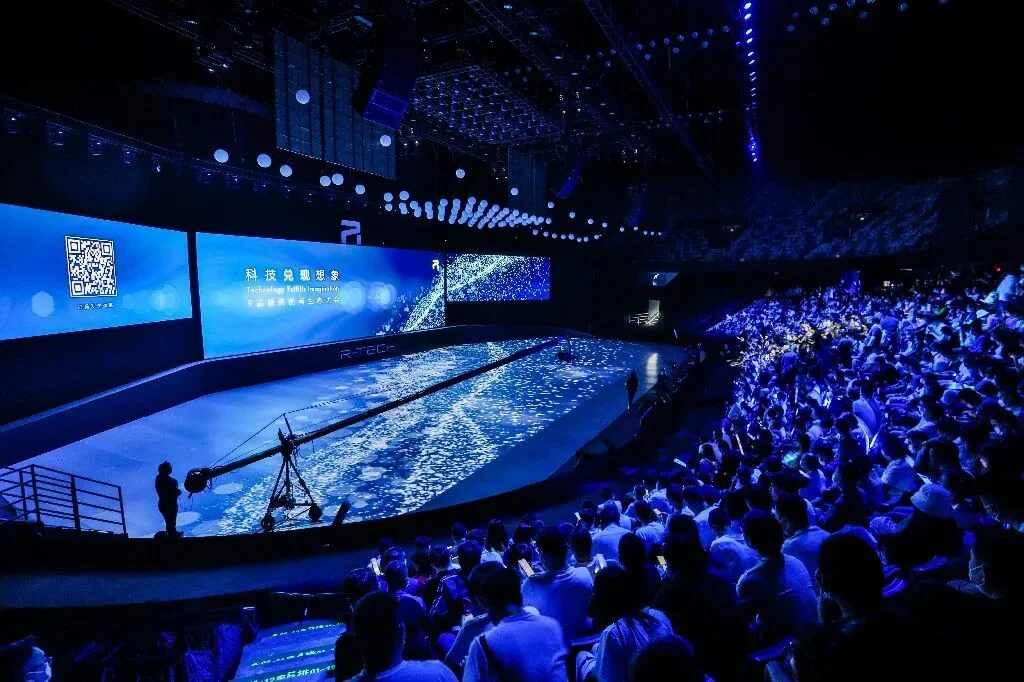
Last night, the screens at Shenzhen Universiade Sports Center successively displayed several heavyweight figures, including NVIDIA founder and CEO Jensen Huang, Luminar founder and president Austin Russell, and ZF Friedrichshafen AG board member Dr.Holger Klein.
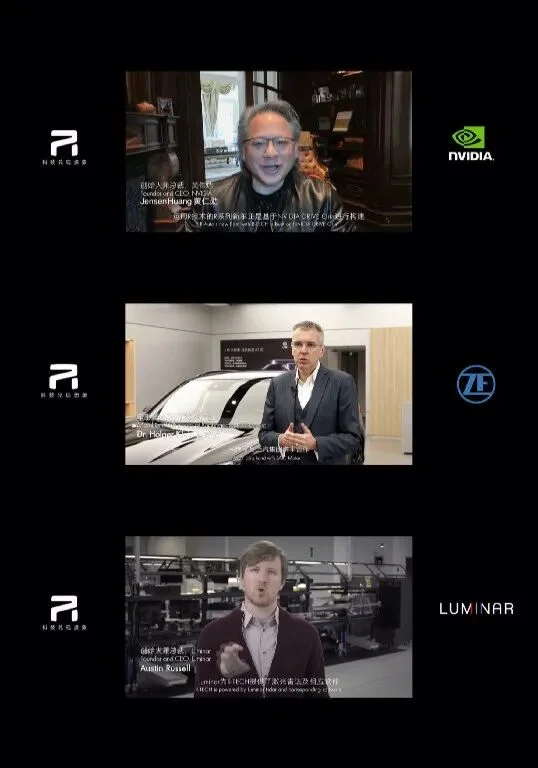
Each executive explicitly stated in their videos that they would leverage their respective products to empower Shangqi R-TECH.
The core theme of the event was R-TECH.
You can simply view R-TECH as the technology day for Shangqi R automobiles; the presence of Jensen Huang and Austin Russell established the event's hardcore foundation. Through this rigorous launch, we gained deep insight into Shangqi’s upcoming technical roadmap.
Autonomous driving is the trend of the era. Whether autonomous driving startups or legacy and new automakers alike, all hope to secure their own position in this field.
The core of R-TECH is the PP-CEM fully self-developed high-level autonomous driving solution, which represents Shangqi’s answer to the era of autonomous driving.
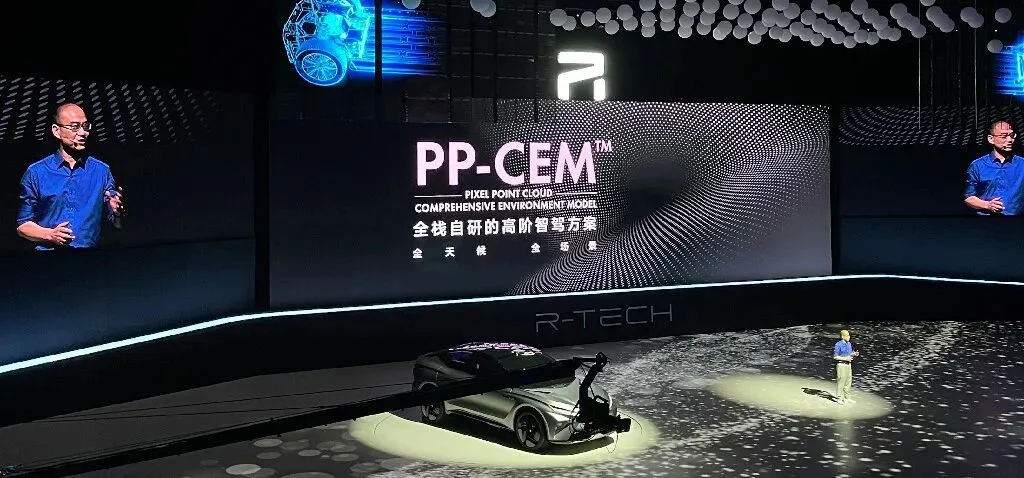
PP-CEM’s perception capabilities consist of the following six aspects:
1 Luminar 1550nm lidar
2 4D imaging radars and 6 long-range point cloud radars
12 perception cameras
12 ultrasonic sensors
5G-V2X
High-definition maps
The ES33, a new model set to launch in the second half of next year, will also become Shangqi's first vehicle equipped with the PP-CEM fully self-developed high-level autonomous driving solution.
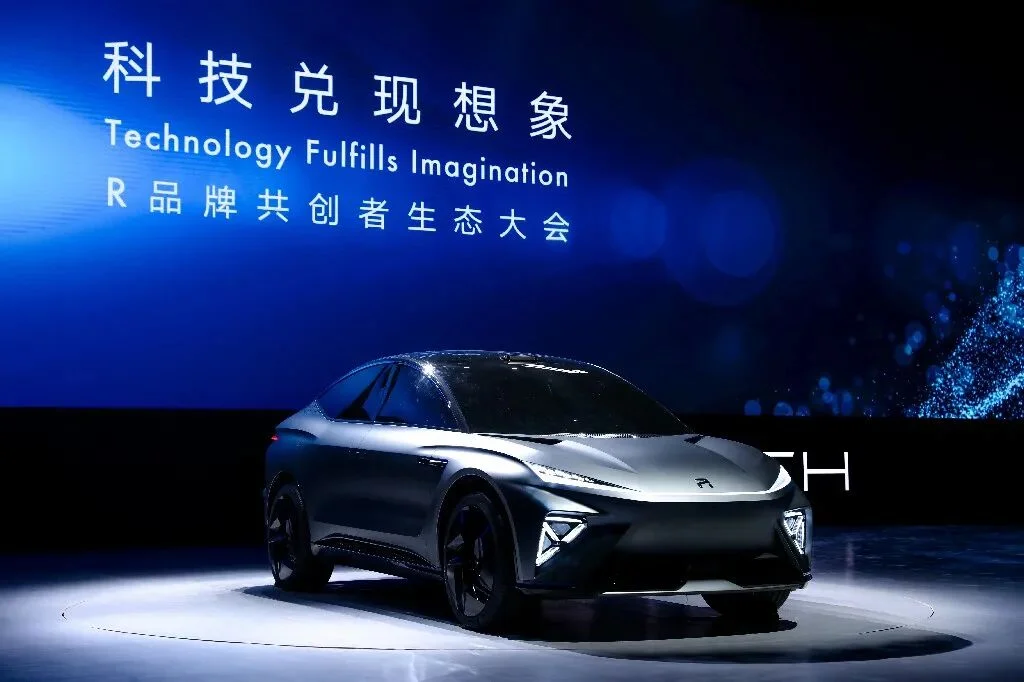
The extensive perception hardware in PP-CEM serves one purpose: to capture every tiny object on the road.
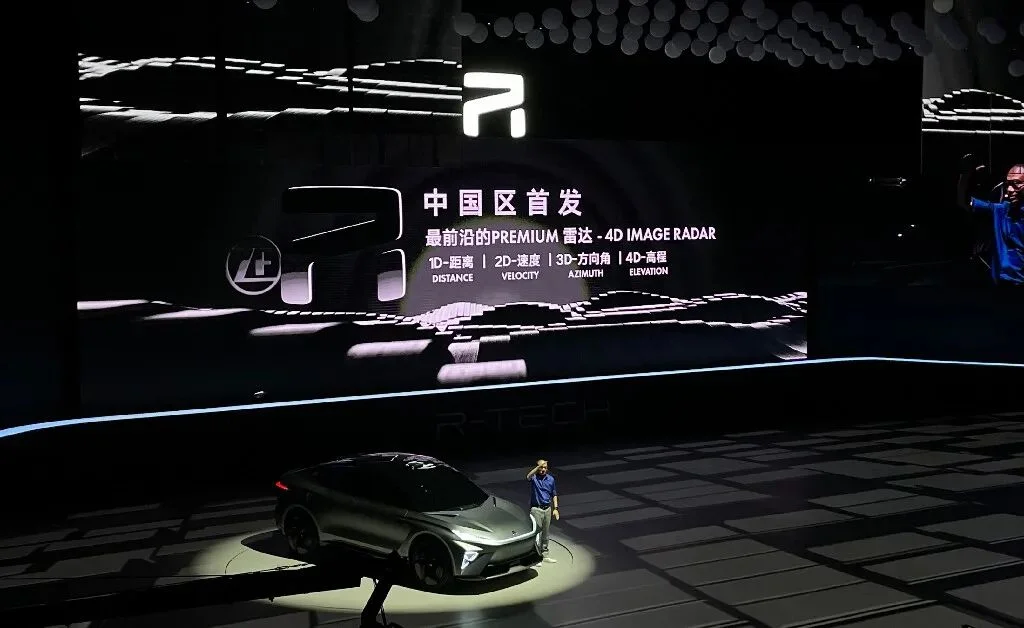
Although a series of product launches last year guided geek users through the learning curve from novice to entry-level regarding autonomous driving hardware, Shangqi's introduction of 4D imaging radar last night still exceeded many people's expectations.
014D What Can Millimeter-Wave Radar Do?
The 4D millimeter-wave radar equipped in the ES33 is supplied by ZF Friedrichshafen AG. This radar is already showcased on ZF's official website. According to the description on ZF's website, the advantages of this 4D millimeter-wave radar are as follows:
Featuring 192 channels, it enables detailed object detection at a range of up to 300 meters;
Supports fusion with other sensor technologies, including cameras and LiDAR.
Can detect small objects within 80 meters, such as bricks and bicycles.
Standard ADAS forward-looking millimeter-wave radars typically offer 8 to 16 channels; ZF’s 4D millimeter-wave radar provides 12 times the resolution of standard radars. This means the 4D radar returns more points, achieving higher resolution.
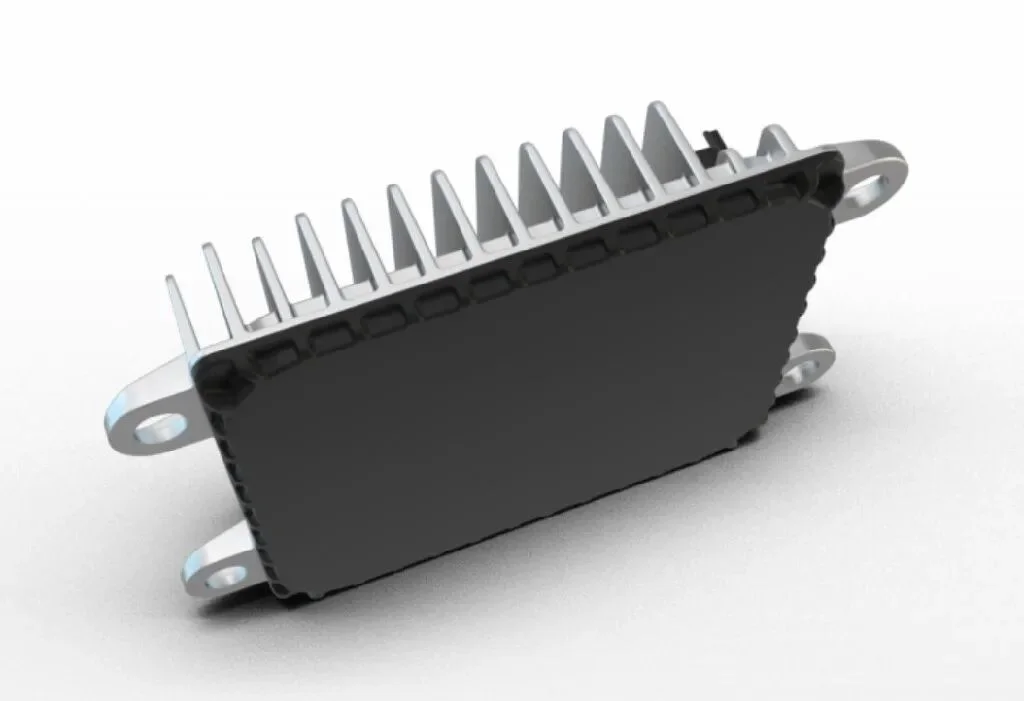
For example, at the same distance, a standard radar detecting an obstacle 200 meters ahead might return only one point. Based on this, the system can only determine that an obstacle exists 200 meters away. In contrast, ZF’s 4D millimeter-wave radar can return 12 points. By analyzing the spatial distribution of these points and combining them with algorithms, the system can better identify the specific type of obstacle.
In traditional fusion algorithms combining millimeter-wave radar and cameras, the most difficult challenge is detecting stationary obstacles.
Even powerful systems like Tesla’s have collided with overturned trucks. This issue relates to the logic of fusion algorithms. In many cases, stationary obstacles detected by the millimeter-wave radar are filtered out to reduce the computational load on vision algorithms, as most stationary obstacles originate from roadside trees, guardrails, etc.
4D millimeter-wave radar provides higher-resolution distance information for obstacles, enabling fusion algorithms to process different types of obstacles with greater precision.
Meanwhile, the higher resolution enables the system to more accurately capture the velocity and posture of moving objects. Through algorithmic processing, it can predict their behavior, aiding the vehicle in anticipating "sudden appearance" scenarios—such as pedestrians stepping out from blind spots—and planning appropriate evasive maneuvers in advance.
To illustrate the relationship between 4D millimeter-wave radar and visual algorithms, consider another example.
Imagine your girlfriend is angry and speaks only single words at a time. As a straight man, you would need exceptionally high emotional intelligence and experience gained from long-term cohabitation to understand her true intentions and make correct decisions.
Now, suppose your girlfriend has matured; when angry, she speaks in full sentences. The communication cost drops significantly, requiring less emotional intelligence and a shorter training period for you to soothe her.
The 4D millimeter-wave radar is like this more efficient communicator: it reduces automakers' reliance on deep learning capabilities for image recognition and shortens the algorithm development cycle.
Unlike lidar, 4D millimeter-wave radar pairs more easily with cameras.
This is partly because existing fusion algorithms for vision and millimeter-wave radar are sufficiently mature, and partly because 4D millimeter-wave radar complements cameras more effectively.
LiDAR sensors are prone to failure in rain, snow, and heavy fog, which is also a weakness of cameras. The 4D millimeter-wave radar inherits the all-weather perception capabilities of traditional millimeter-wave radars while offering high resolution comparable to LiDAR, making it a formidable new member in vision-centric multi-sensor fusion systems.
02If We Have 4D Millimeter-Wave Radar, Why Do We Still Need LiDAR?
In addition to the 4D millimeter-wave radar, the ES33 is equipped with one Luminar-provided lris LiDAR.
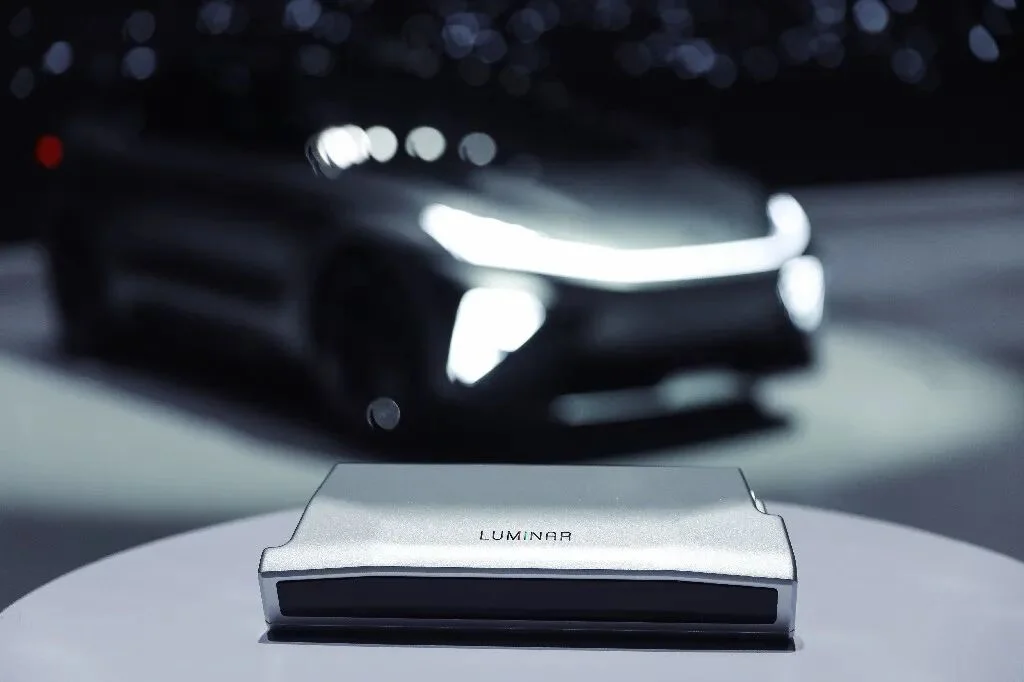
This 1550-nanometer LiDAR is mounted on the roof, a position that offers significant advantages over placement on the bumper.
It provides a better detection field of view, is less susceptible to dirt (which LiDAR sensors are highly sensitive to), facilitates pedestrian collision safety, and avoids damage from minor scrapes during daily driving.
The only drawback of roof mounting is increased wind noise, though the Luminar LiDAR unit is already quite compact.
Another advantage of this sensor is its use of 1550-nanometer laser technology. Unlike 905-nanometer LiDARs, which must operate at low power to protect human eyes, 1550-nanometer lasers are absorbed by the transparent parts of the eye before reaching the retina, posing no harm to human vision. This allows for higher operating power.
Higher power directly increases point cloud resolution, extends detection range, and enhances penetration in complex environments.
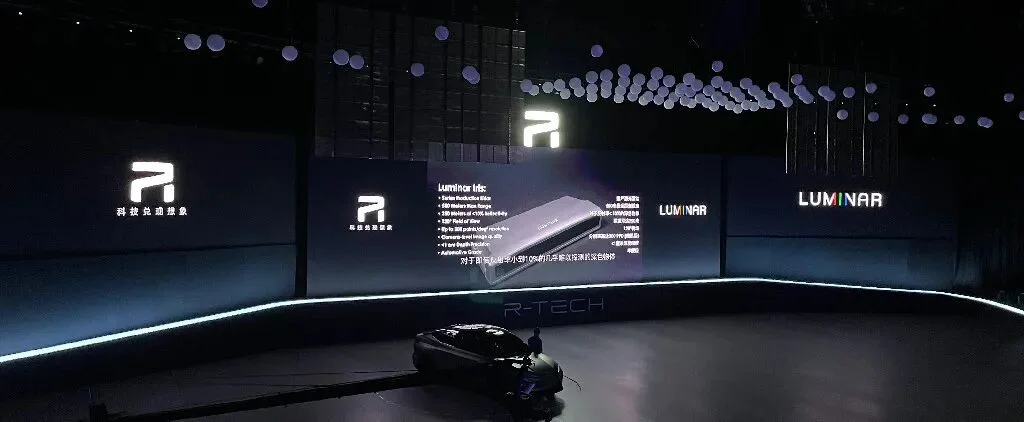
Official specifications for the lris indicate a 120-degree horizontal field of view and a 30-degree vertical field of view, with a maximum detection distance of 250 meters at reflectivities below 10%.
What does this level of performance mean? Let’s compare it with competing products:
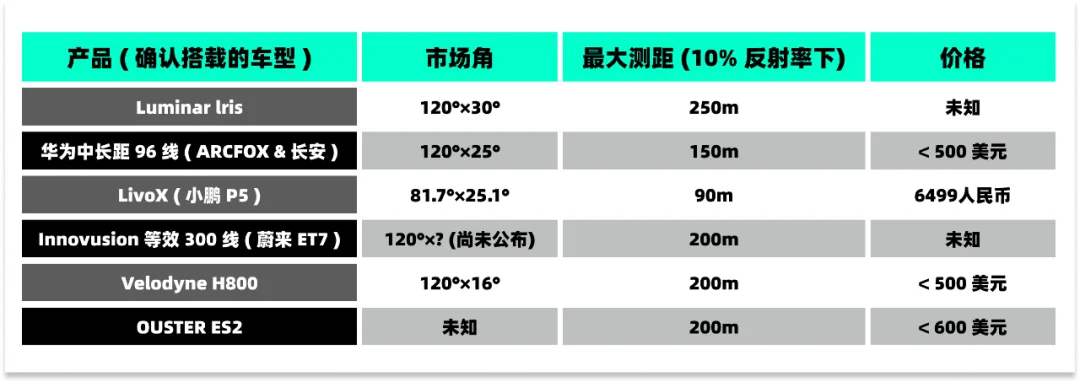
On paper, Luminar’s lris is the strongest among several products. However, it has not yet entered mass production and requires joint automotive-grade validation with Shangqi. The LivoX is relatively earlier in its development cycle, so its parameters are somewhat less impressive.
To ensure the lris can be successfully integrated into vehicles, Luminar will establish an office in Shanghai to jointly advance product validation and provide software services.
According to a press release from Luminar, the lris may be manufactured in Shanghai, and there is a possibility that the two parties could form a joint venture in the future.
Looking at the press release from Luminar, the core function of this LiDAR is to enable highway autonomous driving. This helps explain why the ES33 includes both a 4D millimeter-wave radar and a LiDAR.
The story begins with NIO NOP and XPENG NGP. Map-fusion-based highway assisted driving features are becoming increasingly common, with BMW, Geely, and Chery’s Exeed brand also set to launch similar functions this year. These capabilities rely on high-definition maps created by LiDAR and precise positioning based on China’s ground-based augmentation systems.
Taking XPENG NGP as an example, testing reveals two technical issues: in extremely long tunnels or urban canyons, the system occasionally disengages.
The root cause lies in precise positioning. Currently, all manufacturers use RTK or RTX signals for high-precision positioning, feeding this data into HD maps. If the signal is blocked or lost, the feature cannot continue. The system may also misjudge vertical positioning, mistakenly believing the vehicle is on an elevated road when it is actually underneath, thereby incorrectly activating assistance systems.
LiDAR solves this problem. The system compares point cloud scans from the LiDAR with the HD map. This serves two purposes: it validates the high-precision positioning data and provides dynamic absolute positioning via comparison when positioning signals are lost, acting as a redundancy for high-precision positioning.
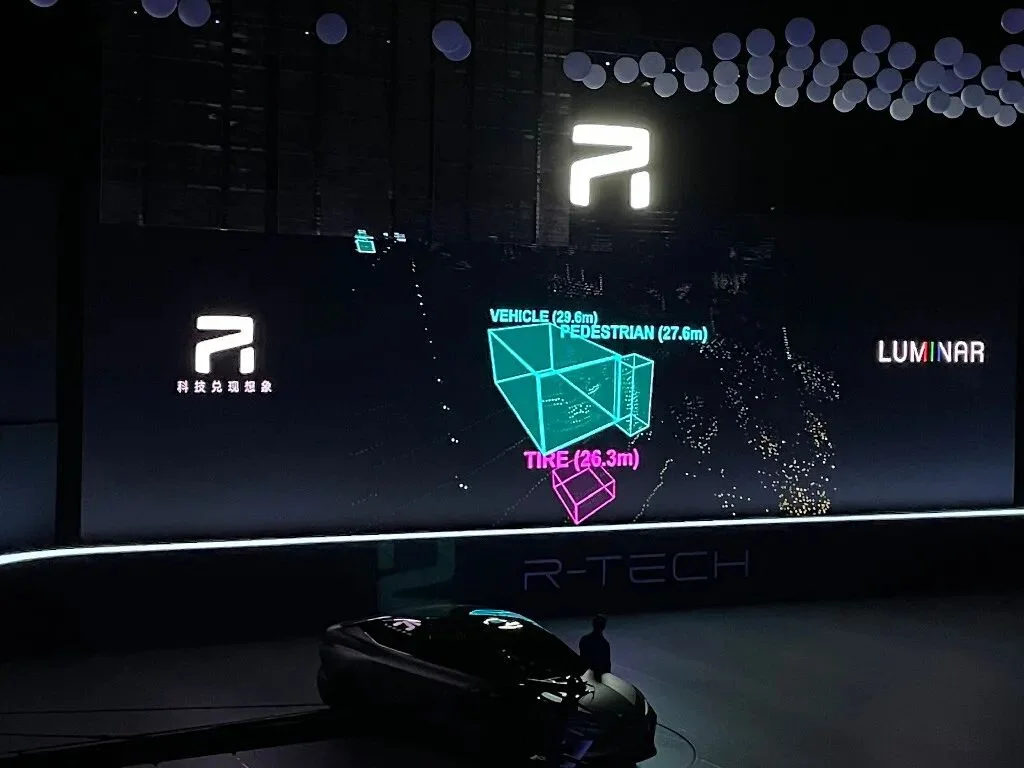
In open scenarios, breaking through from assisted driving to autonomous driving requires sensor and computing chip redundancy. As a model scheduled for late 2022 launch with an uncertain delivery timeline, LiDAR is indispensable. Without it, R Pinpai would have no ticket to enter the upcoming L3 autonomous driving market for highway scenarios.
Understanding the roles of the 4D millimeter-wave radar and LiDAR clarifies Yang Xiaodong’s statement during the event: 'It will not confuse the white cargo box of a truck ahead with the sky, nor will it be helpless in dark, narrow tunnels.'
Does it feel like there's a lot of tension? He just roasted Tesla, NIO, and XPENG all in one go!
03Regarding Orin, it is necessary to compare it with the ET7
In 2020, NVIDIA founder and CEO Jensen Huang publicly stated that Li Auto would become the first manufacturer to use the Orin series of chips, and that NVIDIA had moved up the mass production timeline for Orin by one year, from 2023 to 2022, to align with Li Auto's production schedule.
At the NIO Day event in January 2021, William Li also stated that NIO was the first automaker globally to equip vehicles with NVIDIA Orin chips.
At last night's press conference, Yang Xiaodong also announced that the R Pinpai is the world's first mass-produced vehicle to feature Orin. Given Shangqi's significant presence, NVIDIA's Jensen Huang was even invited to join the event remotely.
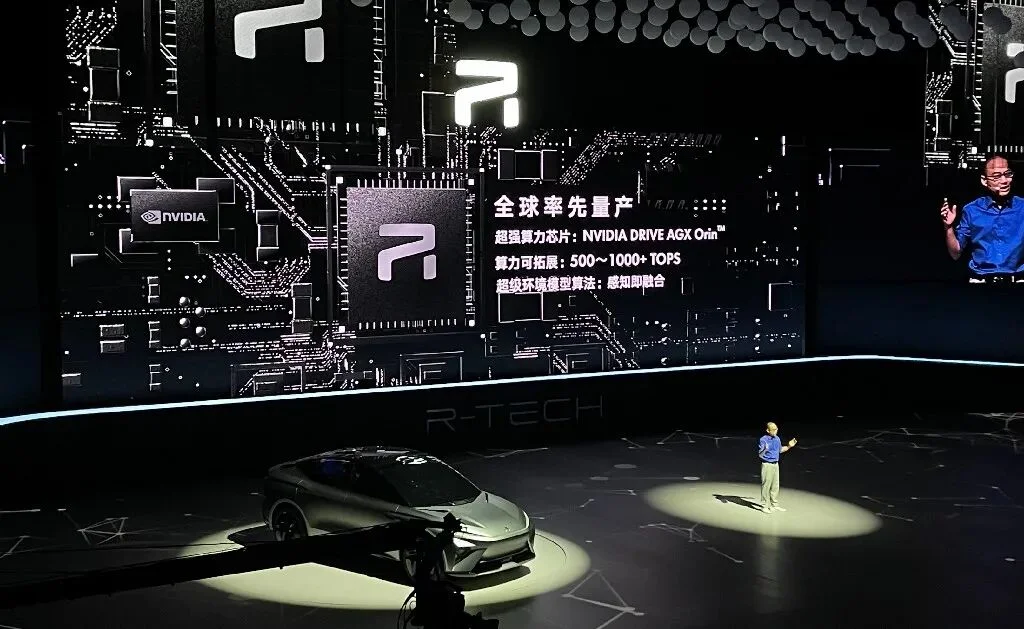
However, the ET7 is scheduled for delivery in Q1 2022, while the ES33 will not be launched until the second half of 2022, leaving its delivery timeline uncertain.
Although there were reports that NVIDIA's Orin would not be delivered by Q1 2022, based on the officially announced timeline, the ET7 is earlier than the ES33.
What confuses me even more is that the ES33 may not have yet planned how to utilize Orin's computing power, given that official information states it has 500 to over 1000+ TOPS of computing power, which is a flexible semi-open range.
Before introducing the computing power of the ET7 at NIO Day, William Li spent considerable time detailing the first-ever adoption of an 8 million-pixel high-definition camera and the massive volume of data it generates. This context helps explain why the ET7 requires four Orin chips, each delivering 254 TOPS of computing power.
Processing video information is a specialty of GPUs, and GPUs are NVIDIA's specialty, as well as the main component of Orin.
Regarding compute power planning, R Pinpai stated, "With our fully in-house developed super environmental model algorithms, we achieve perception-to-fusion." Although I didn't quite understand it, it sounded very advanced.
04Software Capability Is the True Bayonet
As the title suggests, R Pinpai has assembled the world's strongest combination of millimeter-wave radars, solid-state LiDARs, and computing chips. From a hardware perspective, everything looks promising; however, the true measure of the user experience—and the decisive factor—lies in Shangqi's software capabilities.
The core of autonomous driving currently relies on visual perception technology. The capability of visual recognition is entirely dependent on the training of software algorithms. Tesla FSD Beta, the industry benchmark, achieves its highly detailed recognition ability through the efforts of multiple industry experts, over five years of in-house development experience, and extensive data iteration.
In interviews after the press conference, Shangqi revealed that its fully self-developed autonomous driving team is the same as R Auto's intelligent driving team, and its cloud computing team is also part of Shangqi Group's Lingshu, which serves as the software center.
Of course, a large number of millimeter-wave radars and LiDARs can assist camera-based perception, handling many corner cases that cameras cannot identify. They do offer advantages in extreme weather conditions or when detecting very small objects. However, R Auto has not yet demonstrated its software capabilities, so it remains to be seen what the PP-CEM fully self-developed high-level autonomous driving solution will ultimately achieve.
We hope that while all automakers use Tesla as a negative example at their launch events, they also recognize Tesla’s current strength in North America. We also hope that upon delivery next year, empowered by richer sensing hardware, [R Auto] will possess stronger autonomous driving capabilities and a better user experience than Tesla, surpassing it comprehensively.
At that moment, we will welcome this historic occasion with the warmest applause.
Written by: Bai Yang Edited by: Liu San