


This is Weima's third car
2020 marked the third year of mass production and delivery for leading new energy vehicle startups, as well as the year the elimination round for the entire new car-making industry began.
In 2020, NIO, Lixiang, and XPENG, three startups that had listed in the United States, stole the spotlight with surging stock prices and successively released aggressive strategies.
As the brand among all new energy vehicle startups to first release products and achieve mass production and delivery, Weima had already passed the qualification round early on. However, to become a winner in the increasingly fierce elimination competition, it clearly needed something new.
So, the Weima W6 arrived.
01Still an SUV
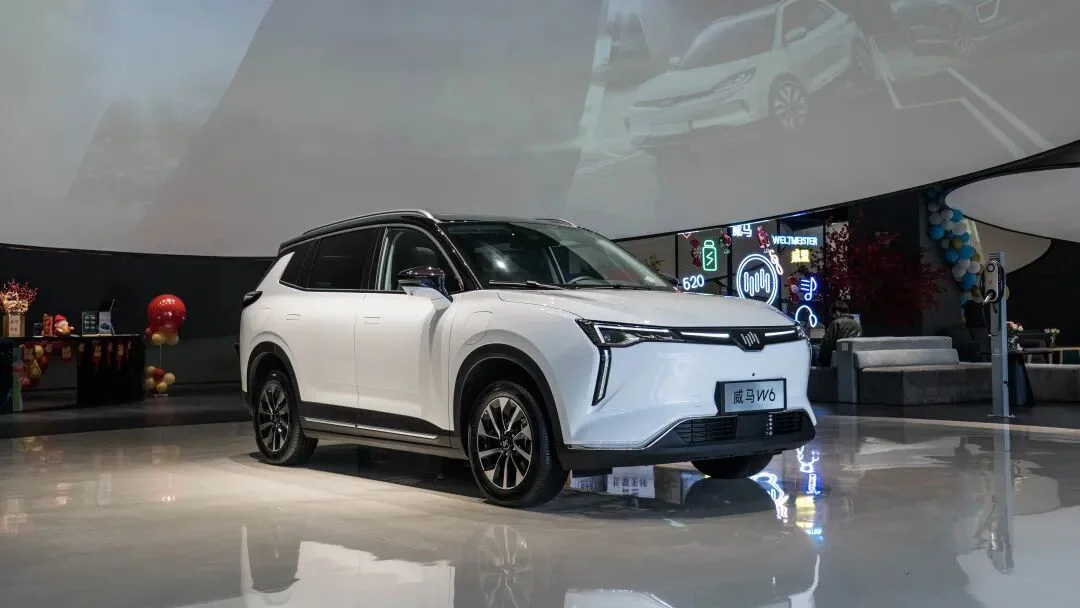
The W6 is Weimaqiche's third model, with overall dimensions of 4620/1847/1730 mm and a wheelbase of 2715 mm, positioned as a mid-size SUV.
Looking back, Weima’s first model, the EX5, measured 4,585/1,835/1,672 mm in length, width, and height, with a wheelbase of 2,703 mm, positioning it as a compact SUV. Its second model, the EX6, measured 4,802/1,839/1,710 mm with a wheelbase of 2,715 mm, classifying it as a mid-size SUV.
Although the three models are not positioned identically, their dimensions and wheelbases show little difference. All three were built on the same platform.
Among other new EV startups, NIO’s first three models were also all SUVs, but with different positioning: the ES8 is a large mid-size SUV offering 6- or 7-seat configurations, while the ES6 and EC6 are mid-size SUVs with 5 seats, creating some distinction in their market placement.
The strategy of 'having many children helps fight battles' is widely understood, but brands as focused as Weima on this single market segment are rare.
Therefore, we conducted a static review of the W6 in March to gain deeper insights into its offerings.
02"Coordination"
Weima’s third model distinguishes itself from the previous two not only in naming—shifting from the EX series to the W series—but also in its significantly changed exterior design style.
If I had to use one word to describe the exterior design of the W6, it would be "harmonious."
The W6 retains a black trim strip that runs across the front fascia, with the Weima logo—featuring five vertical bars—at its center, seamlessly integrated into the trim.
Weima stated that designers considered the logo's shape from the outset, incorporating it harmoniously into the front-end design rather than simply slapping it on after the fact.
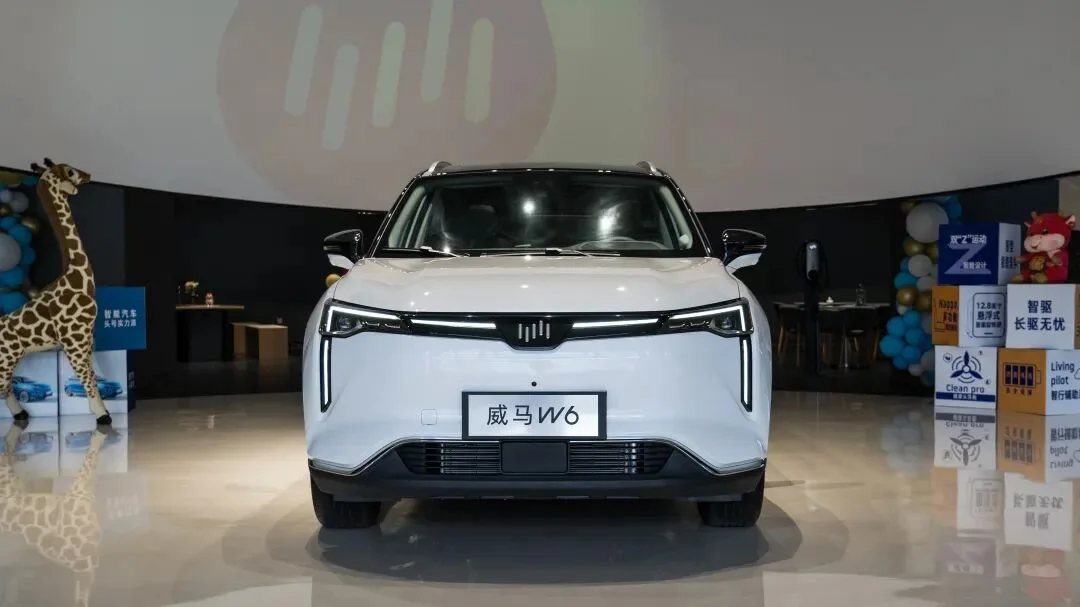
On the W6, Weima moved the charging port from the front bumper to the side of the vehicle, eliminating the gap caused by a charging door cover and significantly improving the overall integrity of the front end compared to the EX5.
However, criticism is warranted: Weima did not move the fast-charging port to the rear of the W6, meaning drivers cannot take advantage of the more convenient reverse-parking-into-a-spot method when charging in tight spaces.
Regarding lighting, Weima adopted the currently popular full-width headlight design. Whether this look is aesthetically pleasing is subjective, but what is certain is that these headlights and daytime running lights offer high visibility at night.
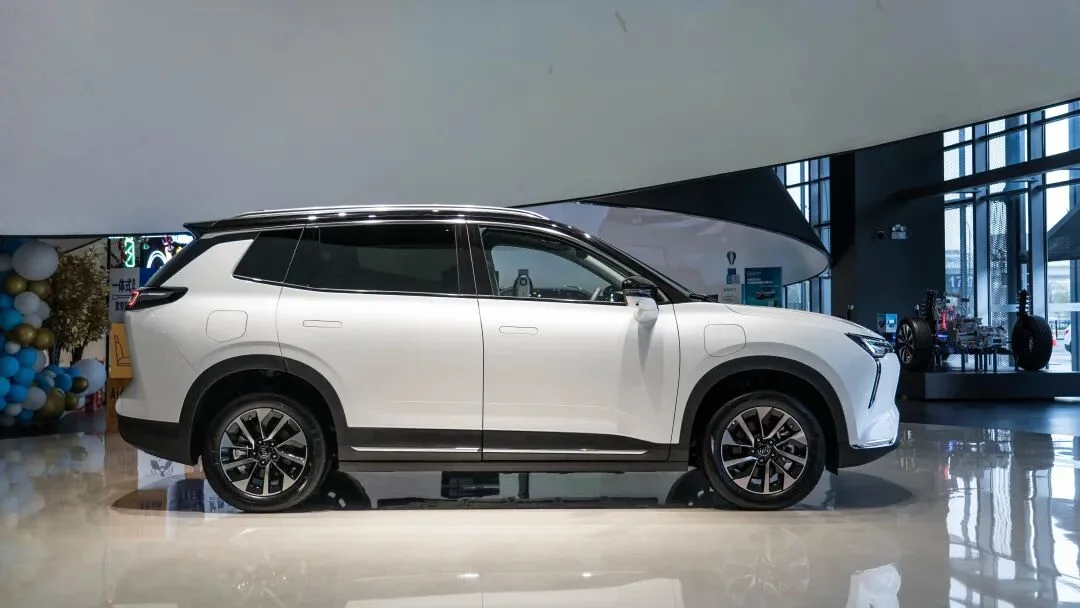
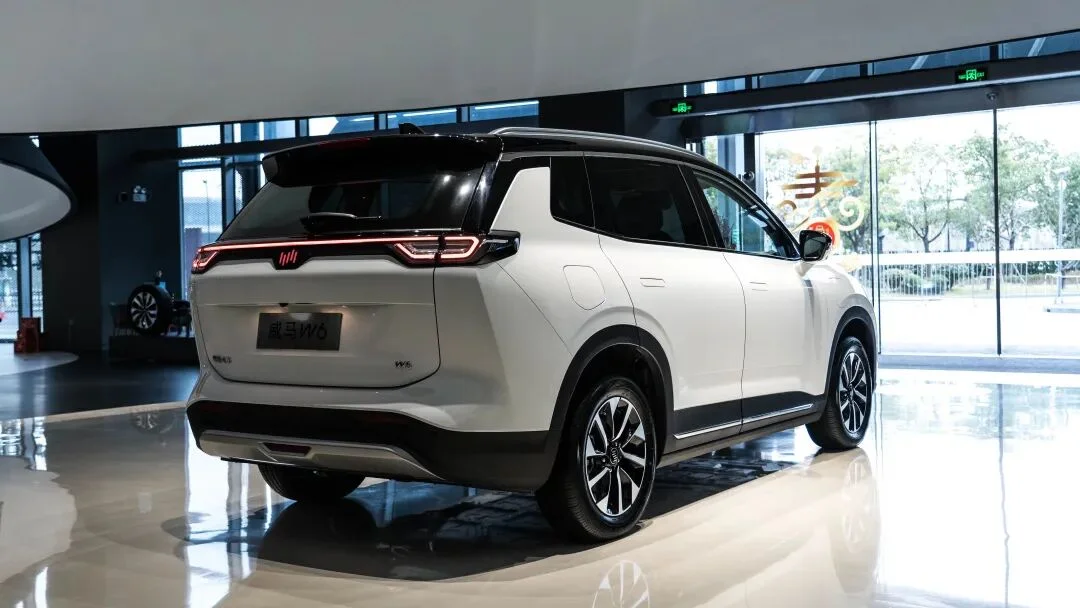
Moving to the side profile, the W6 features two significant design changes. First, the sharp character line that defined the EX5 has been replaced by a smoother, more rounded surface. Second, the W6 adopts a contrasting-color roof, a styling cue that is currently popular.
These adjustments make the W6's side profile much more harmonious than the EX5's, even though the vehicle we are photographing is a base model equipped with 17-inch wheels.
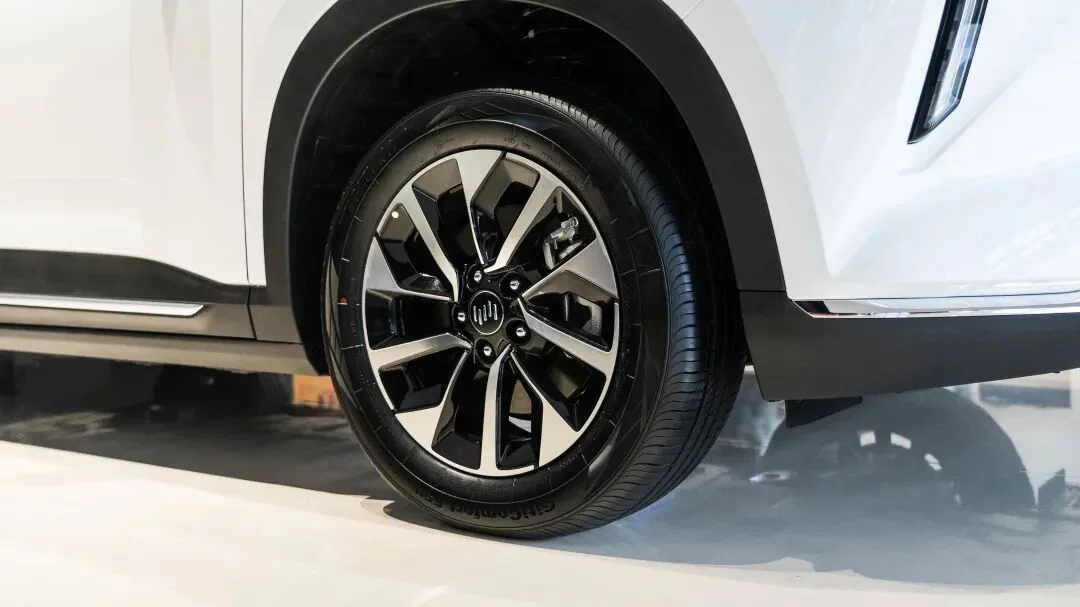
After three years, Weima's redesigned language has clearly become more "mature," and this maturity extends to the interior as well.
03Still "Harmonious"
Recall that when the EX5 launched in late 2018, "over-designed" was a frequent critique. After experiencing the W6 statically, my first impression remains that it is "more mature."
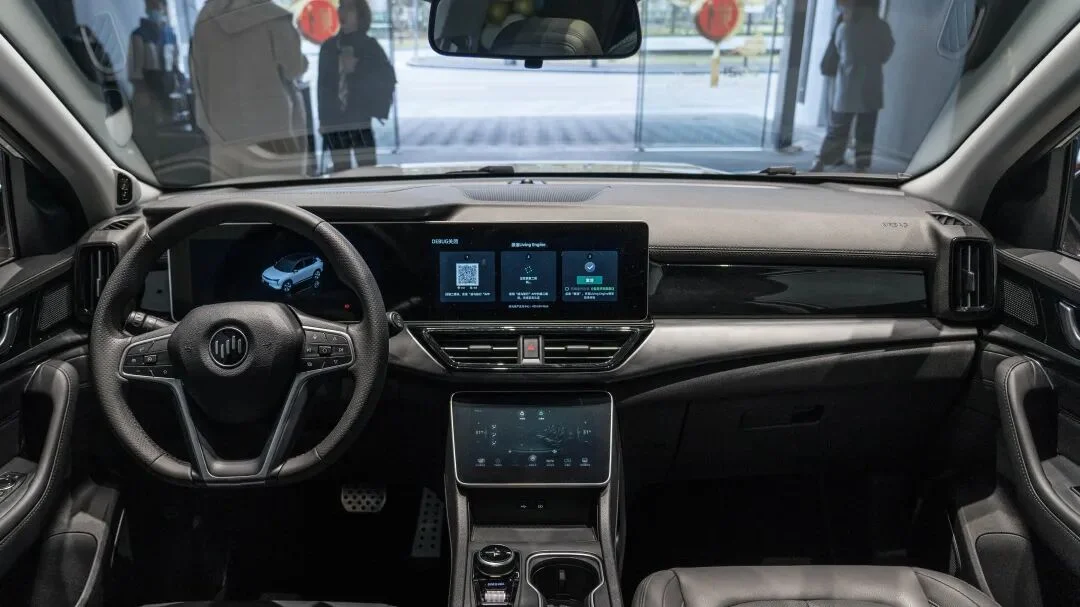
For a car priced around RMB 200,000, it is unrealistic to expect manufacturers to include an abundance of flashy features. Therefore, our evaluation of the interior focuses on two key aspects.
Workmanship and Materials
The W6's interior features soft-touch molded plastic and hard plastics as its primary materials. Do not assume that "plastic" automatically means "low quality," given that Volkswagen and Audi interiors also use plastic; the perceived quality depends on design and craftsmanship.
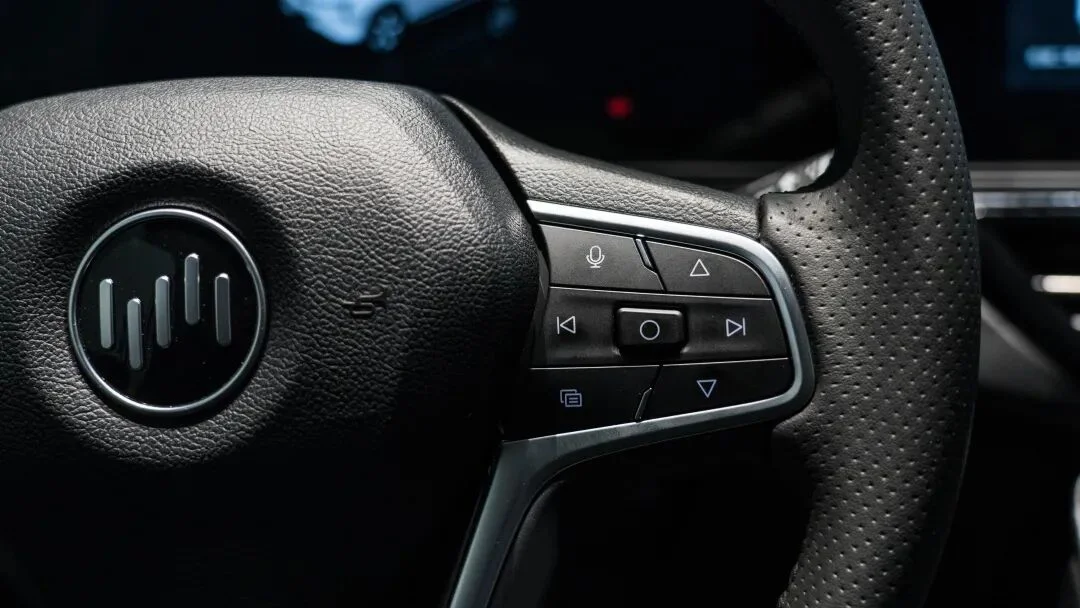
The interior design of the W6 is significantly more understated than that of the EX5, with a color scheme dominated by black. Frequently used buttons on the steering wheel have shifted from piano black finishes to a matte texture, which resists unsightly fingerprints. The larger button size facilitates blind operation while driving, and the longer travel distance combined with moderate resistance provides a tactile feel that enhances usability.
The only remaining glossy piano-black finish on the center console is applied exclusively to the air vents, serving as a finishing touch.
In terms of build quality, for the vehicle we tested, all panel gaps—whether large or small—are uniform and consistent with the standards of joint-venture brands in this segment. The craftsmanship does not impart any sense of cheapness.
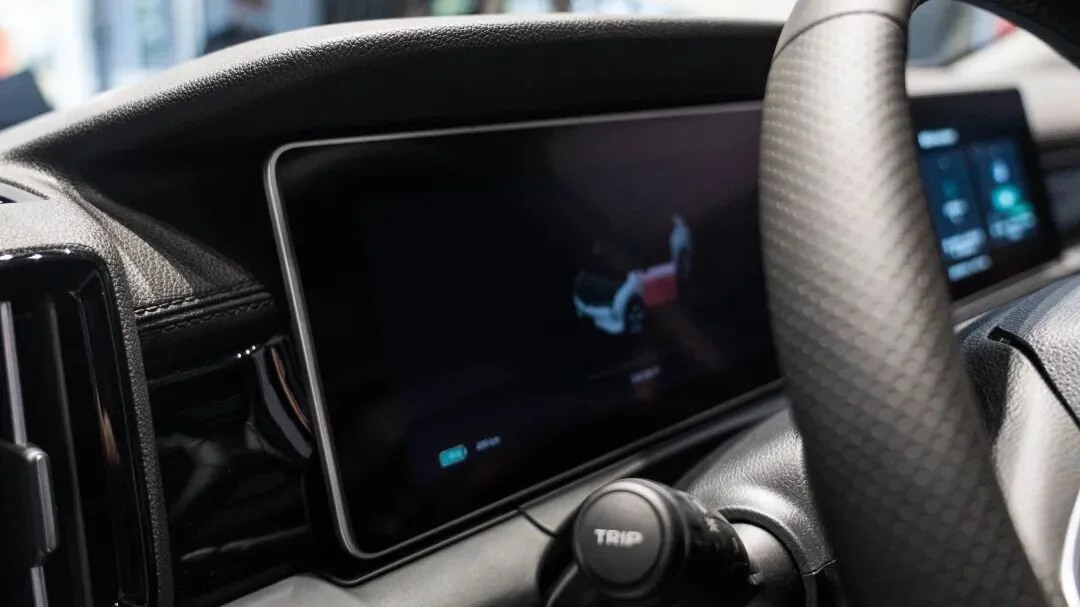
8155 Chip Drives Three Screens
Stepping inside, the infotainment system shows two immediate changes. The original 12.8-inch rotatable portrait screen has been replaced by a fixed 12.3-inch landscape display, forming a dual-screen layout with the instrument cluster. The second change is that the iControl area near the center console has evolved from a simple touch zone into an actual screen.
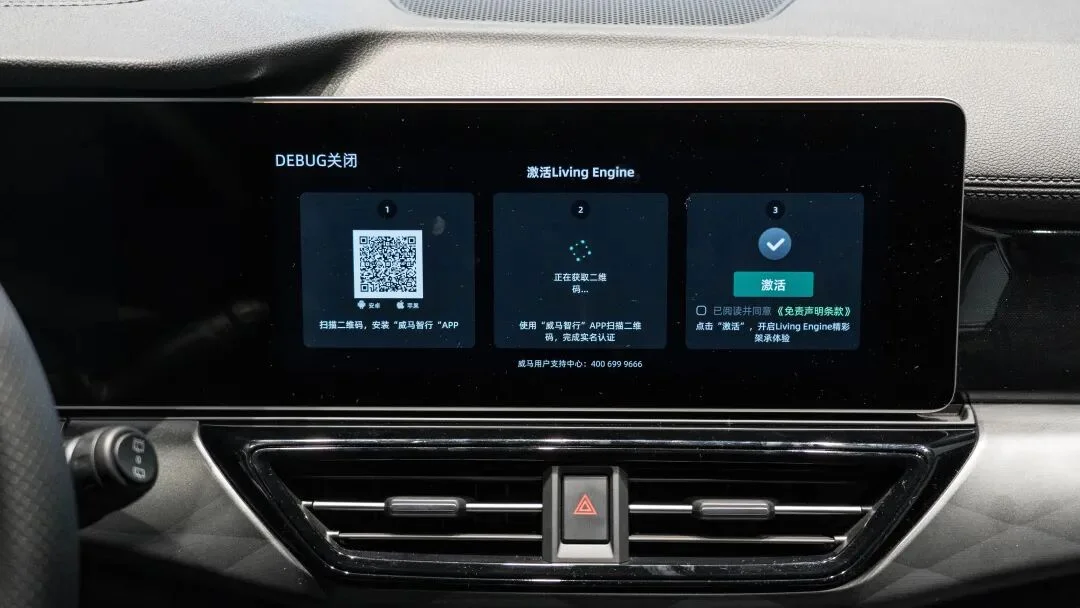
The dual-screen design was first introduced with the 2013 W222 Mercedes-Benz S-Class and has been widely emulated by other automakers over the past seven years.
In the EX5, Weima employed a rotating mechanism allowing the center screen to switch between portrait and landscape orientations. During driving, only the portrait mode is available; when parked, it switches to landscape for a better movie-watching experience while waiting in the car.
However, the vertical optional screen had two drawbacks. First, the lower portion of the screen sits low, requiring drivers to look away from the road for longer periods to tap controls while driving. Second, to avoid obstructing the driver’s view, the top edge of the screen does not extend far beyond the dashboard, placing the rotation axis relatively low. This results in a suboptimal viewing experience in landscape mode.
After three years of development, Weima ultimately adopted the more mainstream dual-screen configuration, which better aligns with user experience expectations.
Looking further down, a third screen becomes visible on the Weima.
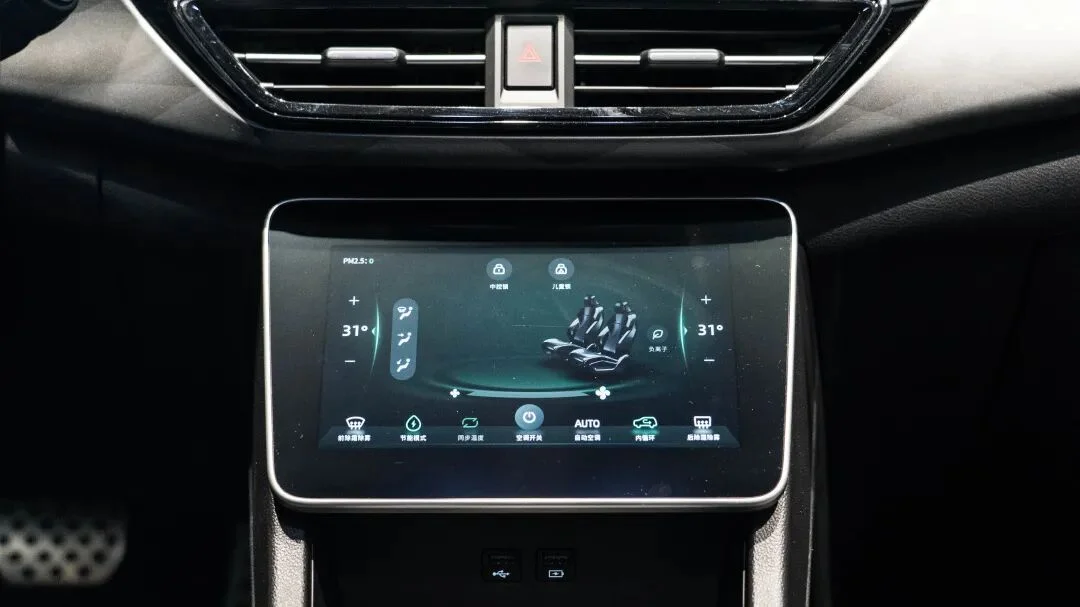
If you are familiar with the EX5, you will notice that this screen is not an isolated addition but a derivative of the original iControl area.
The iControl area on the EX5 integrated high-frequency functions such as locking, voice control, and air conditioning. However, the functionality of this touch area was quite limited, and it provided no physical feedback during operation, resulting in a subpar overall user experience.
In the W6, Weima has taken a significant step forward by upgrading to the iTouch touch screen. This upgrade not only offers richer functionality but also provides a clearer division of labor for the vehicle's infotainment system: the instrument cluster is responsible for displaying driving information, the central touchscreen handles entertainment content, and the iTouch area controls the air conditioning.
To ensure smooth performance across these three screens, the Weima W6 is equipped with the 8155 chip, currently the fastest among automotive-grade chips. Unfortunately, the static display vehicle's infotainment system was non-functional during our review. Therefore, we can only evaluate the UI design, functionality, and fluidity of the W6's infotainment system after obtaining a test drive unit for further experience.
04The Elimination Round: What Does the Weima W6 Rely On?
From the static experience described above, it is evident that Weima, which has been selling cars for three years, has moved from confusion to clarity regarding its target users' needs. Whether in the design and craftsmanship of the exterior and interior or in areas where features should be "stacked," correct choices have been made.
However, merely solidifying these foundations is clearly insufficient to capture user mindshare in this era of "intelligence."
There is another nickname for the W6: China's first mass-produced model capable of unmanned driving.
Doesn't that sound like a gimmick?
Although I was tempted to criticize it, a closer look reveals that in parking lot scenarios, the W6 has indeed achieved autonomous driving.
Our colleague Chang Hao tested this feature in Hubei late last year; interested readers can review his earlier experience video.
The W6 features a new electronic and electrical architecture, with its unmanned autonomous parking system jointly developed by Weima and the Baidu Apollo platform.
On the hardware side, the vehicle is equipped with a 7-nanometer Gaotong 8155 chip, a 5G baseband, and a self-developed autonomous driving domain controller by Weima. The car carries 22 sensors in total, including five 77 GHz millimeter-wave radars, five cameras, and twelve ultrasonic radars.
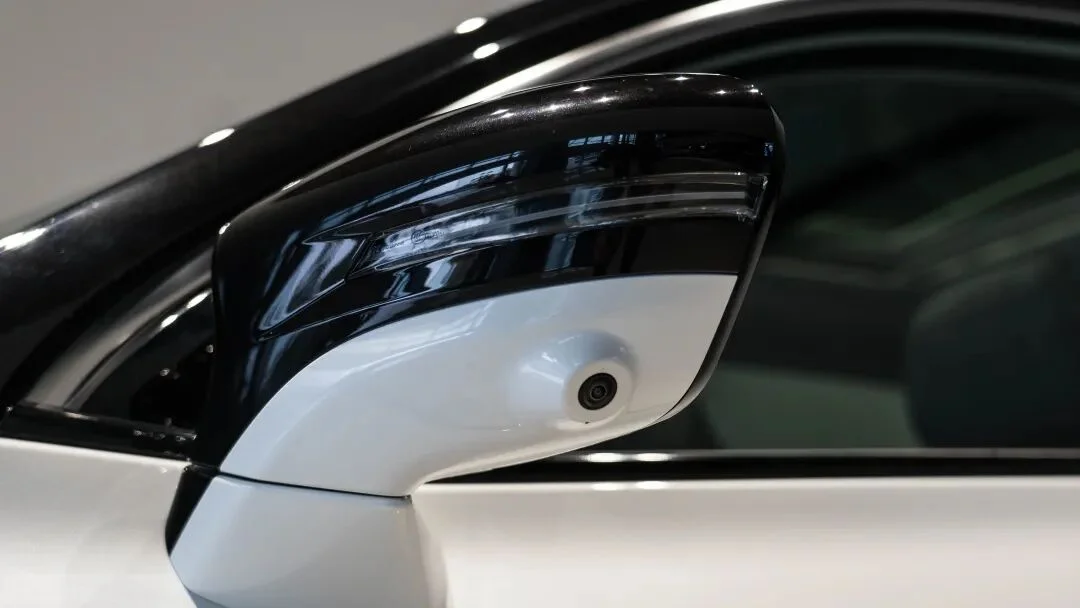
Based on these sensing devices, the W6 can collect parking lot data and transmit it to cloud servers. After the system completes autonomous learning, it enables automatic parking without a driver inside the vehicle.
Regarding advanced driver assistance capabilities, Weima stated that it will implement advanced driver assistance functions via OTA updates in 2021.
Final Thoughts
Compared with the three new EV makers—Lixiang, NIO, and XPENG—Weima has been less vocal about its intelligent features. While EX5 sales have held their own, regional data shows that EX5 primarily targets buyers in second- and third-tier cities who are less sensitive to smart capabilities. For these consumers, the affordability of the electric vehicle is the more compelling selling point.
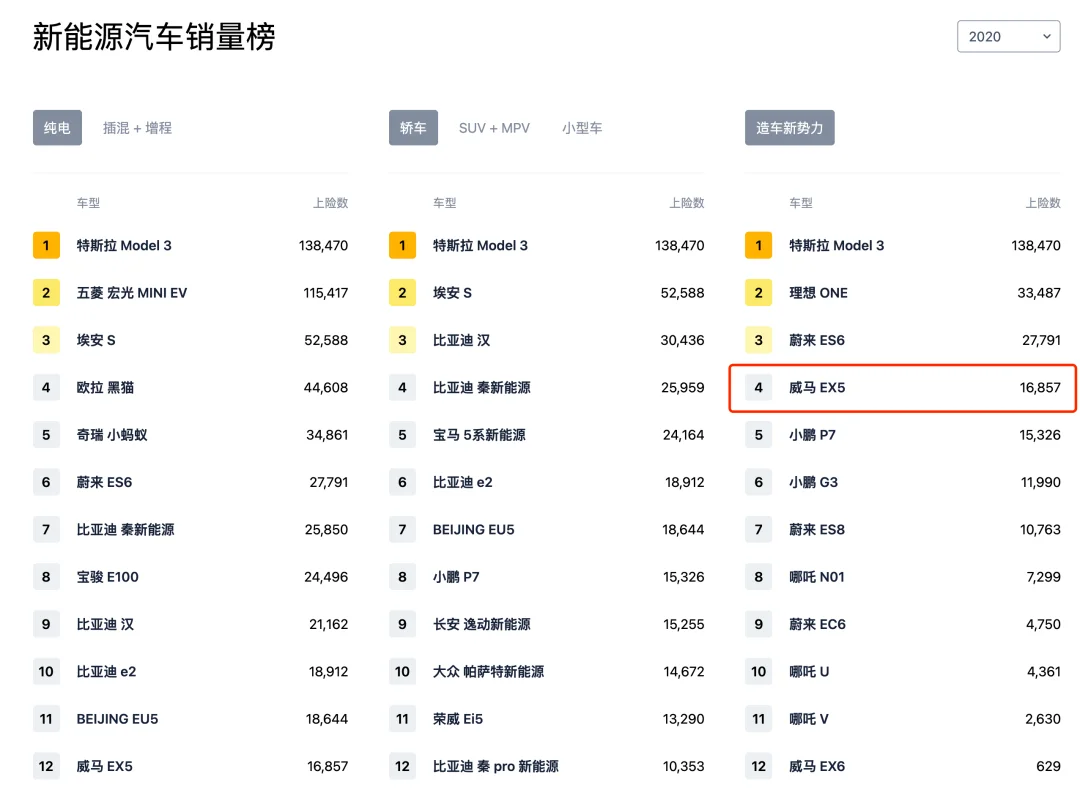
These customers remain a valuable asset for Weima. As smart features become more prevalent, an increasing number of buyers will eventually pay for them. If Weima can deliver a product that meets those needs in time, these users’ trade-ins and referrals will follow naturally.
This may be Weima’s strategy to break through in the next era of the 200,000-yuan SUV market.
Written by: Lu San Edited by: Daji