


VOYAH Mengxiangjia Track Test: Handling, Suspension and Hybrid Performance
A few days ago, our editorial team received a VOYAH FREE pure electric test vehicle. After an in-depth experience, the aspect that left the deepest impression on me was its well-tuned air suspension. The excellent road isolation, the substantial filtering quality over large bumps, and the outstanding cornering support all earned my approval.
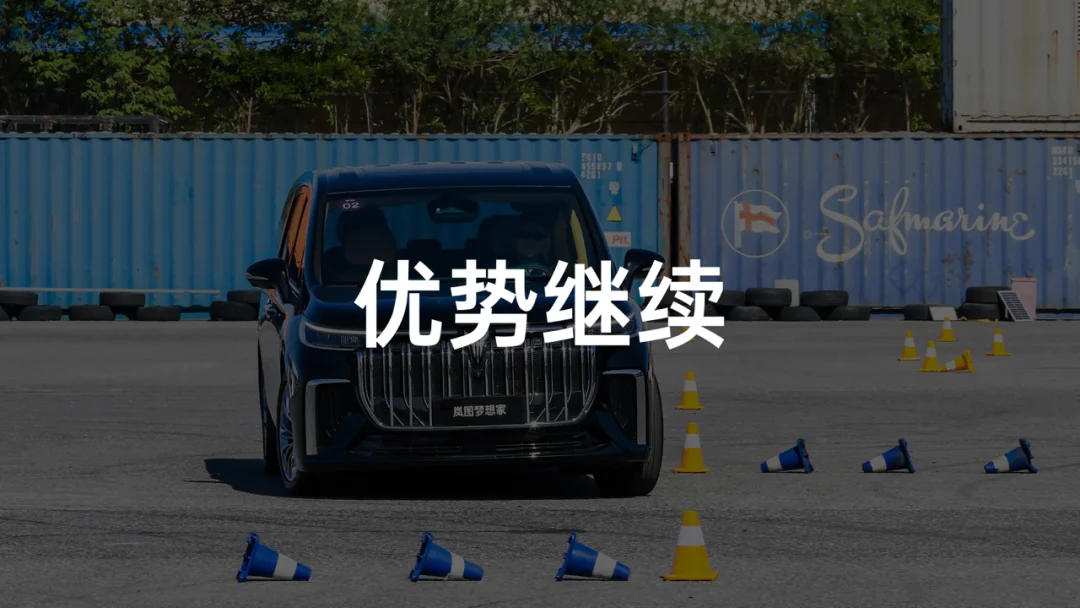
Coincidentally, right after experiencing the VOYAH FREE, VOYAH's second product—the Mengxiangjia—began its on-site test drive. Perhaps out of confidence in its powertrain and chassis performance, the theme of this VOYAH test drive event was surprisingly 'Intelligent Driving Control'.
Interesting: can a mid-to-large SUV weighing nearly 2.5 tons and measuring 5,315 mm in length inspire confidence in its driving dynamics?
01Air Suspension + Magic Carpet, Strengthening the Strengths
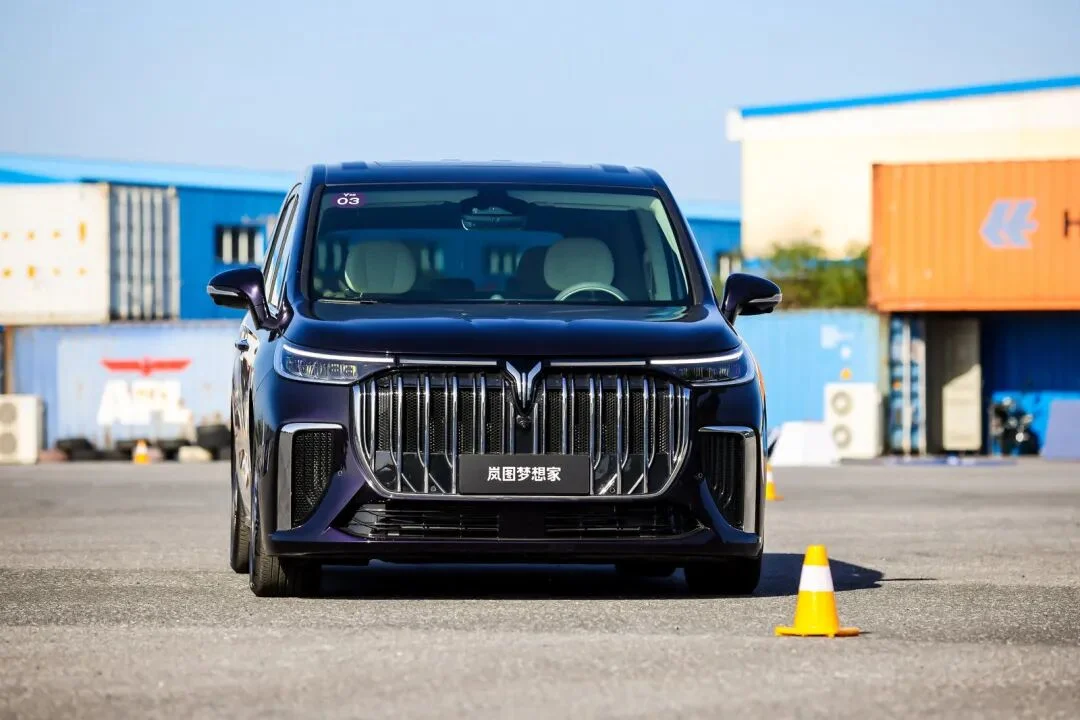
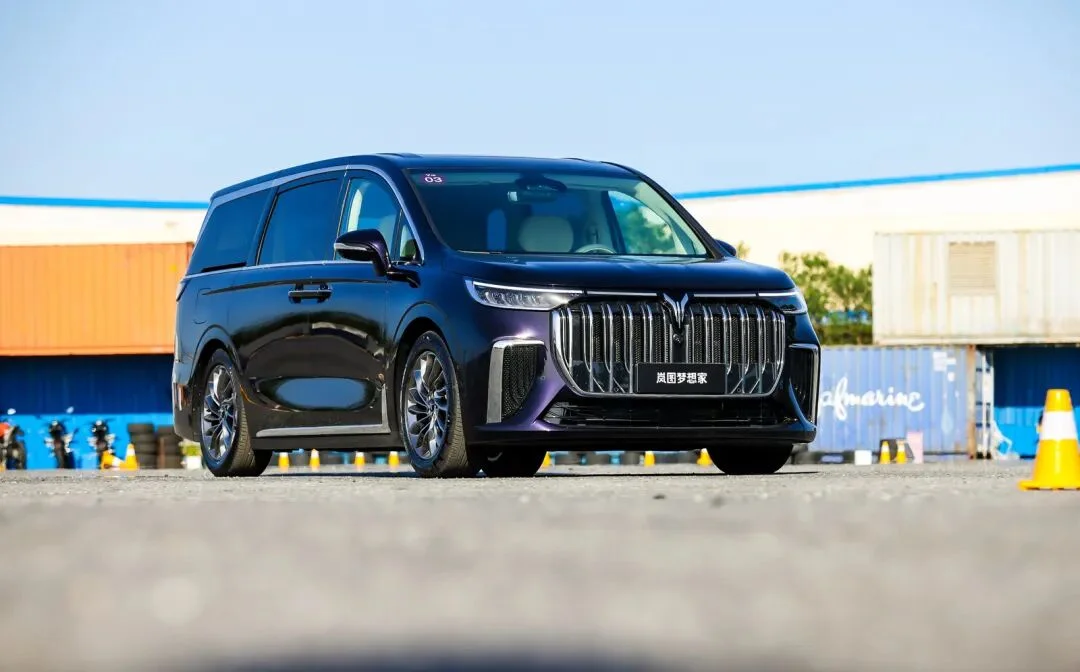
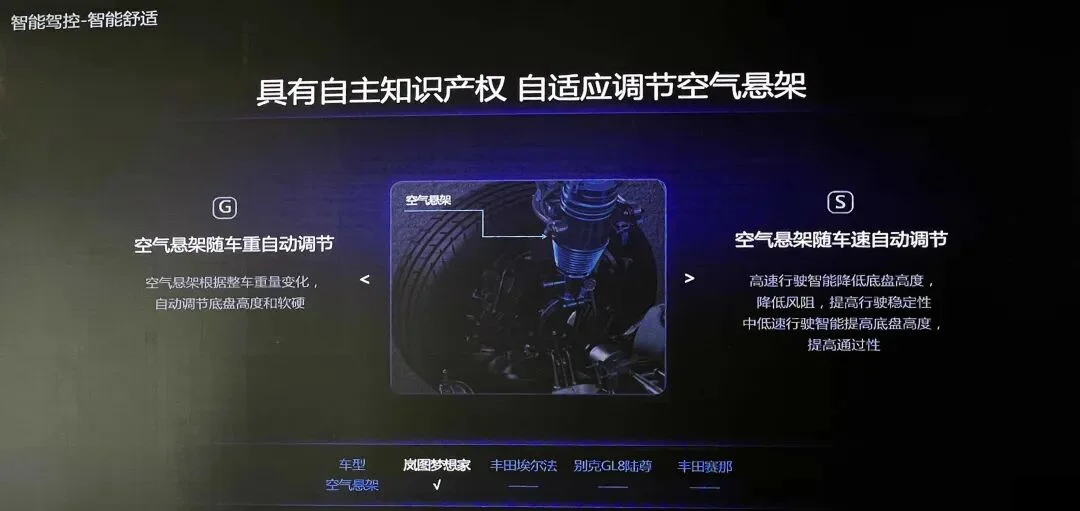
VOYAH Mengxiangjia's chassis is consistent with that of the FREE: it features a front double-wishbone and rear five-link independent suspension, with aluminum alloy used for the chassis components. Like the VOYAH FREE, its air suspension supports 60 mm of active height adjustment, automatically adapting to different driving conditions.
The scenario expansion of air suspension has become more extensive: Mengxiangjia's air suspension features a "VIP Courtesy Mode," in which the ground clearance automatically lowers to 103 mm when passengers are getting in or out and retrieving luggage. Additionally, like VOYAH FREE, Mengxiangjia offers "High Performance Mode," "Excursion Mode," "Comfort Mode," and "Economy Mode."
Under "Comfort" or "Economy" modes, the VOYAH Mengxiangjia maintains a ground clearance of 133 mm with the shock absorbers positioned at their mid-stroke, providing greater suspension travel reserve.
In "High Energy" mode, the ground clearance drops to 103–113 mm. This setting enhances suspension support and lowers the center of gravity, improving handling and stability. In "Excursion" mode, the air suspension raises to its maximum height, achieving a ground clearance of 163 mm.
At this height, the chassis of the VOYAH Mengxiangjia, an MPV, approaches that of an SUV, offering better off-road capability than traditional MPVs.
These features are standard on the VOYAH FREE. For a large MPV priced between RMB 369,900 and RMB 639,900, VOYAH aims to elevate the driving experience further. The Mengxiangjia is equipped with "Magic Carpet" CDC dampers that link with the front-facing camera. The system scans road data ahead 500 times per second and adjusts suspension damping adaptively 100 times per second to enhance comfort. Additionally, the suspension can adjust damping based on body pitch and roll in all directions, theoretically suppressing sway.
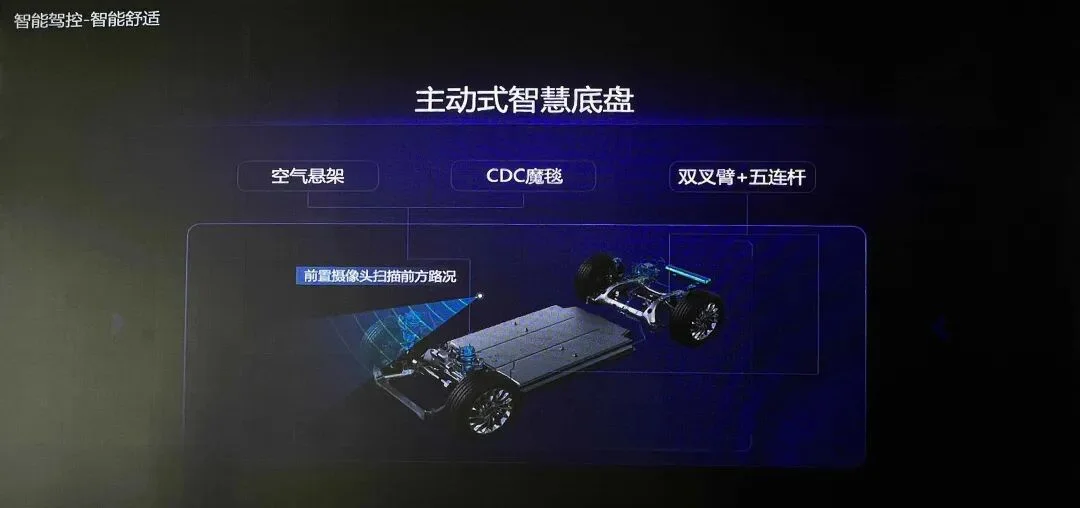
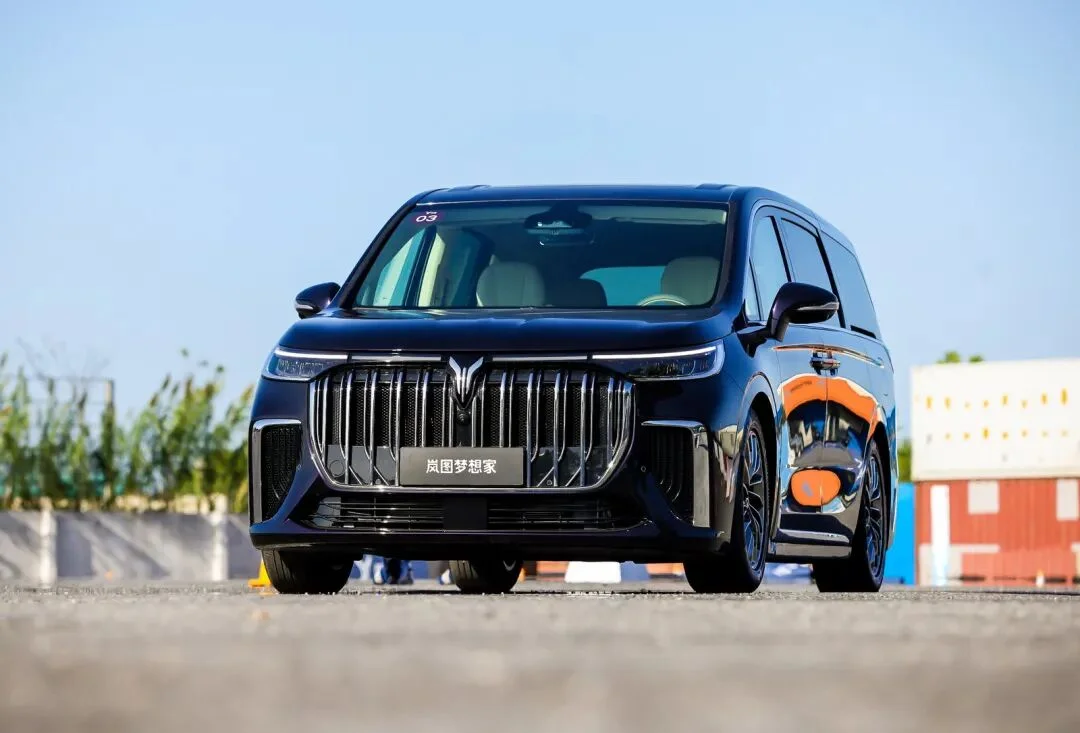
On chassis configuration, Mengxiangjia indeed inherits the extensive component stacking tradition established since the FREE. Having reviewed the specifications, what do these hardware features actually bring to an MPV?
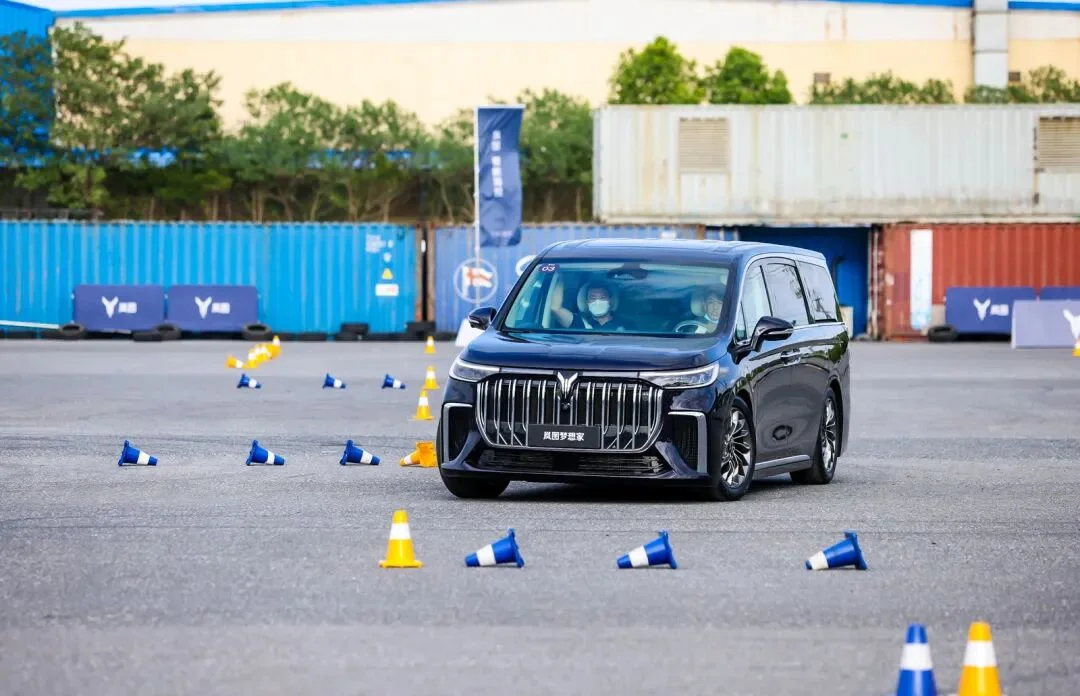
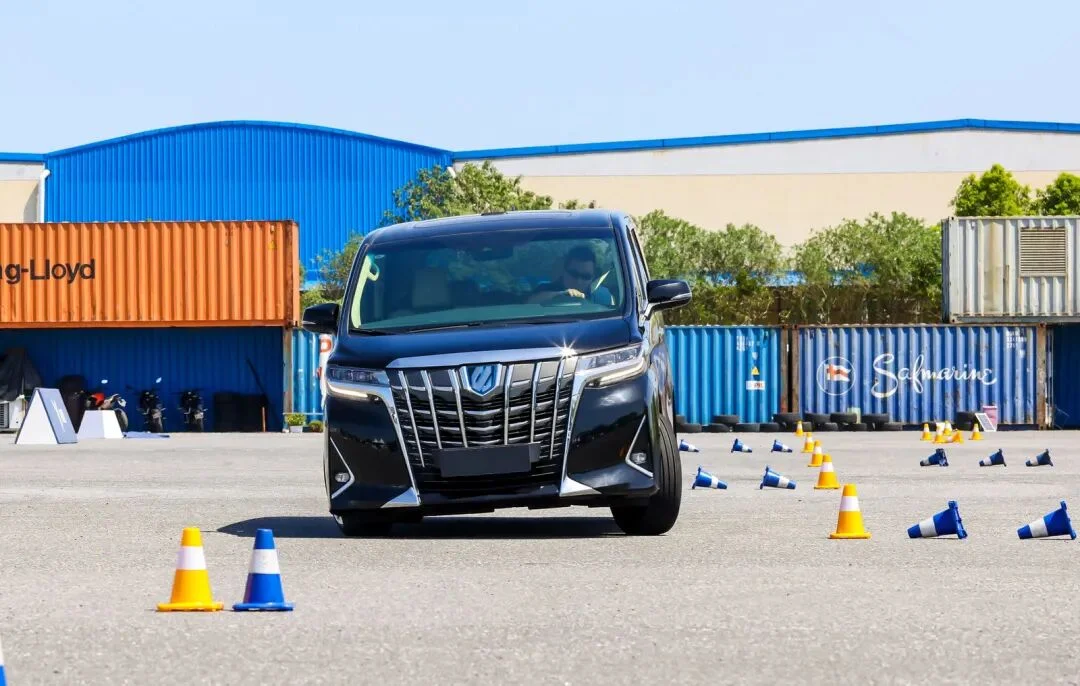
At the venue test drive event, VOYAH confidently set up GL8, Saina, and Aierfa as comparison models. The course included slalom sections, dense speed bumps, and double humps, allowing participants to freely choose comparison vehicles for cross-experiences. However, it should be noted that besides Mengxiangjia being a new vehicle, differences in the condition of competitor vehicles and tire pressures mean the cross-experience was not conducted under 100% uniform objective conditions.
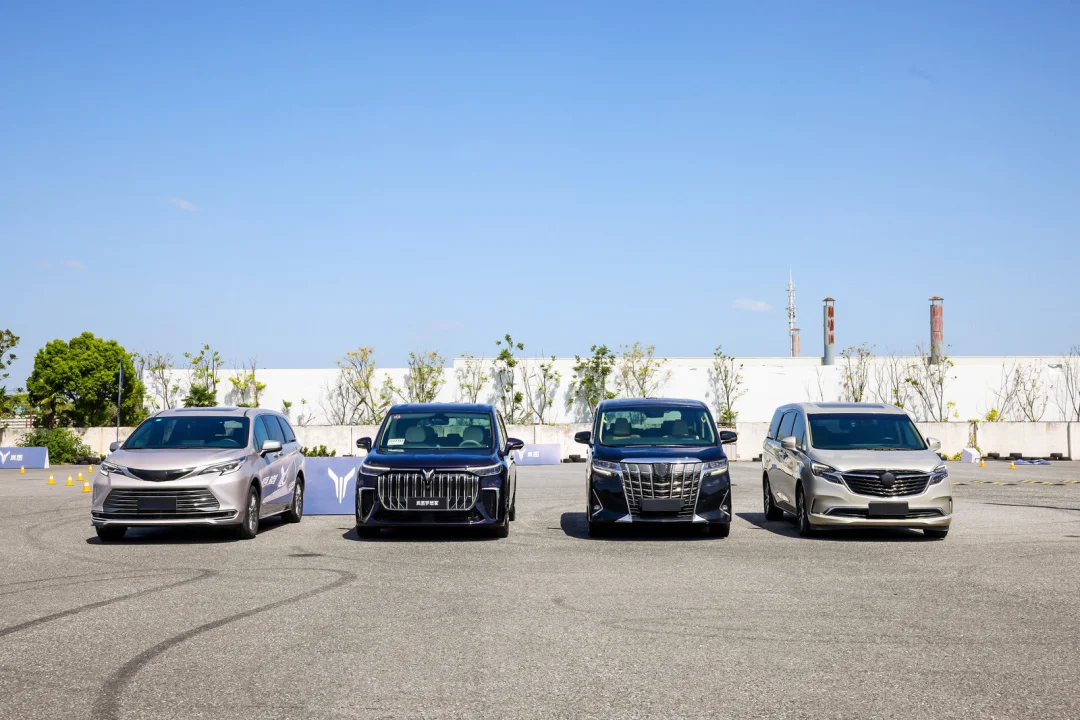
The first activity was the slalom test. In 'High Energy Mode,' Mengxiangjia's suspension stiffness increases to some extent, and steering becomes heavier. However, these changes are relative to the vehicle's other modes. After testing, I found that even in 'High Energy Mode,' the suspension still exhibited significant body roll during turns, and the steering remained light.
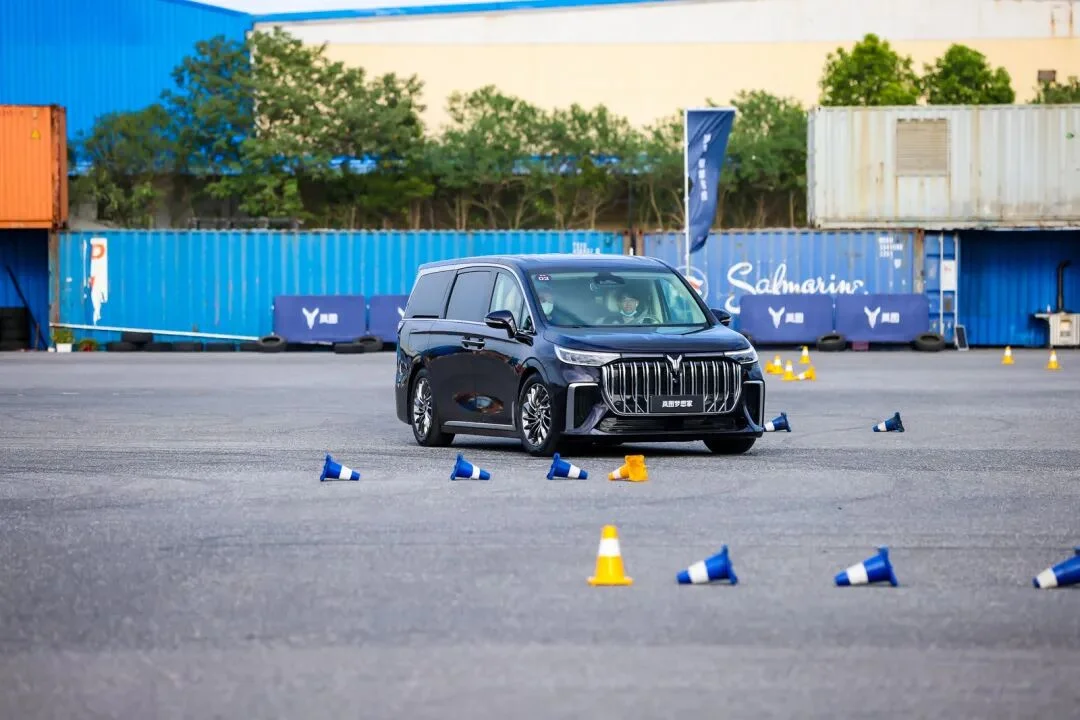
Compared to the Toyota Aierfa experienced in the cross-test, VOYAH Mengxiangjia demonstrated significantly better body follow-through. Trust me, applying the same force to both vehicles, driving the Aierfa induces far greater fear.
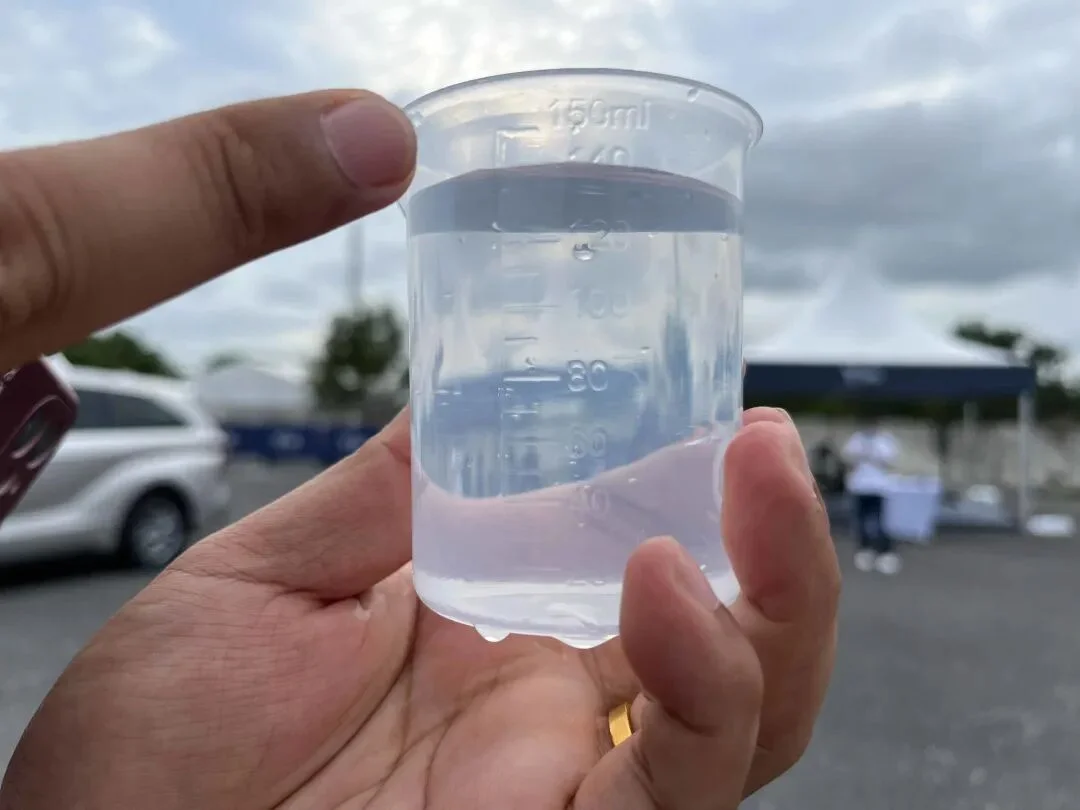
During the dense speed bump and double-hump road segments, VOYAH placed a full 150 ml cup of water in the rear seats of both the Mengxiangjia and its competitor. The vehicle with the least amount of spilled water after completing both tests was declared the winner.
For these two segments, I selected the Toyota Saina as the comparison model. Although the Saina uses traditional coil springs, its comfort remains solid. Thanks to the Mengxiangjia’s air suspension and CDC dampers, it offered slightly better isolation and resilience when traversing such large bumps.
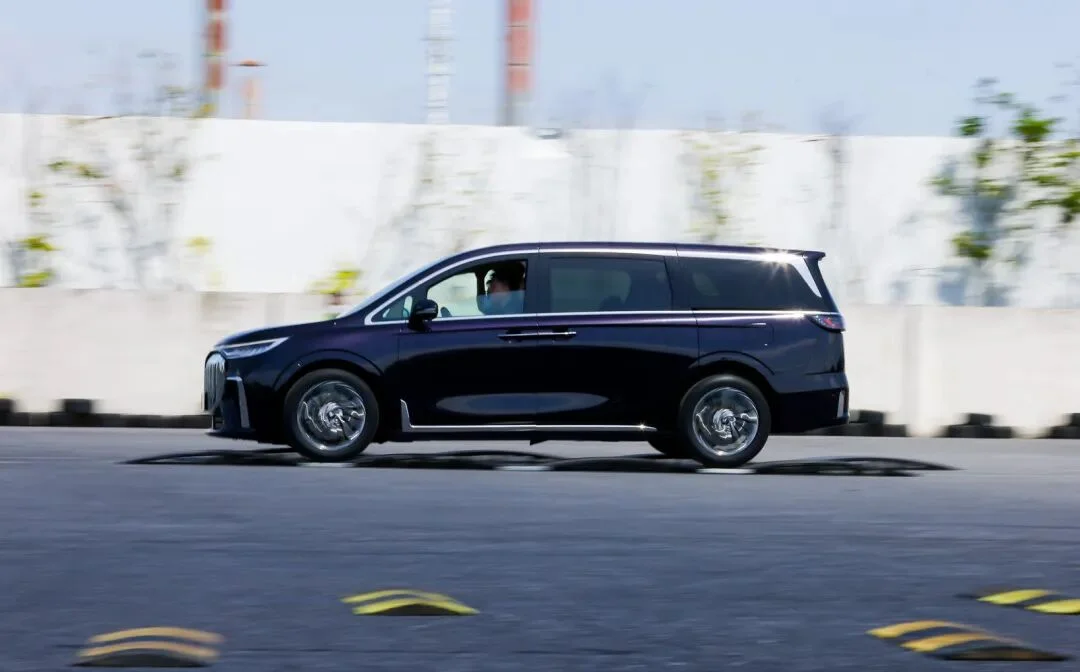
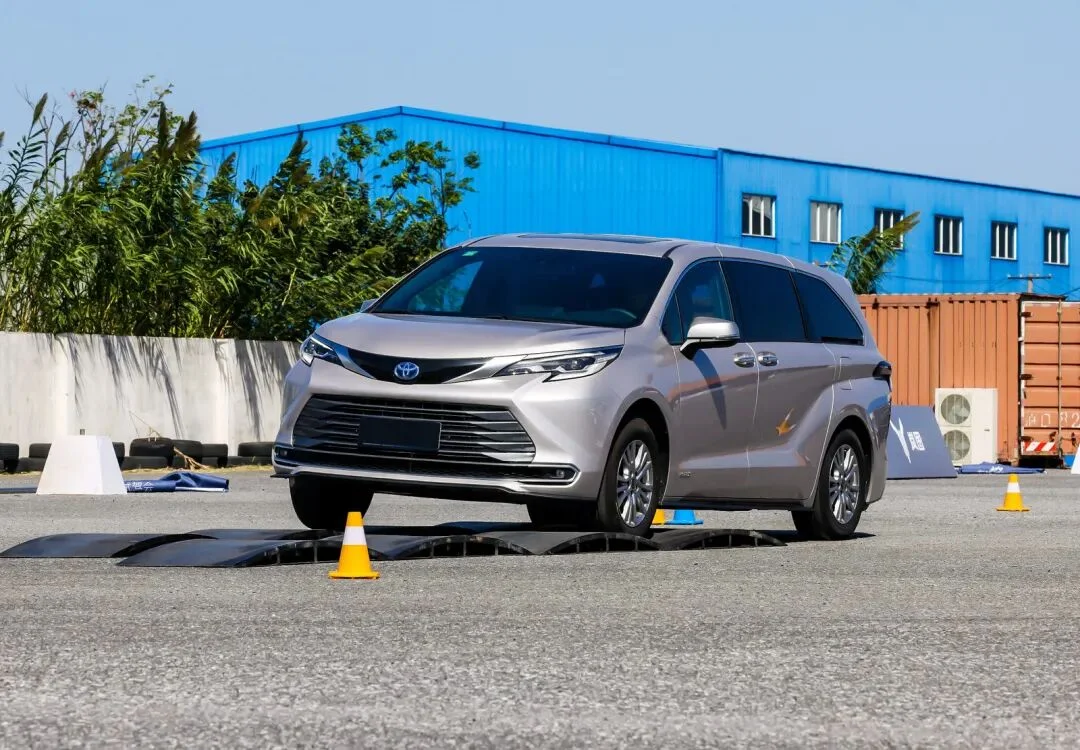
These test scenarios are relatively extreme; the Mengxiangjia’s comfort-oriented air suspension is truly designed to filter out fine, small road imperfections, creating a pleasant “floating” sensation. Therefore, I am eager to experience its performance during future on-road tests.
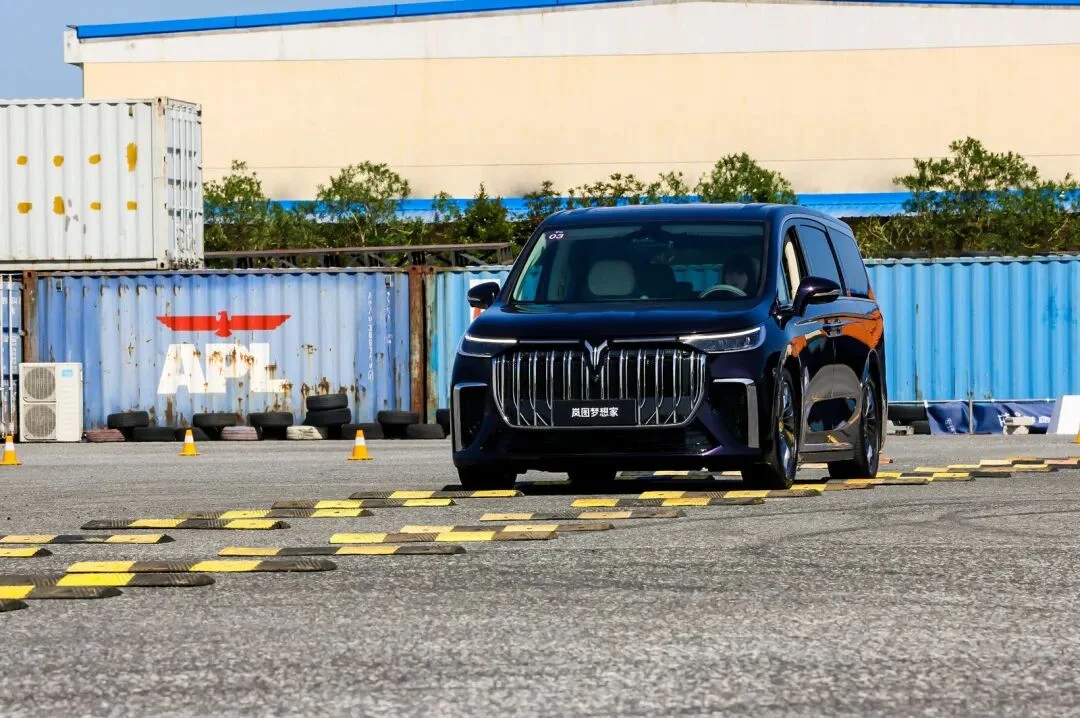
The Mengxiangjia’s tire aspect ratio is 50, which is at a disadvantage compared to the Saina’s 65. However, after driving both vehicles for the entire course, the Mengxiangjia’s rear cup spilled only 10 ml of water, while the Saina’s spilled 40 ml. It should be noted that due to venue limitations, it was difficult to maintain consistent speeds during the cross-comparison runs, making this more of an entertaining mini-test.
With the suspension experience segment concluded, we moved on to the powertrain experience. From dual routes of pure electric/extended-range to pure electric/hybrid, how is Mengxiangjia's new powertrain?
02From Range-Extended to Hybrid, Speed Remains the Main Theme
Compared to the range-extended architecture in the VOYAH FREE, the VOYAH Mengxiangjia now adopts a single-speed direct-drive layout with P1 and P3 configurations. Through a clutch between the engine and the front axle, the engine can choose whether to provide direct drive or parallel drive based on speed and operating conditions. Theoretically, this improves fuel economy.
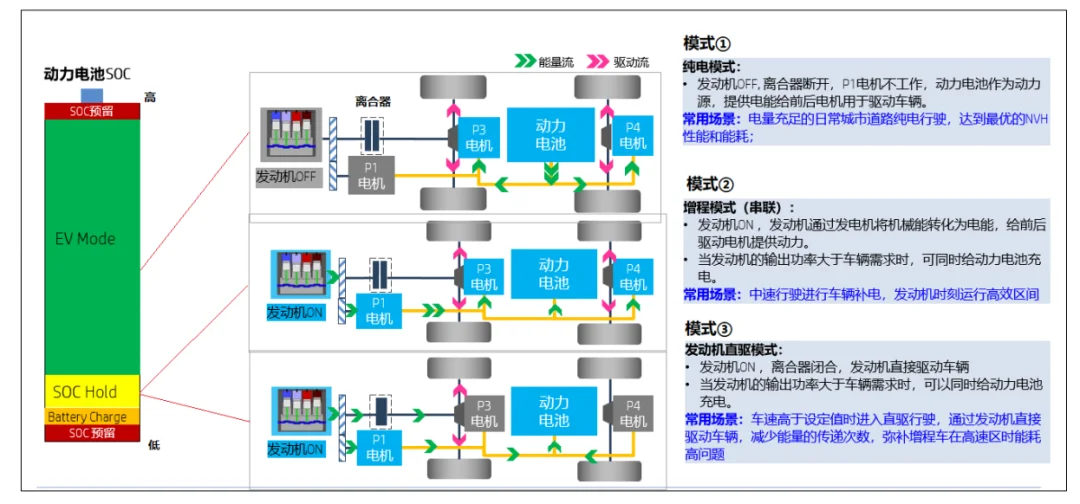
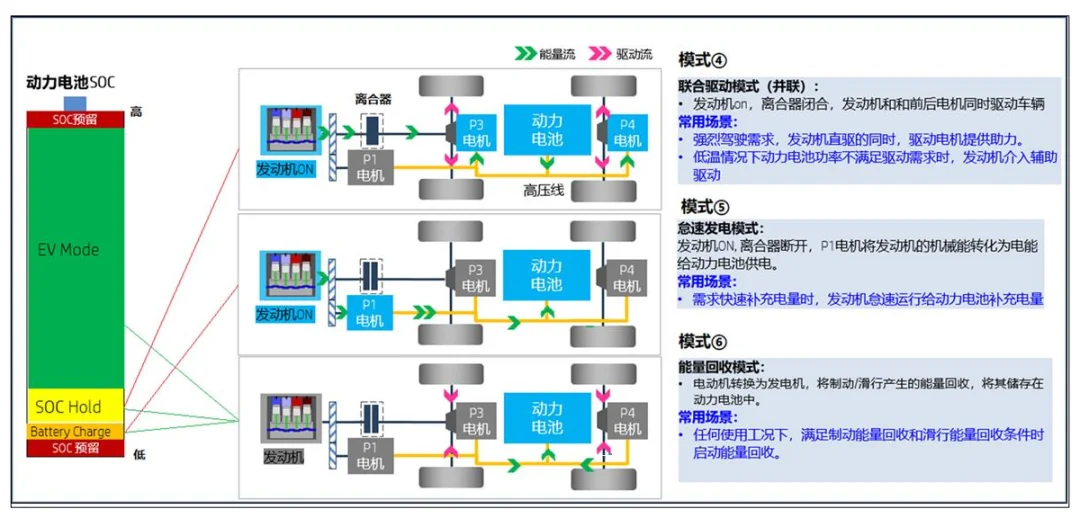
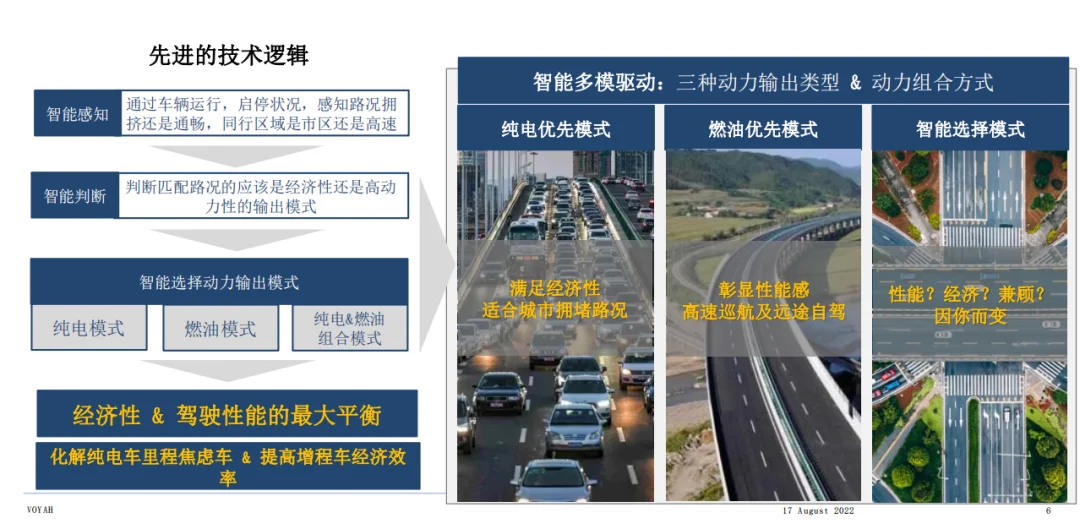
In principle, this single-speed direct-drive system with a clutch is similar to BYD's DM-i, using a large battery pack to enable pure electric driving in most operating conditions. Regarding driving modes, Mengxiangjia offers three options: "Pure Electric Priority," "Fuel Priority," and "Intelligent Selection." In the "Intelligent Selection" mode, the vehicle automatically determines the optimal strategy based on running status, vehicle speed, and driving style.
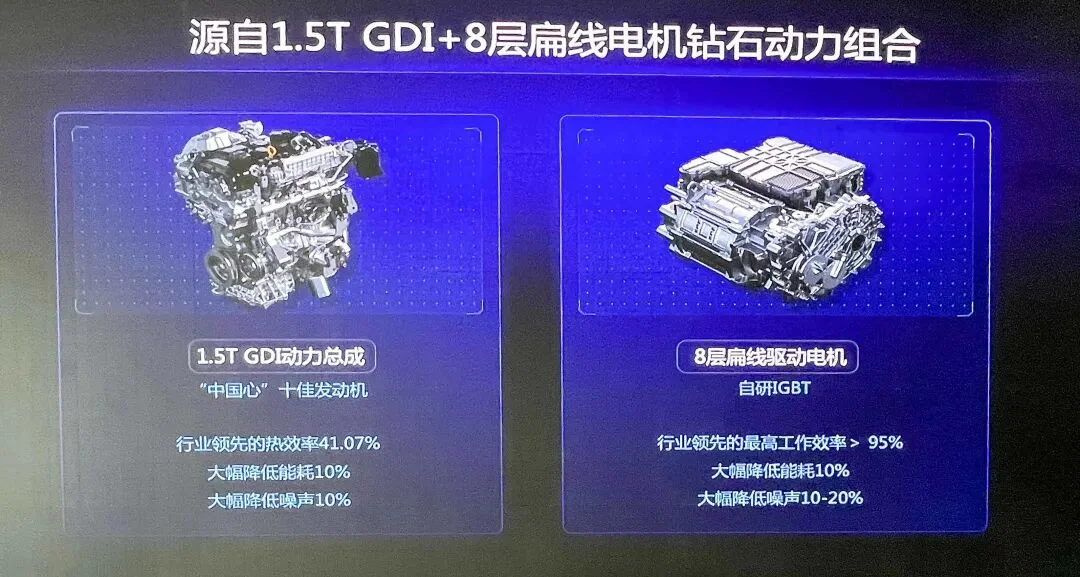
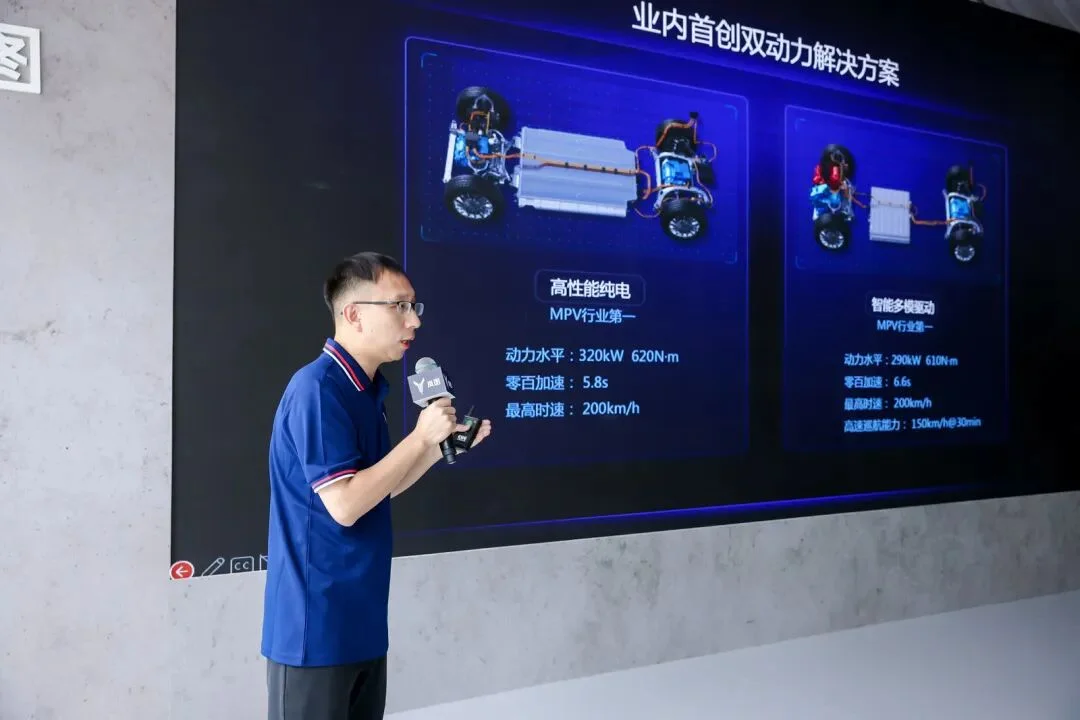
VOYAH Mengxiangjia uses Dongfeng's self-developed 1.5 TGDI hybrid engine, with a maximum power of 100 kW. The battery pack capacity is 25.57 kWh, and the official minimum state-of-charge fuel consumption is 7.4 L/100 km. The hybrid version of Mengxiangjia features dual motors on the front and rear axles, with a maximum power of 290 kW and a maximum torque of 610 N·m, achieving 0-100 km/h acceleration in 6.6 seconds. Although slightly slower than the pure electric version's 5.8 seconds, it remains uniquely fast in the MPV market.
We did not have the opportunity to experience this system in daily driving, so understanding the vibration, noise, and energy consumption of the hybrid Mengxiangjia will require future road tests. The focus here was on straight-line acceleration, using the 2.5-liter HEV MPV "big brother" — Aierfa — as the comparison vehicle.
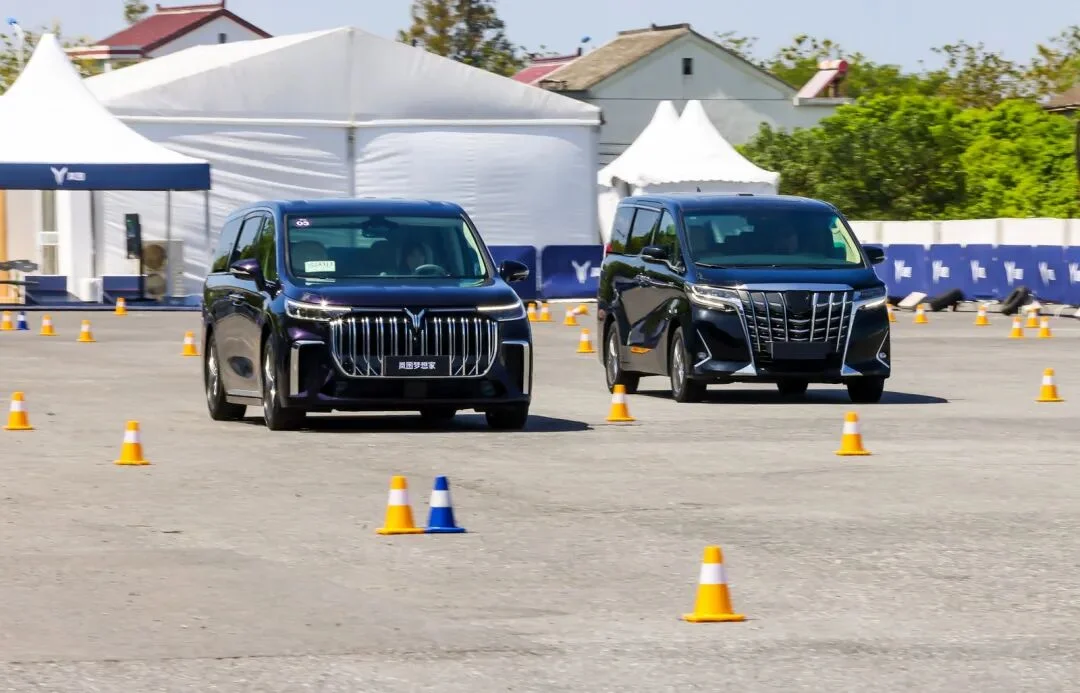
The outcome was no surprise: the Aierfa’s hundred-kilometer-per-hour acceleration was uneventful, with its high-pitched engine roar offering no excitement. In contrast, the sub-6-second acceleration of the 2.5-ton Mengxiangjia could even induce a sense of fear.
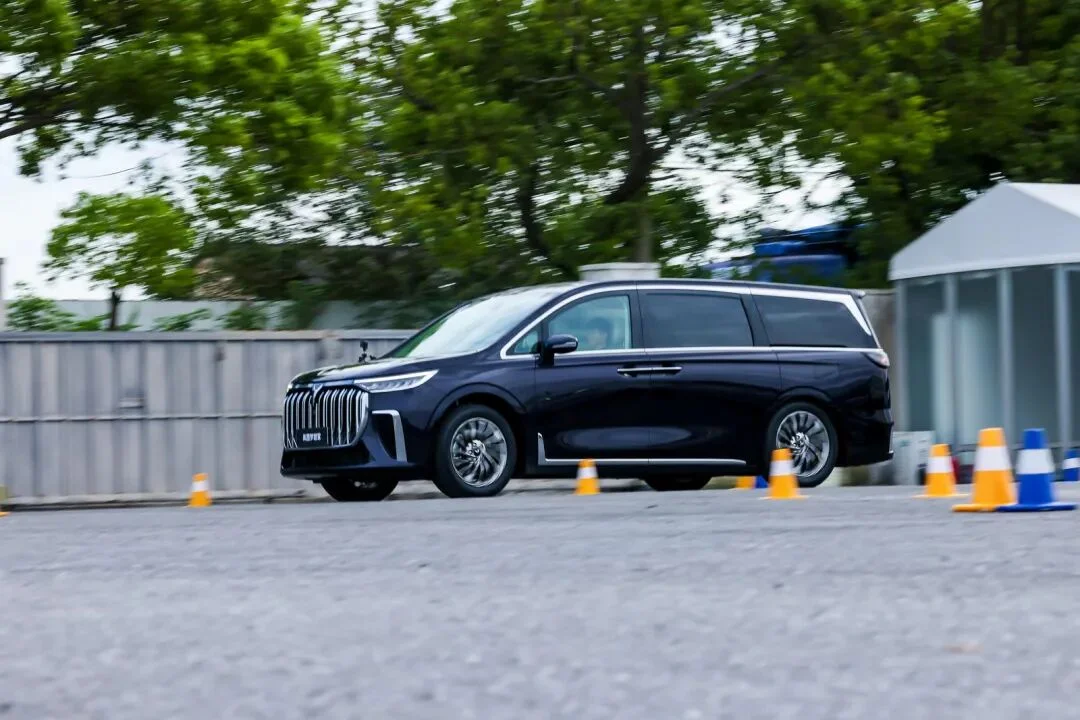
Before the Mengxiangjia, it seems no other MPV had been tested for zero-to-hundred acceleration on a track. While thrilling, I still hope that when experiencing the Mengxiangjia’s comfort in the future, it can deliver equally surprising results.
Beyond acceleration, the Mengxiangjia also outperformed the Aierfa in braking. Its overall brake pedal feel, stability, and consistency between front and rear axles felt more like an SUV. The Aierfa is not suited for such aggressive driving; during hard braking, its rear wheels nearly lifted off the ground, creating a frightening sensation inside the cabin that the vehicle might flip forward.
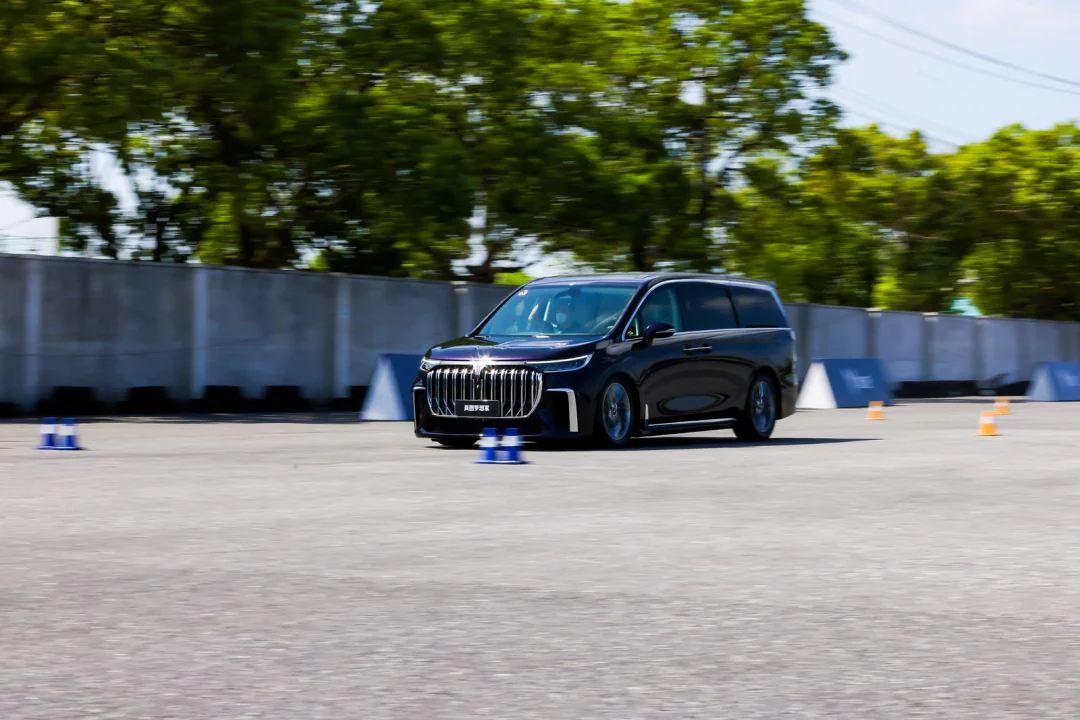
It is undeniable that in terms of absolute power performance and chassis hardware, the Mengxiangjia has left the GL8, Saina, and Aierfa far behind. However, when I put myself in the shoes of a potential consumer for the Mengxiangjia, I realized that performance and handling may not be as critical. I hope that in future comparisons focused on comfort, VOYAH can confidently bring out the Aierfa and proudly claim to have surpassed it.
03From Black Box to White Box: Autonomous Driving Has Room to Improve
In an era where new-energy vehicle startups compete fiercely on autonomous driving and cabin experiences, the FREE appears somewhat out of place with its strengths in chassis dynamics and driving feel. These highlights are difficult for consumers to perceive, so it is understandable that the model suffers in awareness.
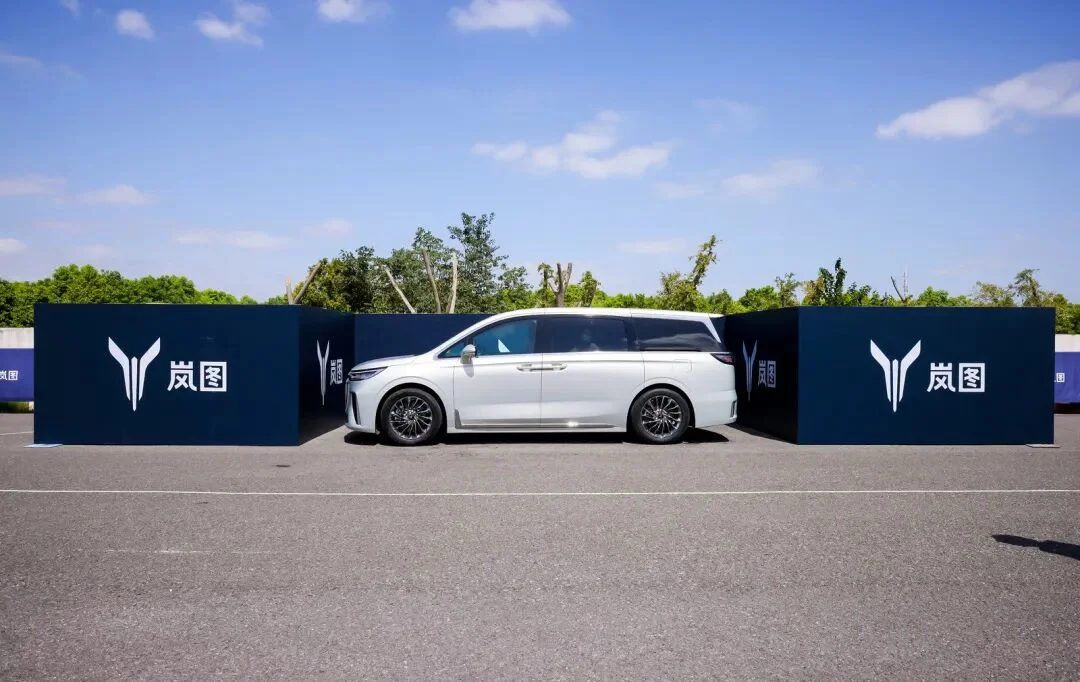
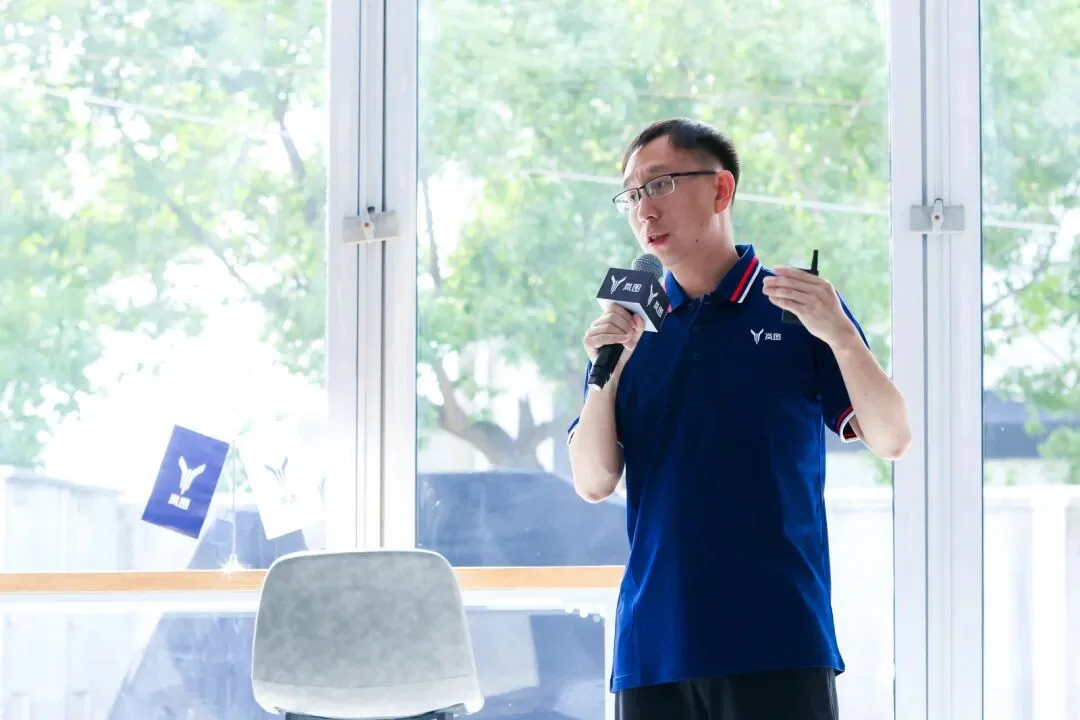
However, compared to the FREE, the Mengxiangjia’s autonomous driving capabilities could see improvement. According to the product engineer on site, the Mengxiangjia’s driver-assistance solution has shifted from Bosch’s black-box approach to a supplier white-box scheme. In other words, VOYAH Mengxiangjia now holds greater definition authority, allowing its own team to participate in defining, developing, and refining the user experience.
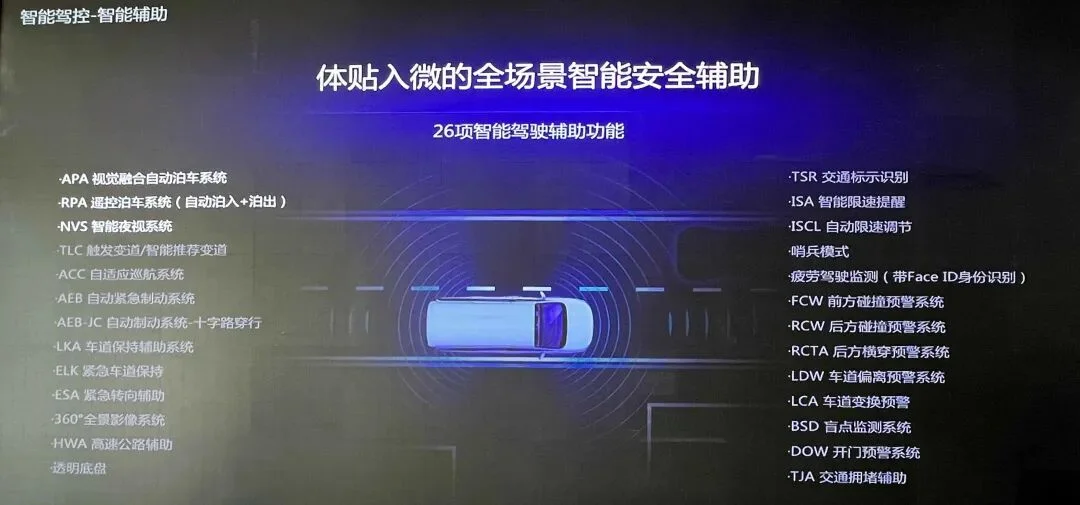
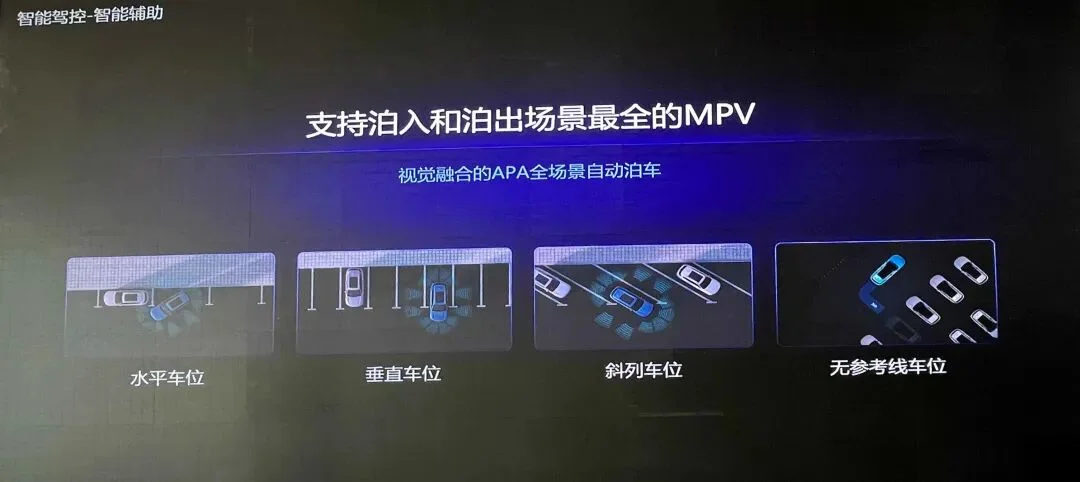
We are starting to see the signs. During this venue test drive, VOYAH demonstrated its APA (All-Scenario Automatic Parking Assist) and RPA (Remote Parking Assist) systems. After practical experience, the system’s ability to recognize parking spaces, the smoothness of its operation, and its execution strategy all reached a high standard. In fact, I feel the system has entered the realm of being "aggressive": when maneuvering, it can get as close as 20 cm to a wall, which looks intimidating from the interior perspective. However, this also demonstrates VOYAH's confidence in the system.
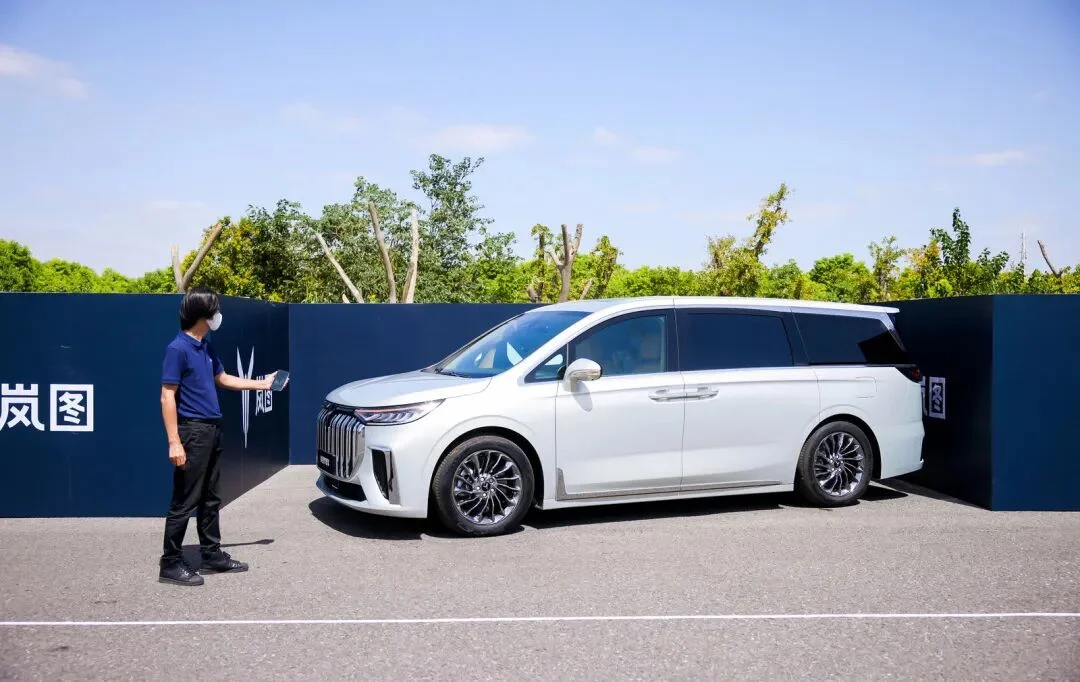
Remote parking-in and parking-out can be controlled via Bluetooth signal; after exiting the vehicle, the driver can operate it with one click through the car control app, which is very practical for a large vehicle measuring 5.3 meters. Engineers explained that the system utilizes not only 12 ultrasonic radars located at the front and rear but also cameras throughout the process. The system functions normally even in low-light or dimly lit parking lots.
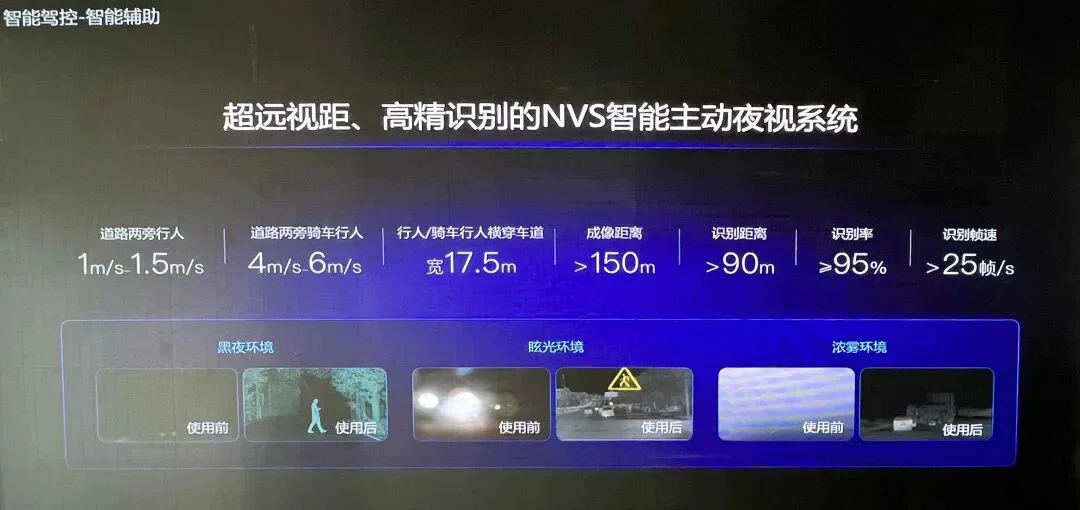
The night vision system featured on the FREE is also present on Mengxiangjia. The actual user experience is excellent: it can identify pedestrians along the roadside, as well as cyclists and pedestrians crossing the lane. The recognition distance exceeds 90 meters, the frame rate for clear identification is greater than 25 Hz, and the recognition rate is over 95%. During the on-site demonstration, with low beams turned on, one could only barely see the shoes of a pedestrian ahead, with their body shrouded in darkness; however, with night vision enabled, the driver could see a clear image on the instrument cluster.
Seeing these features, I am eagerly anticipating how much the basic driver assistance capabilities of Mengxiangjia will improve in future tests.
04Conclusion
Just like its sibling FREE, Mengxiangjia boasts excellent chassis dynamics. Allowing readers to experience the handling and power of an MPV firsthand further underscores VOYAH’s confidence in its tuning.
However, for buyers in this price segment, rapid acceleration, cornering, and suspension performance on rough roads are not primary concerns. Users spend 95 percent of their time on daily commutes and long-distance travel. For a luxury mid-to-large MPV that serves a long-term lifestyle, everyday comfort is far more representative.
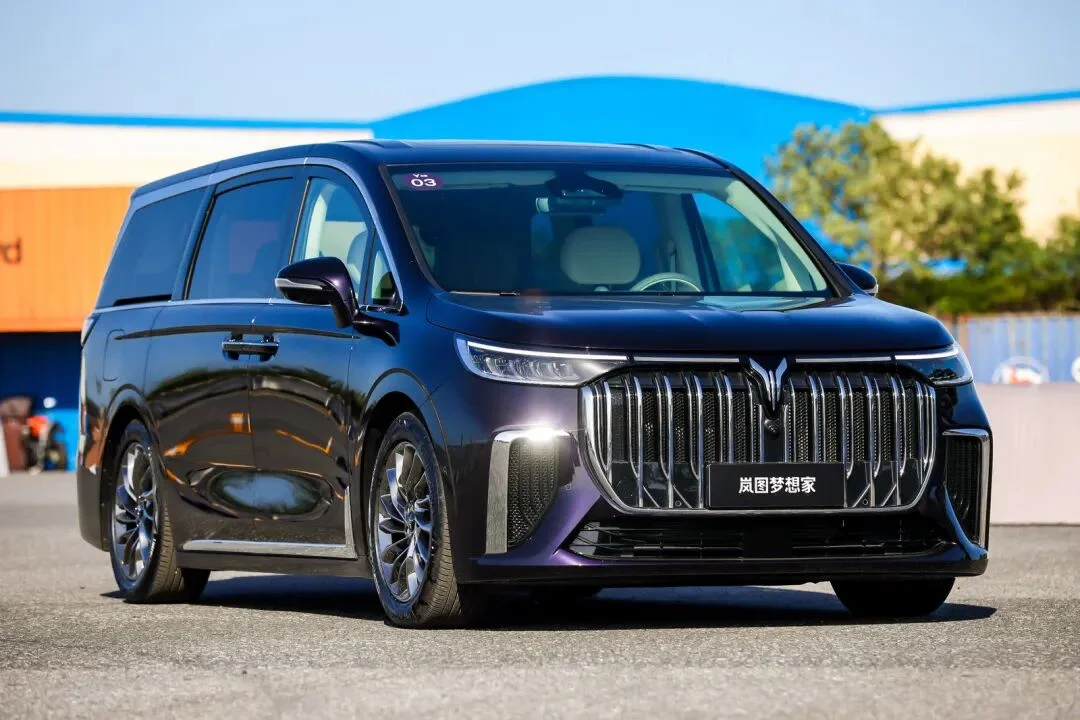
After experiencing Mengxiangjia’s suspension performance in extreme scenarios, I feel reassured and look forward to evaluating its daily suspension behavior and powertrain performance in urban settings. By Ming Ming Edited by Liu Guangding