


XPENG G9 Launches Starting at RMB 309,900 with Revised SKU; NVIDIA Unveils Thor Chip with 2,000 TOPS | E-Week Highlights

01Weekly Indices
02Weekly Highlights
XPENG G9 Launches with Revised SKU Structure
The hottest topic in the automotive industry last week was undoubtedly the launch of the XPENG G9 and the subsequent updates to its model configurations.
On the evening of September 21, the XPENG G9 officially went on sale with the following models and prices:

570 G at RMB 309,900
570 E at RMB 329,900
702 E at RMB 349,900
650 E Performance Edition at RMB 399,900
650 X Performance Edition at RMB 449,900
650 X Launch Edition RMB 469,900
There are also 3 optional packages available:
5D Music Cabin 22,000
XNGP Advanced Driver Assistance System: RMB 28,000
4C ultra-fast-charging battery pack 10,000
However, following the launch event, external parties expressed dissatisfaction with the numerous and complex SKUs. Just three days later, XPENG updated the final vehicle configuration and pricing information.

The original "G, E, X" configuration suffixes have been replaced with Plus, Pro, and Max. This adjustment makes the naming convention more "digital" and the logic clearer and easier to understand.
Plus comes standard with XPILOT;
The Pro model comes standard with the 5D Music Cabin (originally priced at RMB 22,000) on top of the Plus. It should be noted that although it is called a "Music Cabin," it includes not just speakers but also a wide range of seat and comfort features;
Max adds XNGP to Pro (original price RMB 28,000).
In fact, the price gap between Plus, Pro and Max models has narrowed to RMB 20,000, meaning the optional pricing for the 5D Music Cabin and XNGP is uniformly reduced to RMB 20,000.
Second, model adjustments and price reductions. Specifically:
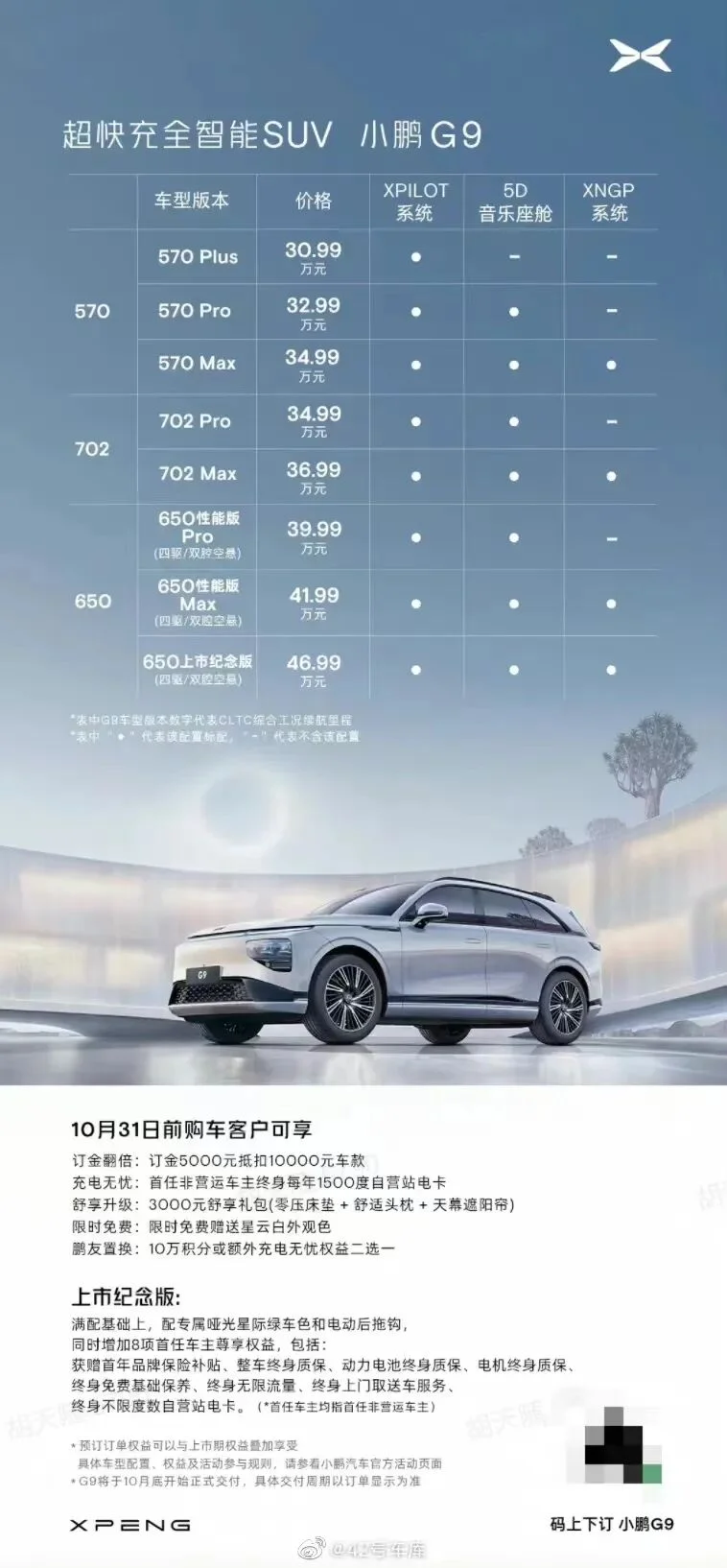
The 570G version is cut (applause should be heard here); the original 570E is renamed 570 Plus, equivalent to a price reduction of twenty thousand for the 570E;
In addition to the entry-level 570 Plus, all other models come standard with the 5D Music Cabin (originally priced at RMB 22,000), an effect equivalent to a de facto price cut;
The 570 Pro model is equivalent to a price reduction of RMB 22,000;
The 702 Pro model is equivalent to a price reduction of RMB 22,000;
7.02 Max model equivalent to a price reduction of 30,000;
The 650 Pro model is equivalent to a price reduction of RMB 22,000;
The 650 Max model is equivalent to a price reduction of RMB 30,000;
The commemorative edition's price remains unchanged (first-year insurance subsidy, lifetime
lifetime unlimited self-operated charging, lifetime vehicle and battery/motor/electronics warranty, lifetime free data, lifetime basic maintenance, lifetime free pickup and delivery).
Third, the optional bandwidth has changed. The G9's four-wheel-drive models also offer the 4C battery as an option for RMB 10,000.
Quick Take: XPENG has responded swiftly to external feedback, a move that deserves praise for its attitude. The configuration logic is now clearer and more intuitive, significantly improving the vehicle's cost-performance ratio.
Two other major models are launching this month: the Feifan R7 and the Li L8. As XPENG’s most significant model of the year, the G9’s corrective launch is both crucial and necessary.
NVIDIA Releases Thor Chip with 2,000 TOPS Computing Power
On September 20, NVIDIA unveiled its next-generation SoC chip, Thor, at its annual GTC conference.
Thor delivers 2,000 TOPS of computing power—nearly eight times that of the current Orin chip and 28 times that of a single FSD chip.
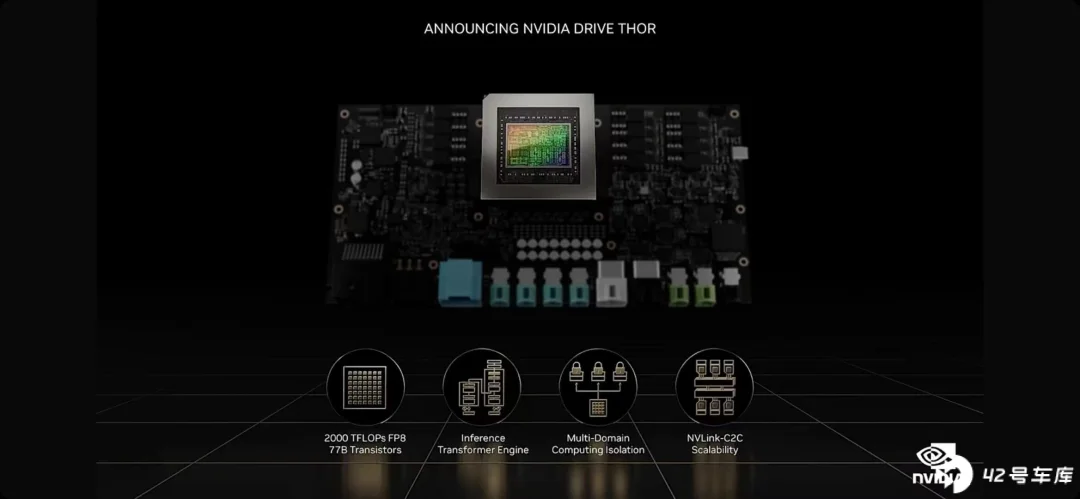
Thor integrates 77 billion transistors, though NVIDIA did not disclose the manufacturing process. Lao Huang stated that Thor’s performance was achieved by upgrading the CPU (Grace), GPU (Ada Lovelace), and the engine for processing Transformer models (Hopper).
Grace is a highly specialized processor designed primarily for large-scale data-intensive HPC (High-Performance Computing) clusters and AI applications.
Lao Huang stated that previous parallel algorithms relied on GPU acceleration, with other workloads often constrained by single-thread performance. Grace features strong single-thread performance to fill this gap.
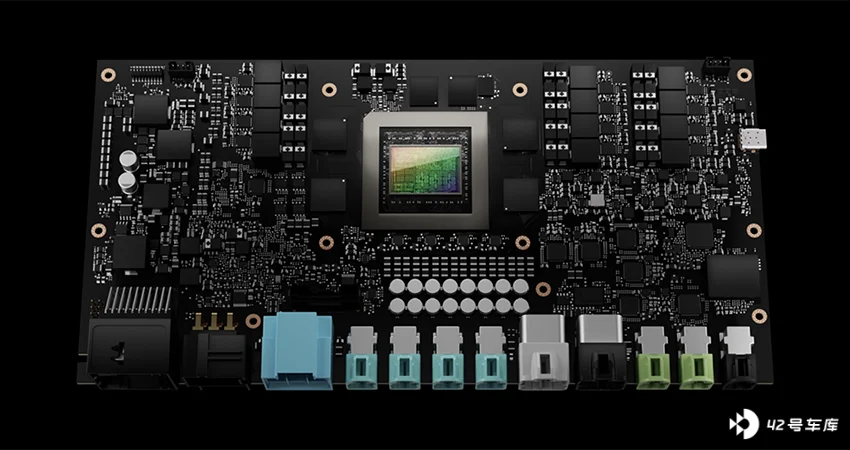
Hopper is an engine designed for processing Transformer models. Lao Huang said Hopper provides transformative speed for both Transformer and Vision Transformer architectures.
Ada Lovelace is the new architecture for the recently released 40-series graphics cards. Built on a 4nm process, its streaming multiprocessors deliver up to 83 TFLOPS of shader capability, offering more than double the throughput of the previous generation.
Additionally, Thor is not just an autonomous driving chip; it integrates all AI computing needs in the smart vehicle sector, including intelligent driving, active safety, smart cockpit, automated parking, in-vehicle operating systems, and infotainment.
Crucially, Thor can be configured in multiple modes. Its 2,000 TOPS of compute power can be flexibly allocated, allowing users to direct massive computational resources to different tasks as needed.
Commentary: Interestingly, at last year’s GTC conference, Lao Huang announced NVIDIA’s next-generation SoC would be named Atlan, with a maximum compute capacity of 1,000 TOPS.
However, in less than a year, NVIDIA iterated on itself, effectively shelving Atlan. The newly released Thor has already secured customers from the automotive industry, namely Zeekr. This marks the second time Zeekr has launched an industry-leading chip first.
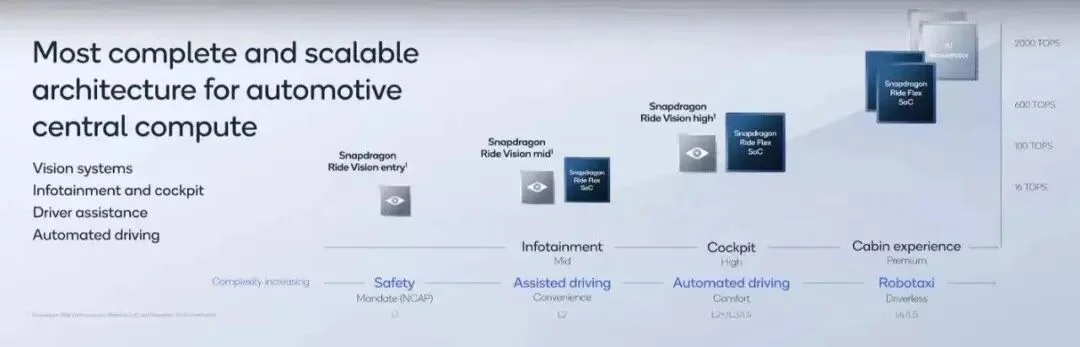
Three days after Thor was released, Gaotong also announced the official launch of its own "all-in-one" chip, with computing power also reaching 2,000 TOPS. The full name of this SoC is Snapdragon Ride Flex SoC. According to information from Gaotong, achieving 2,000 TOPS of computing power requires a configuration of dual Flex SoCs plus dual AI acceleration chips.
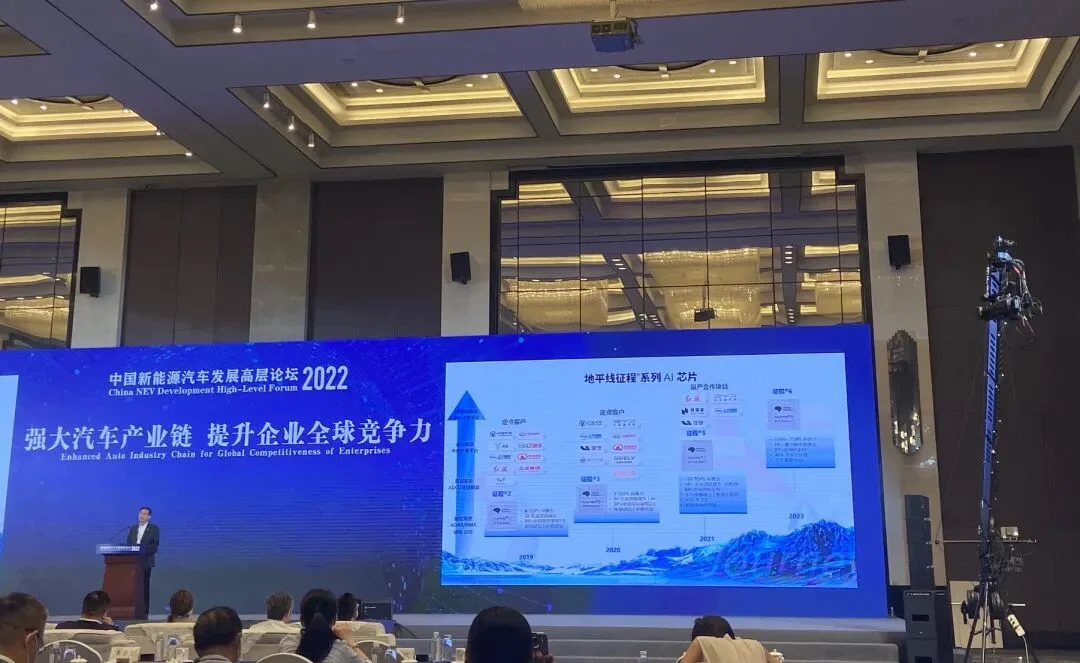
At last Friday's Bairenhui, domestic chip manufacturer Dipingxian also revealed that its Zhengcheng 6, with computing power exceeding 1,000 TOPS, will be released next year. After the competition in intelligent driving hardware configurations has intensified, the race for chip computing power is now heating up as well.
AVATR Updates User Benefits
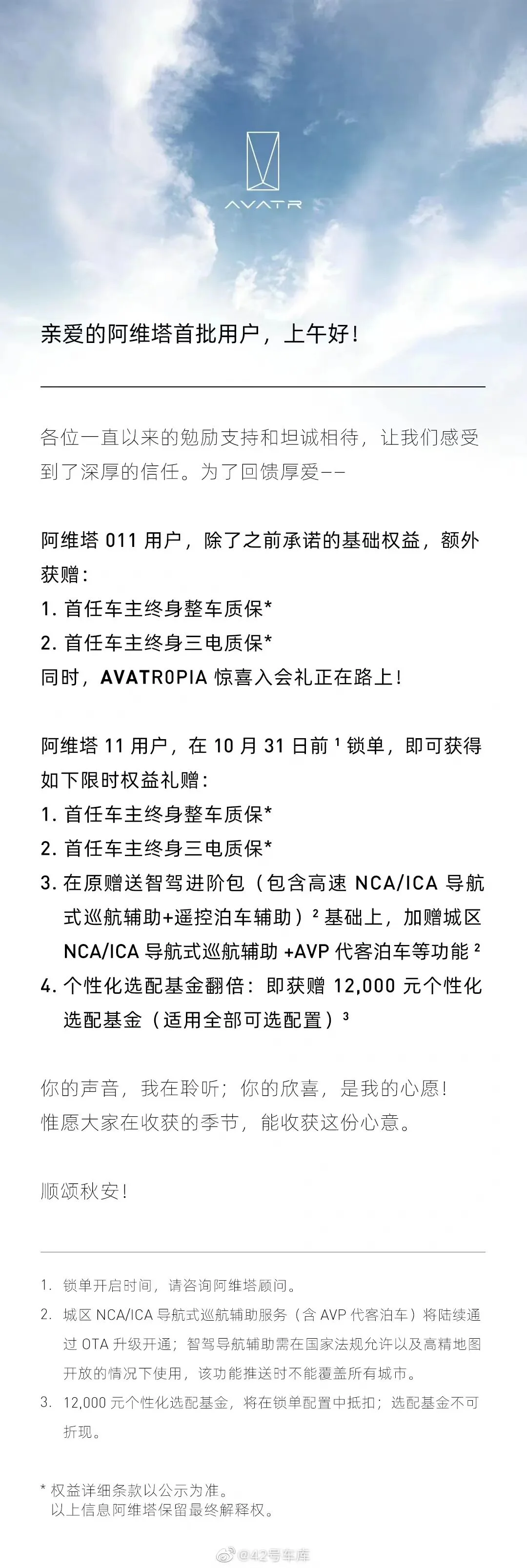
On September 25, AVATR officially adjusted the user benefits for the AVATR 11! Users who lock their orders before October 31 are eligible to enjoy these updates.
The specific new benefits include:
Lifetime warranty for the entire vehicle and battery, electric motor, and electronic control systems for the first owner;
Additionally, it includes a complimentary upgrade to urban NCA and AVP valet parking (previously limited to highway NCA);
The optional equipment deposit increased from RMB 6,000 to RMB 12,000.
After the adjustments, the AVATR 11's warranty benefits and driver assistance features are fully maximized. From another perspective, adding these features is effectively a price reduction.
Quick Take: XPENG launched the G9 last week and updated its official specifications. This puts pressure on AVATR, which has indeed won over fans with its timely response.
Don't forget, a heavyweight model is also launching tomorrow: the Feifan R7. The mid-size SUV market competition has become increasingly fierce.
Li L8 Officially Announced for Release on September 30
At 6 p.m. on September 22, Li Auto released detailed information about its new model, the Li L8, and announced that it would be officially launched on September 30.
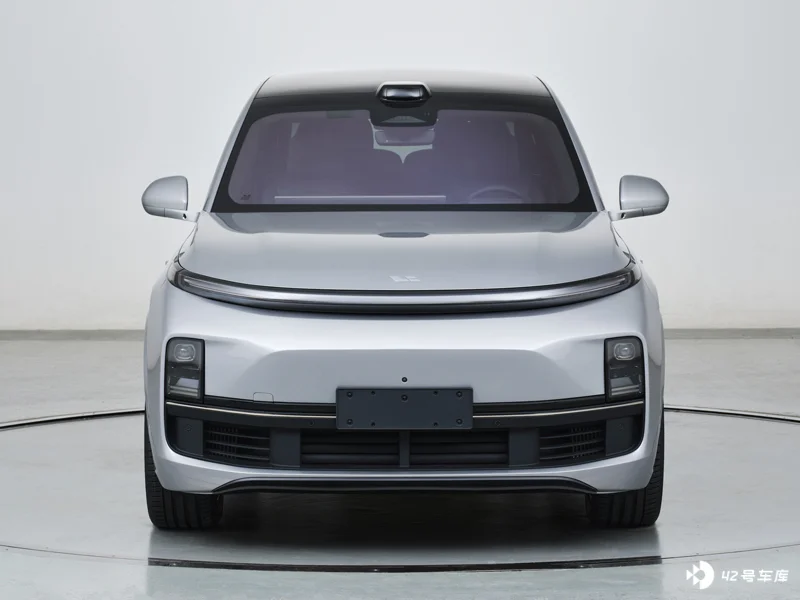
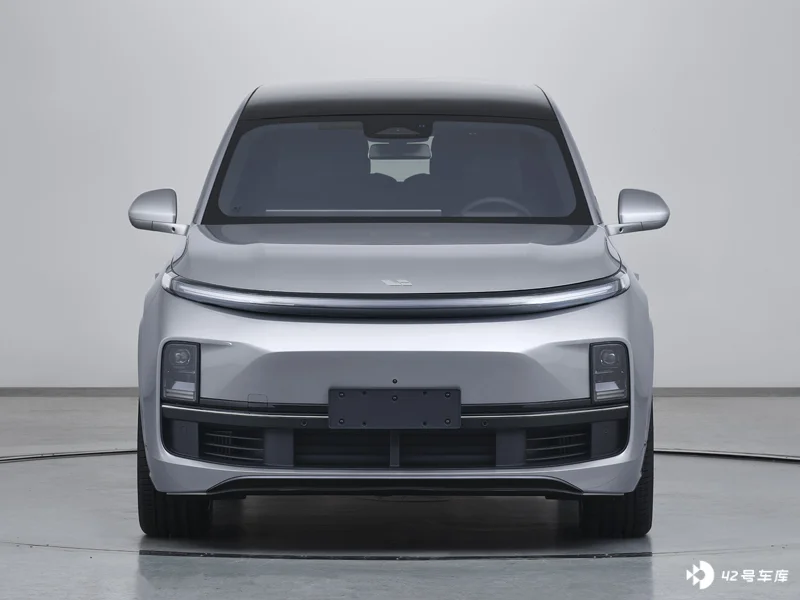
As the successor to the Li ONE, the Li L8 will open for firm orders on September 30. During the National Day holiday, display vehicles for the Li L8 will arrive at Li Auto retail centers nationwide, with deliveries officially beginning in early November.
Li Auto has officially released the complete product planning for its L-series extended-range electric vehicle (EREV) SUV lineup:
The Li L9 is a flagship six-seat full-size SUV, priced under RMB 500,000;
The Li L8 is also a six-seat SUV, classified as mid-to-large size, priced under RMB 400,000;
The Li L8 measures 5,080 × 1,995 × 1,800 mm in length, width, and height, with a wheelbase of 3,005 mm.
For comparison, the discontinued Li ONE measured 5,030 × 1,960 × 1,760 mm with a wheelbase of 2,935 mm; while the Li L9 measures 5,218 × 1,998 × 1,800 mm with a wheelbase of 3,105 mm.
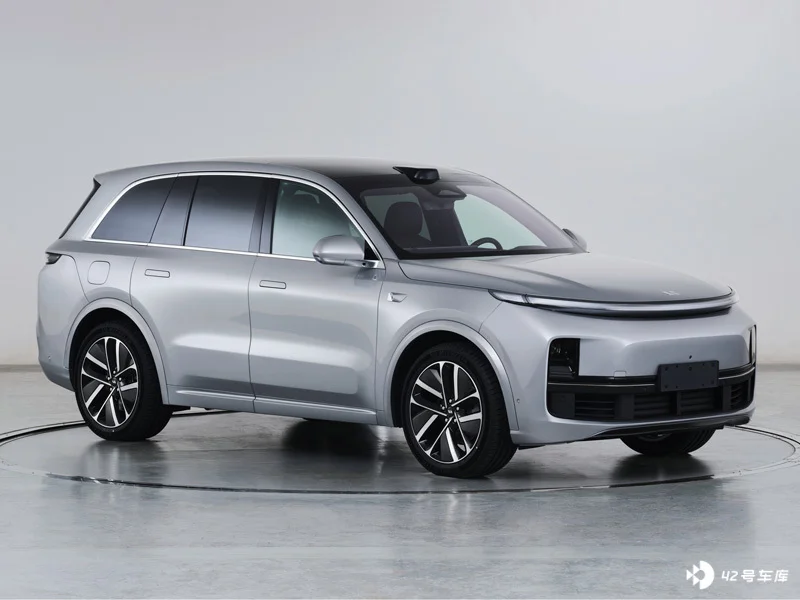
The Li L8 features comprehensive size improvements over the Li ONE, with its wheelbase exceeding 3,000 mm.
Li L7 is a five-seat SUV, in the same mid-to-large size class as Li L8, with a price of under 400,000;
Xiang Li previously revealed on Weibo that the Li L8 would offer both five-seat and six-seat versions; it now appears the model has been split into two distinct series: the Li L8 and the Li L7.
With dimensions of 5,050 × 1,995 × 1,750 mm and a wheelbase of 3,005 mm, the Li L7 is only slightly shorter and lower than the Li L8. It will exclusively offer a five-seat configuration, effectively serving as a sister model to the Li L8, and is scheduled for release and delivery in the first quarter of 2023.
The Li L6 is a five-seat SUV and represents the smallest segment in Li Auto’s SUV lineup, classified as mid-size, with a price under RMB 300,000.
Commentary: Li Auto’s progress has been faster than expected. Unlike the Li ONE and Li L9, the Li L8 distinguishes its trim levels based on intelligent driving capabilities, offering more granular options. This provides consumers with greater choices in the mid-to-large SUV market.
Written by: Bobo Edited by: Bobo