


Tesla 4680 Battery: Core Innovations and Market Impact
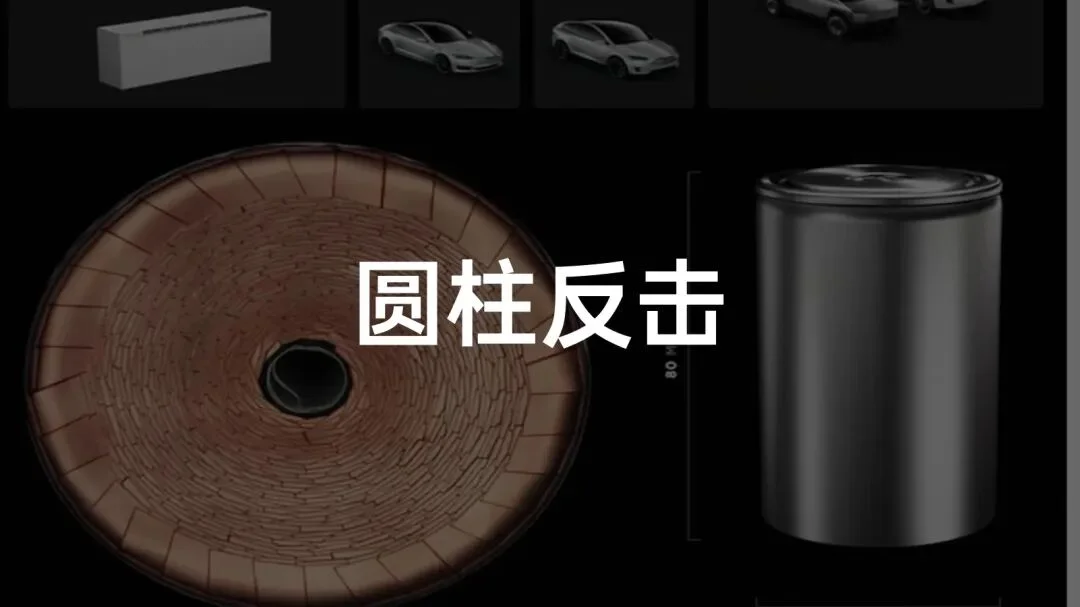
Fake it till you make it。
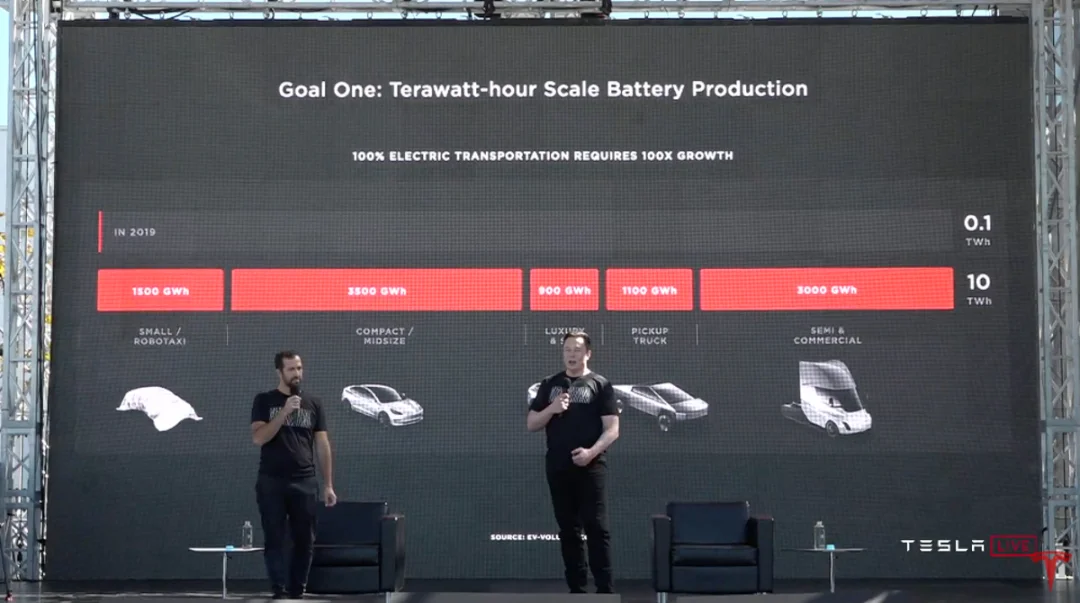
At the 2020 Tesla Battery Day, Elon Musk proposed a TWh-level battery production goal. Often, the first step to accomplishing something is to "make big claims." In 2020, Tesla unveiled the groundbreaking 4680 battery at its Battery Day event, just one year after the concept of the 4680 battery was introduced. In 2019, Songxia and a European chemistry laboratory optimized and improved cylindrical batteries based on the full-tab theory, ultimately concluding that the 4680 battery was a promising solution.
If Songxia followed its usual pace, it would not have begun public promotion until at least 2022, with large-scale mass production potentially delayed until after 2025. After all, producing a cell in a laboratory is entirely different from manufacturing it at scale. Yet Tesla dared to make such claims, and this time, it appears to have delivered.

Celebrating Tesla's California factory for piloting the production of 1 million 4680 batteries, which can power approximately 1,000 Model Y vehicles. At the recently concluded Electric Vehicle Hundred People Forum 2022, major battery giants Songxia, Bikedianchi, and Yiweilineng all expressed optimism about the 46-series large cylindrical batteries. Meanwhile, in January, Tesla announced that its California factory had already piloted the production of 1 million 4680 batteries, bringing the formal installation of 4680 batteries into vehicles closer than ever.
The following section focuses on the core technological innovations of Tesla’s 4680 battery and its future impact on the market.
01Understanding the 4680 Battery
Before introducing the core technologies of the Tesla 4680 battery, let's first get a brief understanding of the 4680 battery through a few Q&A.
What is a 4680 Battery?
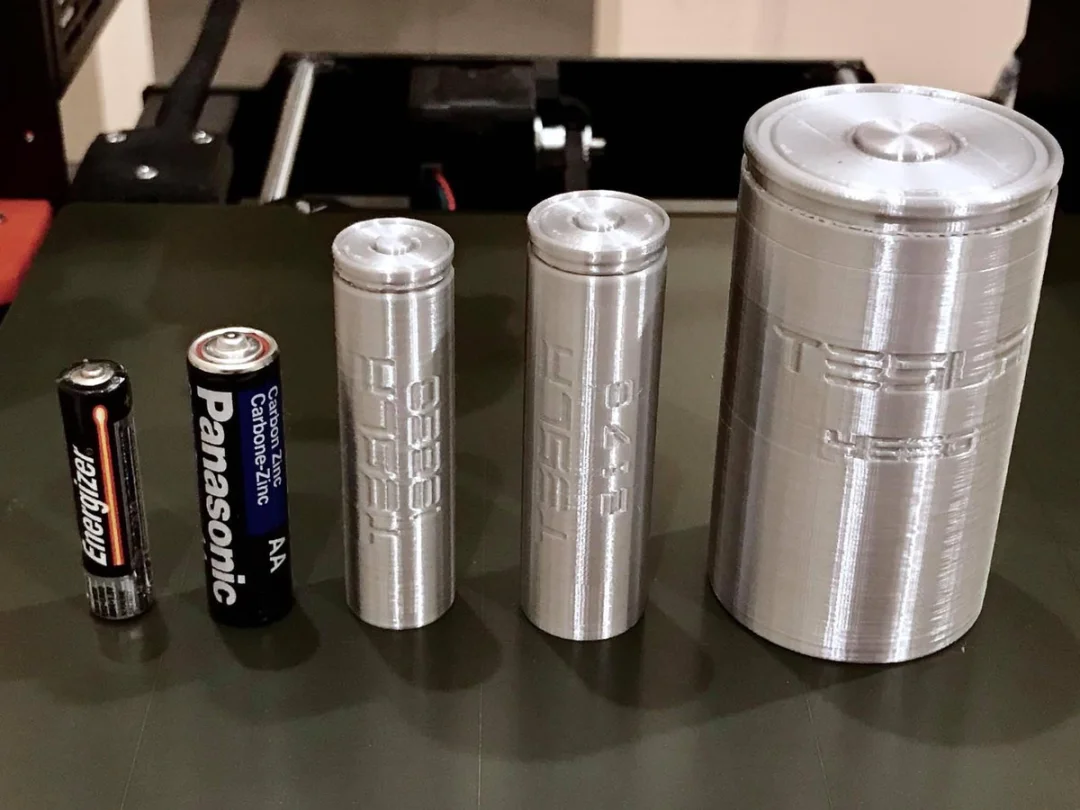
A comparison of No. 7, No. 5, 18650, 2170, and 4680 batteries shows that the 4680 is significantly larger. The 4680 battery is a cylindrical cell with a diameter of 46 mm and a height of 80 mm. The naming convention follows the same rule as the 18650 and 2170 cells currently used by Tesla. In the older 18650 designation, the final “0” indicates a cylindrical shape; however, this suffix has been omitted in the 2170 and 4680 names.
Why 4680, and Not Larger or Smaller?
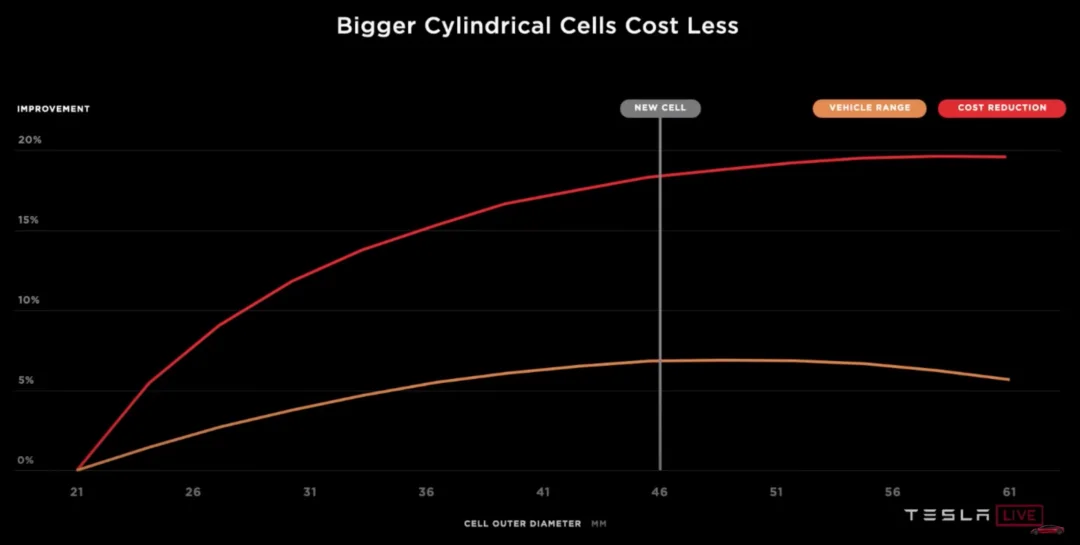
Tesla’s presentation materials indicate that a 46 mm diameter represents the optimal balance between range improvement and cost reduction. First, consider the 46 mm diameter. From a safety perspective, while reducing the total number of battery cells in a vehicle simplifies Battery Management System (BMS) oversight, managing heat dissipation in larger cells remains challenging. The 46 mm size strikes a balance within acceptable parameters. From the standpoint of extending range and cutting costs, Tesla believes that beyond 46 mm, vehicle range begins to decline, and the marginal benefits of further cost reduction become negligible. Thus, 46 mm is the optimal solution. Additionally, from an internal stress perspective, 46 mm serves as a critical threshold. Until there are fundamental breakthroughs in chemical performance and manufacturing processes, 46 mm remains the ideal size.
Another parameter is height, at "80 mm." There is currently no industry consensus on this, primarily due to variations in chassis designs across manufacturers. For example, BMW has adopted the 4695 solution, while other companies are planning for the 46105 solution, which corresponds to a height of 105 mm. However, the height cannot be too great; excessive height would cause issues with radial heat dissipation and significantly increase chassis thickness, thereby negatively impacting design aesthetics and aerodynamic drag.
Why Is Tesla So Fond of Cylindrical Batteries?
In simple terms, it is path dependence. Tesla was founded in 2004 and launched its first model, the Roadster, in 2008. At that time, there were no highly mature power battery solutions available on the market. However, Songxia's 18650 batteries were already very mature and stable in the consumer electronics sector, with safety and consistency reaching a very high standard. Therefore, Tesla chose the solution of assembling thousands of individual cells. Although this placed significant demands on the BMS, it was indeed more reliable than other power battery solutions at the time.
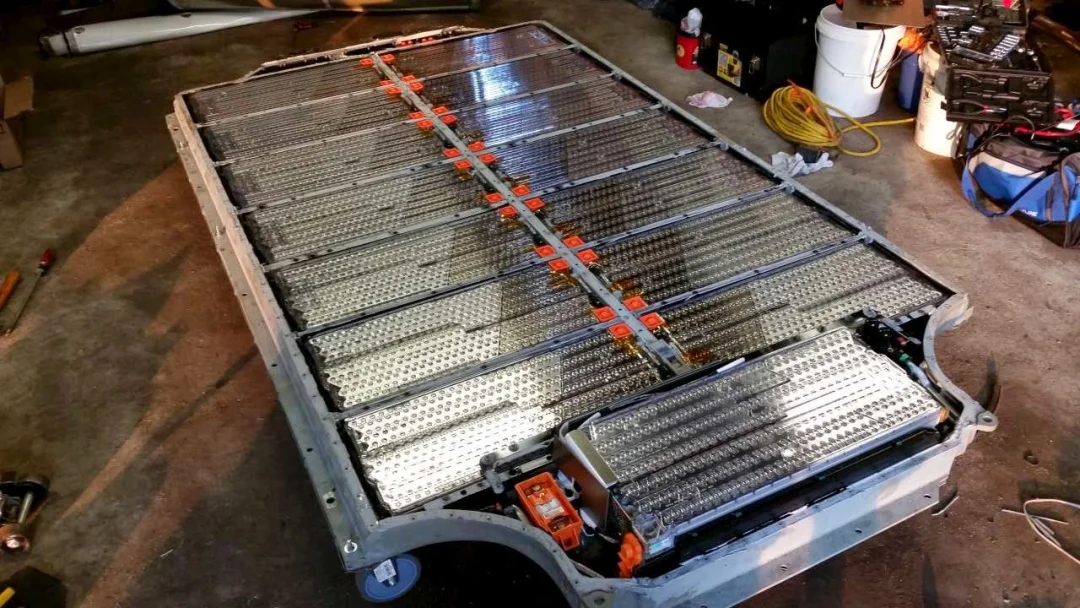
Tesla Model S Battery Pack, Composed of Thousands of 18650 Cells With the development of power batteries, 18650 cells are gradually being upgraded to 2170 cells. Tesla and its suppliers, such as Songxia and LG Huaxue, have become increasingly specialized in cylindrical cells. However, the 4680 cell represents a significant upgrade for cylindrical technology, akin to squeezing toothpaste out of a tube.
02Squeezing the Toothpaste: Key Technological Innovations in Tesla's 4680 Battery
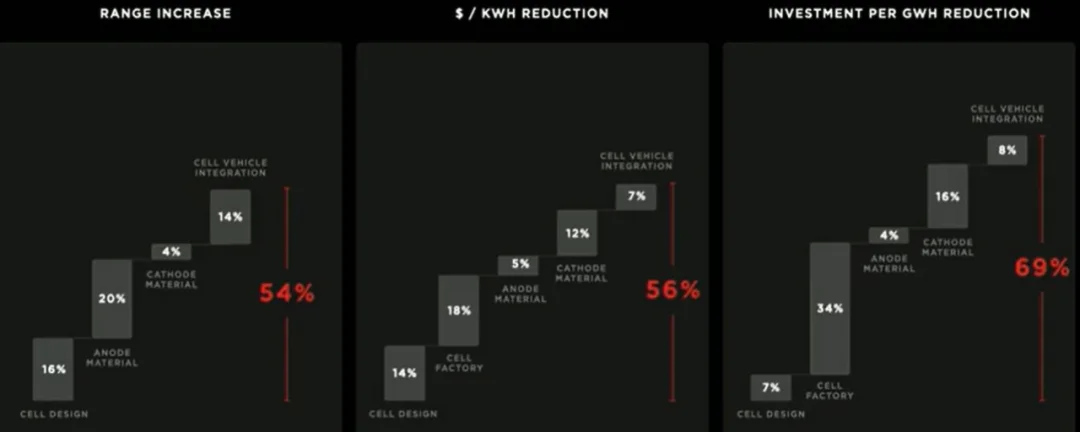
Tesla Battery Day PPT: 4680 batteries to increase range by 54% and reduce costs by 56% compared to 2170 batteries The upgrade from 18650 to 21700 cells, evident from the numbers alone, feels somewhat like squeezing toothpaste drop by drop, similar to Qualcomm Snapdragon chips in recent years. In contrast, the 4680 battery compared to the 2170 cell involves not just a 448% increase in volume, but also revolutionary technologies such as full-tab design, high-silicon anodes, and integration with CTC (Cell-to-Chassis). These advancements ultimately deliver a breakthrough improvement—often described as bursting the toothpaste tube—with a 54% increase in range, a 56% reduction in cost, and a 69% decrease in equipment investment per unit of capacity. (Of course, Tesla’s PPTs have always contained some exaggeration; this likely represents the performance achievable after two or three iterations of the 4680 battery.)
Full-Tab Design: Longer Range and Faster Charging
The traditional battery design faces a significant limitation: it is difficult to balance energy density with power density. For example, the ternary lithium battery in the Honda Accord Hybrid (Bentianyagehundong) has an energy density of only 82 Wh/kg. In contrast, the ternary lithium batteries used in pure electric vehicles typically achieve an energy density of 150–180 Wh/kg. This disparity exists because the core parameter for HEV lithium-ion batteries is power density. Since the battery pack is small—with the Accord Hybrid’s capacity being just 1.3 kWh—it must drive a high-power motor, necessitating a sacrifice in gravimetric energy density.
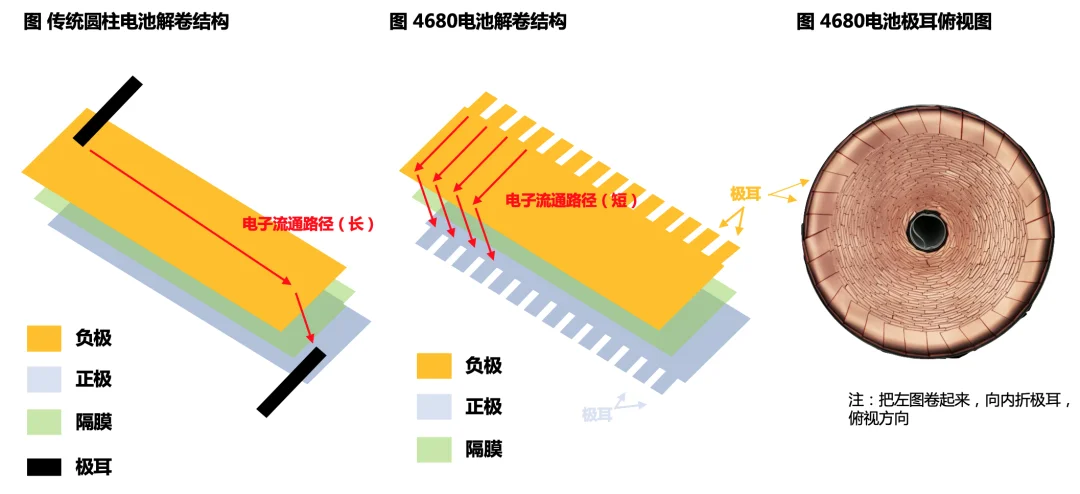
In the full-tab configuration, the path for electron flow is significantly shortened. Tesla’s 4680 battery achieves a balance between energy and power density by adopting a full-tab design (referred to by Tesla as "tabless"). Simply put, tabs are the contact points for charging and discharging at the positive and negative electrodes. Traditional batteries have one tab each on the positive and negative sides. This creates a problem: as shown in the left side of the diagram above, when current flows from the positive to the negative electrode, it must traverse a long horizontal path. This increases internal resistance, leading to energy loss and making heat dissipation difficult to manage.
According to Tesla patents, the 4680 battery structure features evenly distributed tabs across both the positive and negative electrodes. This greatly reduces the distance between tabs. For instance, in a 2170 cell, electrons travel through the entire length of the wound electrode sheet within the current collector, covering a path of approximately 900 mm. The positive and negative foils in the 4680 cell are 4–5 times larger than those in the 2170 cell. If a single-tab design were still used, the electron path would extend to 3.8 meters, increasing internal resistance by fourfold. However, the full-tab design shortens this path to the height of the battery, which is 80 mm. According to Tesla, the internal resistance heating of the 4680 battery is only one-fifth that of the 2170 cell. Additionally, the full-tab design significantly increases the cross-sectional area for current flow, allowing electrons to move more easily within the battery.
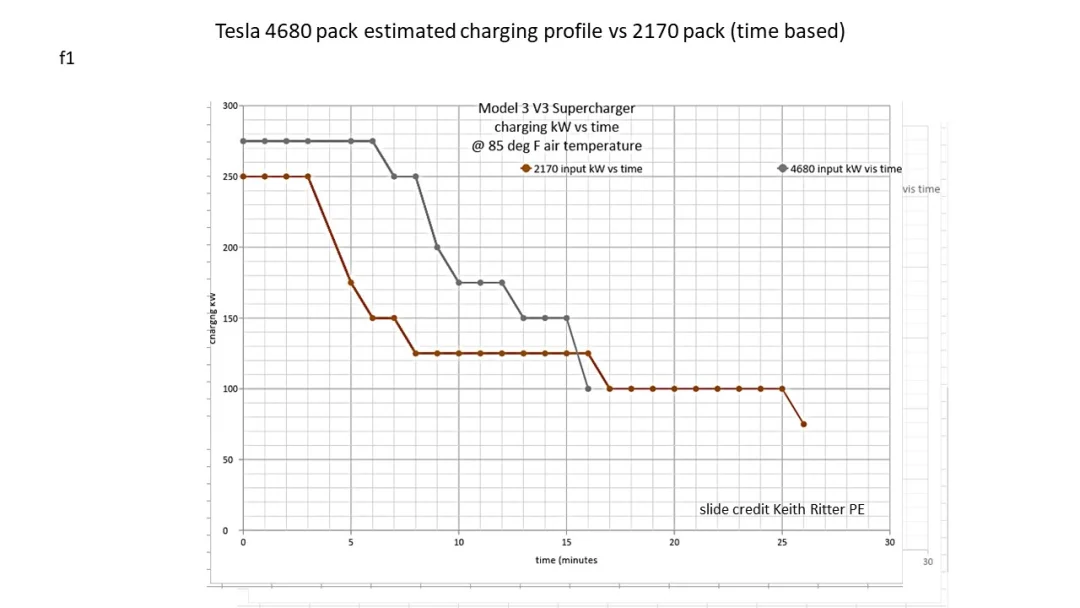
With V3 Supercharging, the estimated charging speed of the 4680 battery is faster than that of the 2170 battery, and the gap is expected to be even more pronounced under V4 Supercharging. Consequently, the full-tab 4680 battery possesses inherent capabilities for high-power discharge and ultra-fast charging. According to a research report by Insideevs, a 400 V 4680 battery system requires 15 minutes to charge to 70% state of charge. In comparison, the Porsche Taycan and Hyundai IONIQ, which utilize 800 V battery systems, require 18 minutes and 22 minutes, respectively. If future 4680 batteries adopt an 800 V voltage architecture, charging speeds will increase further.
High-Nickel Cathode + High-Silicon Anode: Key to Achieving 300 Wh/kg Cell Energy Density
Currently, Tesla’s 4680 battery cathodes still use the NCM 811 high-nickel chemistry, a configuration familiar to most observers. In the future, 4680 cathodes are expected to evolve toward even higher nickel ratios (such as NCM 9/0.5/0.5), as well as cobalt-free and quaternary chemistries.
Changes in the cathode material are relatively limited; achieving higher energy density also depends critically on the anode. Most batteries currently use graphite anodes, but graphite has reached its theoretical specific capacity of 372 mAh/g, with practical values already hitting approximately 330–370 mAh/g. Silicon, by contrast, offers a specific capacity of 4,200 mAh/g—more than ten times that of graphite. Therefore, incorporating silicon into the anode has long been a key direction for breaking through energy density barriers.
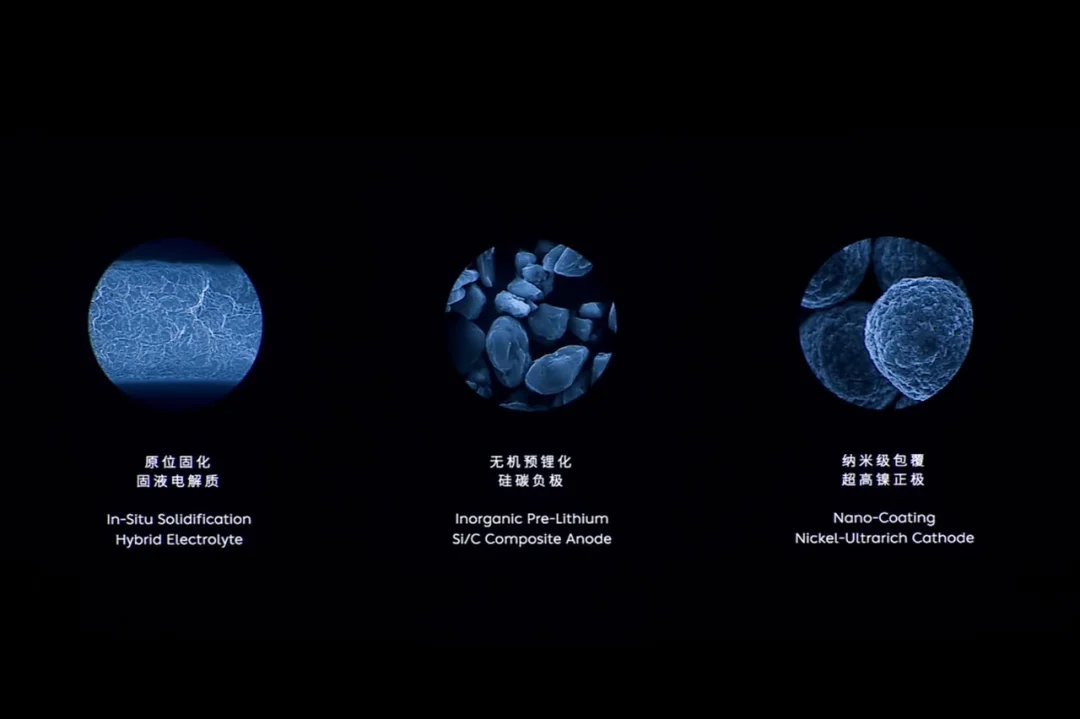
At the 2020 NIO DAY event, the presentation slides for NIO’s 150 kWh battery highlighted the use of silicon-carbon anodes and high-nickel cathodes, illustrating how different approaches converge on high energy density. In fact, Tesla introduced silicon-doping technology as early as 2017 in Model 3 vehicles equipped with 2170 cells from Songxia. However, the proportion was small (approximately 5–6% silicon alloy), resulting in only modest gains in energy density. Some domestic manufacturers have also adopted silicon-doped anodes. For example, the anode of Guangqiaian LX’s massive 144.4 kWh battery, which achieves a CLTC range of 1,000 km, contains a certain proportion of silicon. Additionally, Zhijiqiche and NIO’s upcoming 150 kWh "solid-state" battery, set for mass production in the fourth quarter, both utilize this technology.
While silicon doping can immediately boost energy density, silicon is inherently less stable and more prone to expansion than graphite. Carbon-based anodes typically expand by no more than 10% during lithiation, whereas silicon-based anodes can expand by up to 360%. This significant expansion can damage the solid electrolyte interphase (SEI) layer, triggering side reactions that lead to capacity degradation.
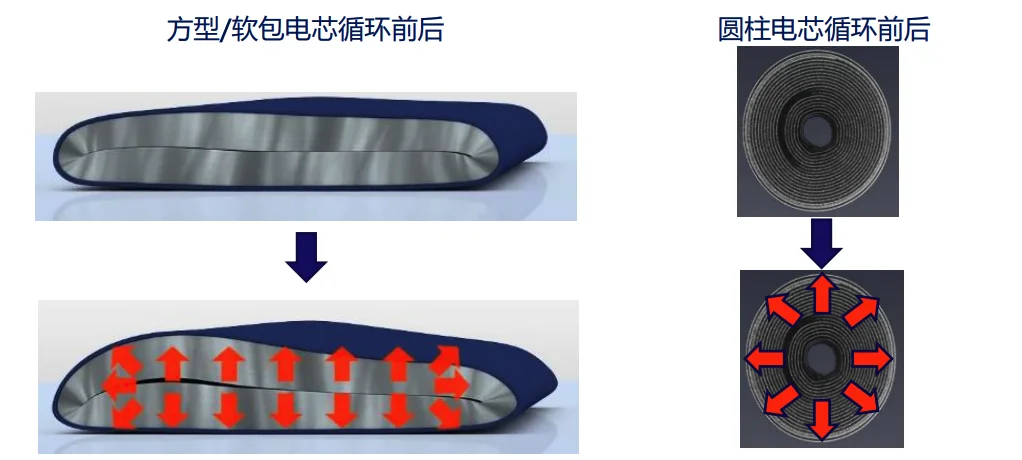
Relatively speaking, the internal stress within cylindrical cells is uniform in all directions. Consequently, the structure of the 4680 battery is better suited for silicon doping. First, the winding process of cylindrical cell electrodes helps distribute expansion forces evenly across the electrode, minimizing damage and wrinkling. In contrast, prismatic and pouch cells are prone to stress concentration at corner radii, leading to similar issues. Furthermore, the stainless steel casing of the 4680 battery provides high mechanical strength, effectively absorbing the expansion forces of the anode. Theoretically, this allows the 4680 anode to incorporate a higher proportion of silicon—expected to exceed 10%—resulting in a significant increase in energy density.
CTC Technology: A Natural Partner
Starting from first principles, to increase the energy density of a battery pack, the fewer "intermediaries" there are, the better. To put it in perspective, if you want to fit as many eggs as possible into a box, it is best to remove the egg tray; this is equivalent to removing module components. Even more extremely, you could remove the box itself, which corresponds to Cell-to-Chassis (CTC) technology, also sometimes referred to as Cell-to-Vehicle (CTV).
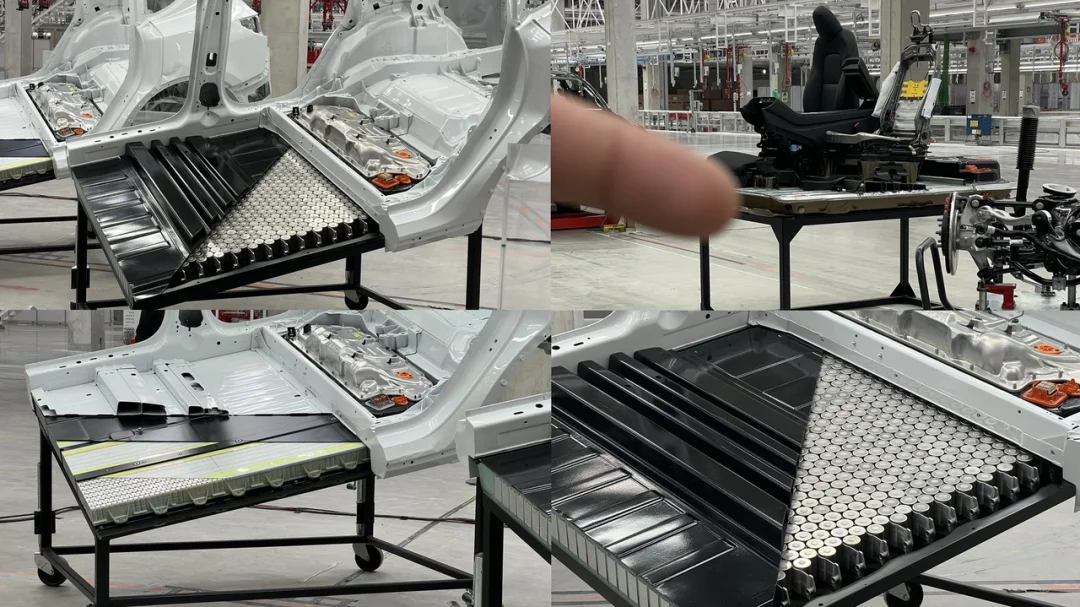
The 4680 battery combined with CTC technology means seats are mounted directly on top of the battery. The 4680 battery has inherent potential for this. First, CTC technology requires a certain level of structural strength from the battery itself, as it must bear significant mechanical loads. Compared to 18650 and 2170 cells, the larger 4680 monomer cell offers higher structural strength. Additionally, while general prismatic batteries use aluminum casings, the 4680 casing is made of stainless steel, ensuring inherent structural integrity. Furthermore, adopting CTC technology basically means giving up maintenance and replacement; if a severe collision occurs or there are issues with battery consistency, you might have to replace the entire car. Cylindrical batteries have always had an advantage in consistency. Finally, compared to prismatic batteries, cylindrical batteries offer more flexible layout options and can adapt to various different chassis designs. Combined with the advantages of full-tab design—high energy density and high charge/discharge power—the potential in the HEV and PHEV fields is also very large.
Beyond full-tab cells, high-nickel plus high-silicon chemistries, and CTC technology, Tesla's 4680 battery incorporates several other applications. For instance, PVDF is coated onto the separator to prevent silicon anode expansion, and silicon nanotubes are added to the anode to enhance conductivity. Moreover, Tesla's second-generation 4680 battery may utilize dry electrode processing. In short, Tesla is pushing the boundaries of innovation; the question now is how competitors will respond.
034680 Cylindrical Cells vs. CTP Prismatic Cells: Is CATL in Danger?
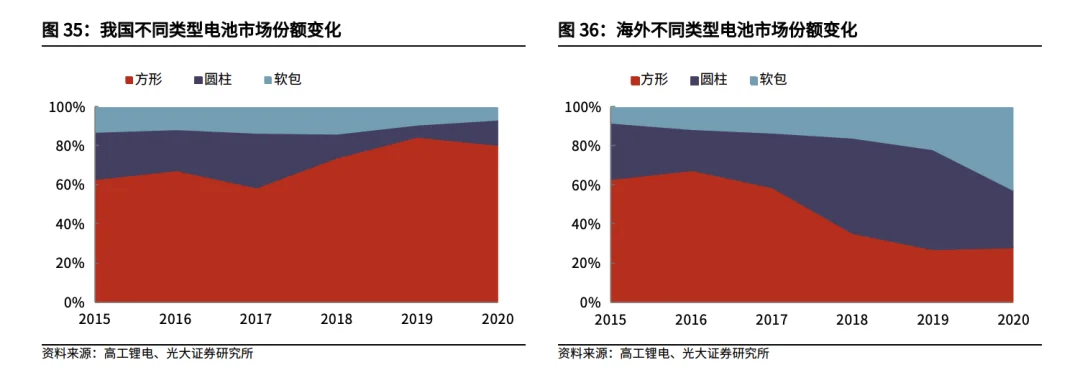
Prismatic cells dominate the Chinese market, while cylindrical, prismatic, and pouch cells share the overseas landscape. Data shows that since 2019, prismatic cells have accounted for approximately 80% of China's power battery market, with CATL holding more than half of that share. The 4680 battery's initial impact is therefore directed squarely at CATL.
Setting aside domestic pouch battery developments primarily focused on European clients like Mercedes-Benz, we will focus on comparing the advantages, disadvantages, and development trends of CTP prismatic cells versus 4680 cylindrical cells.
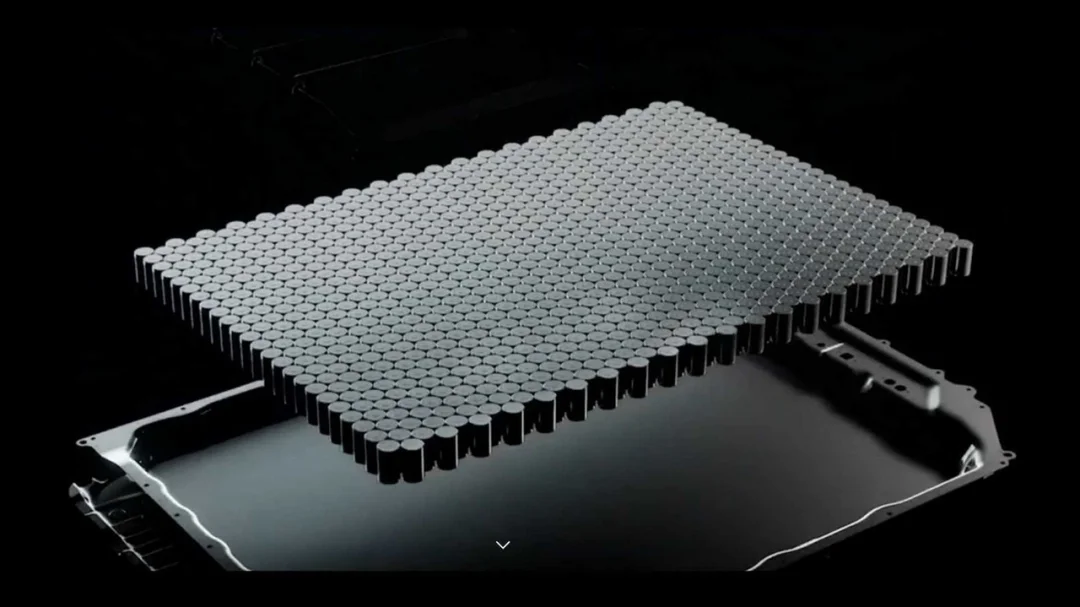
Arrangement of 4680 Batteries First, from the perspective of structure, the module integration efficiency of prismatic batteries is significantly higher than that of cylindrical cells. It is expected that excellent CTP (Cell-to-Pack) prismatic batteries can achieve 80% to 90%, while 4680 + CTC (Cell-to-Chassis) can reach more than 70%. This is not difficult to understand: although the 4680 battery is much larger than before, it is still very small compared to large prismatic cells. A Model Y requires approximately 960 units of 4680 batteries; if switched to prismatic shells, only 6 to 10 blocks might be needed. The fewer the number of cells, the lower the proportion of non-chemical components.
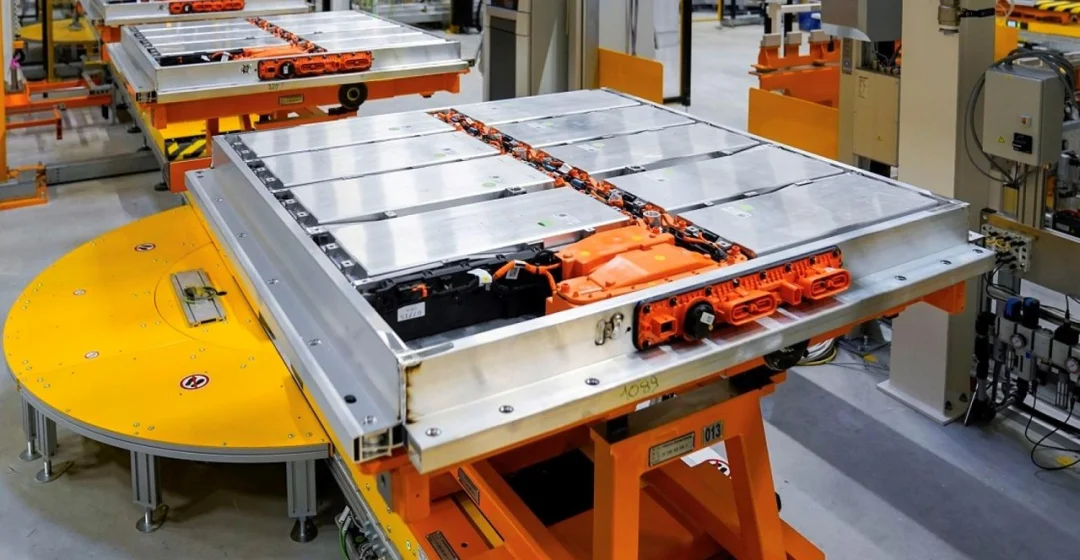
Volkswagen's CTP Ternary Prismatic Battery Pack However, because prismatic battery cells are large and utilize surface contact, this presents significant challenges for the heat dissipation and thermal runaway protection of prismatic batteries. Therefore, the cathode material of ternary prismatic batteries is not well-suited to develop toward ultra-high nickel content. Additionally, as mentioned above, the anode of prismatic batteries is not suitable for adding excessive amounts of "silicon." Consequently, the specific energy density of individual prismatic battery cells cannot be made too high.
Because cylindrical cells have small individual cells, they are inherently easier to dissipate heat. The application of full-tab technology concentrates heat at the bottom, enabling more targeted cooling. This allows for the use of a more aggressive high-nickel chemistry. Combined with a high-silicon anode, the specific energy of a single cell can reach 300 Wh/kg. In the future, if a cathode with a nickel content exceeding 90% is adopted, the specific energy of a single cell could reach 350–400 Wh/kg.
As a result, although prismatic batteries offer higher integration efficiency, the 4680 cylindrical battery has a higher single-cell energy density. Overall, their system-level energy densities are comparable.
Cylindrical cells, a format commercialized for more than 30 years, boast the most mature manufacturing processes and hold distinct advantages in production efficiency, yield rates, and investment costs. For instance, Songxia's 2170 cylindrical cells achieve yield rates exceeding 99%, whereas a 90% yield rate for prismatic cells is already considered excellent.
In terms of production efficiency, cylindrical batteries have an inherent advantage in concentric winding when using the same winding process. For example, according to Yiweilineng's latest production line, it can produce 200 units of 2170 batteries per minute. In contrast, similar production lines for prismatic batteries under 200 Ah typically produce 10 to 12 units per minute, while those for large prismatic batteries over 200 Ah produce fewer than 10 units per minute. If a new car is equipped with an 80 kWh battery pack, producing the cylindrical battery cells would take approximately 20 minutes, whereas producing the prismatic battery cells would require 30 minutes.
If large-scale mass production of the 4680 battery proceeds smoothly, the cost per kWh for the 4680 battery is expected to be RMB 50–100 lower than that of ternary prismatic batteries after 2024. This would reduce the battery cost for an electric vehicle with a 100 kWh battery by RMB 5,000–10,000.
From the perspective of the ternary battery system (including cobalt-free and quaternary batteries), if the yield rate of the 4680 battery improves rapidly, it will gain a cost advantage alongside ultra-high charge and discharge power. In the mid-to-high-end market, this will gradually create a substitution effect on prismatic ternary lithium-ion batteries.
In the mid-to-low-end market, lithium iron phosphate (LFP) batteries remain dominant. LFP is inherently stable and less prone to thermal runaway, making it better suited for prismatic batteries that offer high integration efficiency but poor heat dissipation. Consequently, the future landscape may see high-end models gradually adopting 4680 ternary batteries, while mid-to-low-end models rely primarily on CTP prismatic LFP batteries.
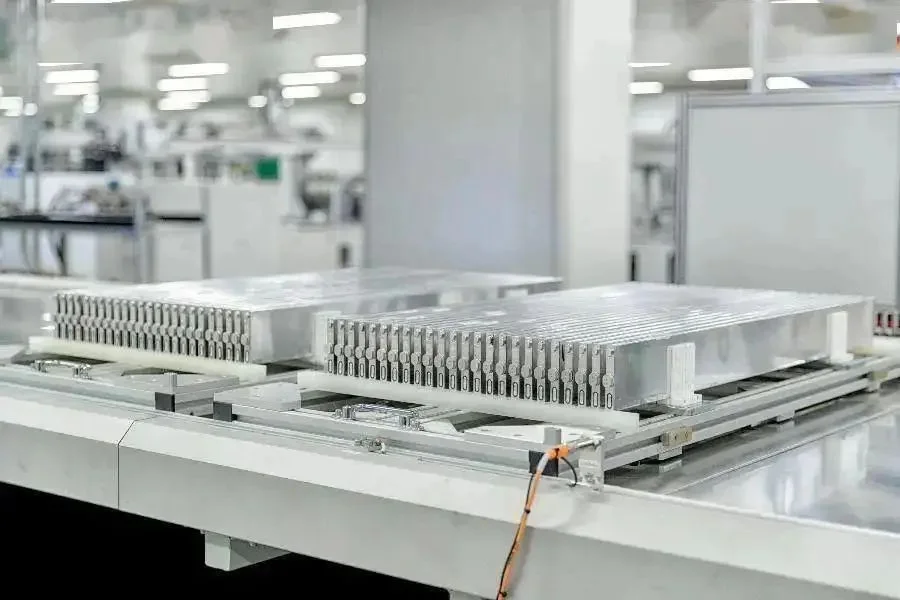
BYD Blade Battery: The Blade Battery in the Han EV uses a stacked cell process. CATL faces pressure from both the 4680 battery and BYD’s Blade Battery. BYD, which started as a battery manufacturer, has focused exclusively on LFP technology for years. As Fudidianchi’s capacity expands significantly, it is poised to capture a share of CATL’s market. For context, see the article "With NIO and Xiaomi on board, Fudi’s offensive has only just begun."
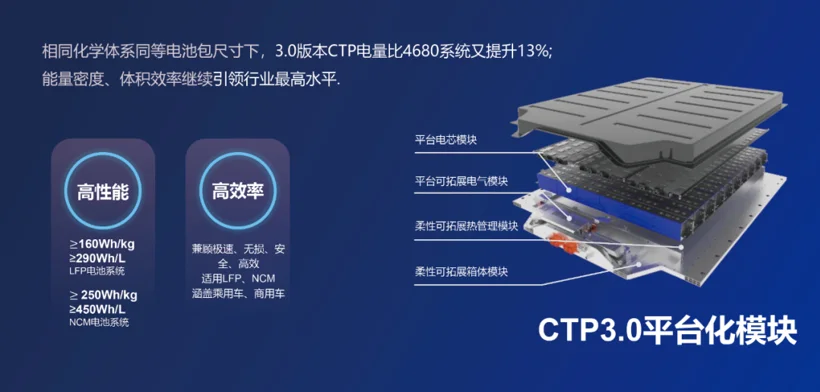
CATL CTP 3.0 Qilindianchi, promoting that the system energy density of ternary lithium and lithium iron phosphate can reach 250 Wh/kg and 160 Wh/kg respectively, and achieve the highest safety requirement of no thermal propagation. However, at the just-concluded Electric Vehicle Hundred People Conference 2022, CATL also issued a counterattack—whether the CTP 3.0 version of the Qilin battery can maintain its current absolute leading position specifically depends on the implementation effect of CTP 3.0 and the speed of cost reduction and efficiency increase.
04Which automakers and battery manufacturers are following up with layouts for large cylindrical batteries?
From the automaker perspective, Tesla remains the primary driver. In Q1 2022, Tesla began trial production, with deliveries of a small number of 4680-equipped Model Y vehicles to consumers potentially starting by year-end. The true inflection point will arrive after 2023, when the long-delayed Cybertruck and heavy-duty Semi truck will gradually be unveiled. BMW has set its mass-production timeline for the 4695 battery at post-2024, where it may serve as the core power source for BMW's future all-electric platform, Neue Klasse.
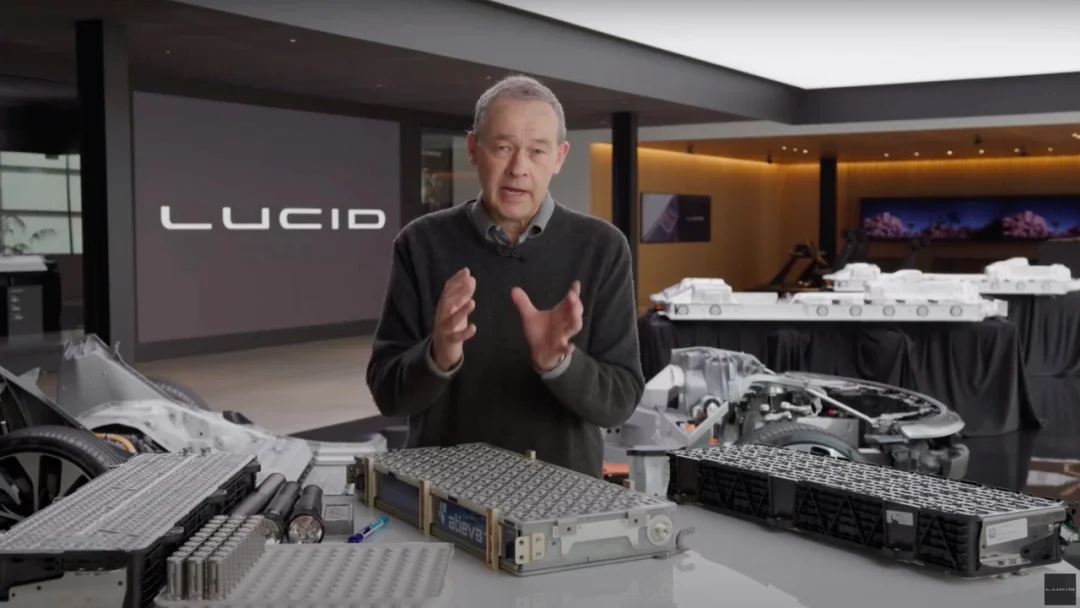
American new energy vehicle startup Lucid also uses 2170 cylindrical batteries. Additionally, there are currently many overseas manufacturers using cylindrical batteries; for example, American startups Lucid and Rivian currently use 2170 batteries, and transitioning to 4680 batteries in the future is very natural.
LG Huaxue, in the global share of the power battery field is second only to CATL. On the side of battery manufacturers, overseas mainly includes Tesla and Japanese and South Korean battery manufacturers, including Songxia, LG Huaxue, Samsung SDI. Songxia and LG Huaxue plan to mass-produce in 2023, Samsung SDI plans to mass-produce in 2024, and another Israeli company Storedot also plans to mass-produce 4680 batteries in 2024.
CATL currently has a planned 4680 battery production capacity of 12 GWh in China, with its R&D pace accelerating; mass production is expected to begin in 2024, with potential customers including Tesla and BMW. Bikedianchi exhibited large cylindrical battery products at the Shenzhen CIBF in March 2021, with mass production expected in 2023. Yiweilineng plans to achieve mass production of 4680 batteries in 2024, with a planned capacity of 20 GWh, and also has plans to build a factory in Hungary, Europe.
Overall, compared to the upgrade from 18650 to 2170 cells, the 4680 battery has pushed the envelope significantly, essentially cementing the development direction of cylindrical batteries and poised to rapidly close the market share gap with prismatic cells. However, 4680 batteries still face numerous manufacturing challenges. For instance, a full-tab battery requires at least five times as many laser weld points as a 2170 cell, demanding extremely high precision. Additionally, the curved edges of full-tab coating impose stricter requirements on equipment accuracy. Future developments for 4680 batteries will focus on when companies such as Tesla, Songxia, and LG Huaxue can stabilize their yield rates above 90%.
Written by: Wu Gangxing Edited by: Lai Yinhate