


Li L9 Screen Casting Confirmed: A Mobile Gaming Hub for Families
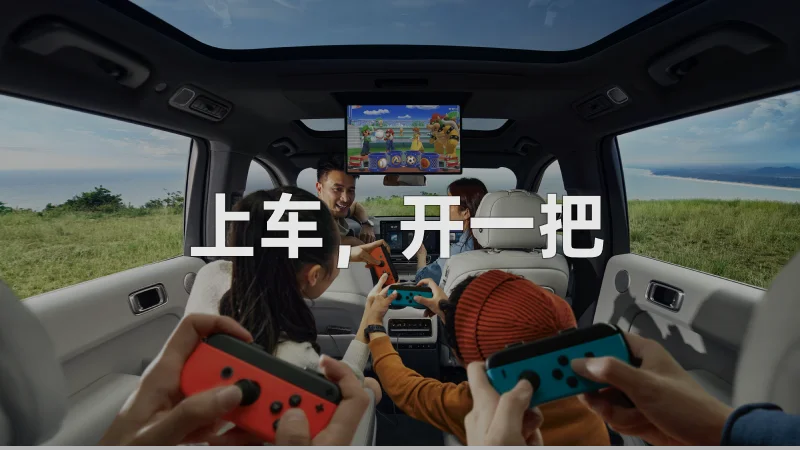
The latest Li L9 leak installment has been officially released. Today’s content can be summarized with one word: screen mirroring.
01A Game Console? YES!
During the first official leak, the Li L9 revealed its three in-car displays. The entertainment screen on the second-row ceiling drew significant attention, quickly sparking associations with gaming and movie-watching scenarios. At that time, a user in our L9 interest group expressed expectations for connecting external game consoles.

That user’s wish has now been confirmed following today’s leak.
The Li L9’s center console display, passenger-side screen, and rear entertainment screen all support screen mirroring of external devices via Type-C ports. In addition to directly connecting Switches, smartphones, and tablets, users can also connect computers, PS5s, and XBOXes using HDMI-to-Type-C adapters.
To ensure power supply for external devices, the Type-C ports in the L9 provide 60 W of output power, which is more than sufficient for smartphones and tablets. For higher-performance, higher-power-consumption devices such as PS5s, XBOXes, and gaming laptops, the L9 also offers a 220 V interior power outlet, eliminating concerns about power issues.
At this point, some readers might wonder: Why play games in a car? Can’t you just use your phone or wait until you get home?
Phones certainly work, and playing at home is an option. But the car offers unique scenarios and hardware capabilities that justify its role.
02What’s the case for gaming in a family-oriented vehicle?
The cabin provides a relatively quiet environment with air conditioning and comfortable seats. Higher-spec models often include quality audio systems. Compared to mobile devices or home setups, the car offers one crucial difference: it creates an isolated, comfortable, enclosed space.
Many readers may have experienced stopping the car, turning on the music, and relaxing before heading home. If the vehicle has higher-end features like seat massage, users with similar habits will easily understand the unique scenario the car provides.
With solid hardware foundations, various scenarios can be developed, such as karaoke, napping, or watching movies. Gaming in cars is not a new concept.
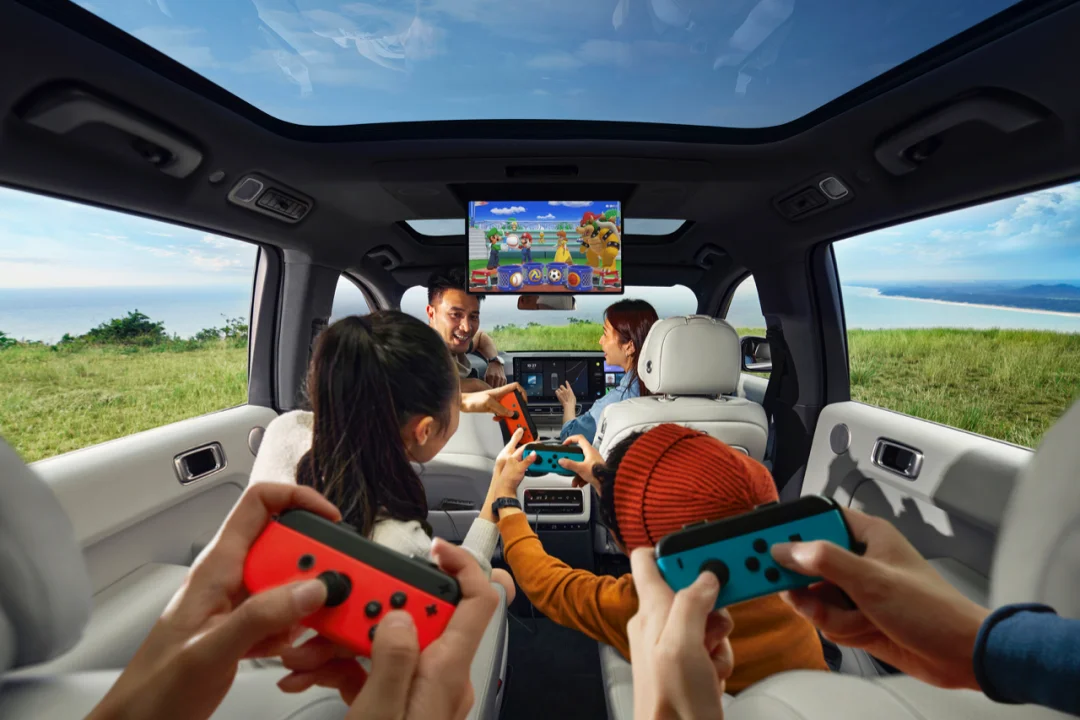
However, for a family vehicle like the Li L9, the gaming scenario differs. This feature primarily serves passengers other than the driver. It’s easy to imagine grandparents using the second-row entertainment screen to play two-player games with children—a relaxed and effective way to keep kids entertained. For the front passenger, separate Bluetooth audio output reduces interference between the passenger and the driver.
In short, gaming is just one branch of the Li L9's family-car scenarios. Those with a specific interest will likely enjoy it. However, the current information also reveals some shortcomings.
03Reflections on the Li L9 and In-Car Gaming
As mentioned earlier, the development of smart cockpits in recent years has enabled cars to offer increasingly rich functionalities. Yet, upon reviewing this trend, it becomes apparent that while video streaming, karaoke, and even online shopping apps have been integrated into vehicles, the advancement of gaming within cars has lagged behind.
This stagnation stems from three main factors.
To deliver a good gaming experience, high hardware performance is required, along with a robust game ecosystem. In reality, automotive-grade cockpit chips currently underperform compared to mobile devices. The Snapdragon 8155 chip released this year offers performance comparable to the Snapdragon 855, whereas flagship smartphones today are equipped with Snapdragon chips that are more than three generations ahead. Additionally, automakers produce far fewer terminal units than other mobile device manufacturers, and screen aspect ratios vary significantly across brands. This makes it difficult for game developers to create versions tailored for in-car displays.
Another factor beyond these two is that console and PC-level games require external controllers, whereas mobile games typically rely on touchscreens. Directly porting mobile games to car infotainment systems often results in poor control usability.
Tesla’s solution involves customizing automotive-grade chips with AMD, integrating a dedicated graphics card, and utilizing screens with an aspect ratio that easily adapts to 16:9. The remaining steps involve bringing game platforms into the vehicle and providing a controller, allowing users to play smoothly inside the car.
The Li L9’s approach is simpler and more direct: it delegates the issues of hardware performance and game ecosystem to existing, mature gaming terminals. Once the screen interface is properly connected, mirroring the display completes the setup, effectively turning the cabin into a mobile arcade.
Tesla's solution does not require an external terminal, but its gaming ecosystem is fixed and faces challenges in update speed. The Li L9 requires an external terminal, but the benefit is fewer restrictions: play whatever comes along.
04Conclusion
Today's leaks about the Li L9 focus mainly on in-car gaming, but the smart cockpit capabilities in this scenario are certainly not limited to games. Imagination is expanding to include working and holding meetings on the car, and members of the group chat—full of jokesters—are starting to create content. Currently, the most hilarious example is the 'class starts as soon as you get in' meme shown in the image.
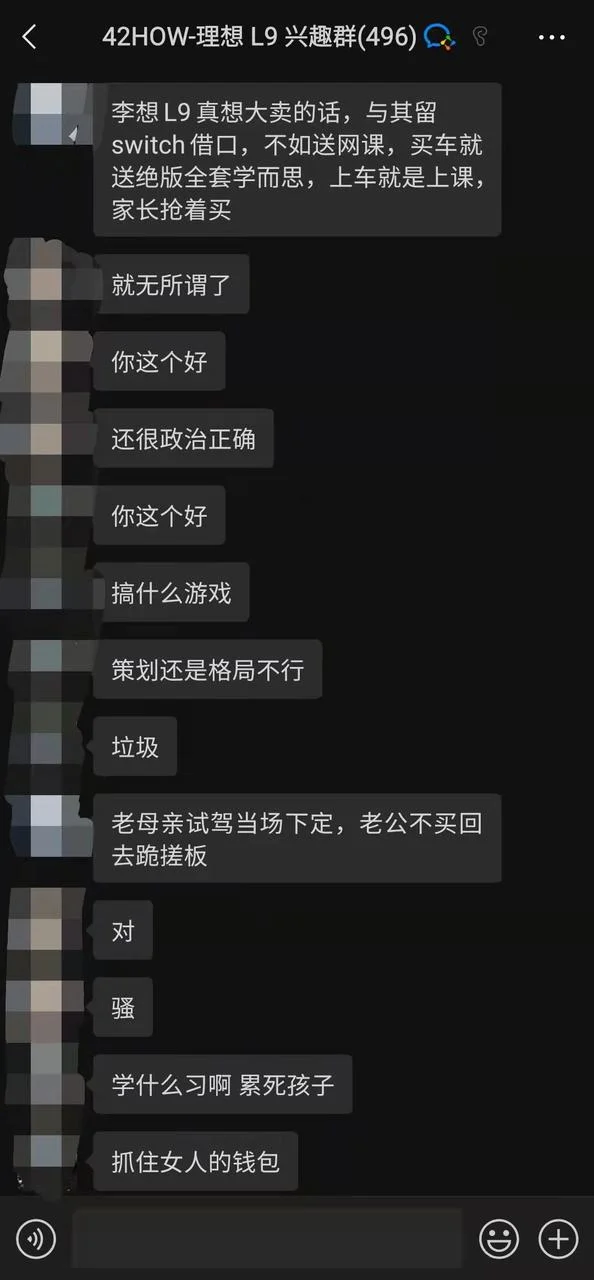
One has to sigh: originally, the goal was to create a mobile home, but now it feels like the L9 is either turning into a mobile arcade or a mobile classroom. I'm curious how children will feel when they see this (winking emoji).
Written by: Reinhardt Edited by: Reinhardt