


NIO ES7 Submits to China's MIIT, Signaling Imminent Delivery
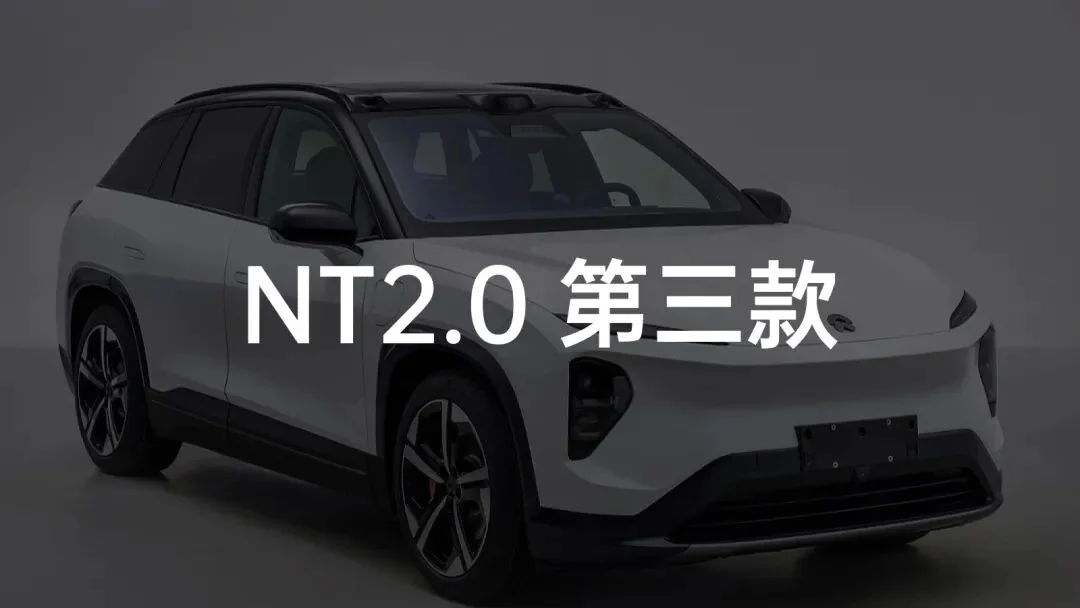
Today, the ES7, the third car on NIO’s NT2.0 Pingtai platform, was officially listed with Gongxinbu, which means that deliveries are not far off.
In fact, during the Q1 2022 earnings call, William Li mentioned that three models of the NT2.0 Pingtai would begin deliveries this year. Among them, the first two models, ET7 has already started deliveries, and ET5 has also officially begun accepting orders, but the third product, ES7, has not had much news. Today, we will delve into all the exposed information about ES7 and our guesses.
01Exterior Design
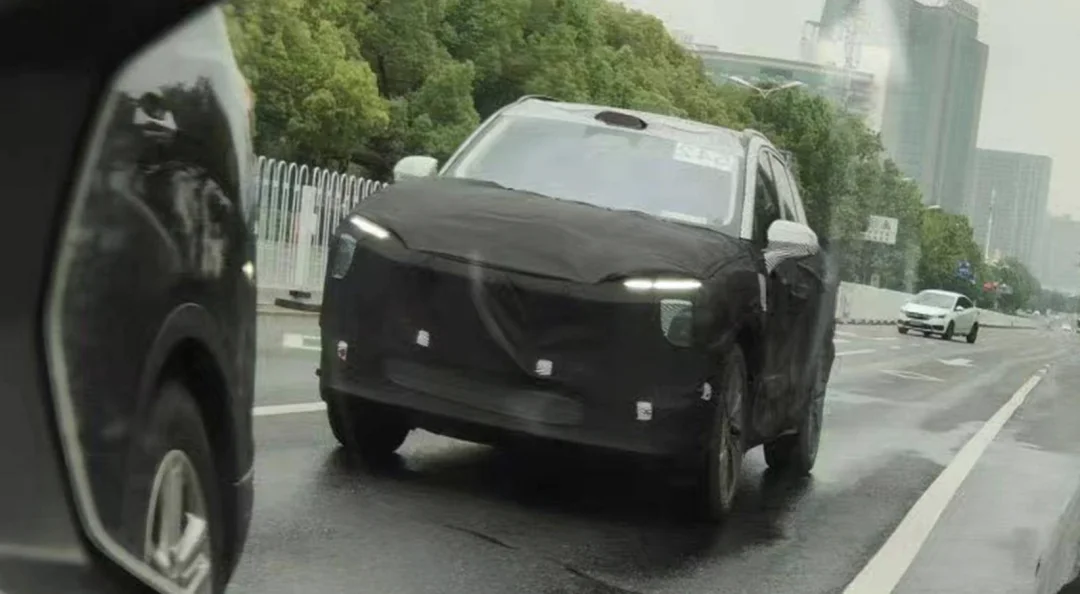
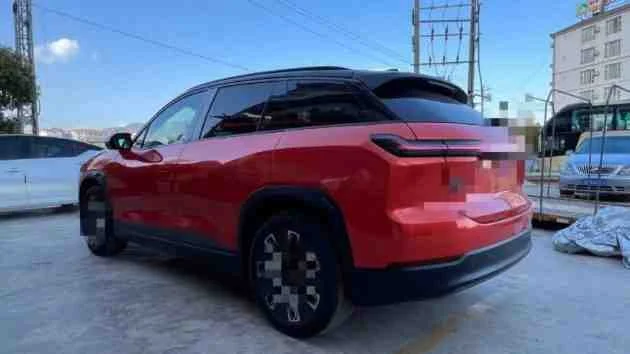
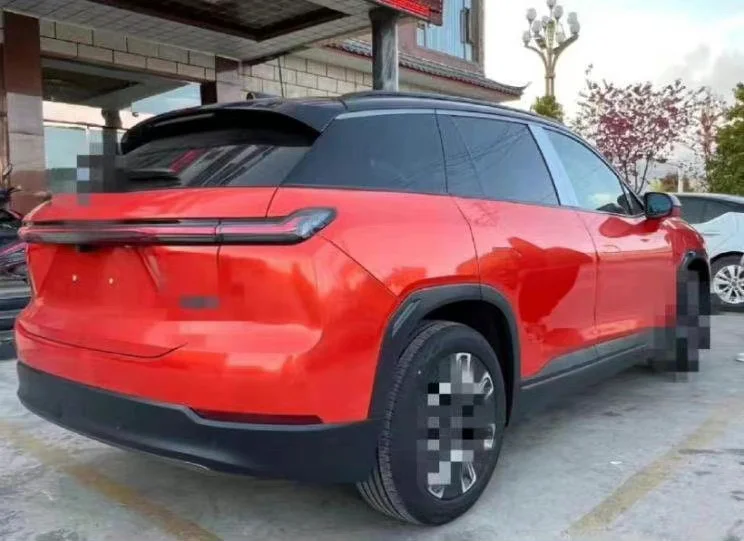
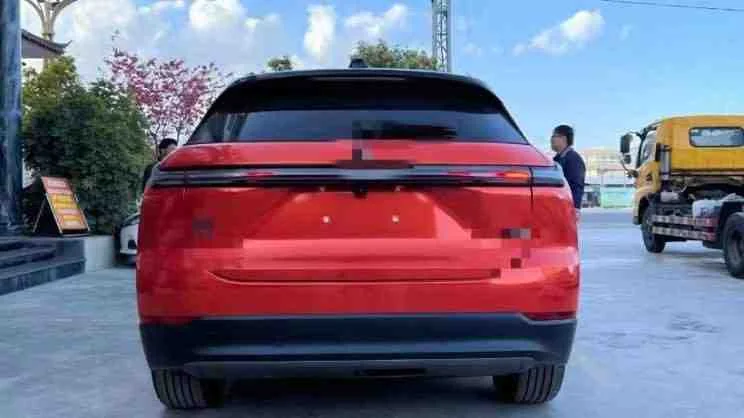
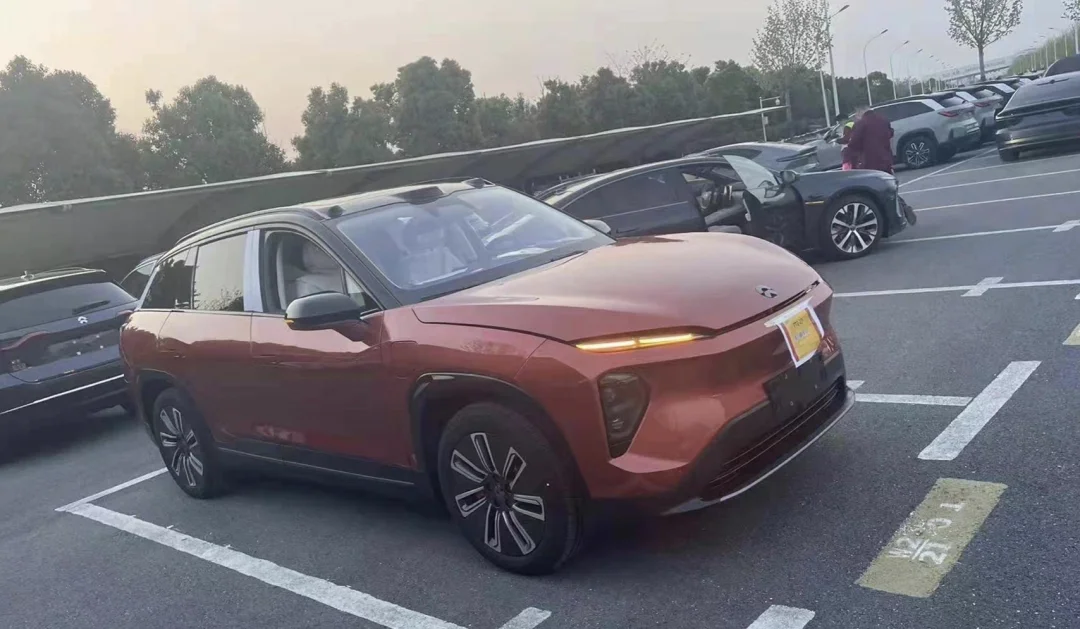
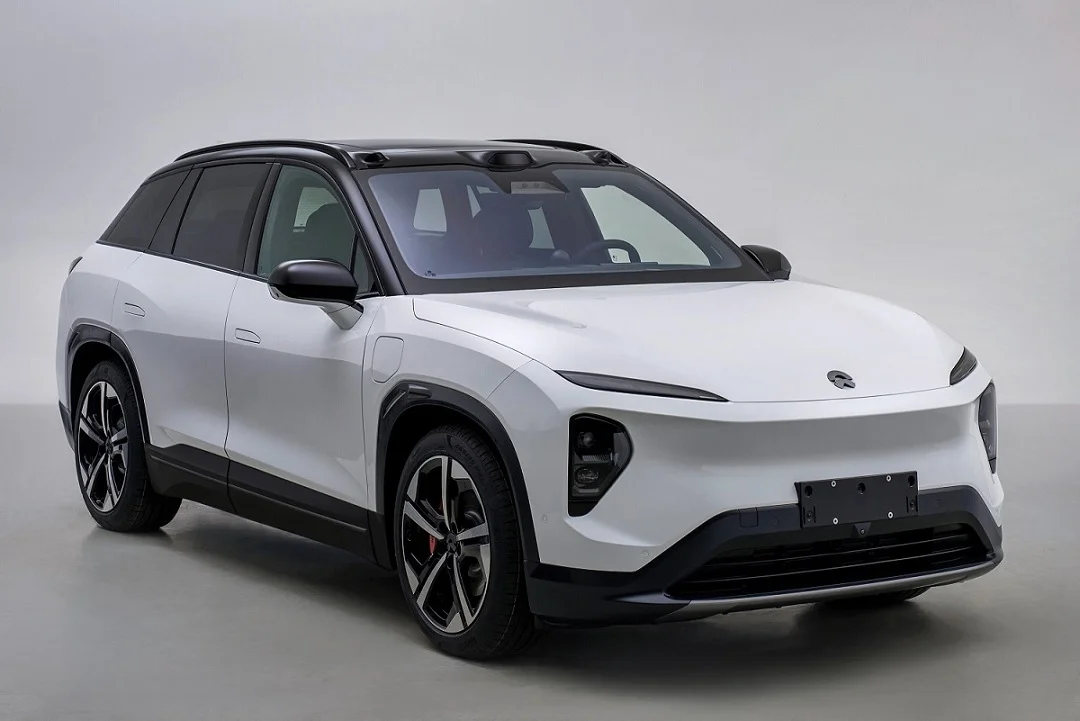
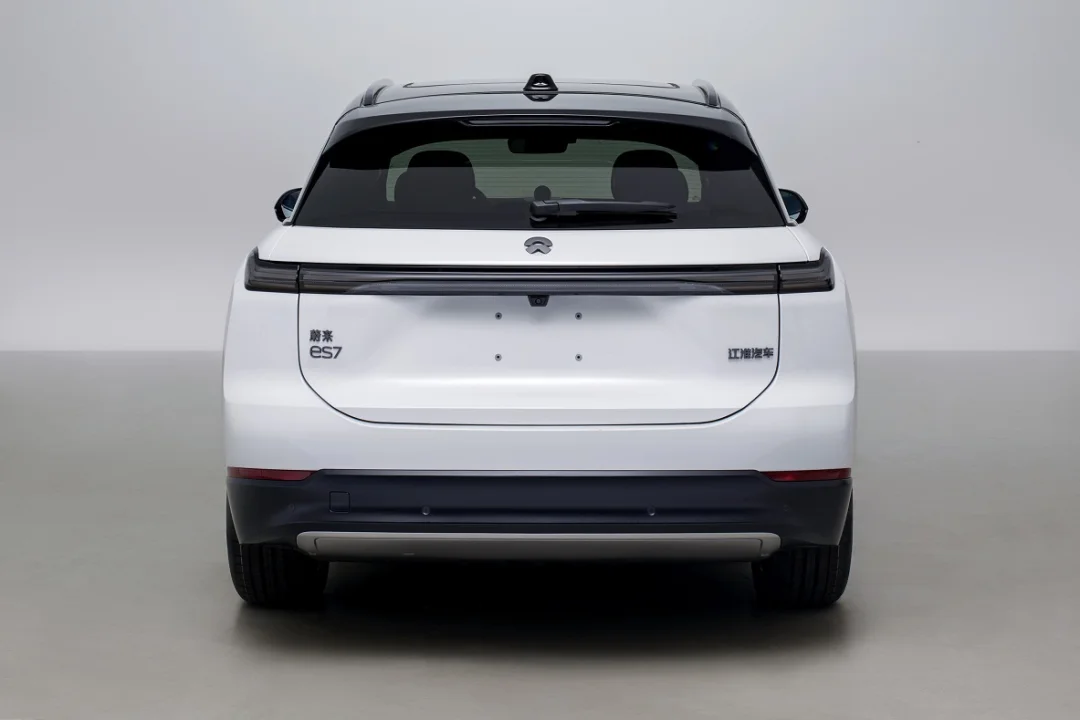
From camouflaged spy shots to real-world photos captured by netizens, and now images released by the Ministry of Industry and Information Technology (Gongxinbu), the ES7’s exterior design is largely predictable. It aligns with its larger sibling, the ET7, adopting the X-Bar styling and continuing the Design for AD philosophy.
The lighting features integrated headlamps that combine high and low beams, along with Double-dash daytime running lights. The rear employs a three-dimensional, full-width taillight bar that echoes the front DRLs.
The same design as the ET7 is everywhere, such as the three-dimensional through-type taillights. But some users complained that the ES7's taillights are not as good-looking as the ET7's, which is a matter of personal taste.
The ES7’s charging port is located on the right front fender, matching the ES6. This contrasts with the ET7, which places its charging port at the rear, a difference that has sparked significant debate.
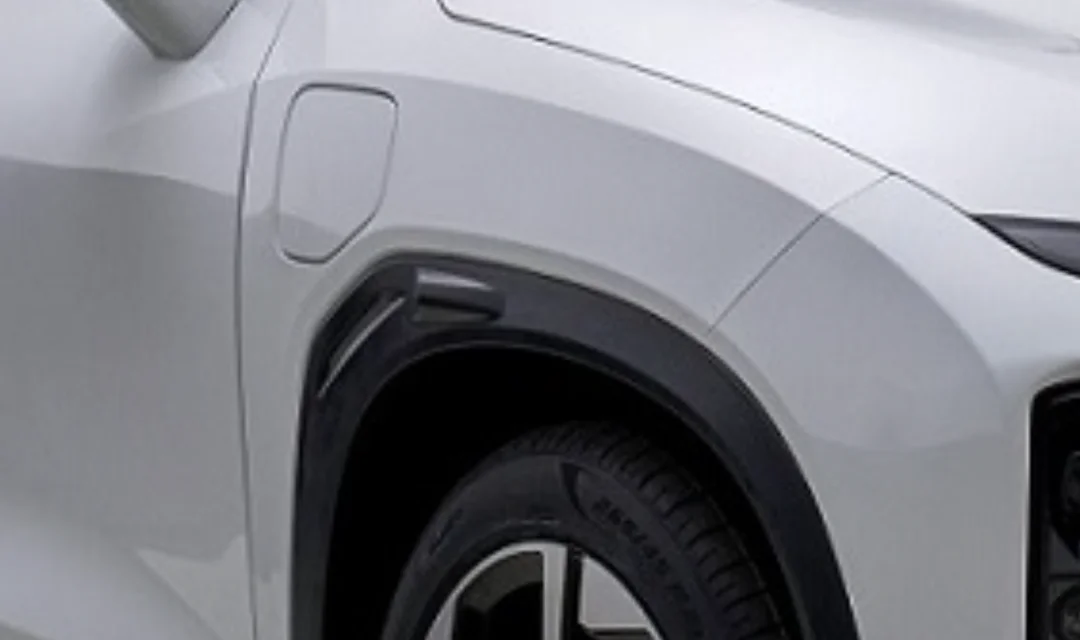
Additionally, the side-view cameras located on the wheel arches have been officially confirmed. While this design appears more integrated, some users worry that it increases the risk of damage from scrapes and dirt accumulation. The protruding "horn" structure on the roof further confirms that ES7’s driver assistance hardware is identical to that of the ET7 and ET5:
1 long-range LiDAR unit;
7 8-megapixel high-definition cameras;
4 Sony 3-megapixel surround-view cameras;
4 Orin X ADAS chips, delivering a combined computing power of 1,016 TOPS.
02Dimensions
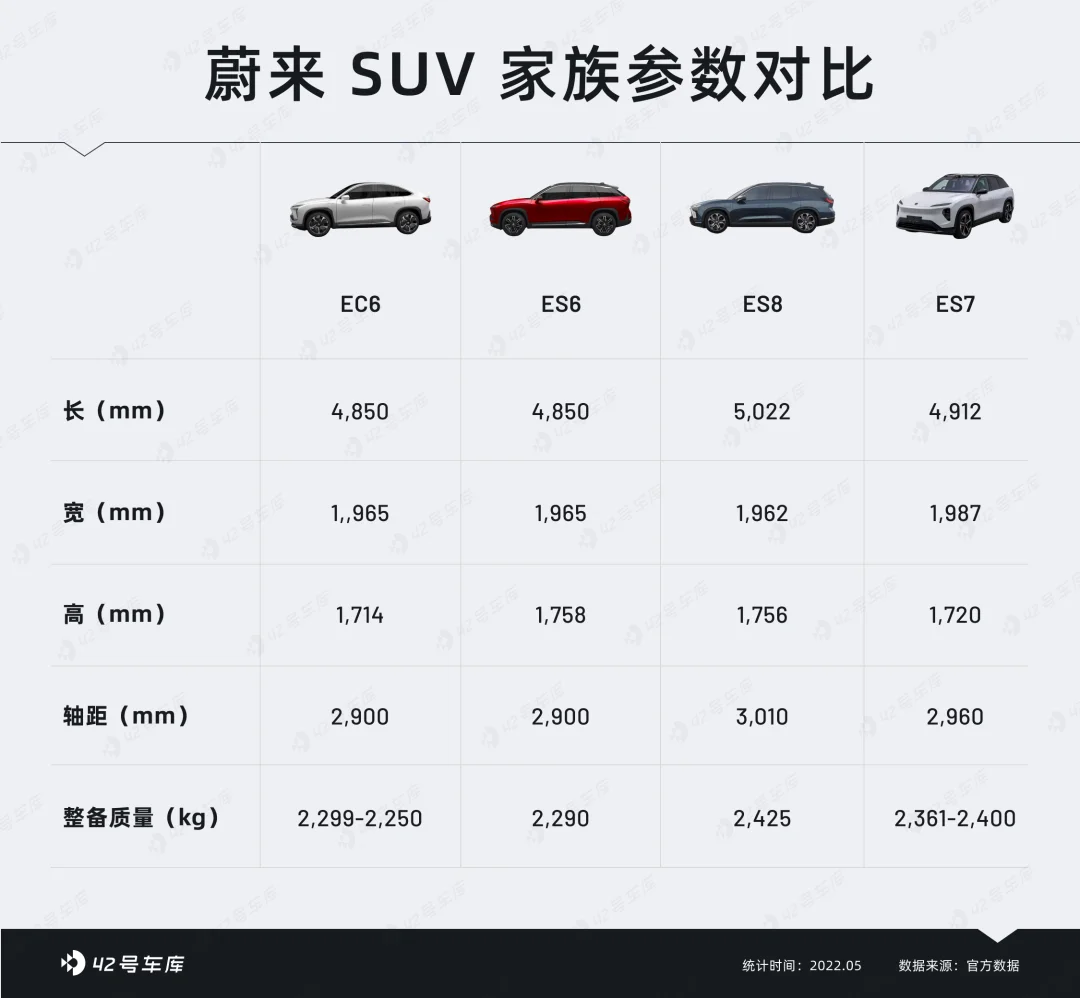
In terms of size, ES7 slots between the ES6 (EC6) and ES8, positioning itself as a large five-seater. Compared to the ES6, ES7 is 6.2 cm longer in overall length and has a wheelbase that is 6 cm longer. This indicates that most of the added length is dedicated to the cabin space. If this additional volume is fully utilized for the rear seats of this large five-seater, the experience promises to be compelling for two reasons:
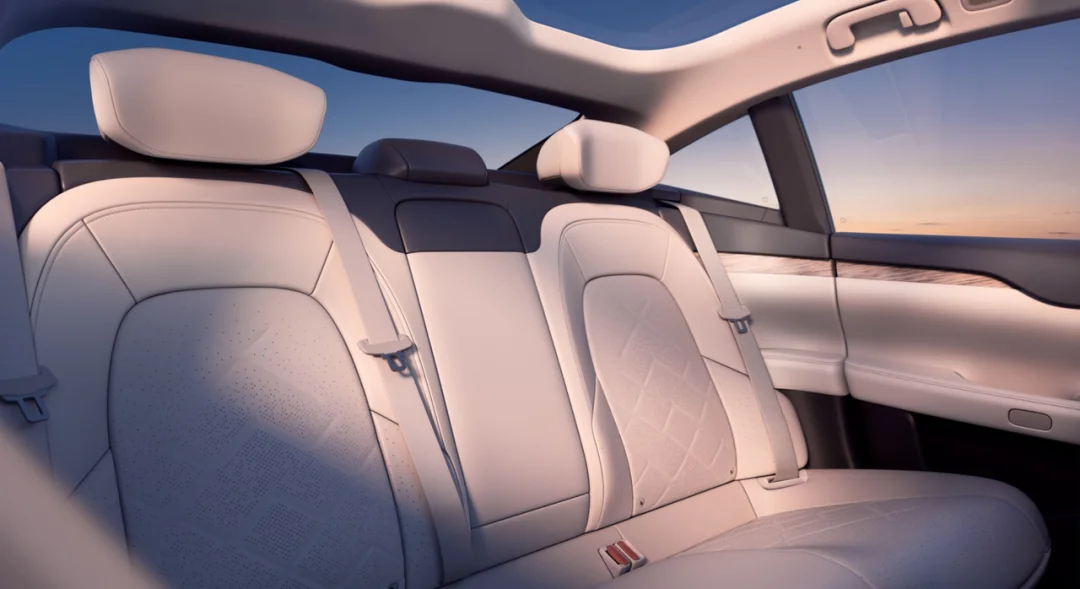
ET7 rear seat
During our previous test drive of the ET7, we found that because the battery module height is fixed at 140 mm to accommodate all standardized swap-compatible batteries, the ET7's floor is somewhat high. Although NIO has tried to compensate for this by reducing the overall vehicle height to 1,509 mm, the vertical space in the rear seat is not optimal; this should be improved in the ES7.
Additionally, referring to the rear seat configuration of the ES7, which includes ventilation, heating, and massage features, it is expected that these functions will not be absent on the ES7.
03Power + Range

Regarding the powertrain, parameters from the declaration announcement indicate that the NIO ES7 features a dual-motor all-wheel-drive layout with front and rear motors. The drive motors are supplied by Weirandongli, an in-house developed brand of NIO, and incorporate silicon carbide technology.
The front motor has a maximum power of 180 kW, and the rear motor reaches 300 kW, bringing the system's total power to 480 kW and total torque to 850 N·m. This powertrain is identical to that of the NIO ET7. Official sources indicate that this model will join the "3-second club" for acceleration. Given that the NIO ET7 achieves a zero-to-100 km/h time of 3.8 seconds, the ES7 is expected to clock around 3.9 seconds, making it NIO's fastest-accelerating SUV.
A key advantage for driving dynamics is the vehicle's weight. NIO has managed the ES7's mass effectively: despite its larger dimensions compared to the ET7 (2,349/2,379 kg) and ES6 (2,290 kg), the ES7 weighs just over 2.3 tons, thanks to its all-aluminum body construction.
Currently, NIO's 75 kWh Sanyuantielidianchi and 100 kWh Sanyuanlidianchi batteries correspond to CLTC ranges of 530 km and 675 km, respectively, on the ET7. I estimate that with the same powertrain, the ES7 will typically see a reduction of about 50 km in range, resulting in estimates of 480 km and 620 km.
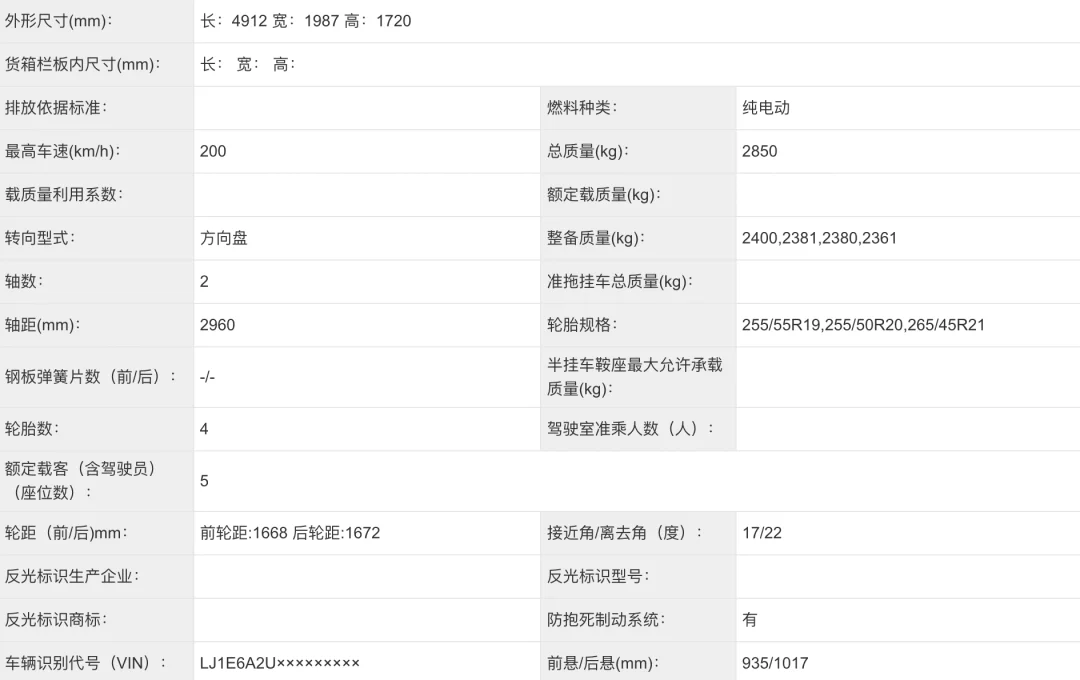
Additionally, Gongxinbu has disclosed further specifications:
The ES7’s top speed is 200 km/h;
Approach/departure angles are 17/22 degrees, with front/rear overhangs measuring 936/1,017 mm;
Tire sizes are 255/50 R20 and 265/45 R21.
04Interior Section
Regarding the interior, although no leaked images have appeared yet, it is entirely possible to refer to the ET5 and ET7 on the NT2.0 Pingtai.
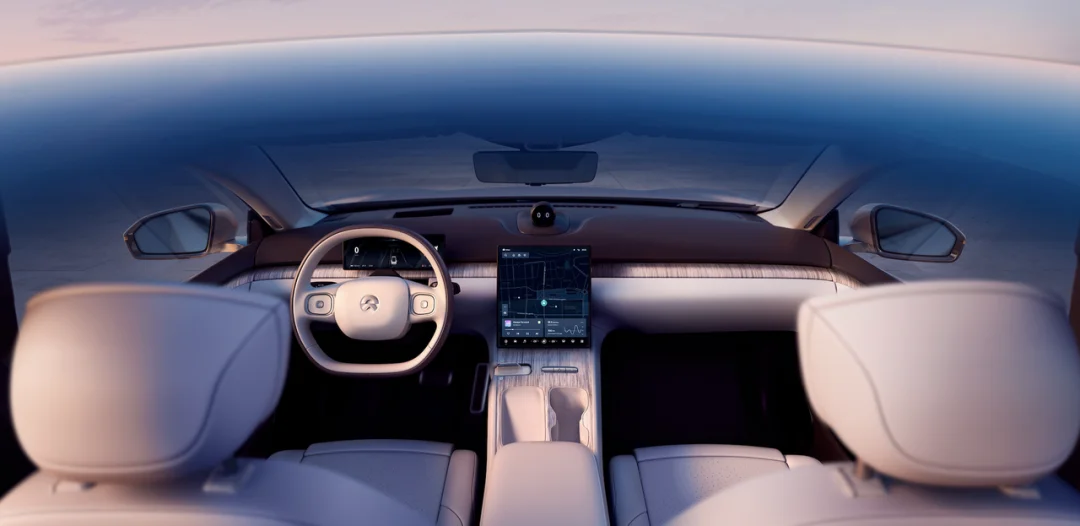
ET7 Interior
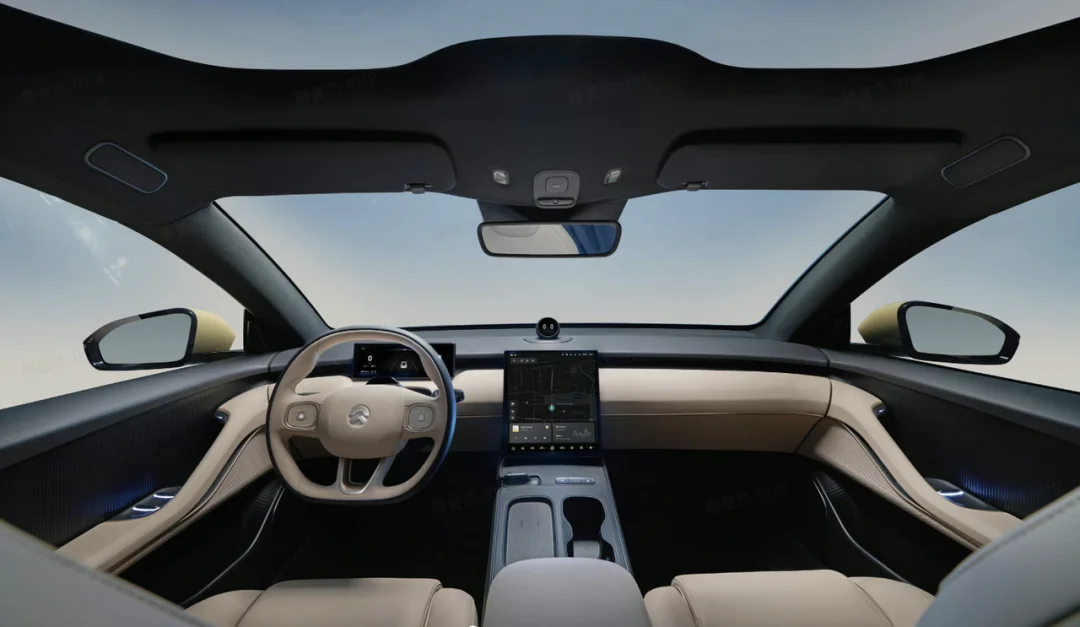
ET5 Interior
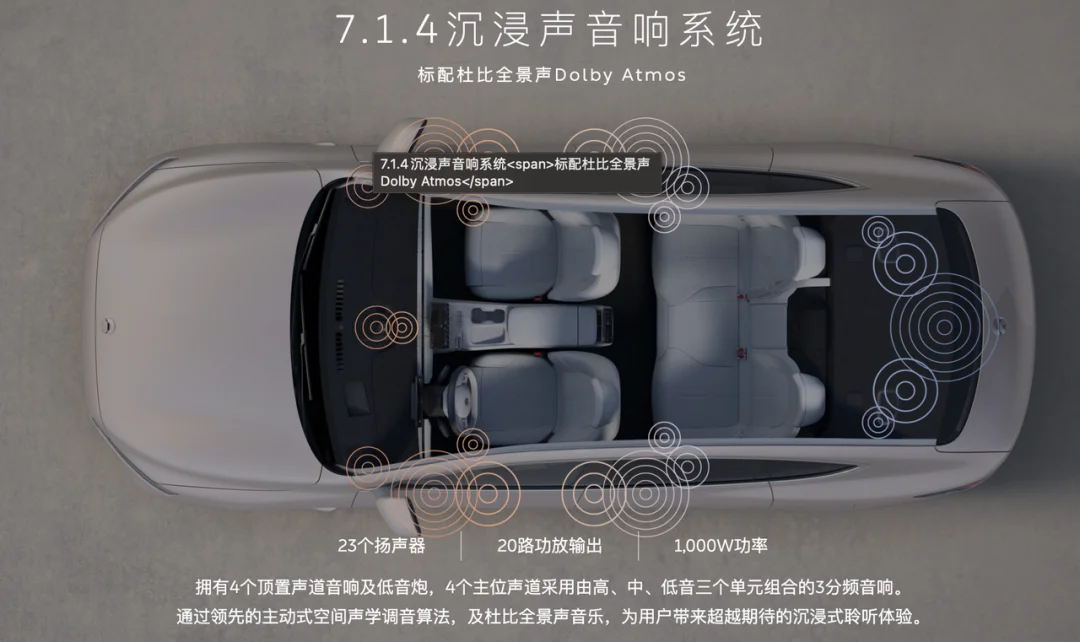
ET7 7.1.4 Immersive Sound System Given that the ET5, positioned below the ES7, already comes standard with a host of distinctive features, the ES7 is expected to be equipped with similar configurations as well:
8155 Zuocangxinpian
AMOLED high-resolution central control screen
23-speaker Dubiquanjingsheng audio system
7.1.4 Immersive Sound System
Air suspension
Soft-close doors
Seat massage
VRYanjing
05Estimated Pricing
Finally, let's guess the price of the ES7.
The ES7 is positioned between the ES6 (EC6) and the ES8, but many configurations on NT2.0 models are standard across the entire lineup—for instance, the ET5, which is the younger sibling—so the ES7's starting price will not be low; it could approach that of the ES8 (starting at RMB 478,000).
Given that the ET7, also a "7"-series model, has a starting price of RMB 448,000, and SUVs typically command higher prices, we estimate that the official price for the ES7 will fall between RMB 450,000 and RMB 500,000.
For potential NIO users, there are two scenarios to consider for the ES7:
If you are considering the top-trim EC6 or ES6, which is the Performance version plus the full NP package, and adding some random options, the vehicle's selling price would already be around RMB 450,000. At this point, choosing the larger ES7 also comes with NAD hardware as standard;
Or if your budget was originally around RMB 500,000 and you were eyeing the ES8 but found that a three-row six- or seven-seat configuration is not a hard requirement, then you might consider waiting for this new large five-seater model.
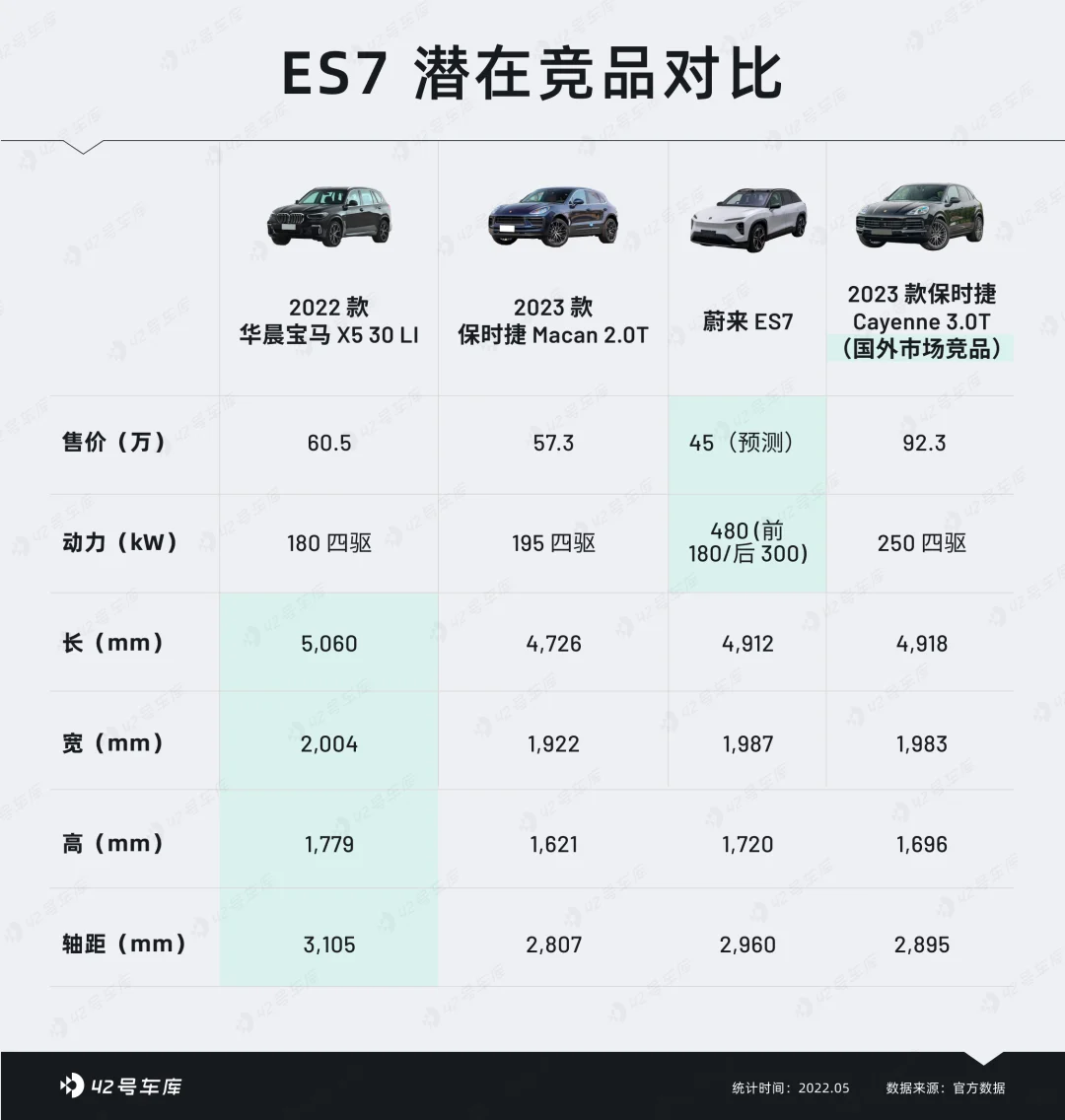
NIO has mentioned multiple times that the ES7's main competitor is a gasoline-powered vehicle—the BMW X5 produced by Brilliance BMW. Indeed, for pure electric mid-to-large SUVs in the RMB 500,000 price range, it seems that aside from the ES7, there is only its larger sibling, the ES8.
The recently hotly discussed Li L9 has already reached the size of a large SUV, and the L9 is firmly a three-row layout, so there should be only minimal user overlap between the two, with little competitive relationship.
To better understand the ES7's positioning, we selected several comparable internal-combustion engine (ICE) models for a direct comparison. The results show that while the ES7 does not hold an advantage in dimensions, it completely outperforms these ICE vehicles—and even their sport variants—in terms of power. Furthermore, the ES7’s key strengths lie in the class-defying features previously mentioned.
As a product of the NT2.0 Pingtai platform, the ES7 shares the same mission as the ET7 and ET5: to expand into international markets. If we apply the estimated price point of RMB 500,000 to European and North American markets, the ES7’s competitors shift significantly, reaching up to the Porsche Cayenne, which starts at approximately RMB 923,000 in China.
It is said that alongside the ES7, a facelifted 866 was also officially unveiled. This makes me sigh: NIO's product lineup this year is like dumplings being dropped into boiling water.
Written by: Liu Guangding Edited by: Liu San