


Feifan R7 to feature world's first mass-produced Huawei AR-HUD
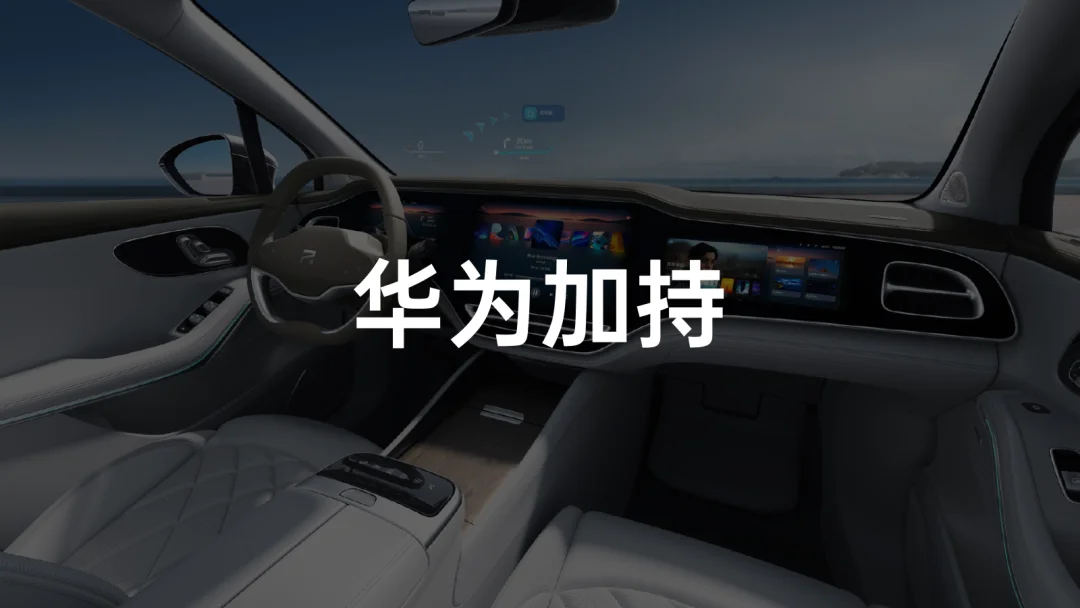
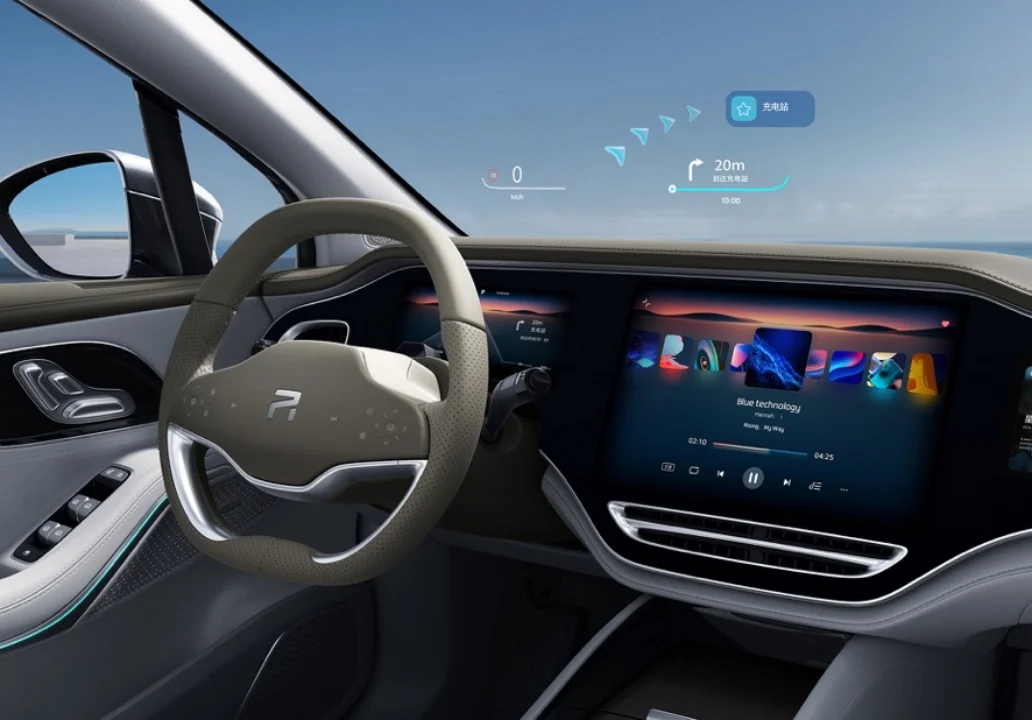
On May 7, Feifan revealed details about the R7’s cabin, highlighting its global debut of Huawei’s visual-enhancement AR-HUD (Augmented Reality Head-Up Display). While static images showcased abundant information, the actual performance remained a point of curiosity. Today, Feifan released further specifics on this AR-HUD system.
Although I welcome smart features without reservation, HUDs have never appeared on my list of essential automotive functions.
In my view, HUDs are secondary features that serve as icing on the cake rather than essentials. Therefore, before analyzing what the Feifan R7 AR-HUD system can achieve, let us first examine the pros and cons of HUD technology.
01The Pros and Cons of HUD
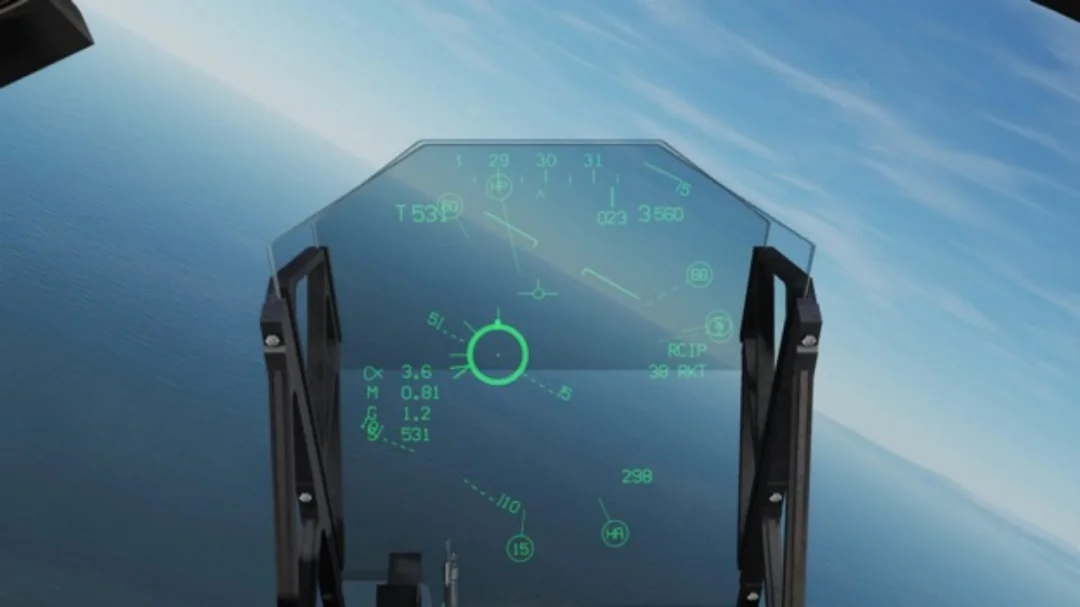
HUD stands for Head-Up Display. Its origins lie in optical sights used in fighter jets. These sights utilized optical reflection principles to project ring-shaped reticle grids onto a glass panel or canopy at the front of the cockpit. This allowed pilots to aim at targets while simultaneously observing their surroundings, preventing accidents caused by divided attention.
After military technology was adapted for civilian use, Heads-Up Displays (HUDs) with these advantages naturally found their way into automotive driving, where maintaining focus is equally critical.
Through an in-vehicle HUD, drivers can check vehicle status information—such as speed and time—at any moment without taking their eyes off the road, significantly enhancing safety while driving.
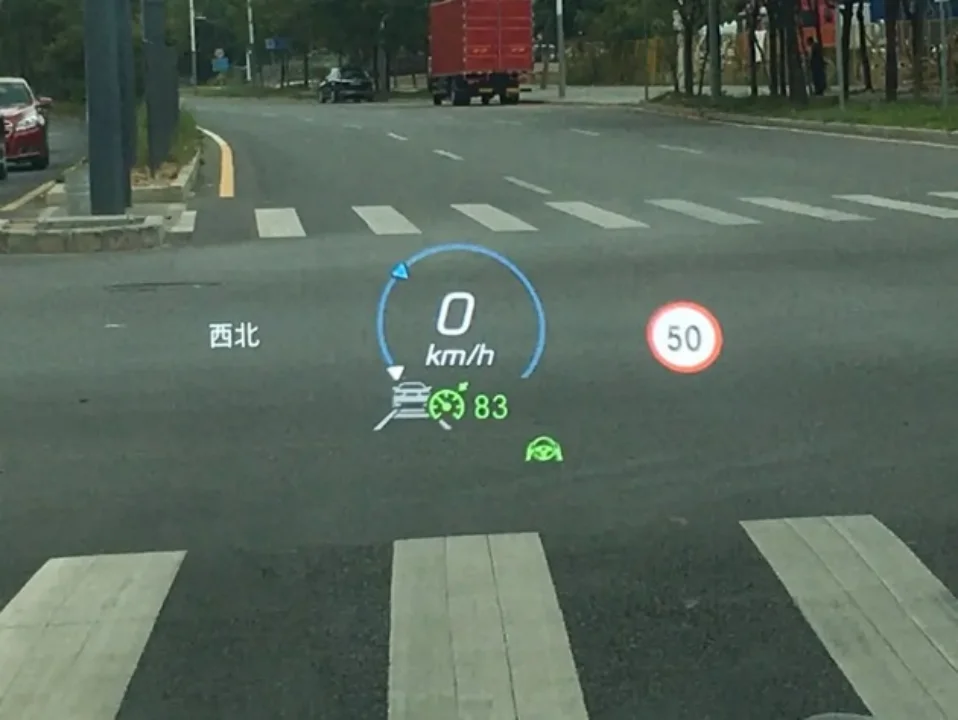
However, from the first appearance of HUDs as an optional feature on mass-produced vehicles in 1990 until a couple of years ago, the application scenarios for HUDs saw little expansion. Their functions remained limited to displaying basic information like speed; even when more advanced, they typically only showed simple navigation cues or the name of the currently playing music album. It seemed that this high-end technology, originally born from military applications, had stagnated in its development within the automotive sector.
I have previously driven several models equipped with HUDs. First and foremost, under ideal conditions, the display position of a HUD aligns perfectly with the driver’s natural line of sight, requiring minimal eye movement to view. Even when focusing on the HUD content, drivers can still react promptly to sudden hazards on the road. On several occasions, this feature helped me avoid "ghost probes"—pedestrians or cyclists suddenly emerging from blind spots on urban side streets.
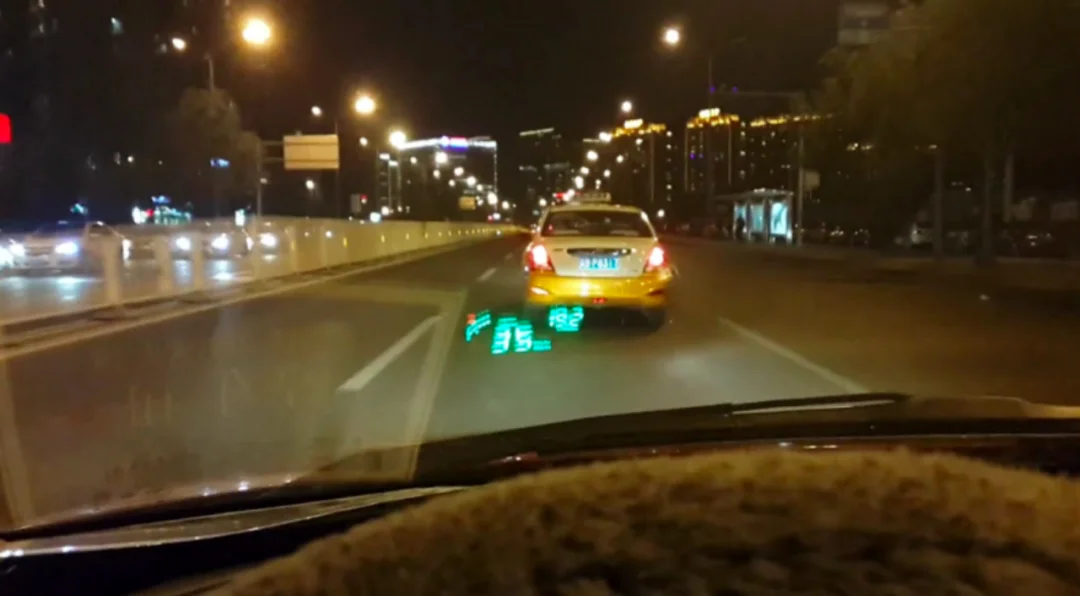
Nevertheless, it must be pointed out that, aside from the limited amount of displayed information, some HUDs suffer from insufficient brightness and unclear displays during periods of strong sunlight.
If angle-related distortion causes differences between the left and right eye views, the HUD image can become severely blurred, potentially obstructing vision and interfering with driving. Therefore, getting HUDs right requires considerable effort and cost. Consequently, considering the high expense and uncertain effectiveness, most HUDs on the market today remain optional features rather than standard equipment.
Across the smart EV industry, HUD adoption is rising. As vehicles become more intelligent and display more driving, ADAS, and autonomous-driving data on dashboards, keeping critical information in the driver’s line of sight remains a key safety trend.
For drivers, road information has the highest priority. The “head-up” zone in an AR-HUD offers the optimal human-machine interaction position, far superior to instrument clusters or center screens. Yet many cars suffer from poor execution: they use this prime real estate for low-quality content. In polite terms, the experience needs improvement.
02What Huawei Brings to the HUD
I was not surprised that the Feifan R7 includes an HUD. As a flagship emphasizing technology and intelligence, omitting it would be hard to justify. But this system feels different. Its full name is the Visual Enhancement AR-HUD System. What is an AR-HUD?
Put simply, an AR-HUD adds augmented-reality capabilities to a traditional HUD. It projects a larger image area at a greater virtual distance with higher clarity, and most importantly, it blends displayed information seamlessly with the outside environment. This feature already appears on recent flagship models such as the Mercedes-Benz S-Class.
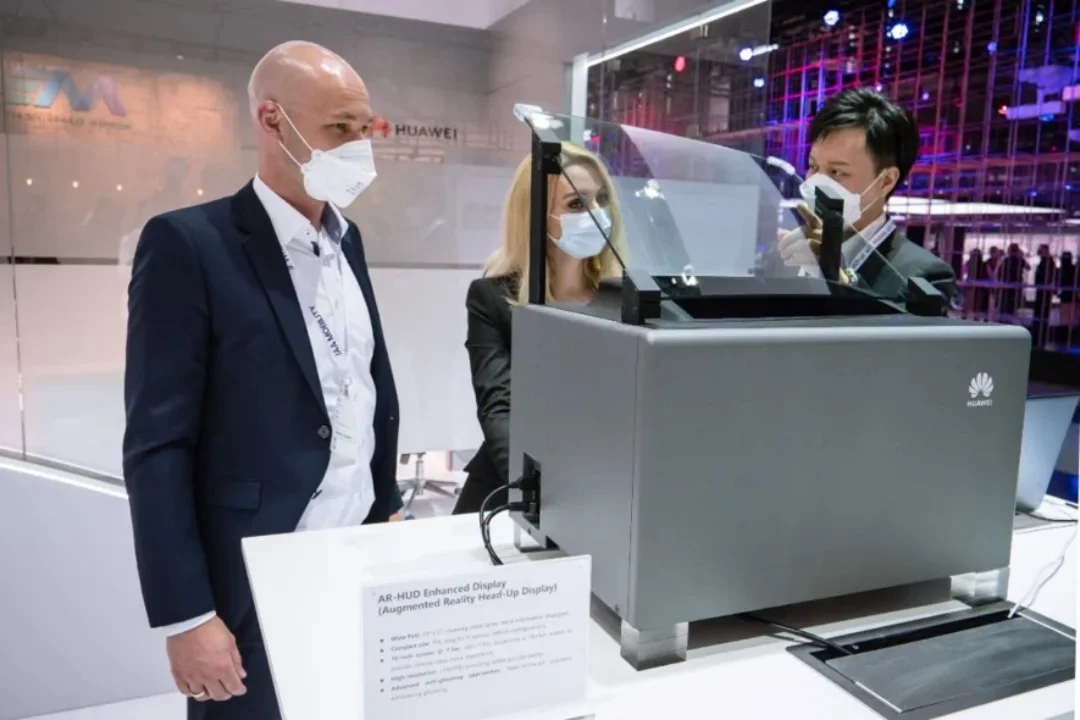
The AR-HUD in the Feifan R7 comes from Huawei and marks the global debut of Huawei’s latest AR-HUD system. Given Huawei’s reputation in the tech sector, I am eager to see what changes this system brings and whether it can address the common complaints about current HUD implementations.
Improvements Based on Hardware
A superior user experience relies on robust hardware. Before experiencing the AR-HUD’s performance firsthand, let’s examine its basic hardware specifications.
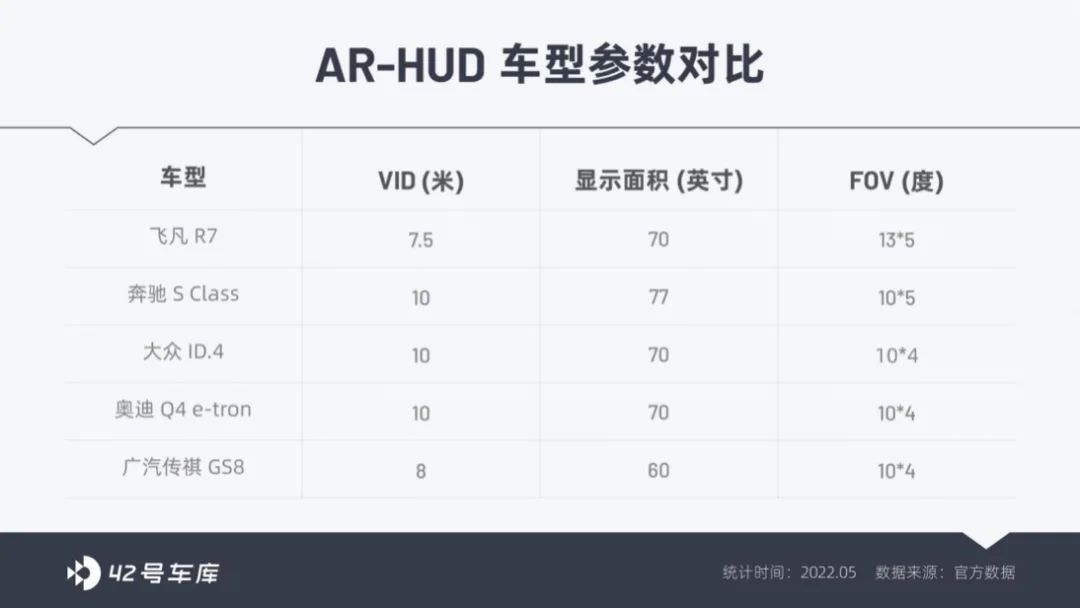
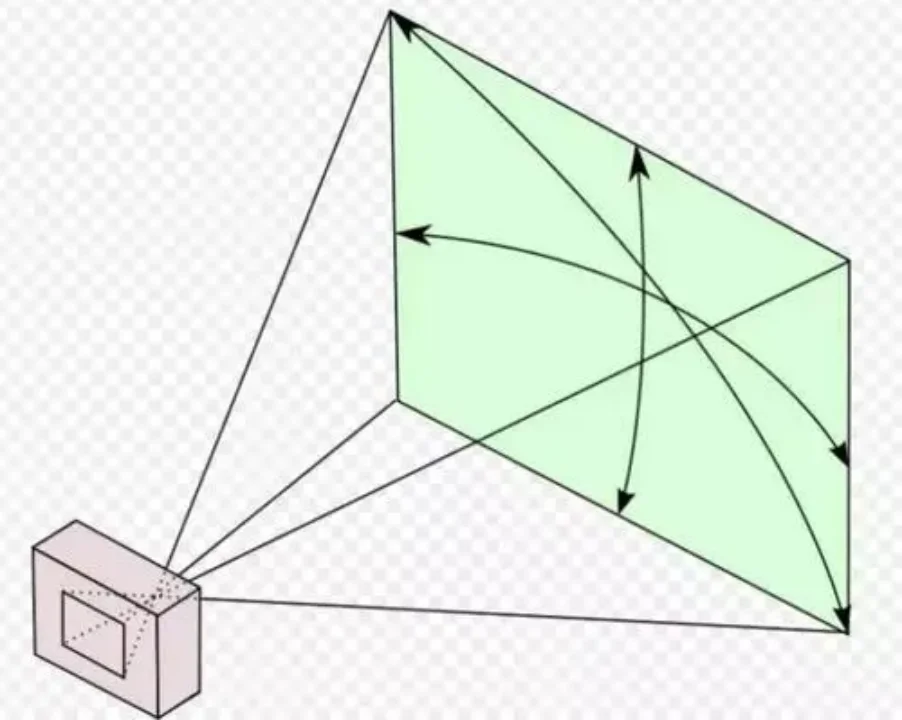
The Huawei AR-HUD in the Feifan R7 has claimed the title of largest field of view (FOV) among mass-produced vehicles globally. In simple terms, a larger FOV provides a wider display area and richer content. Typically, an AR-HUD should achieve at least 10° × 5° to ensure sufficient display area for AR content.
With this FOV specification, the Feifan R7 surpasses the Mercedes-Benz S-Class. Although its display area is slightly smaller, it offers considerable value in the RMB 300,000–400,000 price segment.
Furthermore, given its large display area, the Feifan R7 features the highest-resolution AR-HUD in mass production, with a resolution of 1,920 × 730 and a contrast ratio of 1,200:1. Higher resolution delivers finer image quality and reduces edge jaggedness in HUD text.
Its brightness performance is also in the top tier, reaching up to 12,000 nits. This ensures stable, clear, and bright visuals even under strong midday sunlight. The Huawei AR-HUD also includes automatic ambient light detection, adjusting illumination brightness to suit environmental conditions and reducing eye discomfort caused by sudden changes in lighting.
What surprised me most is that the Feifan R7’s AR-HUD includes a dedicated Snow Mode. Activating it switches the display color to green, improving visibility against white snow backgrounds.
ODP Optical Engine
The cutting-edge technology behind all these superior specifications is the Huawei ODP optical engine. To understand exactly what makes it so powerful, we first need to clarify how HUDs work.
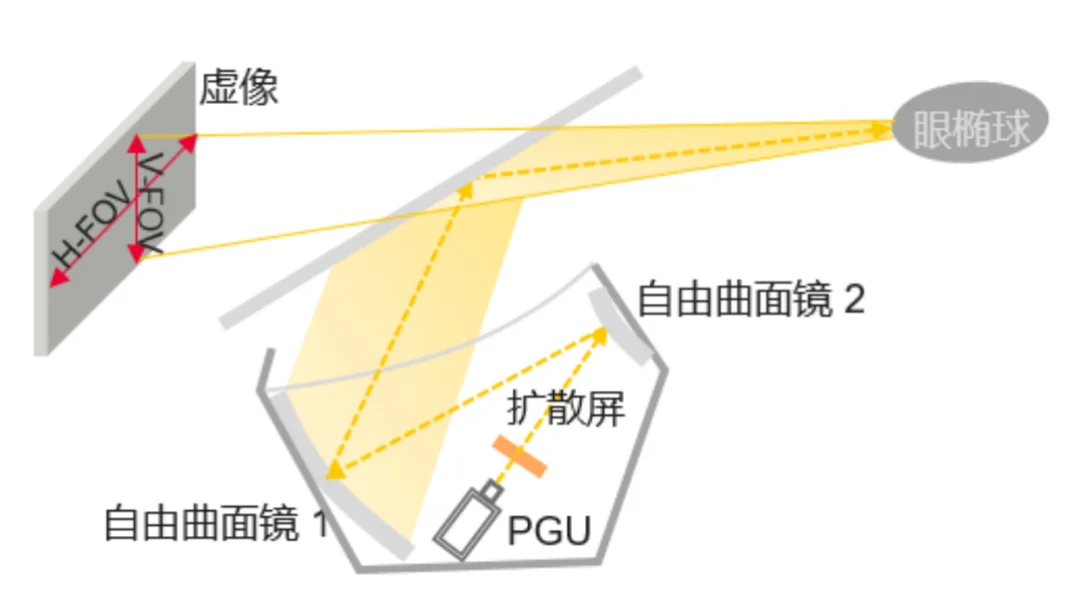
Simply put, a HUD utilizes optical reflection principles: a light source emits an image, which undergoes double reflection via mirrors and projection lenses to form a virtual image on the windshield.
There are three main imaging technologies in use today: TFT-LCD, DLP, and LCoS.

Among these, TFT-LCD is the most widely applied. It works by using a backlight to illuminate an LCD panel; thin-film transistors (TFTs) drive changes in the polarization state of light for each pixel, creating varying levels of brightness. RGB color filters then render the final colorful image.
DLP stands for Digital Light Processing. Its core component is the DMD (Digital Micromirror Device), a rectangular array typically composed of up to 1.3 million hinged micromirrors, with one micromirror corresponding to one pixel. By tilting these micromirrors, the system controls the on/off state of signal projection, thereby managing the light flow for each individual pixel.
Compared to TFT-LCD, DLP offers higher resolution, greater brightness, and better image quality. However, because it projects onto a flat plane, it requires high-precision aspherical reflective glass tailored to specific vehicle models to prevent blurry displays.
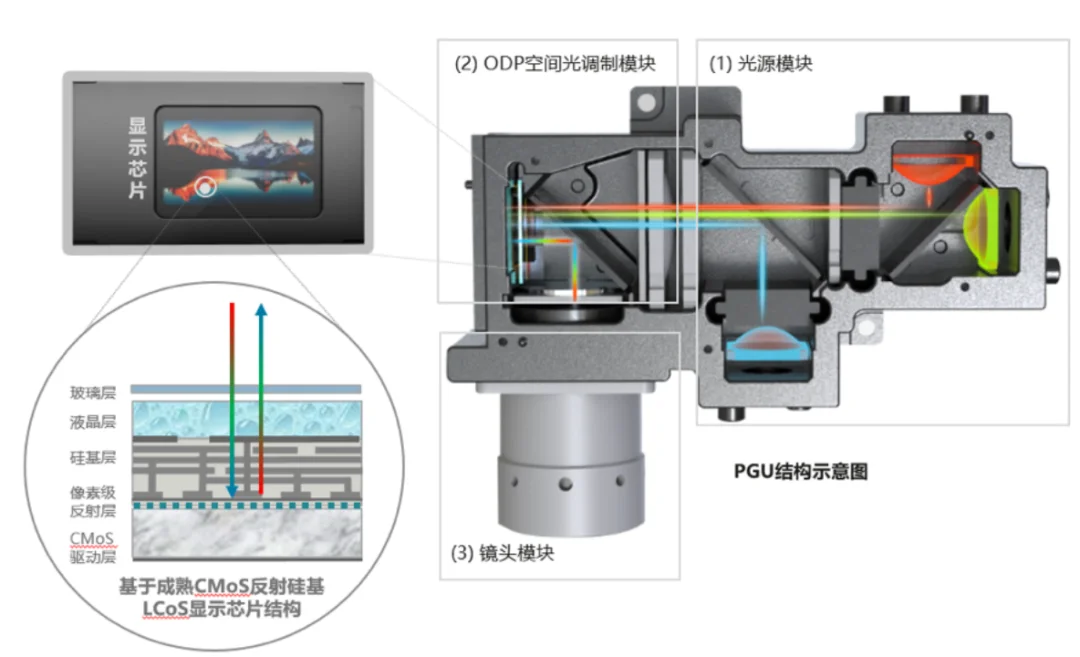
LCoS, which stands for Liquid Crystal on Silicon, is a silicon-based liquid crystal projection technology. It represents an upgrade to LCD, replacing the glass substrate used in traditional LCDs with a silicon wafer—commonly referred to as chip-grade silicon.
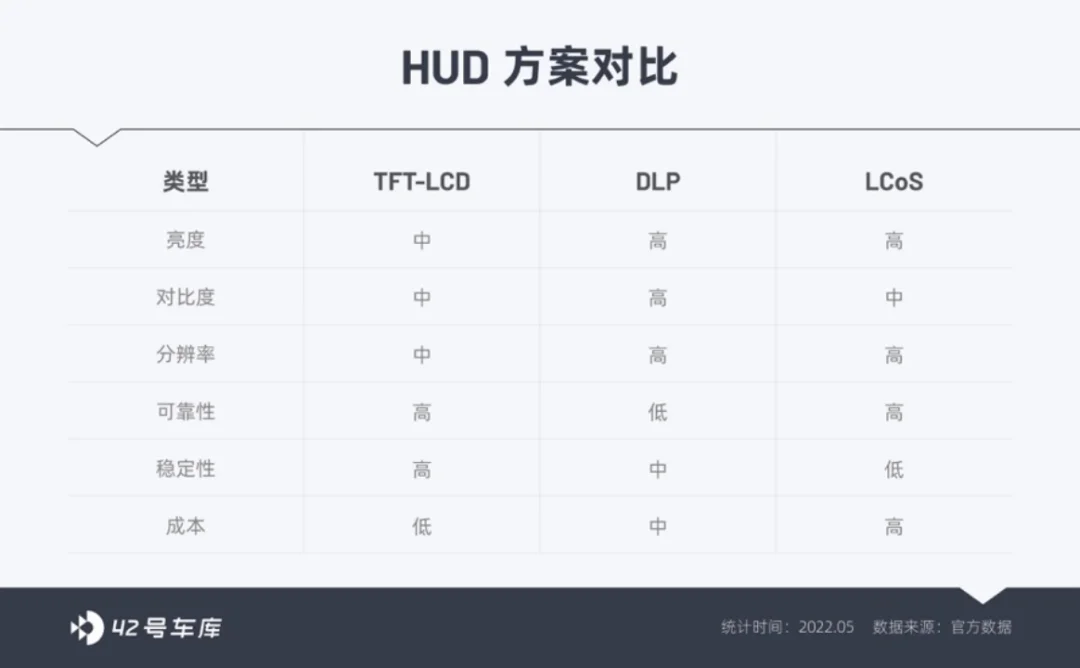
Unlike the transmissive projection typical of LCDs, LCoS employs reflective projection. This approach offers significantly higher light efficiency, reaching up to 40%, compared to just 3% for conventional transmissive LCDs. This improvement in light efficiency enables the AR-HUD system in the Feifan R7 to deliver greater brightness and higher resolution.
03Algorithm Determines Final Effect
With sufficiently powerful projection hardware in place, the next challenge lies in Huawei’s calibration capabilities.
Compared to traditional HUDs, AR-HUDs incorporate augmented reality effects by overlaying generated images onto the real-world environment. As the viewer’s perspective shifts, the image must remain precisely positioned where it should appear; otherwise, misalignment between the image and the environment may occur, undermining the very purpose of the AR-HUD.
Huawei uses a state monitoring system based on IMU (inertial measurement unit) and DMS (driver monitoring system) to dynamically maintain image stability in real time. By integrating navigation signals, real-time positioning data, traffic conditions, vehicle speed, steering angle, and other information, the cabin space is linked and bound with the external world.
Given potential issues such as AR display latency and errors, the final display stability and quality of this system will depend on its actual performance once mass-produced vehicles hit the market.
There is currently limited public information about this system, but Huawei’s strong backing in optical communications provides reassurance. With such a powerful tool, can Feifan R7 create a "delicious dish"? This is my primary concern, as the biggest challenge for HUDs today is not insufficient performance, but a lack of functionality.
04A Grand Banquet
If the global debut of Huawei’s visual augmented reality AR-HUD head-up display system merely whetted my appetite, then Feifan R7’s "culinary skills" have served me a grand banquet.
Why call it a grand banquet? Because Feifan R7 has incorporated almost every HUD application scenario currently available on the market. It covers even the most basic functions, including:
Navigation assistance: lane line information, turn-by-turn guidance, remaining distance, estimated time of arrival, road names, etc.
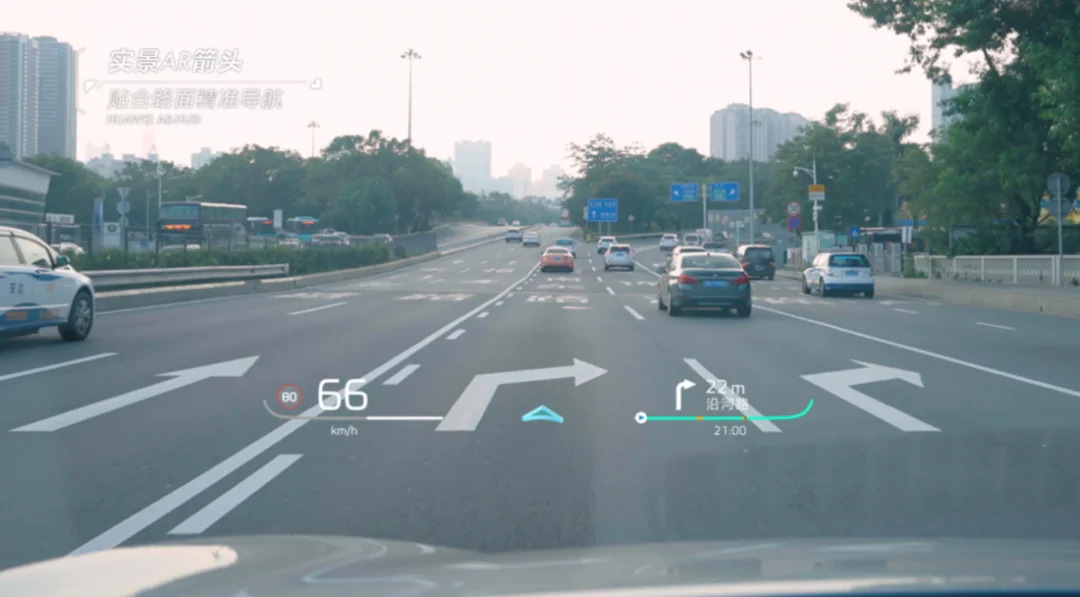
Compared with traditional HUDs, there is already an experiential gap in basic navigation information assistance. The larger display area and longer virtual image distance (VID) enable the presentation of more information.
In demonstration videos of the Feifan R7, speed-related information is positioned on the left side, while navigation details appear on the right. Key intersection prompts, current time, and remaining distance are displayed clearly enough that drivers rarely need to glance at the central screen for navigation guidance.
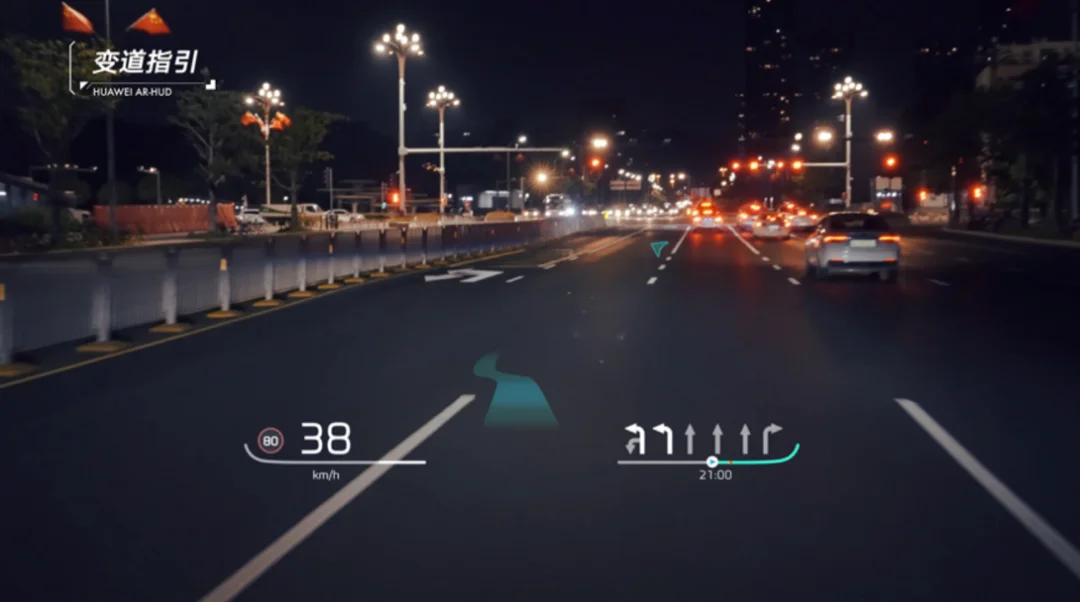
AR Navigation Guidance: AR Pilot, Destination Real-Scene View, etc.
If reading text alone feels insufficient, the AR navigation arrows in the center provide the most intuitive and error-resistant direction for the next intersection—a capability traditional HUDs cannot match.
When facing complex intersections, drivers often slow down to carefully compare the real-world view with map data to avoid wrong turns. On elevated highways, taking an incorrect exit can easily add over 10 kilometers to the journey due to bad luck. AR Pilot leverages map data and precise GPS positioning to overlay directional arrows directly onto the correct lane or path via augmented reality, significantly reducing the probability of making a wrong turn.
It also includes safety prompt features:
Safety Assistance: Lane Departure Warning, Lane Change Guidance, Lead Vehicle Recognition, Following Distance, and Obstacle Collision Warning
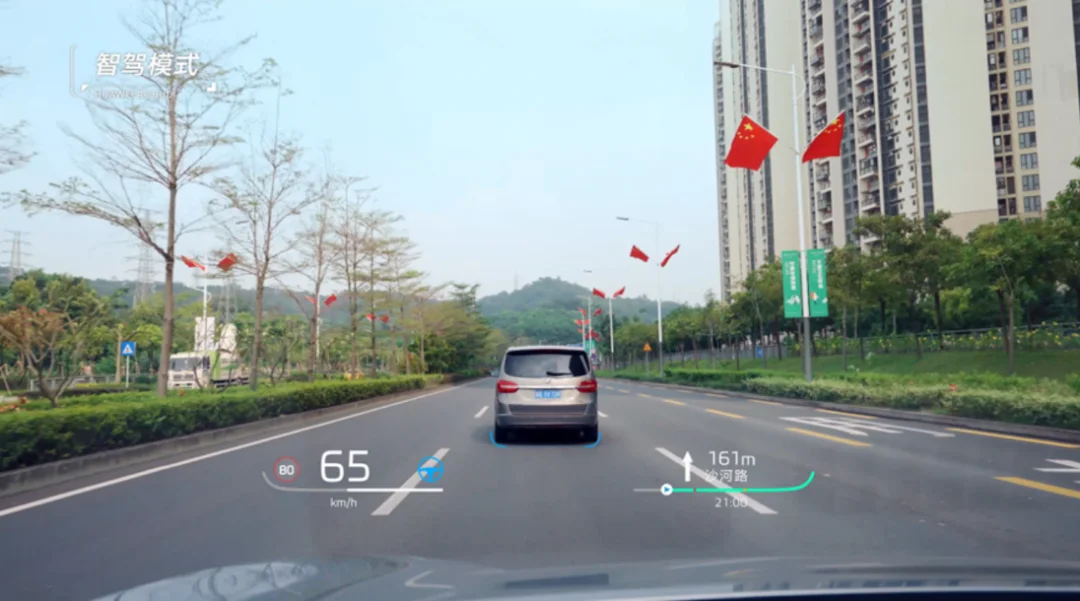
Lead vehicle recognition is the system’s automatic identification of a vehicle ahead, marked by a bounding box displayed beneath it. If the following distance becomes too short, a warning appears. This feature is often overlooked but provides significant peace of mind.
We know that current driver assistance systems do not achieve 100% accuracy in vehicle detection. Before a potential collision, you may not be certain whether the system has detected the car ahead. This is why almost all models visualize driver assistance information on the instrument cluster—to clearly reassure the driver, “Don’t worry, I see the car ahead.” However, drivers cannot constantly look at the instrument panel while driving. The small bounding box on the AR-HUD effectively solves this problem.
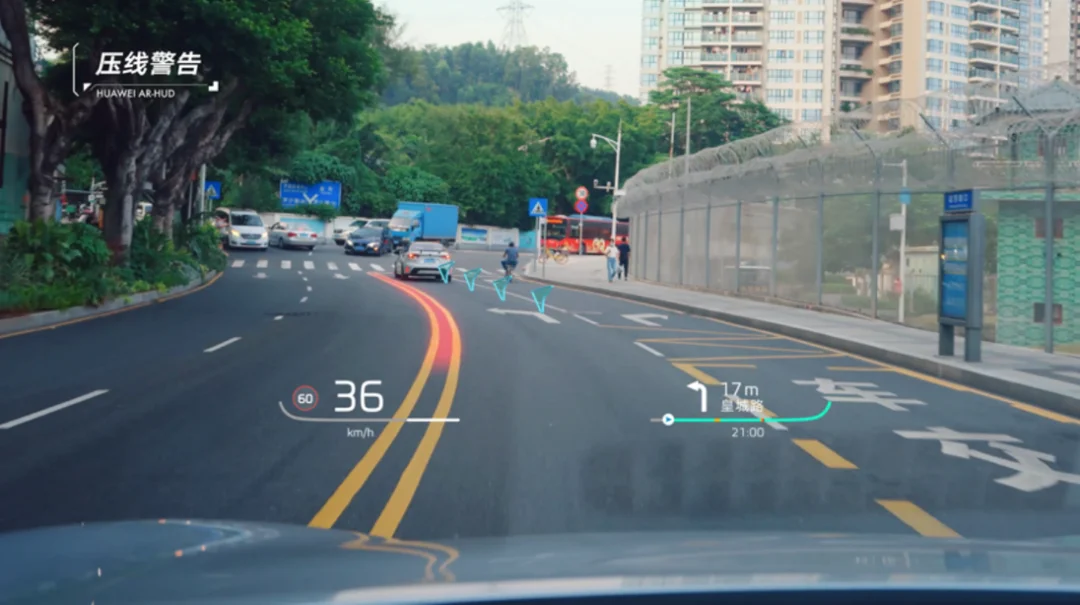
The system also integrates map and point-of-interest (POI) data, projecting relevant information onto the AR-HUD when most needed:
Lifestyle Services: The Feifan R7 uses augmented reality to overlay map POI data with the real-world view, providing real-time annotations for locations such as parking lots, restaurants, shopping centers, and other consumer or vehicle service points along the route.
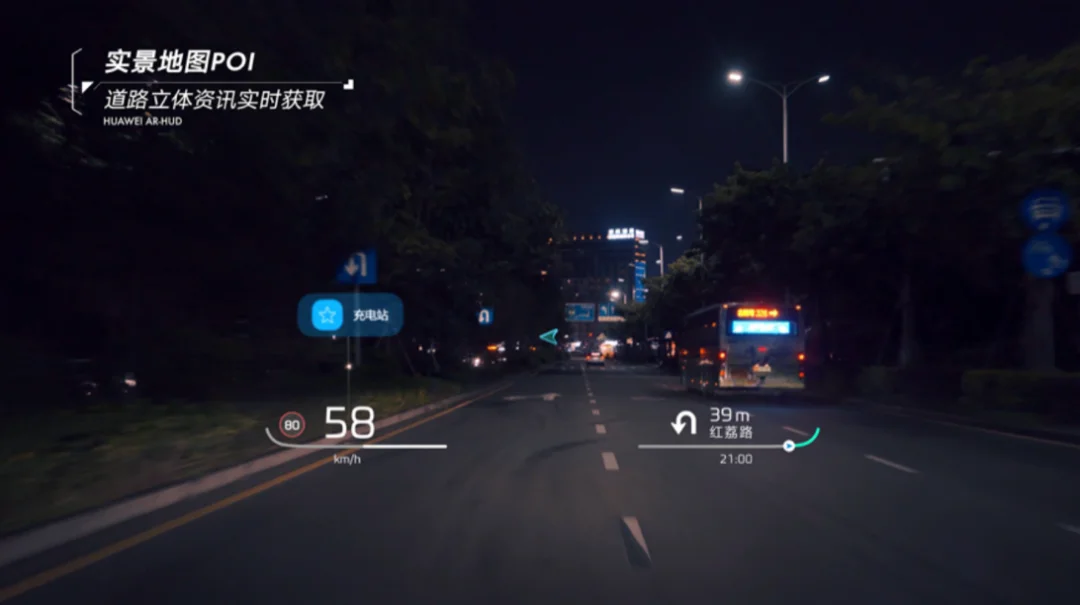
This feature is particularly useful when driving in unfamiliar areas. After all, two-dimensional map guidance is nowhere as direct as having a 'real person' point the way. The AR arrow guidance combined with map POI data feels like having a local standing in front of your car, waving their hand and saying, 'Young man, the charging station is this way; don't go the wrong way.'
How could a grand feast be complete without dessert? The Feifan R7's AR-HUD also incorporates entertainment functions:
Experience audio-visual entertainment via the AR-HUD while parked.
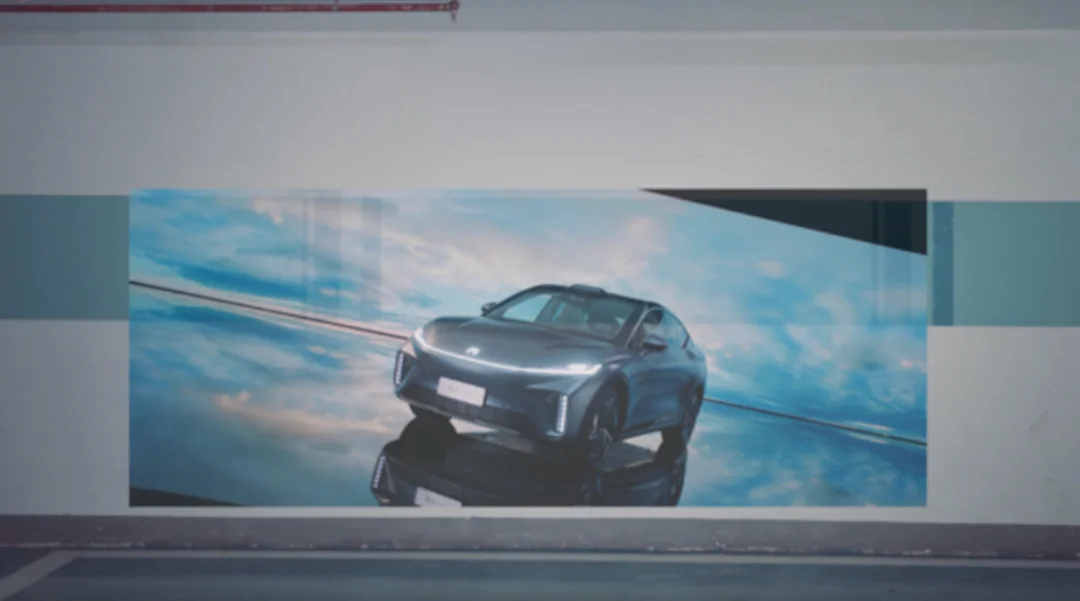
A HUD capable of playing movies is something I've never heard of before. However, its 1,920 × 730 resolution already exceeds the standard of HD 720p, making it a standout among HUDs and even surpassing the liquid crystal displays of some vehicles.
That said, how well it performs for movie playback remains to be seen, which is what I'm most eager to experience. While watching movies on an HUD might be considered a pseudo-demand, using a movie-capable HUD to meet basic HUD requirements is more than sufficient.
I even feel that the Feifan R7 uses a single HUD to cover the functions of both a liquid crystal instrument cluster and a traditional HUD. The only function I can think of that it lacks is displaying fault codes.
05Final Thoughts
With the AR-HUD specifications now public, the complete cabin of the Feifan R7 has been fully revealed. While we are impressed by the HUD’s performance, what truly surprises us is Feifan itself.
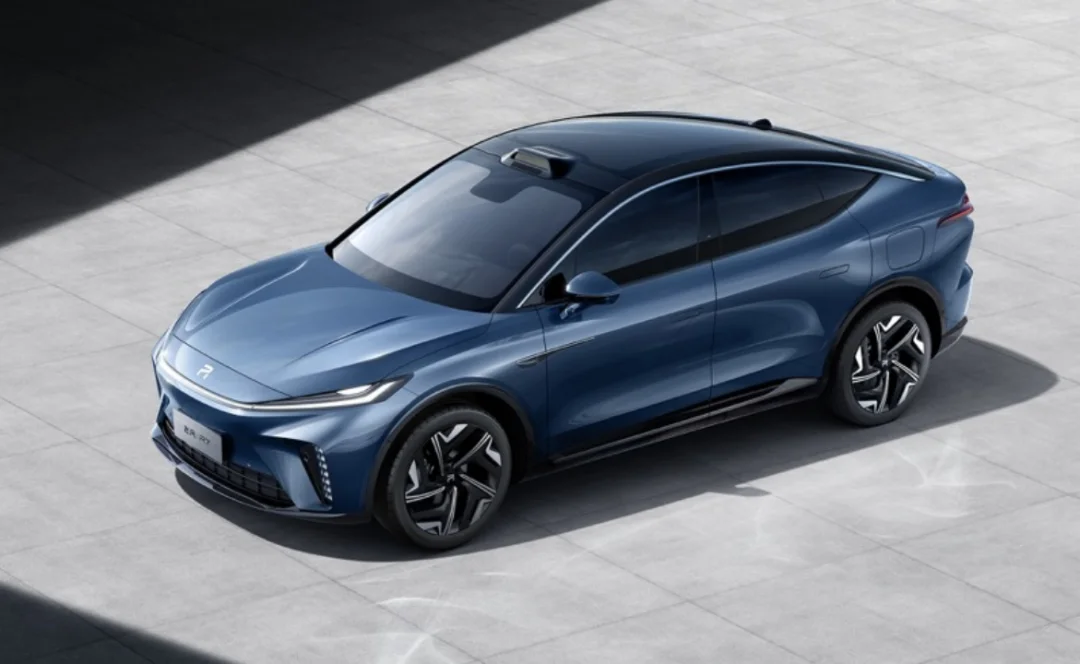
Although 'smart' has become a cliché in the automotive industry, and every new car launch places heavy emphasis on autonomous driving and smart cabins, only a handful of new-energy brands have delivered genuinely stunning experiences.
Often, most new-energy brands originating from established domestic automakers focus more on the battery, electric motor and electronic control systems parameters—areas where these 'car companies' are more proficient—and neglect the smart cabin experience. Even when they implement smart configurations under market pressure, they continue to adopt a copycat approach, paying no attention to real-world usage experience. Rather than saying they don't want to do well, it is more accurate to say they lack the capability.
Feifan’s smart cabin, however, shows few flaws in chip performance, screen quality, HUD effects, or comfort features—it is nearly flawless. Before actual delivery, it is difficult to definitively claim the Feifan R7’s cabin experience is excellent, but the key metrics we focus on are already leading the pack.
Hardware determines the upper limit of capability; software determines the lower limit of experience. With hardware maxed out, the pressure now shifts to the software team.
Through its hardware, Shangqi demonstrates its determination to enter the new era. We hope this marks a genuine turning point for domestic brands, where the boundary between traditional automakers’ incubated brands and new-energy startups begins to blur.
Written by: Kaixiang Edited by: Liusan