


DENZA D9 Static Review: BYD-Mercedes JV MPV Targets 10,000 Monthly Deliveries by Year-End
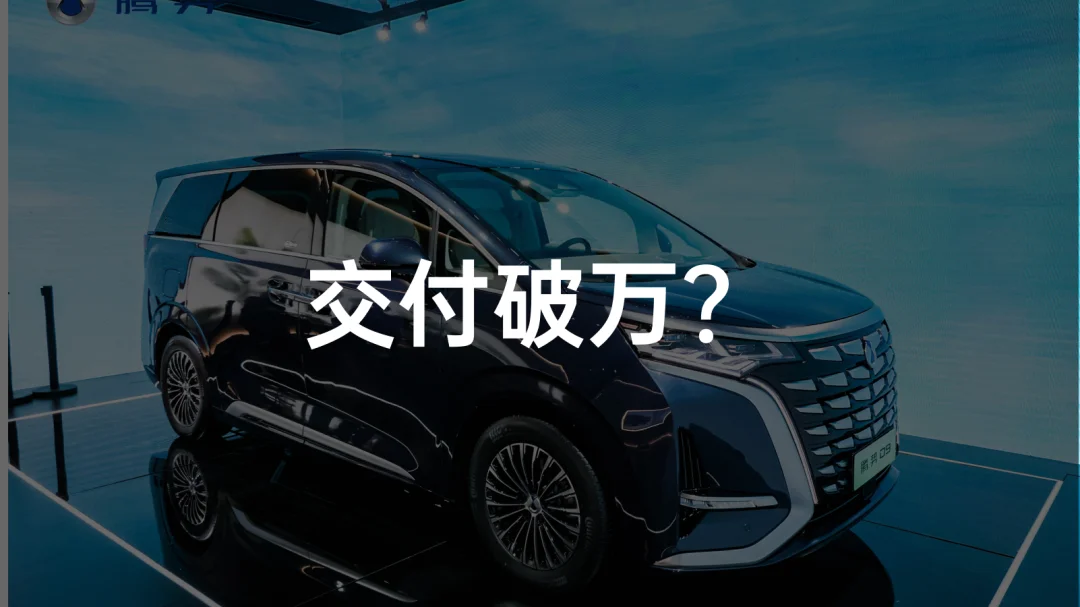
In recent years, the explosive growth of new energy vehicles (NEVs) has given consumers a wide selection of sedans and SUVs. However, the NEV MPV segment remains notably limited in options. With the relaxation of national fertility policies, an increasing number of families with two or three children are emerging, driving rising demand for NEV MPVs.
DENZA, the joint venture between BYD and Mercedes-Benz, recently launched its own NEV MPV, the DENZA D9. What is the actual product strength of this vehicle? Does it truly deserve the title of 'the ceiling of domestic MPVs'? Today, we take a closer look at this model through a static experience.
01Introduction and Q&A
Upon entering the exhibition area, DENZA staff first provided an introduction to the brand and the D9. Notably, Zhao Changjiang, General Manager of DENZA’s Sales Division, was also present at the event, underscoring the company’s high level of importance for this launch.

Shanghai Showrooms and Display Vehicles
DENZA is currently accelerating the construction of its retail network in Shanghai, planning to open a total of 11 locations: nine DENZA Experience Stores and two DENZA Centers. All these stores will be directly operated by DENZA, marking a key distinction from traditional BYD dealership models. Another difference lies in marketing strategy; Zhao Changjiang stated that DENZA will not invest heavily in advertising. Instead, budget allocated for marketing will be redirected toward product development, with a strong emphasis on incorporating user feedback into the design process to foster a co-creation model with customers.
Regarding the current shortage of display vehicles in Shanghai, Zhao Changjiang stated that 2–3 additional units are expected to arrive at the dealership around the 10th. Test drives will begin by mid-month, with deliveries starting in late September. Customers who place orders before September 30 will receive their vehicles no later than the end of this year. DENZA is confident it can achieve monthly D9 deliveries exceeding 10,000 units by December, with a full-year 2022 delivery target of 23,000–30,000 units.
DM-i and EV Models
The DM-i version is available in two-wheel-drive and four-wheel-drive configurations. The 190 km variant achieves a maximum NEDC combined range of 1,040 km and a maximum NEDC pure-electric range of 190 km. The 50 km pure-electric range variant boasts a minimum NEDC fuel consumption of 5.9 L per 100 km when the battery is depleted. The DM-i version supports DC fast charging up to 80 kW, which is considered quite impressive for a hybrid model with a relatively small battery capacity.
The EV version is built on the BYD e-Platform 3.0 and features BYD Blade Batteries. The single-motor variant offers a maximum CLTC range of 620 km, while the four-wheel-drive variant accelerates from zero to 100 km/h in 6.9 seconds. The EV version also introduces "dual-gun charging" support; when connected to two fast-charging stations simultaneously, the maximum charging power reaches 166 kW, adding 230 km of range in just 15 minutes.
OTA Updates
Addressing concerns about intelligent features, Zhao Changjiang committed to quarterly OTA updates following vehicle delivery. These updates will be planned based on user feedback and evolving requirements.
Future Product Roadmap
DENZA officially announced that it will roll out seven new models over the next three years. In addition to the DENZA D9, the company plans to launch a large five-seat SUV this year. The third model will be a mid-to-large six-seat SUV, followed by a sedan, a coupe, and a large SUV.
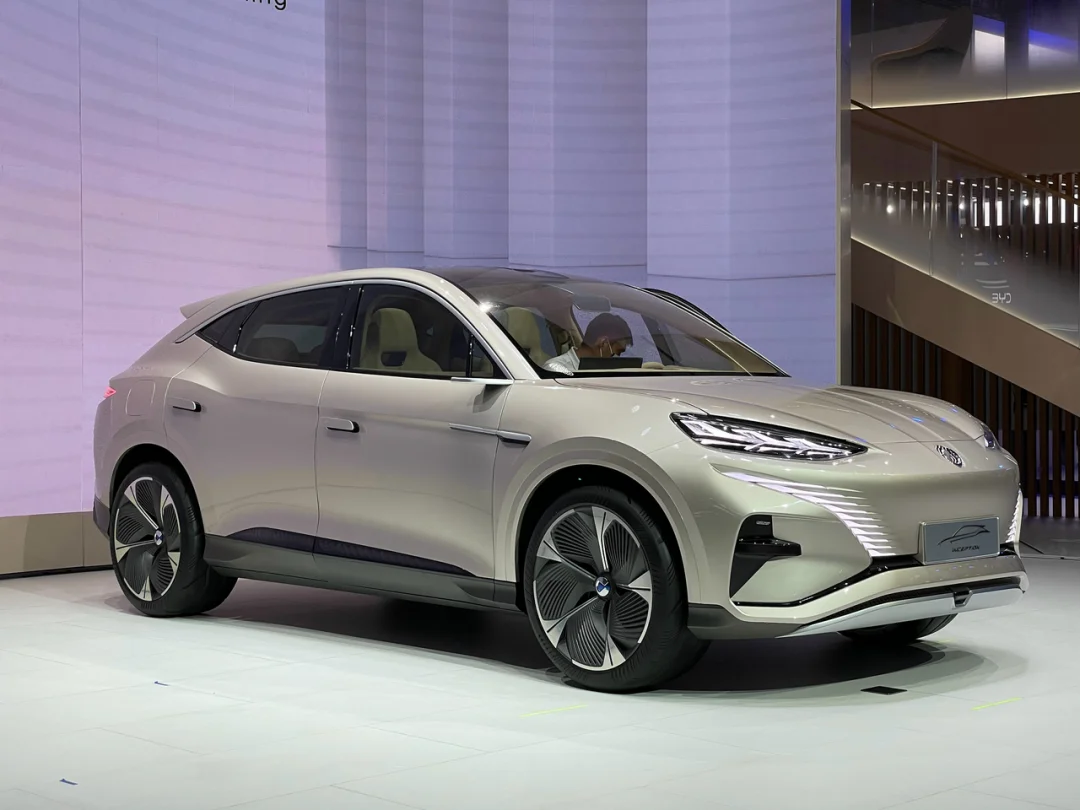
Zhao Changjiang also mentioned DENZA's upcoming mid-size coupe SUV, the INCEPTION. Although its launch date remains undetermined, Zhao revealed several key features: a one-touch drift mode, a professional makeup mirror for the front passenger, a front trunk (frunk) capable of holding a 20-inch suitcase, and powerful performance.
02Exterior
After the opening introduction, staff finally removed the cover from the display vehicle. For a moment, it looked like a Toyota Alphard.
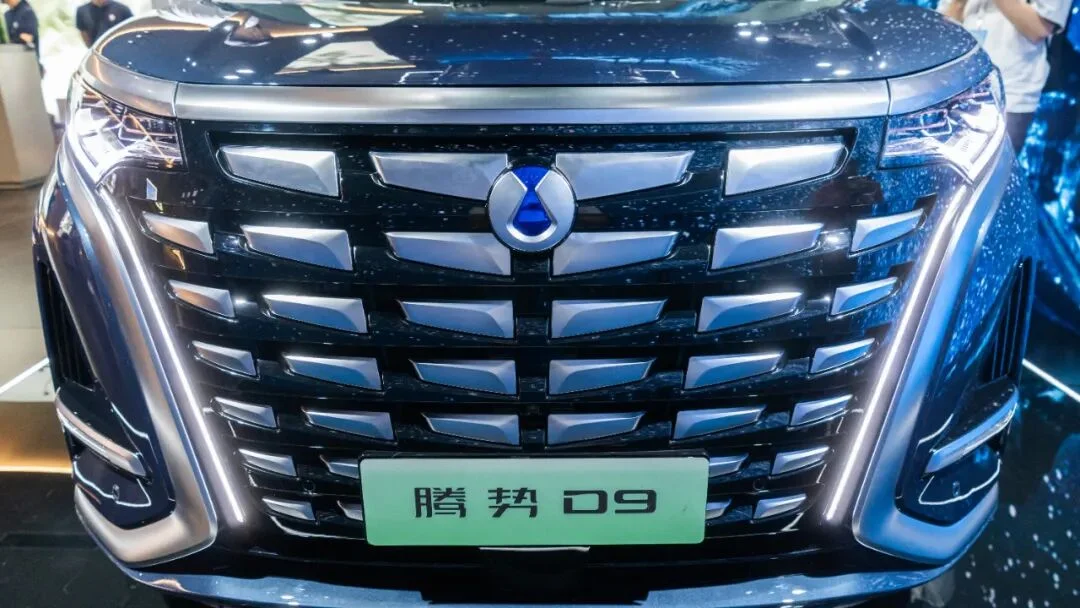
However, upon closer inspection of the front end, the DENZA D9’s grille appears more imposing than that of the Alphard. The large grille dominates the front fascia, exuding a sense of grandeur, while the split-headlight design on either side gives it a subtle feline character.
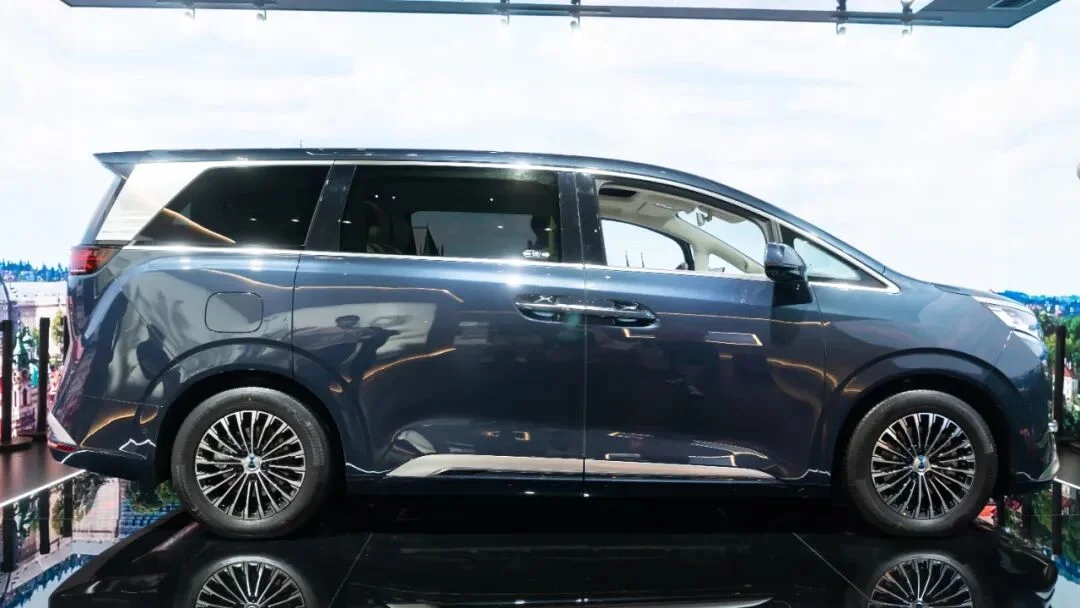
The roofline on the side of the body starts at the front and gradually rises, then begins to slope downward after the B-pillar; this kind of line design can also be seen on the VOYAH Dreamer. The side lines do not include a character line like that of the Bieke GL8. Personally, I still prefer the side design of the GL8.
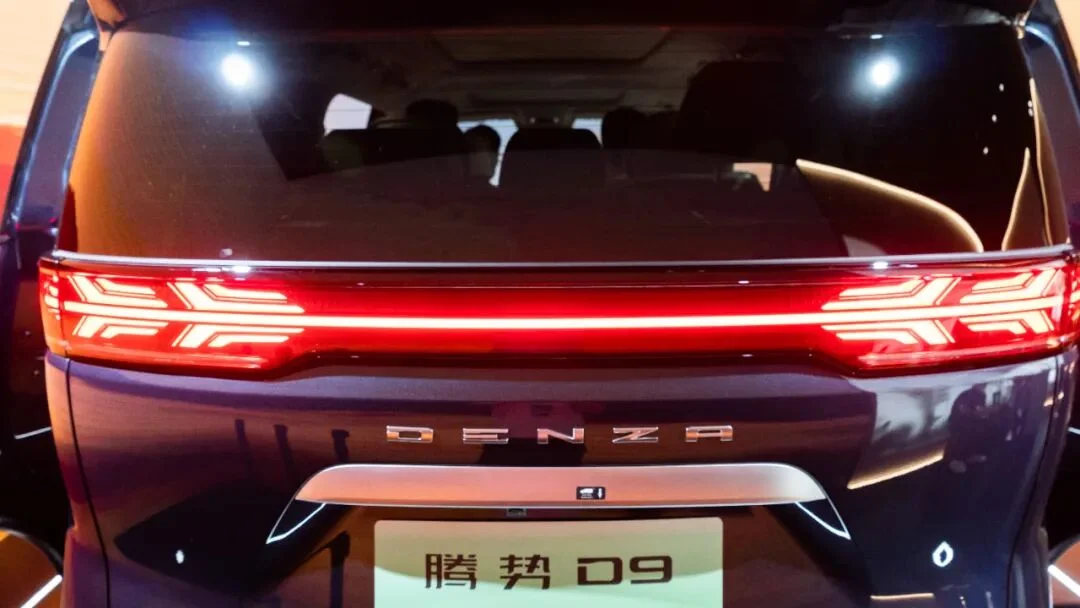
At the rear, the D9 features a full-width taillight design, which is a signature element of BYD's styling language. Compared to the split-taillight configurations found on other MPVs, I personally prefer the full-width design.
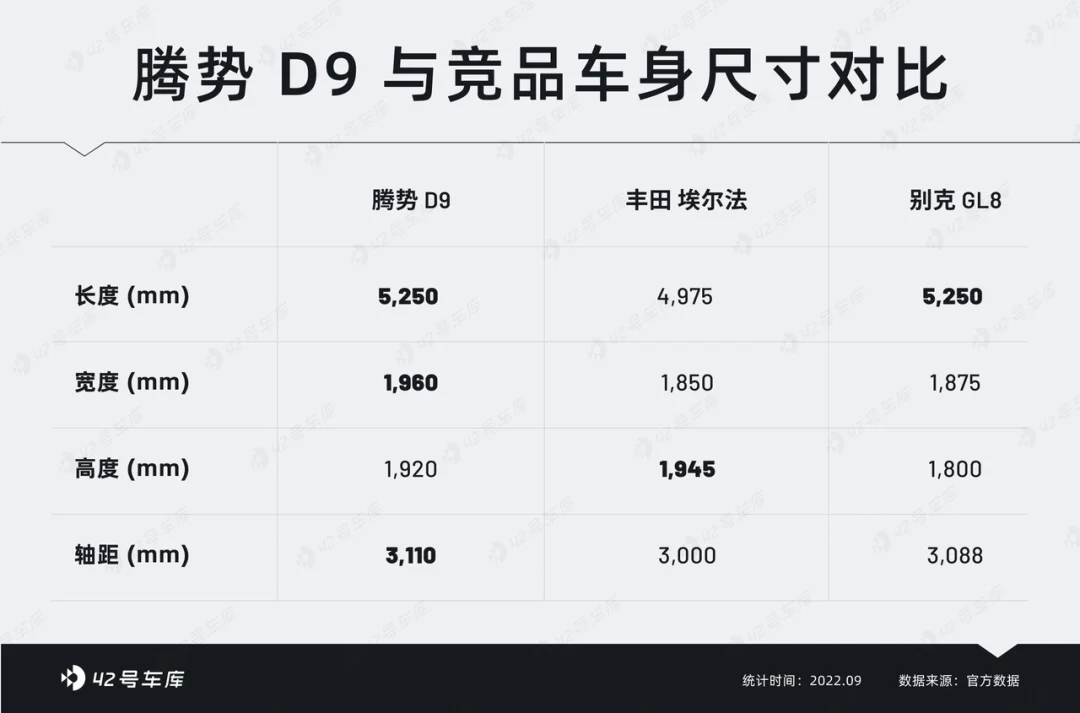
When it comes to MPVs, interior space is paramount, and that space is largely determined by the vehicle's exterior dimensions. The DENZA D9 measures 5,250 mm in length, 1,960 mm in width, and 1,920 mm in height, with a wheelbase of 3,110 mm. These dimensions offer advantages over competitors such as the Toyota Alphard and Bieke GL8.
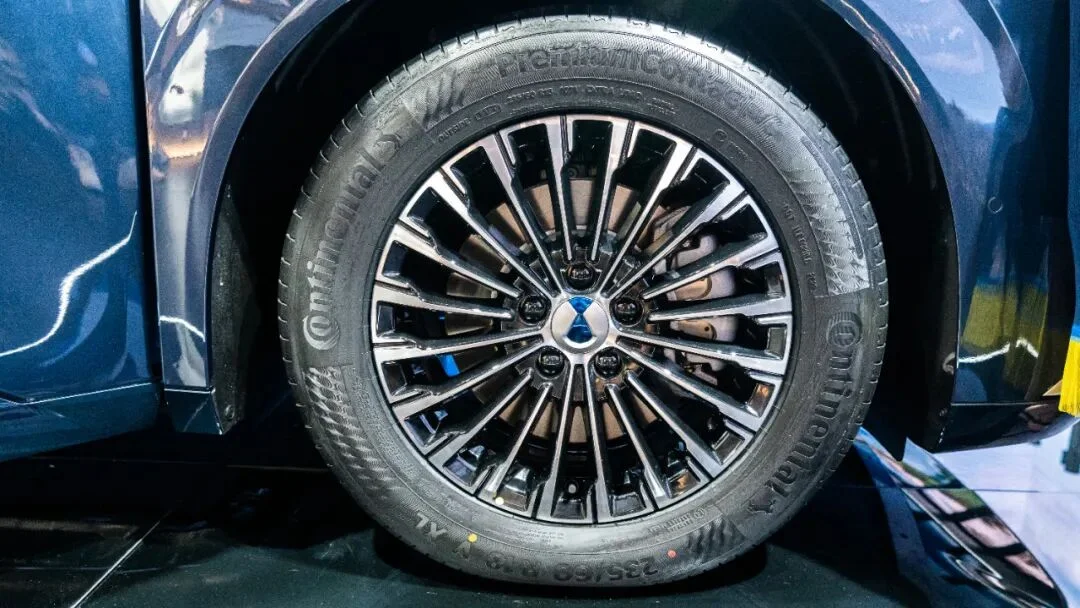
The D9 is equipped with 235/60 R18 Michelin or Continental tires. Notably, the top-tier trim includes self-sealing silent tires.
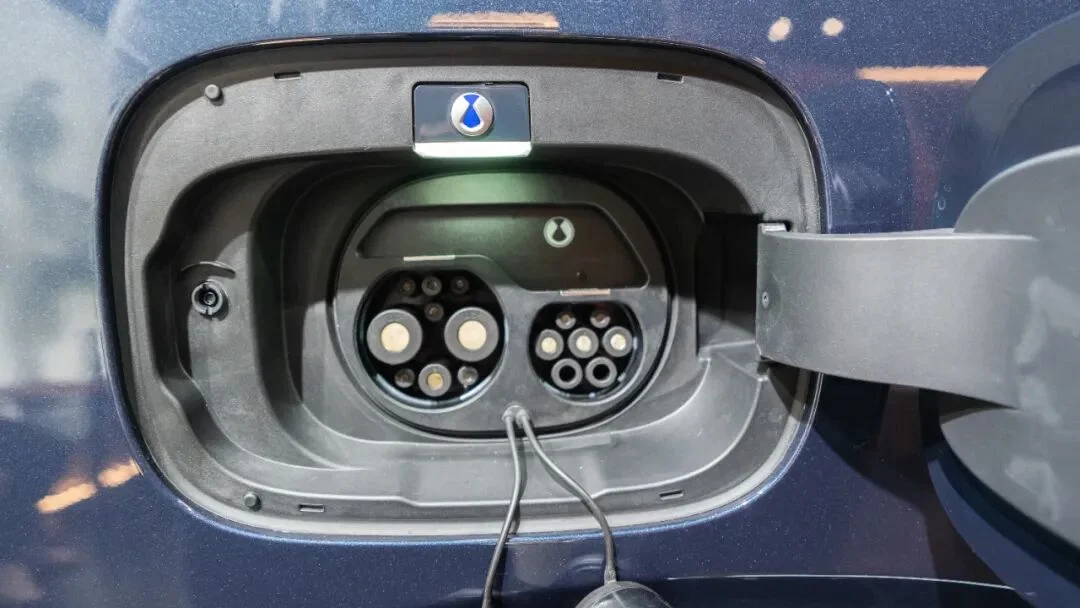
The D9's charging port is located on the right-rear side of the body, with both fast-charging and slow-charging interfaces housed together under rubber protective covers. As the displayed model was the DM-i version, the left-side panel serves as the fuel filler door. On the EV version, an additional fast-charging interface would be visible here, enabling dual-gun fast charging at up to 166 kW.
With the exterior covered, it’s time to step inside and experience the comfort of this luxury MPV firsthand.
03Interior
Sitting in the front seat, I was immediately pleased with the well-balanced comfort of the seats. The display model features a white interior that exudes a sense of premium quality.
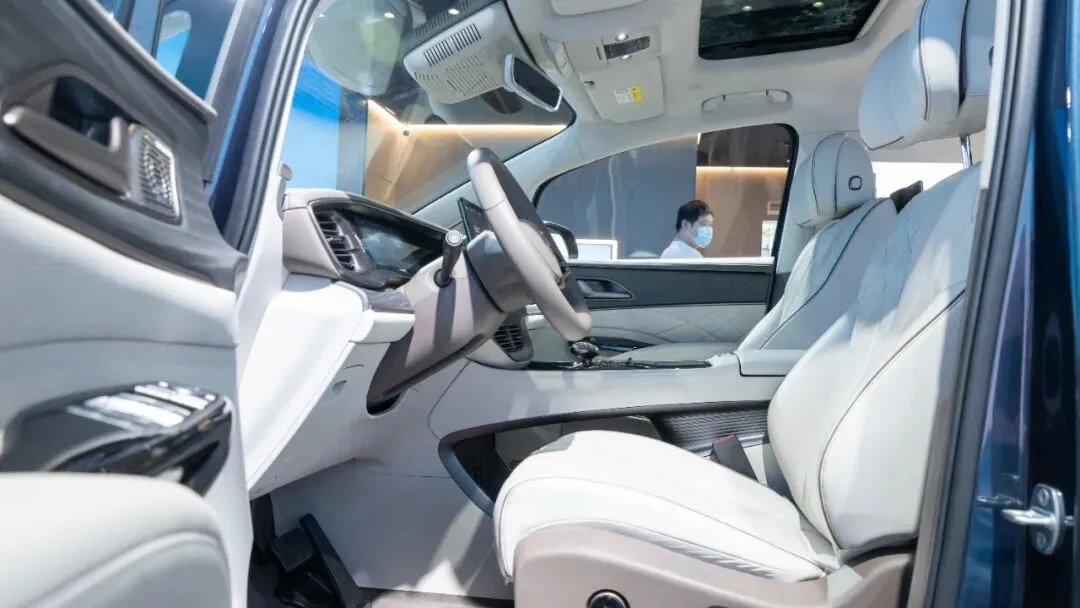
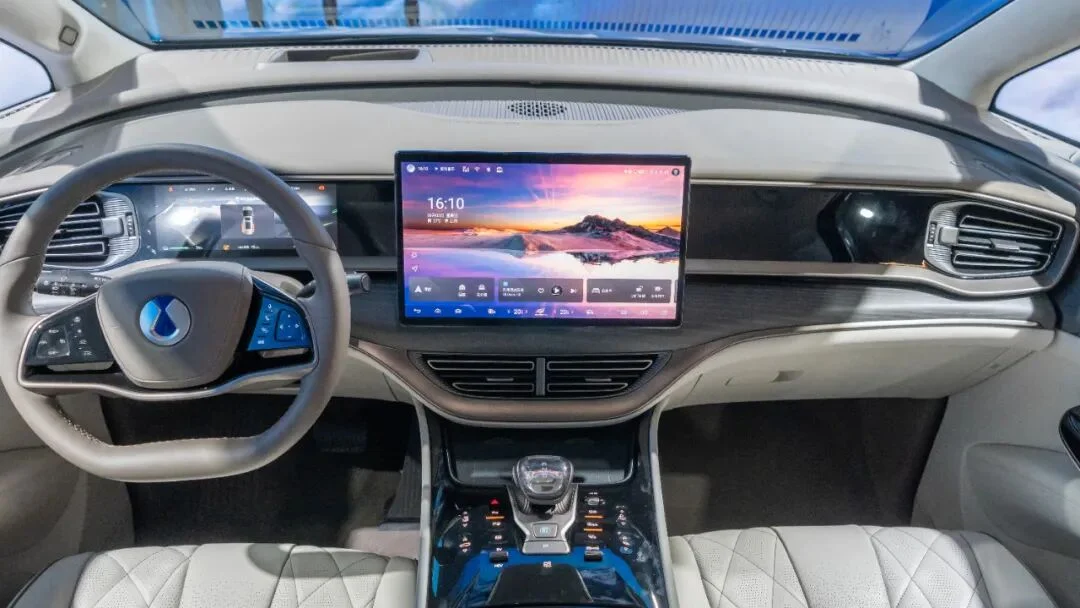
The steering wheel, instrument cluster, central touchscreen, and center console area will feel familiar to anyone who follows BYD or is already an owner.
However, I should point out that the DENZA Link infotainment system installed in the DENZA feels different from previous BYD models, particularly in its settings interface. The system responds quickly, giving it a vibe reminiscent of newer EV startups. Unfortunately, since the display model wasn’t connected to the internet, we couldn’t explore its full range of features.
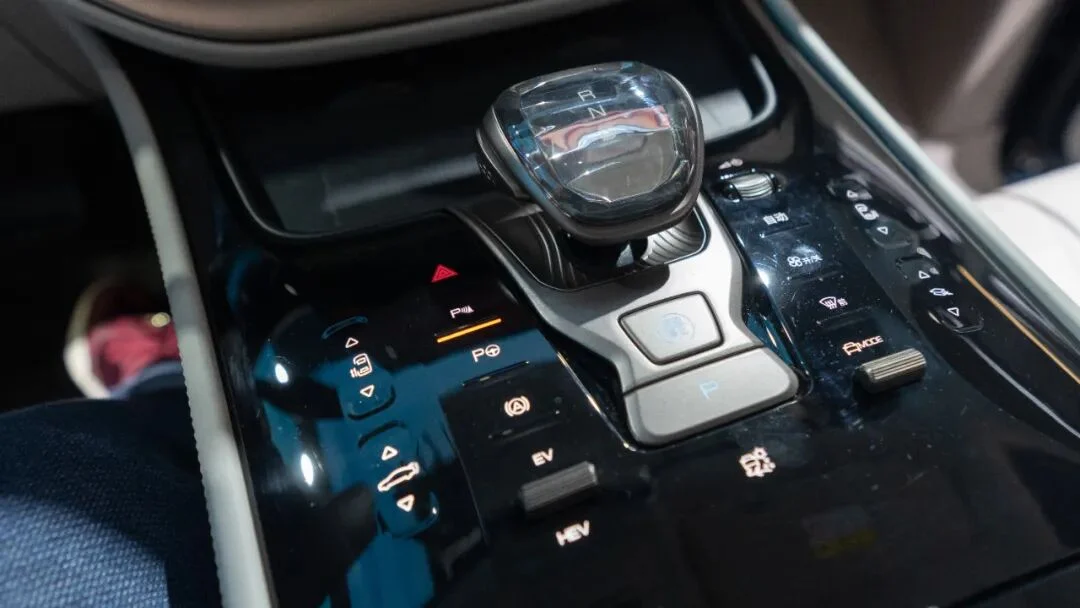
The buttons on the steering wheel and center console use pressure-sensitive keys, with tactile feedback at the standard level for this type of button. However, because pressure-sensitive keys are not suitable for blind operation, I personally dislike this design.
For an MPV, the second row is paramount, and the DENZA D9 has delivered a solid performance.
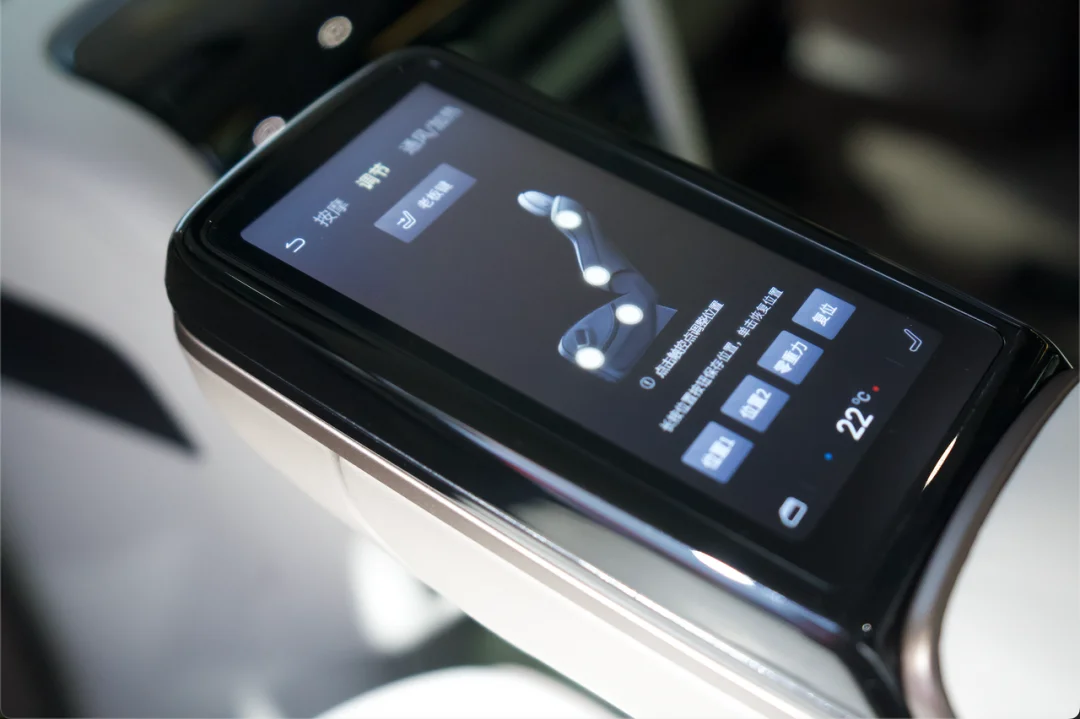
The second-row seats feature soft cushioning for a highly comfortable ride. They offer extensive adjustability: 10-way power adjustment via a touch screen on the armrest, plus 6-way headrest adjustment. Once positioned to your liking, raising the electric leg rest and activating the seat massage lets you experience what it feels like to be the boss.
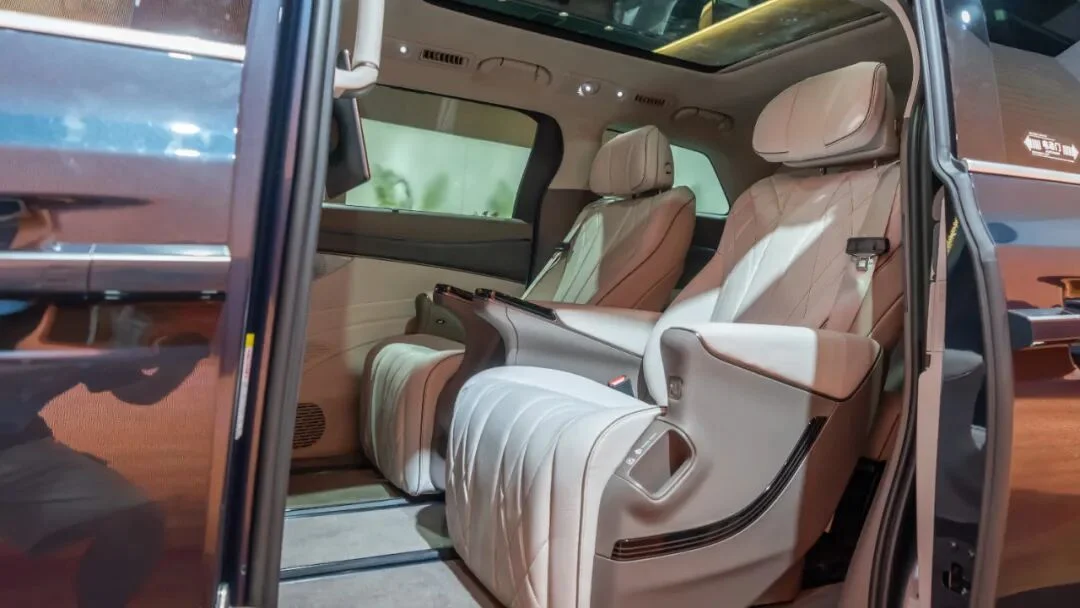
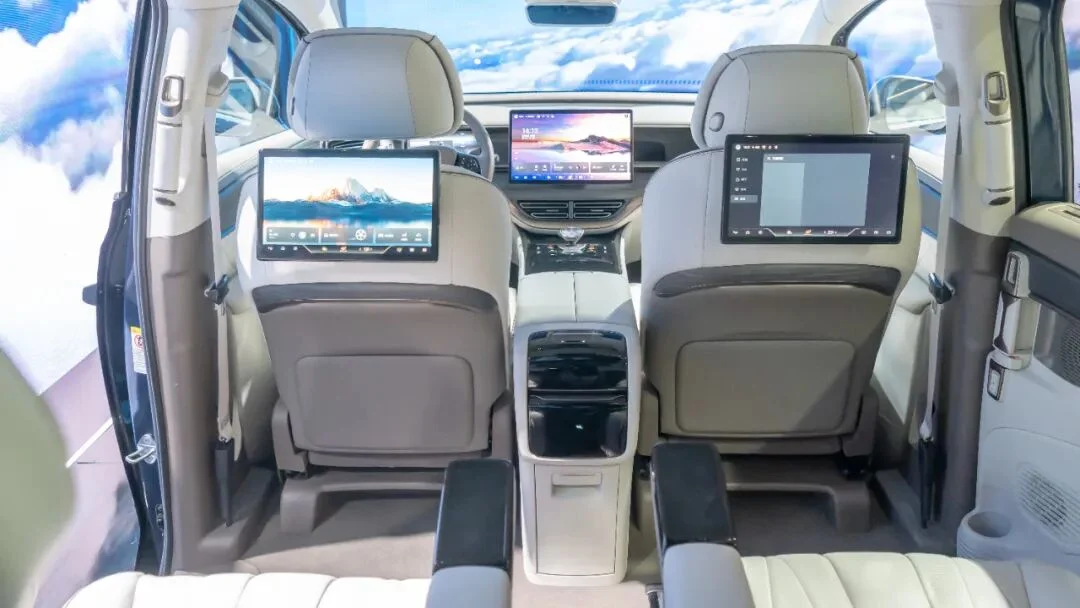
Each of the two second-row seats is equipped with its own entertainment screen—a feature previously more common in million-yuan executive sedans.
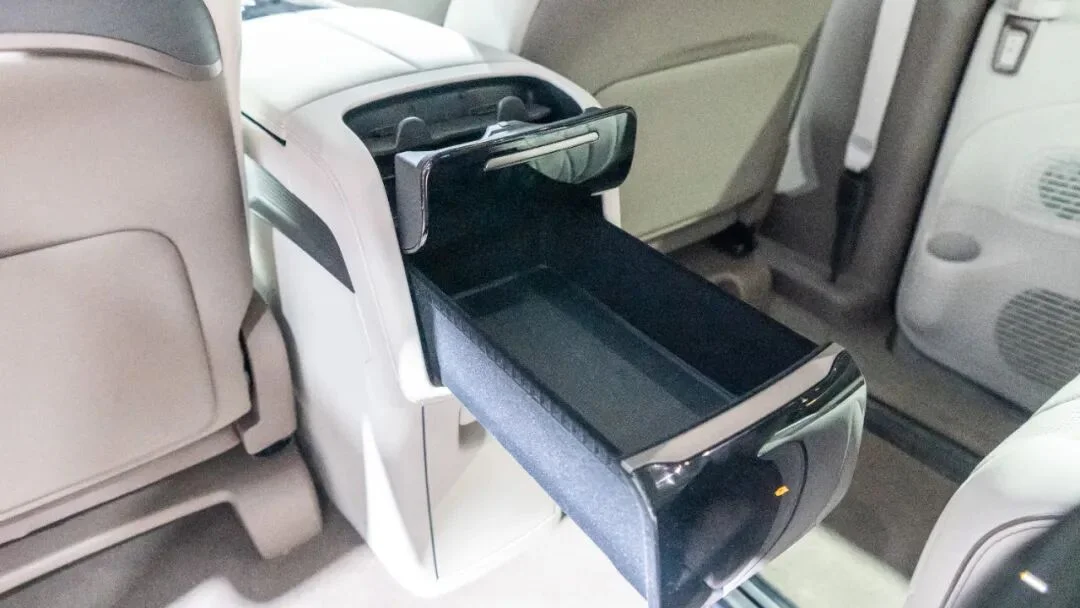
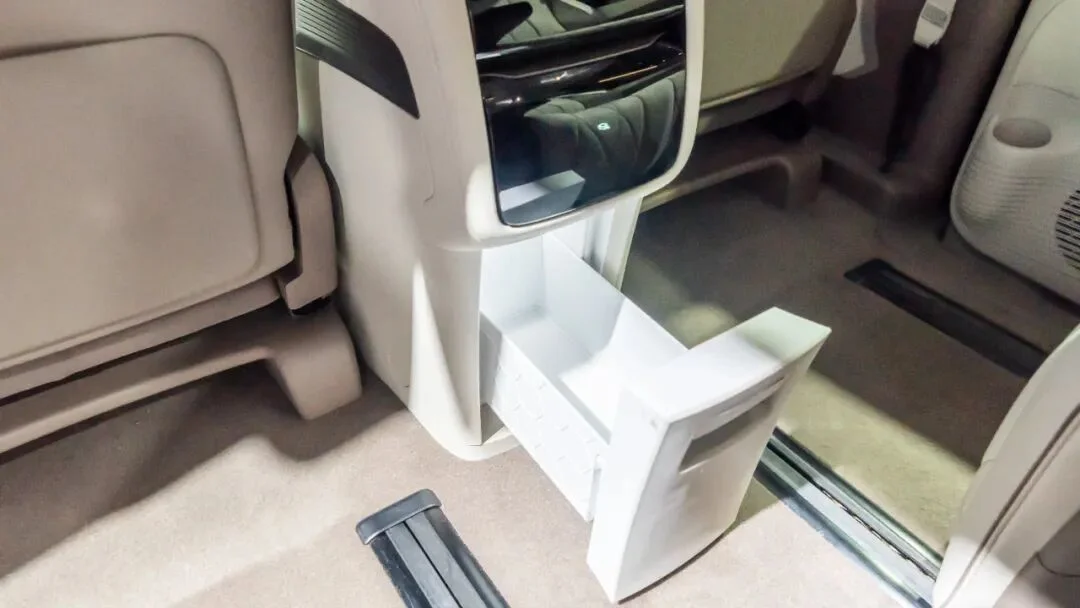
The center console between the second-row seats houses three retractable modules: cup holders at the top, an electric tray in the middle, and a dual-zone refrigerator capable of maintaining temperatures from 5°C to 55°C. Unfortunately, the refrigerator’s exterior finish feels somewhat average. Additional storage includes cup holders on both side door panels, a foldable cup holder on the left side of the right-hand seat, and two 50 W wireless charging slots beneath the outer armrests. Storage space is ample.
The specifications also show that the DENZA D9 holds certain advantages over both the Toyota Alphard and the Buick GL8.
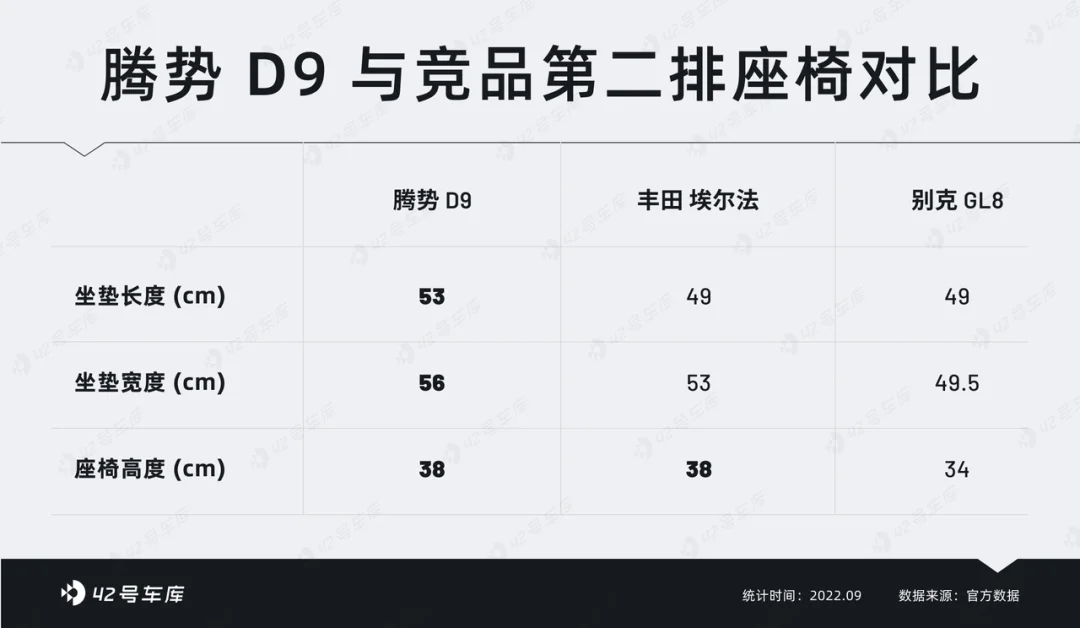
Moving to the third row reveals one of the most significant distinctions between MPVs and SUVs. For many SUVs, the third row is merely an afterthought; if adults are to sit there, it is often impractical, and poorly designed layouts can make accessing or occupying the space highly inconvenient.
I previously experienced the third row of the Li L9, which is among the better-executed in the SUV segment, yet it still falls noticeably short when compared to a true MPV.
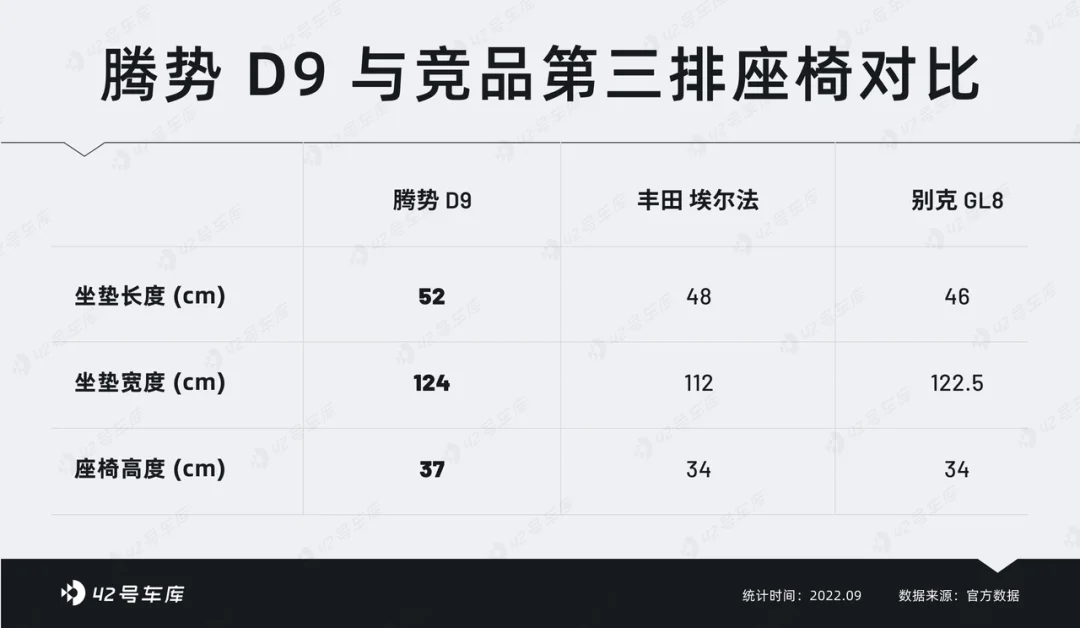
The DENZA D9’s third row also supports fore-and-aft adjustment and backrest recline, allowing passengers seated in the rear to maintain a comfortable posture. Additionally, two cup holders are positioned on each side of the third row, with a small storage compartment located beneath them.
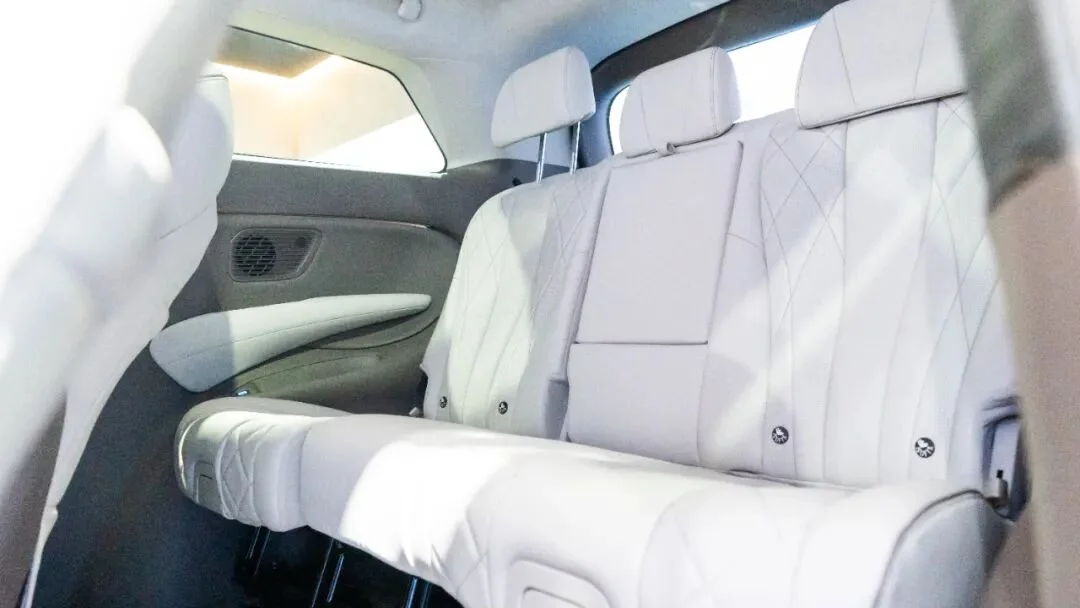
Similarly, the third row of the DENZA D9 retains its advantage over competitors.
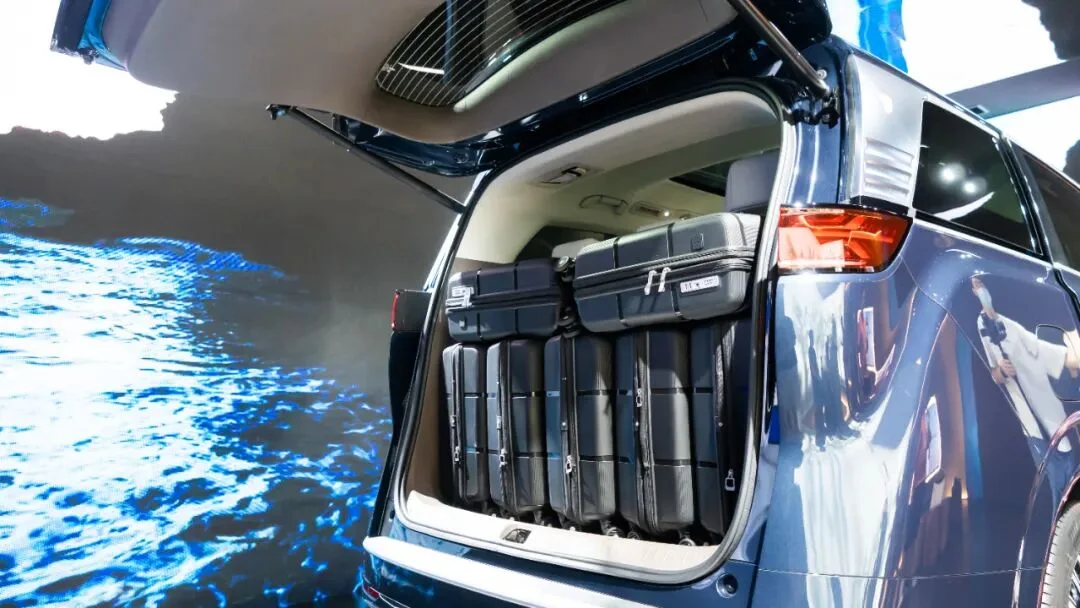
Trunk storage has traditionally been a weak point for MPVs, but DENZA demonstrated its advertised '7+7' space configuration: seven men approximately 180 cm tall can sit inside while seven carry-on suitcases fit in the trunk. This is quite respectable for an MPV. Even with all seven suitcases loaded, some space remains for smaller items. If the third-row seats are not needed, they can be folded down to expand cargo capacity.
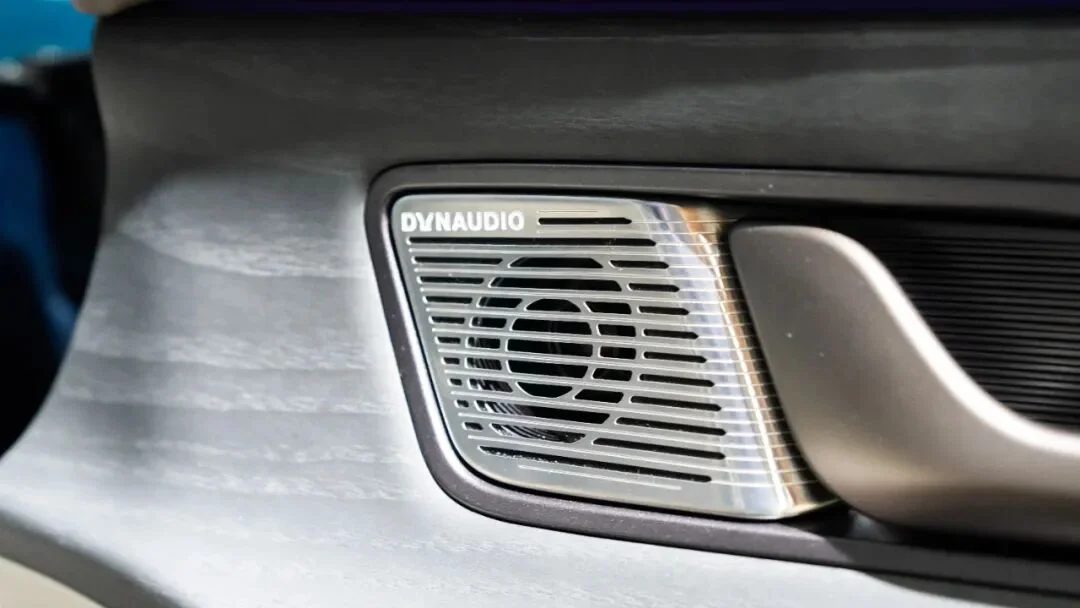
Additionally, the DENZA D9 comes standard across all trims with a Dynaudio 7.1.4 surround sound system featuring 14 speakers throughout the vehicle.
04Intelligent Driving
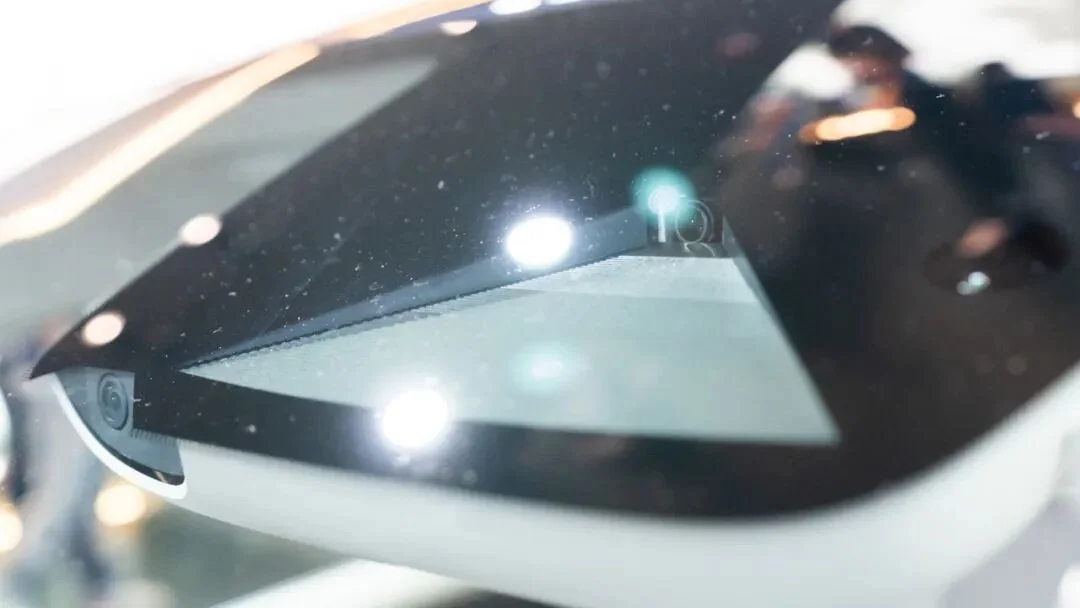
The DENZA D9 comes standard with the DENZA Pilot L2-level intelligent driving assistance system on all trims. The hardware specifications are as follows:
1 front-facing monocular camera
4 surround-view cameras
3 millimeter-wave radars
8 ultrasonic radars The top trim features an L2+ intelligent driving assistance system. Compared to other versions, the number of millimeter-wave radars increases to 5 and the number of ultrasonic radars increases to 12. It also adds one intelligent driving domain controller, a Driver Monitoring System (DMS), and supports Highway Pilot Assist functionality. This hardware configuration is currently quite competitive among MPVs in its class. Furthermore, the DENZA D9 utilizes DENZA’s self-developed intelligent driving algorithms. We look forward to evaluating its actual performance during future dynamic driving tests.
05The Only Competitor at the Same Price Point?
Looking at the MPV market in the same price range, the Zeekr 009 is still far from its official launch. Currently, the only model that seems capable of competing with the DENZA D9 is the VOYAH Dreamer.
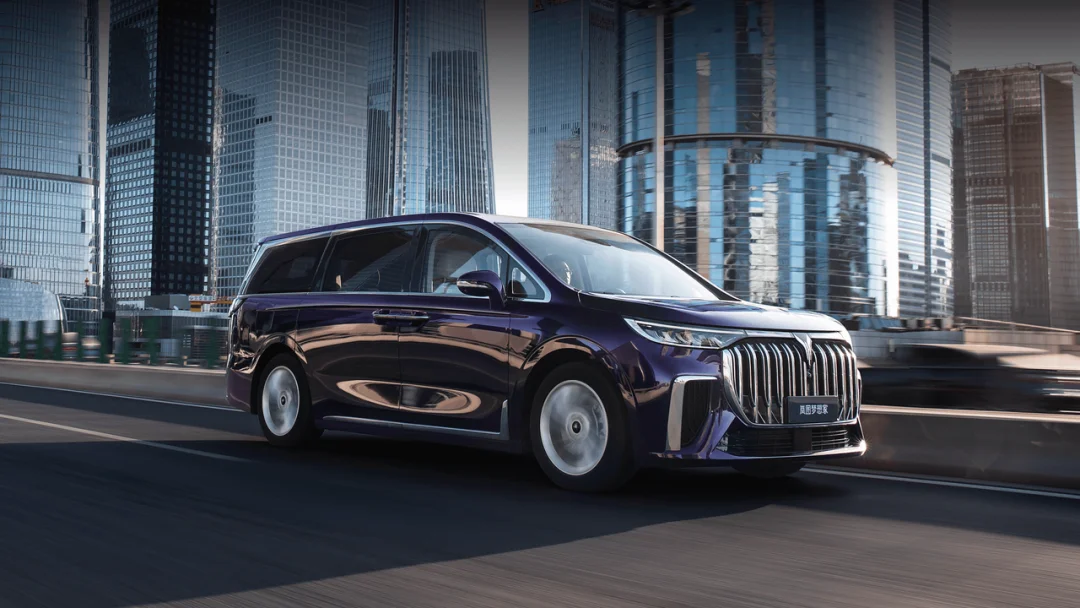
The hybrid version of the D9 has two distinct advantages over the Dreamer: first, the DM-i version of the D9 supports fast charging, whereas the Dreamer does not; second, the D9 runs on 92-octane gasoline, while VOYAH requires 95-octane. However, VOYAH's advantage lies in its stronger performance, with the hybrid version achieving a zero-to-100 km/h acceleration time of 6.6 seconds.
The D9's pure-electric version retains its advantage over the Dreamer in charging, supporting a maximum dual-gun charge of 166 kW for faster replenishment. VOYAH's strength remains performance, with the pure-electric model achieving a zero-to-100 km/h acceleration time of 5.8 seconds.
In addition, the Dreamer comes standard with 20-inch wheels, which look better than the 18-inch ones on the DENZA. So how would you choose between these two cars? Leave your thoughts in the comments section.
06Final Thoughts
After the static experience, I found that compared to long-established MPVs like the Bieke GL8 and Toyota Alphard, the DENZA D9 not only holds its own but even excels in basic experiences such as seat comfort and interior storage space. In terms of intelligence, the D9 has indeed achieved a more "modern" experience than previous MPVs, as claimed by the manufacturer. First, the D9's infotainment system is clearly smoother and more functional than those of the GL8 and Alphard. On top of this, it is equipped with better driver-assistance hardware. If this system performs well, it will significantly reduce the driving burden on the driver during long or short family trips.
As the first model marking DENZA's restart, whether the DENZA D9 can successfully relaunch the brand is undoubtedly crucial. When asked why DENZA chose to return to the market with a luxury MPV, Zhao Changjiang stated that first, many products in the MPV market lack modern competitiveness; second, DENZA has BYD technology as its backing; and third, it aims to meet the travel needs of large families.
If the DENZA D9 can open up China's new energy MPV market and achieve the officially projected monthly deliveries of over 10,000 units, then BYD's dream of using DENZA to break into the high-end segment has undoubtedly advanced another significant step.
Written by: JOJO Edited by: Liu Guangding