


1,000 Days After Establishment, Haomozhixing Discovers Major Challenges
At the recently concluded sixth Haomozhixing AI DAY, Haomozhixing CEO Gu Weihao shared a series of latest achievements, reflections, and new discoveries. What results has Haomozhixing achieved in just over 1,000 days since its establishment? How will it proceed on its path forward? Below is a review and summary of this year's Haomozhixing AI DAY.
01Large Models
First, Gu Weihao emphasized again at the opening the leading performance of Transformer networks based on the Attention mechanism in processing large-scale two-dimensional images. Here we can briefly review the Transformer network model architecture. Haomozhixing devoted significant space last year to introducing the advantages of this network model in the field of image processing.
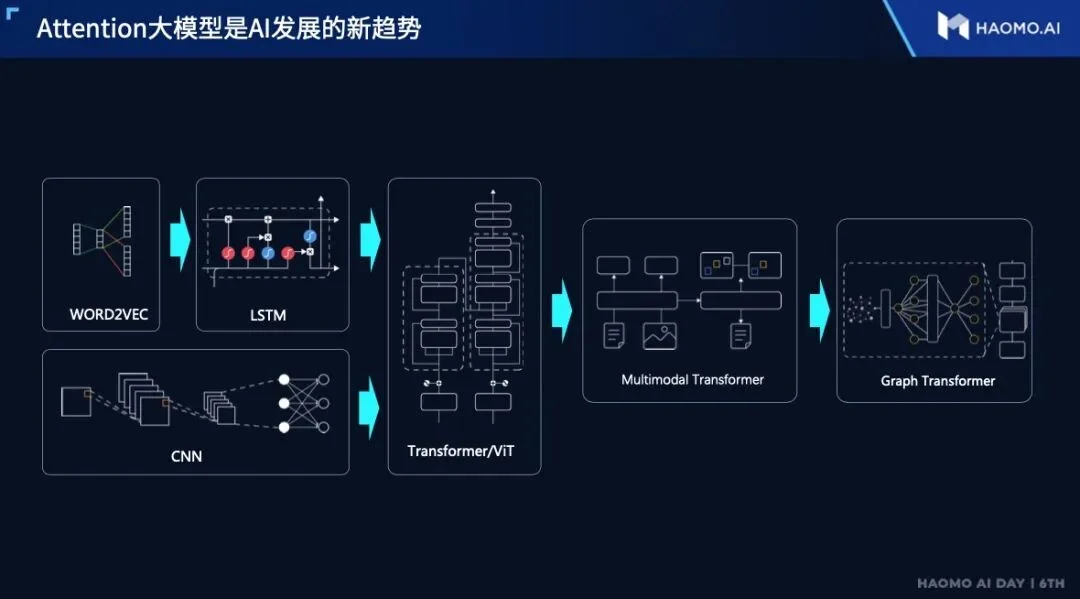
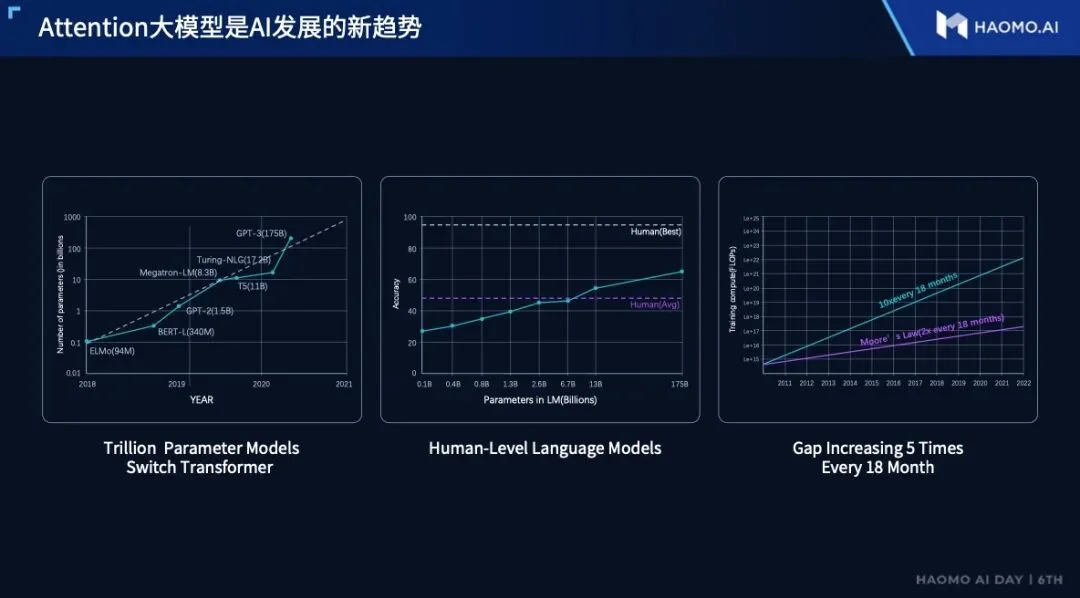
The Transformer was originally proposed by the Guge team and used in the NLP (Natural Language Processing) field to process sequential text data. Subsequently, this network model architecture was adapted for visual processing tasks, and research indicates that the larger the dataset, the better the Transformer's performance, which aligns with the current development trajectory of autonomous driving.
The Transformer is a network model based on the Attention mechanism. It replaces the original RNN with Attention.
What is Attention? Simply put, the essence of Attention is to enable a system to focus on key information in different environments and contexts. Its underlying logic shifts from attending to the global picture to focusing on priorities.
Starting in 2020, the Attention mechanism achieved significant breakthroughs in computer vision. From Guge’s ViT to MSRA’s SwinTransformer, it easily topped various leaderboards. People began to notice that Transformer architectures based on the Attention mechanism seemed capable of becoming an effective general-purpose AI model paradigm.
Two years ago, Haomozhixing initiated R&D on large Transformer models based on the Attention mechanism for autonomous driving. However, it was simultaneously discovered that the computing power required by general Transformers is 100 times that of CNNs. Under this computing load, only 6.9% of the computing power contributed 94% of the value, while a vast amount of weakly correlated, low-value computation resulted in significant waste in terms of multiply-accumulate operations and power consumption.
In other words, large models demand high computing power but have very low utilization rates. Haomozhixing needs to build low-carbon supercomputing centers to reduce overall autonomous driving costs; secondly, deploying such model architectures on vehicles requires modifications and chip design improvements to enhance computational efficiency; and large models require massive amounts of data—how to organize and utilize this data to improve iteration speed remains a challenge.
The new models impose new requirements on chips. Both academia and industry have conducted research and practice in this area, such as emerging lightweight models that fuse CNNs and Attention mechanisms to reduce computational load. However, Haomozhixing did not elaborate on improved chips or models, focusing more on data.
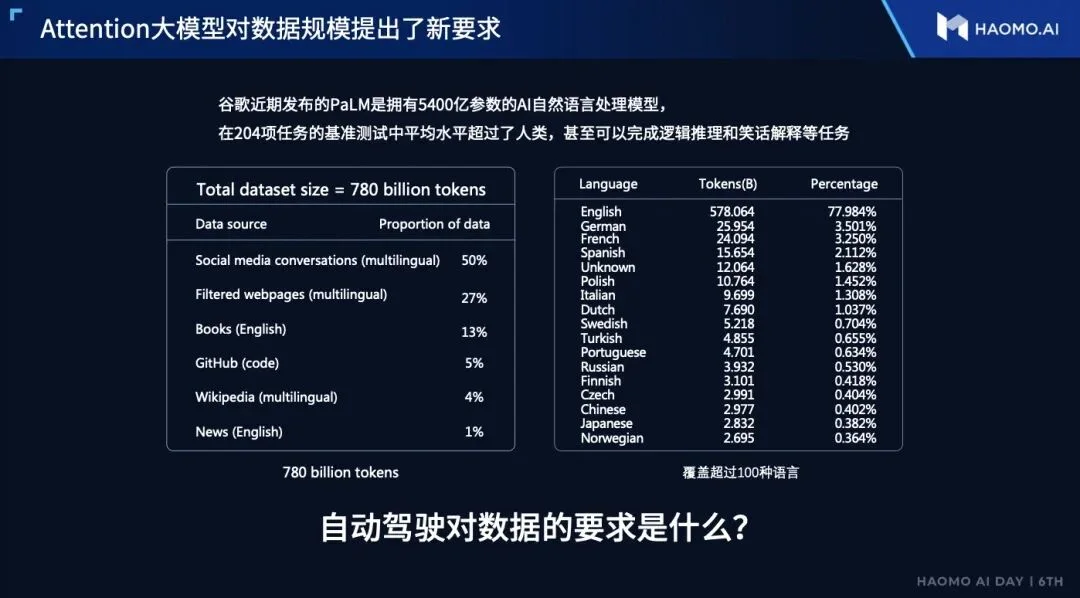
In terms of data, Guge released PaLM today, an AI natural language processing model with 540 billion parameters. Its training corpus included 780 billion tokens, but so-called high-quality data accounted for only 5%. Haomozhixing believes that in the field of autonomous driving, if one wishes to widely apply Attention, at least 100 million kilometers of autonomous driving mileage data are needed. Meanwhile, data of different types, resolutions, and angles hold significant value for large models.
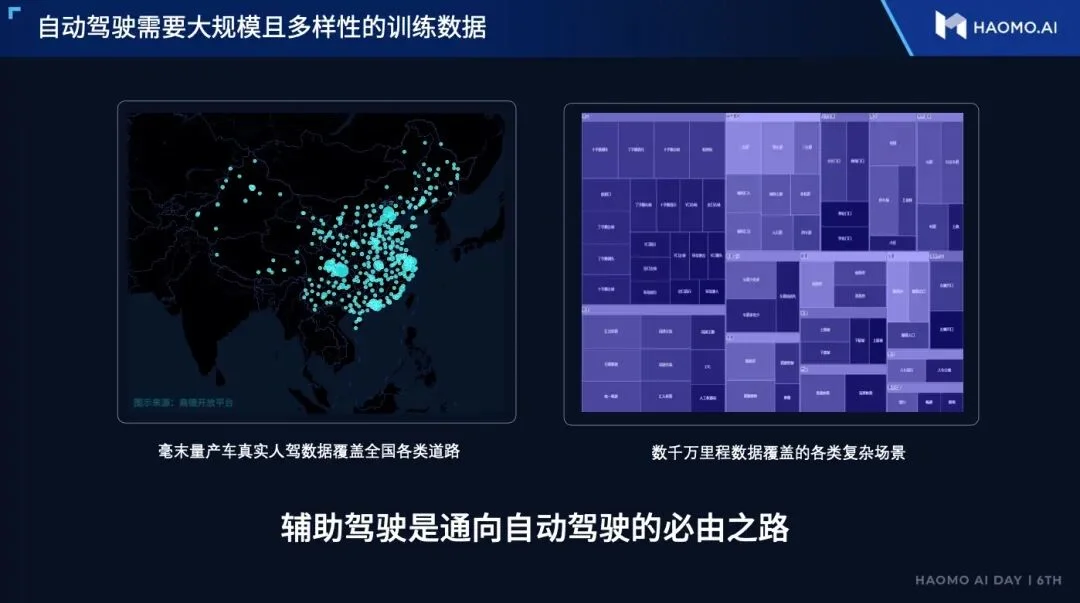
From this, Haomozhixing concludes that driver assistance is the essential path to autonomous driving.
Only through driver assistance can it collect data of sufficient scale and diversity.
02Is the Data-Driven Era Here?
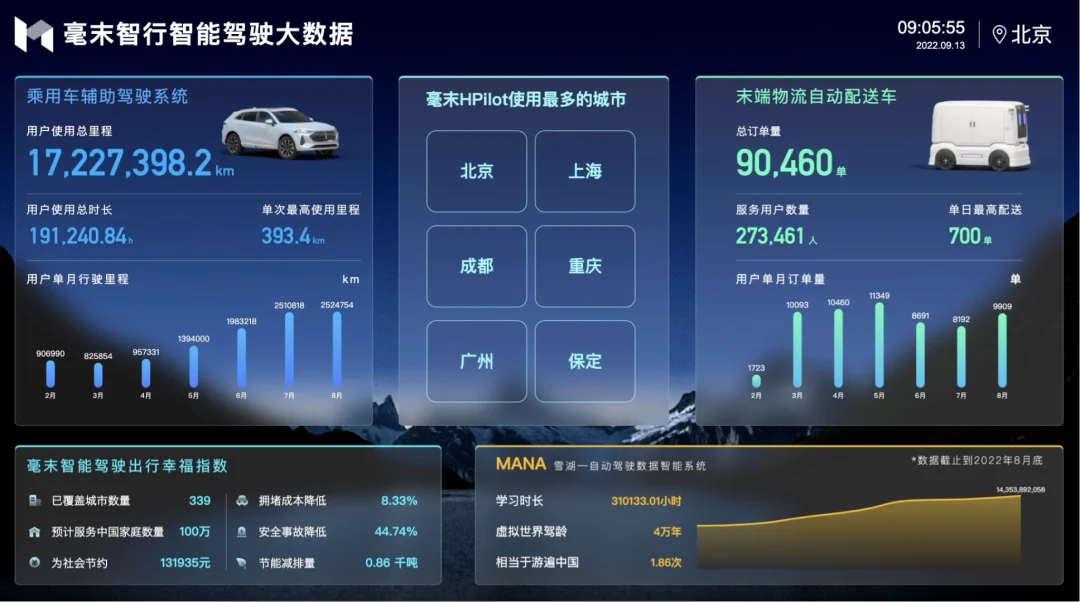
In terms of data, Haomozhixing’s current driver assistance products have accumulated 17 million kilometers of real-world mileage. The MANA data intelligence system has been trained for over 310,000 hours, and its last-mile logistics autonomous delivery vehicles have transported nearly 90,000 orders of goods for users.
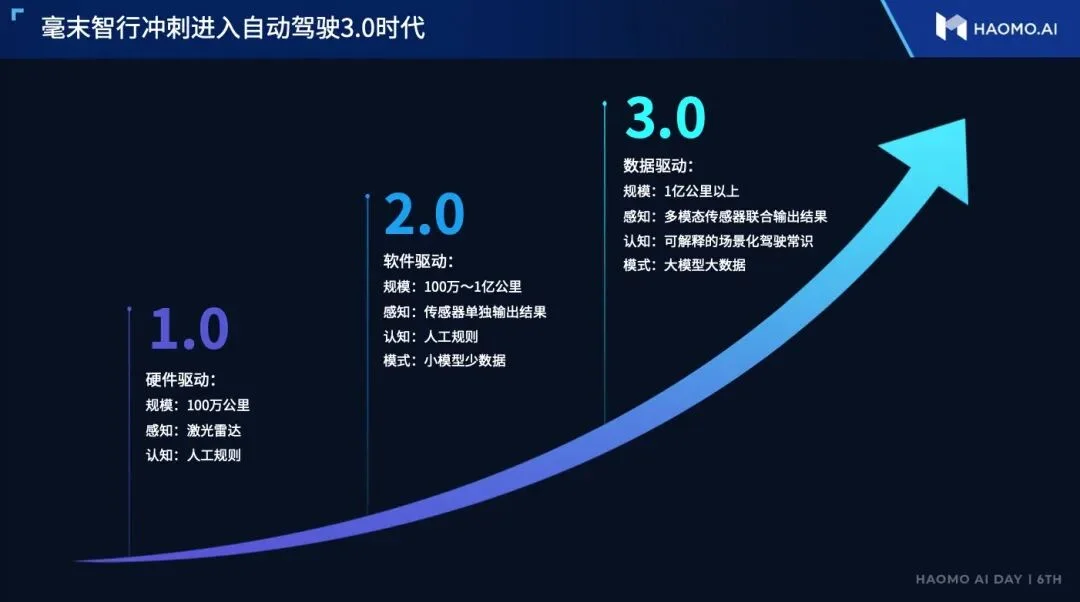
Gu Weihao believes that intelligent driving has entered its 3.0 era: the 1.0 era was hardware-driven; the 2.0 era saw most automakers begin in-house software development; and the 3.0 era is defined by data-driven approaches.
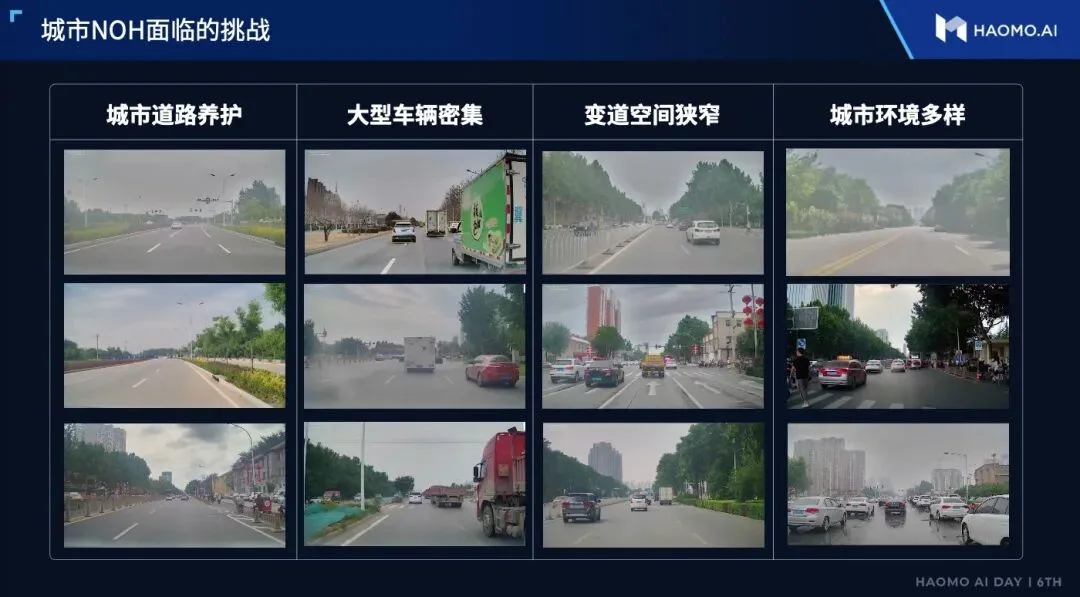
As autonomous driving expands into urban environments, processing capabilities in diverse scenarios become critical. Factors such as navigating narrow spaces, driving under road maintenance conditions, and operating in dense traffic with heavy occlusion significantly impact user experience. For Haomozhixing, enhancing the MANA data intelligence system directly improves overall system performance.
In perception, the industry mainstream relies on supervised learning. Although Haomozhixing uses automated labeling, the time and financial costs remain high, and this approach struggles to fully process unlabeled data.
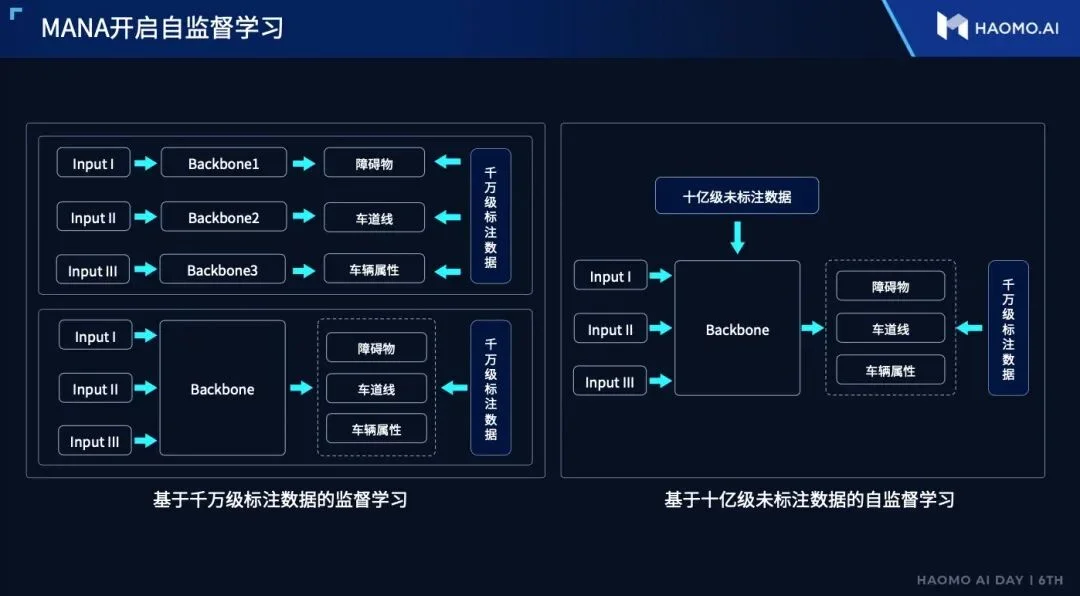
To address this, Haomozhixing developed a self-supervised learning method. The company pretrains models using large volumes of data, then fine-tunes them with labeled data tailored to specific tasks to improve results.
Specifically, massive amounts of data are used to extract BEV (Bird's Eye View) features through an image-to-BEV pipeline. Haomozhixing aims to reconstruct 3D scenes from these BEV features. This process requires no manual labeling because it inputs multimodal sensor data and outputs 3D reconstructions, which are then used to predict subsequent scene states.
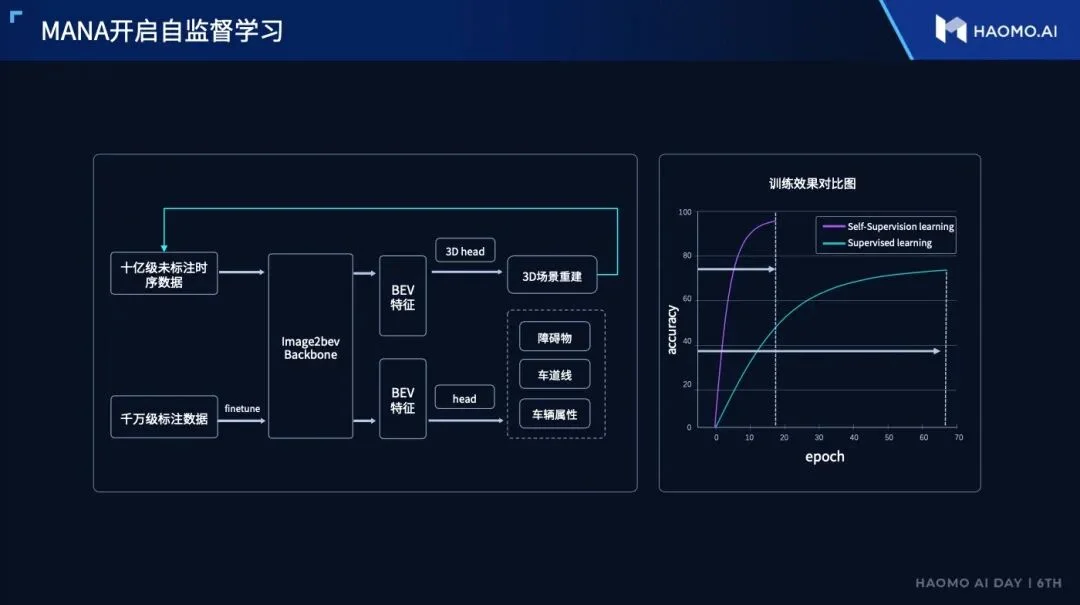
After training, Haomozhixing performs a second round of fine-tuning based on specific scenario tasks, such as lane lines, obstacles, or vehicle attributes. According to Haomozhixing, even with seventy epochs of traditional supervised training, accuracy only reaches the seventy–eighty percent range. However, using the new self-supervised method followed by additional data allows the model to achieve higher precision in just over ten epochs, improving efficiency by at least three times.
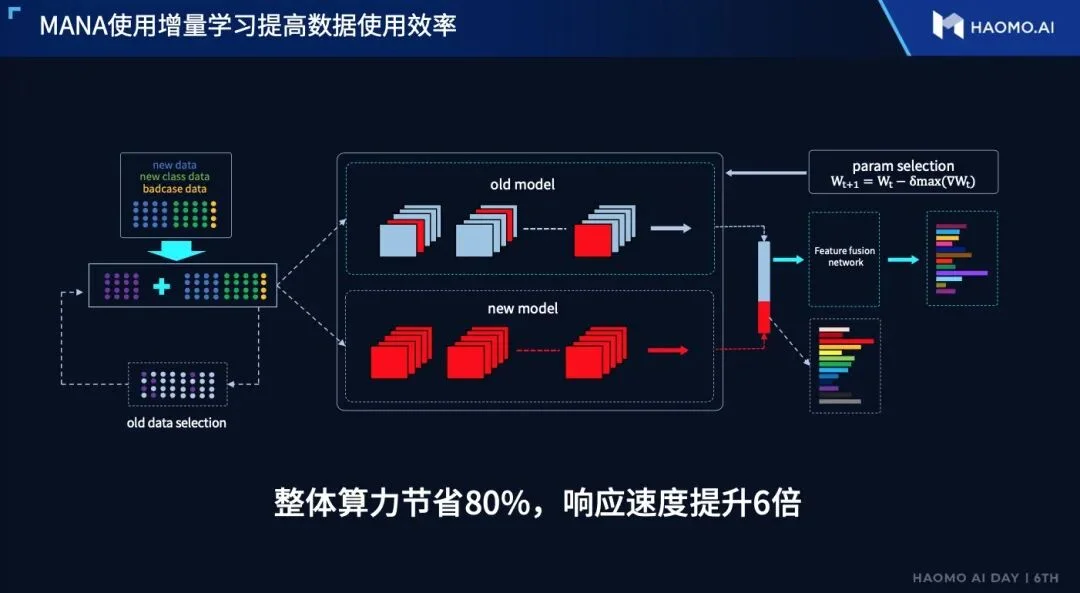
At the current stage, a long-discussed safety issue remains with driver assistance systems. Despite years of development, these systems cannot guarantee 100% safety in certain specific scenarios, such as those involving static objects. When the system needs to perform an "emergency correction" for such issues, it often encounters difficulties. For example, if the system has accumulated a massive amount of information and is suddenly required to respond quickly to a specific case, this may cause it to weaken its performance in other scenarios to adapt to this new situation. For instance, a sharp improvement in the system's response to trucks might lead to a significant decline in its effectiveness with ordinary sedans. In the industry, this phenomenon is known as "catastrophic forgetting."
One approach is to retrain on all data again; while effective, the cost is prohibitively high. To address "catastrophic forgetting," Haomozhixing has proposed a new incremental learning method. For instance, when new questions, scenarios, or bad cases arise, Haomozhixing couples them with the existing model. The ultimate goal remains obtaining an updated model, but Haomozhixing selects only a small subset of data for training, then runs both the old and new models simultaneously for comparison. This process enables "targeted" parameter optimization.
03Low Confidence in HD Maps
Haomozhixing has long advocated the slogan of "heavy perception, light mapping." The reason is simply that high-definition maps have a low update frequency. Gu Weihao provided data showing that the total length of highways in China is 300,000 kilometers, while ordinary roads exceed tens of millions of kilometers. Relying on survey vehicles to update and maintain these maps to provide prior information for intelligent driving systems is, in Gu Weihao's view, impossible.
We also heard another interesting perspective. Gu Weihao stated that you can view LiDAR as a sensor, but because it is frequently "under construction," its "perception data" is highly unstable and unreliable, resulting in very low confidence levels.
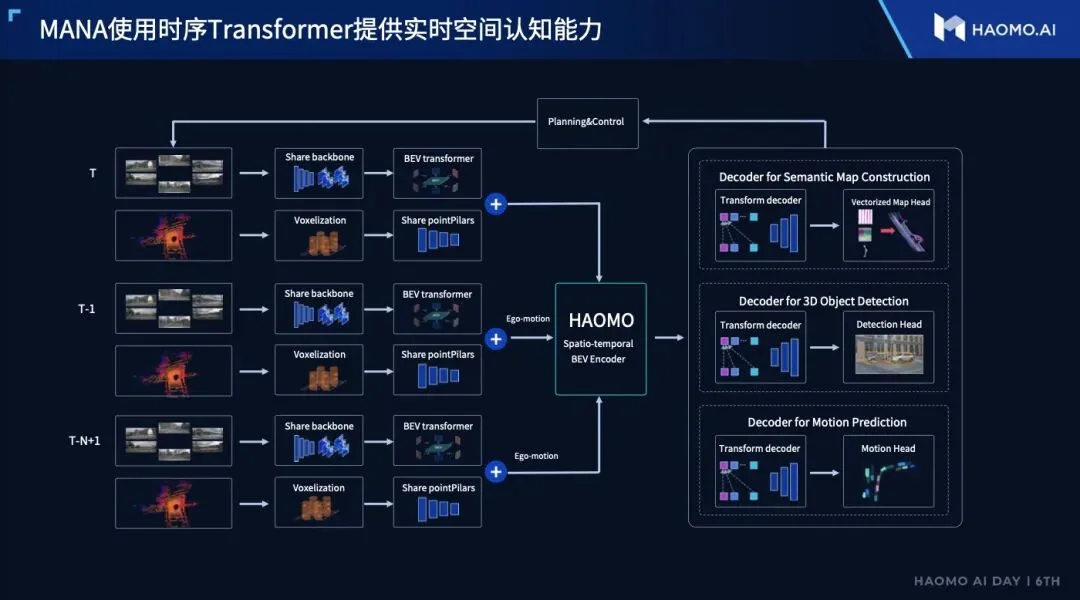
Haomozhixing is more inclined to rely on the real-time perception capabilities of individual vehicles. The solution involves using Transformers to establish strong spatiotemporal understanding for perception, while comprehensive multi-frame information over long durations in real-time mapping technology eliminates jitter.
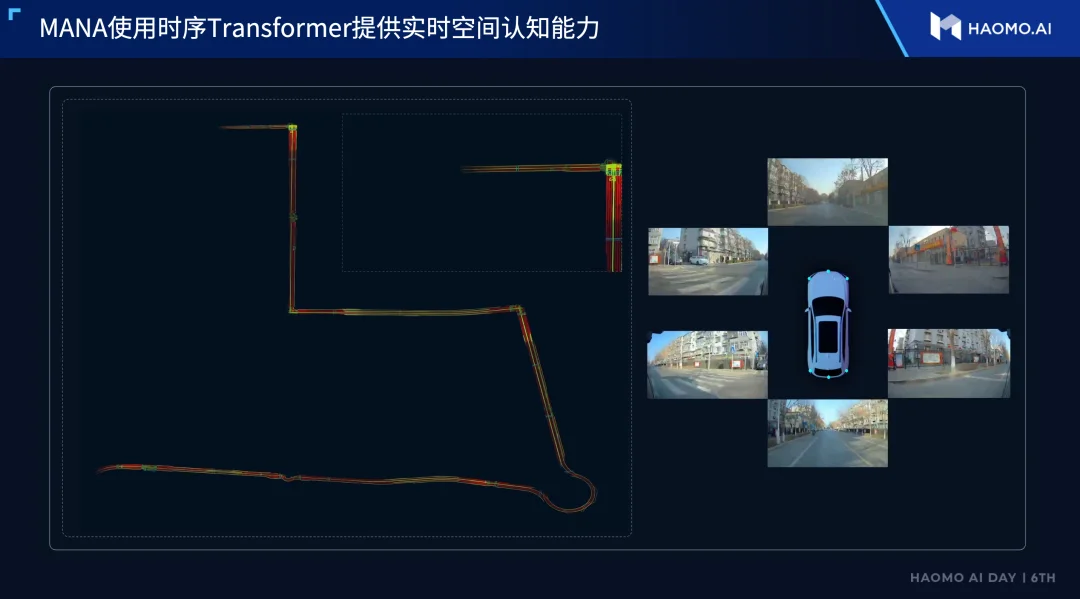
Like Tesla, Haomozhixing has implemented virtual real-time mapping on its Bird’s Eye View (BEV) surround-view space using a temporal Transformer model. This approach makes the perception output for lane lines more stable and accurate.
When discussing map-related issues, Ai Rui, Vice President of Autonomous Driving Technology at Haomozhixing, stated that high-definition maps have long been constrained by various limitations and have opened up slowly. As an autonomous driving supplier, Haomozhixing must break through these map barriers to get its systems into vehicles, thereby acquiring more data.
04Interaction Information Must Not Be Overlooked
Elon Musk dismissed the LiDAR route early on, arguing that roads are designed for human drivers, who do not drive with LiDAR sensors mounted on their heads.
Gu Weihao, CEO of Haomozhixing, also noted that vehicle interaction information is designed for humans, facilitating easier communication between drivers.
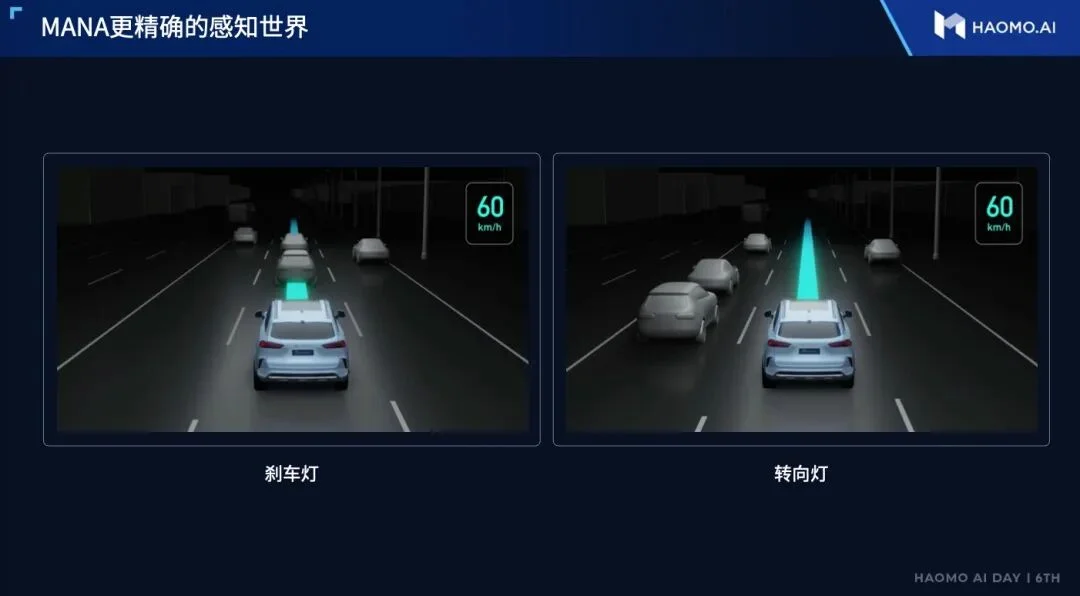
When the brake lights of the car ahead brighten, we know the driver is braking; when another vehicle’s turn signal illuminates, we anticipate it will turn. This is critical information for driving, and such signals can also be captured by vehicle systems.
During the AI DAY event in the first half of the year, Haomozhixing demonstrated how vehicles can independently acquire traffic light information in urban environments without relying on high-definition maps or V2X. At this latest AI DAY, Haomozhixing announced it is upgrading its onboard perception system to specifically recognize vehicle signal states, including turn signals and brake lights. In the future, Haomozhixing may also incorporate sound-based interactions, as horn sounds from other vehicles constitute another form of information.
05Simulation Can Be More Realistic, Driving Can Be More 'Human-Like'
As autonomous driving expands into urban environments, the Haomozhixing team encountered highly challenging scenarios during simulation—specifically at intersections. In highway scenarios, adding just two or three vehicles to a scene is sufficient to simulate realistic conditions; however, urban intersections involve numerous road users moving within the area, resulting in suboptimal simulation fidelity.
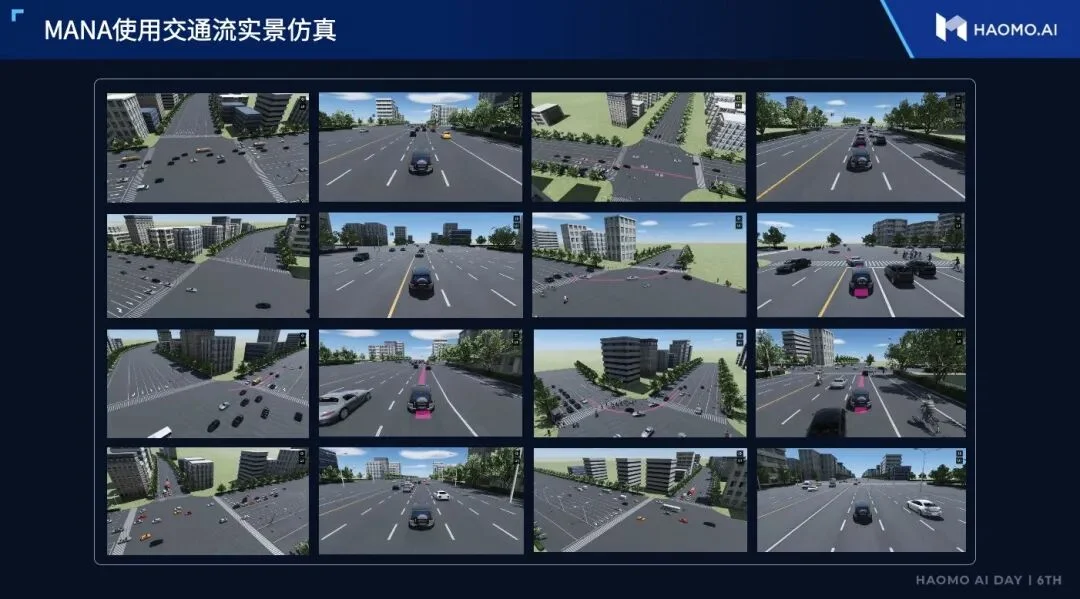
For this scenario, Haomozhixing chose to collaborate with Alibaba and Deqingzhengfu, using roadside equipment to record the real traffic flow at intersections for 24 hours, and then importing it into the simulation engine via log2world, thereby obtaining a 24-hour real traffic flow simulation. According to Haomozhixing's actual tests, importing the real environment greatly helps improve the overall algorithm.
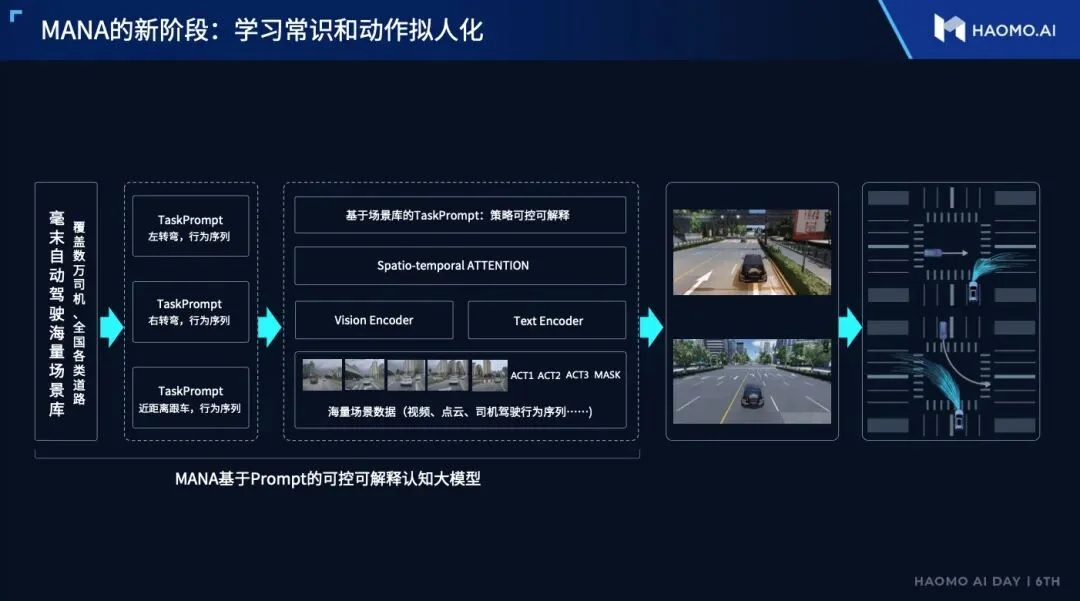
In addition to simulation, Haomozhixing optimized cognitive issues to make the system's driving behavior infinitely closer to that of humans.
Ai Rui stated that if one considers only system safety and disregards comfort, it is actually quite simple. However, users will not accept a product that lacks comfort.
To make driving behavior more "human-like," Haomozhixing analyzed massive amounts of real-world driving data from across the country to build a scenario library, which it then trained separately. By comparing these results with human driving, the system's fine-grained performance is improved.
06Supercomputing Center
At the end of last year, Haomozhixing disclosed its plan to build its own supercomputing center.
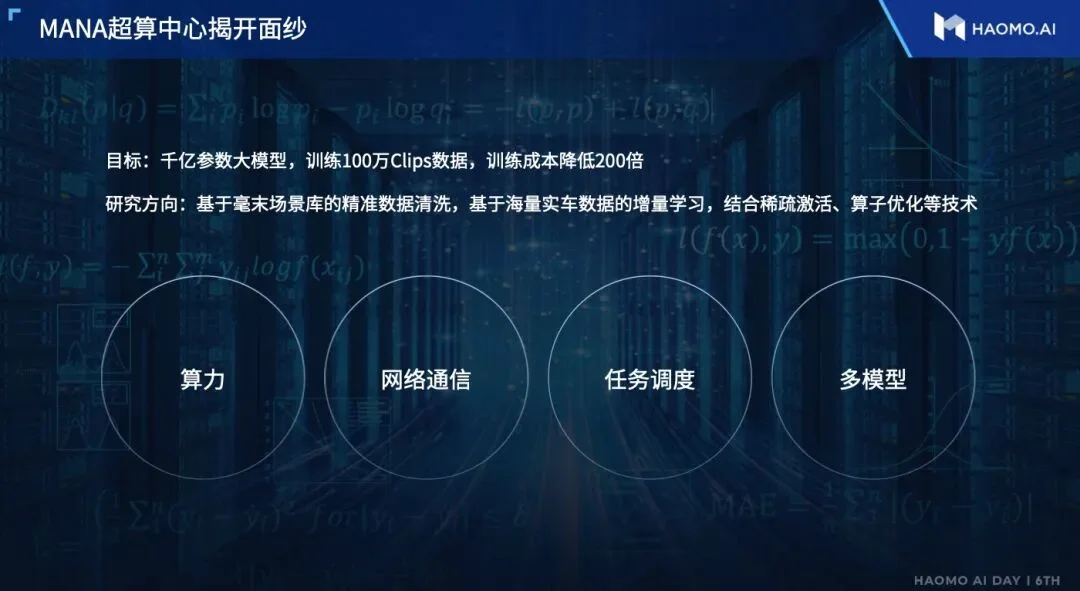
During today’s AI DAY, Gu Weihao revealed the latest progress on the supercomputing center. Haomozhixing aims to support large models with hundreds of billions of parameters and a data scale of one million clips, while reducing overall training costs by 200 times.
Training large models requires massive computing power. For example, training a model with hundreds of billions of parameters and one million clips requires thousands of GPU cards for several months, resulting in significant time costs.
Therefore, improving training efficiency and reducing training costs are critical to popularizing autonomous driving.
Notably, Ai Bo stated that although NVIDIA has cut off supply of A100/H100 GPUs to the Chinese market, the short-term impact is not significant. This is because NVIDIA is unlikely to abandon the Chinese market in the short term, and building a supercomputing center does not necessarily require adopting NVIDIA solutions.
07Five Key Features of Urban NOH
At the AI DAY held in the first half of the year, Haomozhixing disclosed ten typical scenarios for its City NOH system. Based on these scenarios, Haomozhixing summarized five functions.
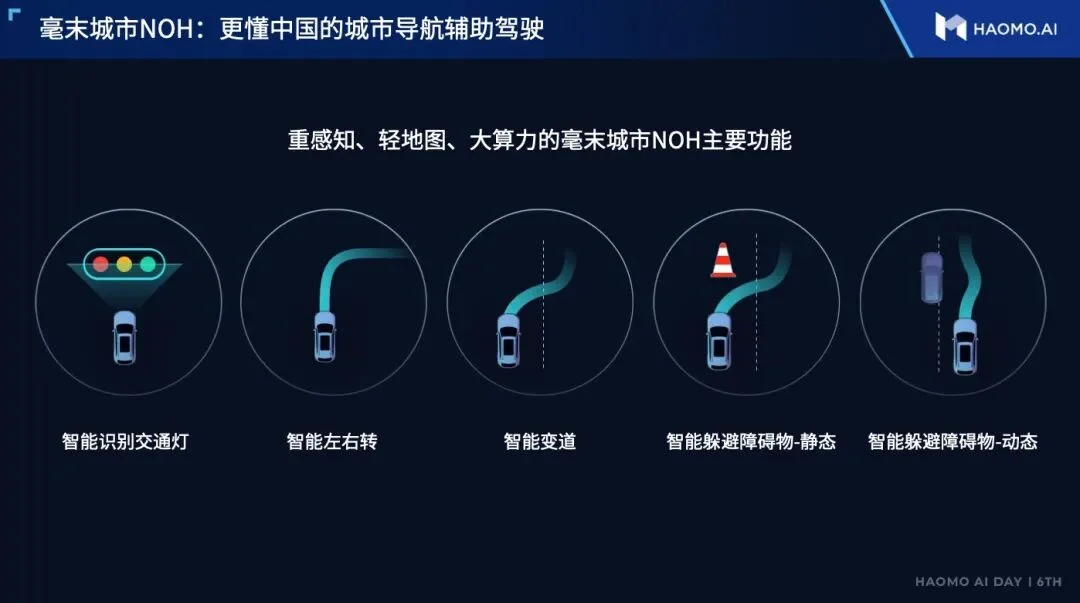
The five functions include intelligent traffic light recognition, intelligent left and right turns, intelligent lane changes, and intelligent obstacle avoidance (categorized into dynamic and static obstacles).
These five functions also serve as the foundational capabilities of City NOH. Gu Weihao stated that because the system is still in a user "break-in" phase, human intervention remains necessary in many scenarios. For example, while the system follows standard rules—stopping at red lights, proceeding on green, and slowing down on yellow—it may require the driver to lightly press the accelerator after a green light appears to ensure smooth passage.
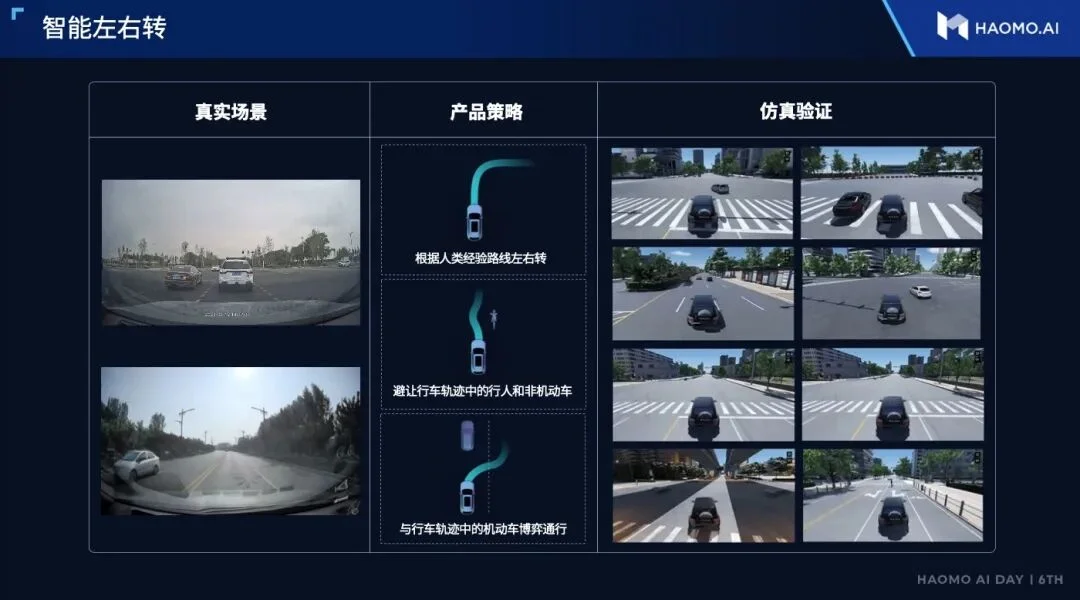
The logic for intelligent left and right turns relies on human driving experience for path planning. The system proactively yields to pedestrians and non-motorized vehicles during turns but engages in game-theoretic interaction when encountering motor vehicles.
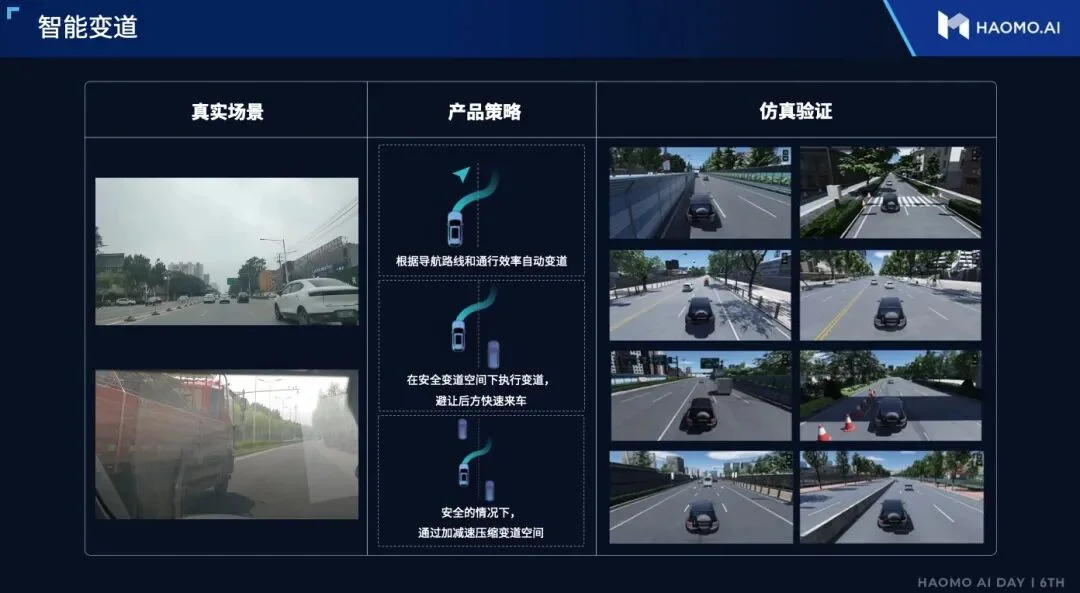
Intelligent lane changing integrates perception data from around the vehicle. The system follows the navigation-defined route and initiates lane changes at intersections or to improve traffic efficiency, while monitoring the trajectories of other road users. It can also proactively adjust acceleration or deceleration when the available space for lane changing changes.
When the system encounters an obstacle, it first identifies the obstacle type to decelerate or navigate around it. If the obstacle is static, the system assesses whether there is sufficient space to bypass it; if not, it waits.
Avoiding dynamic obstacles is challenging. In urban environments, lane widths vary. On narrower lanes where a leading vehicle encroaches on the lane marking, the system will still proactively decelerate to assess conditions for bypassing.
As mentioned above, Haomozhixing is also planning to integrate light-based interaction. Currently, when the front vehicle's turn signals or brake lights are illuminated, the system interprets the intent and adjusts speed accordingly—slowing down or initiating an overtake—to ensure driving safety and commuting efficiency.
08Final Thoughts
Unlike Tesla AI Day, Haomozhixing's AI Day is held on a quarterly basis.
We often joke that AI Days, held on a quarterly basis, multiply the workload for practitioners, but we genuinely welcome seeing a tech company step up to share its achievements frequently.
Over these 1,000 days, Haomozhixing completed the mass production of NOH. For Haomozhixing, 1,000 also marks a new starting point, because from the perspective of city NOH (city navigation assist driving), the competition has only just begun.
Written by: Bobo Edited by: Liu San