


Volkswagen's EV Transition: Platform Scale, Software Push and Charging Network
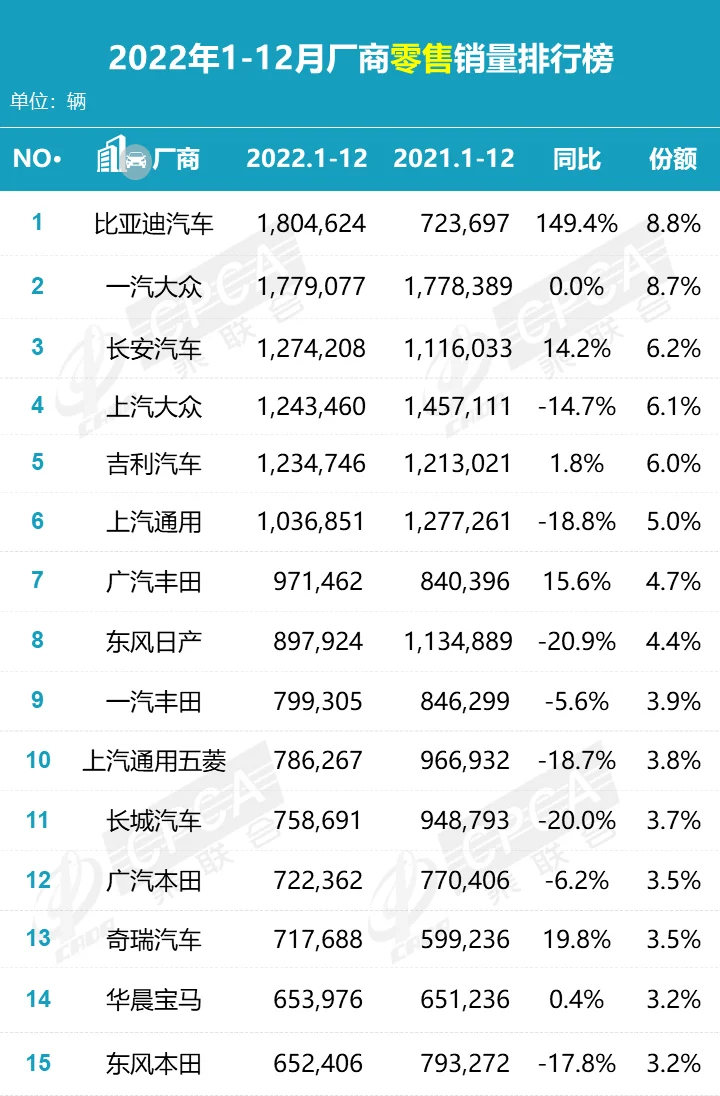
Looking at the 2022 sales data from Chenglianhui, in the retail sales ranking, FAW-Volkswagen and SAIC Volkswagen combined held a market share of 14.8%, ranking first.
Looking more closely at the new energy vehicle sales rankings, among established joint-venture automakers, only Shangqitongyongwuling and the two Volkswagen entities remain. With a 1.8% market share for FAW-Volkswagen and 1.6% for SAIC-Volkswagen, their combined 3.4% total share is sufficient to place Volkswagen in eighth place.
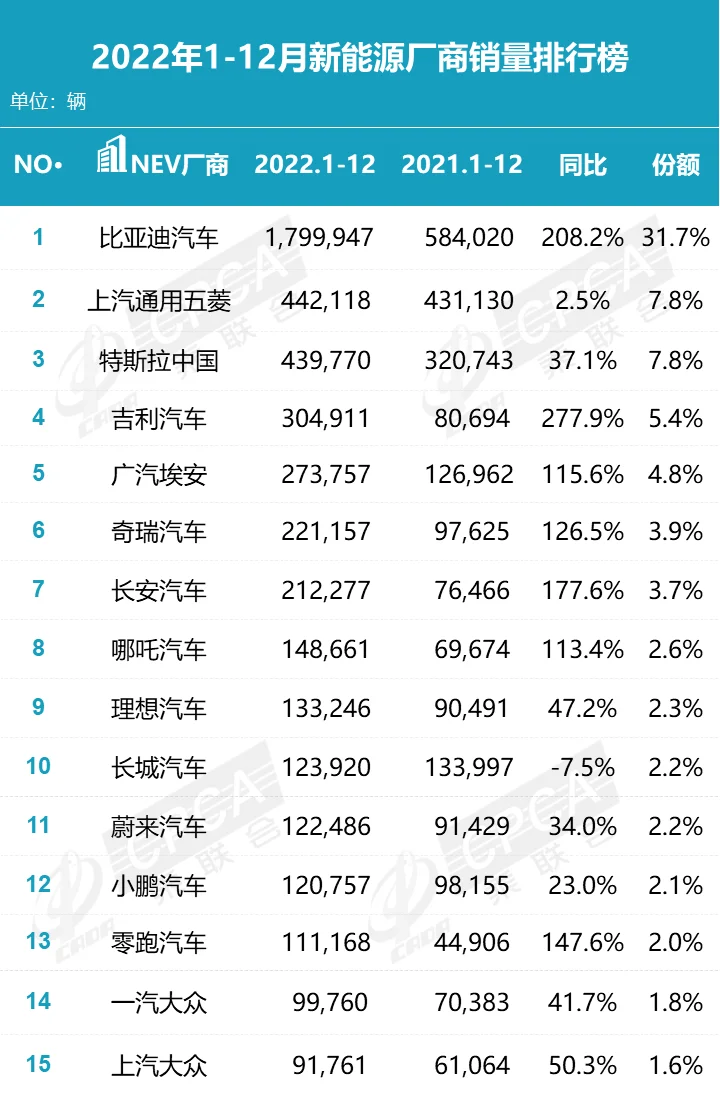
You will find that in traditional joint-venture automakers, familiar brands like Ford, Toyota, and Bentian may rank prominently on overall sales charts, but they are nowhere to be seen in the new energy vehicle (NEV) category. The steadily increasing penetration rate of NEVs stands in sharp contrast to the sluggish performance of traditional automakers in this market.
It is often said that 'it is difficult for an elephant to turn around.' However, in terms of determination and results in NEV transformation, Volkswagen is undoubtedly the leader among all traditional automakers. Since the debut of the ID.3, the first model on Volkswagen’s MEB pure-electric platform in 2019, Volkswagen has delivered 500,000 units of its ID. Jiazu models globally.
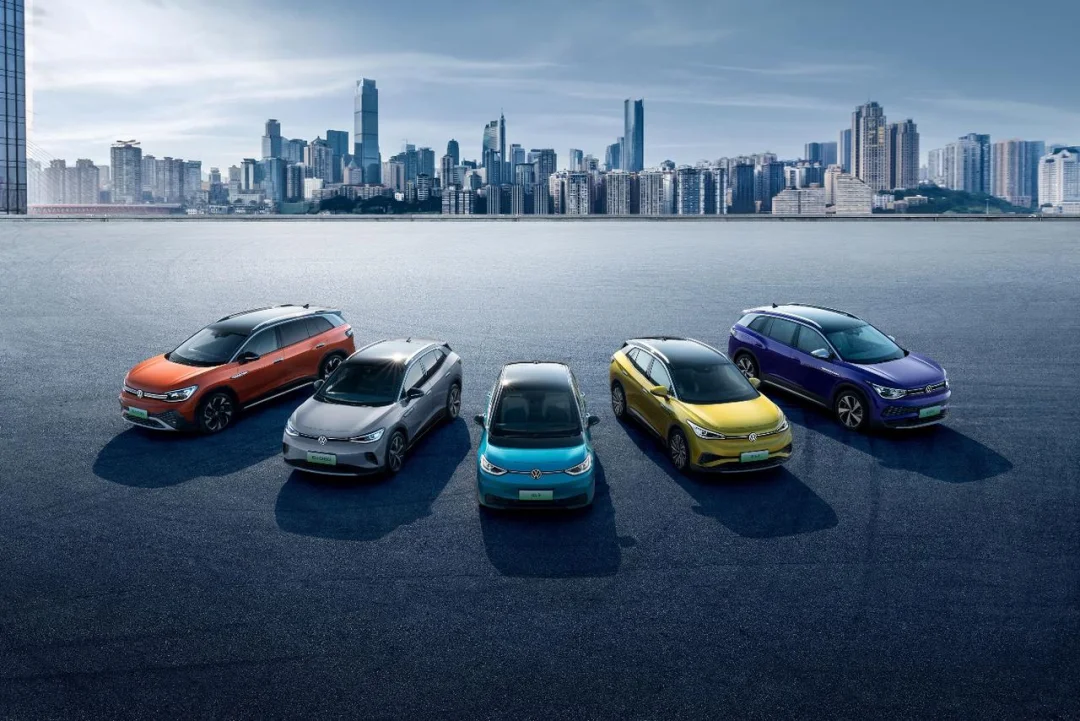
In the past year alone, Volkswagen delivered 180,600 new energy vehicles in China, including 143,100 units of the ID. series, representing a year-on-year growth of 102.9%, more than doubling its sales. At this point, Volkswagen has completed its product matrix in China ranging from the ID.3 to the ID.4 and ID.6. Among them, the ID.4 and ID.6 rank third in their respective segments: compact and mid-to-large pure-electric SUVs.
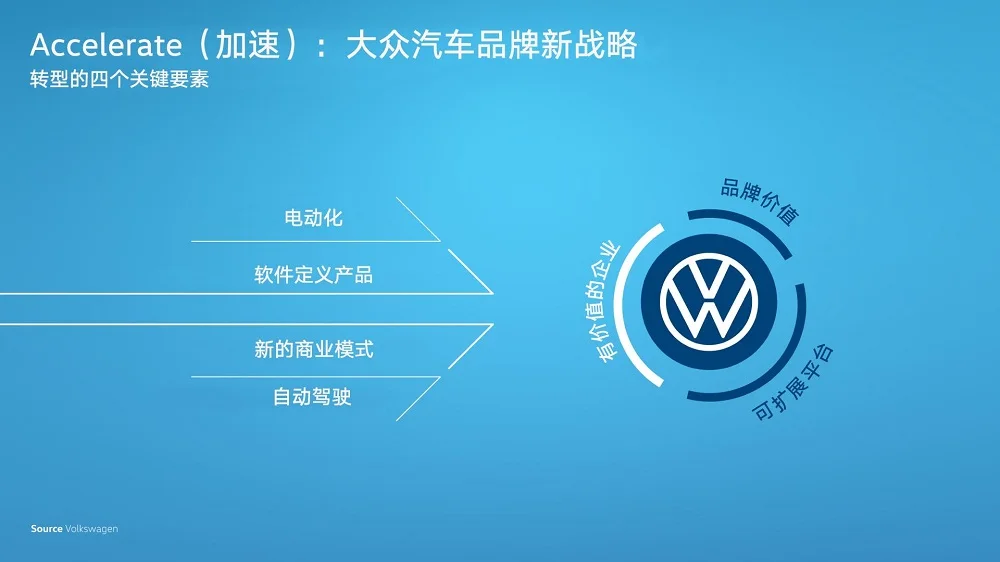
Let us rewind to March 2021. The question facing Volkswagen was how to transition from a traditional automaker to an electrified one, and how to transform into a software-driven mobility service provider. Thus, the ACCELERATE strategy was born.
01MEB/MEB+, Platform Standardization Remains a "Strong Suit"
The German full name of MEB is "Modularer E-Antriebs-Baukasten," which translates to "modular electric drive matrix." It is a highly compatible modular platform developed by Volkswagen for pure electric vehicles.
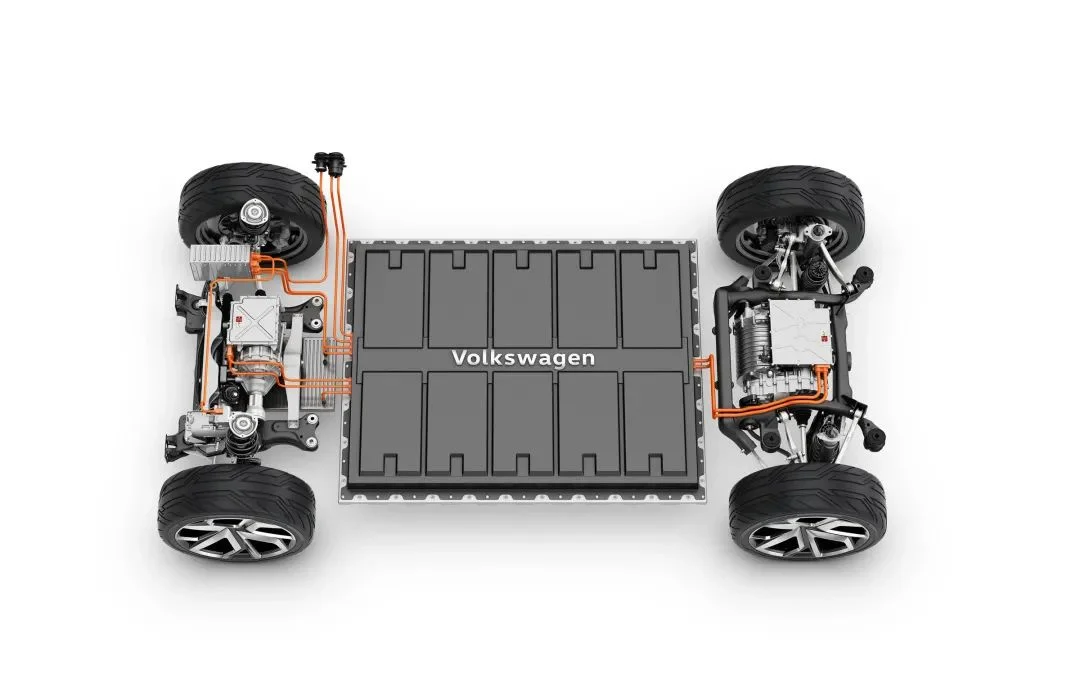
Volkswagen positions the MEB platform as the "MQB of the electrification era." Therefore, the primary goal at its inception was to achieve economies of scale through volume, while retaining its original ethos in the EV era: "Making electric vehicles affordable for Volkswagen customers."
Consequently, we see that the MEB platform boasts strong compatibility, ranging from SUVs like the ID.4 and ID.6, to compact cars like the ID.3, and even MPVs such as the ID.BUZZ.
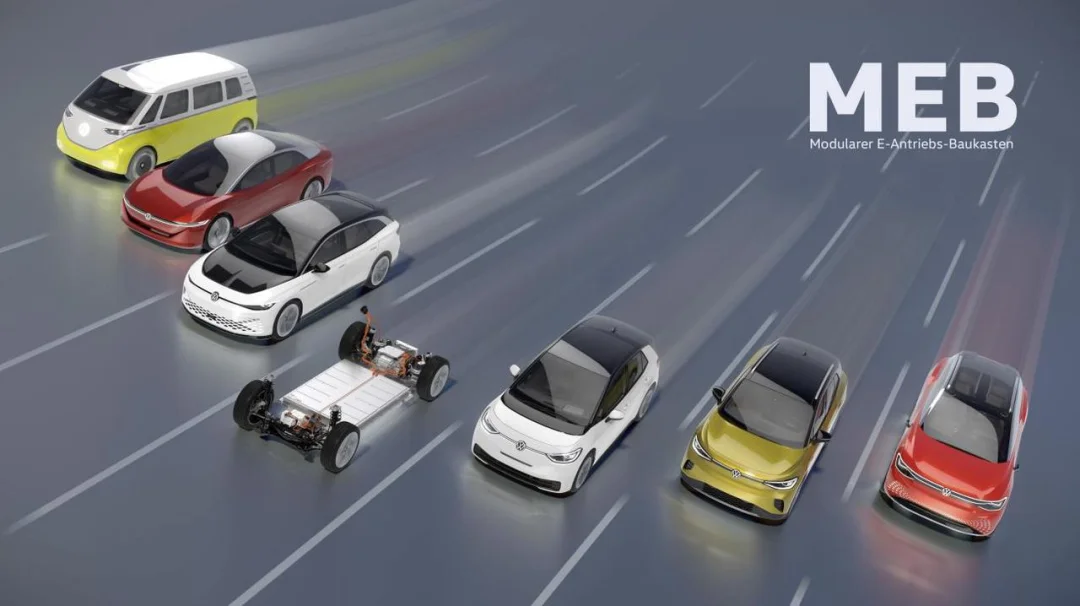
To date, Volkswagen has launched 12 pure electric models based on the MEB platform, including multiple EVs from Audi, CUPRA, and Sikeda. The Volkswagen Group has delivered more than 670,000 MEB vehicles in total, with over 500,000 of them being ID. Jiazu models, demonstrating significant economies of scale.
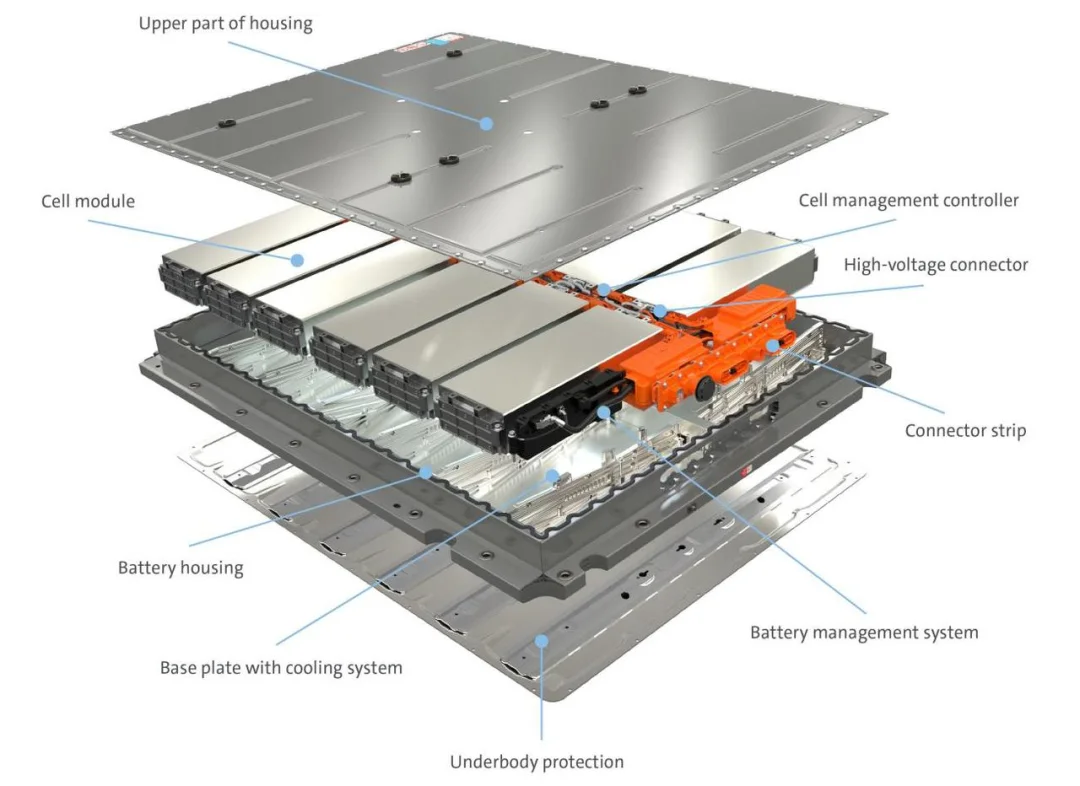
For battery pack configurations, Volkswagen offers a choice of an 8-module 55 kWh pack, a 9-module 62 kWh pack, and a 12-module 83 kWh pack. This provides mainstream driving ranges spanning 400–620 km, tailored to the needs of different models on the same platform.
In motor technology, Volkswagen opted for self-developed drive motors. The APP310 motor located on the rear axle achieves an efficiency exceeding 90% under most operating conditions, with a peak efficiency of 97%. Compared to the APP290 motor used in the MQB platform, the APP310 integrates the motor housing, main reducer, and inverter into a single unit. This design increases power by 50 kW and torque by 20 N·m, raises the maximum speed by 4,000 rpm, and reduces weight by 11 kg.
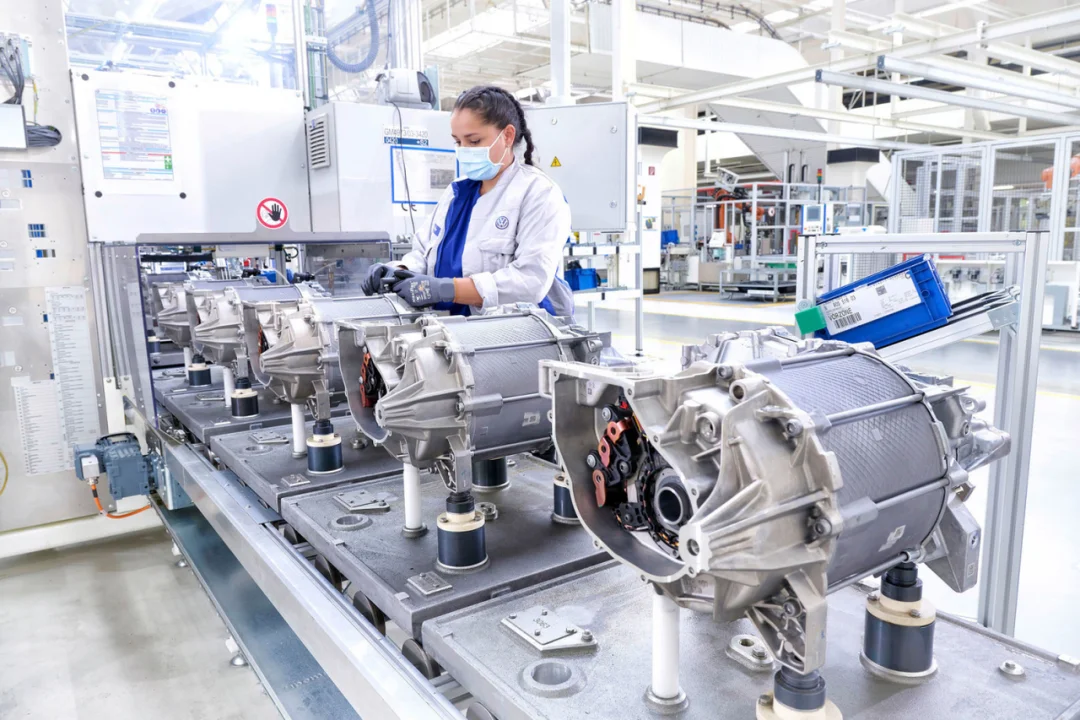
This integration is one of the reasons for the low energy consumption of MEB platform vehicles.
Volkswagen demonstrates extreme engineering refinement on the MEB platform. For example, the highly praised large steering angle: using the ID.4 as an illustration, without rear-wheel steering, the ID.4 achieves an impressive inner steering angle of 48.19° and an outer angle of 39.93°, resulting in a turning radius of just 5.2 meters. This allows the vehicle to execute a U-turn in a single maneuver on a two-way, four-lane road.
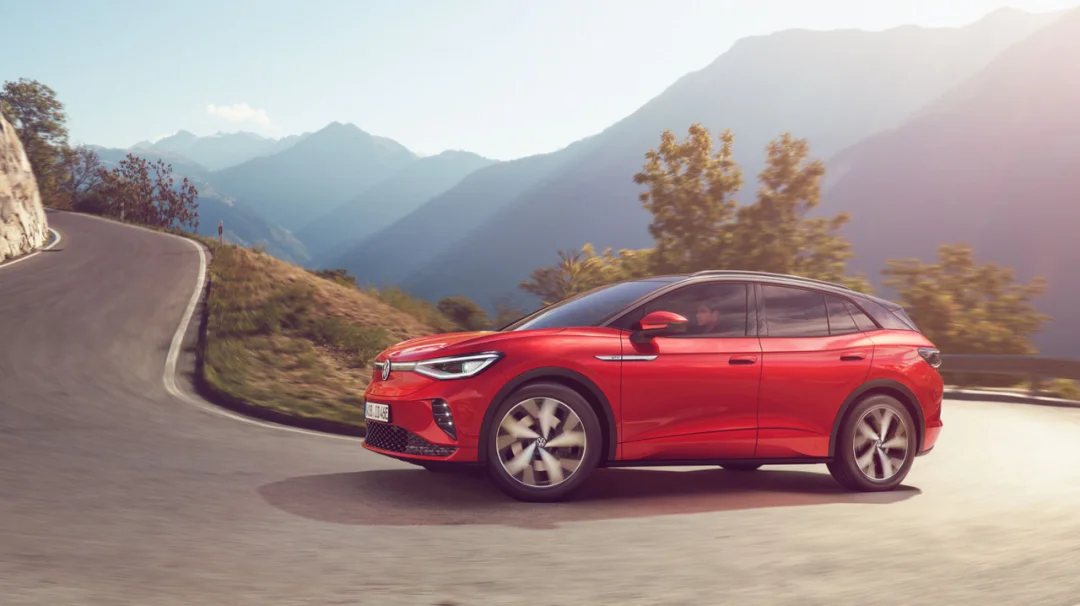
In optimizing the riding experience, products on the MEB platform have compressed space to the extreme. For example, the ID.4, a compact SUV, offers passenger space nearly comparable to that of a mid-size fuel-powered SUV, while even the ID.3, a compact car, maintains the same wheelbase as the ID.4.
In terms of mechanical quality, among the new energy SUVs in the RMB 200,000 to 300,000 range that we have experienced, there are almost no competitors more balanced and mature than the ID. series. Within our own editorial department alone, two colleagues respectively chose the ID.3 and ID.4, both of whom praised the vehicle's ride quality, driving feel, and excellent human-machine engineering design.
Additionally, Volkswagen aims to build upon the MEB platform to fully develop the MEB+ platform. The charging and energy storage technologies as well as the digital architecture of the MEB+ platform will undergo comprehensive optimization.
According to Volkswagen's plan, autonomous driving capabilities are expected to see significant improvements on the MEB+ platform. Additionally, the MEB+ platform will adopt Volkswagen's next-generation prismatic cell battery technology, offering a maximum range of up to 700 kilometers. The MEB+ platform will also substantially reduce charging time, with future maximum charging power reaching nearly 200 kilowatts.
Products built on the MEB+ platform will offer a wider selection, covering models in different segments such as high performance and luxury. Volkswagen has once again played its trump card of platform-based manufacturing in its electrification strategy; this is both "repeating an old trick" and "showing off a signature strength."
02CARIAD: Making up for software shortcomings
As the software division for the Volkswagen brand, CARIAD boasts the company's top-tier IT talent and oversees the development of underlying software across all brands. Its authority and status are higher than those of traditional functional departments.
How much does CARIAD value China? Last April, CARIAD officially announced the establishment of a wholly-owned Chinese subsidiary, marking its first subsidiary outside Europe. In line with Volkswagen's "In China, for China" strategy, Volkswagen will increase its investment in software and focus more on the needs of local Chinese consumers.
CARIAD’s business mandate is clear: "Develop a unified, scalable new software platform for advanced driver assistance systems (ADAS) and autonomous driving, as well as next-generation intelligent connectivity features."
Let’s start with the software platform. Volkswagen’s E³ electrical/electronic architecture version 1.1 is currently deployed on the ID.4. This year, version 1.2 will launch, adding a third-party app store and enabling seamless communication between the vehicle and the cloud.
Volkswagen stated that by 2025, E³ version 2.0 will feature a common operating system applicable to all models across Volkswagen’s brands, pre-installed with Level 4 autonomous driving technology.
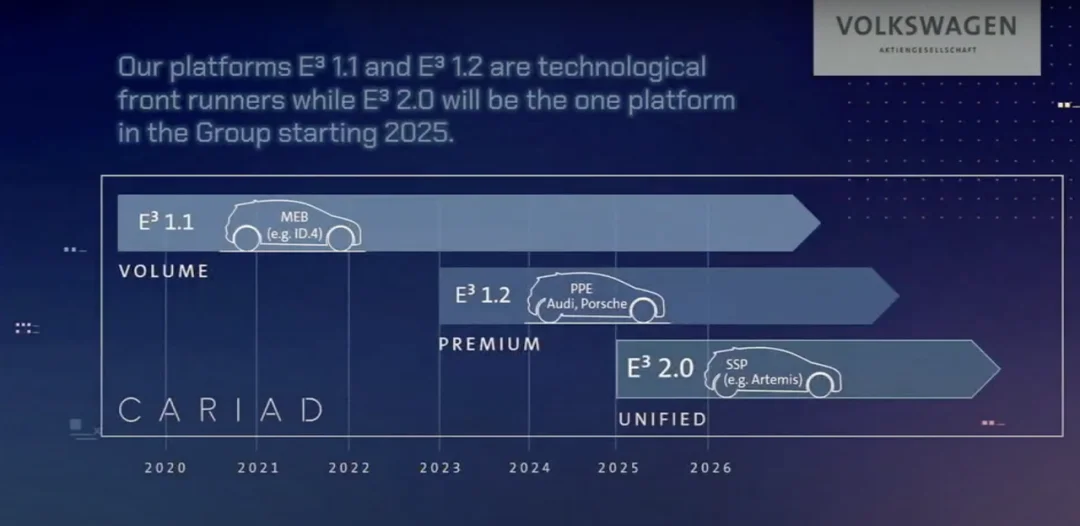
Admittedly, while Volkswagen’s MEB platform boasts many advanced features, persistent software issues in the infotainment system have frustrated owners. However, as Volkswagen’s software division accelerates R&D and iteration in China, solutions are emerging for some of these problems.
For instance, last year, some ID. models running early software versions experienced unexpected dual-screen blackouts. A software update solution has been finalized and rolled out in mid-January; Volkswagen has proactively contacted affected owners to resolve the issue.
Regarding its long-term vision for the software platform, Volkswagen aims to deploy CARIAD-developed technology stacks on over 40 million vehicles globally by 2030. By leveraging massive real-time connected data from autonomous driving, Volkswagen’s car-sharing fleet can continuously roll out new features and services to meet diverse customer mobility needs, making software one of the most significant profit pools.
Additionally, Volkswagen announced a joint venture with leading Chinese autonomous driving company Horizon Robotics on October 13 this year through CARIAD, planning an investment of approximately EUR 2.4 billion for the collaboration. The transaction is expected to close in the first half of 2023.
Under the agreement, CARIAD will partner with Horizon Robotics to develop leading, highly optimized full-stack advanced driver assistance systems (ADAS) and autonomous driving solutions. By integrating multiple functions onto a single chip, the partnership aims to enhance system stability and provide scalable, cost-effective ADAS and autonomous driving solutions for Volkswagen's pure electric models in China.
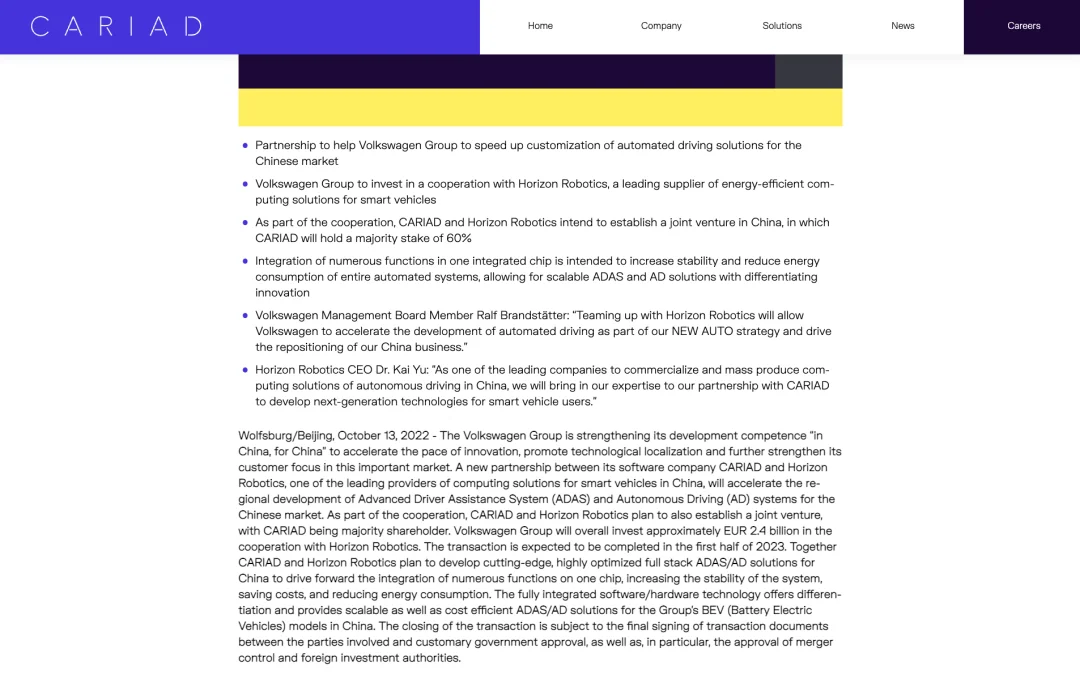
For Volkswagen, this alliance with a sought-after partner allows the brand to leverage Horizon Robotics' hardware and software capabilities to continuously develop high-level assisted driving solutions. Additionally, by capitalizing on Horizon's status as a local enterprise, Volkswagen can rapidly build localized software capabilities in China, enabling faster responses to and fulfillment of market demands, thereby delivering safer, smarter, and more comfortable driving experiences for customers.
With the support of an outstanding domestic team, the performance of Volkswagen's new products in terms of assisted driving is expected to be even more impressive.
In contrast, the Volkswagen CARIAD China subsidiary team, which numbered approximately 600 people at its inception last year, plans to double in size by the end of 2023. With such significant investment and the collaboration with a leading domestic assisted driving company, the results of Volkswagen's "In China, For China" strategy are highly anticipated.
03Energy replenishment: Closing the loop on electrification transition
Volkswagen, one of the most aggressive traditional automakers in its electrification transition, demonstrates this not only through early research and mass production of pure electric platform vehicles but also through the construction of its energy replenishment infrastructure.
Building on successful partnerships with CAMS, its joint venture in China, and Electrify America in the United States, Volkswagen Group is establishing public charging infrastructure across Asia, Europe, and the Americas.
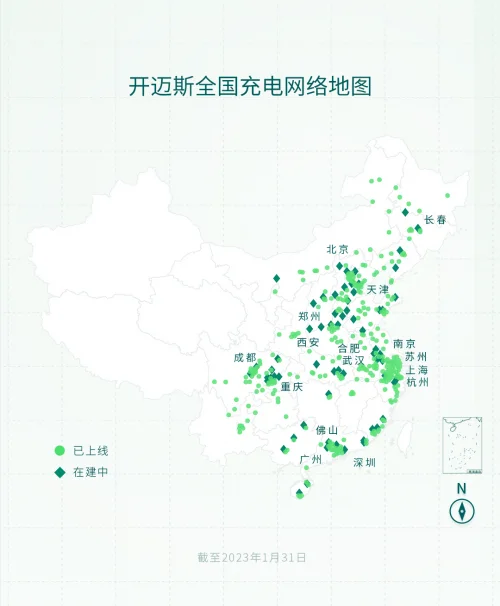
Over the past three years since its establishment, CAMS has built a national charging network of significant scale. As of January 31, 2023, CAMS had deployed 1,064 supercharging stations and 9,352 charging terminals across 158 cities nationwide, achieving saturated coverage in 16 core cities: Beijing, Shanghai, Guangzhou, Shenzhen, Chengdu, Tianjin, Hangzhou, Zhengzhou, Chongqing, Xi'an, Wuhan, Nanjing, Foshan, Changchun, Hefei, and Suzhou. 'Saturated coverage' means there is guaranteed to be a CAMS charging station within a 5-kilometer radius in the main urban area.
For comparison, as of February 10, 2023, NIO operated 1,243 supercharging stations and 6,309 supercharging piles nationwide. Excluding NIO's 1,084 destination charging stations, the number of supercharging piles deployed by CAMS actually exceeds that of NIO.
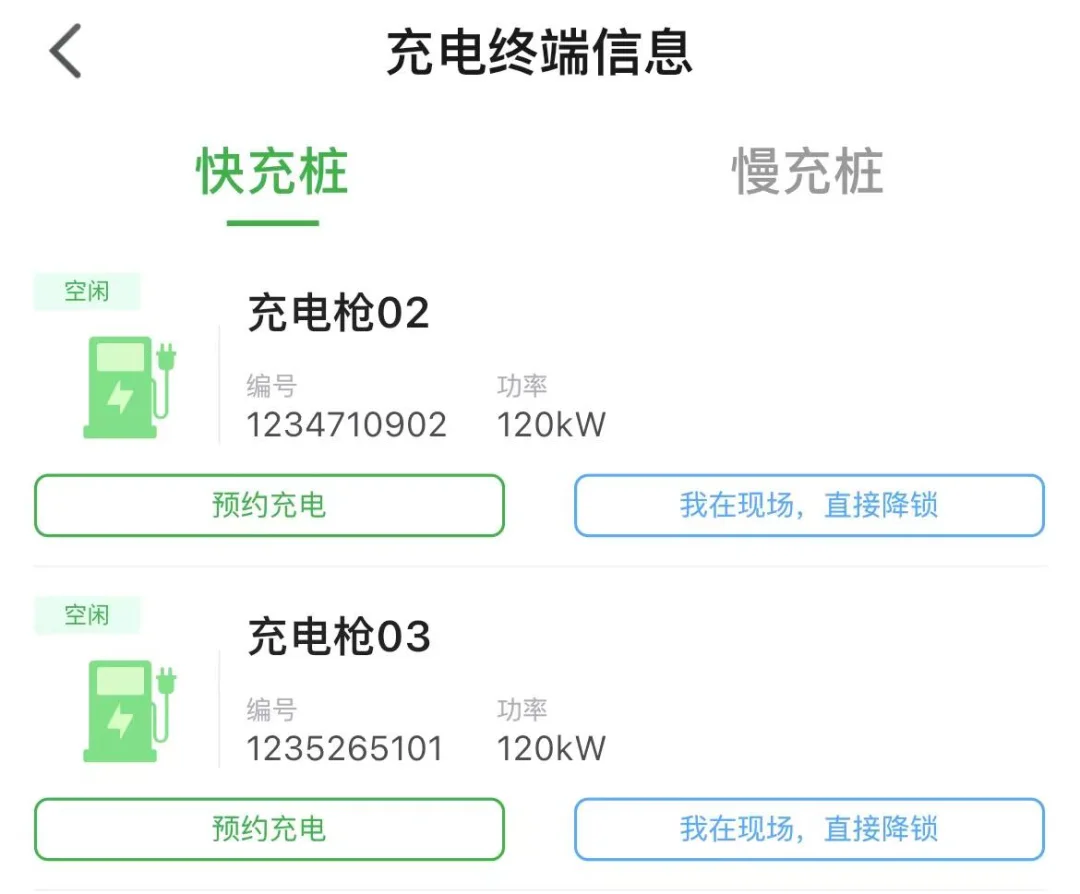
The advantages of self-built charging infrastructure are evident. Most CAMS stations feature spacious parking spaces and remote-controlled ground locks. Volkswagen owners can remotely check the availability of charging terminals, book them online, and simply plug in upon arrival.
Beyond China, Volkswagen collaborates with Electrify America in the United States and Canada, planning to build 1,800 fast-charging stations and install 10,000 charging terminals by 2025. This will double the current volume of charging infrastructure in both countries.
Meanwhile, Volkswagen Group has partnered with BP, Iberdrola, and Enel to provide charging services for customers in Europe.
Volkswagen Group plans to build 18,000 high-power charging stations in Europe and 17,000 fast-charging terminals in China.
Beyond providing convenient charging services for Volkswagen owners, building this energy-supply network can generate substantial energy-service revenue for the group in the future. This is a key component of Volkswagen’s new business model.
04Conclusion
When you focus on the fiercely competitive Chinese new-energy market, Volkswagen’s transformation may seem unremarkable. But when viewed from a global perspective, it becomes clear that by the time Volkswagen had delivered over 500,000 ID. Jiazu units, most legacy automakers were just waking up and beginning to catch up.
People often say, "It's hard for an elephant to turn around," yet they overlook the sheer size and reserves the elephant possesses. Whether it is the mature and reliable MEB pure-electric platform, the spun-off software division CARIAD, or the early-mover advantage of its well-established charging network, Volkswagen has shown no hesitation in this new-energy revolution. It is committing nearly all its resources to shift tracks.
The boot won't hit the ground the moment it is thrown. However, at this current juncture, the reputation and sales volume of the ID. series are steadily climbing. Volkswagen, which has undertaken the most radical self-revolution, has secured priority access to the next round of competition.
Written by: Mingming Edited by: Bobo