


VOYAH Zhuiguang First Drive: Premium Interior and Agile Chassis, but Energy Recovery Logic Needs Refinement
Starting with sedans, we have observed that the first milestone models from various new energy brands are now facing facelifts or generational updates.
Some models, such as the Model 3, XPENG P7, and Zeekr 001, are receiving updates; others, like the Volkswagen ID.7, NIO ET5 Touring, and Feifan F7, serve to enrich their product lines. With technological advancements and iterative product development, these vehicles will showcase fresher technologies and designs.
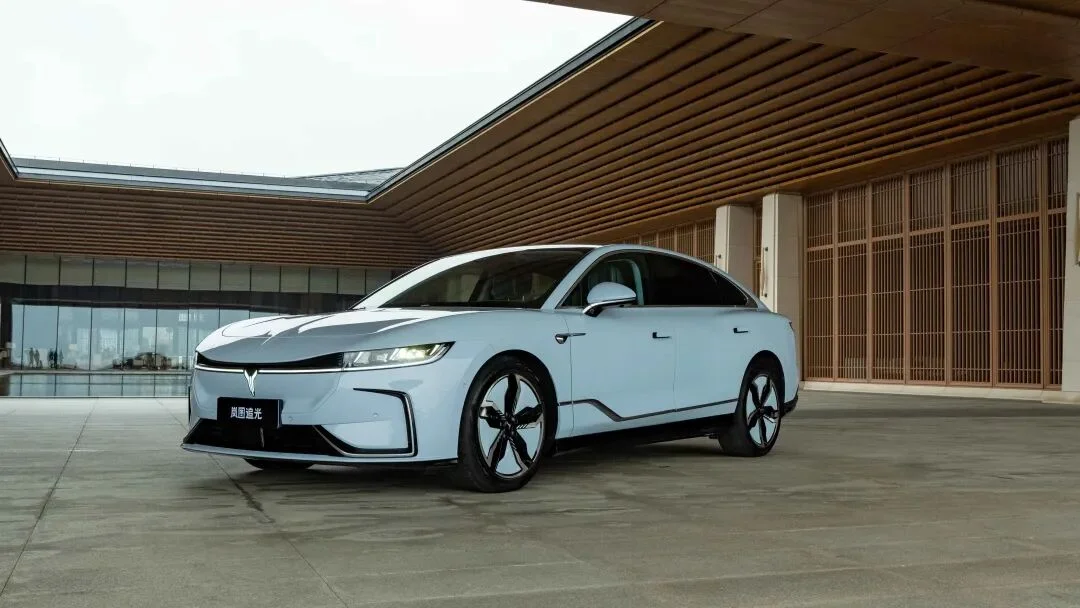
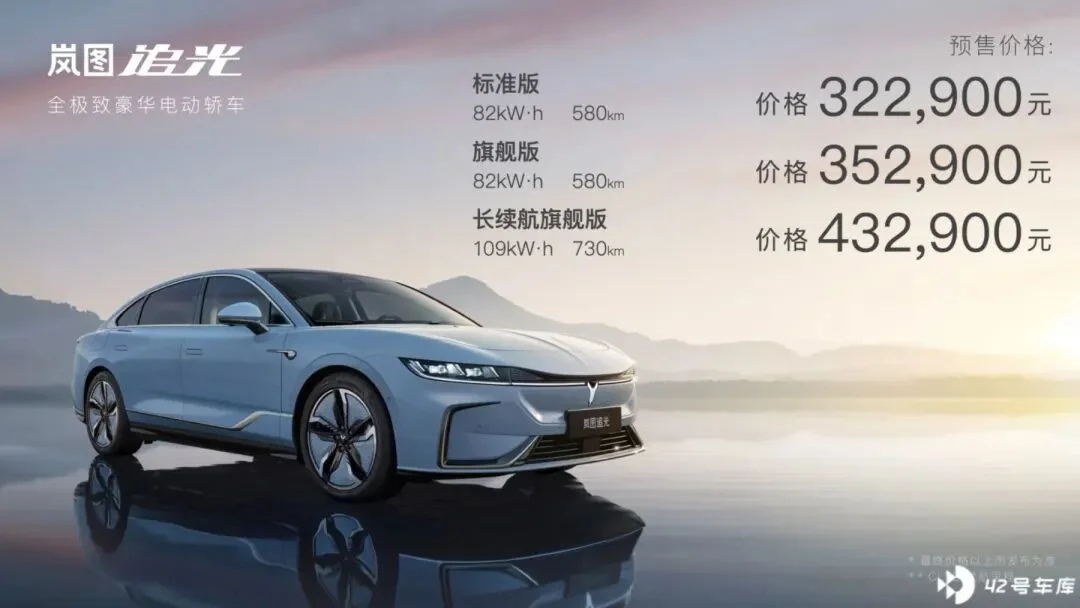
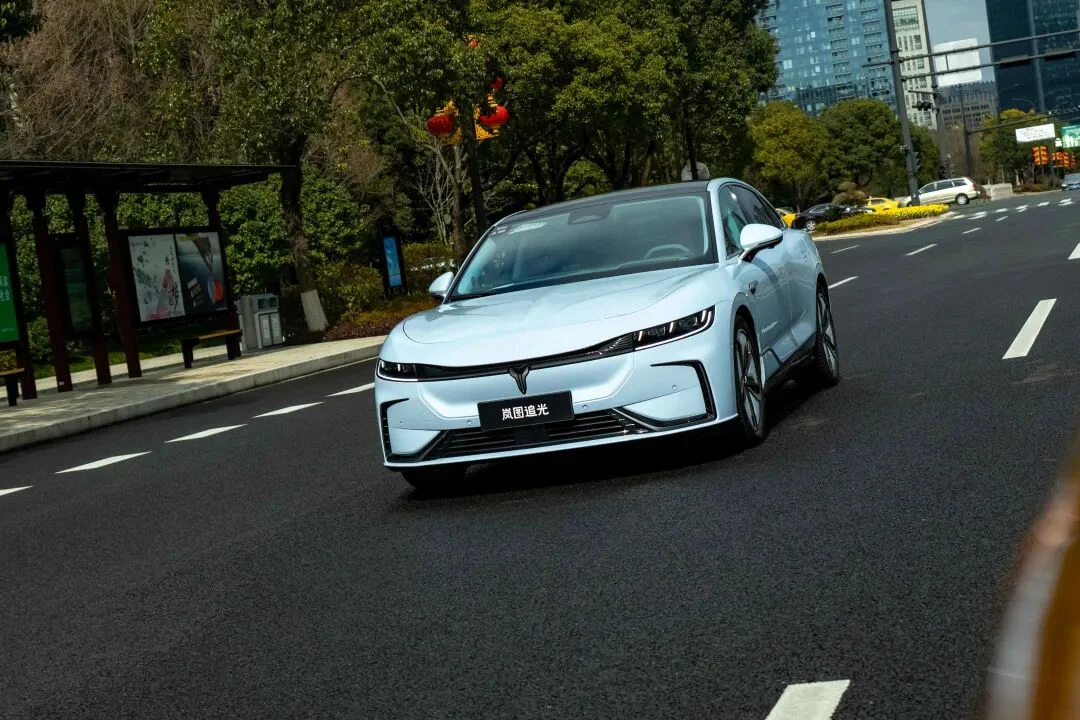
At the start of the new year, VOYAH has introduced a test drive for its third model, Zhuiguang. Prior to this, VOYAH Zhuiguang announced its pre-sale prices:
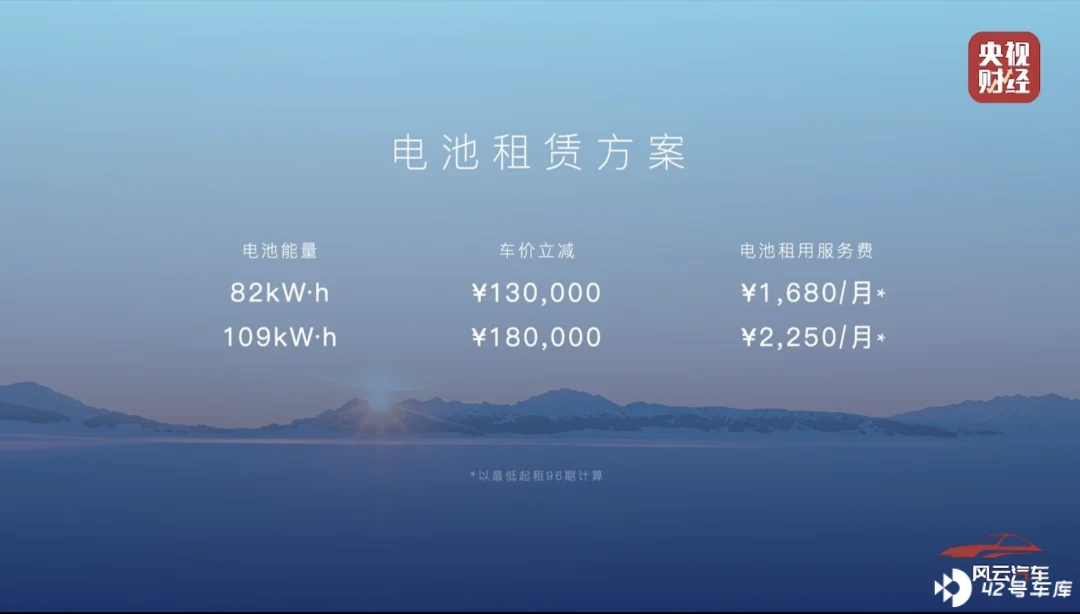
Under the battery leasing scheme, the price of the 82 kWh version is reduced by RMB 130,000, with a monthly battery rental fee of RMB 1,680; the price of the 109 kWh version is reduced by RMB 180,000, with a monthly battery rental fee of RMB 2,250:
The pre-sale price for the 82 kWh Standard Edition is RMB 322,900, dropping to RMB 192,900 after battery lease;
The pre-sale price for the 82 kWh Flagship Edition is RMB 352,900, dropping to RMB 222,900 after battery lease;
The Long Range Flagship with a 109 kWh battery has a pre-sale price of RMB 432,900, dropping to RMB 252,900 when the battery is leased.
Looking at Zhuiguang’s pricing, you’ll find that this mid-size sedan, which is similar in size to the NIO ET7, is priced heavily overlapping with the smaller ET5. After battery leasing, the price even dips below RMB 200,000.
So, does the Zhuiguang, which offers considerable value on paper, actually drive well?
01A Split Driving Personality
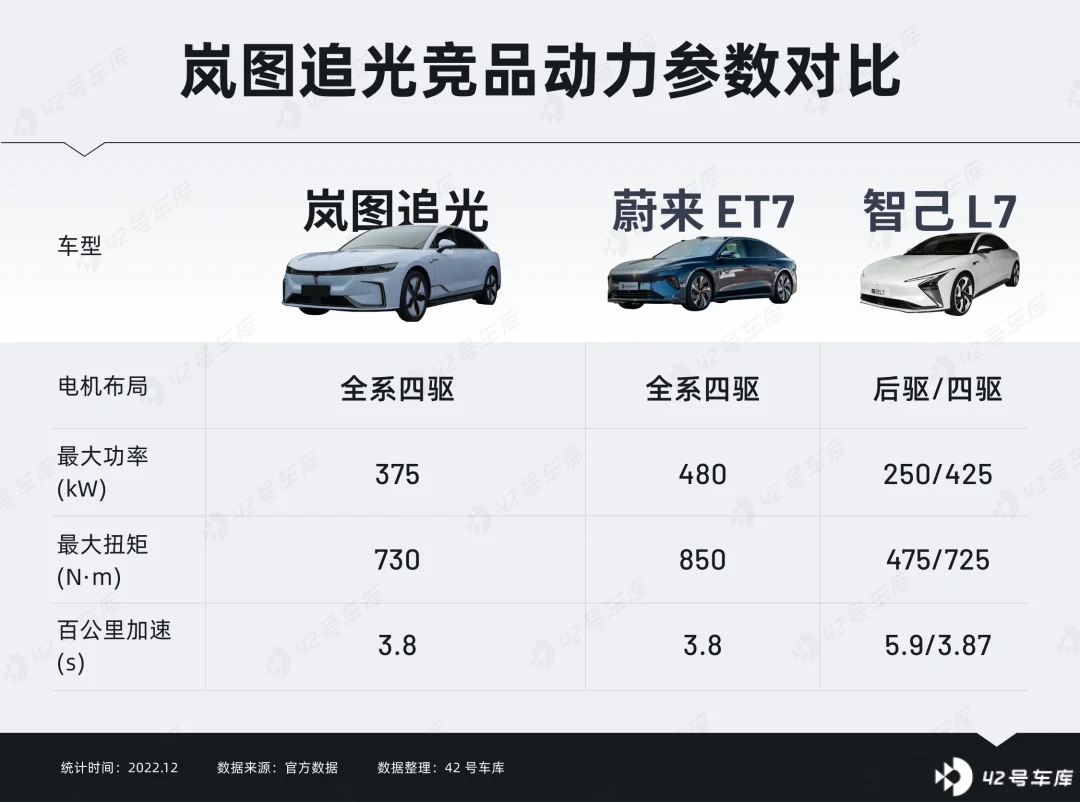
Before the test drive began, VOYAH staff set our expectations high, dedicating significant time to explaining their efforts in driving dynamics. The data shows that a maximum power of 375 kW and torque of 730 Nm deliver 0–100 km/h acceleration times of 3.8 seconds (for the 82 kWh version) and 4.2 seconds (for the 109 kWh version). Although its motor power doesn’t hold an advantage over competitors, the final acceleration times remain competitive:
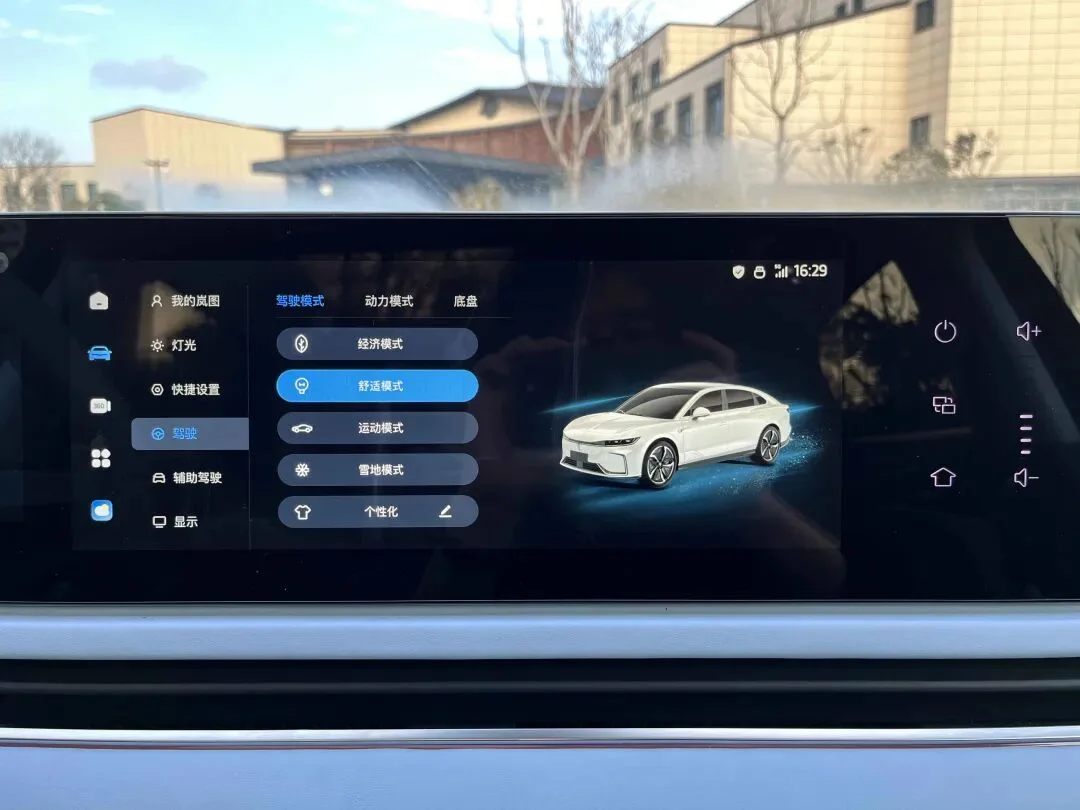
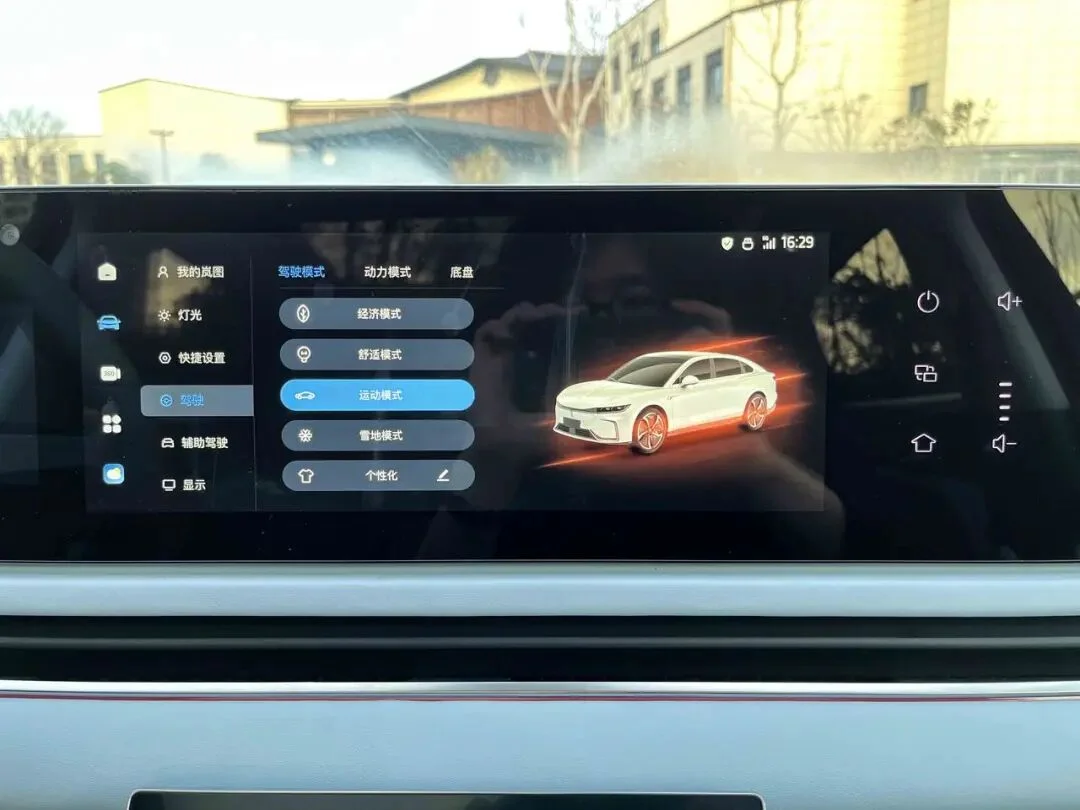
Switching the driving mode to 'Comfort' and slowly exiting the hotel speed bump, the suspension’s soft response to low-speed, high-impact bumps left me with a good first impression. The air suspension absorbed most of the impact.
At speeds imperceptible to the eye, the Zhuiguang’s front-facing camera scans the road surface at 30 frames per second. Simultaneously, the vehicle’s acceleration sensors monitor lateral and longitudinal acceleration as well as steering angle at a rate of 500 times per second. These data points allow the system to adjust the damping of the CDC (Continuously Damping Control) suspension 100 times per second during driving. Operating on a principle similar to Mercedes-Benz’s Magic Body Control, this proactive adjustment prepares the suspension for impacts before they occur.
On urban roads, the Zhuiguang’s chassis exudes a high level of refinement. The suspension absorbs approximately 80% of road irregularities while retaining the remaining 20% of road feedback, allowing drivers to clearly perceive vehicle dynamics without it becoming intrusive. Navigating through city traffic, the chassis provides exceptional isolation from the road, making the body feel as though it is floating above the surface, cushioned by a thick blanket.
In Comfort mode, the Zhuiguang’s steering feels heavy and substantial, yet the steering ratio is relatively large. This setup ensures comfort and ease during city driving, but can leave the driver feeling slightly overwhelmed when navigating winding roads or engaging in spirited driving.
However, for a mid-to-large sedan targeting executive buyers, avoiding extremes and carefully balancing demands across various dimensions is entirely reasonable.
The Zhuiguang’s power delivery is not abrupt. Its substantial power reserve is released gradually, so even in Sport mode it does not feel nervous or twitchy. We suspect the motor’s maximum RPM has been increased; acceleration beyond 100 km/h remains robust, and the official top speed of 210 km/h places it among the leaders in its class.
However, we have suggestions regarding the Zhuiguang’s energy recovery logic. VOYAH staff explained that to avoid the discomfort caused by strong drag, they designed a coasting-based energy recovery system. In practice, however, while the 'Light' setting closely mimics the coasting feel of an internal combustion engine car in D gear, the 'Normal' and 'Strong' modes concentrate deceleration feedback in the first third of the accelerator pedal travel. This creates noticeable lag, making it difficult for drivers to slow the vehicle as expected, resulting in low usability.
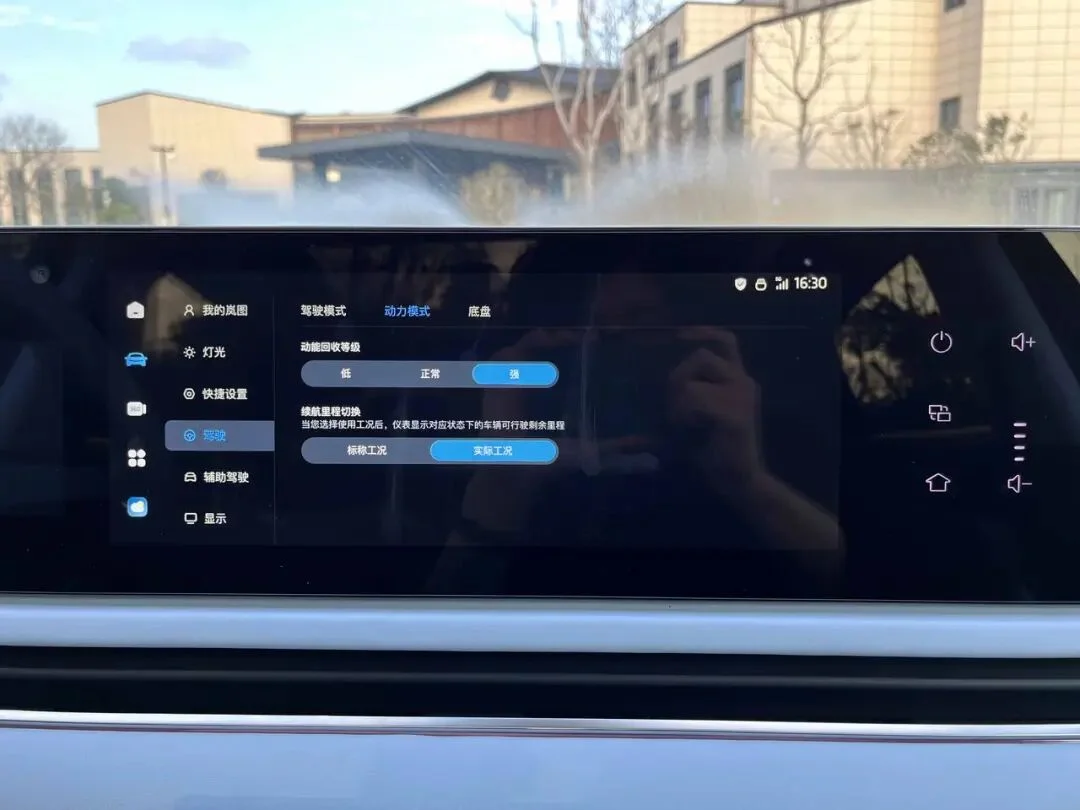
Most traditional automakers treat Tesla-style energy recovery—which ties deceleration strongly to throttle input—as something to be avoided. Yet, in actual experience, systems like those in Tesla vehicles, Volkswagen ID. series models, and the Gaohe Hiphi X bind deceleration commands to the entire lift-off stroke of the accelerator, which aligns better with driver intuition.
Therefore, alongside offering a 'Light' energy recovery mode, VOYAH needs to refine a comfortable and usable 'Strong' energy recovery mode for the Zhuiguang.
In Sport mode, the Zhuiguang’s character changes significantly. First, the air suspension lowers the vehicle height, reducing the center of gravity. Second, the steering becomes heavier, allowing for more precise control of the chassis. Most surprisingly, the CDC electromagnetic shock absorbers behave completely differently in Sport mode compared to Comfort mode. When traversing small road cracks and bumps, the chassis transmits every detail directly to the cabin. This split personality confirms that VOYAH’s commitment to driving pleasure has been well preserved in the Zhuiguang.
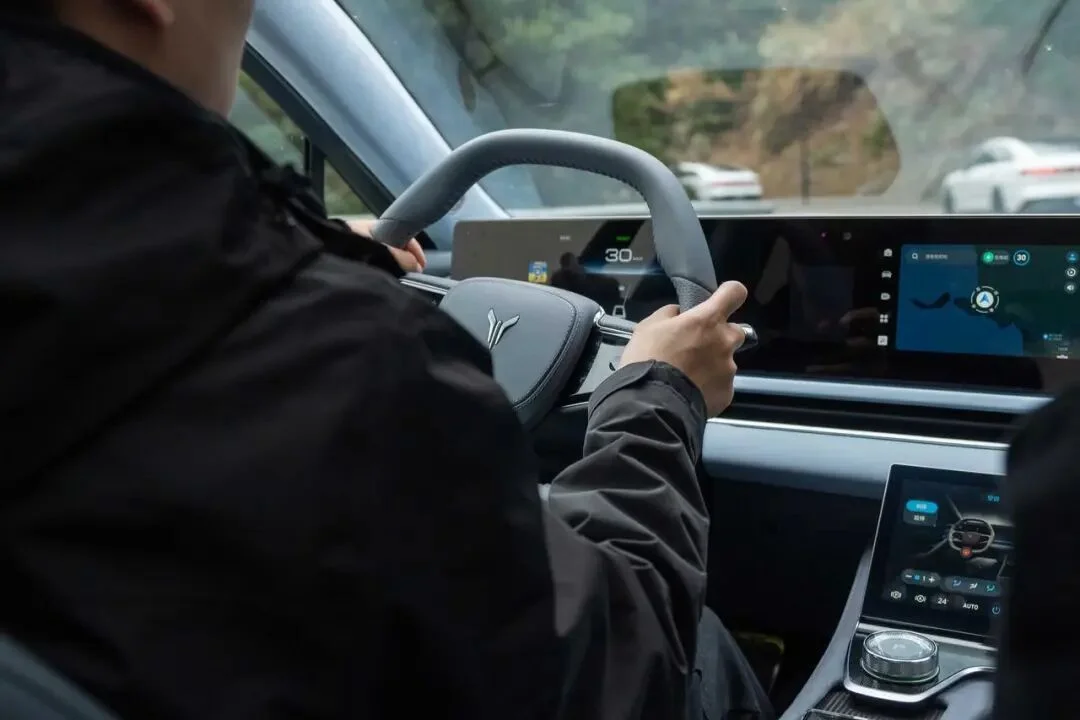
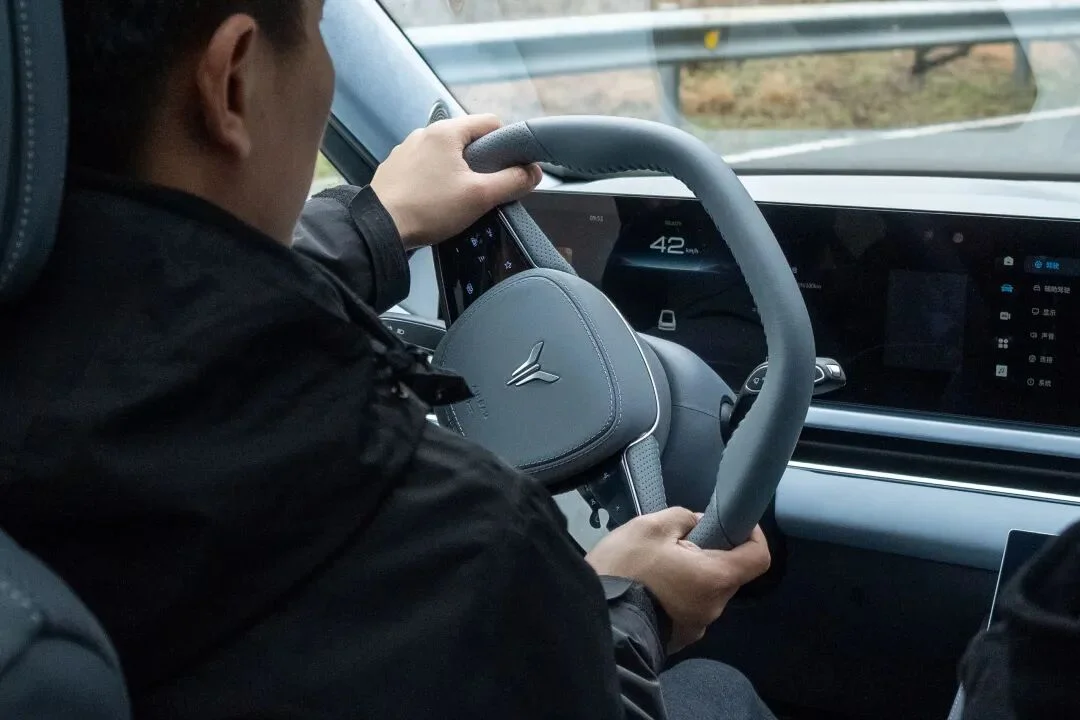
Through the sharp bends of the mountain road, Zhuiguang’s steering lacks any sticky electronic feel. After the initial dead zone, the car’s body follow-through is excellent. The unique steering wheel shape actually provides a very good grip during spirited driving. Although there was light rain on the test drive day, the front double wishbone and rear five-link suspension increased the tire contact patch during cornering, while the all-wheel-drive system kept the chassis firmly planted on the ground.
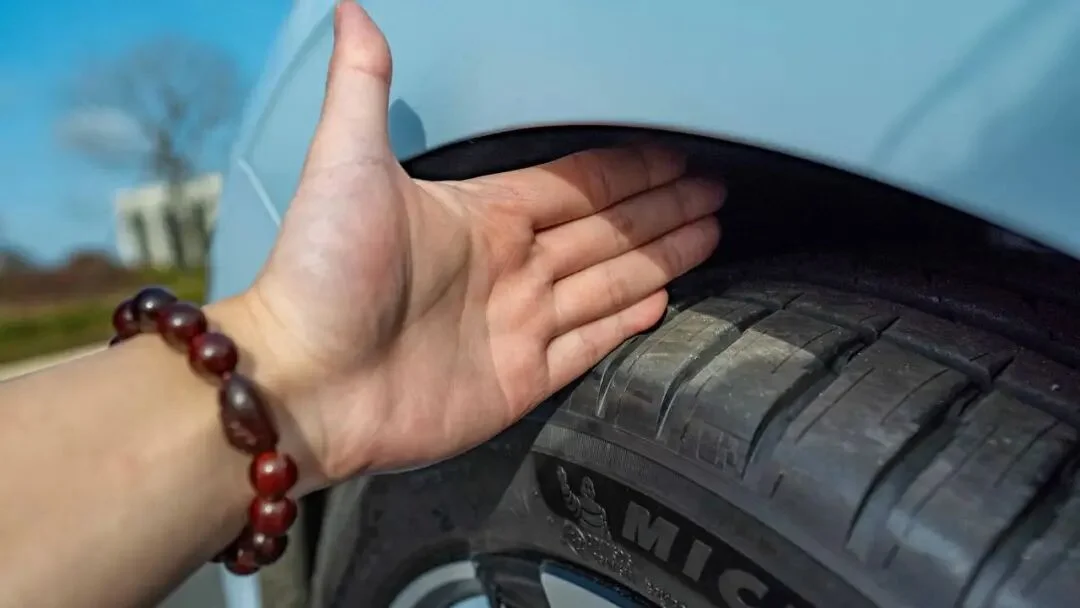
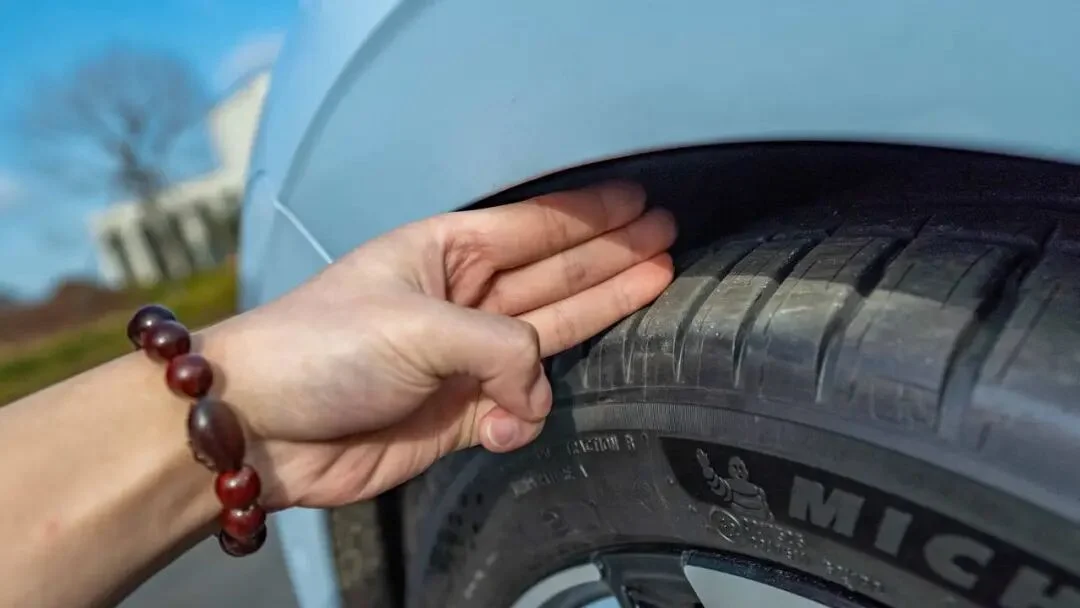
Additionally, the VOYAH Zhuiguang's air suspension automatically lowers in Sport mode. The clearance between the tire and the wheel arch is approximately four fingers in Comfort mode, reducing to three fingers when lowered to its minimum height.
Zhuiguang uses an One Box brake-by-wire system, decoupling the brake pedal from the control mechanism, which improves response speed by 25%. In terms of pedal feel, the transition point between regenerative braking and mechanical braking is almost imperceptible, resulting in a linear and solid overall feel. Zhuiguang's official braking distance from 100 to 0 km/h is only 33.8 m, providing drivers with ample confidence during aggressive driving on mountain roads.
VOYAH’s updated FREE, Mengxiangjia, and the new Zhuiguang have all been equipped with brand-new permanent magnet synchronous motors, which ensure power output while better controlling energy consumption. During a one-day test drive, we covered 121.9 km, resulting in an average energy consumption of 19 kWh/100 km.
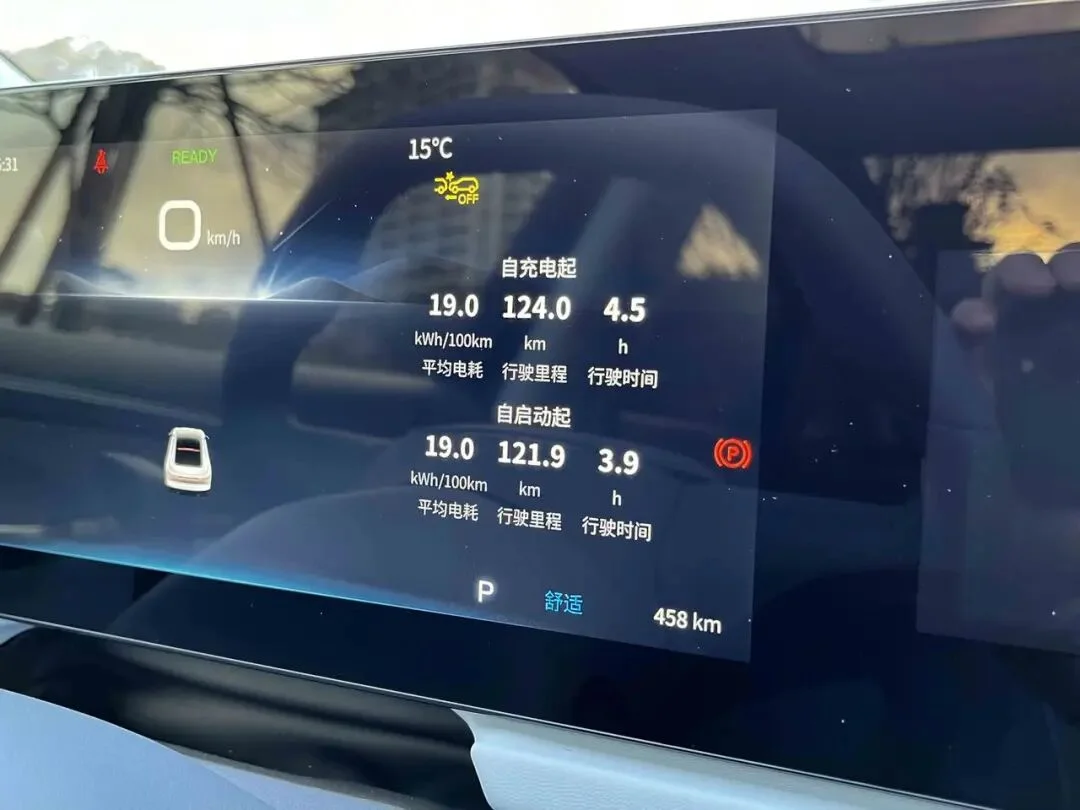
Based on the 109 kWh battery pack we drove, Zhuiguang's actual range can exceed 500 km. However, it is worth noting that Zhuiguang's actual energy consumption estimation is overly conservative; with more than eighty percent charge remaining, the displayed range shows only a little over two hundred kilometers. Consequently, during the test drive, we observed a "reverse exaggeration" where driving sixty kilometers resulted in a twenty-kilometer drop in the displayed range.
Summary of Zhuiguang's dynamics: Zhuiguang successfully preserves the driving fun inherited from FREE, with a very high level of mechanical refinement. Its chassis performance is excellent; the only flaw I can point out is the regenerative braking calibration.
Having discussed the driving experience, let's now look at the design highlights of Zhuiguang as a mid-to-large sedan in terms of its exterior and interior.
02Exterior Design Breaks the Mold, Interior is Clean and Refreshing
Rebellious in Composure
The exterior design of new energy mid-to-large cars is not simple. If one pursues sportiness too aggressively, the result can easily become exaggerated and eccentric; if one aims for stability, it can easily turn dull and boring. The designers of Zhuiguang were clearly striving to avoid taking an extreme approach on either path.
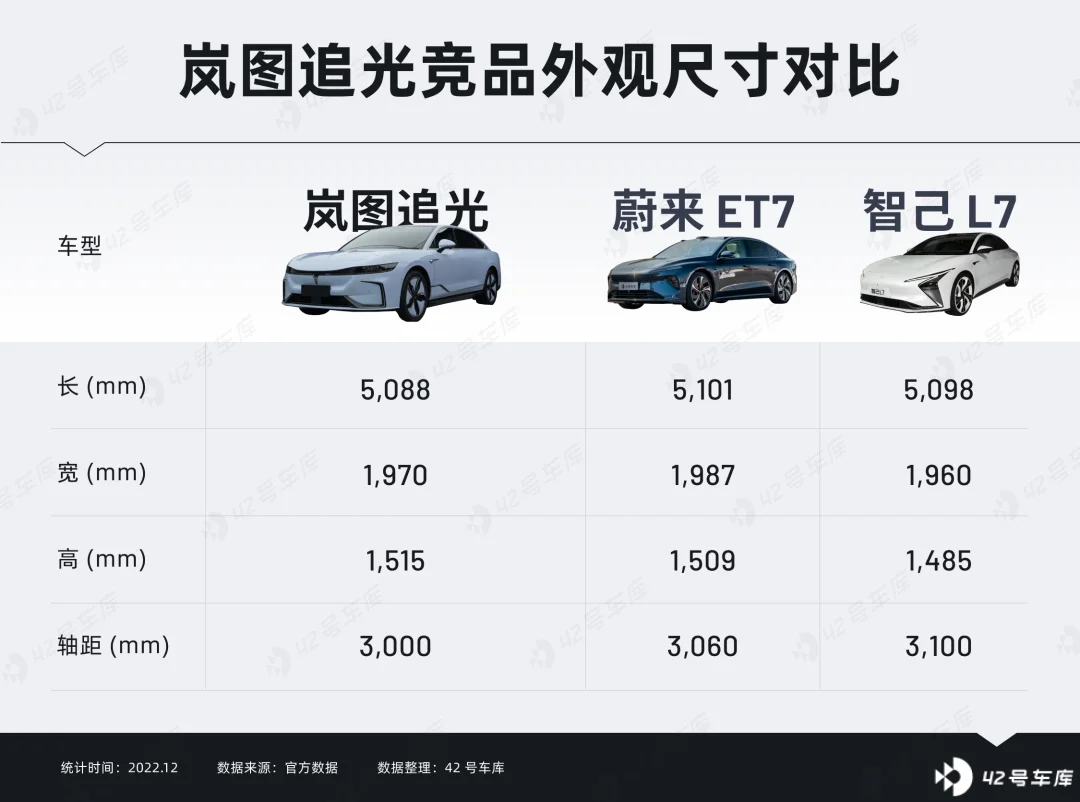
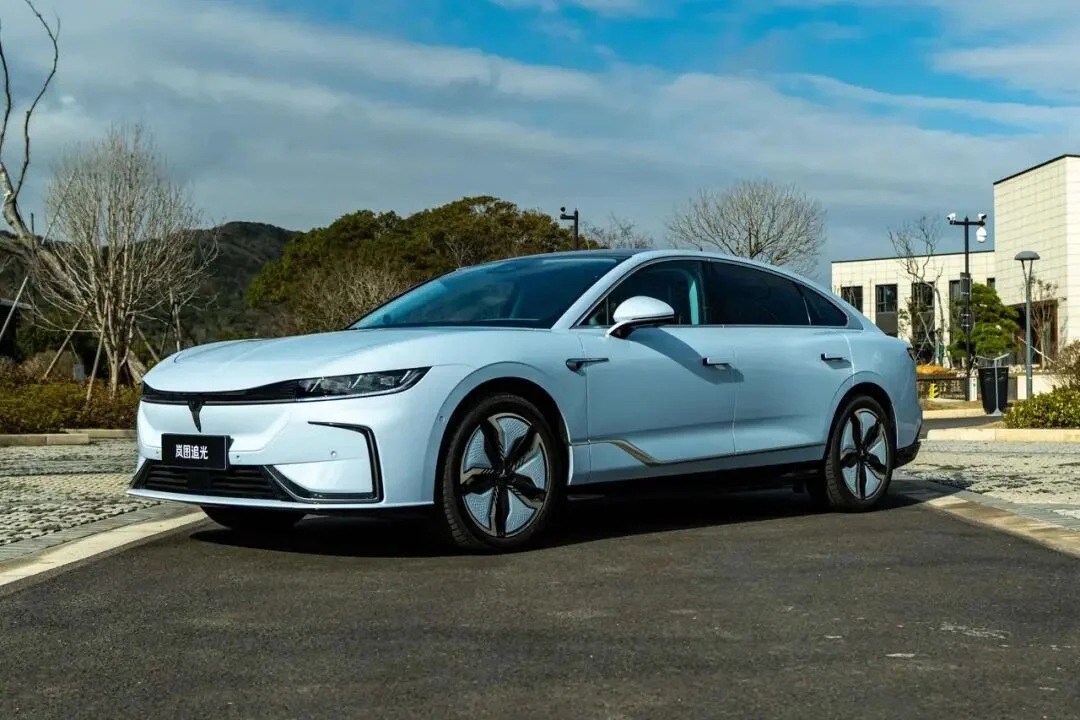
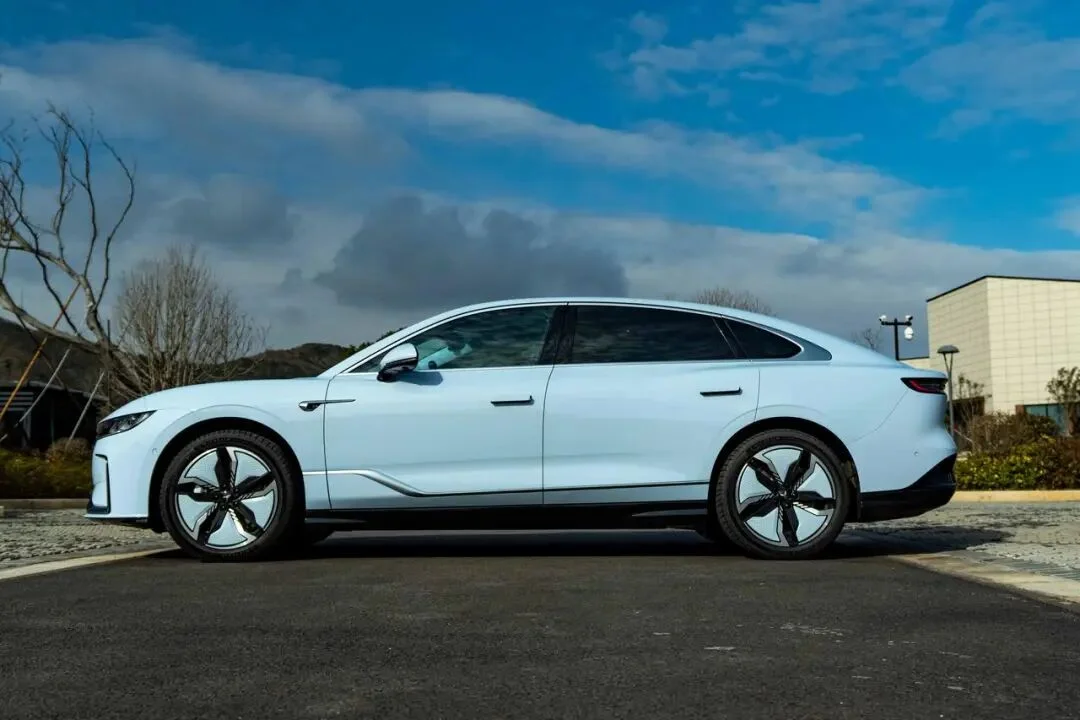
Zhuiguang’s dimensions are comparable to those of the NIO ET7 and Zhiji L7, with a wheelbase reaching exactly 3 meters, providing ample room for interior design in a mid-to-large sedan.
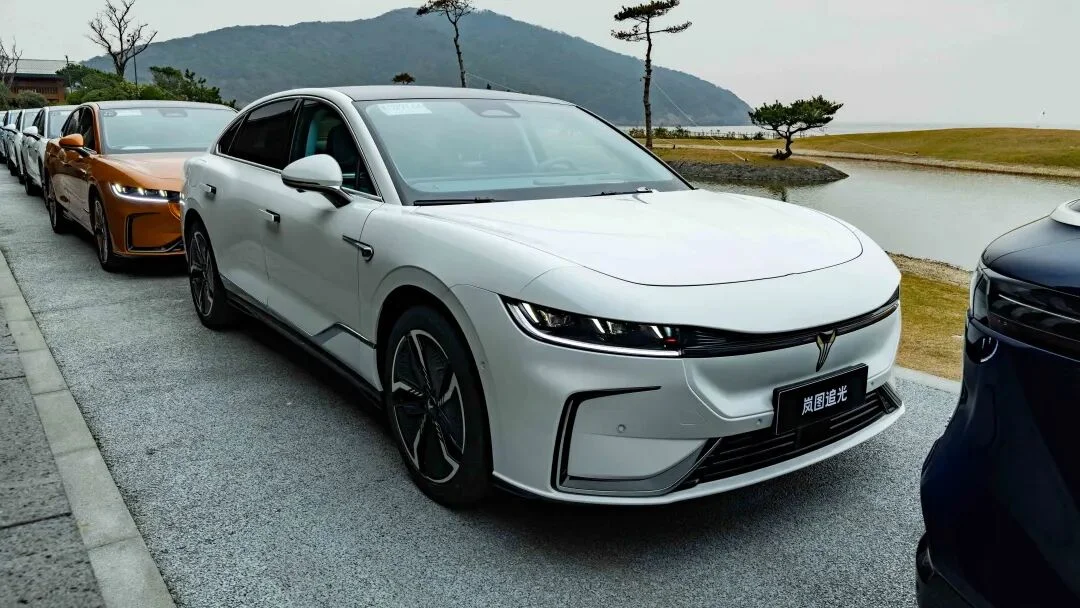
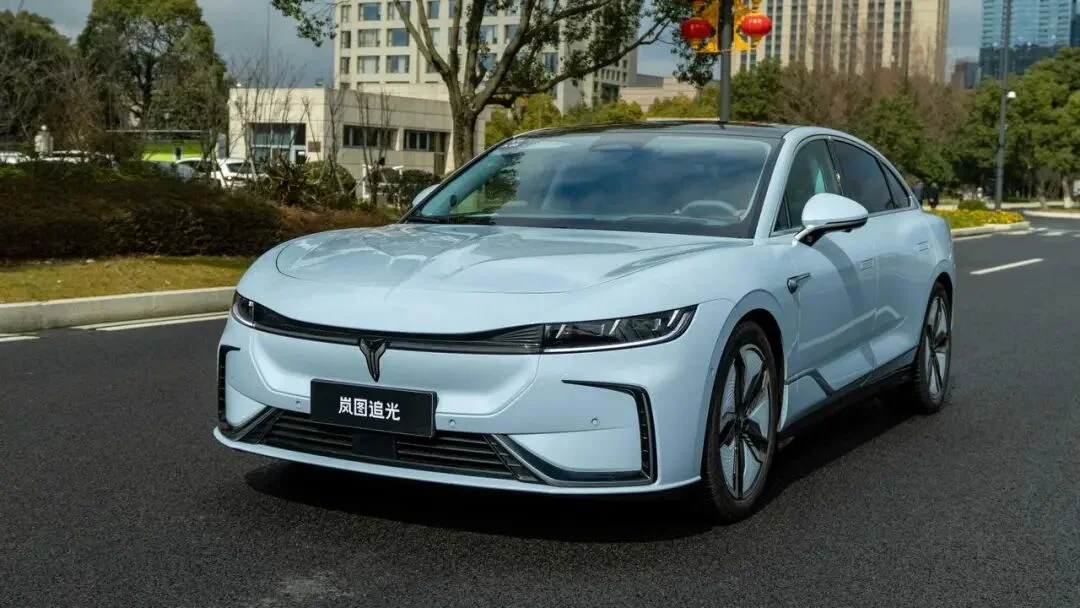
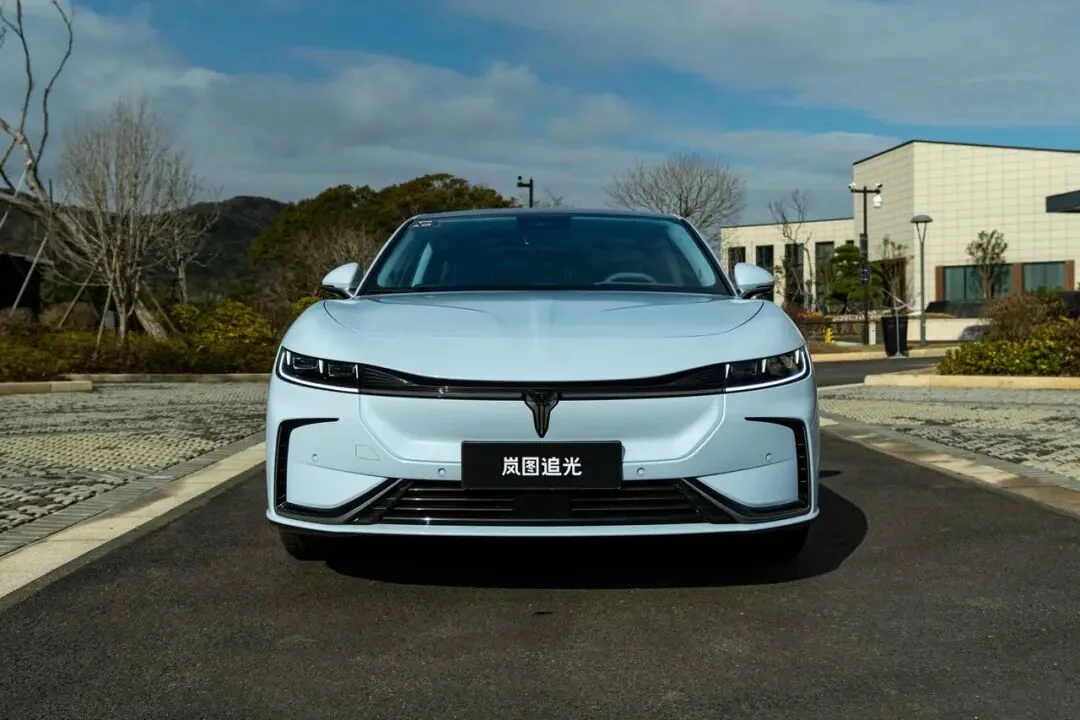
The front fascia of Zhuiguang abandons the vertical, shark-like grille found on the FREE model, resulting in a cleaner and more composed look. Inheriting the exterior design language of the VOYAH i-Land concept car, it retains a full-width headlight strip, while the left and right sides of the front feature fang-like accents.
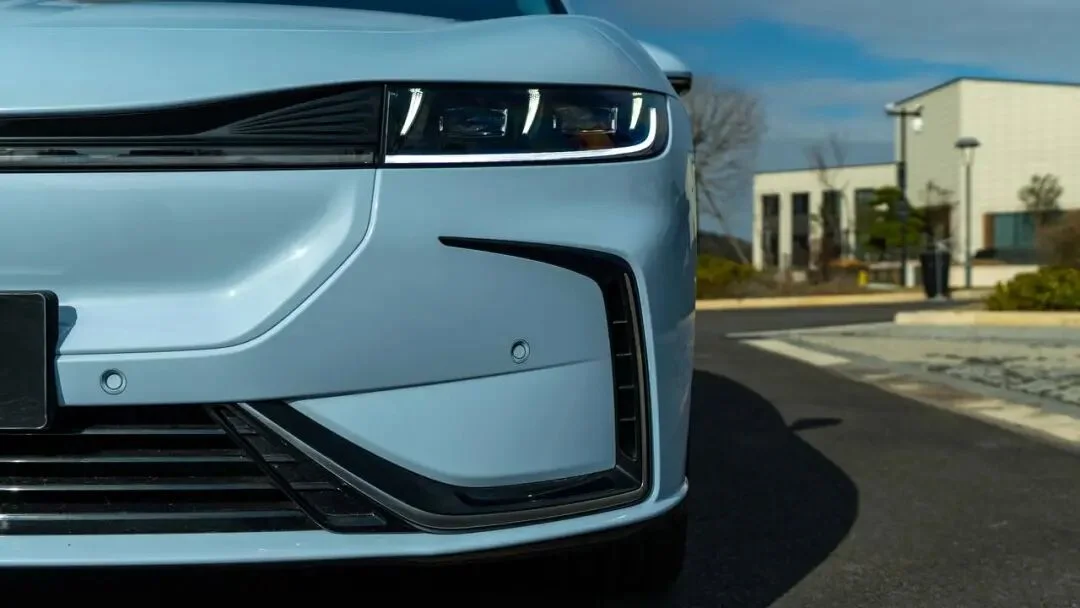
Zhuiguang is equipped with matrix LED headlights featuring adaptive high-beam functionality. By coordinating with cameras, the LEDs automatically avoid dazzling vehicles ahead or oncoming traffic, a configuration that significantly enhances the driving experience.
Aerodynamic optimizations have lowered the drag coefficient to 0.22, while semi-enclosed low-rolling-resistance wheels contribute to extended range. However, body-color wheel covers appear overly flashy on a vehicle of this size; metallic-finish wheels would offer a much better visual effect.
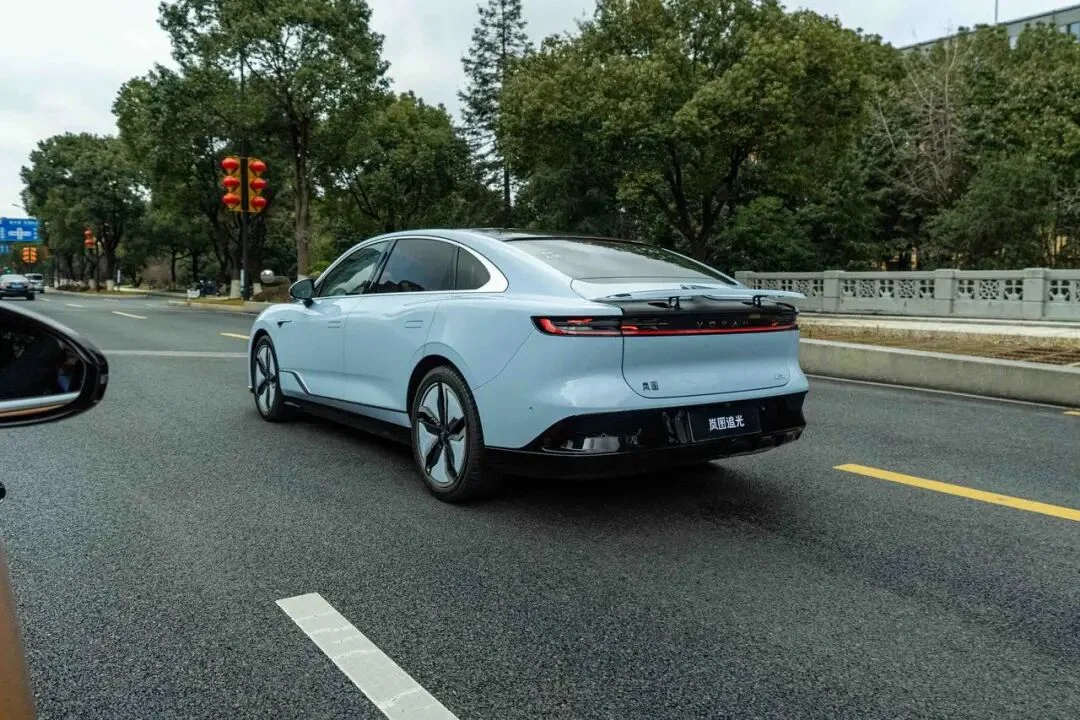
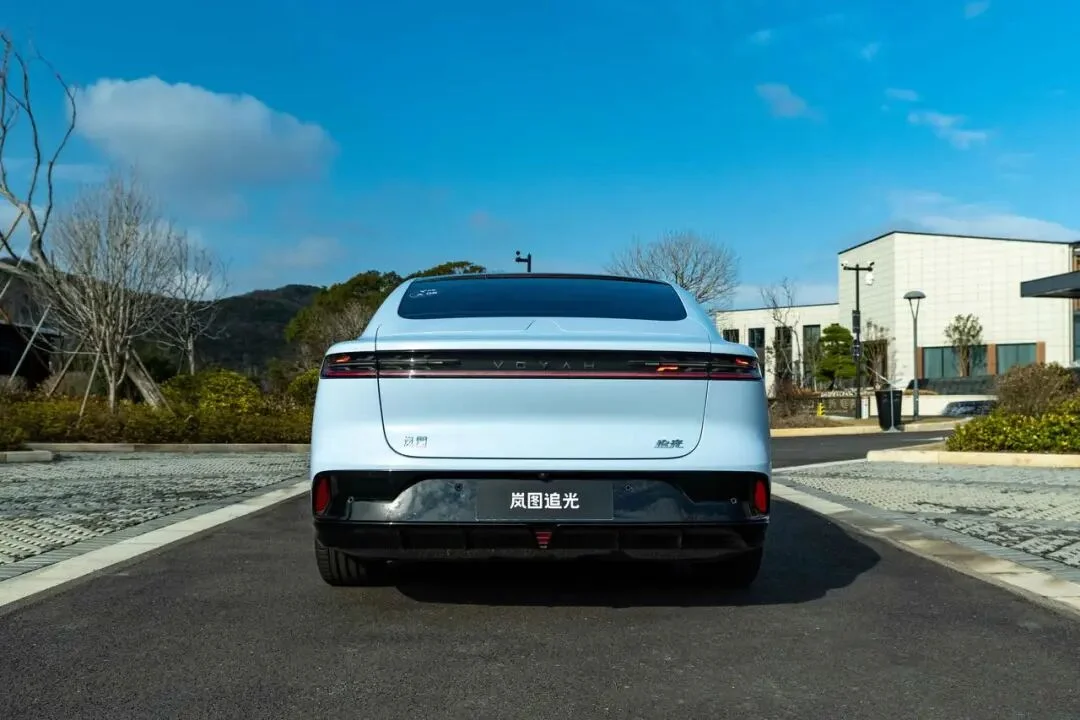
The full-width taillights feature a strong family design language, with arrow-shaped structures inside the left and right light clusters that appear sharp and aggressive. The electrically actuated rear spoiler is noteworthy; it serves a functional purpose rather than being purely decorative. VOYAH states the spoiler can generate up to 40 kg of downforce, enhancing stability at high speeds.
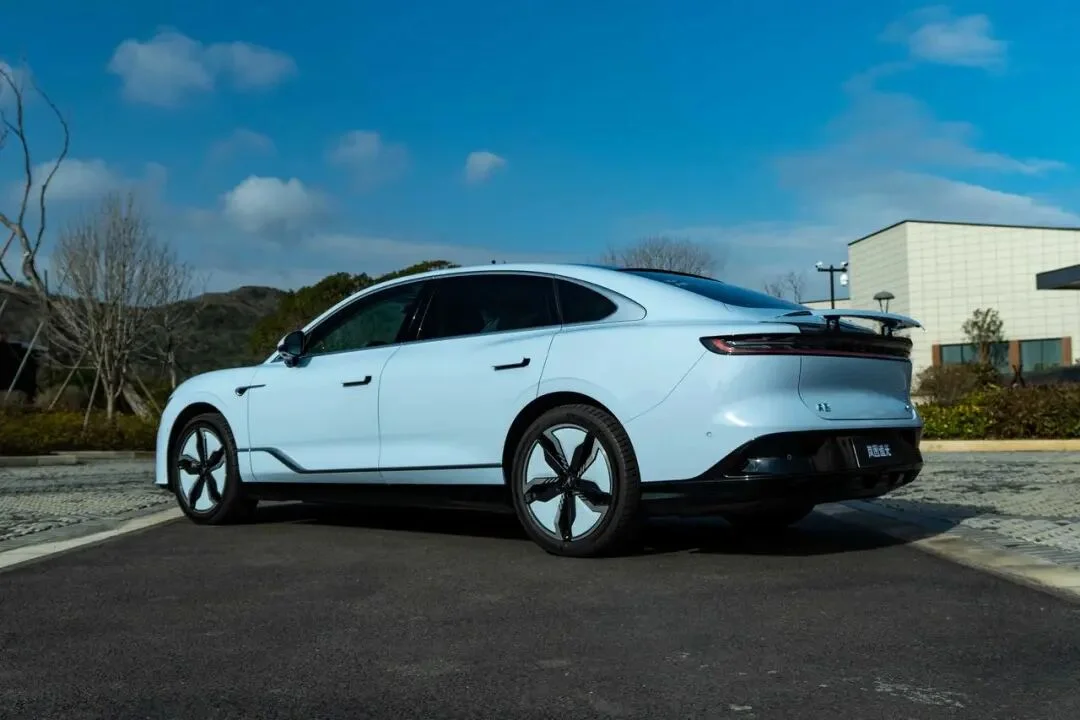
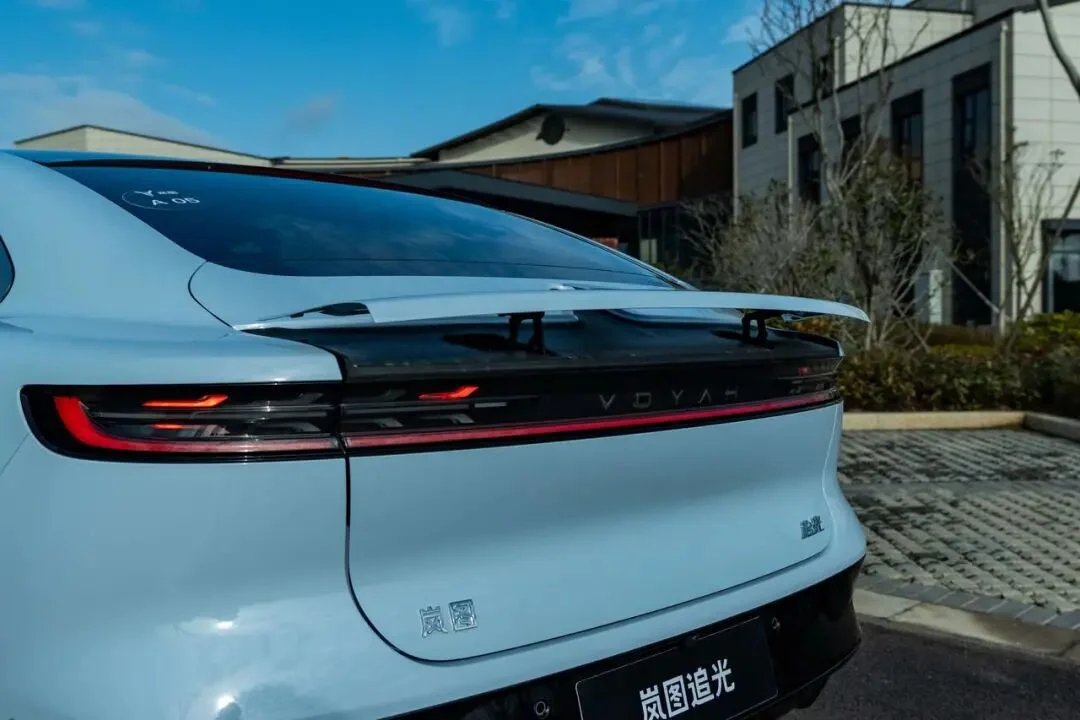
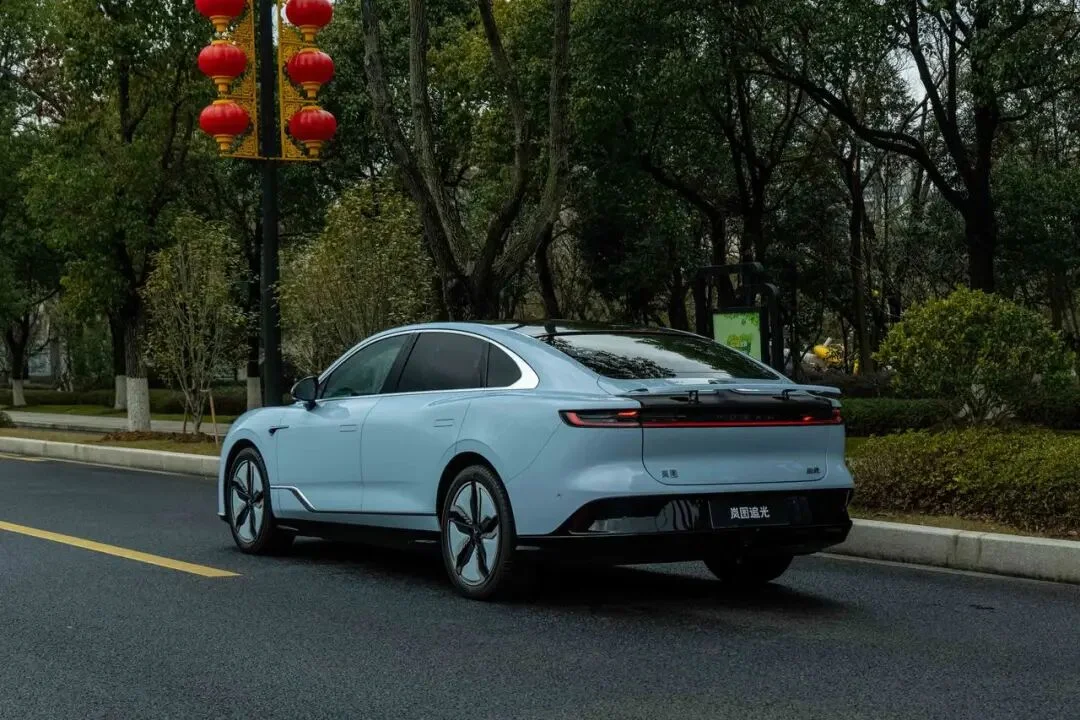
Although the Zhuiguang is not a fastback, its rapidly sloping roofline and compact, short tail give the vehicle’s rear 45-degree view a distinct fastback aesthetic. With the spoiler retracted, the rear profile flows smoothly and harmoniously; when raised, however, the car takes on a sportier character that makes it look like a completely different vehicle.
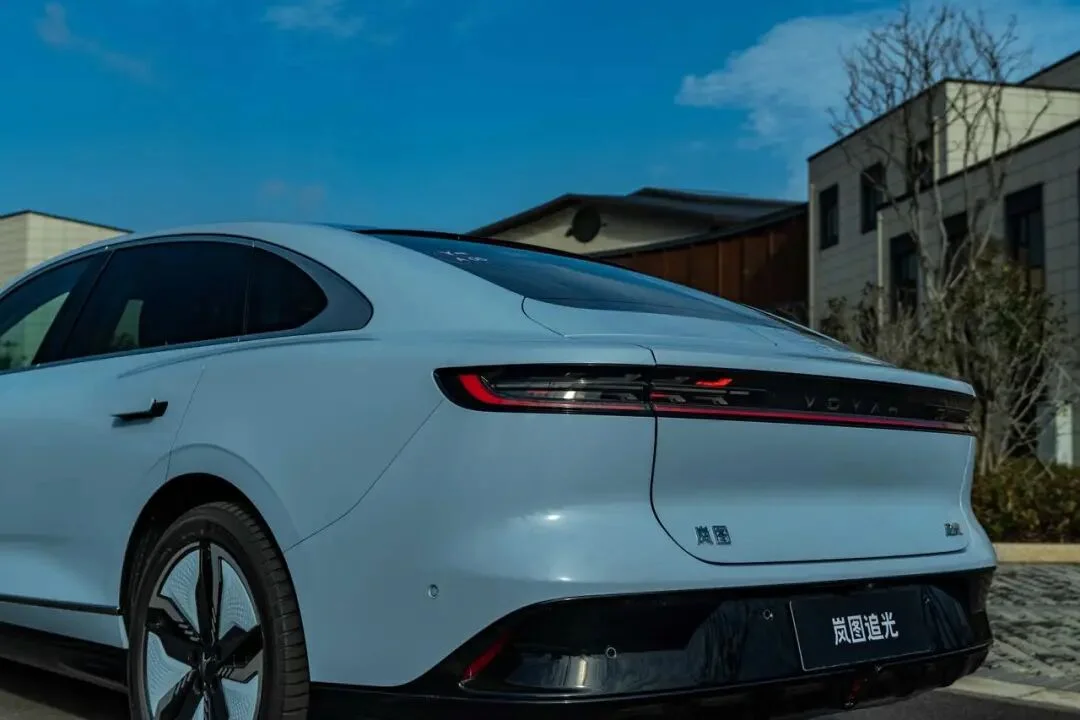
Summarizing the Zhuiguang’s exterior design, I would describe it as 'rebellious within a framework of composure.' The overall styling is steady and expansive, yet details such as the electric lift-up spoiler, body-colored wheel rims, and fang-like front bumper accents show that the Zhuiguang refuses to be just another dull mid-to-large sedan. Personally, I feel the design incorporates too many elements, appearing slightly cluttered; a more minimalist approach might have been better.
Luxury Ambience: The Foundation of a Mid-Size Sedan
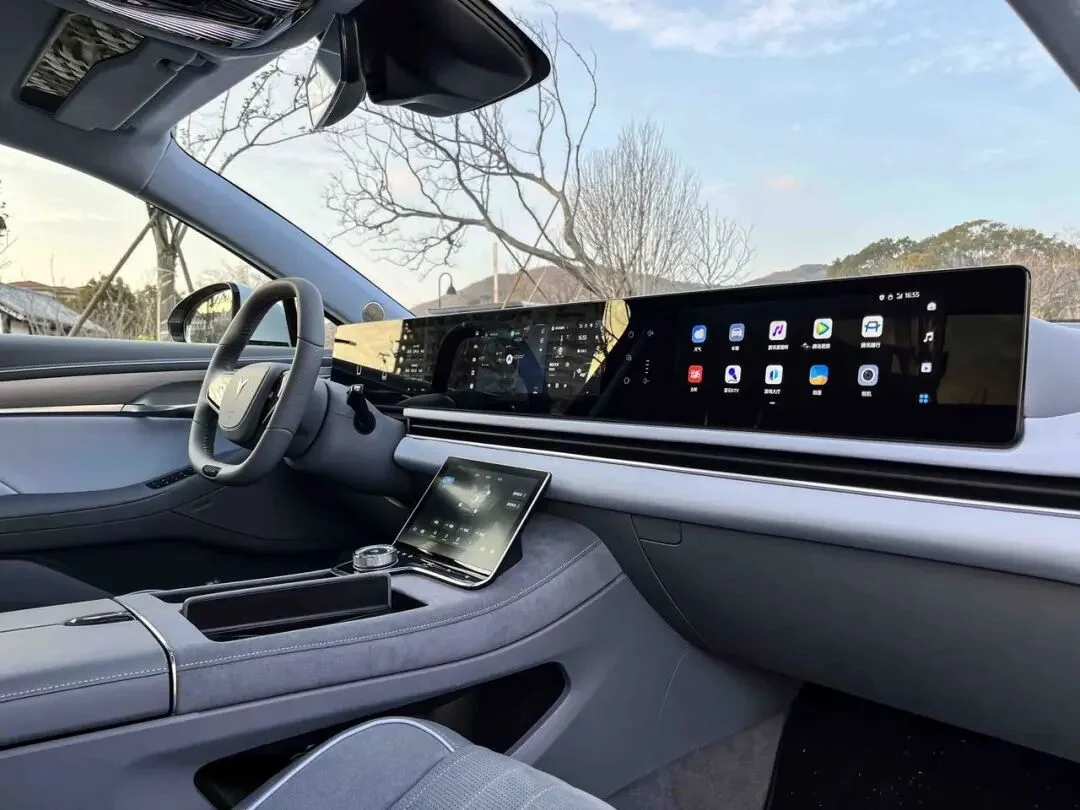
VOYAH Zhuiguang’s interior design successfully embraces a ‘less is more’ philosophy. While the VOYAH FREE features a large, integrated screen assembly embedded into the dashboard, Zhuiguang adopts a floating display design. The previous lift-up mechanism, which prioritized ceremony over practicality, has been eliminated.
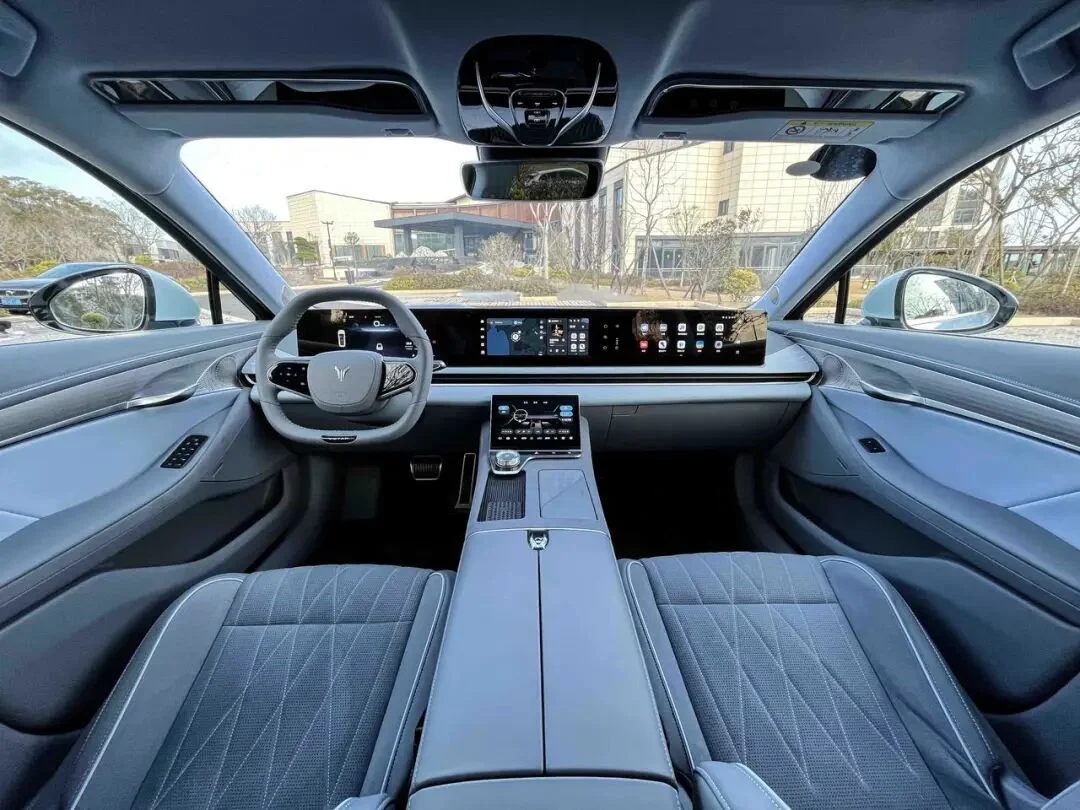
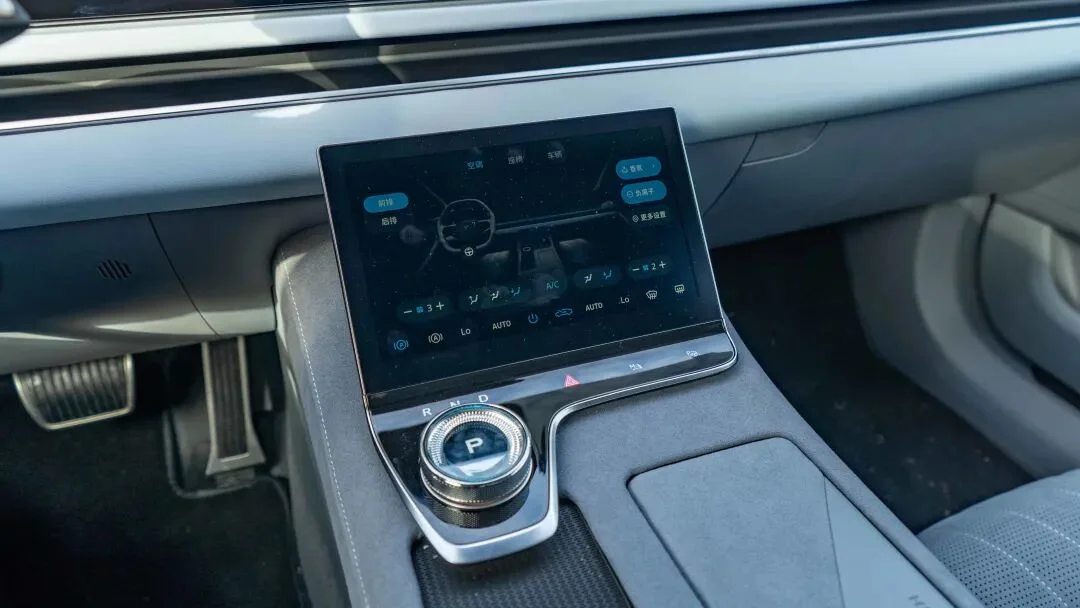
The gear selector in the VOYAH FREE and Mengxiangjia has been replaced with a rotary dial, creating a cleaner overall aesthetic. Below the center console, Zhuiguang introduces a new control hub that manages functions such as air conditioning, seat adjustments, and rear wing deployment.
Because the Zhuiguang's infotainment software was not the final version during the test drive, we will not delve deeply into the smart cockpit experience here. A brief overview reveals that the new card-style interface neatly categorizes maps, music, time, weather, and app interfaces. The left-side shortcut menu is dedicated to frequently used features like vehicle controls and 360-degree surround view. Both the logic and visual appeal have improved significantly compared to previous versions.
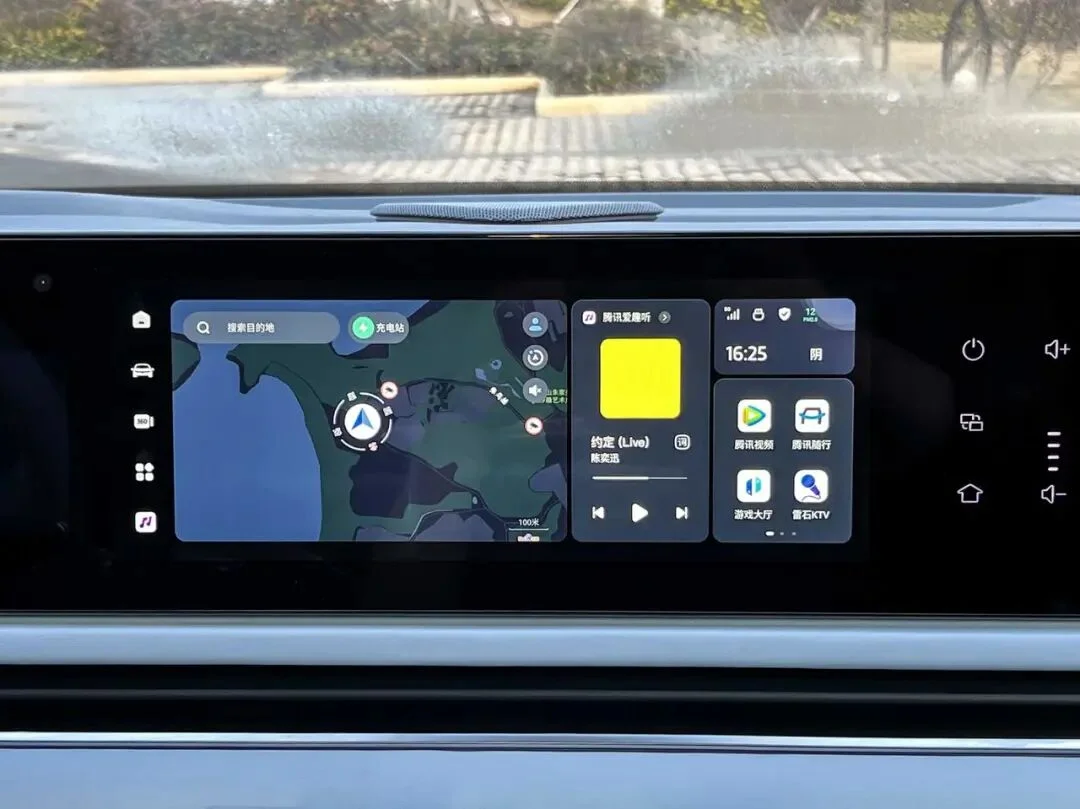
The passenger-side screen is larger than that in the FREE and supports entertainment services such as Tencent Video and Tencent Ai Quting. Since the Zhuiguang’s passenger screen is not positioned too low, passengers reclining to watch shows or anime can maintain a comfortable head position and viewing angle.
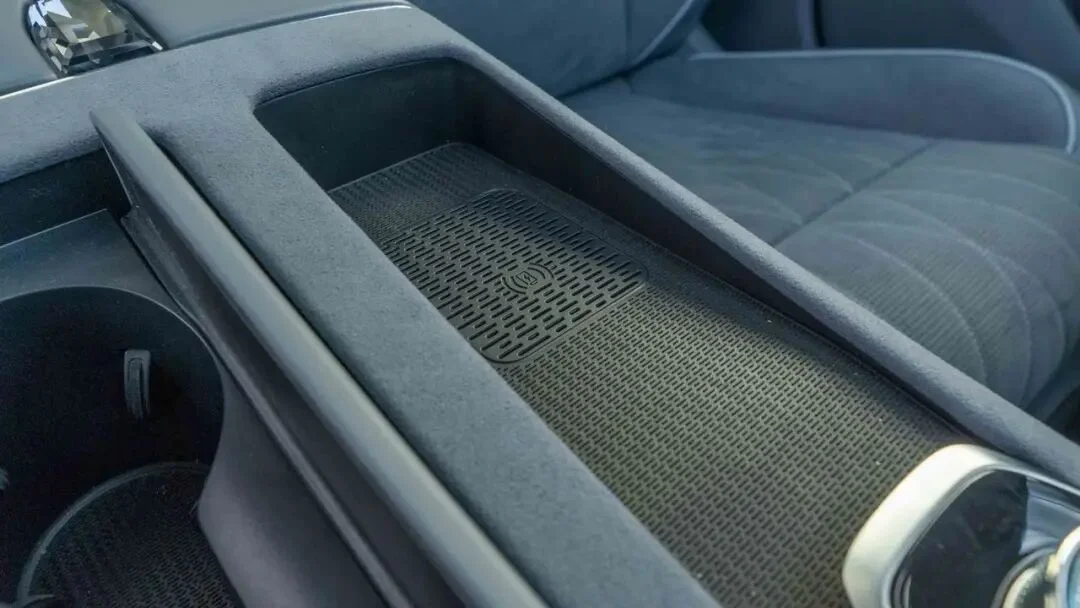
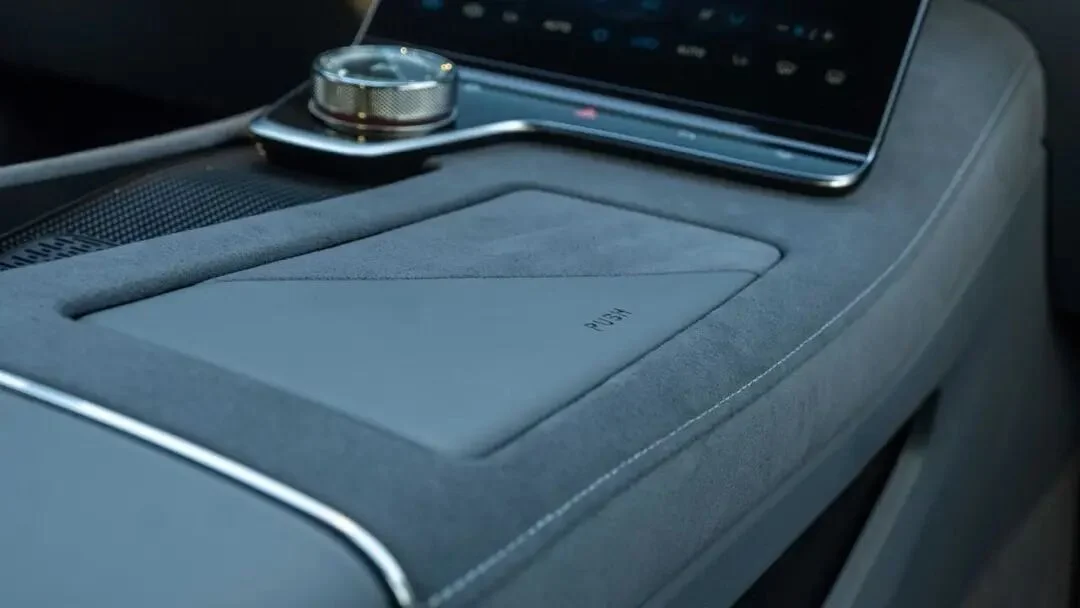
On the central armrest, Zhuiguang's wireless charging pad features an active cooling design—a detail that earns high marks.
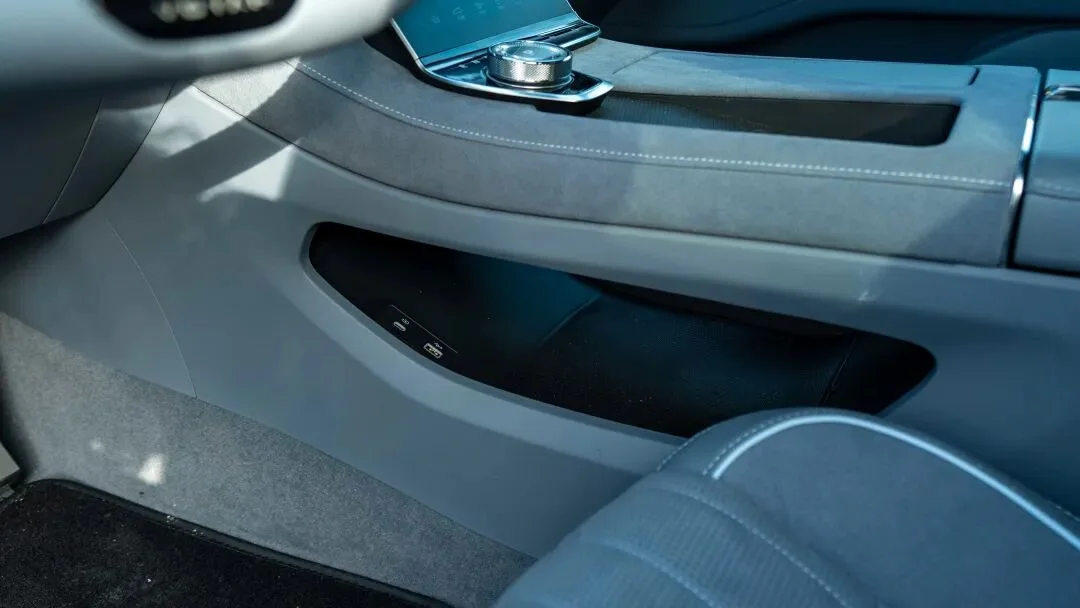
In the hollowed-out area beneath the center armrest, Zhuiguang is equipped with one USB port and one Type-C charging port. The compartment offers ample volume, making it convenient to store items such as bottled water or box tissues.
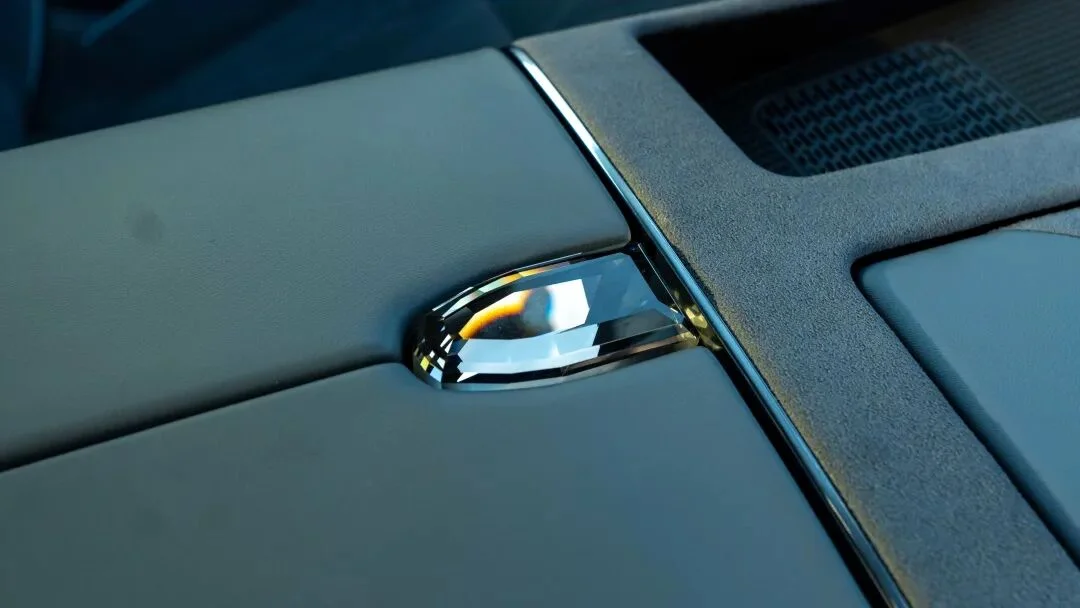
In the details, the armrest box release button of Zhuiguang is designed in a crystal style, playing a good embellishing role in the overall understated interior atmosphere.
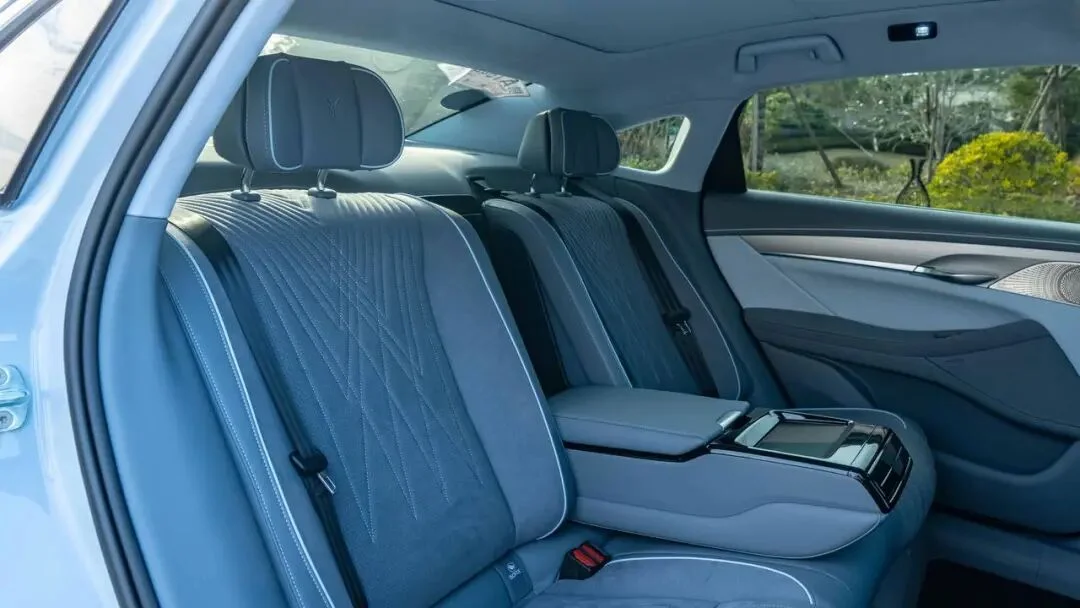
My favorite aspect of the Zhuiguang’s interior is its material quality. The dashboard is trimmed in Nappa leather, while frequently contacted areas such as the armrests, door panels, and seats feature DINAMICA suede—the same material used in the AMG GT, Porsche Taycan, and Audi e-tron GT. This suede offers a soft, comfortable texture reminiscent of a blend between standard microsuede and velvet.
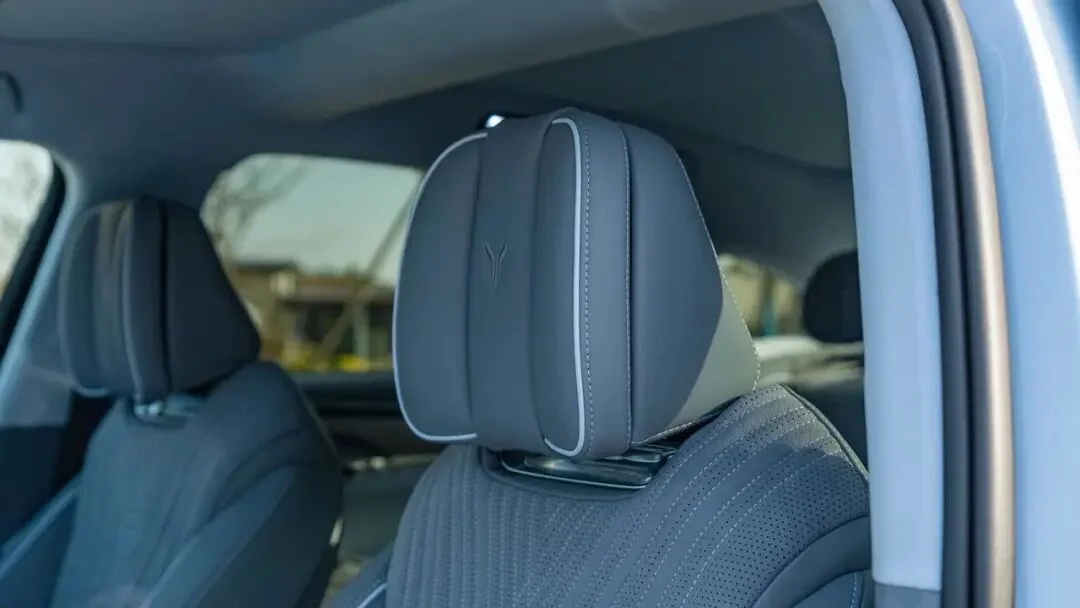
Beyond materials, the Zhuiguang’s seat cushions are notably thick. Lumbar and hip support is ample and enveloping, with excellent ergonomics that make it easy to find a comfortable seating position upon entry; an aviation-style headrest is also included.
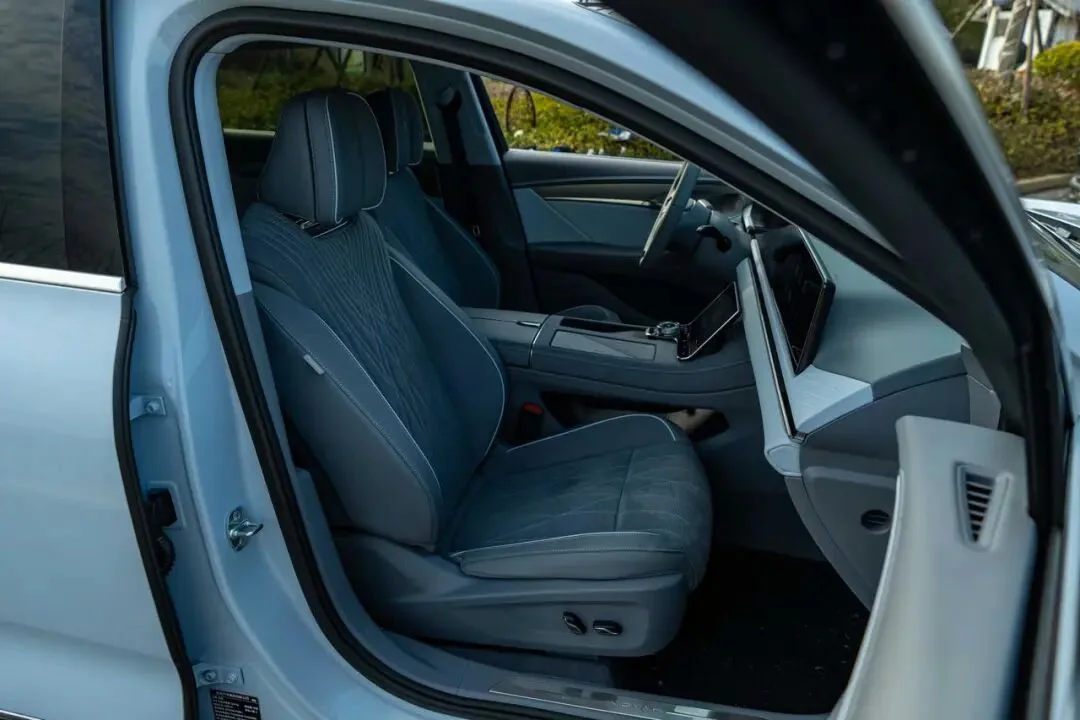
The interior's overall color scheme uses a light gray with a lower color temperature, creating a fresh visual impression that avoids looking greasy or dated. As a mid-to-large sedan, rear-seat comfort is certainly not to be overlooked. Zhuiguang has also put considerable effort into the design of the rear cabin.
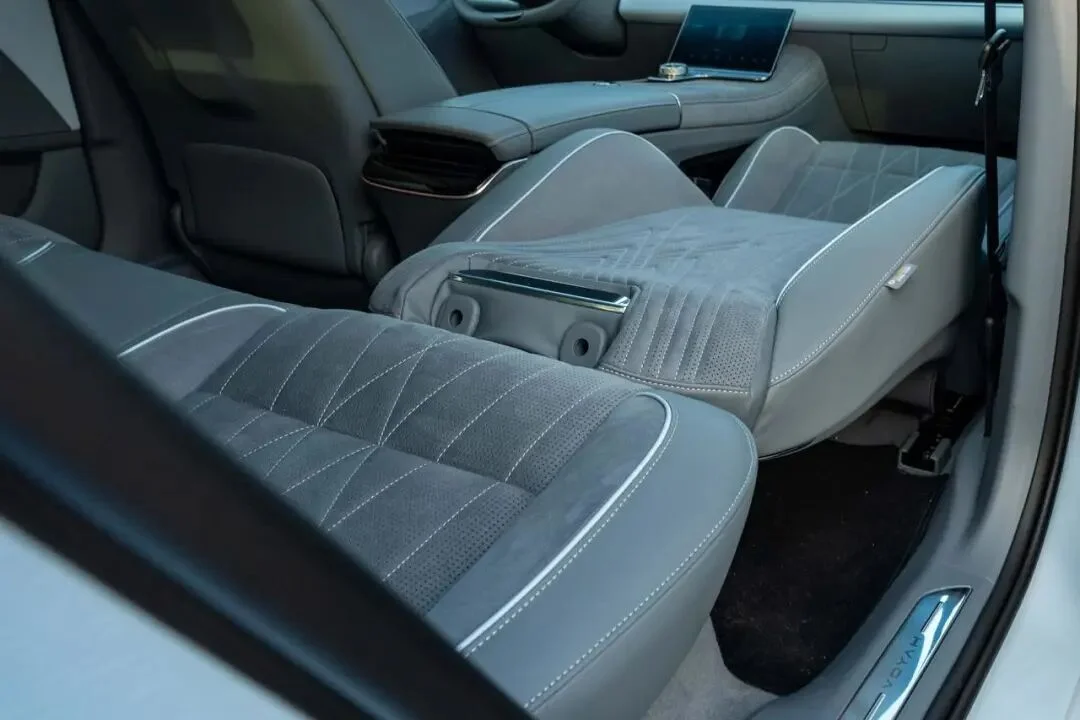
The Zhuiguang’s rear backrest offers 27° to 35° recline adjustment, and the ‘boss’ seat is even equipped with an electric leg rest. The 7-inch touchscreen remote located in the center armrest controls audio, heating, ventilation, massage, and sunshades; this placement is more convenient than a touch screen embedded in the armrest box itself.
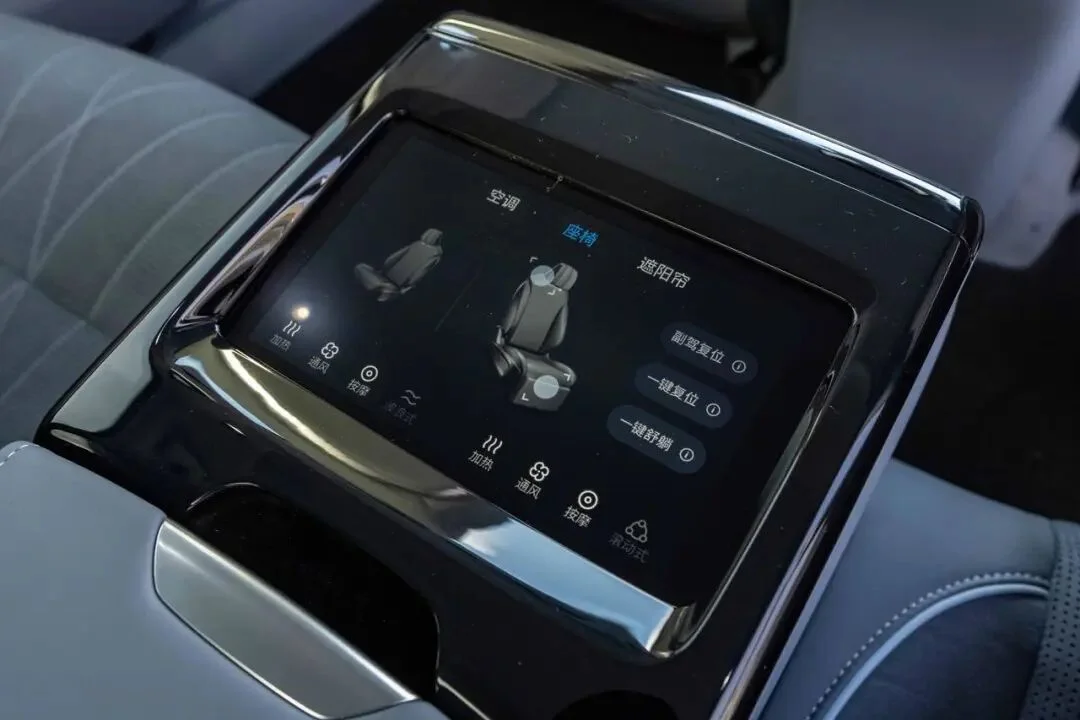
On this screen, you can also select the "One-Touch Recline" mode. When activated, the front seats automatically slide forward, and the rear seats recline. However, the Zhuiguang's rear leg rests have limited upward travel, offering insufficient support for the lower legs. In comparison, the footrests positioned behind the front passenger seat may provide greater comfort.
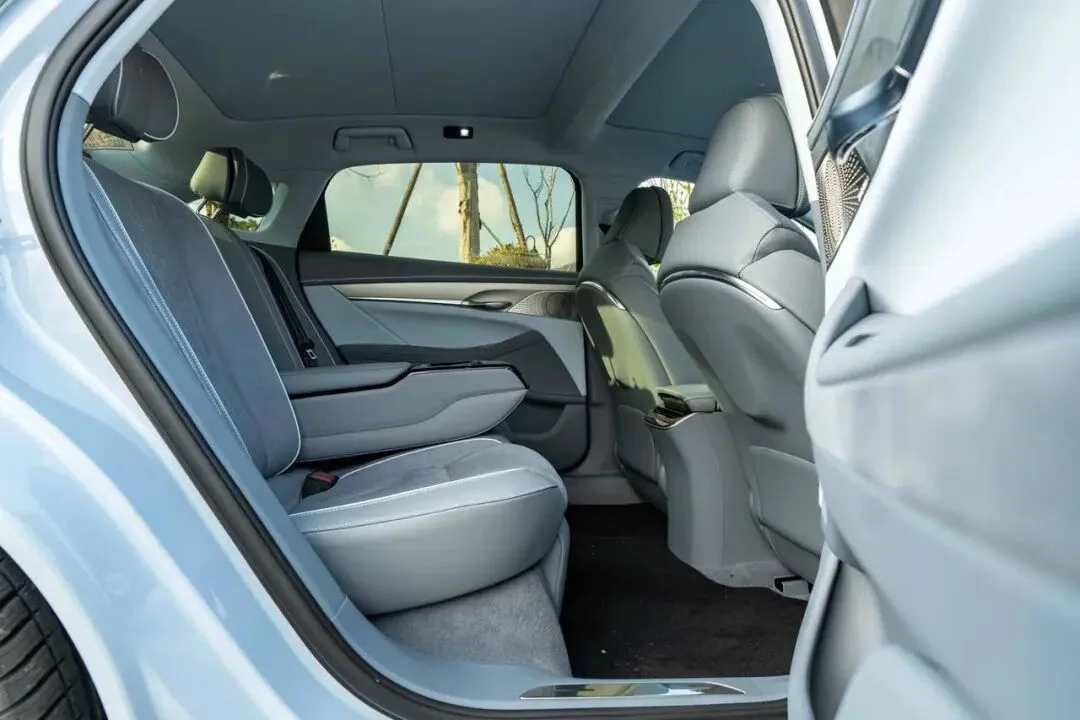
The rear seat cushions are sufficiently long, and the battery pack does not encroach significantly on the vehicle's longitudinal interior space. Combined with rear seats that offer excellent touch and ride quality, the Zhuiguang fulfills its role as a mid-to-large sedan appropriately. However, the center rear position lacks a headrest, making it more suitable to use the Zhuiguang primarily as a four-seater in daily driving.
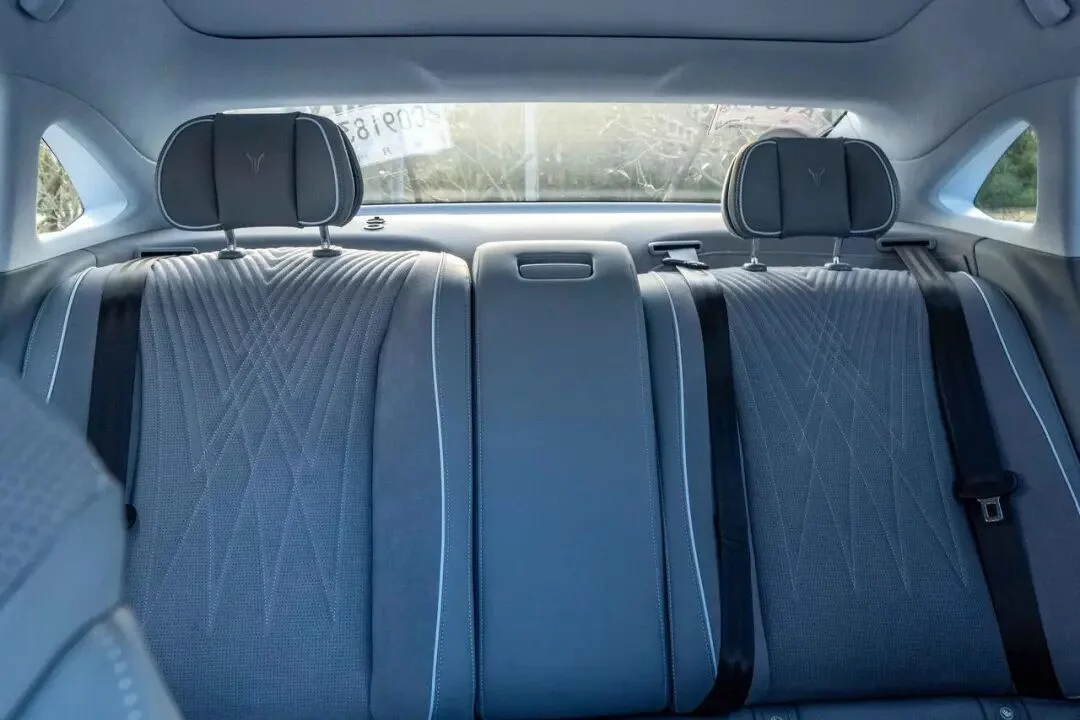
An interesting design feature allows the front headrests to be removed and laid flat, forming a "zero-gravity seat" in conjunction with the rear seats, which is ideal for short naps.
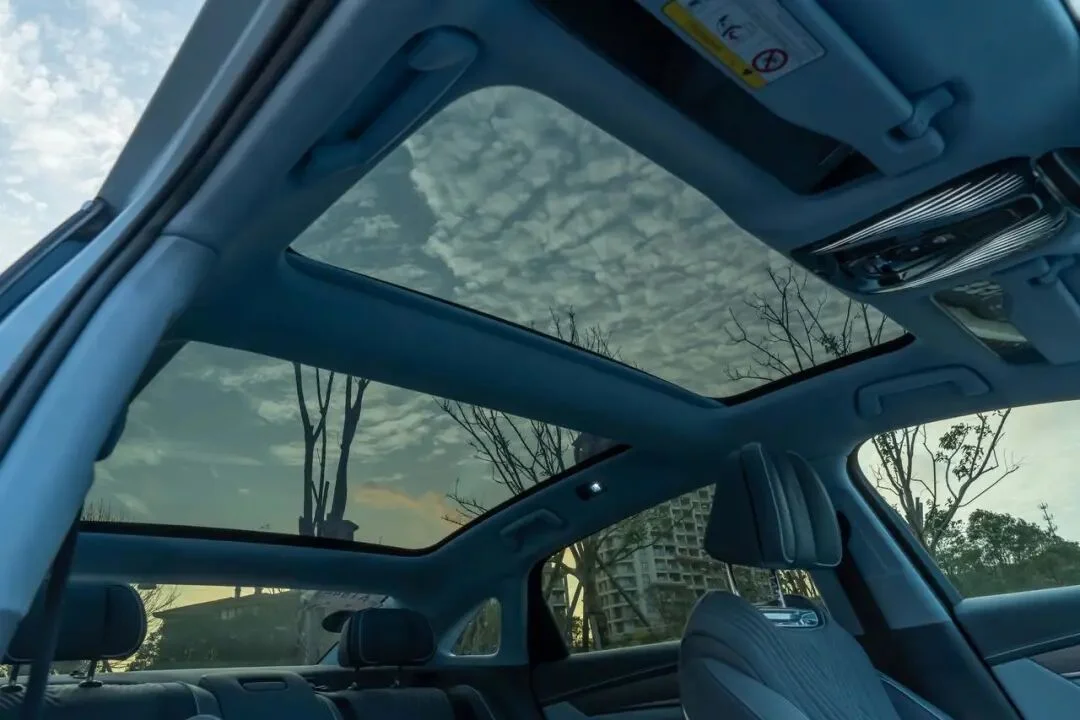
The Zhuiguang's sunshades adopt a split front-and-rear design. The dual-motor setup allows passengers to independently choose which section to open or close and control the extent of the opening. The rear panoramic roof is significantly larger than the front one, reflecting consideration for rear-seat occupants.
The interior design of the VOYAH Zhuiguang has shown visible progress. From its overall color scheme and material application to detailed design elements, including a significantly adjustable rear seatback angle and the only rear leg rest in its class, the Zhuiguang has not forgotten its duties as a mid-to-large sedan while pursuing excellent driving dynamics.
A Brief Look at Driver Assistance
Since the software on the test vehicle was not the final version, I did not get the opportunity to experience the "remote parking" and "memory parking" features that interested me most. Although the Zhuiguang’s driver assistance hardware does not include a LiDAR like some competitors, its configuration of 12 cameras, five millimeter-wave radars, 12 ultrasonic radars, and two high-precision positioning units is still mainstream for its class.
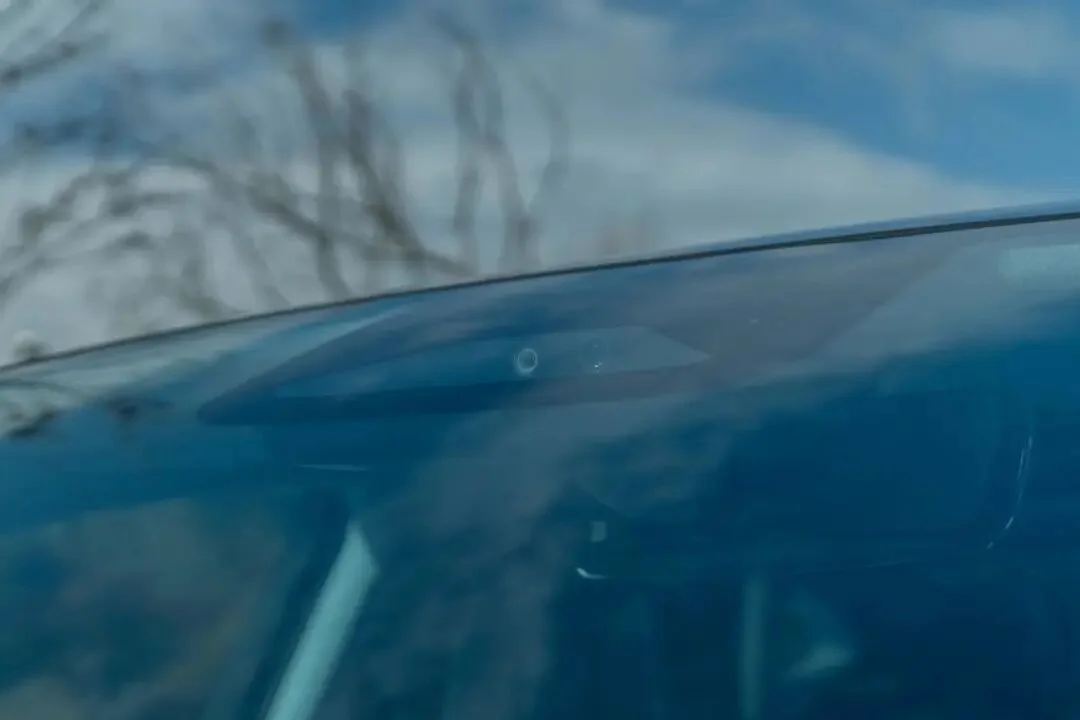
On the VOYAH FREE, the Bosch black-box solution did not deliver a satisfactory experience. According to engineers, VOYAH switched to Dongruan as the software supplier for the Zhuiguang. In terms of functionality, in addition to basic Adaptive Cruise Control (ACC) and Lane Keeping Assist (LKA), the system will also support Navigation on Autopilot (NOA).
I briefly tested the Zhuiguang’s LKA and ACC on an expressway and found significant improvements over the FREE, with a leap in visual smoothness compared to VOYAH’s previous products. However, I also noticed some issues: the system detects forward vehicles in the current lane from a relatively long distance, up to about 200 meters, but its ability to identify forward vehicles in other lanes is weak.
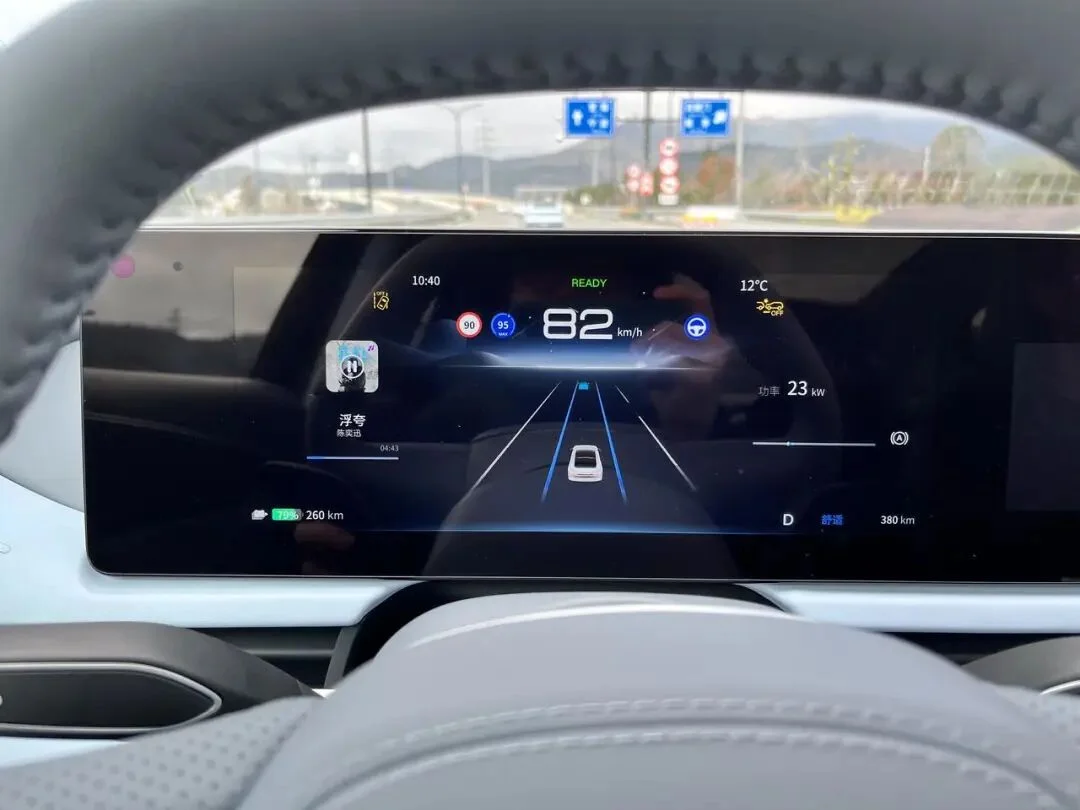
Despite these flaws, the Zhuiguang’s system has reached a level of "usability" for basic LKA and ACC, which is reassuring. We will bring you real-world tests of the Zhuiguang’s parking and NOA capabilities when the opportunity arises.
03Final Thoughts
On the driving front, Zhuiguang certainly did not disappoint: the explosive power delivery, chassis vibration filtering quality, steering feel, and body dynamic feedback all reached excellent levels. In terms of interior design, material application, atmosphere creation, and seat comfort also met the expectations for a mid-to-large sedan.
For rear-seat comfort, the angle-adjustable seats, multifunction control screen on the armrest, and right-side rear leg rest allow Zhuiguang to meet some business and executive needs.
In terms of pricing, the 82 kWh version of Zhuiguang is priced at RMB 322,900–352,900, which overlaps significantly with the NIO ET5. By opting for battery installment payments, the price of Zhuiguang can be further reduced to RMB 192,900–222,900. Staff from VOYAH also revealed to us that a hybrid version of Zhuiguang will be launched in the future. At that time, Zhuiguang’s price could drop into the RMB 200,000–300,000 range, further amplifying its competitiveness.
However, in a fiercely competitive market, cost-effectiveness alone cannot break through the siege. Within the product, VOYAH still needs to improve its overall intelligent capabilities; outside the product, brand building is also a major undertaking.
Nevertheless, VOYAH's progress is evident, and we look forward to seeing its market feedback after its launch and release in the second quarter of this year.
Written by: Mingming Edited by: Bobo