


HiPhi Z Digital Cockpit Review: Robotic Screen and Unreal Engine Interface
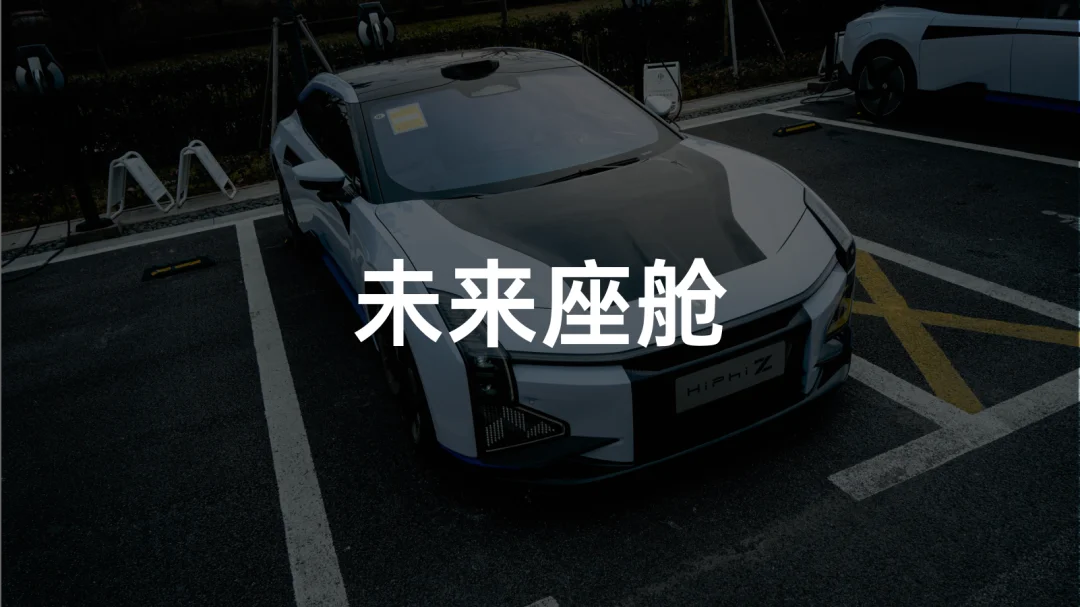
HiPhi is a brand most readers will already be familiar with. From the HiPhi X onward, its exterior and door designs have consistently generated significant buzz, and this bold styling language is further refined in the HiPhi Z. The result is a vehicle that acts as an absolute eye-catcher whenever it appears on the road.
I was fortunate to be invited by HiPhi to experience the digital cockpit of its latest model, the HiPhi Z. This system uses Xuhuanyinqing—the same platform powering Lutesi’s infotainment—to create 3D interactions, which sparked considerable interest.
01Cockpit Experience
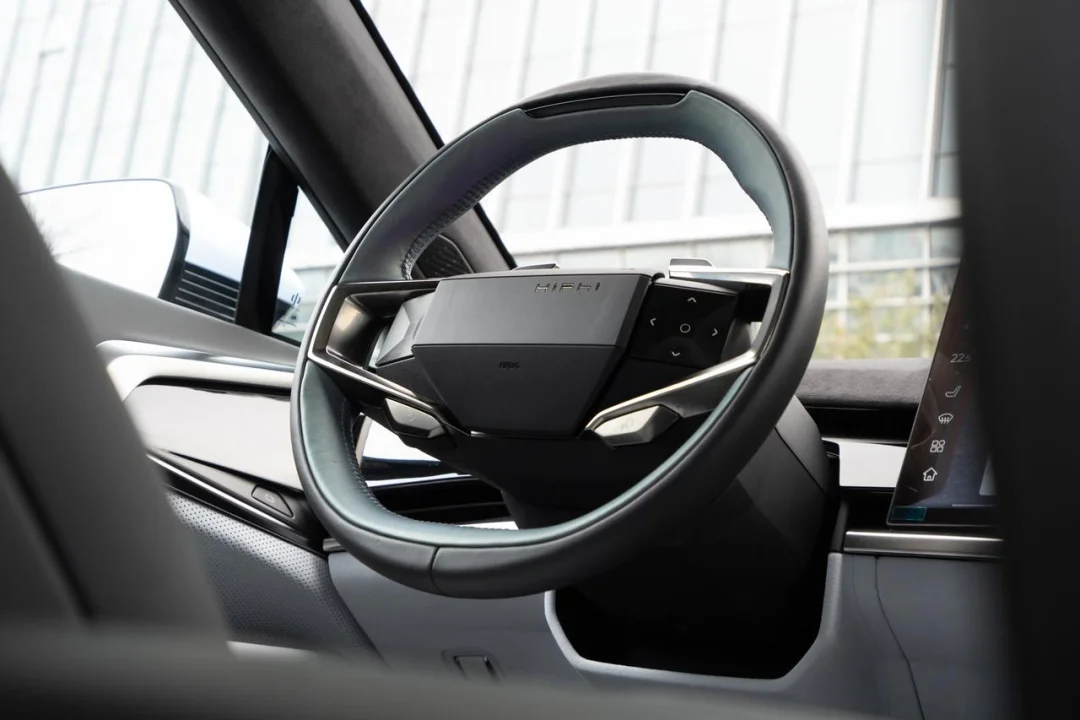
The interior design maintains a cohesive visual identity with the car’s exterior, a level of consistency rarely seen in other models. In the HiPhi Z, this unity is expressed through sharp lines and blocky design elements that cover various surfaces throughout the cabin, particularly on the steering wheel.
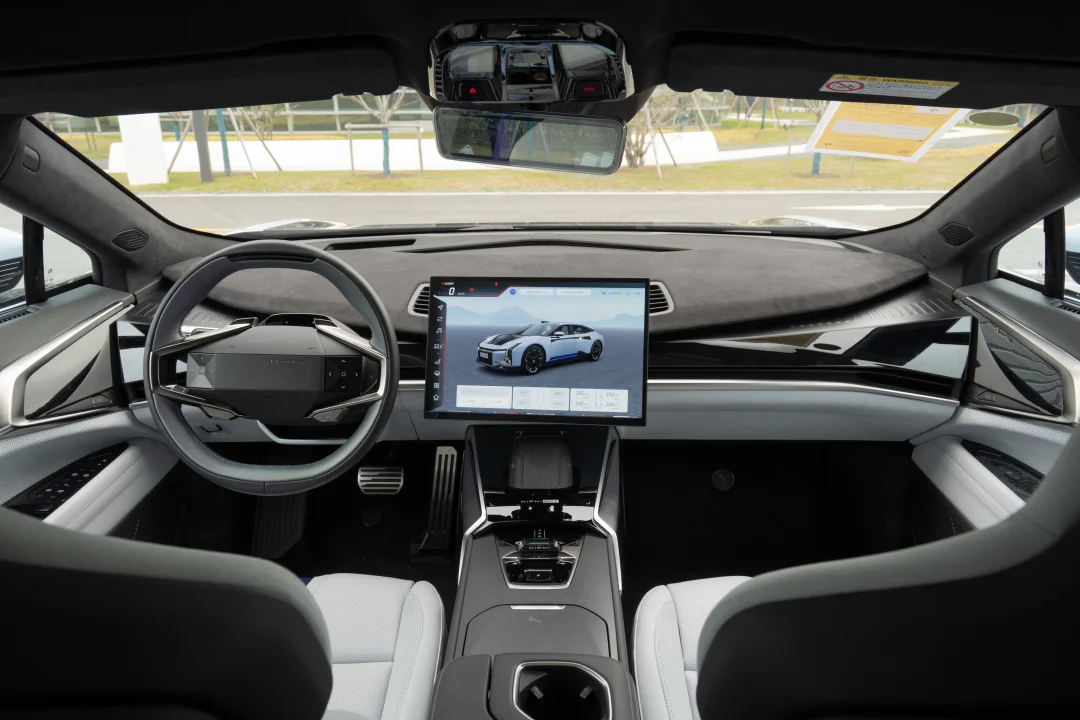
The HiPhi Z seats feature a racing-style bucket design with suede-like upholstery, offering excellent tactile quality. Both front and rear seats in the four-seat configuration include ventilation and heating functions. While the seating position feels more supportive than it appears visually, the cushioning remains slightly firm.
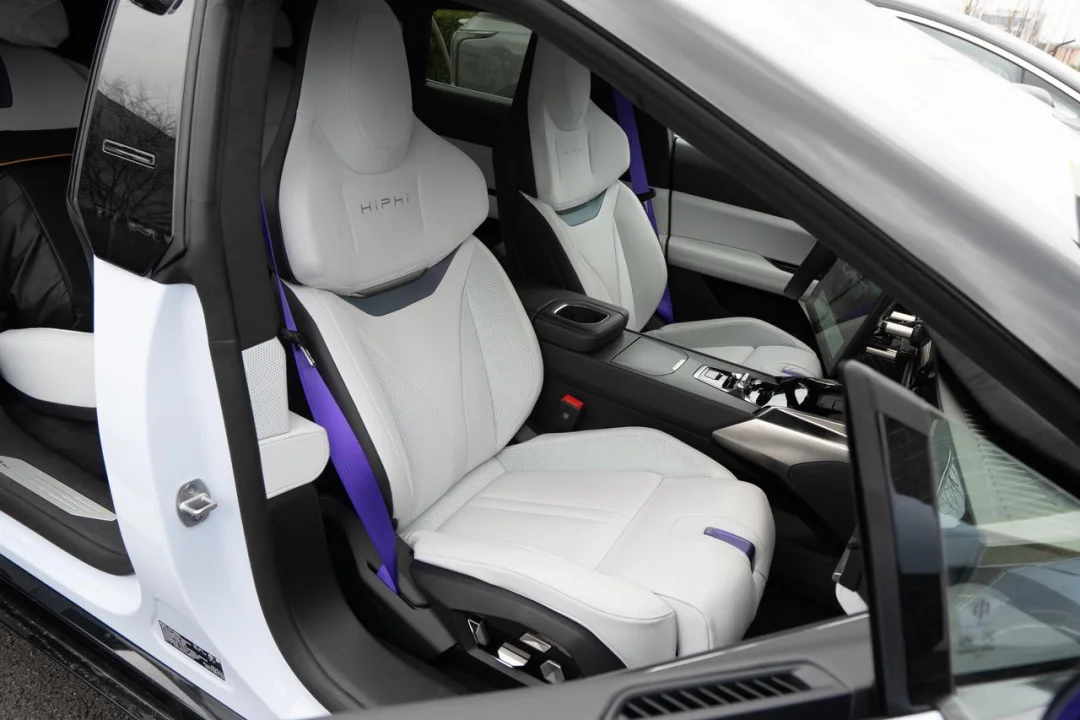
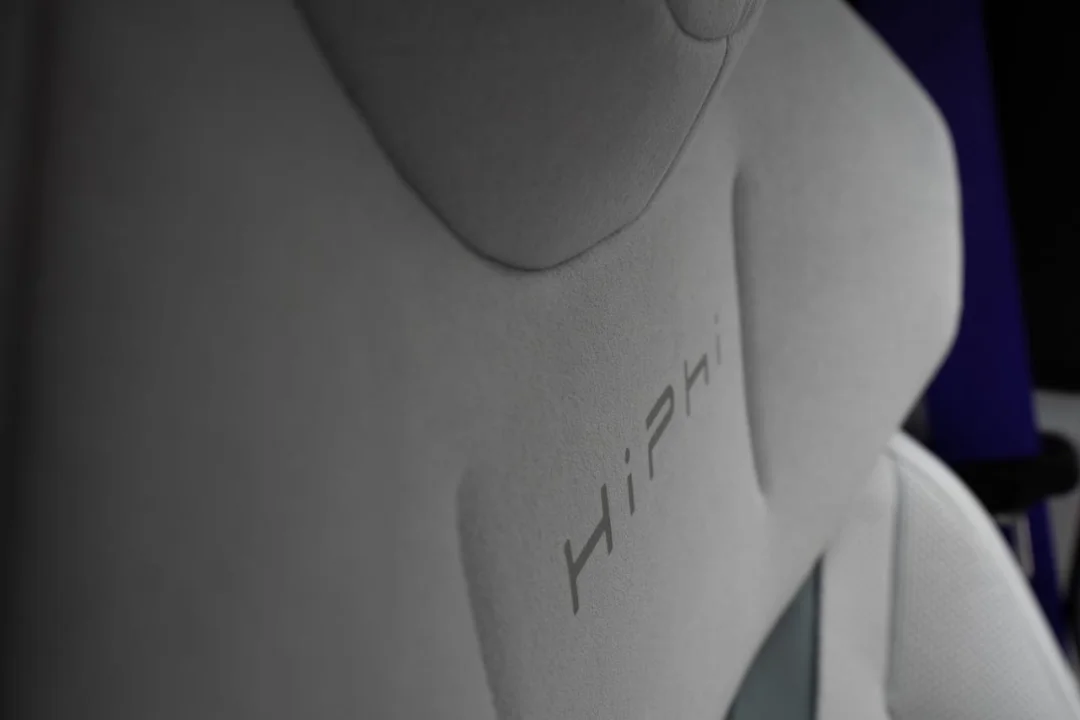
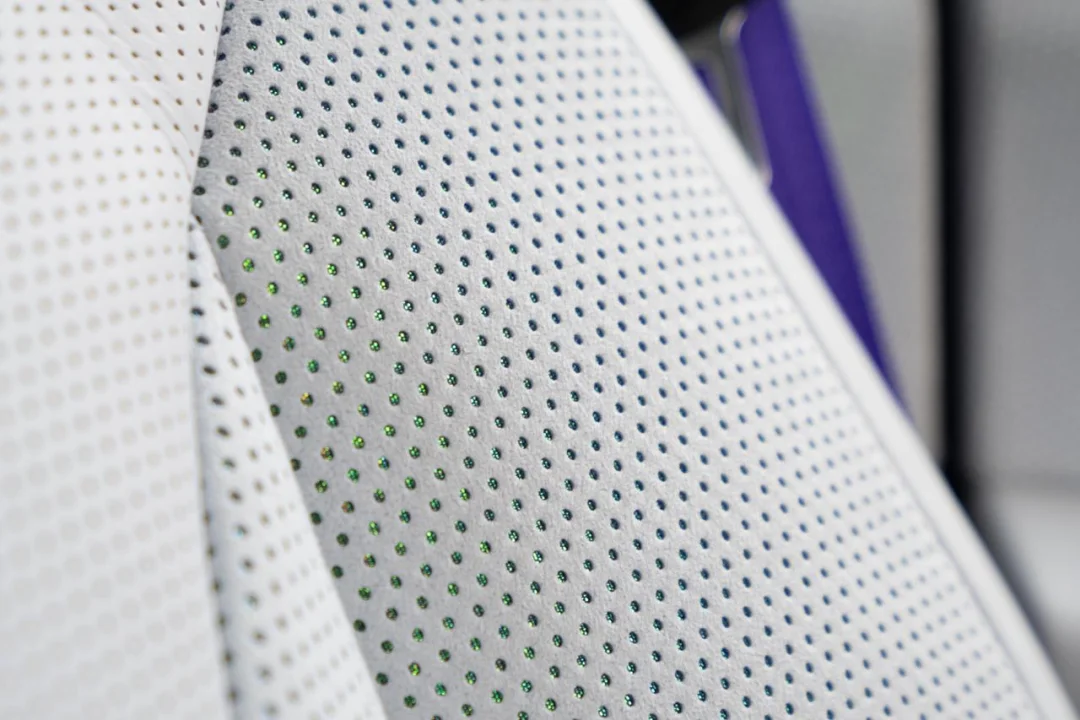
One detail on the seats stood out: beneath the perforated suede is a green reflective layer that adds depth to the seat’s appearance in bright daylight. A similar color-shifting material appears on the steering wheel, whose inner rim uses Nappa leather with a special coating, creating a unique visual effect.
We also checked the ambient lighting in the garage. The system supports customizable multi-color schemes and covers a good area. However, the design feels somewhat forced in trying to create contrast, and it doesn’t quite harmonize with the interior’s overall style.
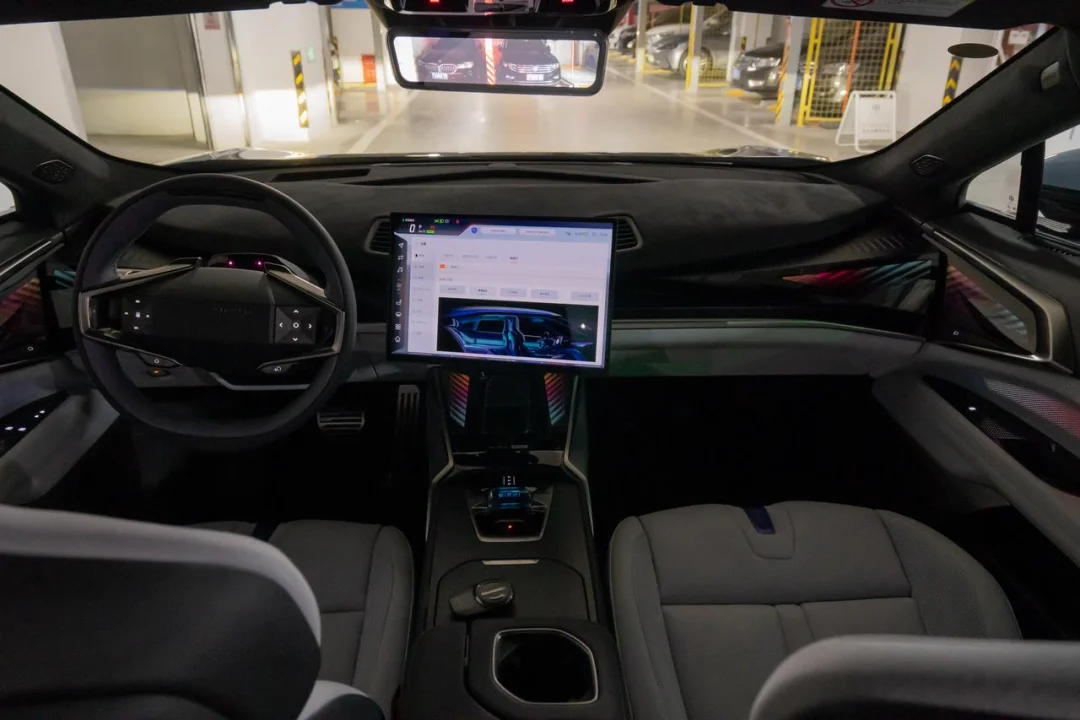
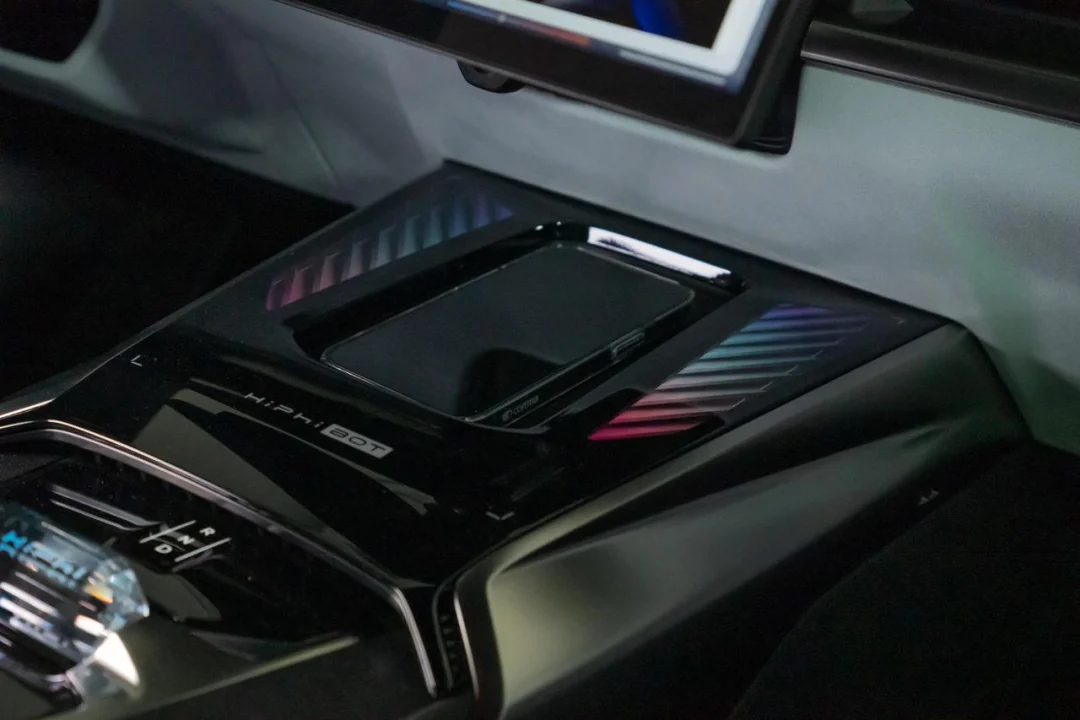
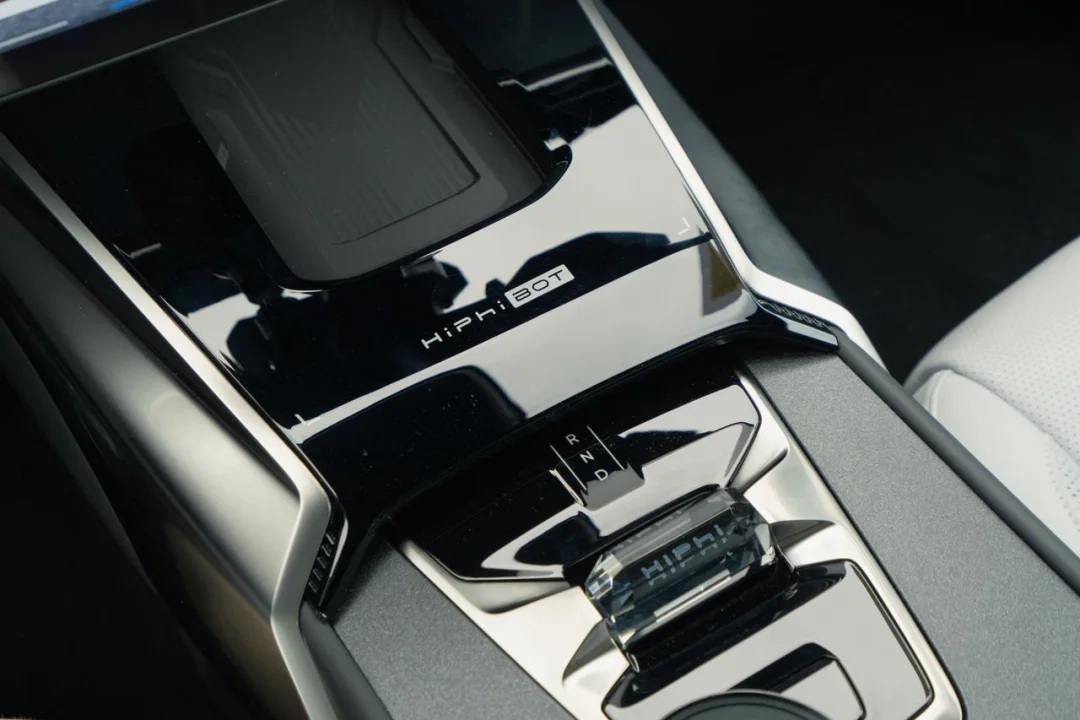
Finally, some areas use piano black finish, which is prone to scratches and fingerprints and doesn’t convey a premium feel.
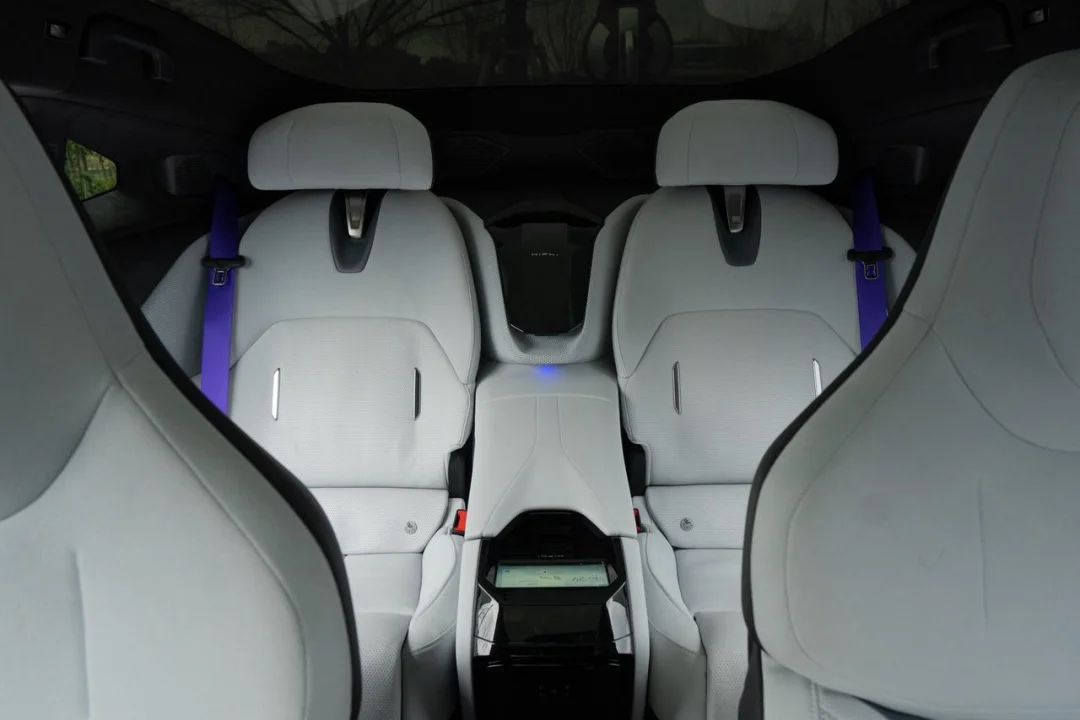
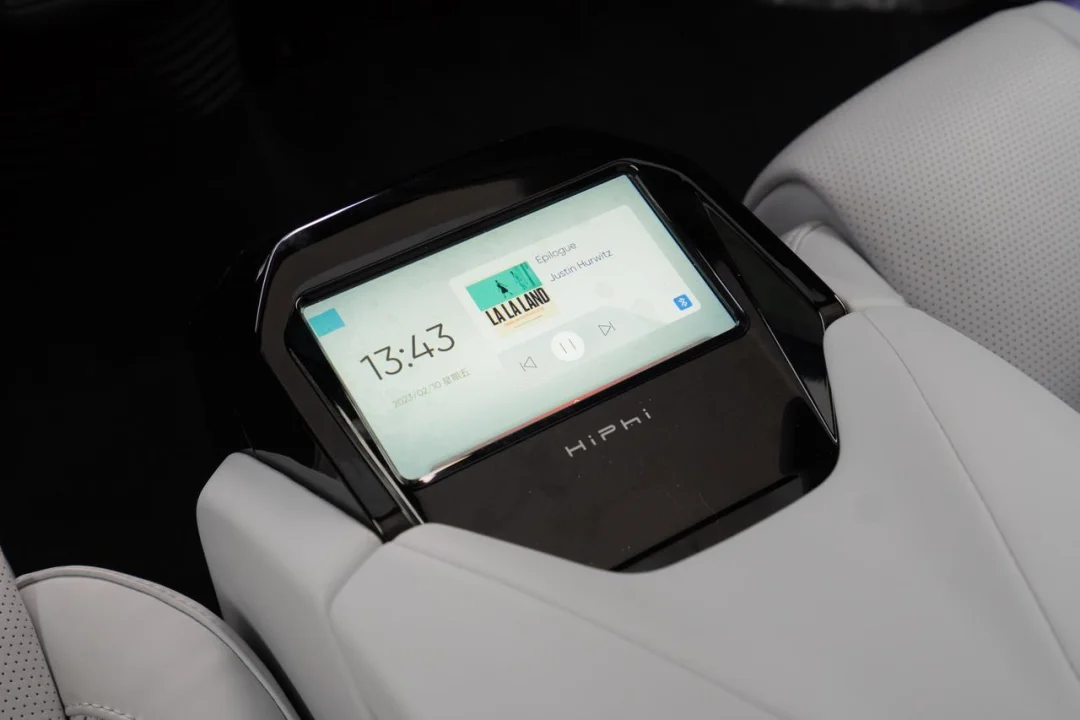
Because the test vehicle is the four-seat version, the two rear independent seats can also adjust their recline angles. The center armrest between the seats features a control screen for adjusting music, air conditioning, and seat positions, offering decent touch responsiveness.
A design highlight that demands mention is the HiPhi Z's adoption of frameless side mirrors, a feature I have seen on no other model besides Jixing. The frameless design not only reduces the overall size of the mirror but also allows for a larger reflective surface area within the current footprint.

02Smart Features Experience
A Robot Inside the Cabin
The most striking feature inside the cabin is the large display screen. HiPhi has named this entire interactive screen assembly "HiPhi Bot," which consists of a 2K-resolution screen mounted on an articulated mechanical arm.
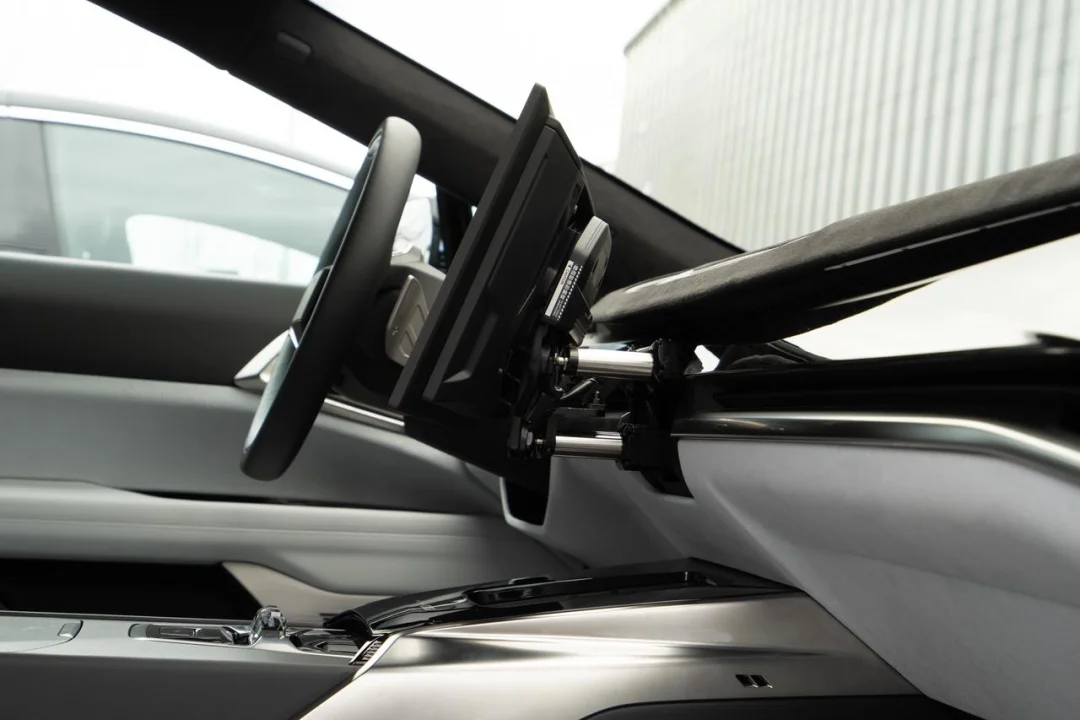
Designers equipped the screen with a mount that allows adjustment across four degrees of freedom. The base comprises three electric lead-screw actuators and a motor enabling horizontal and vertical rotation, giving it a distinct mechanical aesthetic from the side. This structure provides highly flexible positioning: the screen can change its orientation, point toward open doors like a robot, and display visuals accompanied by audio greetings. In some respects, it resembles NIO's Nomi, offering enhanced human-machine interaction awareness.
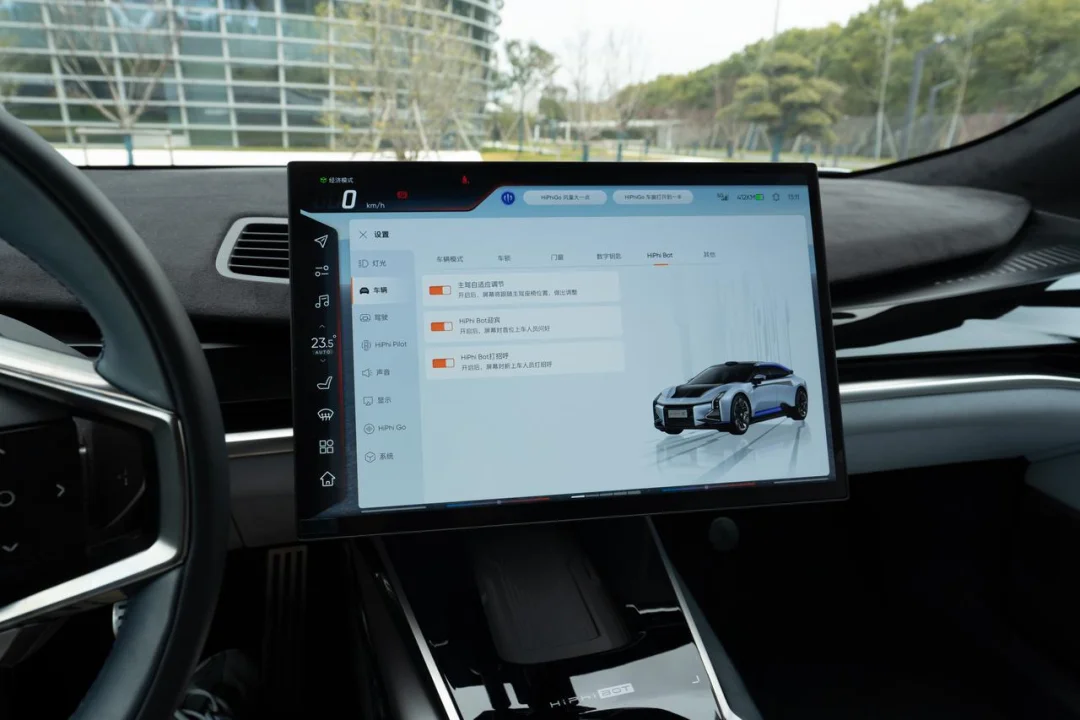
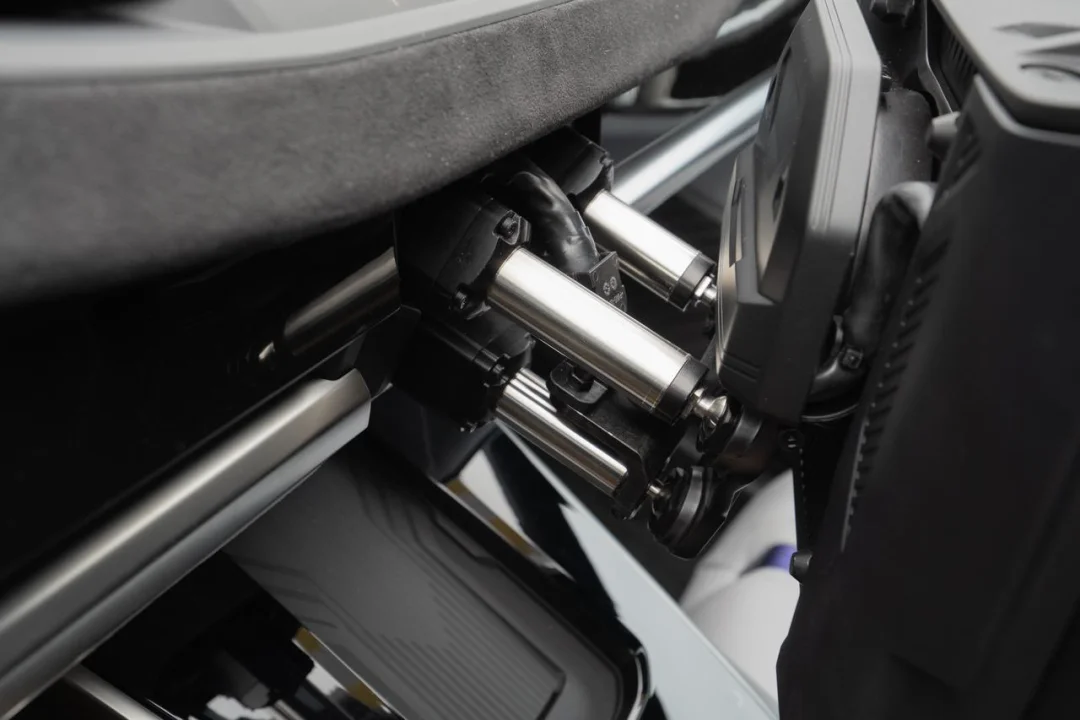
Beyond the mechanical aspects, HiPhi Bot’s flexibility enables interesting functional integrations, such as coordinating with seat adjustments (forward/backward and up/down) to align with the driver’s viewing angle. While it cannot maintain a perfectly perpendicular position relative to the driver’s eyes at all times, it significantly improves convenience for touch-screen operations.
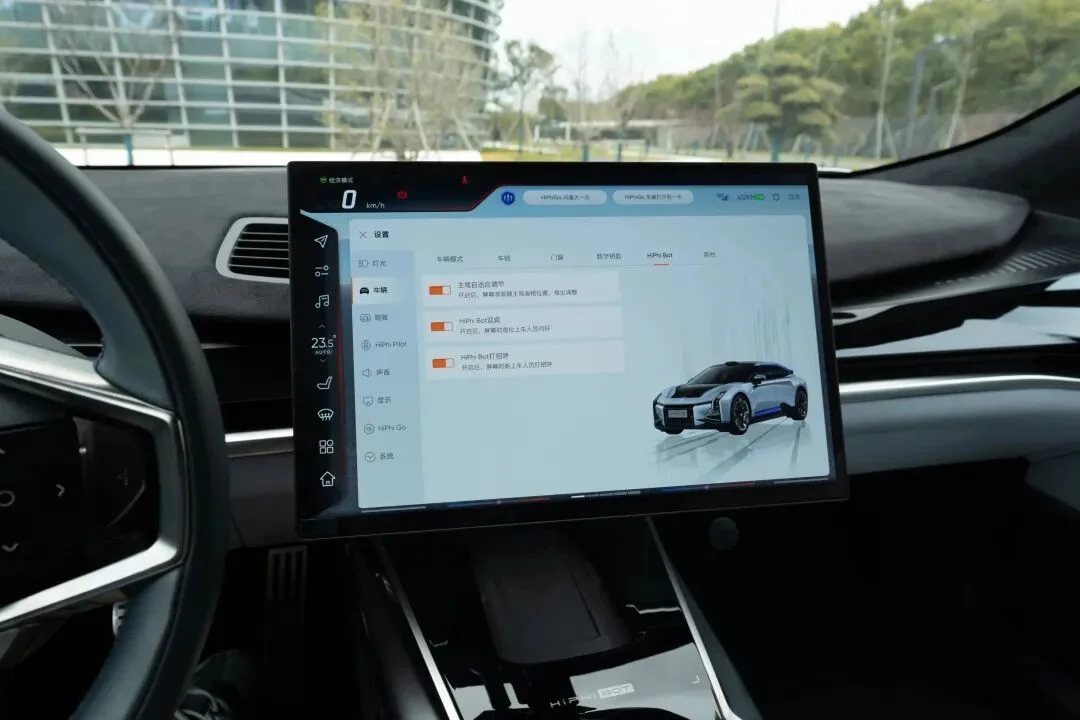
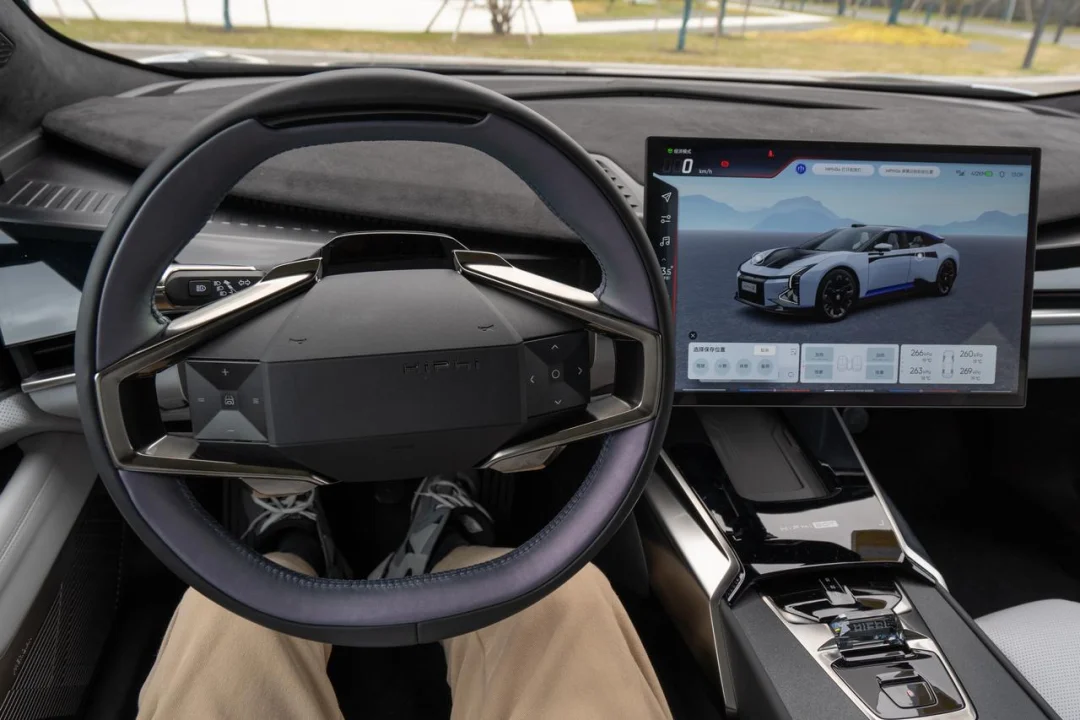
What surprised me most is that, beyond the features just mentioned, this screen supports stepless manual adjustment. By swiping to unlock a module on the display, you can release HiPhi Bot's robotic arm; once adjusted, it automatically locks after a short delay. Overall, the HiPhi Z's structure appears to be the most flexible among all current in-vehicle screen configurations.
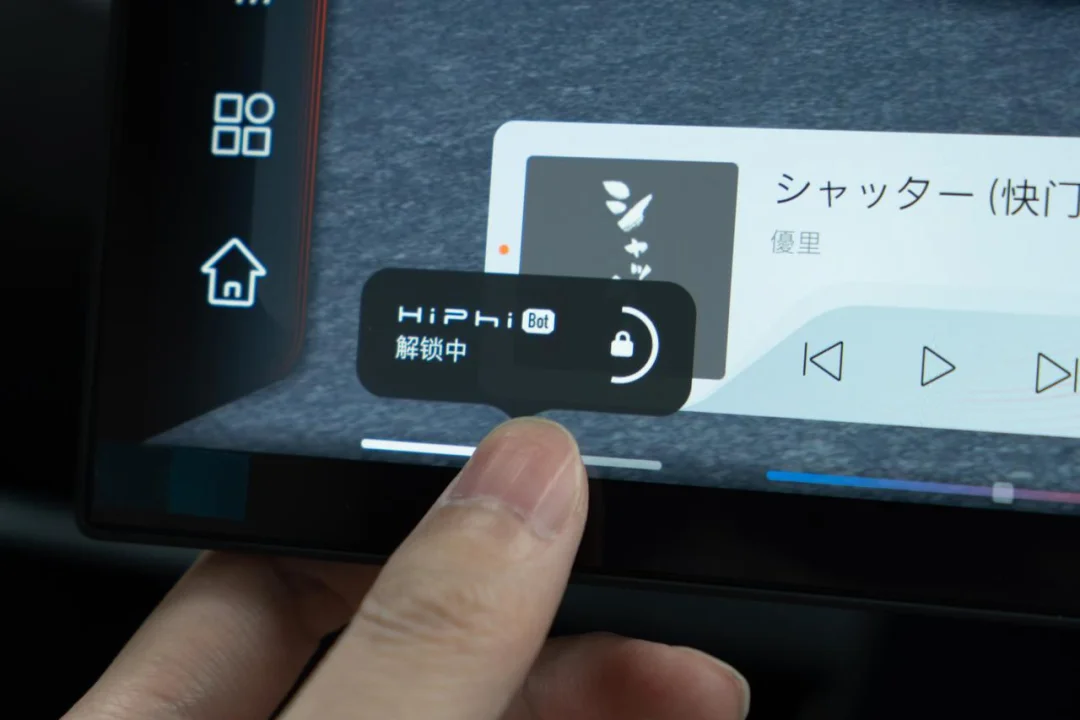
However, direct switching between portrait and landscape orientations is not yet supported. This feature will be added via an OTA update to allow users to customize their preferred orientation. Currently, the screen rotation function can only be triggered within the HiPhi Show environment.
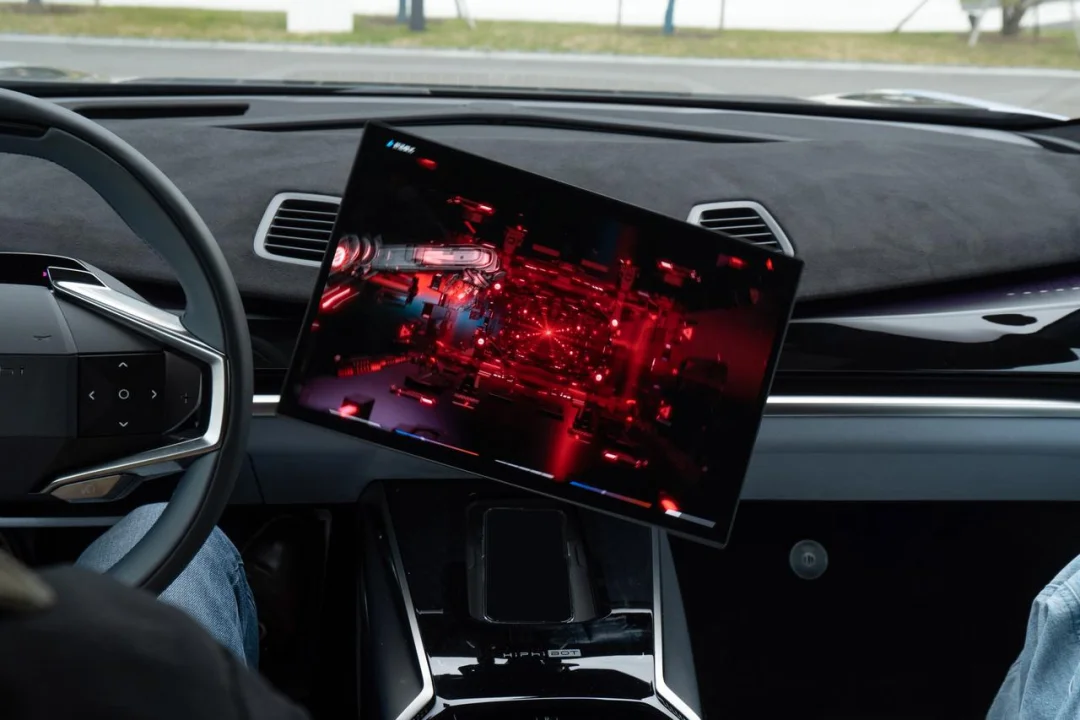
In-Car Infotainment Experience
The HiPhi Z does not carry over the screen and infotainment design from its predecessor, the HiPhi X. The entire system has been redesigned from scratch. Leveraging the computing power of the 8155 chip, it introduces Xuhuanyinqing for 3D interaction on the main screen and employs a dual-system architecture combining QNX and Anzhuo. The underlying QNX system ensures high stability, guaranteeing that critical vehicle information remains visible even if the Anzhuo system crashes.
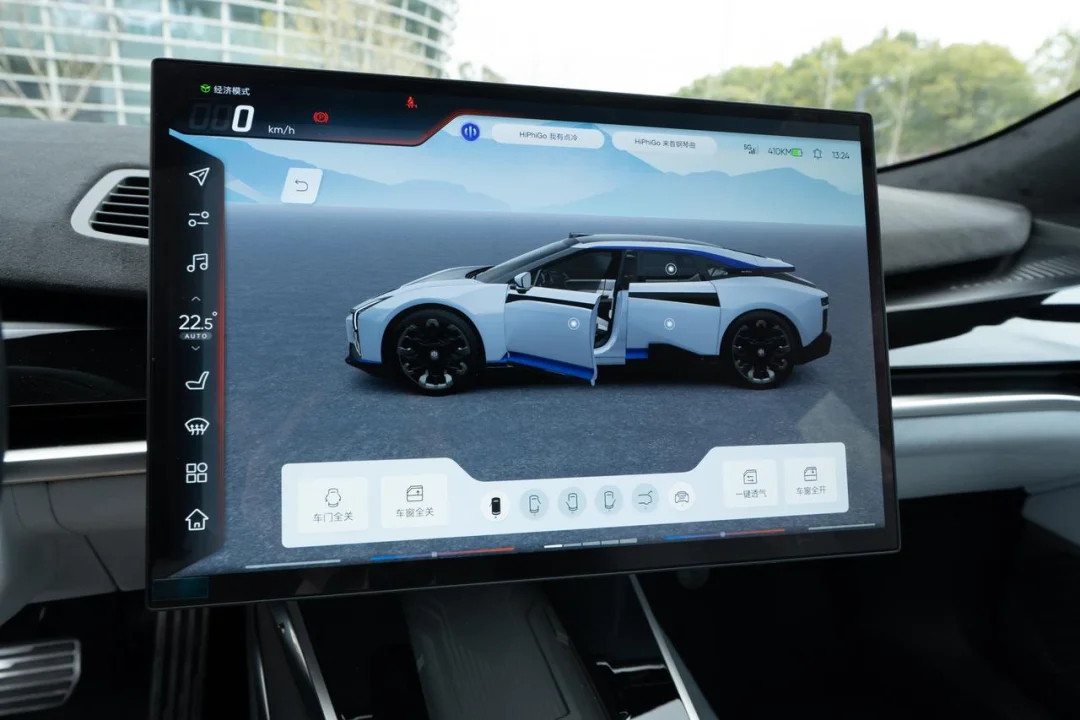
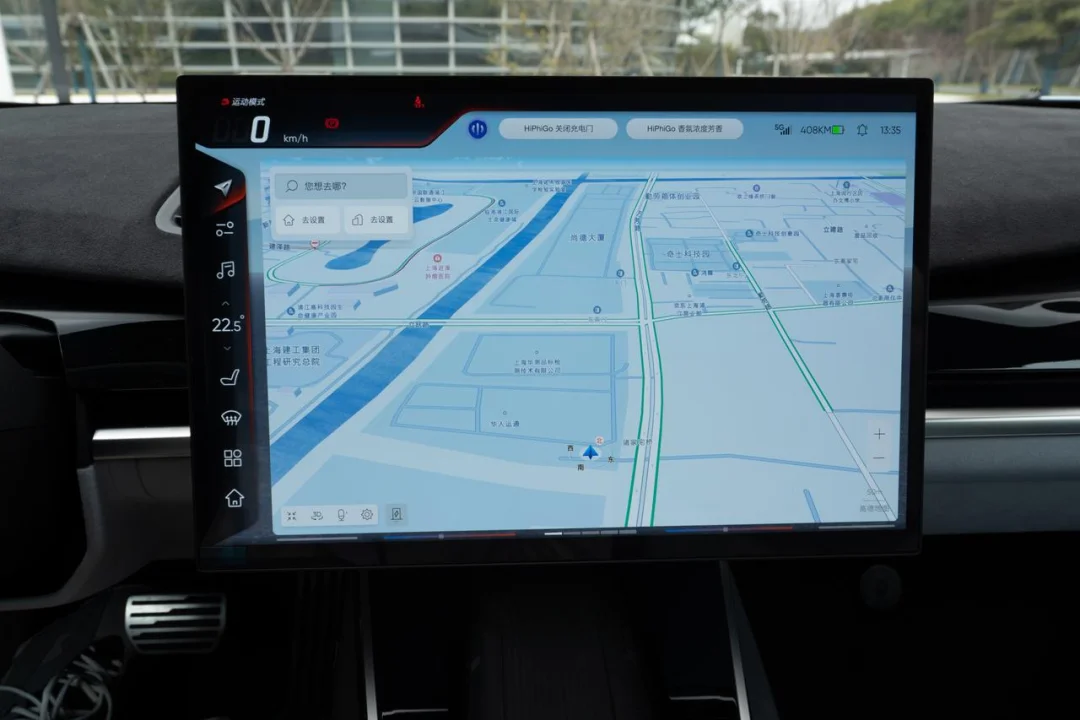
The HiPhi Z adopts a dashboard-free design, integrating instrument cluster information into the main screen similar to Tesla's approach, with the distinction that it includes a HUD configuration. A noticeable drawback is that aggregating driving-related information onto the main screen slightly increases its information density.
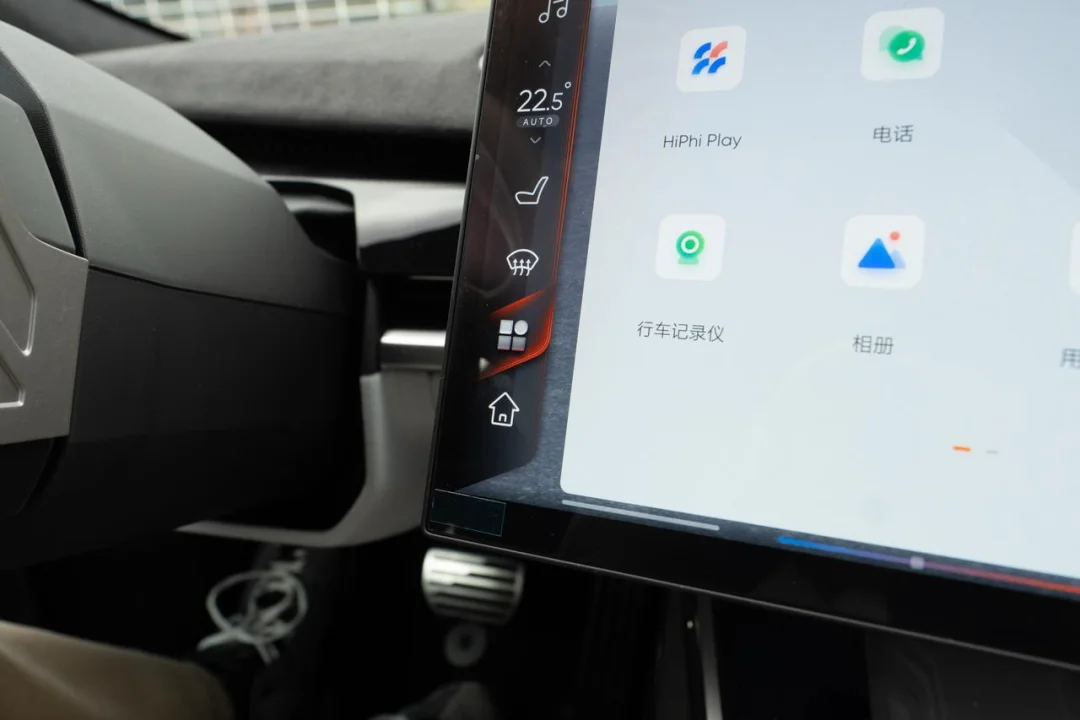
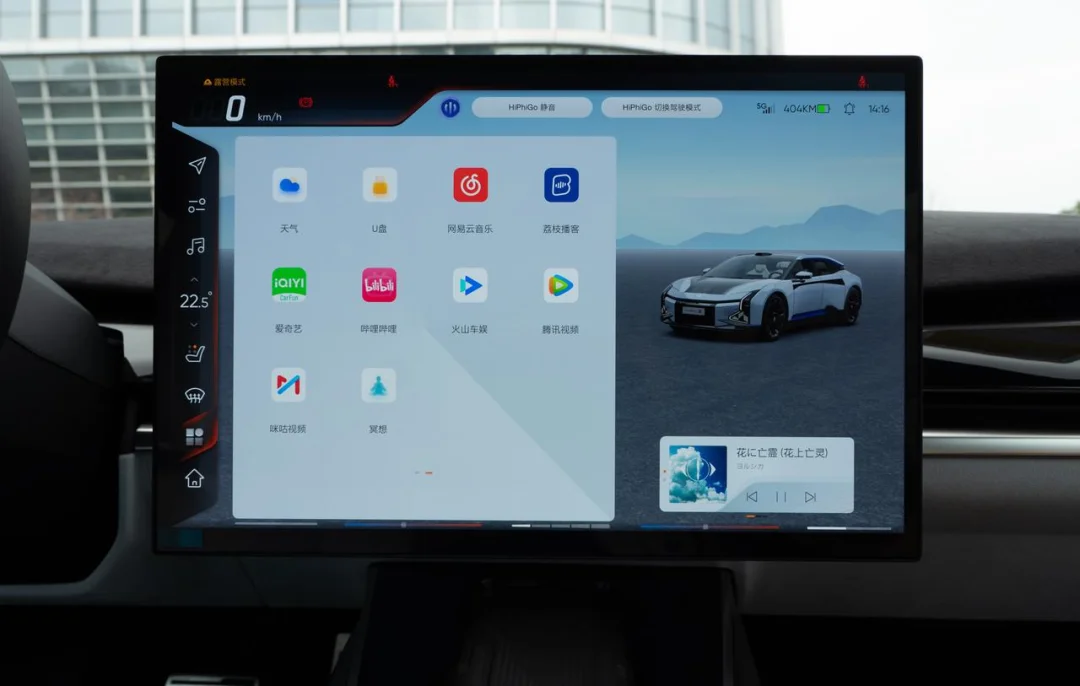
The main interface layout features a left-side Dock bar. Quick-adjust controls are positioned below the screen, allowing users to slide to rapidly modify air conditioning and volume settings. Three small cards above these controls can be swiped vertically to switch between different functions; the leftmost card toggles between music and map views.
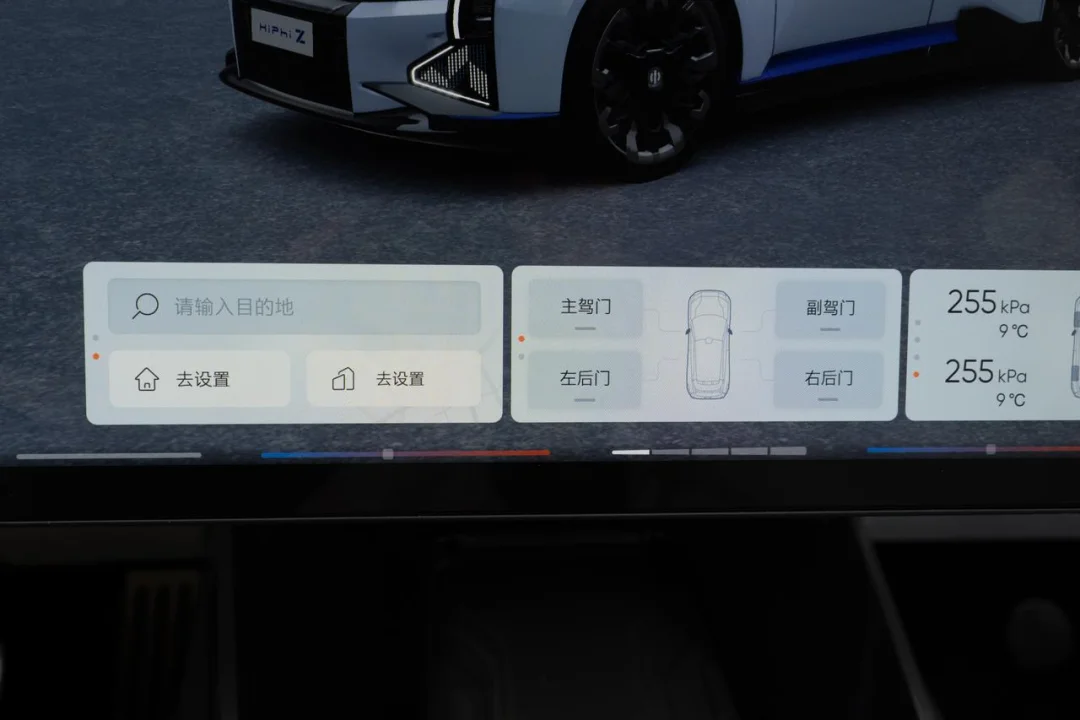
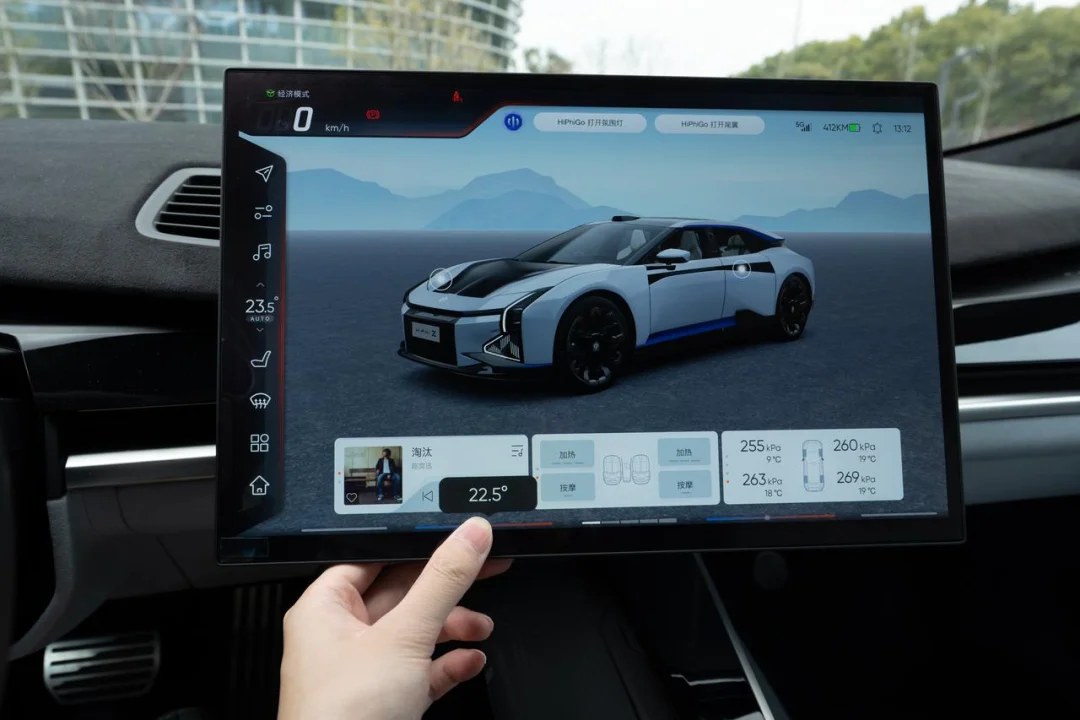
An information layer runs along the top edge of the screen. This is the QNX system’s independently rendered layer mentioned earlier, primarily displaying speed and vehicle status, though it also serves regulatory compliance requirements.
Overall, the UI design leans toward a gaming aesthetic. The lines and icons deviate from current mainstream flat or skeuomorphic styles, yet individual details retain some skeuomorphic qualities—for instance, buttons in the left Dock bar exhibit a frosted-glass effect when activated. This ambiguity in design direction suggests HiPhi has not yet found an optimal balance between unifying with the vehicle’s overall styling and aligning with prevailing consumer aesthetics. This is an area where I hope HiPhi will improve in future updates.
The 3D interaction approach was a key focus in our previous coverage of the Eletre. Although both vehicles use Unreal Engine for rendering, there are distinct differences between their implementations.
The Lutesi system prioritizes extreme visual fidelity and texture quality, whereas HiPhi’s 3D interface sacrifices some graphical detail to ensure a smoother interaction experience.
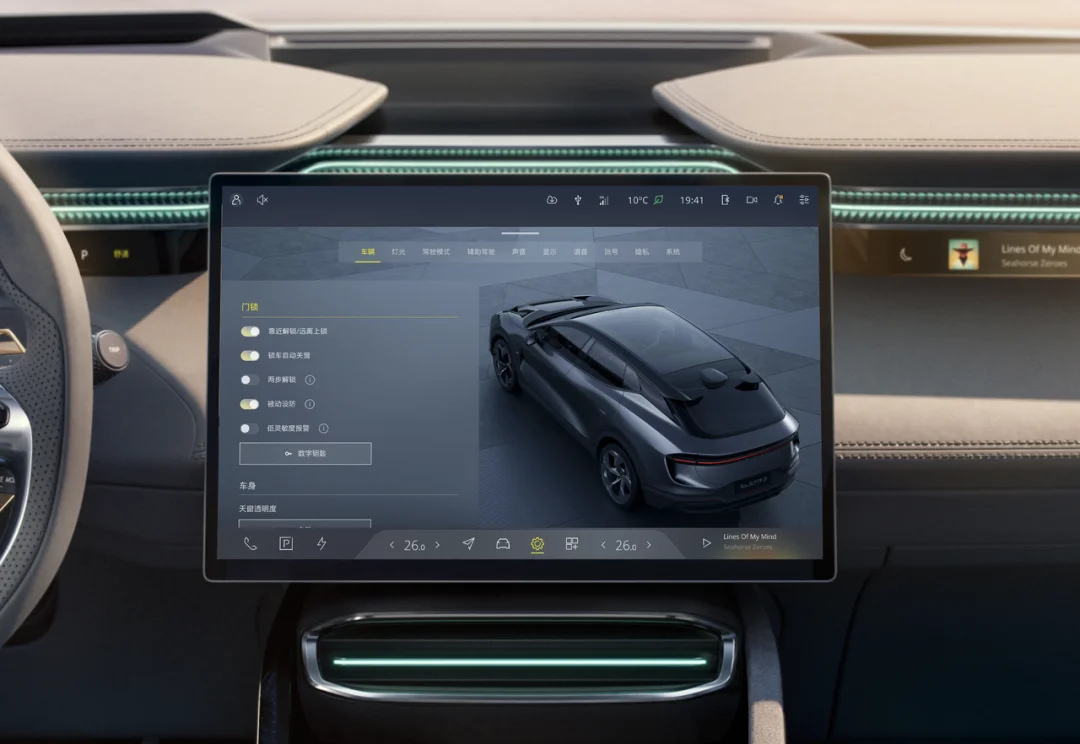
For instance, Lutesi’s vehicle interface only allows exterior controls; users cannot directly switch to the cabin view to adjust air conditioning or seats. Some functions rely on multi-scenario switching and texture-based interactions, creating a fragmented feel in the user experience.
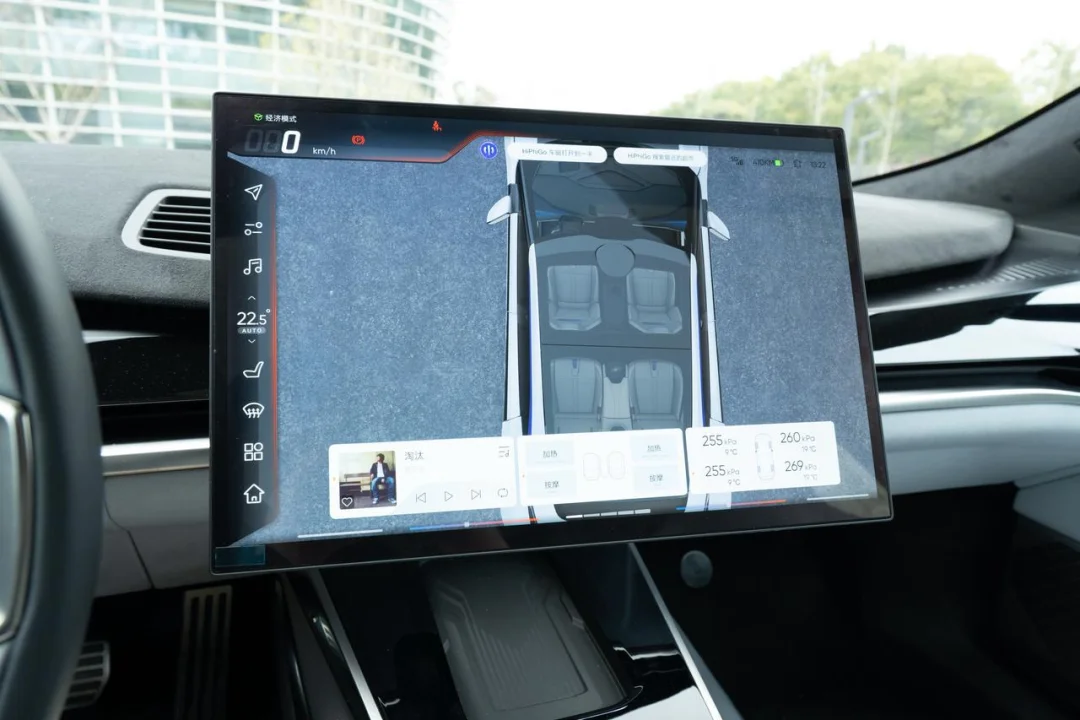
In contrast, HiPhi’s 3D interface loads a complete model of both the exterior and interior simultaneously. After adjusting exterior settings, users can seamlessly switch the camera angle to the cabin to control air conditioning and seats. The entire process is continuous, with no scene transitions or loading delays, resulting in a fluid interaction flow.
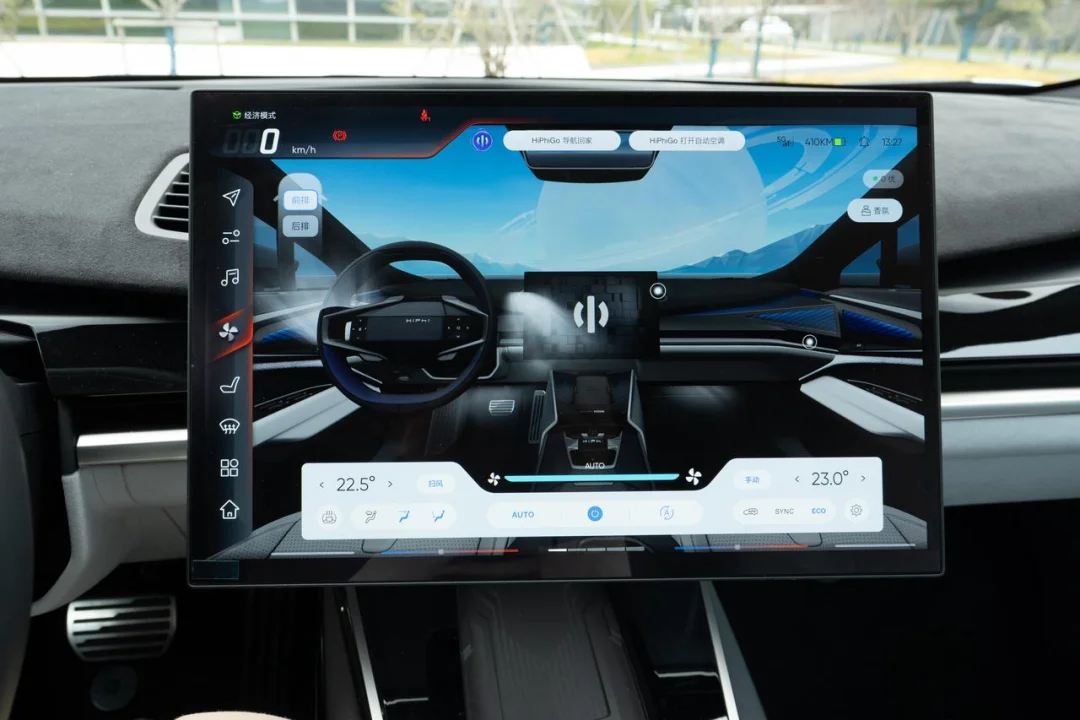
What surprised me most was that this 3D interface supports direct display of driver assistance features, adding a function that can be switched to without interruption.
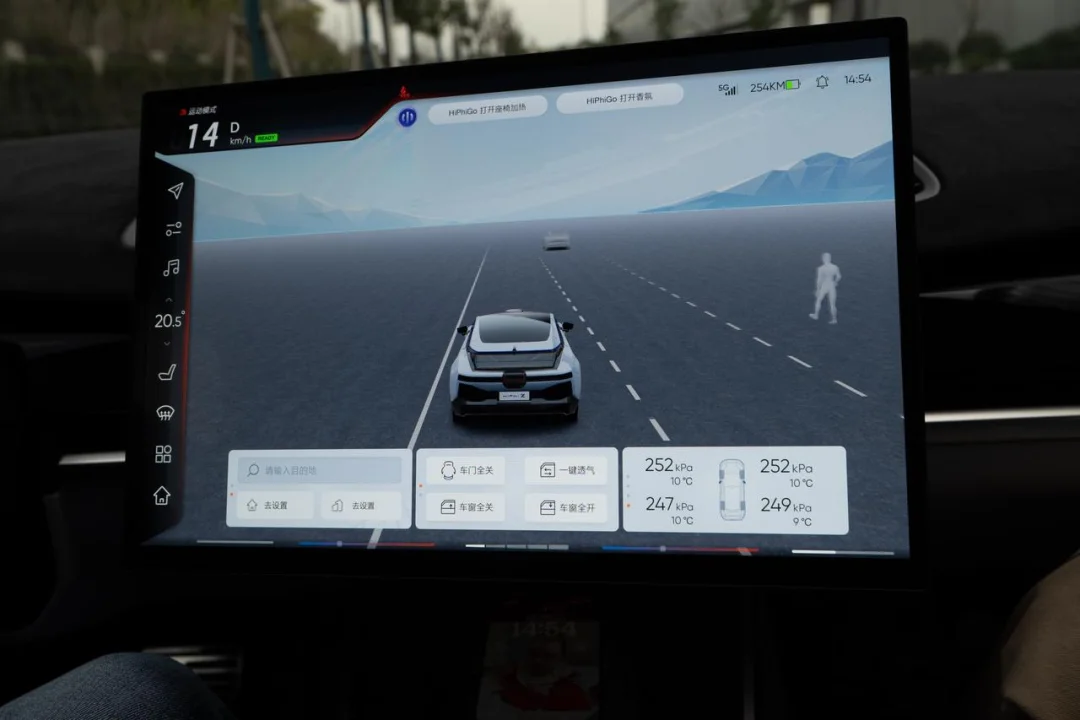
Regarding the design of the 'negative-one screen,' we considered the interface layout and changed the side-swipe gesture to an independent button for activation. In my opinion, this reduces operational convenience. Therefore, it can be understood in a sense as a secondary menu.
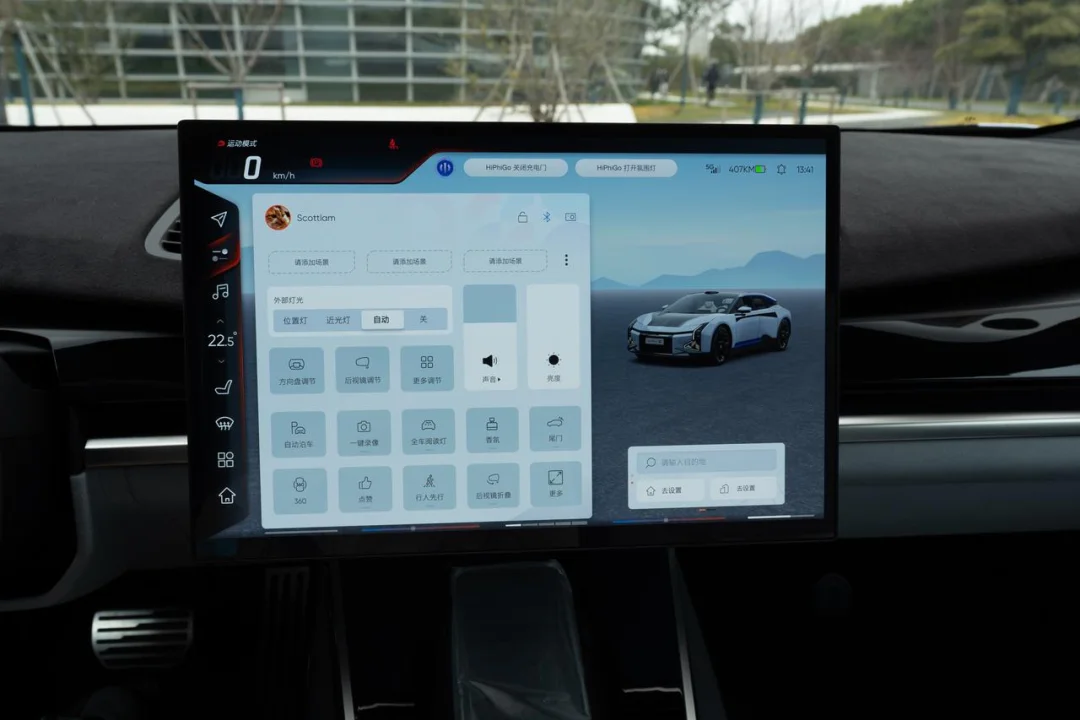
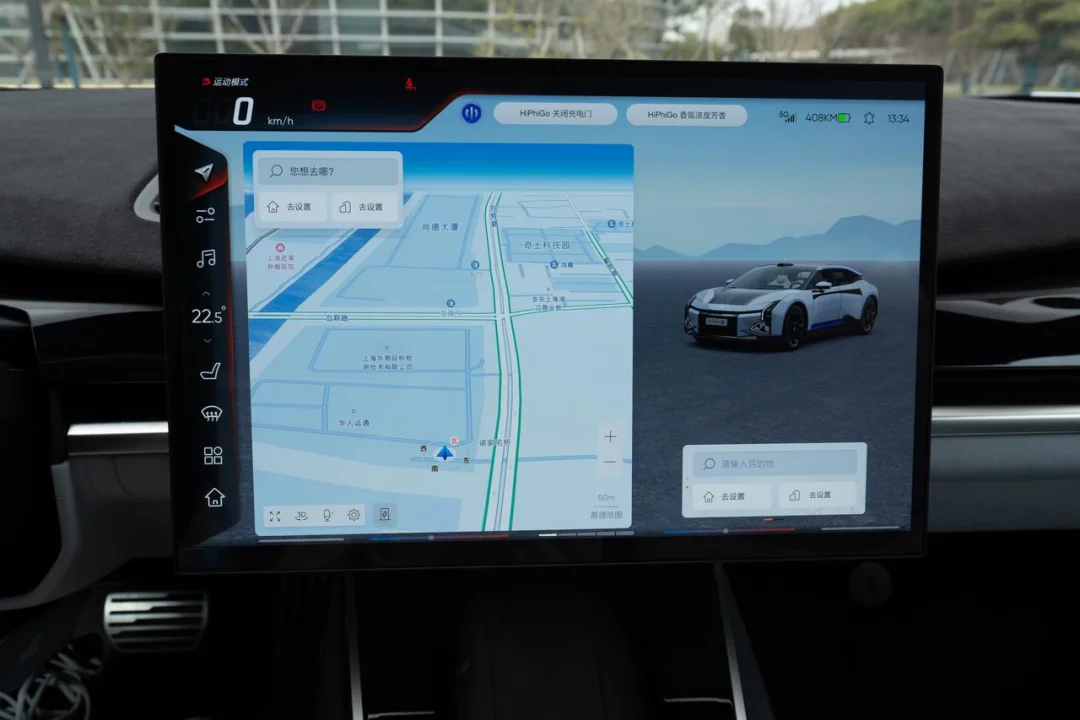
Besides this, when functions are triggered from the left Dock bar, they appear as floating windows that do not completely obscure the 3D vehicle model and cards on the right. This design allows for very convenient return to the main interface via interaction. For navigation, users can also choose between full-screen or half-screen display.
Regarding third-party app support, the system features a customized exclusive version of QQ Yinyue. Currently installed third-party apps also include Wangyiyunyinyue, Aiqiyi, B Zhan, Lizhi, Tencent Video, Huoshancheyu, and Migushipin. The variety should be sufficient to meet the needs of most users.
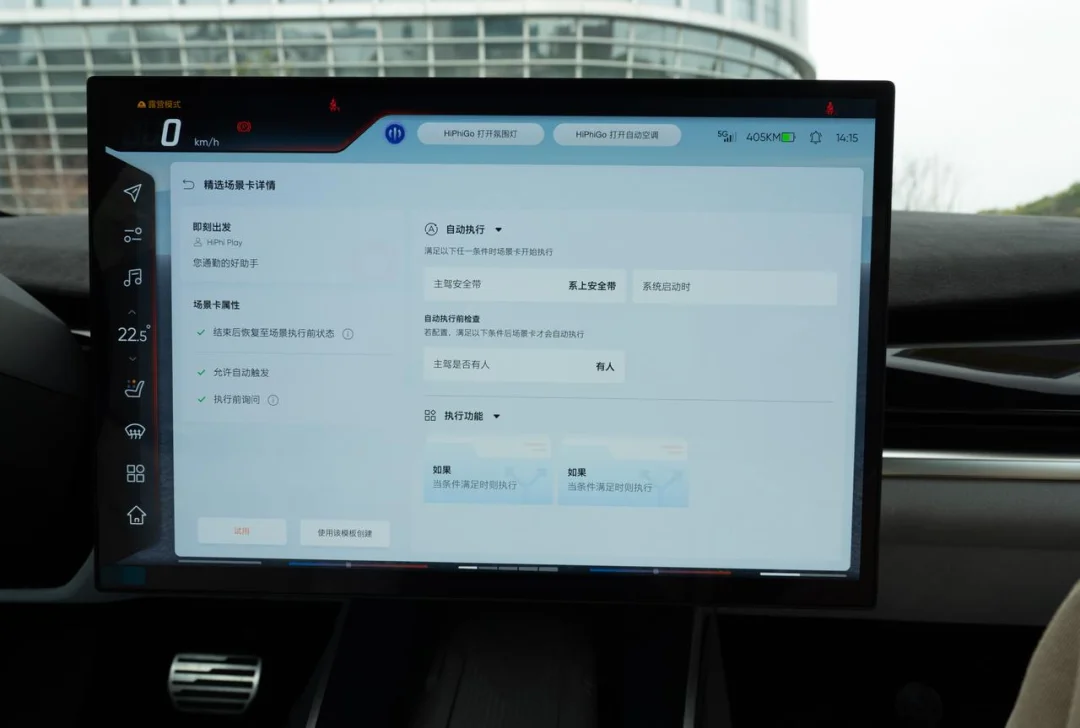
HiPhi has integrated the HiPhi Play co-creation platform into its system. Relying on the H-SOA super-body electronic and electrical architecture, the first batch opens 120 programmable features to users. These can be customized into combinations to form various scenarios, which can then be saved as scenario cards. This function allows users to customize their intelligent experience. Theoretically, if more functional interfaces are opened later, there could be significant potential for user development.
Intelligent Lighting
In addition to the above, there is another intelligent feature that can significantly enhance playability: HiPhi Show.
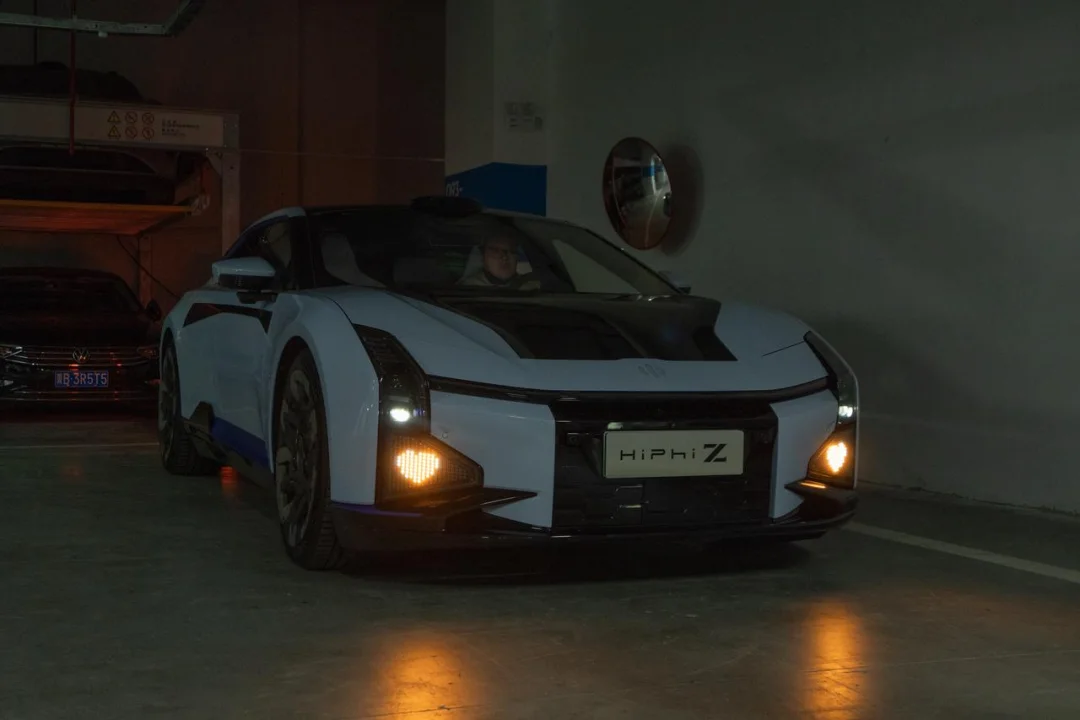
Like the HiPhi X, the HiPhi Z is equipped with PML programmable headlights and ISD intelligent interaction lights on the front, rear, and sides of the vehicle. Working together, they enable a variety of interactive features. For example, custom text can be projected directly onto a wall in front of the car, while the side ISD interaction lights can display welcome messages.
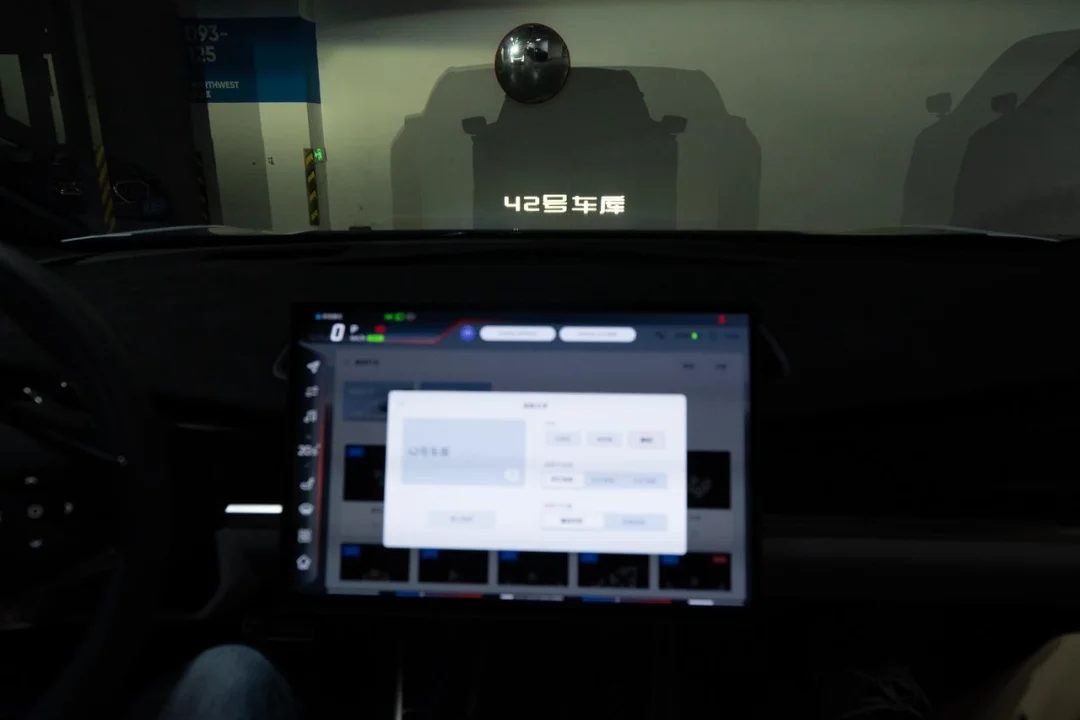
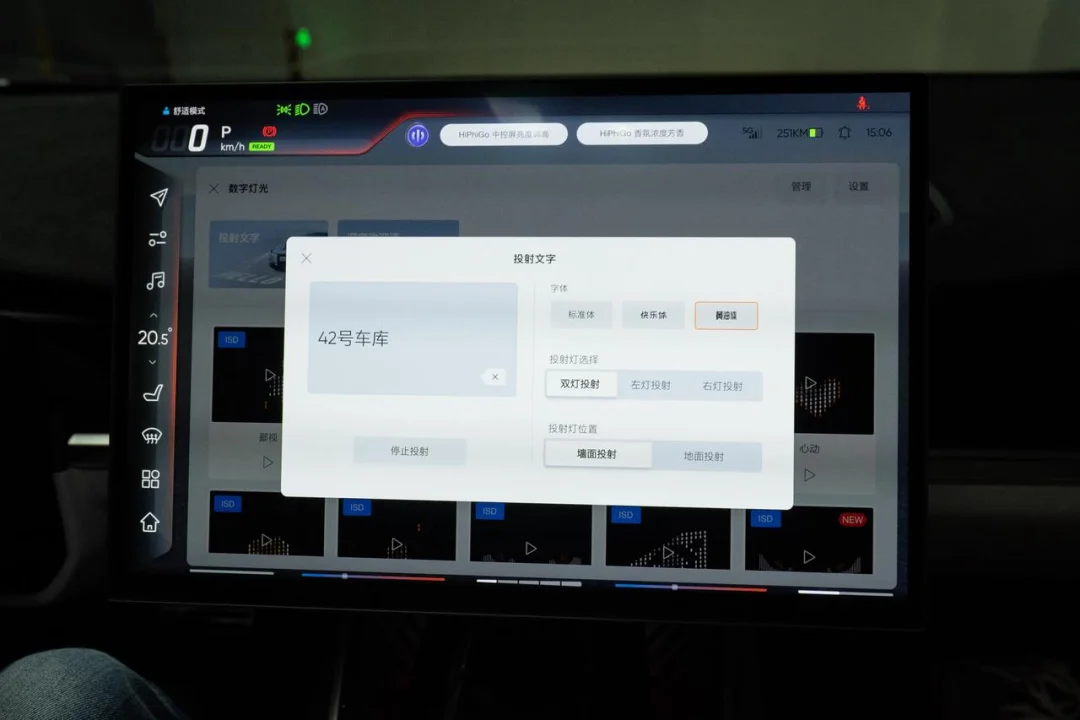
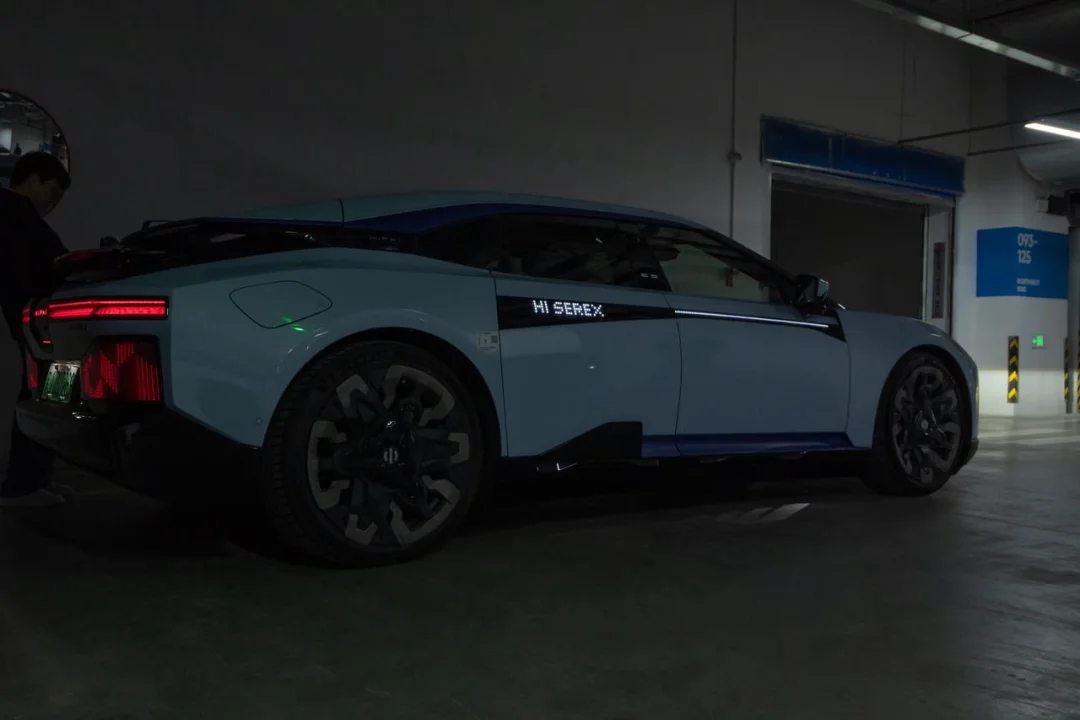
HiPhi Show combines these smart lights, linking them with the doors, windows, HiPhi Bot, and audio system to stage a performance.
Yingguozhibao Audio
I consider the audio system a crucial component of the smart cabin. While most features cannot be used while driving, listening to music is possible.
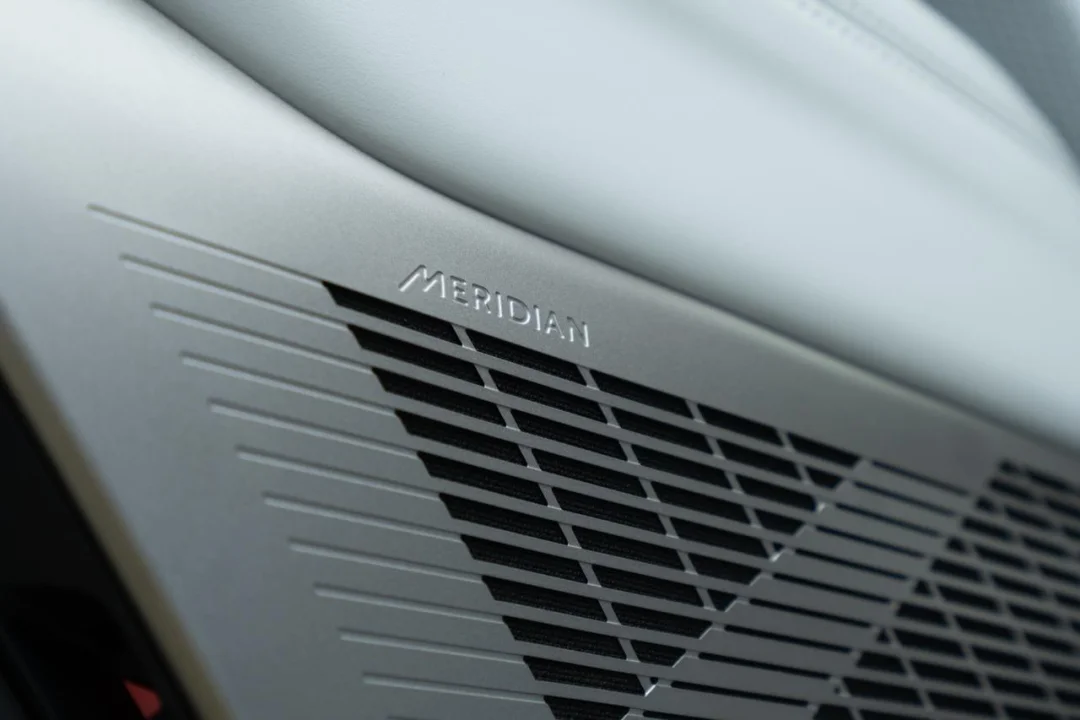
The HiPhi Z is equipped with an Yingguozhibao Meridian audio system. Its specifications are largely consistent with other models supporting Dubiquanjingsheng: 23 speakers, including four sky channels, one high-power subwoofer, and four surround speakers. These specs are no longer surprising. What impressed me more is that each speaker in the HiPhi Z has at least one dedicated, independent power channel. Each channel delivers up to 120 W of undistorted power, with the system's maximum output reaching 1,920 W at a 1% distortion rate.
In actual listening tests, the tuning and sound reproduction of this system were highly accurate. Tracks featuring vocals and Hotel California met my expectations, achieving Hi-Fi level tonal accuracy and balance. In default mode, there was virtually no coloration. This excellent tuning is what I value most. Many carmakers now deliberately create "unconventional" tuning styles to differentiate their products, which often results in a less pleasing listening experience. Therefore, the HiPhi Z's tuning is at a very high level, offering sound quality that even average listeners would appreciate as excellent.
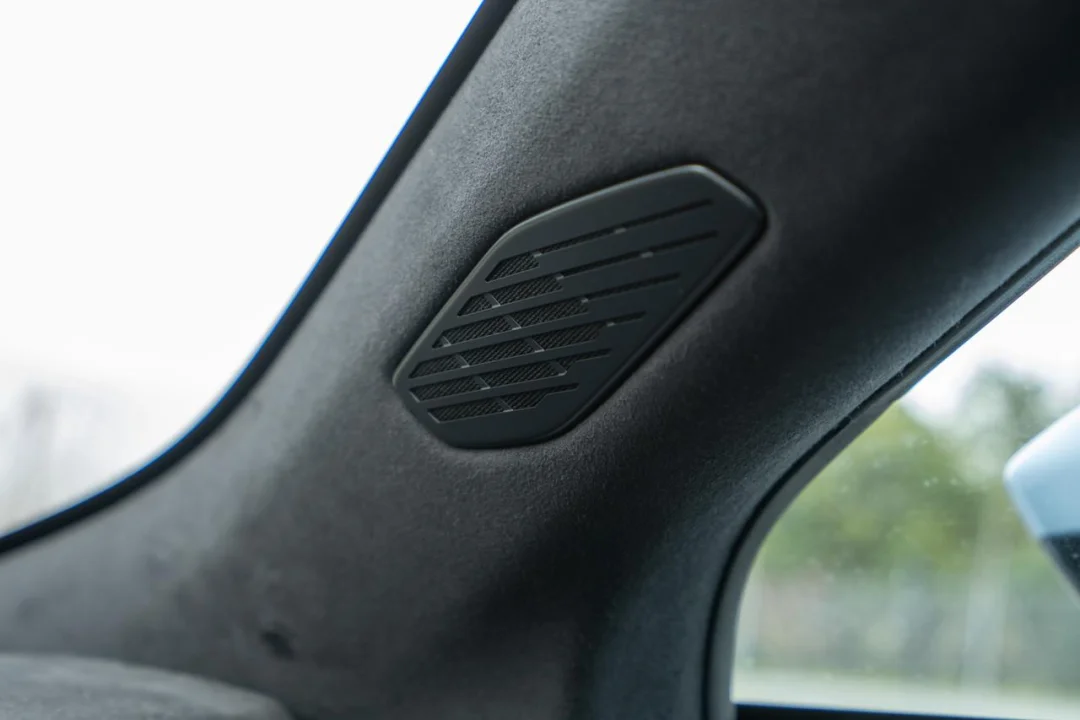
Another factor that helps the audio system perform better is the HiPhi Z's sound insulation. Beyond the luxury feature of acoustic glass throughout the vehicle, extra insulation measures were applied to the electric motor, a component that is already relatively quiet. As a result, it is difficult to hear motor noise when driving the HiPhi Z. This allows occupants to fully enjoy the musical atmosphere during their drive.
03Final Thoughts
The HiPhi Z distinguishes itself in numerous ways. Its unique characteristics are not only visually striking but also reflected in extensive functional innovations and generous equipment, sometimes regardless of cost. Setting aside user and market considerations, the fact that it is possible to launch a vehicle so boldly innovative and distinct at this current stage is itself worthy of recognition.
The intelligence of the vehicle makes it evident that HiPhi is attempting to strike a balance between "usability" and "coolness." Overall, this infotainment system performs reasonably well in achieving this balance. However, there remains room for optimization in terms of overall completeness, which is an area to look forward to in future OTA updates for the HiPhi Z, especially since this model has only just begun deliveries. Written by: Yisong Edited by: Bobo