


XPENG 1024 Tech Day Preview: City NGP, Charging and Flying Vehicles
There are still ten days until XPENG's 1024 Smart Day this year, but discussions about the 1024 event have been growing more frequent in office conversations.
Given the high density of press conference events recently, it really caught me off guard that people started discussing the launch event ten days in advance.
Although unexpected, it is also highly reasonable.
This is the third year XPENG has held its 1024 Intelligence Day. On each 1024 Intelligence Day, XPENG Motors shares its thoughts on the future of intelligence and releases some of its R&D results in intelligent technologies.
As an industry leader, XPENG's launch event is being closely watched not only by consumers but also by R&D personnel from numerous automakers. The new developments we expect to see this year are of particular interest to our editorial team.
Yesterday, XPENG released the first teaser poster for 1024 on Weibo. In addition to the urban NGP that everyone had guessed, this press conference seems to have some new elements.
01What new surprises will this year's 1024 bring?
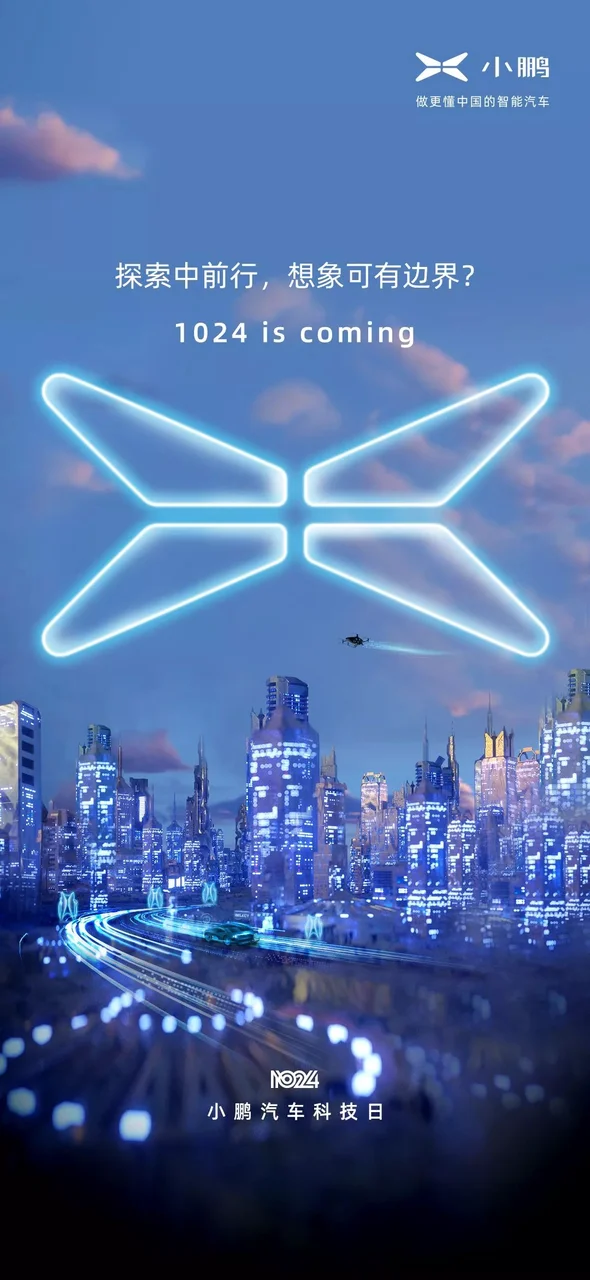
Let’s start with a subtle but significant shift.
In last year’s poster, XPENG defined 1024 as its "Intelligence Day." This year, the label has quietly changed to "Technology Day." Intelligence requires a physical carrier, whereas technology offers broader imaginative space. Accordingly, the poster now features many elements beyond the car itself.
City NGP Requires Both Hardware and Software
The poster makes it clear: buildings occupy more than half the frame, with vehicles weaving between them. It is virtually certain that XPILOT 3.5 City NGP will be unveiled at the 1024 Technology Day.
From the perspective of driver assistance trends, urban navigation pilot assistance is an unmistakable direction. Domestic new-energy automakers have moved past SAE-defined Levels L1, L2, and L3, focusing instead on expanding the scope of usability for drivers.
Although the trend is clear, XPENG holds an additional advantage: time.
When XPENG launched the G3 in 2018, it began betting heavily on the autonomous driving track and firmly committed to self-developed driver assistance technology. These early forward-looking decisions allow XPENG to reap the dividends of accumulated time.
At the P5 test drive event held a month ago, we already saw hardware capable of supporting urban NGP. Compared to the XP 3.0 specifications, the P5 equipped with XP 3.5 added only two DJI Livox LiDAR units.
LiDAR uses laser point clouds to create a three-dimensional map of the surrounding environment. Compared to millimeter-wave radar, it can identify small objects such as traffic cones more precisely and effectively. Unlike cameras, it is less dependent on lighting conditions and remains effective in poor light.
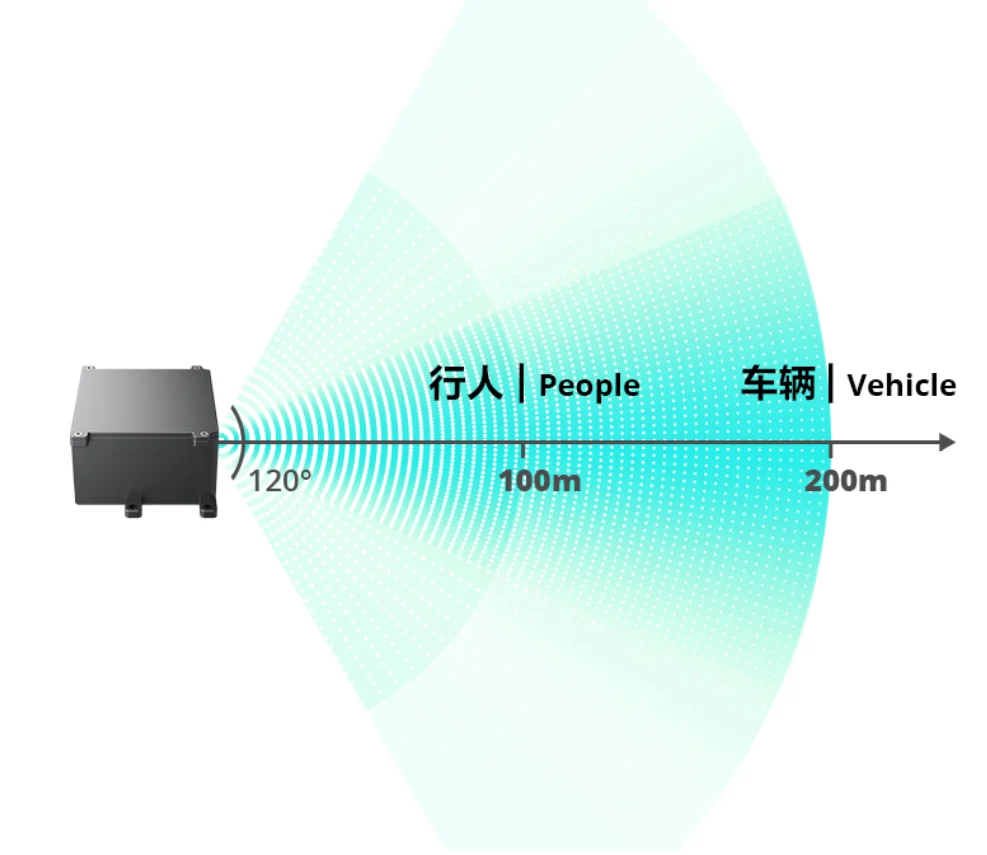
These two rotating-prism solid-state LiDARs operate at a 905 nm wavelength. At a 10% reflectivity rate, their detection range reaches 150 meters. With a horizontal field of view of 120 degrees and a horizontal angle of approximately 80 degrees, they deliver a point cloud density equivalent to that of a 144-line LiDAR. On paper, these parameters are not particularly impressive.
However, looking at XPENG’s self-developed driver assistance logic reveals that its primary sensor remains the camera. The LiDAR serves mainly as a safety redundancy rather than a core sensing component.
Hardware specifications alone are meaningless; real-world experience is what truly matters. In September, XPENG released video footage of urban NGP in action. The content was not stunning, though our threshold for being impressed may have been raised.
In terms of functionality, the system effectively identifies unprotected left and right turns, two-wheelers occupying lanes, and vehicles merging suddenly. The integration of high-precision urban maps makes the vehicle appear notably smarter when navigating complex road markings.
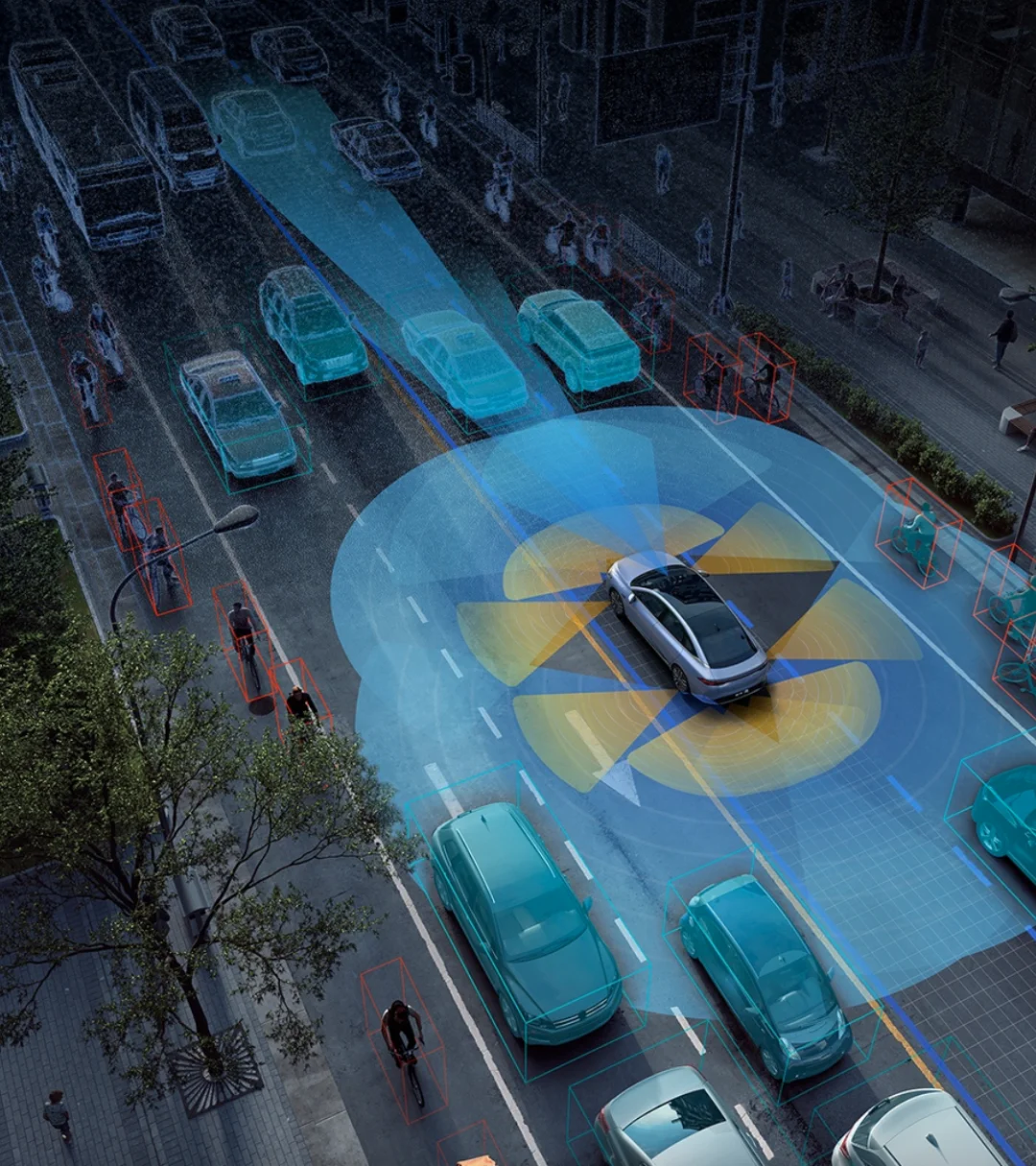
Based on currently known information, the hardware specifications for XPENG 3.5 remain unchanged from previous iterations: it still features two LiDAR units and relies on the same NVIDIA Xavier chip with 30 TOPS of computing power.
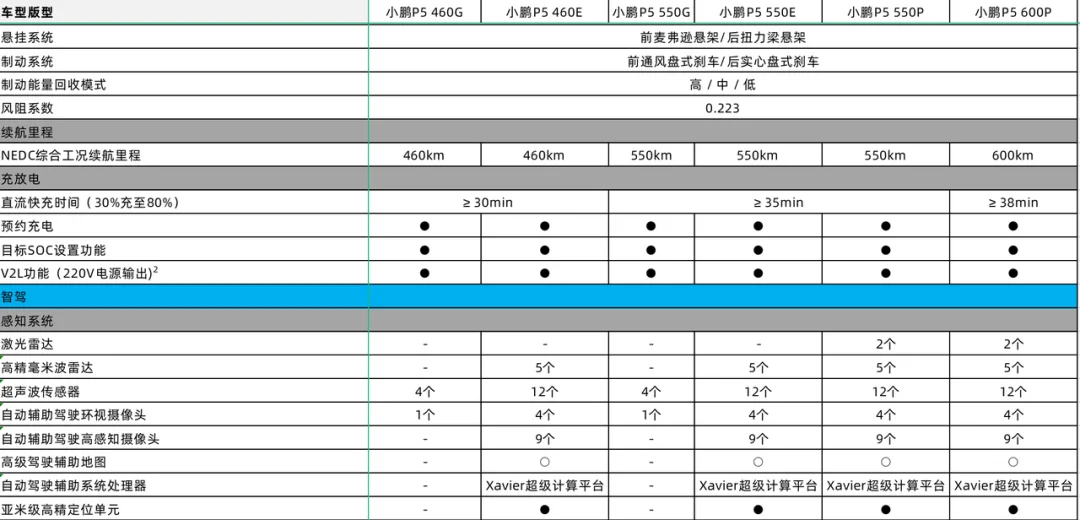
Consequently, in terms of hardware, the P5 does not offer significant advantages compared to models planned for release next year. However, the excellent experience provided by Highway NGP indicates that XPENG is currently the automaker that best understands China's road environments, raising my expectations for the urban NGP experience.
The lack of major hardware upgrades points to lower costs. By offering the same functionality at a more affordable price, XPENG delivers what can be described as a disruptive advantage.
Charging Infrastructure, Charging Infrastructure, and More Charging Infrastructure
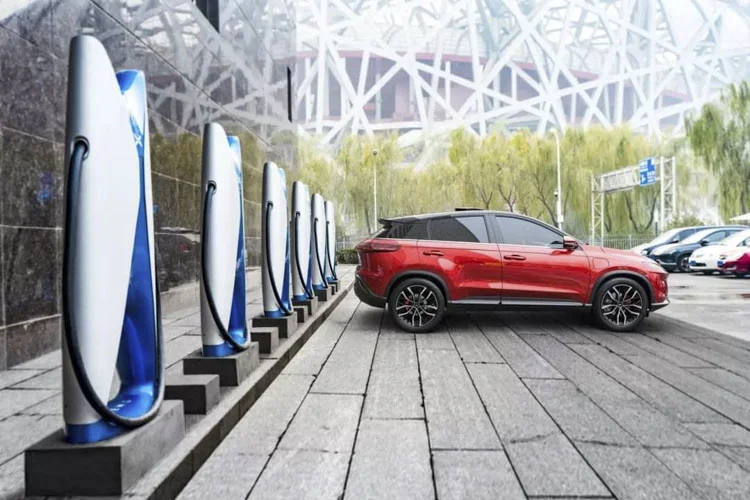
The promotional poster depicts XPENG’s self-built Supercharger stations lining both sides of the road.
This year, XPENG has deployed a large number of self-built Supercharger stations across cities, highways, and remote areas. While expanding coverage is an inevitable trend, merely announcing an expansion policy would likely fail to satisfy audience expectations or align with the 'technology' theme of the Tech Day event.
Information from XPENG's Hong Kong stock listing prospectus reveals that its next model will be a mid-to-large SUV built on the P7 platform. The current P7 battery capacity has reached 80.9 kWh. Given the higher energy consumption and larger body of an SUV, the battery capacity is certain to reach a new level.
However, XPENG's current generation of superchargers was launched more than three years ago, and their 90 kW charging speed offers little in terms of technical advantage. Meanwhile, new-entrant manufacturers such as VOYAH, Lixiang, and Zeekr have already announced faster charging speeds or prepared newer charging technologies.
Here, I’ll also make a bold guess: for XPENG’s next model, supercharging will see further iteration at this year’s Technology Day. You can also share in the comments what kind of charging and energy replenishment experience you hope to have.
Technology May Extend Beyond Cars
The other half of the poster is the sky. In the vast expanse of the sky, the black aircraft stands out remarkably.
Barring any unexpected developments, this is the Huitianlühangzhe X2 that XPENG previously exhibited at the Zhuhai Airshow. It is the third flying product launched by XPENG following the T1 and X1 aircraft.
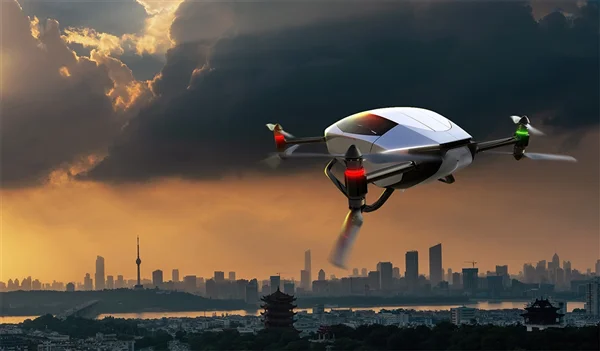
Starting from the 2020 Guangzhou Auto Show, XPENG began bringing these aircraft to its exhibition booth. Looking at this concept from today's vantage point, more than half of people would likely consider it too fanciful. Although during a Monday morning rush hour jammed with traffic in the rain, I thought more than once that it would be great if my car could fly, I also believed that this idea had no possibility of realization.
It is premature to dismiss this innovation outright, as every groundbreaking need typically exhibits two characteristics: people claim it is great but unachievable, or they insist they do not need it.
02Looking Back
To be honest, XPENG’s releases of novel features always leave me in awe, yet I often wonder, "Will this actually be useful?"
Unfortunately, I am no prophet, and I cannot predict whether XPENG will successfully integrate these seemingly ahead-of-their-time functions into daily life.
But I can look at the present from last year’s 1024, to see how many of the surprises XPENG presented to everyone at that launch event have actually been realized.
The 93.2% daily voice usage rate was the answer given to us before October 24, 2020. But after 1024, voice usage at XPENG is no longer a feature metric, but has become an interaction data point.
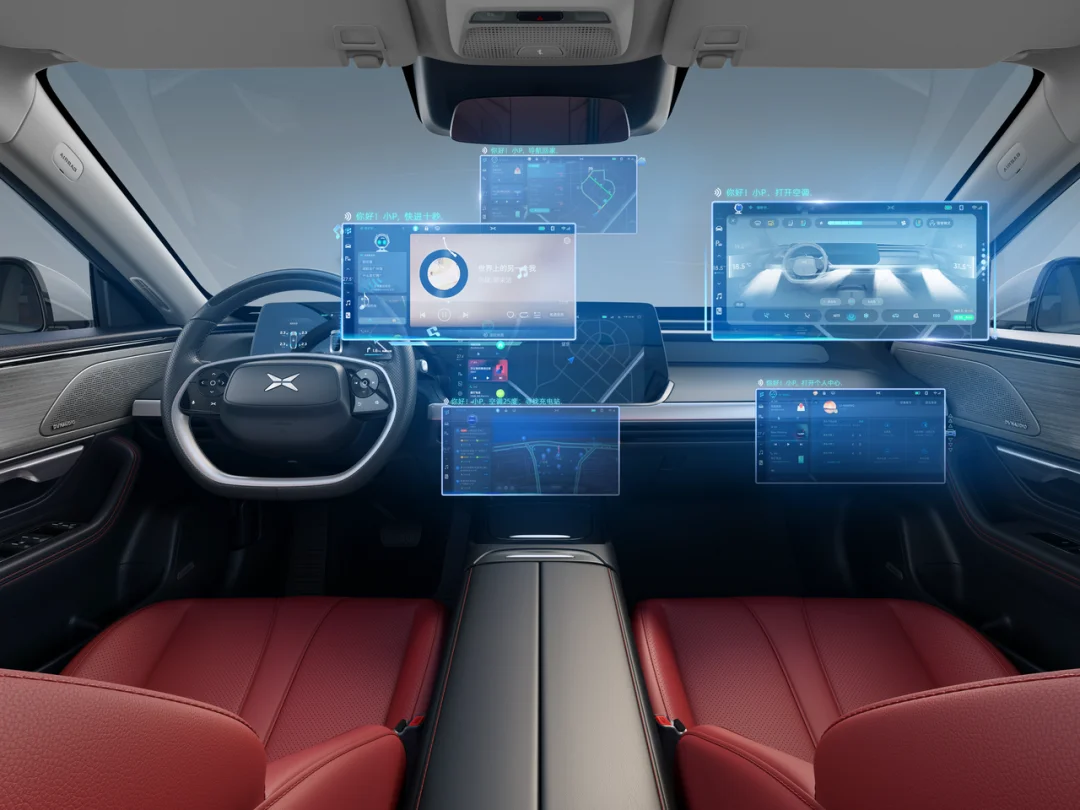
The release of V 2.1.0 Full-Scenario Voice Interaction allowed XPENG to leave competitors far behind in the smart cockpit arena, elevating voice control—a tool widely regarded as merely an "operational instrument"—to the same level of "interaction logic" as touch and physical buttons.
The precision of voice control—such as opening a window by exactly 1 percent; selecting specific voice command points to verbally confirm terms like 'I have read and acknowledge the above risks' in feature usage agreements; and continuous voice interaction that allows the vehicle to understand contextual content—left me quite impressed.
It is not that these operations are particularly common or magical, but rather that this logic fundamentally overturns the previous notion that voice assistants serve only functional scenarios. Instead, voice has been integrated into the central control system, allowing drivers to use speech instead of touch interactions, which are difficult to use while driving.
Looking at the present, among the other two top new-energy automakers, Lixiang and NIO began rolling out their own full-scenario voice assistants in September this year. Even with its Aspen 3.0 update, NIO’s NOMI does not offer a continuous voice experience as smooth as XPENG’s, retaining a sense of disconnect akin to talking to a robot. Meanwhile, Lixiang’s version 2.2 'Lixiang Tongxue' function is merely following in XPENG’s footsteps.
It is evident that after XPENG launched its full-scenario voice assistant, both NIO and Lixiang subsequently introduced similar features, suggesting either slower R&D rhythms or a failure to anticipate the trend until competitors had already established a presence.
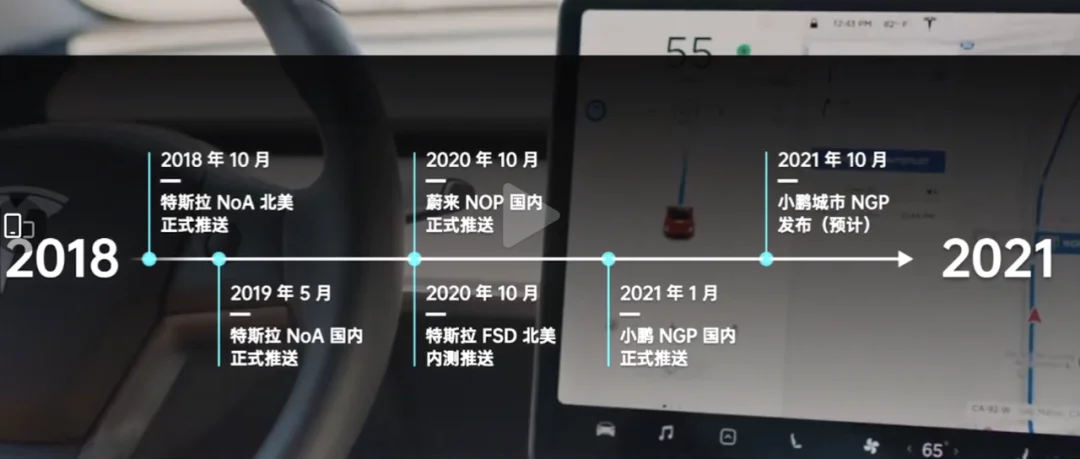
In terms of driver assistance, although XPENG’s Highway Navigation Assist (NGP) launched at the October 1024 event last year was not the earliest in China—Tesla’s NOA and NIO’s NOP were deployed earlier—the gap in XPENG’s time advantage is widening based on final results.
Data from 42Mark tests show that the XPENG P7 delivered a significantly higher score in real-world experience compared to the NIO ES6, which also uses high-definition map-based navigation assist. In actual driving, the P7, equipped with HD maps, performed notably better than Tesla’s sensor-algorithm-only approach, making more advanced judgments and decisions at complex on-ramp and off-ramp intersections.

Looking back, at last year's 1024 event, XPENG launched its full-scenario voice assistant and highway NGP (Navigation Guided Pilot). These features not only achieved absolute timing leadership but also accurately predicted technological trends.
Comparing the launch timelines of other manufacturers makes it clear that XPENG set the pace for the competitive race among the top three new-energy automakers regarding cabin technology and driver assistance. This intensified the frequent 'checkpoints' in their rivalry and spurred increased investment from the other two companies.
03Bullish or Bearish?
To be honest, writing this section reminded me of a mobile phone brand I once loved dearly: Chuizikeji. The smartphone features Lao Luo launched in 17, such as 'Big Bang' and 'One Step,' are gradually appearing on today's phones. Even his TNT (Touch And Talk) feature, which he heavily promoted at Beijing's Bird's Nest stadium back then, is now being implemented in modern vehicle infotainment systems.
Lao Luo was indeed ahead of his time, and so is XPENG. To become an industry leader, one naturally needs sufficient imagination and technical capability. More importantly, one must be willing to bear certain costs of trial and error.
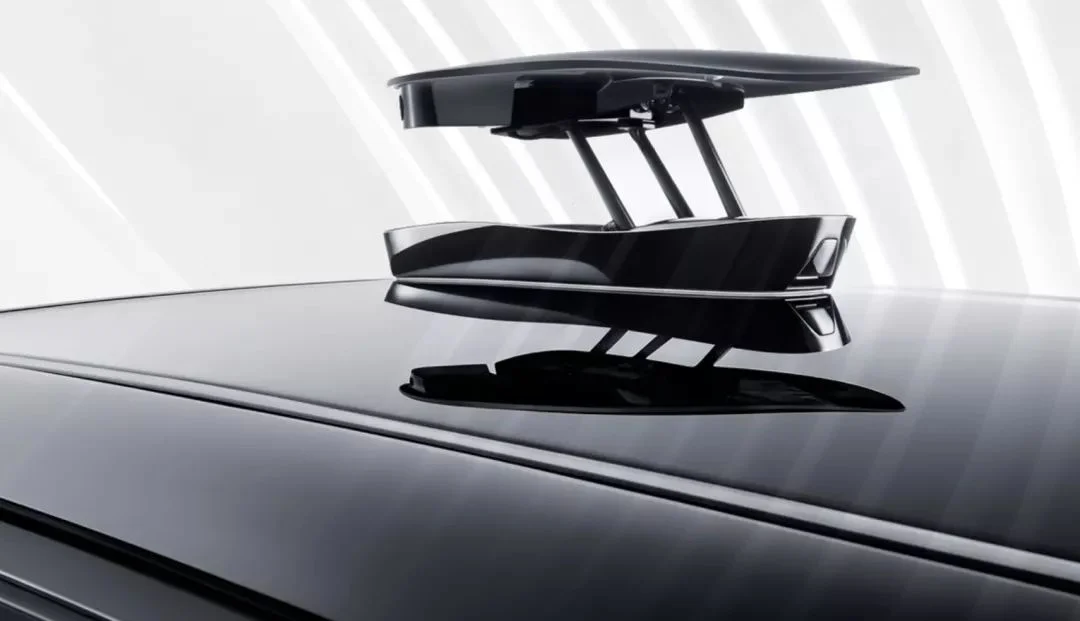
XPENG suffered a setback with the G3's roof-mounted camera. Although the feature was cool and could see all around the vehicle, it quietly faded from history due to its unique design and lack of user demand. Meanwhile, the P7's touch-sensitive steering wheel buttons, adopted for a more technological look, also caused considerable inconvenience in use.
However, every coin has two sides. Radical ideas and creativity inevitably come with corresponding risks.
We should certainly not "abstain from eating for fear of choking." XPENG's various creative visions for future mobility clearly indicate that the company is still in a vigorous growth phase.
As a relatively new brand, XPENG can leverage a fresh environment to explore boundless possibilities and undertake innovative ideas that more conservative enterprises might avoid. This narrative resembles a knight challenging a dragon; without such attempts by innovative companies, how would anyone know if these paths are viable?
Moreover, XPENG remains grounded. While it looks up at the sky regarding the future, it keeps its feet firmly on the ground today. Cars are built for people, and all intelligent features are designed to serve drivers.
However, XPENG currently faces more pragmatic challenges. Competitors are gradually catching up with NGP (Navigation Guided Pilot) and full-scenario voice assistants. Urban NGP, in particular, is a tough nut to crack. The key questions now are: how much lead can XPENG maintain, and how long will this time window last?
The microphone is now handed over to XPENG's 1024 Technology Day.
Written by: Jia Ming Edited by: Liu San