


800V SiC Platform, 480 kW Supercharging, XPILOT 4.0 and Xmart OS 4.0: XPENG Leads in 2021
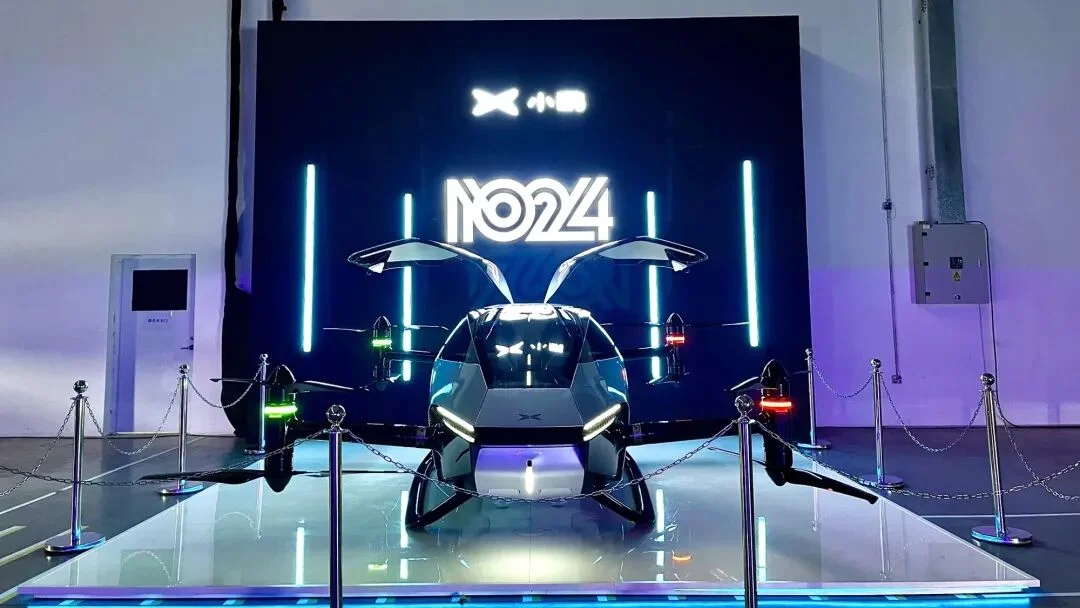
The 2021 XPENG 1024 Smart Day arrived as scheduled. As the company’s flagship event, it was packed with announcements.
The two-hour presentation felt like a high school lecture, so dense with information that note-taking couldn’t keep up. Highlights included the latest updates on XPILOT driver assistance, a new 800V voltage platform, 480 kW ultra-fast charging technology, and Xmart OS 4.0, alongside the robot horse and flying car concepts that many found hard to understand.
A one-sentence summary of the entire launch event is: we have what others don’t, and we’ve mass-produced what others are still developing. More importantly, XPENG is attempting to accelerate technology R&D through cross-domain layout to provide more extreme intelligent experiences.
Indeed, XPENG is running fast and decisively down the path of forward-looking technology exploration.
Now, let’s introduce the five latest achievements from XPENG’s 1024 Tech Day this year in the order they enter our lives.
01The Second Half: Mass-Production-Ready XPILOT
By convention, we first list XPENG’s current data regarding driver assistance:
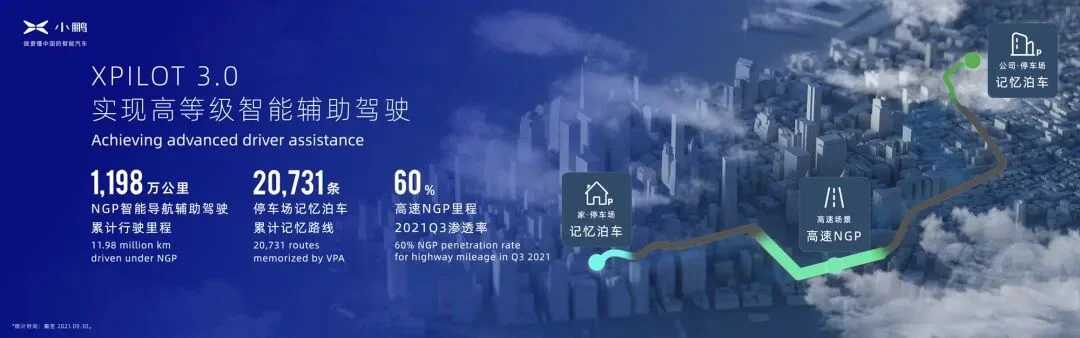
NGP accumulated 11.98 million kilometers of navigation-guided driving mileage;
Cumulative memory parking routes learned: 20,731;
Highway NGP penetration rate reached 60% in Q3 2021
At last year’s 1024 Technology Day, XPENG officially launched the Highway NGP navigation-guided pilot feature, which has remained an industry benchmark since its release.
As someone who is not particularly articulate, no amount of flowery language can fully convey the strength of NGP to those who haven’t experienced it firsthand, so we’ll let the data speak for itself.
By the end of Q3 2021, XPENG’s Highway NGP penetration rate had reached 60%, a significant jump from just 25% at the end of the first quarter after its initial rollout six months prior.
This indicates that over this half-year period, more owners became aware of NGP and recognized its value, with over 35% of P7 users opting to pay an additional RMB 20,000 or RMB 36,000 for the Highway NGP software service.
This is a vote cast with money.
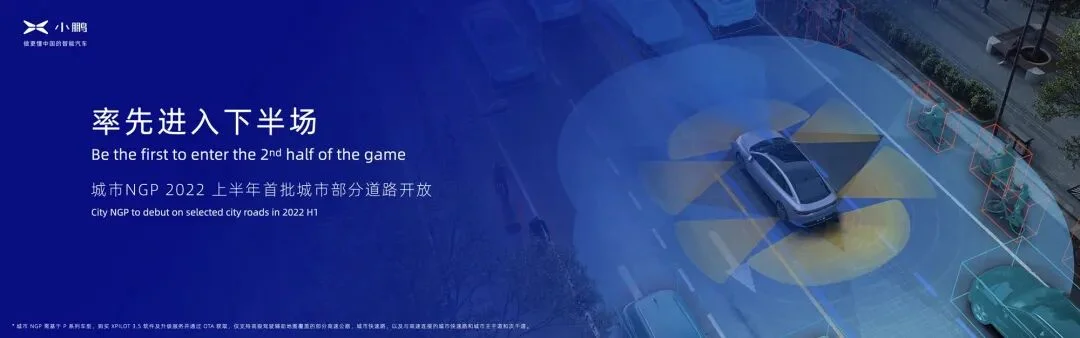
On this year’s 1024, XPENG Automotive released its City NGP (Navigation Guided Pilot) feature for assisted driving on urban roads and stated it would open access to selected city routes in the first half of 2022.
The day before 1024, we got an early look at XPENG VAP+NGP, which represents true point-to-point end-to-end autonomous driving.
Starting from a parking space in the underground garage of the Four Seasons Hotel in Guangzhou, the route passed through the underground garage, toll barriers, urban streets, construction zones, elevated highways, and village roads, finally arriving at the underground garage of XPENG Automotive headquarters.
A stroke of luck was that over the entire 15 km journey, there were zero driver interventions; we watched as the system handled one challenging scenario after another, demonstrating capabilities that already surpassed those of a newly licensed novice driver.
However, it must be noted that the current ride experience is very average, with a large number of irregular intermittent braking and hard braking events. During this batch of media test drives, each vehicle required an average of two to three interventions.
For specific performance details, please reply with "20211024 XPENG City NGP Experience" on our WeChat official account.
At this year's 1024 Technology Day, XPENG defined the deployment of urban scenarios as the opening move in the second half of intelligent driver assistance.
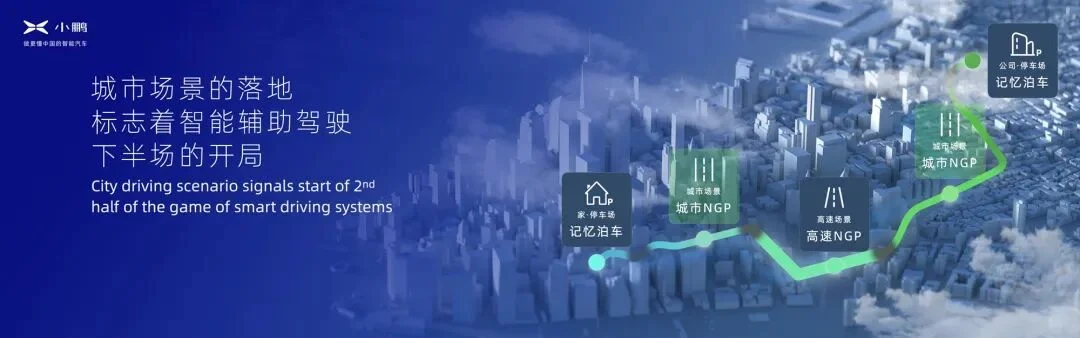
In XPENG's view, there are two tickets to enter the second half of the autonomous driving battle: mass production of urban scenario driver assistance and full-stack closed-loop capabilities.
XPENG also generously revealed several core capabilities required to achieve these goals during the launch event.
Positioning Capabilities Breaking Free from Constraints
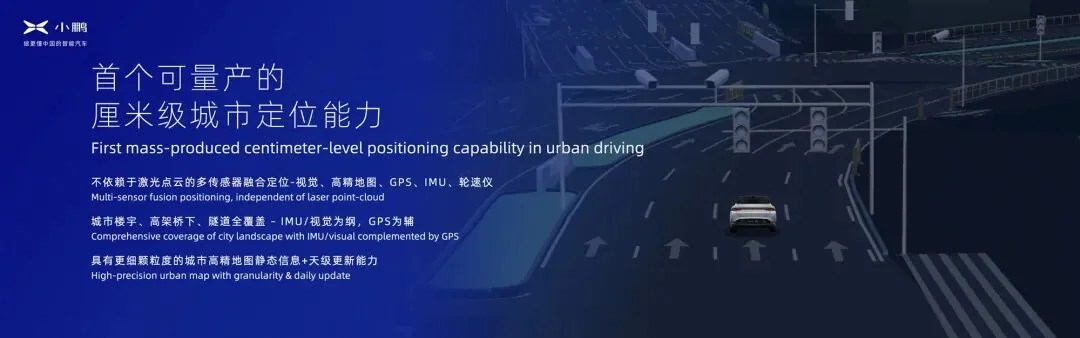
On the positioning front, XPENG has made changes in two aspects. First, it improved positioning accuracy from decimeter-level to centimeter-level. Second, it shifted the primary positioning method from "GPS-centric" to "vision- and IMU-centric."
The first point, the change in positioning accuracy, is easy to understand and will not be elaborated on here.
For the second point, a brief explanation: currently, much of XPENG's Highway NGP capability relies on GPS positioning. High-precision map-based GPS positioning is conceptually similar to smartphone GPS, just with higher accuracy. Relying on GPS positioning has enabled XPENG to implement navigation-guided assisted driving on highways.
However, urban roads differ from highways in that they contain numerous tunnels, buildings, and overpasses, making GPS signal loss highly likely. When GPS positioning is lost, navigation accuracy naturally degrades—a experience familiar to users of smartphone navigation apps.
To address urban positioning challenges, XPENG has adopted a visual and IMU-based localization system independent of signals. While this approach is not constrained by GPS signals, its disadvantage lies in the extreme difficulty of visual positioning. Currently, most visual perception systems offer mediocre distance-measurement capabilities, making high-precision ranging via vision highly challenging.
Finally, there is the issue of high-definition map freshness, a topic of significant industry concern. Dr. Wu Xinzhou did not elaborate extensively on this point but briefly mentioned that he and his team at Amap aim to update map information on a "daily" basis.
Further Advancements in Perception
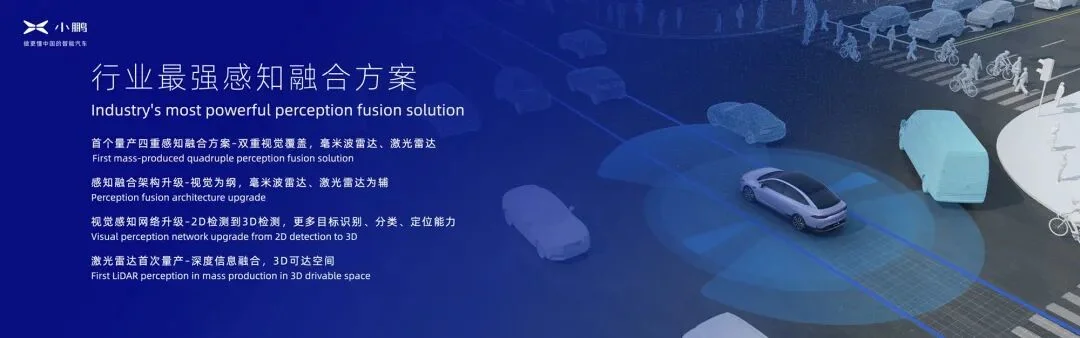
The XPENG P7 currently equipped with XPILOT 3.0 relies primarily on cameras and millimeter-wave radars as its main sensors. Although the millimeter-wave radar has distance-measurement capabilities, it can only track a single simple vehicle target, making it completely unsuitable for urban road conditions.
So on the P5, XPENG added 2 LiDAR units; these 2 LiDAR units provide a large amount of distance information.
Furthermore, to enhance short-range perception, XPENG has integrated data from four surround-view cameras positioned around the vehicle into the decision-making list for driver assistance. This aims to achieve more comprehensive perception and establish redundancy with the eight dedicated driver-assistance cameras mounted on the body.
Predictions That Defy Difficulty
While higher speeds on highways increase velocity, the complexity of decision-making remains relatively low. In contrast, urban driving involves not only intricate road information but also a far more complex mix of traffic participants.
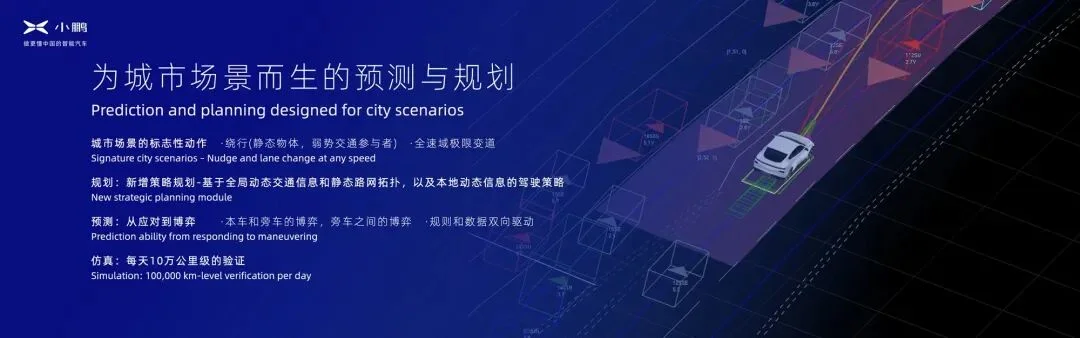
To address this, Dr. Wu Xinzhou has categorized various challenging urban scenarios into two primary maneuvers: navigating around obstacles (static objects and vulnerable road users) and executing full-speed-range extreme lane changes.
However, this process presents multiple difficulties, including variations in driving styles across different regions and strategic interactions with surrounding vehicles.
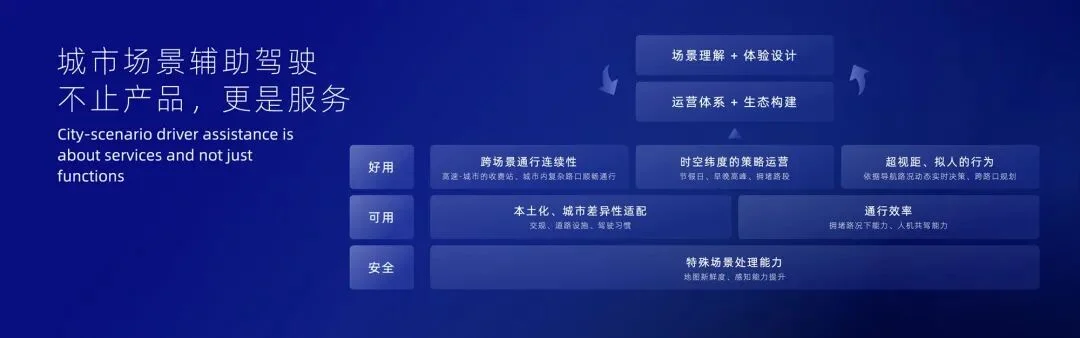
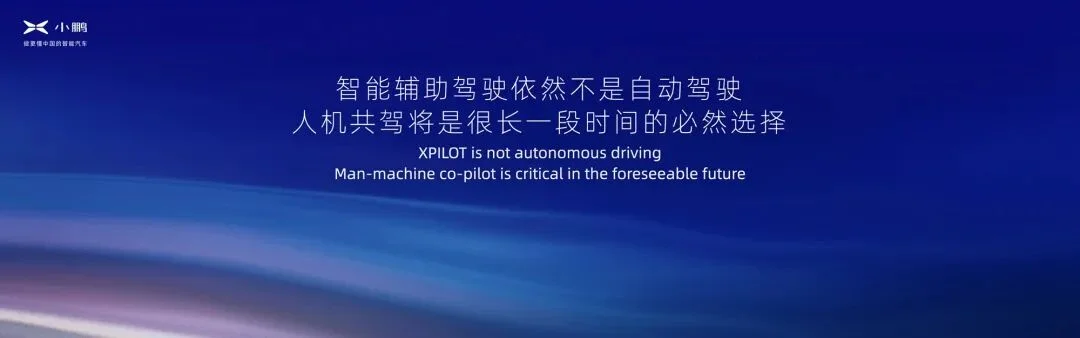
XPENG repeatedly emphasized that assisted driving is not autonomous driving. Human-machine co-driving—whether between human drivers and automated vehicles, or among different types of automated and human-driven cars—will remain an inevitable choice for a considerable period.
Finally, regarding XPILOT, XPENG shared its roadmap for the near future:
XPILOT 3.5: Urban NGP to launch in the first half of 2021
XPILOT 4.0: Full-scenario intelligent assisted driving to launch in the first half of 2023
XPILOT 5.0: Evolution toward autonomous driving
As expected, vehicles equipped with XPILOT 4.0 will feature two NVIDIA Orin X chips, delivering a total computing power of 508 TOPS. The forward-facing camera resolution will increase to 8 megapixels, while side-view cameras will be 2.9 megapixels. These models will also adopt more integrated domain controllers.
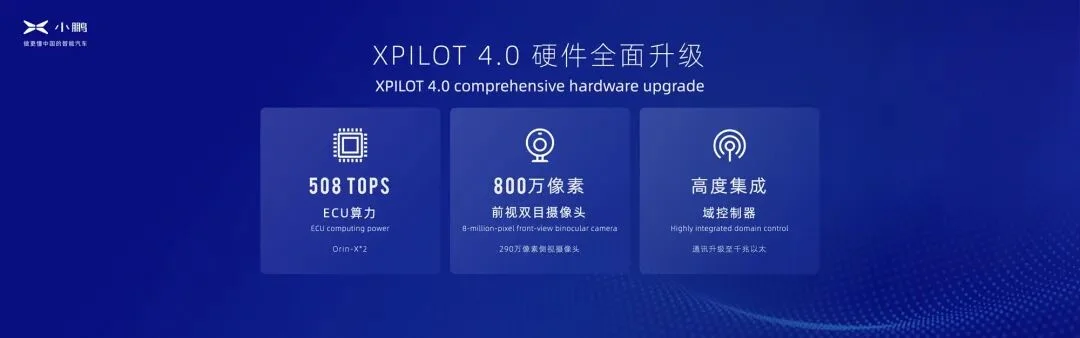
At the press conference, Dr. Wu Xinzhou revealed that XPILOT 4.0 will be featured on new cars launching later this year, and the architecture for XPILOT 5.0 is already complete.
Those familiar with XPENG know that the year-end new model is an SUV built on the same platform as the P7.
02800V SiC Platform + 480 kW Supercharging Technology
As a car owner, I must complain here: I have waited too long for this new supercharging technology.
XPENG is one of the few automakers to layout its supercharging network in advance. Although it showed foresight as early as 2018, its technology did not hold a significant advantage compared to the rest of the industry. In an environment where 250 A charging piles are widely popularized, many of XPENG’s self-built superchargers still only support 200 A. This means they cannot even fully utilize the charging power of their own P7, let alone offer a major advantage over other models.
Fortunately, it is not too late to launch the new supercharging solution at this time.
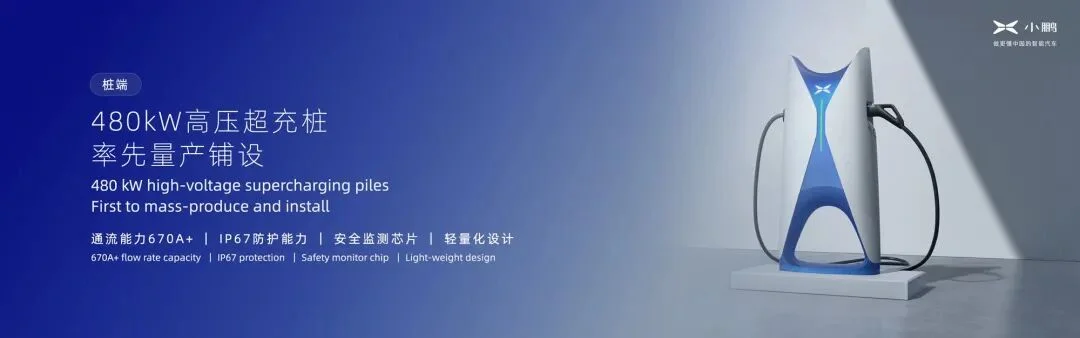
Looking briefly at the data, XPENG’s approach for the vehicle side is an 800V high-voltage platform based on Silicon Carbide (SiC), supporting a maximum input current of 600A and achieving a drivetrain efficiency of more than 95%. For the charging pile side, XPENG aims for 480 kW power output combined with lightweight design.
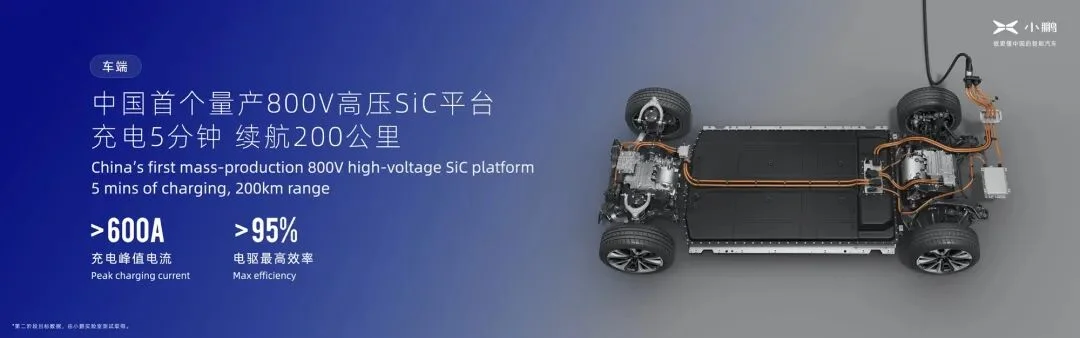
As of the end of 2021, it can be observed that an increasing number of automakers are preparing to launch models based on the 800V platform, and it is expected that SiC power devices will also experience explosive growth alongside the 800V platform to improve efficiency under high-voltage platforms.
Another crucial detail regarding charging infrastructure is that XPENG has not only developed a 480 kW charging pile but also independently researched a storage-integrated charging technology. According to its official website, this system can store enough energy to support uninterrupted high-power supercharging for 30 vehicles in one cycle.
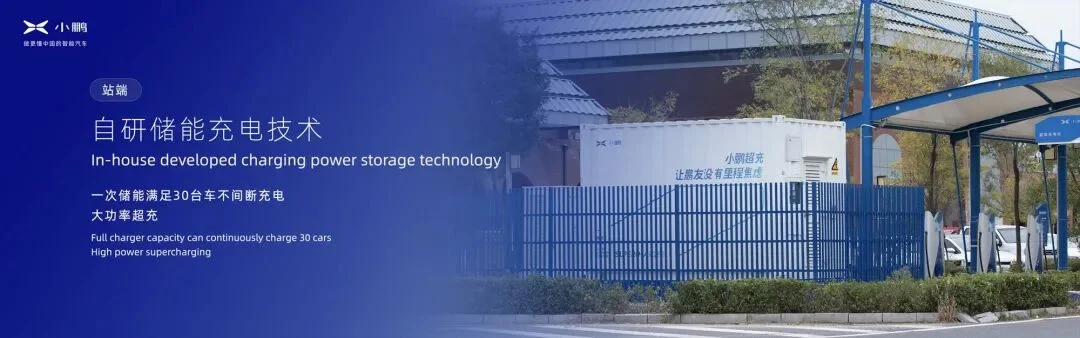
There are two points worth noting here.
First, charging technology paired with energy storage will inevitably become a standard feature for supercharging stations.
To achieve faster replenishment speeds, automakers have introduced higher-power charging technologies and batteries compatible with fast charging. However, a single vehicle’s demand for up to 480 kW poses significant challenges to the national grid. For context, the peak power consumption of a typical household is only 5–8 kW; 480 kW is equivalent to the instantaneous full-load usage of more than 60 households.
Therefore, to maintain stable supercharging power and utilize grid electricity more efficiently, energy storage serves as a core component of high-power charging stations.
Second, assuming a vehicle battery capacity of 70 kWh, XPENG’s claim that its storage station can support uninterrupted high-power supercharging for 30 vehicles implies a required battery capacity of at least 2 MWh for the storage unit, excluding losses. Conservatively estimating the cost of the supercharging equipment alone, the investment starts at RMB 2 million.
High-power charging inevitably delivers a superior refueling experience, but it requires automakers to have the financial strength to build out an entire ecosystem.
Regarding the layout strategy for ultra-fast charging, I also specifically interviewed XPENG's He Xiaopeng himself after the 1024 launch event.
He stated: "I will consider the pace and costs, as well as the replacement costs driven by technological changes. If we do too much too early, subsequent technological shifts can lead to significant adjustments. Additionally, I will factor in how intelligent driver assistance systems evolve into different stages in 2023, 2025, and 2027. I am considering many pacing variables. However, I have set a flag: by 2023, we must deliver a very good refueling experience. This is something we are firmly committed to doing, not only in China but also overseas."
03Xmart OS 4.0 Cannot Be Ignored
At this year's 1024 Tech Day, Xmart OS 4.0 flashed by briefly; compared to the grand presentation of Xmart 2.5 last year, this 4.0 appeared somewhat rushed. This may also be related to the fact that the press conference contained too much substantial content, squeezing the time allocated for Xmart OS 4.0, which led to this part being overlooked by many people.
Unlike the clear direction of autonomous driving, the development of the cockpit has been stumbling, with no definitive roadmap established to date.
Last year, XPENG introduced the concept of full-scenario voice interaction, a feature that became the subject of imitation by both new and established players in the automotive industry. As a pioneer in cockpit technology, I am eager to see XPENG's new direction.
Reviewing the videos from the press conference carefully, we can summarize several key points:
The all-new UI
WYSIWYG visualization
Full-Scenario Voice 2.0
We won't delve into the full-scenario voice assistant here. What is particularly interesting is the "what you see is what you get" visualization approach.
In terms of driver assistance, we place great emphasis on the importance of visualization, as it is the most fundamental interaction between the vehicle and the human. More realistic visualization better reflects the system's status.
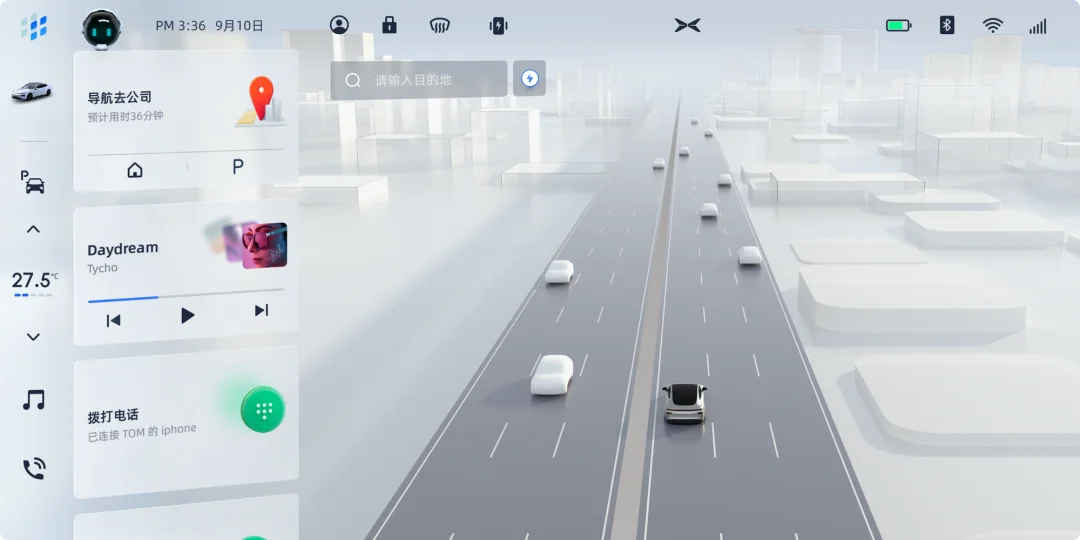
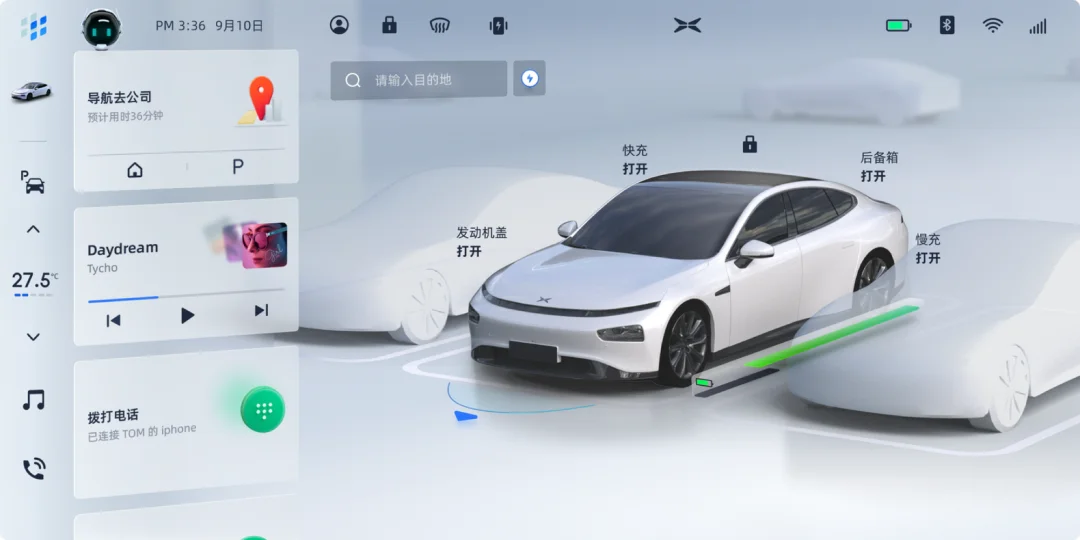
This principle applies similarly to other areas of the vehicle. When you hand a complex electronic device to an older relative, they are unlikely to figure it out quickly; the core reason is the high cognitive load. The increasingly prevalent large screens have brought this same issue into the car, and XPENG has once again taken the lead in attempting to address it.
04The Unfathomable Robot Horse and Flying Cars
The technical details regarding these two points will not be elaborated on in this article. Interested readers can refer to the core PPT slides provided.


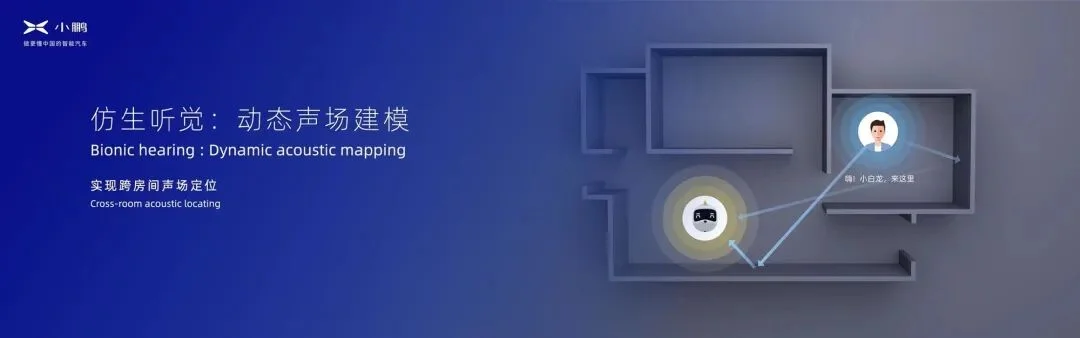
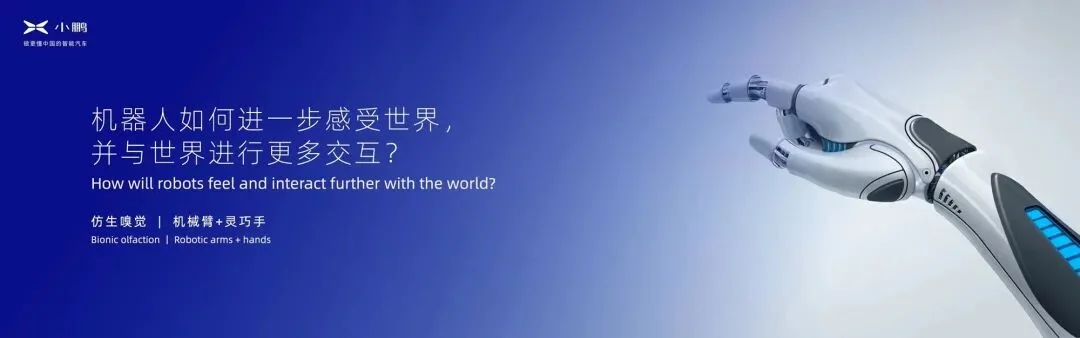
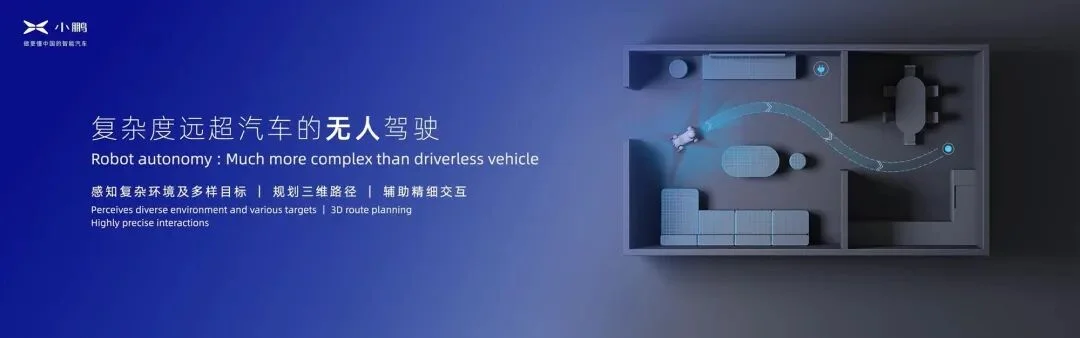
When XPENG first launched its robotic horse and remained committed to developing flying cars, I was also deeply puzzled. Why not just focus on building great cars?
However, the 1024 event already revealed some clues.
Beyond building a full-chain intelligent ecosystem, XPENG hopes to conduct divergent technical research through other means, enabling mutual empowerment among its businesses when the time is right. Perception capabilities serve as a prime example.
05Conclusion
To be honest, the 1024 Tech Day exceeded my expectations in many ways, restoring my confidence in XPENG. I will conclude this article with a quote from Dr. Wu Xinzhou.
"We will see it in mass production in the second half."
Written by: Liu San Edited by: Liu San