


Can a RMB 80,000 Car Be Called a 'Car'? A Review of the Baojun KiWi EV
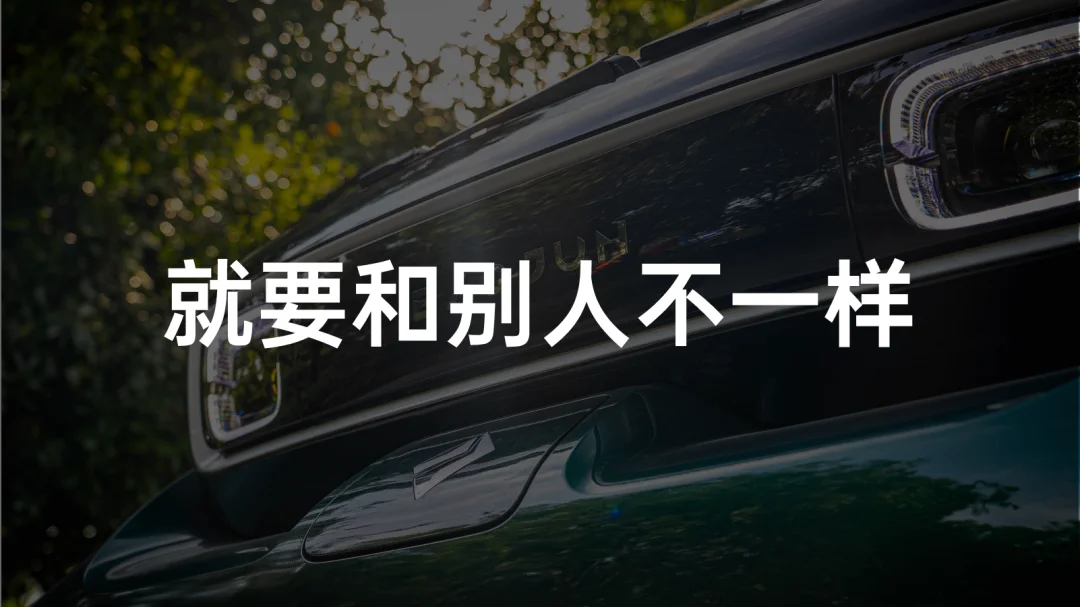
To be honest, as a Shanghai kid who grew up on wheels, my most vivid childhood memories of travel involve my parents driving the domestically popular 'Old Sang'—a Shanghai Volkswagen Santana—to take me around every corner of downtown Shanghai while I sat in the back seat.
At that time, clueless as I was, I became fascinated by this large machine: long and narrow at the front and rear, boxy in the middle. With just a few turns of the key, Dad could bring it to life; with a push of the central lever, he could take Mom and me anywhere we wanted, rain or shine, safely bringing us home.
Back then, I thought my parents were incredibly great for knowing how to drive. I would often rest my hand lightly on the gear shifter, letting Dad shift gears while guiding mine. That was my first taste of 'driving pleasure.'
When I shouted inside the car, 'When I grow up, I want to know how to drive just like Mom and Dad!' everyone laughed. But I truly didn't understand their amusement because this car had taken me to places many of my classmates had never been, exposing me to all sorts of unusual people and sights along the way. The car was like a key in my heart, helping the young me slowly unlock the world.
As I grew older, my understanding of cars expanded. However, due to family background and my parents' professions, the models I encountered were mostly German family sedans. This gave me a preconceived notion of what a 'car' should be: it ought to have distinct front, body, and rear spaces, and parking required careful estimation of size from multiple angles.
So, when I first saw the Baojun KiWi EV, I was stunned.
It seemed to overturn my entire understanding of what a car is.
01Prioritizing Looks Over Substance
On the afternoon of September 24, Hangzhou was sweltering. Although October was nearly upon us, the lingering "autumn tiger" kept the weather summer-like, with outdoor temperatures still soaring to 30°C.
By the time I arrived at the hotel lobby, clad in my usual gear, I was drenched in sweat. The sight of a full row of KiWi EVs greeted me. This wasn’t just because the morning heatwave was unbearable; it was also my first time experiencing this type of pure-electric A0-class microcar. I had no prior frame of reference for such vehicles, especially given their sibling model, the Wulinghongguang MINIEV, which has achieved sales miracles in the automotive market. Naturally, my feelings were a mix of nervousness and anticipation.
I wanted to see what surprises the KiWi EV would bring under the shadow of the MINIEV legend.
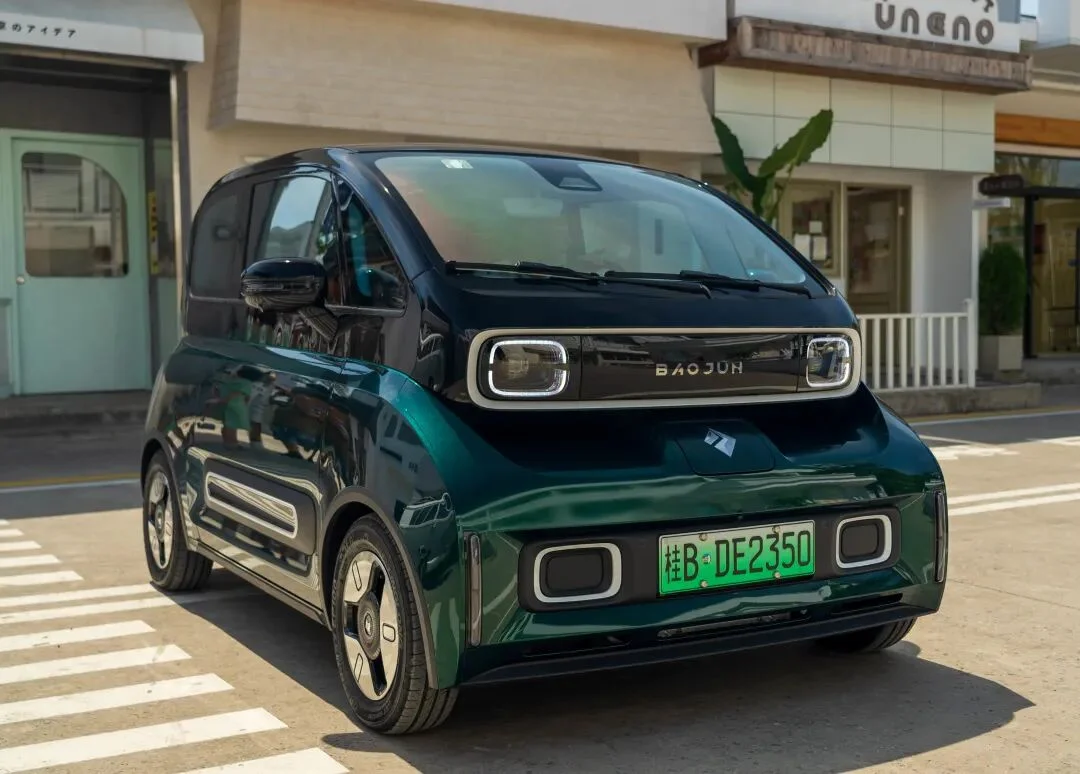
The moment I laid eyes on its exterior, I felt it was truly distinctive.
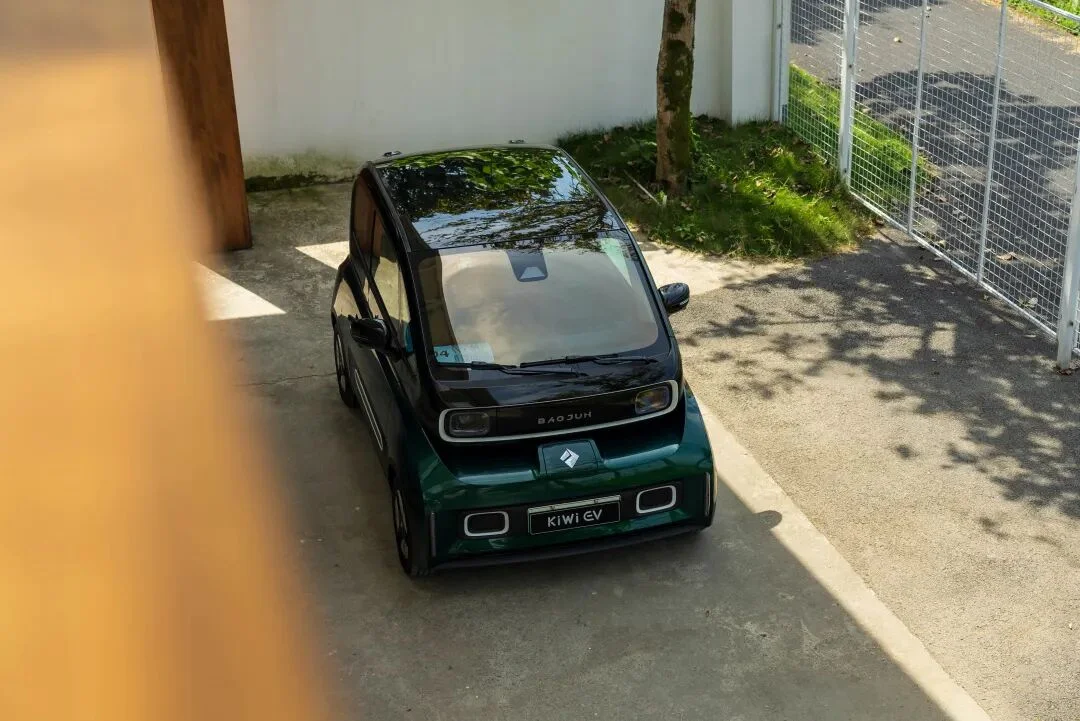
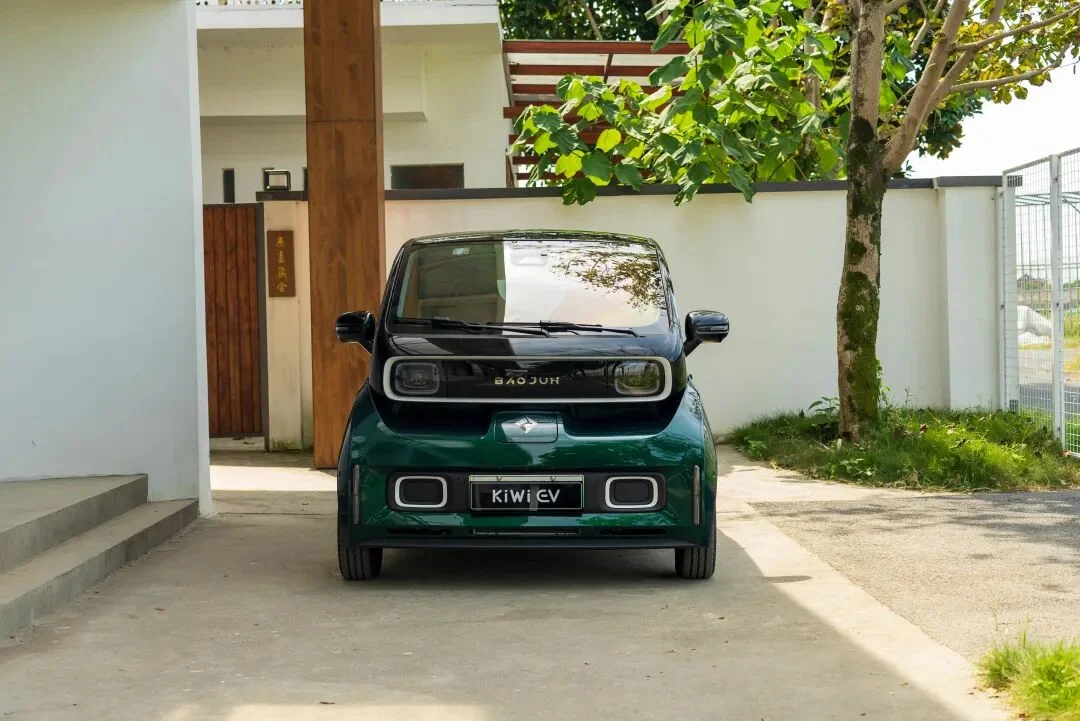
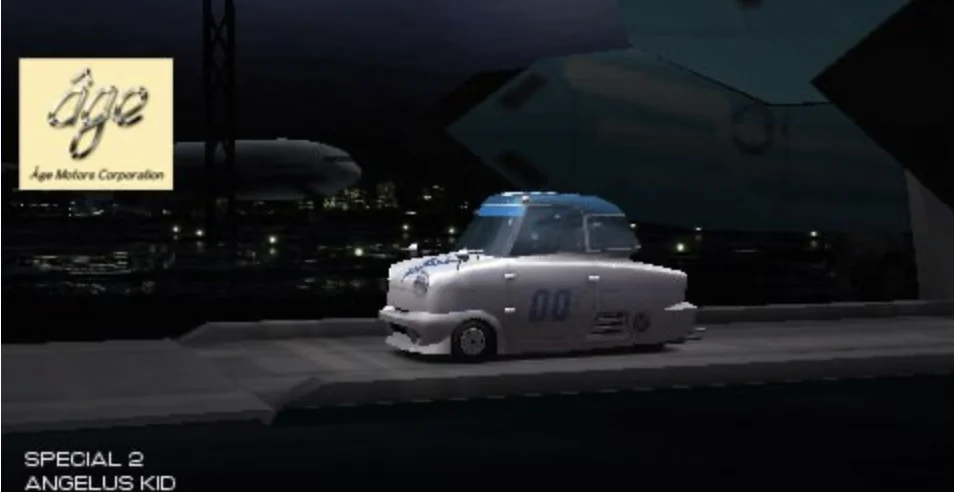
Unlike other A0-class microcars that typically favor rounded, cute design languages, the KiWi EV boasts a boxy, angular aesthetic. Its styling reminded me of the hidden sports car, Angelus Kid, from the racing game Ridge Racer I played in middle school.
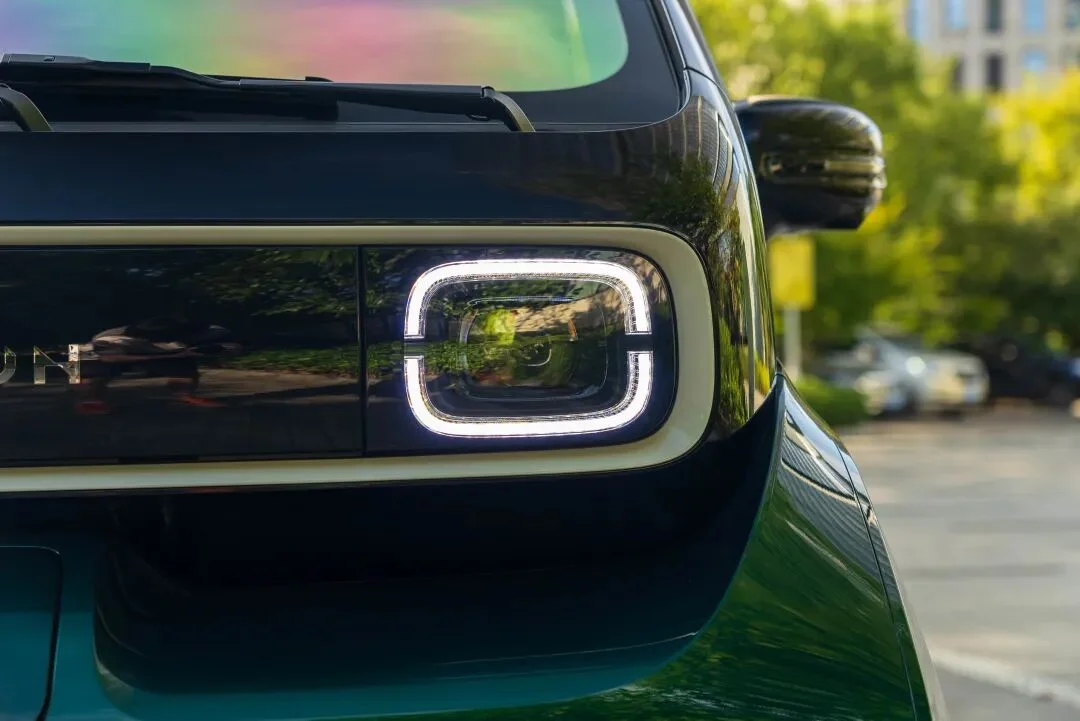
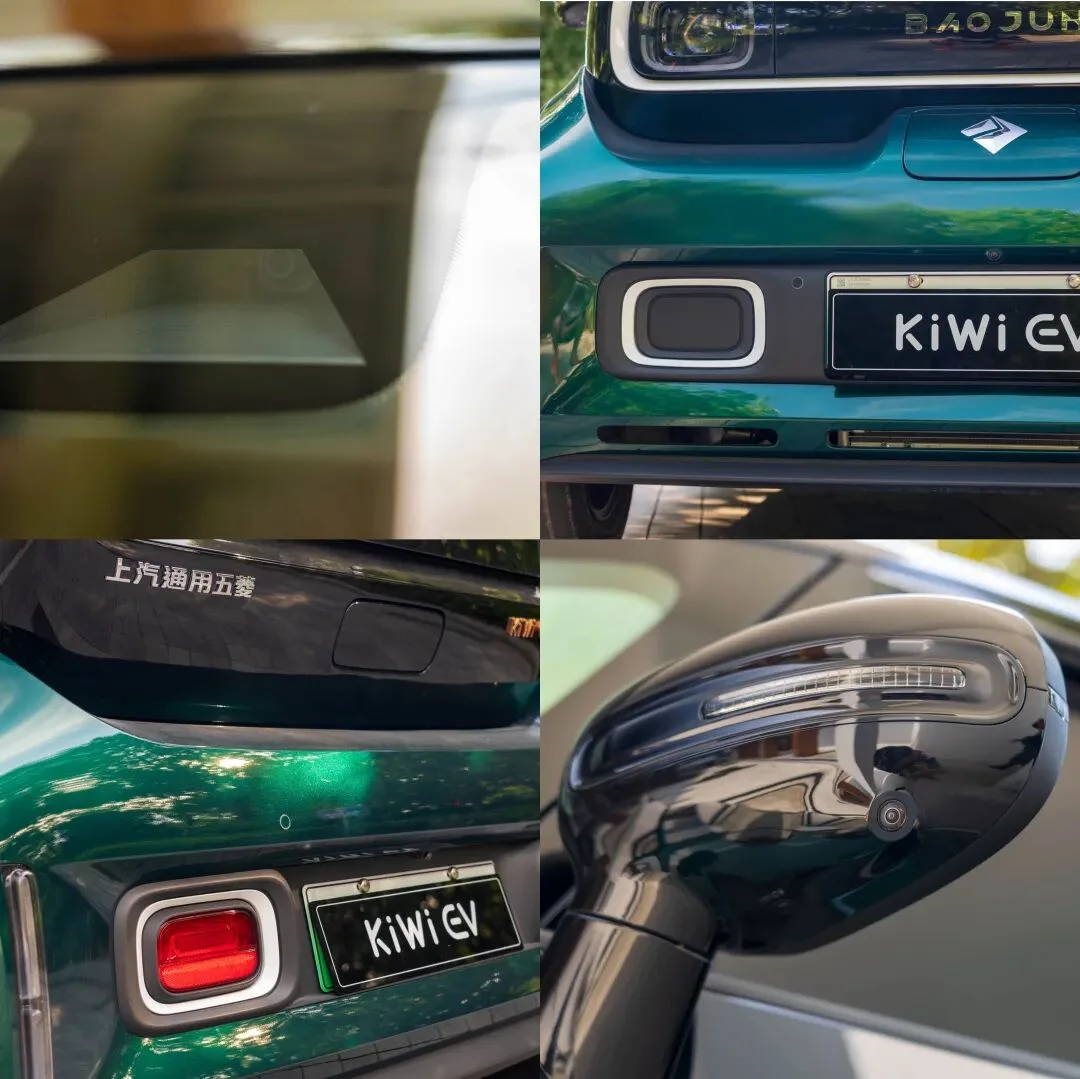
The square headlight clusters align with the vehicle's overall design language, avoiding any sense of abruptness. The LED ring-shaped daytime running lights also add a touch of quality to the exterior.
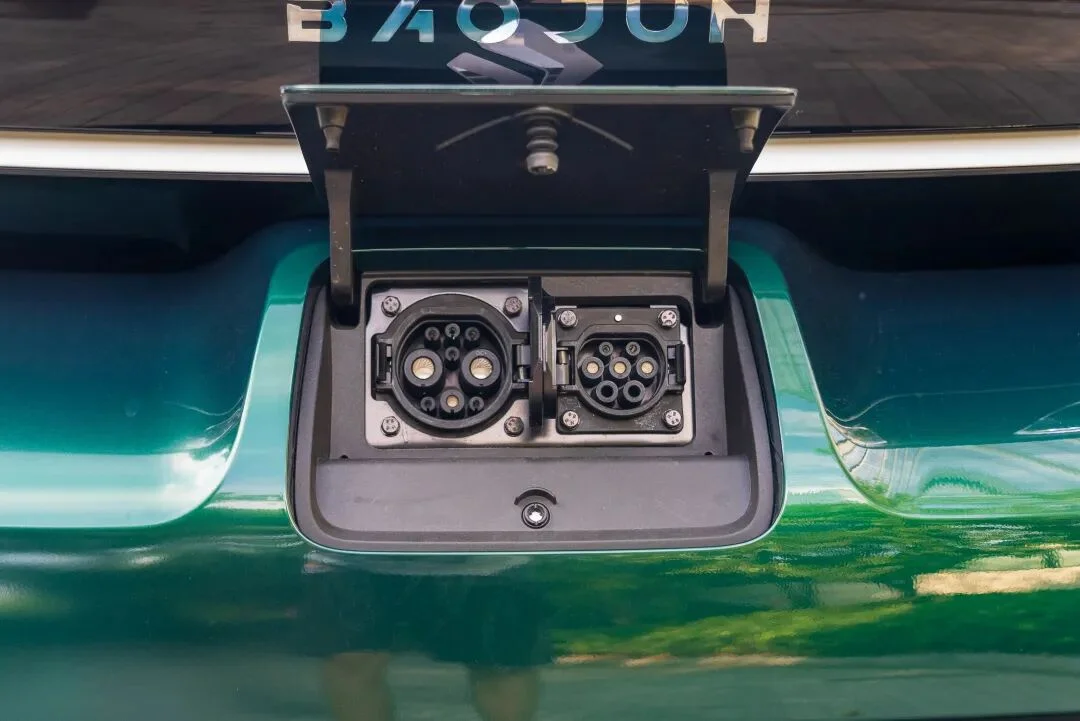
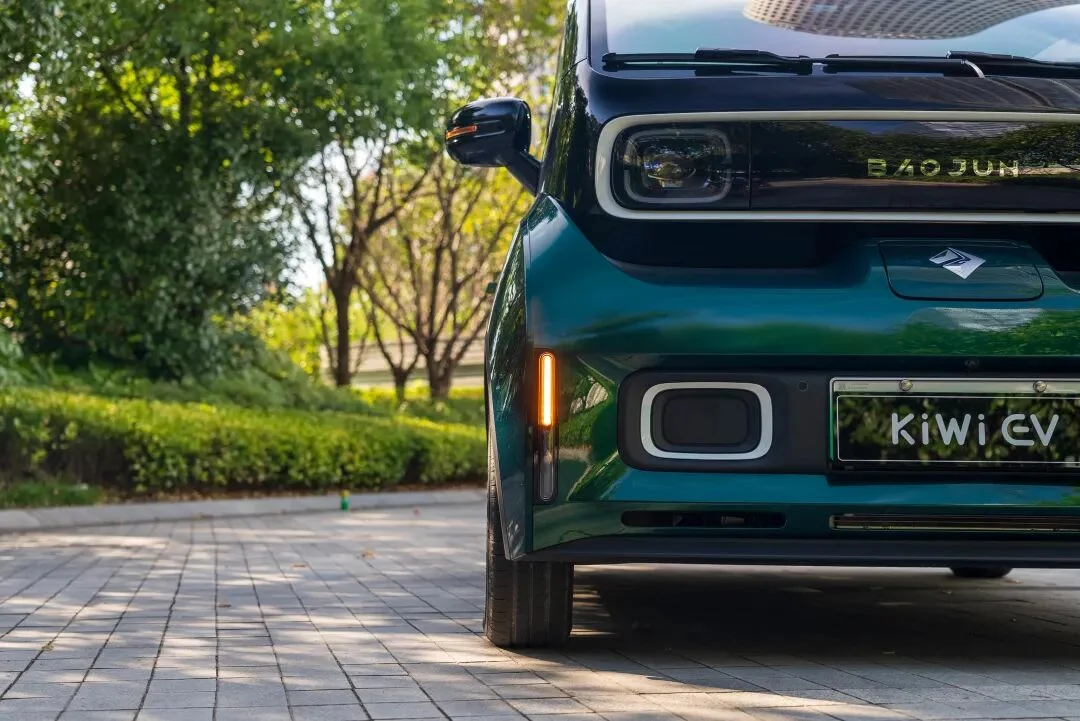
The charging port is located below the front logo. All trims come standard with an AC slow-charging port. However, lower-spec models are equipped with only one AC slow charger; adding a DC fast-charging port requires a paid option. This setup is somewhat puzzling. While the MINIEV lacks a fast-charging port entirely, the KiWi EV, which costs twice as much, still requires customers to pay extra for DC fast charging. At this price point, most electric vehicles include DC fast charging as standard equipment.
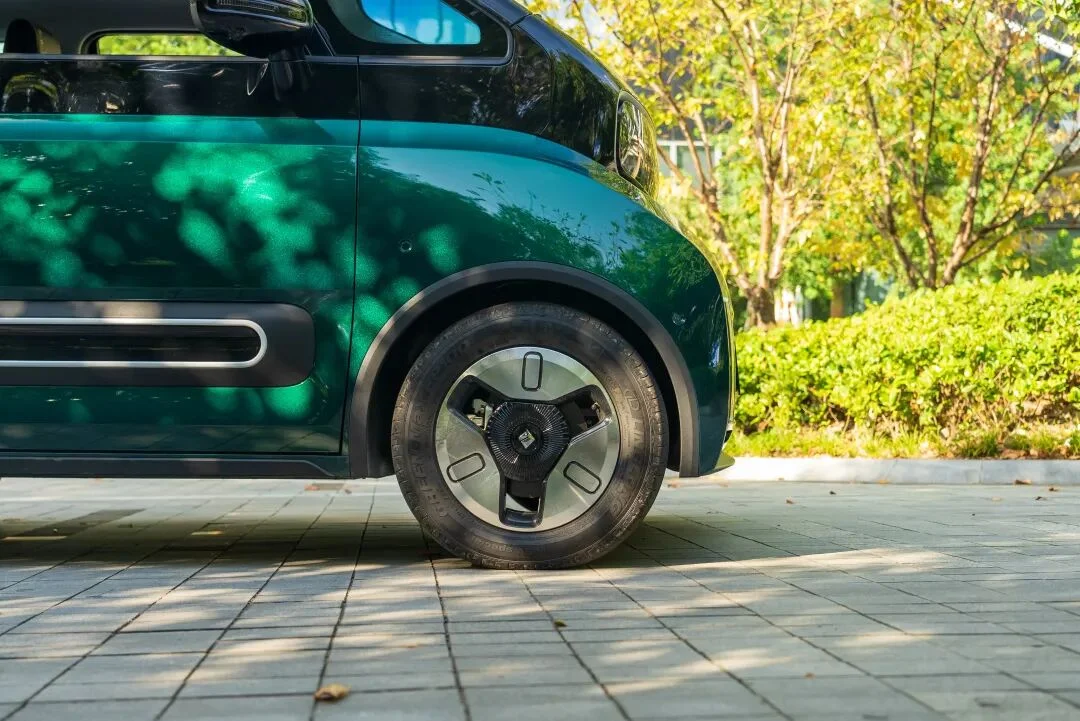
Moving to the side profile, the KiWi EV adopts the four-wheel-at-the-corners layout common among most micro cars. The wheels are positioned almost at the extreme edges of the body. Despite a total length of just 2,893 mm, it features a wheelbase of 2,020 mm.
The extremely short front and rear overhangs eliminate the visual distinction between a nose and a tail. Combined with nearly 90-degree angled corners around the body, the KiWi EV presents a boxy, single-volume silhouette from every angle.
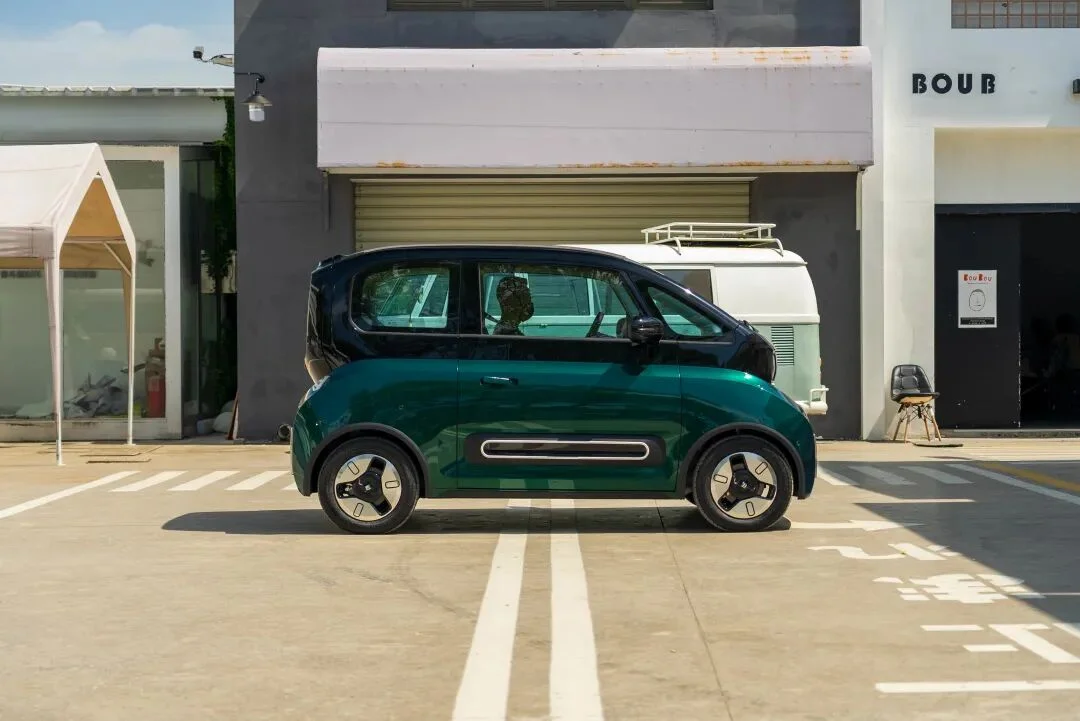
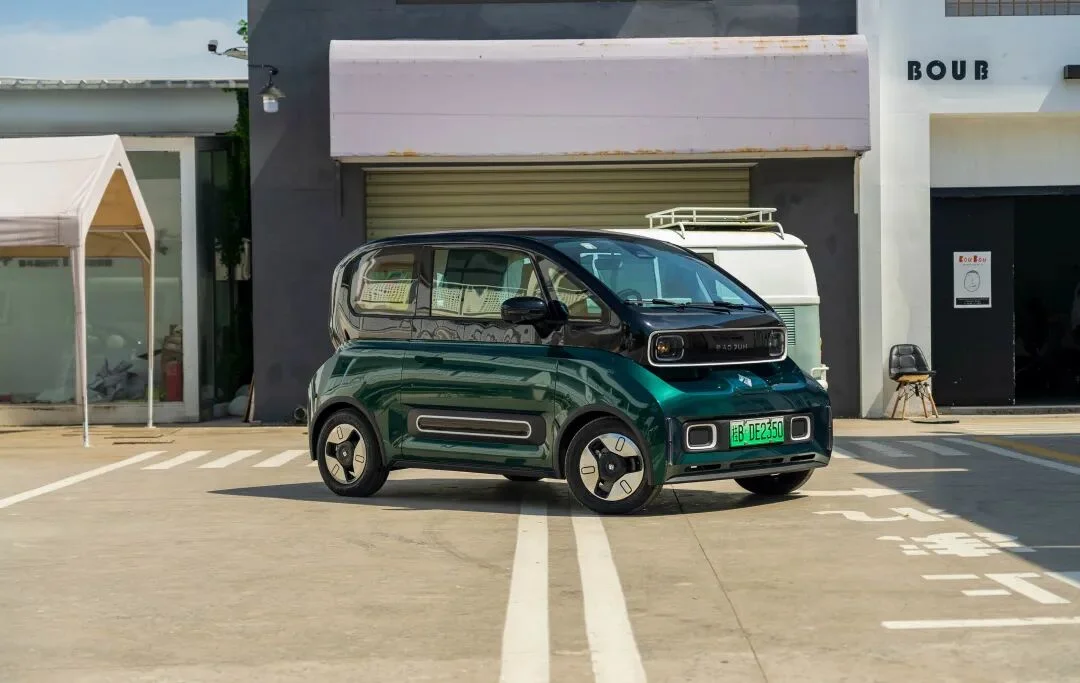
The footprint of the four wheels is nearly equal to the cabin area. The two-tone color scheme, black on top and green on bottom, creates a floating cabin effect that evokes a cyberpunk spaceship aesthetic. I particularly appreciate the two-stage design at the rear, which visually separates the cabin from the body.
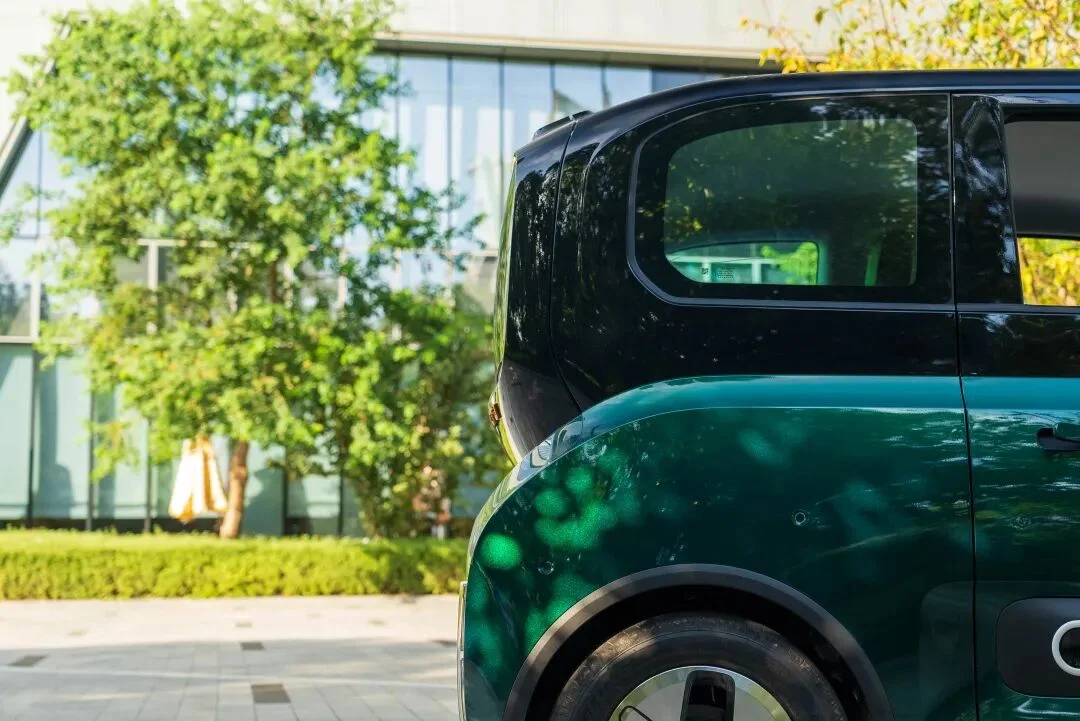
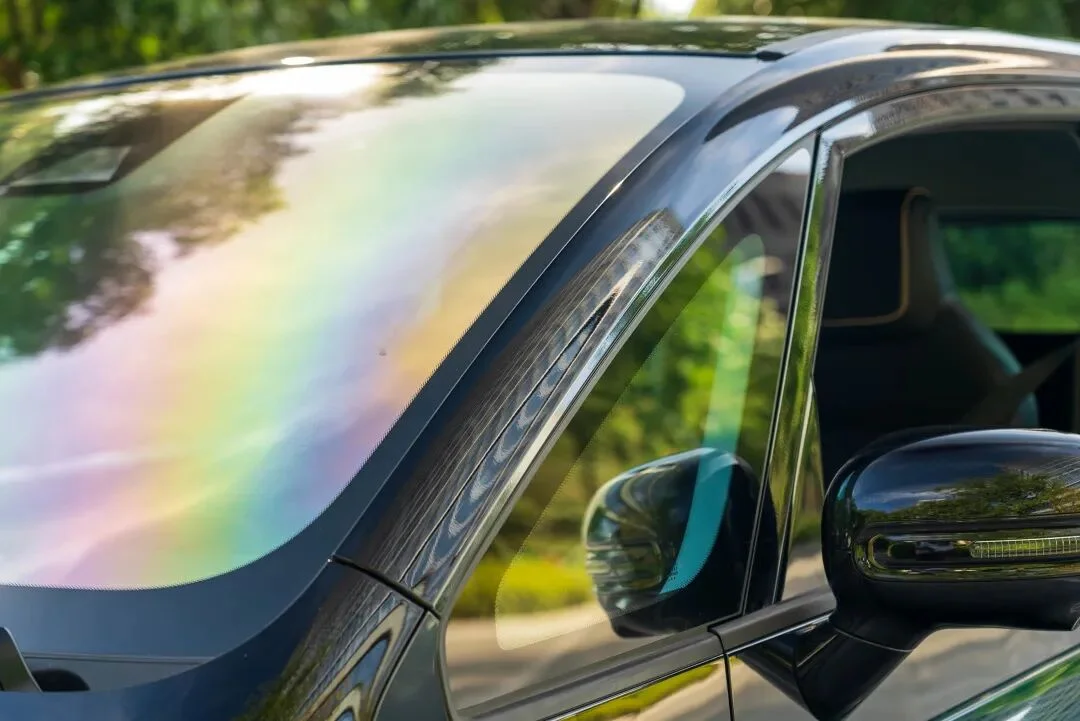
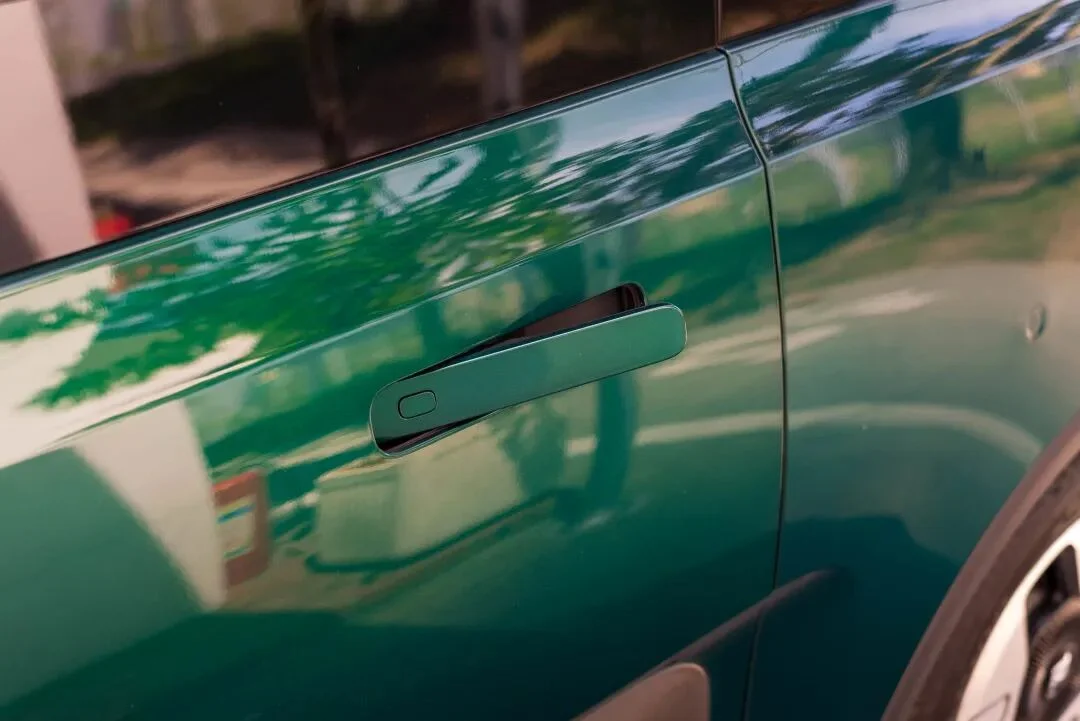
Moving closer reveals that the A-pillar extends forward to enhance the 'one-box' styling and maintain body consistency. This split A-pillar design helps reduce blind spots in the driver's field of view. The door handles also feature a hidden design, which is rare for vehicles in this class.
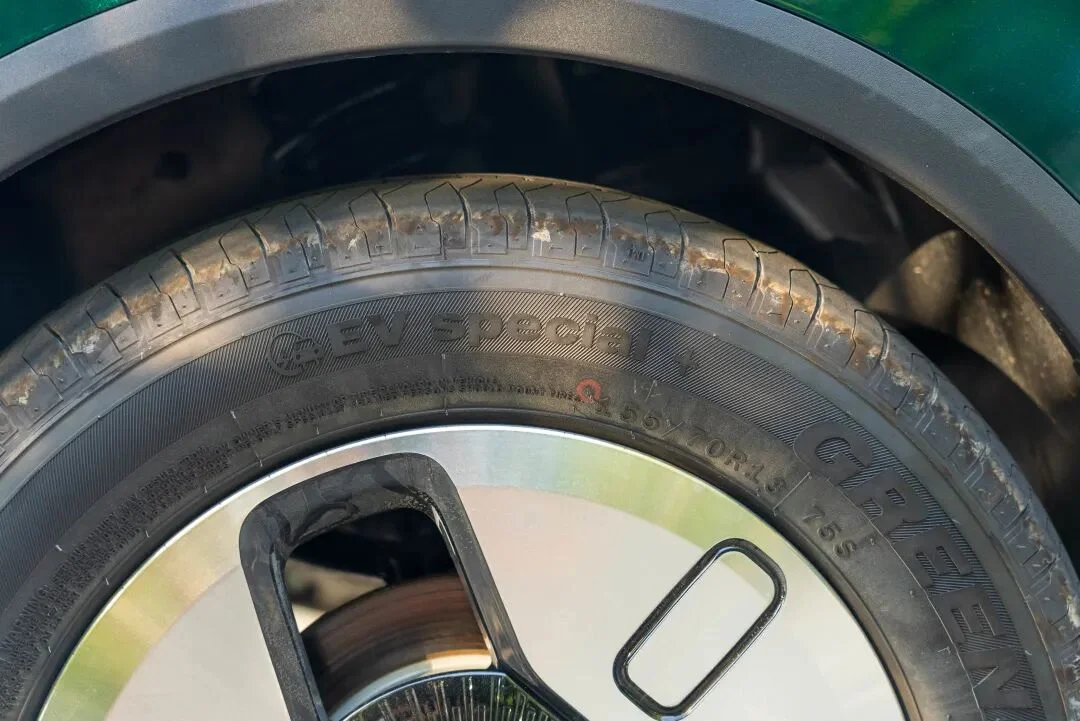
Both the front and rear tires of the KiWi EV are 155/70 R13 Linglongluntai tires, specifically designed for micro electric vehicles. These tires help save energy and keep road noise well controlled. However, their narrow width compromises grip, and the small 13-inch wheels offer insufficient comfort on daily roads. Larger potholes or speed bumps make it clear that the tires struggle to absorb impacts.
At the rear, the KiWi EV features a symmetrical design for its LED side marker and tail lights, with the brake lights positioned lower on the bumper. The rear maintains the boxy, straight-line aesthetic that echoes the overall body, delivering a refined look.
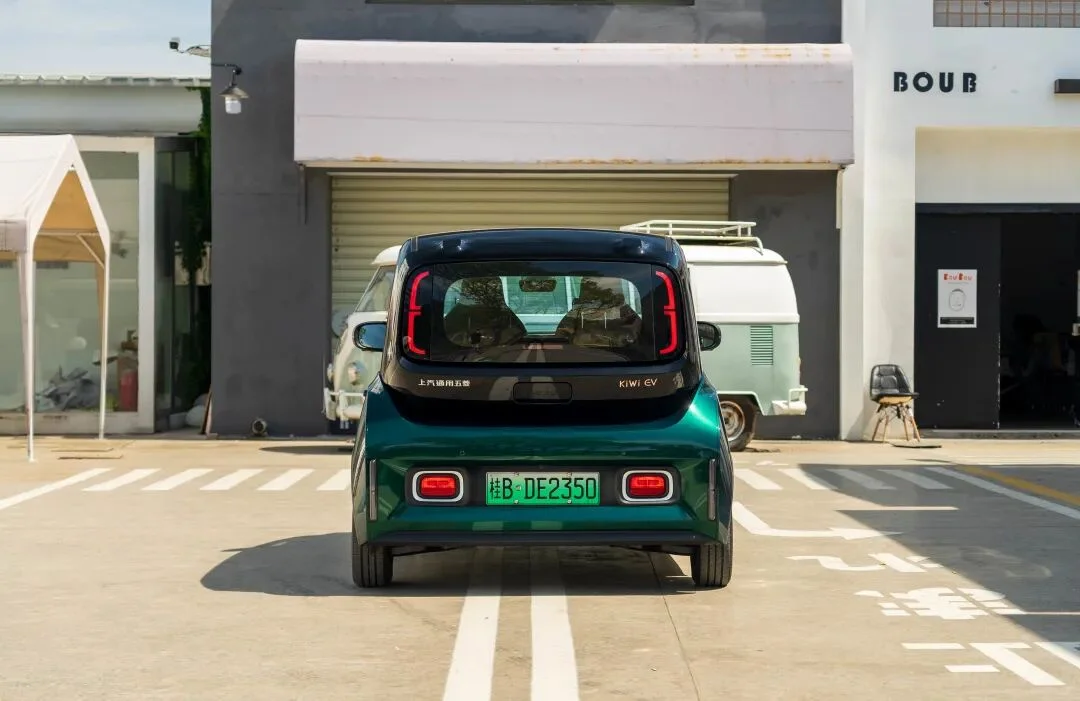
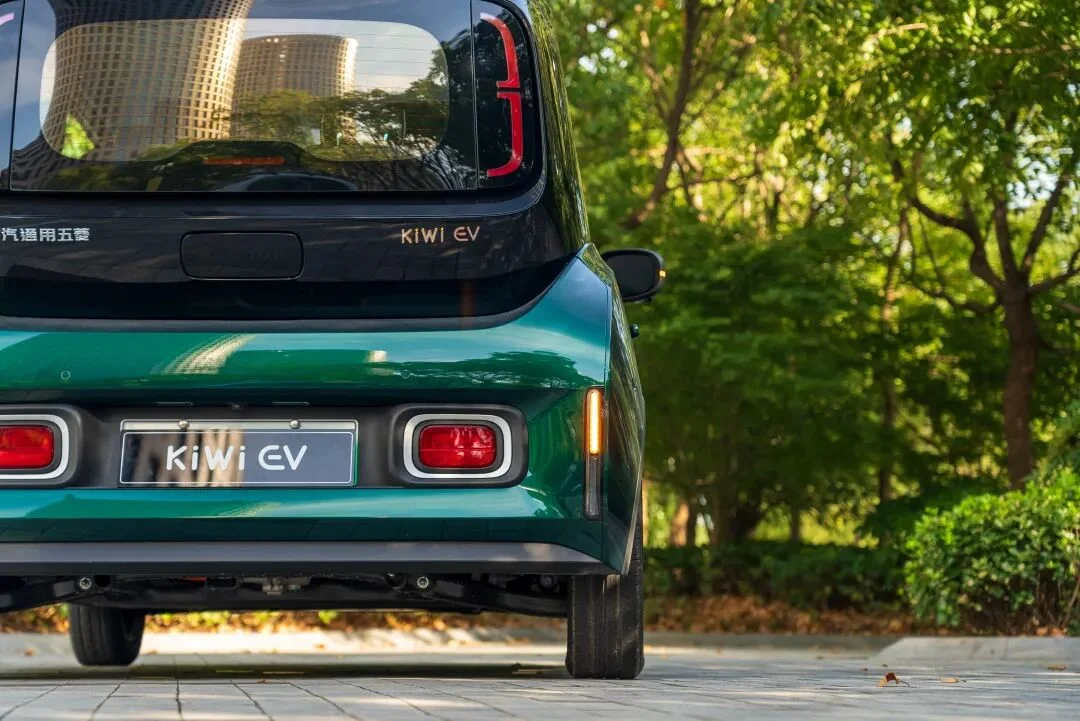
The KiWi EV clearly invested significant effort into its exterior design, marking its key differentiator from competitors in the same micro-car segment. While most models visible in China’s A0-class micro-car market—including the MINIEV—stick to simple, unpretentious cute styling, the KiWi EV boasts one of the highest levels of design recognition. It possesses a distinct style without appearing bizarre; such an appealing design is enough to make even an elderly man riding a tricycle pause at a traffic light to take a second look.
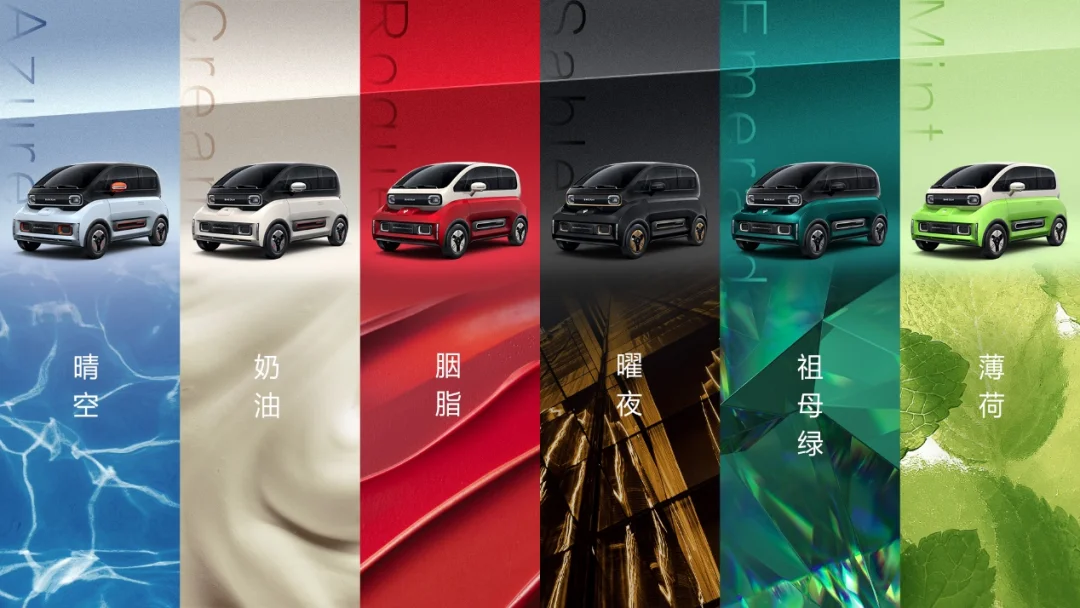
The KiWi EV is available in six colors. The color names themselves convey a sense of youthfulness. This expanded palette distinguishes the KiWi EV from its predecessor, the E300 Plus.
02Configuration...
Let’s start with a data comparison.
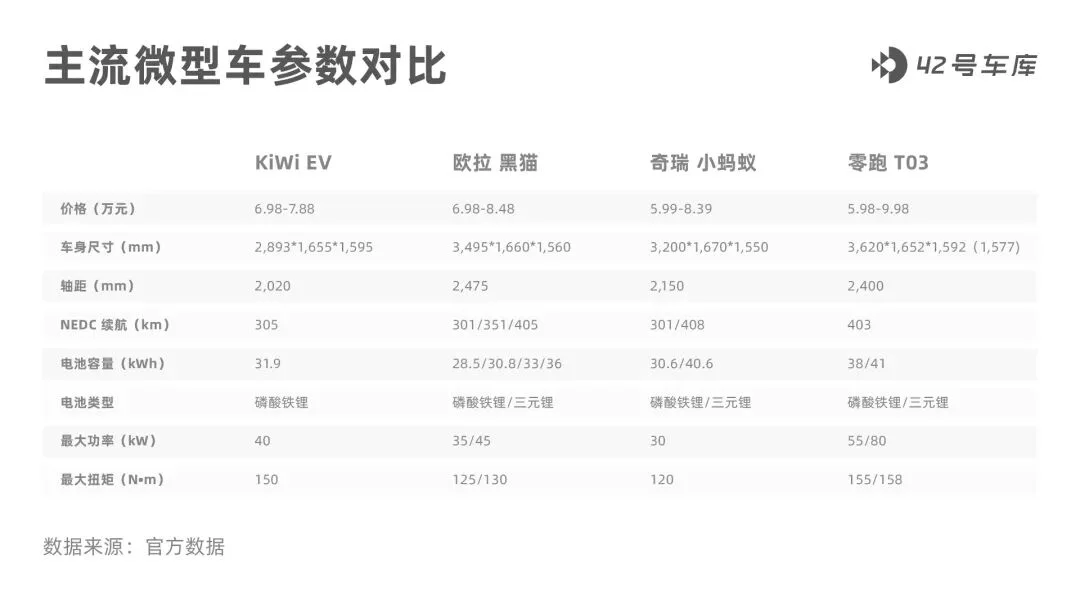
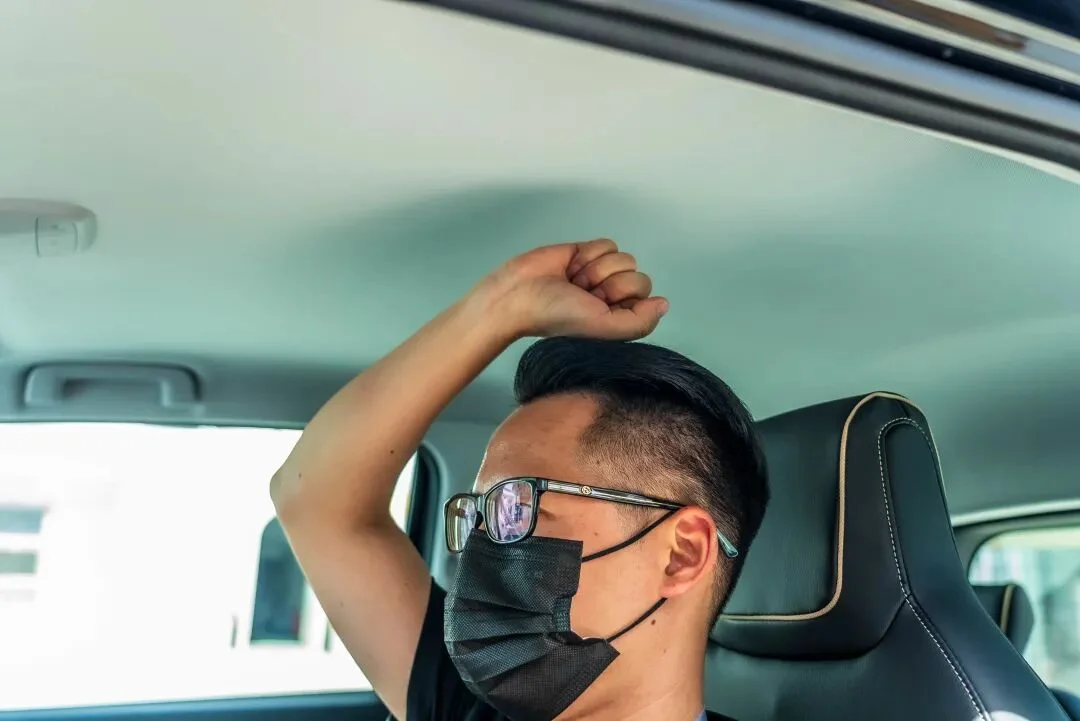
In terms of exterior dimensions, the KiWi EV is at a significant disadvantage compared to its rivals, with suboptimal overall length, width, height, and wheelbase. However, front-row space remains adequate, avoiding any sense of severe confinement. Headroom in the front exceeds one fist, and the completely flat front floor enhances the feeling of openness.
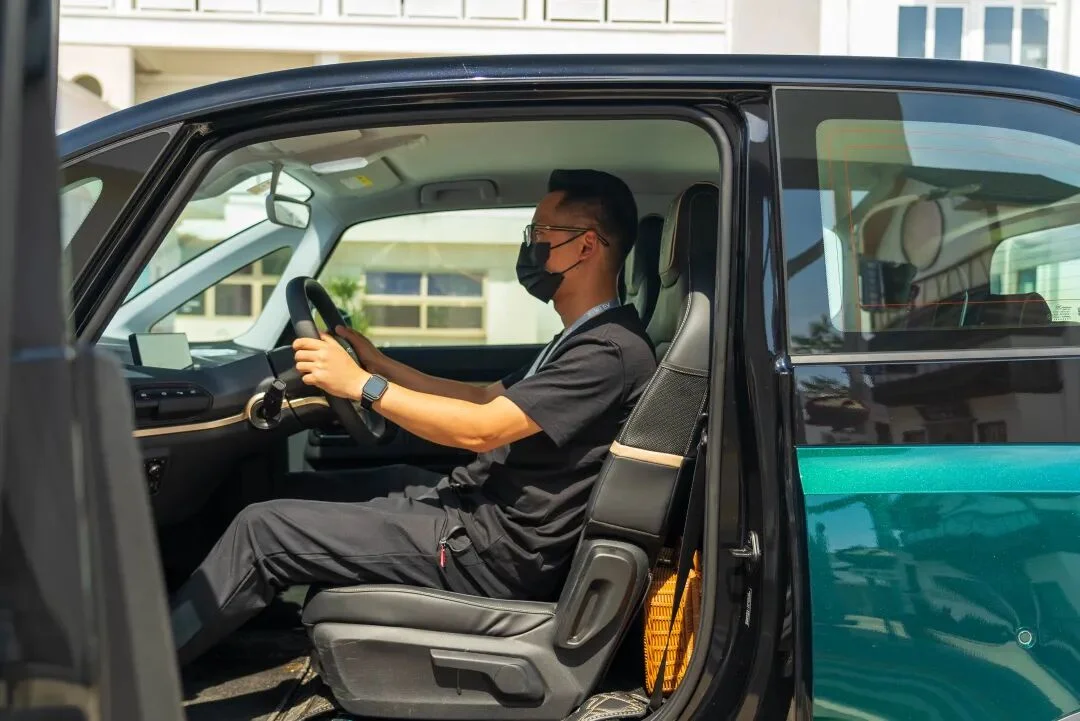
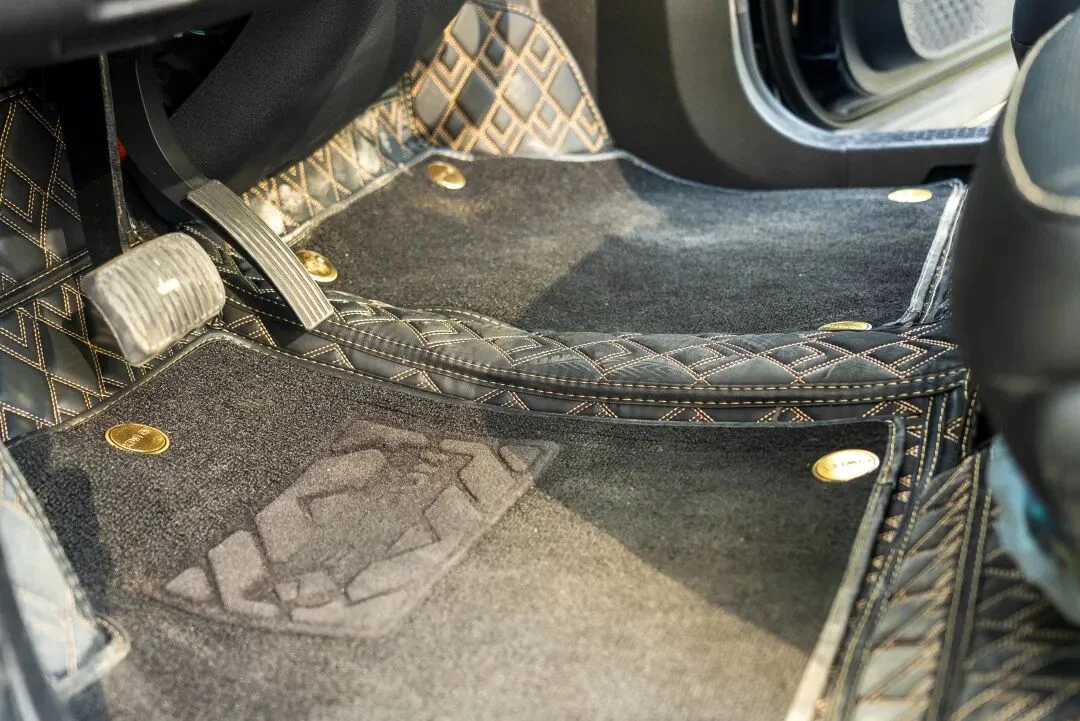
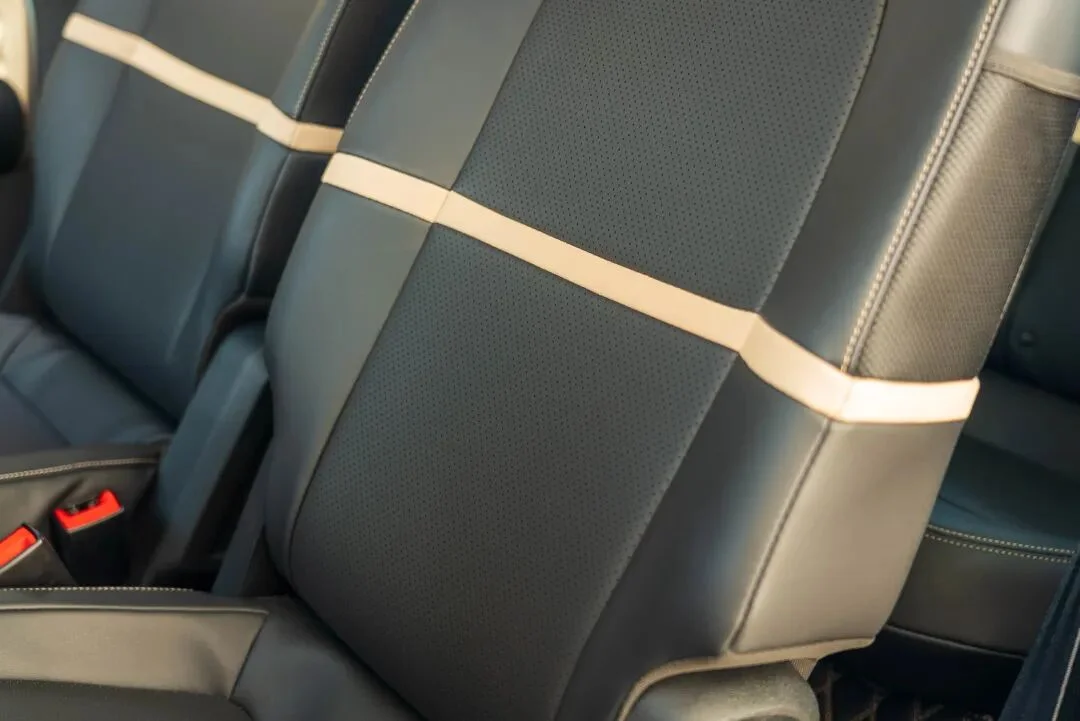
The seat quality is average; while they feature leather upholstery with stitching, the cushioning is firm, resulting in limited comfort and support. Perforated leather helps slightly with heat dissipation during long drives. The driver’s seat offers 6-way manual adjustment, which is standard, but adjusting the backrest angle requires pulling a lever under the seat. Pulling this lever causes the seat to slide forward, requiring considerable force to push it back into position. This design facilitates rear passenger access, which somewhat justifies the trade-off.
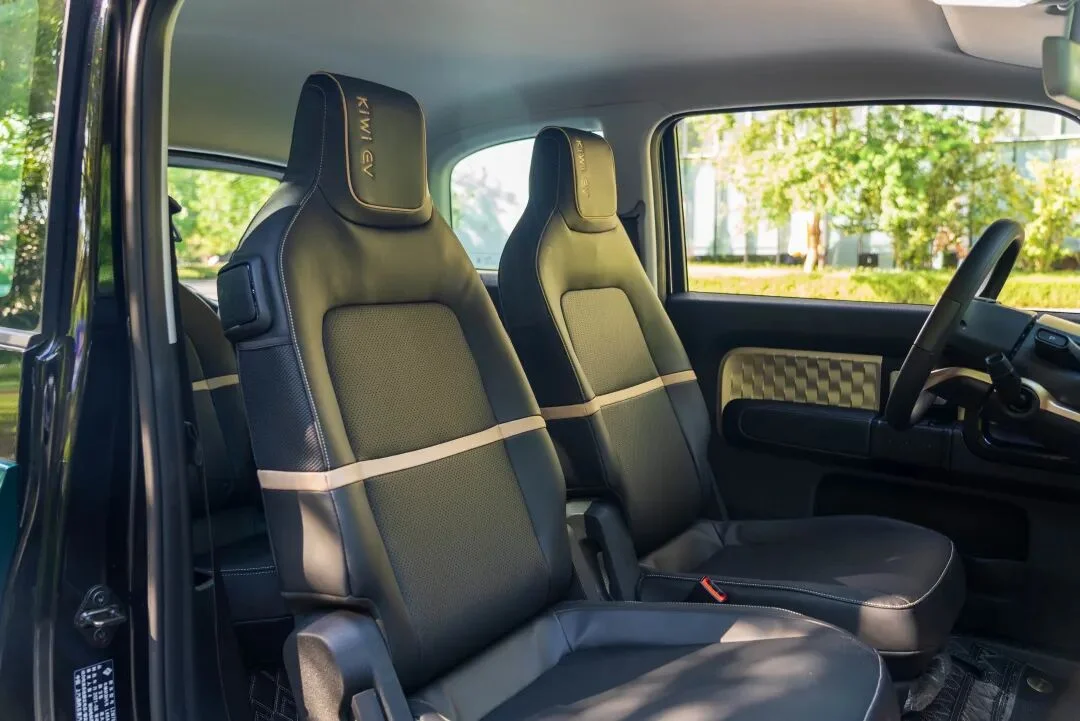
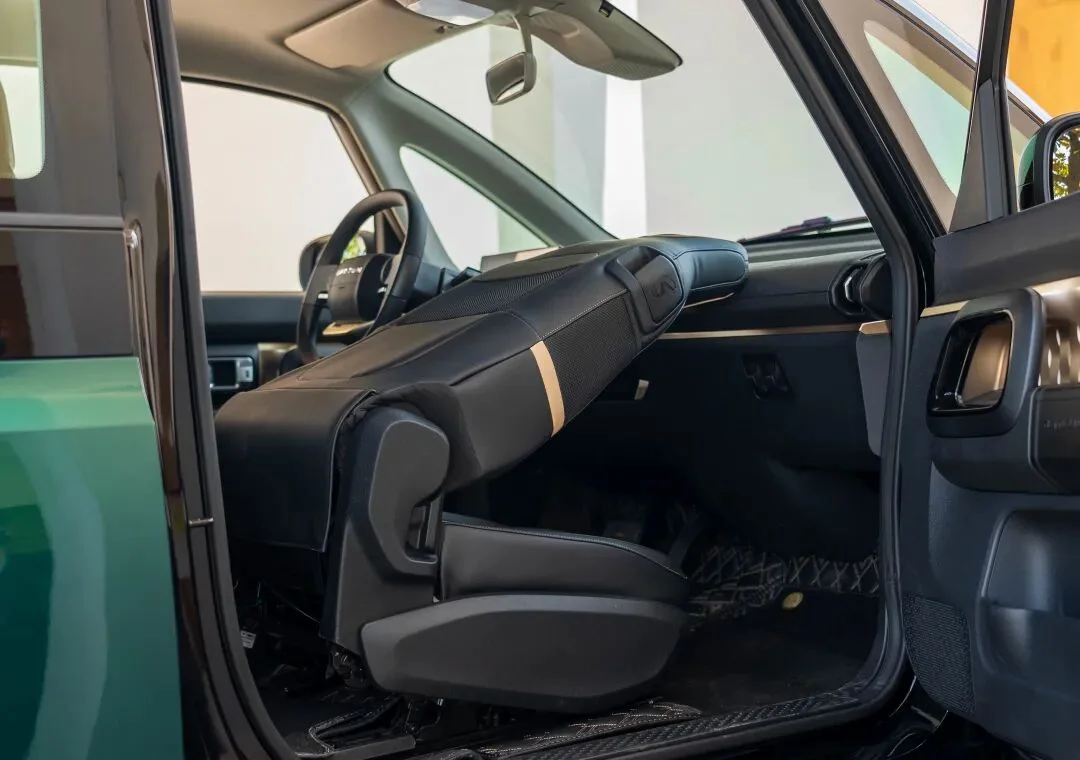
When it comes to the rear seats, the two-door design means that accessing the rear requires folding down the front seatbacks. However, due to the compact body size, entering the rear is not particularly convenient. With a 178 cm tall occupant in a normal seating position, the rear space is nearly at its limit. The rear space gained by sacrificing some front room is merely passable, but given the vehicle length of less than 3 meters, one should not expect too much from the rear space.
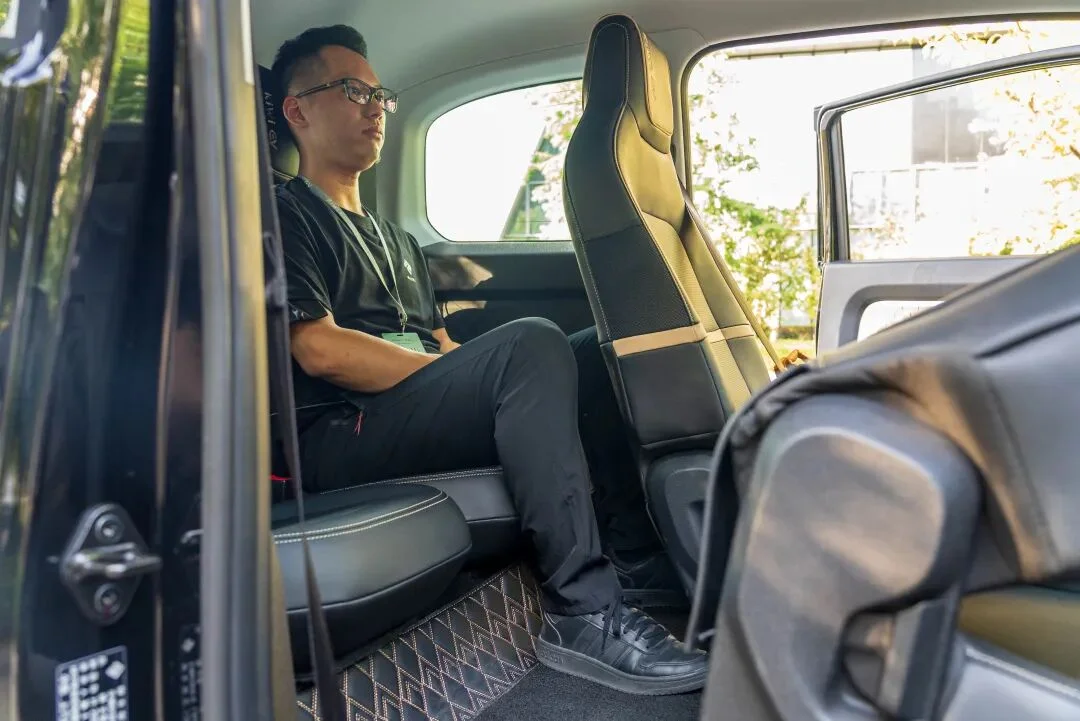
As an urban commuter microcar, the KiWi EV typically sees low-frequency use of the rear seats. Most scenarios involve two occupants commuting indoors, with the rear area generally used for stowing luggage or bags. For short urban trips, the KiWi EV’s interior space is sufficient.
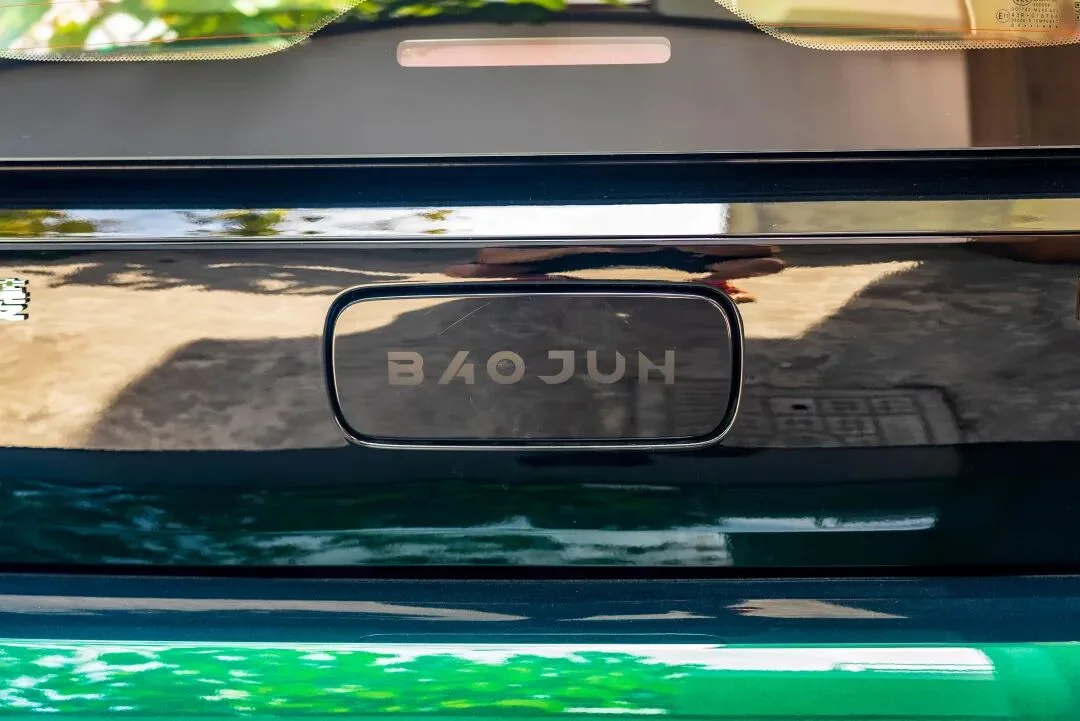
The trunk opens via a physical latch located near the rear logo. In terms of storage, there is zero cargo capacity with the rear seats upright; space becomes available only when the rear seats are folded down, similar to the MINIEV. The trunk opening is reasonably sized, allowing any luggage that fits to be loaded smoothly.
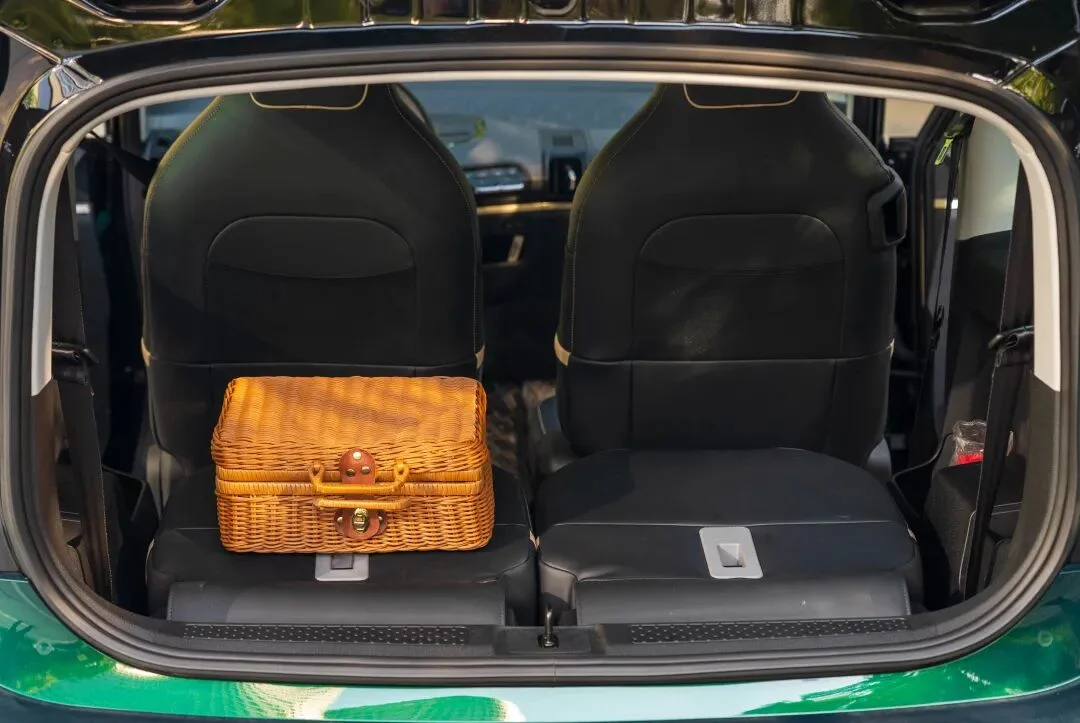
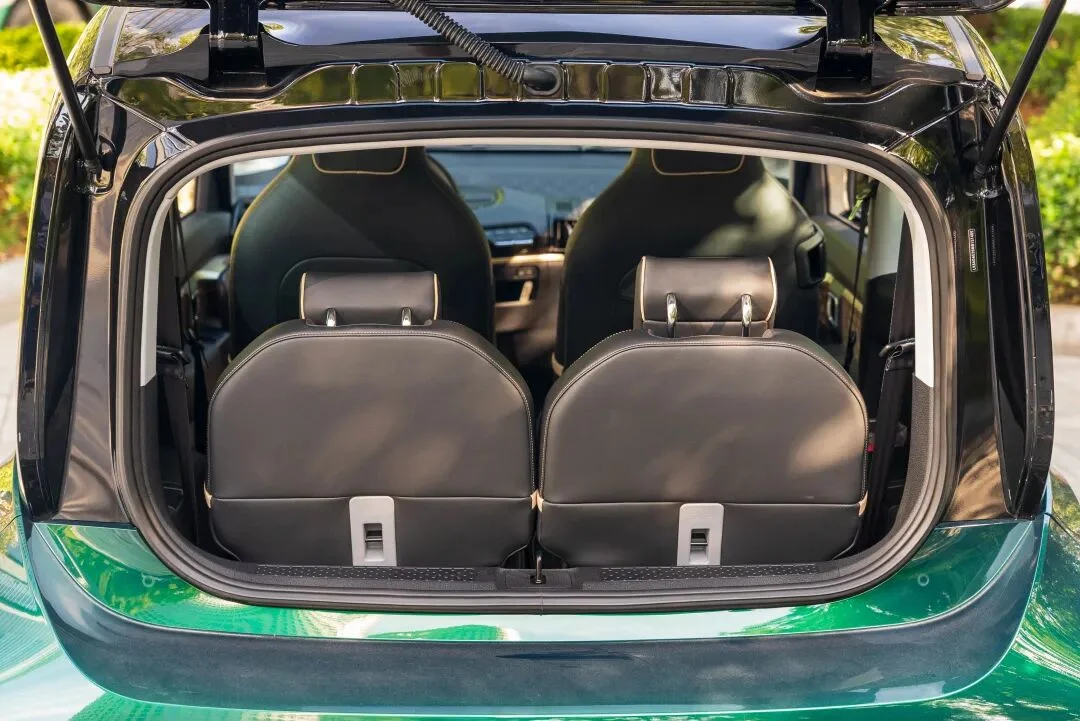
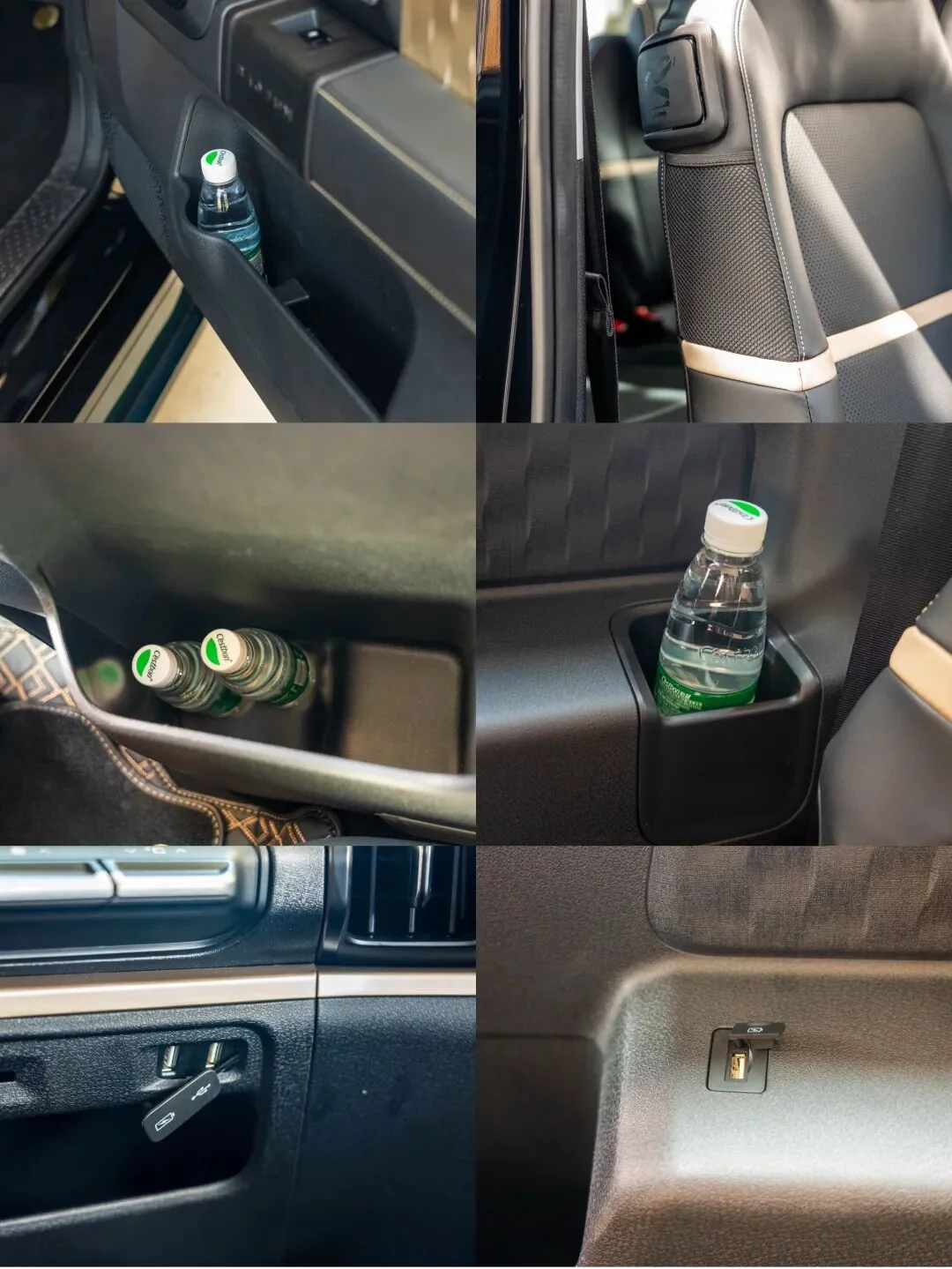
With no center console armrest or glove box, front-row storage is limited to the door pockets. A mesh pocket on the side of the front seats can hold a phone, while the rear side bins are spacious and deep, including dedicated holders for water bottles—a feature worth praising. Both front and rear rows are equipped with USB charging ports, ensuring practicality meets everyday needs.
The interior design isn’t particularly striking, but it features several well-executed details. Although hard plastic remains the primary material, the black-and-gold color scheme and leather-stitched trim on the door panels add a sense of quality. Assembly craftsmanship is precise, with tight panel gaps that prevent rattles even on bumpy roads.
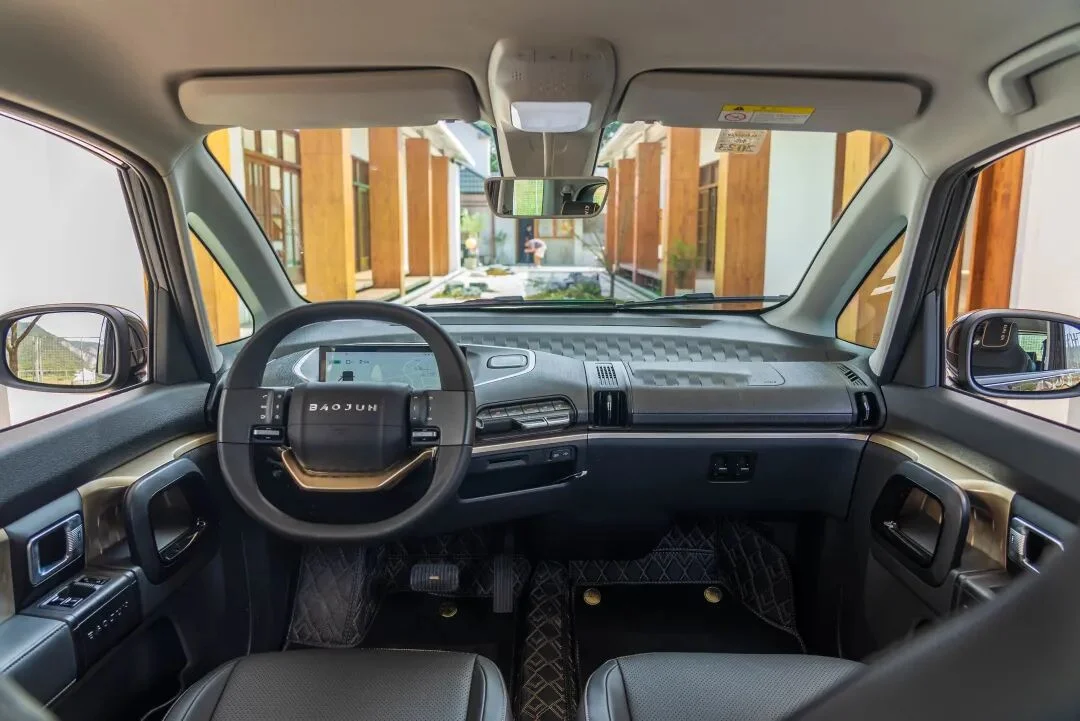
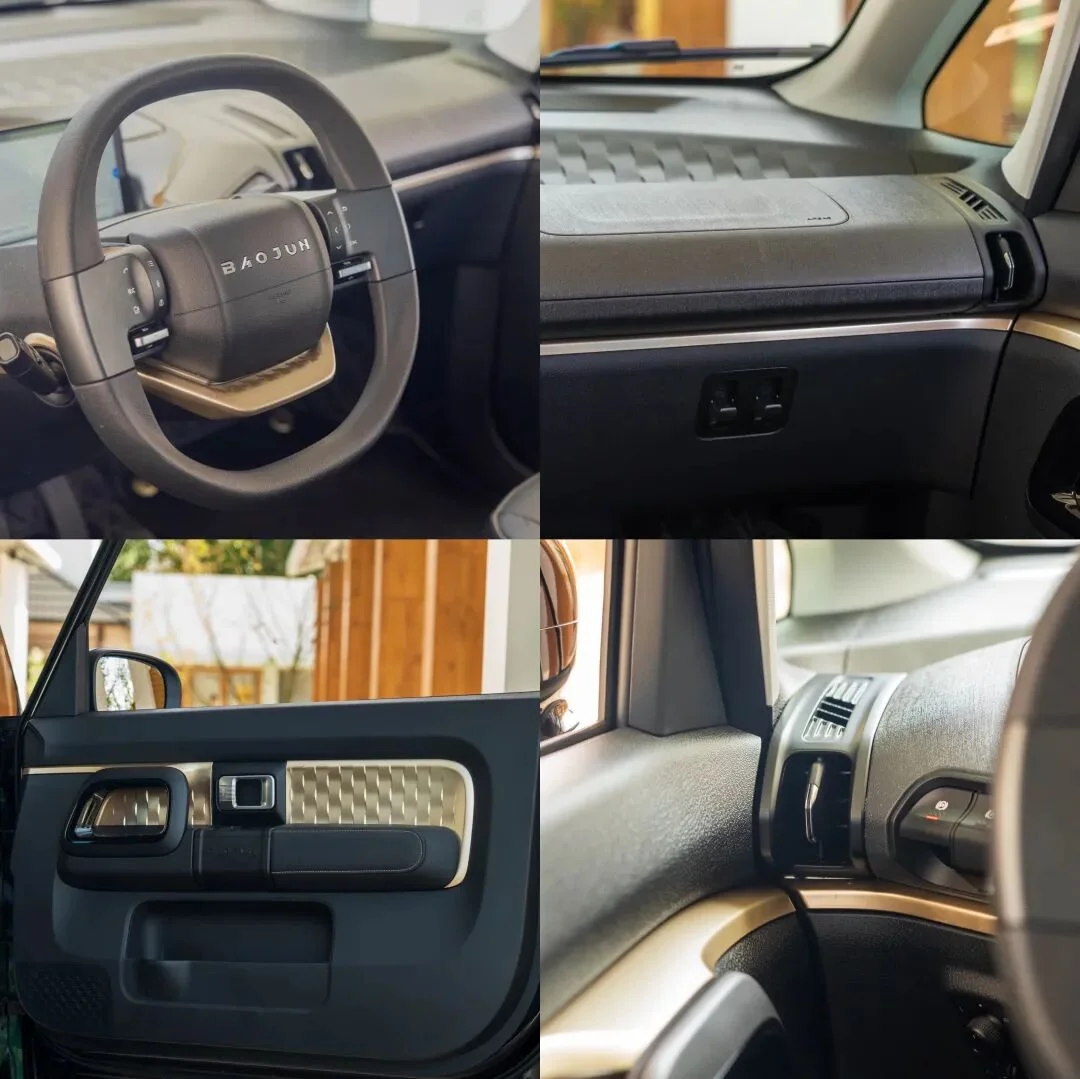
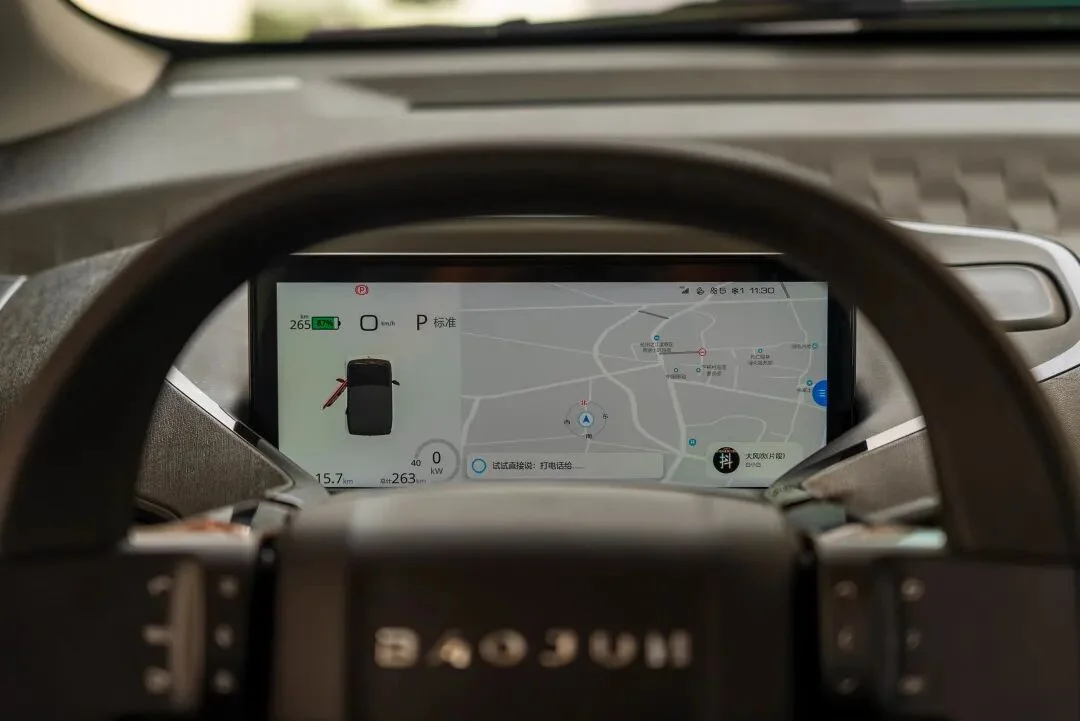
Like Tesla’s approach, the vehicle uses a single 10.25-inch screen for all infotainment and vehicle information, including navigation. However, it retains physical buttons for climate control, which is highly appreciated since adjusting temperature is a frequent task; intuitive manual controls significantly improve convenience.
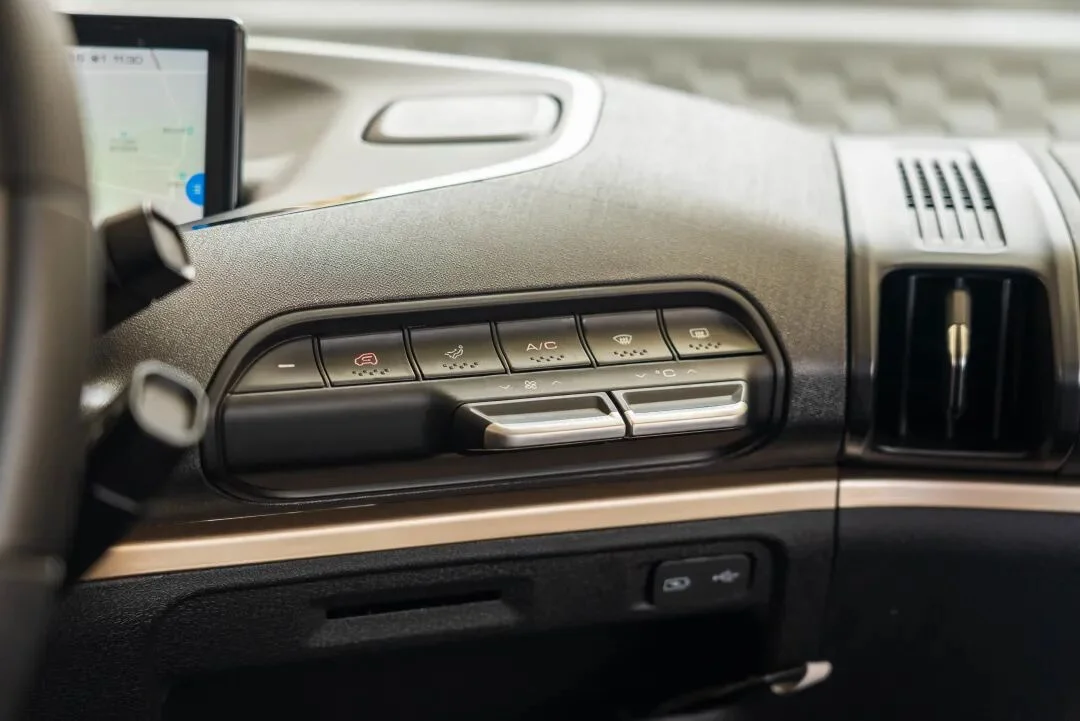
The overall interior gives off a minimalist and refined impression, avoiding excessive gimmicks while still delivering ample ambiance and quality. This is a significant step up from the MINIEV on Wuling GSEV Pingtai.
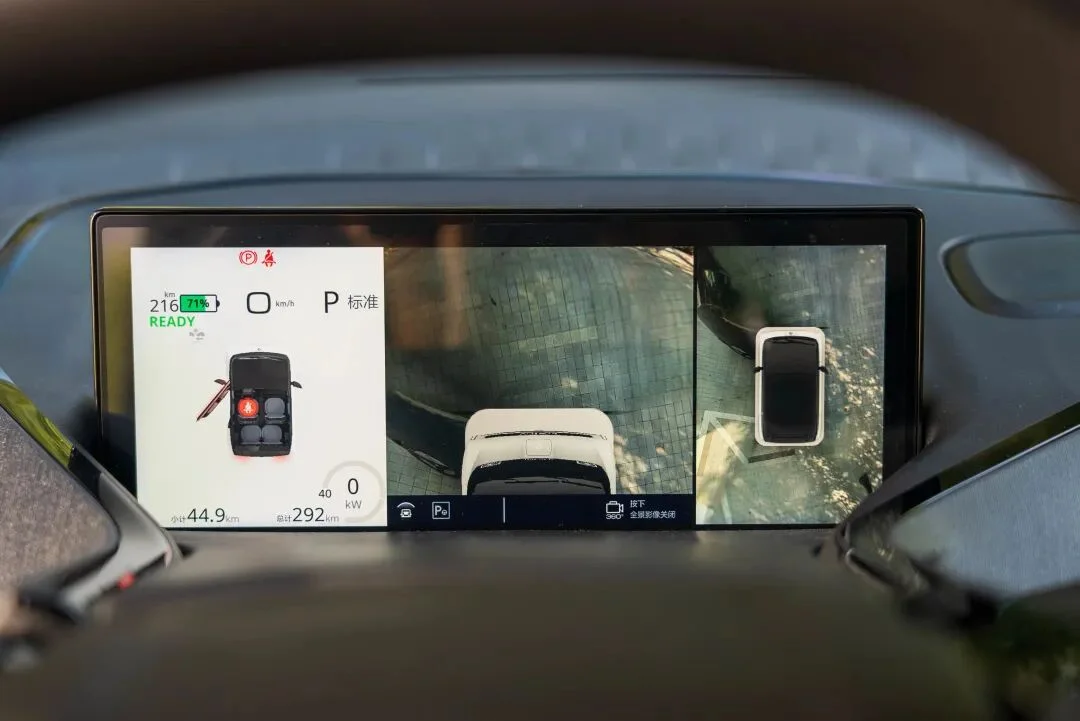
Regarding KiWi EV’s driver assistance features, we did not conduct detailed tests because the system has not yet been activated for this vehicle. Specific data has not been released, but based on its predecessor, the E300 Plus, the car is equipped with 12 ultrasonic radars, one millimeter-wave radar, and four surround-view cameras. I believe the KiWi EV will not lag behind it. In particular, the four surround-view cameras enable a 360-degree panoramic reversing image—a rarity in this class—making the already compact car much more agile when parking.
However, certain design choices present usability issues.
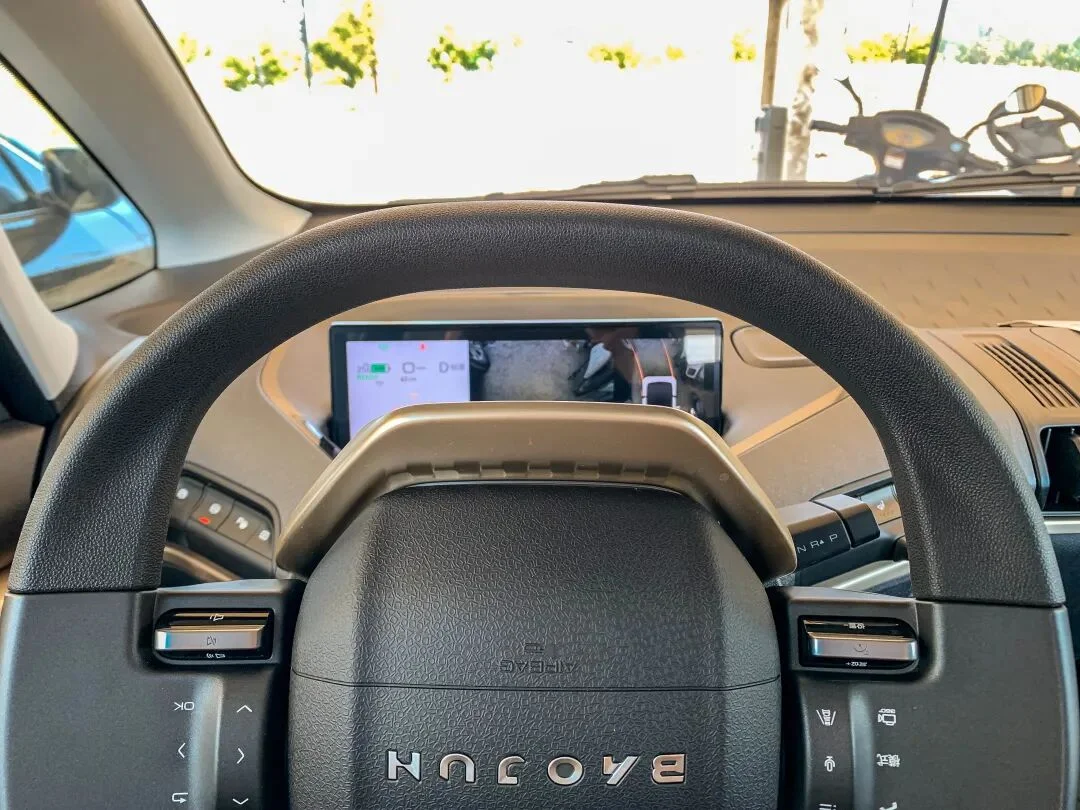
First, let’s talk about the steering wheel. While it boasts an attractive design and offers functionality comparable to or richer than that of rivals in its class, its touch-feedback controls are prone to accidental inputs. During daily use, my hand frequently triggers unintended commands; on occasion, an accidental touch even exits navigation, causing considerable distraction while driving.
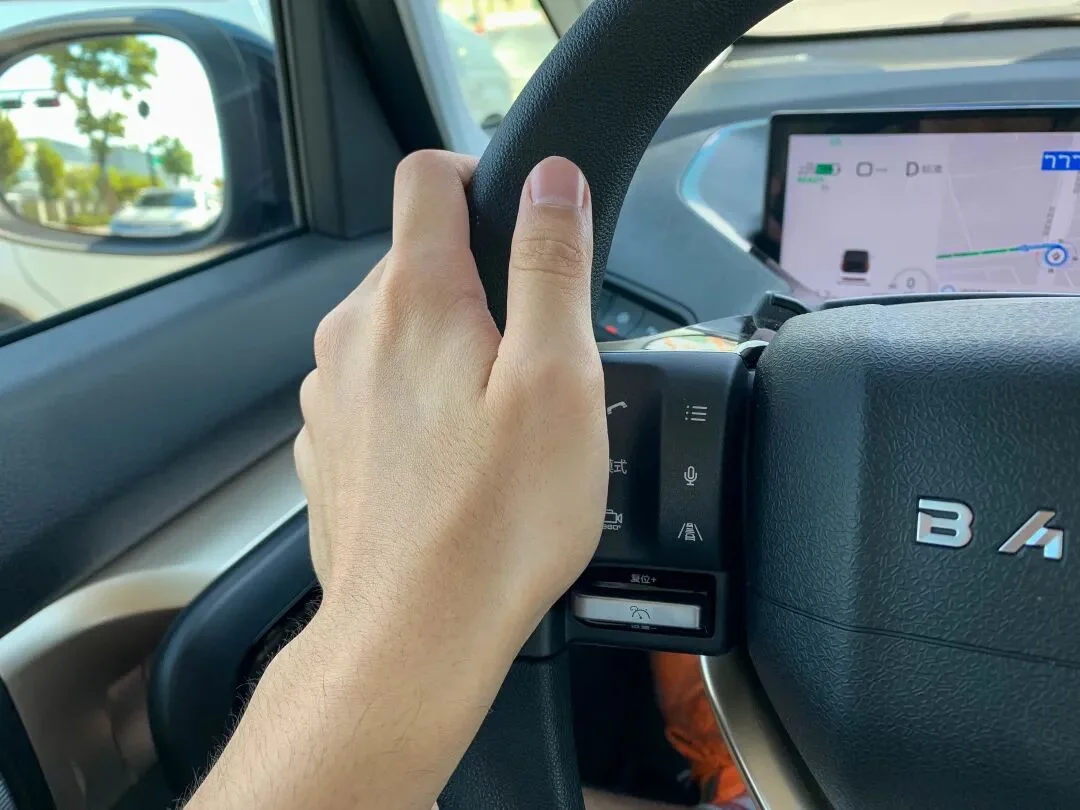
Second, the non-adjustable steering wheel adds to the inconvenience. For taller male drivers, it is often difficult to find a comfortable position: adjusting for adequate legroom may make the steering wheel feel out of reach, while positioning the hands comfortably for steering can leave the legroom feeling very cramped.
The gold trim strip below the steering wheel frequently obstructs the 360-degree rearview camera display on the instrument cluster when turning the wheel in reverse. From the normal driving position, the rearview image is completely blocked. Combined with the fixed steering wheel, seeing behind requires leaning far forward, making daily use inconvenient. We suggest reducing the size of the gold trim strip to improve visibility of the rear camera feed.
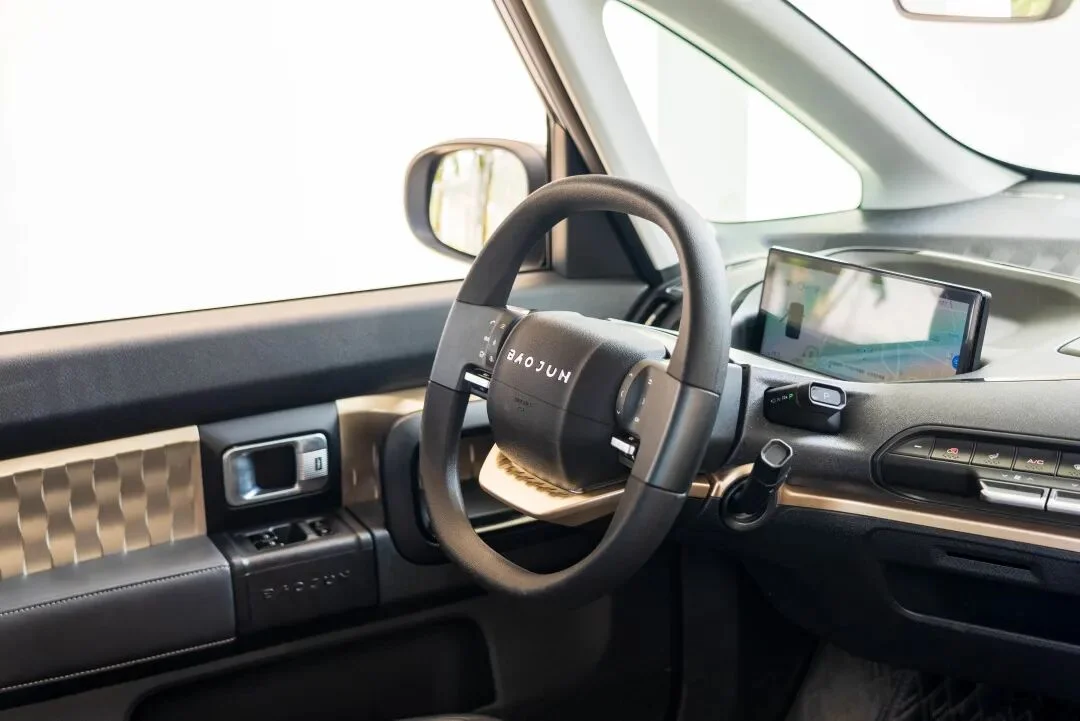
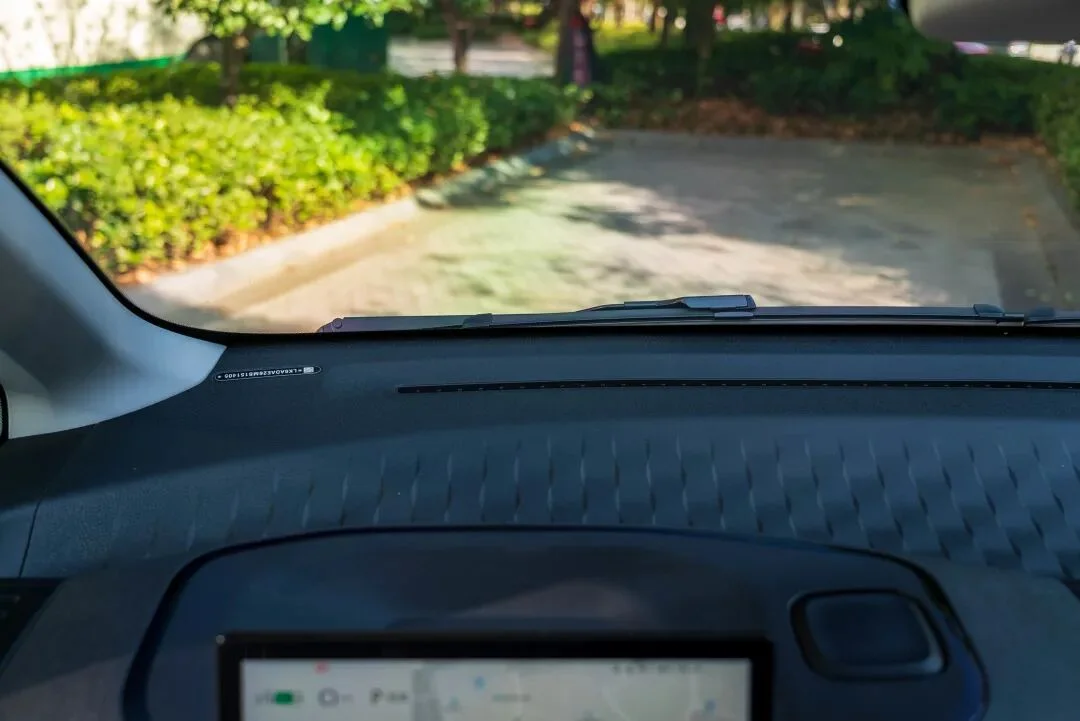
Finally, the massive dashboard significantly blocks the front view, creating large blind spots while driving. Although the windshield extends nearly to the front edge of the hood, the obstruction creates an illusion that the car’s nose is still further ahead.
03How Is the Dynamic Experience?
When discussing A0-class commuter cars, consumers generally do not have high expectations, settling for 'good enough' performance. As shown in the comparison charts earlier, KiWi EV’s overall specifications are indeed unremarkable. However, I found some pleasant surprises regarding its range and suspension tuning.
As an electric vehicle, particularly a micro EV, the battery capacity typically falls within the 30–45 kWh range, making ultra-long driving ranges unlikely. To alleviate the range anxiety common among EV owners, the KiWi EV, which has a NEDC range of only 305 km, must deliver highly accurate real-world range estimates.
During my brief test drive in Hangzhou, with outdoor temperatures at 30°C and the air conditioning set to fan level 5 at the lowest temperature, I covered 15.7 km on urban roads and expressways. The dashboard indicated a range loss of just 18 km, resulting in a ratio of actual distance driven to displayed range loss of 1:1.14.
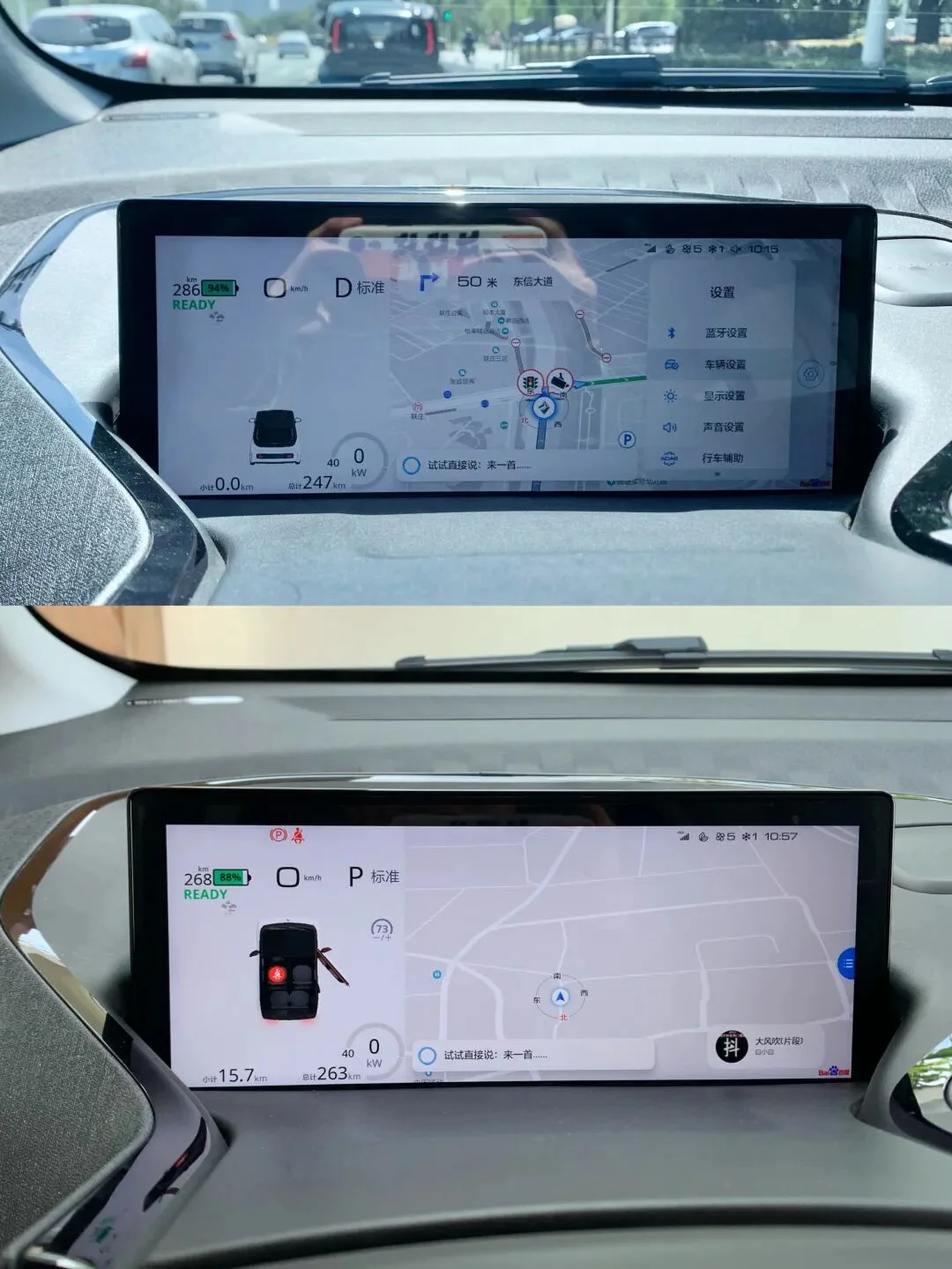
The fact that the KiWi EV’s lithium iron phosphate (LFP) battery provides such accurate range depletion readings is a testament to the manufacturer’s Battery Management System (BMS) and State of Charge (SOC) algorithms. However, this remains a short, incomplete test; if given the opportunity, we will conduct more comprehensive evaluations in the future.
Regarding power and driving feel, the KiWi EV uses a rear-wheel-drive configuration, which is uncommon for its class, and is equipped with a seemingly modest 40 kW motor. In terms of acceleration, the initial launch feels very brisk; the acceleration experience below 60 km/h is quite good, but above 60 km/h, there is a slight feeling of reduced power. Due to the small size and narrow tires, the vehicle's handling feels exceptionally light and compact, making it easy to drive without pressure.
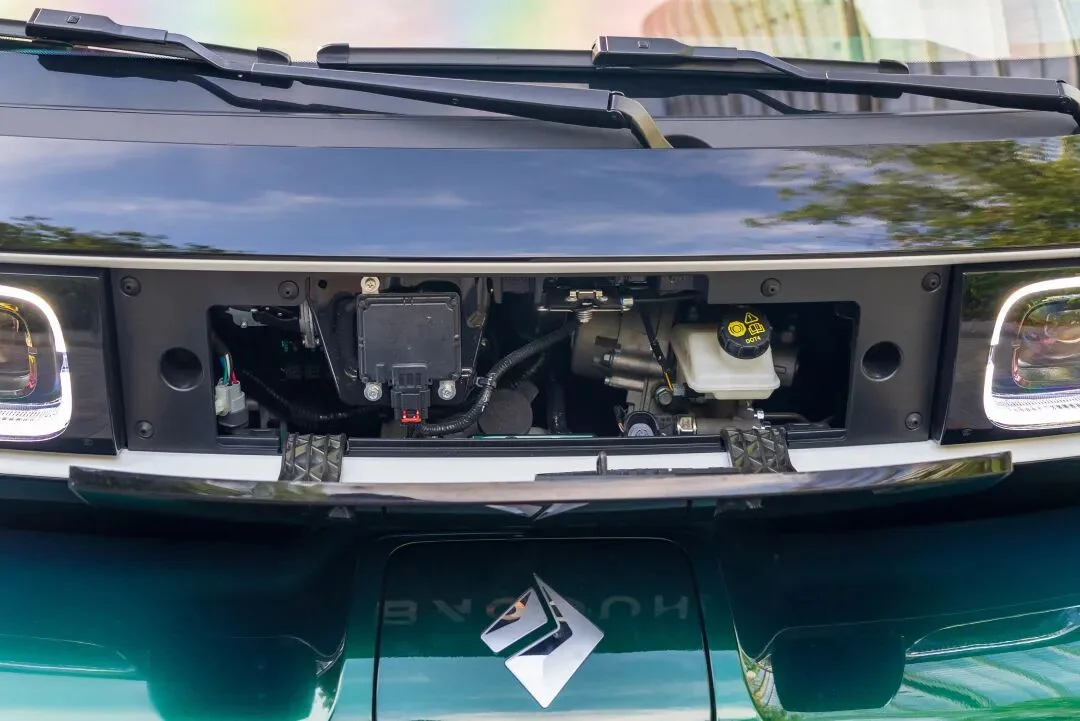
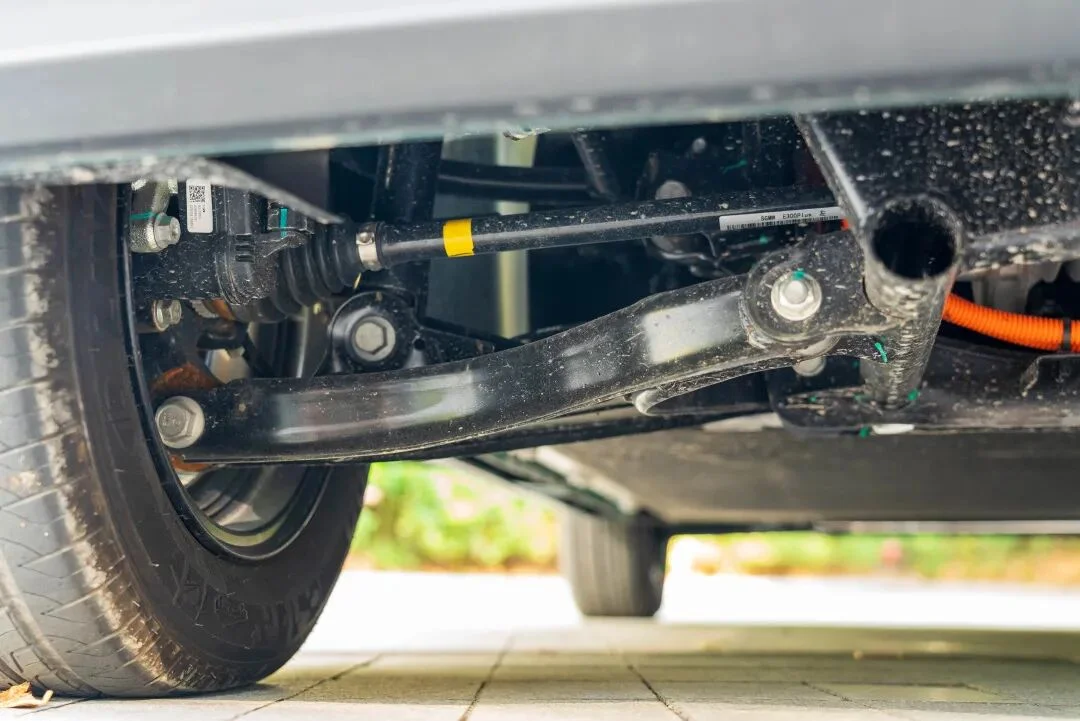
What pleasantly surprised me was the suspension setup, featuring a front MacPherson independent strut and a rear double wishbone independent suspension. The rear independent setup contributes to excellent chassis vibration damping, eliminating any sense of looseness. The overall feel is tight yet comfortable, suitable for daily driving. However, limited by the 13-inch wheels, the suspension struggles when encountering large potholes or road construction zones, effectively shouting, 'I’m willing but unable!'
04Final Thoughts
So, returning to the topic we started with: what exactly is it that I find so disruptive?
The explanation is actually quite simple. Before test-driving the KiWi EV, I never considered this type of A0-class micro car worthy of being called a "car." I always believed these vehicles were merely reluctant choices for commuting, forced by license plate policies—models you buy out of necessity rather than desire. At the Shanghai Auto Show, I had briefly experienced the MINIEV in static display. The steering wheel angle reminiscent of a truck and the extremely cramped interior space left me shaking my head in disappointment. At that time, I truly couldn't understand why anyone would buy such a vehicle. How could its sales volume surpass products whose product strength was several orders of magnitude higher? Would people really compromise on such models for various reasons?
Well, after I started earning money, I did come to appreciate the value of cash. In Shanghai, a model starting at RMB 30,000 that can legally carry four people and qualify for a green license plate allowing entry into the city is indeed quite attractive. However, none of this triggered my urge to purchase. I previously thought I shared the same mindset as former BBC host Jeremy Clarkson.
"Driving a car that doesn't make you excited every day is worse than taking the bus."
But after driving the KiWi EV, I think I have found some answers in my heart. This car may not be fast, but it is agile and convenient; it isn't particularly luxurious, but at least the exterior and interior offer a strong sense of refinement; it cannot carry my soul, but at least it is a four-wheeled, two-door vehicle that allows for comfortable commuting.
Even though its price is admittedly on the high side, with the cheapest version costing nearly RMB 70,000; even though its competitors are approaching aggressively, all vying for this market segment. At least the KiWi EV made me realize that A0-class micro cars are not entirely as I had previously imagined. What disrupted my preconceptions was that it led me to genuinely acknowledge these types of vehicles. After all, when a father (or mother) sees their child dancing with joy while looking out the window at the scenery, they should feel, 'It's really nice to have a small car to drive.'
Honestly, thinking about this makes me realize something. I still have a deep, heartfelt love for cars, but my identity has shifted from the child who rode in cars traveling far and wide to the person now holding the steering wheel myself. My standards have become increasingly demanding. Looking back at that moment, it feels as though I’ve lost the purest form of affection I once had for cars.
Well, I’m not like 'Gorilla.' I want to remain forever that kid sitting inside the car, inexplicably excited by the changing scenery outside the window.
Written by: Jiaming Edited by: Reinhardt