


Nissan Unveils Next-Gen Autonomous Driving Tech: How Does It Stack Up Against Toyota and Honda?
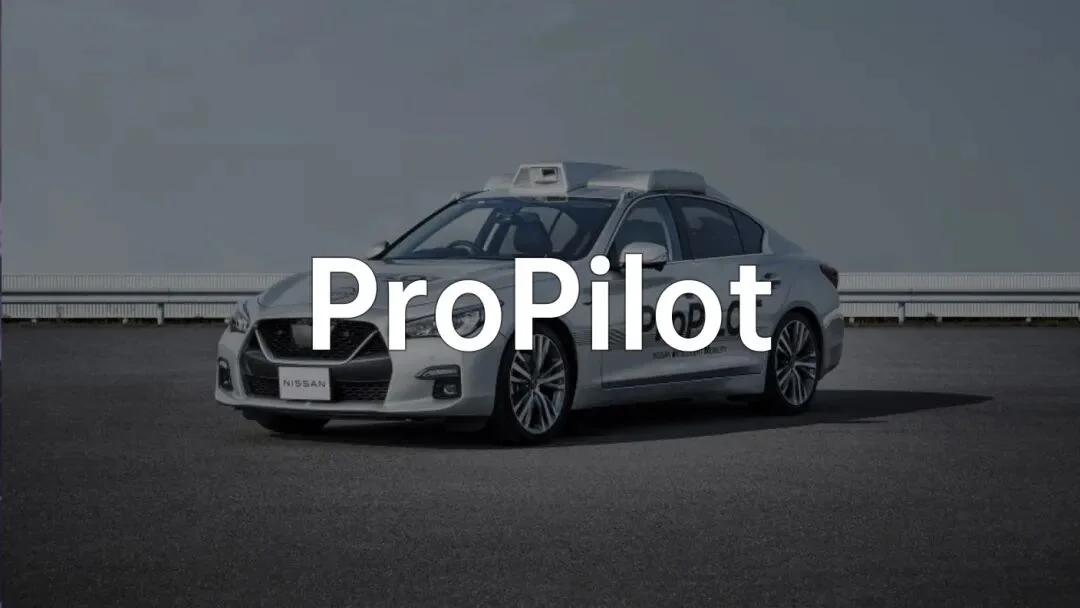
Nissan Motor Co., Ltd. officially unveiled the latest developments in its ProPilot driver assistance technology yesterday.
Before discussing the progress this system has made, let's first review the history of ProPilot. By examining Nissan Motor Co., Ltd.'s past and present in autonomous driving, we can look ahead to its future.
In July 2016, Nissan Motor Co., Ltd. launched the ProPilot 1.0 driver assistance system. This system utilized a front-facing monocular camera and millimeter-wave radar to enable Adaptive Cruise Control (ACC) and provide basic lane-keeping capabilities. However, drivers were required to keep their hands on the steering wheel while using the feature.
Three years later, ProPilot 1.0 officially arrived in China, with Nissan Motor Co., Ltd.'s popular models such as the Teana, Qashqai, and X-Trail all equipped with this feature. At that time, ProPilot 2.0 had already been launched in Japan. Compared to version 1.0, Nissan Motor Co., Ltd. expected ProPilot 2.0 to directly compete with Tesla Autopilot.
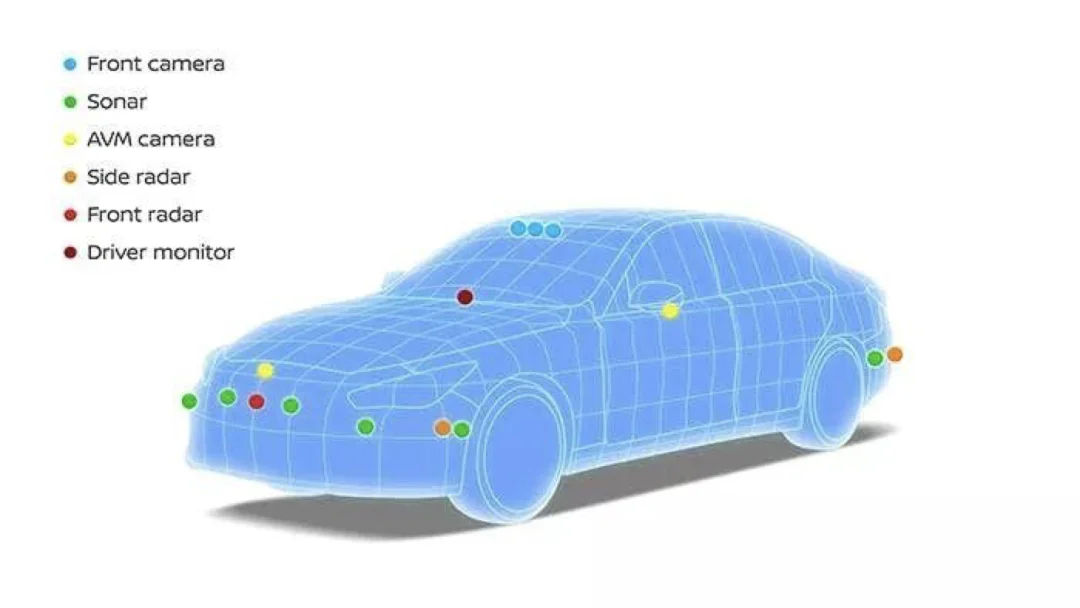
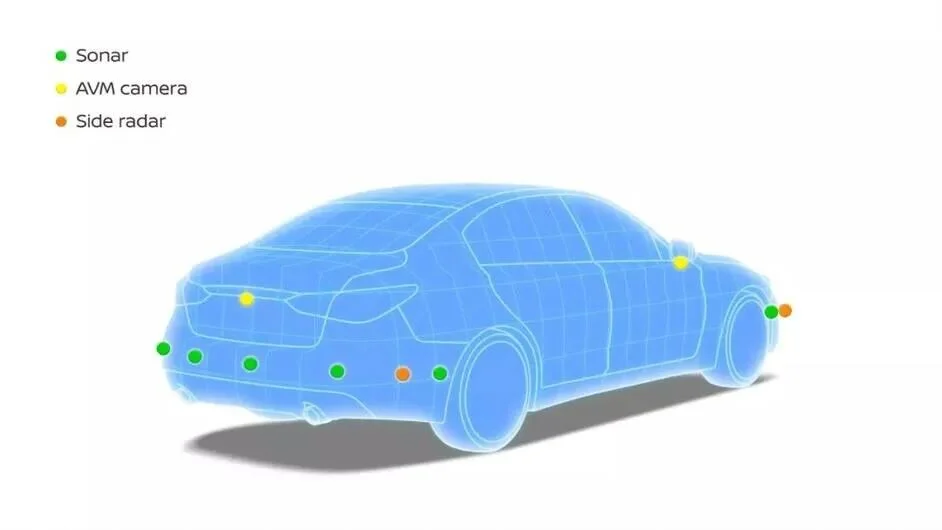
Let’s examine the upgrades in ProPilot 2.0. Following convention, we will start by looking at the sensor configuration:
Five radar units (one front-facing + four corner-mounted);
Twelve ultrasonic sensors;
Eight cameras (three forward-facing + four around-view monitor + one driver monitoring system);
Zenrin high-definition maps.
Relying on this sensor configuration, Nissan Motor Co., Ltd. has implemented highway navigation-assisted driving and single-lane hands-free driving capabilities. These features may no longer be unfamiliar today, as domestic new-energy vehicle startups collectively known as Weixiaoli have already delivered highway navigation-assisted driving. As for single-lane hands-free driving, due to varying traffic conditions across different regions, we remain cautious regarding its implementation; however, from a technical standpoint, achieving it is not difficult.
For Nissan Motor Co., Ltd. in 2019, delivering navigation-assisted driving and single-lane hands-free driving was undoubtedly the best demonstration of its advanced technological research and development. Globally, aside from Tesla, no other automaker had achieved this at that time.
Furthermore, 2019 was a pivotal year, as discussions regarding the feasibility of mounting LiDAR on vehicles were already underway.
Tetsuya Iijima, then General Manager of Advanced Technology Development for ADAS at Nissan Motor Co., Ltd., stated in an interview:
LiDAR currently lacks performance that surpasses the latest radar and camera technologies. If LiDAR could reach a level suitable for application in automotive systems, that would certainly be great. But that is not the case; its cost does not match its performance.
From Tetsuya Iijima's comments, we can infer that Nissan Motor Co., Ltd. is not opposed to LiDAR. If there comes a day when LiDAR performance improves and costs drop low enough for mass pre-installation production, Nissan Motor Co., Ltd. would still consider it.
We did not have to wait long for the day of "LiDAR cost reduction and performance improvement," and Nissan Motor Co., Ltd. has timely launched ProPilot 3.0.
01LiDAR Arrives
Compared with ProPilot 2.0, the most significant change in Nissan Motor Co., Ltd.'s latest generation perception architecture is the addition of one LiDAR unit. Its perception hardware is as follows:
10 cameras;
5 millimeter-wave radars (1 forward-facing + 4 corner-mounted);
1 LiDAR unit (supplied by Luminar);
High-definition maps.
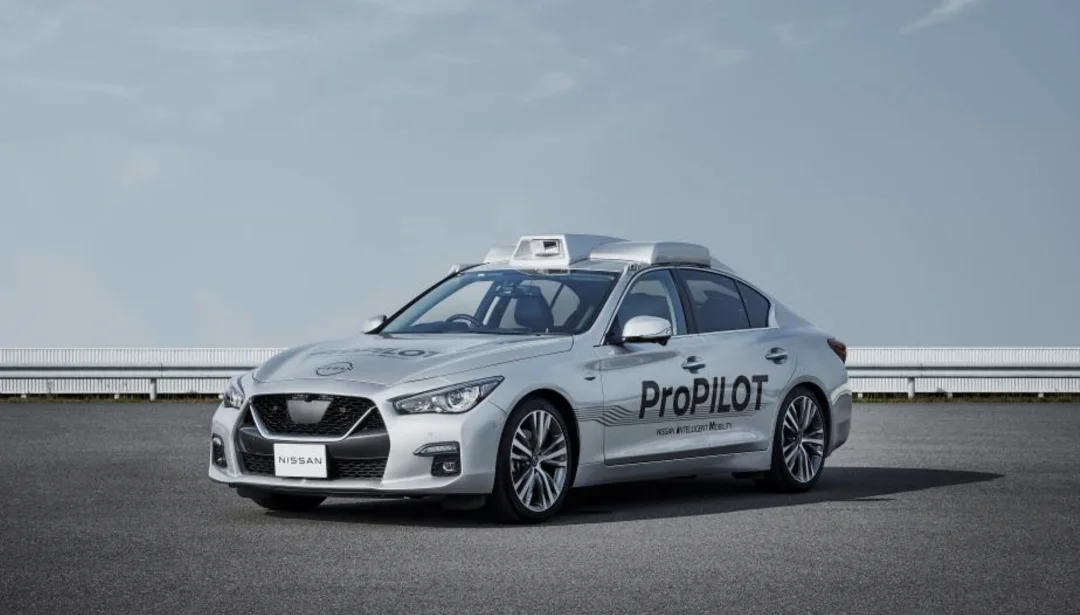
Notably, the camera placement for Nissan Motor Co., Ltd. ProPilot 3.0 is distinctive. Its front-side cameras are positioned at two corners of the roof, resembling 'horns,' similar to the ET7. Additionally, there are two cameras on the side fender near the mirrors—one facing forward and one backward—indicating that ProPilot has overlapping redundancy for forward-side perception.
Luminar is the LiDAR supplier for Nissan Motor Co., Ltd.'s ProPilot system. However, Nissan Motor Co., Ltd. stated that it uses a next-generation high-performance LiDAR, which indirectly indicates that the Iris model is not currently in use. Regarding specifications, Fan Daoche, Head of Advanced ADAS Technology Development at Nissan Motor Co., Ltd., also stated that they believe the LiDAR's maximum perception distance needs to exceed 300 meters to be effective on highways. Additionally, the horizontal field of view (FOV) is 120 degrees, the vertical viewing angle is greater than 25 degrees, and the resolution is 0.05 degrees.
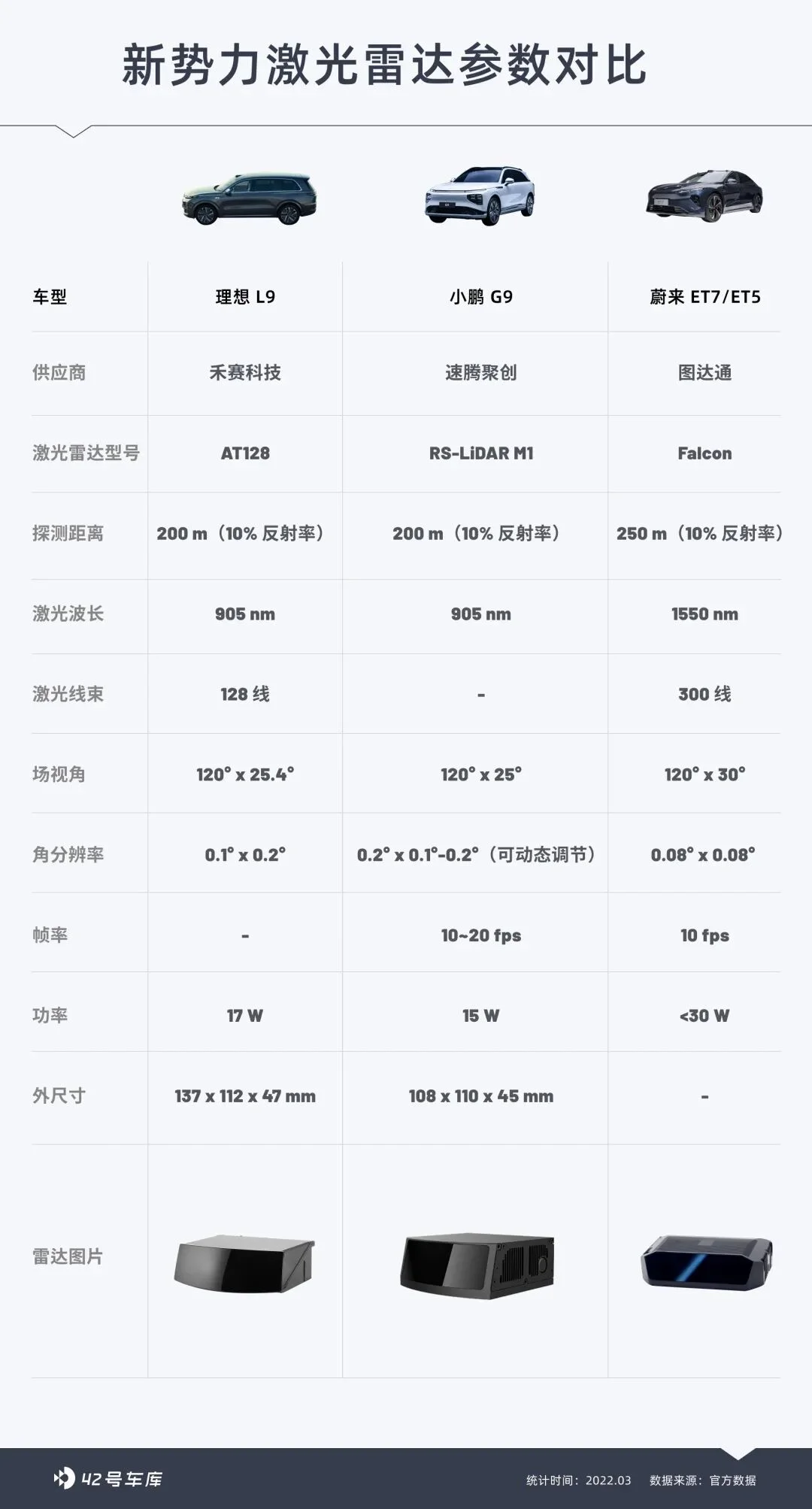
Compared to the Luminar Iris, the LiDAR adopted by Nissan Motor Co., Ltd. does not hold an advantage in detection distance, but its other data points are at a mainstream level. Here, we can also compare this LiDAR with those used by domestic new energy vehicle startups.
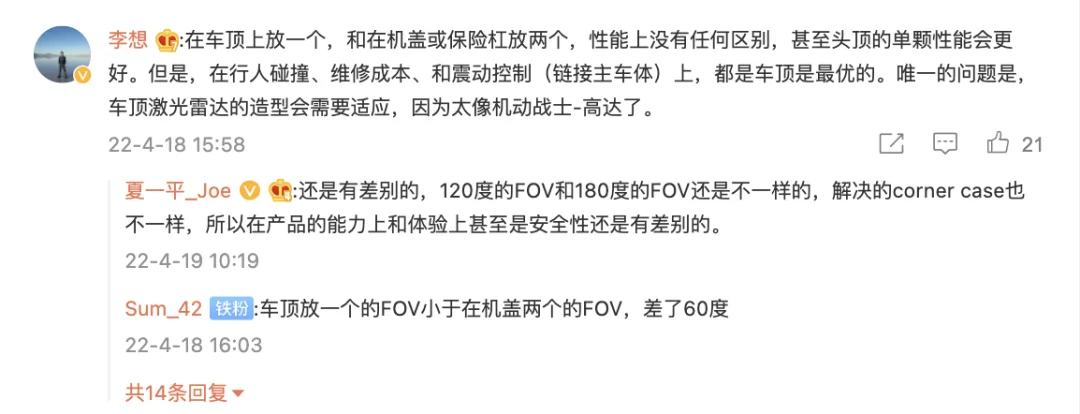
Additionally, Fan Daoche, Head of the Advanced Driver Assistance Systems (ADAS) Technology Development Department at Nissan Motor Co., Ltd., also discussed LiDAR mounting positions. This topic recently saw exchanges of views between two Chinese startup CEOs, Xiang Li and Xia Yiping. Fan Daoche believes that a rooftop 'watchtower' layout is the most reasonable, as it allows for better visibility ('the higher you stand, the farther you see') and ensures the laser beam remains unobstructed.
What functions can this L4/L5 architecture support? Fan Daoche, Head of Advanced Driver Assistance Systems (ADAS) Technology Development at Nissan Motor Co., Ltd., explained that with the addition of LiDAR, the system's Ground truth perception enables real-time monitoring of road conditions. Upon identifying obstacles along the vehicle's planned route, it can respond quickly.
The demonstration video also showed the performance of test vehicles equipped with the ProPilot system in real-world scenarios.
Continuous 'Ghost Probe' Incidents
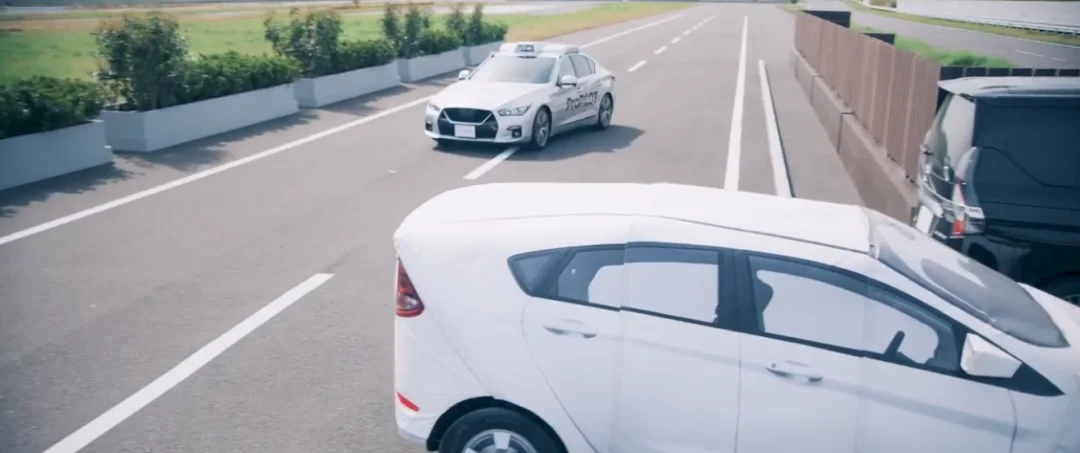
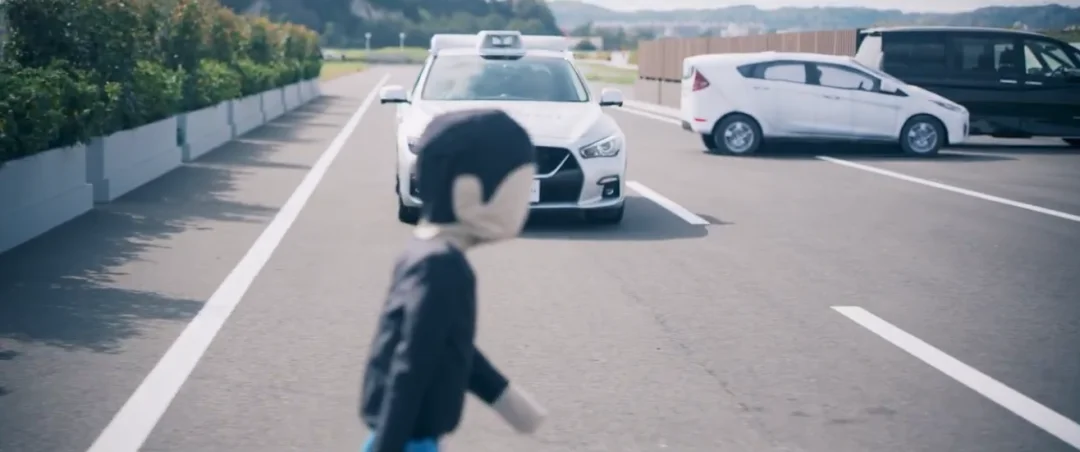
During the test, a vehicle parked on the side suddenly reversed, effectively blocking the test car. The test vehicle responded by braking and actively changing lanes to the adjacent one. However, a pedestrian then emerged from a flower bed in that lane, triggering the Automatic Emergency Braking (AEB) system for an emergency stop.
You might find this scenario slightly unusual because it contradicts typical human driving habits, where we are taught to 'yield speed but not position.' But remember, this is an autonomous vehicle with 360-degree perception capabilities.
Avoiding Moving Road Obstacles
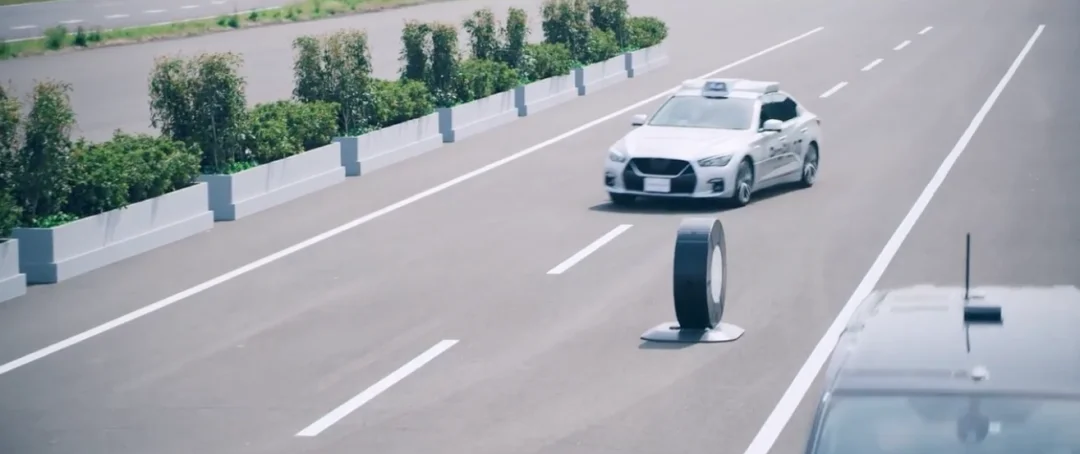
Another scenario involves a tire suddenly rolling into the vehicle's path. While this is currently an unsolvable problem, the addition of LiDAR allows the system to clearly perceive the size, shape, and distance of foreign objects on the road, enabling the vehicle to make decisions based on this information. Additionally, stationary obstacles on the road can be identified and actively avoided.
Fan Daoche also stated that the system will still utilize high-precision maps. With the support of LiDAR, even if map data is lost in certain sections, the system can continue to operate, ensuring robustness.
In navigation-assisted driving, vehicles can make active decisions based on real-time road conditions. Nissan Motor Co., Ltd.'s new-generation real-time road perception system acts as an enhanced version of current navigation-assisted driving, perfectly handling "unexpected scenarios."
However, Nissan Motor Co., Ltd. ultimately stated that the development of this real-time road perception system would not be completed until the mid-2020s, around 2025, and it would be equipped on all Nissan Motor Co., Ltd. models by 2030. This means consumers would have to wait at least eight years to use this system. My emotions instantly shifted from "expectation" to "disappointment."
02The Three Brothers Advance Together
The entire Japanese automotive industry appears largely insensitive to the global shift toward electrification and intelligence. Falling behind other regions in this transition is already a fact. However, as the saying goes, one should not fear "slacking off," but rather fear "competing in slacking." When discussing Nissan Motor Co., Ltd.'s R&D achievements, we must compare them with the efforts made by its two sibling companies.
But before we look at the performances of the other two, let's examine what efforts Japan's political sector has made to advance autonomous driving.
In 2014, the Japanese Cabinet Office spearheaded an integrated government-academia-industry-research project on autonomous driving at a national scale. Participants included the Ministry of Internal Affairs and Communications, the Ministry of Economy, Trade and Industry, the Ministry of Land, Infrastructure, Transport and Tourism, the National Police Agency, Toyota, Bentian Technology Research Institute, Nissan Motor Co., Ltd., universities, and suppliers.
In September 2018, Japan’s Ministry of Land, Infrastructure, Transport and Tourism established safety technical guidelines for autonomous vehicles.
In March 2019, the Japanese Cabinet passed amendments to the Road Transport Vehicle Act to accelerate the commercialization of autonomous driving and prepare intelligent transportation systems for the upcoming Tokyo Olympics.
In April 2020, Japan began enforcing the Amended Road Law, which included provisions related to autonomous driving.
Driven by the concerted efforts of government, research institutions, and industry, Japan's first L3-level autonomous vehicle has officially launched: the Bentian Legend.
De Facto L3
Before the Legend, Audi announced that its A8 model was the world’s first vehicle with L3-level autonomous driving capability. However, due to regulatory constraints, Audi’s claim to being "first" was not officially recognized. In contrast, the Bentian Legend received government certification, granting it legitimate status. It even features a dedicated badge on its rear.
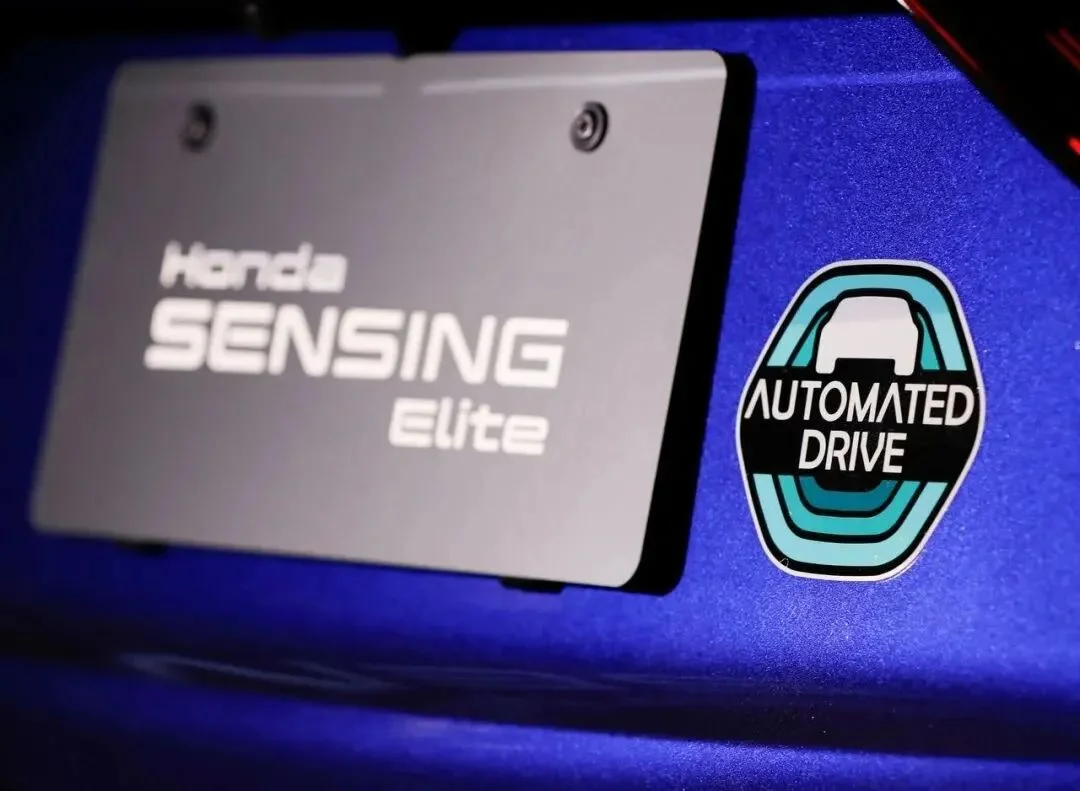
So, what are the specifications and pricing for the Bentian Legend to achieve true hands-off driving? To answer that, we need to examine the sensor configuration of this perception system:
Front binocular cameras;
Five LiDAR units (two front, three rear);
Five millimeter-wave radar units;
Dependence on high-precision maps;
Saruidianzi R-Car V3U chip with a maximum computing power of 60 TOPS.
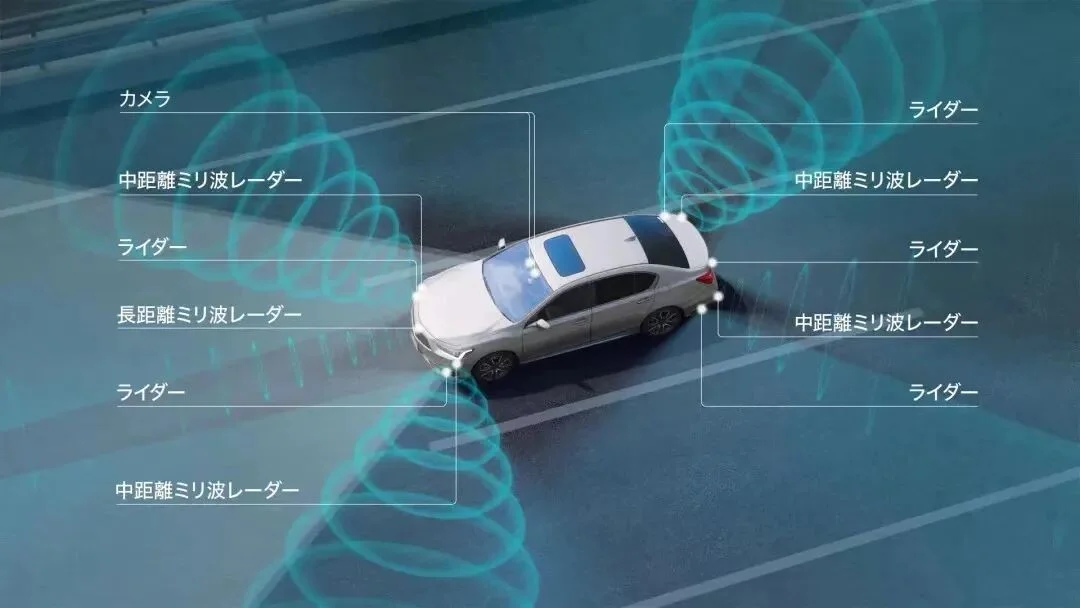
Yes, you read that right. This vehicle is equipped with five LiDAR units, specifically the second-generation SCALA by Faleiao. Each unit features 16 lines, a maximum detection range of 150 meters, and a horizontal field of view (FOV) of 10 degrees. Based on their installation positions, they serve primarily to fill blind spots and provide redundancy alongside other sensors.
The most critical limitations for using the Legend’s driver assistance are two prerequisites: the road segment must be covered by high-precision maps, and speed is restricted to under 50 km/h. The first condition limits the operational range, while the second restricts applicable scenarios. As a result, the so-called Level 3 autonomy loses its appeal, becoming little more than a gimmick.
However, Bentian never intended to mass-produce the Legend. Production is limited to 100 units, and users cannot buy out ownership; they can only lease the vehicle for three years at an approximate cost of RMB 660,000. This indicates that the Legend’s appearance was essentially a form of 'self-comfort' within Japan’s autonomous driving sector.
Investing Heavily While Developing In-House
Has Bentian achieved Level 3? Not only has it been achieved, but the government also recognizes it. However, from the perspective of practical value, Bentian’s L3 offering lacks substantial merit. What about Toyota?
As I review Toyota’s autonomous driving layout, I indeed find that its development path differs significantly from Bentian’s. Toyota is simultaneously pouring money into L4 Robotaxis while raising the adoption rate of L2 systems.
Below are Toyota’s actions in the L4 industry (based on partially public information):
In 2018, Toyota established the autonomous driving research and development team TRI-AD, which focuses on autonomous driving software development;
In August 2018, Toyota invested USD 500 million in Uber. However, due to accidents causing project stagnation, Aurora acquired Uber’s autonomous driving business in 2020, allowing Toyota’s collaboration with Uber to continue;
In February 2020, Toyota invested USD 400 million in the domestic autonomous driving startup Xiaomazhixing.
In July 2020, Toyota’s autonomous driving team TRI-AD announced the establishment of an independent company, Woven Planet. Recently, a subsidiary of Woven Planet, Woven Alpha, expressed interest in following Tesla’s pure vision approach for the development direction of autonomous driving, and the team has begun developing low-cost autonomous driving solutions.
In 2021, Woven Planet participated in the Series C funding round of autonomous driving company Nuro; the specific amount was not disclosed.
In April 2021, Toyota acquired Lyft’s autonomous driving division for USD 550 million.
Toyota has adopted a dual strategy of self-research and investment/acquisition in autonomous driving R&D, diversifying its bets to increase the probability of success.
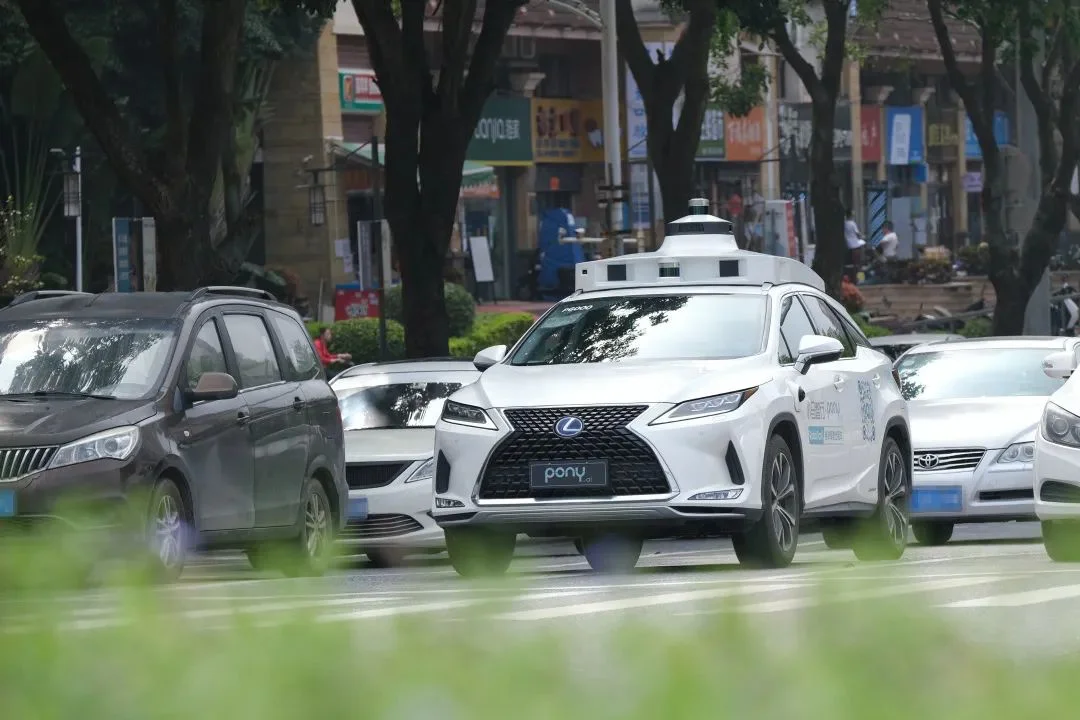
However, L4 remains a lofty goal. On one hand, Toyota is also working to improve the adoption rate of L2 systems. If you review the specifications of Toyota models, you will find that even base-trim vehicles are equipped with the TSS 2.0 system, which provides features such as lane keeping and adaptive cruise control. Although this system does not match the experience of ADAS systems developed by new energy vehicle startups, Toyota deserves praise for taking action to increase the adoption rate of L2 driver assistance and active safety configurations.
As for more advanced driver assistance, Toyota is not unable to implement it, but short-term constraints such as costs mean that average users may not yet be able to experience it.
Toyota offers a driver-assistance system called Teammate for the overseas-market Leikesasi LS 500h and top-trim Mirai models. This system features lane-change assistance triggered by the turn signal and navigation-guided driving, and in terms of functionality and capability, it is an L2-level system.
A comparison reveals that the three major Japanese automakers are advancing at similar paces on the autonomous-driving front, but Nissan Motor Co., Ltd.’s 2030 deployment timeline still comes as a shock.
Domestic new-energy vehicle makers generally avoid judging capabilities using SEA standards; instead, real-world scenario implementation best reflects true ability. The top three domestic players this year have focused on rolling out urban navigation-assisted driving, demonstrating stronger capabilities through lower intervention rates. The next step is enabling point-to-point high-level assisted driving.
Given the intensity and pace of competition among domestic new-energy brands, Nissan Motor Co., Ltd.’s plan for R&D completion in 2025 and road use in 2030 seems destined to fail in China before it even begins. Note: These timelines refer specifically to development and mass-production schedules within Japan.
03Conclusion
I have always believed that assisted driving should not pursue 'eye-catching' performance under special conditions, but rather strive for seamless, unobtrusive operation during daily driving. On the path to autonomous driving, Bentian has taken the lead by being the first to mass-produce L3 systems, but this approach has gradually drifted away from the core essence of 'assisting the user in driving.'
Toyota remains focused on L2 while continuously pushing toward L4. Its development path is impeccable, yet for a long time it has failed to deliver cost-effective, high-quality assisted driving experiences to users.
Nissan Motor Co., Ltd. has achieved navigation-assisted driving with its new architecture and enhanced AEB capabilities, but these remain confined to test tracks. With its 2025–2030 strategic timeline, if it hopes to secure a foothold in the main battlefield of assisted driving—China—it must push forward with full force.
Written by: Bobo Edited by: Liu San