


Tesla Releases 2022 Q1 Earnings; CATL's Battery Swap Brand EVOGO Goes Live; Zeekr 001 Price Increase Plan Announced | Weekly Highlights
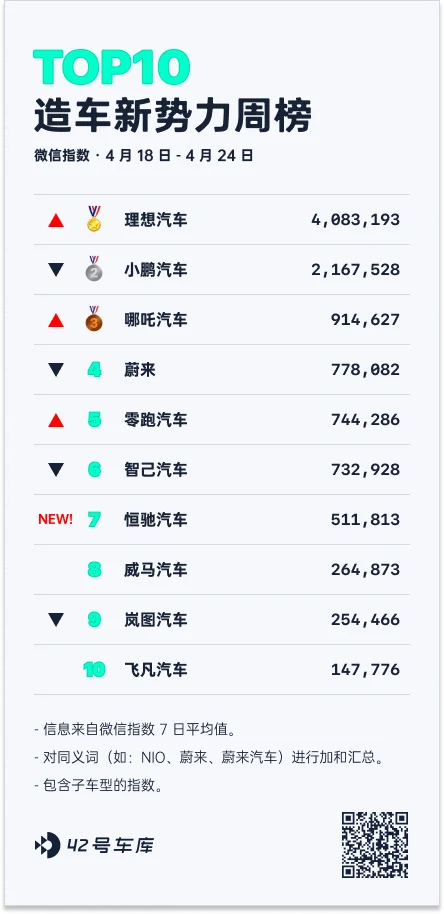
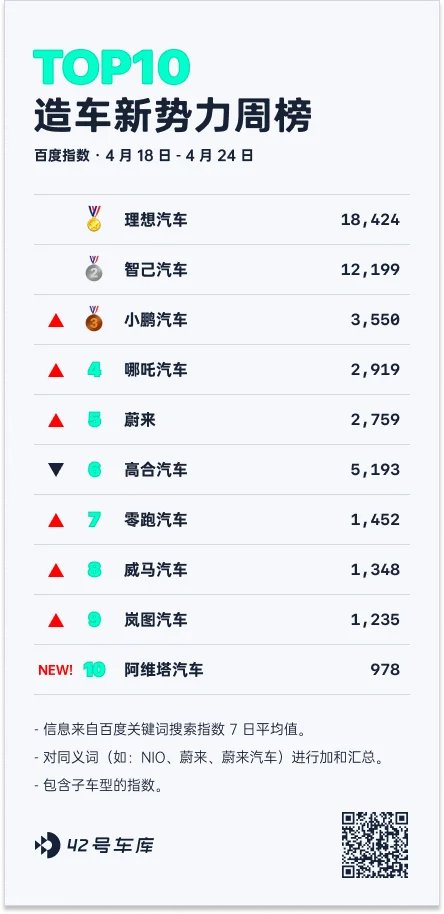
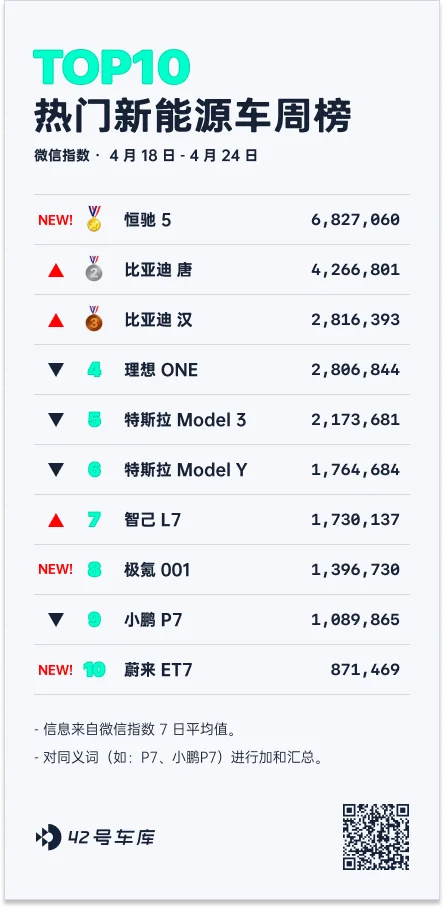
01Weekly Indices
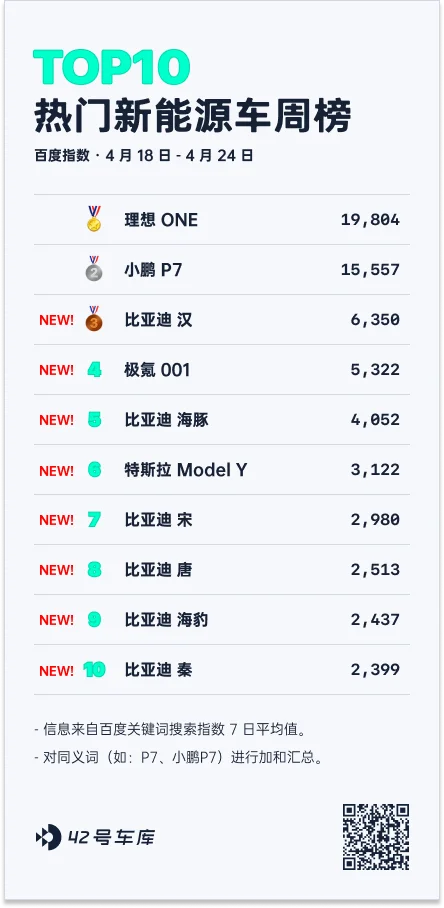
02Weekly Highlights
Tesla Q1 2022 Earnings Report: Total Revenue of USD 18.756 Billion, Significant Year-Over-Year Growth with Slowing Quarter-Over-Quarter Momentum
Key highlights from Tesla’s 2022 first-quarter financial report:
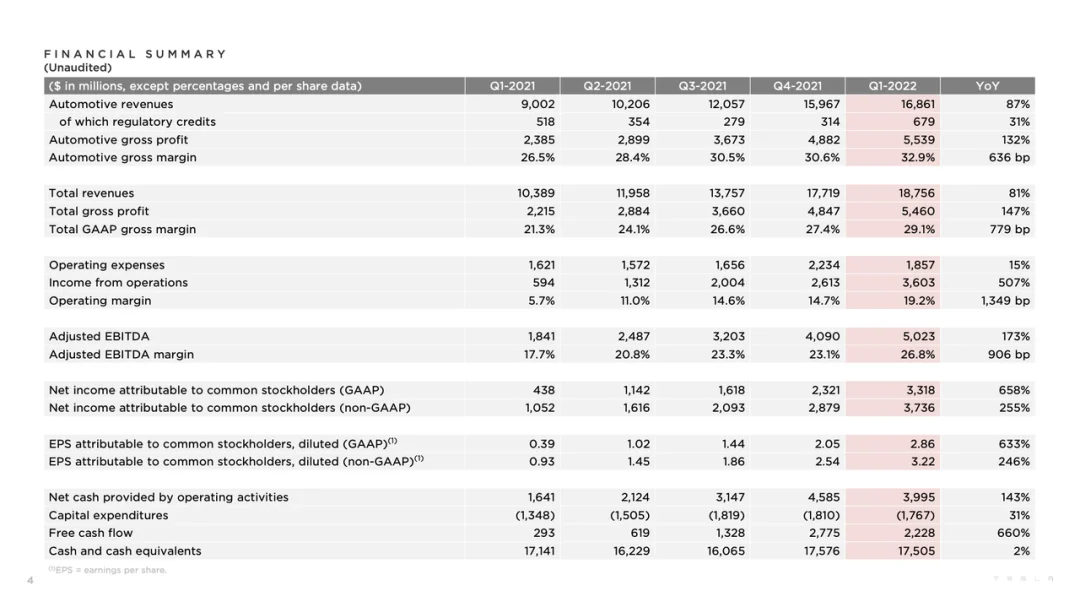
Tesla 2022 Q1 Financial Overview
In Q1 2022, total revenue reached USD 18.756 billion, a 5.85% increase quarter-over-quarter and an 81% year-over-year increase. Automotive business revenue was USD 16.861 billion (including USD 679 million from the sale of carbon credits), up 5.6% quarter-over-quarter and 87% year-over-year (carbon credit revenue increased 31% year-over-year);
Automotive gross profit was USD 5.539 billion, up 13.5% quarter-over-quarter and 132% year-over-year;
Total gross profit was USD 5.46 billion, with an overall gross margin of 29.1% and a per-vehicle gross margin of 32.9%;
Cash and cash equivalents totaled USD 17.505 billion;
GAAP net profit was USD 3.32 billion;
Free cash flow (operating cash flow less capital expenditures) USD 2.228 billion;
Operating income under GAAP rules reached USD 3.6 billion, with an operating profit margin of 19.2%.
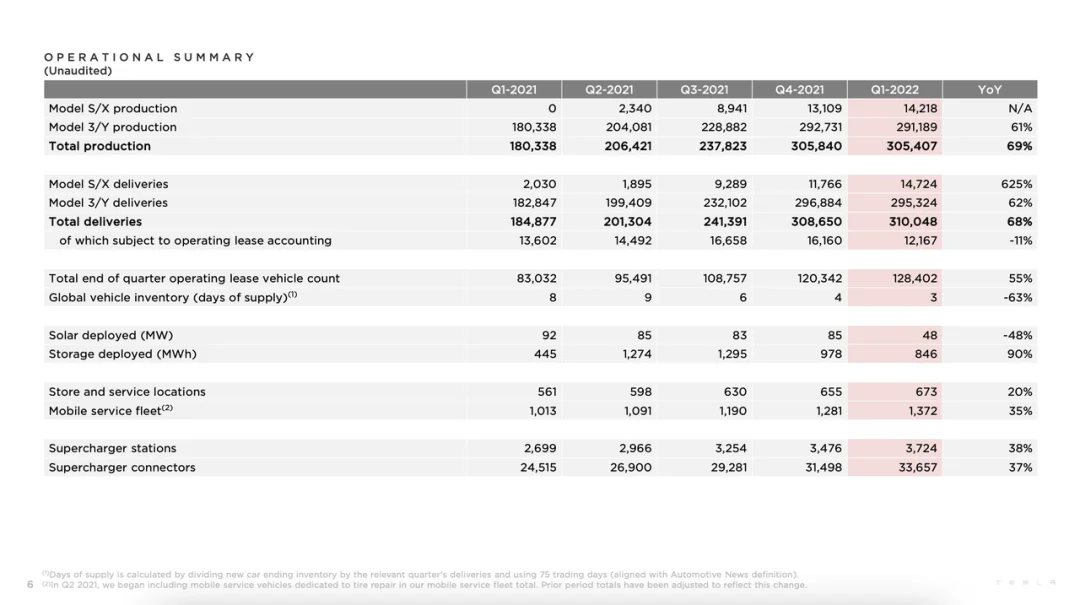
Tesla 2022Q1 Production and Delivery Summary In terms of production capacity and deliveries, Tesla's total production in 2022Q1 was 305,407 vehicles: including 14,218 Model S/X vehicles produced and 291,189 Model 3/Y vehicles produced, which is basically the same as Q4. The total delivery volume for 2022Q1 was 310,048 vehicles, including 14,724 Model S/X vehicles and 295,324 Model 3/Y vehicles. The global market average inventory cycle was 3 days, compared to 4 days in the previous quarter, a 63% reduction from the same period last year.
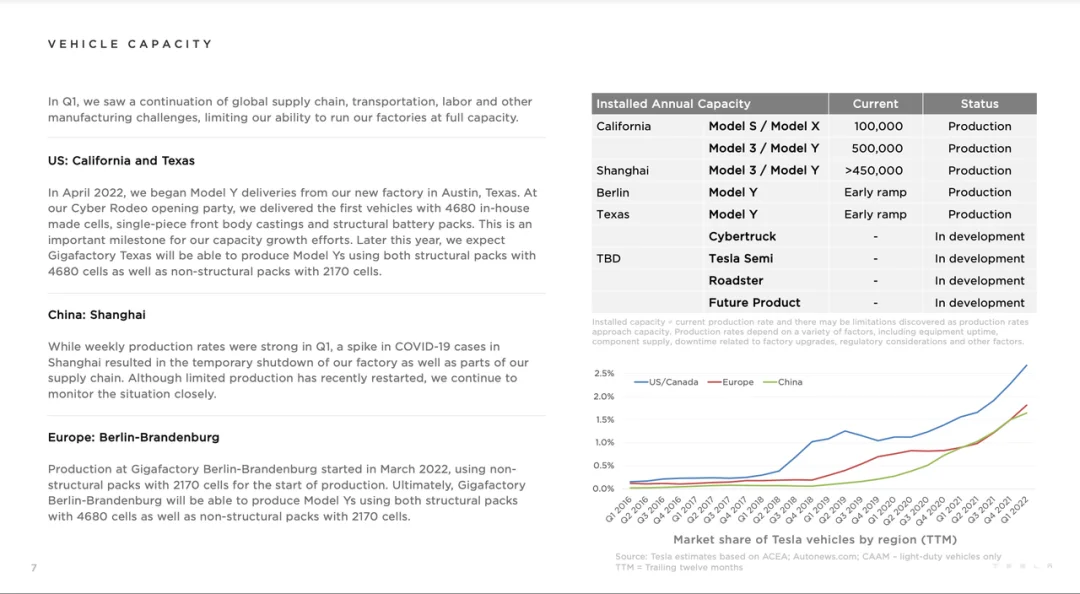
Tesla Factory Production Data Regarding the factories, Tesla's Gigafactory in Texas began producing and delivering Model Y vehicles equipped with 4680 batteries in April 2022. The Shanghai Gigafactory experienced a brief production halt due to the pandemic, which also impacted suppliers to some extent, but it has now gradually restored its capacity. The Berlin Gigafactory in Germany had already started production in March.
Quick Review:
From the third quarter of 2019 to the present, Tesla has maintained high growth with quarterly gross profits exceeding one billion dollars. Starting in 2020, Tesla’s vehicle gross margin per unit has remained stable above twenty percent (except for nineteen point two percent in the fourth quarter of 2020). Tesla continues to hold advantages over other automakers in terms of vehicle design philosophy and scaled cost efficiency.
The "SEXY" lineup—comprising the Model S, Model X, Model 3, and Model Y—delivered robust profitability and ample cash flow to Tesla’s vehicle hardware business. Meanwhile, the upcoming production of the Cybertruck, Semi, and Optimus has generated significant anticipation for the broader "Tesla universe."
However, compared to the hardware margins from manufacturing vehicles, Tesla’s path to profitability through software services remains "long and arduous." Although Tesla has explicitly stated that software services will be a core component of its business, progress on FSD Beta has encountered bottlenecks, and low subscription rates in China pose substantial challenges to this vision.
CATL’s Battery Swap Brand EVOGO Launches
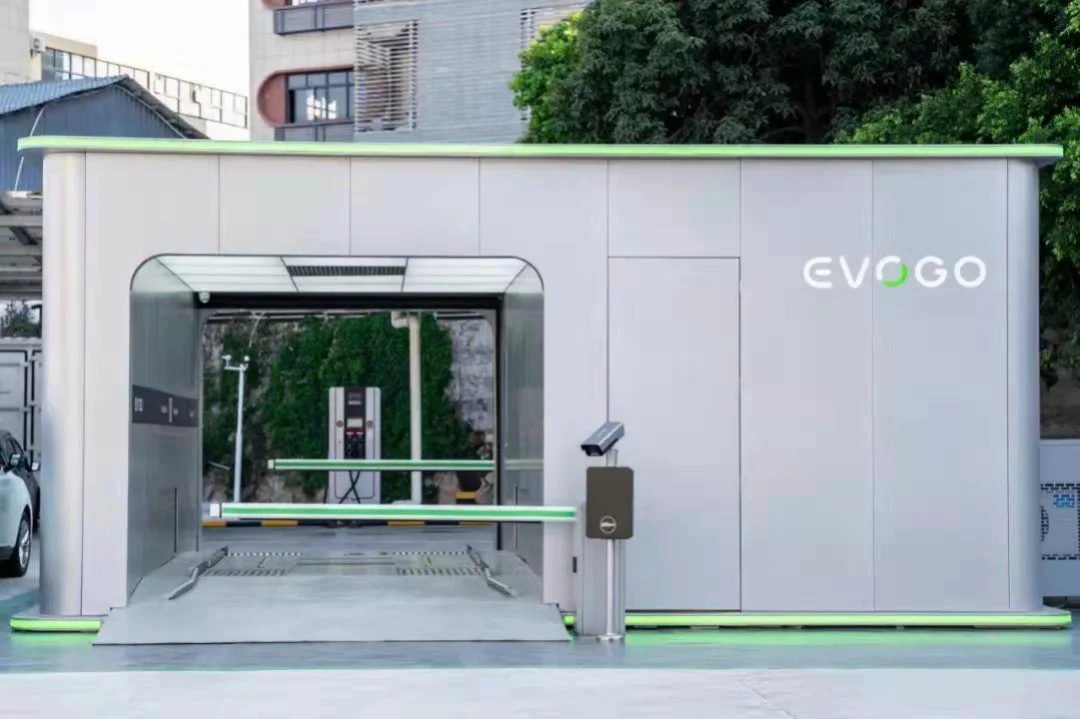
On April 18, 2022, the first batch of four battery swap stations under CATL's EVOGO brand began operations in Xiamen, Fujian province. The plan is to complete the construction and operation of thirty swap stations within Xiamen by the end of 2022, achieving the goal of having one swap station within an average service radius of three kilometers on the island.
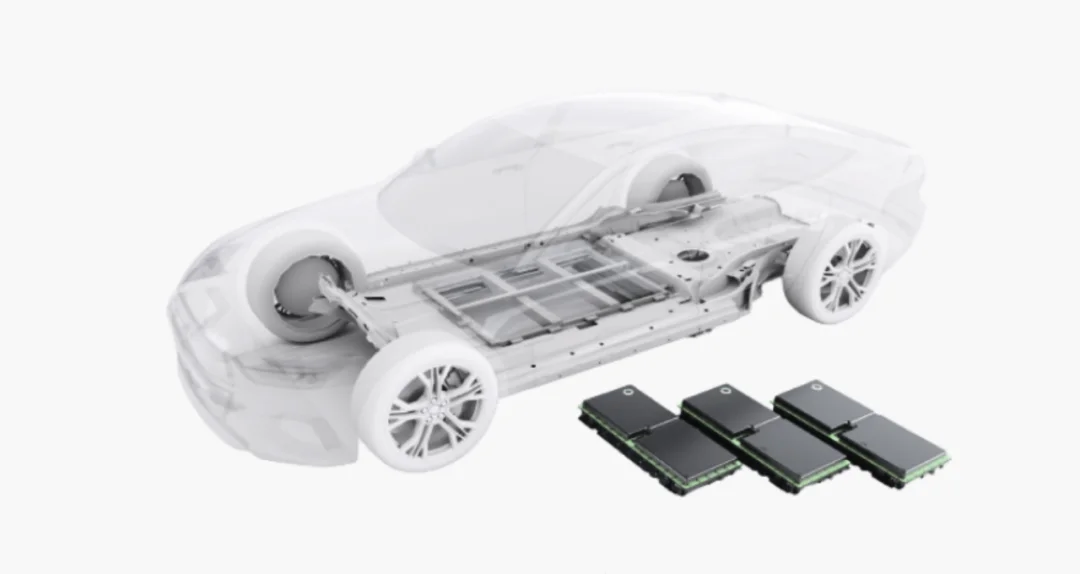
Also unveiled alongside the EVOGO stations was the battery module unit known as the "Chocolate Swap Block." Each Chocolate Swap Block has a capacity of 26.5 kWh and supports Cell-to-Pack (CTP) technology and wireless Battery Management System (BMS). It boasts a gravimetric energy density exceeding 160 Wh/kg and a volumetric energy density surpassing 325 Wh/L. CATL states that the swap technology based on these blocks is compatible with 80% of all pure electric platforms currently on the market and those scheduled for launch over the next three years. The monthly rental fee for each block starts at RMB 399.
CATL’s EVOGO swap stations operate under two primary models:
Swap station operational partnerships, where partners can choose to collaborate with Times Electric Service through either joint ventures or franchise agreements in the battery swapping sector;
For vehicle purchases of no fewer than 100 units, Times Electric Service will build battery-swapping stations for partners and provide battery leasing services.
Quick Review:
The swapping model addresses the slow charging speed of electric vehicles—achieving a refueling pace comparable to or even exceeding that of traditional internal combustion engine cars is the most significant value of battery swapping. Additionally, because vehicles supporting the swapping model do not need to remain with a single battery pack "from start to finish," it can improve the unfavorable situation where pure electric vehicle residual values are negatively impacted by battery degradation. By supporting swap-compatible designs, vehicles can adjust their power battery specifications according to needs over their lifecycle. Since batteries are components with rapid technological iteration and capacity degradation, the swapping model makes upgrading pure electric vehicles easier and more efficient.
However, the biggest problem facing the swapping model today is its high cost. For pure electric vehicle design, the additional engineering required to support swapping encroaches on the already limited chassis space. Frequent disassembly and reassembly place higher demands on the reliability of mechanical parts and increase vehicle operating costs. Furthermore, swapping operations require maintaining an updated fleet of battery packs; a convenient and widespread station network implies extremely high operational and maintenance costs.
CATL’s entry into the pioneering development of the swapping business as a supplier transforms what was previously a competitive scramble for swapping resources among various brands into a public benefit for the industry, which is the greatest significance of the EVOGO brand. If CATL achieves interoperability and commonality of pure electric vehicle batteries across different manufacturers through EVOGO, it will play a very positive role in reducing pure electric vehicle costs. At that time, a richer variety of more affordable models could appear in the market, promoting the development of the entire pure electric vehicle industry.
Zeekr 001 Price Increase Plan Announced
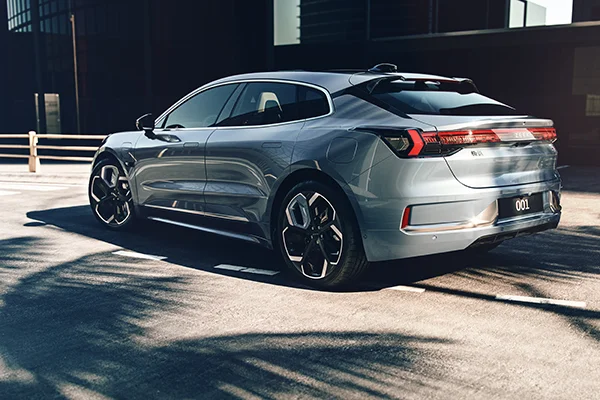
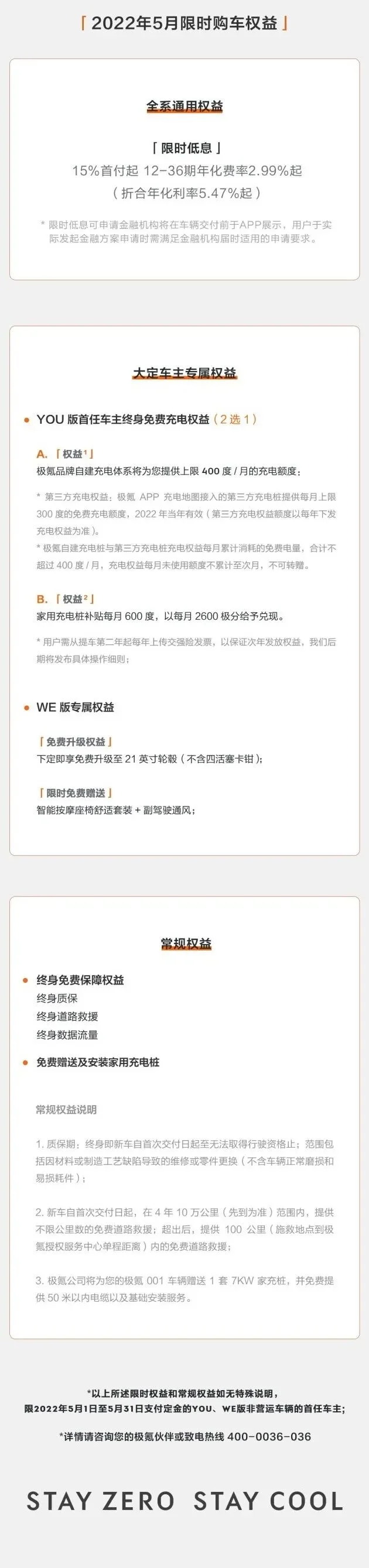
On April 22, Zeekr officially announced a price increase for its Zeekr 001 model. The specific plan is as follows:
The WE edition cancels the deposit expansion benefit of a RMB 5,000 deposit offsetting RMB 10,000 toward the vehicle price; comprehensively calculated, this results in a price increase of RMB 5,000 for the WE edition.
The price of the YOU version increases by RMB 18,000, and the deposit expansion benefit of RMB 5,000 counting toward RMB 7,500 is canceled. The comprehensive calculation shows that the price of the YOU version has increased by RMB 20,500.
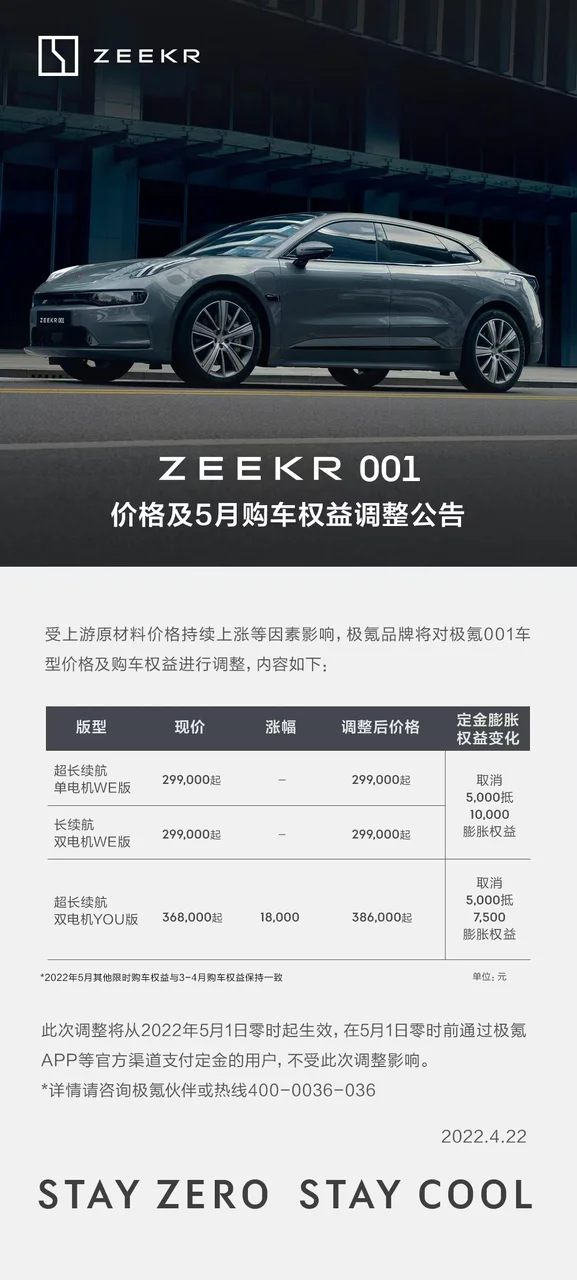
In addition, Zeekr announced that the adjustments to pricing and benefits will officially take effect at midnight on May 1, 2022. Users who paid a deposit through official channels such as the Zeekr App before midnight on May 1 are not affected by this price adjustment. In early April, Zeekr had already issued an announcement stating that it would adjust the prices of the Zeekr 001 starting in May, providing users with a one-month buffer period.
Quick Take:
Since the beginning of 2022, numerous automakers have chosen to raise prices due to the combined impact of sharp increases in upstream raw material costs and global supply chain tensions. Zeekr is no exception. However, for the long-range single-motor and dual-motor WE versions, which constitute the bulk of deliveries, the primary increase stems from the cancellation of the "RMB 5,000 counts as RMB 10,000" expansion benefit. These models remain eligible for national new energy vehicle subsidies.
The impact on power batteries and the supply chain is expected to persist for several months, making it difficult to see a return in model prices driven by cost reductions in the short term. Although purchase subsidies for new energy vehicles remain in 2022, the continuously improving product capabilities of pure electric vehicles allow models in the RMB 250,000–300,000 price range to gradually rely less on these subsidies as a key selling point. In other words, the steepest blow from rising battery costs has been dealt to pure electric vehicles priced around RMB 150,000–200,000. If battery pack costs remain high in the future, there will be little room for maneuver for models in the RMB 150,000–200,000 segment in other areas, which is not a favorable trend for the widespread adoption of pure electric vehicles.
Changan DEEPAL Launches First Model C385 and EPA 1 Platform
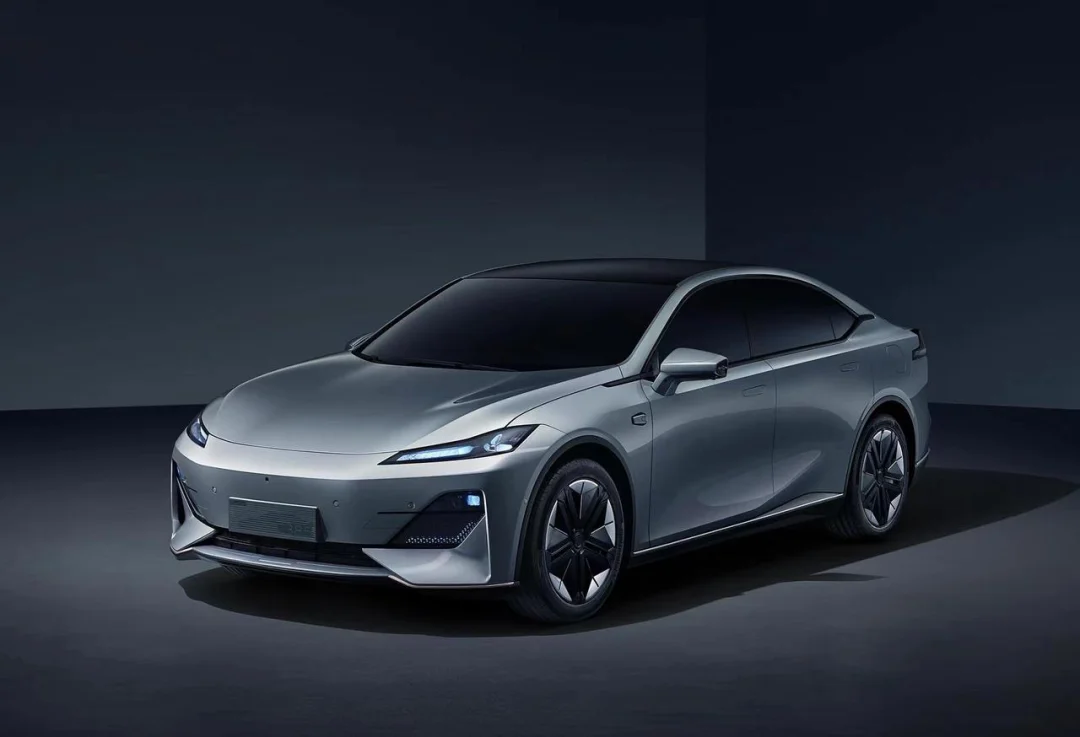
First, let’s look at the main parameters of the debut model C385 on the EPA 1 platform:
Dimensions (L x W x H): 4,820 x 1,890 x 1,480 mm; wheelbase 2,900 mm;
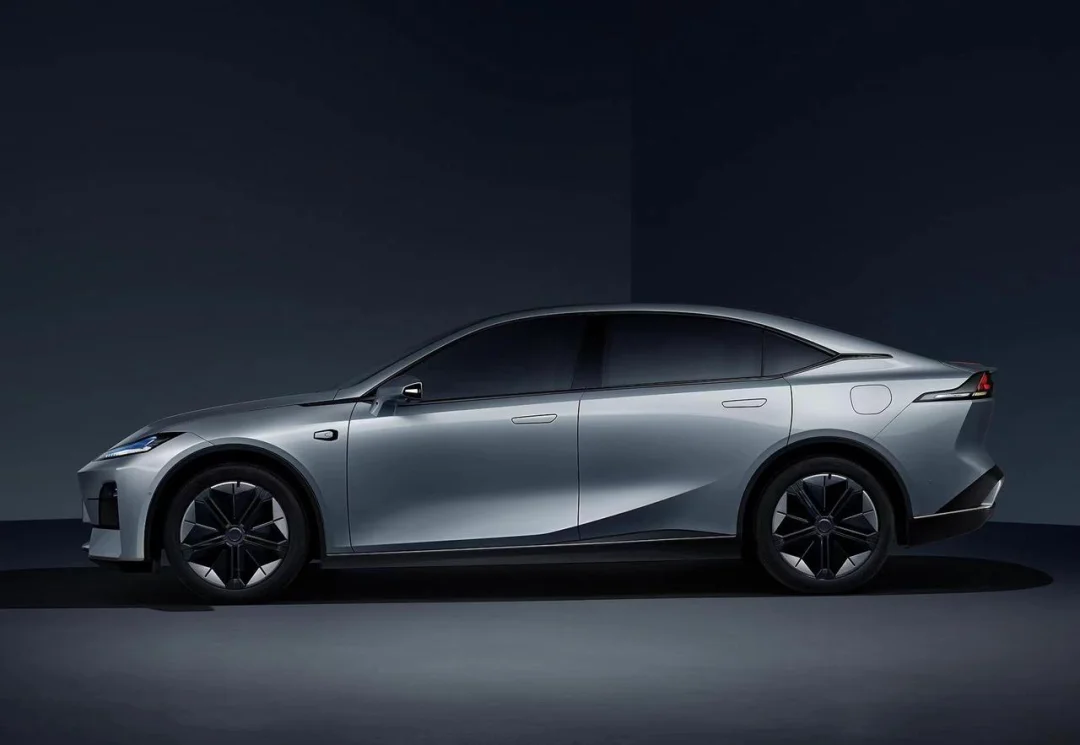
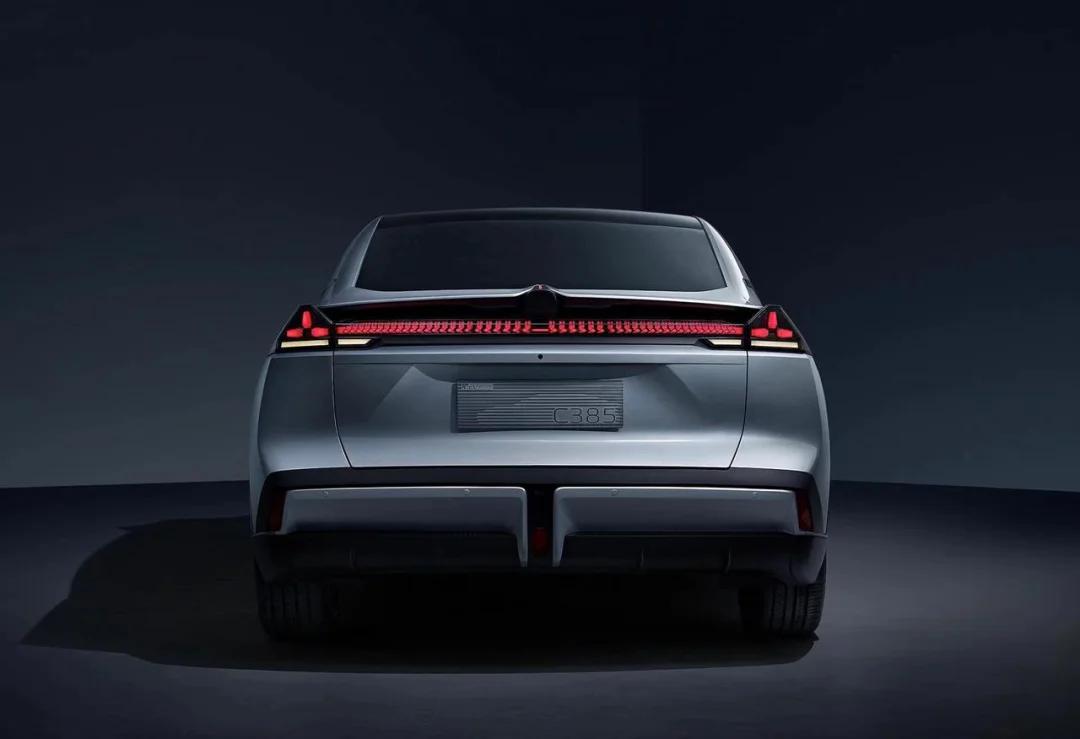
Features frameless doors and a hatchback design with hidden door handles;
Rear-wheel drive with a single motor, maximum power of 190 kW, and zero-to-100 km/h acceleration in 5.9 seconds;
Official CLTC range of 700+ km, with a comprehensive CLTC cycle energy consumption of 12.3 kWh;
The interior features a 14.6-inch central display, with the smart cockpit powered by Qualcomm’s Snapdragon 8155 chip and a multi-processor collaborative architecture.
C385, in addition to the pure electric configuration, also has range-extended and hydrogen-electric configurations: The pure electric driving range of the range-extended model is over 200 km, the combined driving range is 1,200 km, and the fuel consumption at depleted battery state is 4.5 L/100 km. On the EPA 1 platform, the range-extended system of sedans can generate approximately 3.3 kWh of electricity by consuming 1 liter of fuel; the power generation efficiency of the hydrogen fuel cell system can reach 20.5 kWh per 1 kg of hydrogen, and refueling with hydrogen takes only 3 minutes. The EPA 1 platform also adopts "pulse heating technology," allowing the battery to rise by 4 degrees Celsius per minute in an environment of minus 30 degrees Celsius, bringing the advantages of a 15% reduction in charging time at low temperatures and improved power performance in low-temperature environments.
Regarding driver assistance features, the EPA 1 platform supports navigation-guided driving based on high-definition maps, covering scenarios such as automatic lane changes, ramp entry and exit, and adaptive cruise control. For automated parking, in structured parking lots, the EPA 1 platform enables memory-based parking and remote summoning, as well as HD map-based automated parking and remote summoning.
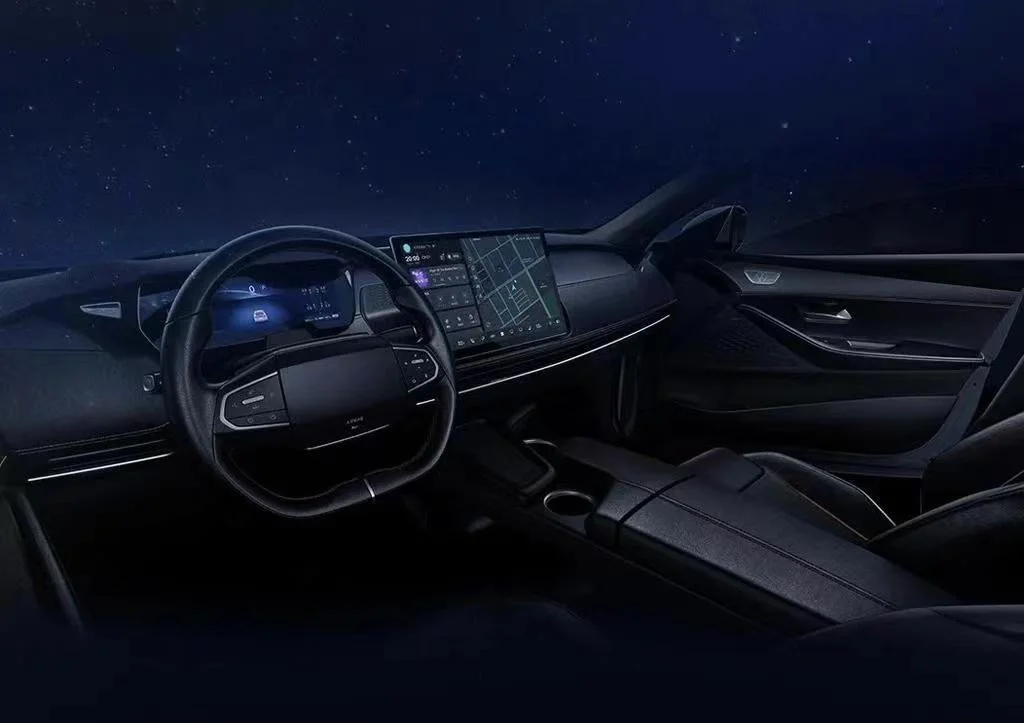
Regarding the electronic and electrical architecture, the EPA 1 platform supports Service-Oriented Architecture (SOA) technology, enabling OTA updates for the three domain control functions of vehicle control, cockpit, and intelligent driving within three minutes. The dual-partition upgrade technology developed for the EPA 1 cockpit domain prevents vehicle immobilization caused by failed infotainment updates. It allows software updates to be completed without disrupting normal use by owners, while also mitigating the risk of breakdowns that could result from update failures.
Quick Review:
In 2017, Changan proposed the "Shangri-La" plan to invest RMB 100 billion in the new energy sector. Five years later, the EPA 1 platform can be considered the first step of Changan's new energy plan bearing fruit. The EPA 1 platform provides broad possibilities for Changan's new energy future: the C385 based on the EPA 1 platform has three configurations: pure electric, extended-range, and hydrogen-electric.
The EPA 1 platform also provides a solid foundation for the C385, featuring a front-to-rear axle weight distribution of 50:50, a maximum rear motor power output of 190 kW, and a zero-to-100 km/h acceleration time of 5.9 seconds. The integration of SOA (Service-Oriented Architecture) technology enables the C385 to support three major domain control functions—vehicle control, cockpit, and intelligent driving—as well as the expansion of SOA services and over-the-air (OTA) updates across all domains within three minutes.
Models such as the Changan DEEPAL C385 and BYD Haibao are poised for launch, suggesting that the future pure electric sedan market may witness a vibrant and diverse landscape.
Haomo AI Day: City NOH Launch and Latest MANA Data Intelligence Progress
On April 19, 2022, Haomozhixing held its first AI DAY event of the year. Let's first look at Haomozhixing's review and outlook:
Since the launch of the WEY Moka, the first model equipped with Haomozhixing's HWA (Highway Autonomous Driving) system in May 2021, Haomozhixing's intelligent driving products have been successively integrated into five other models, including the TANK 300 City Edition and the HAVAL Shenshou.
In November last year, Haomozhixing officially launched its Highway NOH. The WEY Moka, equipped with the Haomozhixing NOH system, became the world's first fuel-powered vehicle to feature pilot intelligent driving capabilities.
As of April this year, the total mileage driven by users equipped with Haomozhixing's highway intelligent driving system has exceeded seven million kilometers. Haomozhixing's long-term goal is to pre-install its system in one million vehicles within the next three years.
Haomozhixing's "three major battles" in 2022 focus on data intelligence technology, intelligent driving scenarios, and autonomous last-mile logistics delivery vehicles.
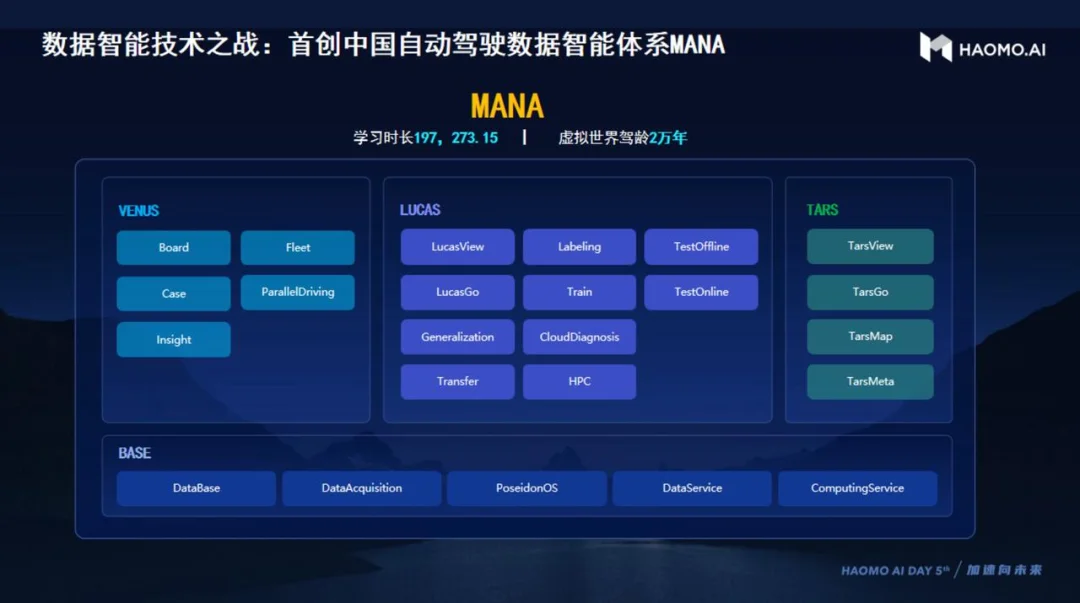
In terms of data intelligence technology, Haomozhixing released the MANA data intelligence system at the end of 2021. This system converts data into knowledge, enabling product iteration at a lower cost and faster speed to provide users with safe and user-friendly products. Three months later, MANA's perception capabilities were significantly enhanced, driven by improvements in chip computing power and camera specifications. In 2022, MANA aims to improve performance in traffic light recognition and Transformer-based lane line recognition, while addressing consistency and interpretability issues in driving strategies for cognitive problems. Haomozhixing chose to collaborate with Alibaba, bringing Alibaba's M6 large model—originally designed for natural language processing, automatic text generation, text classification, and image classification—to the autonomous driving field for the first time.
In terms of intelligent driving scenarios, Haomozhixing has completed the full functional development of City NOH. In urban environments, it can achieve main functions such as automatic lane changing and overtaking, traffic light recognition and vehicle control, passage through complex intersections, and unprotected left and right turns. Currently, City NOH has been deeply refined in deep scenarios in cities such as Beijing and Baoding, and vehicles equipped with the City NOH system will officially enter mass production in the near future. Haomozhixing also announced the "6P Open Cooperation Model": as a supplier, Haomozhixing can provide solutions to other companies without self-research capabilities, and can also jointly develop with other companies. Partners can choose to adopt Haomozhixing's full-stack technical solution, choose to cooperate with Haomozhixing at the data intelligence cloud service level, or choose to cooperate with Haomozhixing at the software and hardware levels.
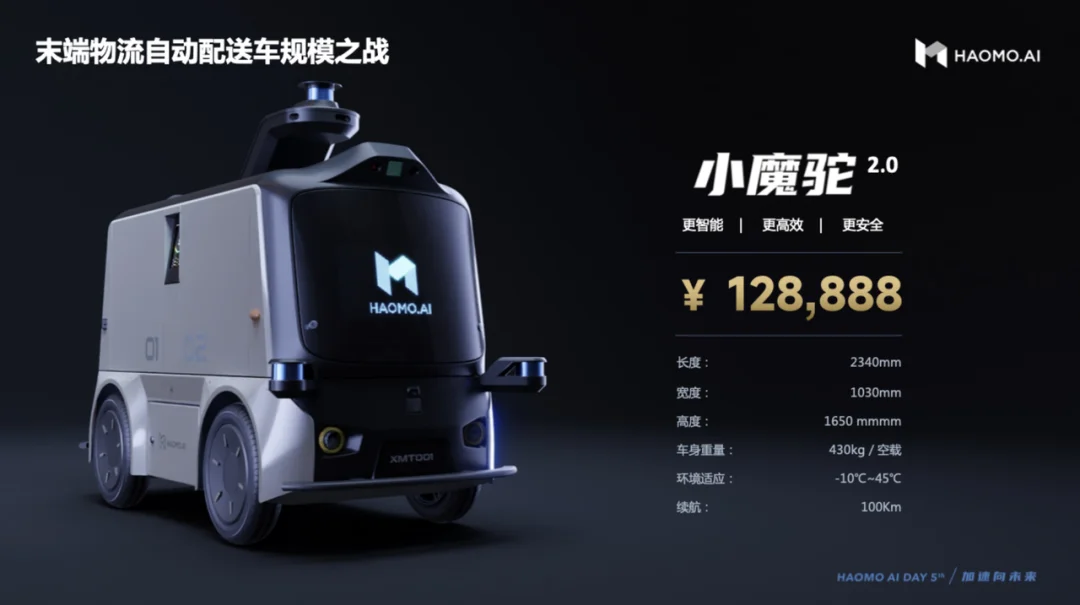
In the field of last-mile logistics delivery, Haomozhixing comprehensively upgraded its production base for autonomous last-mile delivery vehicles this year. The upgraded production workshop covers an area of 10,000 square meters and achieves a production capacity target of 10,000 unmanned delivery vehicles per year. At this AI DAY event, Haomozhixing officially released the second-generation autonomous last-mile delivery vehicle—Xiaomotuo 2.0—with a final price of RMB 128,800: Xiaomotuo 2.0 is equipped with the ICU 3.0 high-computing-power platform, offers a customizable cargo box with a volume of 600 liters, and additionally supports interaction methods such as intelligent voice and touch.
Finally, let's look at Haomozhixing's city NOH system: On the hardware level, the HPilot 3.0 system is equipped with Qualcomm 8540 and 9000 chips, providing 360 TOPS of computing power. It also features two LiDARs, 12 cameras, and five millimeter-wave radars. According to Haomozhixing's plan, the city NOH system will be officially mass-produced and installed in vehicles in June 2022. Over the next three years, the city NOH system will be deployed in more than 100 cities, fully covering first- and second-tier cities across China.
Quick Review:
Haomo’s 2022 goals are clear, yet challenging.
Haomo plans to deliver 34 models and complete 78 projects in 2022. This will test not only its R&D capabilities but also its organizational agility and talent recruitment strategies.
Additionally, Haomo intends to open up for cooperation, positioning itself as a 'qualified' Tier-1 supplier. Based on the current collaboration with Changcheng, the partnership is mutually beneficial. Haomo can provide Changcheng with highly competitive driver assistance capabilities, while extensive factory-installed (OEM) deployments will accelerate the development of MANA.
For Haomo, achieving mass production of urban NOH seems to be just the step from zero to one. Beyond that, there is much work ahead: building a broad network of partners, expanding its ecosystem, deepening R&D, and establishing a robust talent system. Having started 2022 on a strong note, Haomozhixing still has many battles to fight.
BBA Unveil New Lineups: Mercedes-Benz EQS SUV, All-New BMW 7 Xi, Audi urbansphere Concept
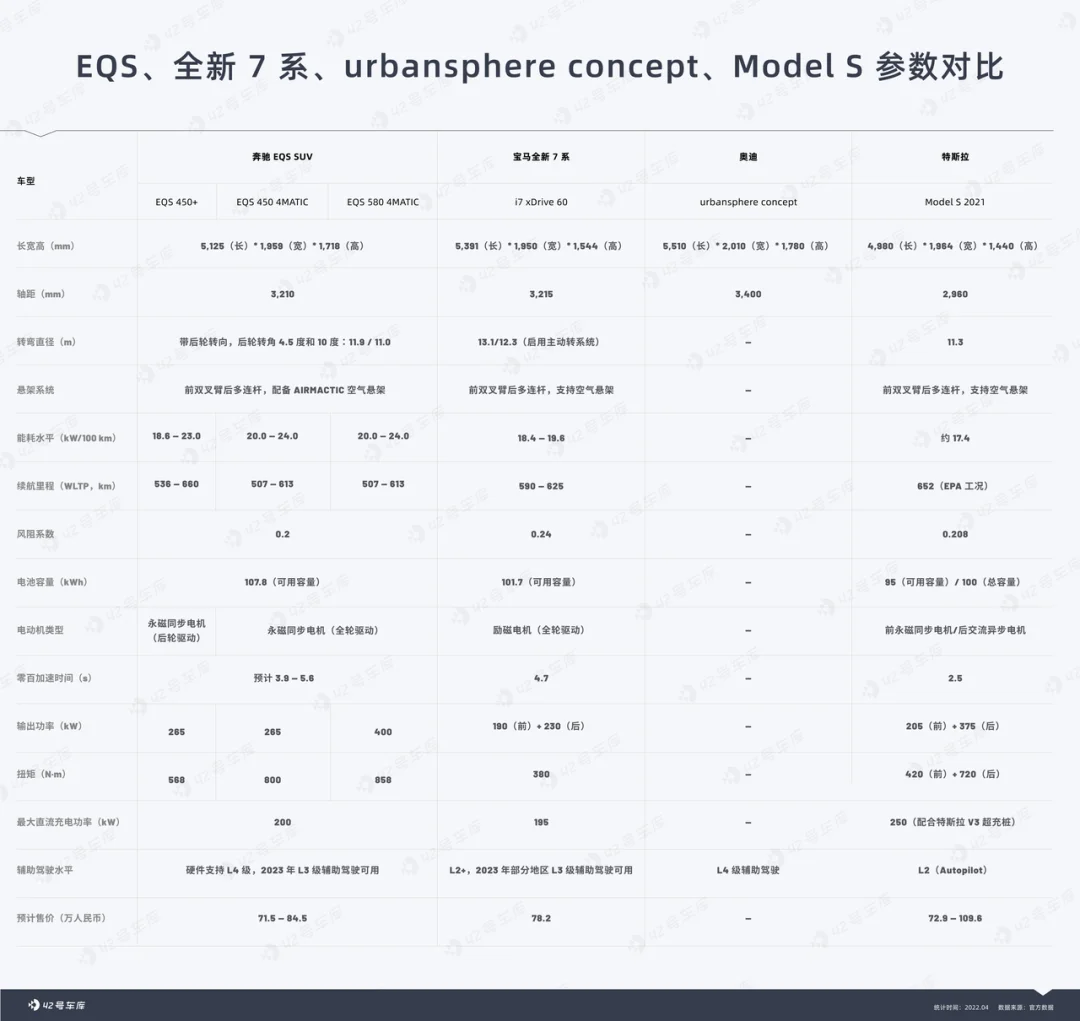
Mercedes-Benz, BMW, and Audi—this trio of German automotive rivals—simultaneously unveiled new vehicles this week, all targeting three common luxury vehicle segments: the Mercedes-Benz EQS SUV with an SUV design, the all-new BMW 7 Xi sedan and pure-electric i7, and the Audi urbansphere concept car, which reinterprets the MPV form factor. Let’s start with a comparison of their basic specifications, using the Tesla Model S (2021) as a reference point:
Mercedes-Benz EQS SUV
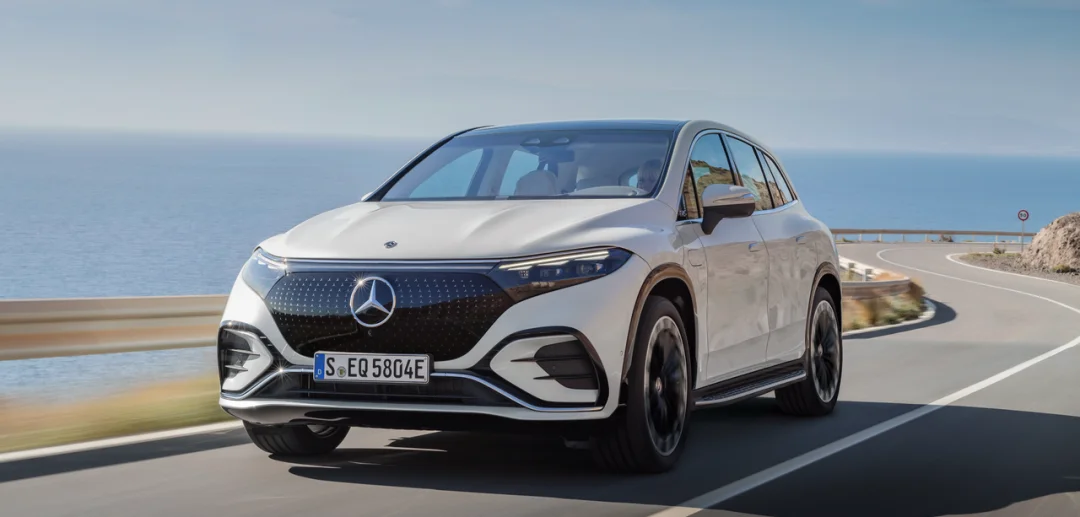
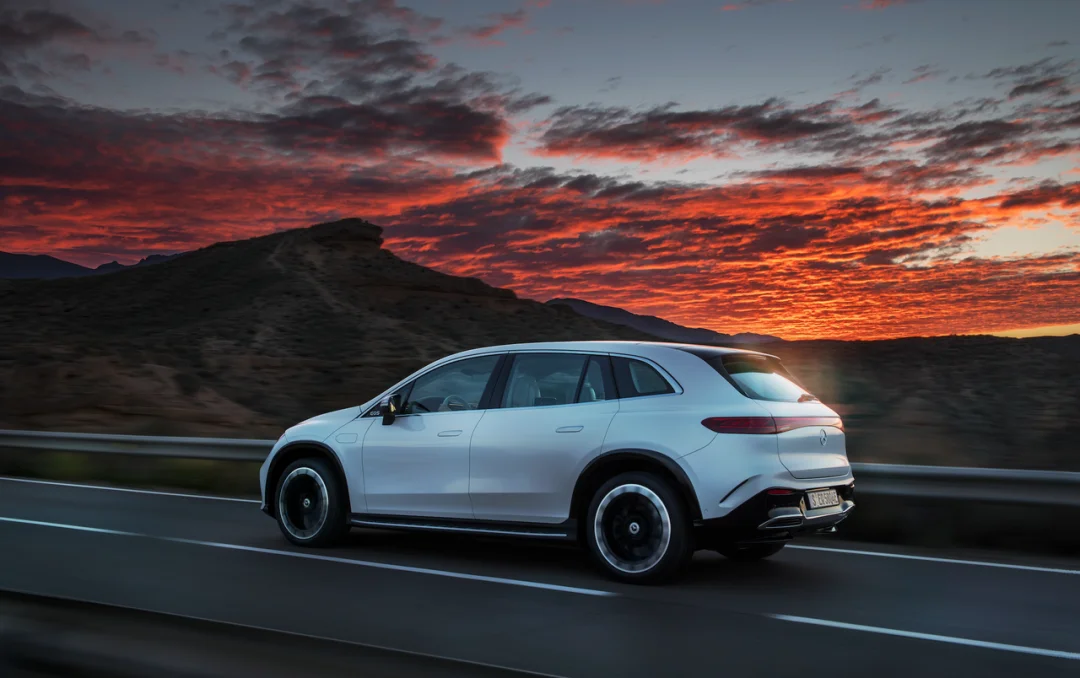
In terms of interior design, the EQS SUV is equipped with a Dolby Atmos sound system and the MBUX Hyperscreen, an ultra-wide display measuring 141 cm. The system features an 8-core CPU and 24 GB of memory (the specific chip model is not mentioned). The seven-seat configuration follows a '2 + 3 + 2' layout.
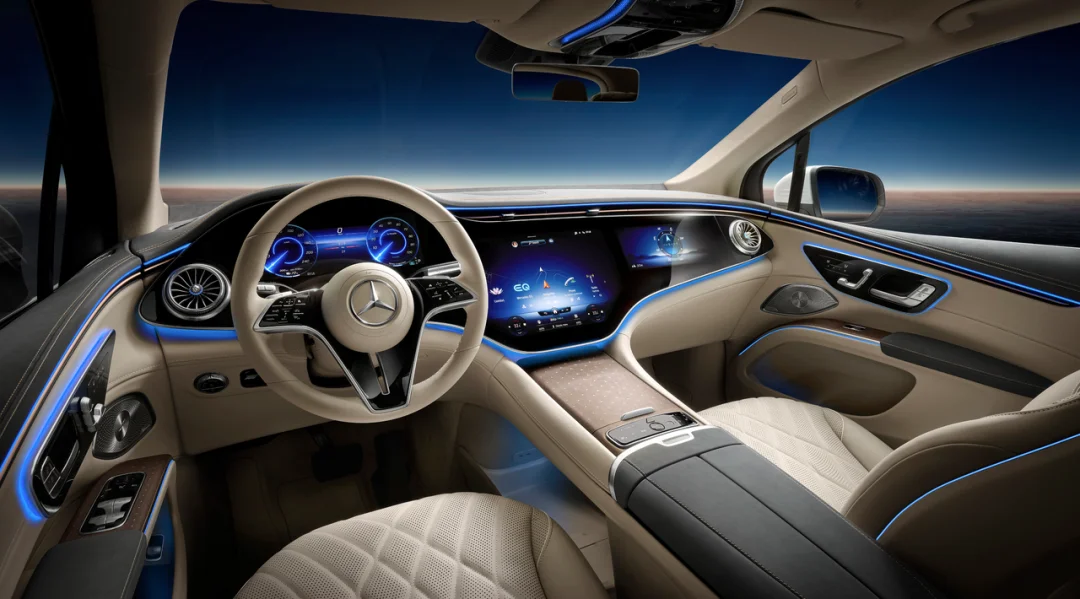
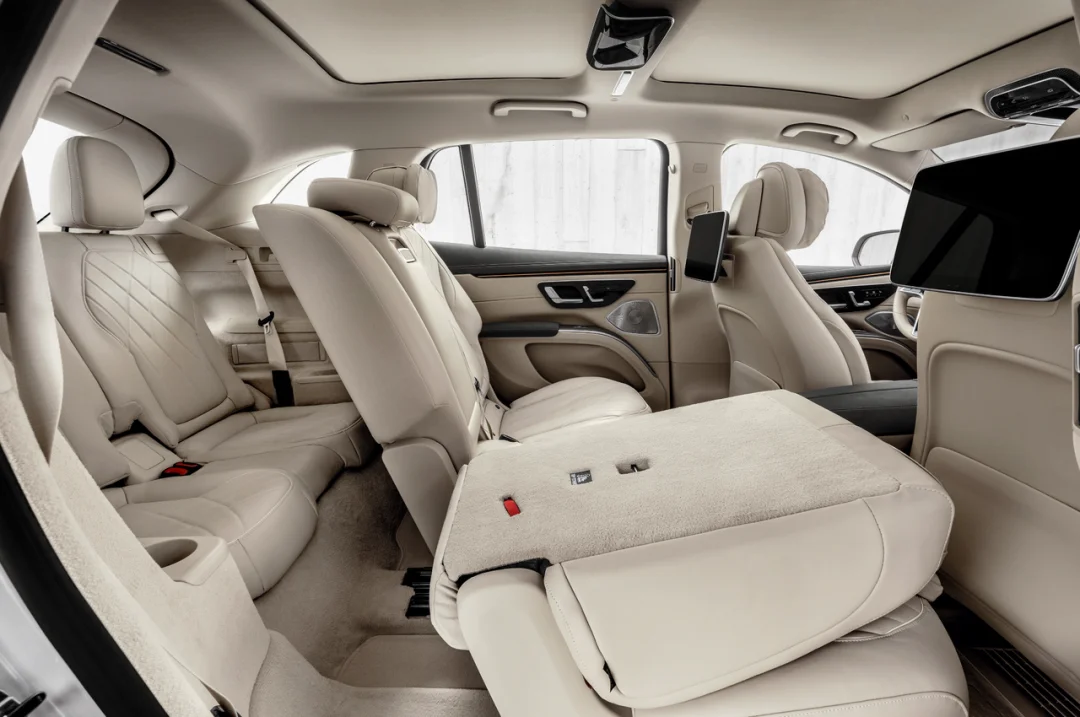
In addition to the standard Head-Up Display (HUD), Mercedes-Benz offers an augmented reality HUD (AR-HUD) as an option on the EQS SUV. The AR-HUD features a horizontal viewing angle of ten degrees and a vertical angle of five degrees, with an image focal length of ten meters. The projected display is equivalent to a seventy-seven-inch screen, delivering clearer content for driver assistance and navigation information. This helps drivers stay more integrated with the road environment ahead, further reducing the likelihood of distraction caused by looking down at the dashboard.
Additionally, the EQS SUV will be equipped with a Dolby Atmos audio system and an air filtration system featuring HEPA-grade filters.
BMW's New 7 Xi
This "I want both fuel and electric" edition of the 7 Xi includes three models: the fully electric i7 xDrive 60, the gasoline-powered 760i xDrive, and the plug-in hybrid M760e xDrive. The basic specifications for the all-electric i7 have already been listed. Here is a brief overview of the powertrain specifications for the gasoline and plug-in hybrid variants of the 7 Xi:
The 760i is powered by a 4.4-liter twin-turbo V8 engine, while the M760e plug-in hybrid combines a twin-turbo 3.0-liter S58 engine with an electric motor. These two powertrains produce 536 and 571 horsepower, respectively.
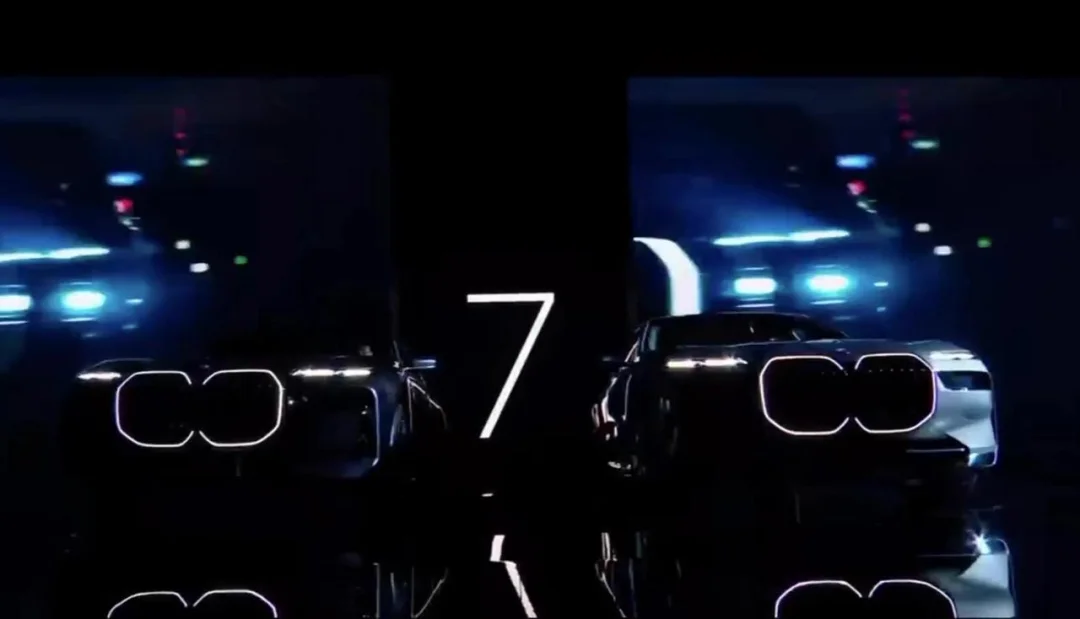
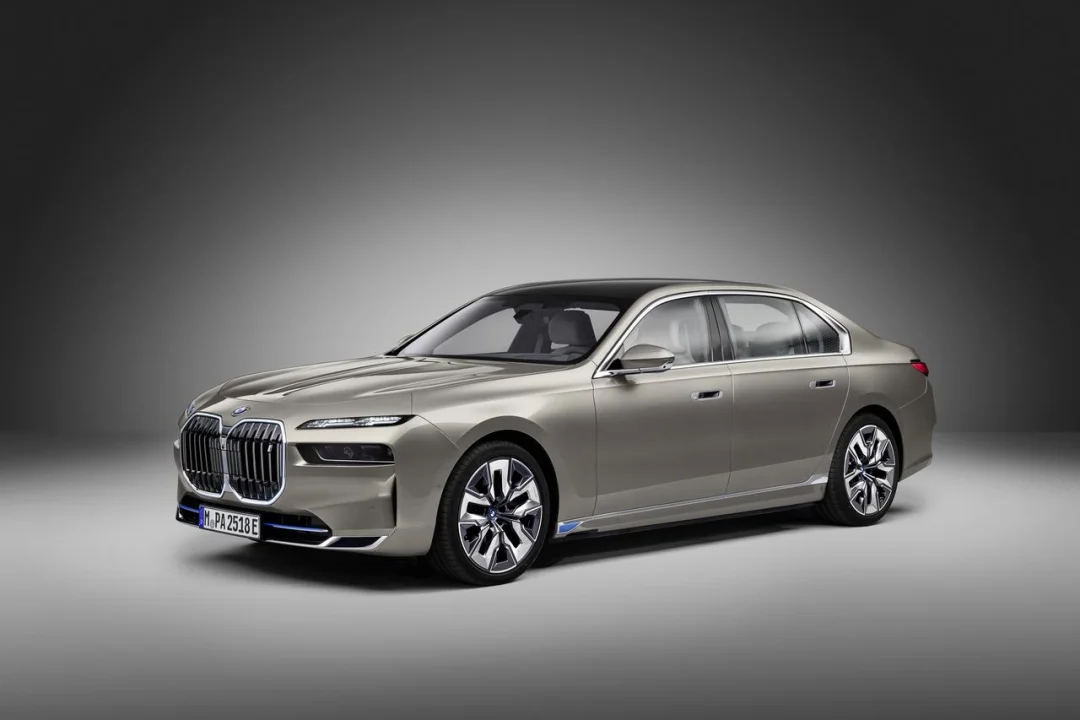
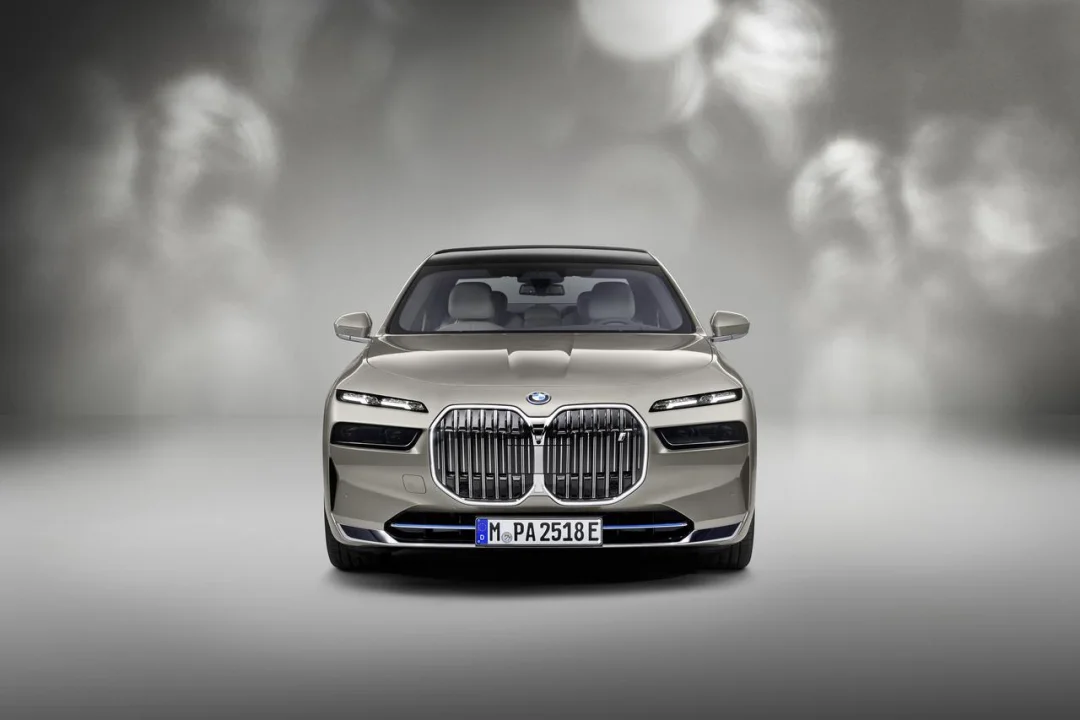
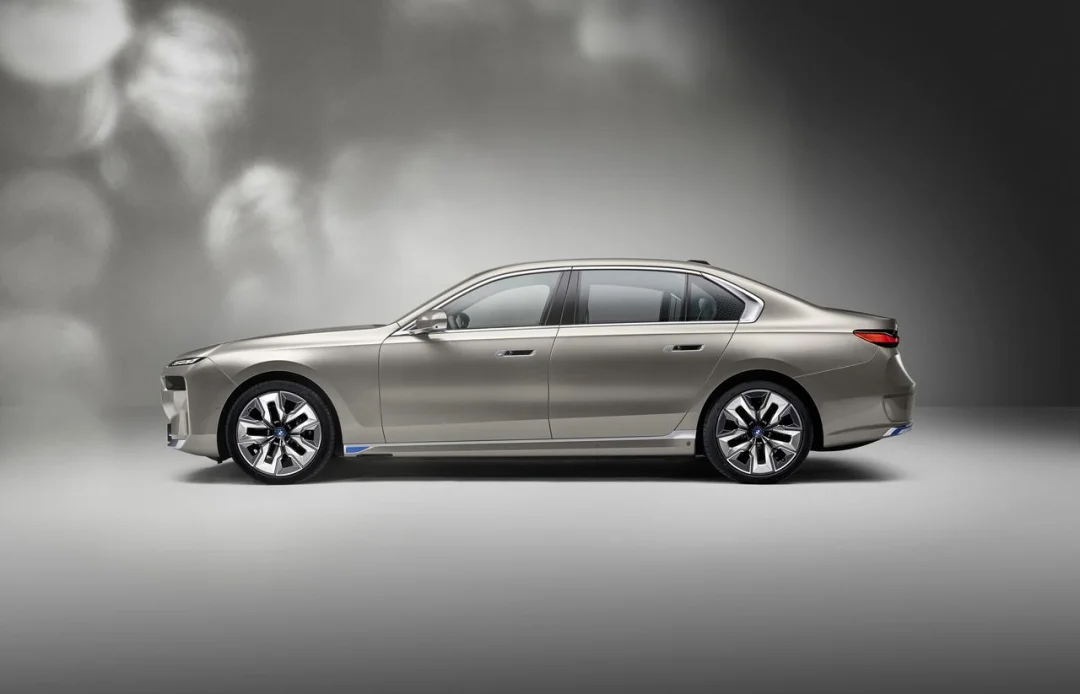
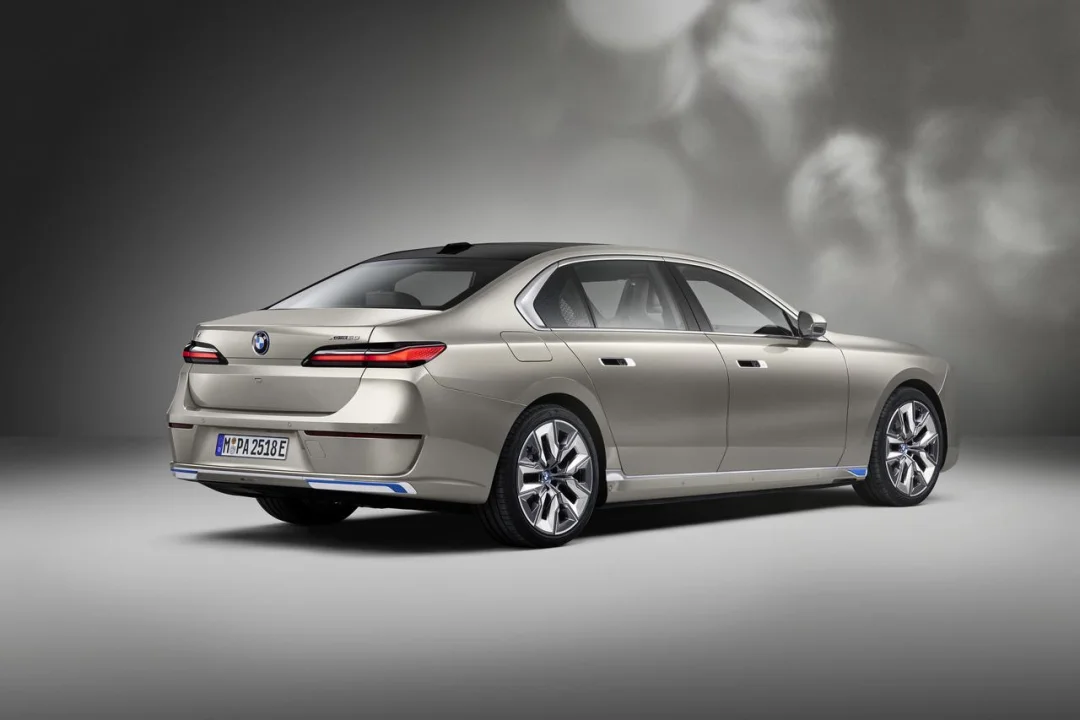
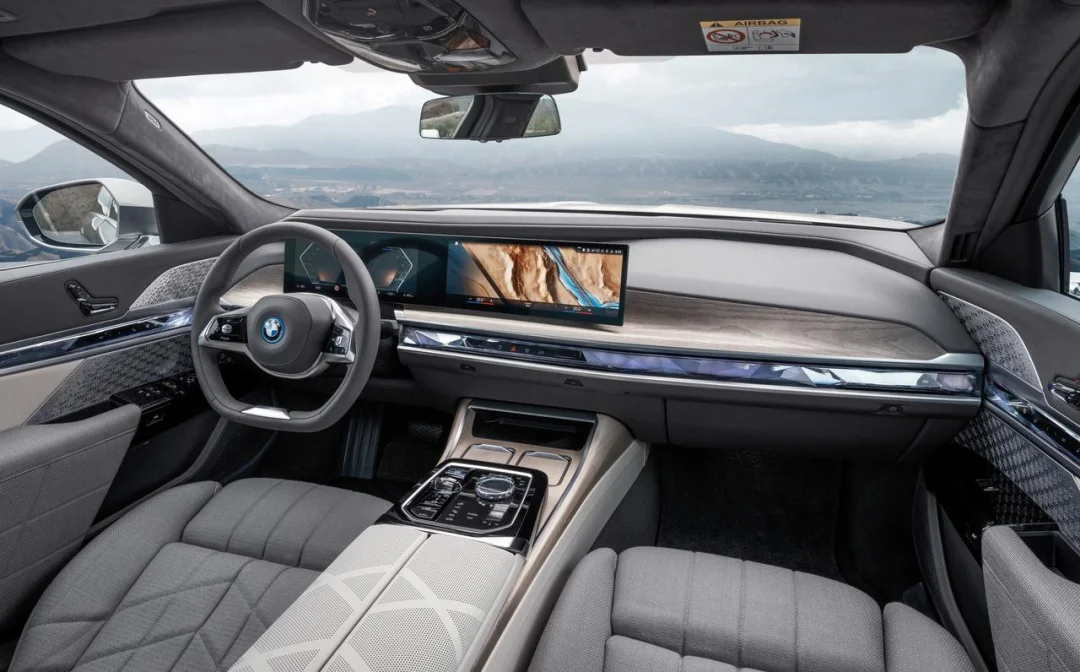
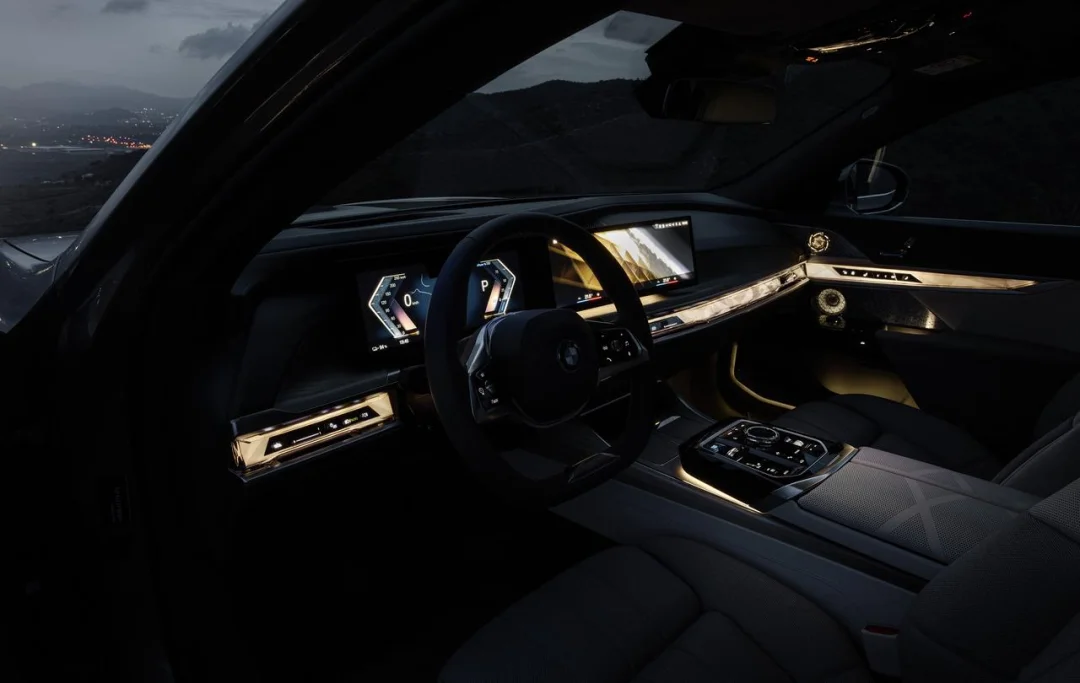
For interior design, the i7 features a new integrated floating curved screen combining a 14.9-inch touch display and a 12.3-inch digital instrument cluster, powered by the latest BMW iDrive 8.0 infotainment system. The front ambient lighting integrates touch controls for functions such as climate control and multimedia.
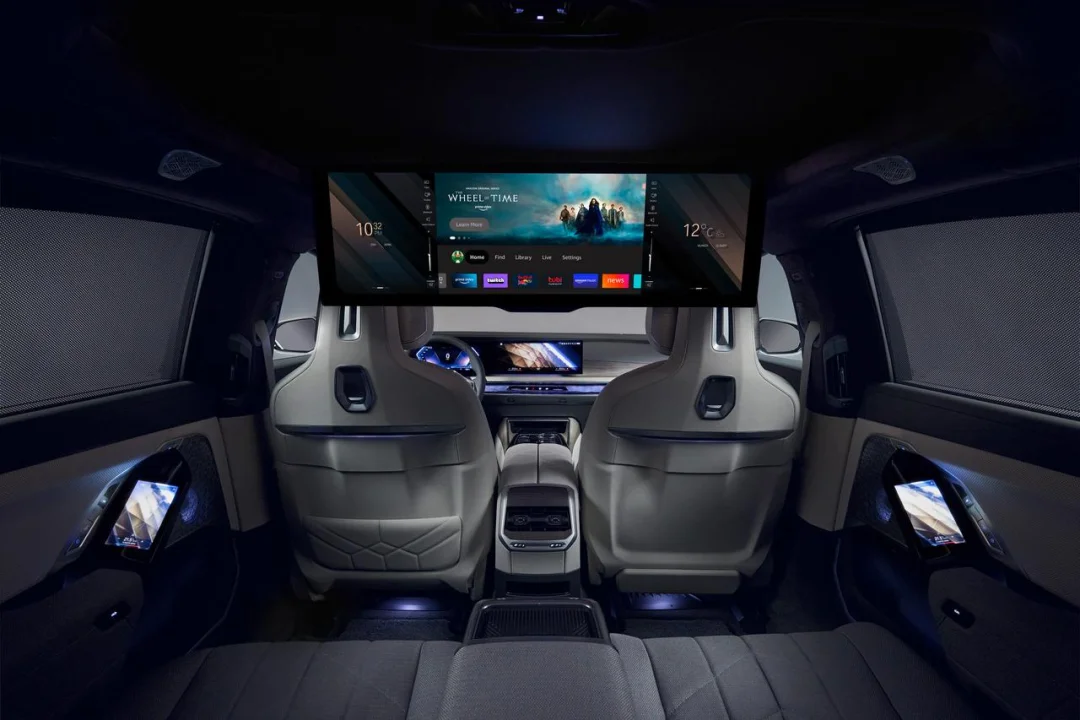
The rear seats are equipped with a 31-inch 8K (7,680 × 2,160) resolution 32:9 OLED screen. A control PAD is located on the armrests on both sides of the rear row, surrounded by buttons to operate door locks, door opening/closing, and privacy sunshades. The audio system is a Bowers & Wilkins 4D setup with 36 speakers (total power output of 1,965 W), featuring vibration actuators in all four seats.
The in-car entertainment system supports 5G connectivity and can stream internet content. BMW has partnered with local video copyright holders to support third-party streaming services such as iQiyi in the future.
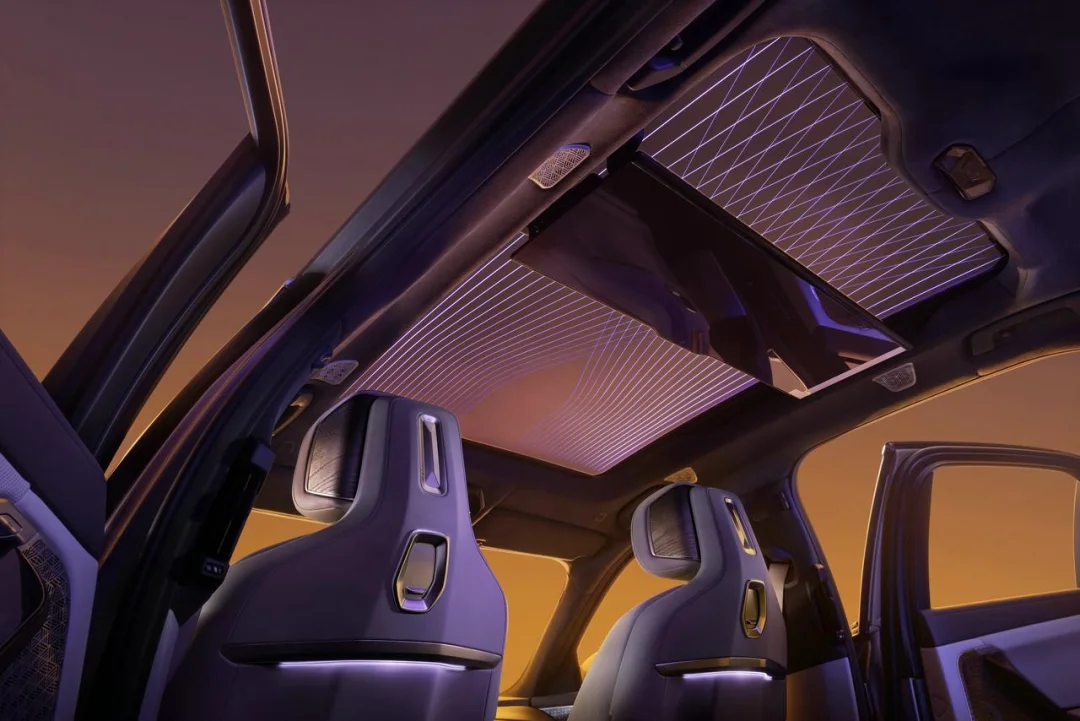
Regarding driver assistance, the i7 is equipped with more than 30 sensors across the vehicle. This hardware investment translates into performance capabilities, allowing L3-level driver assistance in certain regions, including traffic light recognition and automated stopping. With the optional Advanced Driver Assistance Package, the adaptive cruise control can be enabled at speeds up to 210 km/h.
Audi urbansphere concept
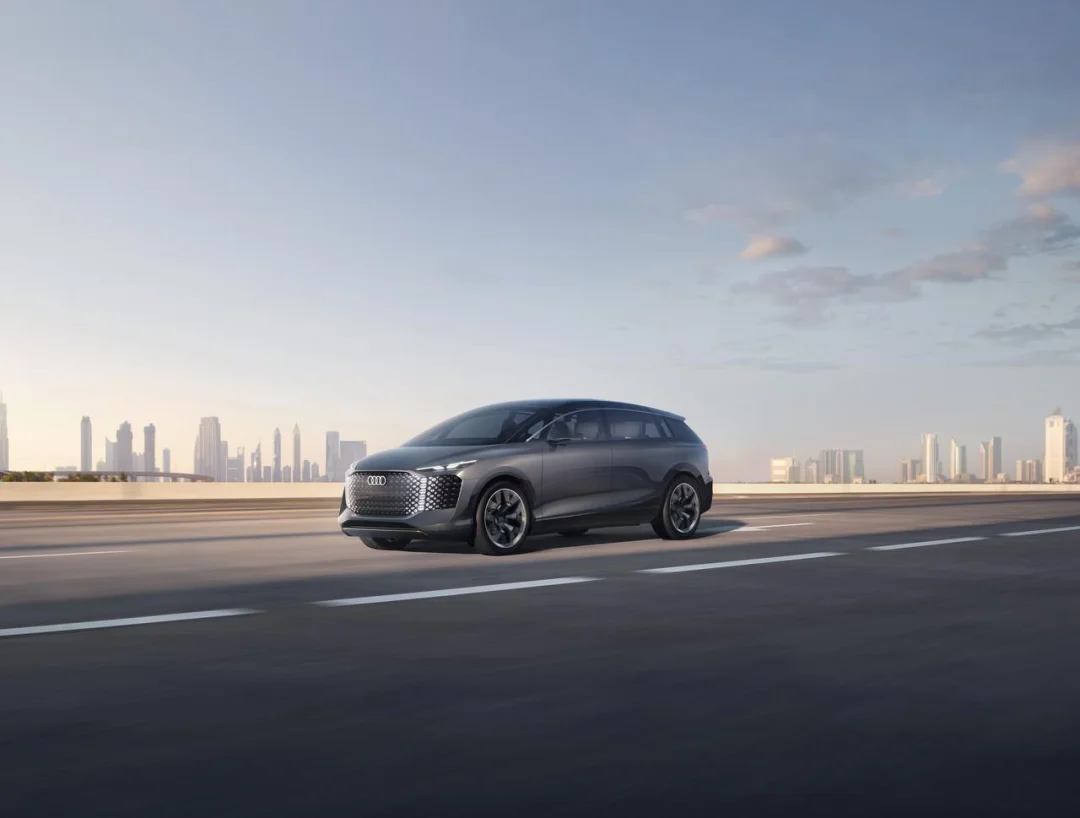
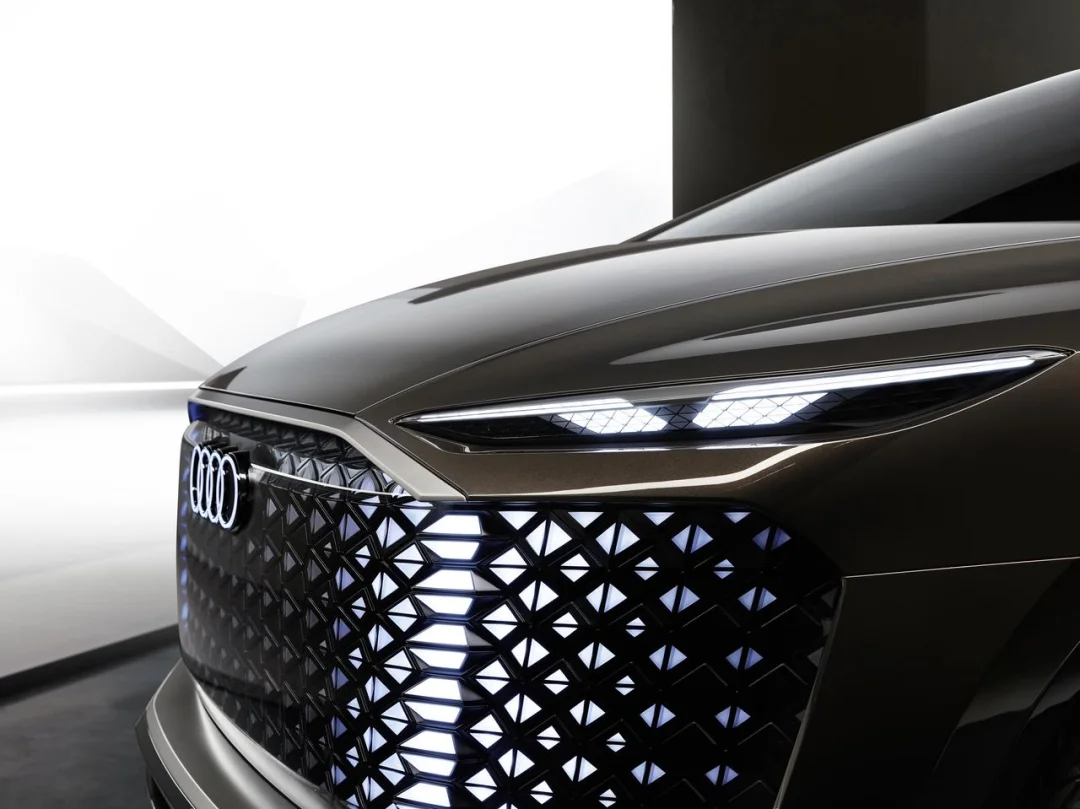
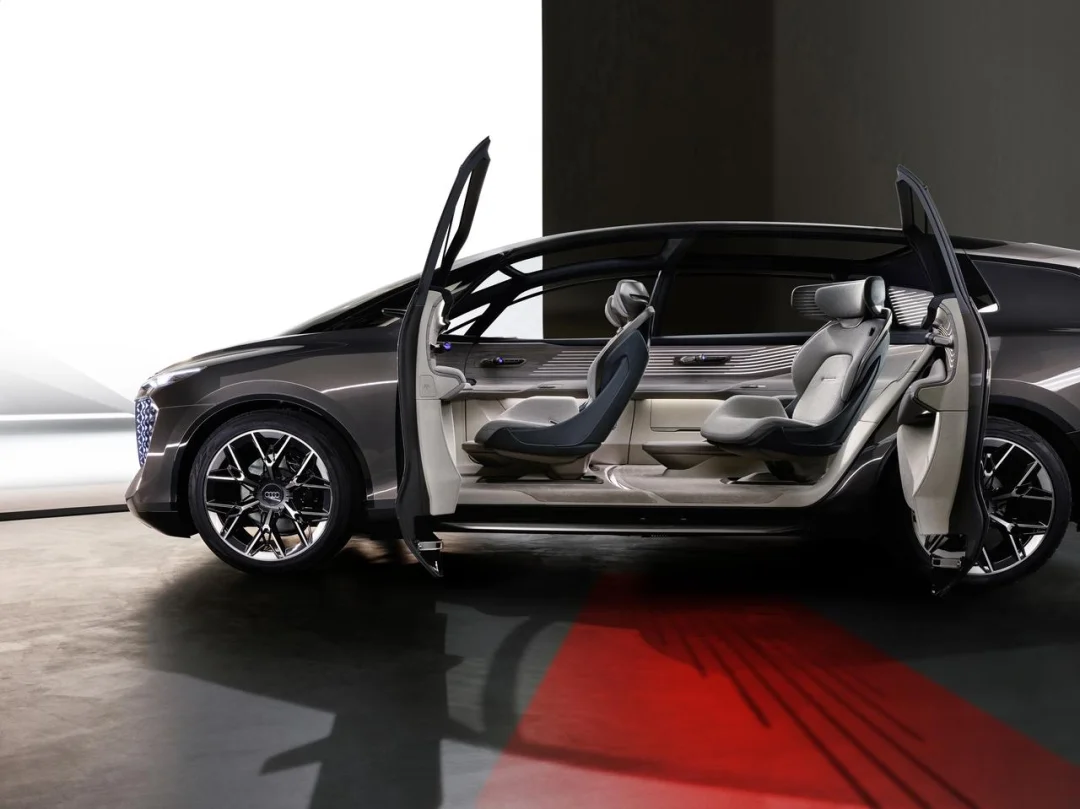
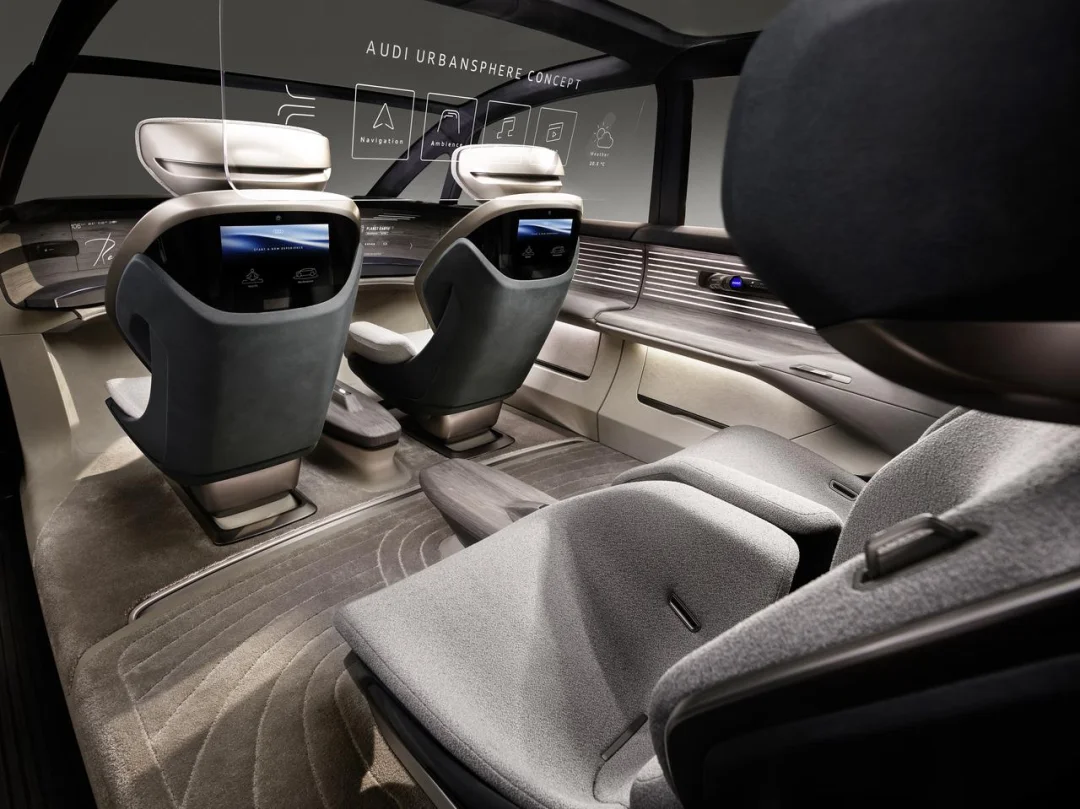
The Audi urbansphere concept is a fully electric MPV concept vehicle designed by Audi based on the PPE platform. With autonomous driving technology, it allows passengers to interact with the vehicle through voice commands, gestures, touch controls, and holographic projections. Audi positions the urbansphere as 'becoming a third living space for passengers,' and interior design elements from the concept car will appear in new models launched by Audi in 2025.
Quick Review:
The EQS SUV, i7, and urbansphere target very specific demographics and markets: buyers seeking pure-electric luxury SUVs, executive sedans, and MPVs. However, the Chinese MPV market in 2022 was already crowded with anticipated launches of new-energy MPVs from manufacturers including but not limited to VOYAH, BYD, Zeekr, Ziyoujia, and others. With electric motors and batteries integrated into vehicle design, scaling platforms up or down seems sufficient to move from executive sedans to SUVs and then to MPVs. Immature and imperfect pure-electric experiences are no longer valid reasons to remain on the sidelines of electrification. Rather than "quietly holding back for a big reveal," "buying a ticket to board early" may be a better strategy to secure an ecological niche.
The new models from the BBA trio happen to correspond to the three categories of "luxury pure electric vehicles" (SUV, sedan, and MPV). Regardless of whether a product's foundation is a shared oil-electric platform or a dedicated EV platform, or even an impractical concept car, it is ultimately the products delivered to consumers that represent traditional manufacturers' thinking on the proposition of "luxury in the electrification era." Past glory cannot illuminate the future, and the current transformation struggles with "fulfillable promises."
Written by Yueba Jinbo. Edited by Liu Guangding.