


I Support Xiaomi's EV Project!
On February 26, in the article "What If Xiaomi Built Cars? Would It Be a Smash Hit?" we noted that most companies had already moved ahead of Xiaomi in hiring for automotive roles. For Xiaomi, the loss extends beyond just time costs.
By March 26, Sina Technology reported that supply chain sources and Xiaomi partners confirmed that Xiaomi's car manufacturing is a definite plan, with the company currently seeking cooperation resources within the supply chain. Additionally, many vehicle software engineers have recently joined Xiaomi, and recruitment efforts are ongoing.
Today, Xiaomi released a voluntary technology announcement on the Hong Kong Stock Exchange: "The company's board of directors has officially approved the initiation of its smart electric vehicle project and established a wholly-owned subsidiary to manage this business. The initial investment is RMB 10 billion, with an expected total investment of USD 10 billion over the next 10 years. Lei Jun will concurrently serve as the Chief Executive Officer of the smart electric vehicle business."
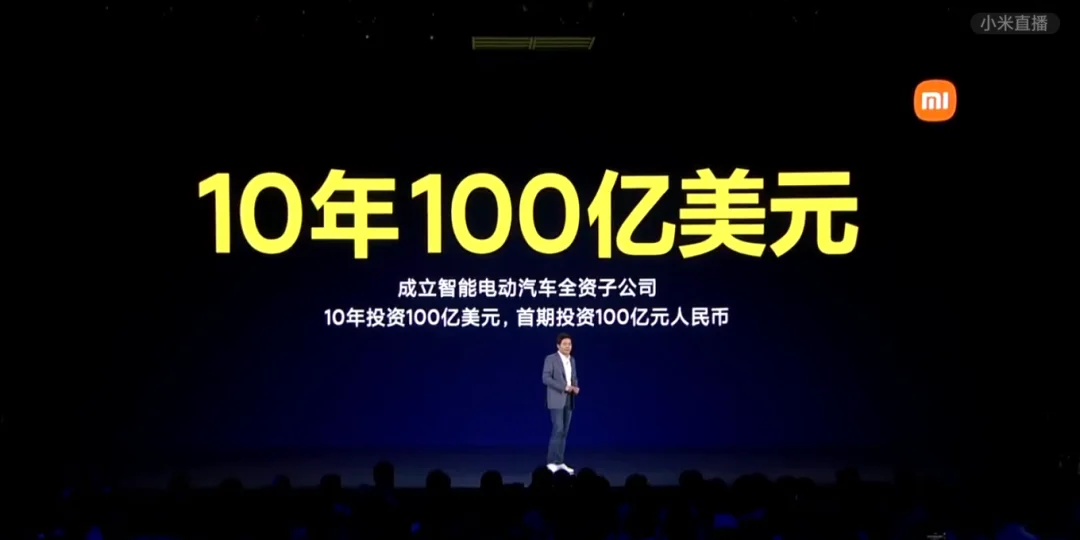
After multiple "smoke bombs," at Xiaomi's second spring new product launch event, accompanied by Lei Jun's slightly hoarse voice, the rumors of Xiaomi entering the car manufacturing business finally settled.
01What Was Said at the Press Conference
Never would I have expected the launch event to begin with a logo redesign, adhering to the philosophy that 'as technology evolves, it becomes more akin to living forms,' based on the Alive concept.
Renowned designer Yuan Yanzai has redesigned the Xiaomi brand logo, noting that the new logo will be used for brand image displays, while the newly designed English lettering will appear on more smart product showcases.
Next came Xiaomi’s signature segment, the "ALOT Ecosystem Showroom." While a dishwasher is undeniably a household necessity and the air conditioner is highly intelligent, I had assumed the robotic vacuum and mop would merely serve to ease domestic tensions.
The host mentioned that the robotic vacuum and mop can perform intelligent scene recognition, identifying different floor types. Does this hint at Xiaomi’s reserve of low-speed autonomous driving capabilities?
After Lei Jun introduced Xiaomi’s latest phone, the MIX FOLD—featuring a self-developed ISP, proprietary algorithms, and the self-developed Pengpai C1 chip—the dense stream of information nearly blinded me. Just as I was about to pick up my phone to place an order...
Lei Jun stated that in addition to pushing into the high-end smartphone market, they intend to make incursions into other industries. Excited by the prospect of welcoming "the first car for young people," I eagerly put down my phone, only for the screen to reveal a "high-end laptop" instead.
I have to admit, Xiaomi’s marketing team won decisively this time; you are truly "awesome."
After watching the entire new product launch event, the long-awaited Xiaomi automotive segment still failed to materialize.
Just as I thought I could leave work early today, a documentary titled "Endless Life" hinted that the progress bar of this launch event had not yet reached its end.
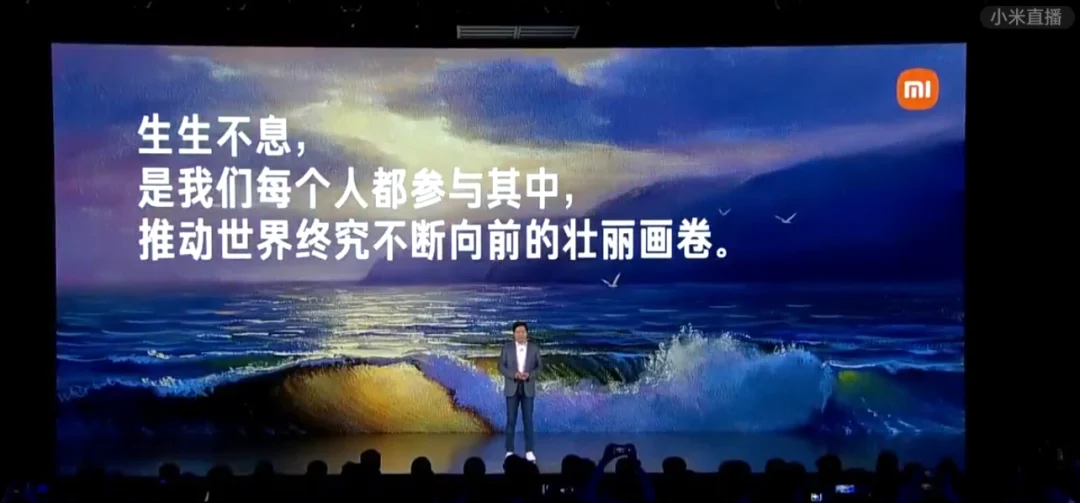
Lei Jun then recounted several pivotal transformations in his career, evolving from a programmer to a CEO, then to an angel investor, and finally leading Xiaomi’s smartphone division back to the third-largest position globally. Each shift represented a profound overhaul of his cognitive framework and life experience.
For the past two and a half months, he endured significant distress as he prepared for this fourth transformation, subsequently displaying a photograph with Elon Musk.
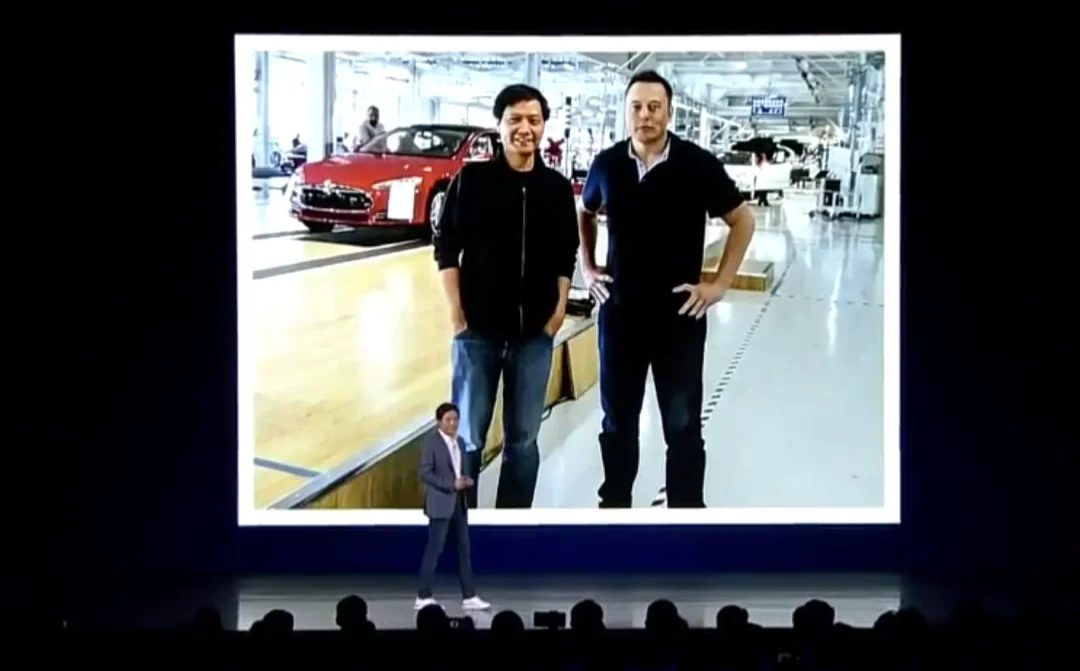
Understood—the keynote has finally reached the segment I was waiting for.
Lei Jun noted that when the Xiaomi board initially suggested exploring the electric vehicle market, he resisted the idea.
His hesitation stemmed from the concern that having spent just five years elevating the smartphone business to third place globally, while the mobile phone battle remained unfinished, entering the automotive sector might cause distraction.
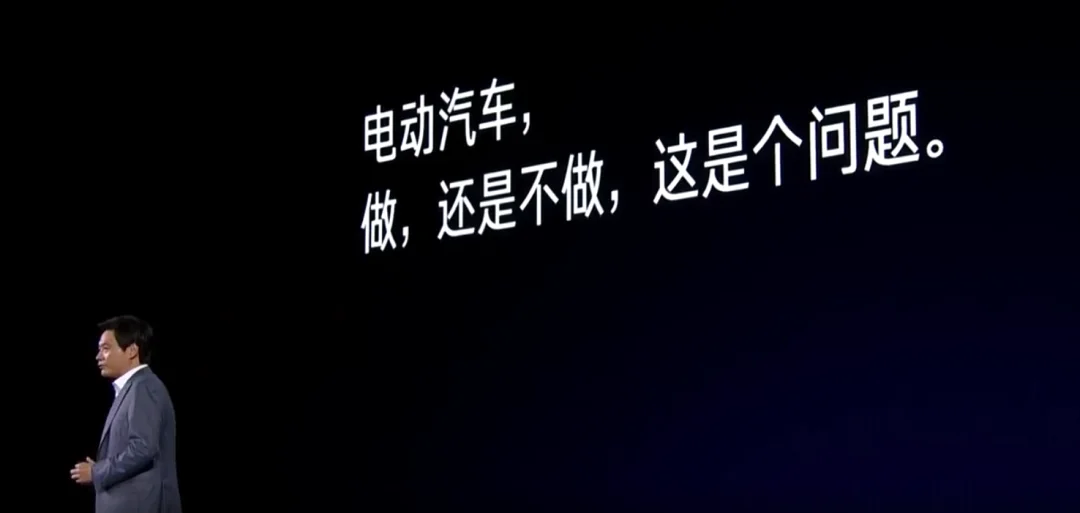
But in the face of the electric vehicle industry, which is a major trend of the times, what path should Xiaomi take?
Thus, Lei Jun began serious research into car manufacturing on January 15, 2021.
I think Lei Jun made a very key point here. On Xiaomi's Weibo, more than 10,000 people participated in the survey, and nearly nine out of ten supported Xiaomi making cars, stating they would buy a Xiaomi vehicle. 'Why do so many people hope they make cars, and why does everyone believe they will win?'
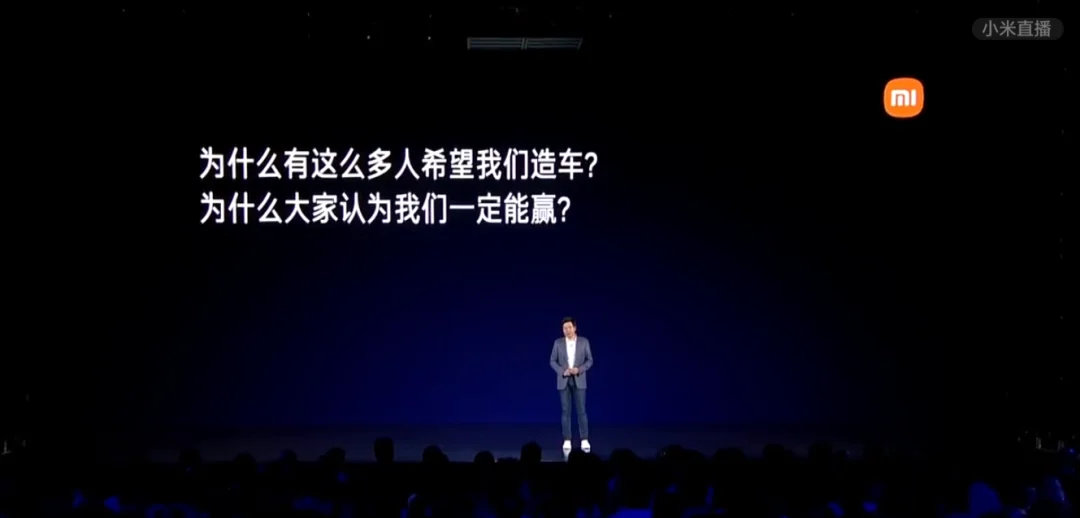
Is it because Xiaomi invested in nearly 10 electric vehicle industry companies over the past seven to eight years?
Is it because Xiaomi has applied for numerous automotive-related invention patents, such as those for cruise control, energy replenishment, vehicle handling, navigation, driving assistance, and driving safety?
Lei Jun slowly provided the answer. He believed that first, Xiaomi had successfully created too many products, leading people to trust that it could also produce a wonderful car that surprises everyone. Second, Xiaomi's past products have accumulated a highly loyal base of 'Mi Fans.'
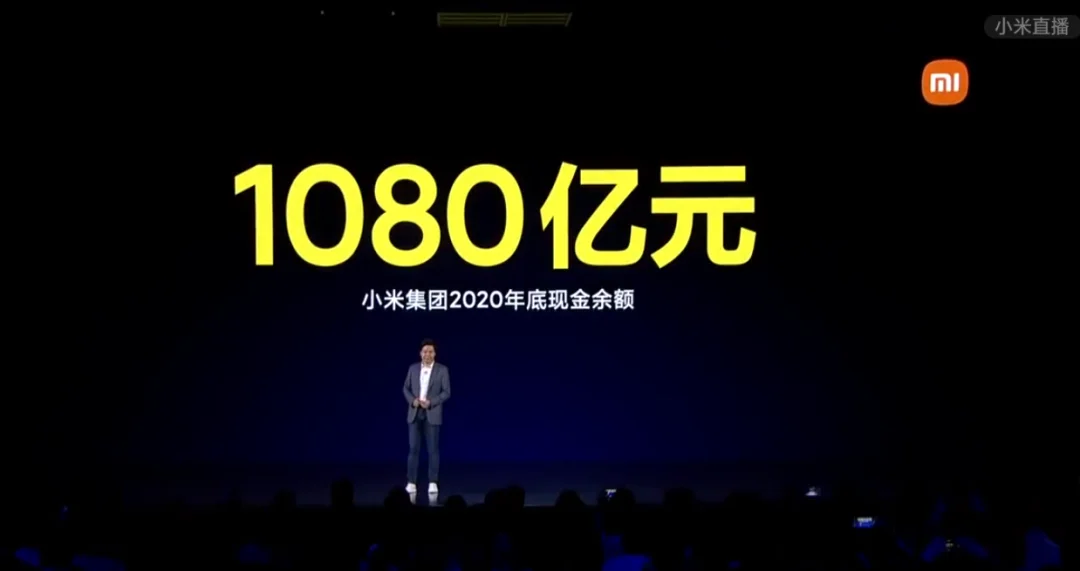
In addition, they possess a complete smart ecosystem, the world's third-largest smartphone business, and most importantly, they currently have cash reserves of RMB 108 billion, allowing them to afford losses.
Drawing on Lei Jun’s previous statement, "I am not someone who thrives in adversity; I prefer to think things through thoroughly first, precisely to avoid putting myself in a difficult position."
If one has already prepared for the worst-case scenario, what is there left to fear from taking a bold leap?
This remark also underscores Lei Jun’s concluding words: he fully understands the weight of this decision and is willing to stake all his accumulated resources and reputation, going all out to meet expectations.
Thus, Xiaomi today announced its official entry into the smart electric vehicle industry.
02What Challenges Remain
Xiaomi’s move into car manufacturing is now confirmed. Even I know that 'touching hearts' is not an empty slogan within Xiaomi, but a reflection of concrete action.
However, it must be noted that since entering 2021, traditional automakers have accelerated their transition to electrification. Volkswagen, for instance, even planned to change its name to 'Voltswagen' to demonstrate its resolve to bid farewell to the internal combustion engine era.
It can be said that the pace of automotive electrification has surpassed many people's expectations, with what seems like an overnight explosion.
For Xiaomi, choosing this timing to enter the electric vehicle market offers advantages: the EV supply chain has already been consolidated by other players, and a mature supply chain system lowers manufacturing costs. Additionally, the automotive contract manufacturing model is gaining industry acceptance.
But the challenges facing Xiaomi are also obvious, such as how to solve the vehicle's long R&D cycle, how to ensure product quality and quality control, and whether a charging infrastructure will be built later.
Moreover, in the short term, the subsidy benefits for the electric vehicle market will continue, but this window of opportunity will become shorter than expected due to the influx of numerous players over the next two years.
For a company that has never integrated the automotive supply chain, lacks autonomous driving technology reserves, and even has no marketing experience in the automotive industry,
For companies that have not yet been shaped by the automotive market, the shortening of the "dividend window" means not only that time costs are becoming more precious, but also that more "trial-and-error costs" must be reserved during the development process.
On this point, Lei Jun also stated that he is fully aware of the investments often exceeding billions of yuan and the potential risks in the automotive industry; if things are not done well, it is very easy to fail.
But he believes the most important thing is whether they still have the courage and determination today to challenge the other major mobile phone giants that existed when Xiaomi was founded 10 years ago.
Moreover, they are not in the same position of having "nothing" as they were 10 years ago.
Final Thoughts
"Once I woke up from a dream and thought to myself: I once wanted to found a great company and do something great. By the time I was 40, I still felt I had accomplished nothing. But most people cannot understand this. They think I am being pretentious, so I got criticized quite harshly. It is not pretension; it depends on what your aspirations are. If you set high goals from a young age but realize by 40 that you have not achieved greatness, the sense of frustration inside is very strong." Lei Jun said very seriously into the camera during an interview with Lu Jian.
At 40, Lei Jun started over after leaving his previous role and founded Xiaomi, which rose to become the world's third-largest smartphone maker in 10 years.
At 50, Lei Jun decided to enter the car business, describing it as his last major entrepreneurial project. He pledged to invest all his personal funds and choked up, his voice breaking slightly when speaking about stepping away from his previous ventures.
At this moment, I recalled what Xiang Li of Li Auto once said: "I might be able to build another Toyota within my lifetime. What could be more exciting than that?"
Finally, I want to say that people become great because of their dreams and succeed through action.
By Huang Laoban (The Boss Who Sells Cabbage) Edited by Daji