


A Technical Deep Dive into Autonomous Driving Sensors and Fusion
After years of technological development, today our machines can almost perceive all spaces in the world, including "probing" Maliyanahaigou and "peering into" Helicobacter pylori in people's gastrointestinal tracts.
Technological progress has driven radical changes across consumer electronics, biomedical engineering, civil engineering, and aerospace. Yet, when we look at the automotive industry, it seems to have undergone little essential change compared to a hundred years ago.
With the rapid development of image recognition, AI neural networks, software algorithms, optics, semiconductors, and communication technologies, we are pleased to see that all these fields ultimately point toward the ideal endgame of transportation: "Autonomous Driving."
However, the path to this promising future is fraught with obstacles. What exactly are these hurdles, and what methods exist to overcome them?
This article aims to explore that ultimate goal purely from a technical perspective.
The following text is approximately 5,000 words long. If you can, please read through to the end.
01Machine Vision
The reason humans perceive the world in vibrant colors is that our eyes detect reflected light from external objects.
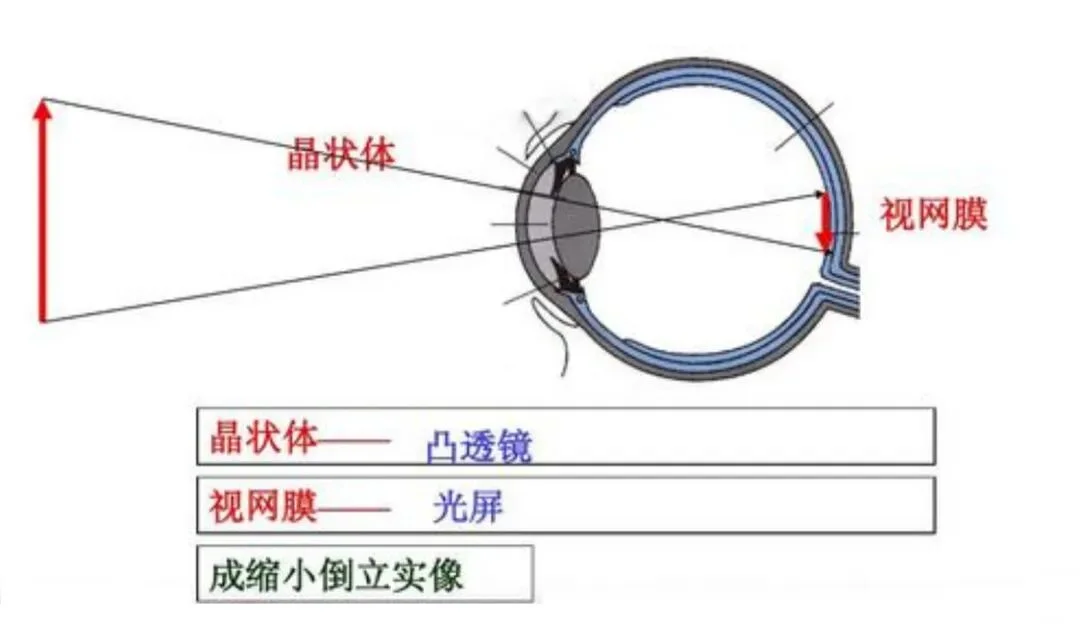
During the day, our eyes receive "pixel points" formed by sunlight reflecting off objects, passing through the eyeball, converging on the lens, and projecting onto the retina. The brain then extracts color distribution, texture features, contours, and detailed information via "neuronal cells."
Finally, the brain compares this analyzed image information with inherent abstract concepts to make judgments and choices.
This is also why we occasionally mistake one person for another: the appearance of the person we see resembles the abstract concept stored in our mind.
In this regard, machines have "mimicked" humans. Cameras capture road image data, which is processed by chips; thus, machines possess both a mechanical "eye" and a computational "brain," but lack the capacity for "deep thinking."
To address this, engineers have endowed machines with "Convolutional Neural Networks" (CNNs), whose principles resemble human cognitive patterns.
However, unlike humans, machines do not have a "retina," meaning their method of "generating vision" differs fundamentally from ours.
The method employed involves converting images into 'digital matrices,' starting with the identification of RGB values at the most fundamental level to output binary digits (0s and 1s) that machines can understand.
In this process, different images correspond to distinct digital matrices, meaning that the essence of image recognition is a classification problem based on numerical matrices.
Next, 'convolution' is applied, functioning similarly to human neurons by establishing multi-layered structures between different manifestations of the same object to identify common features for judgment.
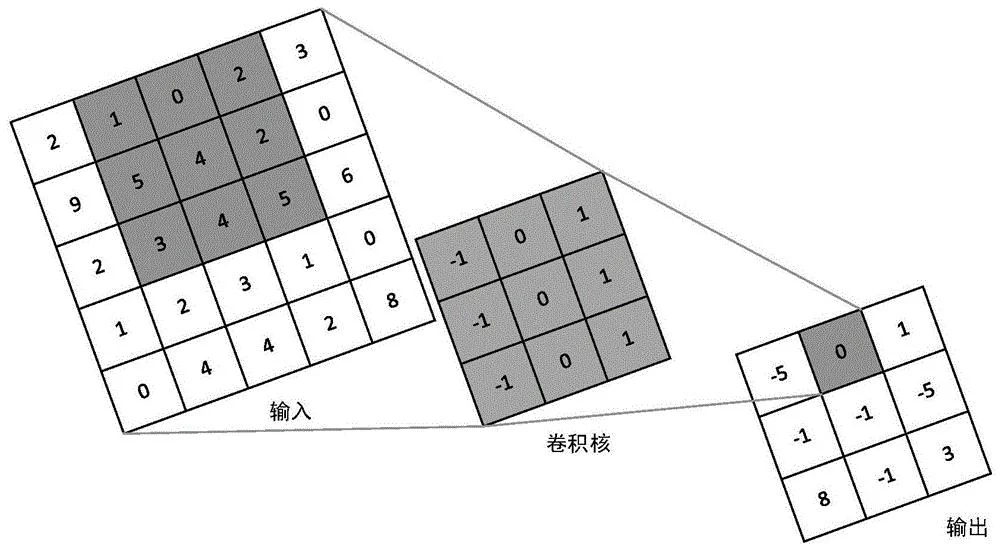
This relies on a 'convolution kernel,' which has a preset logic for feature extraction.
To simplify, imagine an image as a large 10x10 grid; the convolution kernel acts as a smaller 2x2 grid. When placed within the larger grid, it captures a new section of the image, known as a 'feature map.'
For illustrative purposes, consider an imperfect analogy: if you have three cars and the convolution kernel is programmed to extract a digital matrix representing the 'headlight' feature, it will scan and isolate image areas containing that specific characteristic.
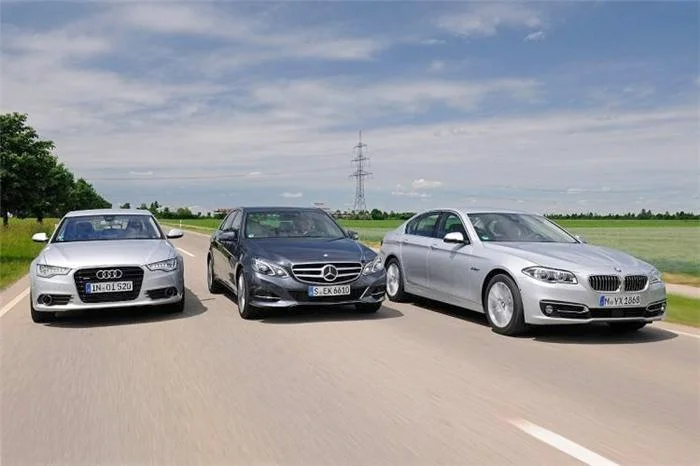
For example, if image recognition identifies six headlights and a logic algorithm is applied to determine that two headlights equal one car, the system will output that there are three cars in the image.
It should be noted that a single image can employ multiple "convolutional kernels." Typically, convolution extracts image features across the length, width, and depth dimensions of the image, resulting in a three-dimensional output.
The extracted feature maps are then subjected to "pooling" and "activation." Pooling occurs between consecutive convolutional layers; it amplifies useful information within the feature map while reducing unnecessary information, and sums the output data.
The purpose of this process is to compress the volume of data and parameters. It reduces the computational load on the machine while preserving the original image features.
Using the previous example, this step involves highlighting the "BMW headlight" feature while removing background information unrelated to BMW headlights.
"Activation" follows pooling. Through an "activation function," image features are represented by values between 0 and 1 to make them clearer. Values closer to 1 indicate more prominent features.
After multiple rounds of convolution, pooling, and activation, the predefined algorithmic logic allows the machine to identify which car in the image is a BMW based on the numerical features of the "BMW headlight."
In summary, Convolutional Neural Networks (CNNs) primarily capture image features. Through continuous data training and reinforcement, they form the ability to recognize and judge objects.
Here is an additional explanation of the role of 8-megapixel high-definition cameras. Their principle is similar to that of the human eye, but with certain differences.
Image recognition determines features by extracting digital data, which involves a 'perception threshold.' Simply put, compared to low-resolution cameras, high-resolution cameras capture image information from distant objects with denser pixel points and more distinct features, enabling earlier detection of those objects.
In plain terms, if the perception threshold for identifying a cow requires feature data from 100 pixels, a 1.2-megapixel camera might need to be 200 meters away to collect enough pixels. An 8-megapixel camera can achieve this from 400 meters away.
Therefore, under identical algorithmic and training conditions, high-resolution cameras will definitely have a longer measurement range. This process requires significant computing power because it must extract the necessary features from a larger number of pixels.
During driver assistance, once a camera has identified a distant obstacle, the system needs to maintain 'tracking' rather than re-identifying it. The tracking process does not consume much computing power; the surplus computing resources can be used to detect other distant obstacles.
This highlights the necessity of high-resolution cameras, not just for front-facing units but also for rear-facing ones. For example, when changing lanes on an unrestricted highway, being able to identify vehicles behind you from further away significantly enhances safety.
Unfortunately, even the most powerful neural networks cannot match the efficiency of the human brain. An 8-megapixel camera falls far short of the human eye's approximately 324 megapixels. Moreover, humans with superior 'hardware configurations,' as mentioned above, occasionally misidentify things. Even when driving with full concentration, accidents still occur.
Therefore, autonomous driving solutions based on multi-sensor fusion appear to be the more correct path.
02This Is Not a Simple Addition
Beyond cameras, the industry’s mainstream approach for distance measurement has traditionally relied on millimeter-wave radar. Millimeter-wave radar offers advantages such as small size, light weight, low cost, strong penetration, and high transmission efficiency with stability. However, it also has drawbacks, notably the lack of altitude information.
The recently popular solution is 4D millimeter-wave radar. According to Qie Jianjun, President of Aoku Asia Pacific, their 4D millimeter-wave radar uses software algorithms to virtually create 5 to 10 times the number of antennas on top of the original physical array.
This achieves the effect of 120 antennas. When paired with a single chip and a field of view (FOV) of 120 degrees, the angular resolution can reach 1 degree, enabling a detection range of up to 350 meters.
While this appears to solve the problem of identifying obstacles at height, I believe it does not fundamentally resolve the issue for automakers.
Another characteristic of millimeter-wave radar is its sensitivity to metallic objects, which has both pros and cons. The benefit is that detection of vehicles ahead and behind is very stable and accurate.
The drawback is similar: in normal road environments, objects containing metal elements include not only vehicles but also utility poles, manhole covers, roadside guardrails, and more.
This means that while the electromagnetic wave reflections from moving metallic objects are reliable and trustworthy for automakers, those from stationary objects are difficult to assign significant weight to in advanced driver assistance system (ADAS) decision-making.
Because millimeter-wave radar cannot determine what those objects actually are. To avoid frequent emergency braking, the principle is to filter out this data.
However, because there are often real-world scenarios with stationary obstacles on the road, automakers dare not filter out 100% of this data.
Therefore, for automakers, even with 4D millimeter-wave radar installed, due to the inherent characteristics of millimeter-wave technology, I believe car manufacturers still face a dilemma of "back-and-forth adjustment" in practice.
Let's talk about LiDAR. With costs dropping significantly, LiDAR is gradually becoming the "favorite" of automakers.
LiDAR can solve the problem that pulse-derived point cloud information not only compensates for the long-tail effect of cameras but also provides absolute distance measurements to objects. For chips, the computational load is low, making it essentially "plug and play."
Therefore, for automakers, they are willing to give significant decision-making weight to LiDAR capable of 3D modeling in driver assistance systems.
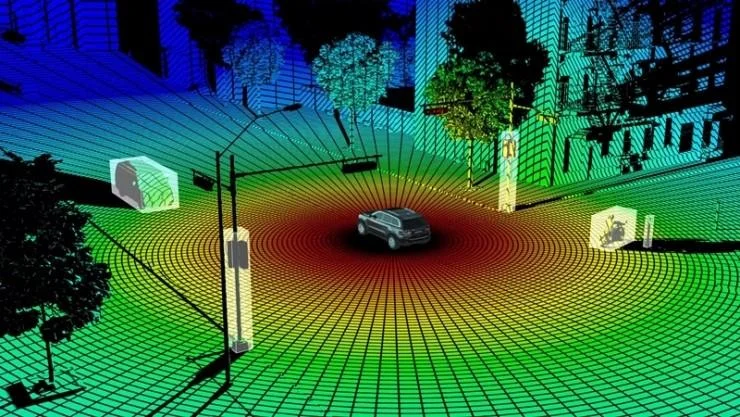
This is because cameras cannot interpret what they have not seen before, and millimeter-wave radar is too sensitive, resulting in uncertain available information. The characteristics of these two sensors inevitably mean that in extreme scenarios, LiDAR data is relatively more trustworthy.
Consider an imperfect analogy. Suppose there is a zebra on the crosswalk ahead. Because of significant pixel overlap between the zebra and its surroundings, and because the camera has not been extensively trained on images of zebras, it fails to recognize the animal.
At this moment, if the millimeter-wave radar’s echoes from stationary objects are filtered out by the algorithm, a collision becomes highly probable.
In such scenarios, although lidar may not yet clearly identify what the obstacle is, it can detect that an obstacle exists on the crosswalk ahead.
Consequently, the vehicle can still make appropriate decisions to decelerate or brake, thereby avoiding an accident.
Furthermore, lidar can classify and identify objects because the transmitted and reflected pulse signals differ.
Thus, by incorporating convolutional neural networks into point cloud algorithms, lidar can also judge and recognize object features. Currently, this is easier for objects with high reflectivity, such as traffic cones or safety barrels.
Additionally, the absolute distance information provided by pulses solves the depth-of-field challenge that is currently difficult for cameras. A few more words here: Tesla AI Senior Director Andrej Karpathy has mentioned that Tesla uses a 'Bird's Eye View' approach.
Simply put, this involves using five cameras positioned around the vehicle to capture 2D images and calculate pixel-based depth. Since the images captured by the five cameras have slight time delays, 'spatiotemporal synchronization' is applied to simulate a 3D environment, which is then used to calculate the relative distance to obstacles, yielding point cloud information similar to that from lidar.
From a technical perspective, this approach is feasible, although achieving 'spatiotemporal synchronization' of camera data across different vehicle speeds and performing 3D modeling on the 2D feeds from multiple cameras demands significantly higher computing power and algorithmic sophistication.
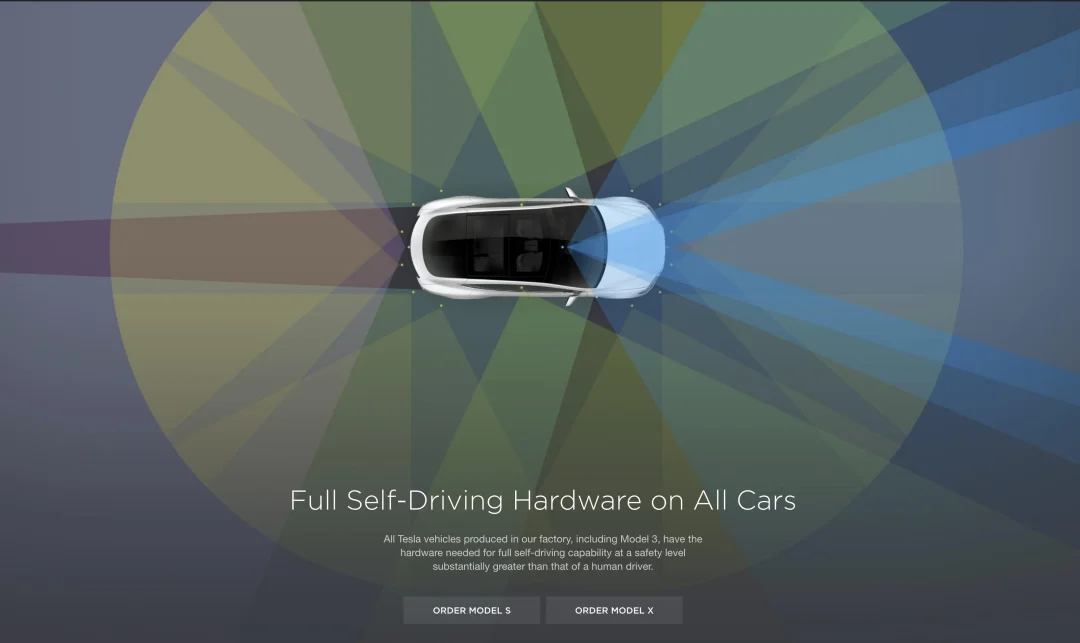
However, I believe that for Tesla, this is merely a step in their 'ascent of Mount Everest.'
Does this mean Tesla will definitely not use LiDAR? I think not. In the long term, I believe vision-based solutions have the potential to achieve L4 autonomy, primarily for two reasons.
First, cameras are affected by extreme weather conditions, which are difficult to solve technically. For instance, in dense fog, given Tesla's 'bold' corporate style, they would likely avoid restricting the Operational Design Domain (ODD) to bypass such scenarios.
Second, do not forget that the biggest difference between current L2 driver assistance and L4 autonomous driving lies in the shift of legal liability from humans to automakers.
According to industry insiders, even with current technology, if 905 nm LiDAR units are purchased in large volumes, reducing costs to USD 300–500 is not out of reach.
The key question here is whether the cost of USD 300–500 or the risk costs associated with transferring legal liability to manufacturers is lower when aiming to achieve L4 autonomy in the short term, especially since 'cost reduction' remains Tesla's core philosophy.
I believe that as vision-based solutions continue to advance, they will diminish the current status of LiDAR, but it is unlikely to be completely replaced.
I largely agree with Huang Xin, Director of Autonomous Driving Products at XPENG, who stated, 'LiDAR is overestimated in the long term and underestimated in the short term. This is my personal view, which may be wrong.'
Finally, I would like to say that if everyone is only at L2, legal liability still lies with humans. Why would Tesla need to install LiDAR?
However, from the perspective of safety redundancy at the present stage, I believe the cost required for a pure vision solution is higher than that for multi-sensor fusion.
03Multiple Choice Questions
Multi-sensor fusion, simply put, involves vehicles collecting information from various sources to make decisions and judgments. However, because multiple sensors have errors in their data collection regarding time frequency, spatial positioning, and velocity information, the fusion algorithms used here are particularly important.
Let's first discuss time error, which arises due to differences in the 'sampling rates' of sensors. LiDAR can output hundreds of thousands or even millions of points per second, whereas automotive cameras typically capture around 30 frames per second, creating a significant temporal gap between them.
For example, how should the 500,000 laser pulses transmitted back within a 0.01-second interval be matched to a specific camera frame?
Regarding spatial information, the perception areas differ because cameras, millimeter-wave radars, and LiDARs are mounted in different positions. To create a perception world that machines can understand, we must fuse the target objects captured by cameras with the data collected by millimeter-wave radars within the same coordinate system.
For example, how do we map the 500,000 laser pulses transmitted 0.01 seconds ago to specific pixel regions in the image?
Regarding speed, millimeter-wave radar provides distance and speed information directly via the Doppler effect. Cameras can also derive this data by tracking changes in feature pixels and using Kalman filtering, but both methods contain errors.
Clearly, millimeter-wave radar offers more timely speed measurements as it uses electromagnetic waves. In contrast, when a camera captures a vehicle traveling at 120 km/h at 30 frames per second, the vehicle moves approximately one meter between each frame.
To address these issues, we first employ 'fusion algorithms' for spatiotemporal synchronization.
However, achieving 'spatiotemporal synchronization' introduces new problems. Beyond the camera and millimeter-wave radar example, every sensor's data contains certain errors. So, whose data should we trust?
Our current approach is 'post-fusion.' This means sensors such as cameras, millimeter-wave radars, and LiDARs first collect information and generate their respective data lists independently.
Then, based on the distinct characteristics of each sensor across different scenarios, we assign 'weights' and use methods like the 'Kalman filter' to calculate a more accurate estimated value from the various perception data points.
Mentioned "Kalman filtering" twice, so let's briefly explain the principle. In simple terms, it uses weighted proportions of data collected by various sensors to generate an estimate.
Here is an imperfect analogy: Imagine a car where the camera calculates a distance of 30 meters to an obstacle ahead based on depth perception, while the millimeter-wave radar reports the actual distance as only 26 meters.
In this scenario, Kalman filtering is applied. Although millimeter-wave radar is highly sensitive to metal and its data cannot be taken entirely at face value, it is generally more accurate than cameras for distance measurement. Therefore, the filter assigns greater weight to the radar data, treating the camera input as supplementary, and calculates an estimated distance of 27.32 meters using its formula.
There is indeed a specific mathematical formula for Kalman filtering, but it is so complex that one might suspect a significant portion of the system's computing power is consumed by it.
The original intent was to better "stabilize" perceived information. However, it inevitably happens that raw sensor data gets "filtered out" by the Kalman algorithm. This means that many decision-making data points in current driver assistance systems are essentially machine-generated estimates rather than direct observations.
The industry actually developed a sensor "early fusion" approach years ago. However, the technical threshold for early fusion is significantly higher than late fusion. The requirement to access the raw data from all sensors alone has deterred many automakers.
In early fusion, other sensors must learn "deep learning" capabilities similar to those of cameras, and all components must use the same algorithmic framework for decision-making.
To put it simply: whether humans see a car with their eyes, smell exhaust fumes with their noses, or hear engine noise with their ears, the brain processes these inputs into a single unified conclusion—"a vehicle is passing." It does not require separate processing and subsequent fusion of each sensory input before making a judgment.
It should be noted that early fusion involves merging only "low-level" features, not all data.
The key lies in using a unified algorithm to fuse raw data from cameras, millimeter-wave radar, lidar, and other sensors. This transforms the chip processor handling the information into something akin to an "all-seeing eye."
With this "all-seeing eye," the machine’s perception of the external environment becomes highly clear. On this foundation, further perception and control algorithms can be developed.
Consequently, by improving the consistency of sensor output and reducing computational steps, the efficiency and accuracy of the perception system are enhanced.
This approach also provides the machine with additional redundant computing power. Even if it occasionally lapses like a human driver, overall safety remains uncompromised.
Final Thoughts
If you have read this far, the article has already slightly exceeded 5,000 words. However, there is still much more to discuss regarding autonomous driving, including chips, control redundancy, and phased-array lidar, which remains largely a future prospect.
Since entering 2021, my greatest feeling has been being constantly pushed forward by the rapid pace of the electric vehicle industry, never stopping for a moment. Every day brings new insights refreshed by the industry, and many events occur earlier than expected.
If you, like us, follow the development of autonomous driving and share our passion for the lifestyle changes brought by technological progress, we invite you to join our community to 'chat' about your visions for the future.
Finally, I want to say that before British doctor Fu Laiming invented penicillin, humanity suffered greatly from bacterial infectious diseases. Before Ka Erbenci invented the automobile, people had not yet experienced the convenience of mobility.
Fortunately, our generation has the opportunity to witness another historical shift.
Written by: Boss Huang Who Sells Cabbage Edited by: Daji