


Li Auto Unveils AI Roadmap and Lixiangtongxue App; Xiaomi SU7 Adds VLM, Hits 130,000 Delivery Target
01 Weekly Indices
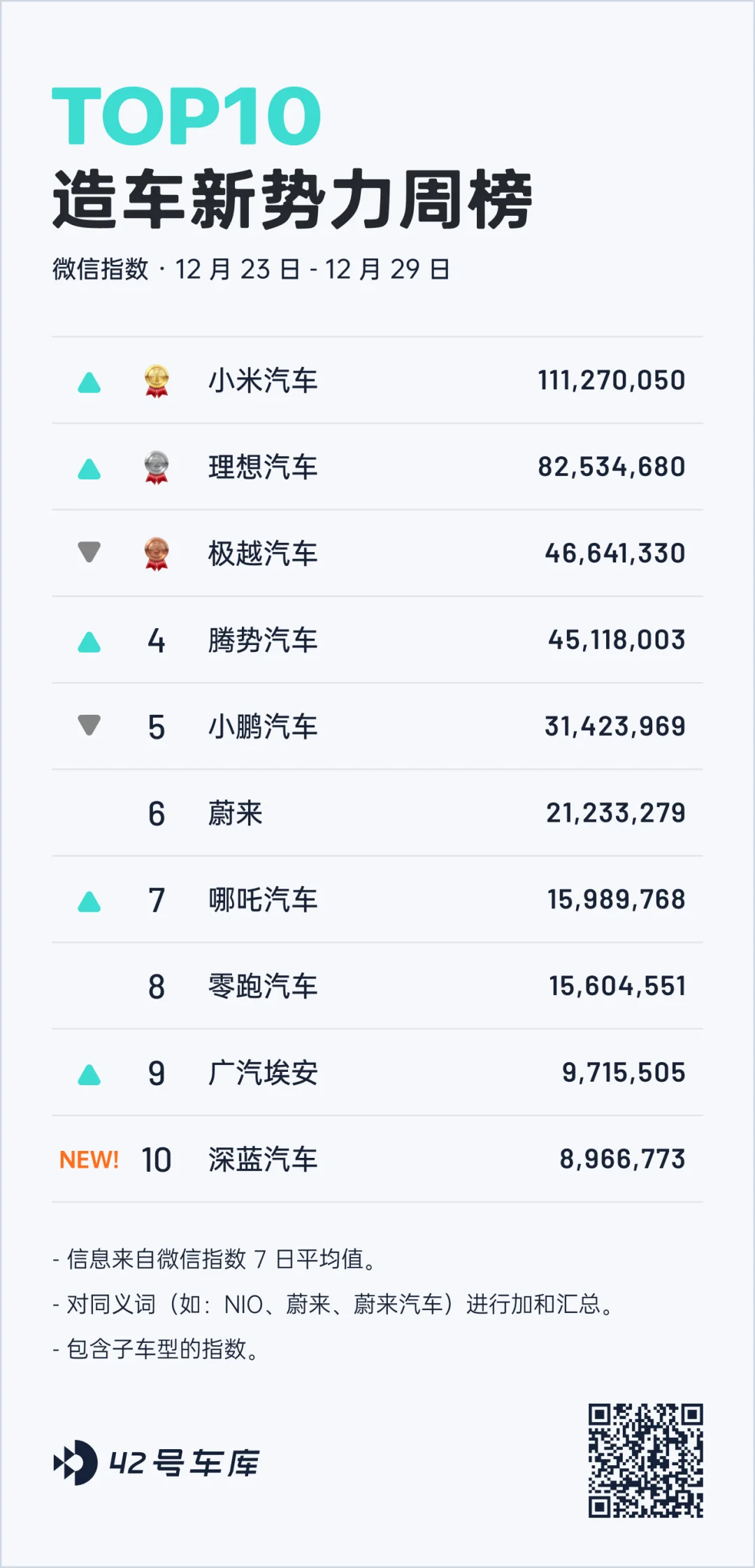
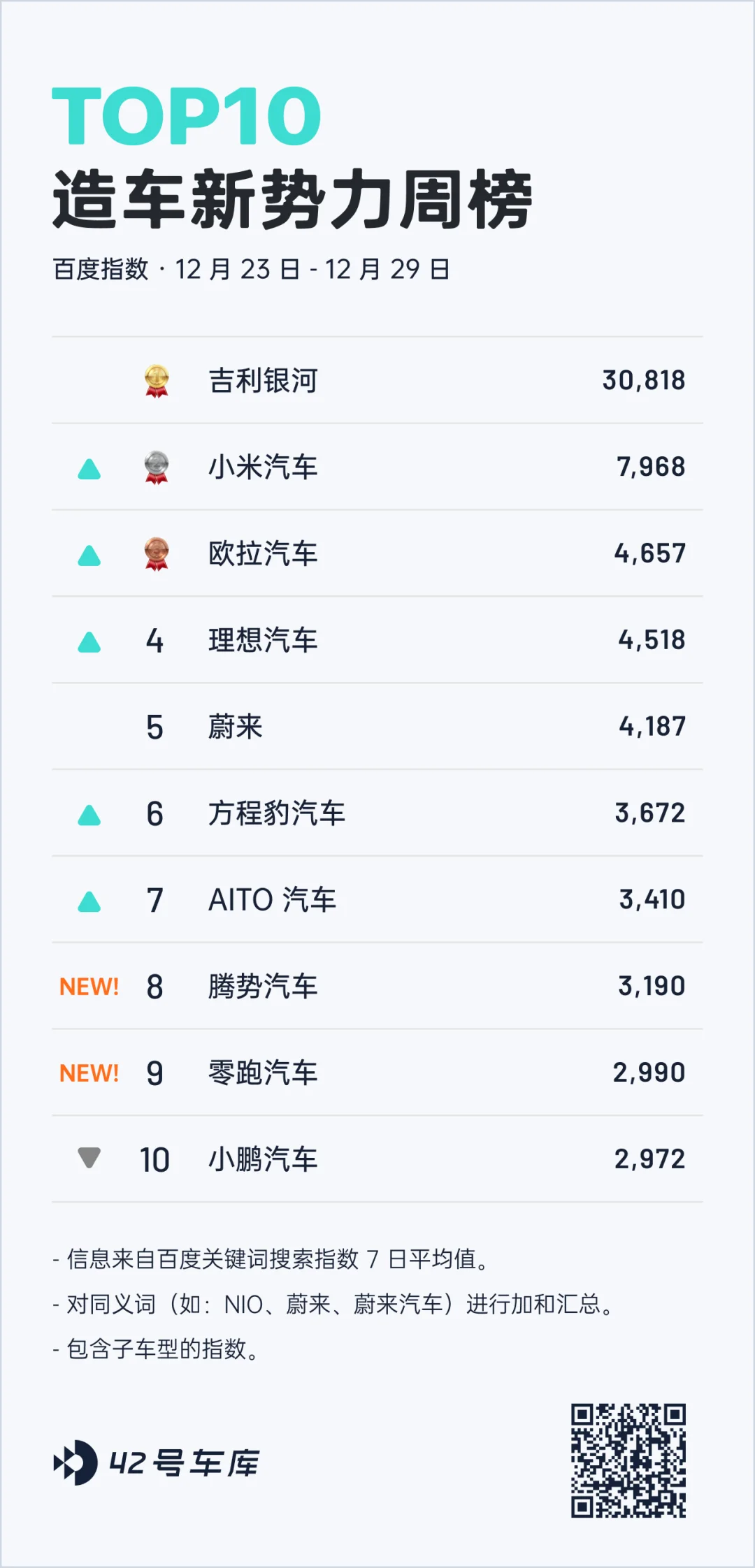
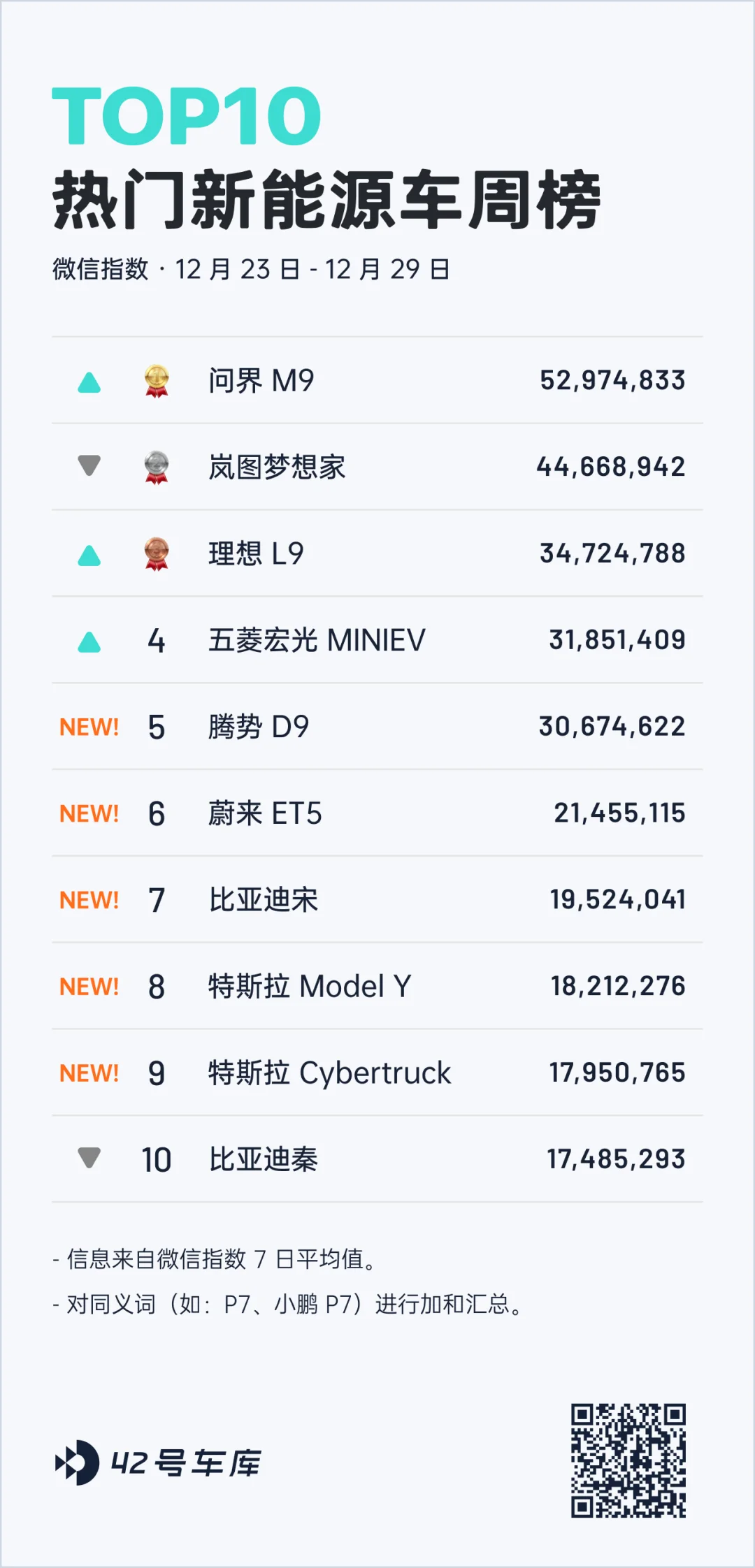
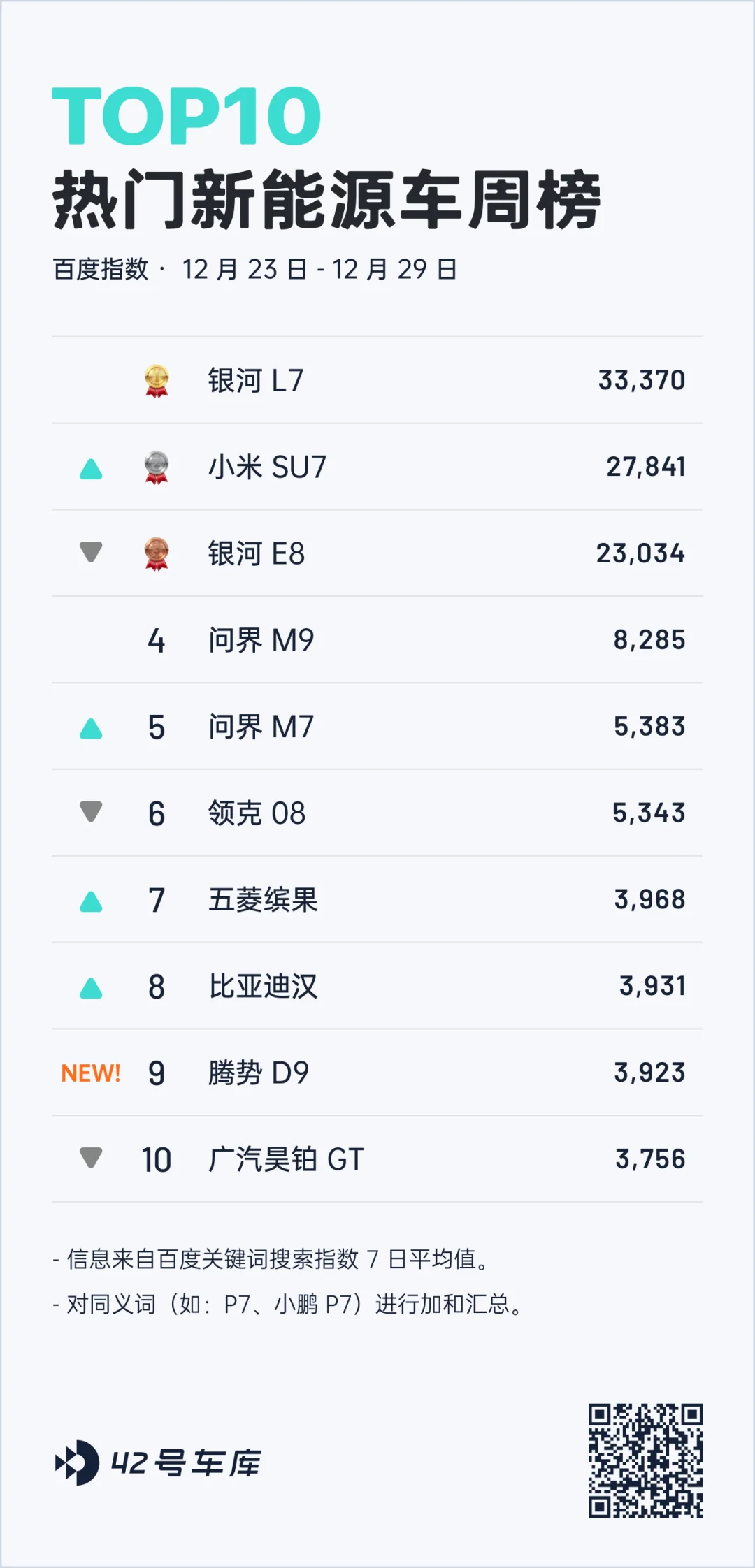
02Weekly News
Li Auto Unveils Latest AI Advances; Lixiangtongxue App Launched
From December 25 to 27, Li Auto held three consecutive days of "2024 Li Auto AI Talk" livestreams. During these broadcasts, the company shared its latest perspectives on artificial intelligence and announced recent progress in autonomous driving and AI technologies such as Lixiangtongxue. Li Auto also confirmed that Lixiangtongxue, powered by its self-developed foundational large model Mind GPT, has expanded from vehicle infotainment systems to smartphones, with the app available in major application stores since December 27. Additionally, Li Auto announced that OTA version 7.0 of its vehicle operating system will be fully rolled out to AD Max users by the end of December. This update introduces features including AI inference visualization and highway end-to-end autonomous driving, while upgrading capabilities for Mind GPT-3o and Mind Diffusion V2.0.

The Lixiangtongxue App is designed for a broader audience and can be used even without a Li Auto vehicle. It currently features two main functions: "Knowledge Q&A" provides question-and-answer capabilities across multiple domains, including automobiles, travel, finance, and technology, and can handle various text tasks such as writing articles, translation, and copywriting; "See the World" leverages visual perception capabilities to help users identify thousands of common items, such as menus, paintings, plants and animals, and cars.
Li Auto aims to enable owners of more than one million vehicles and their family members to experience a consistent AI product ecosystem not only in cars but also on smartphones, computers, and even wearable devices such as glasses. Furthermore, from a long-term perspective, Li Auto believes that once foundational models are mastered, true large-model products will cover all devices, allowing users to independently access and utilize all services.
Currently, large model technology is still in its early stages of development. Many teams remain at the initial chatbot stage, meaning all participants have the opportunity to explore unknown boundaries. With a family user base of more than one million and technical accumulation in autonomous driving, Li Auto can achieve more effective investment while following excellent competitors.
In terms of intelligent driving, Li Auto will fully roll out the "highway end-to-end" and "AI inference visualization" features to all AD Max users via OTA version 7.0 of the vehicle system by the end of December. The "highway end-to-end" feature will ensure that NOA in special highway scenarios does not degrade, break, or become less continuous. Li Auto stated that it will become the only domestic automaker and the second globally to apply end-to-end technology to highway (and ring road) NOA scenarios. The "AI inference visualization" displays ten possible strategy trajectories and selects the optimal solution in real time, while intuitively showing the end-to-end system's attention focus across different areas through heatmaps, helping drivers better understand the AI's decision-making logic.
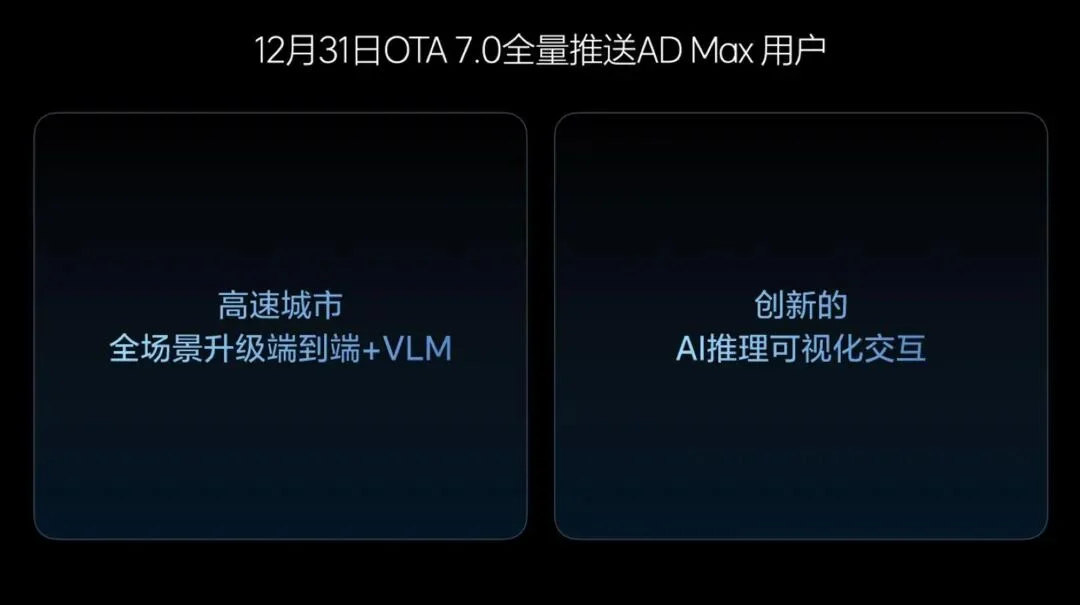
Thanks to Li Auto's rapid progress in intelligent driving this year, the share of AD Max sales had risen from approximately 20% in February to over 50% by mid-December. For models priced above RMB 300,000, the AD Max sales share exceeded 75%.
Furthermore, assuming that technology, products, environmental policies, and consumer trust in artificial intelligence are all sufficiently mature, Li Auto aims to launch its first vehicle defined for L4 autonomous driving within three years. Before that, the company must also meet three conditions: a fleet scale of more than five million vehicles, mastery of the VLA foundational model, sufficient capital to recruit top-tier talent, and adequate computing power.
Currently, nearly half of Li Auto’s annual R&D investment, which exceeds RMB 10 billion, is focused on artificial intelligence. The company has established four AI teams to address distinct challenges.
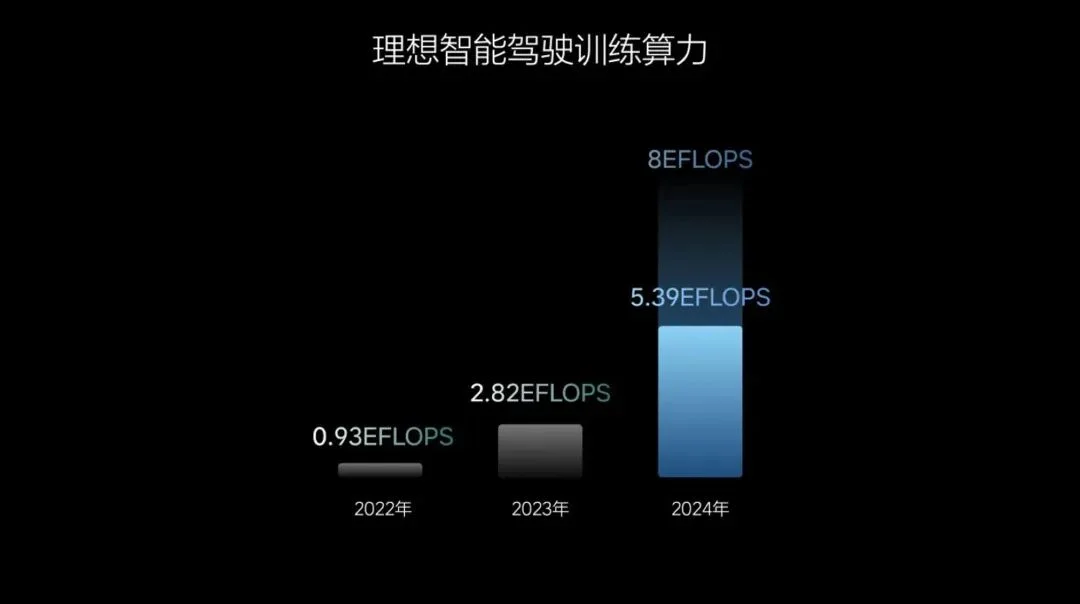
As data scale and quality improve, Li Auto has successfully validated the role of Scaling Laws in enhancing autonomous driving performance. As of December 25, Li Auto’s total autonomous driving mileage reached 2.9 billion kilometers, with training compute power increased to 8.1 EFLOPS.
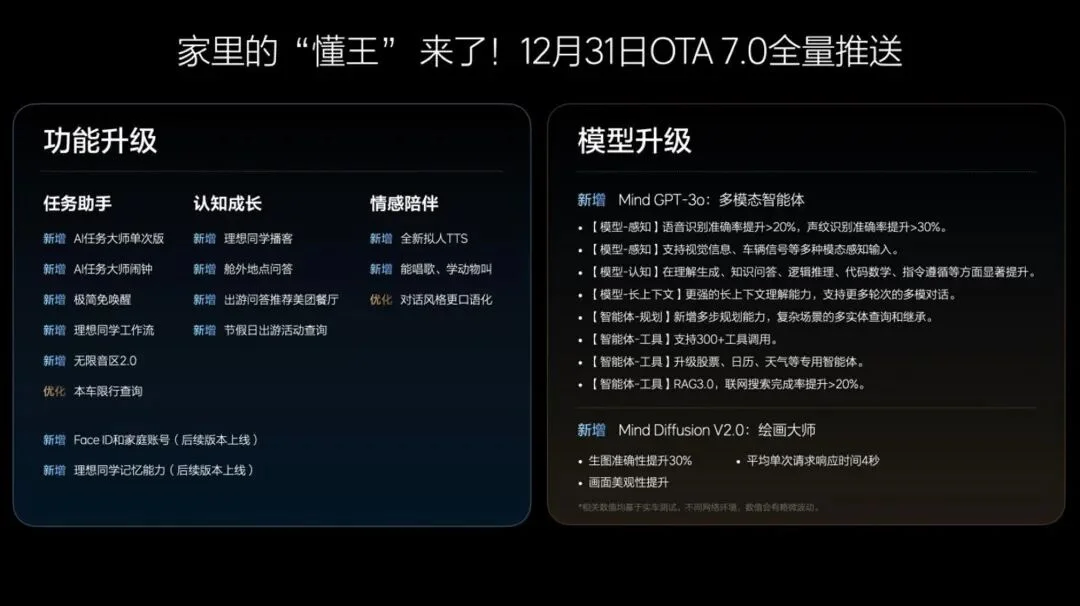
With the OTA 7.0 update, Lixiangtongxue will enter the third phase of Mind GPT development: Mind GPT-3o. This iteration aims to further advance task assistance, cognitive growth, and emotional companionship capabilities. Unlike previous generations that focused primarily on language models, Mind GPT-3o will significantly reduce human-machine interaction latency by building multimodal end-to-end large model capabilities that integrate perception and cognition.
Additionally, Li Auto is leveraging large model technology to enhance efficiency and quality in smart business and smart industrial operations.
During the '2024 Li Auto AI Talk,' Li Auto also announced a three-stage strategic roadmap for achieving Artificial General Intelligence (AGI).
The first stage, termed 'Enhancing My Capabilities,' positions Lixiangtongxue as an assistant providing auxiliary functions for users. In autonomous driving, this stage achieves Level 3 supervised intelligent driving. At this point, AI technology can significantly boost human work efficiency and convenience, but it remains non-independent, requiring human oversight as a safety net.
The second phase is titled "Becoming My Assistant." AI will advance to L4-level autonomous driving and the Agent stage of Lixiangtongxue. In this phase, the cognitive intelligence represented by Lixiangtongxue and the spatial intelligence represented by autonomous driving will be integrated into a single model, which Li Auto calls VLA. Large-scale applications of AI are imminent, marking what is truly the iPhone 4 moment.
The third phase upgrades to "Becoming My Silicon-Based Family Member." Humans will no longer need to issue any commands to AI. AI will be able to retain and utilize human memory, make independent decisions, proactively execute multiple tasks, and become an important member of the household. The silicon-based family member is the ultimate product of AGI.
Commentary:
Li Auto is no longer limited to manufacturing vehicles. As Xiang Li stated, "Li Auto is an artificial intelligence company; what we aim to do is not the intelligentization of cars, but the car-ization of artificial intelligence." Based on this philosophy, while laying out the implementation of automotive intelligence, Li Auto is also attempting to allow more people to access Li Auto's AI technology.
Xiaomi SU7 Integrates VLM Vision-Language Large Model, Completes Delivery Target of 130,000 Units Ahead of Schedule
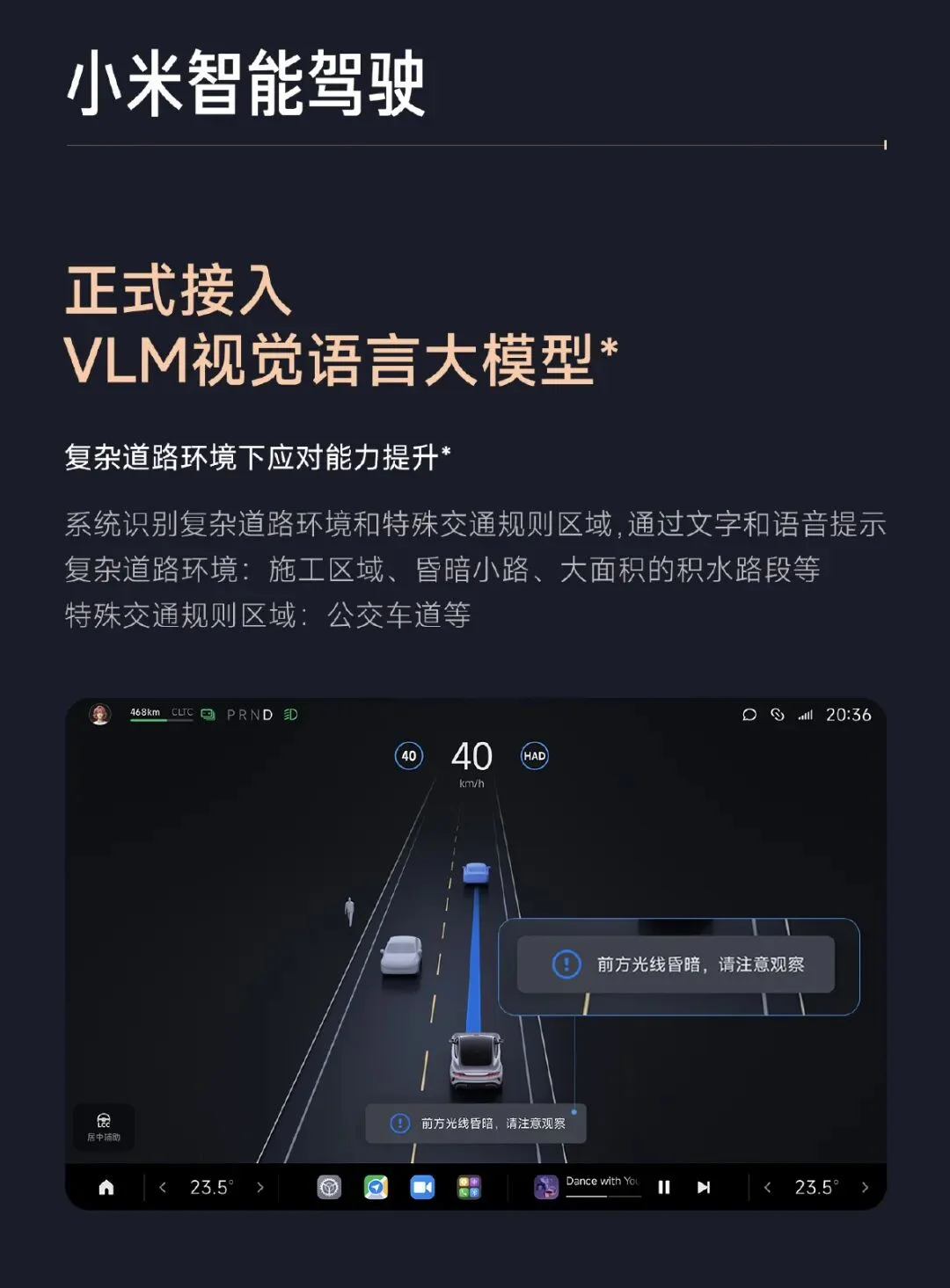
On December 23, Xiaomi Auto announced that the new OTA version 1.4.5 has begun rolling out. The biggest upgrade in this OTA is the integration of the VLM vision-language large model, along with 13 new features and 26 experience optimizations.
VLM stands for Vision-Language Model. When the system identifies complex road environments and special traffic rule areas, it provides prompts through text and language regarding these complex conditions. Currently, Xiaomi Auto's VLM supports complex road environments such as construction zones, dimly lit small roads, and sections with extensive water accumulation, as well as special traffic rule areas like bus lanes.
In version 1.4.5, Xiaomi City Navigate Assist features 15 optimizations. For driving scenarios, the system has been refined for stability in traffic light detection, lane selection logic at intersections, U-turns, and passage through dedicated right-turn lanes. Efficiency and safety have also been upgraded for congested roads, temporary stops, merging, and narrow streets. Regarding intelligent parking, the Xiaomi SU7 adds a remote smart parking-out function: drivers can use the mobile app to control the vehicle from outside, enabling it to automatically park out of its space.
Additionally, during driving, Xiaomi updated the automatic turn-signal cancellation feature. After the driver manually completes a lane change, the vehicle turns off the signal automatically, eliminating the need for manual intervention. This feature is already available on vehicles such as Tesla and Jiyue.
In terms of the intelligent cockpit, the charging map is one of the major updates in version 1.4.5. Xiaomi has partnered with NIO, XPENG, and Li Auto to integrate their charging networks. Xiaomi owners can search for dynamic data from partner stations on the vehicle’s screen, including charger availability, charging power, time-of-use pricing, and parking fees. Users can select options directly on the car’s display for efficient recharging. The map also allows filtering stations based on user preferences.
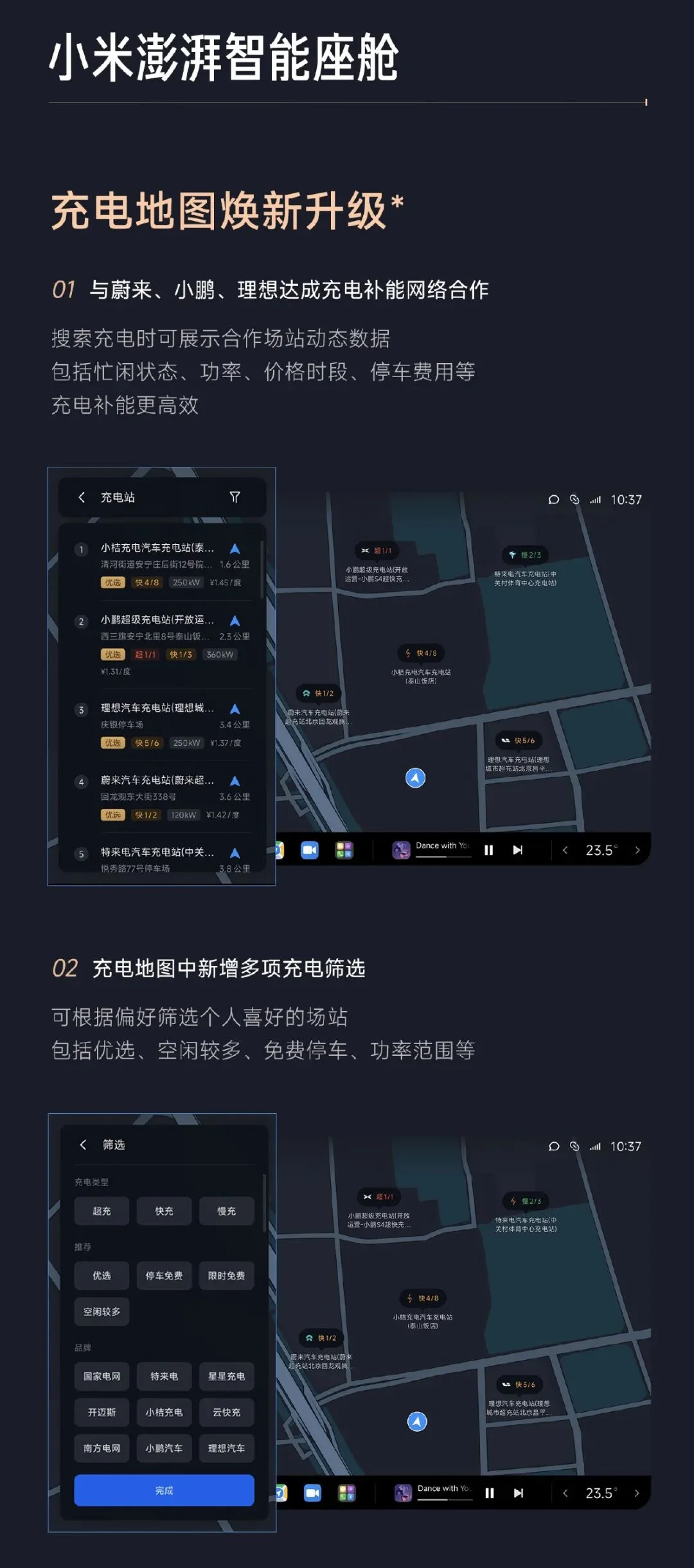
Additionally, in the 1.4.5 version update, the Xiaomi SU7 has added or optimized features in areas such as phone-car connectivity, intelligent voice interaction, audio-visual entertainment, and driving experience, with the capabilities of the intelligent cockpit continuously improving.
On December 23, Xiaomi Auto announced that the ‘parking-to-parking’ pioneer edition of its end-to-end autonomous driving system, Xiaomi HAD, has begun recruiting participants for a thousand-user beta test. Owners can sign up via the Xiaomi Auto App community.
Also this week, Xiaomi Auto achieved a significant milestone: deliveries exceeded 130,000 units on December 28, fulfilling its annual delivery target. December 28, 2024, marked the first anniversary of the Xiaomi SU7’s debut. Have you received your pre-ordered Xiaomi SU7 yet?
Commentary:
At last month's Guangzhou Auto Show, we got an early look at Xiaomi HAD's end-to-end parking-to-parking autonomous driving feature, which has also integrated the VLM (Vision-Language Model). During discussions with the Xiaomi autonomous driving team, we learned that one of their top priorities for next year will be the mass production and rollout of this end-to-end parking-to-parking system.
Less than a year after the launch of the Xiaomi SU7, its autonomous driving progress has been remarkably fast, advancing simultaneously on three fronts: highway NOA, nationwide mapless driving, and end-to-end architecture. With industry leaders Huawei and Li Auto already in the end-to-end era, Xiaomi must clear the hurdle of mass-producing end-to-end systems combined with VLM to join the "first tier" of autonomous driving. So far, it has cleared half of that hurdle.
Bentian, Richan, and Sanlingqiche Consider Business Integration
For Japan's automotive industry, the second-to-last week of 2024 was critical. Long-rumored merger talks between Bentian and Richan finally saw progress.
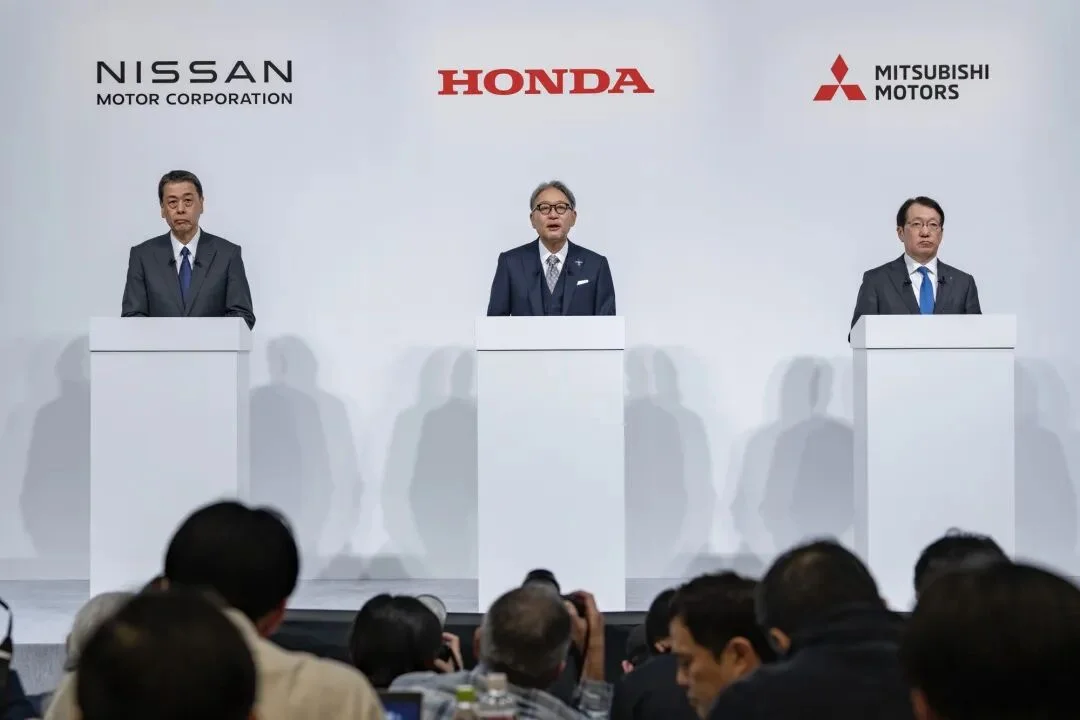
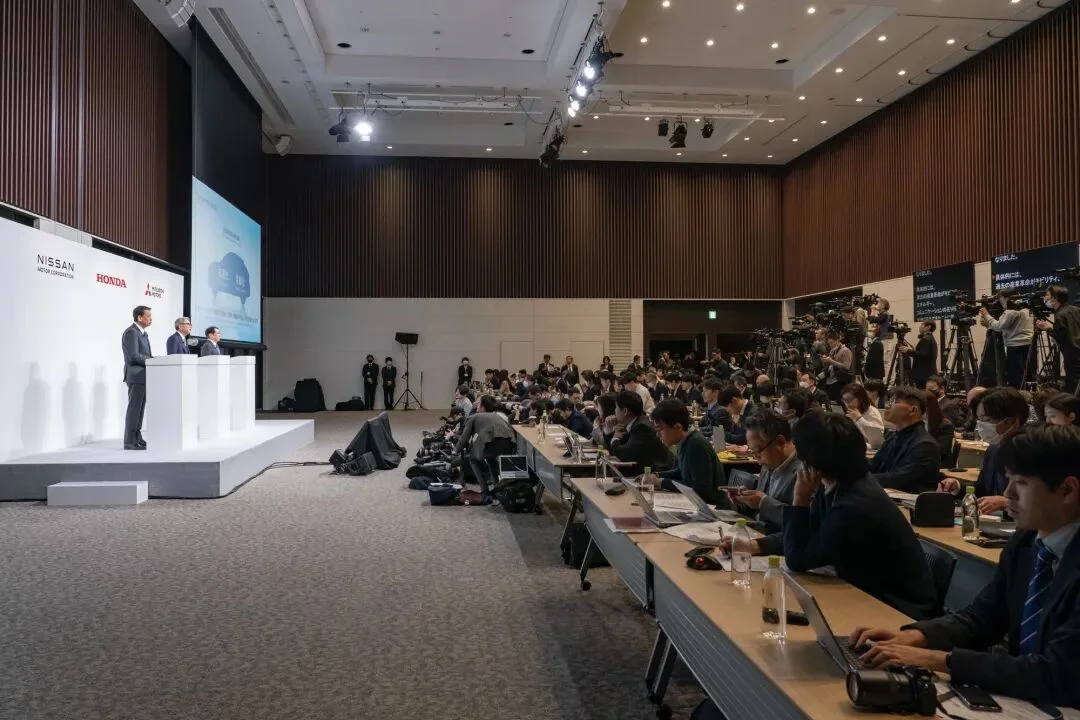
On the afternoon of December 23, Bentian, Richan, and Mitsubishi held a joint press conference. Richan and Bentian signed a memorandum of understanding to begin discussions on integrating their businesses through a joint holding company. The resulting automotive group would have sales revenue exceeding 30 trillion yen and operating profits surpassing 3 trillion yen, meaning it would replace Xiandaijituan as the world's third-largest auto group.
The business integration plan covers seven key areas:
Achieving scale advantages through standardized manufacturing platforms: Launching shared vehicle-building platforms across brands to create stronger products, reduce costs, improve development efficiency, and enhance investment returns. This approach lowers average development costs per vehicle, maximizing profitability. The two brands will complement each other across different energy types, meeting user needs globally.
Integrating R&D functions: According to the memorandum of understanding reached on August 1, the two companies will conduct joint research in the field of next-generation software-defined vehicles (SDVs). Additionally, overlapping functions will be integrated to enhance development capabilities and reduce development costs.
Optimizing production systems and facilities: Manufacturing plants and energy service facilities will be optimized, and capacity utilization will be improved while fixed costs are reduced through shared production lines.
Integrating procurement to strengthen supply chain competitive advantages: Competitiveness will be enhanced by improving and simplifying procurement processes, jointly purchasing common components, and collaborating with business partners.
Improving operational efficiency to achieve cost reductions: The integration of systems and back-office operations, along with the upgrading and standardization of operational processes, will significantly lower costs.
Integrating sales and financial functions to realize scale advantages: The company will integrate sales and financial functions and expand its operational scale, while also providing new financial services throughout the vehicle lifecycle.
Establishing a talent foundation for intelligence and electrification: After human resources integration, employee exchanges and technical cooperation between the companies will increase.
According to the plan, Bentian, Richan, and Mitsubishi will sign the final agreement for business integration, including share transfer plans, in June 2025. An extraordinary general meeting of shareholders will be held in April 2026 to approve the resolution on this share transfer. From late July to August 2026, Bentian and Richan will be delisted from Dongjingzhengquanjiaoyisuo. In August 2026, the two companies will complete their integration, and the share transfers will take effect.
Upon the effectiveness of the share transfer, Bentian plans to nominate a majority of both internal and external directors for the joint holding company. The President and Representative Director (or President and Representative Executive Officer) of the joint holding company will be selected from among the directors nominated by Bentian.
Commentary:
The global automotive market is changing rapidly. Electrification and intelligence have already placed sales and cost pressures on Japanese automakers, making the consolidation efforts among Bentian, Richan, and Mitsubishi unsurprising.
With business integration underway, a wave of new vehicles is likely to arrive. Which are you more looking forward to: the Richan 'big sofa', the Bentian red-badge models, or the revival of classic JDM cars?
Zeekr Unveils Full Rollout of Map-Free Urban NZP
On December 25, Zeekr launched its year-end OTA update version 6.3. Vehicles equipped with Haohanzhijia 2.0 finally received the full rollout of map-free urban NZP (Navigation-guided Pilot). This includes multiple models such as the 2025 model 001, 001 FR, 007, 7X, and MIX.
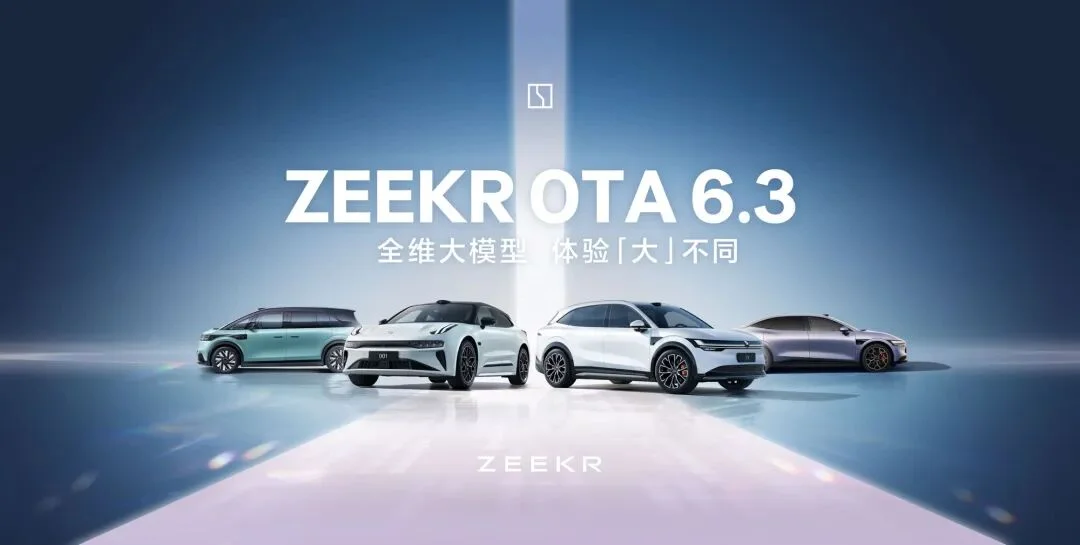
According to official information, Zeekr’s map-free urban NZP covers 100% of cities and all five levels of roads, enabling operation nationwide wherever there are drivable roads. Meanwhile, Haohanzhijia’s map-free urban NZP demonstrates strong performance in scenarios such as intelligent lane selection, detouring and avoiding obstacles, maintaining following distances, interactive game-theoretic interactions, stopping at red lights, and starting at green lights on urban roads. It also supports over 30 types of complex intersections, achieving a pass rate of more than 95%.
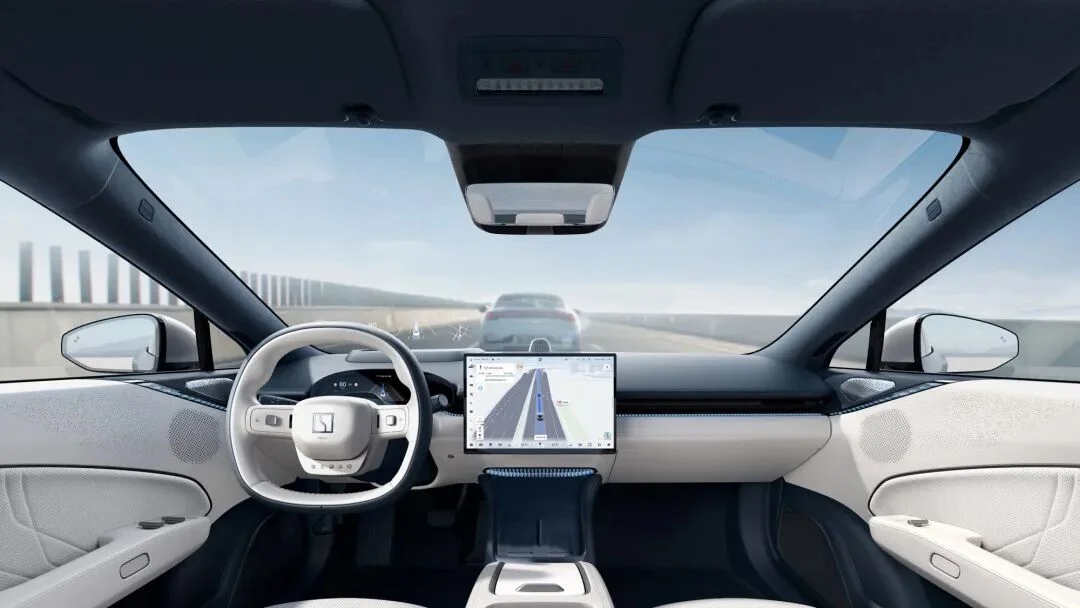
Official data shows that since the launch of Zeekr’s Haohan Smart Driving Mapless Urban NZP 10,000-user public beta on November 8, 2024, the beta has covered 92% of cities nationwide. More than 90% of pioneer users use the mapless urban NZP daily, with an average of 1.5 uses per day.
Additionally, Zeekr’s Haohanzhijia Urban NZP – Drive-to-Drive (D2D) will begin phased rollout in January next year.
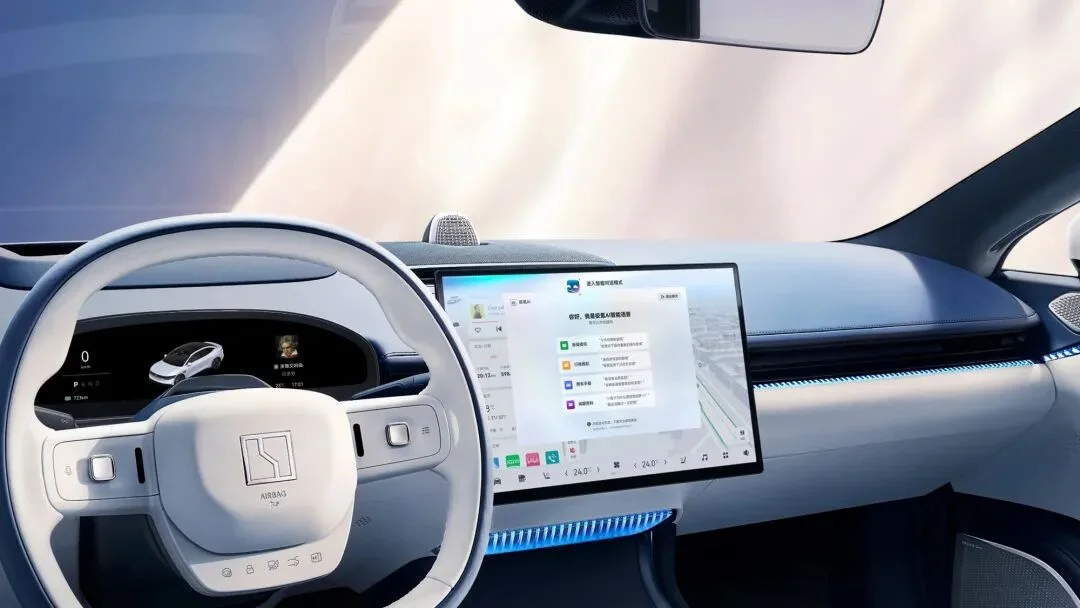
Beyond smart driving updates, ZEEKR OTA 6.3 also enhances intelligent cockpit features. Eva Chuxingzhushou 2.0 adds a ‘Food and Hotel Search’ function, allowing seamless navigation handoff for direct arrival; it also integrates with in-car Meituan via map navigation, enabling voice control for all visible interface content.
Eva Yongchezhushou 2.0 serves as a vehicle expert, offering consultations on car issues and fault light explanations to resolve user concerns. It supports parking voiceprint protection to prevent strangers from waking Eva, thereby improving safety. In terms of autonomous decision-making, it now recommends destinations near navigation points and proactively switches to recirculation mode on congested roads, further enhancing travel convenience and comfort.
Commentary:
The rollout of Zeekr’s mapless urban NZP marks a step toward closing its smart driving gaps, positioning the brand among industry leaders. With nationwide urban smart driving capability becoming the new threshold, ‘city-by-city’ expansion is no longer relevant. Competition in urban smart driving among players such as Huawei, Li Auto, XPENG, NIO, Xiaomi, and Zeekr is expected to intensify significantly in 2025.
Written by James Edited by Huoshan