


CATL Unveils Condensed-State Battery for Aviation and Cars at Shanghai Auto Show
CATL was arguably the busiest exhibitor at this year's Shanghai Auto Show.
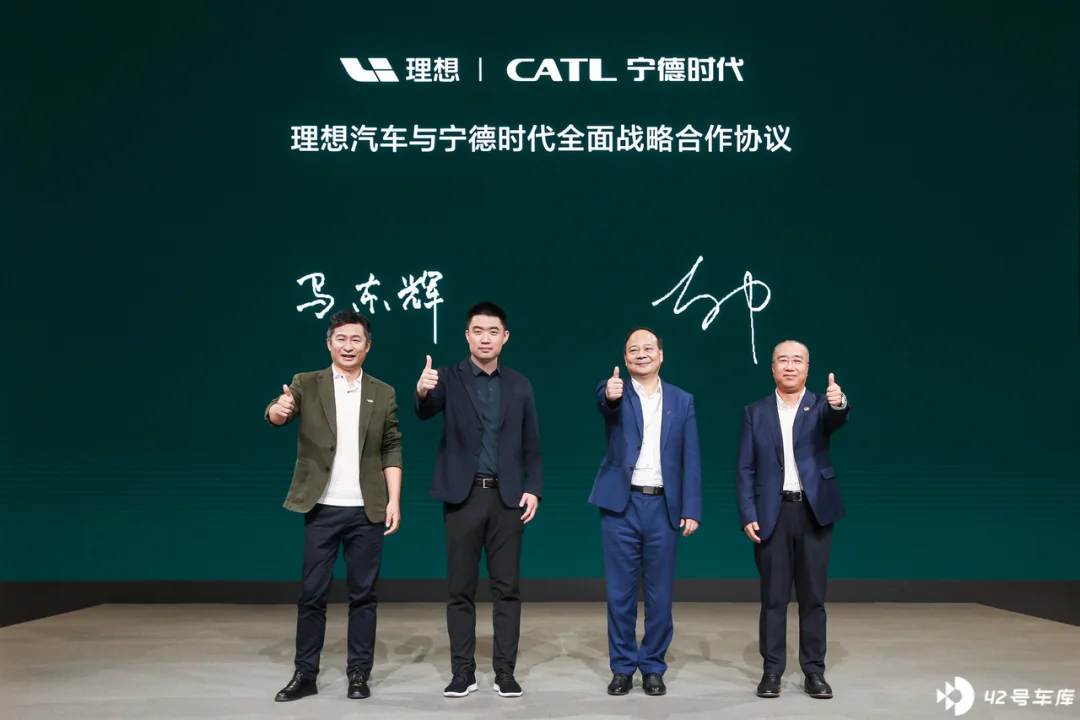
On the evening of April 16, CATL announced that its sodium-ion batteries would debut in Chery vehicles. On April 18, Li Auto and CATL signed a comprehensive strategic agreement, with Li Auto’s first pure electric vehicle set to become the world’s first model equipped with the 4C Qilin battery.
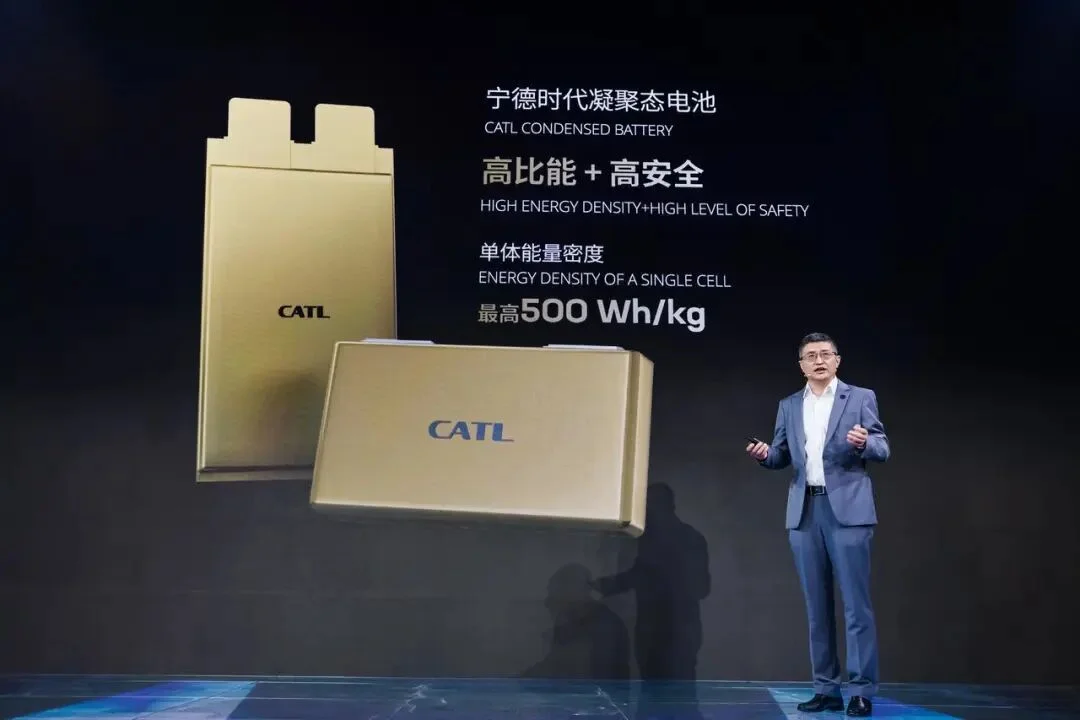
The most widely discussed announcement came on April 19, when CATL unveiled its "condensed-state battery" during the Shanghai Auto Show. This is not a sub-branch of either semi-solid or solid-state batteries; as CATL described it, "the condensed-state battery represents an entirely new category."
This terminology may be unfamiliar to some, so here are the key highlights: a single-cell energy density of 500 Wh/kg, applications for electrifying manned aviation, mass production capability expected within this year, and a forthcoming automotive-grade version.
01How many steps does it take to put batteries in the sky?
To start with the main point: how significant is a single-cell energy density of 500 Wh/kg?
Earlier, foreign media teardowns of Tesla’s 4680 batteries revealed that the 4680 cells produced at Gigafactory Texas have a single-cell energy density of 244 Wh/kg, and a pack-level system energy density of 230 Wh/kg.
In other words, the "condensed-state battery" referred to by CATL boasts a single-cell energy density that is 104.9% higher than that of the 4680 battery. When applied to automotive standards, this theoretically enables longer driving range at the same weight, or further lightweighting of electric vehicles for the same range.
Excitingly, CATL has indeed announced that it will also launch an automotive-grade version of its condensed-state battery, which is expected to be ready for mass production later this year.
Beyond automotive applications, CATL stated:
We are currently collaborating on the development of civil electric passenger aircraft projects, adhering to aviation-grade standards and testing to meet aviation-level safety and quality requirements.
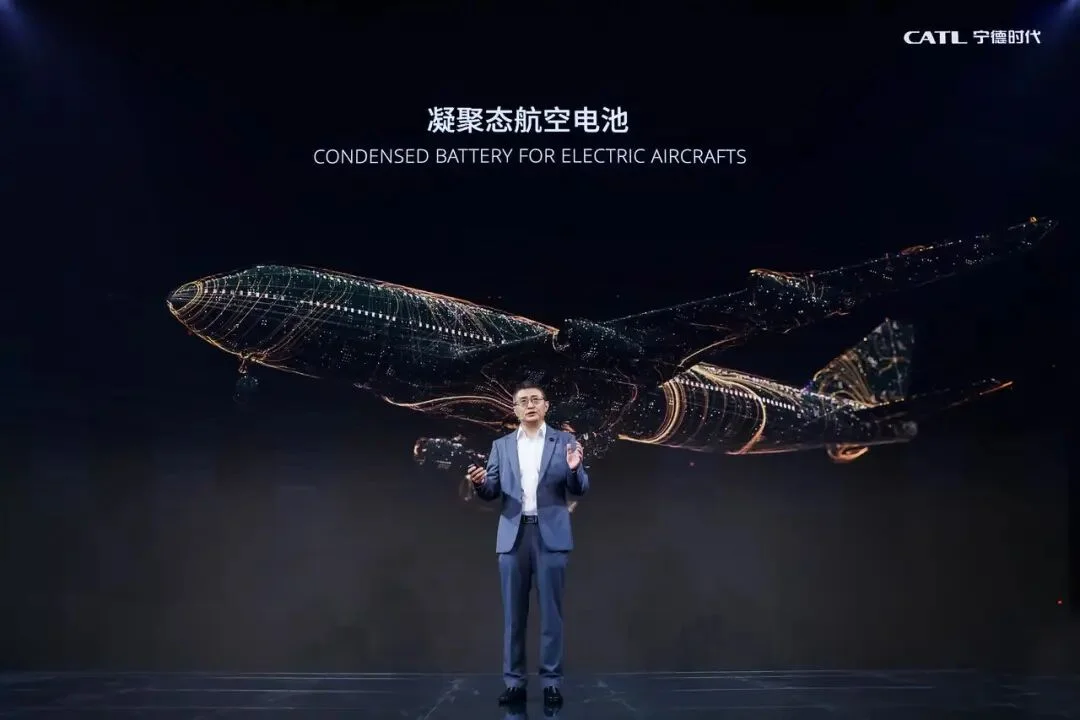
Elon Musk has previously noted that the primary obstacle to the electrification of manned aircraft is insufficient battery energy density. If energy density can exceed 400 Wh, the widespread adoption of electric aircraft becomes feasible.
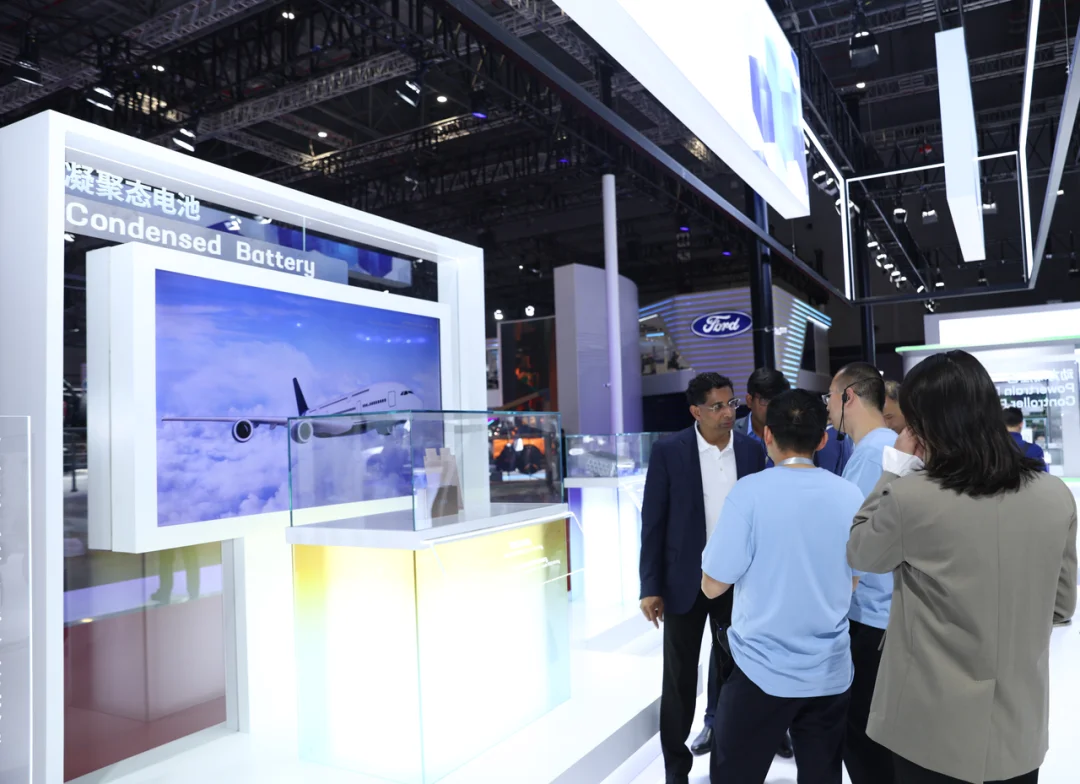
Undoubtedly, CATL's "condensed-state battery" may herald the first chapter in the commercial electrification of flight. So, from a technical perspective, what exactly is a condensed-state battery? Is it the same type as the currently popular solid-state or semi-solid-state batteries?
Regarding the first question, CATL responded:
CATL has developed a high-power biomimetic condensed-phase electrolyte to address electrochemical changes in ultra-high specific energy chemical materials. This approach constructs a micron-level adaptive network structure, regulates inter-chain interaction forces, and enhances microscopic structural stability while improving battery kinetic performance and lithium-ion transport efficiency.
The condensed-phase battery integrates a series of innovative technologies, including ultra-high specific energy cathodes, new anodes, separators, and manufacturing processes. These innovations deliver both excellent charge-discharge performance and high safety.
Condensed-phase batteries are neither semi-solid-state batteries nor transitional products between semi-solid and all-solid-state batteries. CATL describes them as a "brand-new category." Previously circulated internal meeting minutes suggest that CATL holds a cautious view toward semi-solid-state batteries, regarding them more as transitional or speculative products compared to all-solid-state batteries.
Regarding the second point: aside from all-solid-state lithium-metal batteries, which currently face challenges in large-scale mass production, both semi-solid-state lithium-metal batteries and conventional lithium-ion batteries still rely on liquid electrolytes that remain in a fluid state.
According to CATL, the claim of "improving lithium-ion transport efficiency" also indicates that condensed-phase batteries will exhibit higher conductivity.
Most importantly, CATL states that its "biomimetic condensed-phase electrolyte" can "regulate inter-chain interaction forces and enhance microscopic structural stability." This implies that the battery's safety and stability will be superior to those of batteries using traditional liquid electrolytes.
For the commercial development of batteries, two core metrics are critical: the ability to achieve large-scale mass production and cost control. Currently, solid-state and semi-solid-state batteries face insurmountable gaps in both areas.
NIO placed solid-state batteries in the spotlight at its NIO Day event in January 2021, but more than two years later, the repeatedly delayed 150 kWh battery pack has yet to appear. Previously, Qin Lihong, co-founder and president of NIO, stated that the NIO 150 kWh battery pack is expected to launch this summer, but its cost is high, roughly equivalent to that of a NIO ET5.
Weilanxinnengyuan, a partner for NIO’s semi-solid-state batteries, previously indicated that its goal for 2023 was to mass-produce 1,000 units of the 150 kWh semi-solid-state battery packs. Clearly, this volume cannot meet the market's demand for large-scale adoption.
Therefore, Wu Kai, chief scientist at CATL, delivered a reassuring message during his speech at the Shanghai Auto Show this year:
"Currently, we are collaborating on the development of civil electric passenger aircraft projects, adhering to aviation-grade standards and testing to meet aviation-level safety and quality requirements. At the same time, we will launch an automotive-grade version of our condensation-state battery, which will be ready for mass production within this year."
02Technology aims for the skies, but must also land on the ground
How many more cards does CATL have up its sleeve? This is a question that concerns the entire industry. For CATL, it is not just the terrifying R&D capability that keeps it at the forefront of technology, but also the speed with which it can bring those technologies to market.
Specifically, besides the condensation-state battery, other technologies that CATL plans to launch this year include: the long-range/4C Qilin Battery, the sodium-ion AB battery, and the M3P battery.
Among them, the Qilin Battery system achieves an energy density of 255 Wh/kg and a volumetric utilization rate of 72%. Under CTP3.0 technology, it significantly increases the driving range of vehicles equipped with it. We have already seen a version of the Zeekr 009 equipped with a 140 kWh Qilin Battery; this version of the Zeekr 009 has achieved a range of 822 km (CLTC cycle).
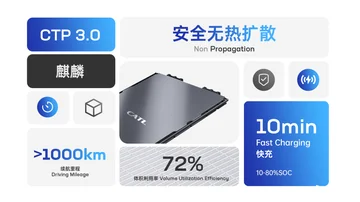
In addition, during this Shanghai Auto Show, CATL officially announced a comprehensive strategic partnership with Li Auto. Li Auto's first pure electric vehicle will become the world's first model to be equipped with the 4C Qilin battery.
The 4C Qilin battery achieves fast-charging capabilities of up to 4C, and even 5C, through technologies such as high-delithiation graphite anodes, low-impedance surface-coated cathodes, high-conductivity electrolytes, and a high-current top-cover design.
The 4C Qilin battery also adopts a dual-side large-area cell cooling technology. Compared with traditional bottom-surface liquid cooling solutions, this approach increases the cell heat exchange area by five times and reduces thermal resistance by 75%. Under high-temperature cooling conditions, the maximum heat exchange power can reach 16 kW, while during low-temperature heating, it enables the cells to heat up at a rate of 1.6 °C per minute.
According to previously disclosed data, CATL's 4C Qilin battery can achieve optimal charging paths across the full temperature range, with a maximum charging power of 480 kW at room temperature and up to 220 kW at low temperatures. Li Auto stated that when paired with 4C supercharging piles, the 4C Qilin battery can ultimately deliver a replenishment speed of adding 400 km of range in just ten minutes.
The collaboration among CATL, Li Auto and Zeekr also shows that whether it is the long-range Qilin battery or the 4C version, this product branch currently targets the mid-to-high-end market. Although the price of lithium carbonate raw materials is falling, for low-priced pure electric models, battery costs still account for a large proportion of the vehicle's cost.
On the evening of April 16, CATL announced that its sodium-ion batteries would make their debut in Chery models. CATL's first-generation sodium-ion battery cells achieve a single-cell energy density of 160 Wh/kg, which is nearly consistent with traditional lithium iron phosphate batteries. Furthermore, CATL's sodium-ion batteries outperform lithium iron phosphate batteries in charging speed, safety, low-temperature performance, and system integration efficiency.
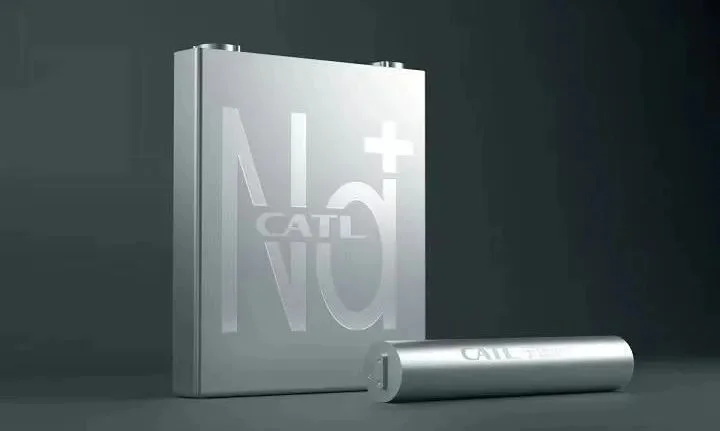
CATL data shows that vehicles equipped with sodium-ion batteries can charge to over 80% capacity in 15 minutes at room temperature. In low-temperature environments of -20°C, they maintain a discharge retention rate of more than 90%, and the system integration efficiency exceeds 80%.
Huang Qisen, Vice President of CATL Research Institute, stated:
"In passenger vehicle applications, sodium-ion batteries generally meet the range requirements for models under 400 km. Additionally, by combining CATL's pioneering AB Battery System Integration Technology, it is possible to achieve sodium-lithium hybridization. This could expand sodium-ion battery applications to models with a 500 km range. Such models would target approximately 65% of the market, offering broad application prospects and creating conditions for the industrialization of sodium-ion battery products."
Although there are no revolutionary technical differences between sodium-ion and lithium-ion batteries, sodium-ion batteries hold significant importance regarding cost reduction and resource reserves. Sodium reserves far exceed those of lithium, and material costs for sodium-ion batteries are expected to be 30%–40% lower than those for lithium-ion batteries.
According to Wandian LatePost, CATL has built a pilot production line for sodium-ion batteries in Ningde. Pilot lines typically serve as validation steps before launching mass production, indicating that CATL is rapidly advancing toward scaled development.
For A00-class vehicles, two-wheeled vehicles, and energy storage markets, the maturity of sodium-ion batteries will effectively reduce overall costs. From an automotive perspective, sodium-ion batteries will serve as a key power source for pure electric small cars.
Finally, there is the M3P battery. During CATL's 2022 earnings briefing held previously, Zeng Yuqun stated that M3P batteries are expected to enter mass production and delivery this year.
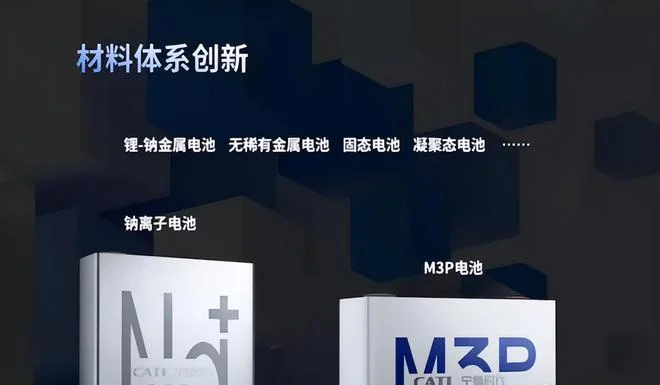
Previously, the industry speculated that M3P batteries were manganese iron phosphate (LMFP) batteries. However, according to CATL’s statements during investor research activities last year, M3P batteries cannot strictly be classified as LMFP batteries. The cathode material contains other metal elements in addition to manganese, making "ternary lithium batteries based on a phosphate system" a more accurate description.
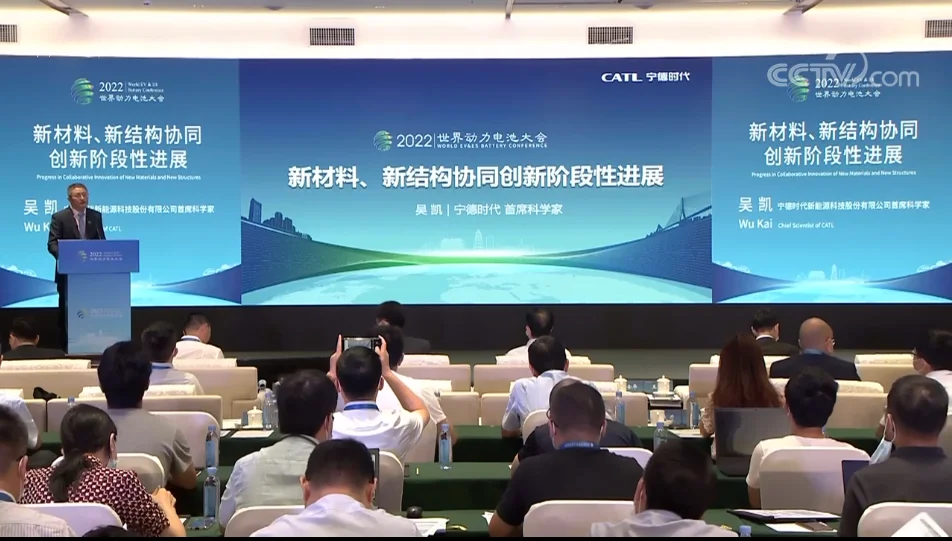
Wu Kai, Chief Scientist at CATL, also stated at the 2022 World Power Battery Conference last year:
"M3P batteries can target mid-range models with a driving range of around 700 km. Previously, for such models, CATL had adopted ternary cathode materials with medium or low nickel content, which are relatively more expensive. Combined with the structural design of the Qilin battery pack, the new materials in M3P can also meet the requirements for these vehicles."
Although traditional lithium iron phosphate (LFP) batteries are inexpensive, their energy density is approaching its physical limit. By adding manganese to LFP, the resulting batteries offer a higher voltage platform and greater energy density than standard LFP, while remaining only slightly more expensive than traditional LFP and still cheaper than ternary lithium batteries.
Data released by the China Automotive Battery Industry Innovation Alliance shows that in February 2023, the installed capacity of ternary batteries was 6.7 GWh, accounting for 30.6% of the total installed capacity. The installed capacity of lithium iron phosphate (LFP) batteries was 15.2 GWh, accounting for 69.3% of the total. LFP batteries have broad market prospects; their share in February had already approached 70%.
CATL’s M3P battery can be viewed as an upgraded version of LFP. Upon its mass production this year, it is expected to pose a strong challenge to BYD’s Blade Battery.
03Final Thoughts
In the first quarter of this year, CATL averaged a net profit of RMB 100 million per day.
On the evening of April 20, CATL released its financial report for the first quarter of 2023. During this quarter, CATL achieved operating revenue of RMB 89.04 billion, a year-on-year increase of 82.91% and a quarter-on-quarter decrease of 24.7%. Net profit attributable to shareholders was RMB 9.82 billion, up 557.97% year-on-year and down 25.2% quarter-on-quarter. The gross margin reached 21.27%, essentially flat year-on-year, while the net margin stood at 11.32%, a significant year-on-year increase of 7.26 percentage points.
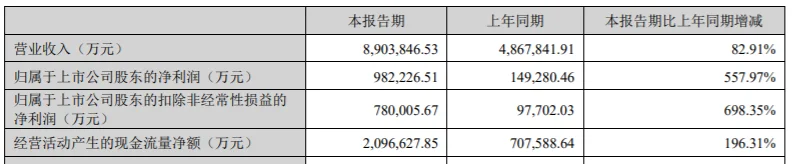
A counterintuitive aspect of these figures is that the first quarter is traditionally a slow season due to the Spring Festival. Furthermore, domestic automakers launched price wars in Q1 this year to seize market share, further suppressing demand for upstream batteries. Against this backdrop, CATL’s profit growth rate still hit 558% in the first quarter, setting a new record for the company’s single-quarter growth.
Accompanying the profit surge is CATL’s rapidly growing investment in research and development.
In 2022, CATL’s R&D expenses totaled RMB 15.51 billion, a year-on-year increase of 101.66%, accounting for 4.72% of total operating revenue. According to the current financial report, CATL’s R&D expenses for the first quarter were RMB 4.652 billion, representing an 81.16% year-on-year increase.
As of the end of 2022, CATL employed 16,322 R&D technical personnel, including 264 with doctoral degrees and 2,852 with master’s degrees. The company holds 5,518 domestic patents and 1,065 foreign patents, with an additional 10,054 domestic and foreign patents currently under application.
After reviewing the data above, it is clear that CATL’s strong performance in R&D and technology commercialization warrants attention. From sodium-ion batteries and M3P cells to the Qilin Battery, while expanding its product lineup from entry-level to premium segments, CATL has remained committed to new product development—the Condensed Matter Battery serves as a prime example.
The Condensed Matter Battery is undoubtedly a disruptive force in the battery market. The statement that "CATL is collaborating on the development of a civil electric passenger aircraft project, adhering to aviation-grade standards and testing to meet aviation-level safety and quality requirements" also invites scrutiny.
While the Qilin Battery has enabled high-end new energy vehicles to achieve ultra-fast charging at 4C or even 5C rates alongside extended range, the Condensed Matter Battery further expands the future possibilities for new energy vehicle development.
Perhaps the prologue to electrification in the commercial aviation sector is being quietly unveiled by CATL. Written by: Mingming Edited by: 308