


DENZA D9 Road Test: Design, Space, and Tech Challenge the MPV Status Quo
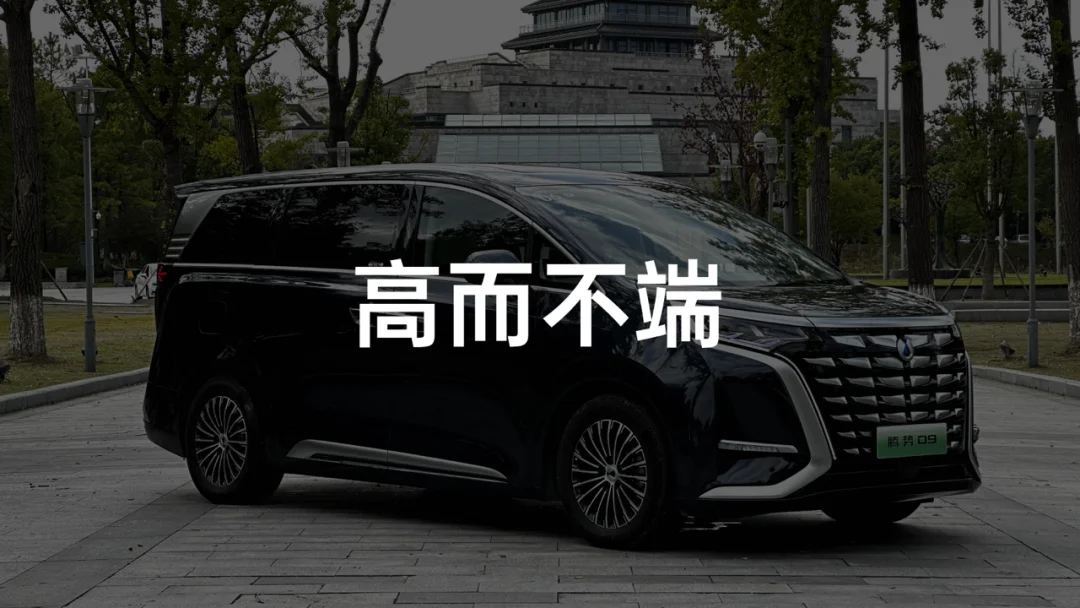
In recent years, Chinese automakers—both new entrants and established players—have been racing to surpass German and American rivals.
I swear this is purely a compliment. It refers to their all-around leap forward in product positioning, marketing, benefits, and user operations.
This leap is reflected in the steadily rising prices of their products and record-breaking sales figures.
In this push for premium positioning, both new and old players have unanimously chosen MPVs for their new models.
The DENZA D9, which I test-drove recently, is one such example. The model has already secured more than 40,000 orders, with an annual delivery target of 20,000–30,000 units. Monthly deliveries could exceed 10,000 before year-end; if achieved, that would certainly make it a hit.
01Who’s More Impressive Than the Alphard?
“This is a world that judges by looks.” Although I knew this truth long ago, I stubbornly resisted until society repeatedly taught me a lesson, forcing me to finally yield to mainstream aesthetics. This resembles Romain Rolland’s heroism: recognizing reality while continuously testing one’s will through incremental steps.
The strategy of 'surrounding the cities from the countryside' applies here as well. Consequently, if you want to build a competitive MPV in China, you cannot bypass the benchmark set by Toyota Alphard.
As a result, traces of the Alphard's design language are visible across nearly all domestic MPV models.
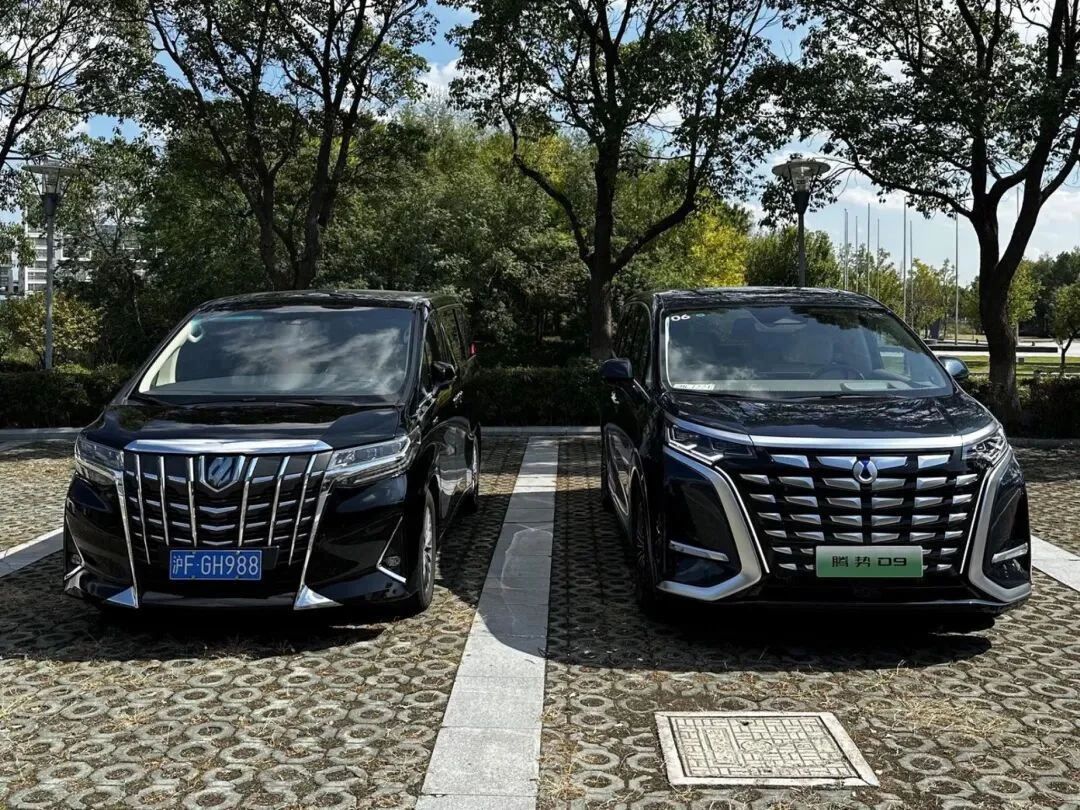
When we parked the DENZA D9 next to a Toyota Alphard, it became clear that the D9’s design details closely resemble an updated version of the Alphard.
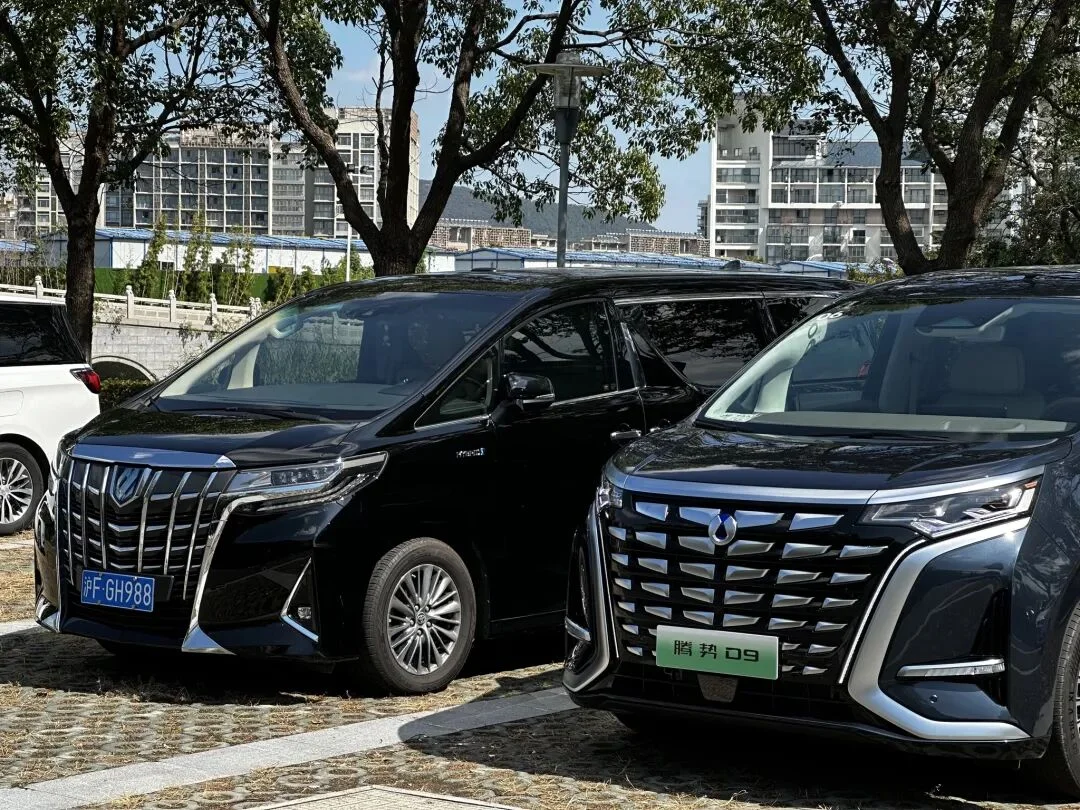
In terms of its 'large mouth' grille design, the DENZA D9 features a significantly larger actual area and greater coverage of silver chrome compared to the Alphard.
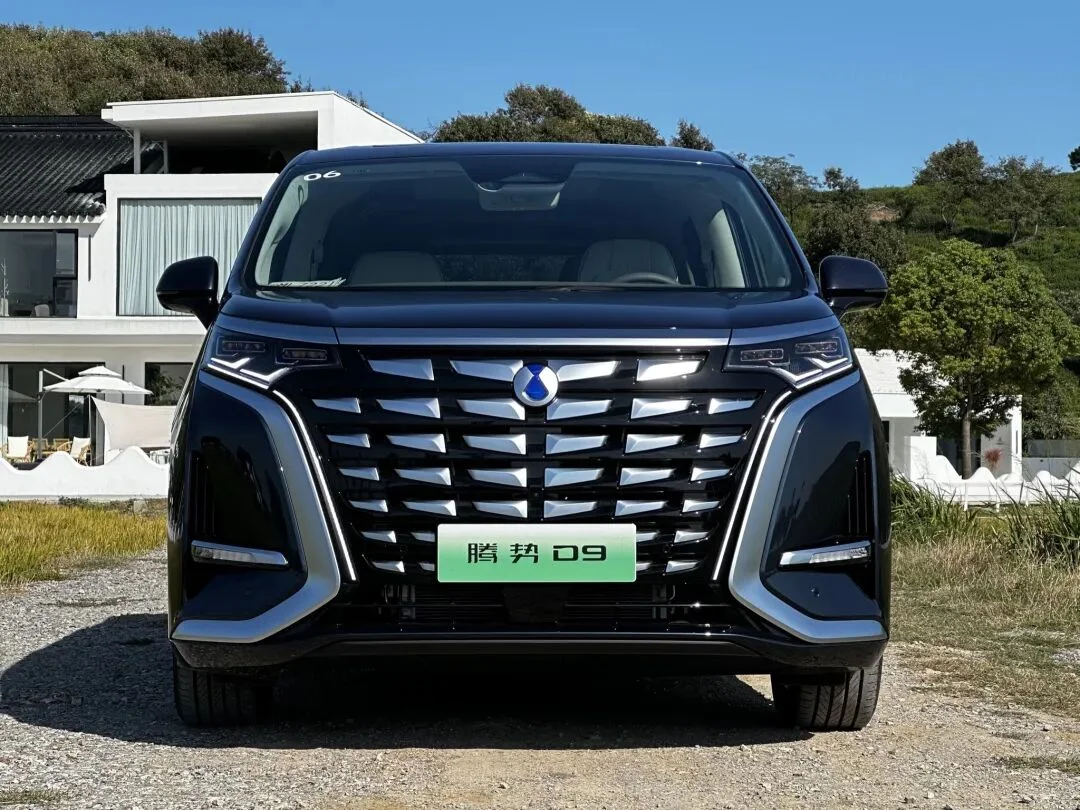
The DENZA D9 takes this 'tech-heavy' approach even further, using LED light strips with finer granularity and more uniform coloration to outline the sides of the grille and the lower edge of the headlights. Even under the harsh sunlight at noon, these LED strips remain clearly visible.
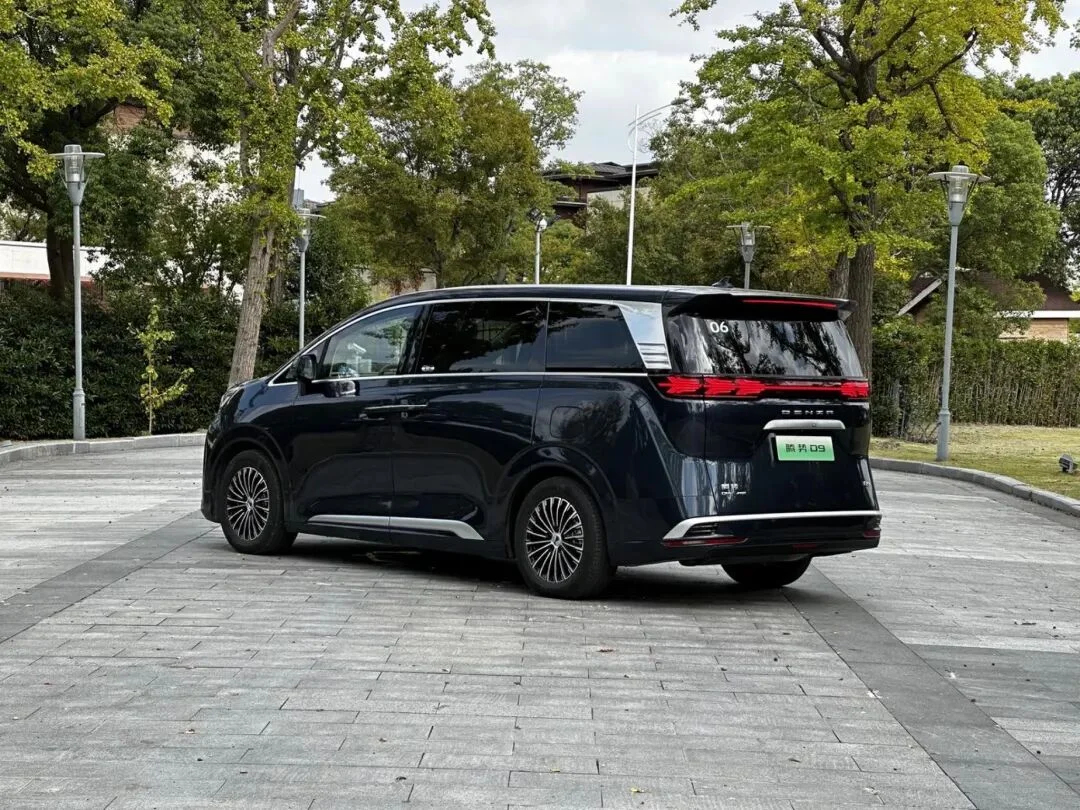
Viewed from the side, the DENZA D9 features straighter lines. Silver trim outlines the window line, while additional silver trim along the lower door panels adds visual depth to the side profile.
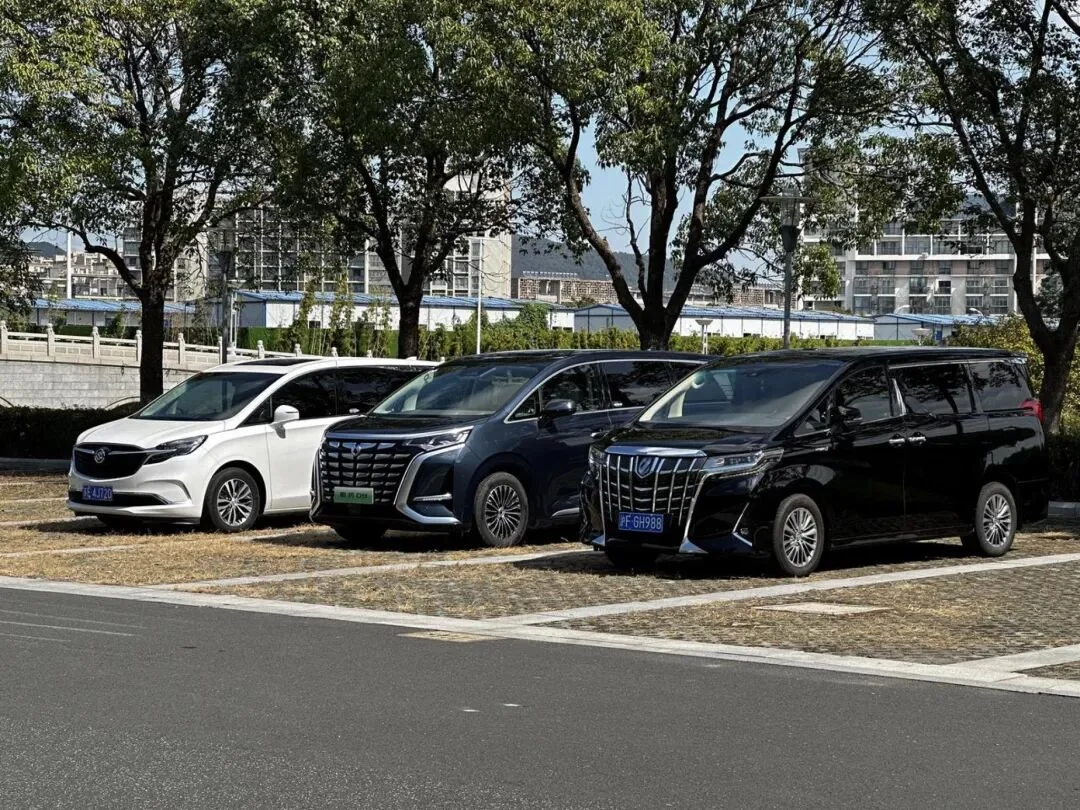
The Alphard, meanwhile, features some design touches on the window styling, with its overall lines leaning toward a straight, angular aesthetic.
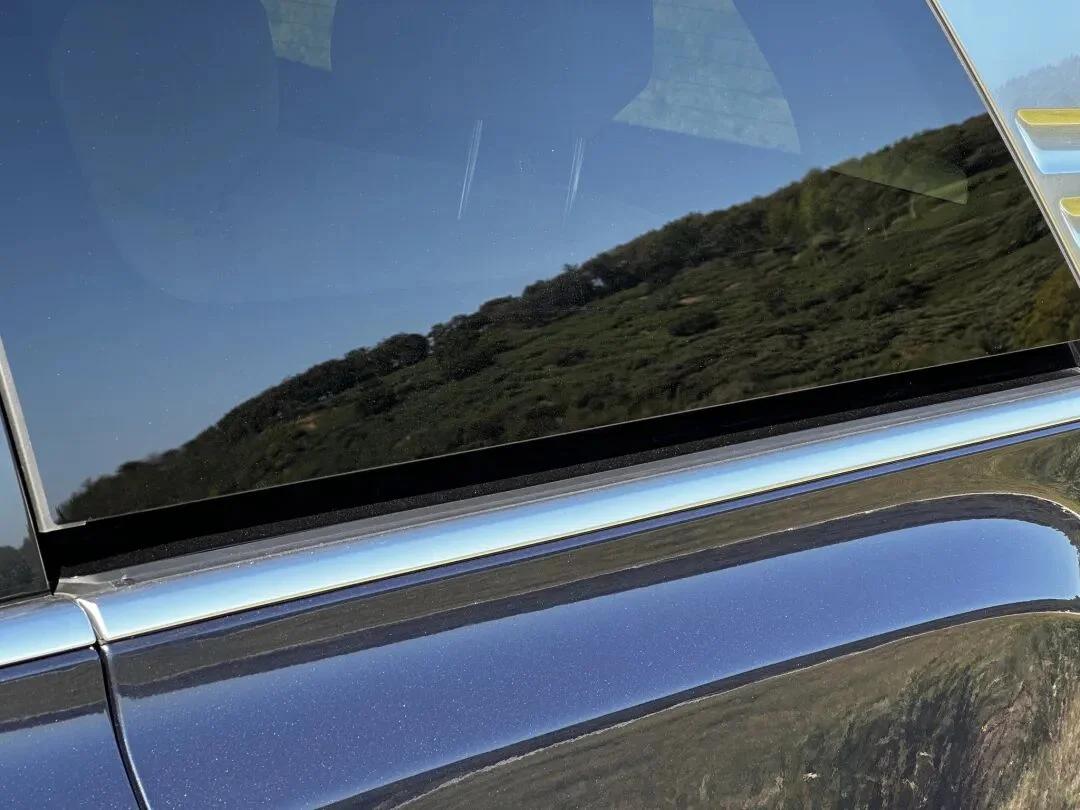
An interesting design feature of the DENZA D9 is that they have implemented a hidden design for the second-row sliding doors. The primary benefit is a more unified and clean exterior appearance, with no abrupt lines exposed. Additionally, this design optimizes aerodynamic drag while ensuring both practicality and aesthetic appeal.
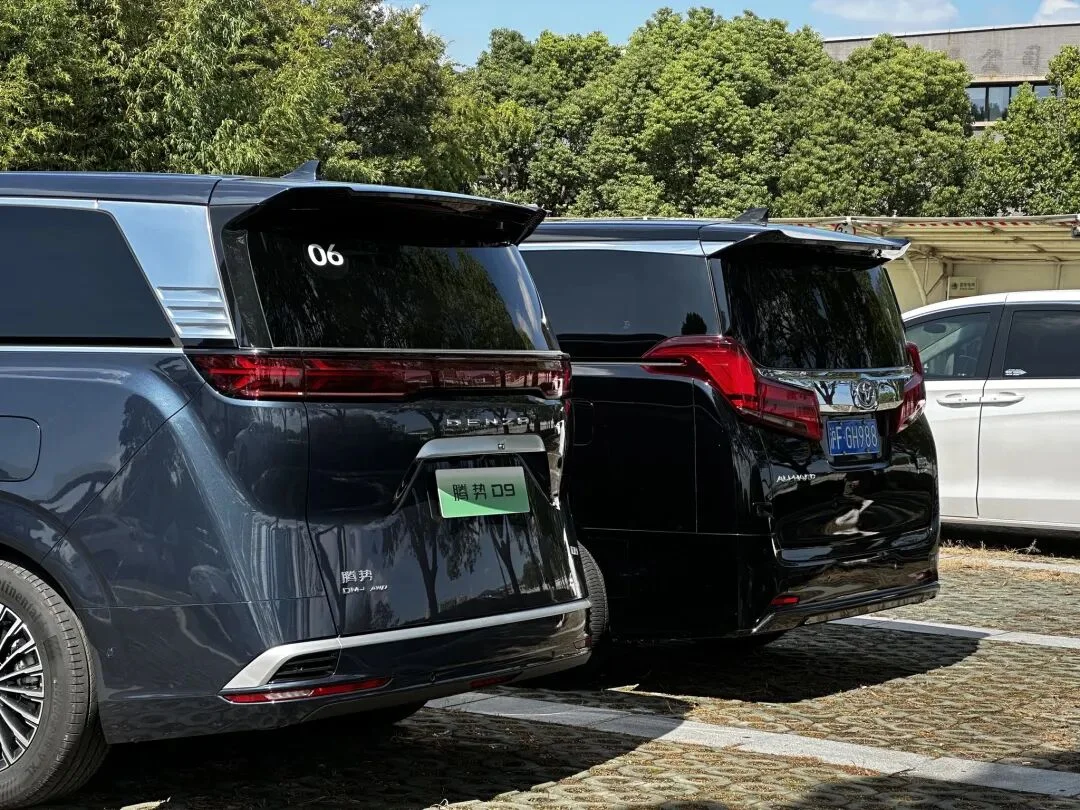
Moving to the rear of the two vehicles, it is evident that the Alphard's lines become more complex, particularly in its exaggerated headlight assembly design, which gives the model a strong product identity.
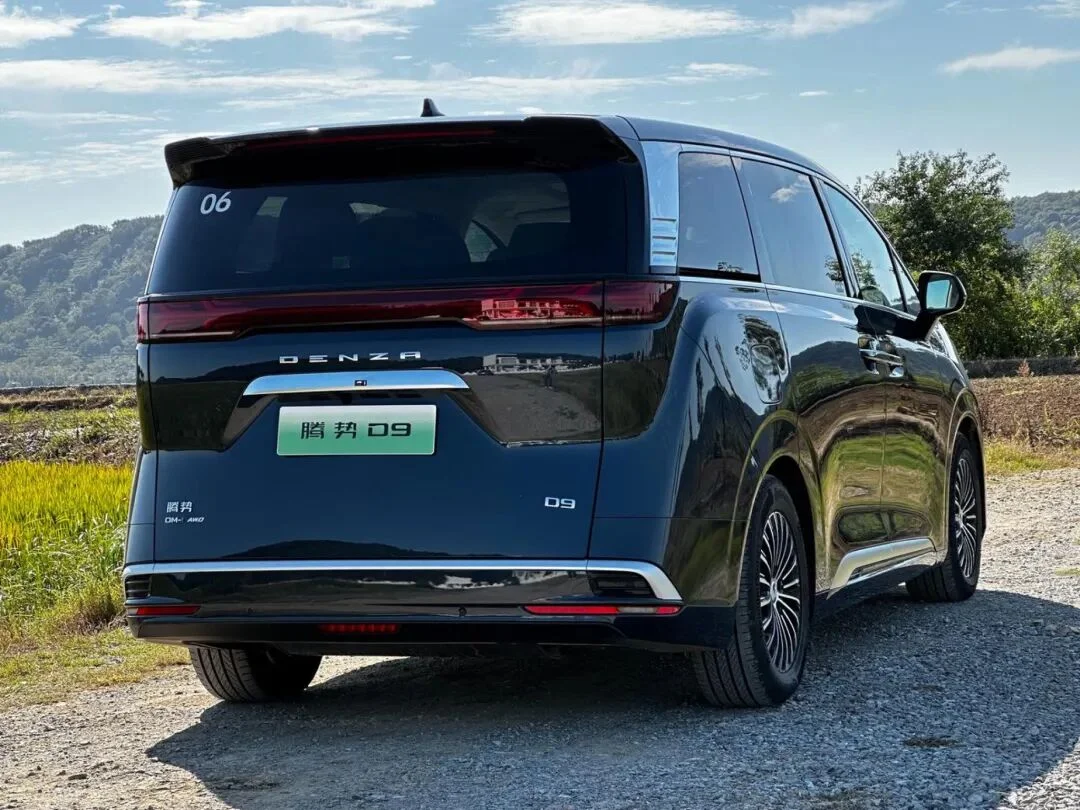
The rear of the DENZA D9, like its side, follows a flat and boxy design approach. However, viewed from the rear 45-degree angle, you can see that the D9 extends the prominent waistline on the side all the way to the tailgate. In fact, to ensure the trajectory of this waistline, the tailgate was designed with an inward recess.
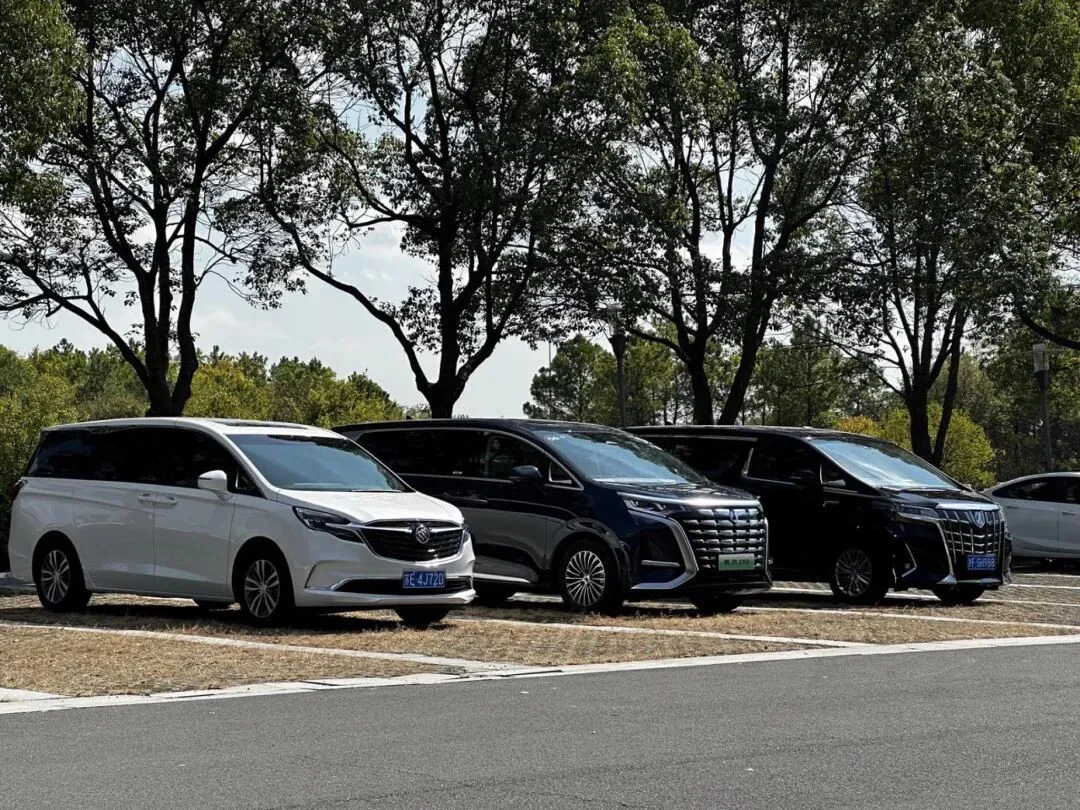
Of course, the MPV market has another heavyweight: the sales champion GL8. However, in China, the GL8 is primarily used in the B2B commercial sector. Therefore, when these three vehicles are placed together, I tend to view the GL8 through the lens of its non-family-oriented attributes.
So, which looks more imposing: the Alphard or the DENZA D9?
From my personal perspective, the real-world size of the DENZA D9 and its larger “mouth” grille give it a more commanding presence than the Alphard. Yet, in the details, the DENZA D9 appears more refined and understated. The recessed tailgate, LED light strip accents, and the split-design sliding door seams all demonstrate careful attention to detail.
02Is the Space Sufficient?
The core metric for evaluating an MPV is its actual space performance. In terms of hard dimensions, the DENZA D9 holds an advantage over most competitors.
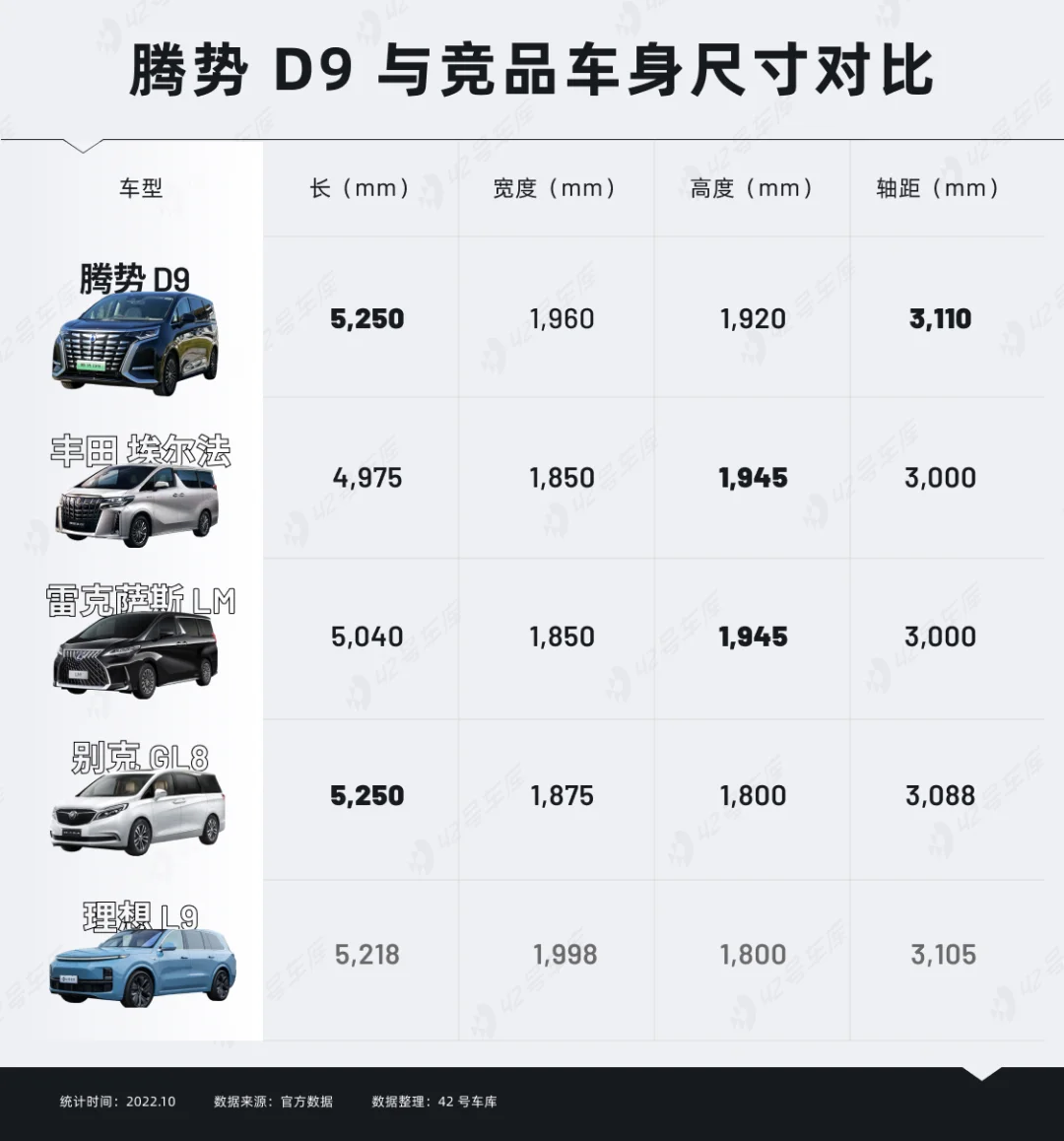
We compiled a size comparison table of the DENZA D9’s main competitors. You’ll find that the D9 holds a significant advantage in vehicle length and wheelbase—dimensions directly linked to interior legroom—which translates into a noticeably more spacious cabin experience.
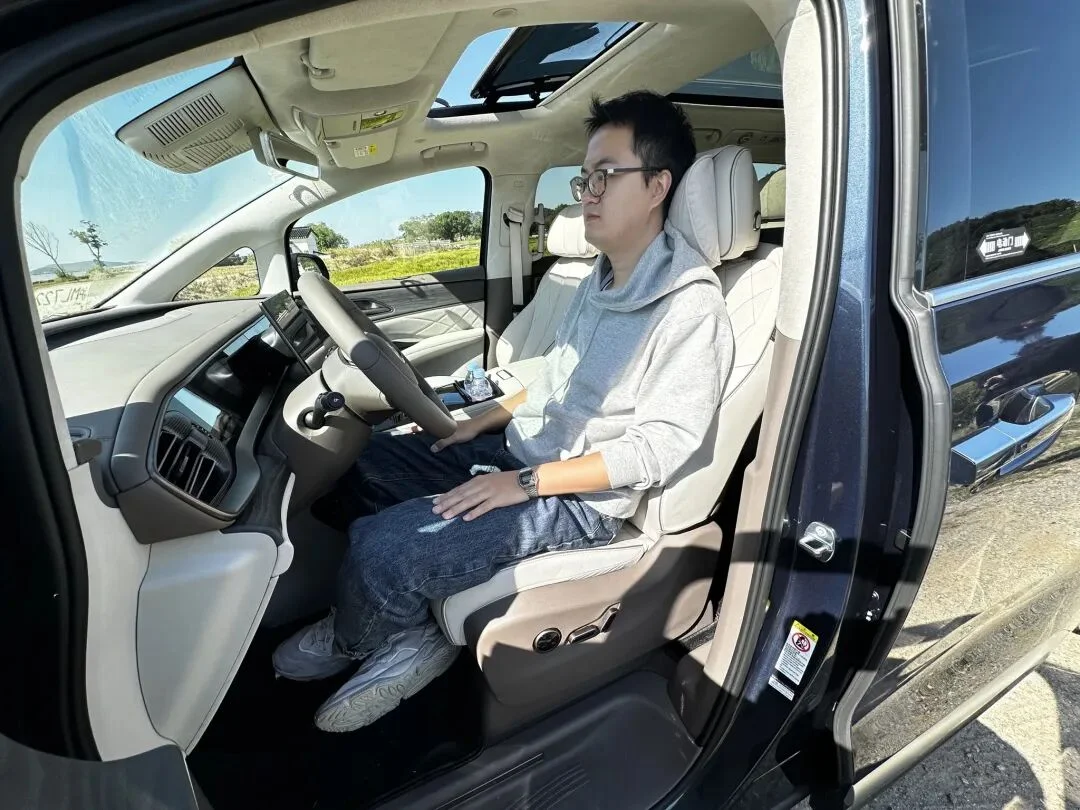
My height is 179 cm, and I weigh approximately 74 kg; this is my standard driving posture.
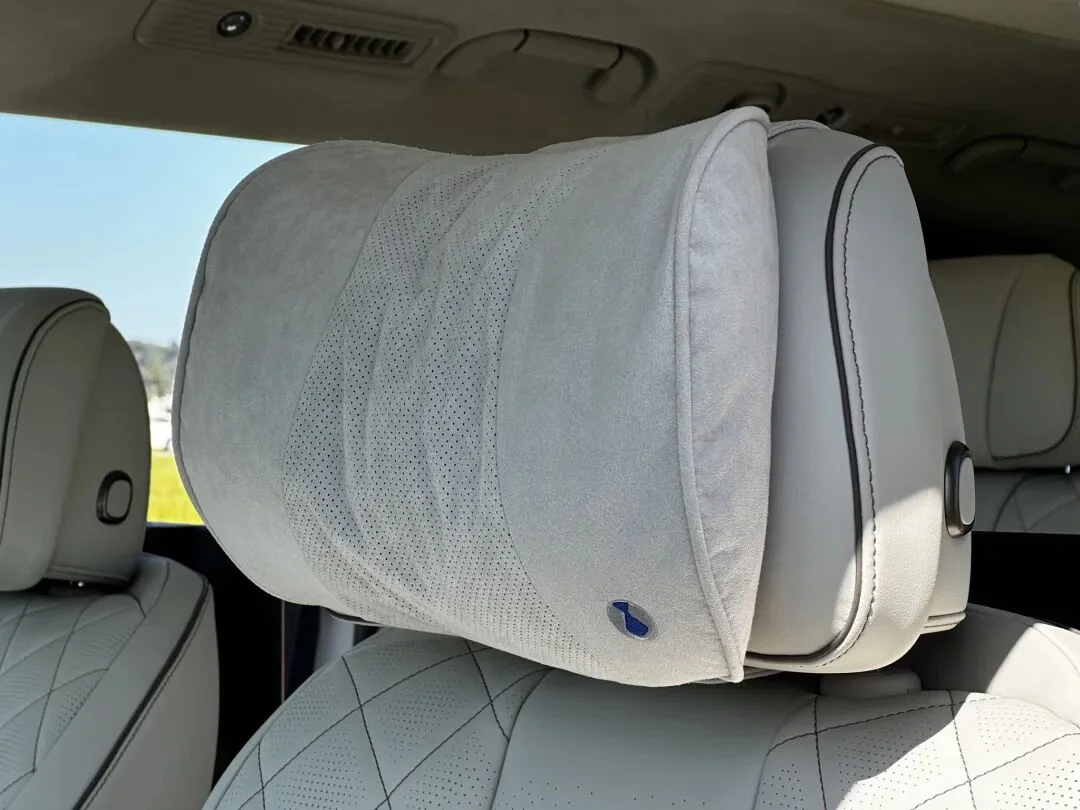
Incidentally, the D9’s front seats are equipped with aviation-style headrests, offering enhanced support for the head and neck. The surface material is suede-like fabric.
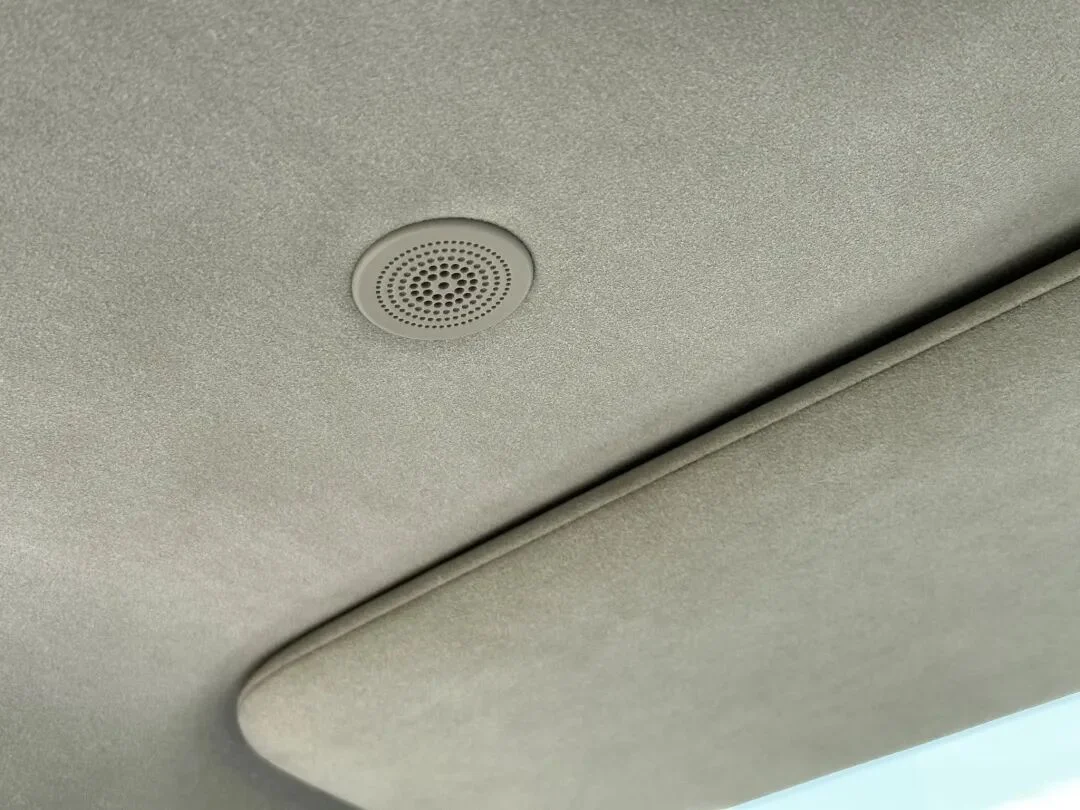
Furthermore, the entire roof lining of the D9 is wrapped in suede material.
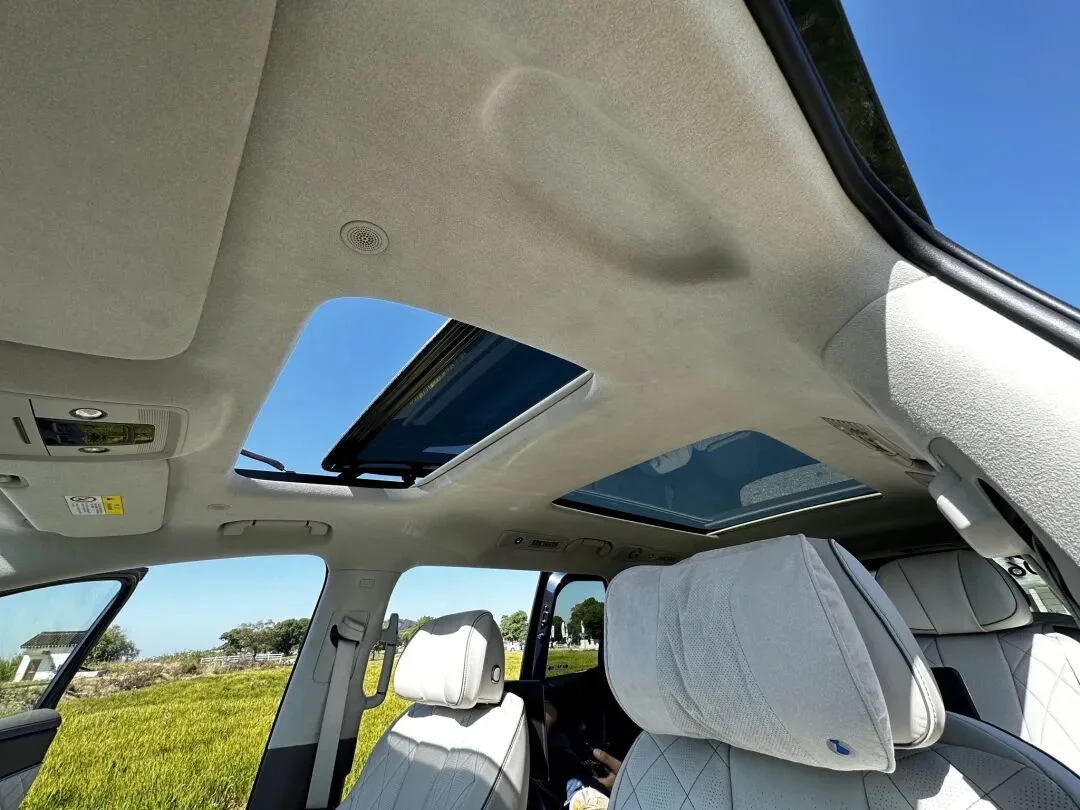
The front row features a sunroof that can be opened, while the rear is equipped with a single-piece panoramic glass roof covering an area of 1.1 square meters. With the rear glass roof open, headroom and the sense of openness for both the second and third rows are improved.
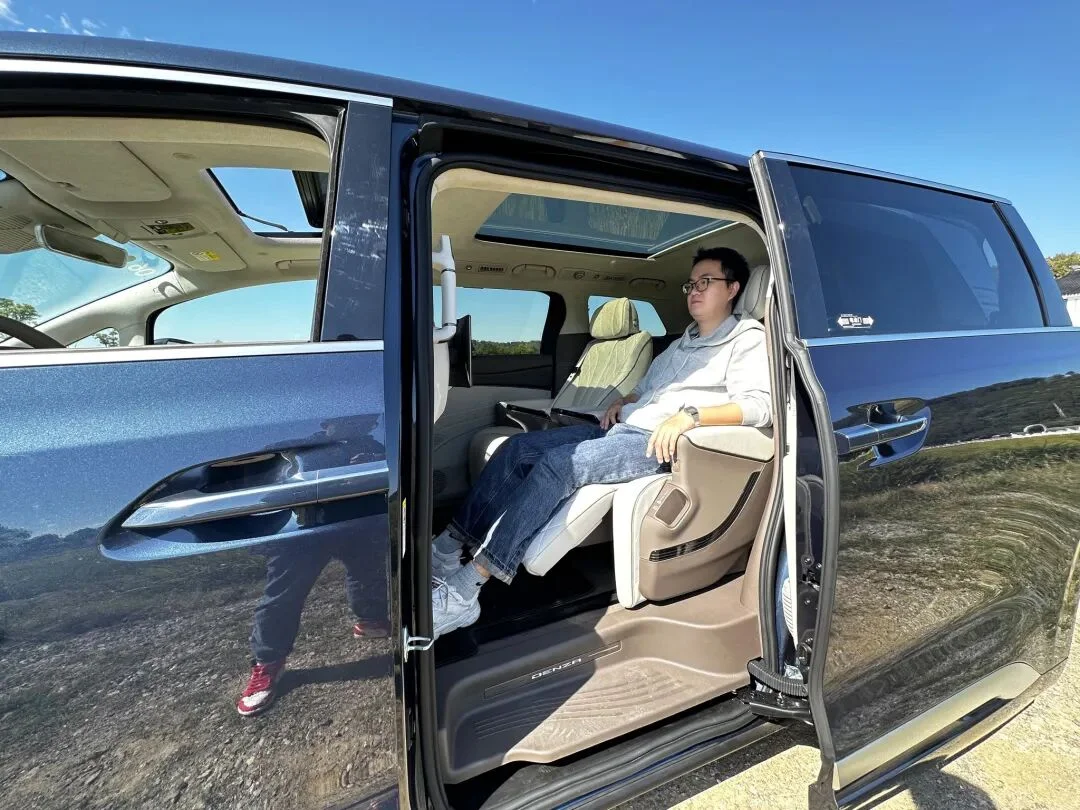
Moving to the second row, considered the most prestigious seating in an MPV, I adjusted the DENZA D9’s second-row seats to their rearmost position. I could then raise the leg rest, achieving a more comfortable riding posture than in the front row.
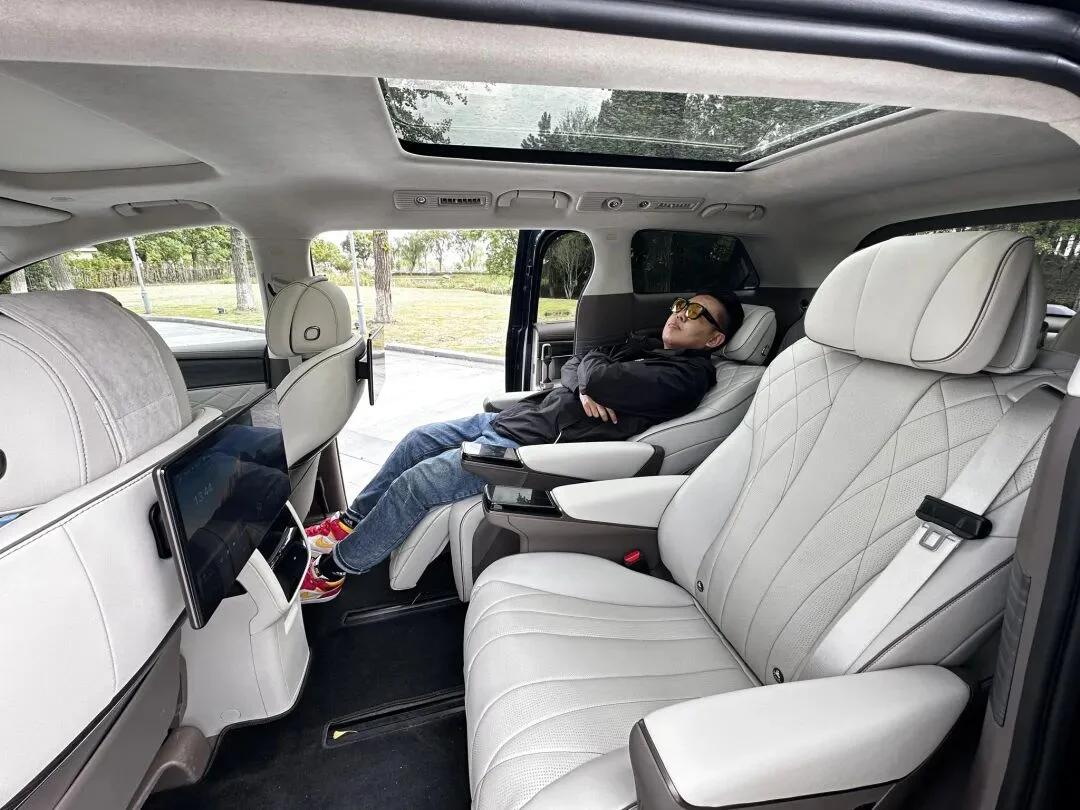
Additionally, the rear seats offer a zero-gravity mode, allowing you to achieve optimal comfort with a single button press.
In terms of softness and support, there is little difference between the front and rear seats; both are designed to provide support while remaining generally soft. All seats in the vehicle are upholstered in Nappa leather, offering a refined tactile feel.
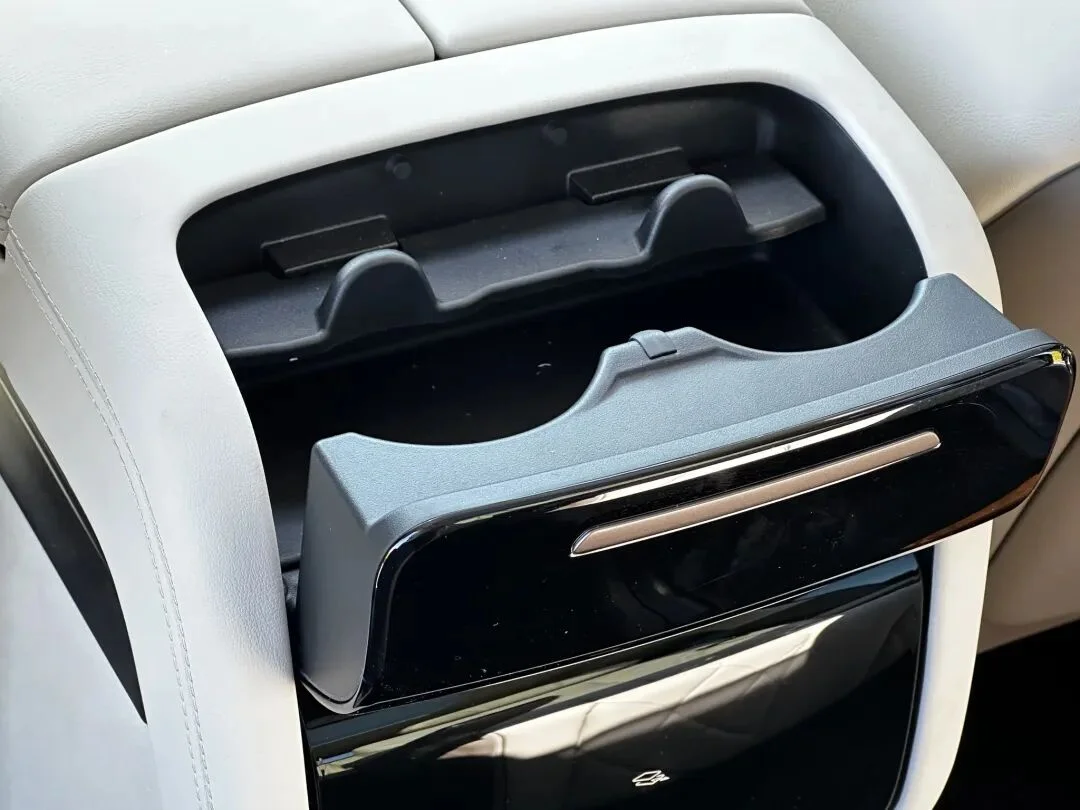
The second row also offers abundant storage space. At the top of the rear section of the center armrest, there are two pop-out cup holders.
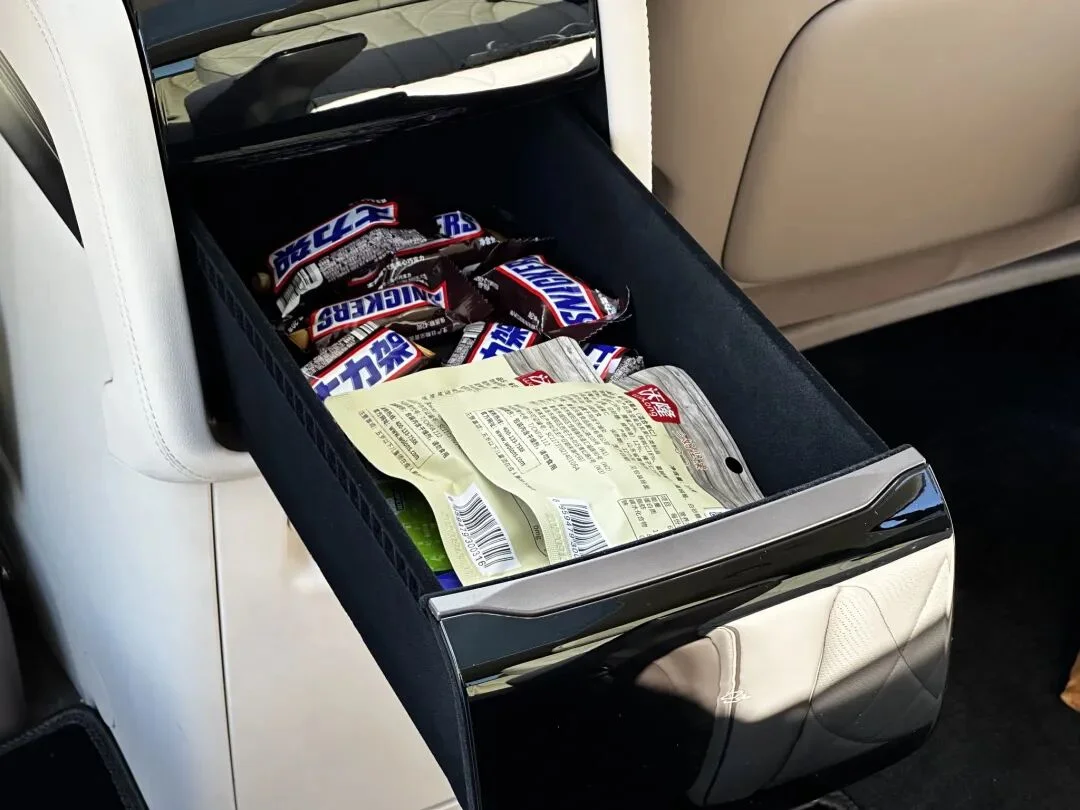
Below that is a storage compartment that can be opened electrically via the front and rear seat control screens or directly with physical buttons.
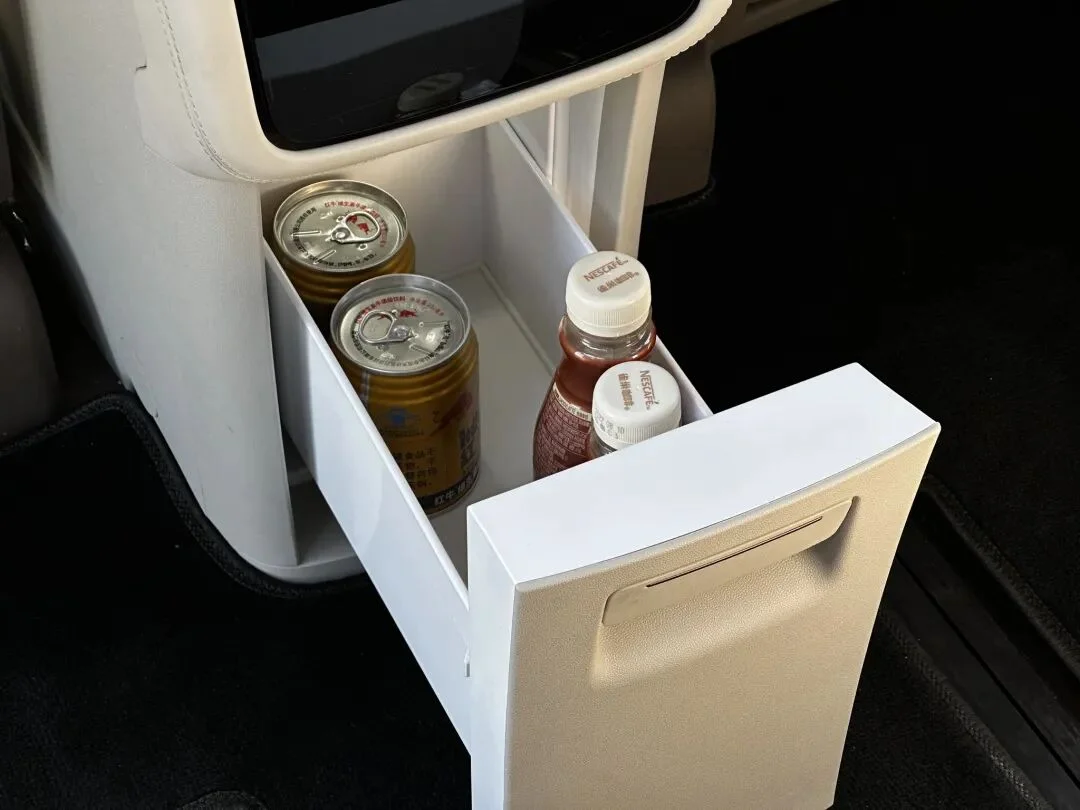
The lowest level features a refrigerator/warmer with temperature adjustable from 5°C to 50°C, though it must be opened manually.
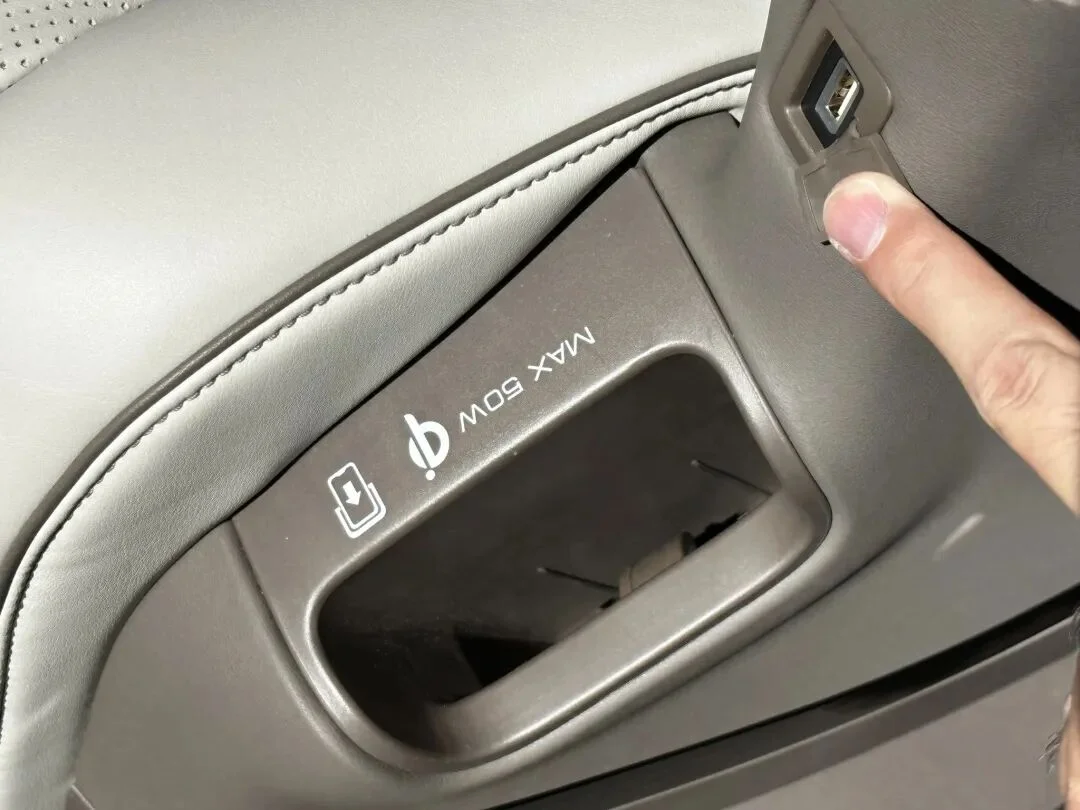
On the outer side of the second-row seats, there is a wireless charging slot supporting up to 50 W, which charges faster than Apple’s wired charging—leaving Apple in the dust.
Additionally, to prevent phones from rattling in the slot, DENZA added a spring tongue inside the charging pad and included a nearby USB-A port with a soft cover.
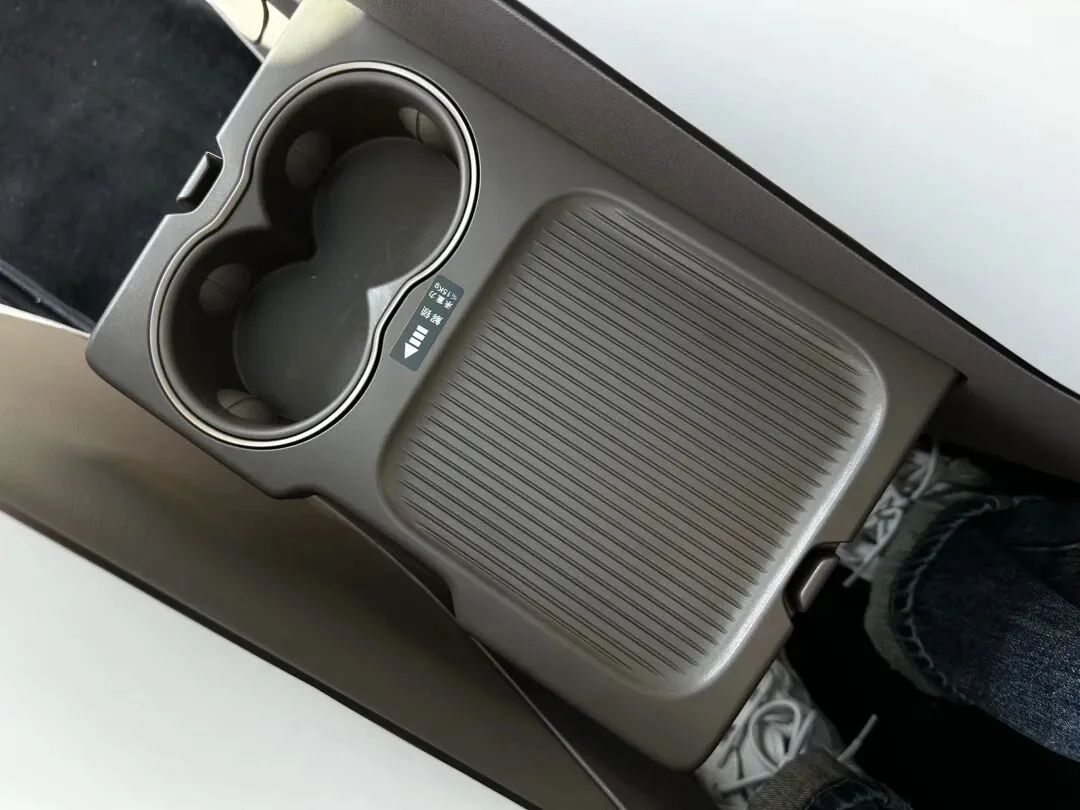
On the left side of the boss seat, the DENZA D9 features a flip-out tray table capable of supporting 15 kg, complete with two cup holders.
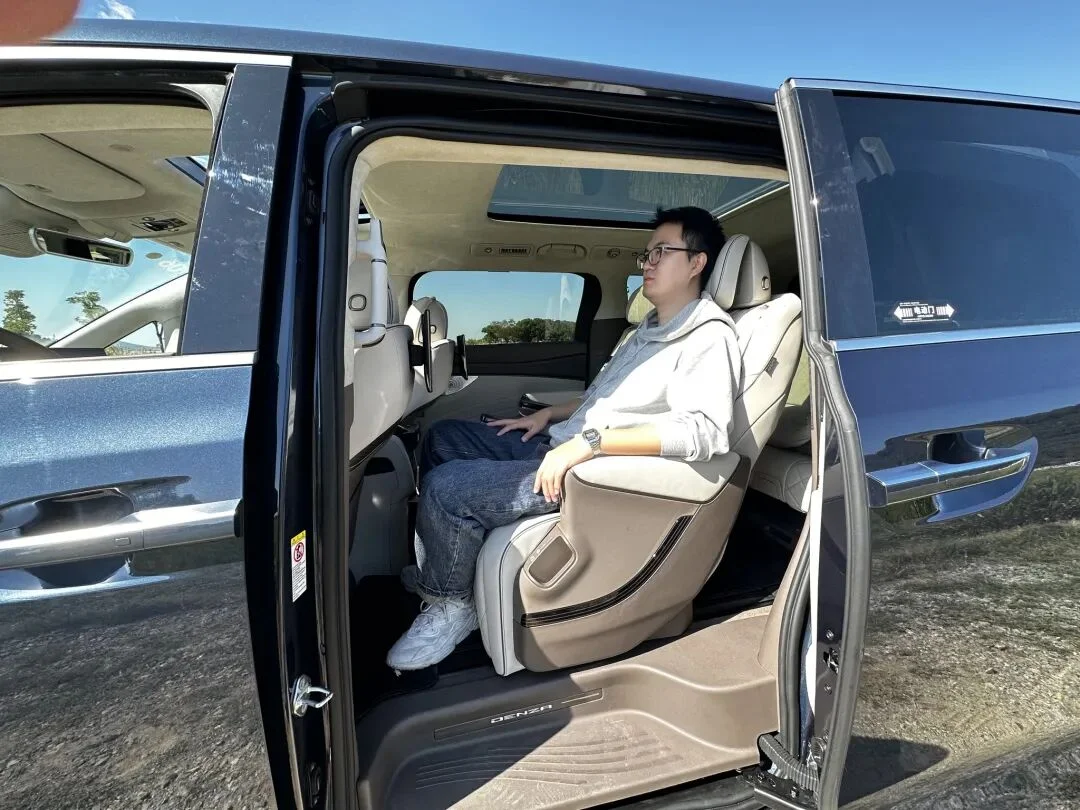
Adjusting the second-row seats to provide approximately two fists' worth of legroom, we proceed to inspect the third row.
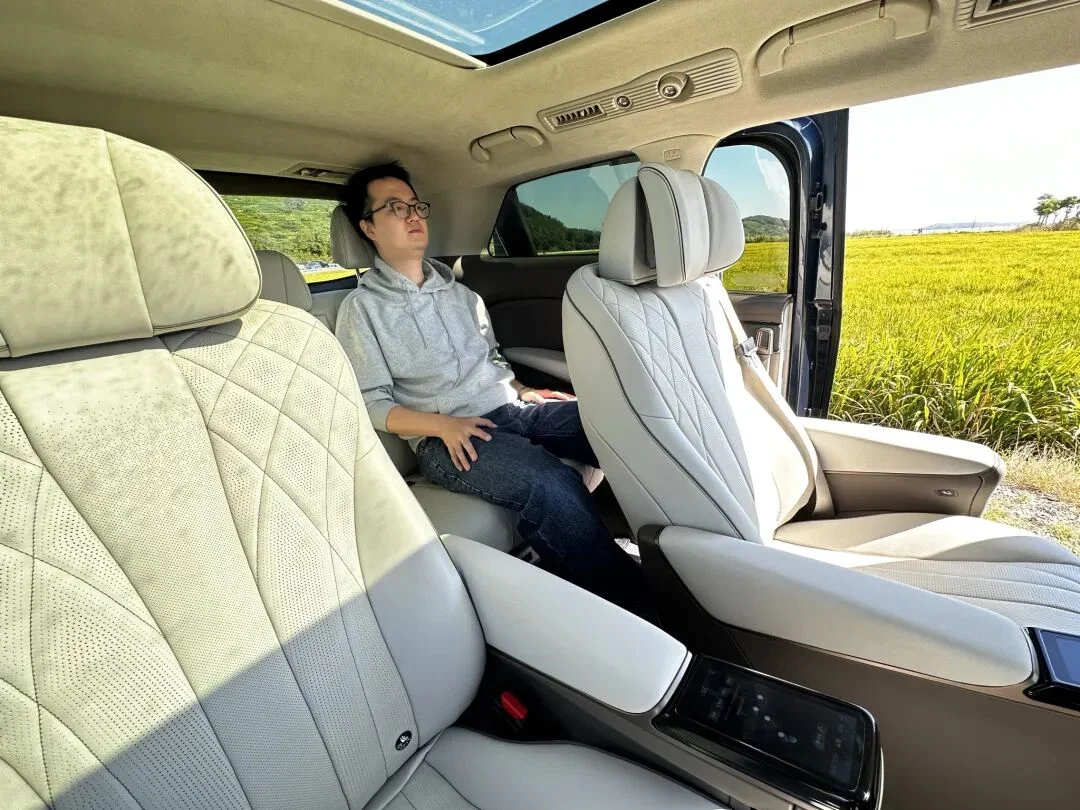
Moving through the central aisle into the third row, the first impression is one of unexpectedly spacious openness. The large side windows and a third-row seat cushion positioned slightly higher than the second row eliminate any sense of confinement for passengers in the back.
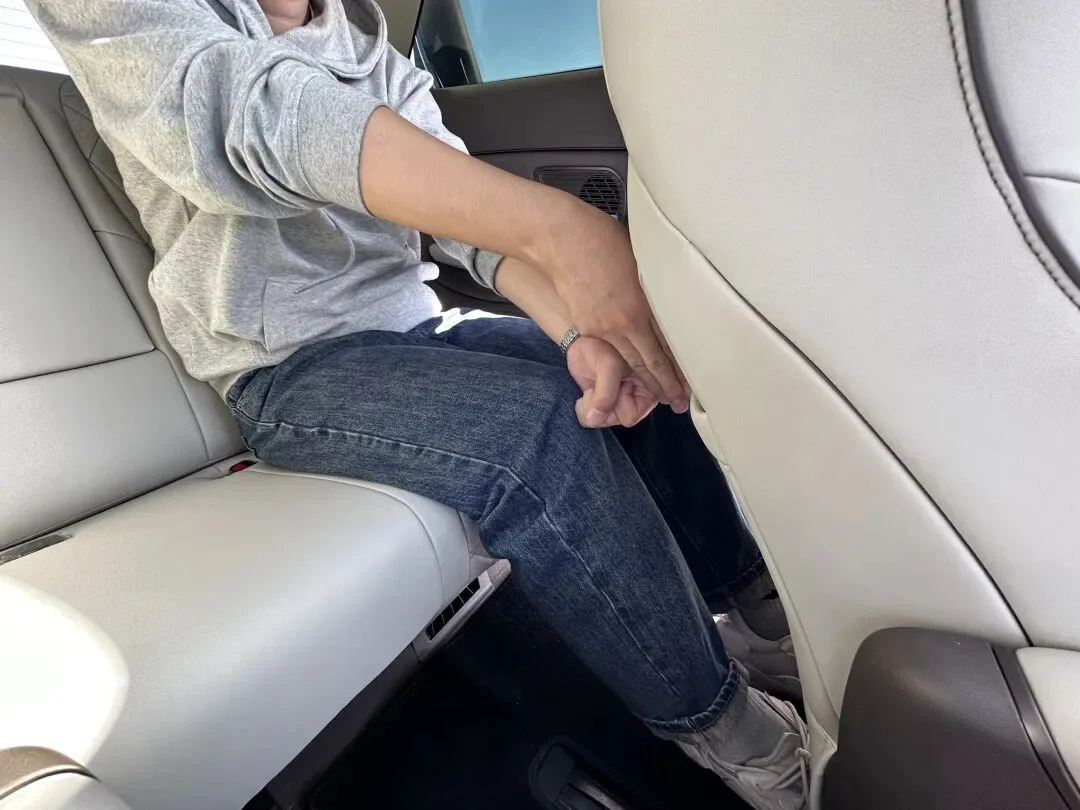

In terms of actual space, the D9’s third row offers legroom comparable to that of a compact SUV’s second row.
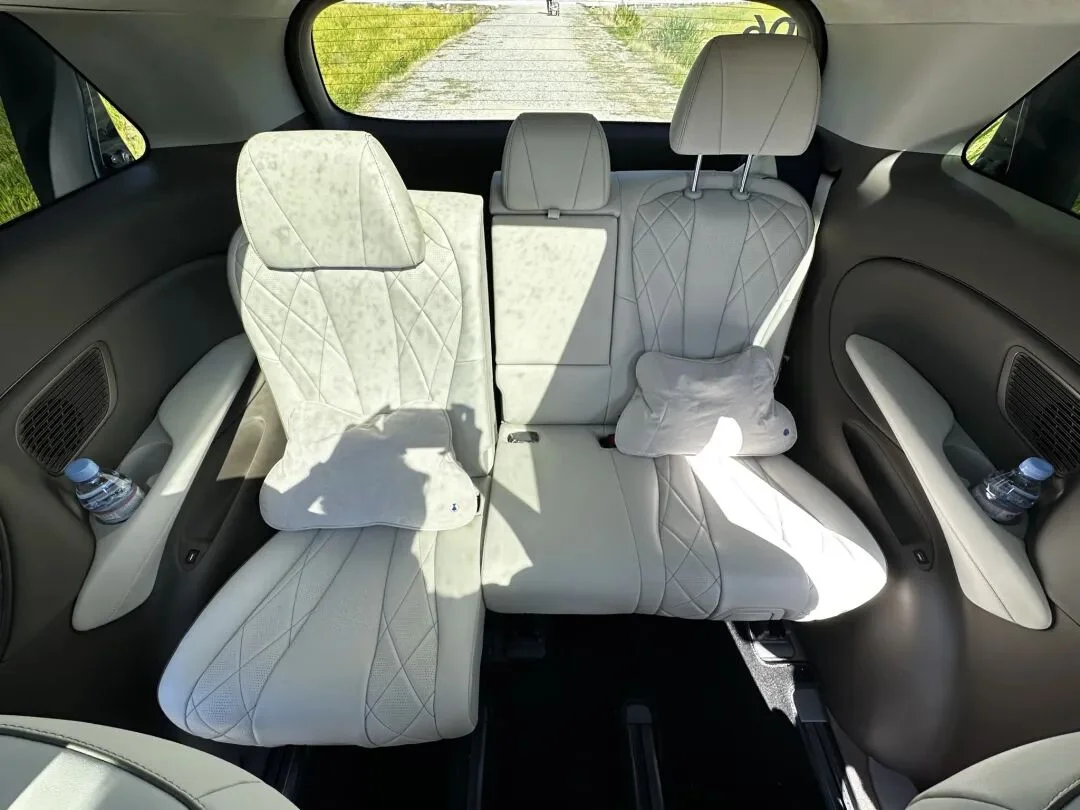
The D9’s seat comfort is also commendable. The seat cushions are thick enough to provide excellent softness. Additionally, both the backrests and cushions support stepless adjustment, a design primarily intended to enhance cargo area flexibility.
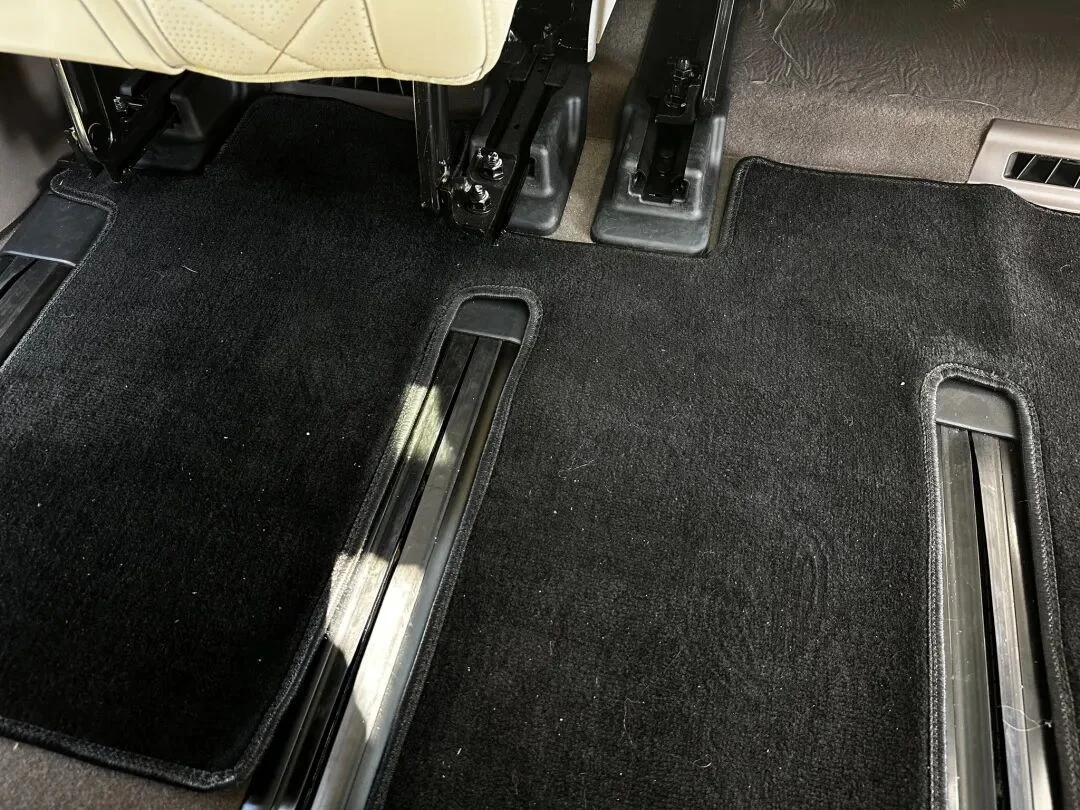
Upon closer inspection, I noticed that the DENZA D9 features independent rails for both the second and third rows. This ensures a more rational seating layout while guaranteeing adequate space in both rows.
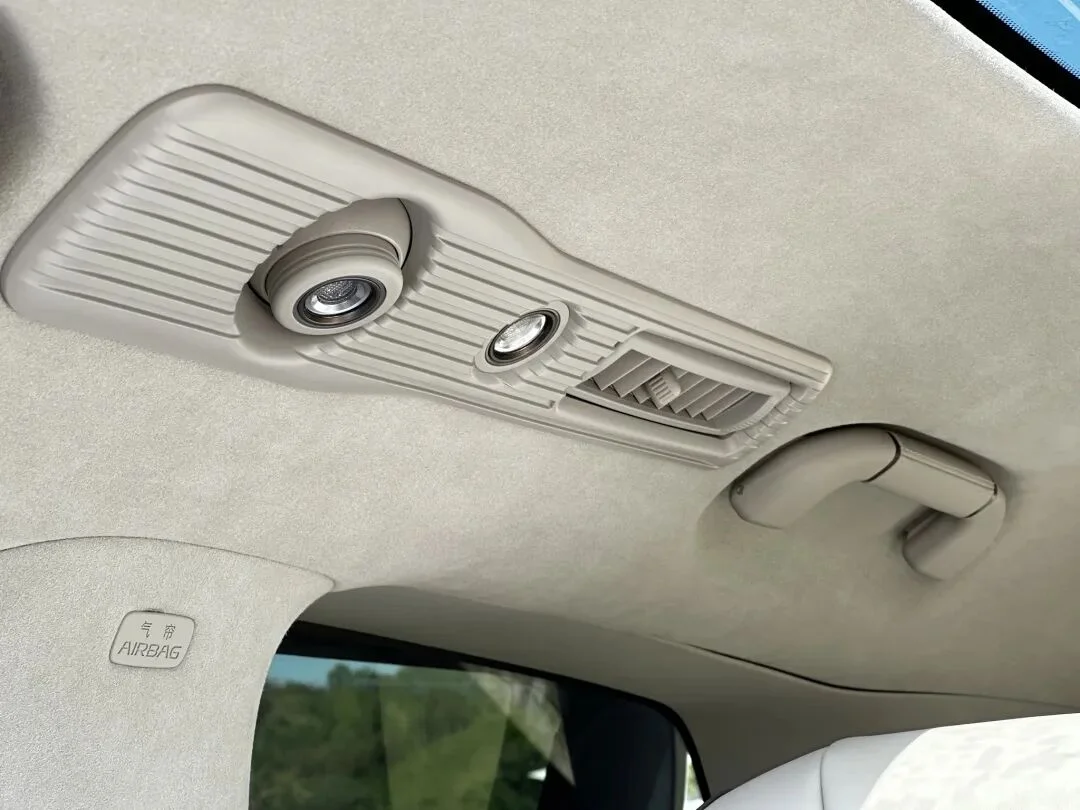
The third row does not skimp on comfort features, including independent air vents, directional reading lights with adjustable angles, and overhead grab handles.
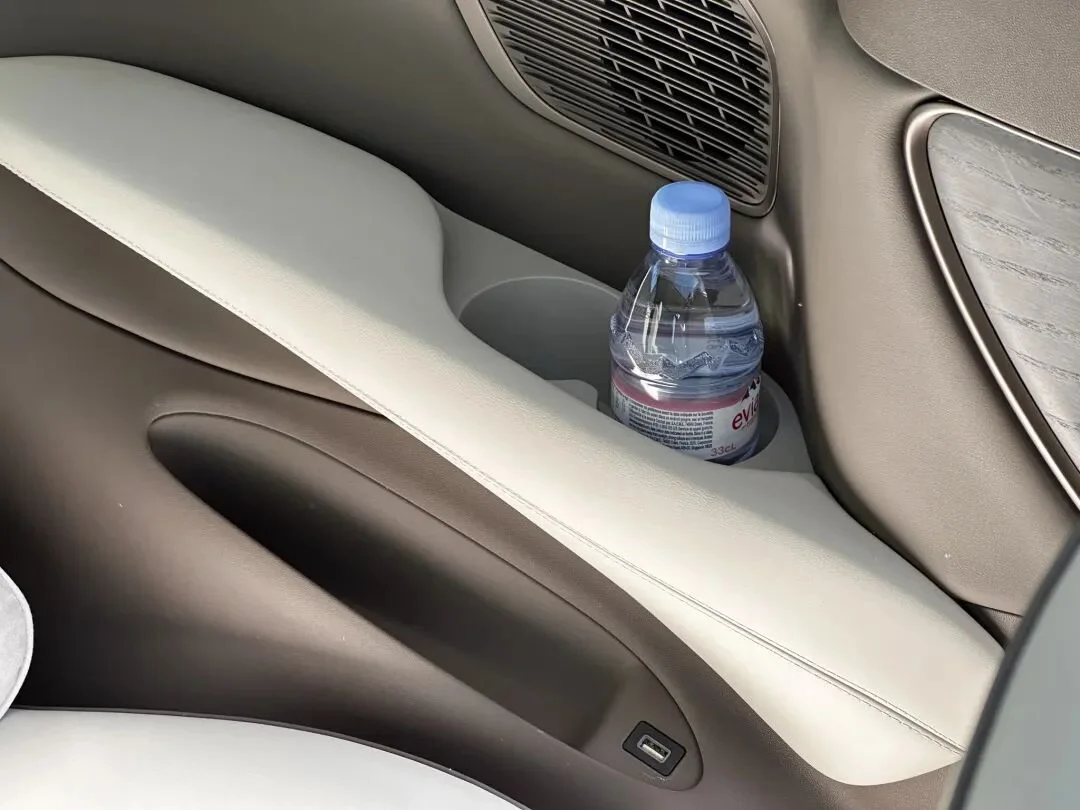
The third row features independent air vents, two cup holders on one side, a small storage compartment, and a USB-A port.
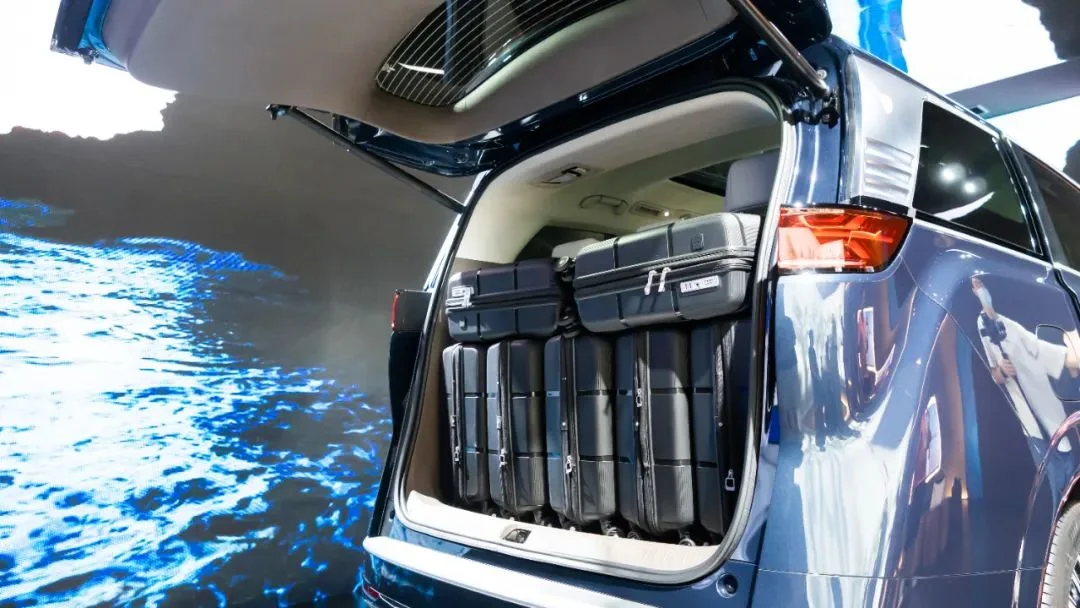
DENZA claims its cargo capacity follows a '7+7+7' rule: with all seven seats occupied, the rear can still hold seven 20-inch suitcases and seven backpacks. I witnessed this firsthand and was impressed, largely because the D9’s tailgate area is flat, allowing for neat stacking of such uniform luggage.
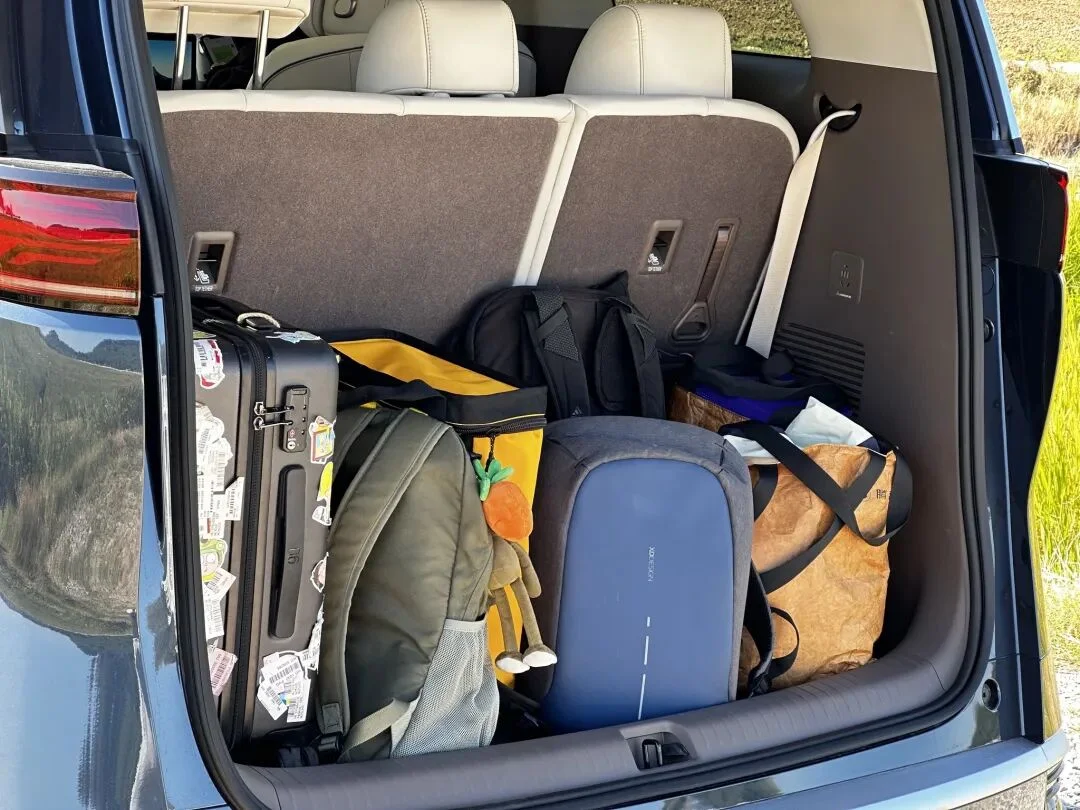
On that day, with the third-row seats reclined as far back as possible, we brought all of our companions' backpacks. It can be seen that the DENZA D9's trunk could still accommodate quite a bit, but since most of ours were soft-sided backpacks, the vehicle's height space was not actually utilized.
In terms of space, the DENZA D9 can certainly meet the travel needs of seven passengers plus their luggage, while also addressing comfort and convenience requirements for every seat.
In other words, if the family frequently travels with all seats occupied, the DENZA D9 is fully capable in terms of space and comfort. For business needs, however, the second row remains highly competitive in feature richness and absolute space.
03Catching Up to the Top Tier in Intelligence?
During a static review in Shanghai in early September, I was impressed by the infotainment system of the DENZA D9. I did not expect the DENZA team to elevate the software quality to the top tier.
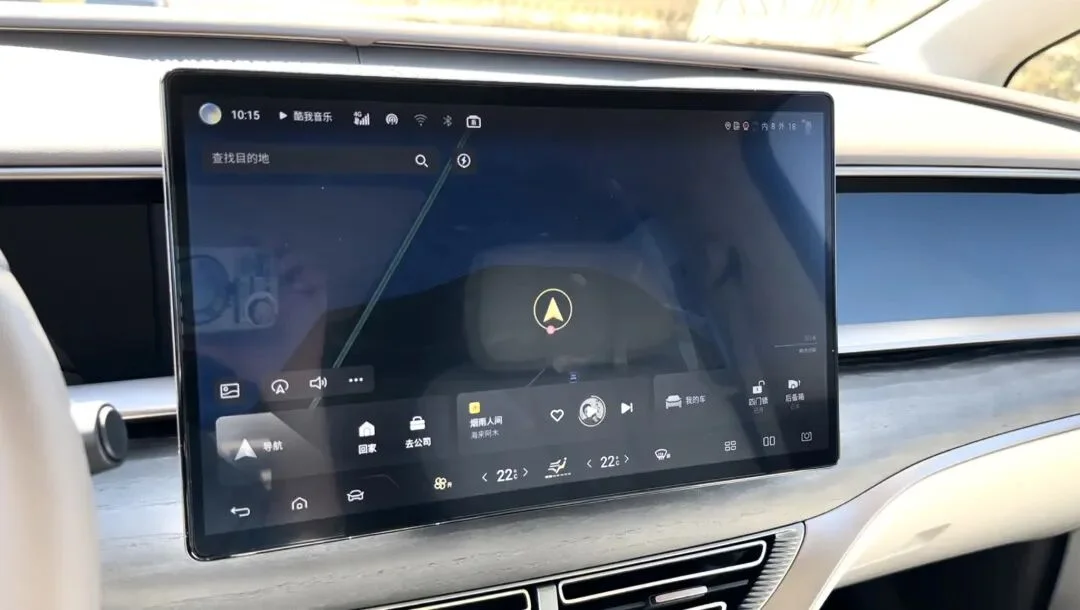
The main interface of the DENZA D9’s center console screen allows users to switch between navigation and a persistent wallpaper. When switching to other applications, navigation continues to display as a small floating window.
In terms of desktop widget layout, the DENZA D9 is similar to Huawei’s HarmonyOS infotainment system, supporting free placement of customizable widgets.
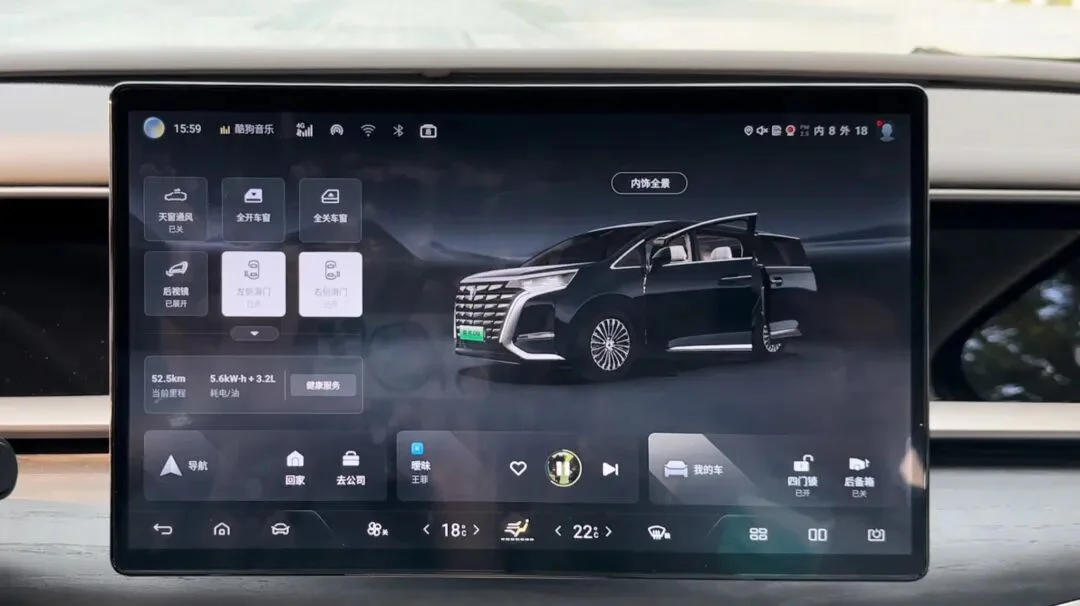
The modeling and rendering on this interface are smooth; my every swipe is fluid without lag. It not only supports real-time display of vehicle status, such as lights, windows, and doors, but also allows direct touch operations here, with the vehicle responding in real time.
Another surprising aspect is its voice capability. In terms of functional coverage, it is basically on par with Weixiaoli: DENZA Link supports full-scenario continuous dialogue (four-zone recognition), wake-free interruption within 20 seconds of effective dialogue, and ‘what you see is what you say.’
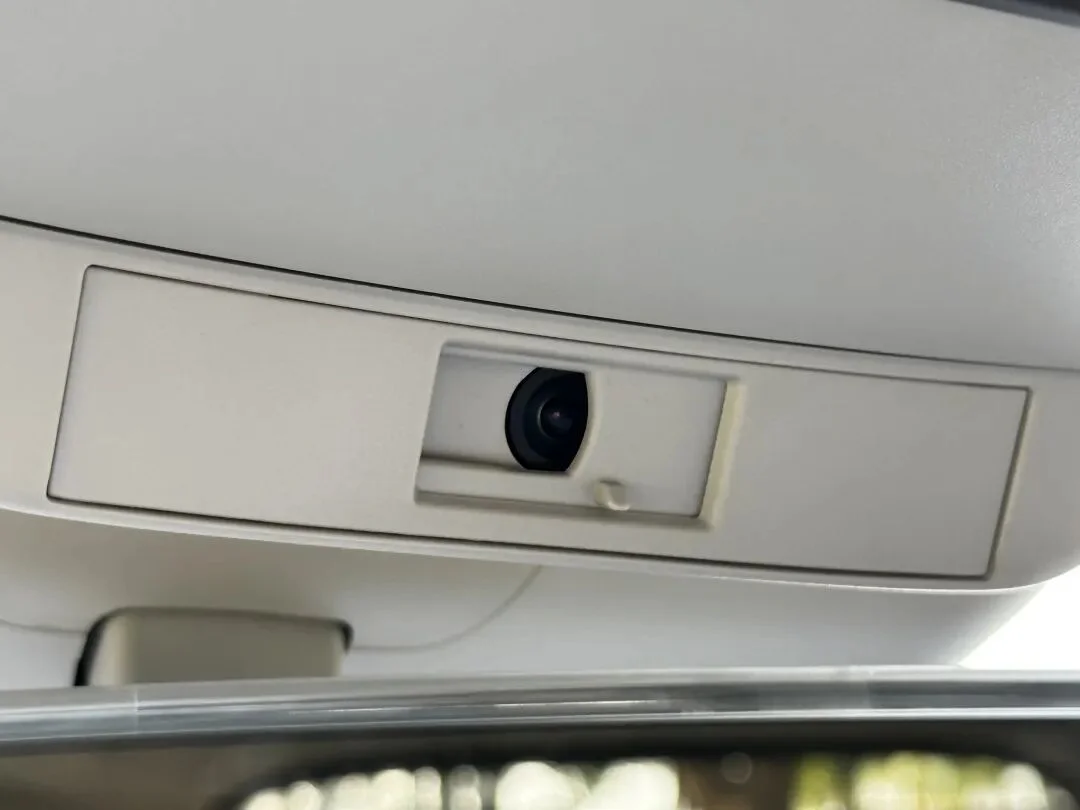
DENZA D9 gives me the impression of being deeply knowledgeable about smart features. Beyond the central infotainment system's functions and settings, it comes with a factory-installed cover for the interior camera.
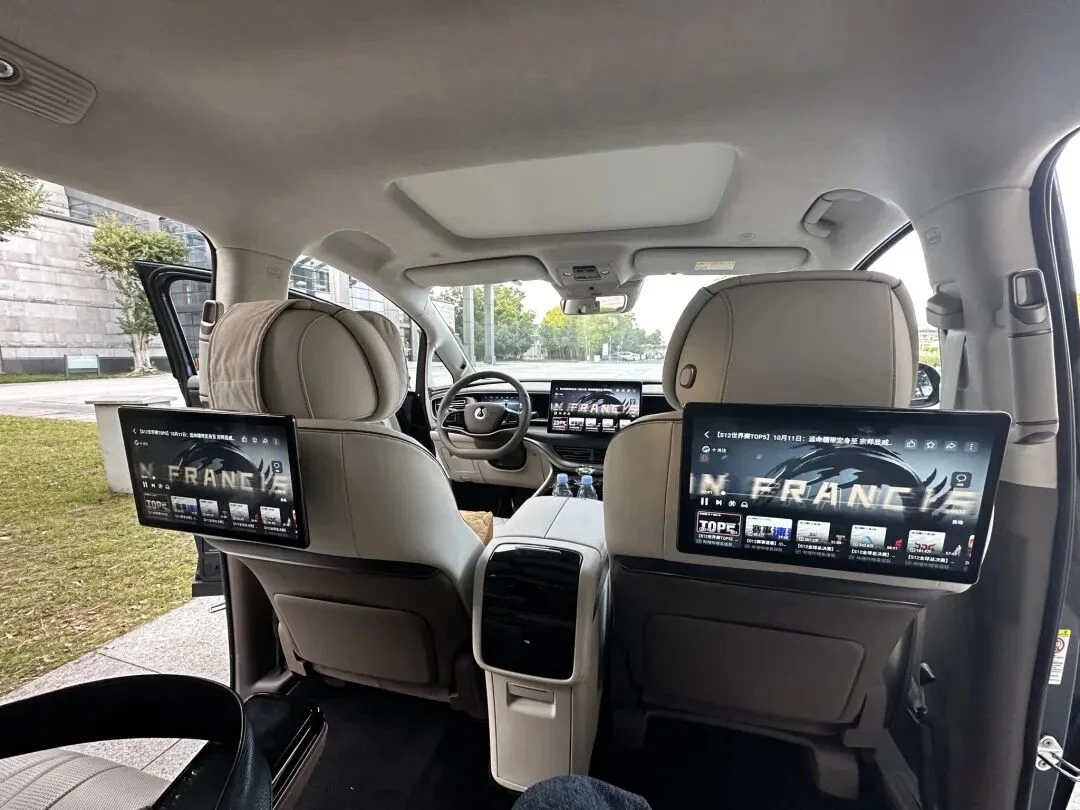
The core of DENZA's cabin intelligence lies not in the interaction logic or feature coverage of the central screen, but in the two 12.8-inch rear headrest screens. Like the Li L9, they support projection across all vehicle screens. However, unlike the L9, the DENZA D9 grants high authority to rear passengers.
For example, you can open navigation in the rear seat and send the destination directly to the central display, allowing the driver to follow your route. Additionally, audio sources in the rear can be switched between full-vehicle playback and single-screen mode.
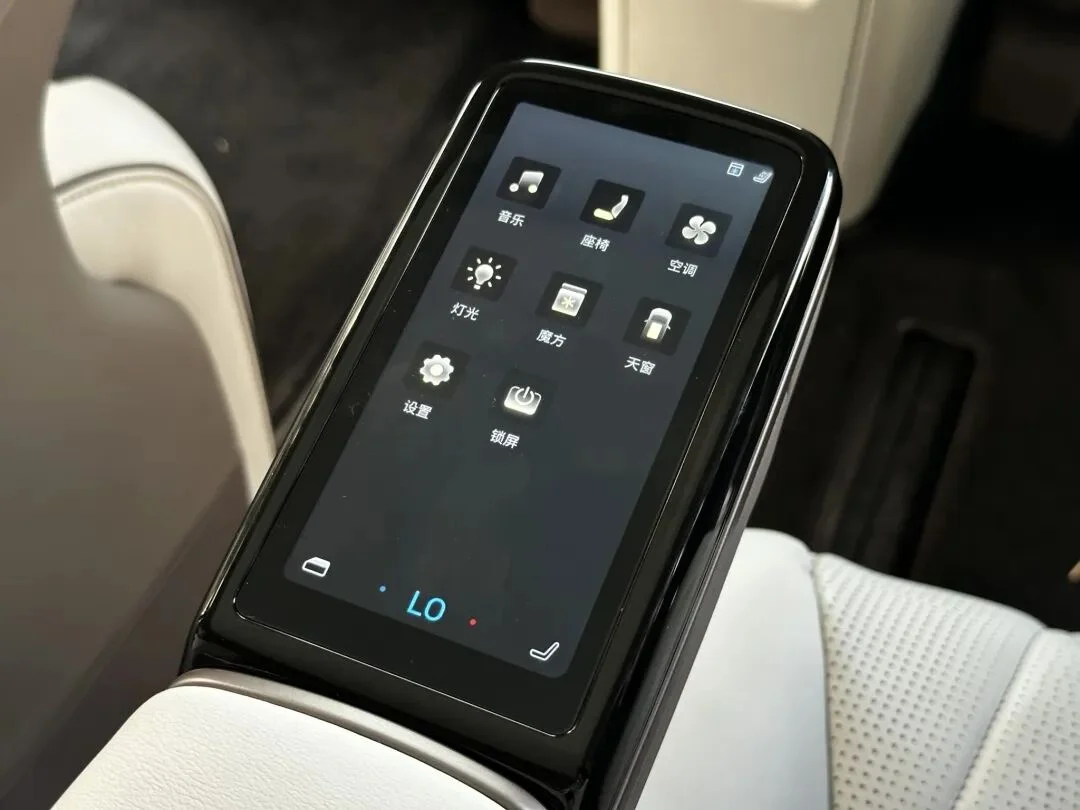
This high level of control is also evident in the second-row armrest screen, which allows you to manage the vehicle's lighting, sunroof, and frequently used seat settings.
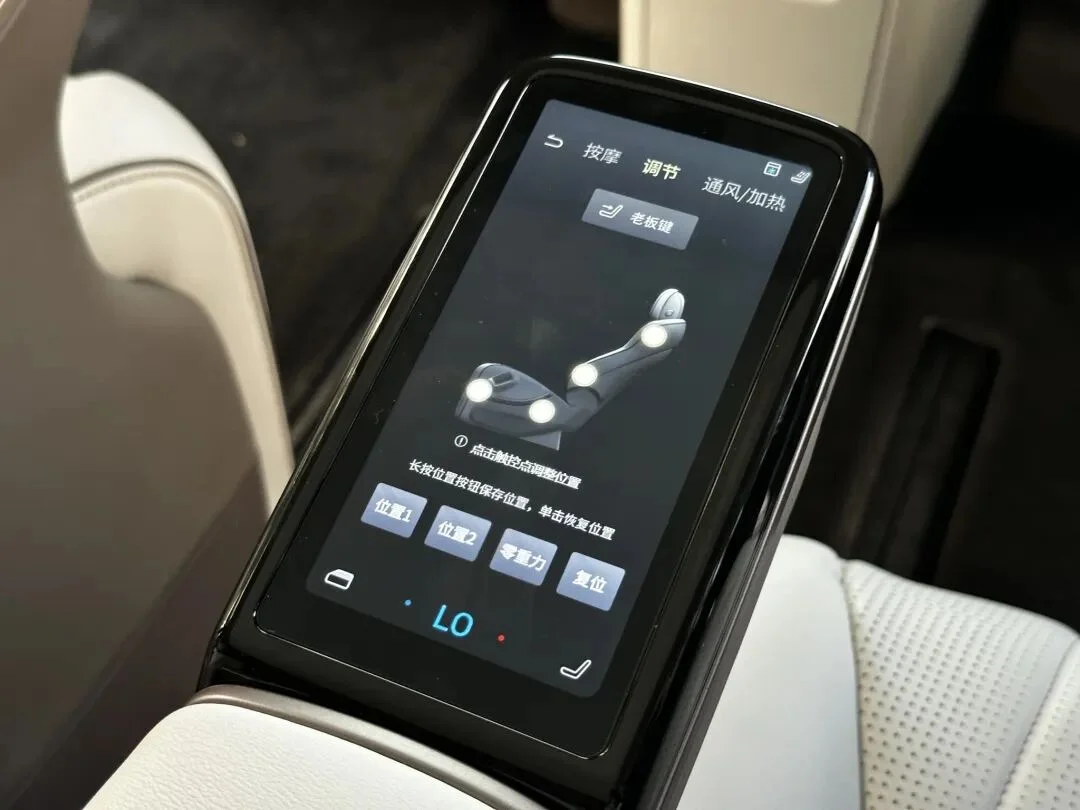
I initially struggled to understand the necessity of the second-row armrest screen, suspecting it was merely a flex by DENZA. However, after actual use, I realized its existence serves two essential purposes:
One reason is that the rear seat features are so extensive that adding physical buttons would make the interface overly cluttered.
Additionally, when I adjusted the seat far back, operating without an armrest screen required reaching under the seat or to the headrest display; the addition of the armrest screen made operations more convenient and elegant.
Hardware accounts for three parts, tuning for seven. In the area of cockpit intelligence, DENZA chose the Qualcomm 7325 chip, which corresponds to the smartphone 778G chip; it is undoubtedly a mid-range product line. However, in actual experience, the effect achieved by DENZA on the 7325 is no less impressive than what many manufacturers achieve with the 8155.
With this in mind, I am increasingly looking forward to the surprises that future OTA updates will bring to the DENZA D9.
The reasons for adopting the 7325 chip are also comprehensive. First, it considers chip supply stability; the 7325 delivery is more reliable, ensuring vehicle delivery schedules. Additionally, DENZA officials stated that the 8155 is not significantly more advanced; rather, the two products belong to different ecosystems, requiring distinct approaches to provide users with 5G support and more comprehensive service. The 7325 offers better image recognition capabilities and broader compatibility with the Android ecosystem.
To drive the rear screens in higher-trim models, DENZA added two extra chips, each supporting one of the rear screens.
It is somewhat regrettable that the test vehicle did not have the driver assistance features enabled.
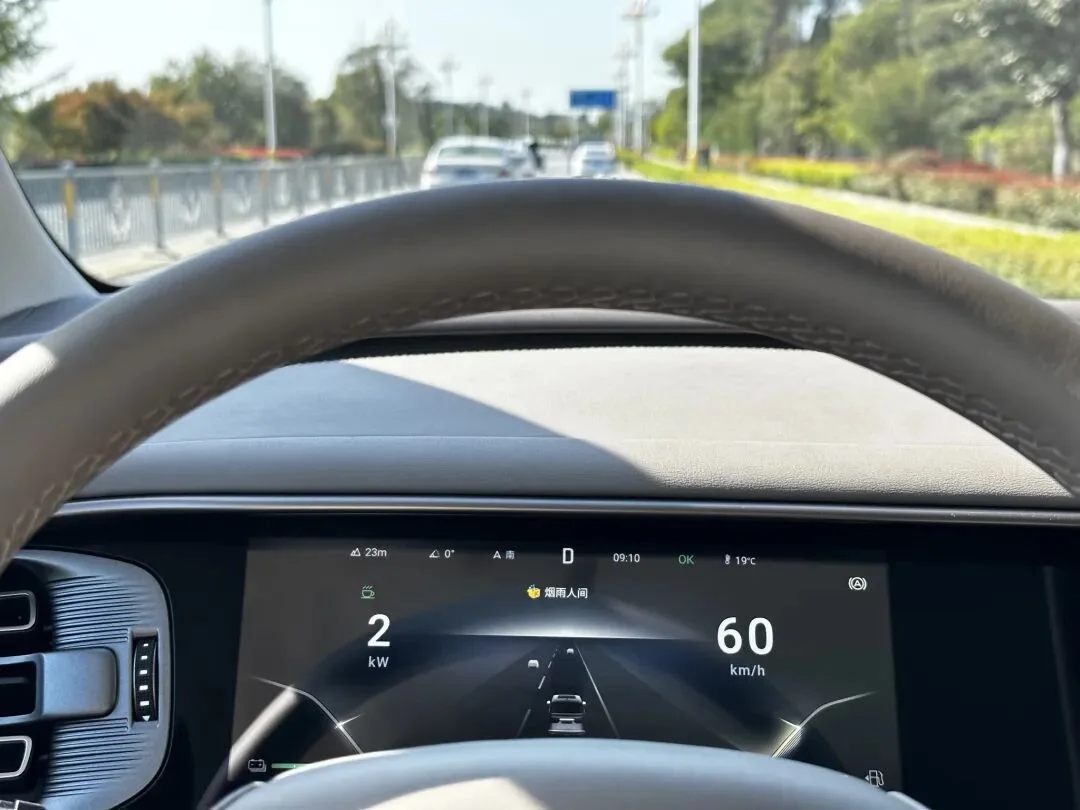
However, we can gain a preliminary understanding of the DENZA D9’s perception capabilities from its visual interface: it clearly identifies lane markings and vehicles ahead and to the side.
04Is It Worth RMB 400,000 to Drive?
The version I tested was the DM-i 970 Four-Wheel-Drive Flagship, priced at RMB 439,800. The overall driving impression was brisk and stable.
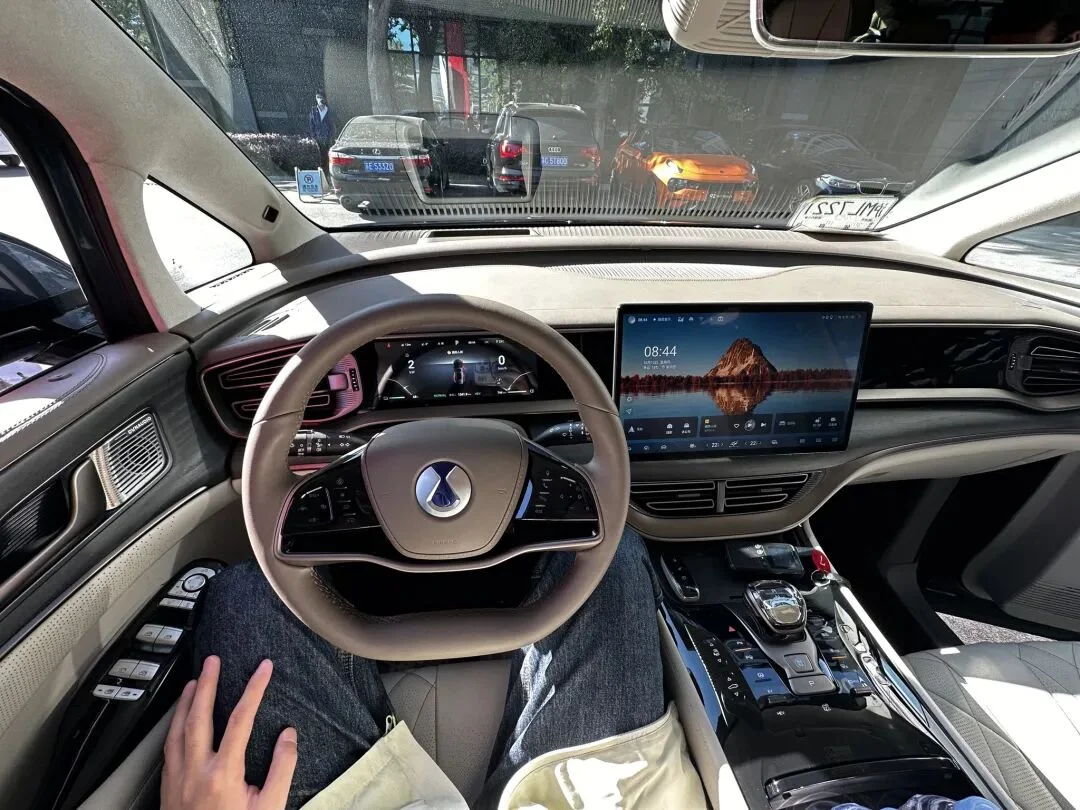
First is the driving posture. Due to the body style of MPVs, it is often difficult to judge the exact position of the front end. The A-pillars are also quite wide, but the DENZA D9 features a small triangular window at the A-pillar, significantly reducing blind spots.
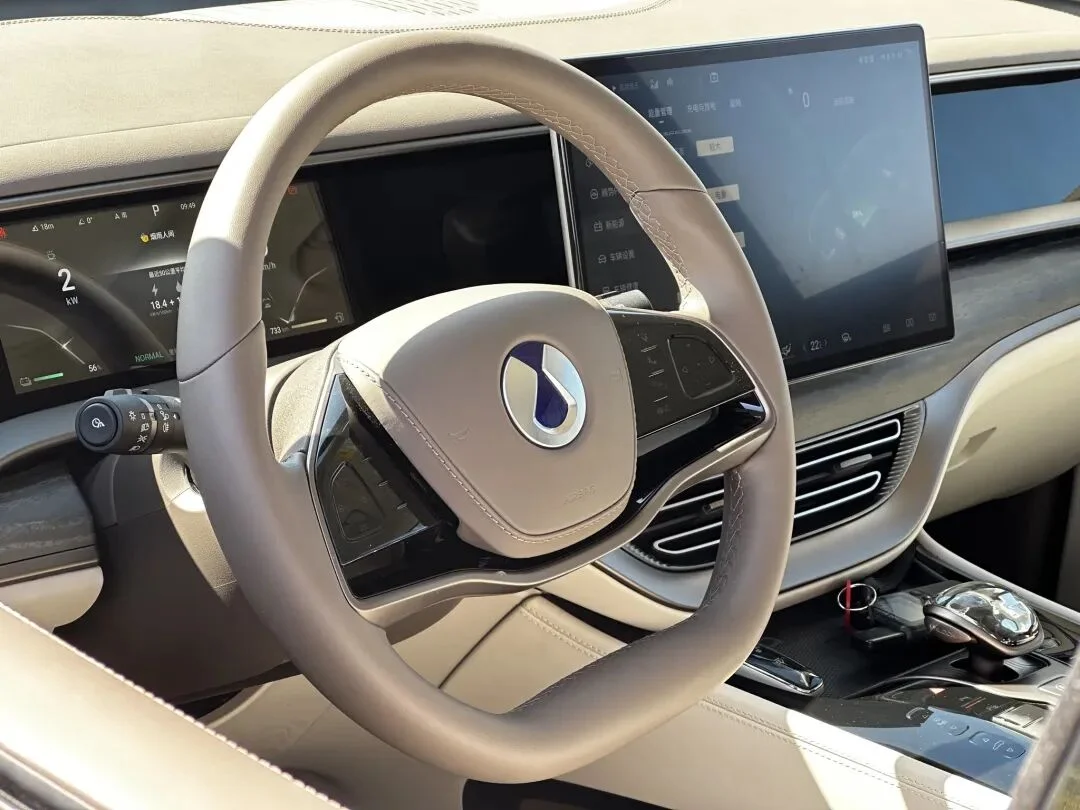
The steering wheel has a minimalist design but offers an excellent grip; I particularly appreciate its substantial feel. It also features recessed sections at the nine o’clock and three o’clock positions, allowing the web of the thumb to fit snugly.
The steering damping is substantial without being overly heavy. Additionally, there is some dead zone in the first few degrees of left and right turns. Overall, this allows the driver to sense that the vehicle is not a compact car.
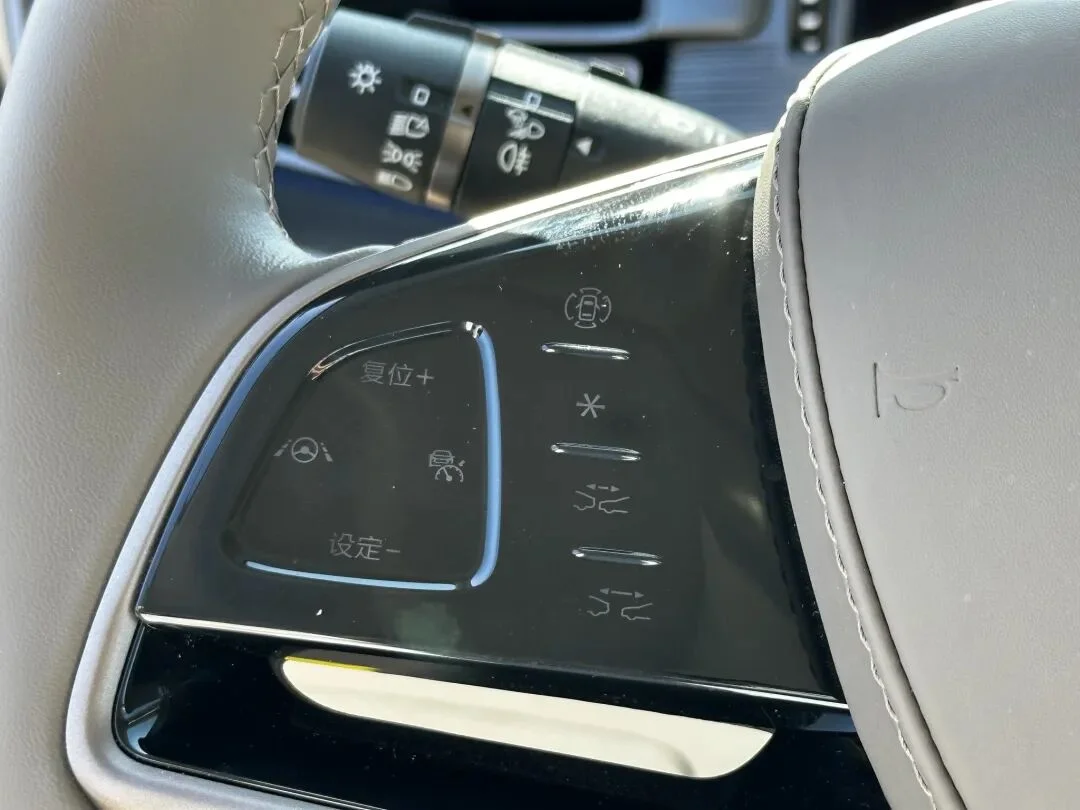
However, the backlighting on the steering wheel buttons is not prominent enough in bright sunlight; DENZA has stated that this will be optimized and upgraded in a future update.
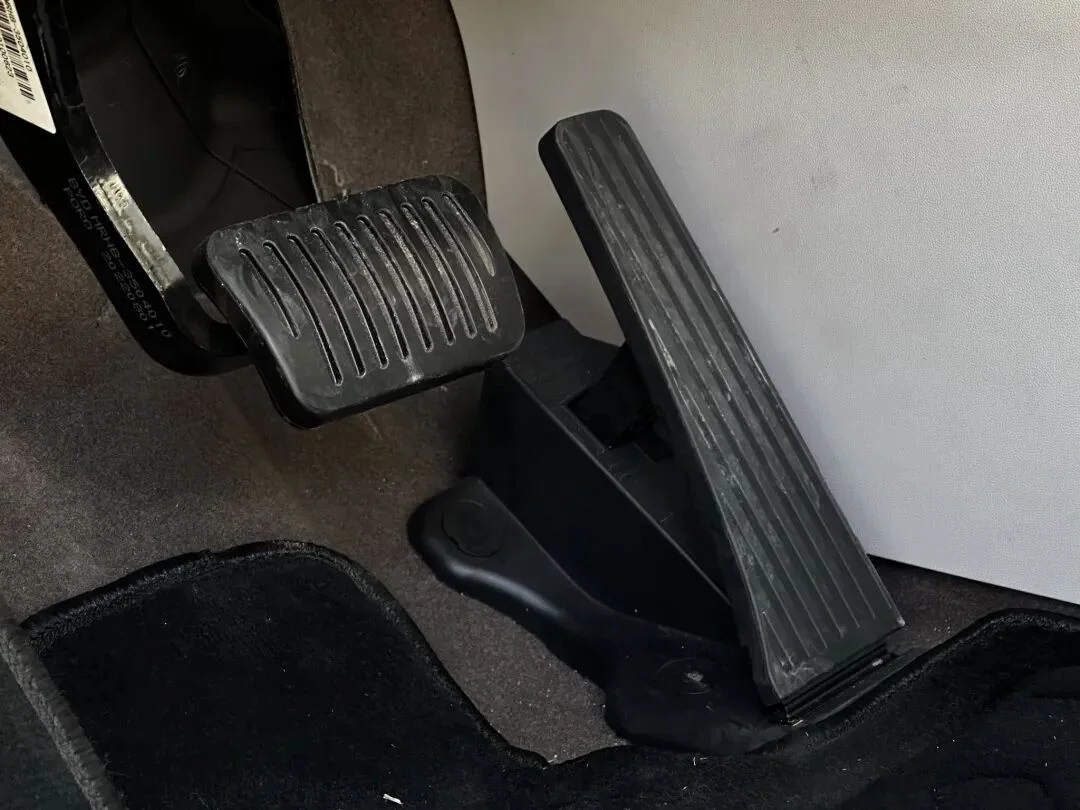
The damping and response of the accelerator pedal are tuned for comfort. After all, the test vehicle we drove has a curb weight of 2,665 kg, making it the heaviest model in the DM-i system.
A 7.9-second acceleration time is sufficient for an MPV, as power delivery prioritizes smoothness—a strength of the DM-i system.
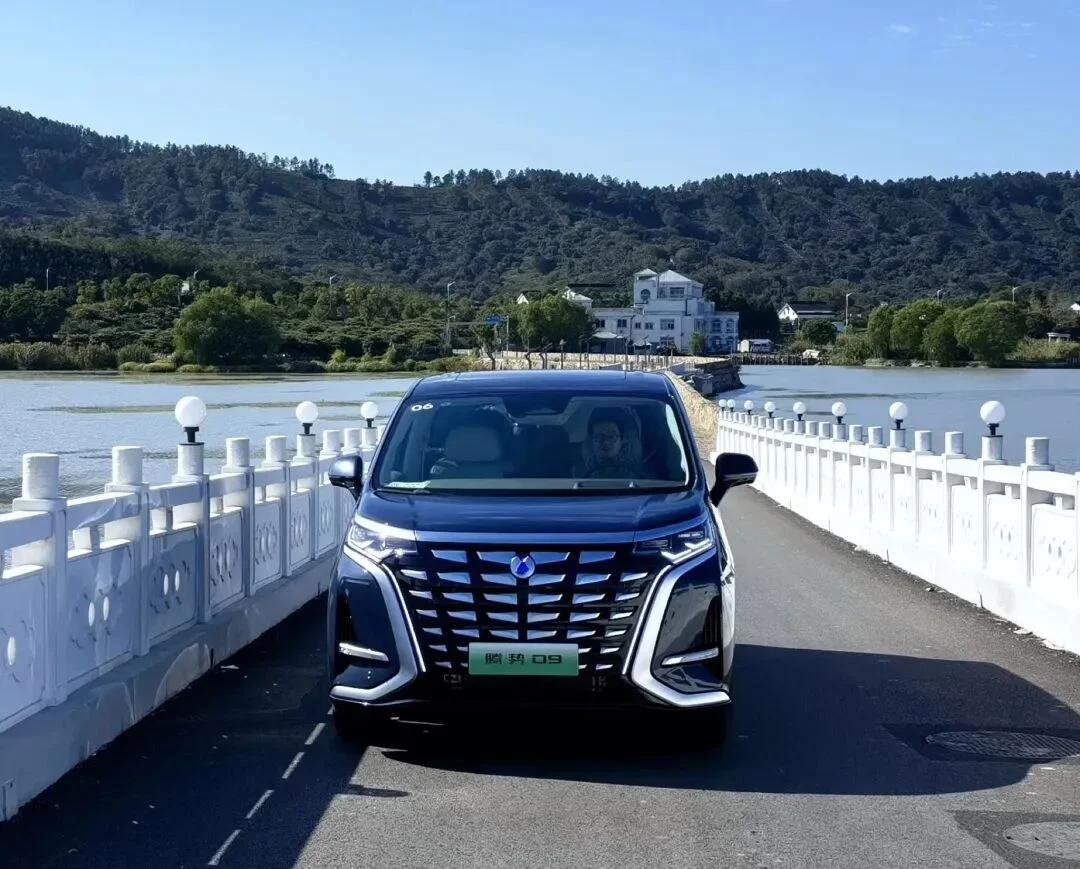
Throughout the entire day of driving, even in depleted battery mode, the DENZA D9’s power delivery remained consistently linear, with no hesitation or jerkiness.
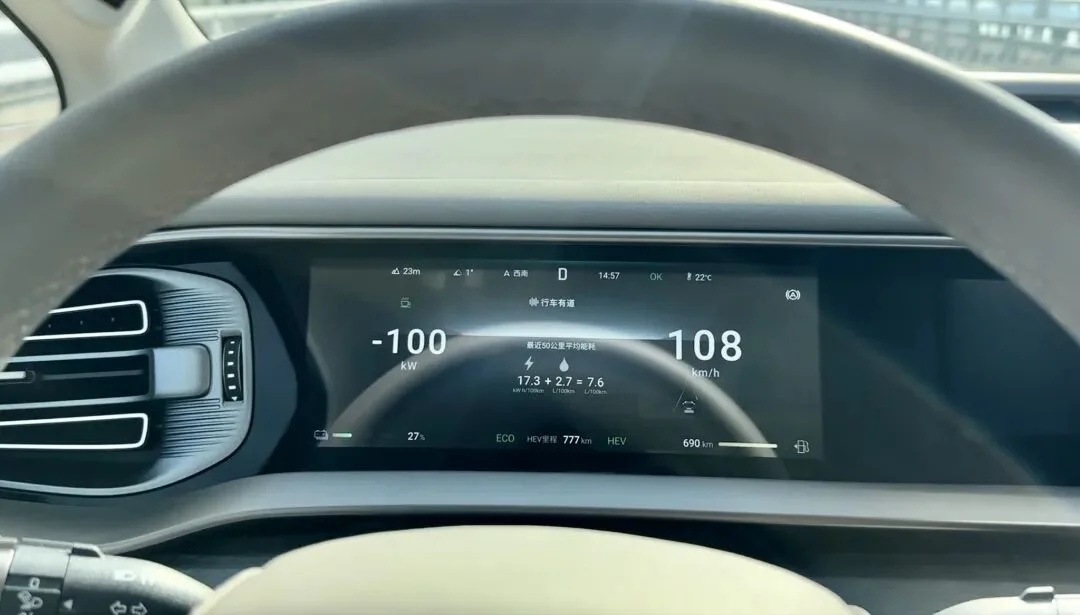
During my one-day test drive, I also noticed an interesting detail: the displayed maximum regenerative braking power of the DENZA D9 is 100 kW.
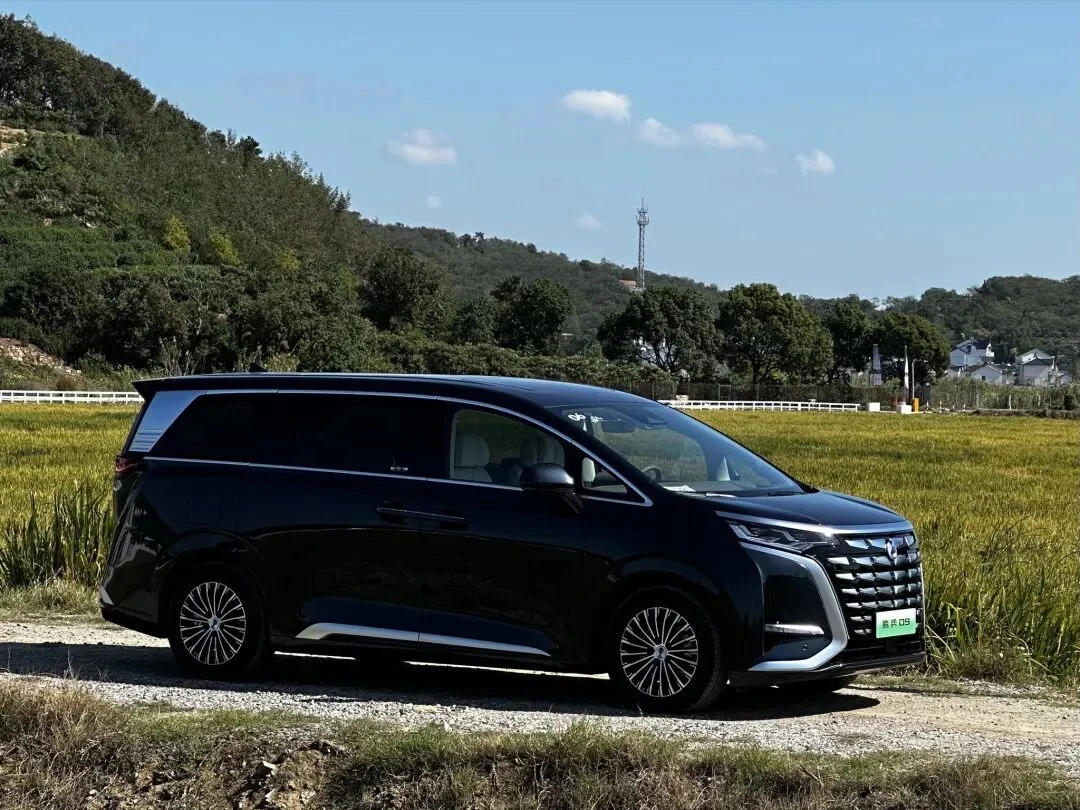
The DENZA D9 features a front MacPherson and rear multi-link suspension setup, equipped with DiSus-C. This system automatically adjusts damping based on road conditions, providing effective control over vertical movements such as body pitch, roll, brake dive, and acceleration squat.
In terms of actual feel, the D9’s suspension indeed offers a strong sense of isolation. It filters out fine vibrations, such as those from gravel roads. However, when encountering speed bumps, the rebound of the front suspension damping shows slight delay.
Vibration insulation and noise levels degrade from the first row toward the rear. Nevertheless, the overall NVH performance is quite good. Thanks to this excellent noise and vibration handling, all passengers in the rear were sound asleep in a relaxed, reclined posture during my test drive.
From the perspectives of powertrain and NVH, I believe the DENZA D9 can justify its RMB 400,000 price tag. In contrast to this RMB 400,000 price point, what stands out is its exceptionally low fuel consumption.
How about energy efficiency?
As mentioned earlier, the test vehicle had a curb weight of 2,665 kg, making it the heaviest model in the DM-i lineup. Therefore, I was very curious about how this powertrain performs in terms of energy efficiency within the DENZA D9.
The test drive schedule was tight, so I only conducted two measurements:
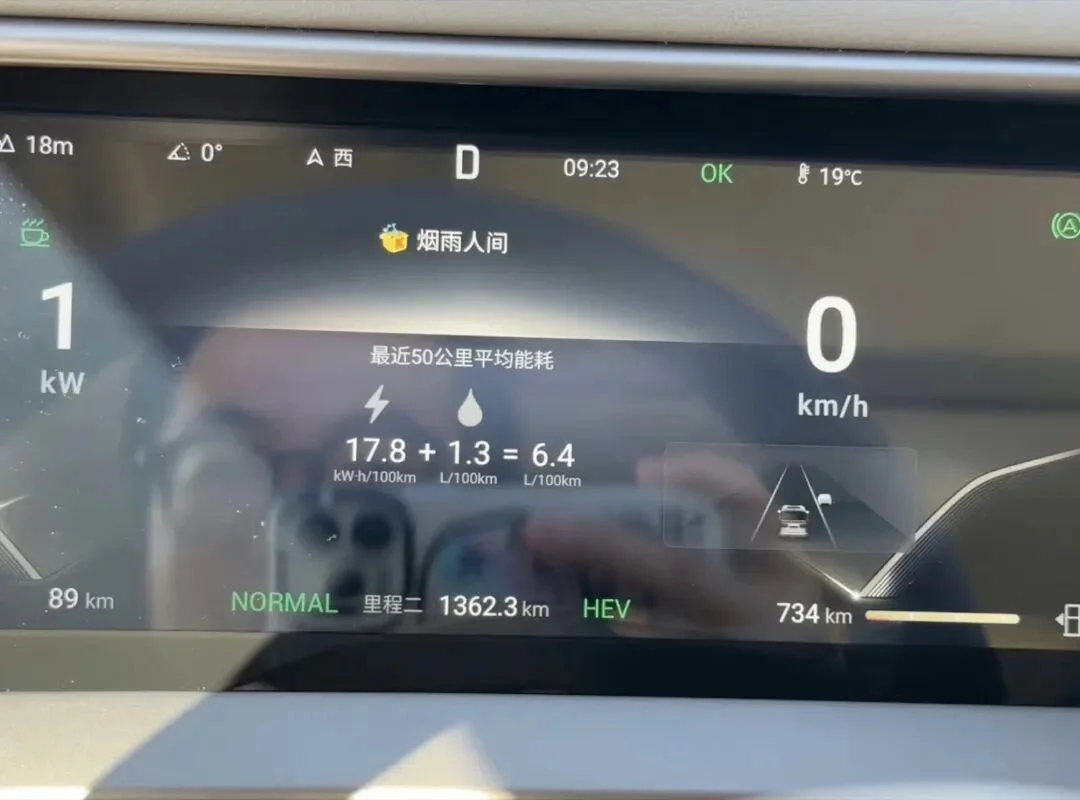
In HEV mode with intelligent battery preservation enabled, the DENZA D9 achieved a fuel consumption of 6.4 L/100 km over a 20 km trip (air conditioning set to 22 °C on level 2, two occupants);
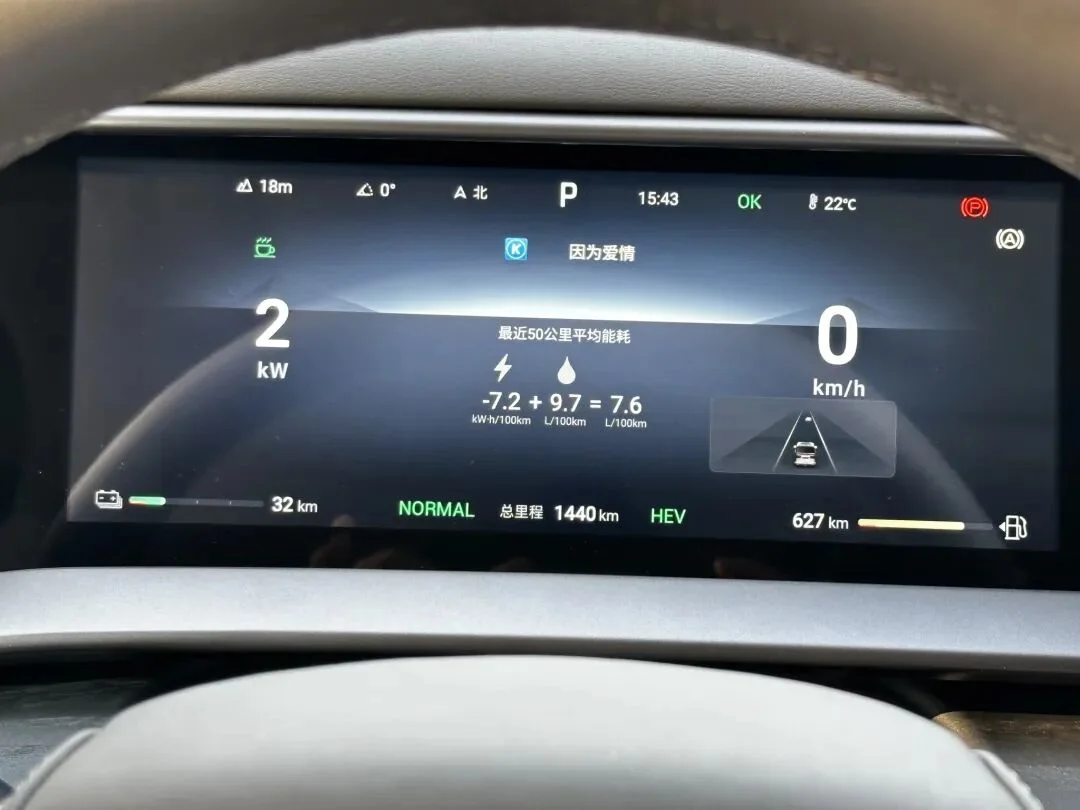
Under fully depleted battery conditions, this vehicle weighing over 2.6 tons recorded a fuel consumption of 7.4 L/100 km after traveling 20 km (air conditioning at 22 °C on level 2, four occupants plus luggage).
It should be noted that the model tested here is not the final production version in terms of powertrain tuning; once we receive the production version, we will conduct a comprehensive review following the 42Test protocol.
05Why Was the MPV the First Vehicle After the DENZA Brand Refresh?
I had previously answered why the first car after the DENZA brand refresh was an MPV, but before setting out for the D9 test drive, I began rethinking this question and now have a deeper answer.
The Domestic MPV Market Is Growing
DENZA forecasts that the MPV market segment priced above RMB 300,000 will reach a volume of 450,000 units this year.
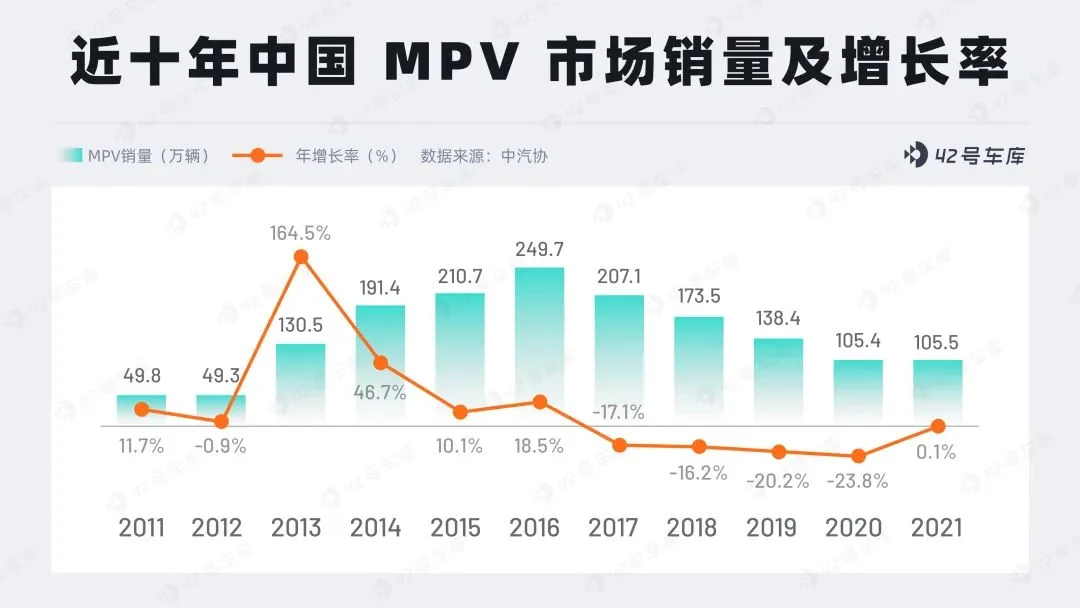
Looking solely at last year’s MPV market data from the China Passenger Car Association (CPCA), retail sales for MPVs priced above RMB 200,000 reached 391,029 units, a year-on-year increase of 23.8%. This significantly outpaced the overall passenger vehicle market growth rate of 6.5%, indicating very optimistic demand growth in the mid-to-high-end MPV segment.
Examining the relatively mature U.S. market as a benchmark, MPVs account for 1.45% of total auto sales. Although MPVs make up 5% of China’s total auto sales, this figure includes a large number of entry-level models such as the Wulinghongguang. If we apply the 1.45% ratio to China’s mid-to-high-end MPV sales, the market size would be approximately RMB 120 billion.
In short, the incremental space in this market is currently the largest among all vehicle categories.
A Monopoly by Japanese Brands
The mid-to-high-end MPV market is almost entirely monopolized by Japanese brands. As mentioned earlier, the Toyota Alphard currently commands a terminal price premium of two hundred thousand to three hundred thousand RMB, while the Leikesasi LM, built on the same platform, sees premiums reaching as high as eight hundred thousand RMB. From a market perspective, this demonstrates extremely strong consumer demand for high-end MPVs.
However, the reverse also reveals a harsh reality: it is extremely difficult for this segment of consumers to develop a strong sense of identification with the high-end social attributes of the brand and the product itself.
In recent years, the sweeping wave of electrification has broken and reshaped all entrenched conventions. Moreover, in mainstream segments such as SUVs and sedans, numerous products from Chinese automakers have already achieved sales volume surpassing that of competitors.
A Missing Segment in BYD's Lineup
Looking at BYD's current product lineup, it already covers all categories of compact to mid-size large SUVs and sedans, with price points filling out the spectrum completely.
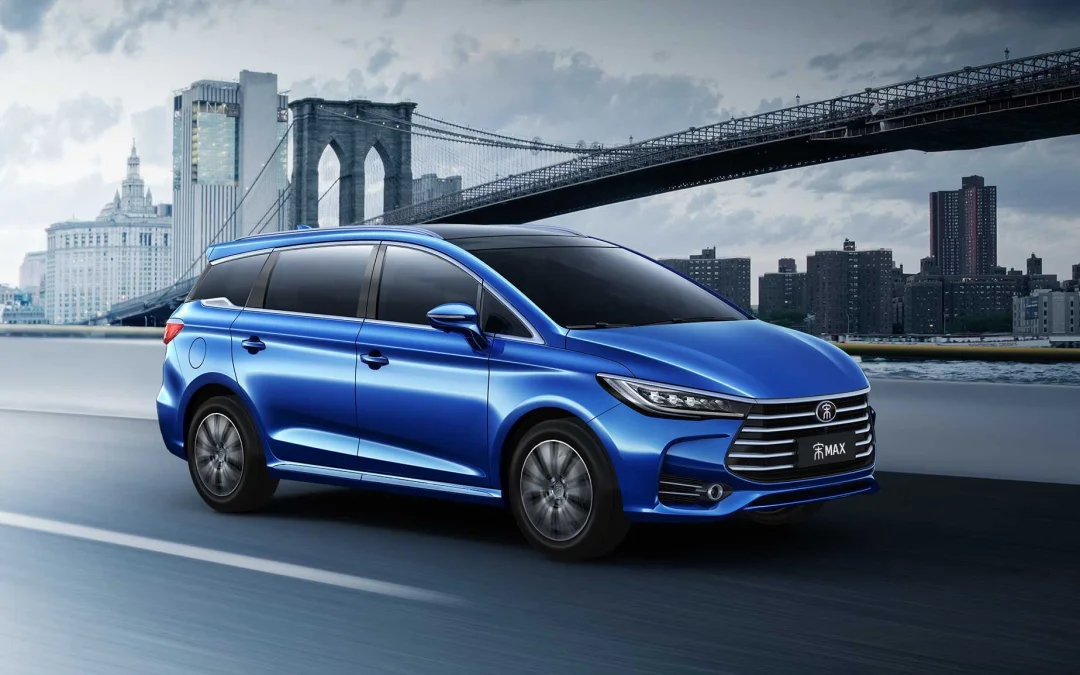
However, among its current vehicle series, BYD only has one MPV priced between RMB 140,000 and RMB 170,000—the Song MAX, which is specifically targeted at the family market.
In other words, within the entire BYD product sequence, there is a lack of a product capable of truly establishing itself in the high-end MPV market.
Are the Differences Between Large SUVs and Large MPVs Significant?
We have long observed that consumers are becoming less attached to rigid vehicle categories. When choosing a car, buyers no longer limit themselves strictly to SUVs, sedans, or MPVs; instead, they select products from the market based on their specific usage needs.
This has led to an overlap between large MPVs and large SUVs among consumers whose primary requirement is interior space, effectively turning them into competitors.
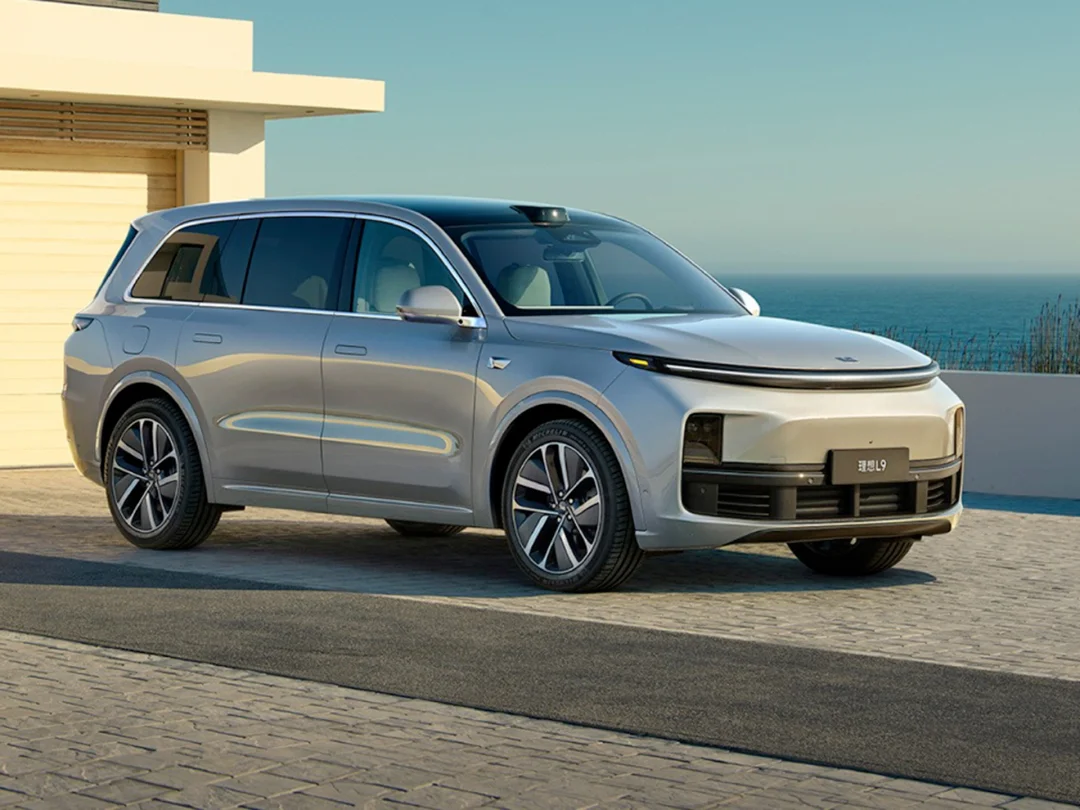
In fact, training materials at some DENZA dealerships list the Li L9 as a competitor to the DENZA D9. I have also frequently referenced the Li L9 in previous comparisons of dimensions and intelligent features.
I plan to conduct field investigations at both Li Auto and DENZA dealerships to examine this trend further. Readers can look forward to those findings.
06Conclusion
Before the test drive, DENZA released data showing that 62% of DENZA D9 orders came from family users, while 38% were for business use.
DENZA officials expressed surprise at this 'family-focused over business-focused' ratio, noting they did not anticipate such strong interest from the consumer (C-end) market.
"High but not aloof" is the phrase Zhao Changjiang, General Manager of DENZA's Sales Division, uses to describe it. This expression conveys both a sincere commitment to maximizing value for money and a humble approach to service.
Beyond competing on specifications in the product itself, I see much independent thinking from DENZA after its separation in the D9, such as its cockpit intelligence performance, which surprised me.
The continuous upward push by Chinese brands rests not only on a robust and complete automotive industry but also on a clear grasp of product definition and strategic planning by leadership for long-term brand development. This is what "high but not aloof" means.
Written by: Liu Guangding Edited by: Liu Guangding