


Huawei's Falcon: How Richard Yu Unified Smart Driving to Rescue AITO
The attitude we hold toward Huawei is 80% learning, 20% respect, and 0% complaint.
During the earnings call following the third-quarter financial report, Li Auto CEO Xiang Li used these words to express his humility in facing competition from Huawei, even though Li Auto had just reported its best financial results since going public.
Indeed, in this automotive technology revolution driven by electrification and intelligence, the Chinese auto industry has never felt the influence of tech giant Huawei as acutely as it does today, nor has it ever given it such due attention and reverence.
Especially at the end of November, when Huawei chose to spin off its smart vehicle solution business into a new company, the entire automotive sector was stirred up with significant public discourse while truly recognizing and acknowledging the important role Huawei will play in this round of technological transformation in China's auto industry.
It can be said that Huawei currently enjoys unparalleled prominence and strong momentum in the automotive circle.
However, for Huawei, possessing such momentum is not taken for granted—in fact, before reaching its current height, Huawei experienced a long period of painful and arduous trekking and exploration within the automotive industry.
01Richard Yu's Immense Pressure
In early February 2023, an image closely linked to Huawei’s Intelligent Automotive Solution business went viral online, sparking widespread speculation.
In the photo, Richard Yu, then Executive Director of Huawei and CEO of the Consumer BG and the Intelligent Automotive Solutions BU (hereinafter referred to as the 'Auto BU'), is seen touring a new AVATR vehicle alongside Tan Benhong, Chairman and CEO of AVATR Technology. Also present was Xu Zhijun, Rotating Chairman of Huawei.
Notably, this marked the first time Xu Zhijun and Richard Yu appeared publicly together at an event related to Huawei’s automotive solutions business.
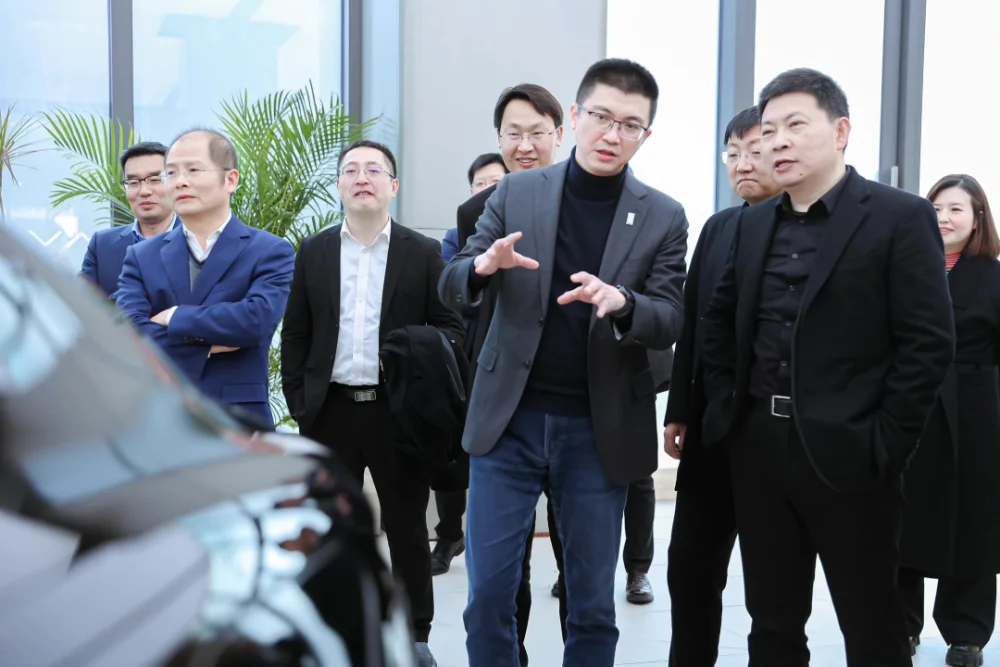
In fact, concurrent with the spread of this image was significant news regarding a major personnel change within Huawei’s Auto BU: Wang Jun was suspended.
Reports of Wang Jun’s suspension had been circulating online for some time before the photo emerged. Some analysts attributed the move to the HI model business, which he oversaw, failing to meet expectations. However, following the exposure of the aforementioned photo and sporadic responses from Huawei insiders via media channels, the report of Wang Jun’s suspension gained credibility. This personnel adjustment was widely interpreted by outsiders as a sign that Richard Yu could finally assume comprehensive management control over the various business segments of the Auto BU.
However, viewed against the broader context of the time, this seemingly favorable personnel shift for Richard Yu actually amplified the immense pressure he had long endured due to Huawei’s automotive-related activities to its peak.
The reason was that at the time, both the HI model aggressively promoted by Huawei’s Auto BU and the Smart Selection model personally driven by Richard Yu were performing exceptionally poorly.
Let’s start with the HI model.
In May 2022, after more than a year of repeated delays, the first vehicle to adopt the HI model, the Jihu Alpha S Huawei HI Edition, was officially launched. However, since deliveries began in July 2022, it has remained largely unnoticed. Jihu has never publicly disclosed sales figures for this model; instead, reports emerged of losses, and by January 2023, it had achieved a dismal sales volume of just 400 units.
Another model adopting the HI mode, the AVATR 11, was released in August two thousand twenty-two but did not begin deliveries until December of that year. By February five, two thousand twenty-three, AVATR 11 deliveries had surpassed two thousand units—a slightly better situation than the Jihu Alpha S Huawei HI Edition, but clearly insignificant compared to the massive investments made by Huawei’s Car BU under the HI mode and the resulting substantial losses. Eventually, Guangqi even abandoned its cooperation with Huawei under the HI mode, opting for other partnership approaches.
However, compared to the HI model, the smart selection car model, which Richard Yu has consistently championed, has placed greater pressure on him personally.
The reason is that AITO, which operates under the smart selection model, initially struggled with overall sales performance.
Actually, AITO’s early performance was quite promising. After the rapid delivery and ramp-up of its first model, the AITO M5, in March 2022, the brand’s sales surged past ten thousand units in August following the launch of the AITO M7, reaching a new high of 12,018 units in October.
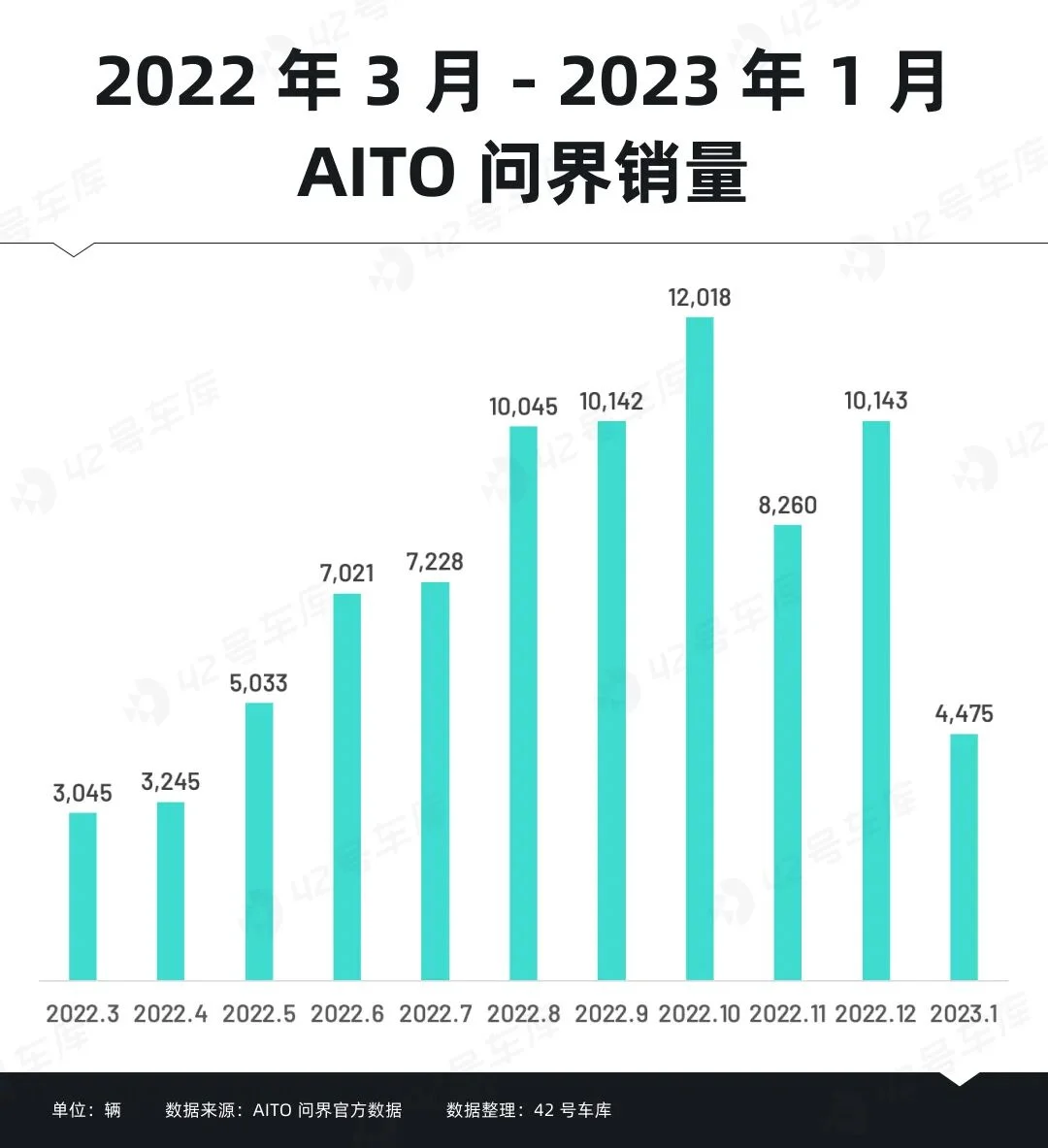
However, the situation began to change in November. For various reasons, AITO’s sales in that month saw a month-on-month decline of 31.37%. That same month, a crash test report released by C-IASI revealed issues with the AITO M7, sparking external doubts about the quality of the AITO series. Although deliveries of the AITO series again exceeded 10,000 units in December, many observers believed this was merely a year-end push to meet targets following the expiration of new energy vehicle subsidies in 2022, rather than a reflection of the AITO brand’s true market performance.
By early 2023, AITO’s situation was deteriorating. In January 2023, sales hit an unprecedented low of 4,475 units, a month-on-month drop of more than 50%, effectively halving the previous month's figures. Amid this slump, the brand’s reputation plummeted, and external commentary grew increasingly pessimistic.
At this juncture, all pressure fell on Richard Yu.
On one hand, although Huawei’s HI (Huawei Inside) model had long been executed and advanced by Wang Jun, he reported to Richard Yu before his suspension. As CEO of Huawei’s Vehicle Business Unit (BU), Richard Yu bore responsibility for its financial losses.
On the other hand, under the Smart Selection vehicle model, Richard Yu had publicly championed both the model and the AITO brand, leveraging capabilities from both Huawei’s Vehicle BU and Consumer BG in areas such as vehicle definition, sales, and channel management. Consequently, AITO’s poor sales performance at the beginning of 2023 could easily be interpreted as a sign of Richard Yu’s inadequacy, inviting further scrutiny.
So, in early February 2023, when Richard Yu stood alongside Xu Zhijun to support AVATR, he was actually facing immense pressure. How to break through the business and sales predicament at that time became a critical issue Richard Yu had to confront.
02Breaking Through the "Invisible Wall"
Richard Yu quickly took the key step to break the deadlock.
On February 25, 2023, witnessed by Richard Yu and Zhang Xinghai, SERES and Huawei signed a Joint Business Deepening Cooperation Agreement in Shenzhen. Under the agreement, the two parties decided to collaborate on a new platform, with the first flagship model under this platform featuring an advanced intelligent driving system.
Meanwhile, in the co-developed models, Huawei's consumer devices will leverage their strengths in intelligence, digitalization, and user experience design, including advanced autonomous driving capabilities and the HarmonyOS cockpit.
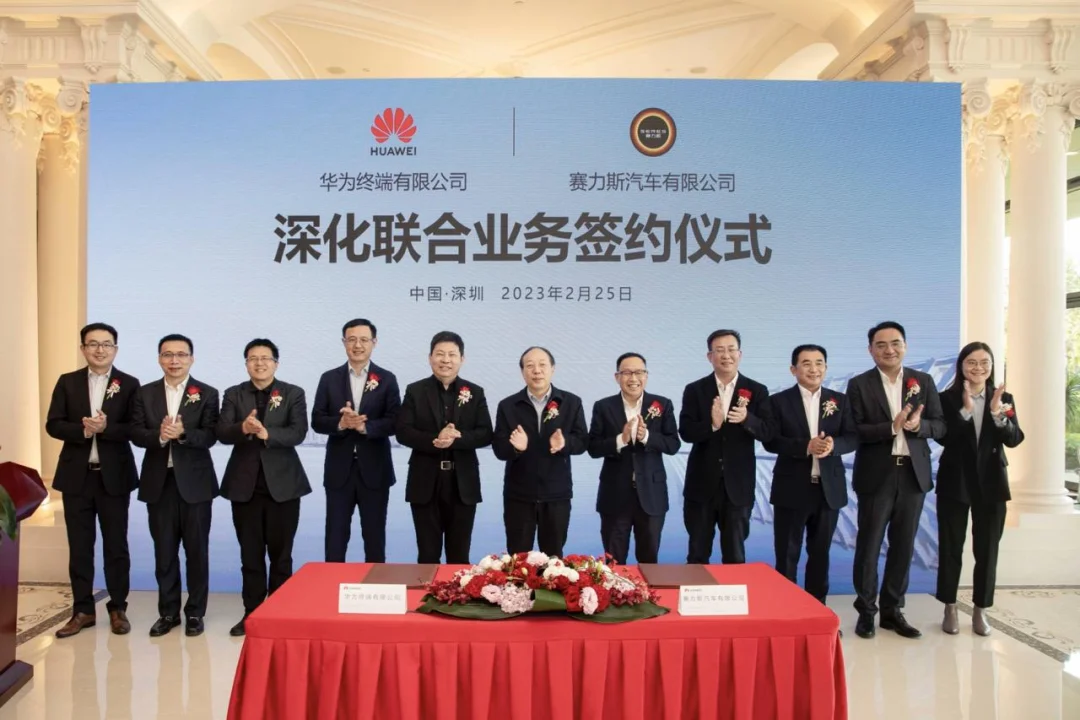
The significance of this cooperation agreement lies in the fact that the smart selection car model, which Richard Yu has been pushing for, has finally received empowerment from Huawei's advanced autonomous driving system.
This is by no means an easy task. Moreover, it may be the most difficult and significant challenge Richard Yu has faced in advancing Huawei's intelligent automotive business.
The reason lies in Huawei's strategy of "walking on two legs" regarding its intelligent automotive-related businesses.
In fact, before the Shanghai Auto Show in April 2021, based on Huawei’s philosophy of not building cars but helping automakers build good ones, Huawei Rotating Chairman Xu Zhijun announced three partners for the Huawei HI model: Beiqi, Changan, and Guangqi. He also emphasized that only vehicles equipped with Huawei’s advanced autonomous driving solution could bear the HI logo.
This model essentially defined Huawei as a To-B supplier of intelligent solutions for automakers, with Wang Jun, then President of Huawei's Car Business Unit, in charge.
However, also during the 2021 Shanghai Auto Show, Richard Yu, CEO of Huawei's Consumer Business Group, appeared at SERES's booth. Representing Huawei, he collaborated with SERES to launch the SERES SF5 Huawei Smart Selection Edition, equipped with HUAWEI DriveONE's three-in-one electric drive system. This vehicle was displayed and sold in Huawei's extensive network of consumer stores, marking the beginning of the "smart selection car" model led by Richard Yu.
The background is that Richard Yu’s partnership with SERES on the “Smart Selection” model was driven by his status as a staunch advocate for vehicle manufacturing within Huawei after the company’s smartphone business faced pressure. He needed to sustain operations at some retail stores through car sales and establish a commercial closed loop.
However, because Huawei had repeatedly announced it would not manufacture cars itself, he adopted a “roundabout approach” to launch the Smart Selection model.
Subsequently, in May 2021, Richard Yu was appointed CEO of Huawei’s Vehicle Business Unit (BU). Wang Jun transitioned from President of the Vehicle BU to COO of the BU and President of the Intelligent Driving Solutions product line, reporting to Richard Yu. In practice, however, Richard Yu devoted significant energy to the Smart Selection business and launched the AITO series, while Wang Jun continued to advance the HI mode of cooperation with automakers for a long period.
The issue was that until February 2023, the Smart Selection model led by Richard Yu and the HI mode led by Wang Jun operated in relative independence. Although Richard Yu served as CEO of the Vehicle BU, he could not directly intervene in the operation of the HI mode at the organizational level. The two operated separately without interference, separated by an invisible wall.
This situation hindered AITO to some extent.
After all, in 2022, under the collaboration between Huawei and SERES, the AITO M5, AITO M7, and AITO M5 EV featured numerous Huawei elements inside and out. These included body design, the HarmonyOS infotainment system that allowed login via Huawei accounts and deep integration with Huawei smartphones, HUAWEI Sound audio systems, and the Huawei Drive ONE three-in-one electric drive system. They were among the models with the highest “Huawei content” on the market at the time.
However, regarding intelligent driving, these three models actually used solutions from suppliers such as Bosch, rather than Huawei’s self-developed intelligent driving system.
In other words, AITO did not receive empowerment of the “soul” from Huawei’s Vehicle BU. Consequently, in the increasingly critical area of intelligent driving, the AITO series relying on solutions from Bosch and others struggled to compete head-to-head with models from automakers like Li Auto and Tesla.
It could even be said that AITO models in 2022 had no competitiveness in terms of intelligent driving.
Due to this poor performance in intelligent driving, combined with the public relations crisis stemming from the AITO M7 crash test and issues with pricing and distribution channels for the AITO brand, the market competitiveness of AITO was significantly undermined. Consequently, against the backdrop of Tesla’s consecutive price cuts and the ensuing price war in October last year and January this year, AITO’s multiple price reductions yielded little effect and ultimately failed to prevent its sales from halving in January this year.
Notably, while AITO’s market performance was lackluster, Richard Yu attempted in the first quarter of this year to boost AITO’s sales by using the "HUAWEI AITO" brand identifier, hoping to facilitate branding and marketing for subsequent smart selection car cooperation projects. Regrettably, under the strict constraint of Huawei’s policy of "not building cars," this approach was quickly halted by Huawei’s top management, leaving Richard Yu only able to express his helplessness on the Huawei Xinxin Community.
In this situation, Richard Yu indeed had ample motivation to consider how to enhance the product value and market competitiveness of AITO. An important step in this regard was undoubtedly empowering the smart selection car model through Huawei’s advanced intelligent driving technology.
Thus, Wang Jun’s suspension in February 2023 marked the point at which Richard Yu began to fully lead the development of the vehicle BU business in a substantive sense, ultimately enabling the public announcement of the collaboration between Huawei’s advanced intelligent driving and SERES.
In other words, that "invisible wall" was finally broken by Richard Yu.
03When Huawei ADS Meets AITO
Next, transitioning from the HI mode to the smart selection car model, the key issue that Richard Yu had to break through was how to leverage Huawei’s advanced intelligent driving capabilities to boost the sales volume of the AITO brand.
Looking at the outcome, Richard Yu and his team adopted a two-step strategy to address this issue.
The first step was to drive down costs and improve efficiency in Huawei’s Advanced Driving System (ADS).
In fact, the Huawei intelligent driving solution adopted in HI mode uses a hardware configuration of an MDC 810 platform paired with three LiDAR units. The bill of materials (BOM) cost for these components alone reaches approximately RMB 40,000. This has resulted in high overall pricing for vehicles such as the Jihu Alpha S Huawei HI Edition and AVATR 11 that utilize the HI mode, making them unaffordable for ordinary consumers.
Therefore, if Huawei’s high-end autonomous driving solution were to reach mainstream consumers through the AITO brand, cost reduction and efficiency gains became imperative.
It is important to note the context: when Huawei launched its HI mode at the end of 2020, the broader autonomous driving industry was still navigating uncertainty regarding technical routes and algorithmic architectures. To ensure technical feasibility and safety, Huawei’s first-generation ADS employed a strategy of high computing power combined with strong sensor perception. Specifically, it used the high-cost combination of the MDC 810 computing platform and three LiDAR units.
Fortunately, by the end of 2022, following the demonstration at Tesla AI Day, the BEV perception scheme based on the Transformer architecture (BEVformer) emerged as the dominant paradigm for commercializing autonomous driving across China’s industry. This approach offered greater computational efficiency. Moreover, building on BEVformer, Tesla’s occupancy network solution helped reduce reliance on LiDAR to some extent—a development that domestic peers subsequently adopted.
This technological evolution paved the way for Huawei to reduce costs and enhance efficiency in both computing power and sensor hardware within its ADS.
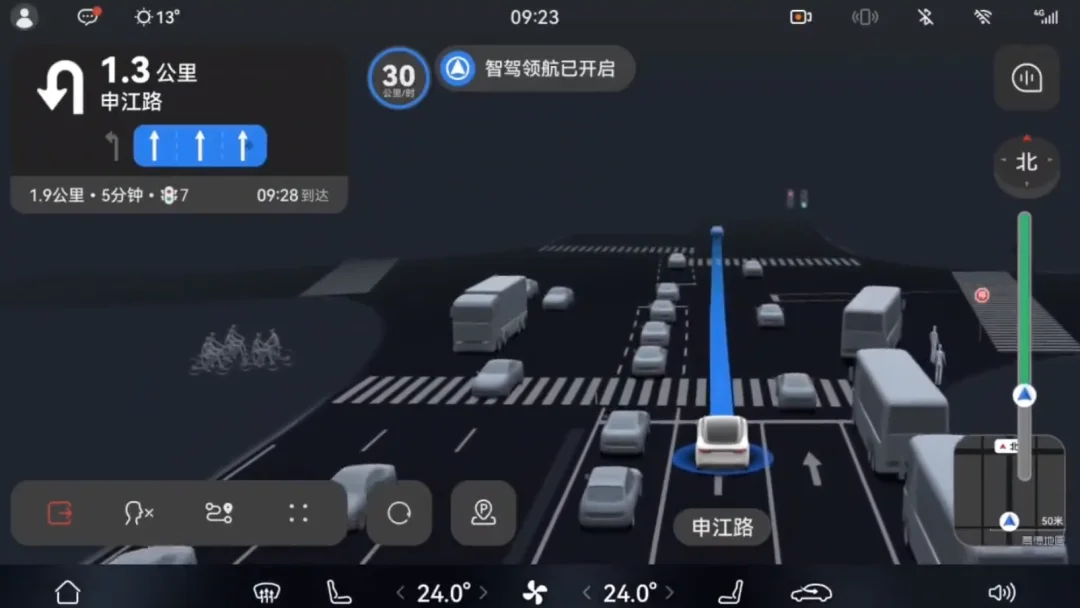
So on April 16, when Huawei ADS 2.0 was officially launched, its architecture and cost structure were already entirely different from those of the first-generation ADS.
Specifically, in terms of hardware configuration, Huawei ADS 2.0 removed two LiDAR units, no longer relies on high-definition maps, and uses the MDC 610 computing platform—a solution with lower computational power and cost than the MDC 810.
At the same time, in software algorithm architecture, Huawei ADS 2.0 adopted the industry’s first GOD (General Obstacle Detection) network. By integrating information from LiDAR perception, it can identify common obstacles such as traffic cones and dirt mounds. Additionally, Huawei incorporated a road topology reasoning network into ADS 2.0 to achieve alignment between navigation maps and the real world.
Overall, through a series of AI innovations in software algorithm architecture, perception, planning, and decision-making, Huawei ADS 2.0 successfully achieved cost reduction and efficiency gains for its intelligent driving solutions without compromising actual user experience.
Consequently, the lower-cost ADS 2.0 was able to debut on the AITO M5 Intelligent Driving Edition, released on April 17, at a more reasonable price point.
The second step taken by Richard Yu is to effectively promote Huawei ADS 2.0.
In fact, at the AITO M5 Smart Driving Edition launch event on April 17, Richard Yu's promotion of ADS 2.0, while appearing extremely high-profile, was actually highly strategic—in fact, Richard Yu's promotion of ADS 2.0 targeted both the industry and ordinary consumers.
For example, from an industry perspective, Richard Yu boldly announced the following two points, which were designed to generate buzz and discussion:
Huawei ADS 2.0 is a high-level intelligent driving system rated at L2.999, which is infinitely close to Level 3 autonomy.
By the fourth quarter of this year, Huawei will enable high-level intelligent driving that does not rely on high-definition maps in 45 cities.
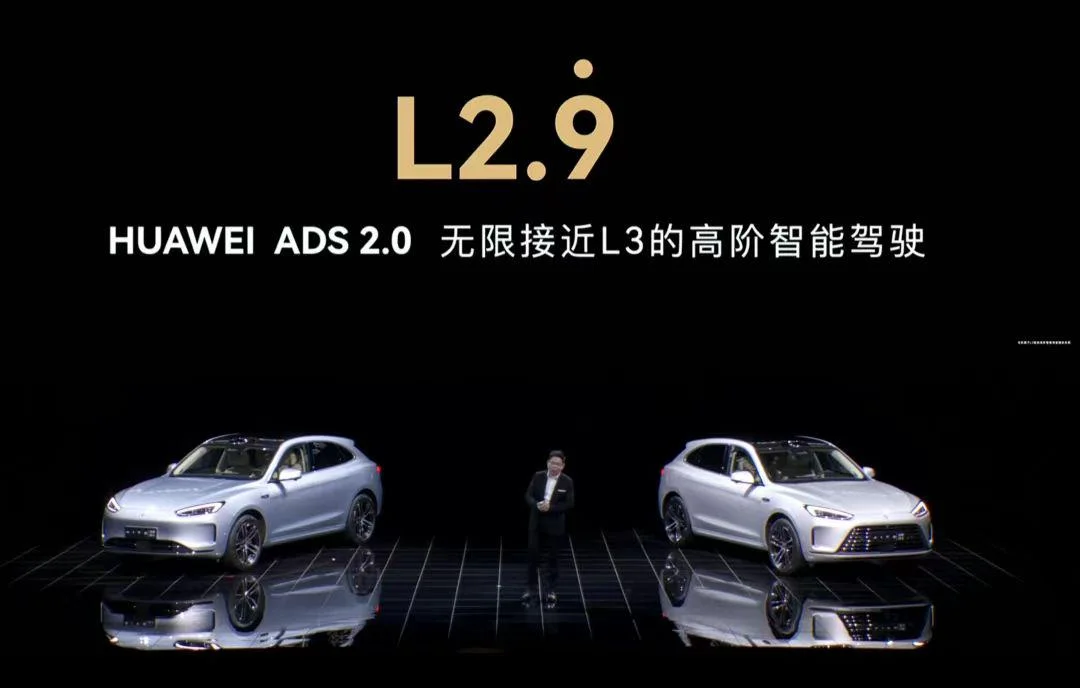
At the same time, in its consumer-facing marketing strategy, Richard Yu targeted "safety," the issue most concerning to ordinary users. He repeatedly emphasized the performance of the AITO M5 Smart Driving Edition's AEB (Automatic Emergency Braking), including its ability to identify pedestrians lying on the ground and execute emergency braking at speeds up to 50 km/h.
Richard Yu specifically stressed that even when the vehicle is being driven manually, the AEB based on Huawei ADS 2.0 remains active at all times, thereby achieving the effect of "safer manual driving."
In fact, this point hit the pain points of many consumers who are prone to distraction while driving.
Beyond Richard Yu's high-profile promotion during the launch event, after the AITO M5 Smart Driving Edition began deliveries in June, AITO also adjusted its sales approach. It established a unified sales and service joint working group with a more integrated management structure and began promoting the vehicle through methods easily perceived by ordinary users, such as real-time live broadcasts demonstrating the AITO M5 Smart Driving Edition's performance on various platforms.
This has significantly increased ordinary users' confidence in Huawei's intelligent driving capabilities.
At the same time, based on the performance of ADS 2.0, loyal Huawei fans who follow the development of the intelligent driving industry began sharing short videos on online video platforms to showcase their real-world experiences with Huawei's advanced driver assistance features. One particularly viral example was a video titled "Autonomous Driving at 100 km/h Through Concrete Width Restriction Piers in the Rain." After this somewhat showy video was posted, many users who had previously been indifferent to intelligent driving truly perceived Huawei's capabilities.
From another perspective, driven by concerns over the development of the intelligent driving industry and Huawei's capabilities, various media outlets closely monitored topics such as "Huawei," "Huawei ADS 2.0," and "no reliance on high-definition maps." Huawei ADS has almost become a traffic magnet; some media outlets conducted intensive tests and live broadcasts of Huawei ADS 2.0, which to some extent promoted the popularization of intelligent driving and objectively served as publicity for Huawei ADS 2.0.
Thus, after months of public opinion fermentation, Huawei's intelligent driving capabilities and advantages gradually captured users' minds—its support for AITO brand sales was just one step away.
04"Resurrection Was Not Easy"
Regarding the AITO M5 Intelligent Driving Edition, a clear reality is that it is a product empowered by Huawei ADS 2.0 intelligent driving capabilities, but it is not a hit model, nor did it effectively support AITO brand sales this year. By August this year, AITO brand sales were only 5,018 units, less than half of the same period last year.
This means that for a smart electric vehicle, while intelligent driving is the soul, having only intelligent driving is not enough.
At this point, Richard Yu urgently needed a blockbuster AITO model to prove himself.
The reasons were multifaceted. On one hand, the Huawei Intelligent Automotive Solution BU, managed by Richard Yu, had experienced losses for too long, and by the end of 2023, the losses were growing larger, requiring high-volume models to dilute costs. On the other hand, although the AITO M5 was empowered by Huawei's intelligent driving, it had already failed in sales. If the situation was not reversed through subsequent models, it would inevitably affect the reputation of Huawei's intelligent driving.
More importantly, by the second half of 2023, the new energy vehicle market had become increasingly competitive, with a growing Matthew effect squeezing the survival space for weaker brands.
Against this backdrop, the AITO New M7—the product following the AITO M5 Smart Driving Edition—was destined to play an even more critical role. If it failed in sales again, it could jeopardize the very existence of the entire AITO brand and Huawei’s smart selection model.
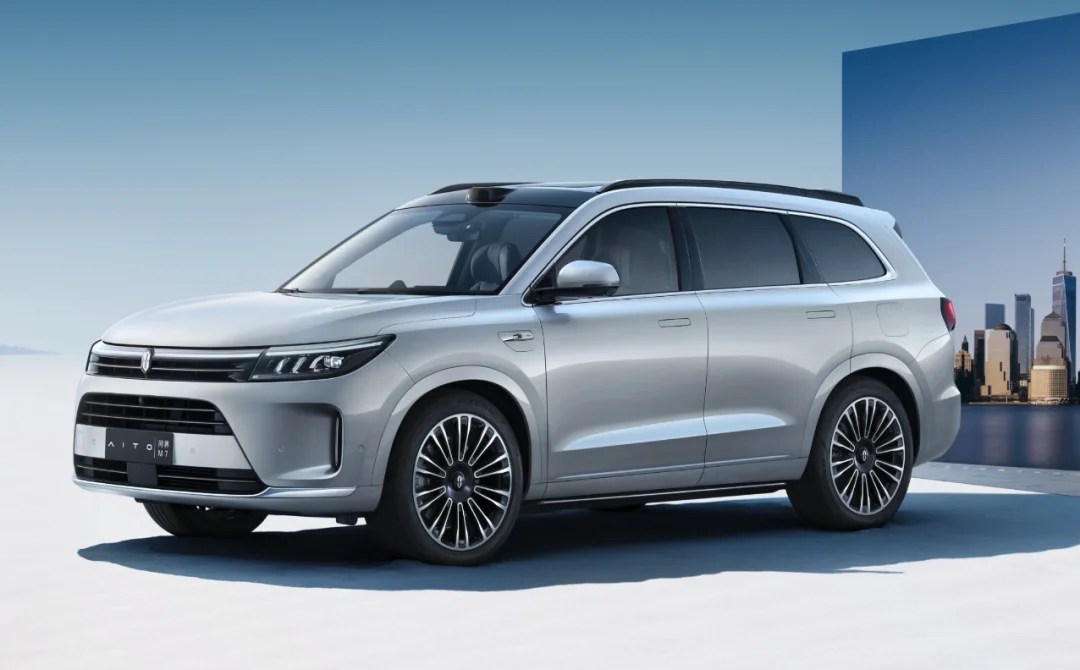
So, in order for the AITO New M7 to become a hit, Richard Yu and his Huawei team spared no effort in every aspect. The focus was on spending five hundred million to comprehensively enhance product capabilities, specifically:
To address issues identified in last November’s crash tests, the proportion of high-strength steel, aluminum alloy, and hot-formed steel was increased, significantly strengthening body rigidity.
Responding to market demand for large five-seat SUVs, a dedicated five-seat version was added, expanding the effective interior space to 3.3 meters.
The chassis also adopted Huawei DATS 2.0 technology to improve ride comfort.
In terms of intelligent driving capabilities, the GOD network in ADS 2.0 was upgraded to version 2.0, enabling automatic emergency braking (AEB) at speeds up to 90 km/h.
Overall, the AITO M7 builds on its predecessor by addressing weaknesses and amplifying strengths.
Beyond product enhancements, the new AITO M7 also made a significant price cut, lowering the starting price from RMB 289,800 to RMB 249,800. This RMB 40,000 reduction in the entry price gives the new AITO M7 strong value-for-money appeal and allure. With this combination of product strength and pricing, the new AITO M7 has the potential to become a hit model.
But that is not enough—beyond the compelling product and price, the AITO M7 received unprecedented promotional support.
This was an exceptionally precise marketing maneuver.
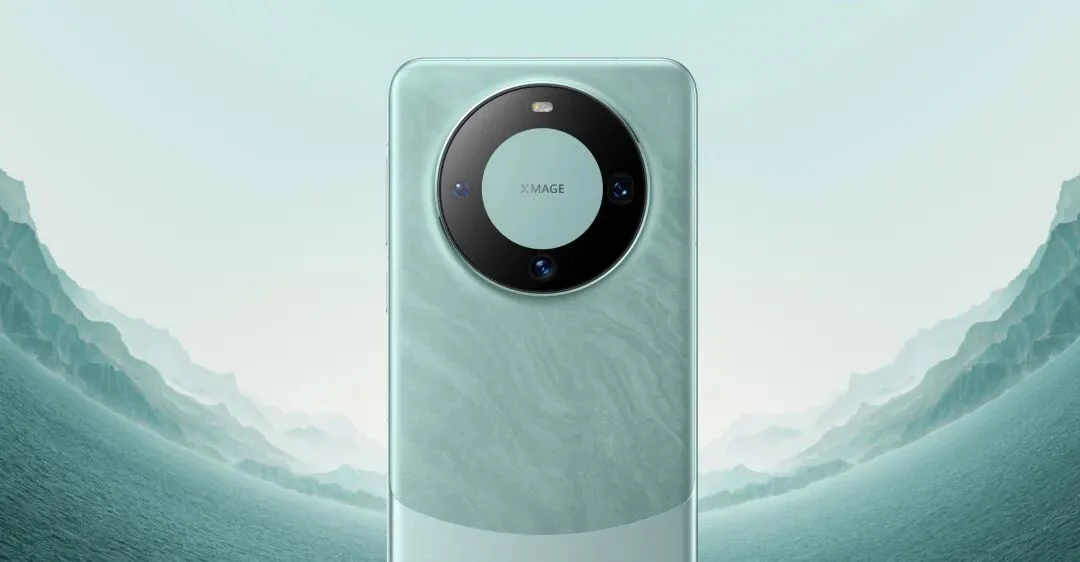
On August 29, 2023, the Huawei Mate 60 series smartphones were quietly launched on the official website without prior announcement. Equipped with the Kirin 9000S chip, the device garnered unprecedented attention and emotional support from consumers in the context of intense U.S. sanctions and domestic efforts to achieve technological breakthroughs.
At the Huawei press conference on September 12, while everyone’s focus was on the Mate 60 phone, Richard Yu leveraged this momentum to unveil the new AITO M7. Key details regarding its product capabilities—including its AEB system—and pricing were clearly communicated to all attendees.
Instantly, leveraging Huawei’s powerful momentum at the time, the new AITO M7 achieved unprecedented breakout visibility.
It may not be a coincidence that the launch of the AITO M7 coincided with the peak sales season of "Golden September and Silver October." Following its release on September 12, the AITO M7 saw rapid volume growth, averaging 1,500 confirmed orders per day. By September 30, cumulative confirmed orders for the AITO M7 had exceeded 30,000 units.
During the National Day holiday, the AITO M7 continued its momentum, securing 20,000 confirmed orders over the seven-day period. On October 6 alone, it recorded more than 7,000 confirmed orders in a single day.
By October 8, less than a month after its launch, the AITO M7’s confirmed orders surpassed 50,000 units—a sales achievement unseen before in China’s new energy vehicle industry.
In short, the AITO M7 became a massive hit.
Richard Yu expressed mixed feelings about this success, writing in his WeChat Moments: "Turning things around was truly not easy."
Over the following two months, the pace of new confirmed orders for the AITO M7 slowed slightly, but it continued to update its records at a speed that left competitors envious. On November 27, two and a half months after launch, Richard Yu announced that confirmed orders for the AITO M7 had broken through 100,000 units—this record-breaking figure once again demonstrated Huawei’s capabilities to the entire automotive industry.
Notably, against the backdrop of the AITO M7’s booming popularity, the yet-to-be-released AITO M9 also attracted significant attention, with its pre-sale orders exceeding 30,000 units.
This time, no one questioned Richard Yu or his steadfast commitment to the Huawei Smart Selection model.
05Rebuilding the Commercial Closed Loop
Interestingly, just one day before Richard Yu announced that AITO M7 had reached 100,000 confirmed orders, Huawei released a major piece of news on a Sunday with lower public attention, which drew significant interest from the entire Chinese automotive industry.
The news was that Huawei plans to establish a new company focused on the research, development, production, sales, and service of intelligent driving systems and incremental components for smart connected vehicles.
According to Huawei’s official announcement, the company intends to integrate the core technologies and resources of its Intelligent Automotive Solution business into this new entity. Changan Automobile and its affiliates intend to invest in the company. The new venture aims to become a world-leading provider of automotive intelligent driving systems and components, serving as an open platform for the automotive industry. It will offer equity stakes to existing strategic partner automakers and other automakers with strategic value, becoming a company with diversified ownership.
In simple terms, through this cooperation, Huawei is spinning off its Car BU (Business Unit) from its original organizational structure and opening it up for investment by Changan and other automakers.
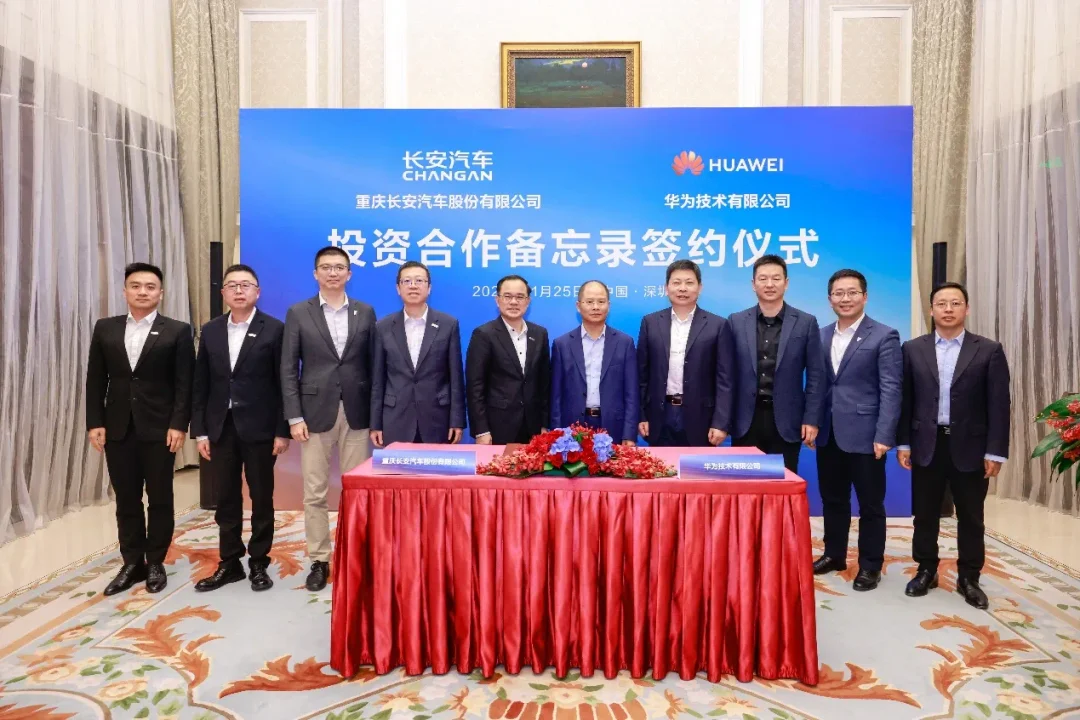
Clearly, Huawei’s move serves two purposes: first, by introducing other automakers as shareholders in the Car BU, it aims to change the long-standing situation of losses; second, this dynamic demonstrates Huawei’s resolve to ‘not build cars’ itself, while facilitating better collaboration with other automakers to drive the intelligent transformation of the entire Chinese automotive industry.
After all, as Richard Yu stated, China needs to build an open platform for electrification and intelligence, jointly participated in by the automotive industry, featuring a ‘locomotive.’ Clearly, the ‘locomotive’ referred to by Richard Yu is this new company established by Huawei.
However, behind Huawei's spin-off of its automotive business unit (BU), there is an undeniable fact: the reason this "locomotive" has gained recognition from other automakers is inextricably linked to the sales success demonstrated by the AITO brand, particularly the new AITO M7.
In fact, amidst the overwhelming prominence of the new AITO M7, Richard Yu not only proved the feasibility and value of the smart selection model but also fully validated the powerful technical support provided by Huawei's automotive BU.
To a certain extent, the new AITO M7 played the role of the "ignition engine" within this locomotive.
It should be noted that before announcing the spin-off of its automotive BU, Huawei had already upgraded its smart selection model. The previous collaborations with automakers such as SERES, Chery, Jianghuai, and Beiqi have been elevated under the "HIMA" (Harmony Intelligent Mobility Alliance) framework. Under HIMA, co-developed models are branded under names like AITO and Luxeed, with the Luxeed S7 being the latest addition to this partnership.
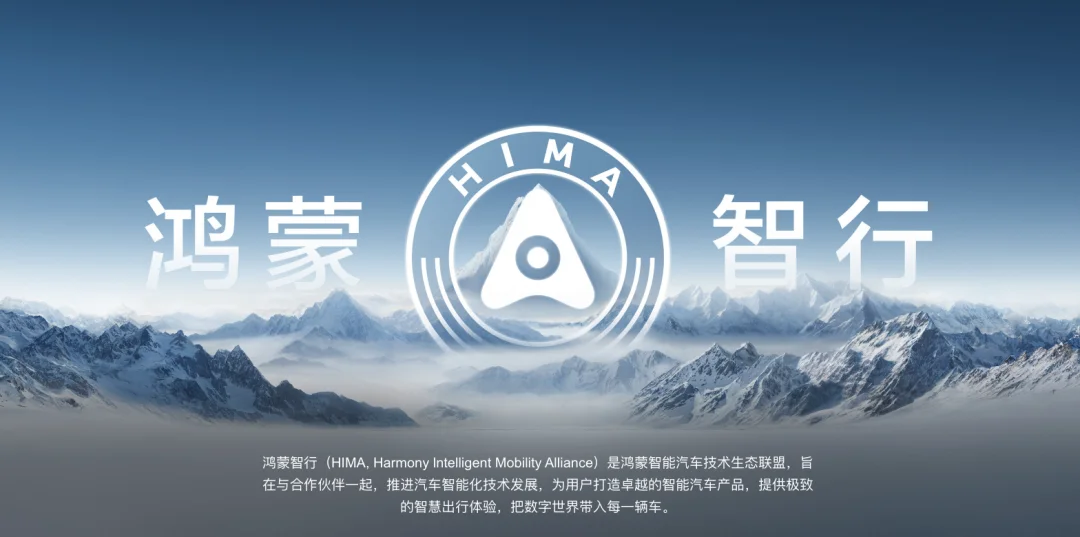
Thus, using the success of the AITO M7 as a turning point, Huawei has established two new business models in China's automotive industry.
The first is the To B model. Centered around a new company Huawei is about to establish, this model leverages Huawei's technologies, including advanced autonomous driving, to empower the entire automotive sector. Automakers will hold equity stakes in this entity, which aims to serve as the "foundation for intelligent vehicles in China." In this capacity, the new company becomes a critical link in the upstream and downstream of the intelligent vehicle supply chain.
The second is the To C model. Represented by HIMA, this model relies on deep cooperation between Huawei's consumer terminal ecosystem and automakers, combined with technological empowerment from the aforementioned new company, to provide comprehensive automotive services to consumers, thereby forming a complete commercial closed loop. Undoubtedly, Richard Yu will continue to lead this commercial closed loop forward.
Furthermore, given Huawei's massive scale and high visibility, these two models will influence and empower each other.
In other words, whether targeting businesses (To B) or consumers (To C), under the new business model, Huawei has become an indispensable key player in the Chinese automotive industry's transition toward electrification and intelligence.
It should be noted that within Huawei's extensive layout for the automotive sector, beyond its well-known technologies such as Huawei Advanced Driving System (ADS 2.0), HarmonyOS Cockpit, and HUAWEI Sound, there is also a series of technological systems including Pangu Large Model, in-vehicle optics, Huawei e-Drive, chassis technology, Huawei Digital Power, and Huawei Automotive Cloud. These technologies will gradually reach ordinary consumers through the empowerment of the aforementioned two business models.
Notably, many of these technologies from the Huawei ecosystem will make their concentrated debut on the AITO M9, known as the "tech emperor" among cars.
06If it does not fly, it remains dormant; once it flies, it soars to the heavens
Looking back at Huawei's journey from entering the smart electric vehicle industry to the present, we find that even a comprehensive tech giant like Huawei has made numerous mistakes, suffered many failures, and faced persistent skepticism and ridicule while entering this new industry—as Richard Yu stated on a public occasion, "we have taken many detours."
In fact, during this process, vehicles adopting the Huawei HI mode have long suffered from poor sales. Huawei's Smart Selection car business has also repeatedly fallen into failure and external pessimism: the SERES SF5 Huawei Smart Selection Edition faded into obscurity in 2021; the AITO M7 exposed fatal shortcomings in a crash test last November; and the AITO brand's sales were directly "halved" in January of this year...
These repeated failures have almost pushed the AITO brand into a "dead end."
Even in August, when the AITO New M7 began its preheating phase, no one could have predicted that it would become a massive hit in the following three to four months, nor that Huawei’s momentum and status in the smart automotive industry would soar.
This process bears a resemblance to what once unfolded across the ocean at SpaceX.
Between 2006 and 2008, SpaceX’s Falcon 1 had suffered three launch failures, exhausting all its funding and leaving Elon Musk in dire straits. However, on September 28, 2008, during its fourth launch attempt, SpaceX finally succeeded in launching the Falcon 1 rocket—saving the company from collapse.
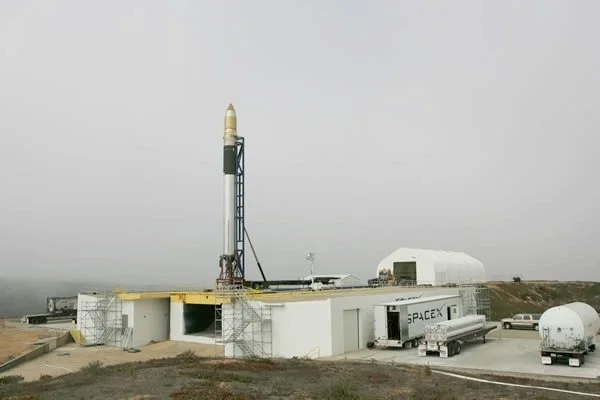
Richard Yu is not Elon Musk, and Huawei is not SpaceX. Yet, as Richard Yu led Huawei’s Automotive Business Unit and Consumer Business Group forward in the automotive sector, he too experienced moments akin to being backed into a corner. The AITO New M7 became a desperate, all-out battle for him and the Huawei team.
Viewed from this perspective, it may be easier to understand why Richard Yu let out a sigh that outsiders often found difficult to interpret when the AITO New M7’s confirmed orders exceeded 50,000: "Coming back from the brink of death is truly not easy."
Conversely, each of the first three failures of Falcon 1 paved the way for the success of the fourth launch. Similarly, every setback Huawei encountered after entering the automotive industry, and the previous struggles of several AITO models (such as the poor sales of the AITO M5 Intelligent Driving Edition, which nonetheless played a crucial role in breaking the Huawei intelligent driving narrative into the mainstream), were all building momentum for the AITO New M7’s upward surge.
It is worth noting that throughout this process, the Mate 60 series also served as a key "booster" for the AITO New M7’s rise.
For the AITO M7 to break out of its niche, the super-national attention brought by the Mate 60 is akin to how SpaceX’s Falcon rocket generated immense influence and focus that Elon Musk then transferred to Tesla. This created a form of dimensional-reduction brand marketing in the automotive sector—its volume was sufficient to cross social circles and reach more ordinary consumers.
From Huawei’s perspective as a whole, the AITO M7’s surge represents a key offensive by this Chinese tech giant, mobilizing the power of its entire ecosystem toward the smart electric vehicle industry. Richard Yu was the general leading the charge in this assault.
Fortunately, this time, Huawei succeeded.
It should be noted that with the rise of the AITO M7 and the spin-off of Huawei’s Vehicle Business Unit, Huawei’s role in the intelligent automotive industry has become increasingly clear. The slogan 'Huawei does not make cars; it helps automakers build good cars' is no longer just a phrase met with skepticism by outsiders, but has become the best explanation for Huawei simultaneously empowering China’s automotive industry and achieving a closed loop in its own commercial system.
Of course, in this round of automotive technology revolution represented by electrification and intelligence, China’s automotive industry is undergoing an 'infinite war' with no visible end in sight. Everything that happened in 2023 was merely the overture to this war, and the battlefields of 2024 will only become more fierce and spectacular—but Huawei has successfully secured its ticket to enter and will remain a formidable player in this war for the long term.
Written by: 308, Isaiah Edited by: Daji