


XPENG G9 Uses Front-Mounted LiDAR to Prioritize Urban Driving Scenarios
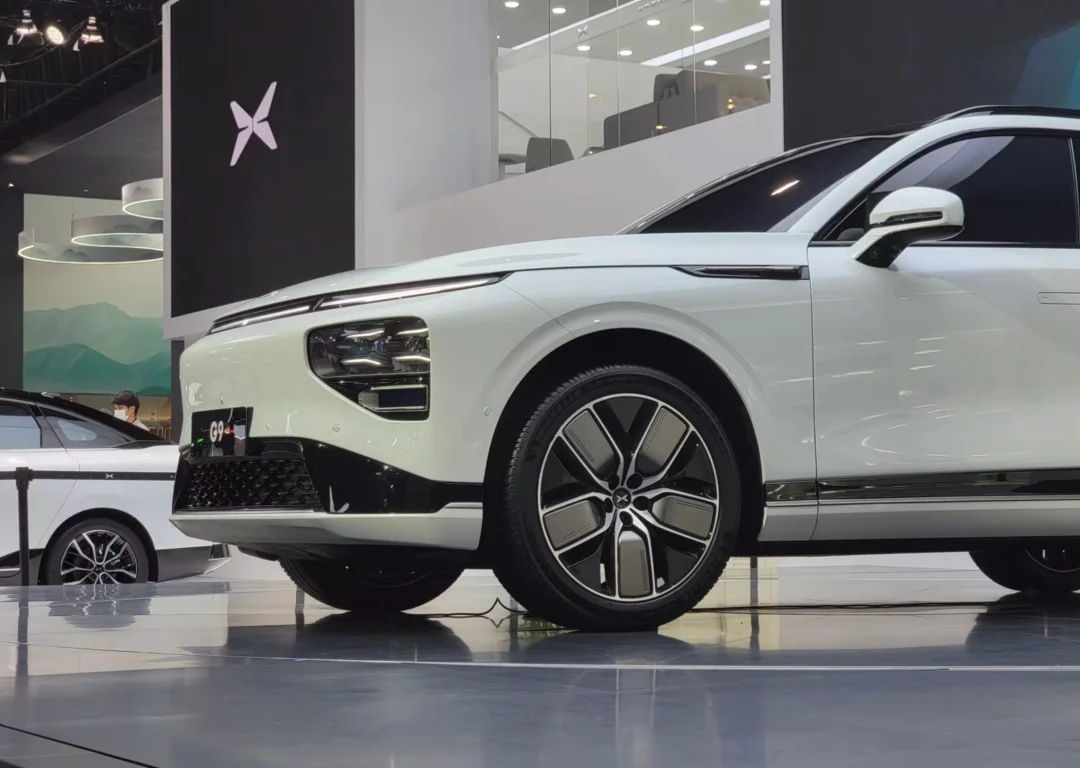
On September 21, XPENG launched the G9. With this model, more than 15 new cars delivered or unveiled this year have been equipped with LiDAR, spanning from Class A to Class D vehicles and covering both sedans and SUVs.
LiDAR has become a key marker for mainstream high-level intelligent driving systems. Consumer interest in this sensor has surged in recent years. The discussion topic has evolved from "What is the purpose of LiDAR?" to "What types of LiDAR are there?" As LiDAR becomes standard on production vehicles, specific models have become the new focus of industry debate.
Observing these new cars equipped with LiDAR reveals a clear pattern: not only do manufacturers use different LiDAR units, but they also show significant differences in total quantity and placement strategies.
This raises the question: Why do leading players adopt such different approaches, and what are the underlying reasons for these variations?
Currently, while configurations vary across models, the points of divergence are concentrated in two main areas:
The number of LiDAR units
The placement location
In this article, I will use XPENG G9’s dual LiDAR layout as a case study to discuss whether more LiDARs are always better, how the vertical position of LiDAR units affects performance, and address common concerns regarding LiDAR maintenance costs.
These discussions require an understanding of the perception system architecture in intelligent driving systems and the distinct characteristics and roles of different sensors. Therefore, it is helpful to first review the four primary categories of sensors currently used in intelligent driving: cameras, ultrasonic radars, millimeter-wave radars, and LiDARs.
01The Four Sensor Categories for Intelligent Driving
The function of cameras is relatively straightforward: they allow the vehicle to "see" the road environment, providing rich visual perception information including, but not limited to, object shape, position, color, and patterns.
In terms of data type, the visual feed from cameras most closely resembles a driver’s perception of the road. However, human vision relies not just on eyes but on a sophisticated visual neural network. Enabling automotive computers to derive spatial awareness from two-dimensional pixel images comparable to human capability remains extremely difficult. Consequently, other sensor types are introduced to assist vehicles in acquiring a more complete environmental picture.
For instance, ultrasonic radars detect distance via sound wave reflection. The commonly known "reverse radar" is an ultrasonic sensor. It has a short effective detection range, primarily used for close-range positioning within a few meters of the vehicle body. At these short distances, its accuracy is high, making it akin to a "macro lens" among radar technologies.
Although millimeter-wave radars share a similar-sounding name with ultrasonic radars, they are electromagnetic wave sensors. Their effective detection range is significantly greater than that of ultrasonic radars, often exceeding 100 meters. They are typically used to detect the speed and distance of vehicles on the road. Many cars’ adaptive cruise control (ACC) and Automatic Emergency Braking (AEB) systems rely on millimeter-wave radar data.
Finally, we come to LiDAR, the main focus of this discussion. Functionally, LiDAR also provides object position and velocity data. However, unlike the previous two radar types, it does not simply return speed or distance in a specific direction. Instead, it feeds the system 3D point cloud information of the road environment within its field of view, offering high precision and substantial data volume.
In simple terms, a LiDAR uses laser pulses to generate point clouds, creating real-time 3D models of the environment within its detection range.
The physical characteristics of different sensors determine their strengths and weaknesses in specific scenarios. The priority of these scenarios and the necessity for redundancy dictate how much cost and system resources manufacturers are willing to allocate to compatible sensors. In advanced intelligent driving systems, LiDAR and high-level visual perception are the two most critical components. The latter relies primarily on software and algorithm investment, whereas LiDAR is significantly more focused on hardware and engineering costs.
02Quantity: More Is Not Always Better
First, let’s address the question of LiDAR quantity using vehicle models as examples: XPENG G9 is equipped with two LiDARs; NIO NT2.0 models and Li L9 use one; Huawei HI solution vehicles employ three; and Shalongjijialong has even utilized four.
We must first understand what the number of LiDARs affects.
The Field of View (FOV) of a LiDAR represents the effective area it can scan. If we compare it to a vehicle’s headlights, the illuminated area corresponds to the "FOV."
Assuming identical hardware, more LiDARs result in a larger combined overall FOV. Returning to the headlight analogy: if one headlight on the same car fails, the illuminated area will naturally be smaller than when both are functioning normally.
Looking at quantities from high to low, vehicles with four LiDARs cover the front, rear, left, and right directions of the vehicle.
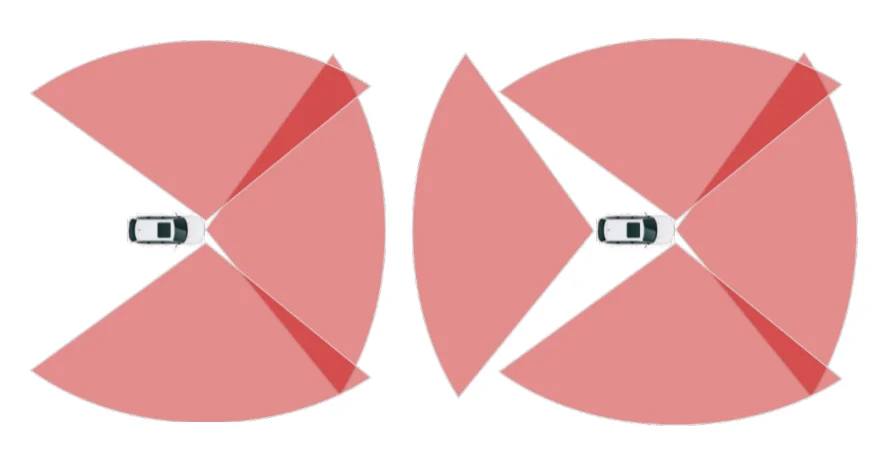
For vehicles equipped with three LiDARs, the rear-facing unit is typically omitted, leaving forward, left, and right sensors.
Vehicles with two or one LiDAR retain the forward-facing unit; dual-LiDAR configurations offer a wider field of view on the left and right sides.
Theoretically, a broader perception field is beneficial as it provides a more comprehensive understanding of the road environment. However, LiDAR is a high-cost sensor, and these costs are ultimately reflected in the vehicle's price. The decision to add units must consider the system's return on investment, unless building a cost-unconstrained Robotaxi. Furthermore, increasing the number of LiDARs significantly increases the volume of perception data the system must process, placing higher demands on the vehicle's computing capabilities.
Consequently, this "more is better" theory takes on a different reality in mass-production applications.
When a vehicle is in motion, there is a clear priority hierarchy among the four fields of view: forward is most critical, followed by side views, and then rear. Therefore, if only one sensor can be retained, it must be the forward-facing unit; additional units are allocated to the sides only when feasible.
This logic is straightforward: drivers primarily focus on the road ahead, occasionally checking the sides and the interior rearview mirror. In intelligent driving systems, high-precision, long-range perception for side-rear and direct-rear areas is not as critical; a combination of millimeter-wave radar and cameras is sufficient to meet these requirements.
When cost and engineering constraints are factored into the "more is better" theory of system performance, it becomes clear that simply increasing the number of LiDAR units does not yield a linear improvement in capability, whereas costs do increase linearly. Consequently, configurations with one or two LiDARs are currently more common.
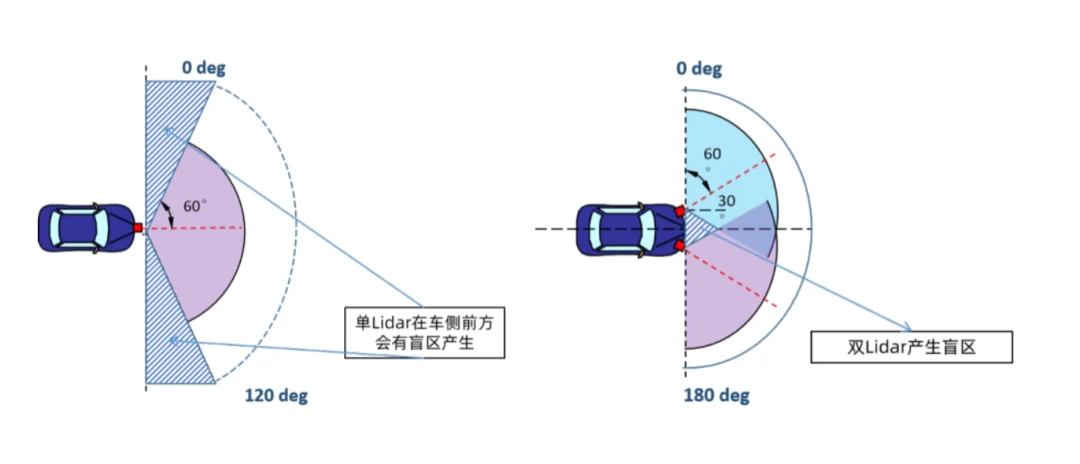
The difference between two front-facing LiDARs and one front-facing LiDAR lies primarily in lateral field-of-view coverage.
The G9 uses a LiDAR with a horizontal field of view of 120°. With only one unit, small blind spots remain in the left-front and right-front areas, slightly compromising the perception of lateral objects perpendicular to the vehicle's heading.
These blind spots can become safety hazards in certain scenarios:
A pedestrian crossing closely at close range while pulling out from a parallel parking spot;
Cross traffic passing by when exiting a vertical parking space adjacent to a wall;
Cross traffic approaching when entering an unprotected intersection.
However, if two LiDAR units with a 120° horizontal field of view are combined and angled slightly outward to the left and right, they can create a combined field of view approaching 180°. This significantly reduces blind spots. It is easy to see that the special scenarios mentioned earlier—such as urban driving and complex parking—are precisely where XPENG began applying its technology in the P5 and aims to further overcome in the G9.
Therefore, one of the core engineering considerations for the G9’s LiDAR is to better serve Urban Navigation Assist by providing targeted environmental perception information for specific scenarios. The dual-LiDAR solution, which balances lateral perception, is precisely the most suitable choice under these requirements.
03The Debate: Pros and Cons of Each Approach
After discussing the number of LiDAR units, another area of significant divergence is their mounting position.
A common refrain is 'the higher you stand, the farther you see.' This perspective supports the currently popular roof-mounted LiDAR approach. Models such as NIO NT2.0 vehicles, Li L9, Zhiji L7, and Feifan R7 have adopted this configuration. In contrast, XPENG G9, which places strong emphasis on intelligent driving, has become an 'exception' among these new releases.
The benefits of a roof-mounted LiDAR are obvious: placing it on the roof minimizes forward visual obstruction and reduces collision risk. However, the drawbacks remain:
Under intense sunlight, roof-mounted LiDAR faces greater heat dissipation challenges; this issue becomes even more pronounced when paired with a black roof.
When mounted on the roof, the low-position detection blind spot near the vehicle body increases.
The placement of LiDAR on the front bumper, rather than on the roof, offers a significant advantage in heat management. By housing the unit within the vehicle's body structure, it is shielded from direct solar radiation, effectively mitigating overheating issues that can plague exposed rooftop units.
However, the more critical reason relates to semantic perception. Elon Musk has famously derided LiDAR as a "crutch," arguing that while it detects objects, it fails to capture richer semantic data such as color and texture. He contends that vision systems, with their broader semantic dimension, can outperform LiDAR in understanding the environment.
This argument assumes an idealized vision system. In reality, if a vision system encounters an unknown object it has not been trained to recognize, it may fail to identify it entirely, lacking even basic detection capabilities. LiDAR, by contrast, provides concrete 3D point cloud data within its field of view. Even without machine learning classification, this geometric data allows the system to detect obstacles and avoid collisions, underscoring LiDAR's vital role in safety redundancy.
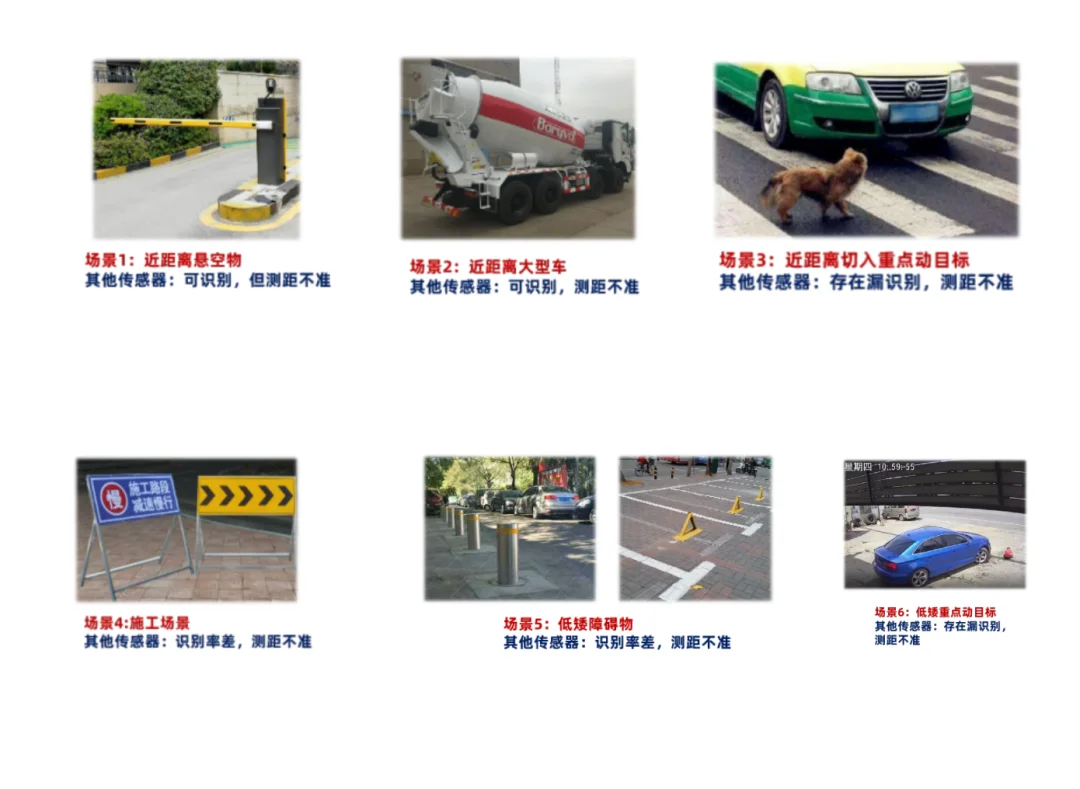
This safety benefit holds true only for objects within the sensor's field of view. There are distinct differences between the field-of-view characteristics of rooftop versus front-mounted LiDAR. While it is often said that rooftop LiDAR offers a better view because it is less likely to be blocked by vehicles ahead, this height-based advantage is not omnidirectional. When driving high-clearance SUVs, drivers notice larger blind spots at the front corners compared to sedans; similarly, rooftop LiDAR suffers from these same blind zones.
These blind spots include critical hazards such as bollards close to the vehicle's body, crossing pets, or traffic cones. Millimeter-wave and ultrasonic radars struggle with these objects, prone to false positives and lacking precise distance measurement. Placing LiDAR on the front bumper significantly improves detection in these near-field areas.
When discussing why the G9 uses two LiDAR units, we deduced from usage scenarios that urban driving demands a wider forward-side field of view. Detecting objects in the near-body blind spot is also a priority specific to urban environments.
Readers might wonder if sacrificing the superior forward view provided by a rooftop position for better near-field coverage is a case of missing the forest for the trees. However, the front-facing camera on the G9 is positioned at a height similar to where a rooftop LiDAR would sit. The G9's forward vision module includes an 8-megapixel telephoto camera dedicated to long-range observation.
Under unobstructed conditions, the difference in long-range perception between rooftop and front-mounted LiDAR is negligible. Imagine shining a bright flashlight down a road at night: whether you hold it at waist level or raise it overhead, as long as the beam remains directed forward, the illumination effect on distant objects remains essentially unchanged.
The difference in LiDAR mounting height primarily reflects each manufacturer's preference for how the sensor's field of view is allocated. XPENG, which prioritizes urban driving scenarios, places greater emphasis on addressing blind spots near the vehicle and on both sides; consequently, it mounts the LiDAR on the front bumper of the G9 and P5 to better detect such conditions. In contrast, Li Auto and Feifan, which focus more on highway scenarios, mount their LiDARs on the roof.
04The Exaggerated Collision Concern
Whether a LiDAR is mounted on the roof or the front bumper comes down to prioritizing different driving scenarios. For consumers, another concern is the potential cost of repairing a damaged LiDAR after a collision.
Mounting a LiDAR on the roof does offer advantages over the front bumper, as this area is rarely struck in accidents, except in cases involving height restrictions. Intuitively, placing a LiDAR on the front bumper—the most common site of collisions—seems to increase the likelihood of damage.
However, it is important to emphasize that front-mounted LiDARs are not as fragile as rumors suggest. Actual data supports this: among already delivered XPENG P5 vehicles, LiDAR-related repairs account for only 0.2% of total repair incidents.
For the G9, XPENG has further optimized durability. It recessed the LiDAR housing and raised its position by 245 mm compared to the P5, ensuring that minor scrapes do not directly impact the sensor. Additionally, the protective glass thickness was increased to 5 mm, providing stronger resistance against impacts during minor collisions.
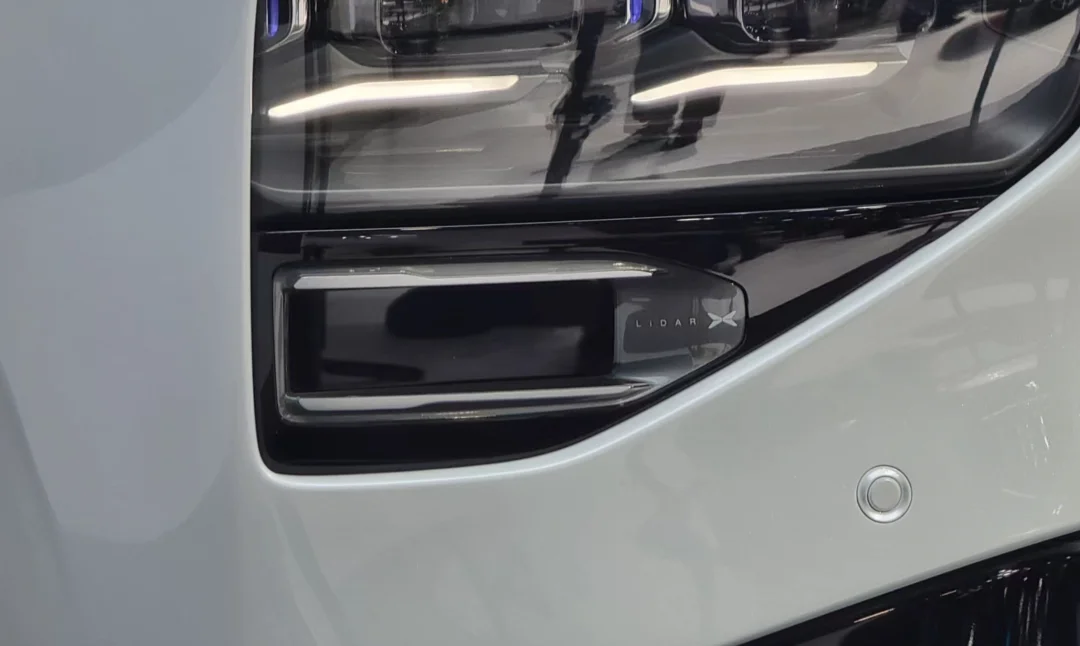
If a severe accident damages the LiDAR, repairs can be covered by insurance just like any other vehicle damage. Another key question for many is: what is the price of a single LiDAR unit?
The claim that LiDAR systems cost over 10,000 yuan is misleading. The Livox LiDAR on the XPENG P5 originally cost 8,900 yuan per unit. After a further price reduction of one-fourth, it is now around 6,600 yuan per unit. While this price may seem high, many vehicles' headlights are actually more expensive than this.
05Conclusion
Regarding LiDAR placement, we discussed various scenarios and sensor characteristics throughout the article. At the end, however, it is necessary to highlight XPENG’s undeniable track record.
To be fair, XPENG’s accumulation and capabilities in intelligent driving have been evident in recent years. On a macro level, its highway NGP in 2021 and urban NGP this year were the first to be launched and implemented in China. On a micro level, features such as memory parking and the pre-use user knowledge test in XPILOT also place it ahead of peers.
When it comes to designing a high-level intelligent driving perception system, I believe XPENG has more authority to speak than most domestic manufacturers.
As the XPENG model with the highest intelligent driving hardware specifications, the G9 is clearly aiming to secure more firsts for the brand. The urban assisted driving feature, which debuted on the P5, will take a further step forward on the G9, achieving full-scenario intelligent driving and establishing itself as XPENG’s strongest intelligent driving vehicle.
We recently conducted a poll on our app asking whether manufacturers should continue refining highway navigation or launch urban navigation as soon as possible.
The results showed that 71% of users voted for the former. Among the numerous responses, many expressed concerns about the maturity of urban navigation. One user’s comment was particularly humorous: Highway navigation is the first level of 'Sheep A Sheep,' while urban navigation is the second level.
This reflects the current industry reality: urban NOA in China’s complex traffic environment is extremely difficult, facing numerous technical blind spots and regulatory constraints. It is a high-investment, uncertain-return business, so not every company wants to tackle this hard nut or become the pioneer bearing the highest trial-and-error costs.
When companies operate at different stages with different goals, evaluating technological advancement loses its horizontal comparability.
To achieve more comprehensive safety redundancy for urban NOA, the XPENG G9 employs forward-facing dual LiDARs mounted on the front bumper, supplemented by surround-view BEV vision perception and multi-angle millimeter-wave radars. While others focus on conventional placements, XPENG has not lost its position; its approach is grounded in rationality and scenario-specific targeting under its own vision.
I believe the actual performance of the G9 after delivery will serve as the most objective and compelling validation of XPENG’s strategic experience.
Written by Reinhardt Edited by Reinhardt