


XPENG’s Second-Generation Model: A Full Breakdown of the XPENG G9 | 42Test
Ten months have passed since the XPENG G9 made its official debut at last year’s Guangzhou Auto Show, through the interior reveal on August 10 this year, to today’s official launch.
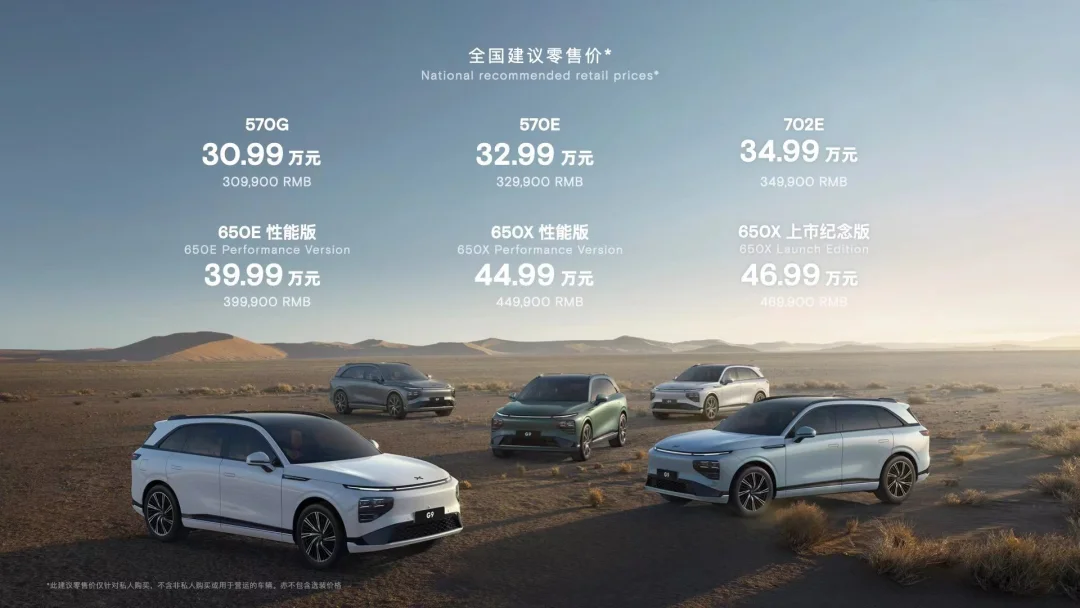
Tonight, the all-new XPENG flagship G9 has finally arrived. Let’s start with the pricing:
570 G: RMB 309,900
570 E: RMB 329,900
702 E: RMB 349,900
650 E Performance: RMB 399,900
650 X Performance: RMB 449,900
650 X Launch Edition: RMB 469,900
Three optional packages are also available:
5D Music Cabin: RMB 22,000
XNGP Driver Assistance: RMB 28,000
4C Super-Fast-Charging Battery Pack: 10,000
As the flagship model among China’s top three new energy vehicle brands to debut first and launch last, the G9 has generated immense anticipation and required considerable waiting.
As a product long awaited, the XPENG G9 carries the brand's vision for a second wave of upward momentum. It employs XPENG's best technologies across dimensions such as the cabin, driver assistance, and driving dynamics, and will become a new benchmark for XPENG.
Prior to launch, we obtained an engineering prototype of the XPENG G9 Dual-Motor 650 X version for comprehensive evaluation. This article provides a detailed analysis covering exterior design, interior features, driving impressions, range, and charging speed. For earlier coverage of the G9, please click the links below:
From Model 7 to Model 9: How XPENG Redefines Its Flagship | Static Review of the G9
What Is a 5D Cabin? Surprises in XPENG’s Latecomer, the G9 | Interior Analysis
XPENG G9 Targets Global Markets: Where Does Its Confidence Come From?
2021 Guangzhou Auto Show New Car Launch: XPENG G9 Officially Unveiled (With Photos)
[Guangzhou Auto Show] 9, sorry to keep you waiting, Peng friends. This is the surprise.
XPENG G9 Static Review: How Did This Cinema Get Four Wheels?
01Driving Impressions: The Best-Handling Car XPENG Has Ever Made!
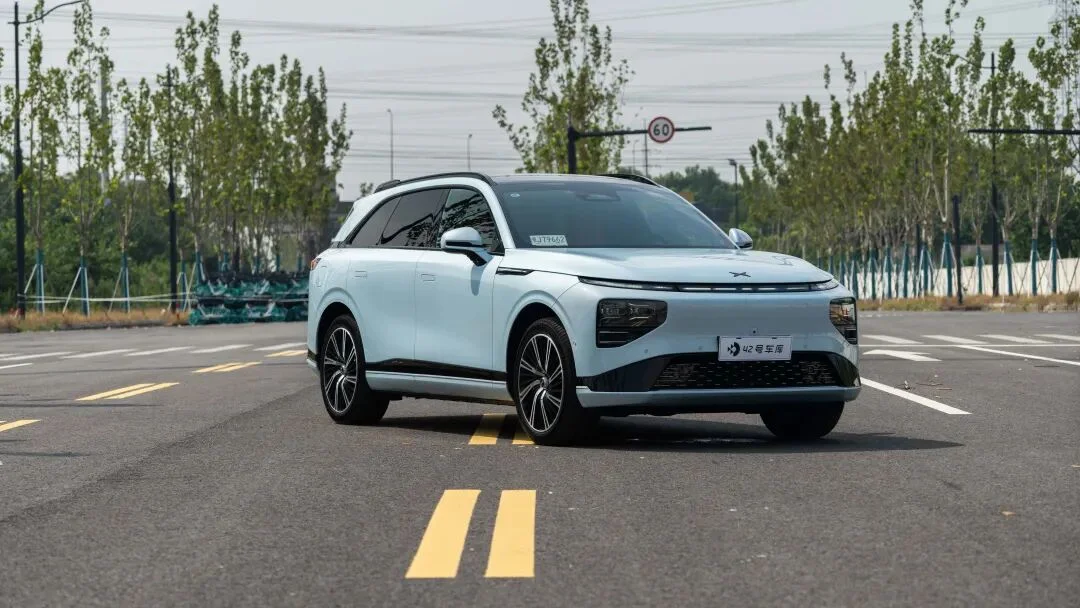
The exterior and interior of the XPENG G9 were revealed quite early. Like you, we are very curious about how it drives.
At the start of this article, I want to give our readers a direct answer: The G9 is the easiest-to-drive car XPENG has ever made, hands down. However, because this was an engineering mule, the G9 did not fully demonstrate the extreme capabilities of its dual-chamber air suspension.
What is the benefit of dual-chamber air suspension?
On the XPENG G9 Dual-Motor Performance variant, the dual-chamber air suspension has become a highly anticipated feature, directly impacting the driving experience.
Looking at the suspension parameters themselves, suspensions are typically classified by stiffness (ride height and firmness) and damping (resistance to support forces):
Passive suspension, as the name implies, has fixed stiffness and damping that cannot be adjusted;
Semi-active suspension, where stiffness is fixed but damping is adjustable. For example, the CDC electromagnetic suspension we often hear about falls into this category;
Active Suspension: Both spring stiffness and damping are adjustable. This type of suspension typically uses air springs to adjust stiffness and electromagnetic shock absorbers to adjust damping.
The G9 features a dual-chamber air suspension paired with CDC (Continuously Damping Control) technology, constituting a genuine active suspension system.
Air suspensions are categorized by the number of chambers: single-chamber, dual-chamber, and even triple-chamber. Prior to the G9, vehicles in this segment typically utilized only single-chamber air suspensions, such as those found on the VOYAH FREE, Zeekr 001, Li L9, and NIO ES7. Dual-chamber air suspension was generally reserved for luxury internal combustion engine models like the Porsche Cayenne and the new Macan.
From a technical perspective, an air suspension works by introducing air into flexible chambers. Since air is compressible, it provides a ride quality distinct from that of traditional metal coil springs.
Single-chamber air suspensions previously had limited stiffness adjustment ranges due to chamber constraints. The addition of a second chamber significantly expands this range.
What enhanced experience does the XPENG G9's dual-chamber suspension bring to consumers?
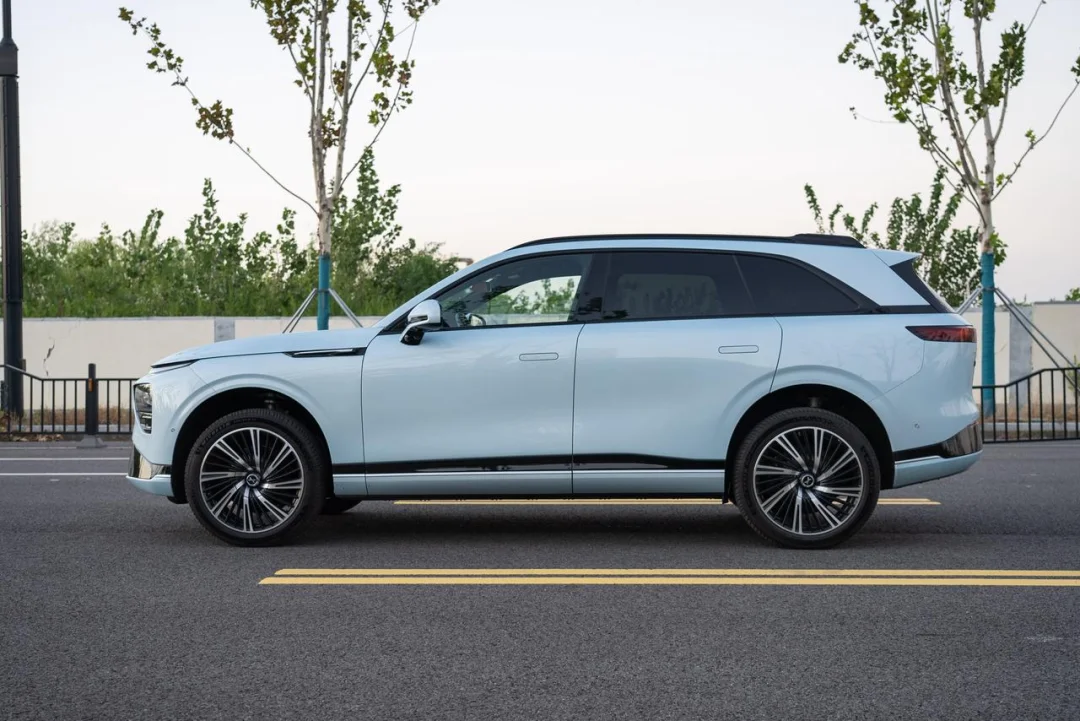
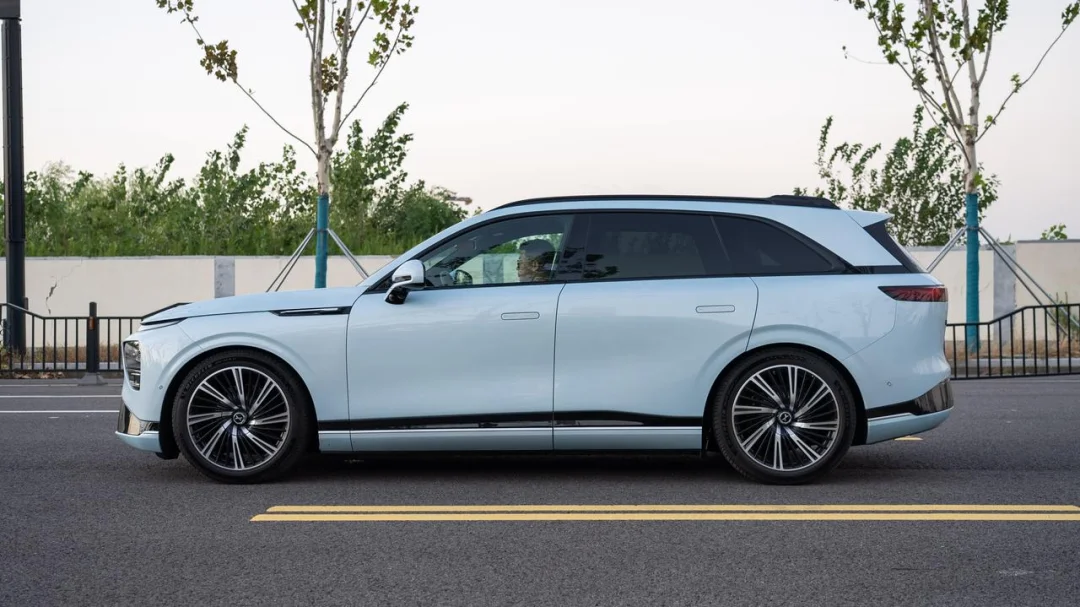
In addition to the distinct feel of the air suspension compared to traditional metal coil springs, the G9’s system offers a travel range of 100 mm (versus 80 mm for the Li L9 and 90 mm for the NIO ES7). This difference is particularly noticeable in real-world driving. Changes in ride height alter the vehicle's overall stance; when the suspension is at its lowest setting, it can even create the visual impression of a station wagon.
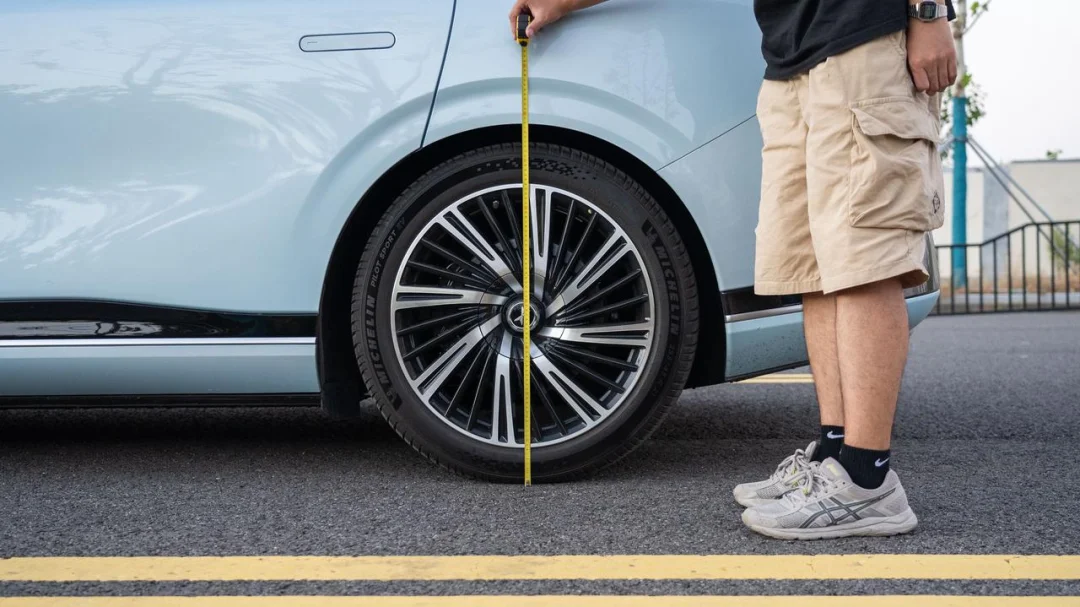
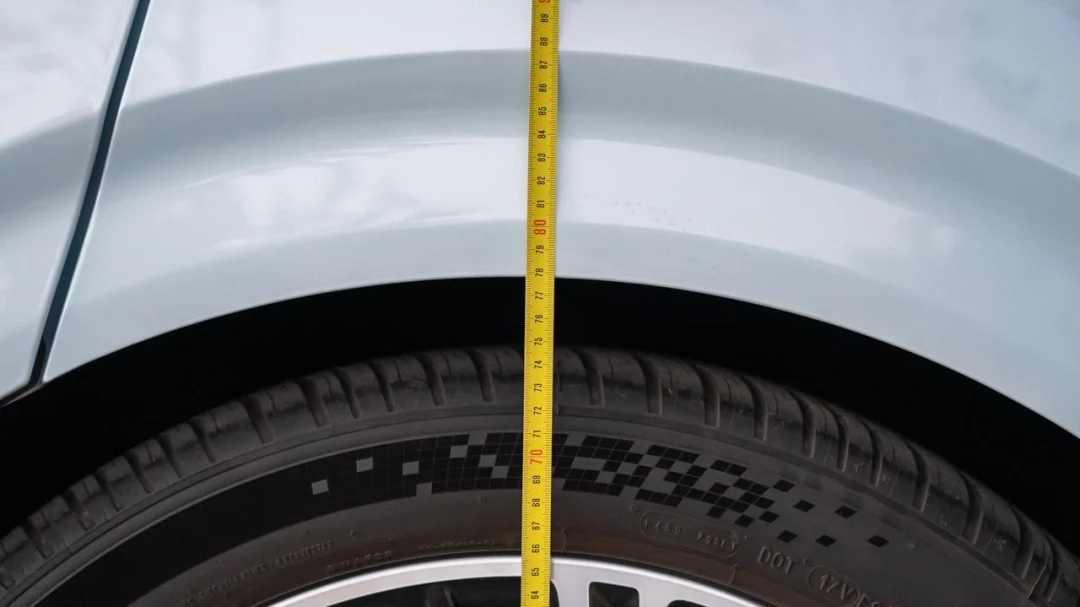
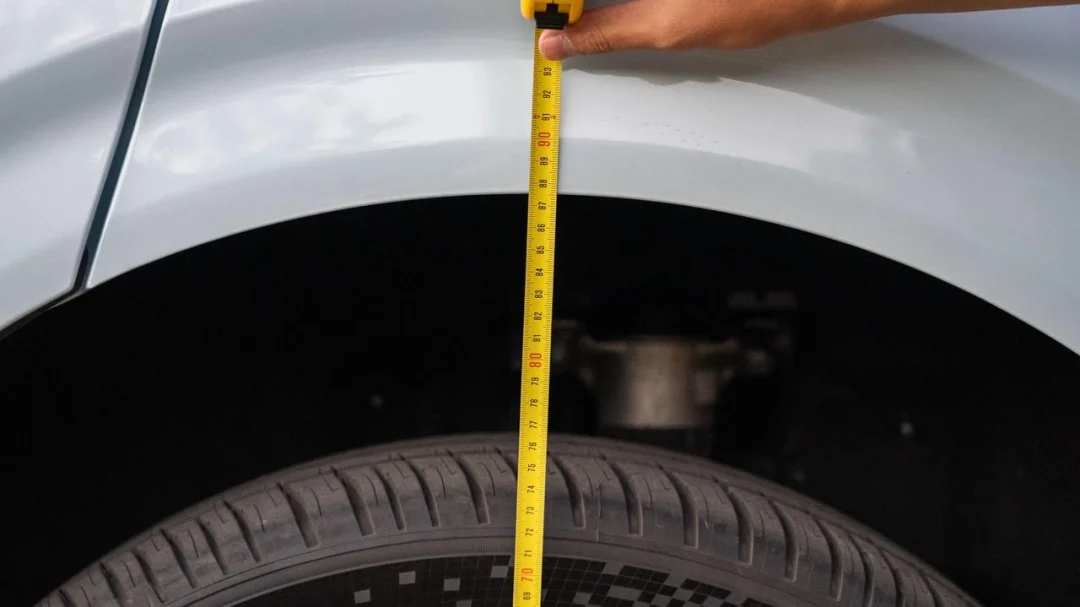
Our actual measurements confirmed that the changes in ride height align closely with the manufacturer's claims.
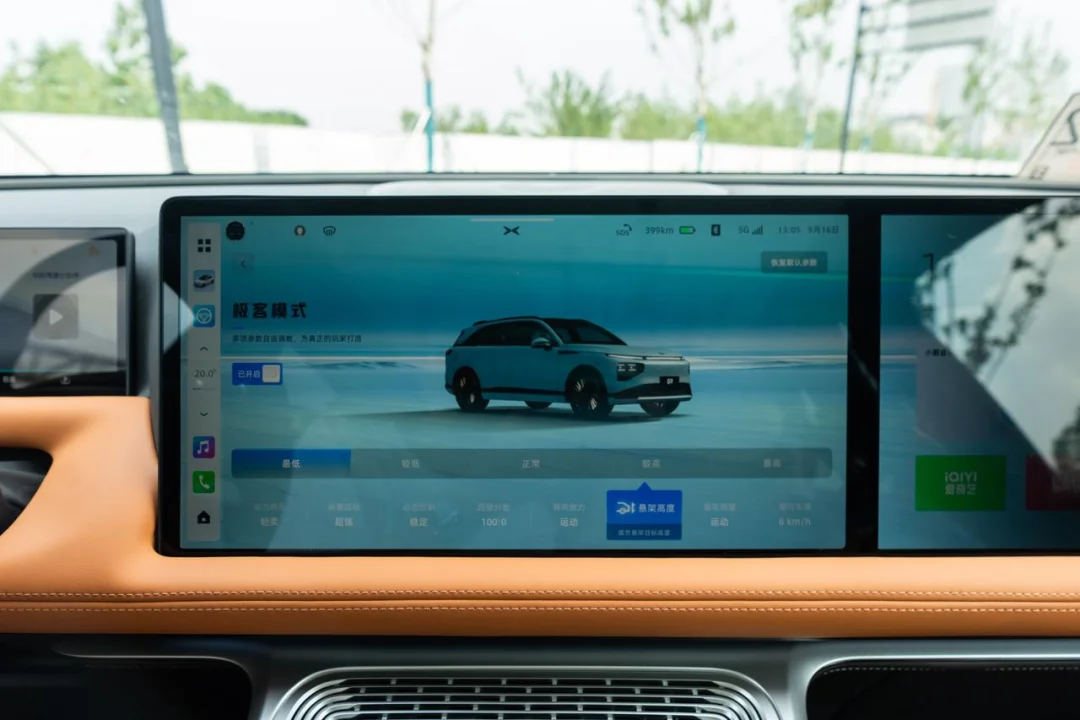
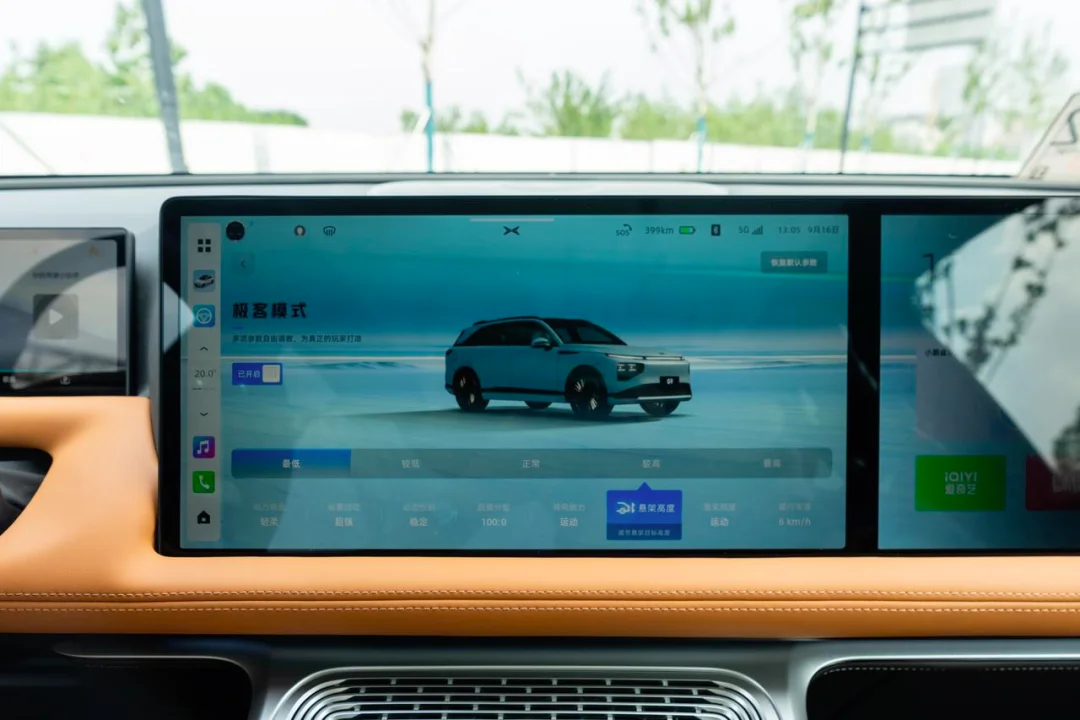
In Geek Mode, users can adjust the suspension through five distinct levels, ranging from the lowest to the highest setting.
Finally, there is NVH. Because the connection between the suspension and the body has changed from metal springs to air, air suspension benefits the cabin's NVH performance.
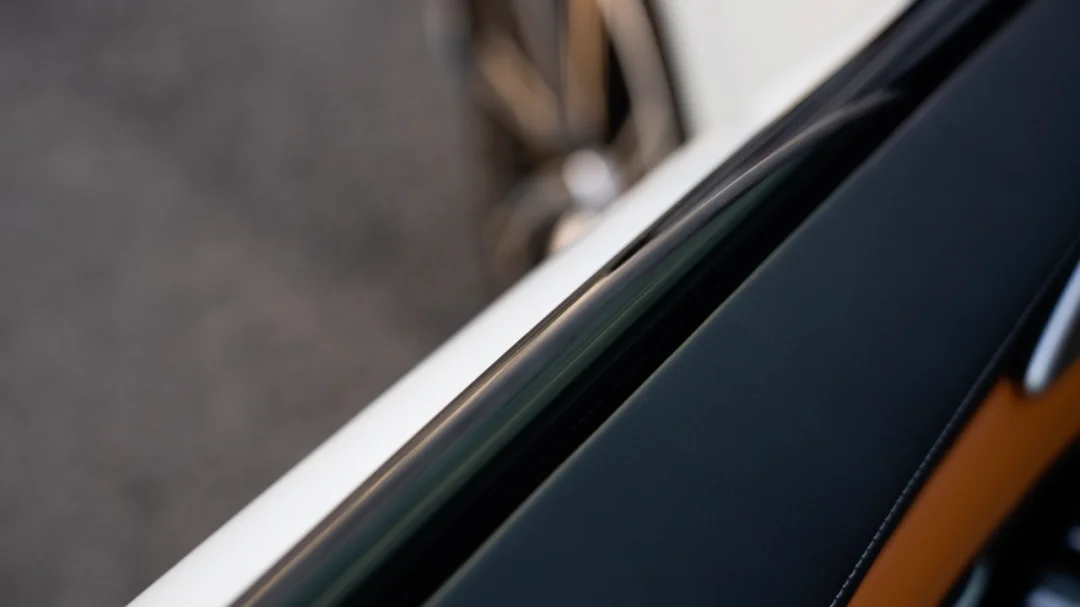
Although the G9 uses single-layer glass, NVH is a systemic engineering challenge, so this does not become the decisive factor for the entire system.
The Michelin PILOT SPORT EV tires on the G9 also contributed to this. During these days of test drives, as long as I was driving on smooth, intact asphalt roads within the speed limit, it was difficult for me to detect tire noise entering the cabin. The excellent NVH performance is absolutely a potential advantage of the G9.
Having covered the advantages of this dual-chamber air suspension, let's now examine its drawbacks.
First, the adjustment speed of this suspension system is relatively slow. Second, there are no alerts during the entire adjustment process, so we cannot tell whether the vehicle has completed its lifting or lowering action. It is recommended that a future OTA update add a real-time status indicator icon for the air suspension on the instrument cluster, or provide an audible alert.
Dual-chamber air suspension is undoubtedly a significant hardware advantage for a vehicle. However, how effectively this suspension system performs ultimately depends on the manufacturer's tuning expertise. Regrettably, in the G9 test vehicle we drove, it failed to deliver its expected performance.
In standard driving mode, the suspension delivers an excellent feel on smooth asphalt. It absorbs almost all fine vibrations into subtle frequencies, provides firm support during cornering, and offers superior NVH performance—all of which were a pleasant surprise.
However, this quality vanished when crossing speed bumps. I had expected it to handle them cleanly, but instead, the front suspension rebounded abruptly, while the rear suspension still transmitted noticeable residual oscillations.
We had anticipated that the standard mode would offer a softer overall suspension tune, better suited for absorbing vibrations from joints and speed bumps. In reality, the current standard-mode feedback felt more akin to a sport setting.
Interestingly, we briefly tested the rear-wheel-drive, single-motor version of the G9. Without dual-chamber air suspension, its purely mechanical setup met our expectations for a standard mode: it filtered most vibrations softly and did not produce harsh feedback at joints or speed bumps.
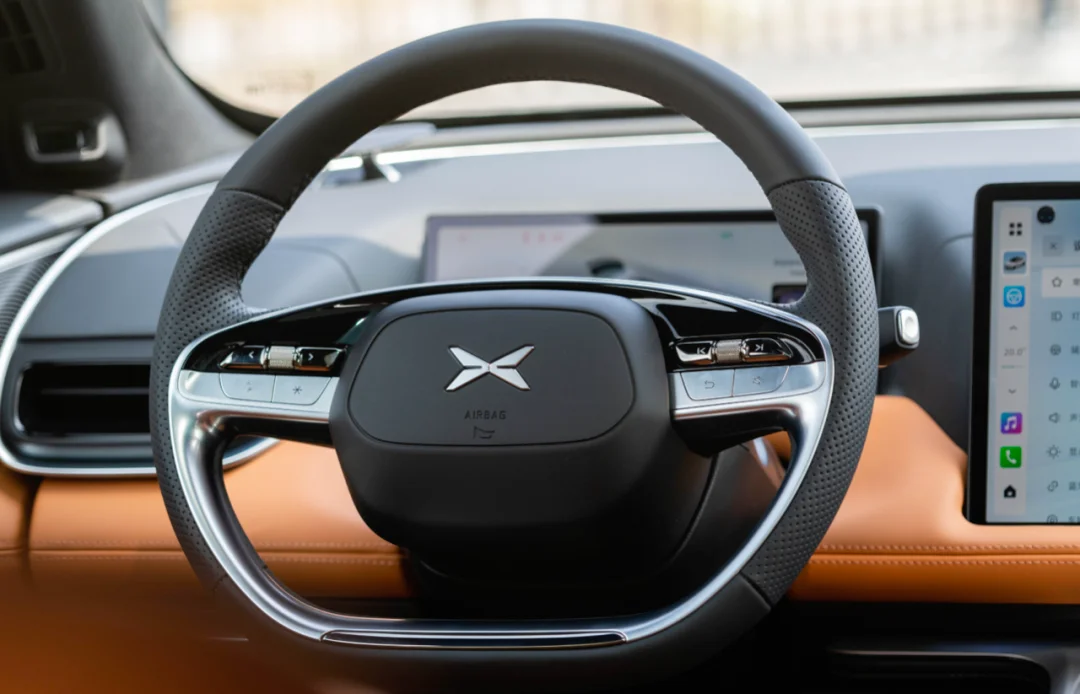
The G9’s steering feel is a significant improvement over the P7.
First, the steering wheel integrates advantages from both the P5 and P7, featuring an inwardly concave design at the three-and-nine o’clock positions to better secure the thumbs. Second, the linearity of the steering and the responsiveness of the front end have improved substantially compared to the P7.
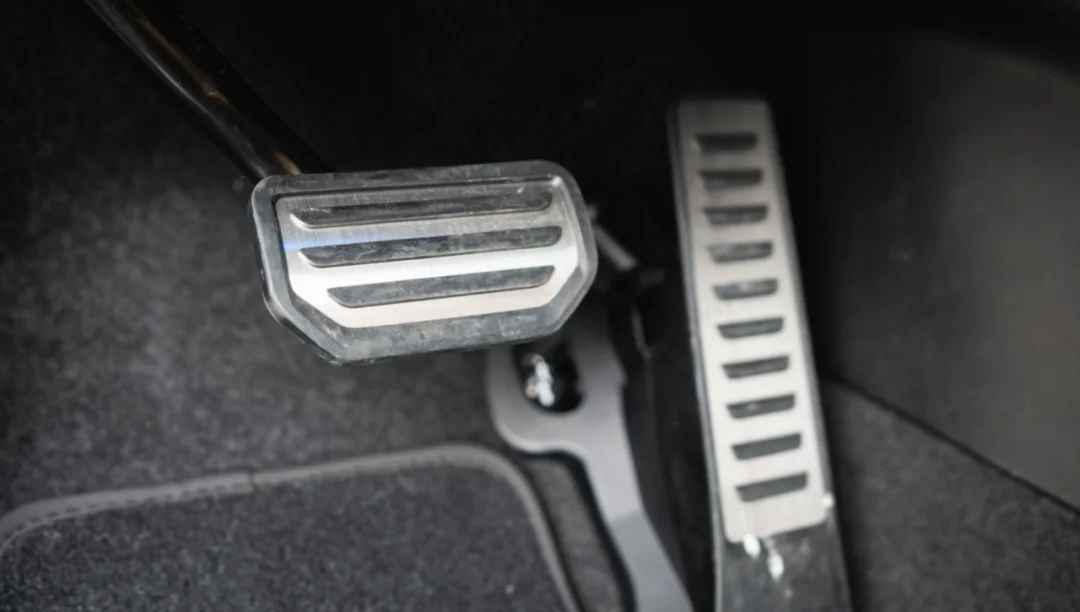
The linearity of the G9’s accelerator and brake pedals has improved significantly compared to the P7. However, the brake pedal feel remains soft, and the damping characteristics show almost no variation across different driving modes.
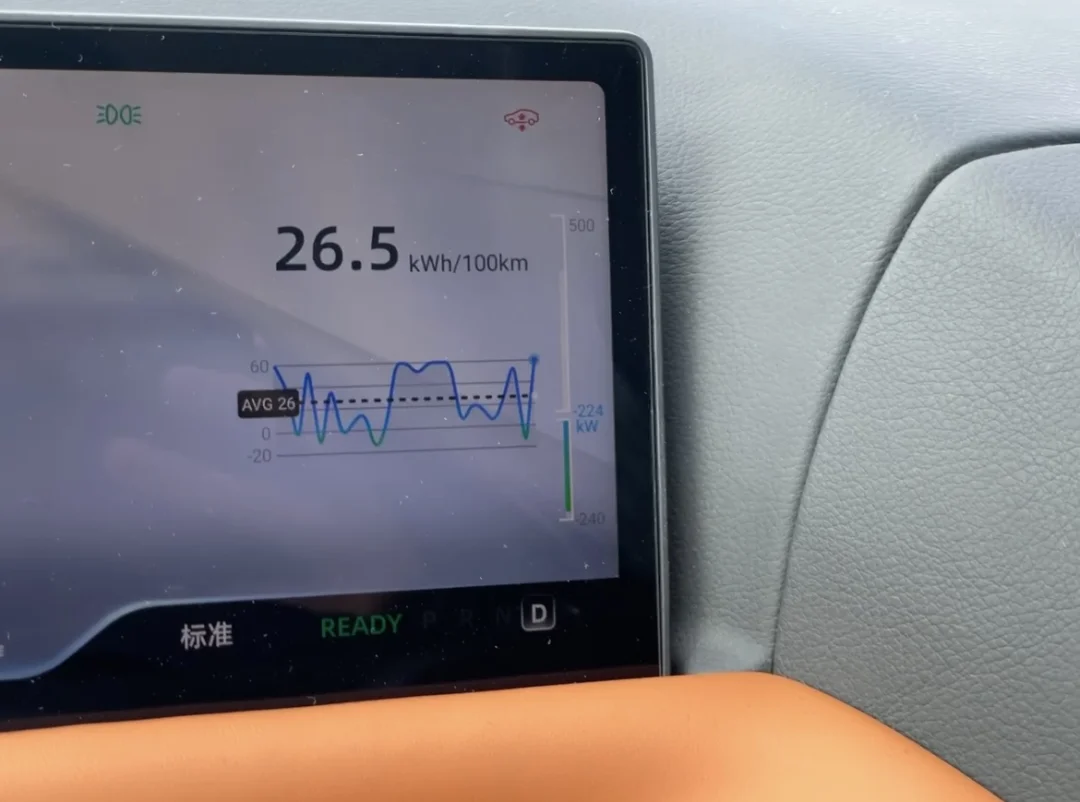
During our multi-day test of the G9, we kept the regenerative braking set to its maximum level. We frequently observed regenerative power readings of 140 kW and 150 kW. We even recorded a peak regenerative power of 224 kW! This is currently the highest regenerative power we have seen in any vehicle we have tested.
7 Driving Modes
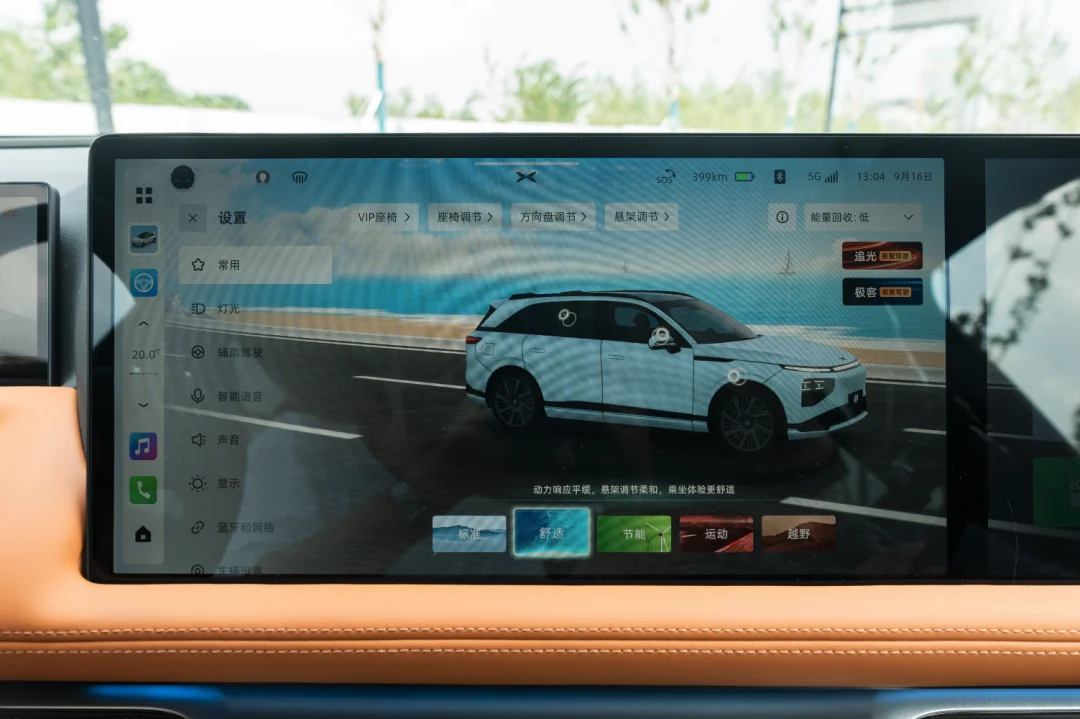
When you select a driving mode in the G9, you will find that in addition to the standard Standard, Comfort, Eco, Sport, and Off-Road modes, there are two additional options: "Light Chaser" and "Geek," bringing the total to seven different driving mode choices.
In this lineup, Light Chaser Mode is more aggressive than Sport Mode, fully unleashing the power. Meanwhile, Geek Mode allows users to define all vehicle driving attributes, including power output, regenerative braking, ESC status, torque distribution, steering feel, suspension height, suspension stiffness, and creep behavior.
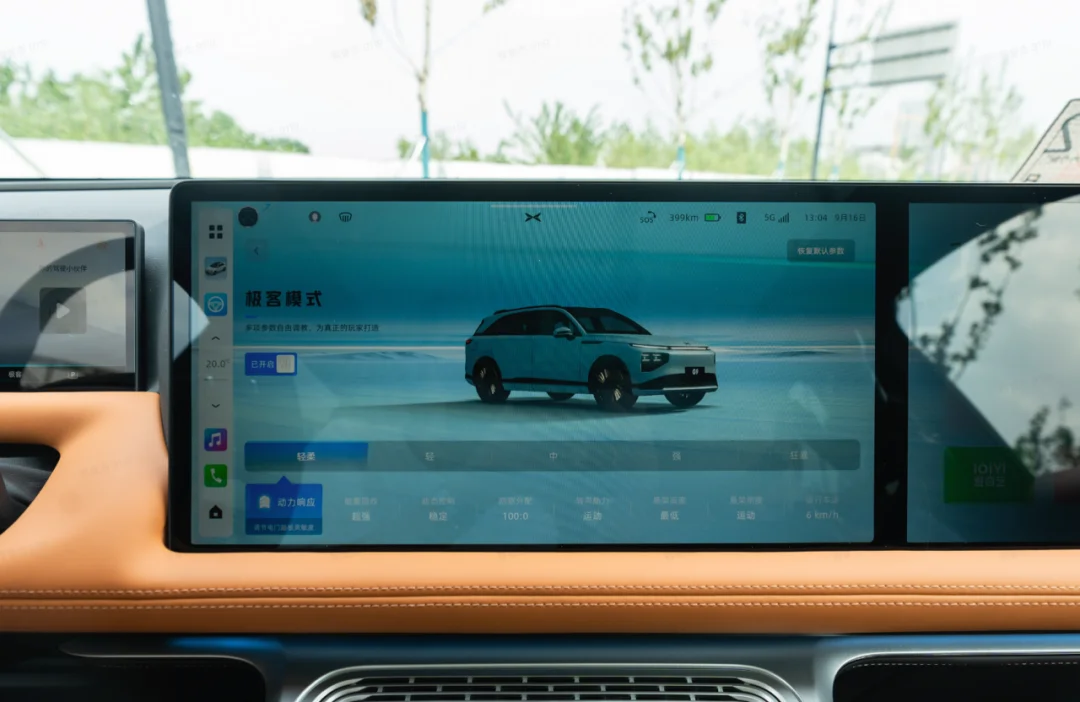
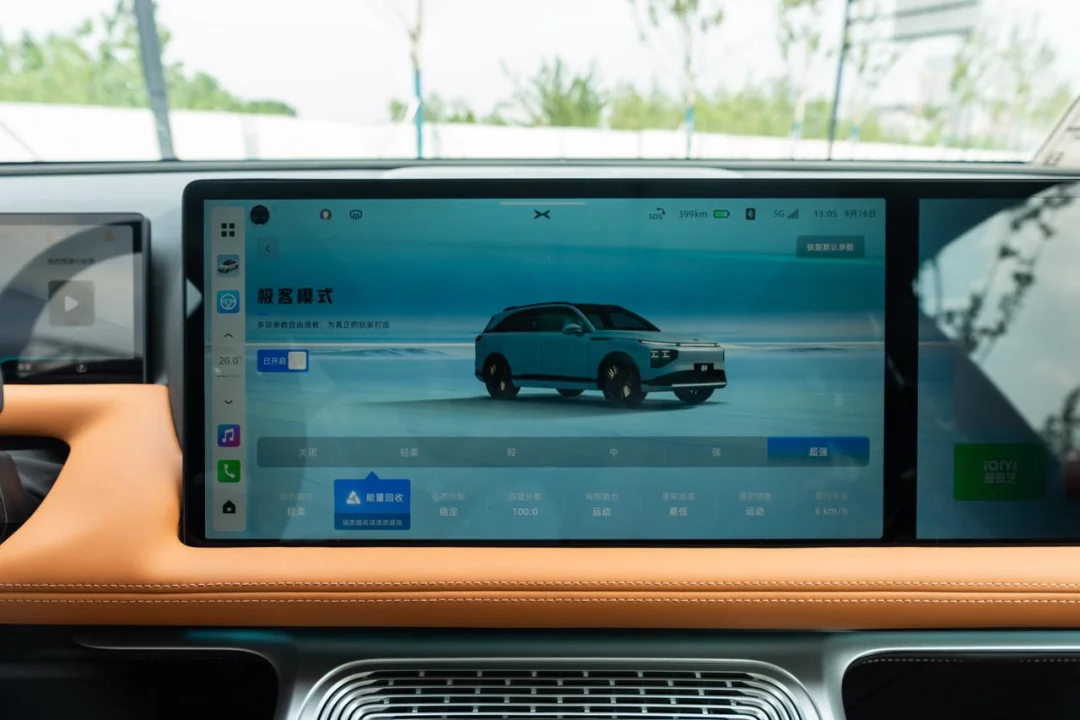
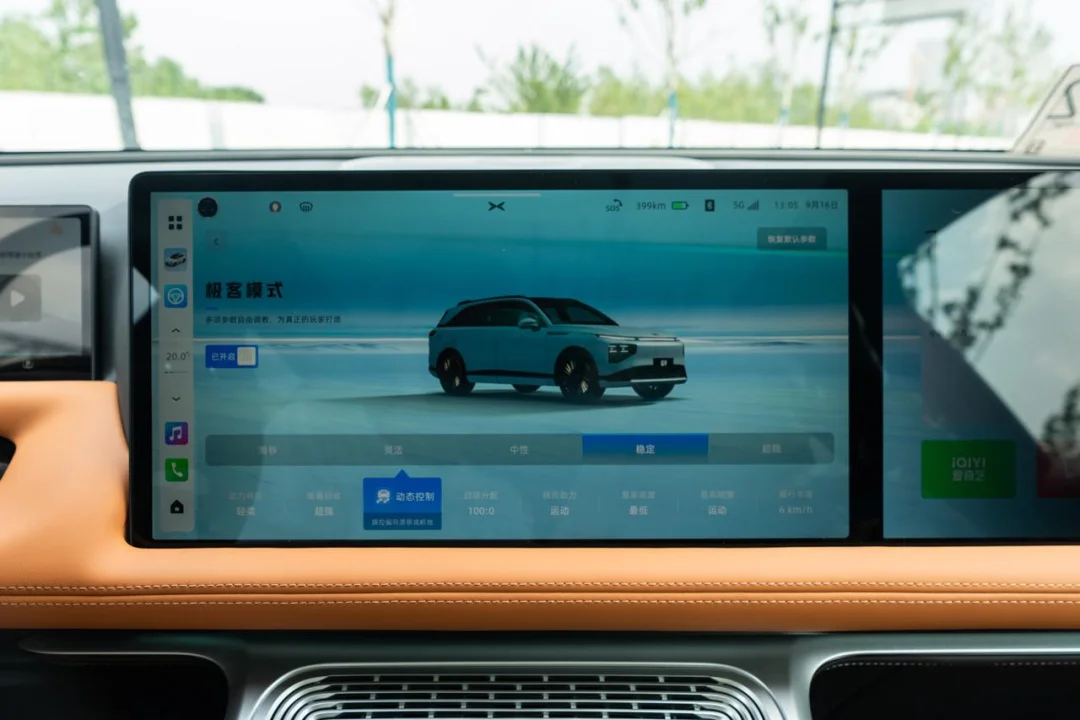
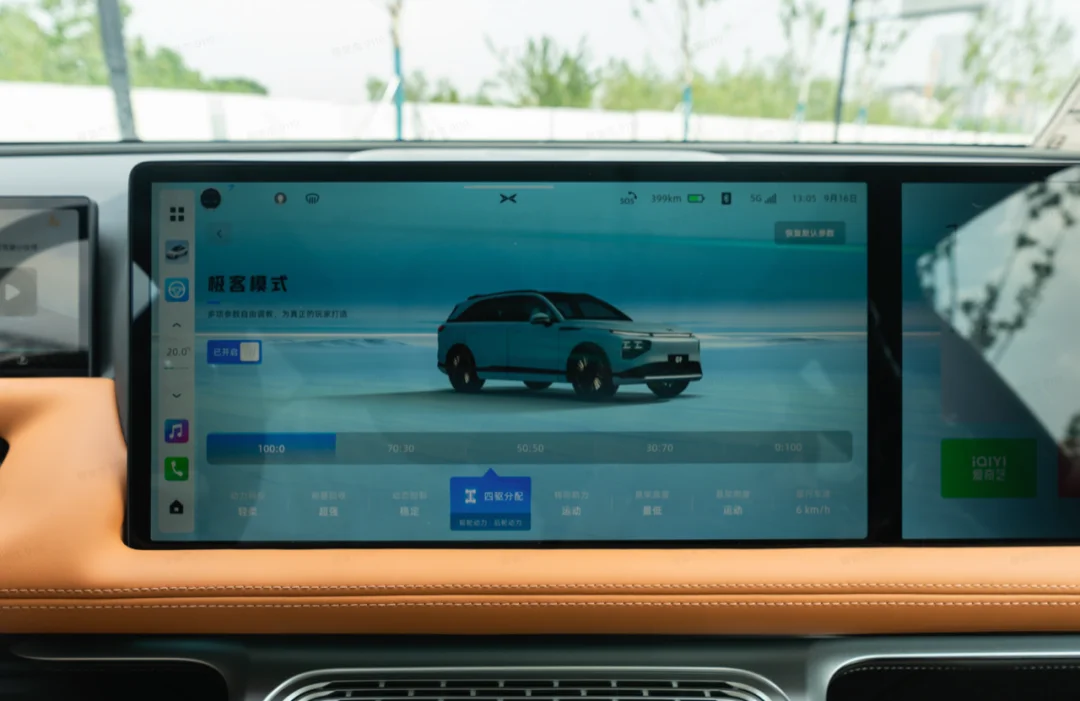
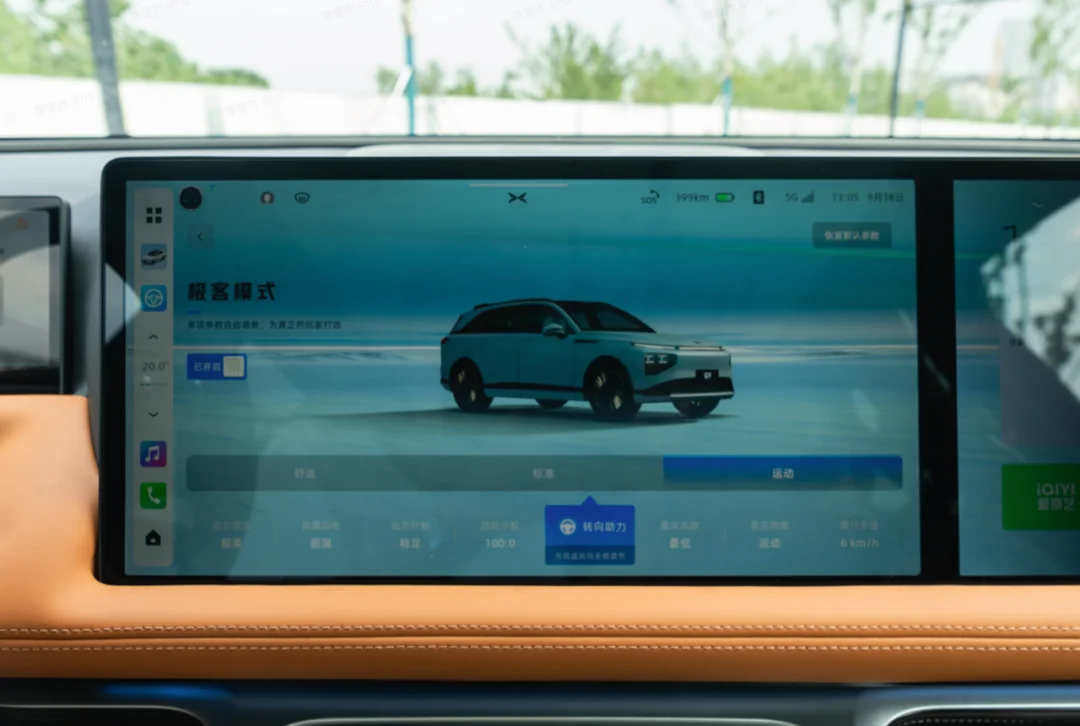
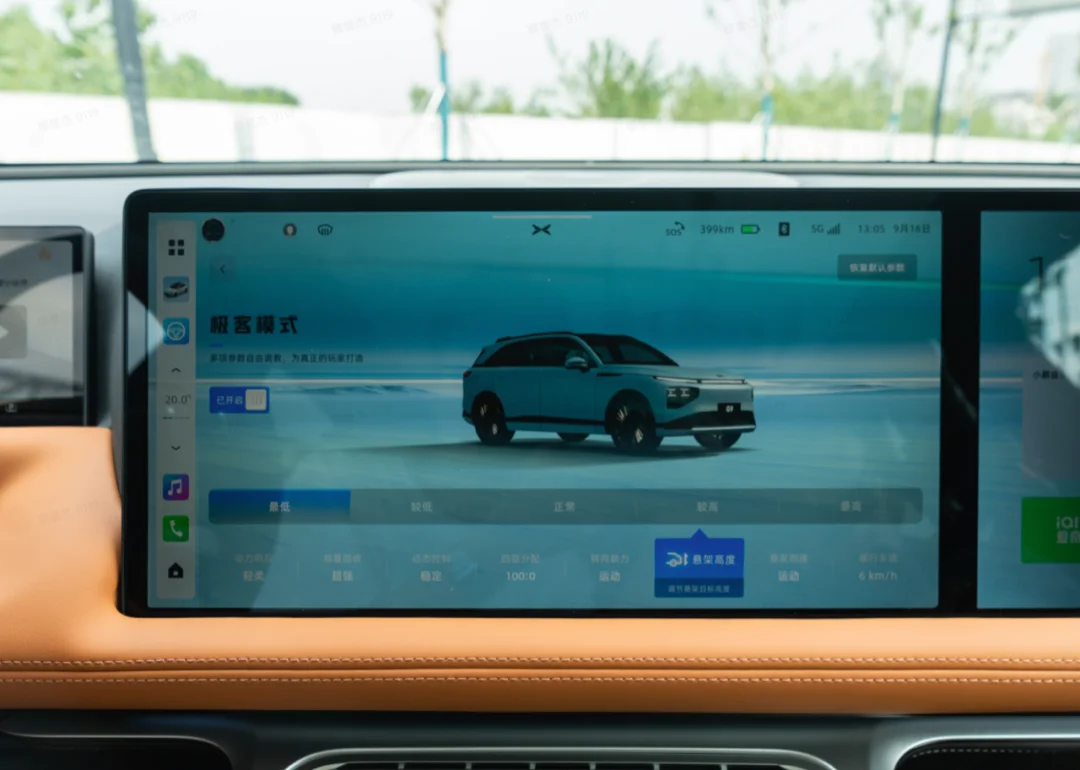
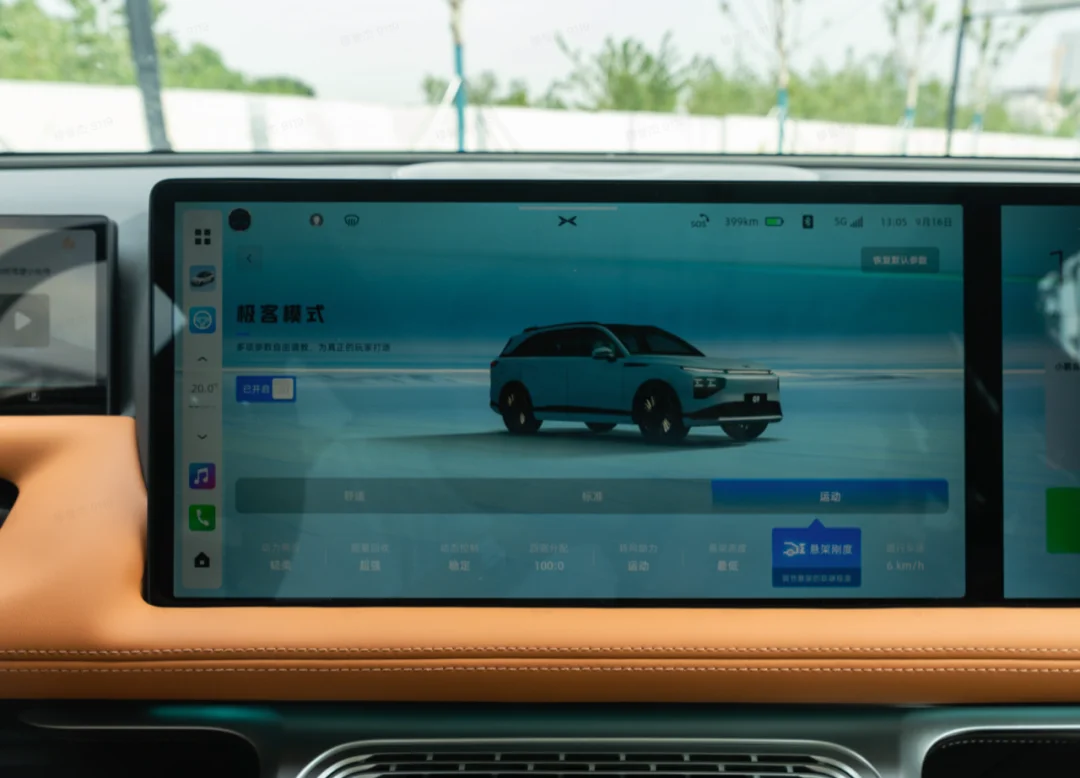
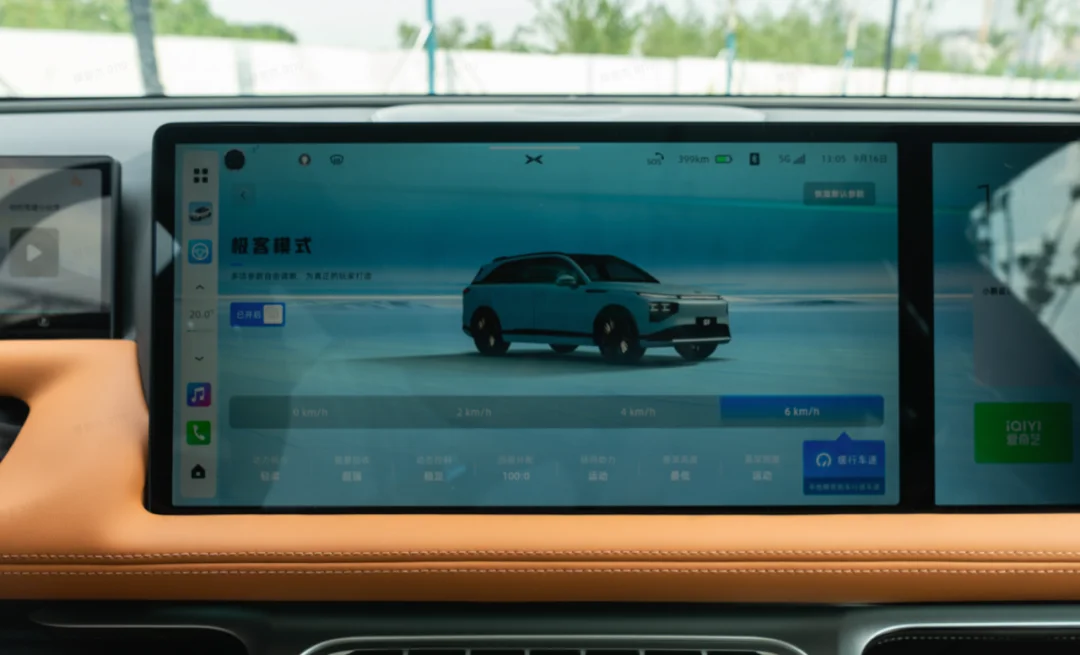
Given the wide variety of settings, my top recommendation from this week’s test drive is to use Geek Mode with the following configuration: light power delivery, maximum regenerative braking, stable dynamic control, 50:50 torque distribution between axles, comfortable steering assist, lowest suspension height, comfortable suspension stiffness, and Stop-Start mode enabled.
Interestingly, in Normal mode, the G9’s regenerative braking can be set to a one-pedal driving style, but it cannot bring the vehicle to a complete stop. Instead, the car continues moving at a speed of 2–3 km/h.
However, in Geek Mode, the creep speed can be adjusted to 0 km/h. Once the vehicle reaches this speed, it engages Auto Hold to keep the car stationary.
Acceleration and Braking Performance
Our test mule was an XPENG G9 Dual-Motor 650 X Edition. It features a 175 kW AC asynchronous motor at the front and a 230 kW permanent magnet synchronous motor at the rear, delivering a combined peak power of 405 kW and a maximum torque of 717 N·m.
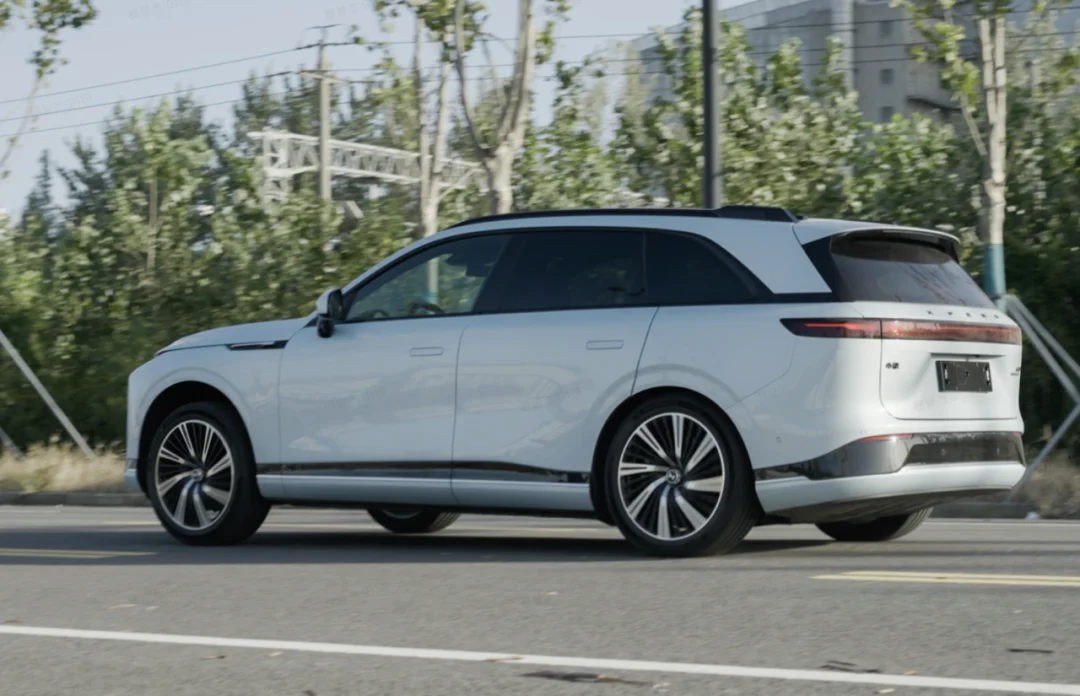
The manufacturer claims a 0–100 km/h acceleration time of 3.9 seconds. We conducted more than ten repeated tests on a closed course, with the following results.
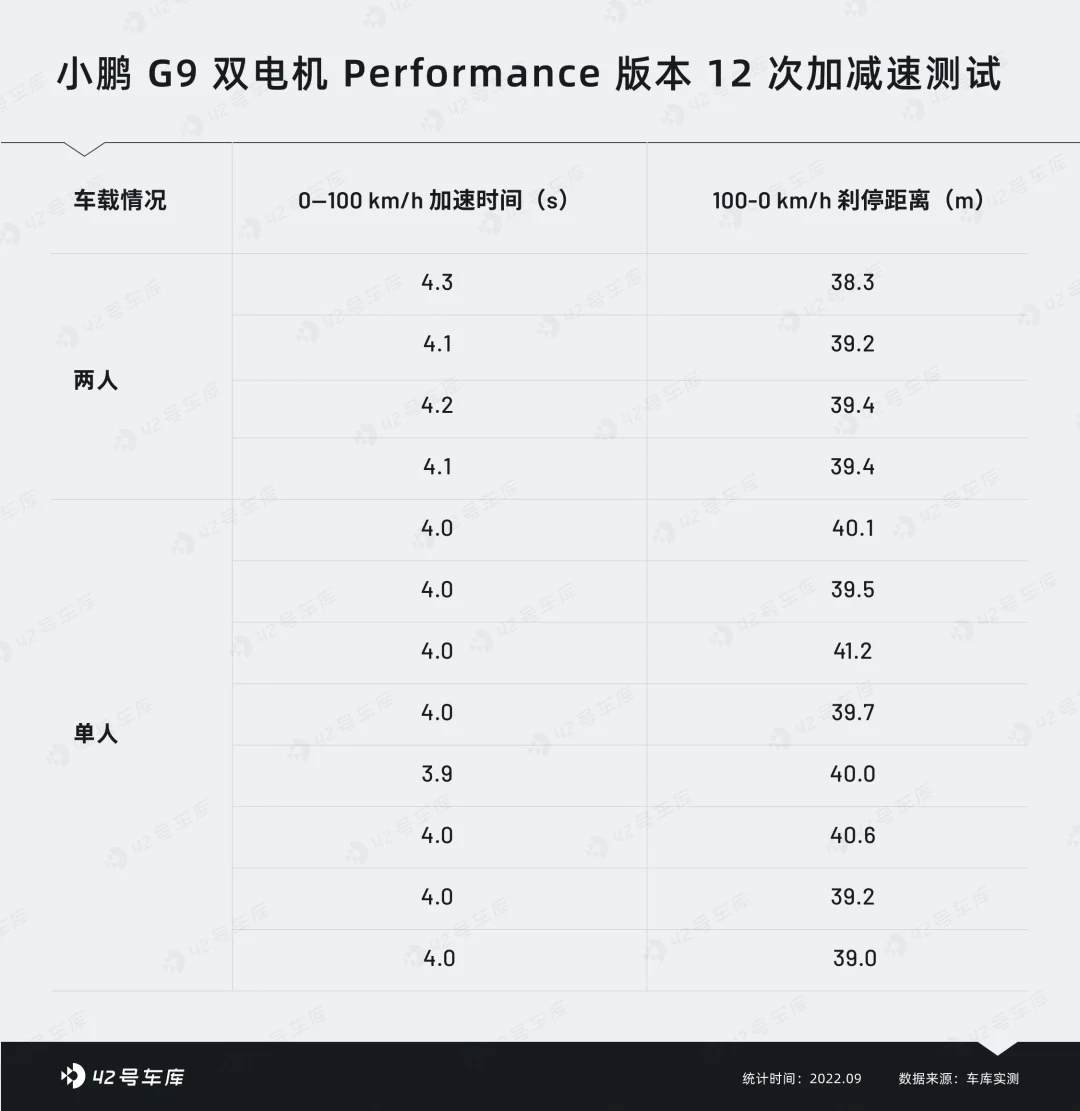
The ambient temperature was 29°C, and the battery level was at 76%. We activated Light Chaser Mode to fully unleash the vehicle’s performance.
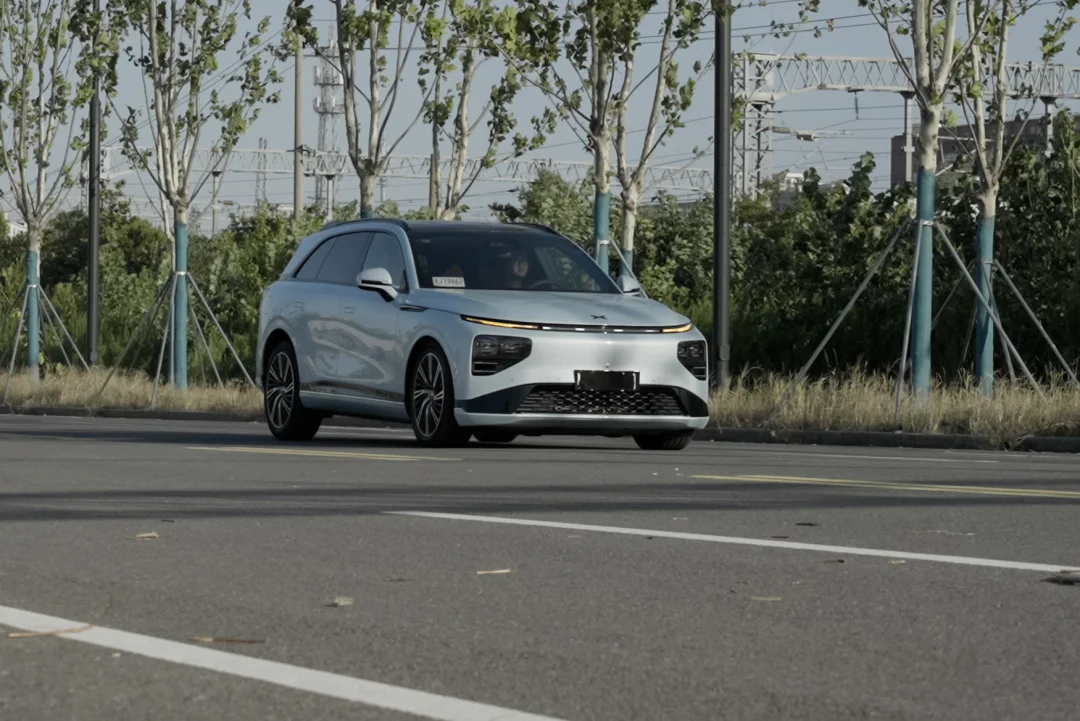
With two occupants in the front seats, acceleration times hovered around 4.1–4.2 seconds. During single-driver tests, the vehicle’s acceleration stabilized at 4.0 seconds, and in the ninth test, it even broke into the sub-3-second range.
0" Counter (Section) Charging: The Benefits of an 800 V Architecture
Another key selling point for the XPENG G9 is its 800 V electrical architecture and silicon carbide (SiC) power modules. Our test unit was the standard 3C version. For daily use, this configuration delivers the most noticeable benefit: extremely fast charging speeds. We specifically tested the vehicle at XPENG’s S2 180 kW supercharging stations and compared them against standard 120 kW chargers.
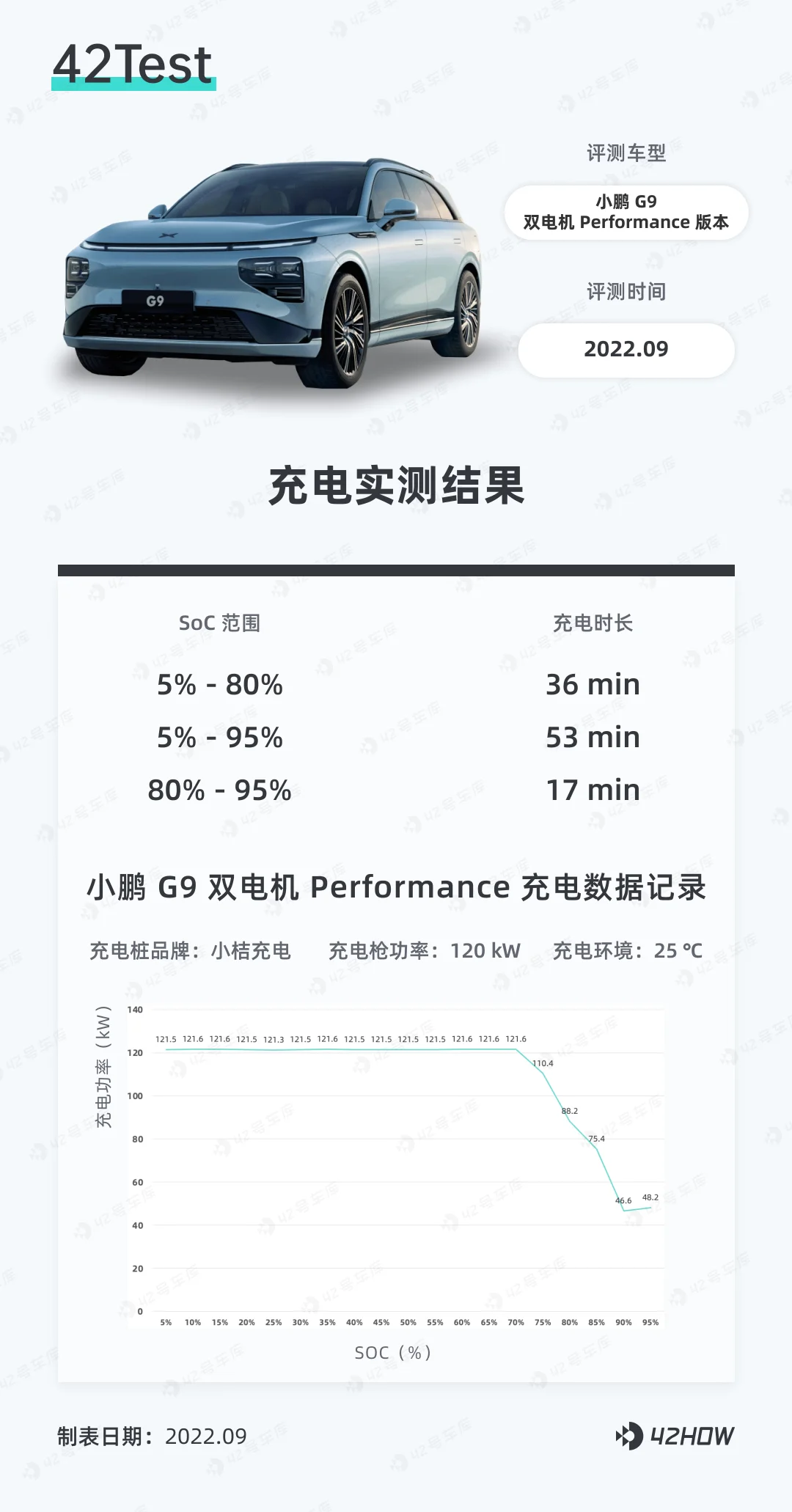
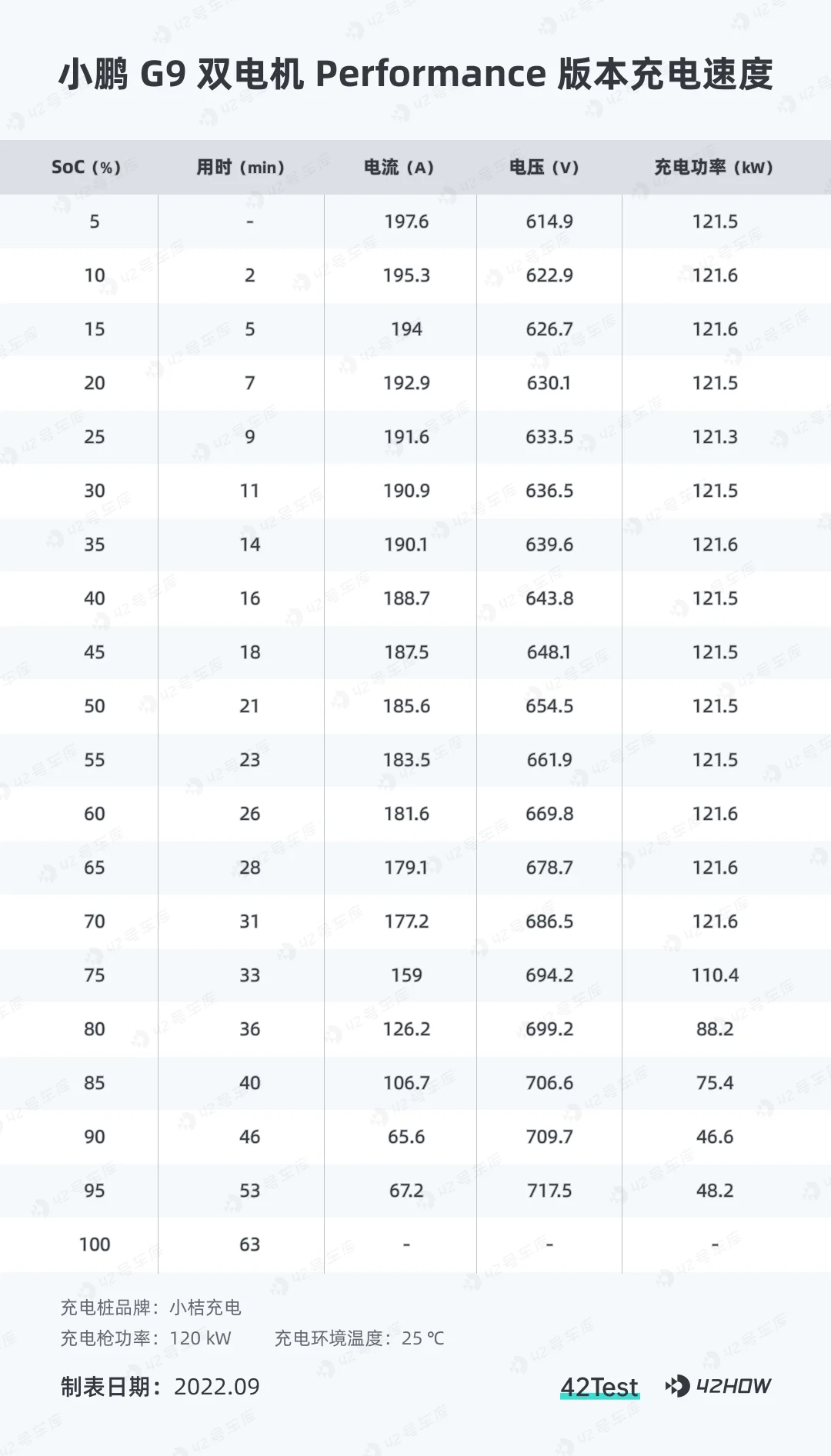
At a Xiaojucharging 120 kW charger, with no other vehicles sharing the station, the G9 fully utilized the charger's power output until the battery state of charge (SoC) reached 75%. It took 53 minutes to charge the battery from 5% SoC to 95%.
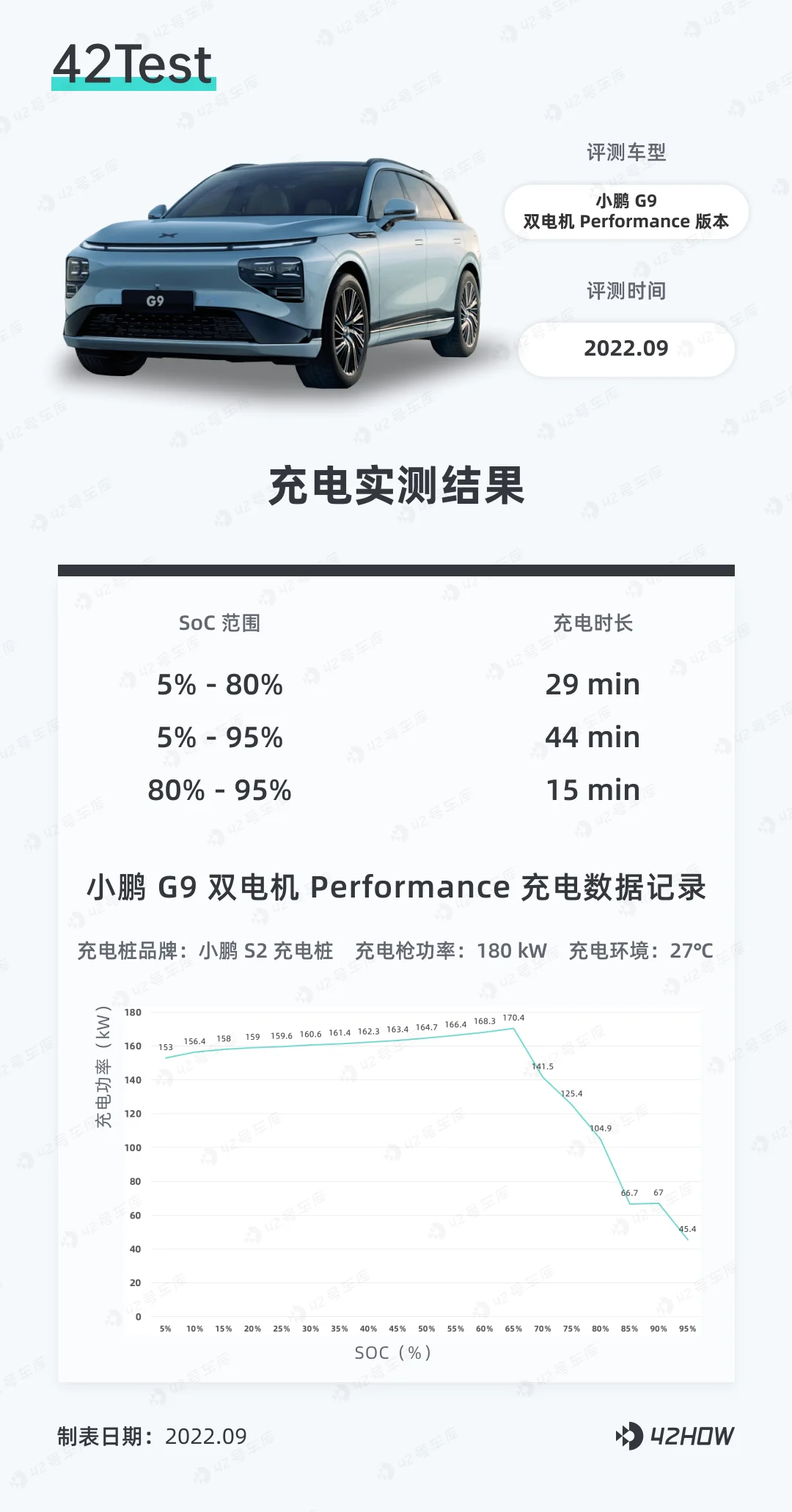
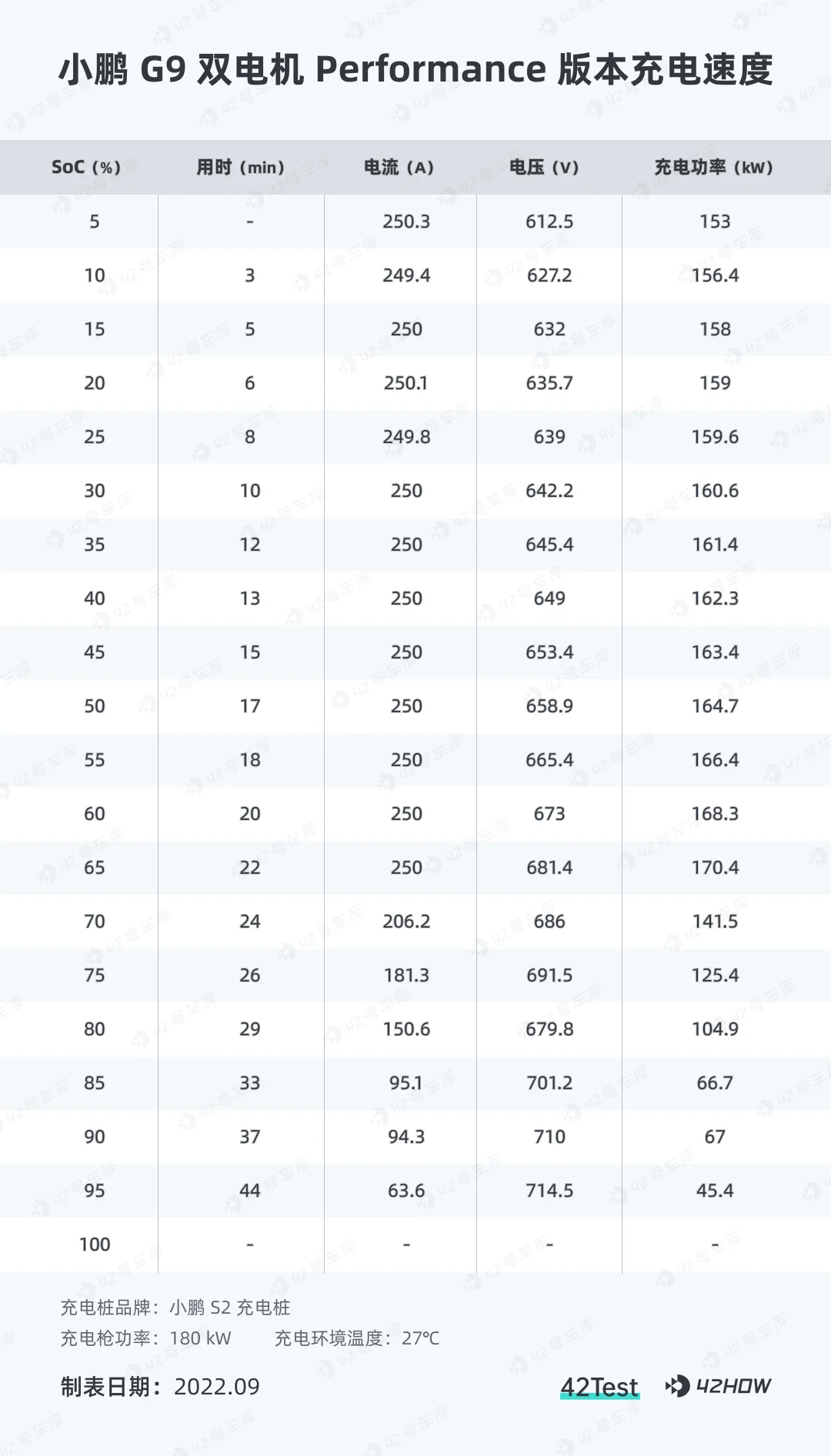
Because Shanghai currently has no S4 superchargers, we conducted our test at an S2 station. During the initial charging phase, power output rose gradually. This is because the battery’s state of charge was too low to establish a high voltage; peak power of 170 kW was not reached until the battery level hit 70%.
For G9 owners, the experience improvement from charging speed is significant whether using standard 120 kW third-party chargers or XPENG’s proprietary S2 stations, provided there is no load sharing. The vehicle can reach nearly 80% state of charge in just 30 minutes.
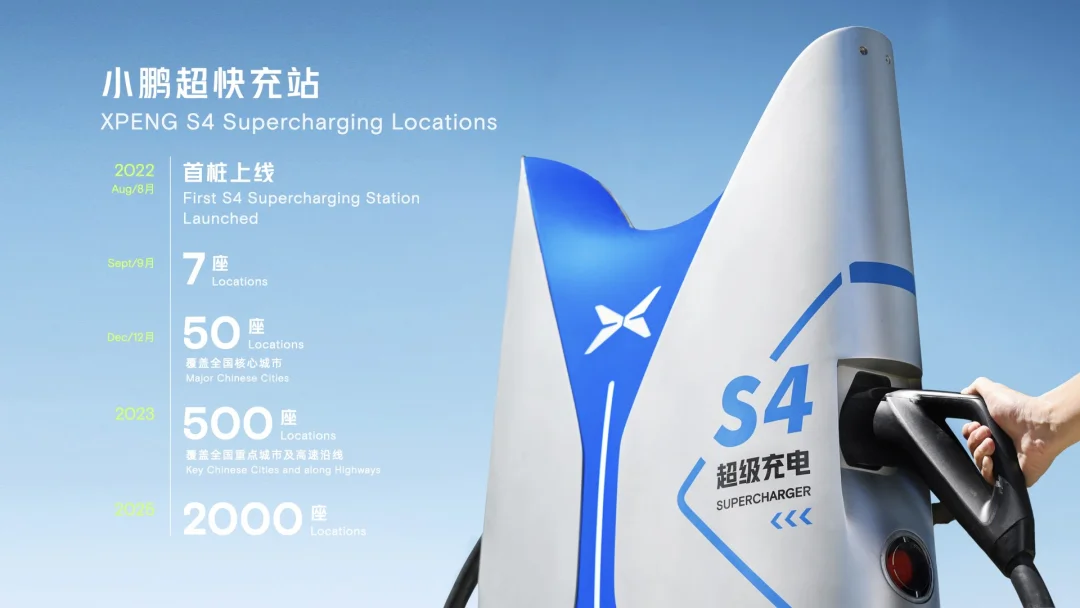
To achieve faster replenishment experiences, XPENG must accelerate the construction of its proprietary charging network. Currently, XPENG operates more than 1,000 proprietary stations, covering all direct-administered municipalities and prefecture-level administrative regions nationwide, but the density of S2 and S4 sites needs to increase rapidly.
This plug-and-charge convenience, combined with dense station coverage, offers strong appeal to users.
03Range: Dual-Motor Version Achieves 460 km on Highway Real-World Test
The G9 battery options include a 78 kWh lithium iron phosphate variant and a 98 kWh ternary lithium variant. Our dual-motor test unit has an official CLTC range of 650 km.
We conducted a 42Test range evaluation on the G9, covering both highway and urban driving conditions. The vehicle’s range performance was commendable.
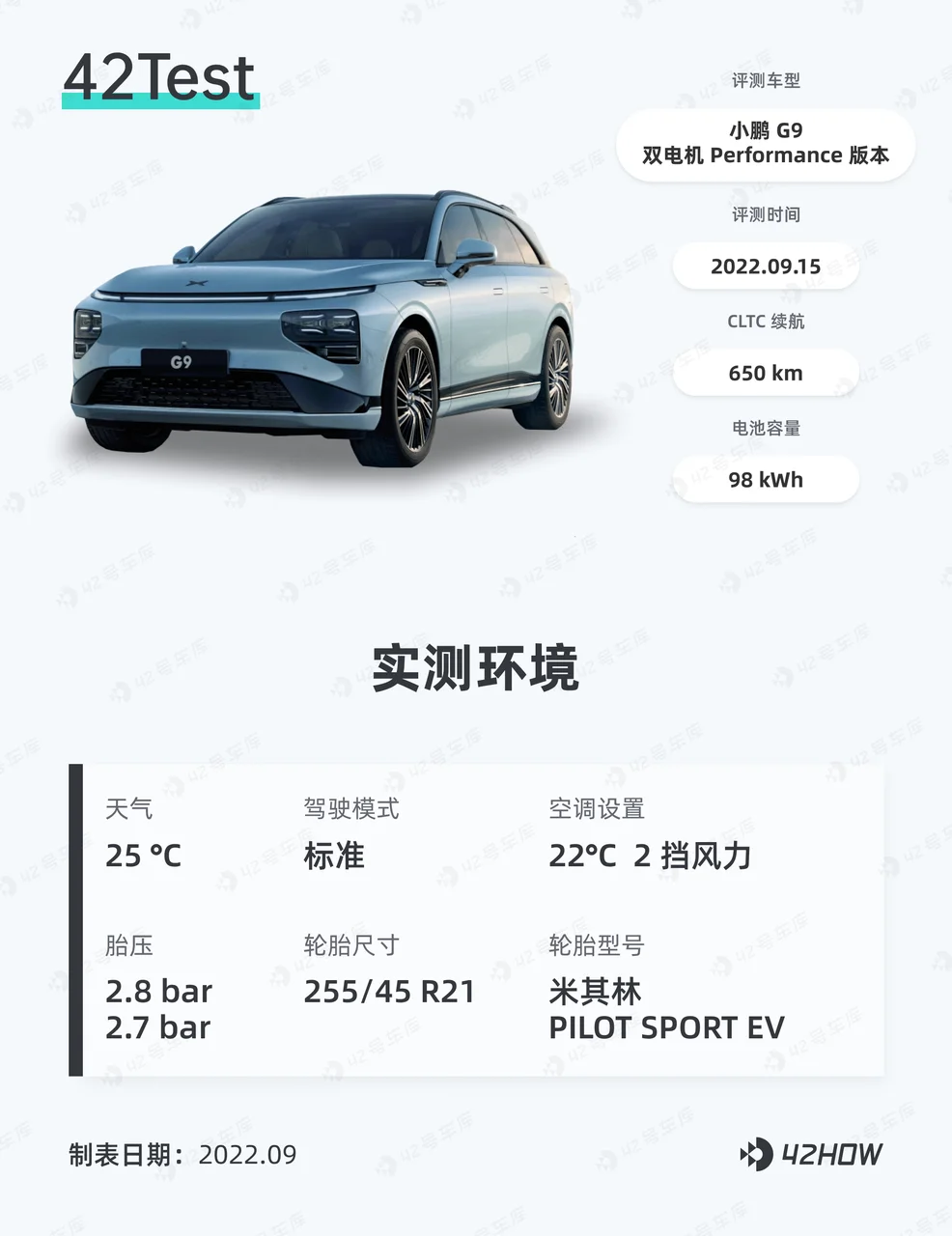
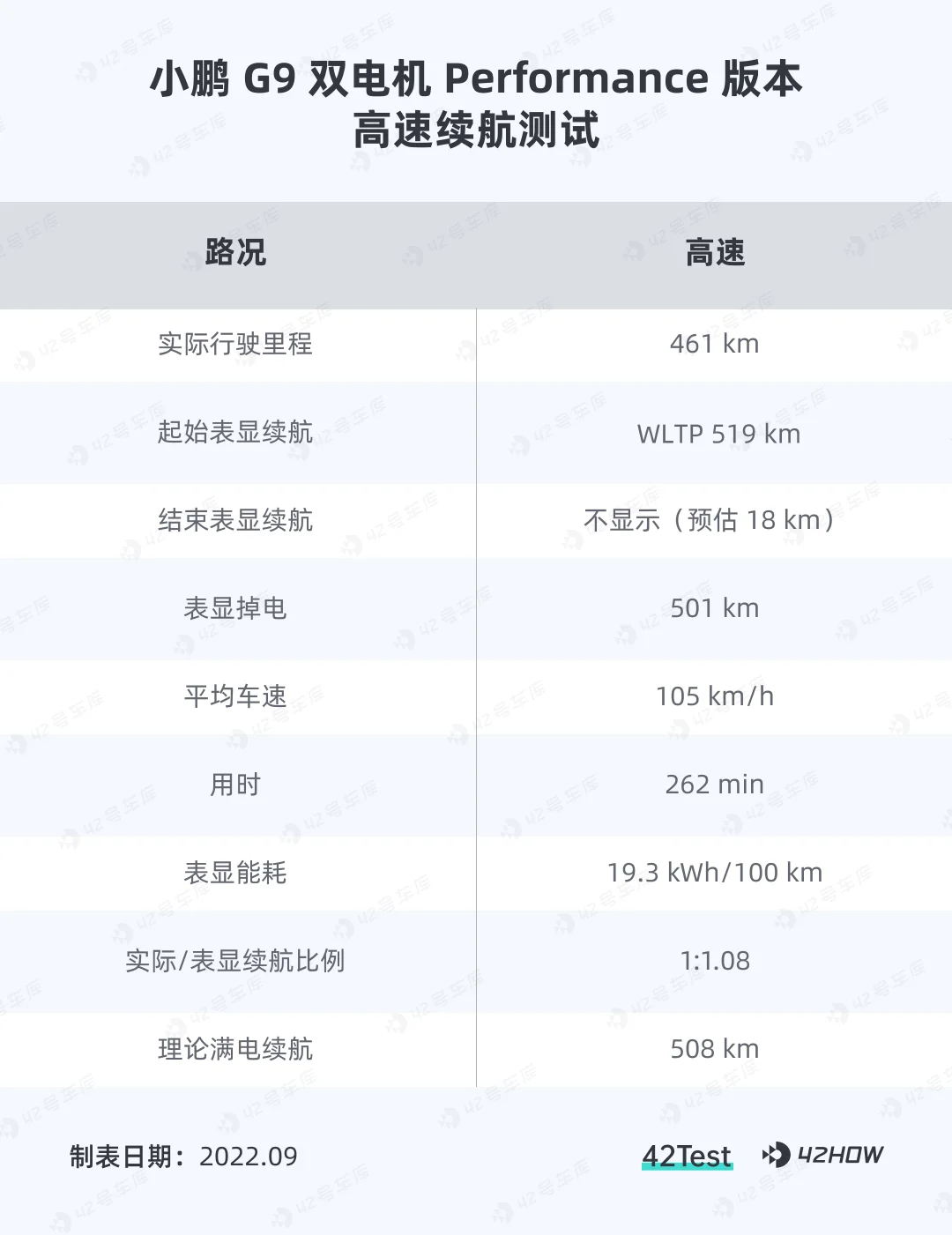
During the highway segment, we maintained speeds close to the posted limit, achieving an average speed of 105 km/h over a distance of 460 km. After completing the test, the vehicle no longer displayed remaining range. Based on experience with the XPENG P7, which typically ceases range display when remaining mileage drops below 20 km, we estimate that approximately 18 km of range remains in the G9.
Based on the final energy consumption of 19.3 kWh/100 km, the vehicle could theoretically travel more than 500 km.
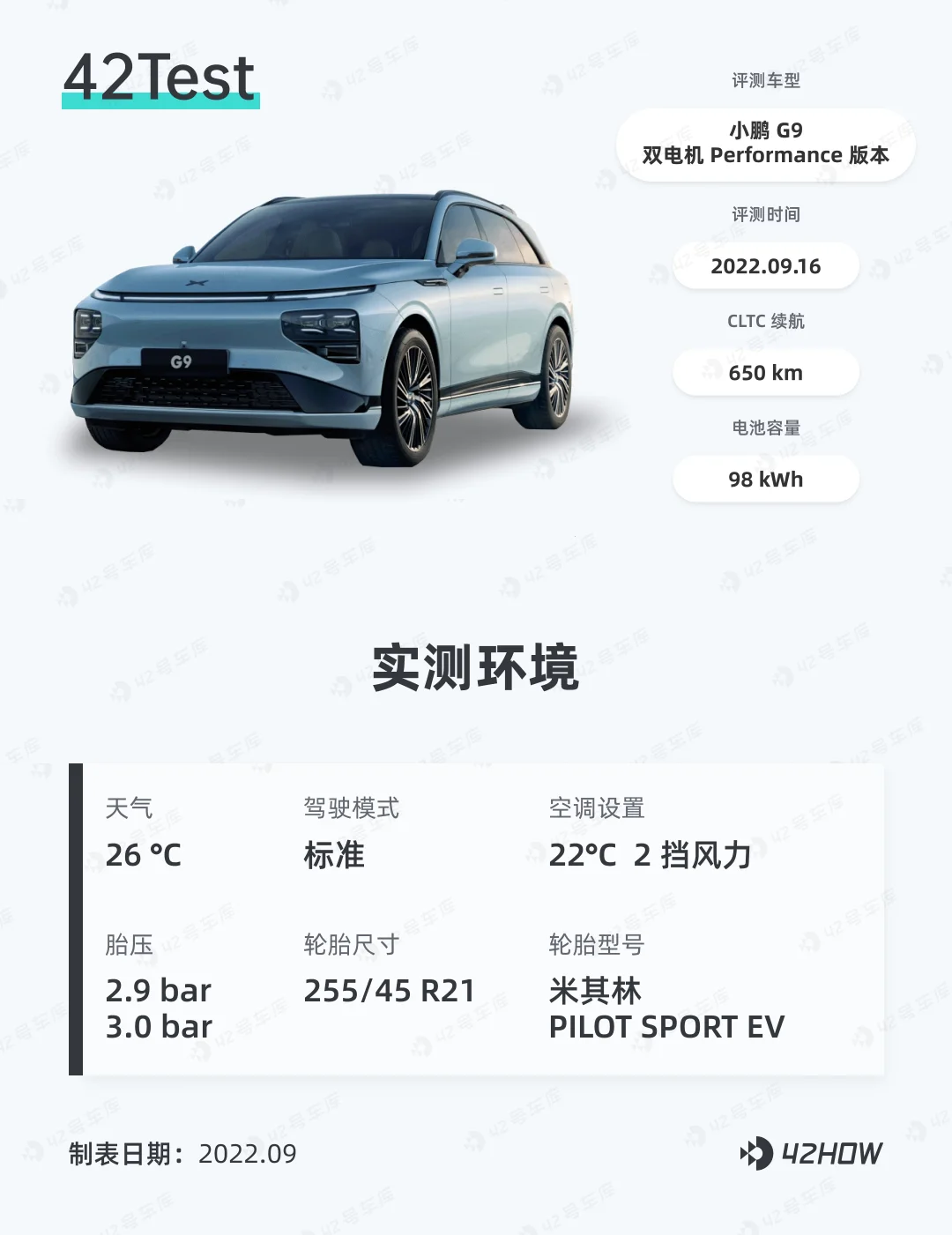
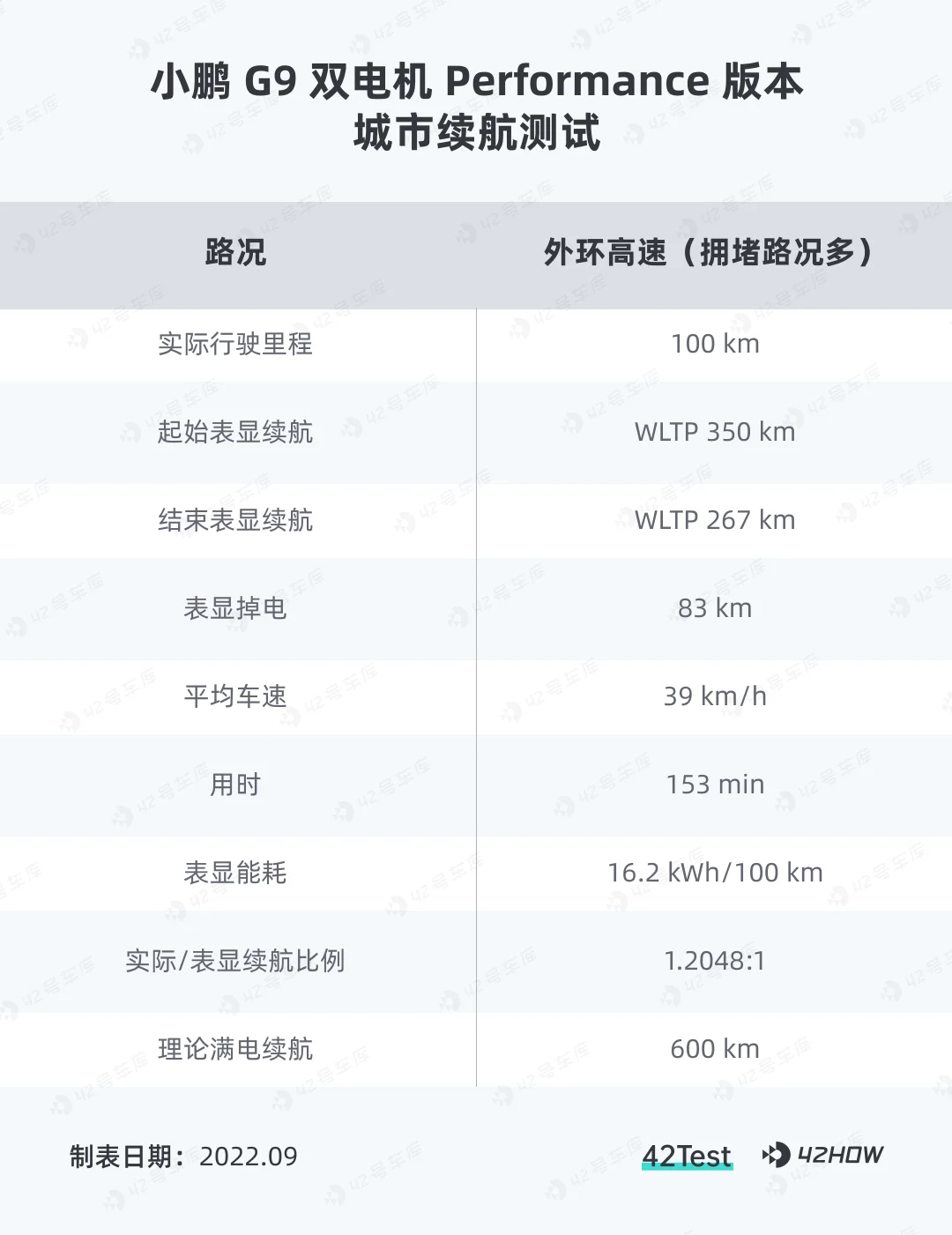
Our urban test consisted of two parts: 100 km on the outer ring expressway and 50 km on city surface roads. During the Shanghai outer ring expressway test, we encountered heavy traffic; the 100 km journey took nearly three hours, resulting in an average speed of just 39 km/h.
Due to heavy congestion, we even achieved a "reverse overstatement": the vehicle traveled 1.2 km while the WLTP range display dropped by only 1 km.
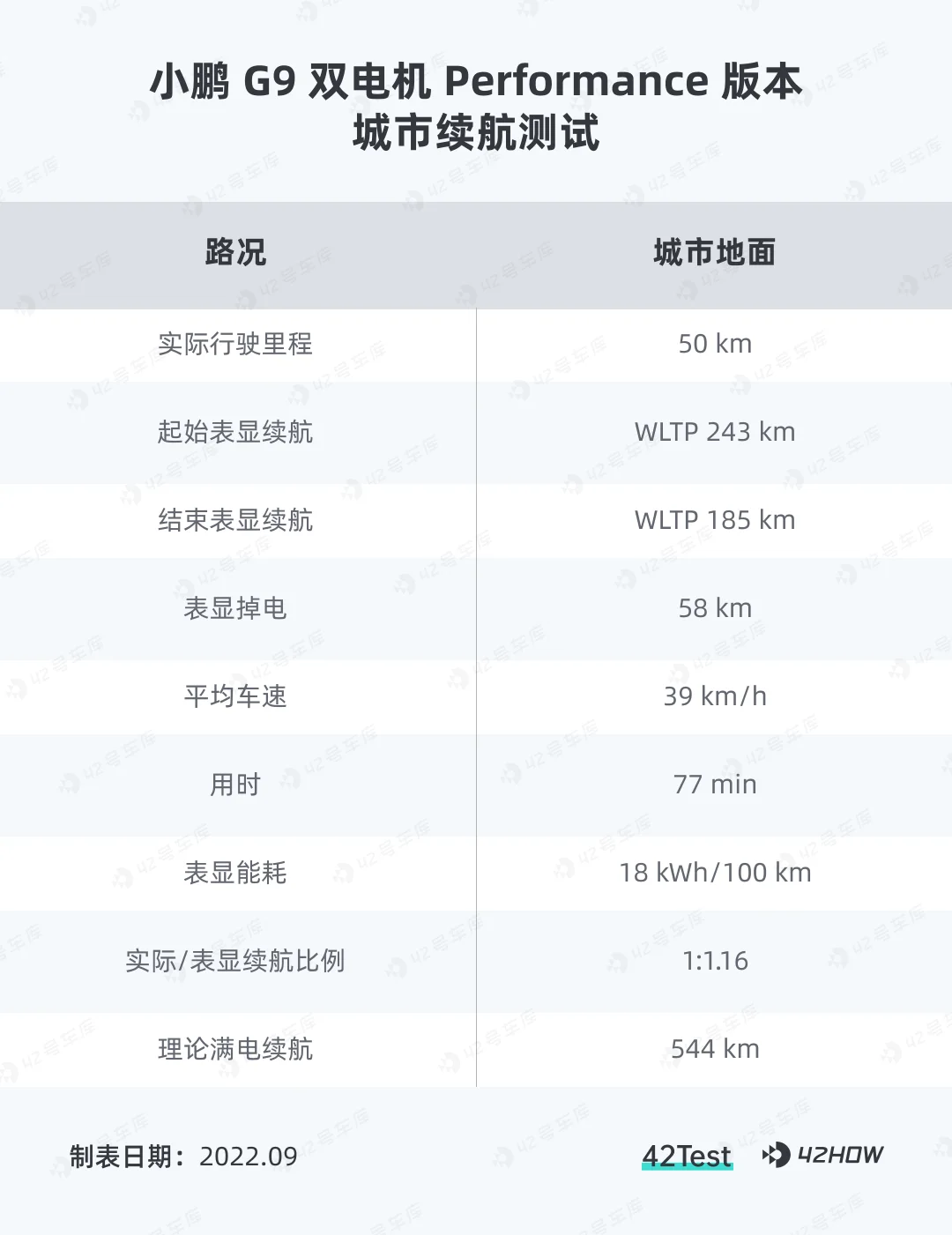
On urban roads with many traffic lights, the G9 performed worse than on the outer ring road. The average speed reached 58 km/h, and for every 1 km driven, the WLTP range decreased by 1.16 km.
For a large five-seat SUV with a curb weight of 2.3 tons that can accelerate into the 3-second range, achieving over 460 km of highway range is indeed impressive for the G9.
04Elegant Exterior Design
From Model 7 to Model 9: How XPENG Redefines Its Flagship | Static Review of the G9
XPENG G9 Static Review: How Did This Cinema Get Four Wheels?
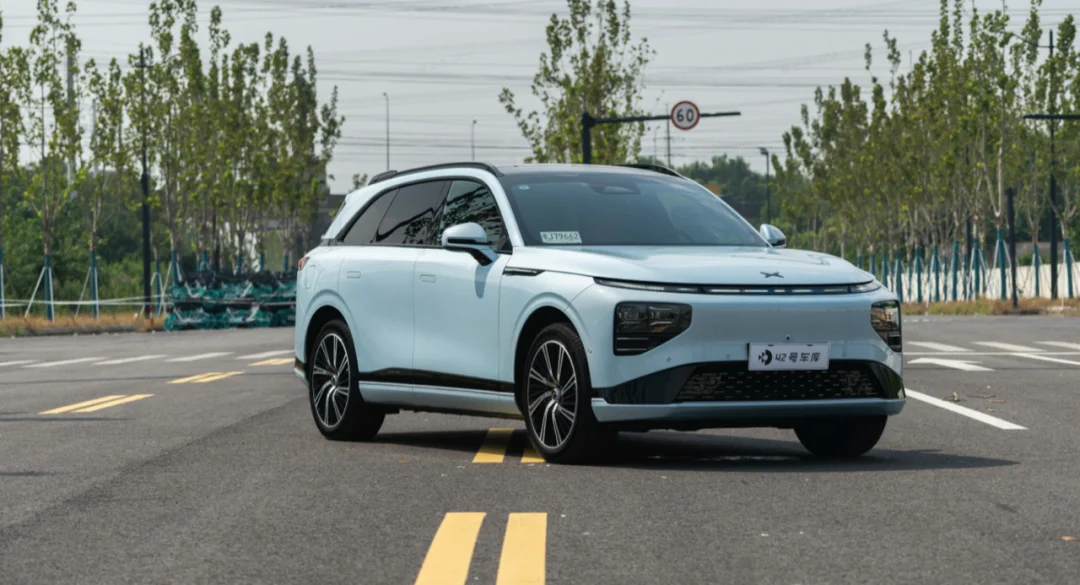
The XPENG G9’s exterior design was revealed some time ago. Six-three described it as "refined" and "harmonious," while I call it "elegant."
The XPENG G9 measures 4,891 mm in length, 1,937 mm in width, and 1,680 mm in height (1,670 mm with the optional air suspension). The wheelbase is 2,998 mm.
The exterior retains the family-style front end seen on the P7, P5, and G3i. From a distance, simply looking at the front fascia or headlights makes it clear that this is an XPENG vehicle.
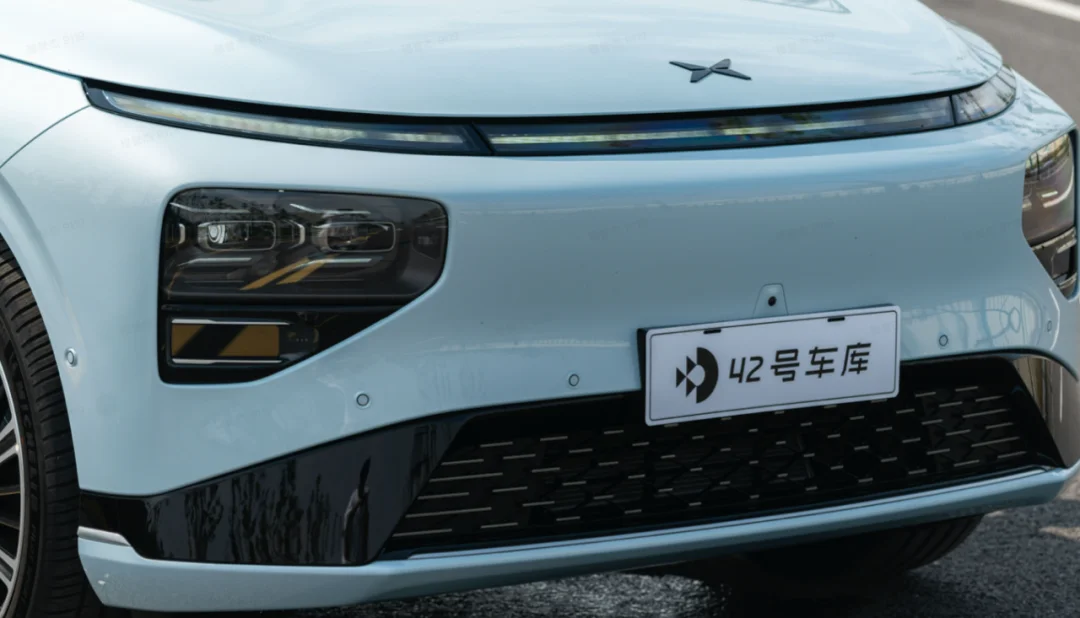
A distinctive and consistent design style not only enhances the model's recognizability but also strengthens user impressions. On the G9, however, this "X-BOT FACE" design language and the full-width light-saber headlights have received another upgrade.
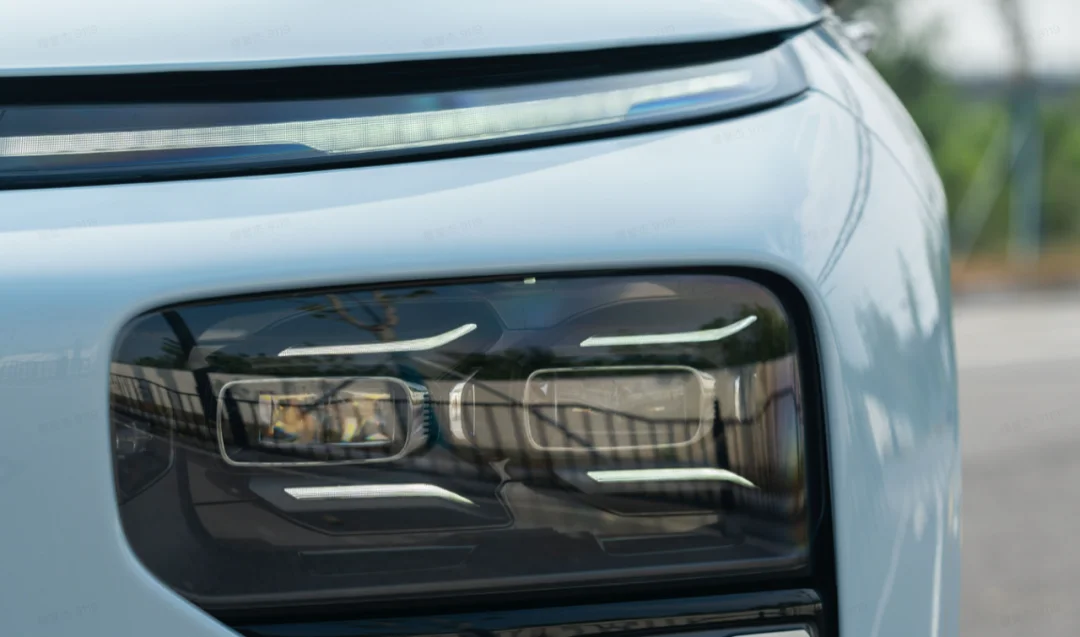
On both sides of the full-width daytime running lights, the headlight clusters feature four additional light strips positioned above and below the high- and low-beam units. XPENG calls these "X-BOT FACE Pengyi Light Wings."
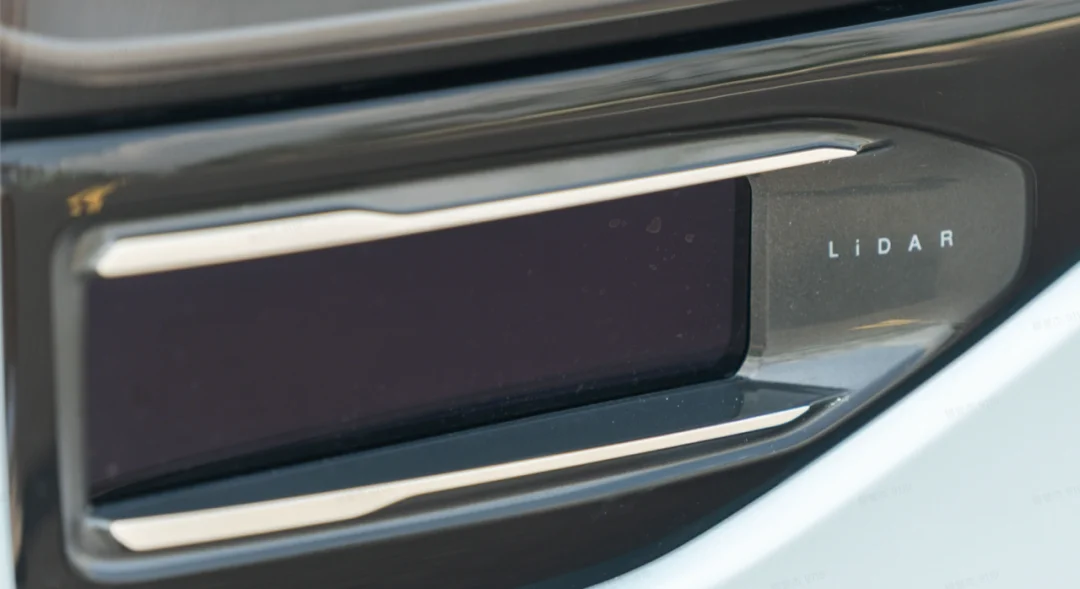
Below the headlight clusters sits G9’s LiDAR. Its placement is essentially identical to that on the XPENG P5, a position chosen primarily to avoid impacting the vehicle’s exterior styling. The entire LiDAR unit is recessed into the curved surface of this area, which helps reduce collision risks.
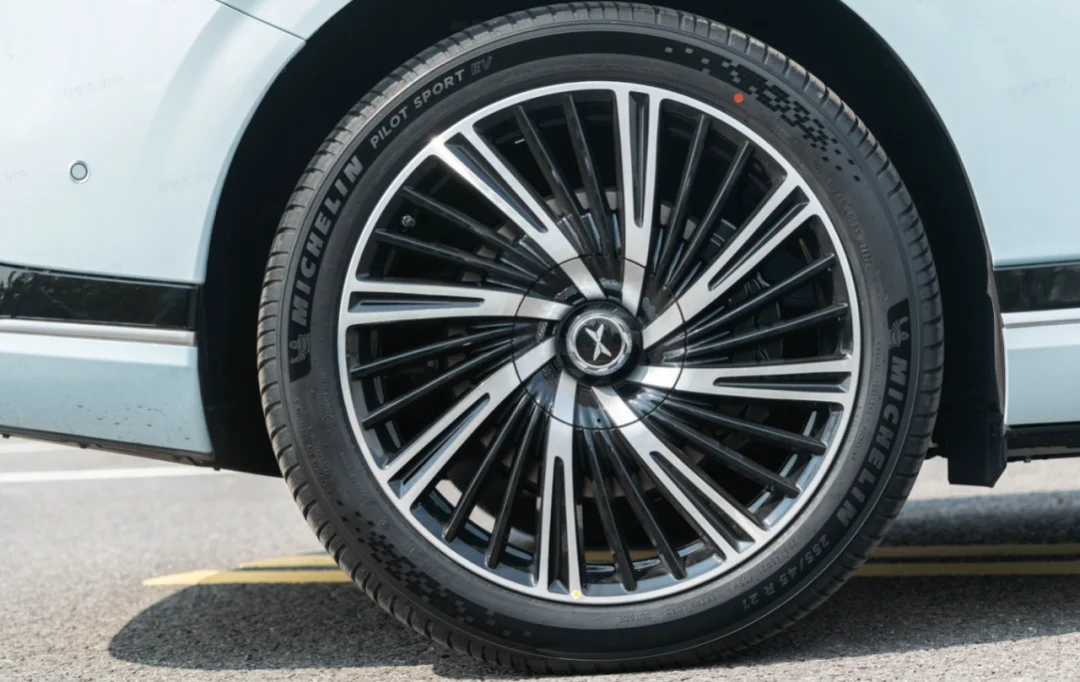
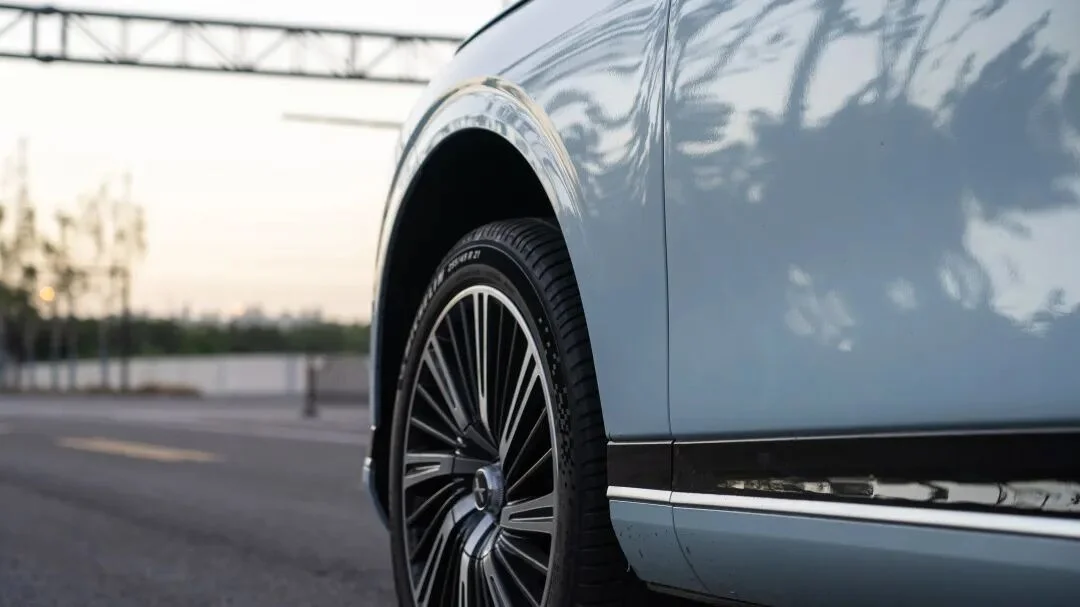
The wheels on this version feature a multi-spoke design with a concave center cap bearing the XPENG logo, giving the overall appearance a premium feel.
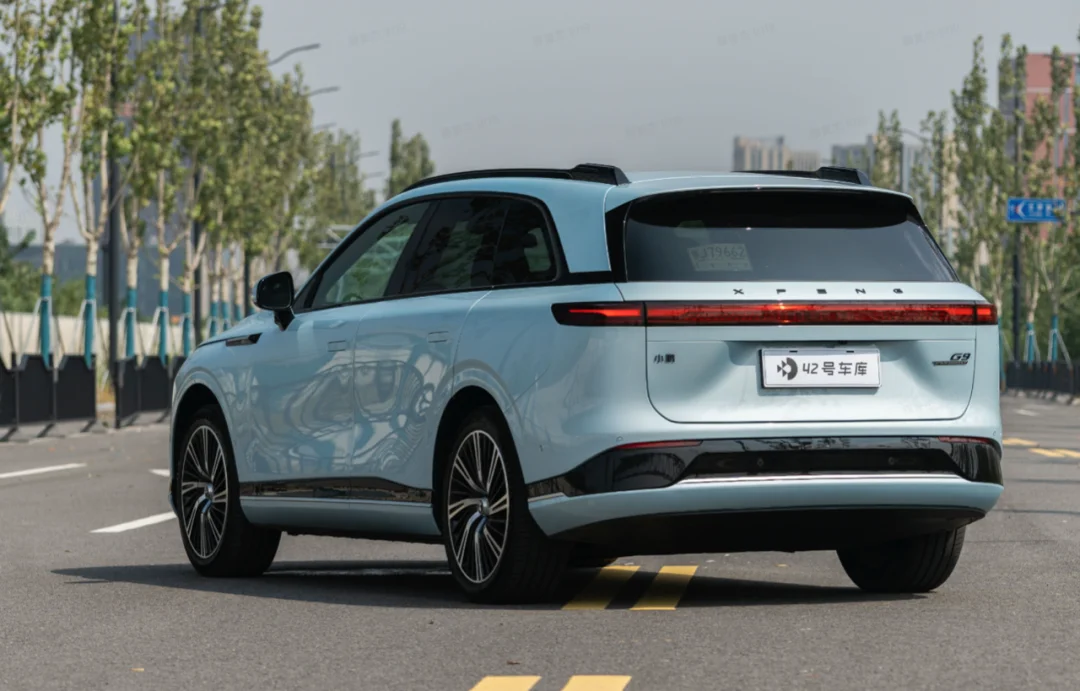
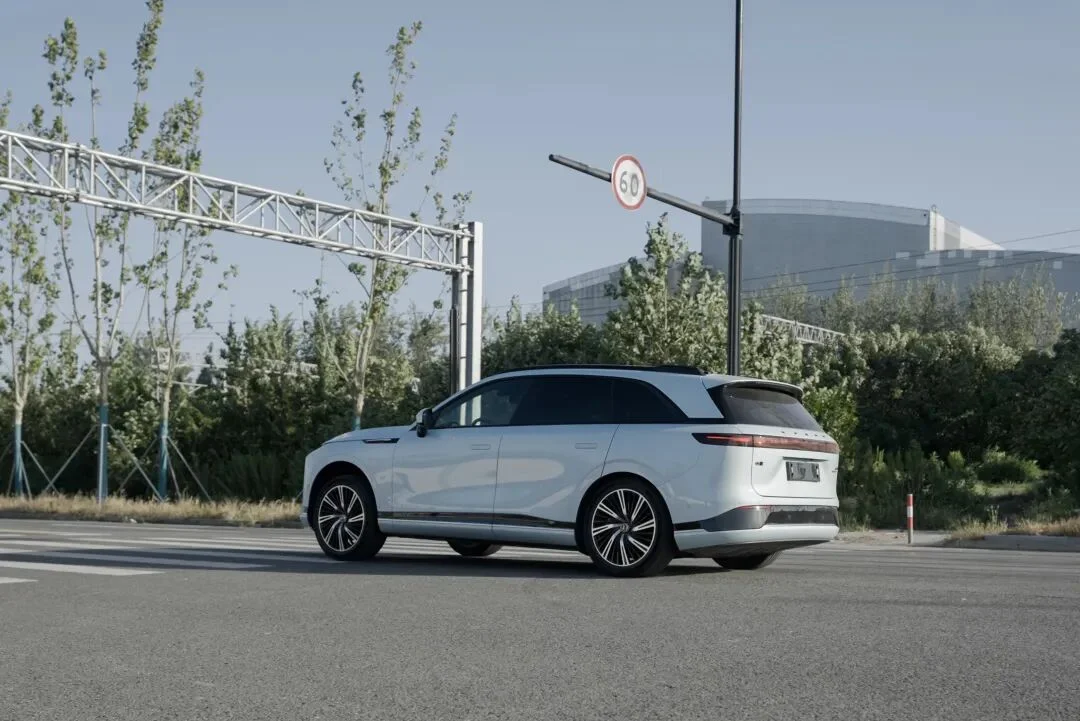
The rear end does not taper, giving the vehicle a boxier appearance. This design choice involves a trade-off, balancing second-row headroom against trunk space.
05How is the space?
For a large five-seat SUV, interior space is a primary concern for buyers.
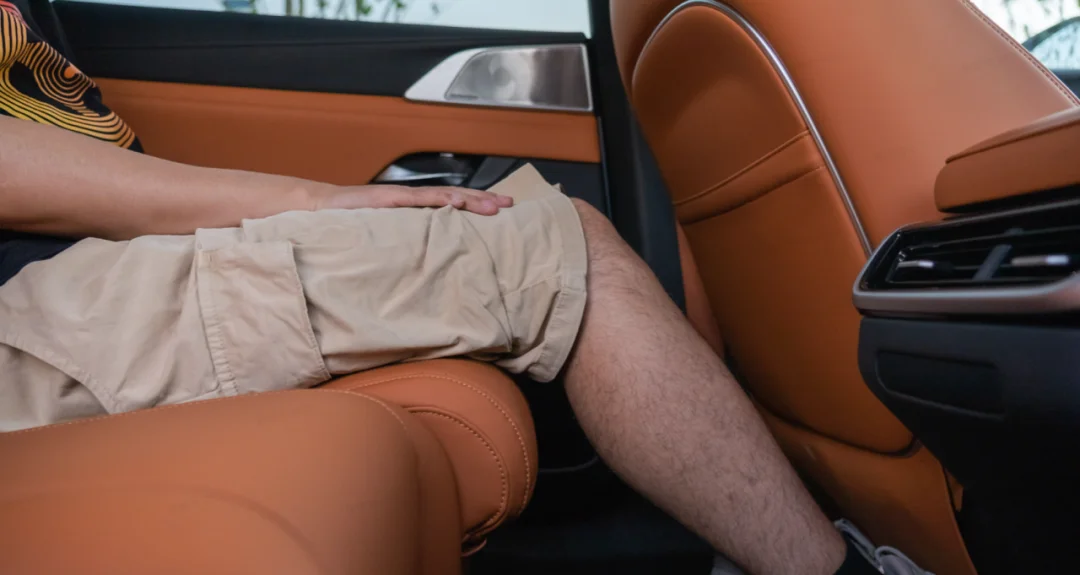
Our tester, who is 179 cm tall and weighs 73 kg, found more than two fists of clearance above his head after adjusting the front seat to an optimal driving position.
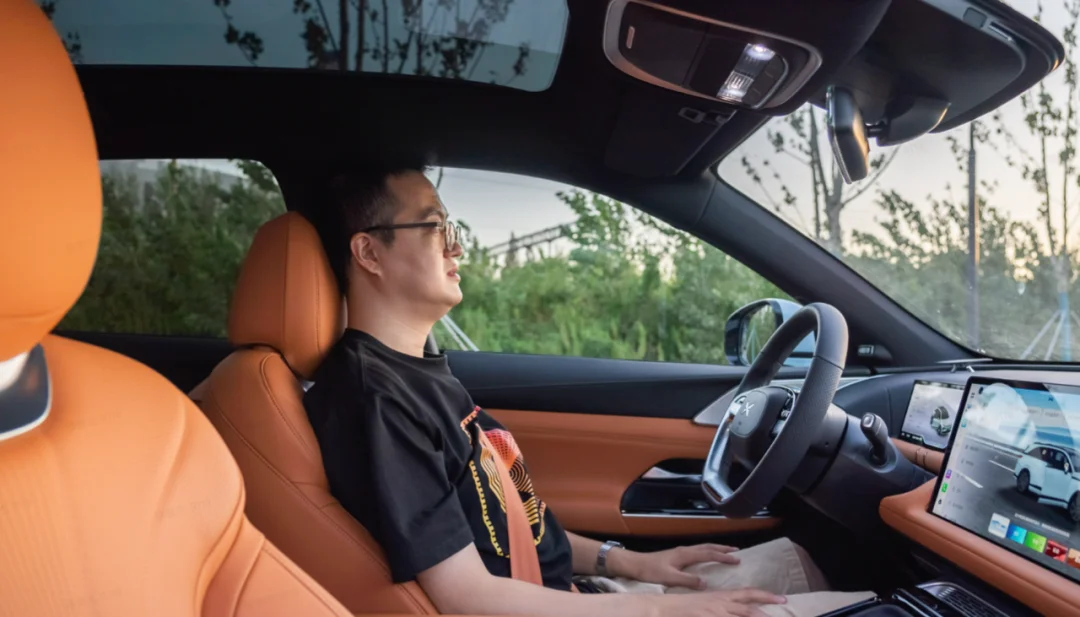
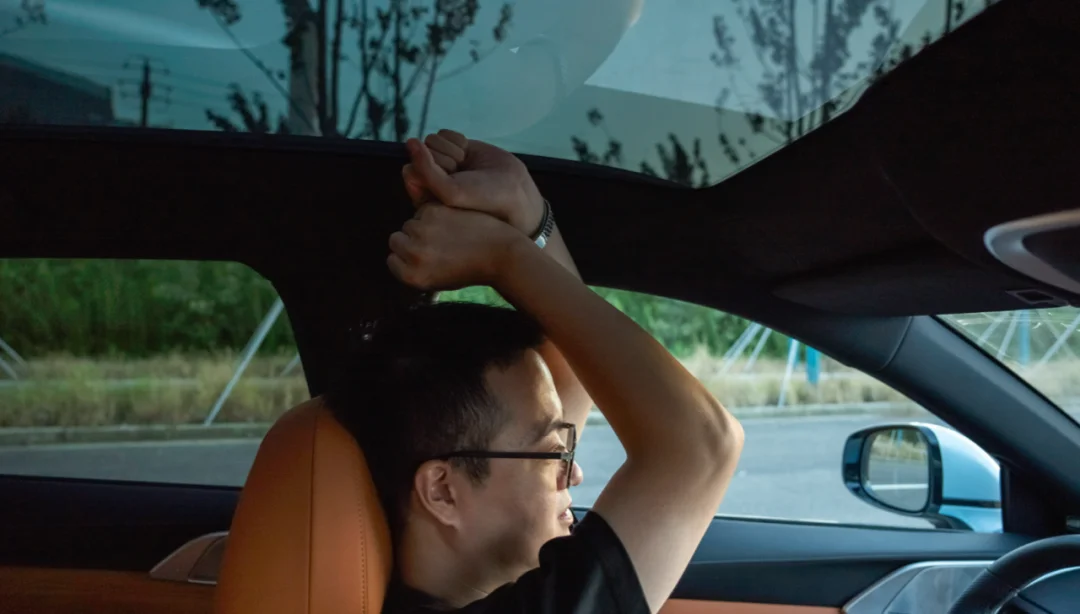
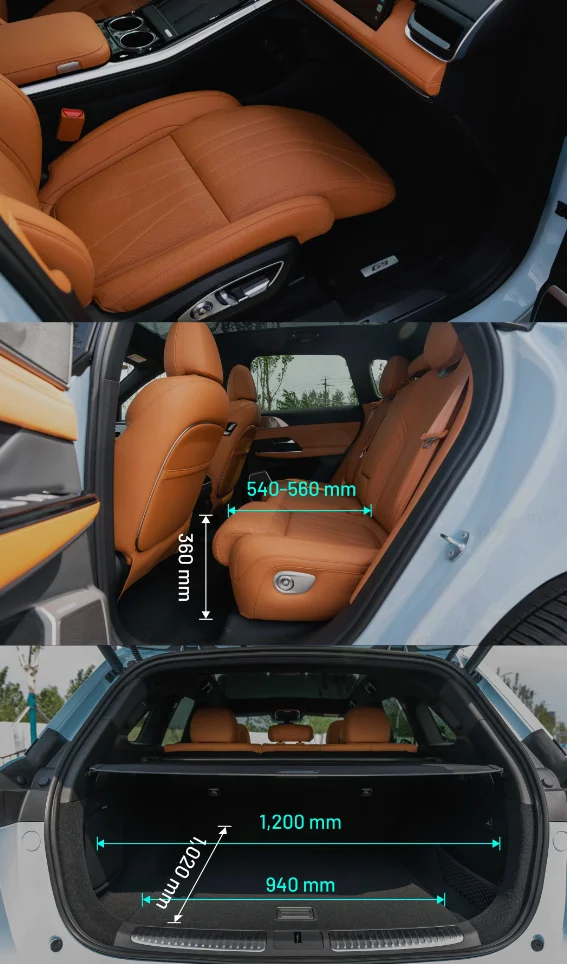
With the front-row driving position maintained, second-row headroom is comparable to that of the front. Passengers can adjust the seatback recline angle using buttons on the door panel for a more relaxed posture. Legroom, however, is only average, offering approximately two fists of space.
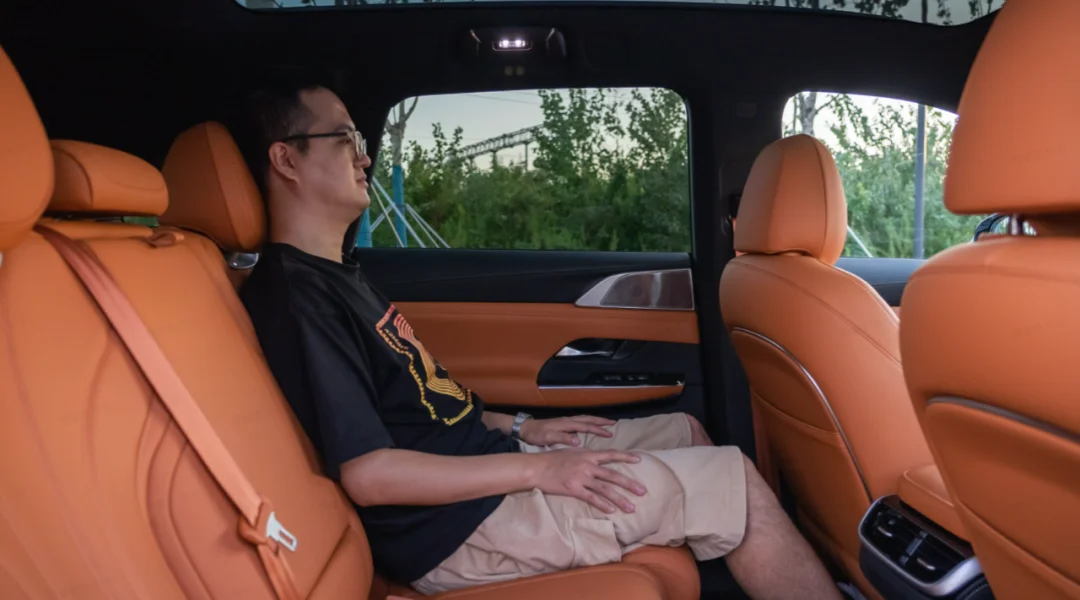
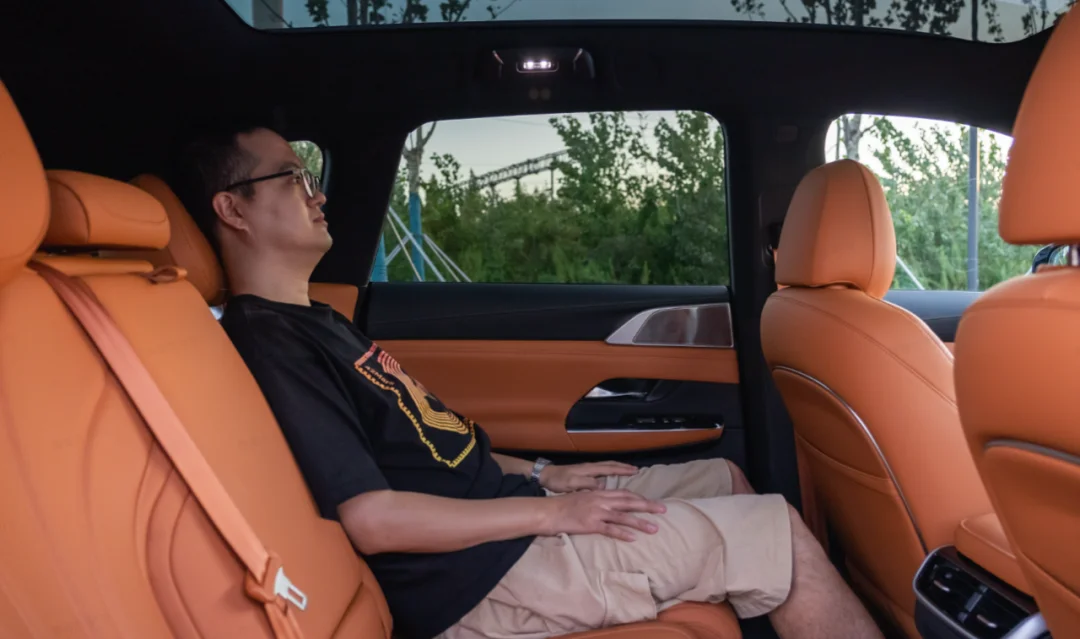
The rear seats support both backrest adjustment and an extendable thigh support to enhance leg cushioning.
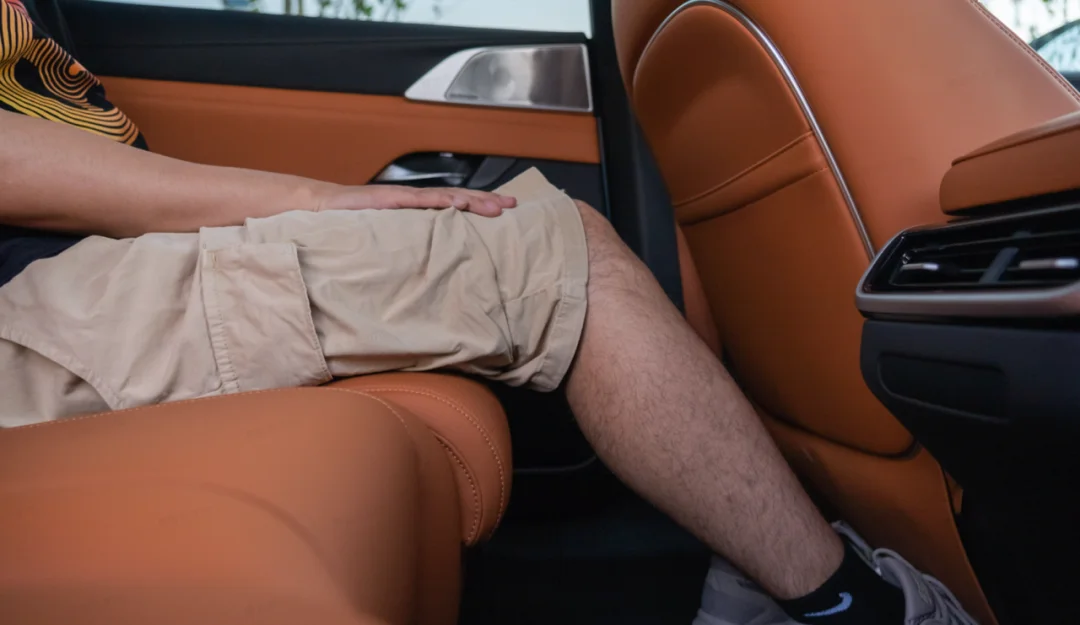
We also measured the space in the second row and the trunk.
06Unexpected Interior Material Quality
What Is a 5D Cabin? Surprises in XPENG’s Latecomer, the G9 | Interior Analysis
The interior of the G9 did not give us an eye-catching feeling. We had already seen the most prominent connected screen setup on the Li L9. Apart from the hardware and UI of the infotainment system itself, the materials used in the G9's interior surprised us.
Let’s take a look at the triple-screen infotainment setup in the G9:
Instrument cluster screen: 10.25 inches, resolution 1920*720;
Center console screen: 14.96 inches, resolution 2400*1200;
The passenger-side screen measures 14.96 inches with a resolution of 2400×1200.
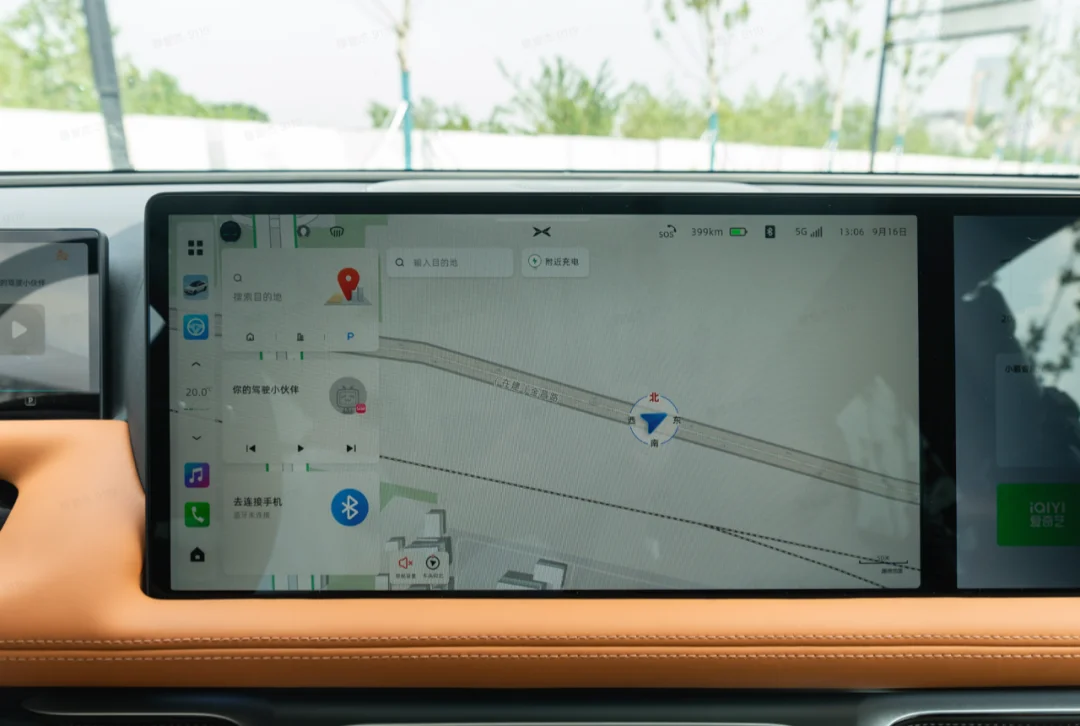
In terms of UI, the overall layout is similar to that of the P7. The map serves as the default home screen for the infotainment system, with a persistent Dock bar on the left containing six icons covering the most frequently used functions during vehicle operation, and climate controls positioned in the center.
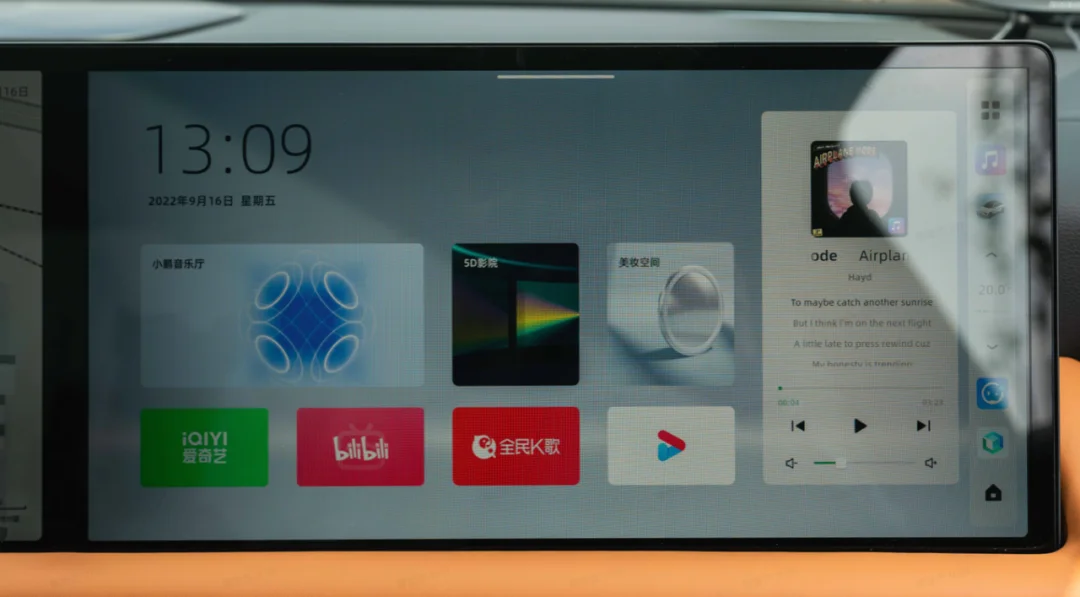
The functional layout of the passenger screen is largely consistent with that of the central control screen, although the main menu interface focuses primarily on audio and video entertainment.
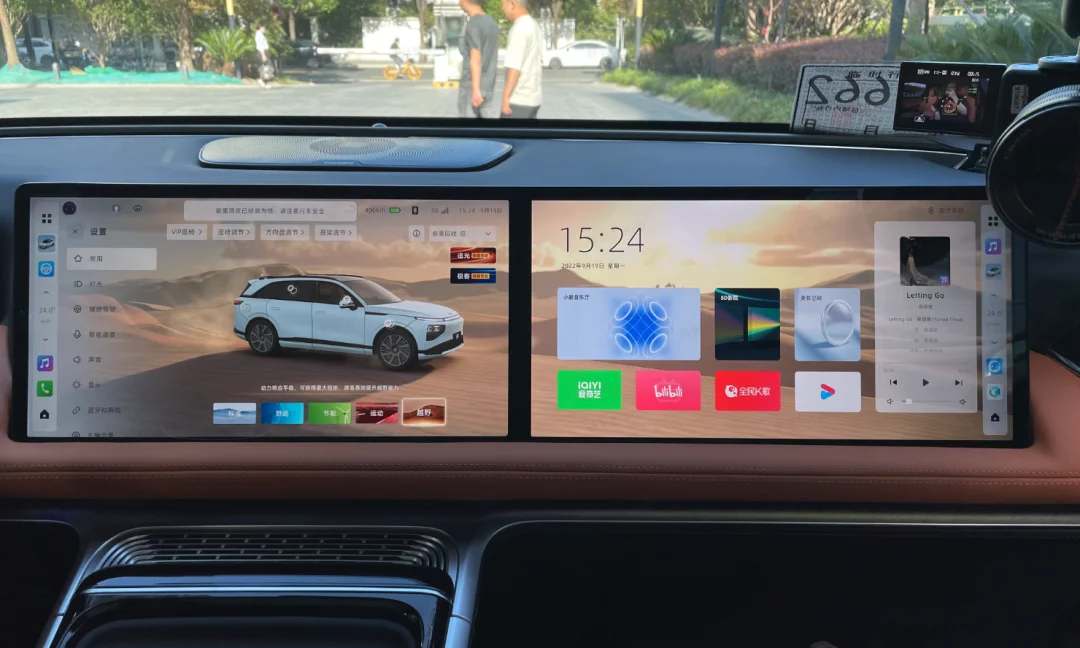
When switching modes, the animation effects on the central control screen and the passenger screen are synchronized.
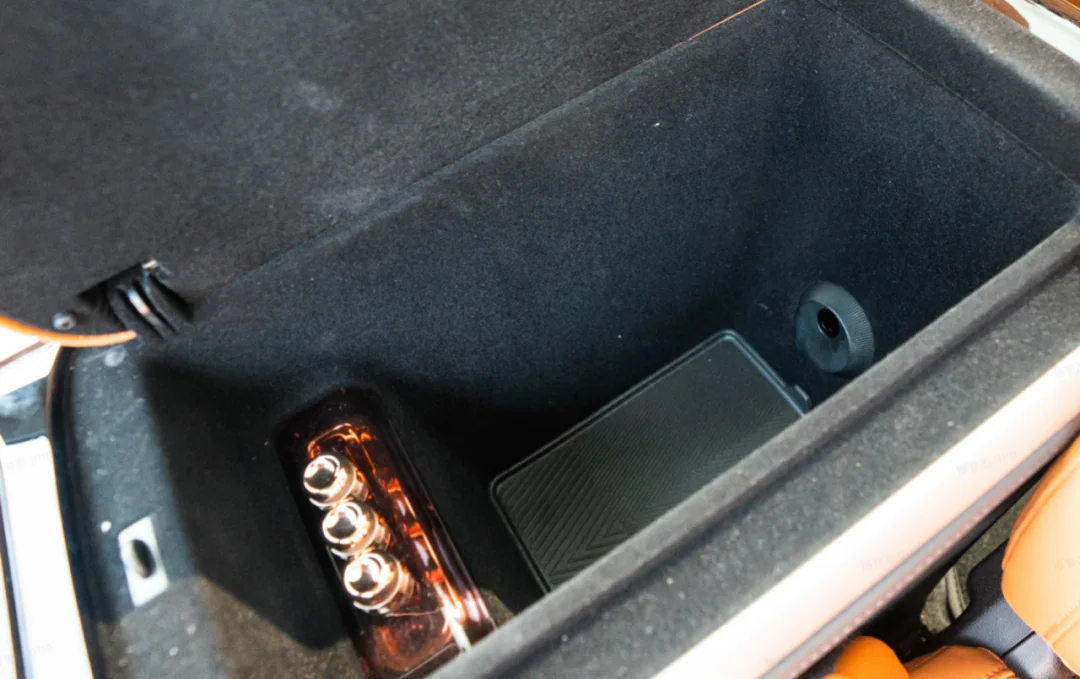
The G9’s center console features a dual-opening design with a plush, velvet-lined interior. The front section houses a refined fragrance cartridge, while the rear includes a closable air vent that can chill beverages, effectively functioning as a mini-fridge.
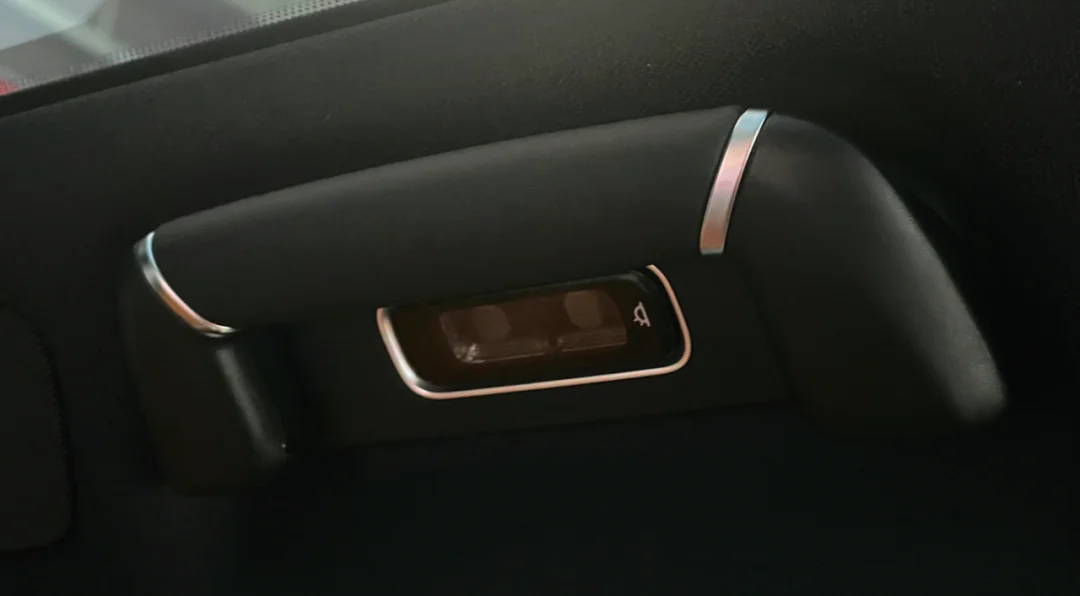
All three door handles on the G9 are wrapped in genuine leather.
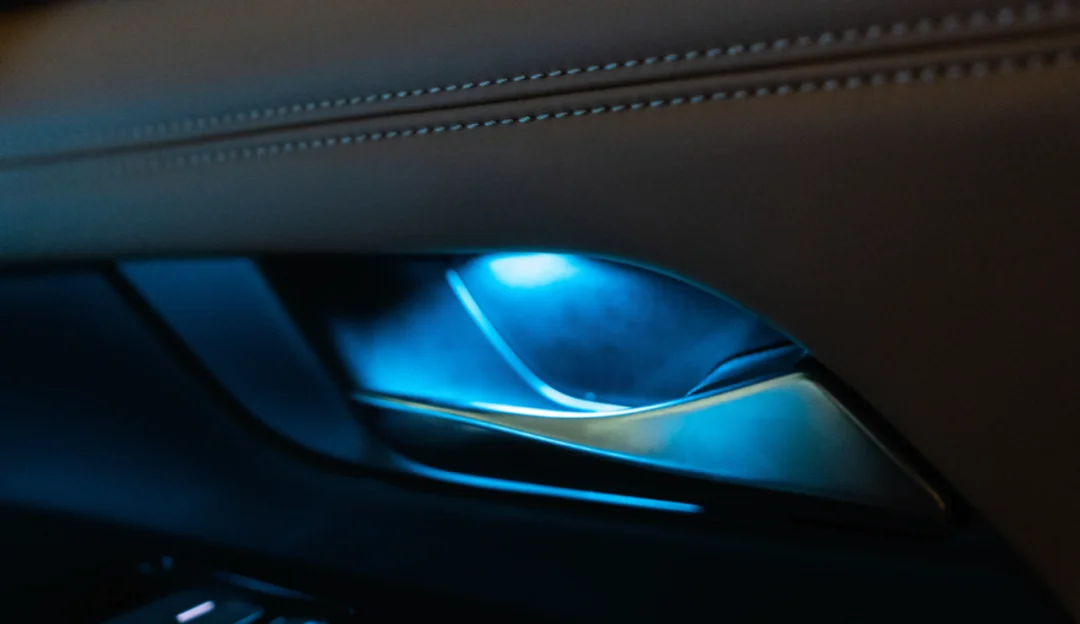
XPENG claims that 95% of the interior surfaces use soft-touch materials; however, hard plastic is used on the inner side of the door handle grips, an area that comes into contact with occupants nearly every time they exit the vehicle.
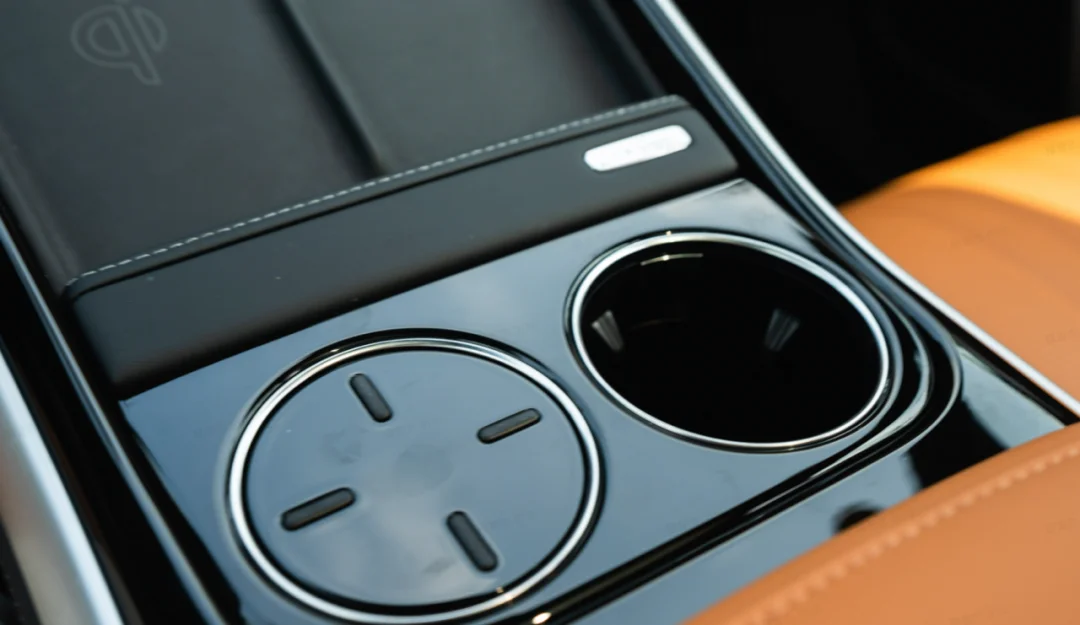
Nevertheless, the extensive use of piano black finish in the front row remains prone to fingerprint smudges and requires frequent cleaning.
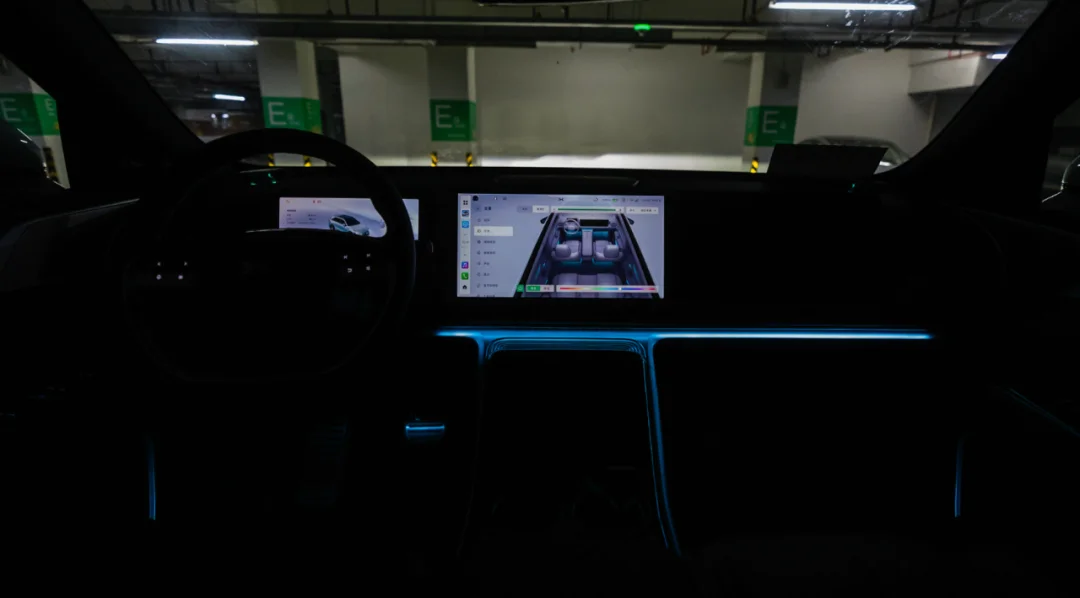
The G9 features a 20-color ambient lighting system, offering 7 two-tone combinations and 4 modes (fixed brightness, smooth breathing, speed-following, and music rhythm) for selection.
07Final Thoughts
As XPENG's flagship for its second strategic push upmarket, the G9 features the brand's best technologies and hardware, including dual-chamber air suspension, an 800V platform with SiC power modules, self-developed motors, and the 5D Xopera music hall.
The six configurations released for the XPENG G9 reveal that while it represents a breakthrough upward, compared to the P7's focus on technology and intelligence, we see more effort and investment in traditional areas.
In terms of actual experience, this car performs excellently in power and range within its price segment. Its driving quality, exterior design, and interior materials are also very well-balanced.
The G9 aims to cater to a wider audience through its various configurations. For those confused by the different versions and specs, click here: Is the XPENG G9 Expensive? 309,900–469,900 RMB.
Written by: Liu Guangding Edited by: Reinhardt