


The Best Value Under RMB 200,000: See How the Feifan R7 Delivers a Dimensional Strike
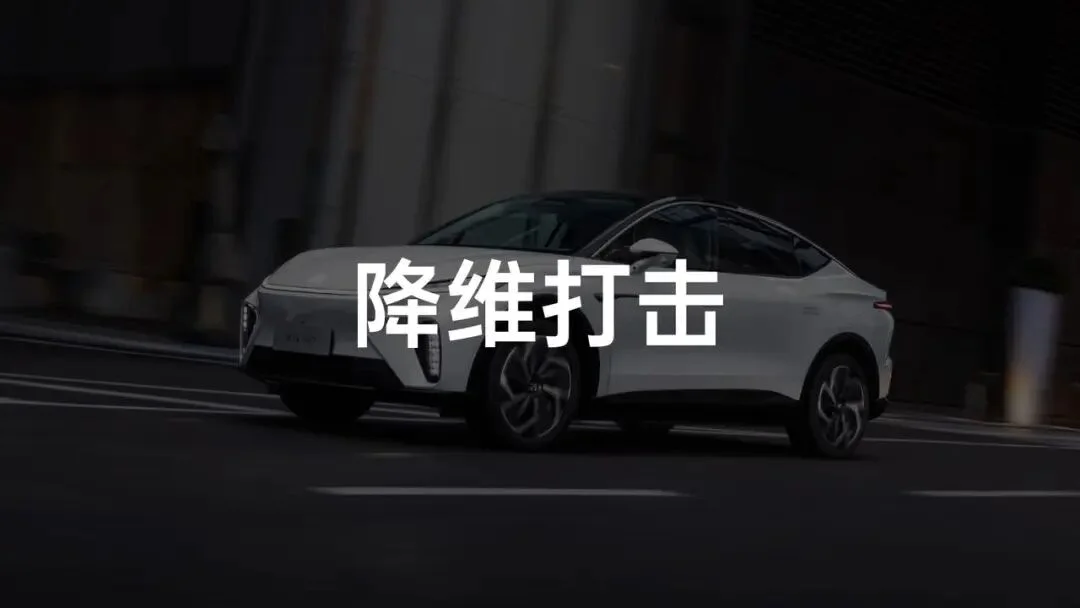
The red-ocean trend in the new energy vehicle market over the past year has been obvious to all, especially in the price range of around 200,000 yuan, where automakers have spared no effort to compete fiercely, leaving consumers dazzled by choices. So which car is truly the most cost-effective option? After a horizontal comparison of mainstream models in the 200,000-yuan segment, the 2024 Feifan R7, which just launched at Guangzhouchezhan, stands out.
The 2024 Feifan R7 facelift strategy is very clear: it has implemented a total of 129 upgrades targeting the intelligent comfort aspects that consumers care about most, maximizing the improvement of daily travel comfort scenario experiences. Moreover, as a mid-to-large pure electric coupe SUV, the 2024 Feifan R7's starting price of 189,900 yuan directly enters the price range of mid-size SUVs, using size to outcompete smaller rivals, leaving a host of pure electric and even fuel-powered competitors such as XPENG G6, Tesla Model Y, BYD Song PLUS EV, Song L, Bieke E5, DEEPAL S7, and Leapmotor C11 speechless.
01Space — Big Hitting Small
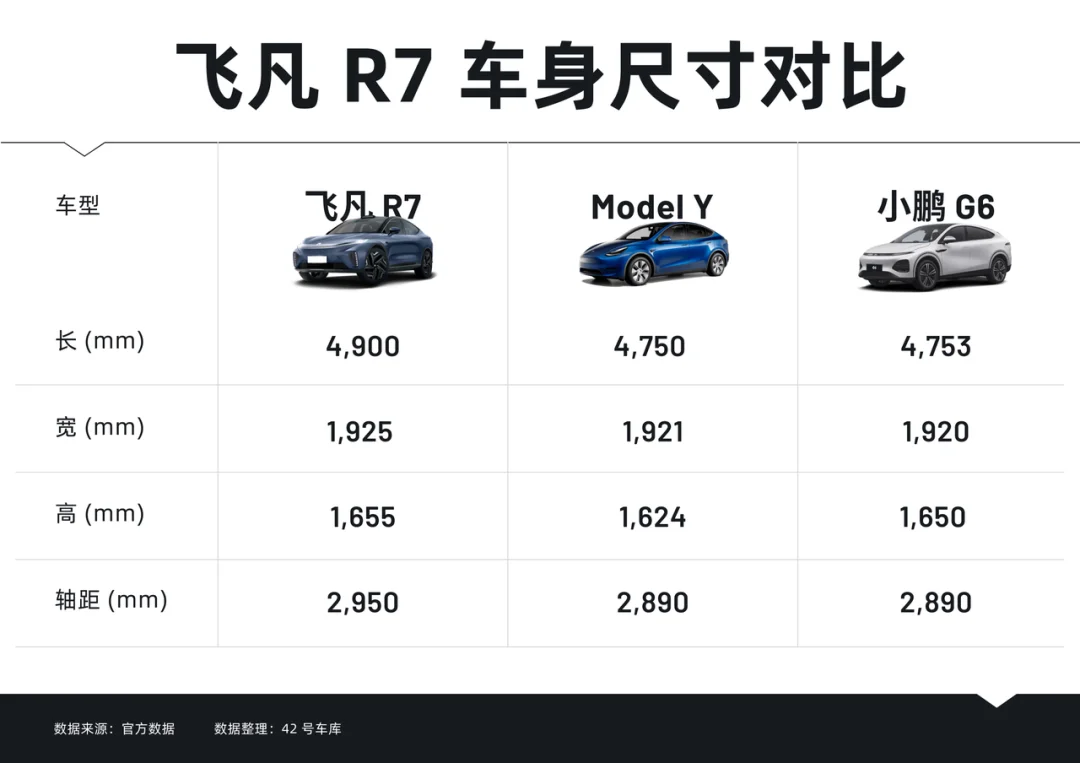
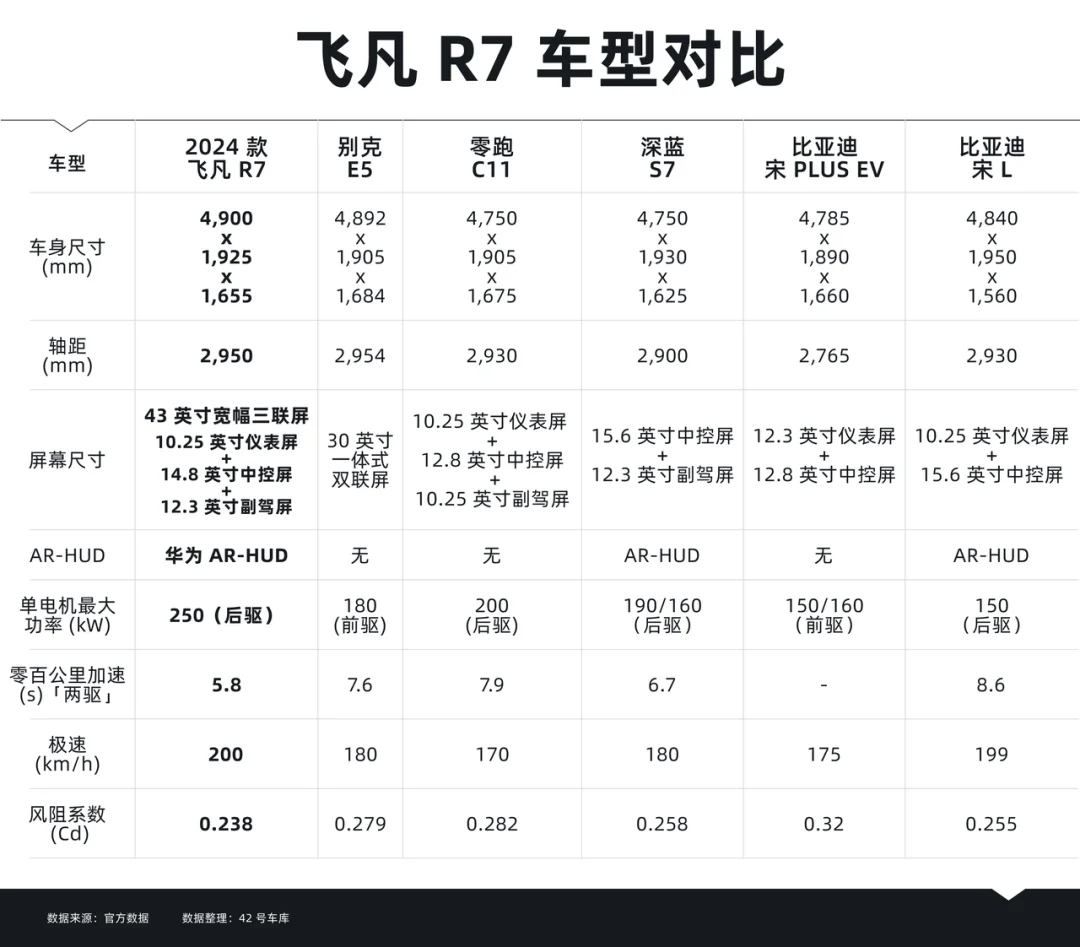
Space is a factor almost all Chinese consumers consider when buying a car, especially if it serves as the family's only vehicle. In such cases, choosing a spacious model is essential to meet unexpected needs. The new R7 retains its body dimensions, measuring 4,900 mm in length, 1,925 mm in width, and 1,655 mm in height, with a wheelbase of 2,950 mm, firmly establishing it as a mid-to-large SUV. Compared to rivals in a similar price range like the XPENG G6 and Tesla Model Y, the new R7 holds a dimensional advantage in every aspect.
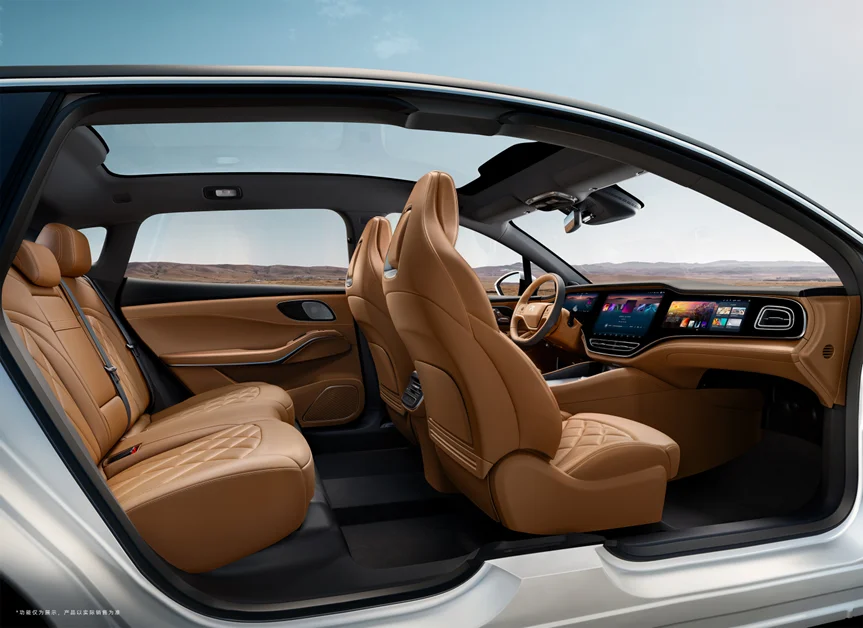
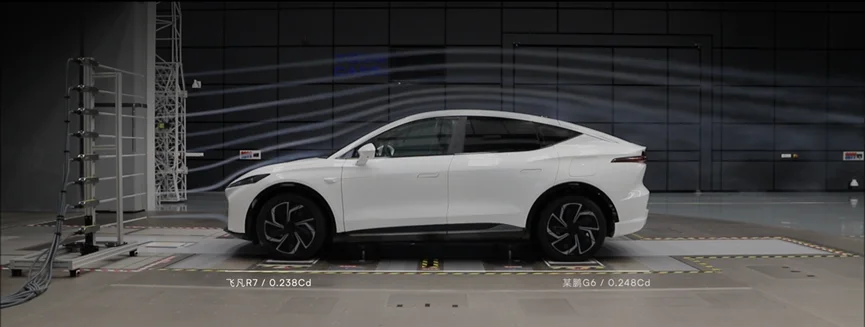
As a coupe SUV, the new R7’s sleek fastback design delivers an ultra-low drag coefficient of 0.238 Cd. Some consumers might worry that this styling could compromise rear headroom. However, there is no need for concern. Thanks to a dual-layer flat-cell layout, the new R7 achieves a minimum battery pack vertical height of 110 mm. Combined with a four-curved panoramic sunroof covering 1.855 square meters, this design maximizes longitudinal space inside the cabin.
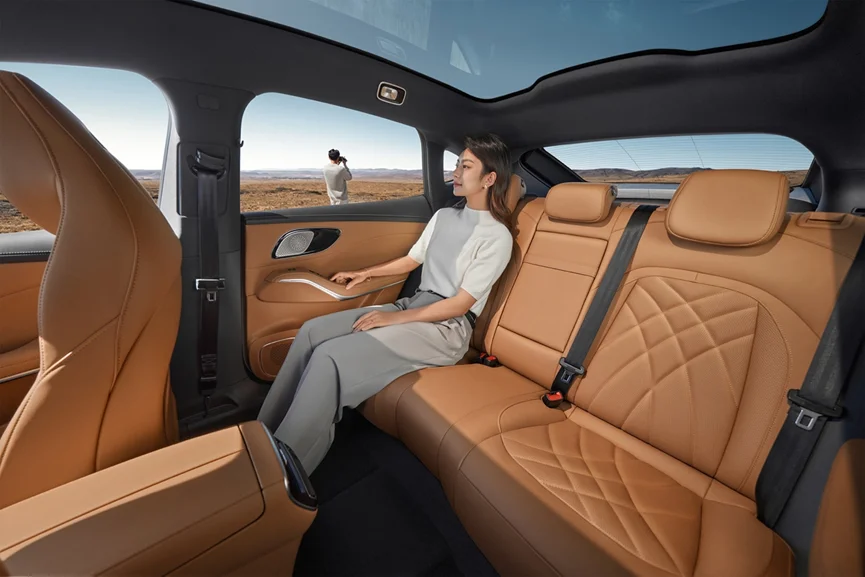
To be specific, with the front driver’s seat adjusted to its lowest position, vertical headroom reaches 1,064 mm. Rear passengers also enjoy ample headroom of 1,020 mm, ensuring that even a 190 cm-tall occupant feels no sense of confinement.
With ample headroom, the new R7 also boasts front and rear space that ranks among the best for mass-produced vehicles in its class. A longitudinal dimension of 964 mm allows passengers with long legs to stretch out fully, while a 470 mm rear seat cushion provides substantial support for the legs. Anyone who has endured the discomfort of long journeys in the back seat knows the pain involved; however, such worries are entirely absent in the new R7.
02Dynamics — Stable and Swift
As the vehicle’s core component, driving dynamics are often overlooked. Yet a car is not merely an object to admire statically; its drivability and ride comfort directly impact daily user experience and mood. The new R7 delivers pleasant surprises in this regard as well.
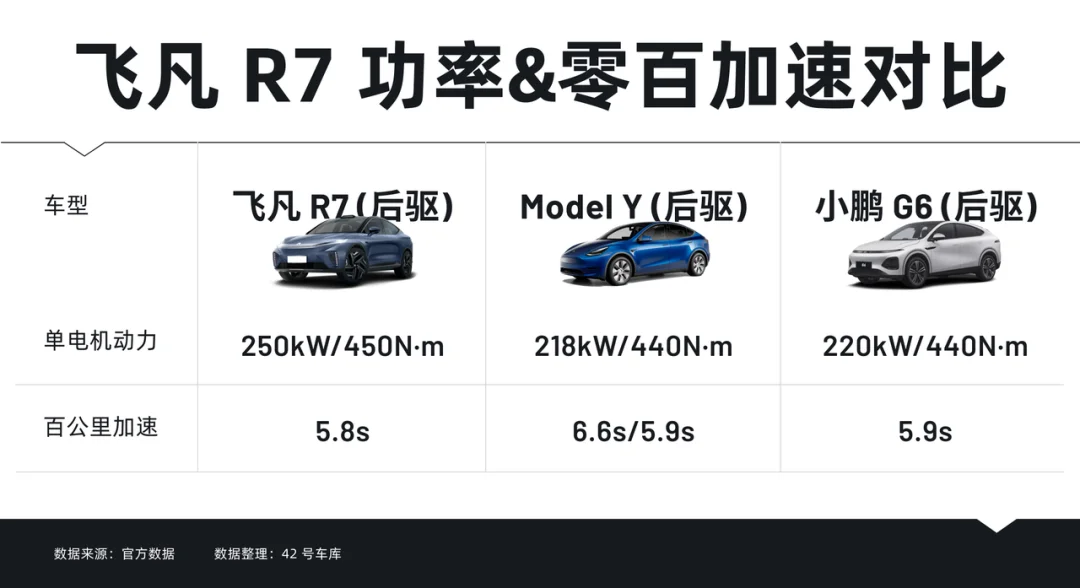
First, let’s look at performance data: the new R7 produces a maximum power output of 250 kW and a peak torque of 450 N·m. Its official zero-to-100 km/h acceleration time is 5.8 seconds, outperforming both the XPENG G6 and Tesla Model Y. The top speed reaches 200 km/h.
The new R7’s electric motor employs a direct-flow oil-cooling technology, boosting heat dissipation capacity by 30%–70%. This extends the duration of peak system power output by two to three times, effectively eliminating concerns about power degradation in the new R7. In official tests, the vehicle completed 50 consecutive launch control starts without any loss in performance. Additionally, the ratio between constant and peak power has increased by 40%, ensuring the new R7 retains ample power reserves during mid-to-late stage acceleration.
Power is the foundation, but how it is controlled is a key determinant of whether a vehicle is enjoyable to drive. Those who have driven electric vehicles know that motors can deliver maximum torque almost instantly. If the accelerator pedal is not calibrated with sufficient nuance, the car may feel jerky or unpredictable. Therefore, linear throttle tuning is critical. In practical experience, the new R7’s throttle response is highly refined: vehicle speed increases linearly with pedal depression, while acceleration (the pulling sensation) diminishes linearly as speed rises, making daily driving more intuitive and manageable.
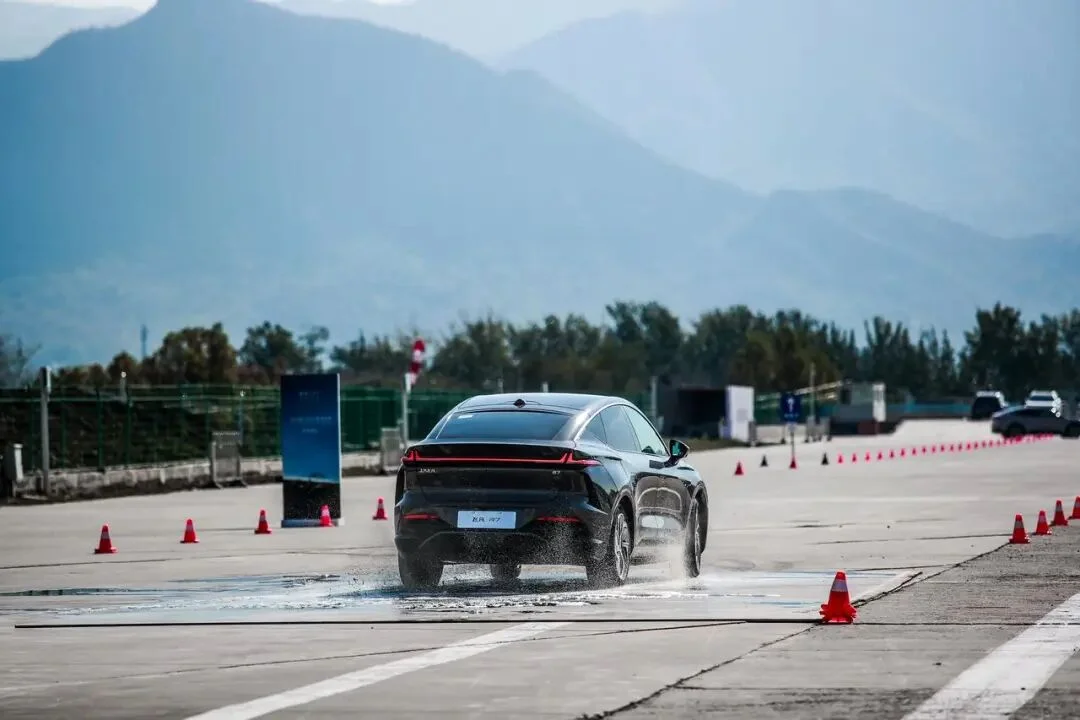
Beyond the throttle, braking is another crucial factor in determining driving comfort. The new R7 comes standard across all trims with the Dalu One-Box Jichengshidianzhidongxitong. This system differs from traditional setups by no longer relying on mechanical structures, but instead adopting a decoupled electronic brake control system. In plain terms, it uses more precise electronic sensors and actuators to transmit electrical signals, achieving pressure build-up response within as fast as 150 ms. Compared to traditional mechanical structures, this response speed is more than 0.3 s faster. Do not underestimate this improvement; at critical moments, it can truly help avoid many dangers.
Ensuring driver comfort is only half the battle; for a mid-to-large pure electric SUV, passenger comfort is equally important. The new R7 features the Feifanwanyujiashixitong (Feifan Domain Driving Control System), which has also been optimized in terms of chassis suspension. This enhances the vehicle’s body attitude control capabilities. How does this translate to real-world performance?
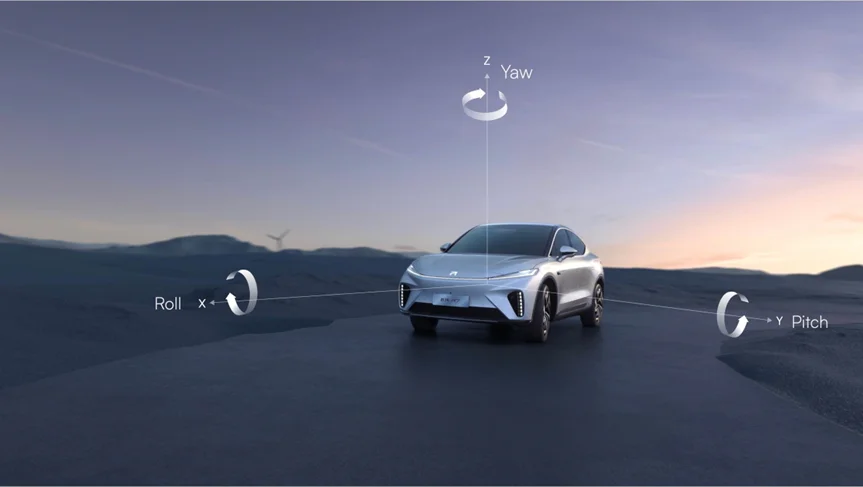
First, consider cornering roll. Many drivers are familiar with cars that have very soft suspension tuning. On smooth roads at low speeds, such vehicles may feel comfortable. However, when navigating corners or encountering complex road surfaces, the shocks may fail to support the body adequately, leading to excessive swaying or significant lateral lean. In testing, the new R7 optimized its suspension springs and damper damping. The ride feels smooth during normal driving, and while some body roll occurs during spirited driving, it remains within acceptable limits.
Second, address pitch motions (nose-diving under braking and squatting under acceleration). Some manufacturers highlight powerful engines and excellent brakes in their marketing, but if the overall chassis tuning cannot match these components, noticeable nose-diving during braking and rear-end squatting during acceleration will occur. The new R7 optimizes the pitch gradient during acceleration and braking, resulting in smoother transitions between accelerating, cruising, and decelerating. This significantly reduces the perceived forward and backward pitching sensations.
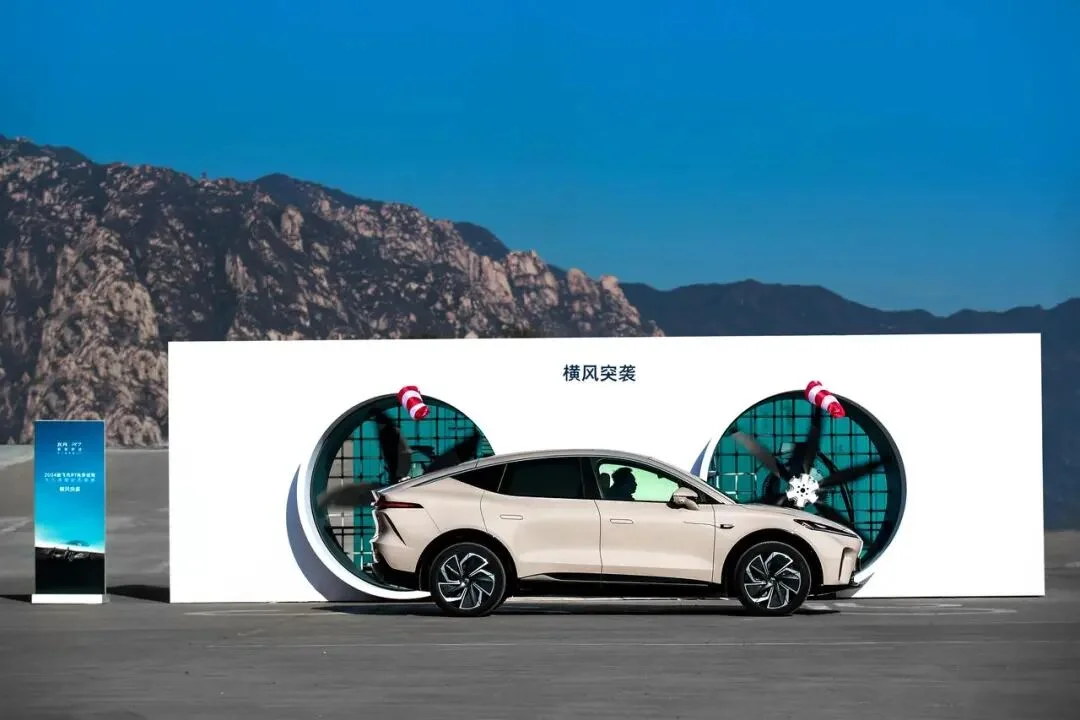
In addition, the new R7 features a crosswind compensation and suppression function that is well worth discussing. Many drivers have experienced driving in strong winds, especially during typhoons or when crossing sea bridges, where significant crosswinds require constant steering adjustments to maintain the vehicle's path. The new R7 boasts a drag coefficient of 0.238 Cd and has passed the industry’s first crosswind wind tunnel test, achieving optimized lateral aerodynamics.
03Cabin — Comfortable Enjoyment
On the unseen dynamic front, the new R7 is already excellent; on the visible side, it further enhances comfort.
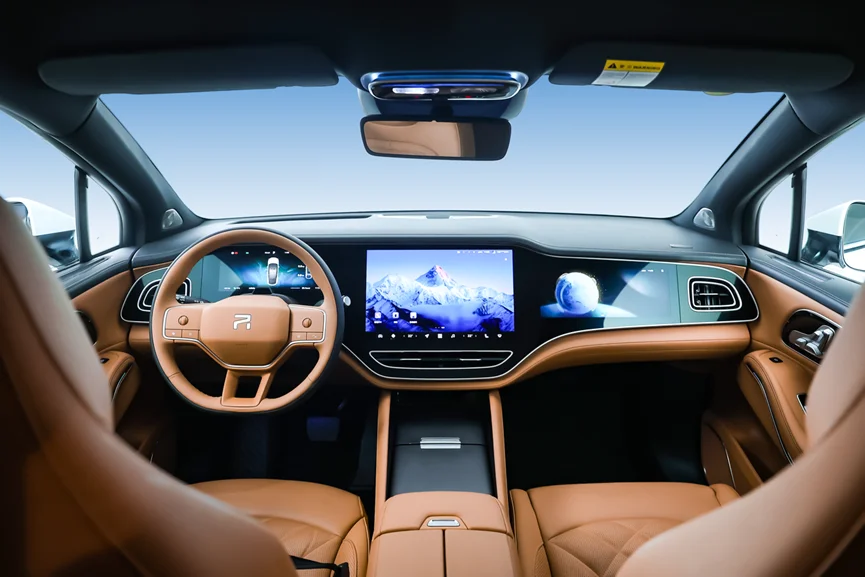
First is the Feifan Bach Master Steering Wheel, which received widespread praise on the Feifan F7 and is also featured in the new R7. The use of NAPPA leather gives the steering wheel a refined feel, while its human-machine engineering design aligns with comfortable intelligent driving. Physical buttons and rotary knobs on the wheel allow for direct interaction, making blind operation easy during driving.
For the audio system, the new R7 introduces the Feifan Bach Immersive Vector Sound Effect technology. Hardware-wise, it employs a dual-chip, dual-DSP solution, activating the Hexagon DSP module within the 8155 chip alongside an ADI DSP audio processing chip. In terms of experience, the new R7 supports a 14-speaker 5.1/7.1 audio system, enhanced by Dirac’s tuning, adding depth and layering to the sound. This aspect is difficult to convey through words alone; we recommend experiencing it firsthand at a 4S store.
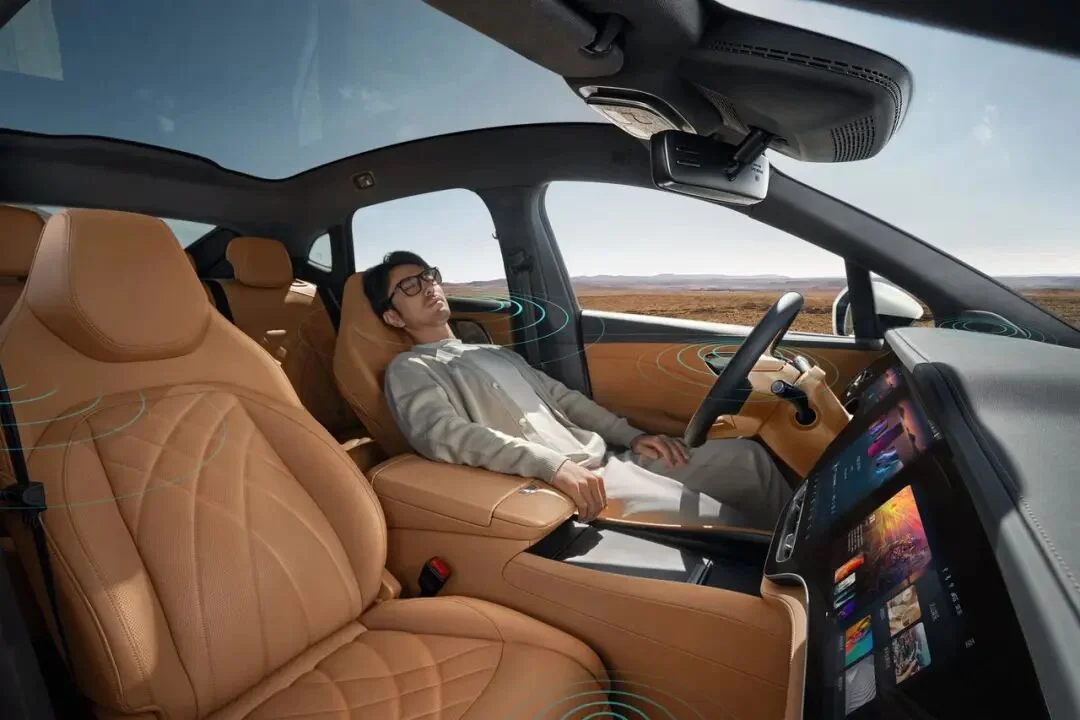
Regarding audio, the new R7 offers another interesting feature: omnidirectional stereo sound perception. For example, when navigation prompts a left or right turn, the audio output follows the direction, making the announcements more intuitive.
Creating a comfortable cabin also requires attention to NVH (Noise, Vibration, and Harshness). To start with the data: at 60 km/h, the new R7’s interior noise level is 55.7 decibels, demonstrating excellent sound isolation.
To achieve superior acoustic insulation, the new R7 employs eight measures to block noise and dampen vibrations. For example, the vehicle’s exterior shape is designed according to aerodynamic principles. After nearly 1,000 simulation analyses and four rounds of 120-hour wind tunnel testing, the drag coefficient was reduced to 0.238 Cd. This not only improves range but also noticeably reduces wind noise.
Another critical aspect of soundproofing lies in hardware components. The new R7 enhances quietness through adjustments to EDU mount stiffness, optimized body seal strips, and refined material combinations. All four doors feature 6 mm double-laminated acoustic glass, while the windshield uses 5.36 mm double-laminated noise-reducing glass, significantly improving overall insulation.
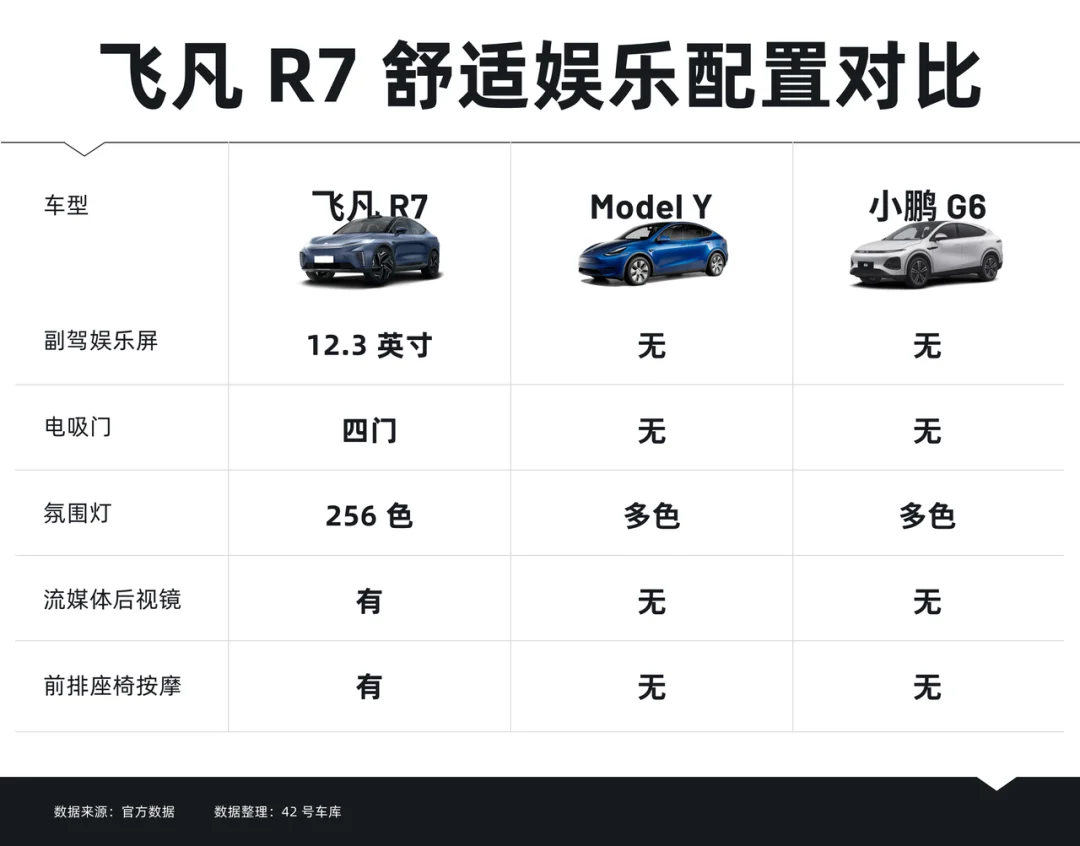
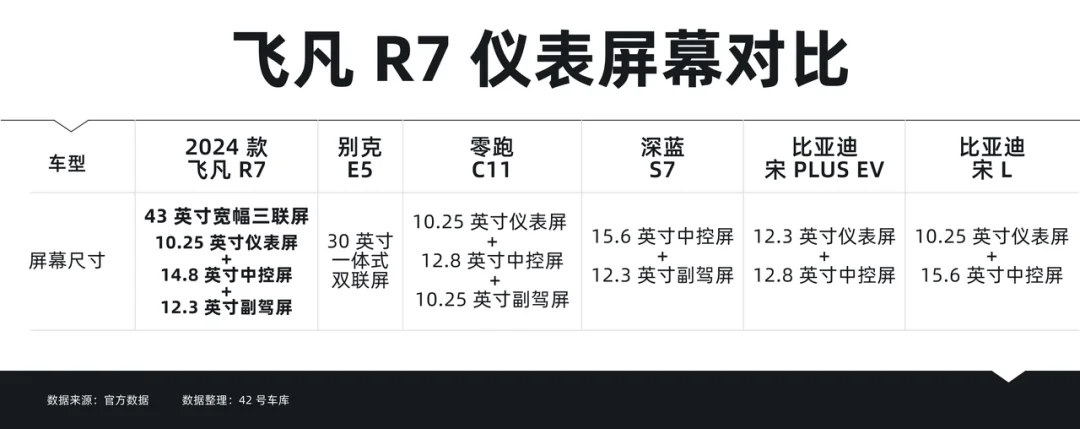
The new R7 also spares no expense in cultivating interior quality. Features include power-close doors, fully functional SPA seats, a digital rearview mirror, Nappa-texture leather seats, front-seat heating/ventilation/massage functions, an 8-way power-adjustable driver’s seat with 4-way lumbar support, a 6-way power-adjustable passenger seat with 4-way lumbar support and an electric leg rest, a 360° panoramic camera, 256-color linear ambient lighting, and a 1.855 m² integrated dome-style glass roof. The comparison chart below clearly shows the new R7’s configuration advantages over competitors; when it comes to interior ambiance, specifications come before perceived quality.
One notable feature is the new R7’s Exclusive Passenger Mode. Beyond the hardware mentioned above, activating Feifan’s Exclusive Mode with one button lowers the passenger seat while synchronizing the ambient lighting and music to create a warm, refined comfort space—making the passenger seat truly a place of indulgence.
04Interaction — Smart and Worry-Free
When choosing a pure electric vehicle, beyond comfort, power, and space, most buyers also expect strong performance in intelligent interaction.
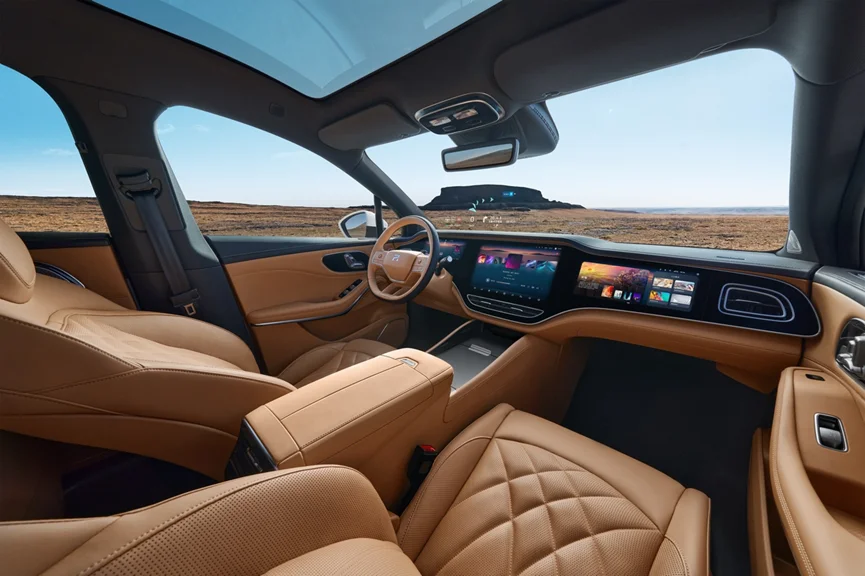
The new R7 features a 3+1 ultra-visual intelligent interaction system: the '3' refers to a 43-inch wide triple-screen display, while the '1' is a 70-inch Huawei visual-enhanced AR-HUD (Augmented Reality Head-Up Display). This linked interaction setup is relatively rare in the industry.
Let's start with the Huawei visual-enhanced AR-HUD. While most mainstream vehicles now include HUD functionality, the majority rely on traditional W-HUDs, which offer inferior display quality compared to AR-HUDs.
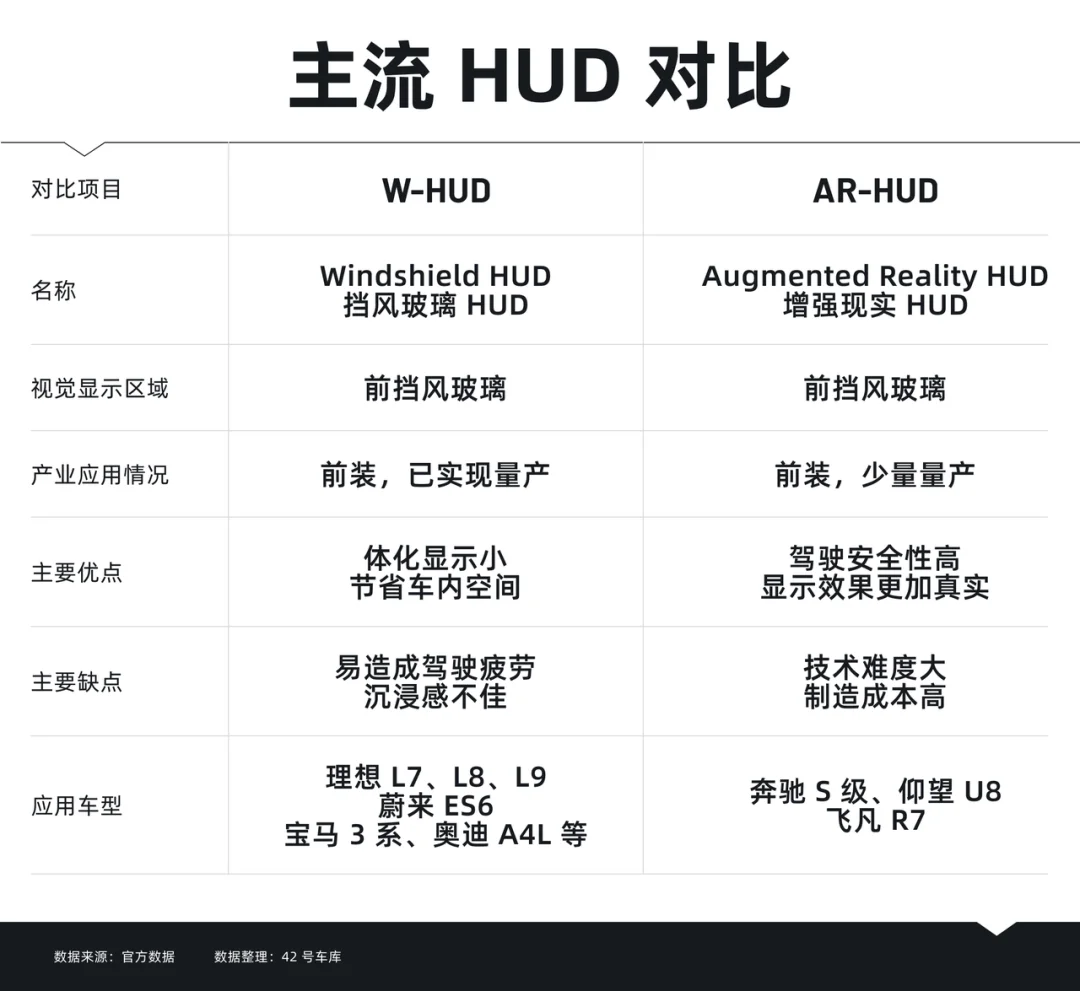
In summary, the key takeaway regarding the new R7's AR-HUD experience is simple: it is clear and large.
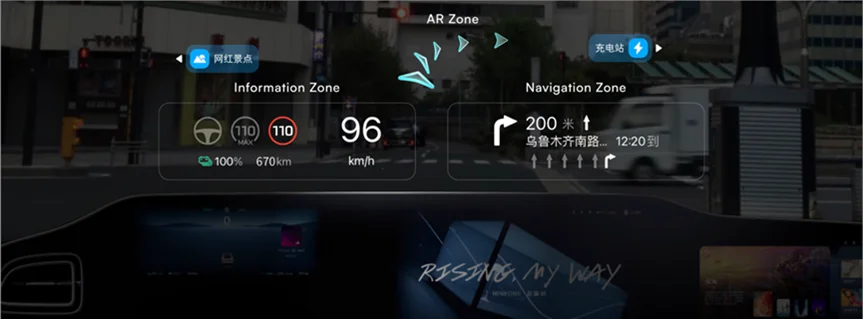
How should we interpret this? Imagine a scene: in the early morning, you drive out in the new R7. After setting your navigation destination, all route information appears on the 70-inch AR-HUD ahead. You press the accelerator and merge onto the road.
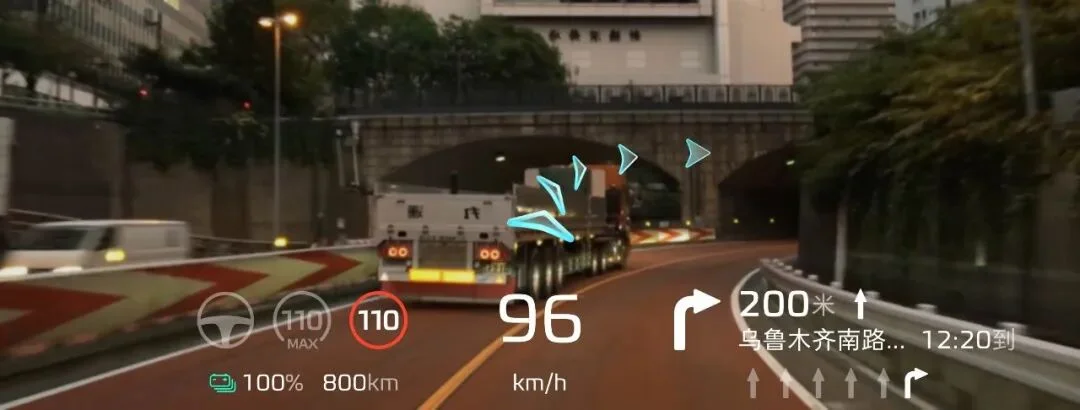
During the morning rush hour, traffic is heavy. This AR-HUD directly displays information such as vehicles being too close, pedestrians on the roadside, and obstacles ahead. It can switch colors to indicate different levels of danger.
At the next intersection, you need to take an exit ramp with multiple branches. The AR-HUD uses fishbone-style arrows to precisely guide you into the correct lane.
After passing the ramp, you are about to enter a tunnel. The moment you enter, the AR-HUD intelligently dims its brightness, ensuring clear visibility even in low-light conditions.
Exiting the ramp, the AR-HUD prompts you that your favorite breakfast spot is nearby. You pull into the parking lot, place your order, and wait. Waiting can be tedious, so you open your favorite TV show and project it directly onto the AR-HUD. With 2K resolution and a 1,200:1 contrast ratio, you realize how suitable it is for watching movies. While waiting, your breakfast is prepared, allowing you to grab it and head straight to work.
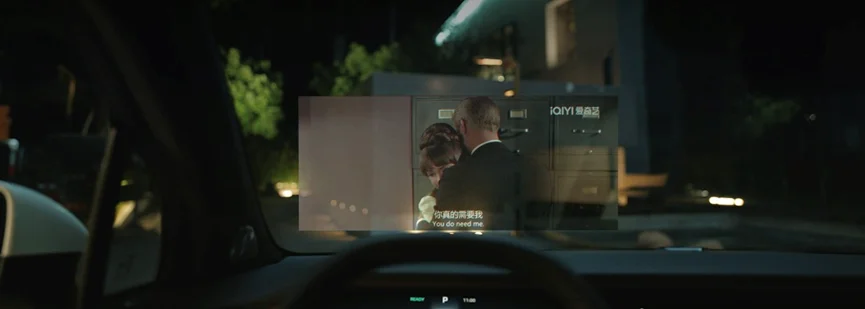
Whether this scenario matches your dream commute, true technology makes itself unnoticed. This Huawei Vision-Enhanced AR-HUD system integrates seamlessly into your life.
We should also mention Feifan’s RISING PILOT fully integrated autonomous driving system. With the PREMIUM 4D Chengxiangleida, an 8-megapixel camera, and NVIDIA Orin X chip, the new R7 has no concerns regarding hardware computing power. In terms of user experience, the new R7 employs the Full Fusion Quanronghesuanfaxitong (Full Fusion Algorithm System), which stands out for its excellent scenario-based performance.
First is its recognition capability in complex scenarios. During morning and evening rush hours, road conditions are highly complex. The new R7 can accurately identify situations such as sudden braking by the vehicle ahead or abrupt lane cuts. Additionally, roads often contain many electric bikes and bicycles; the new R7 can precisely identify these relatively small objects, avoiding many potential risks. Upon entering a parking lot, the system can also recognize high-difficulty obstacles like traffic cones and speed bumps.
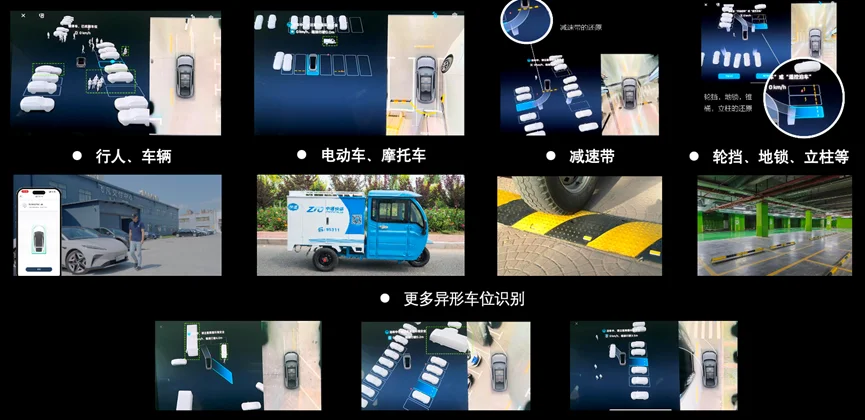
Furthermore, the experience with Feifan RISING PILOT’s navigation-guided pilot assistance is equally impressive. This is particularly true for lane changes and on/off-ramp maneuvers, areas of significant concern to users. Based on our previous real-world tests, this autonomous driving system flexibly judges the timing for main-road entry based on traffic flow. Its decision-making logic is bold, selectively overtaking slower vehicles. Within ramps, it maintains speeds around 60 km/h with impeccable posture and corrections, requiring no driver intervention. After exiting the curve, acceleration is smooth and linear.
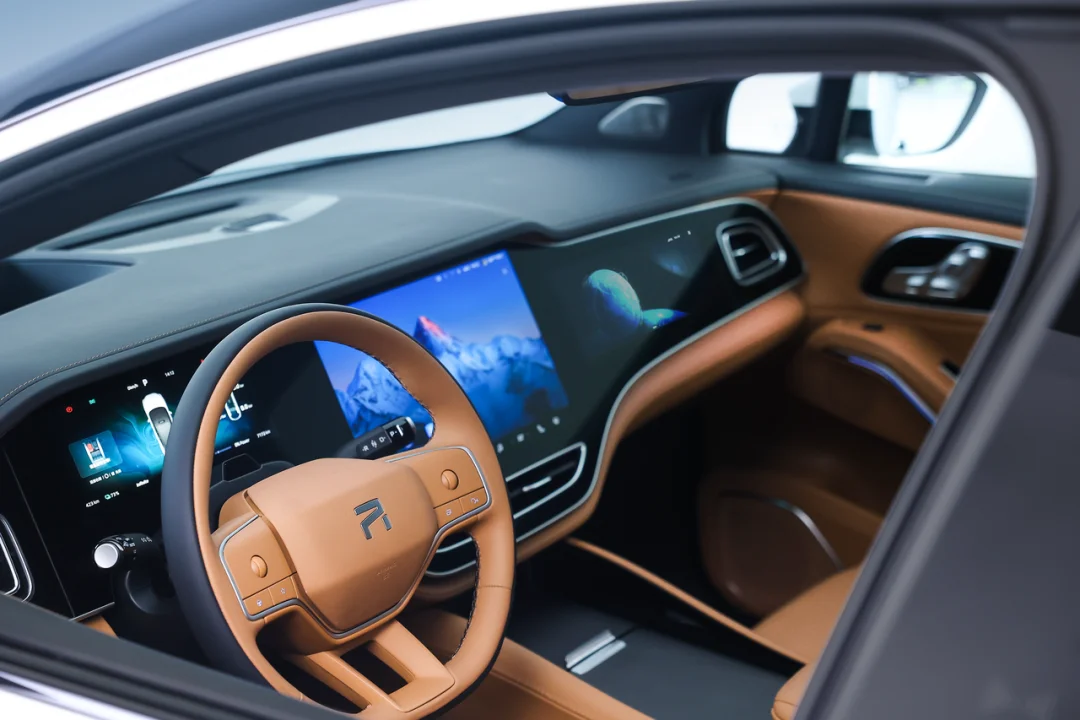
Finally, on the infotainment system that users care about most, the new R7’s 43-inch wide triple-screen setup, supported by RISING OS Jizhijiaohuxitong 1.4.0, allows the four screens to operate independently while remaining linked. For instance, via the entertainment information sharing feature, the center console screen and passenger screen can share videos through a three-finger drag gesture. Each screen can connect to Bluetooth headphones independently without interference. Additionally, once navigation is set on the passenger screen, it can be synced with one click to the instrument cluster, center console screen, and AR-HUD. This consideration is truly comprehensive. However, despite the high overall configuration, there is room for optimization in the cabin software experience, so users can look forward to subsequent OTA updates.
Returning to our initial topic: why is the new R7 the most cost-effective pure electric SUV under RMB 200,000? After reading this article, you should have your answer. To summarize, the new R7 boasts five 'bests' in its class: the largest body dimensions, the highest motor power at 250 kW, the fastest two-wheel-drive zero-to-100 km/h acceleration at 5.8 seconds, the lowest aerodynamic drag coefficient at 0.238 Cd, and it is the only model equipped with Huawei AR-HUD.
05Final Thoughts
The price range of RMB 189,900 to RMB 229,900 is already a pleasant surprise. The new R7 also introduces seven limited-time benefits: a complimentary comfort upgrade for the Feifan Bach Cabin valued at RMB 10,000; a free upgrade to the 21-inch Xingyu wheels valued at RMB 5,000; and a discount on the Super Vision Smart Interaction Package valued at RMB 10,000, which includes the Huawei Visual Enhancement AR-HUD system and a streaming media rearview mirror, now available for just RMB 2,000 during the promotion. Additionally, buyers receive lifetime free access to the RISING PILOT fully integrated advanced autonomous driving software package, valued at RMB 30,000, along with three years of free data traffic for the RISING OS cabin interaction system. These limited-time offers expire on December 31, 2023.
With a price of less than RMB 200,000, product strength and configurations that outperform numerous competitors, plus generous purchase incentives, the new Feifan R7 is undoubtedly the best value choice among pure electric and fuel vehicles in its price segment. If you are planning to buy a car recently, we recommend visiting a dealership to experience the new Feifan R7 firsthand.
Written by: David Edited by: David