


What Makes Mofangdianchi Stand Out Despite Its "Lying Flat" Approach?
On August 10, I had the opportunity to attend a live technical briefing on the battery technology of the Rongwei iMAX8 EV. At the initial launch event for the MG MULAN, Zhu Jun, Deputy Chief Engineer of Shangqijituan and General Manager of Jienenggongsi—known as the "Father of SAIC New Energy"—provided a detailed explanation of Mofangdianchi's LBS Tangshidianchijishu and the Mofangdianchi ecosystem. You can view the recording here: 《MG CEO Zhang Liang: MG MULAN Benchmarks Model 2》.
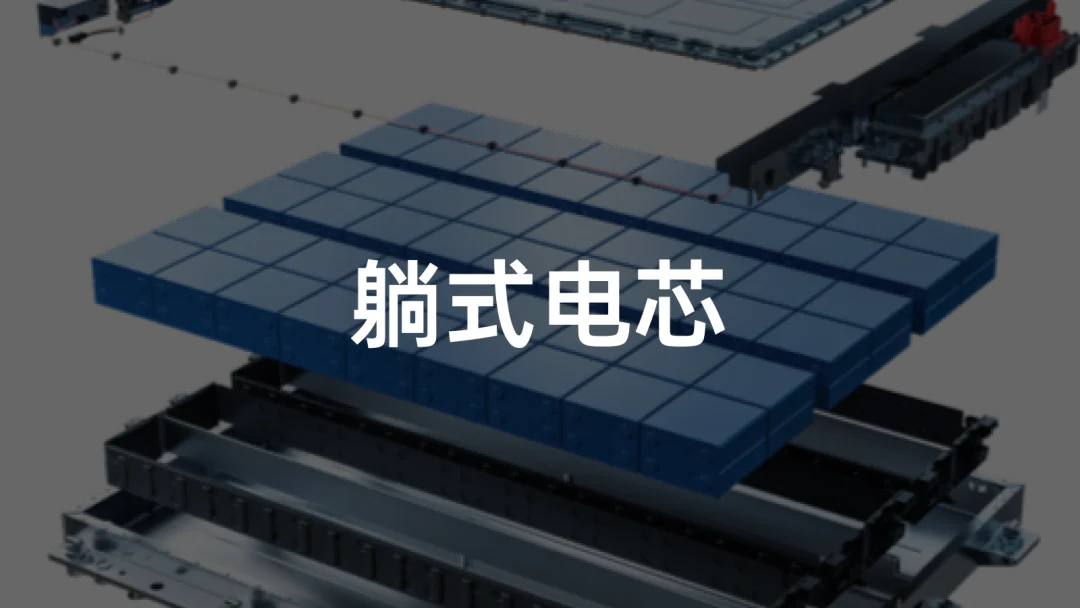
The core of Mofangdianchi is its LBS Tangshidianchijishu (LBS horizontal cell technology), which achieves broad gradient coverage through combinations of cells with different dimensions and chemical formulations. This approach addresses the fact that Shangqijituan houses numerous internal brands and spans a wide range of vehicle segments across niche markets:
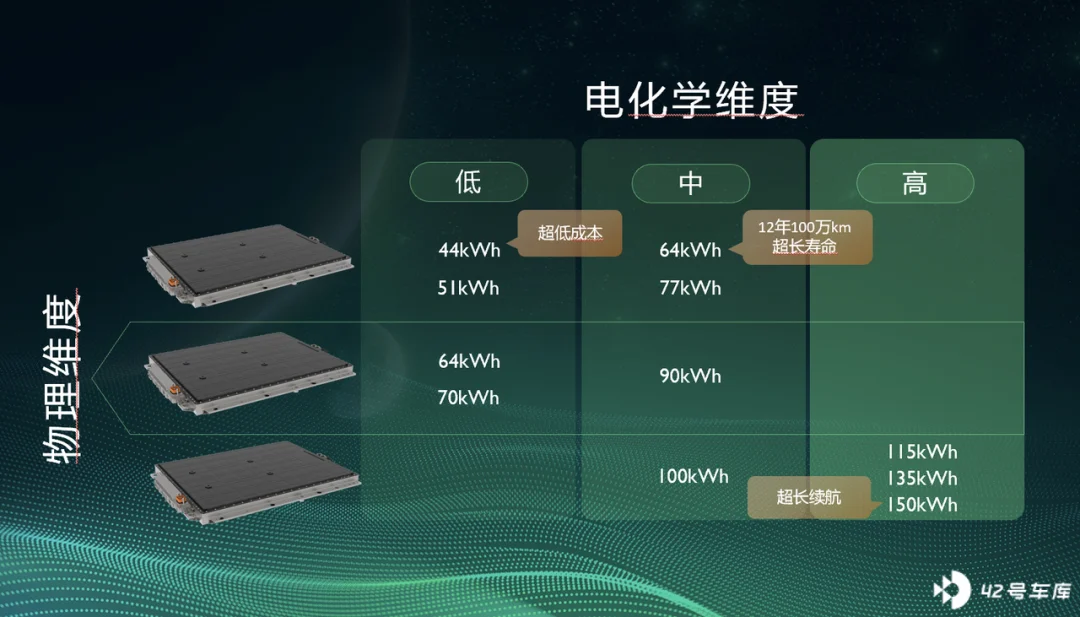
Capacity ranges from 44 to 150 kWh, with cell arrangements in the battery pack varying from 96 to 108 series connections;
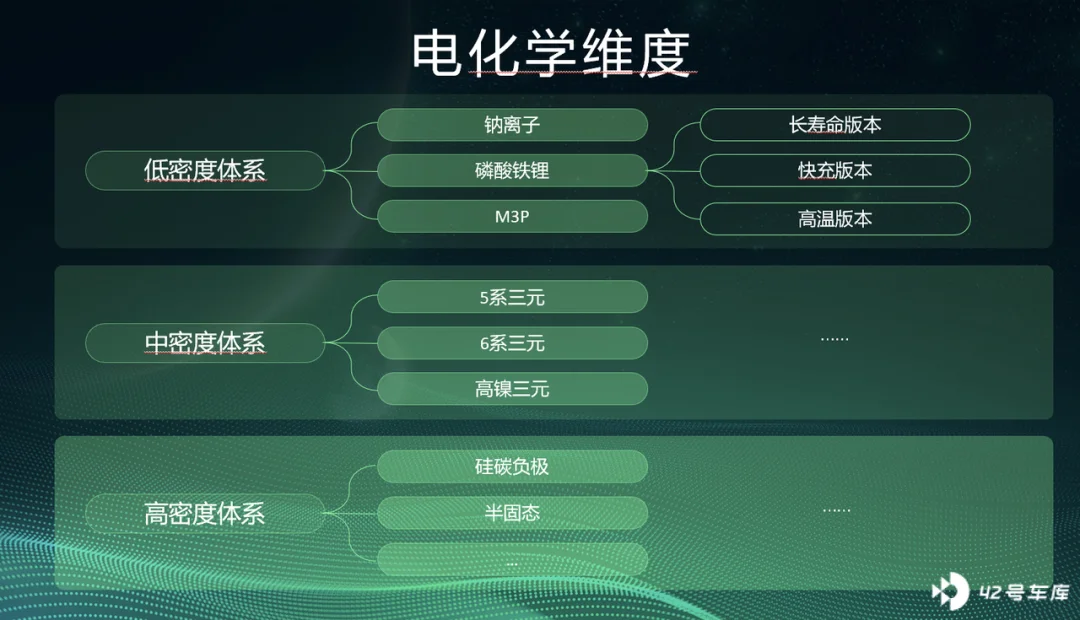
Electrochemical systems are fully compatible with low-energy-density lithium iron phosphate, medium-energy-density 5/6-series ternary lithium, and high-energy-density semi-solid-state batteries. It even supports emerging, pre-mass-production types such as sodium-ion and phosphate-based batteries;
The width and length are fixed at 1,300 x 1,690 mm, while thickness options include 110 mm, 125 mm, and 137 mm.
You can’t lie flat, but battery cells can. Today, let’s take a look at what makes SAIC’s “lying flat” Mofangdianchi so special.
01Energy Density Is the Foundation
As electric vehicles have evolved, one of the core metrics consumers evaluate is range—or, more precisely, the capacity of the battery pack. The challenge lies in the fact that vehicle dimensions remain largely fixed, meaning manufacturers must increase capacity without significantly altering the pack’s volume.
Faced with this constraint, automakers have had to find ways to cram more energy into the battery pack, thereby boosting its energy density.
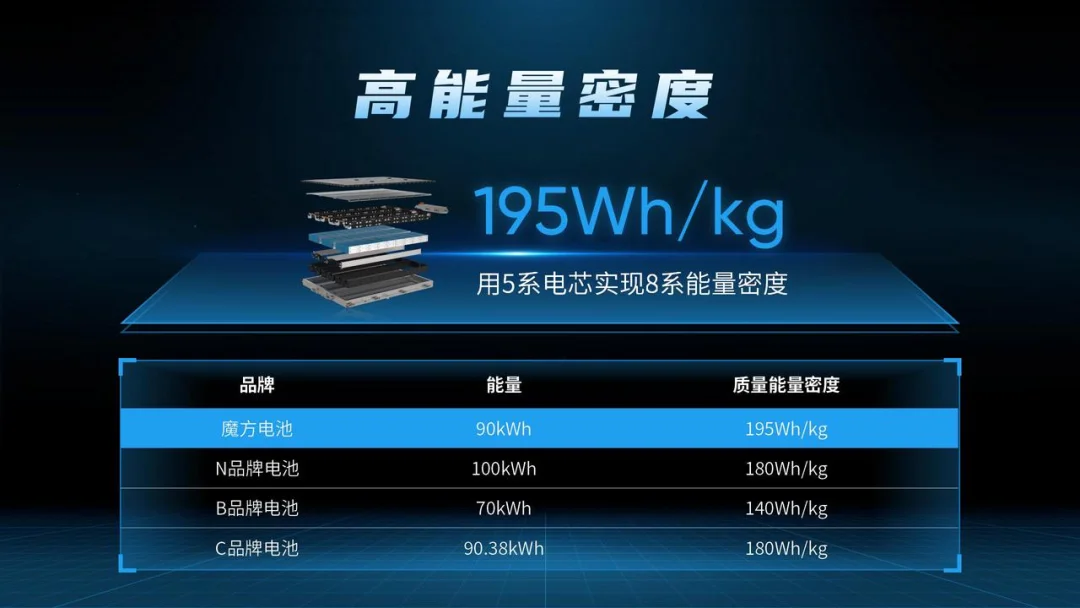
We typically measure battery pack energy density in Wh/kg or Wh/L. Mofangdianchi's battery pack achieves an energy density of 195 Wh/kg, while the industry mainstream is currently around 180 Wh/kg, which firmly places it in the top tier. More importantly, SAIC achieved this Pack-level energy density of 195 Wh/kg based on a lower-energy-density 5-series cell formulation.
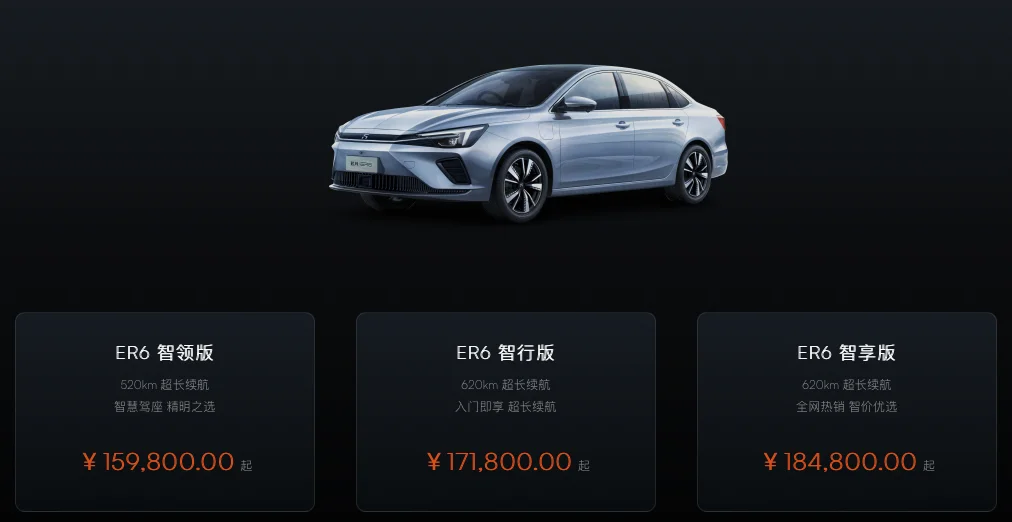
SAIC has a long-standing tradition of enhancing the energy density of 5-series packs within the battery module. Years ago, the ER6 from SAIC’s R Pinpai utilized a 72.7 kWh 5-series battery pack to achieve a NEDC range of 620 km.
Looking at the specifications in detail, the battery pack achieves an energy density of 180 Wh/kg. In terms of both driving range and overall pack energy density, this leads the compact sedan segment.
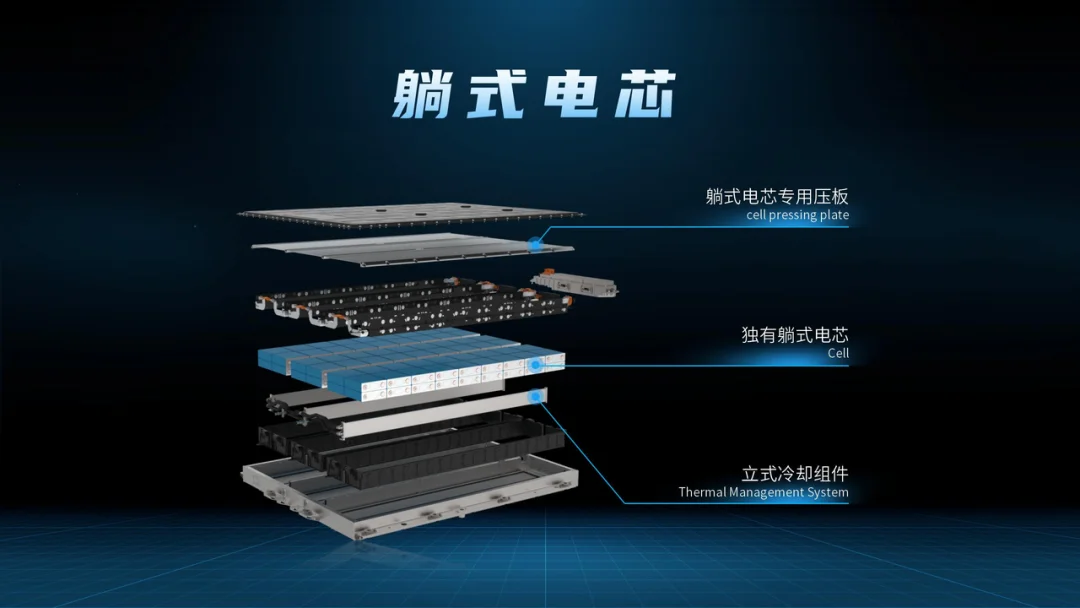
For the updated Mofangdianchi, SAIC had limited options to further increase the battery pack's energy density.
There are two primary methods for improving battery pack energy density: using Cell-to-Pack (CTP) technology to eliminate physical modules, which allows more cells to be packed within the same volume; or increasing the energy density of individual cells to raise the overall pack density.
The Mofangdianchi employs both approaches.
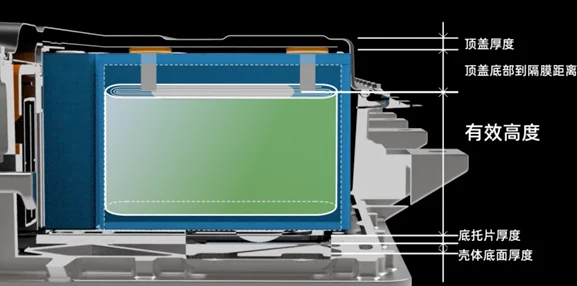
Beyond using CTP technology to boost energy density, laying traditional vertical cells flat improves volumetric utilization efficiency. Traditional vertical cells have lower volumetric utilization due to the thickness of the top cover, the distance from the top cover to the separator, and the bottom plate.
In traditional vertical cells, the thickness of the cell's top cover, the distance from the top cover to the separator, and even the thickness of the bottom tab all affect overall volume utilization, resulting in a "floor area ratio" that is not at its extreme limit.
By laying the cells flat, engineers can sidestep many of those issues, allowing the 5 Series battery pack to achieve a further improved energy density of 195 Wh/kg.
Competitive energy density is essential for range advantages. Take today’s featured vehicle, the Rongwei iMAX8 EV, as an example. Its 90 kWh Mofangdianchi enables this 2,230 kg MPV to reach a CLTC-rated range of 570 km.
While stacking energy density higher, several challenges emerged, such as how to manage thermal runaway and whether the battery life would meet standards.
02The Familiar Issue of Thermal Runaway
The core safety concern for batteries lies in controlling and mitigating "thermal runaway."
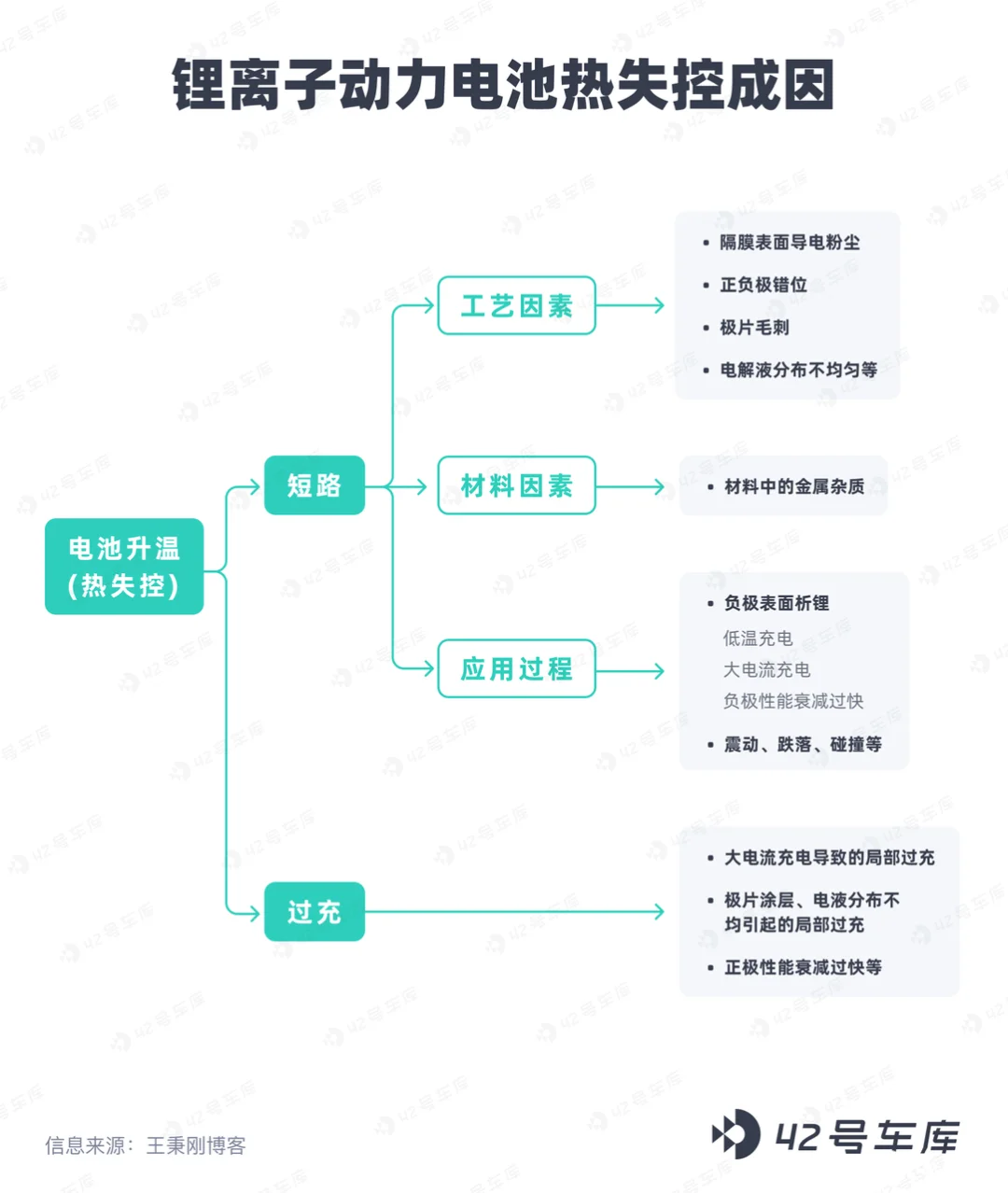
Thermal runaway refers to abnormal increases in battery temperature and pressure. When the heat generation rate from exothermic side reactions exceeds the battery's heat dissipation rate, internal pressure and temperature rise sharply, leading to an uncontrollable self-heating state. If left unchecked, this can result in battery combustion.
This phenomenon is primarily caused by two factors: short circuits and overcharging. Various specific triggers contribute to these causes; I will not elaborate on them here, but you can refer to the accompanying diagram.
For automakers, preventing thermal runaway in cells is an unavoidable challenge. SAIC is no exception.
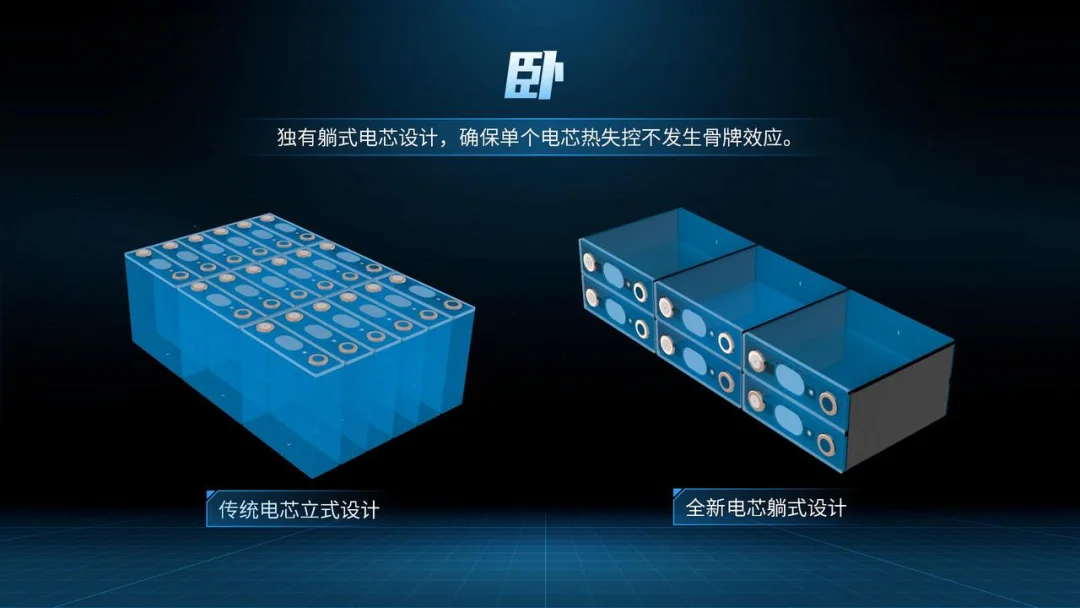
Currently, mainstream prismatic cells are mounted vertically, with their pressure relief valves pointing upward. This directs high-temperature, high-pressure exhaust gases directly against the battery pack's top cover. Although this area features reinforcement and venting channels, it remains dangerously close to occupants' feet.
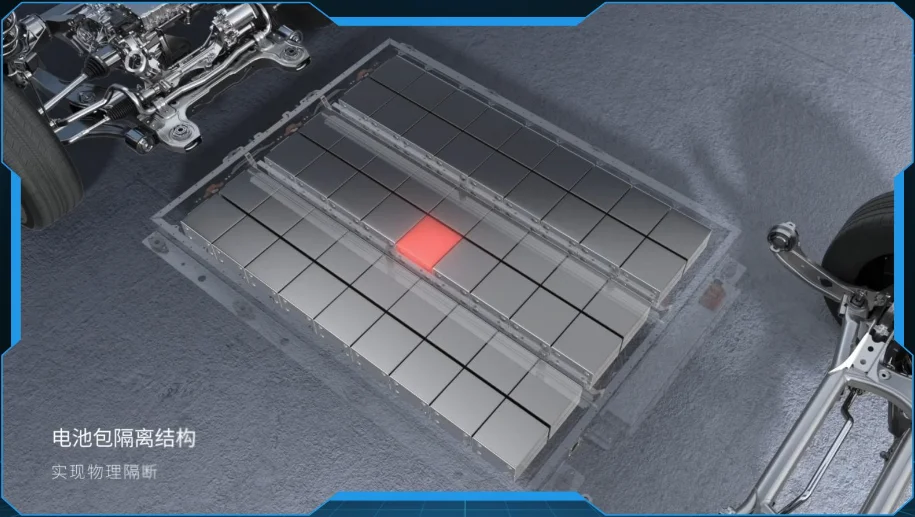
In contrast, horizontally mounted cells have side-facing relief valves, directing exhaust gases toward the side tray.
As shown in the image above, the battery pack features four venting channels aligned parallel to the wheels. The inner four rows of double-layered cells share two channels, while each outer cell row has its own dedicated channel.
The outer tray is designed to maintain the physical stability of the battery structure, giving it significantly higher structural strength than the top cover. Consequently, the side-mounted cell relief valve design offers greater structural safety overall.
Additionally, laying the cells flat helps mitigate the spread of thermal runaway.
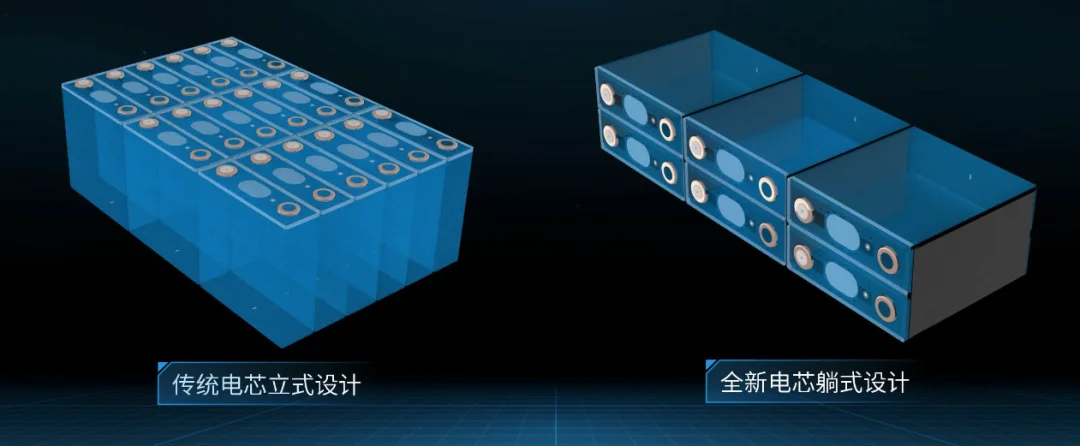
In the Mofangdianchi design, thermal runaway is permitted to propagate between two stacked cells. Structurally, these two cells reside in individually isolated "small rooms." Their "connection" with adjacent cells in other "small rooms"—specifically the contact area—is visible as a narrower side surface, which is far smaller than the large-area contact found between vertically oriented cells.
Therefore, laying the cells flat can, to a certain extent, prevent thermal runaway from spreading into a domino-effect catastrophic collapse.
Why not protect every individual cell? The first reason many people think of is cost, and that is indeed correct. But for block batteries, the most critical issue is that it will be difficult to improve the pack's energy density.
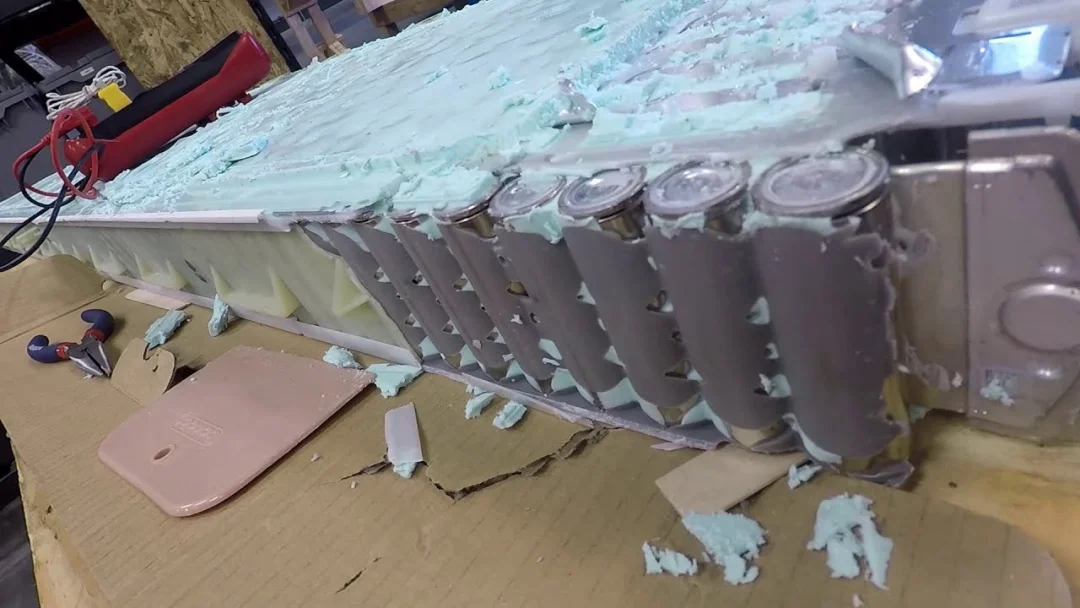
Tesla Model 3 Overseas Version There are, of course, exceptions: battery packs using cylindrical cells fill the space between cells with a special composite material.
For example, VOYAH's domestic pure electric models use NCA high-nickel 8-series cylindrical cells provided by Samsung SDI. Their solution is called "Amber," which involves injecting a composite filler of flame retardants, thermal insulation materials, and silicone-based compounds between the cells. As the name suggests, the cells are wrapped in this filler like insects trapped in amber; this can be loosely termed a "small single room" or, more accurately, a "small bed."
Of course, once the cells are stood upright, the contact area between the cells and the cooling plate decreases. So how is heat dissipation and cooling addressed?
Mofangdianchi’s solution employs a "vertical cooling structure," standing the original cooling water plate upright to create vertical cooling fins. The heat dissipation remains at the bottom, but after being "laid flat," it shifts to a side-mounted configuration.
The resulting effect is significant: Mofangdianchi has achieved L0-level thermal runaway prevention technology, meeting the requirements of China’s 2020 national battery safety standard GB 38031-2020 Safety Requirements for Power Batteries Used in Electric Vehicles. This standard mandates that the battery system must provide at least 5 minutes of protection against thermal propagation after a single cell experiences thermal runaway.
SAIC also conducted the widely used nail penetration test. After a steel nail penetrated the battery pack and triggered thermal runaway, the punctured pack emitted smoke but did not catch fire or explode, nor did thermal propagation occur.
03Is the Lifespan Sufficient?
A close look at this chart reveals that the 64 kWh battery is specifically annotated with a subscript indicating an ultra-long lifespan of 12 years and 1 million kilometers.
In 2015, the Beijing Municipal Commission of Economy and Informatization issued the Beijing Demonstration Application New Energy Passenger Vehicle Manufacturer and Product Filing Management Rules (2015 Revision), which stipulated:
Vehicle manufacturers must provide warranty services of no less than 3 years or 120,000 kilometers. For key components such as power batteries, electric motors, and vehicle controllers, the warranty period must be no less than 8 years or 120,000 kilometers.
You can see for yourself how this 64 kWh battery exceeds the requirements of many countries. If we consider a usage cycle of around 200,000 kilometers and a vehicle replacement period of three to five years, this battery even outlasts the typical replacement cycle of most individual consumers.
Many factors affect the lifespan of a battery pack, such as thermal runaway control, which was mentioned earlier.
The cells themselves undergo volume changes due to factors like temperature and state of charge (SOC). How this challenge is addressed directly impacts the health status of the cells.
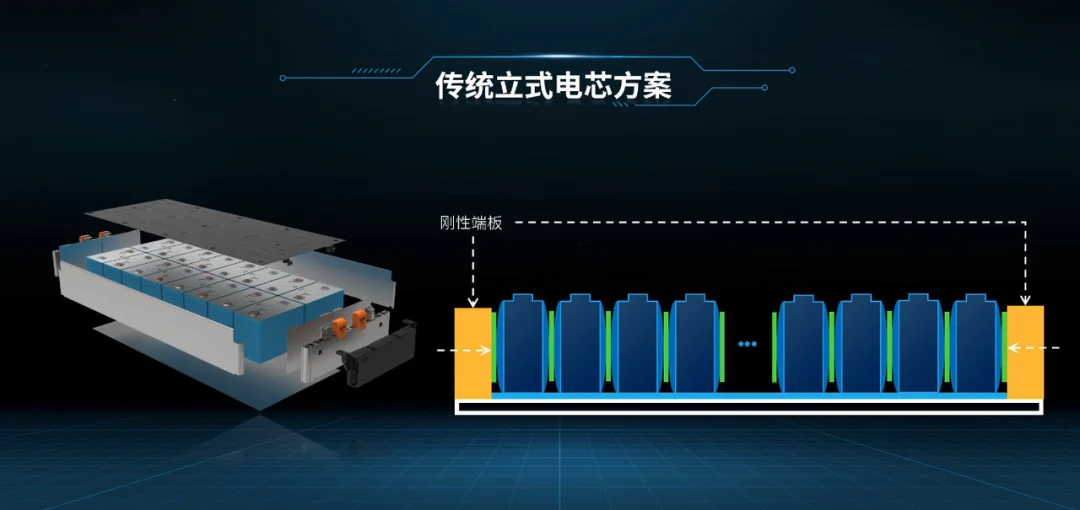
Traditional vertical cells are fixed by rigid endplates on both sides, which have minimal deformation. This means the allowable range for cell volume change cannot be too large; otherwise, excessive expansion will cause the cells to be squeezed against the endplates. This is detrimental to cell health and, in severe cases, can lead to rupture.
As Zhu Jun described, Mofangdianchi uses a floating structure that presses from above and below. Throughout its lifecycle, regardless of the battery's varying state of charge, it keeps the battery fixed within a defined range.
We can understand this as SAIC aiming for the "Green Hulk" effect: shorts that stay perfectly tight regardless of body size changes.
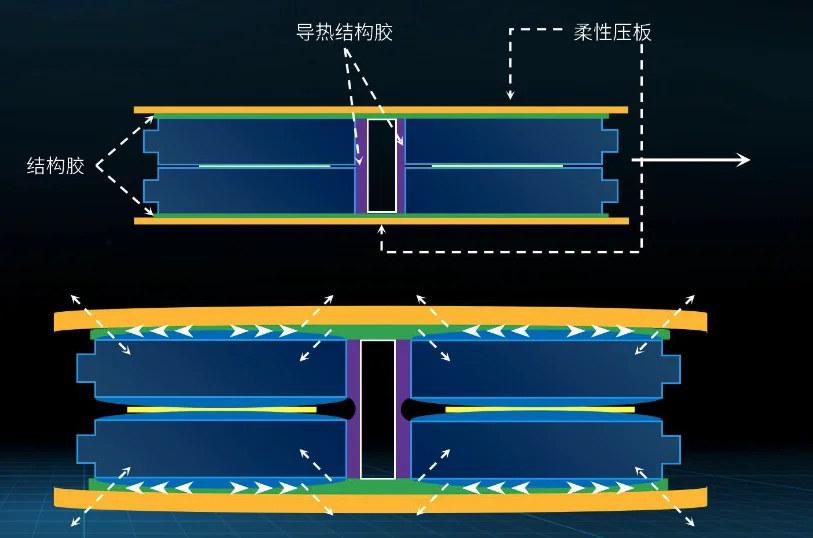
The floating compression structure refers to the use of flexible pressure plates on the top and bottom layers of the horizontal cells. The term 'flexible' means that the plates can adapt to volume changes in the battery. However, this alone is insufficient because the cells in the upper and lower layers also exert mutual pressure on each other due to these volume changes. The standard approach is to inject structural adhesive into the gaps; this serves a dual purpose: it bears mechanical loads and provides flame retardancy.
How to ensure the structural adhesive adheres better to the volume changes of the cells? SAIC partnered with Taoshihuaxue, a leading company in the chemical industry, to develop a specialized structural adhesive for horizontal cells.
Ultimately, the structural deformation of Mofangdianchi achieved an adaptive effect likened to 'Hulk-style stretchy pants,' which has become a key factor in extending battery life.
04Conclusion
In the previous MG MULAN, Mofangdianchi was applied in a battery pack with a thickness of 110 mm, using 'low' capacity packs of 51 and 64 kWh. In the Rongwei iMAX8 EV, it is applied in a 125 mm thick 'medium' Mofangdianchi pack with 108 series and 90 kWh. As a pure electric MPV, the Rongwei iMAX8 EV's cabin interior height can still reach 1,020 mm, largely due to this thinner Mofangdianchi.
This demonstrates one of the advantages of Mofangdianchi. According to SAIC engineers, matching different chemical formulations, energy densities, and thicknesses to the specific needs of different models constitutes the 'gradient utilization' strategy of Mofangdianchi. Extending this concept to SAIC’s layout in battery swapping, this gradient utilization will cover various user habits across different scenarios and contribute to better vehicle residual values.
The non-traditional cell layout of Mofangdianchi’s horizontal cells brings numerous advantages and innovations. On June 23, battery leader CATL also released the 'Qilindianchi,' which similarly adopts a non-traditional 'inverted' cell arrangement. This breakthrough, alongside CTC and CTP technologies, enhances the usable capacity of battery packs while revealing additional benefits—a significant technological advancement—though the subsequent challenge lies in production.
Written by: Liu Guangding Edited by: Liu San