


Technical Innovation: The True Mark of Advanced New Energy Vehicles
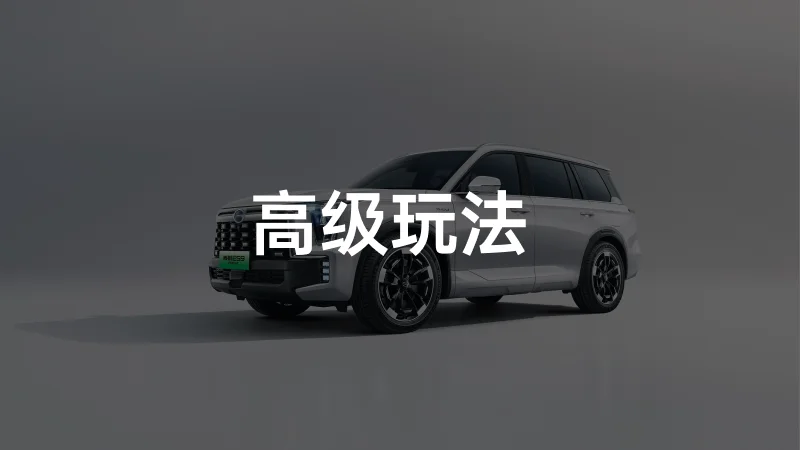
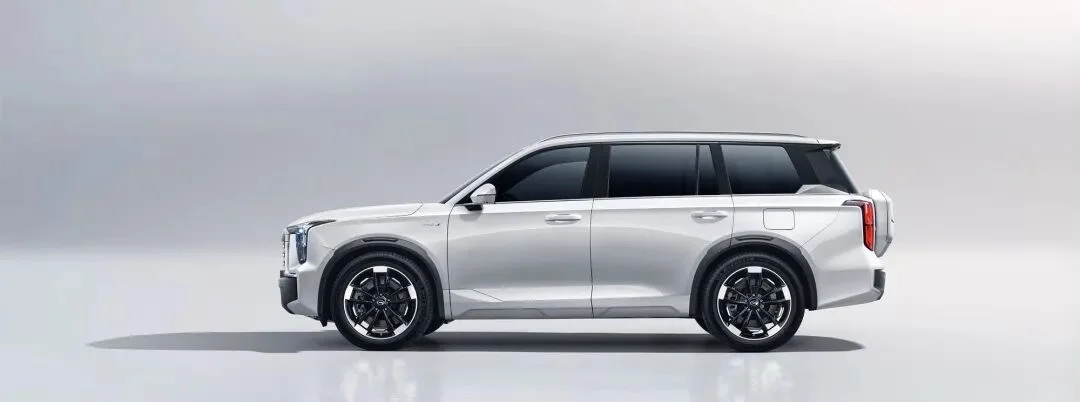
With its boxy, imposing exterior and a length of 5,110 mm, the Guangqichuanqi ES9 packs nearly every factor that benefits driving dynamics and comfort but harms energy efficiency: a large footprint and a 2.0-liter turbocharged engine—essentially a 'large displacement' powerplant for the new energy era.
However, the Chuanqi ES9, which launched pre-sales today, achieves a CLTC pure-electric range of 143 km. With a full tank of fuel, its combined CLTC range reaches 1,215 km. Underpinned by this dual-fuel capability and worry-free range, it also delivers a combined fuel consumption of 1.2 L/100 km and a battery-depleted WLTC fuel consumption of 6.18 L/100 km, making its energy data particularly impressive.
If you are interested in this model, we will conduct a real-world test using our 42Test standards after launch to see how its actual energy consumption performs.
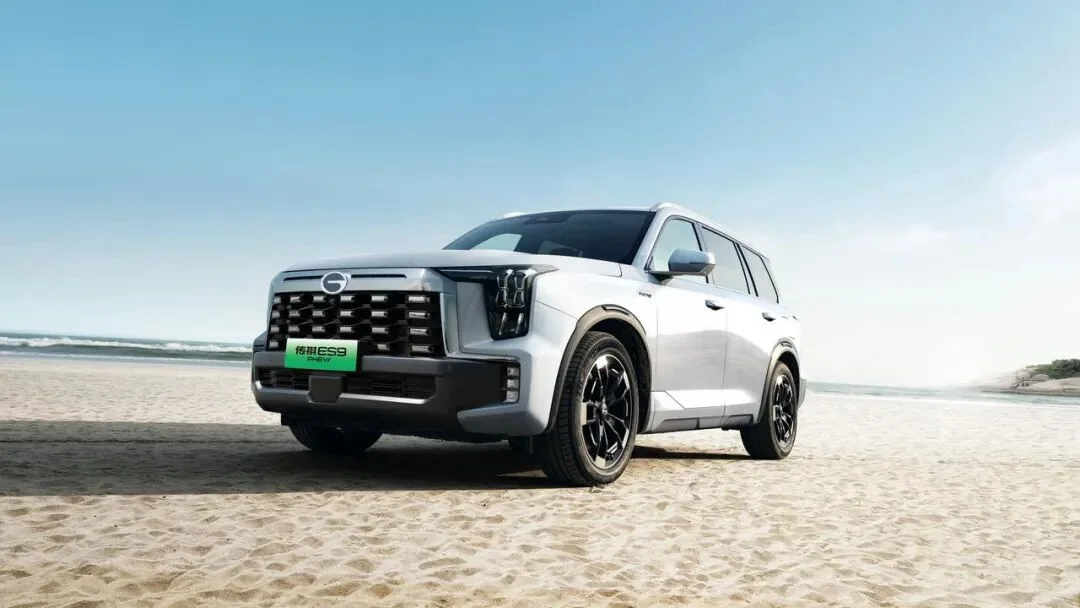
Back to the main point: seeing the Chuanqi ES9’s low energy consumption has made me curious about the structure of its three-electric system (battery, electric motor, and electronic control). How does a larger displacement engine still achieve such low energy use? As new energy vehicles rapidly replace traditional internal combustion engine cars, this more advanced powertrain may well become your choice.
01Large Size, Low Energy Consumption
Today, when buying a vehicle priced between RMB 200,000 and RMB 300,000, new energy models are becoming the preferred choice for consumers, especially those from independent Chinese brands.
These models offer higher levels of comfort and luxury features than joint-venture vehicles, along with stronger powertrain performance and advanced intelligent configurations. Crucially, new energy vehicles (NEVs) incur lower energy consumption and maintenance costs in daily use. Consequently, the combination of electrification and smart technology has gained significant popularity among users.
However, within the same RMB 200,000–300,000 price segment, mid-size SUVs equipped with plug-in hybrid systems are standard, yet few vehicles offer a larger body size while maintaining relatively lower energy consumption.
The Chuanqi ES9 has arrived, perfectly filling this market segment. Equipped with Guangqichuanqizhidianxinnengyuanjishu, a sufficiently large body size, and commendable comfort and luxury features, the model attracted significant attention upon its debut.
Many readers may not have a clear concept of energy consumption data, but after comparing with similarly priced models, we reached one conclusion: the Chuanqi ES9 achieves lower energy consumption despite its larger body size.
In the RMB 200,000–300,000 hybrid SUV segment, most models are mid-size SUVs under 5 meters in length. Two-wheel-drive versions typically consume less than 6 L/100 km, while four-wheel-drive versions of the same size generally exceed 6 L/100 km.
For instance, the recently launched Lynk & Co 08 records a WLTC fuel-depleted consumption of 5.5 L/100 km for the two-wheel-drive version and 6 L/100 km for the four-wheel-drive version. Similarly, the two-wheel-drive BYD Tang DM-i Champion Edition achieves a comprehensive working condition fuel-depleted consumption of 5.5 L/100 km, while the four-wheel-drive Tang DM-p Champion Edition/Zhanshen Edition reaches 6.5 L/100 km.
In other words, fuel consumption, size, and performance form an 'impossible triangle.' The Chuanqi ES9 has found a unique balance point within this 'impossible triangle.'
This makes the positioning of the Chuanqi ES9 quite clever.
On one hand, the Chuanqi ES9 fills a gap in its segment. While there are a few mid-to-large new energy SUVs at a similar price point, almost none have a body length reaching 5,110 mm.
On the other hand, Chuanqi meets users' core needs—multi-person travel. Whether it is commuting within the city or traveling with family on weekends and holidays, the more important demands are large space, comfort, and intelligence.
Therefore, the positioning of the Chuanqi ES9 is precise enough, targeting family users or multi-person travel scenarios. It achieves a large size while maintaining low energy consumption. Precisely because of this low energy consumption, the Chuanqi ES9's range performance is quite impressive.
02Why Is the Powertrain 'Advanced'?
After clarifying the positioning of the Chuanqi ES9, you likely have another question: In the era of new energy vehicles, a 2.0-liter engine is already considered 'large displacement.' Coupled with a hybrid-specific transmission, it appears quite advanced compared to the crowd of 1.5T engines. But can this large displacement truly result in lower energy consumption?
To answer this question, we must conduct an in-depth analysis of the Chuanqi ES9's intelligent electric new energy technology.
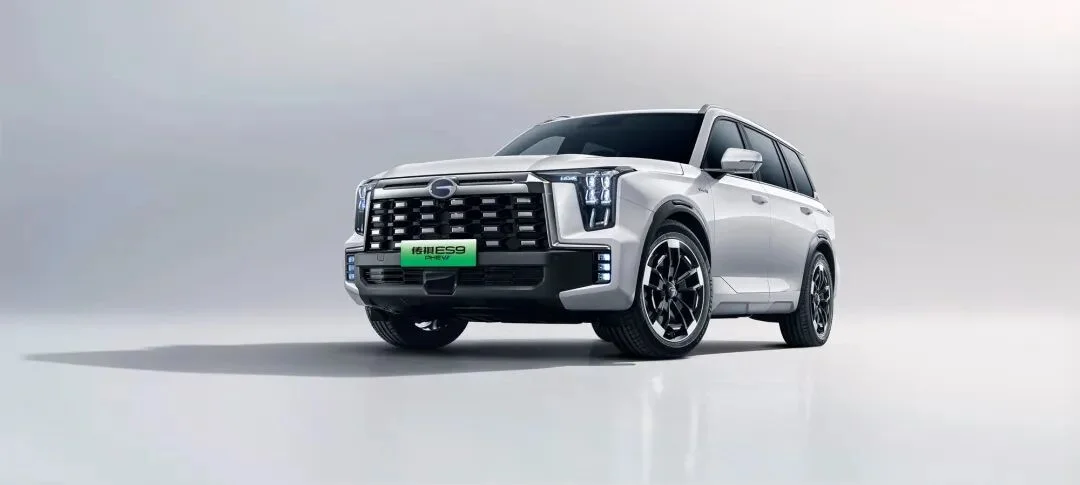
Structurally, the powertrain of the Chuanqi ES9 is divided into two parts, with its core being the three-electric system.
The electric drive section features two motors: P1 and P3.
The P1 motor is primarily used for generating electricity, with a peak generation power of 110 kW, ensuring strong power output and charging capability even when the battery is depleted.
The P3 motor is mainly responsible for driving, with a maximum power of 134 kW; in pure electric mode, it drives the wheels.
The powertrain also includes a dedicated PHEV battery pack, known as Tanxiadianchi. The Chuanqi ES9 is equipped with a Tanxiadianchi capacity of 25.57 kWh, using NCM613 ternary lithium cells.
On one hand, the battery allows the vehicle to run on pure electricity. If your daily commute is around 20 km, you can charge the Chuanqi ES9 once a week and use no fuel at all.
On the other hand, the Chuanqi ES9 supports external discharge with a maximum power of 3.3 kW, significantly expanding the vehicle’s utility and enhancing outdoor experiences.
After a full charge, the Chuanqi ES9 can provide up to 18.3 kWh of external discharge, enough to power a hairdryer continuously for 14 hours or an electric hot pot for 8 hours. This means that for a weekend camping trip, the battery capacity is generally sufficient.
Meanwhile, the Chuanqi ES9 also features vehicle-to-vehicle external discharge capability with a maximum discharge power of 5.5 kW. If you happen to own a pure electric vehicle, making friends with a Chuanqi ES9 owner is always a good idea.
Regarding cell safety, Tanxiadianchi employs nano-level doping and multi-layer coating technologies to ensure cell stability and safety. The battery pack incorporates five layers of protection: mesh-like nano-pore thermal insulation material between cells, high-temperature-resistant ceramic insulation for modules, an efficient liquid cooling system, a high-strength enclosure, and big-data-driven fault diagnosis technology for proactive thermal runaway monitoring via the BMS operating 24 hours a day.
Under these protective measures, Tanxiadianchi can prevent open flames in the event of battery thermal runaway.
Beyond the electric drive system, there is also a fuel-powered system consisting of the 2.0TM Hundongzhuanyongfadongji and the GMC400 Hundongzhuanyongbiansuxiang. The engine delivers a maximum power output of 140 kW and a peak torque of 330 N·m. Combined with the P3 motor, the Chuanqi ES9 achieves a total maximum output power of 274 kW and a peak torque of 630 N·m.
The GMC400 Hundongzhuanyongbiansuxiang adjusts the engine’s output torque and rotational speed. At medium to low speeds, the vehicle uses first-gear direct drive for stronger power delivery and lower engine noise. At higher speeds, second-gear direct drive enables lower fuel consumption.
This versatile powertrain allows the Chuanqi ES9 to operate in multiple energy modes, including intelligent hybrid mode, pure electric mode, and battery-holding priority mode.
In intelligent hybrid mode, energy distribution is allocated intelligently based on factors such as vehicle speed and state of charge, providing a balanced driving experience that harmonizes comfort, performance, and energy efficiency. Pure electric mode suits daily commuting, ensuring quiet and cost-effective travel. Battery-holding priority mode is designed for scenarios such as camping or resting.
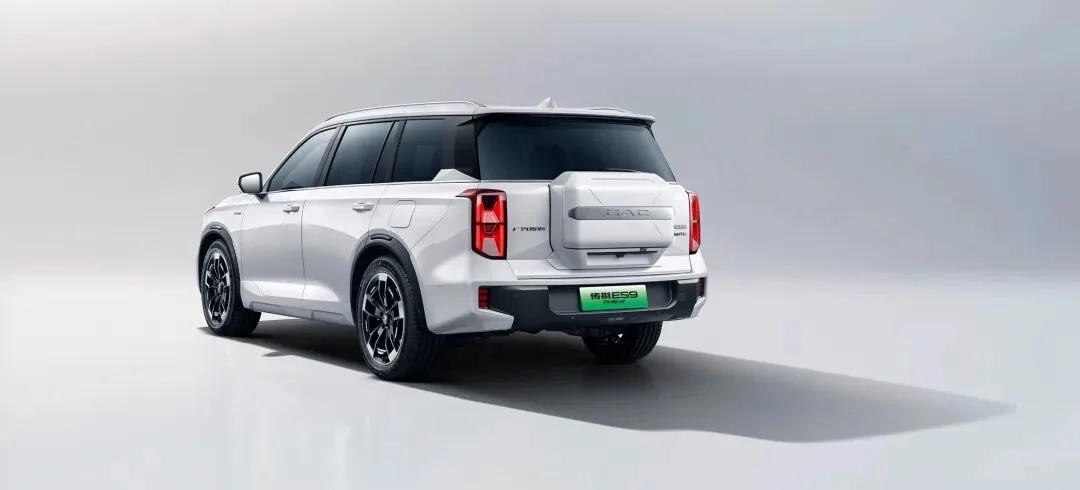
New energy vehicles are rapidly replacing traditional internal combustion engine cars, and different brands have developed distinct technical routes. However, when it comes to products that consumers are actually willing to pay for, the outcomes achievable by these differing technical routes become much more intuitive.
For multi-passenger family use, the core needs are high comfort, spacious interiors, and low energy consumption. The Chuanqi ES9 offers 143 km of pure electric range, sufficient for daily urban commuting. For long-distance travel across cities or provinces, refueling with gasoline eliminates any anxiety regarding charging infrastructure.
Guangqichuanqi addresses family vehicle needs by pioneering a P1+P3 dual-motor parallel-axis series-parallel two-speed powertrain. This system delivers superior performance in structural design, component quality, and energy efficiency.
From this perspective, the powertrain of the Chuanqi ES9 aligns precisely with user needs.
03Pre-sale price starting at RMB 229,800
At the Chengduchezhan in August this year, the Chuanqi ES9 was unveiled. Today, pre-sales for this model officially began, with a pre-sale price range of RMB 229,800 to RMB 269,800.
Customers who place orders during the pre-sale period can choose between a RMB 20,000 trade-in subsidy or a Huawei Mate 60 Pro smartphone. Regarding warranty coverage, non-commercial vehicles receive a five-year/150,000-kilometer comprehensive warranty, while the first owner of a non-commercial vehicle enjoys lifetime warranty coverage for the battery, electric motor, and electronic control systems. Additional benefits include a complimentary charging pile and a thirty-day delivery commitment.
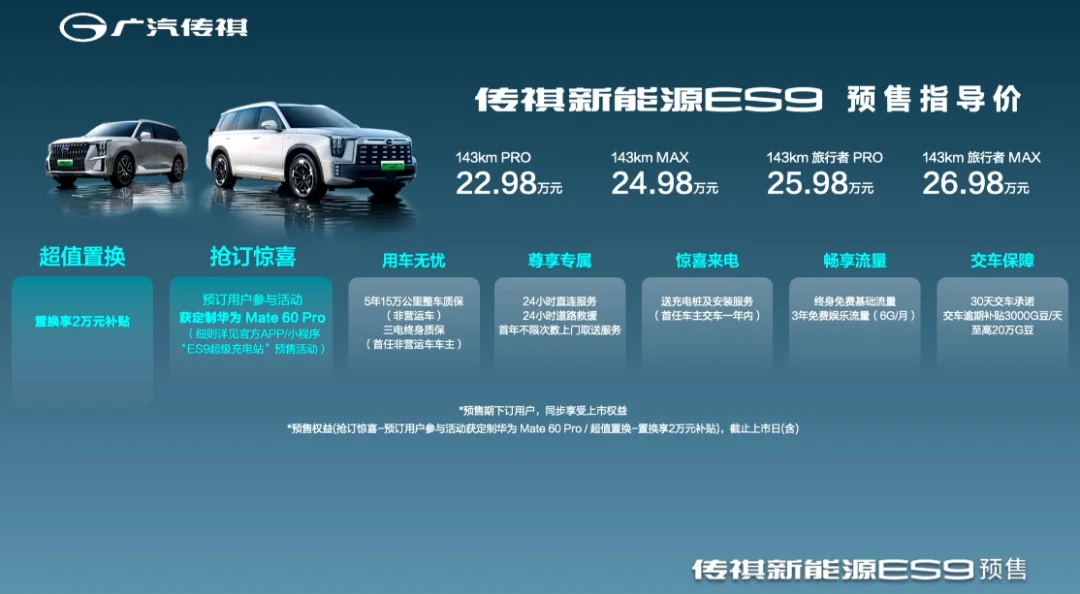
With a pre-sale price starting at RMB 229,800, does it catch your interest? Let’s take a closer look at the interior of the Chuanqi ES9, where comfort and luxury features are equally abundant.
The Chuanqi ES9 offers two seating configurations: a six-seat layout in a 2+2+2 arrangement and a seven-seat layout in a 2-3-2 arrangement. This flexible seating design allows for optimized cargo space, with the trunk volume varying from 181 to 1,859 liters.
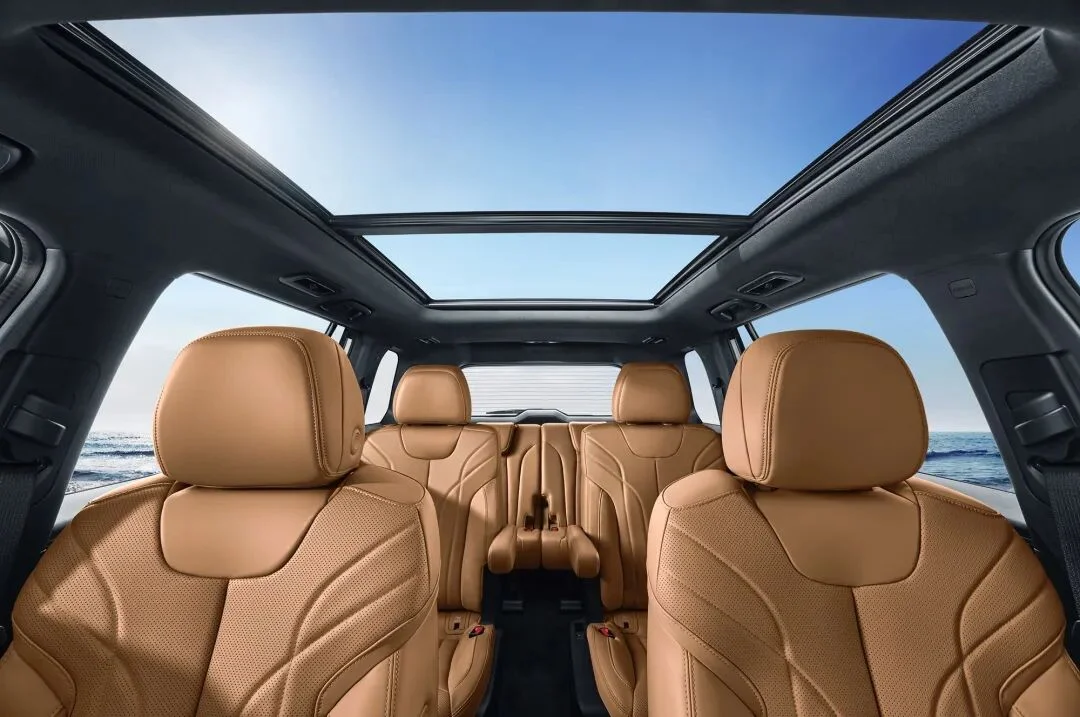
The second row features a 'Queen's Lounge Chair' with eight-way adjustment and a recline range of up to 131 degrees. Combined with a front-to-back sliding distance of up to 140 mm, the comfort amenities are highly impressive.
In terms of smart technology, the Chuanqi ES9 is also well-equipped.
The Chuanqi ES9 is equipped with a 12.3-inch instrument cluster, a 14.6-inch central touchscreen, and a 30-inch AR-HUD, powered by the Gaotongxiaolong 8155 chip. From a hardware perspective, this smart cockpit system remains competitive and retains potential for OTA software updates.
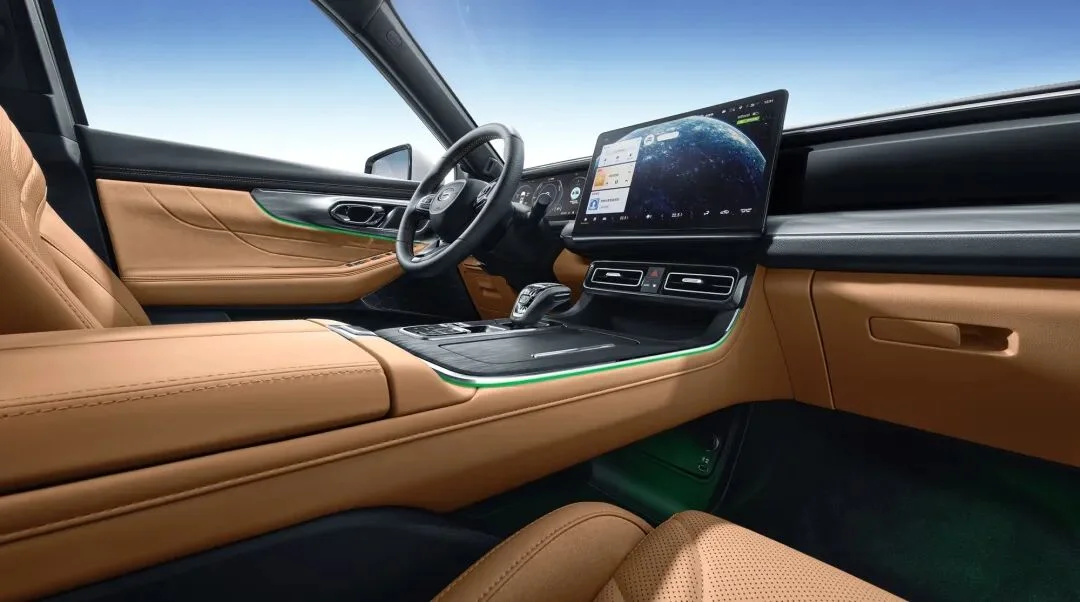
For driver assistance, the Chuanqi ES9 employs the latest ADiGO 4.0 Zhinengjiashifuzhuxitong, offering L2-level assisted driving capabilities and intelligent navigation cruise functions. During travel, these systems can assist you to some extent, helping to alleviate driving fatigue.
04Final Thoughts
In the RMB 200,000 to 300,000 new energy vehicle market, although there are quite a number of models available, bestsellers are concentrated in the pure electric and pure internal combustion engine segments. The reason is that existing plug-in hybrid models have too many compromises and shortcomings. Moreover, these compromises affect space and energy consumption, areas where users are more sensitive.
The debut of the Chuanqi ES9 achieves a unity of large size and low energy consumption, perfectly aligning with the genuine vehicle needs of Chinese families. Coupled with GAC’s pioneering P1+P3 dual-motor parallel-axis series-parallel two-speed power system, along with three energy modes—smart electric hybrid, pure electric, and battery-holding priority—it allows you to enjoy the smoothness and quietness brought by electric drive while ensuring worry-free range. Whether in terms of technology or experience, the Chuanqi ES9 has stepped up to a higher level.
Furthermore, the Chuanqi ES9’s intelligent features and comfort configurations are expected to provide stronger competitiveness once it officially launches.
Written by: James Edited by: Daji