


NIO Founder William Li Acts as R&D Head at First Innovation Tech Day, Unveils NIO Phone and Yangjian Chip
Who is NIO's CTO?
The answer is: William Li.
On September 21, at NIO's first Innovation and Technology Day since its founding, NIO founder, chairman, and CEO William Li publicly responded to questions regarding the role of NIO's CTO for the first time.
He stated: "NIO does not have a CTO; the NIO CTO is me, but I am unwilling to make my title too long... that's not good. But essentially, I am the head of R&D for this company."
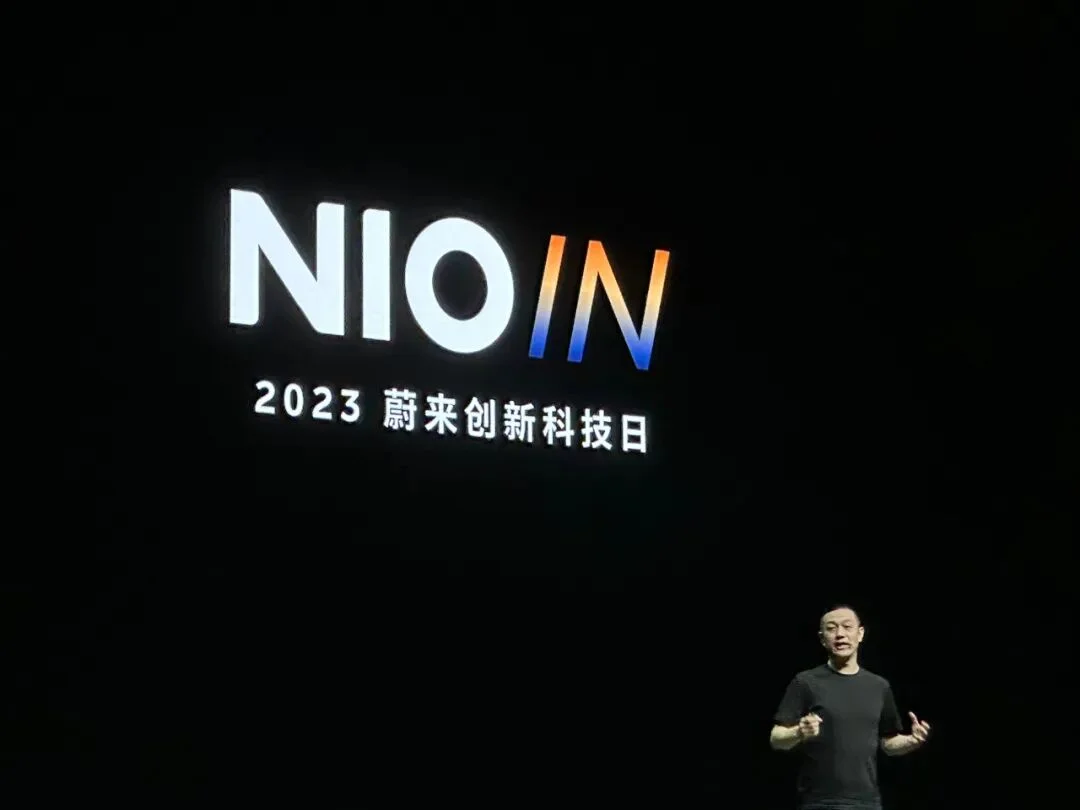
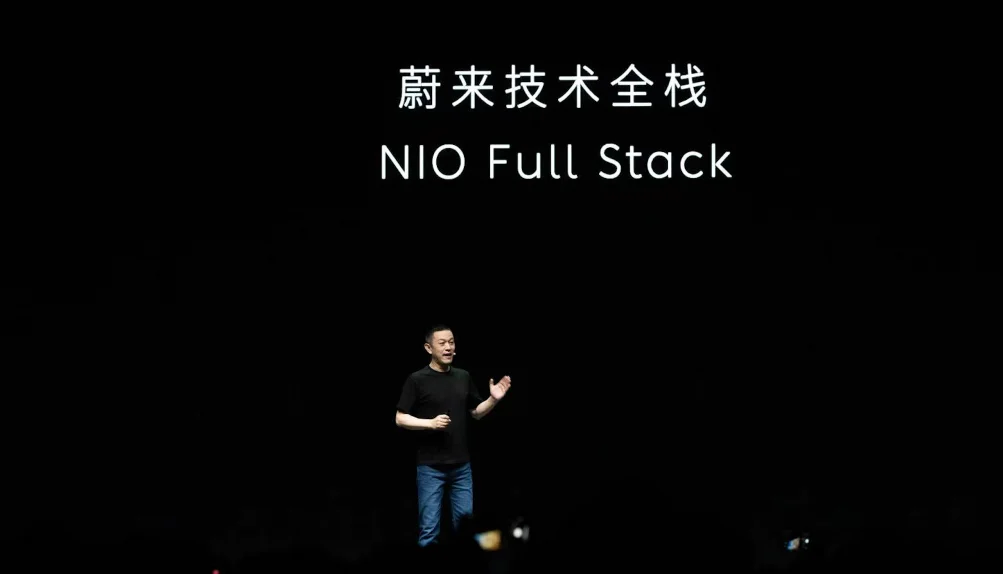
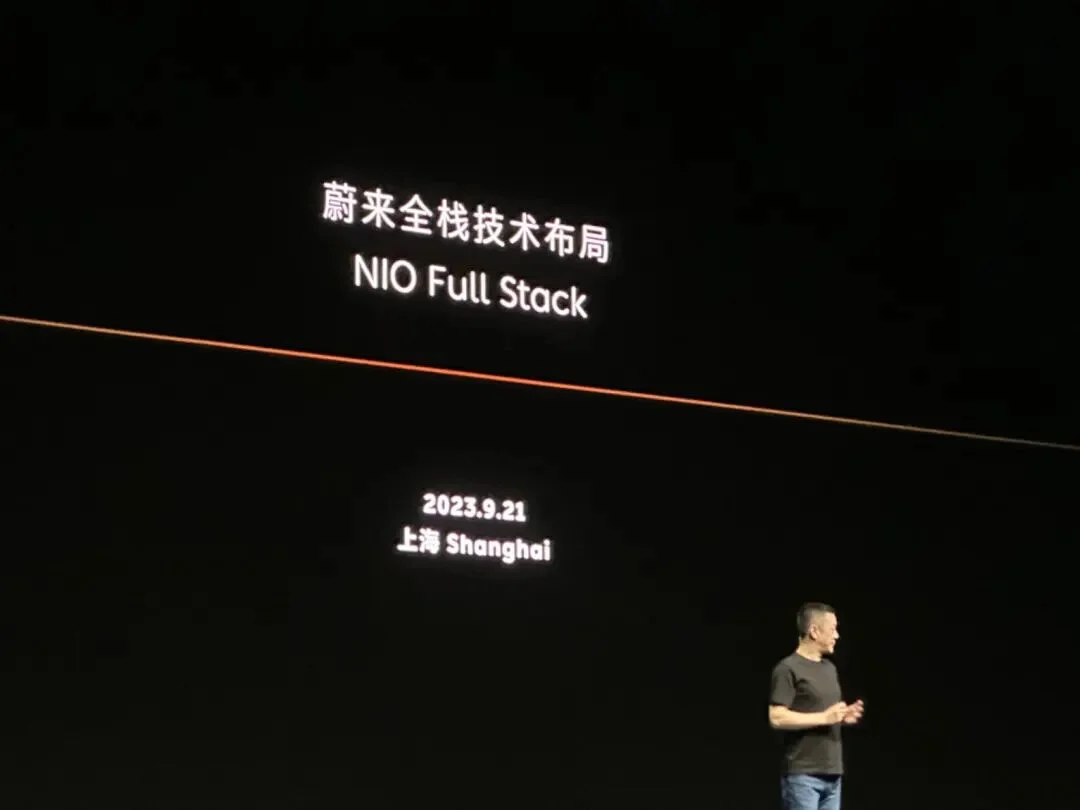
Acting as CTO in his capacity as NIO's leader, William Li clearly intends to demonstrate that NIO is not merely a user-centric company but also one that places high importance on technological research and development. Consequently, at this NIO Innovation Day, William Li spent over an hour systematically presenting NIO's full-stack technological capabilities for the first time and announcing several new products and achievements.
The NIO Phone, in particular, has drawn the most attention from the outside world.
01NIO Phone's Core Product Logic: Driver-Phone Connectivity
With a price range of RMB 6,499 to RMB 7,499, it is clear that the NIO Phone is not designed for mass volume sales. Its positioning is precise. As William Li stated, it is "a phone born for NIO owners."
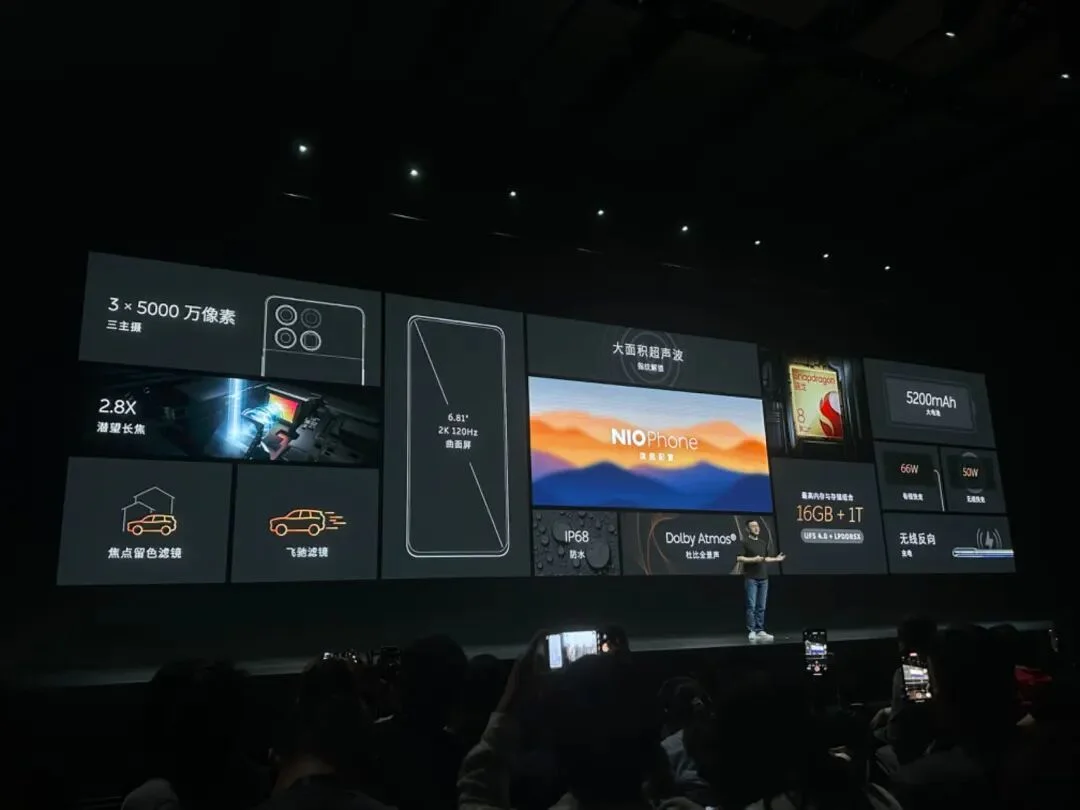
Consequently, William Li did not spend much time detailing its hardware specifications, even though these specs are heavily stacked with premium components. Let us briefly review them:
Qualcomm Snapdragon 8 Gen 2 processor;
Base memory and storage configuration of 12GB + 512GB, with a top-tier option of 16GB + 1TB;
A 6.81-inch 2K resolution display with a 120Hz refresh rate;
Three 50-megapixel cameras;
A large 5,200 mAh battery;
Supports 66W wired fast charging and 50W wireless fast charging;
Supports large-area ultrasonic fingerprint unlocking;
IP68 water resistance;
Dolby Atmos.
These hardware specifications are indeed among the highest available in the Android smartphone market, but from a product perspective, they offer little novelty and may not justify the RMB 6,499 starting price.
At the same time, in terms of operating system development, the NIO Phone uses SkyUI, built on Android. The interface features a clean design language with horizon-inspired elements, while system-level improvements enhance security and fluidity. It also emphasizes 'zero system ads and zero commercial pre-installed apps'—a distinctive feature compared to other players in the industry, though not particularly groundbreaking.
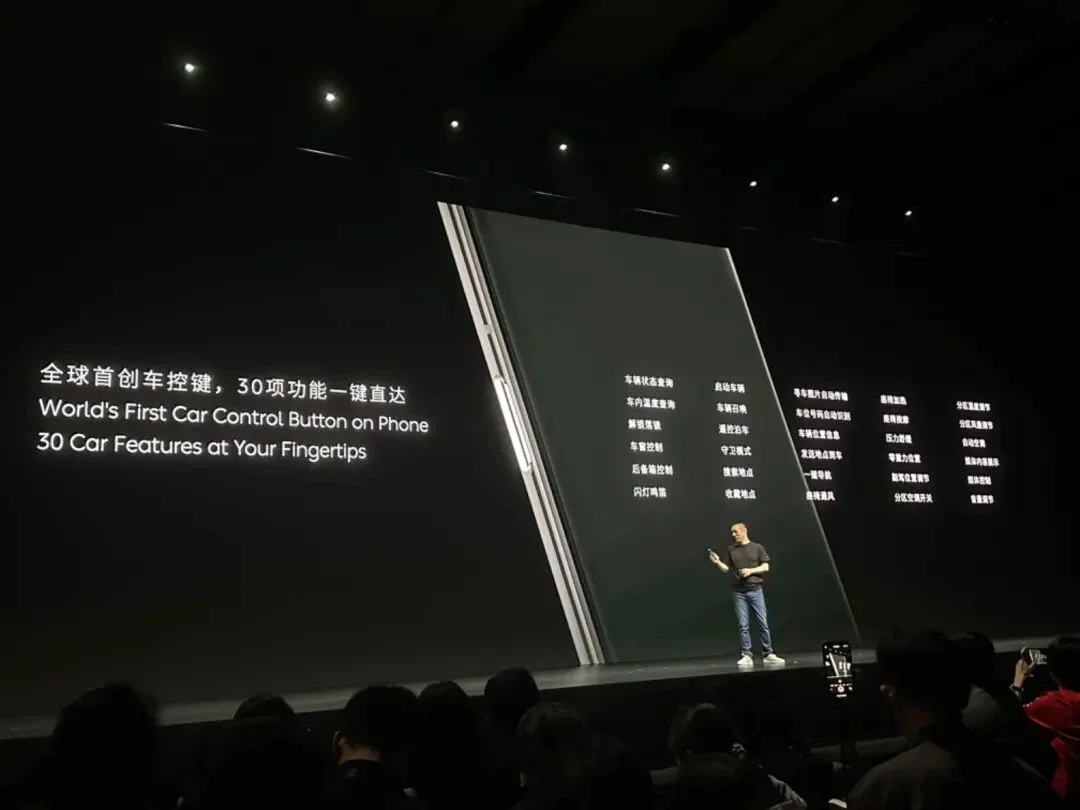
Therefore, the true highlight of this NIO Phone is its interoperability with NIO vehicles, centered on the NIO Link panoramic interconnection technology. Specifically:
Leveraging NIO Link and the NIO Panoramic Interconnection technology, the NIO Phone’s built-in UWB (Ultra-Wideband) technology can completely replace the car key and supports unlocking without a battery for up to 48 hours.
Users can activate more than 30 driver-vehicle interconnection features with a single press of the NIO Link vehicle control button on the left side of the NIO Phone. These include checking vehicle status, parking location, locking and unlocking the doors, rolling windows up or down, opening the trunk, and remotely adjusting the air conditioning. Notably, even when the phone has no network connection, it can still unlock the car, open the trunk, flash the lights, honk the horn, summon the vehicle, and perform remote parking.
Inside the cabin, the NIO Phone automatically switches vehicle control cards based on the seat where the phone is placed, allowing precise adjustment of seat functions and zoned air conditioning for the occupant’s position, as well as assistance for other passengers. By waking NOMI via voice command, users can remotely control the car, query charging and battery swap stations with a single sentence, and send battery swap reservations directly to the vehicle’s infotainment system with one click.
The NIO Phone’s navigation clipboard handoff feature allows for one-click synchronization of navigation information. Text copied on the mobile phone, including extracted and recognized location data, is securely synced to the vehicle’s central display, enabling users to start navigation with a tap. Navigation route handoff enables seamless entry: by setting the destination and route on the NIO Phone in advance, the system automatically switches from walking navigation to vehicle navigation upon entering the car, eliminating the need for re-entry. Additionally, the NIO Link-enabled photo album allows users to view and one-click download videos captured by the vehicle in real time.
With the Sky View Window feature enabled, an independent digital twin of the NIO Phone runs on the vehicle’s central control screen, supporting parallel operation of applications on both the central screen and the mobile phone.
In business scenarios, Super Meeting automatically transfers to the vehicle’s infotainment system upon entry, utilizing the car’s hardware to enhance the mobile meeting experience. NIO Link games can also be played on the large central control screen.
Overall, the NIO Phone is essentially a smartphone centered around NIO vehicles, focusing on the interconnection experience between the car and the phone. Consequently, its many differentiated features are entirely designed around the driving scenarios of NIO users.
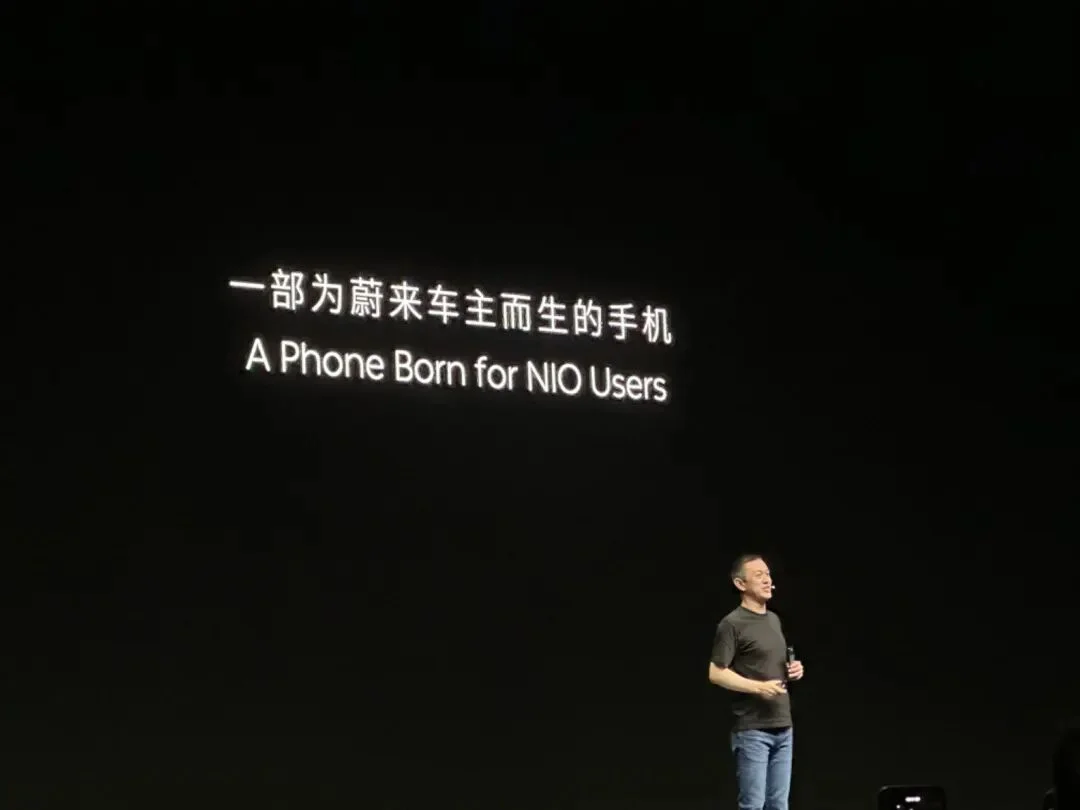
In other words, the core value of the NIO Phone lies in its interaction with NIO vehicles. The key capability it demonstrates is precisely the system-level underlying connectivity that NIO has built for mobile devices from the perspective of an automotive OEM—this also represents the most strategic entry point for carmakers to manufacture smartphones.
02NIO Unveils Full-Stack Technology for the First Time, Including Self-Developed Chips
For NIO, NIO Link—the core capability embedded in the NIO Phone—is just one component of its entire technology ecosystem.
In fact, at this Innovation and Technology Day, NIO made its first public, centralized presentation of its 'full-stack technology,' which is divided into 12 major categories, specifically including:
Chips and in-vehicle hardware;
Battery systems;
Electric drive and high-voltage systems;
Vehicle Engineering;
Full-vehicle domain operating system;
Panoramic Interconnection;
Autonomous driving;
Smart Cockpit;
Smart Energy;
Intelligent manufacturing;
Artificial Intelligence;
Global digital operations.
NIO stated that its underlying philosophy for research and development (R&D) and innovation is guided by four dimensions: prioritizing user interests, enhancing user experience across the entire product lifecycle, continuously leading innovation, and improving systemic efficiency. These 12 key technology areas are designed to meet NIO’s R&D needs across nine elements spanning three dimensions: intelligent and electric vehicles, products, services, community, multi-brand strategies, multi-platform architectures, and multi-regional expansion.
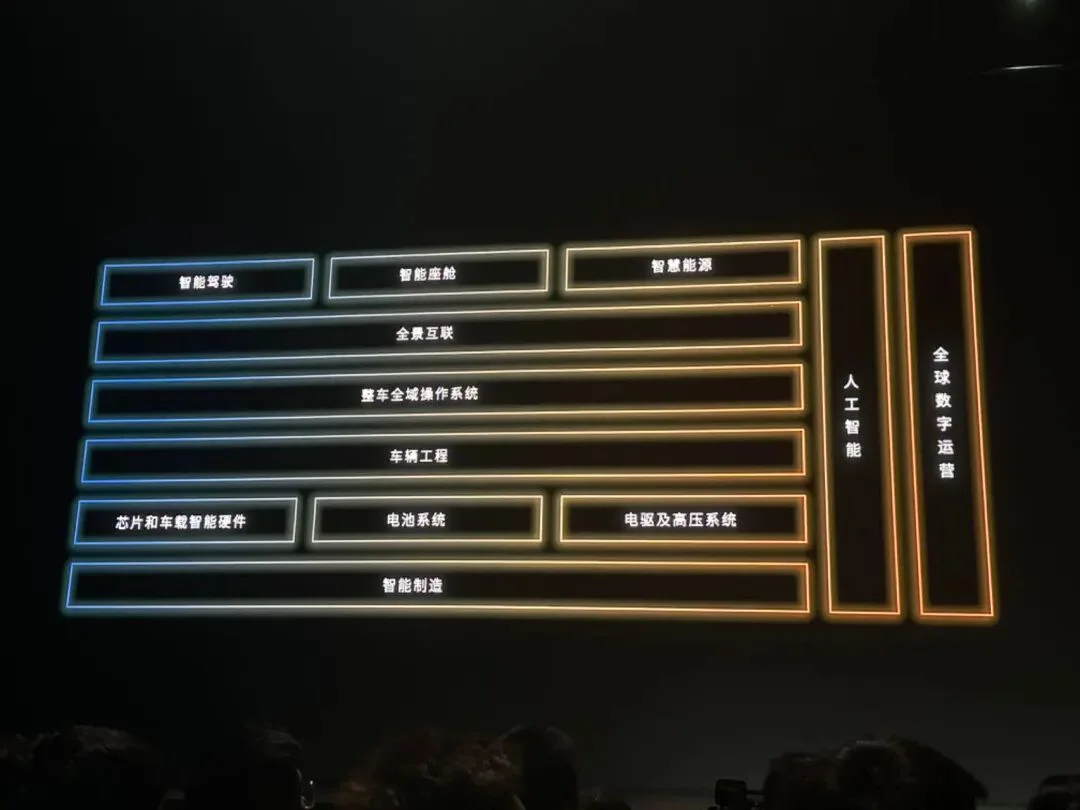
Around these 12 areas, William Li also announced some of NIO’s latest R&D achievements.
Self-developed Chip 'Yangjian'
Among these, a standout example of NIO’s technological capabilities is the official debut of its first self-developed chip.
Positioned as a main control chip for LiDAR systems, this chip has been named 'Yangjian.' It features high integration, low energy consumption, and strong performance, providing better support for complex scenarios. William Li emphasized that it holds a leading position in the field of LiDAR main control chips.
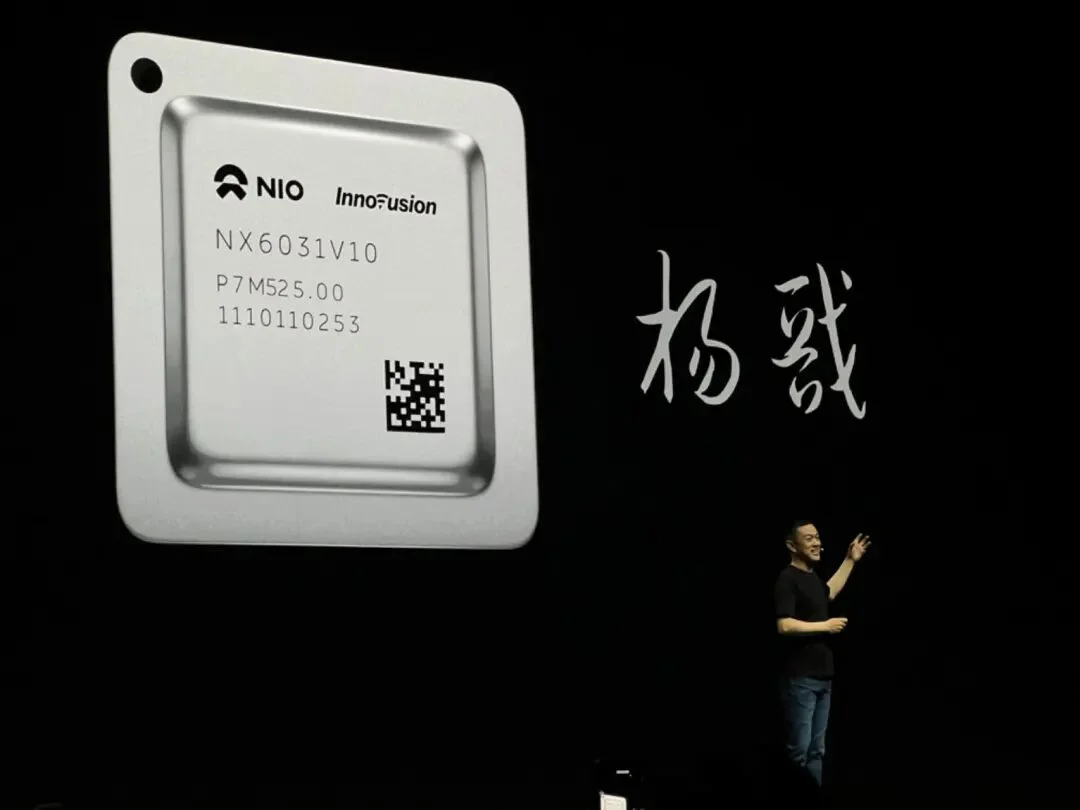
Specifically, the Yangjian chip features an 8-core 64-bit processor that provides robust computational support. It is equipped with an 8-channel 9-bit ADC (analog-to-digital converter) with a sampling rate of up to 1 GHz, enabling efficient capture of raw data from LiDAR sensors while reducing power consumption by 50%.
By optimizing point cloud processing latency, the "Yangjian" chip achieves faster functional response, with a point cloud processing capacity of 8m points per second. It can simultaneously receive raw data and point cloud data, providing better closed-loop iteration for the entire system.
According to official statements, mass production of this chip will begin in October.
During the interview segment, William Li stated that using this chip saves several hundred yuan per vehicle. Based on R&D costs, the investment would be recouped in approximately one year.
Vehicle-wide Domain Operating System Tianshu SkyOS
At this Innovation Technology Day, NIO also unveiled Tianshu SkyOS, the industry’s first smart electric vehicle vehicle-wide domain operating system developed entirely by an automaker.
Tianshu SkyOS serves as NIO’s underlying vehicle operating system, establishing a comprehensive, three-dimensional technical framework for vehicle R&D. This enables various devices to integrate organically and operate in high-efficiency synergy.
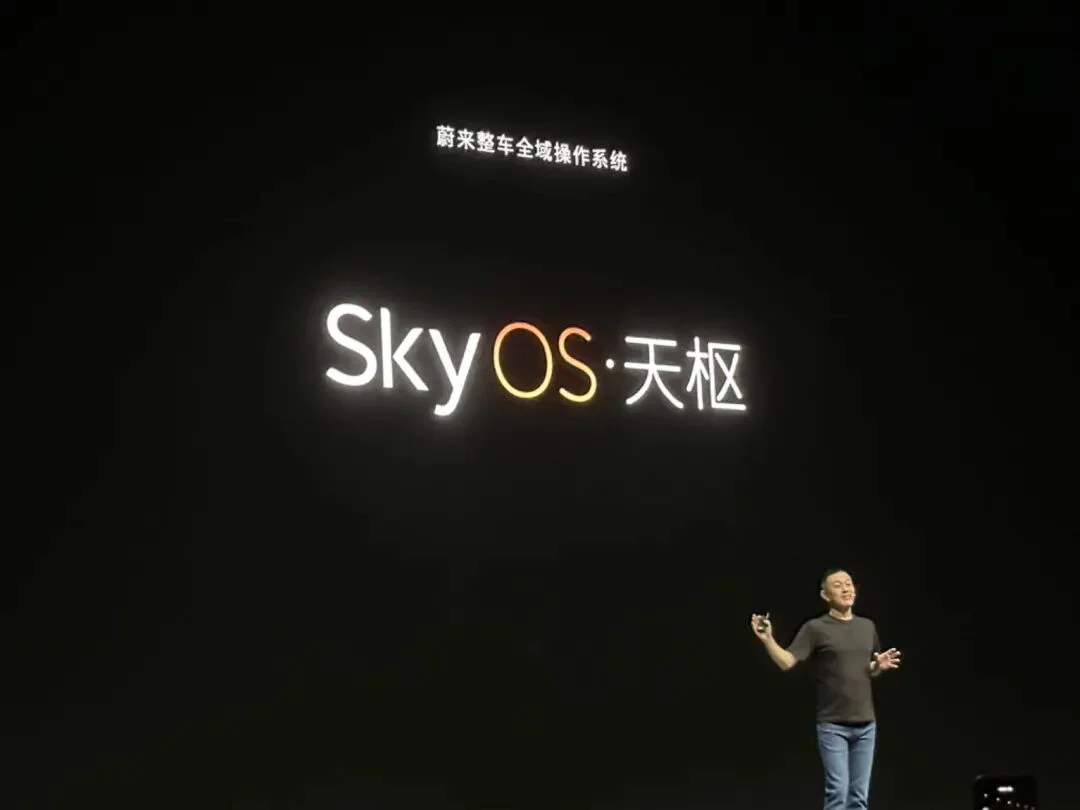
Specifically, Tianshu SkyOS establishes a 1+4+N technology cluster covering vehicle control, autonomous driving, cockpit systems, and mobile connectivity. Among these:
The "1" refers to "SkyOS-H," the hypervisor, which supports multi-operating system requirements for the cockpit and autonomous driving domains while providing a secure foundation.
The "4" comprises four subsystems: the high-security, high-reliability, and high-real-time operating system "SkyOS-M" built on a microkernel; the lightweight, high-reliability, and high-real-time operating system "SkyOS-L"; the high-performance operating system "SkyOS-R" designed for complex and rich application scenarios; and "SkyOS-C," an operating system deeply customized based on Android.
The "N" denotes self-developed core middleware of SkyOS, including the SOA framework, application framework, OTA capabilities, diagnostic modules, energy management modules, dual security features, and distributed processing engines.
According to NIO's plan, full-featured mass production of Tianshu SkyOS will be realized on vehicles built on the NT3 platform.
NIO Link: More Than Just Phone-to-Car Connectivity
Although the core technological capability of the NIO Phone is NIO Link, this feature is not limited to simple interconnectivity between the phone and the car.
During its Innovation Technology Day event, NIO introduced that NIO Link is hardware-based. Through integrated software and hardware, as well as end-to-cloud coordination, it aims to establish a new mobile connectivity paradigm centered on the vehicle, ensuring security across the entire link while remaining open.
In terms of capability, NIO Link spans hardware, data, and perception dimensions, enabling cross-domain computing power scheduling and distributed learning across vehicles, endpoints, roads, and the cloud.
Thus, NIO Link is not limited to traditional vehicle interconnection; it transcends simple connections between cars and phones by providing full-link device interconnectivity. By linking phones, wearable devices, battery swap stations, charging piles, and road infrastructure, it achieves seamless interaction between the vehicle and its surrounding environment.
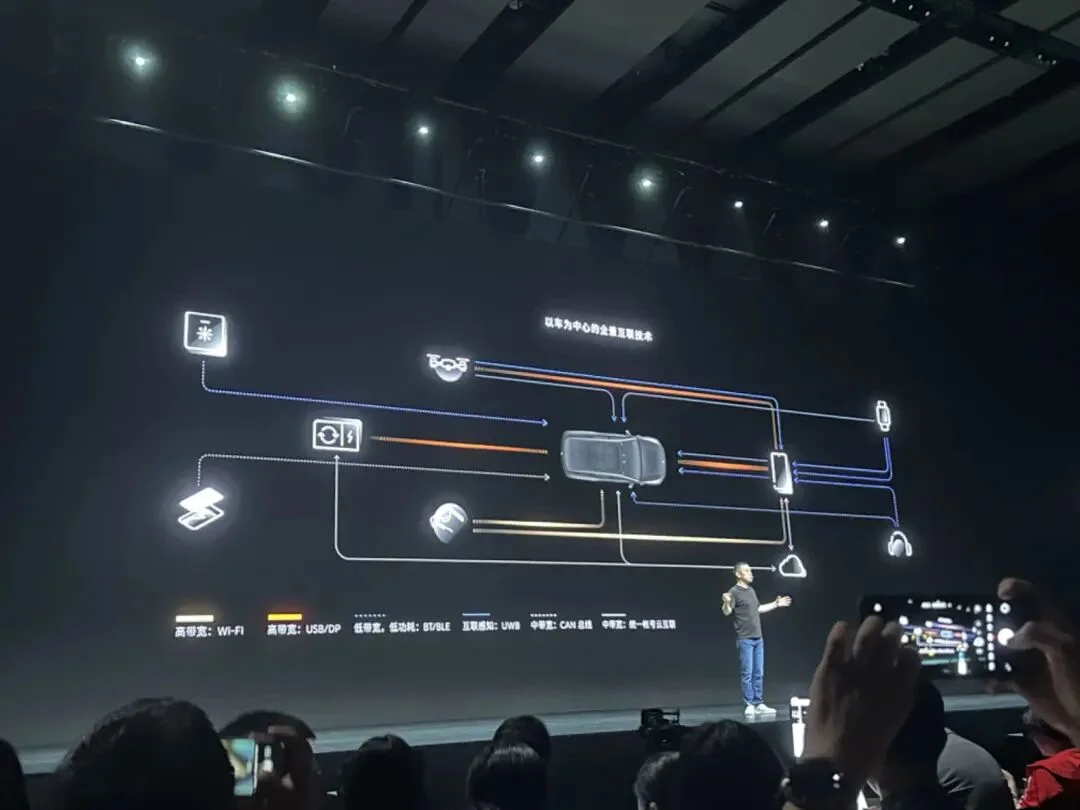
In terms of experience, NIO Link supports the interconnection of users' mobile devices with smart cabin equipment inside the car, extending broader application spaces for in-car entertainment, office work, and rest scenarios. Meanwhile, deep integration with data and content enhances user experiences such as digital car keys, vehicle parking, and cabin control.
These features are already realized on the NIO Phone.
Additionally, NIO has not forgotten to emphasize the security of NIO Link: it adopts a self-developed full-link security solution, ensuring seamless secure connections across devices. Sensitive information is transmitted only between devices trusted by the user, safeguarding user data and privacy.
Starting in October, NOP+ will expand from highways to urban areas
Regarding intelligent driving, NIO stated that it has established full-stack technical capabilities integrating edge and cloud, covering everything from the underlying platform to framework algorithms and applications.
At this year's Technology Innovation Day, NIO officially announced that its NOP+ feature will expand from highways to urban roads, providing users with a point-to-point intelligent driving experience across all road types. Notably, NIO NOP has already accumulated over 500 million kilometers of driving mileage.
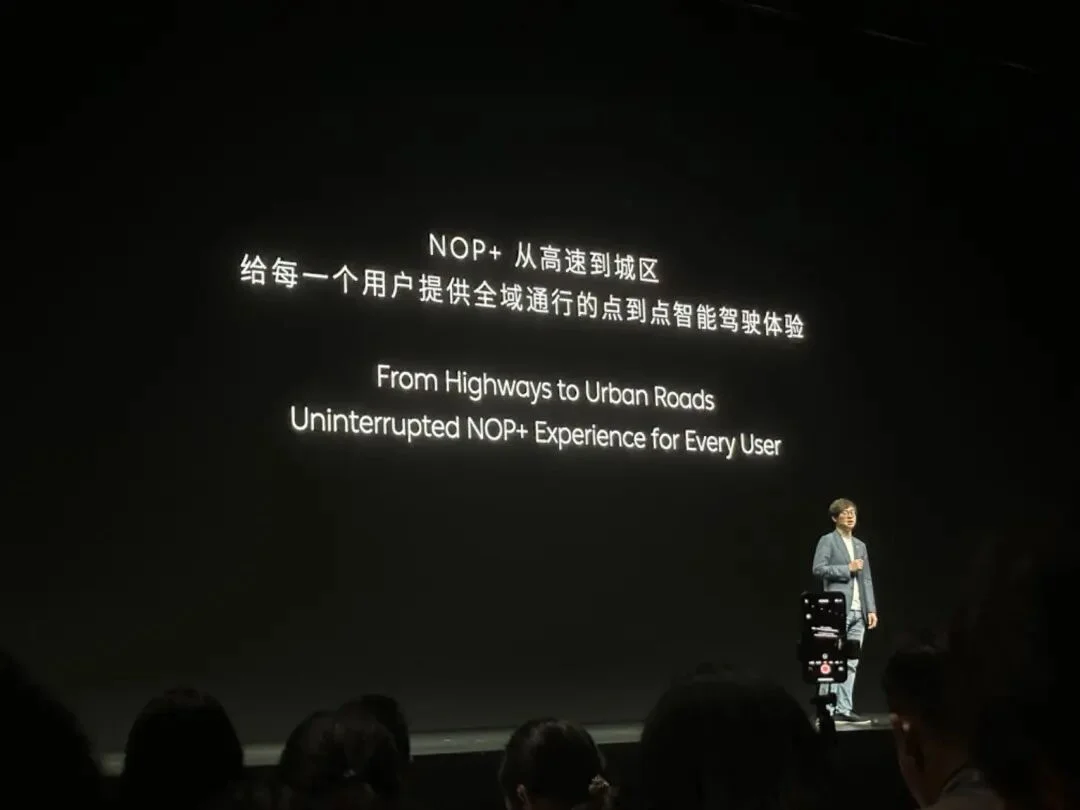
NIO expects to have cumulatively opened 60,000 kilometers of urban navigate-on-pilot routes by the fourth quarter of this year. By the first quarter of next year, this figure is projected to reach 200,000 kilometers, and by the second quarter, it will accumulate to 400,000 kilometers.
To implement this, NIO will allow users to submit route requests via the "NIO User Navigate Route Wish List" through the NIO app. Starting in October, NIO will gradually activate these wish-list routes based on operational plans and road conditions. Before activating any specific route, NIO will conduct verification for each one.
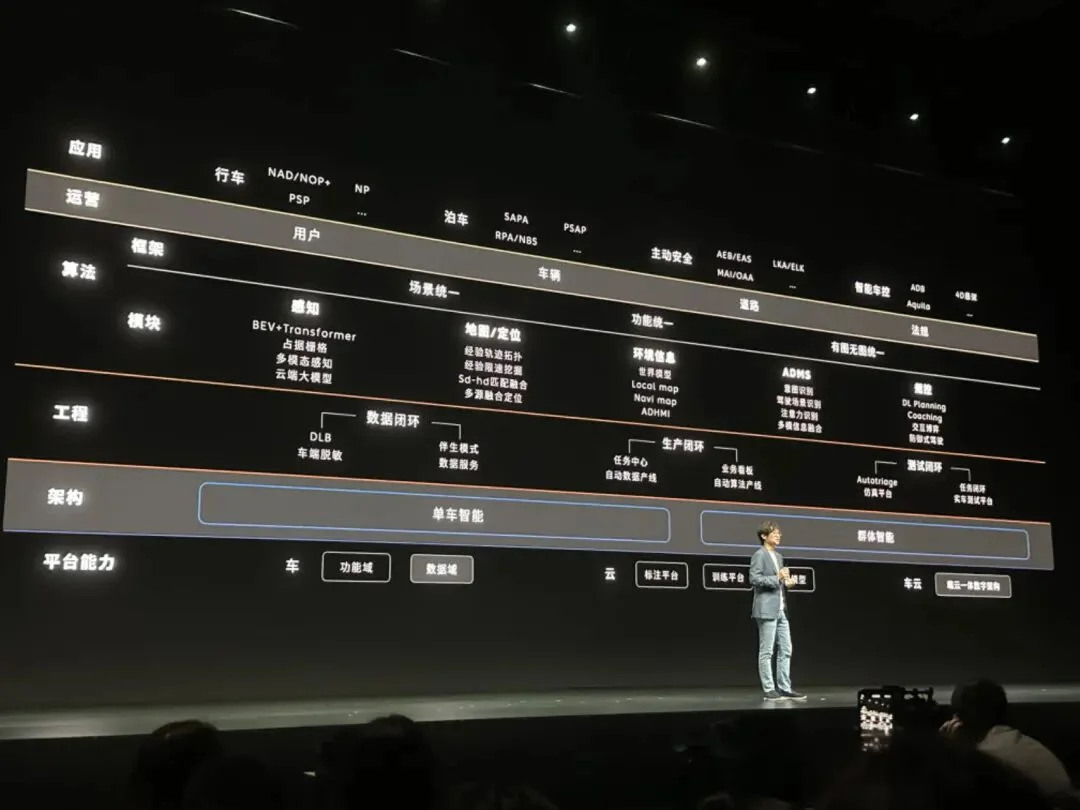
The core feature of NIO's urban NOP+ lies in leveraging generalization capabilities to verify, optimize, open, and operate navigate-on-pilot routes. NIO highlighted several key technological supports:
The new-generation static perception network, NADLane 2.0, can perceive intersection information in real time without relying on high-definition maps.
The cloud-based large model, NADWWM, efficiently enhances vehicle perception performance.
The Layered Value Network (NADHVN) enables NOP+ to deliver more nuanced interaction capabilities.
The NAD architecture (NADArch) unifies the technical framework, providing users with a smoother autonomous driving experience. The distributed computing power of the NAD swarm intelligence system fleet has reached 38,100 POPS.
NIO stated it will provide safer and more efficient full-domain enhanced navigation assist features through scenario unification, functional unification, map-based and mapless unification, and swarm intelligence.
Other Technical Layout Highlights
In addition to the four major sectors mentioned above, NIO also released several noteworthy technical highlights across eight other sectors.
Specifically:
NIO launched the industry's first cross-domain converged supercomputing cluster, ADAM CCC (Center Computing Cluster), which enables shared computing power among intelligent driving, cockpit, and vehicle control systems.
As of August 2023, NIO's electric drive system patent applications had exceeded 500.
NIO has launched a smart cockpit "App Store," featuring more than 40 top-tier and curated apps.
By 2025, NIO plans to establish 4,000 battery swap stations globally, achieve a 90% coverage rate for its "electric zone" in China, and connect the high-speed swap network across nine major north-south and east-west corridors linking nineteen city clusters.
By 2025, 80% of NIO's manufacturing decisions will be assisted by AI, further enhancing efficiency.
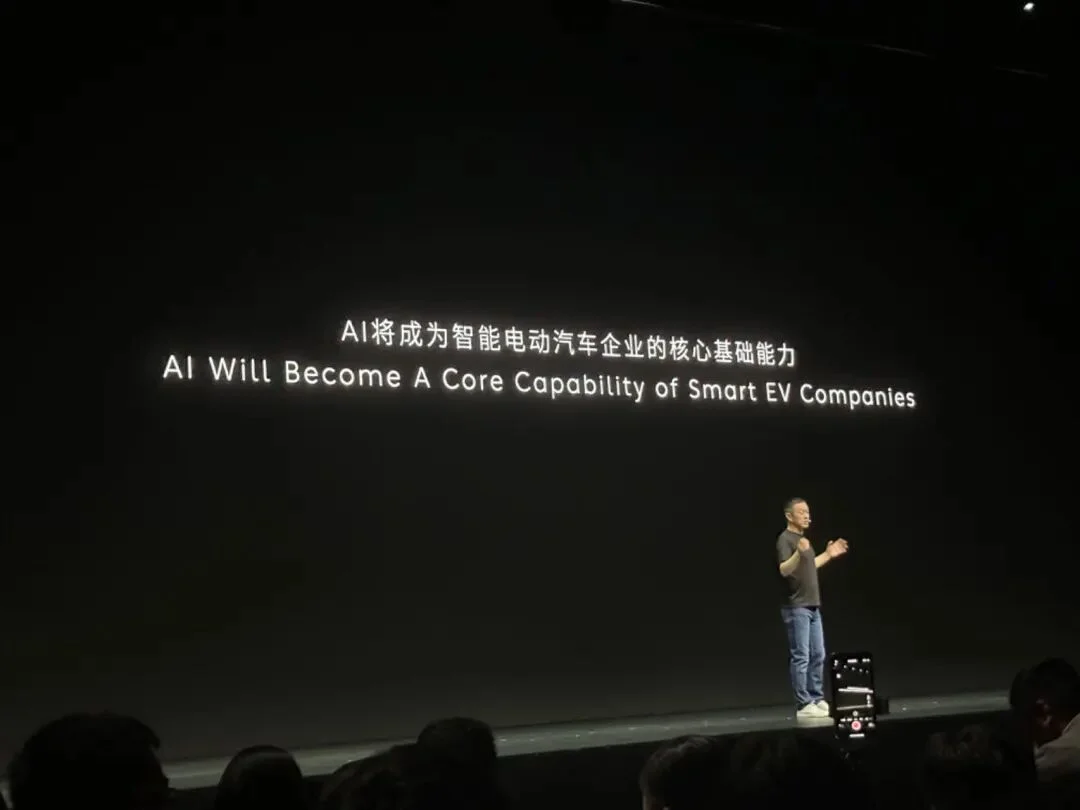
Notably, William Li stated at the event that NIO has long invested in full-stack artificial intelligence capabilities. By building its own AI infrastructure, training proprietary base large models and vertical-domain large models, and developing its own AI platform tools, NIO has enabled AI to comprehensively empower its products, services, community, R&D, and manufacturing.
He emphasized that AI will become a core foundational capability required for successful smart electric vehicle companies.
03Conclusion
Traditionally, "service" has been the label NIO is most known for externally—but during this Innovation Technology Day, William Li repeatedly stressed that while NIO does have some reputation for service, it has not performed as well as it could.
He wants to convey a clear message to the outside world: NIO is a company that places significant emphasis on technology R&D investment.
Since its founding, NIO has invested heavily in R&D across multiple areas, including self-developed electric motors, all-aluminum body structures, autonomous driving systems, battery swap stations, battery packs, and chips. Some of these investments have already yielded tangible results in products and user experience.
Data shows that NIO currently employs more than 11,000 R&D personnel distributed across China, Singapore, the United States, Germany, and the UK. The company’s global patent portfolio also exceeds 7,300 patents.
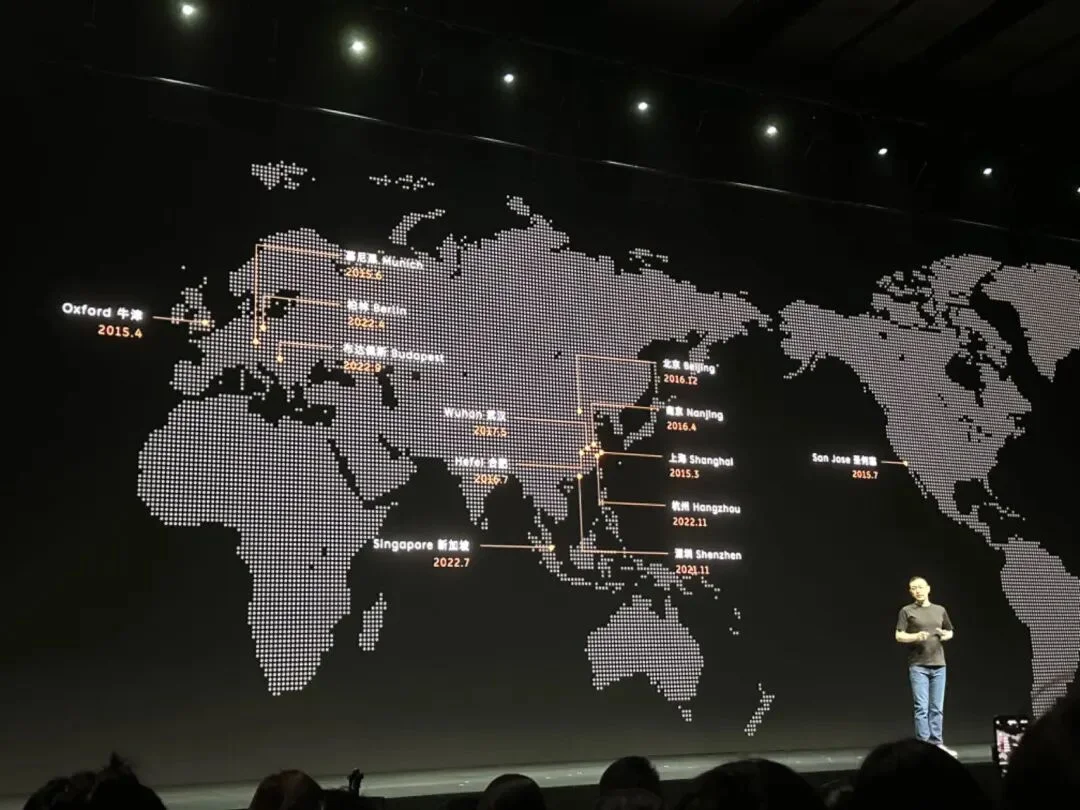
From a funding perspective, NIO has consistently invested heavily in R&D each quarter. According to its latest quarterly report, NIO’s R&D expenses for Q2 this year reached RMB 3.345 billion, representing a year-over-year increase of 55.6% and a quarter-over-quarter increase of 8.7%, far exceeding XPENG’s RMB 1.37 billion and Lixiang’s RMB 2.43 billion.
However, NIO’s extensive technological layout has raised concerns about its financial health among external observers. Public financial reports indicate that NIO has yet to achieve profitability over the long term, and its gross margin has declined in recent quarters, dropping to just 1% in Q2 this year. Consequently, some have suggested to William Li that he should curb spending.
During an event, however, William Li responded that NIO will absolutely not stop its R&D investment. He emphasized, nevertheless, that NIO will improve efficiency, particularly systemic efficiency.
William Li stated that NIO approaches R&D from the perspective of long-termism and business cycles. He believes that, from a long-term standpoint, NIO trades R&D investment for gross margins and new scenarios—using near-term R&D costs to secure long-term profitability. This serves as another underlying logic for the company.
However, when asked about the "cycle of long-termism," William Li also noted that while the company previously relied on five-year plans, it has shifted to focusing on two-year horizons. This adjustment accounts for significant market volatility and ensures more concrete operational planning within a shorter timeframe.
When discussing the next two years, William Li was clear-eyed in his assessment, stating that this period is critical. Not every company will make it through these two years, as NIO must also ensure its own survival. He described the preceding phases as qualifying and group stages, while the coming two years mark the start of the finals, which will be extremely brutal.
But in William Li's logic, even when facing the brutal war of the next two to three years, NIO cannot exhaust all its strength at once; it must conserve strength for the later finals and stockpile "ammunition" for what comes next—this is also the core reason why NIO persists in increasing R&D investment despite still operating at a loss.
Written by 308 Edited by Daji