


Huawei's Richard Yu Pushes 'Smart Selection' Model as Auto Manufacturing Remains Off the Table
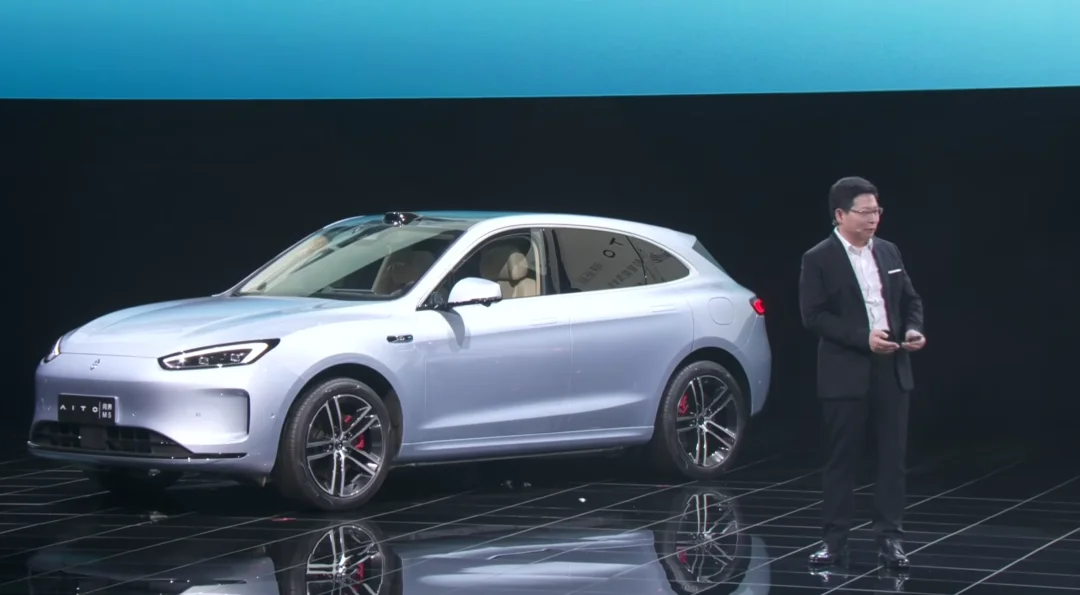
Around the Shanghai Auto Show, Richard Yu was extremely busy.
Before the show opened, Richard Yu spent a morning accompanying Tan Sir on a test drive of Huawei’s advanced intelligent driving assistance system (ADS 2.0) through downtown Shanghai, and later met with university students. Over the following two days, he delivered keynote speeches at the Huawei Intelligent Automotive Solution press conference and the AITO M5 new vehicle launch event—during which the phrase "far ahead" was mentioned multiple times.
After the show began, as Executive Director of Huawei, CEO of the Terminal BG, and CEO of the Intelligent Automotive Solution BU, Richard Yu appeared promptly at the Huawei booth, meeting sequentially with executives from Mercedes-Benz, BMW, Audi, and other automakers in a nonstop schedule.
Despite this, during our visit to the Shanghai Auto Show, we unexpectedly ran into Richard Yu and managed to have a brief conversation with him during a break. Through this exchange, as well as discussions with other automotive industry figures, we gained new insights into several key issues regarding Huawei’s intelligent automotive business.
If summarized in one sentence: Richard Yu has it tough.
What is Richard Yu’s rationale for strongly promoting the Smart Selection model?
After entering the intelligent automotive industry, Huawei has primarily adopted three models:
Standard parts model. This involves primarily selling standard components for automotive intelligence, such as computing chips and LiDAR units.
HI model. Under this arrangement, Huawei provides solutions like intelligent driving, while the automaker retains control over vehicle product design and user experience.
Smart selection car model. In this approach, Huawei offers a full-stack solution encompassing product definition, design, brand marketing, and channel sales. This effectively amounts to co-developing vehicles with automakers, with SERES being the deepest partner to date.
However, the smart selection model has now become Richard Yu’s primary focus.
An industry insider familiar with Huawei told 42HOW Auto that the reason is straightforward: the value generated by the standard parts model is relatively low for Huawei. Furthermore, this sector features numerous competitors, and Huawei’s component pricing lacks a distinct advantage, meaning many automakers do not necessarily need to purchase Huawei parts.
Regarding the HI model, an industry insider stated that Changan’s AVATR is currently the only automaker still adhering to it. While Huawei provides solutions for intelligent driving and smart cockpits, Changan retains dominant control over aspects such as body design. Guangqi has abandoned joint development in favor of a component procurement model, and although Beiqi was Huawei’s earliest partner, its poor sales performance have rendered their cooperation under the HI model largely defunct.
At the auto show, Richard Yu also informed us that Huawei’s collaboration with Beiqi has been upgraded from the HI model to primarily operate under the smart selection model.
Consequently, Huawei now effectively has only one remaining partner under the HI model: Changan.
In fact, the current stage of the HI model is hardly surprising. An analyst told us that the initial motivation for automakers to choose the HI model was primarily to leverage Huawei’s high-end brand power to build premium brands in the new energy era, with the premise that they would maintain dominant control. Consequently, only a few automakers were able to reach such partnerships. Now, time has proven that the results of the HI model are not particularly good, and the historical conditions for its further expansion have been lost on the automaker side.
From this perspective, the HI model may have completed its historical mission.
Conversely, what Richard Yu has vigorously promoted is the Smart Selection Car model. Currently, besides SERES, Huawei’s partners in this model include Beiqi, Chery, and JAC Motors.
Richard Yu told us that the product positioning of these partners’ vehicles will not overlap; there are differences in vehicle categories and classes, so they will not conflict with each other. He emphasized that these models are positioned at the high end because, in the field of smart vehicles, Huawei believes it possesses the capability to produce high-end products but lacks low-cost capabilities.
However, despite the absence of product positioning conflicts, products from different automaker partners may still face brand conflicts. Richard Yu stated that he also believes these products need a unified brand; otherwise, consumer confusion will arise, and marketing channel costs will increase. This issue is still under discussion and resolution.
Notably, Richard Yu revealed to us that under the Smart Selection Car model, Huawei participates not only in product, marketing, and channel aspects but also in the supply chain. According to 42HOW Auto, when CATL announced its cooperation with SERES last August and unveiled the Kirin Battery for AITO models, Huawei was involved in the supply chain behind the scenes.
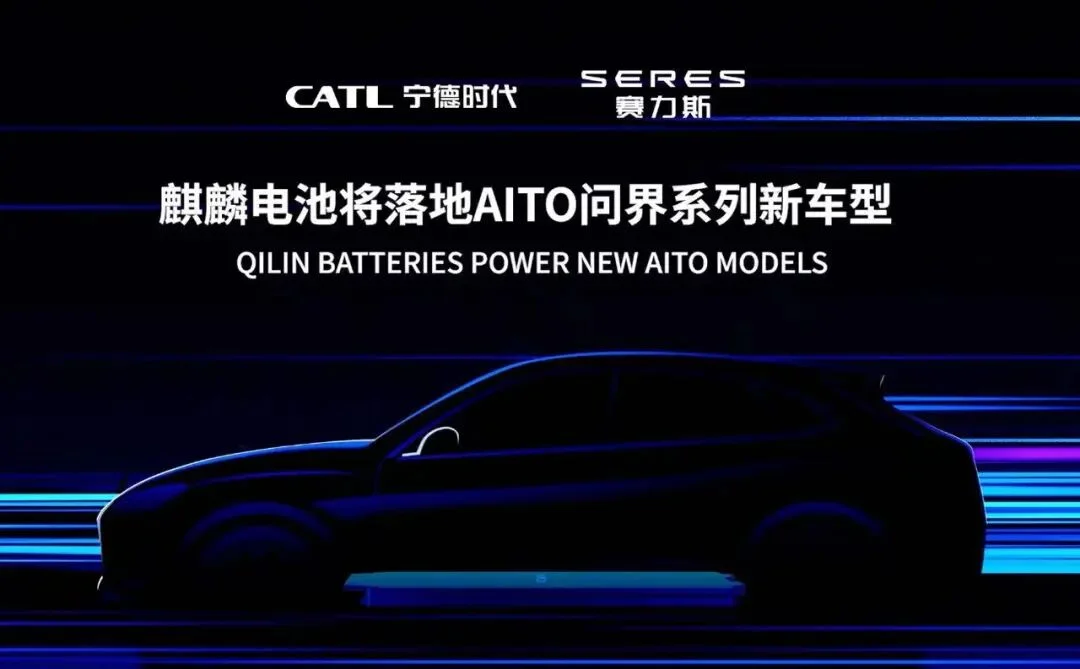
However, Richard Yu told us that Huawei’s involvement in the supply chain is not primarily to reduce costs, but to improve quality. He also noted that these partners can share resources and information with one another.
Key Factors for Intelligent Driving: Cost and Implementation
At this year’s Shanghai Auto Show, the practical implementation of intelligent driving became a major focus for Huawei’s Smart Car Solution BU.
During a press conference on April 16, Richard Yu unveiled HUAWEI ADS 2.0, Huawei’s high-level intelligent driving assistance system, and announced its pricing. On stage, he referred to ADS 2.0 as the "ceiling of intelligent driving." The following day, HUAWEI ADS 2.0 was launched as the standard intelligent driving solution on the newly released AITO M5 Intelligent Driving Edition.
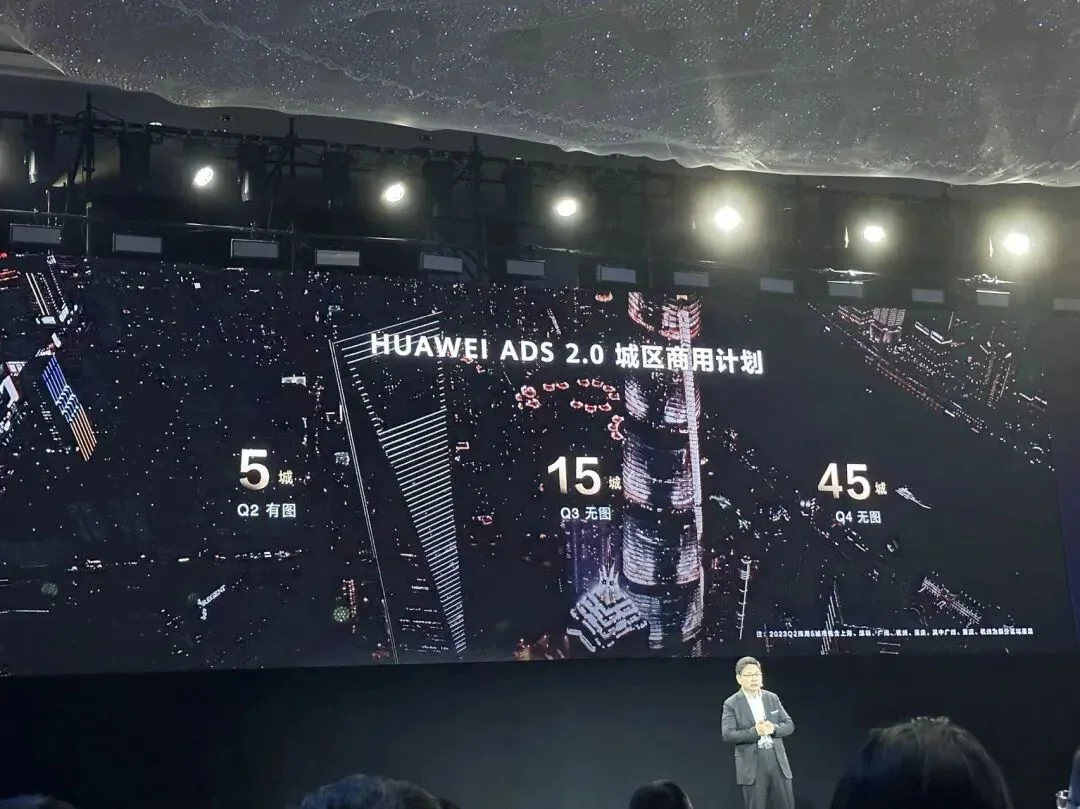
It should be noted that previous versions of the AITO M5 did not use Huawei’s intelligent driving solution; instead, they relied on Bosch for the smart system and Zongmukeji for parking assistance. By adopting Huawei’s integrated solution in the AITO M5 Intelligent Driving Edition, the vehicle achieves better integration of driving and parking functions.
An industry insider told 42HOW Auto that for a long period, Huawei’s two cooperation models—the Zhixuan (Smart Selection) car model and the HI (Huawei Inside) model—were relatively independent. The Zhixuan model has always been led by Richard Yu, whereas the HI model was not directly managed by him and could not be directly intervened in at the organizational level.
However, by 2023, as Richard Yu strengthened his control over Huawei’s Automotive Solution BU, it became easier for Huawei to integrate its increasingly mature high-level intelligent driving technology into the Smart Selection car model. This shift represents Huawei abandoning its previous strategy of walking on two legs, consolidating previously scattered advantages, and participating more deeply in the automotive industry with the goal of generating effective market sales and revenue returns.
An industry insider told 42HOW Auto that another reason Huawei reached a consensus to apply its intelligent driving technology to its smart vehicle business was that models using the HI (Huawei Inside) mode had failed to generate effective sales. Beiqi Arcfox, for instance, saw negligible volume; while AVATR performed relatively better, its sales figures remained modest.
However, Huawei had already invested significant human and financial resources into intelligent driving. Within Huawei’s Intelligent Automotive Solution BU, 75% of staff were dedicated to this area. The business could no longer be sustained by revenues from other Huawei divisions; it needed to achieve large-scale commercialization.
Given that the HI model made it difficult for Huawei’s intelligent driving business to scale, transitioning to the Smart Selection (Zhi Xuan) model was a logical next step.
The AITO M5 Intelligent Driving Edition emerged as a product of this new strategy.
Notably, an informed source told 42HOW Auto that under Richard Yu’s leadership, Huawei not only changed its cooperation model for high-end intelligent driving but also emphasized cost reduction throughout the development of the ADS 2.0 solution. This focus stemmed from Yu’s emphasis on product commercialization and his experience in consumer electronics.
Compared to the AVATR 11, which used the HI model, the ADS 2.0 system in the AITO M5 Intelligent Driving Edition reduced the number of LiDAR units from three to one and lowered computing power requirements. Consequently, total hardware costs were cut in half. From the perspective of deploying intelligent driving at scale, this aligns more closely with current industry trends.
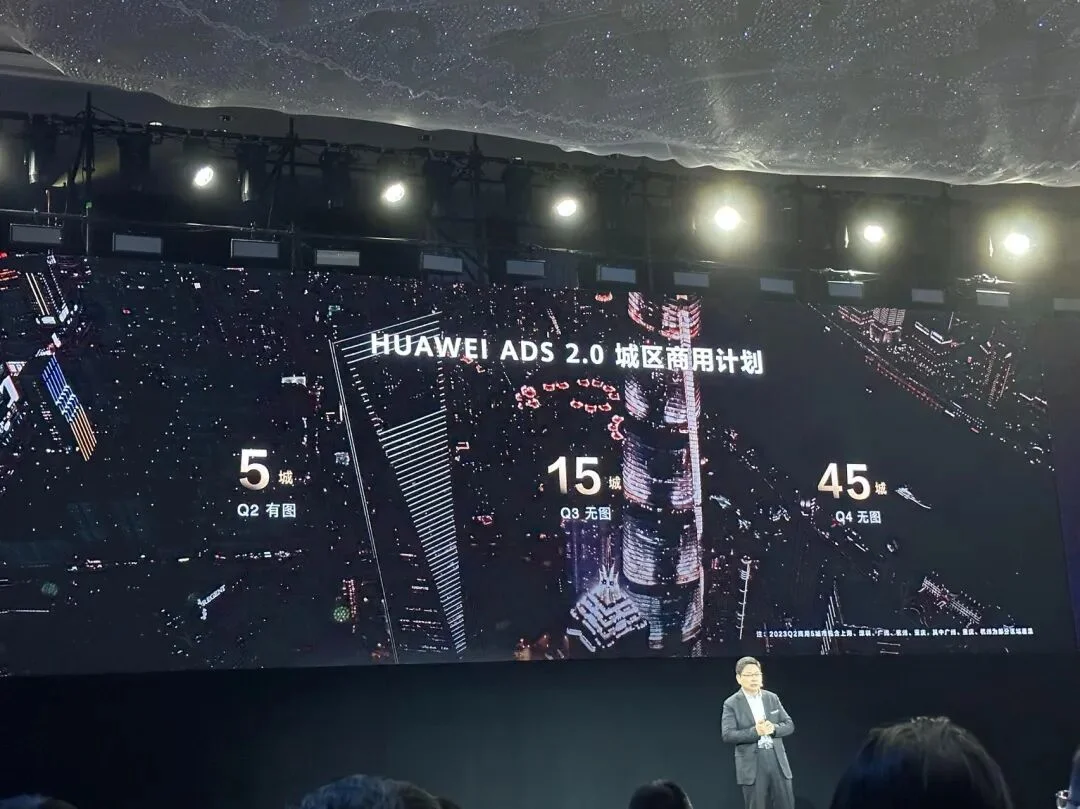
Will Huawei eventually consider abandoning LiDAR for its high-level driver assistance systems?
Richard Yu told us that, based on current solutions, LiDAR remains difficult to eliminate if we are to ensure the safety of autonomous driving, particularly in scenarios such as tunnels. Under a pure vision approach, white vehicles can easily blend into blue skies and white clouds, making it hard for the system to make judgments; additionally, there is the issue of reflections from buildings.
He believes that while Tesla's autonomous driving capabilities are indeed impressive, its path has been somewhat too absolute.
It is worth mentioning that regarding L3, Richard Yu stated that Huawei ADS 2.0 is currently at L2.9 and infinitely close to the L3 state, but it is not yet L3. Currently, national regulations for L3 are still being formulated, and there is hope for commercialization in 2025. He indicated that the transition from L2 to L3 represents an ongoing evolution in intelligent driving—there is still a long way to go from L2.9 to L3 and then to L4.
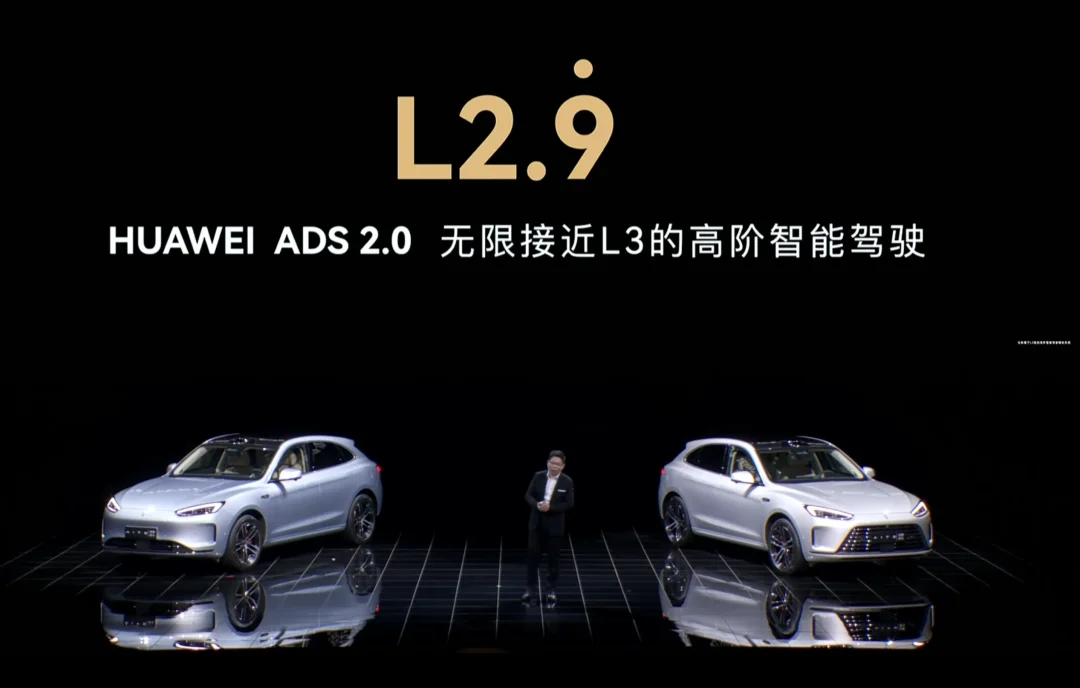
Richard Yu stressed to us that current autonomous driving systems can already alleviate driver fatigue and genuinely enhance road safety.
Huawei's decision not to build cars is indeed a pity
Interestingly, within the automotive circle, the phrase 'far ahead' has become closely associated with Richard Yu.
Previously, Richard Yu repeatedly used this term to highlight the leading nature of Huawei's smart automotive products. Judging from actual industry feedback, at least in terms of user experience for Huawei's smart cockpit and autonomous driving products, his claim of being 'far ahead' does not appear to be arrogant rhetoric.
Nevertheless, when the industry talks about "far ahead," there is always a hint of teasing in the words. After all, sales are king in the automotive industry—the problem is that, from a sales perspective, some key models equipped with Huawei's smart cockpit and smart driving products do not match the "far ahead" claim.
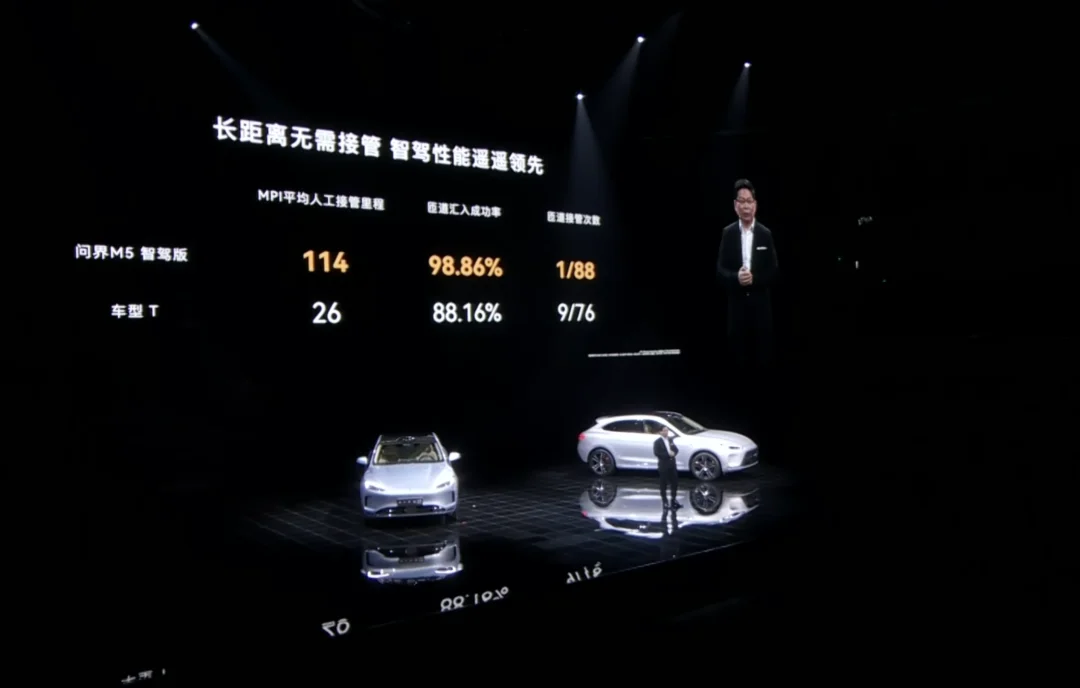
Low sales volumes mean low revenue, which causes Richard Yu significant anxiety.
A senior industry insider close to Richard Yu told 42HOW Auto that although Huawei’s smart cockpit and intelligent driving solutions are powerful, products under the HI (Huawei Inside) model have not sold well. In this context, Richard Yu must consider the revenue and implementation challenges for the entire Huawei Intelligent Automotive Solution BU. Every household needs to worry about daily necessities and making a living.
In other words, the Huawei Car BU, led by Richard Yu, has consistently faced pressure to achieve profitability.
The same senior industry insider noted that automotive intelligence is indeed difficult to manage: it requires substantial investment, yields limited returns, and takes a long time to show results. It is truly an ungrateful industry. Moreover, Richard Yu cannot control the final product implementation phase as he does with the smartphone business, which makes things even more challenging.
So, is it possible for Huawei to become the Bosch of the automotive intelligence sector?
Regarding this issue, Richard Yu previously stated at the China Electric Vehicle Hundred Talents Forum that Bosch and Huawei are doing different things. Bosch provides standard components similar to brakes, while Huawei focuses on software iteration, requiring deep involvement with OEMs and continuous OTA updates.
An industry analyst who has long tracked the automotive sector told us that the situation is straightforward: Bosch’s components cover such a broad range of the automotive landscape, and even though Bosch is developing intelligent vehicle products, the industry remains heavily reliant on it. In contrast, while the automotive industry can function without Huawei, there are many potential alternatives; the question is merely one of user experience quality.
However, this analyst also emphasized that Huawei’s entry into the automotive sector has brought significant improvements to user experience. For instance, if Huawei had not pursued its smart selection car model, the industry might never have realized how critical the in-vehicle infotainment system’s user experience truly is. Similarly, Huawei’s performance in autonomous driving has indeed established a valuable benchmark for the development and deployment of intelligent driving technologies in China.
“Huawei is a formidable player; it is indeed a pity that it does not manufacture vehicles,” the source stated.
Of course, as a sanctioned enterprise, Huawei has made the decision not to manufacture vehicles, which is based on its strategic considerations; Richard Yu also clearly stated at the China Electric Vehicle Hundred People's Conference and in recent press conferences that Huawei will not make cars but will help automakers build better cars.
A source close to Huawei’s management explained to us that the core reason behind Huawei’s decision not to enter vehicle manufacturing lies in internal management perspectives: the investment required for car production is enormous, and Huawei is still working hard to ensure business continuity amid U.S. sanctions. Therefore, capital should not be diverted to vehicle manufacturing, as failing to do so would not threaten Huawei’s survival.
Consequently, Richard Yu consistently focuses on product commercialization and achieving a closed-loop business model.
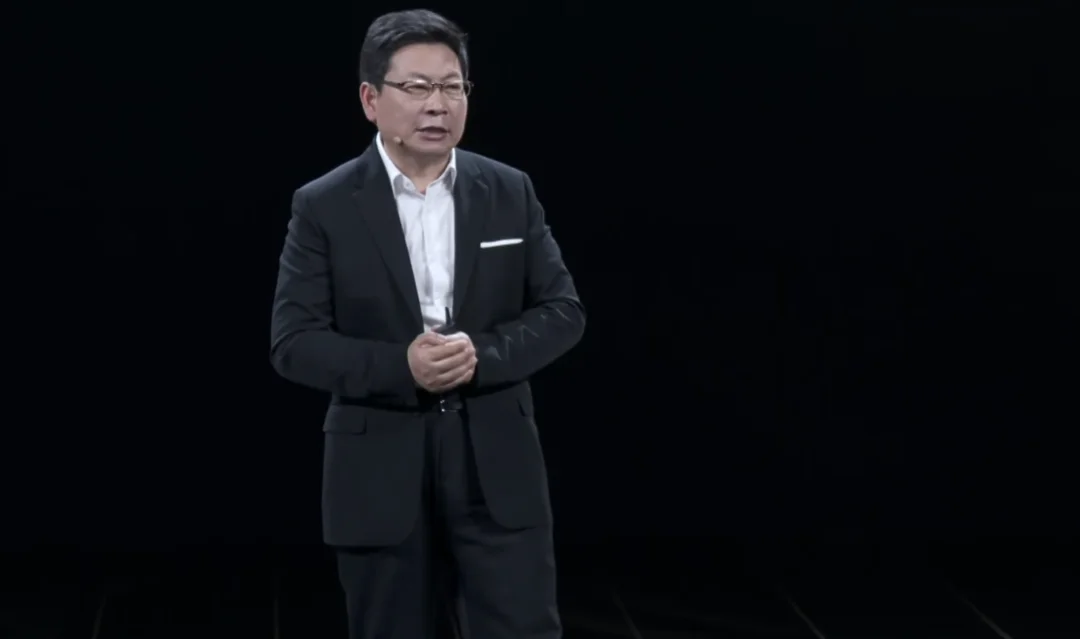
Notably, when we asked Richard Yu himself about AITO’s sales expectations for this year at the auto show, he did not adopt the confident tone he typically uses in press conferences to emphasize Huawei’s smart cockpit and intelligent driving products as 'far ahead.' Instead, he appeared very cautious. After a brief pause, he did not provide a specific figure but instead offered a slightly apologetic, light remark: 'It’s hard to say,' before turning back to his busy schedule.
Written by: 308 Edited by: 308