


AVATR Launches, Ready to Hit It Big
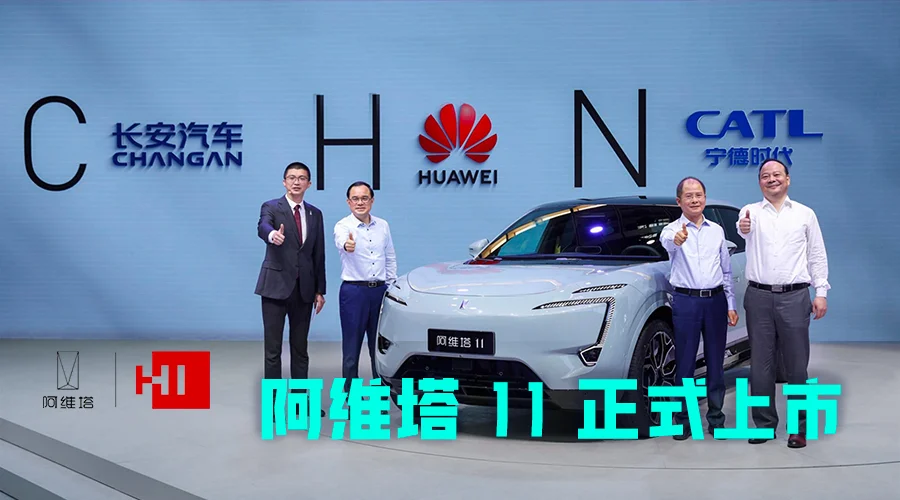
A colleague I’m close with recently placed a deposit on an AVATR 11. In my memory, he is very cautious about big-ticket consumer purchases, especially cars. Before making this deposit, he already knew the AVATR 11’s price would likely fall between RMB 350,000 and RMB 450,000. At that price point, even the entry-level model represents a significant sum for us.
When I asked him why he chose the AVATR in such a crowded segment ranging from RMB 300,000 to RMB 400,000, I expected someone so rational to cite product performance factors like high-voltage fast charging or Huawei ADS. Instead, he immediately gave an answer that surprised me: novelty. I paused for a moment. Although the definition of this word is somewhat vague, it fits the AVATR surprisingly well.
I also sensed that when a rational person begins paying for emotional appeal, they have already passed the rationality hurdle in their own mind.
On the occasion of today’s launch, I want to share some recent thoughts on the AVATR product and market, drawing on previous test drives and discussions with executives.
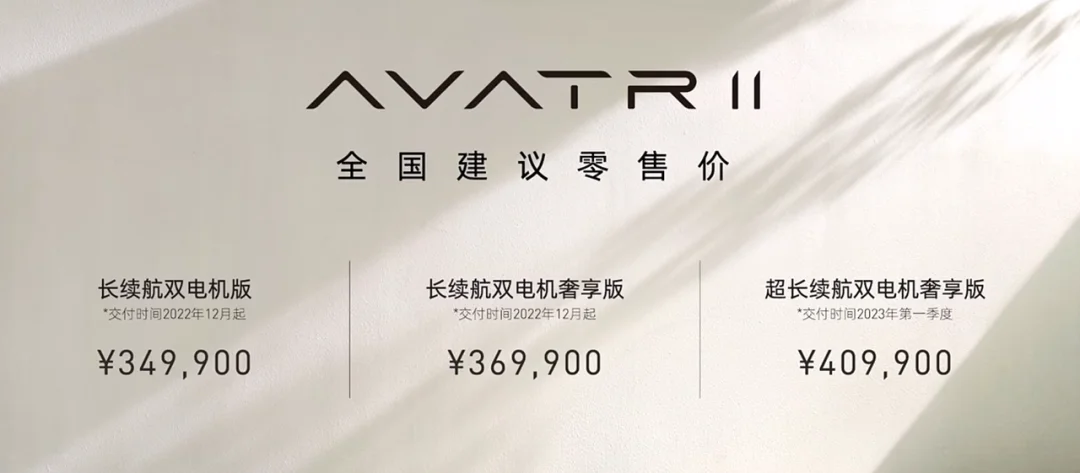
Before diving into the main topic, here are the ten key pieces of information potential buyers care about most:
Three models are currently available: the Long-Range Dual-Motor version at RMB 349,900, the Long-Range Dual-Motor Luxury Edition at RMB 369,900, and the Extra-Long-Range Dual-Motor Luxury Edition at RMB 409,900;
Initially, dual-motor models will be the primary focus, but single-motor variants have since been confirmed.
All trims will include seat ventilation, heating, and massage functions.
Electric doors are optional rather than standard equipment; other available options include a four-seat configuration, a 116 kWh battery, urban navigation assist (NCA), and advanced parking features.
The vehicle’s human-machine interface (HMI) is being redesigned based on user feedback.
All models come standard with Huawei Intelligent Automotive Solution (HI) hardware and high-speed NCA functionality, which will be available upon vehicle delivery.
Urban NCA has been delayed due to issues with high-definition map licensing and is expected to roll out in the first quarter of 2023.
The 750 V high-voltage fast-charging system is backward compatible and can use third-party charging piles.
High-voltage fast-charging stations developed in partnership with bp are expected to launch in major cities such as Beijing, Shanghai, and Guangzhou by the end of 2022, with plans to establish 100 stations across 19 cities by the end of 2023.
All warranty benefits are not limited to the first owner but follow a vehicle-based strategy.
01What You Need to Know About AVATR
Regarding this interpretation of AVATR, I will first refrain from discussing the product and instead quote a statement made by AVATR CEO Tan Benhong at the communication meeting: 'Let's talk about what we (AVATR) have and what we can do.'
A significant part of consumers' sense of security regarding a new brand stems from its corporate background. Behind AVATR stand Changan, Huawei, and CATL, so the question of what AVATR has should be relatively easy to understand:
Changan's vehicle manufacturing capabilities
Huawei's intelligent connected vehicle capabilities
CATL's power battery capabilities
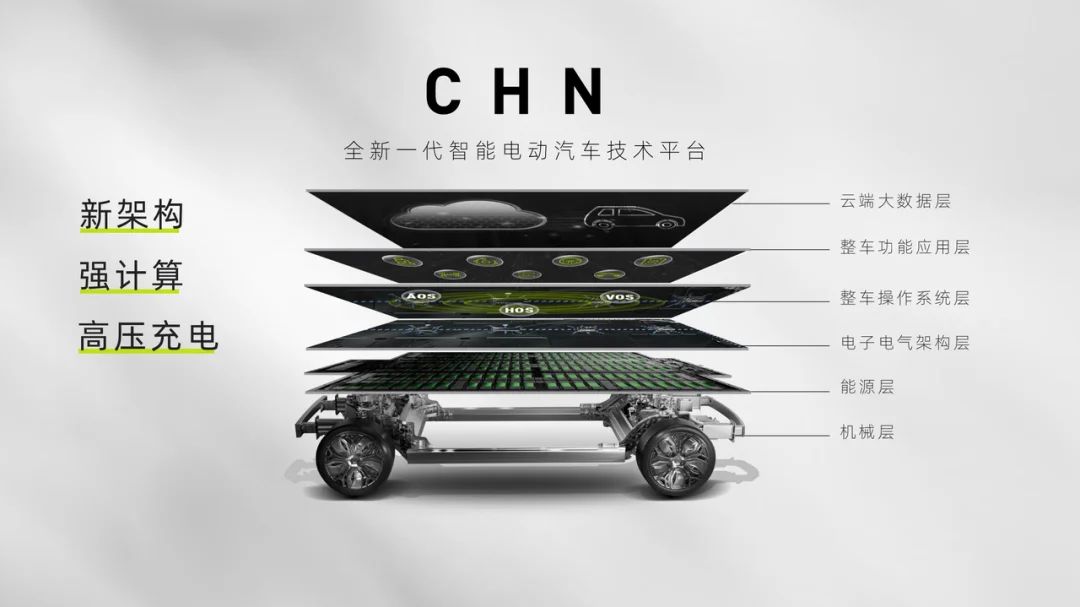
These capabilities translate into product strength across three main areas: a new architecture, powerful computing, and high-voltage charging.
AVATR's Three Ceiling Standards
In addition to these points, Tan Benhong emphasized design aesthetics when introducing the core product strengths of the AVATR 11. He stated that AVATR aims to achieve three 'ceiling standards' in the RMB 350,000 to 450,000 price segment, with design being the first.
Tan Benhong: AVATR is undoubtedly defined by its design, and we do not shy away from this. How do we create such design? Let me share my perspective. Throughout my career in the automotive industry, I have always believed that cars evolve for the sake of aesthetics. In fact, many technologies, including traditional ones, serve this purpose. We aim for an aspect ratio of 0.61, or ideally 0.618, as this represents the most beautiful and visually pleasing proportion. Achieving this wheelbase-to-length ratio is extremely difficult. It requires balancing front and rear crash structures, installing Huawei dual motors, managing front and rear electric drive systems, optimizing interior space layout, and ensuring safety configurations. Can all these elements be harmoniously integrated within the vehicle to achieve a 0.618 ratio? Not every manufacturer possesses the comprehensive capability to do so; it may be conceivable but not always achievable. This is my understanding after more than 20 years in the automotive industry, having previously managed styling at Changan. Each time we face challenges in proportions and engineering-design trade-offs, compromises are made—sometimes by engineering, sometimes by design. However, when developing the AVATR 11, we made almost no compromises. The second standard is the height-to-width ratio of 1.23. Those who have experienced the AVATR 11 will notice that this proportion delivers excellent interior space, including headroom, legroom, and floor height. The third standard is the wheel-height ratio of 0.48. We equipped the vehicle with large-diameter tires. Maintaining handling agility with such wide tires and large rolling diameters is challenging. It is akin to running quickly while wearing very large shoes; it is not easy. Thus, the design reflects the combined capabilities of our three partners.
Returning to the architecture, we used to simply refer to 'platforms.' Today’s intelligent electric vehicles involve not only vehicle platforms but also electronic and electrical architectures and powertrain architectures. Every component is critical.
The importance of architecture lies in its role as the foundational layer of the product. It determines how many branches the product’s skill tree can support and how far each branch can extend. We have previously introduced the AVATR CHN architecture, highlighting its deep software-hardware decoupling capabilities and strong, modular hardware as key strengths. These features lay a solid foundation for AVATR’s autonomous driving and subsequent deep vehicle-wide OTA capabilities. This is an indispensable core capability for AVATR 11 as it enters the RMB 350,000 to 450,000 segment.
Building on this foundation, Tan Benhong identified two other 'ceiling standards' for the AVATR 11 in this price range: assisted driving and overall performance. The key information from this section is summarized below.
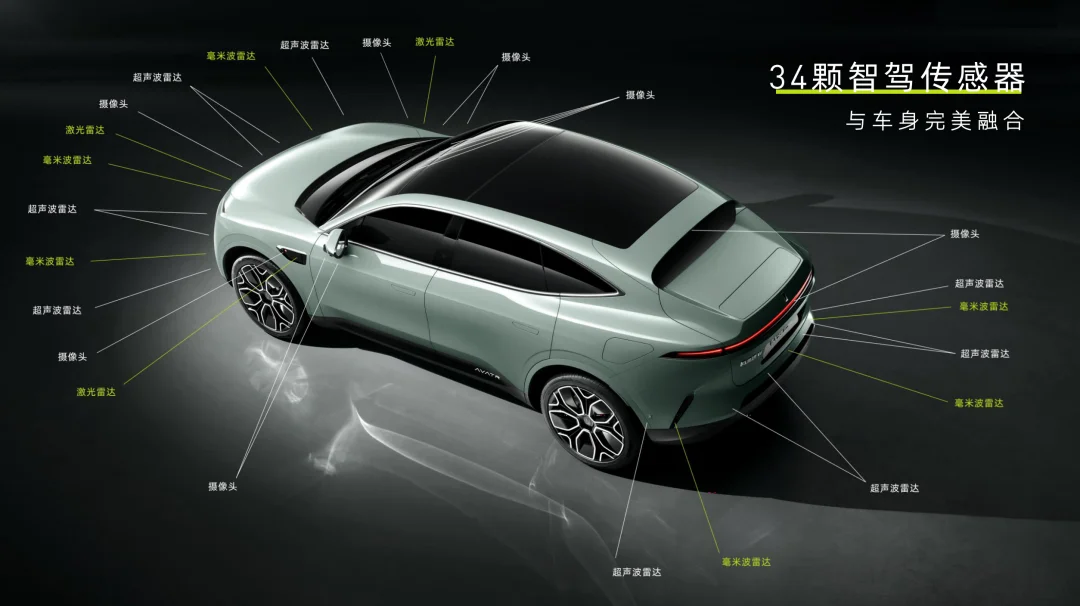
Huawei ADS intelligent driving system, equipped with the MDC810 computing platform delivering 400 TOPS of compute power;
Three 96-line semi-solid-state LiDARs and a high-pixel surround-view perception system;
Huawei DriveONE dual-motor all-wheel drive, with a maximum output of 425 kW and a 0–100 km/h acceleration time of 3.98 seconds;
CATL CTP 2.0 battery pack using the 523 chemistry, available in 90 kWh and 116 kWh capacities;
750 V voltage architecture supporting 240 kW high-voltage fast charging;
RNC active road noise cancellation technology, reducing total sound pressure by 3 decibels and peak sound pressure by 13 decibels.
When introducing the RNC active road noise cancellation feature, Tan Benhong used the word 'proud' to describe the final level of functional completion. Compared to static noise reduction treatments, dynamic noise cancellation is significantly more challenging. To achieve this, the AVATR 11 is equipped with relevant sensors on its chassis and employs algorithms to dynamically cancel road noise along key propagation paths.
During the subsequent speech segment, Wang Jun, Chief Operating Officer of Huawei’s Smart Car Solution BU, expressed strong confidence, stating, 'We don’t claim our vehicle has the best NVH performance, but it is certainly among the best.'
The Vehicle with the Highest "Huawei Content" and the Scrapped Quad-Motor Plan
AVATR 11 adopts the deepest level of Huawei's cooperation model, known as HI or "Huawei Inside." Huawei provided the vehicle with:
A high-voltage electric drive system and thermal management system;
The infotainment chip and related cabin hardware;
The HarmonyOS underlying software, including voice, audio, visual, connectivity, driving safety, phone screen mirroring, and vehicle control components;
Huawei ADS (Advanced Driving System), a high-level autonomous driving solution.
Wang Jun stated that the collaboration between Huawei and AVATR began three years ago. The initial plan was to use a quad-motor configuration, which would have enabled the vehicle to accelerate from 0 to 100 km/h in under two seconds. However, to balance interior space and energy efficiency, the team ultimately opted for a more balanced dual-motor setup, achieving 0-100 km/h acceleration in under four seconds. This implies that if necessary, the quad-motor scheme may be introduced to consumers in the future.
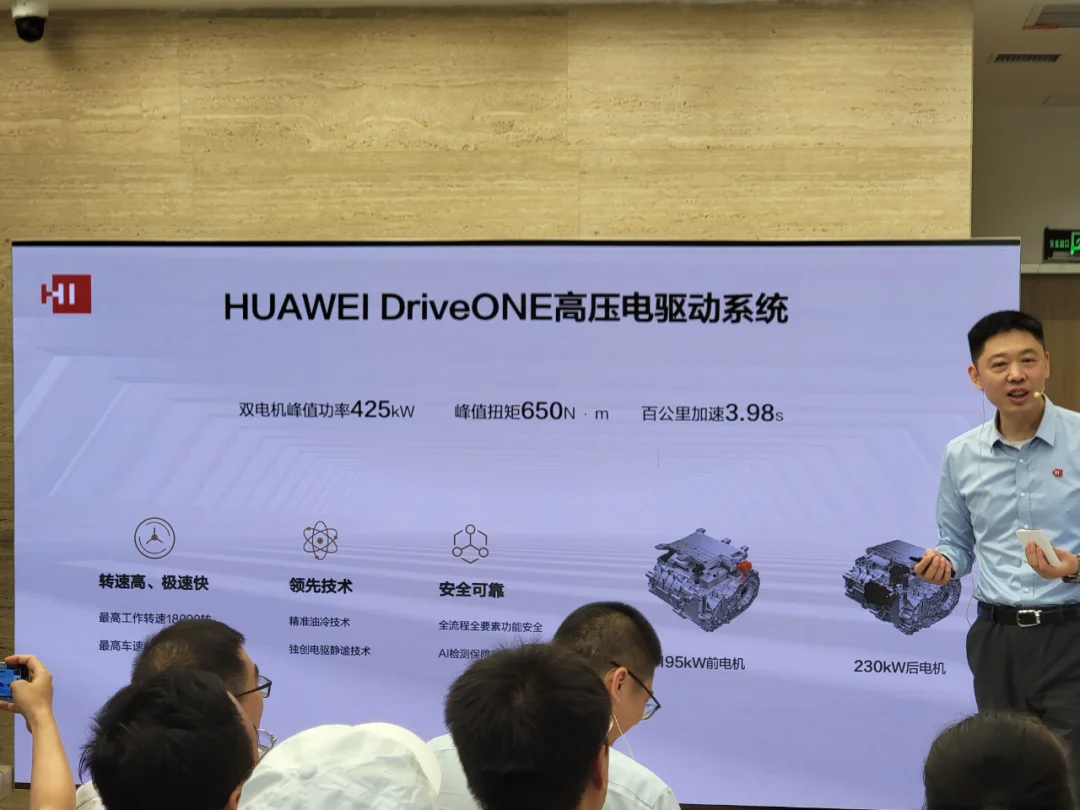
Wang Jun also stated that the motor in the AVATR 11 uses an oil-cooled cooling method, with a maximum rotational speed of 18,000 rpm. The motor offers excellent long-term reliability and superior NVH performance.
Additionally, in the planning of the vehicle voltage platform, AVATR 11 intended to use a high-voltage platform three years ago. However, it was later discovered that many existing highway charging stations did not adopt high-voltage charging piles. As a result, the vehicle's voltage platform planning outpaced infrastructure planning, so a boost module was added later on. This ensured compatibility with third-party DC charging piles while retaining high-voltage fast-charging capability.
As mentioned earlier, the AVATR 11’s cockpit relies on Huawei’s HarmonyOS for underlying capabilities, while AVATR handles the upper-layer development of the infotainment system. Wang Jun explained this collaborative model as follows:
Wang Jun: For the Harmony operating system, we provide foundational capabilities—voice, audio, visual, connectivity, and vehicle control. I believe the ceiling for intelligent driving is ultimately autonomous driving. However, there is no ceiling for the cockpit; disruptive technologies will emerge across various domains. Huawei cannot develop all technologies or applications. What we offer is a foundation based on our operating system and chip-level capabilities, providing voice, audio, and visual functionalities to our partners, including AVATR. This enables them to develop their own applications for the car, and even allows end users to create apps tailored to their preferences. Essentially, developers build an App on top, with full integration at the OS level. Our core objective in developing the Harmony OS is to connect and optimize these underlying capabilities.
The cockpit comprises both software and hardware, with the performance of the Kirin 990A already evident in its deployment across AITO models and the Arcfox Alpha S HI version. As cockpit functionalities expand, so do performance requirements; consequently, the ability to upgrade infotainment hardware post-purchase has become a key concern for users. To address this, Huawei adopted a modular design for the AVATR 11’s cockpit, enabling iterative enhancements to cabin capabilities through relatively straightforward hardware module upgrades.
Next is Huawei’s core business in smart vehicles: advanced intelligent driving.
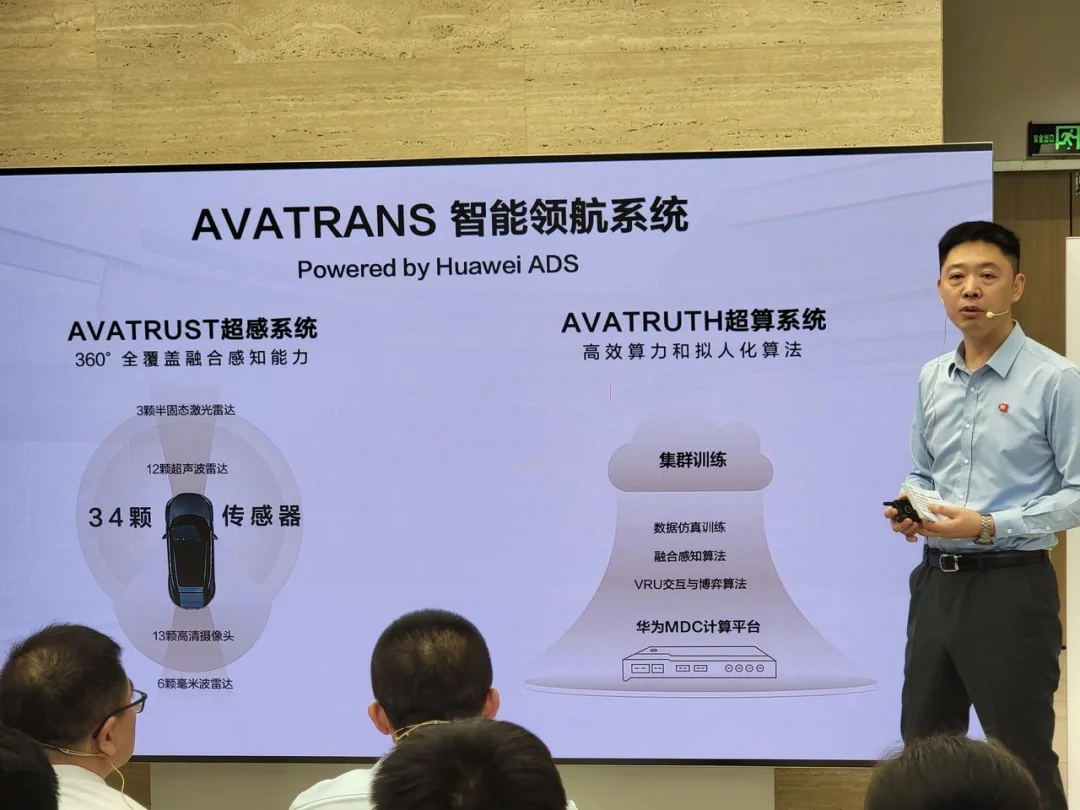
In terms of hardware, the primary difference between the AVATR and other HI models lies in the layout and design optimization of perception sensors. In other words, the goal is to integrate perception hardware seamlessly into the vehicle’s exterior without compromising system performance.
When recalling the design of the AVATR 11, Wang Jun cited the example of LiDAR placement:
Wang Jun: As you can see in the final design, Mr. Tan just mentioned that we absolutely did not compromise on styling for aesthetics, which made things incredibly difficult for us. We went through numerous layout schemes—some angled, others requiring a rear-mounted unit because the forward measurement angle was insufficient. When we proposed placing one at the back, Mr. Tan and Mr. Hu rejected it, noting that rain and mud would accumulate there, making it hard to clean. The result is a car that looks excellent today; the LiDAR is not only unobtrusive but serves as a finishing touch.
Regarding the rationale for using so many sensors, beyond preparing for future high-level autonomous driving, a significant consideration is safety.
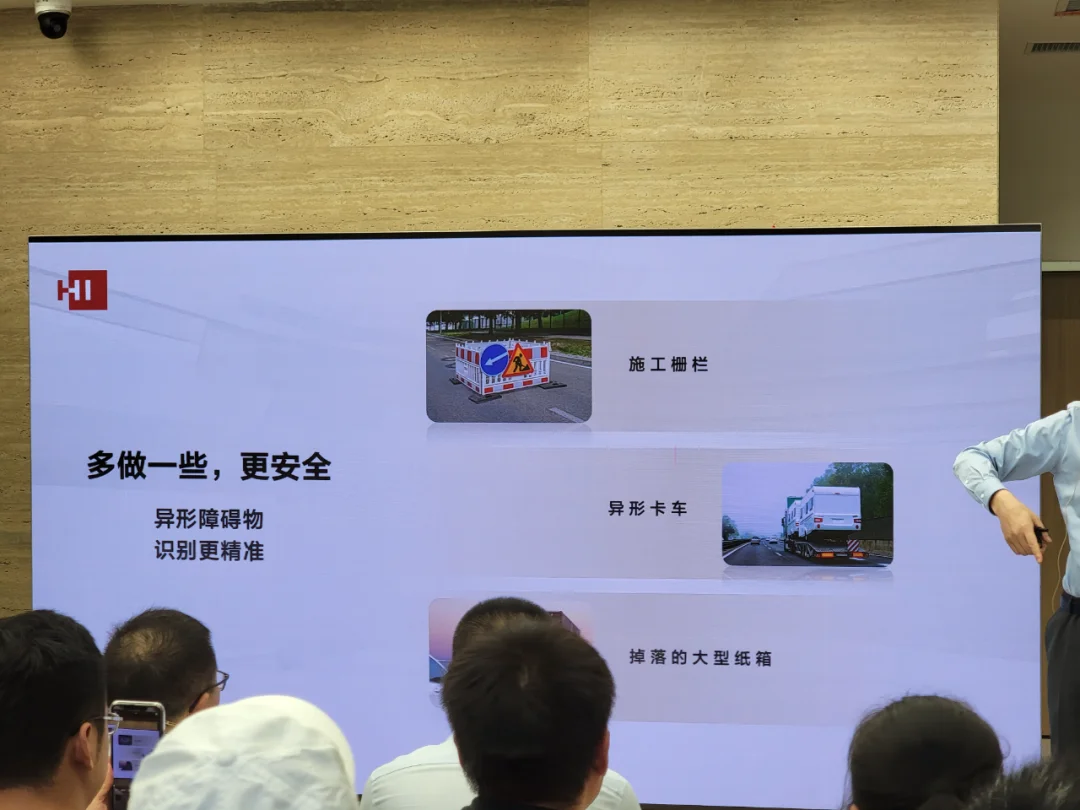
Wang Jun: Let me give an example. Irregularly shaped trucks or construction barriers integrated into the environment are often indistinguishable to pure vision systems. Construction barriers, for instance, may not be in the training data; visual recognition relies on learning, so without prior exposure, the system won't identify them. LiDAR, however, detects objects through reflection. It can identify obstacles like large cardboard boxes falling from vehicles or detect curbs along the road with precision. This is why we emphasize line count—it represents resolution. Consider active avoidance of large vehicles: vision systems might misinterpret a large truck as a small car, leading to rear-end collisions during lane changes. Additionally, when entering or exiting tunnels, pure vision systems can suffer from glare. I bought this car specifically to drive it at night, as that is when its capabilities truly shine.
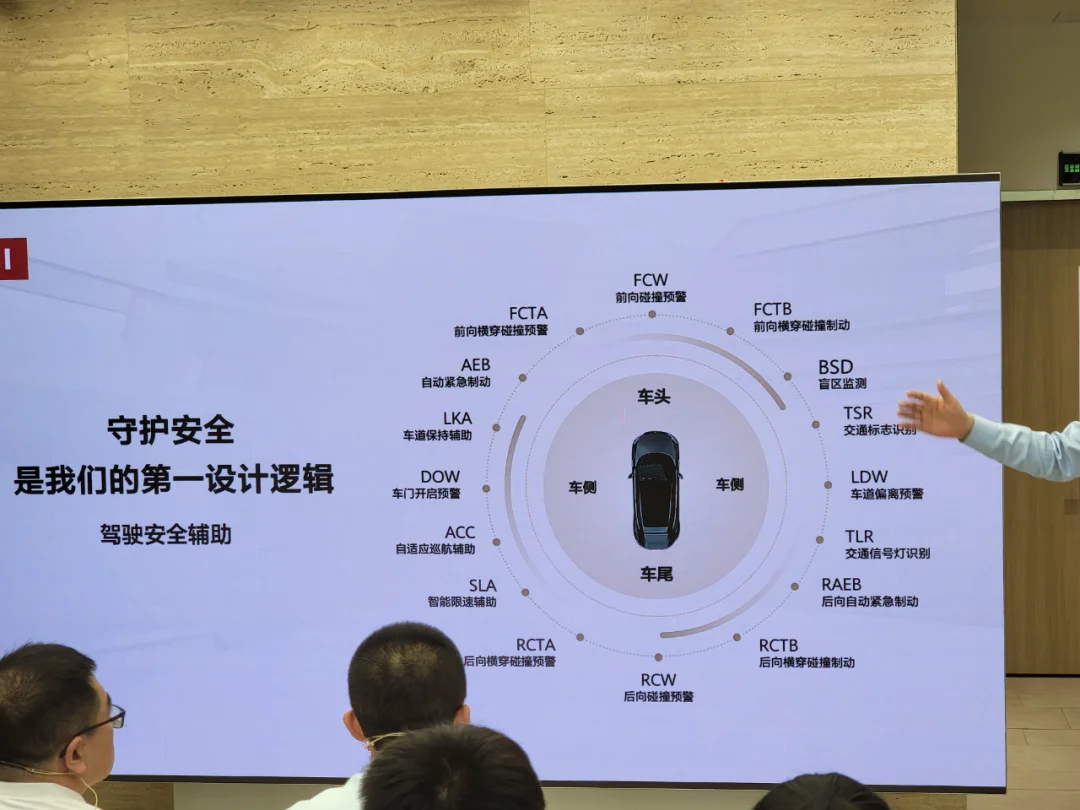
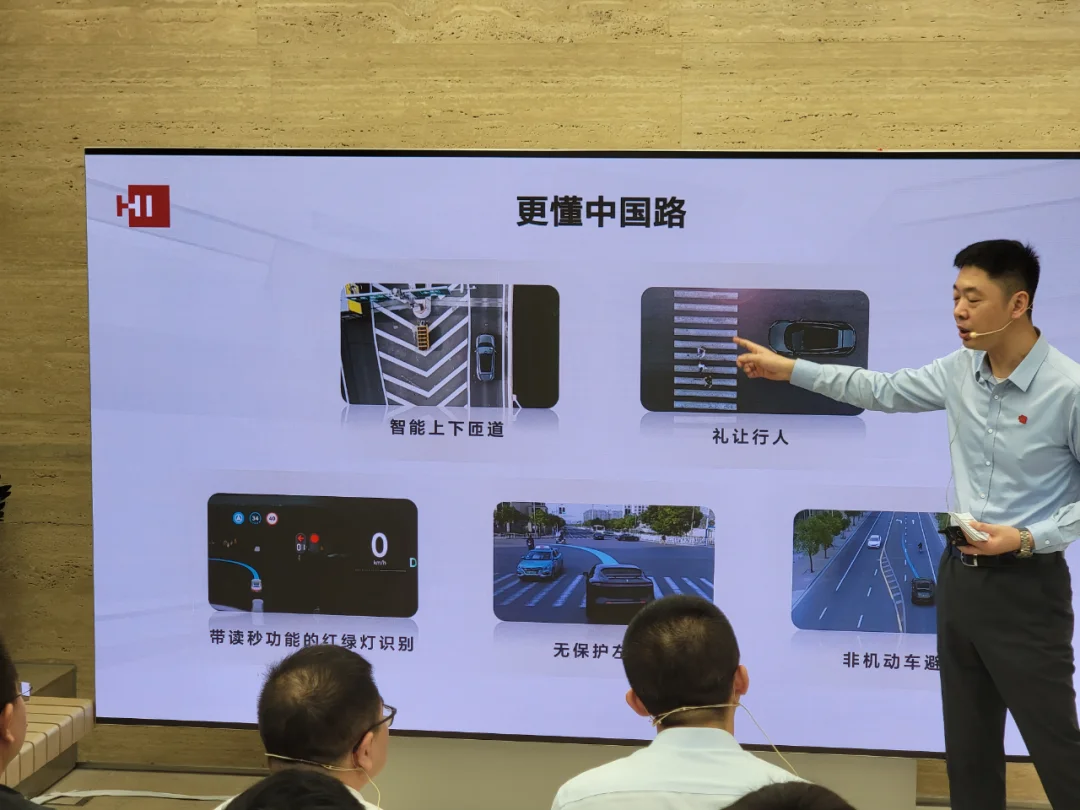
Highlights of the high-level autonomous driving features include yielding to pedestrians, unprotected left turns, and traffic light recognition. We have already experienced these functions in previous Huawei Inside (HI) model variants, and the official release includes a demonstration video of the AVATR 11.
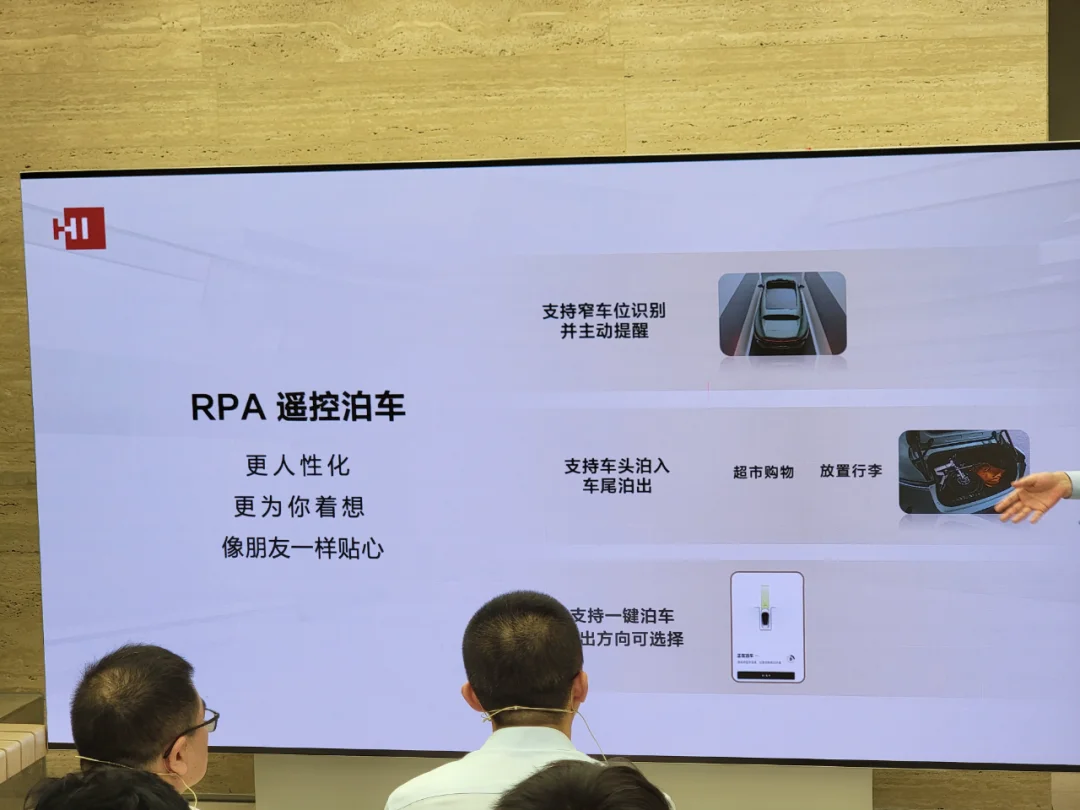
The parking section includes three stages: automatic parking, valet parking, and remote control parking. The system on Huawei ADS supports a wide variety of parking space types, including parallel spaces, perpendicular spaces, narrow spaces, dead-end spaces, and angled spaces.
The remote parking feature supports nose-in, tail-out maneuvers. Because the vehicle's LiDAR sensors and wide-angle cameras are located at the front, rear-end perception capability is relatively weak, making the implementation of this function more challenging from a safety perspective and requiring higher algorithmic performance.
In short, Huawei-backed advanced autonomous driving will be an indispensable part of the AVATR 11's product strength and will provide ample confidence for this vehicle in competing within the high-end smart electric vehicle market.
CATL's Latest Battery as a Major Shareholder
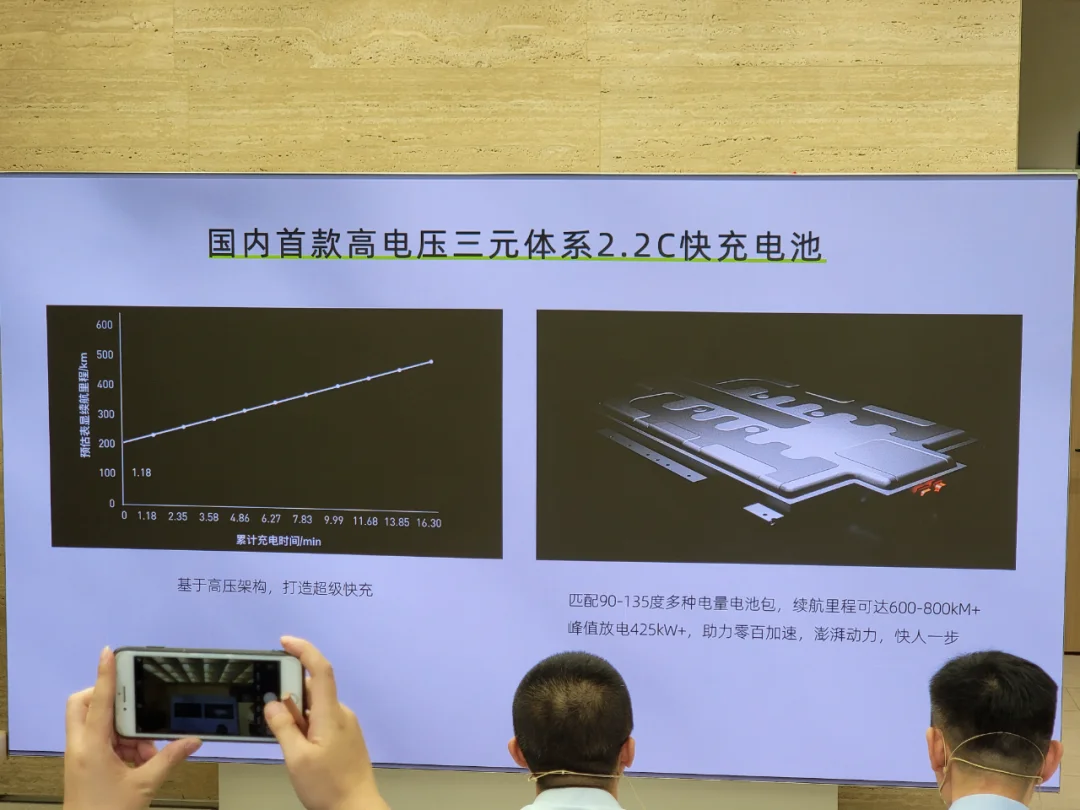
Xiang Yanhuo, President of CATL's China Passenger Vehicle Solutions Division, took the stage to present the battery segment. Regarding the battery used in the AVATR 11, Xiang Yanhuo stated at the outset that this is the first mass-produced high-voltage ternary system 2.2C fast-charging battery in China. In addition to the current 90 kWh and 116 kWh versions, higher-capacity versions will follow, with a maximum support of 135 kWh.
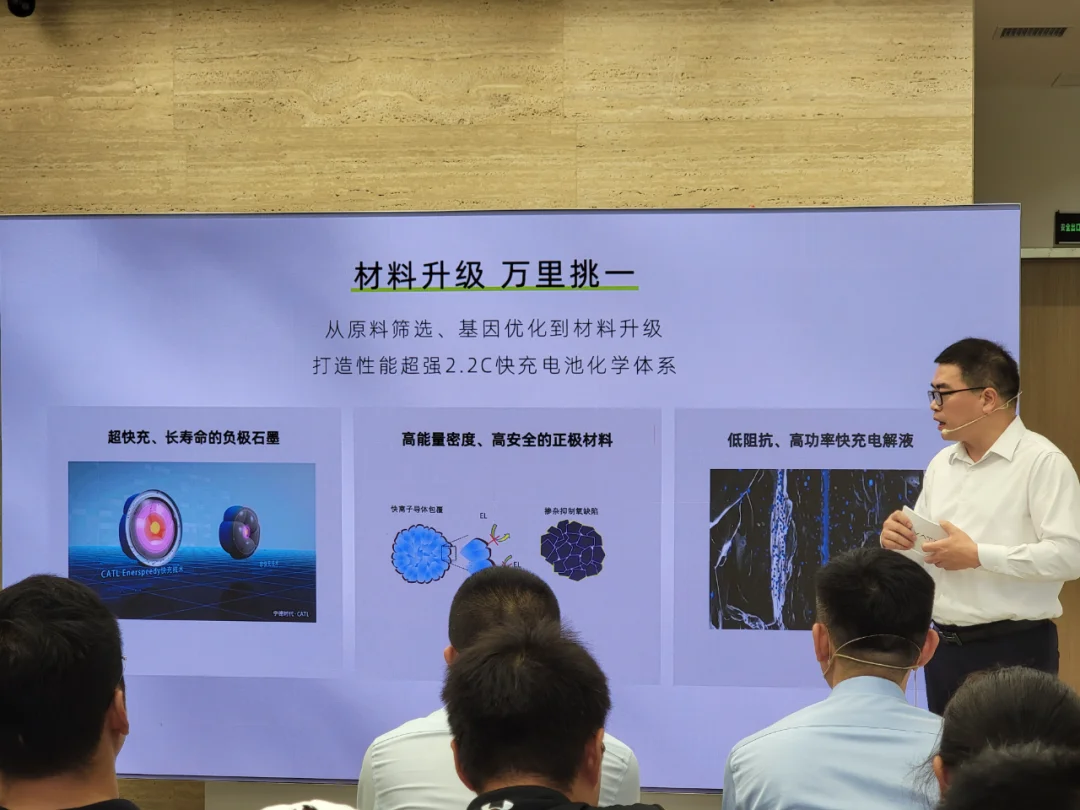
According to Xiang Yanhuo, the battery employs a specialized anode structure during development. A rapid lithium-ion transport channel is constructed on the surface of the graphite anode to enhance its charging capability. The cathode utilizes nano-riveting technology, which bonds the material's microstructure together like rivets to ensure stability, high energy density, and high safety.
The cell-level energy density is 245 Wh/kg, while the system-level energy density reaches 180 Wh/kg and 190 Wh/kg for the two different battery pack capacities.
Fast-charging capability allows a 30% to 80% charge in under 15 minutes. Notably, the battery also exhibits excellent low-temperature performance, requiring as little as 60 minutes to fully charge from 0% at -10°C.
Xiang Yanhuo provided a detailed overview of the battery pack's safety and manufacturing processes. Key points include:
A specialized multi-channel water-cooling design keeps the temperature difference within the battery pack to less than 3°C.
The integration of CATL’s CTP (Cell-to-Pack) technology increases energy density by more than 10% compared to traditional battery packs.
Over 6,800 quality control checkpoints are established during production, with cloud-based data enabling traceability for over 20 years.
The battery system is equipped with 24-hour all-weather monitoring; if a failure occurs, it can issue an alert signal and execute preventive protection measures within 30 seconds.
CATL is elevating battery manufacturing reliability from parts per million (PPM) to parts per billion (PPB), ensuring fundamental safety at the cell level.
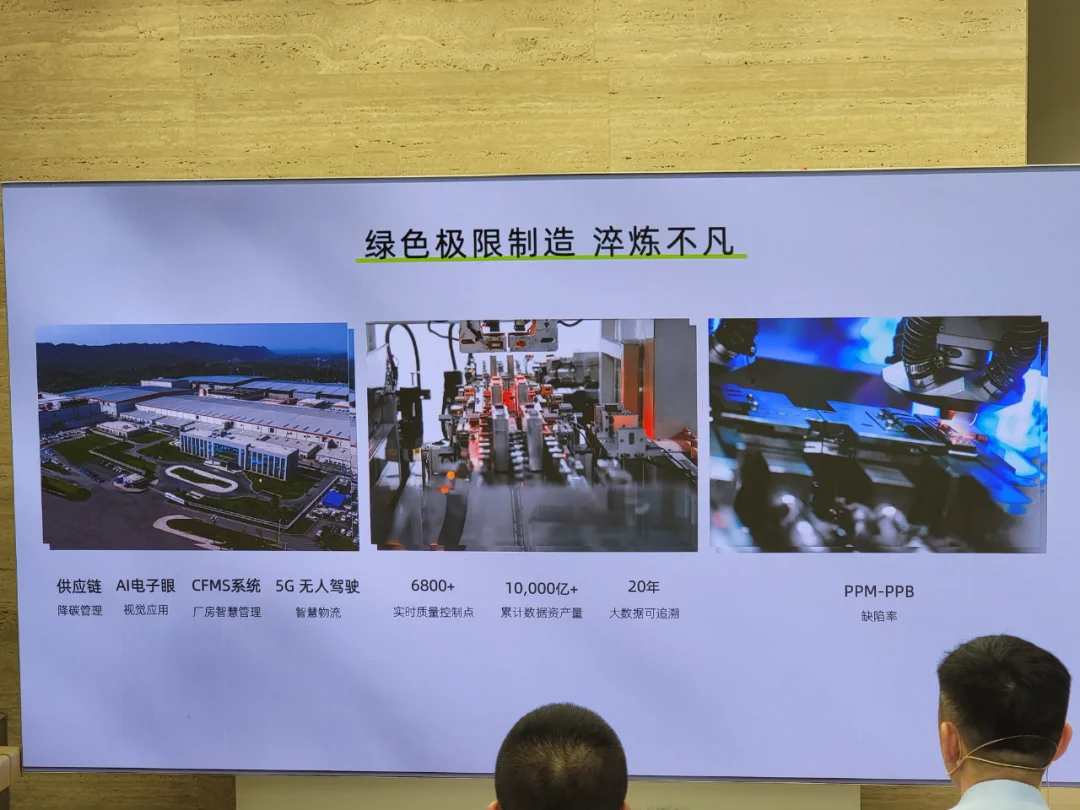
On the AVATR 11, Changan, Huawei, and CATL have demonstrated technical capabilities that clearly signal to the market this is a premium product integrating the strengths of all three partners. In the three core competencies of smart electric vehicles—vehicle design, intelligence, and electrification—the AVATR 11 currently stands in the industry’s first tier.
Given this product strength, let’s examine AVATR’s current market position.
02AVATR's Competitive Landscape
AVATR defines its products as SEVs, or Smart Electric Vehicles. In China’s domestic market, there are very few SEV players in the price range above RMB 300,000, limited mainly to Tesla, new EV startups, and Huawei HI collaboration models.
If we add two more constraints—"SUV" and "RMB 350,000–450,000"—the AVATR 11’s direct competitors narrow down to just a few models:
Tesla Model Y
NIO ES6/EC6
NIO ES7
XPENG G9
NIO
The NIO ES7 carries a relatively high price point, with its primary comparison being the top-spec AVATR 11 equipped with a 116 kWh battery. The two vehicles represent opposite approaches to efficient energy replenishment: one relies on high-voltage fast charging, while the other utilizes battery swapping. Currently, NIO’s network of over 1,000 swap stations offers a scale far greater than that of AVATR, which is just beginning its expansion. Consequently, AVATR’s high-voltage fast-charging capabilities will remain constrained by charging infrastructure for some time. However, at a similar price point, the top-spec AVATR 11 boasts a battery capacity 41 kWh larger than the ES7, giving it an advantage in range. Thus, their respective strengths and weaknesses are complementary.
The exterior and interior designs of the two vehicles also follow divergent paths. The ES7 adopts a tech-focused, minimalist aesthetic with sharp angles, whereas the AVATR 11 embraces a European-style three-dimensional design. Objectively speaking, both designs score highly among domestic brands, making it difficult to declare a clear winner; the choice largely depends on user preference. Notably, the AVATR 11 may be the only product currently available in the market that can rival NIO in terms of luxury and design sensibility—a qualitative absolute strength that NIO previously held over its competitors without quantifiable metrics.
In contrast, the ES6 and EC6 models are somewhat older, but they overlap more significantly with the mid- and low-spec variants of the AVATR 11. In this scenario, the AVATR 11’s advanced autonomous driving capabilities become a key differentiating factor. Meanwhile, the differences in battery technology and energy replenishment systems between these models mirror those seen with the ES7.
XPENG
Although the XPENG G9 has not yet been released, it is likely the most direct competitor among the four vehicles mentioned here to the AVATR 11. The two cars are expected to have overlapping price ranges, share a positioning as large five-seat SUVs, and focus their core product strengths on advanced intelligent driving and high-voltage charging. Such strong lateral benchmarking will inevitably trigger intense comparative analysis by consumers.
Having seen both production vehicles in person, I subjectively believe the AVATR 11 holds an edge over the G9 in design and aura. However, it must be noted that the AVATR 11’s design is unconventional, catering to distinct group preferences: those who like it, love it; those who don’t, detest it. The G9 adopts a more mainstream design language. Its standard SUV proportions offer a more practical trunk compared to the three-box structure of the AVATR 11.
While the G9 also supports high-voltage fast charging, its maximum charging power is nearly double that of the AVATR 11. However, 480 kW refers only to peak power; the actual charging curve and the duration of high-power output are what truly impact user experience. This brings us back to the discussion of charging infrastructure. XPENG already possesses a substantial fast-charging network, giving it an advantage. Yet, both companies started building high-voltage fast-charging capabilities around the same time, ensuring fierce competition in this area.
In terms of advanced intelligent driving and smart cockpits, Huawei HI and XPENG are currently locked in a head-to-head rivalry. The verdict on whether the G9 or the AVATR 11 wins this “battle for the imperial city” will likely depend on post-delivery testing and real-world evaluations.
Given the evenly matched nature of these two vehicles, the balance of competition will hinge heavily on the final pricing of the G9.
Tesla
Tesla’s Model Y is placed last because the AVATR 11 offers significant product differentiation against it: higher specifications, larger dimensions, a more localized cockpit, stronger luxury design cues, better interior quality, and a similar price point.
However, these are almost universal advantages for domestic brands competing with the Model Y at similar price points. In my view, AVATR’s key winning factor lies in the thoroughness of its advantages. For instance, the gap between the AVATR 11’s interior and the Model Y’s is far greater than the gap between the XPENG P7’s interior and the Model 3’s—a difference substantial enough to influence purchase decisions.
Seat ventilation, excellent NVH, RNC active noise cancellation, and large battery with high-voltage fast charging all address the shortcomings of the Model Y, as well as the concerns of hesitant buyers.
Beyond the product itself, Tesla's brand influence may be Model Y's overwhelming advantage over AVATR at this stage, and any subsequent price-cutting strategy could push the AVATR 11 out of its current pricing sweet spot.
03Final Thoughts
I have previously test-driven the AVATR 11, and I can tell you that this is a vehicle whose mechanical quality reaches the standard of traditional luxury brands, comparable to the Zeekr 001. Driving dynamics were once a weak point for new forces, and unlike current manufacturers collectively moving toward sportiness, AVATR's orientation leans heavily toward comfort. I believe this is a viable differentiated positioning.
At the corporate level, the collaboration among Changan, Huawei, and CATL on the AVATR 11 demonstrates considerable ambition. This ambition is reflected in both the product and its pricing. The vehicle holds significant importance for all three companies, particularly regarding the market validation of Huawei's sales channels versus AVATR's proprietary channels.
Therefore, the success or failure of the AVATR 11 will not only concern AVATR but may also serve as a key reference for the path selection of China's intelligent electric vehicle industry in the next phase.
Written by Reinhardt Edited by Reinhardt